

Standalone smartphone apps for mental health—a systematic review and meta-analysis
Open accessThe DOI matches its Crossref record; 64 of the 64 references it cites were found in a registry or an index.
Abstract
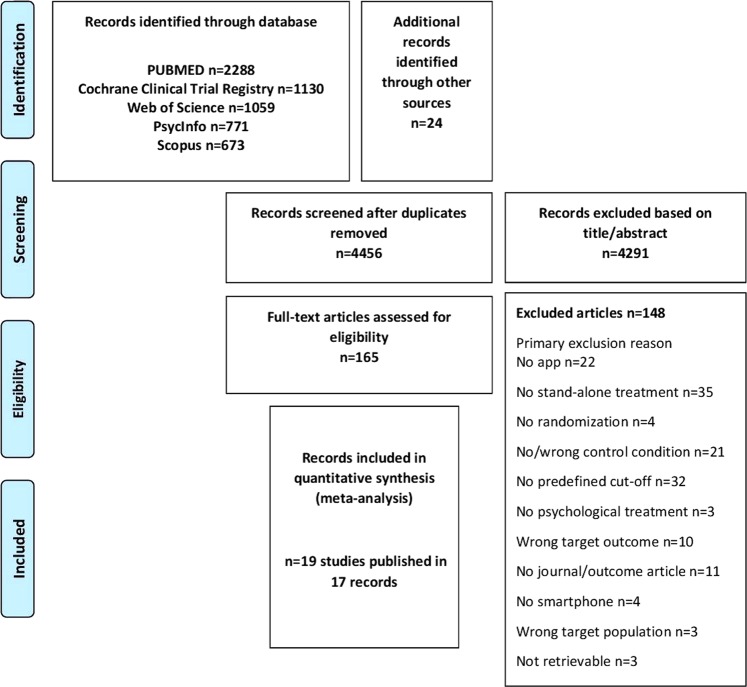
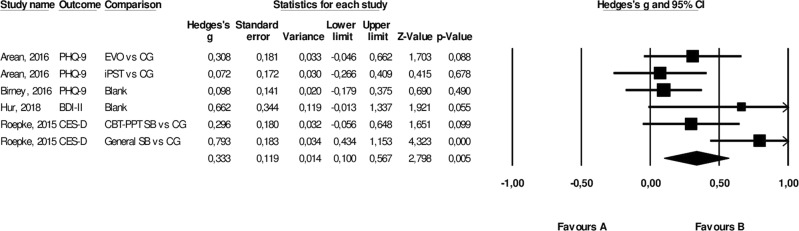
While smartphone usage is ubiquitous, and the app market for smartphone apps targeted at mental health is growing rapidly, the evidence of standalone apps for treating mental health symptoms is still unclear. This meta-analysis investigated the efficacy of standalone smartphone apps for mental health. A comprehensive literature search was conducted in February 2018 on randomized controlled trials investigating the effects of standalone apps for mental health in adults with heightened symptom severity, compared to a control group. A random-effects model was employed. When insufficient comparisons were available, data was presented in a narrative synthesis. Outcomes included assessments of mental health disorder symptom severity specifically targeted at by the app. In total, 5945 records were identified and 165 full-text articles were screened for inclusion by two independent researchers. Nineteen trials with 3681 participants were included in the analysis: depression ( k = 6), anxiety ( k = 4), substance use ( k = 5), self-injurious thoughts and behaviors ( k = 4), PTSD ( k = 2), and sleep problems ( k = 2). Effects on depression (Hedges’ g = 0.33, 95%CI 0.10–0.57, P = 0.005, NNT = 5.43, I 2 = 59%) and on smoking behavior ( g = 0.39, 95%CI 0.21–0.57, NNT = 4.59, P ≤ 0.001, I 2 = 0%) were significant. No significant pooled effects were found for anxiety, suicidal ideation, self-injury, or alcohol use ( g = −0.14 to 0.18). Effect sizes for single trials ranged from g = −0.05 to 0.14 for PTSD and g = 0.72 to 0.84 for insomnia. Although some trials showed potential of apps targeting mental health symptoms, using smartphone apps as standalone psychological interventions cannot be recommended based on the current level of evidence.
Overview
The claims and statistics of this paper haven’t been checked yet.
Free: it reads the open-access text and checks the first 5 claims that cite a source we can check. Create a free account to check every claim.
Integrity signals
Registry
Cites
Statistics
Figures
Verification
Claims the paper makes
The claims and statistics of this paper haven’t been checked yet.
Free: it reads the open-access text and checks the first 5 claims that cite a source we can check. Create a free account to check every claim.
Claims other papers make about this one
Each is checked against this paper’s own text: does it say what the citing paper says it does?
The cited source doesn’t support the claim as written.
In the citing paper
“The finding is inconsistent with other systematic reviews reporting that smartphone apps have small-to-moderate effect sizes on depression symptom reduction [4,10,12].”
From Effectiveness and Minimum Effective Dose of App-Based Mobile Health Interventions for Anxiety and Depression Symptom Reduction: Systematic Review and Meta-Analysis (2022) · cites this paper as [12]
Checked by a reasoning model — may be wrong.
Experimental — accuracy not yet measuredThe source backs part of the claim, not all of it — or backs it for a different population, condition or comparison.
In the citing paper
“Apps did not differ from non-specific controls on a combination of smoking and drinking outcomes (d = 0.18 [20]).”
From Mobile phone-based interventions for mental health: A systematic meta-review of 14 meta-analyses of randomized controlled trials (2022) · cites this paper as [20]
Experimental — accuracy not yet measuredThe source backs part of the claim, not all of it — or backs it for a different population, condition or comparison.
In the citing paper
“Apps did not differ from non-specific controls (d = 0.14 [20]).”
From Mobile phone-based interventions for mental health: A systematic meta-review of 14 meta-analyses of randomized controlled trials (2022) · cites this paper as [20]
Experimental — accuracy not yet measuredThe source backs part of the claim, not all of it — or backs it for a different population, condition or comparison.
In the citing paper
“People can benefit from fully automated, unguided DMHTs (36); however, at a population level, they show small benefits, likely because dropout rates are higher in unguided than guided interventions (37, 38).”
From Banbury forum consensus statement on the path forward for digital mental health treatment (2021) · cites this paper as [38]
Experimental — accuracy not yet measuredThe source backs part of the claim, not all of it — or backs it for a different population, condition or comparison.
In the citing paper
“In an unguided format, the effectiveness of iCBT, including digital health apps, seems to be limited [19,20]”
From Barriers to and Facilitators of a Blended Cognitive Behavioral Therapy Program for Depression and Anxiety Based on Experiences of University Students: Qualitative Interview Study (2023) · cites this paper as [20]
Experimental — accuracy not yet measured
19 more claims about this paper
Create a free account to see every claim other papers make about this one.
Self-check
Percentages, sums and reported differences re-computed from the paper’s own numbers.
The self-check needs the paper’s full text.
Citations
Cites
Diagnostic and Statistical Manual of Mental Disorders
American Psychiatric Association (2013) · doi:10.1176/appi.books.9780890425596 · Cited by 116,369
Measuring inconsistency in meta-analyses
Higgins, J. P. T., Thompson, S. G., Deeks, J. J., & Altman, D. G. (2003) · BMJ · doi:10.1136/bmj.327.7414.557 · Cited by 63,139
Liberati, A., Altman, D. G., Tetzlaff, J., Mulrow, C., Gøtzsche, P. C., Ioannidis, J. P. A., Clarke, M., Devereaux, P. J., Kleijnen, J., & Moher, D. (2009) · PLoS Medicine · doi:10.1371/journal.pmed.1000100 · Cited by 28,164
Duval, S., & Tweedie, R. (2000) · Biometrics · doi:10.1111/j.0006-341x.2000.00455.x · Cited by 14,099
Borenstein, M., Hedges, L. V., Higgins, J. P. T., & Rothstein, H. R. (2021) · doi:10.1002/9781119558378 · Cited by 9,799
Gulliver, A., Griffiths, K. M., & Christensen, H. (2010) · BMC Psychiatry · doi:10.1186/1471-244x-10-113 · Cited by 3,292
Scaling-up treatment of depression and anxiety: a global return on investment analysis
Chisholm, D., Sweeny, K., Sheehan, P., Rasmussen, B., Smit, F., Cuijpers, P., & Saxena, S. (2016) · The Lancet Psychiatry · doi:10.1016/s2215-0366(16)30024-4 · Cited by 1,451
Self-citationAndrews, G., Cuijpers, P., Craske, M. G., McEvoy, P., & Titov, N. (2010) · PLoS ONE · doi:10.1371/journal.pone.0013196 · Cited by 1,311 · cited 1×
“31 The same goes for PTSD, for which the most recent review found an average pooled effect of 0.95, 32 while the two only randomized trials that we were able to include in this study evaluating standalone apps for PTSD did not fi nd signi fi cant effects.”
InfluentialSelf-citationSmartphones for smarter delivery of mental health programs: A systematic review
Donker, T., Petrie, K., Proudfoot, J., Clarke, J., Birch, M.-R., & Christensen, H. (2013) · Journal of Medical Internet Research · doi:10.2196/jmir.2791 · Cited by 1,136
Firth, J., Torous, J., Nicholas, J., Carney, R., Pratap, A., Rosenbaum, S., & Sarris, J. (2017) · World Psychiatry · doi:10.1002/wps.20472 · Cited by 1,097
Cited by
Items 101–200 of 444
Daemen, M., Postma, M. R., Lindauer, R., der Meulen, I. H.-V., Nieman, D. H., Delespaul, P., Breedvelt, J., van der Gaag, M., Viechtbauer, W., Schruers, K. R. J., et al. (2021) · Trials · doi:10.1186/s13063-021-05585-y · Cited by 33
Kruzan, K. P., Whitlock, J. L., Bazarova, N. N., Bhandari, A., & Chapman, J. (2022) · JMIR Formative Research · doi:10.2196/26526 · Cited by 33
“Digital interventions targeting mental health outcomes are often characterized by small to moderate treatment effects [36,67,68], and even highly structured and time-intensive clinical treatments for NSSI result in small treatment effects [69].”
Current directions in digital interventions for mood and anxiety disorders
Lakhtakia, T., & Torous, J. (2022) · Current Opinion in Psychiatry · doi:10.1097/yco.0000000000000772 · Cited by 26
“example, self-help apps that do not feature human support or coaching, is less clear and some reviews suggest these interventions have no effect [7] while others suggest potential benefit [8].”
BackgroundA Digital Coach to Promote Emotion Regulation Skills
Hopman, K., Richards, D., & Norberg, M. M. (2023) · Multimodal Technologies and Interaction · doi:10.3390/mti7060057 · Cited by 37
Fuhrmann, L. M., Weisel, K. K., Harrer, M., Kulke, J. K., Baumeister, H., Cuijpers, P. J., Ebert, D. D., & Berking, M. (2023) · Internet Interventions · doi:10.1016/j.invent.2023.100703 · Cited by 28
“The category system from Weisel and colleagues (Weisel et al., 2019) was used to categorise the components of the adjunctive app-based interventions.”
Self-citationForman‐Hoffman, V. L., Nelson, B. W., Ranta, K., Nazander, A., Hilgert, O., & Quevedo, J. (2021) · Internet Interventions · doi:10.1016/j.invent.2021.100408 · Cited by 30
Bantjes, J. R. (2022) · PLoS Medicine · doi:10.1371/journal.pmed.1004008 · Cited by 27
“Currently, the demand for mental health apps is driven by consumers who use online searches and social media to inform their choice of a digital mental health solution [12].”
BackgroundElwahsh, H., El-Shafeiy, E., Alanazi, S., & Tawfeek, M. A. (2021) · PeerJ Computer Science · doi:10.7717/peerj-cs.646 · Cited by 30
Williamson, C., White, K. M., Rona, R. J., Simms, A., Fear, N. T., Goodwin, L., Murphy, D., & Leightley, D. (2022) · Substance Abuse · doi:10.1080/08897077.2022.2074595 · Cited by 29
Atik, E., Stricker, J., Schückes, M., & Pittig, A. (2023) · JMIR Mental Health · doi:10.2196/44742 · Cited by 29
“Thus, its efficacy and effectiveness are limited when delivered in a stand-alone format [38,39].”
BackgroundEfficacy, Safety, and Evaluation Criteria of mHealth Interventions for Depression: Systematic Review
Duarte‐Díaz, A., Perestelo‐Pérez, L., Gelabert, E., Robles, N., Pérez-Navarro, A., Vidal‐Alaball, J., Solà-Morales, O., Sales-Masnou, A., & Carrión, C. (2023) · JMIR Mental Health · doi:10.2196/46877 · Cited by 31
“However, these are higher than findings from other studies that included patients with any mental health issue (Hedges g =−0.33) [60] and compared mHealth with active treatments (Hedges g =−0.22) [9].”
InfluentialEhrt-Schäfer, Y., Rusmir, M., Vetter, J., Seifritz, E., Müller, M., & Kleim, B. (2023) · JMIR Mental Health · doi:10.2196/43882 · Cited by 24
“Moreover, due to the absence of quality assessment standards for digital mental health interventions [82], we did not exclude studies based on the potentially inadequate quality of the digital applications utilized.”
BackgroundSîrbu, V., & David, D. (2024) · Clinical Psychology Review · doi:10.1016/j.cpr.2024.102515 · Cited by 26
“Other suggestions from the literature that sleep can be effectively managed by such mHealth standalone apps have been pointed out (e.g., Weisel et al., 2019, although with only two studies at the time of the review, none-theless found moderate to large effect sizes).”
InfluentialSimon, L., Reimann, J., Steubl, L., Stach, M., Spiegelhalder, K., Sander, L., Baumeister, H., Meßner, E.-M., & Terhorst, Y. (2022) · Journal of Sleep Research · doi:10.1111/jsr.13642 · Cited by 27
Self-citationFrank, A. C., Li, R., Peterson, B. S., & Narayanan, S. S. (2023) · JMIR Mental Health · doi:10.2196/45572 · Cited by 29
Atik, E., Stricker, J., Schückes, M., & Pittig, A. (2022) · doi:10.2196/preprints.44742 · Cited by 23
Mersha, A. G., Bovill, M., Eftekhari, P., Erku, D., & Gould, G. S. (2021) · Drug and Alcohol Review · doi:10.1111/dar.13290 · Cited by 23
Tian, L., Oviatt, S. L., Muszyński, M., Chamberlain, B. C., Healey, J., & Sano, A. (2022) · ACM eBooks · doi:10.1145/3502398 · Cited by 31
Chiu, M.-C., & Chen, T. (2022) · Digital Health · doi:10.1177/20552076221092540 · Cited by 24
“There have been many studies summarizing and comparing smartphone applications to UH, such as Milo š evic ́ et al. 5 and Weisel et al. 18 Milo š evic ́ al.”
BackgroundAdapting and Implementing Apps for Mental Healthcare
Zielasek, J., Reinhardt, I., Schmidt, L., & Gouzoulis‐Mayfrank, E. (2022) · Current Psychiatry Reports · doi:10.1007/s11920-022-01350-3 · Cited by 27
Polhemus, A. M., Simblett, S. K., Dawe‐Lane, E., Gilpin, G., Elliott, B., Jilka, S., Novák, J. M., Nica, R. I., Temesi, G., & Wykes, T. (2022) · JMIR Human Factors · doi:10.2196/40133 · Cited by 28
“Mobile health (mHealth) tools, which often include interventional and health-tracking features [1,2], have been shown to have therapeutic effects on mood and anxiety disorders [3].”
BackgroundCruz, G. V., Aboujaoude, E. N., Khan, R., Rochat, L., Brahim, F. B., Courtois, R., & Khazaal, Y. (2023) · Digital Health · doi:10.1177/20552076231152164 · Cited by 29
“19–35 176 (23) 306 (36) 209 (58) 691 (35)”
Kajitani, K., Higashijima, I., Kaneko, K., Matsushita, T., Fukumori, H., & Kim, D. (2020) · PLOS ONE · doi:10.1371/journal.pone.0239592 · Cited by 22
“There are now a variety of apps available for different purposes, including cognitive behavioral therapy (CBT), self-monitoring, screening of mental disorders, psychoeducation, and mindfulness [23–25].”
E‐mental health options in the COVID ‐19 pandemic and beyond
Gäebel, W., & Stricker, J. H. (2020) · Psychiatry and Clinical Neurosciences · doi:10.1111/pcn.13079 · Cited by 22
Harty, S., Enrique, Á., Akkol‐Solakoglu, S., Adegoke, A., Farrell, H., Connon, G., Ward, F., Kennedy, C., Chambers, D., & Richards, D. (2023) · International Journal of Mental Health Systems · doi:10.1186/s13033-023-00592-9 · Cited by 47
Pozuelo, J. R., Moffett, B., Davis, M., Stein, A. L., Cohen, H., Craske, M. G., Maritze, M., Makhubela, P., Nabulumba, C., Sikoti, D., et al. (2023) · JMIR Formative Research · doi:10.2196/51423 · Cited by 25
“…the app to be consistent with the principles of behavioral activation (BA)—a highly transferable and evidence-based treatment for adolescent depression—and to include human support (via phone calls), which has been associated with greater adherence and effectiveness of digital therapies [21,28].”
BackgroundSmartphone app engagement and clinical outcomes in a hybrid clinic
Chang, S., Gray, L., & Torous, J. (2023) · Psychiatry Research · doi:10.1016/j.psychres.2022.115015 · Cited by 21
Bantjes, J., Hunt, X., Cuijpers, P., Kazdin, A. E., Kennedy, C. J., Luedtke, A., Malenica, I., Petukhova, M., Sampson, N., Zainal, N. H., et al. (2024) · Behaviour Research and Therapy · doi:10.1016/j.brat.2024.104554 · Cited by 21
Self-citationAre Mental Health Apps Adequately Equipped to Handle Users in Crisis?
Parrish, E. M., Filip, T. F., Torous, J. B., Nebeker, C., Moore, R. C., & Depp, C. A. (2021) · Crisis · doi:10.1027/0227-5910/a000785 · Cited by 27
Bodschwinna, D., Lorenz, I., Bauereiß, N., Gündel, H., Baumeister, H., & Hönig, K. (2022) · Psycho-Oncology · doi:10.1002/pon.5917 · Cited by 24
Self-citationPersonalisation and Recommendation for Mental Health Apps: A Scoping Review
Matthews, P., & Rhodes-Maquaire, C. (2024) · Behaviour and Information Technology · doi:10.1080/0144929x.2024.2356630 · Cited by 35
Vernmark, K., Buhrman, M., Carlbring, P., Hedman‐Lagerlöf, E., Kaldo, V., & Andersson, G. (2024) · Digital Health · doi:10.1177/20552076241287059 · Cited by 29
Duffecy, J. L., Rehman, A., Gorman, S. N., Huang, Y., & Klumpp, H. (2025) · JMIR mhealth and uhealth · doi:10.2196/58204 · Cited by 26
“In recent years, several studies have evaluated the efficacy of smartphone-based interventions for anxiety, depression, and insomnia (among others) [33-36].”
Larkin, C., Djamasbi, S., Boudreaux, E. D., Varzgani, F., Garner, R. C., Siddique, M., Pietro, J., & Tulu, B. (2023) · JMIR Formative Research · doi:10.2196/41422 · Cited by 20
Psychometric evaluation of the Mobile Application Rating Scale (MARS) (Preprint)Preprint
Terhorst, Y., Philippi, P., Sander, L., Schultchen, D., Paganini, S., Bardus, M., Santo, K., Knitza, J., Machado, G. C., Schöeppe, S., et al. (2020) · doi:10.2196/preprints.17689 · Cited by 21
Self-citationBurchert, S., Alkneme, M. S., Alsaod, A., Cuijpers, P., Heim, E., Hessling, J., Hosny, N., Sijbrandij, M., van’t Hof, E., Ventevogel, P., et al. (2024) · PLoS Medicine · doi:10.1371/journal.pmed.1004460 · Cited by 18
Self-citationMagwood, O., Saad, A., Ranger, D., Volpini, K., Rukikamirera, F., Haridas, R., Sayfi, S., Alexander, J., Tan, Y., & Pottie, K. (2024) · Campbell Systematic Reviews: Better Evidence for a Better World · doi:10.1002/cl2.1398 · Cited by 18
Keinert, M., Pistrosch, S., Mallol-Ragolta, A., Schuller, B. W., & Berking, M. (2025) · Journal of Medical Internet Research · doi:10.2196/68942 · Cited by 21
“To bridge this gap and waiting times for psychotherapy, researchers are developing app-based interventions delivered on smartphones that are easily accessible and easy to disseminate [6].”
Self-citationRibba, B., Peck, R., Hutchinson, L. G., Bousnina, I., & Motti, D. (2023) · Clinical Pharmacology & Therapeutics · doi:10.1002/cpt.2989 · Cited by 21
Kirykowicz, K., Jaworski, B. K., Owen, J. E., Kirschbaum, C., Seedat, S., & van den Heuvel, L. L. (2023) · Psychiatry Research · doi:10.1016/j.psychres.2023.115493 · Cited by 20
Weiner, L. S., Crowley, R. N., Sheeber, L., Koegler, F. H., Davis, J. F., Wells, M., Funkhouser, C. J., Auerbach, R. P., & Allen, N. B. (2024) · JMIR Mental Health · doi:10.2196/51366 · Cited by 24
“However, some meta-analyses have raised questions about whether self-guided apps are effective in improving mental health [34,35].”
BackgroundPoort, H., Ryan, A. K., MacDougall, K., Malinowski, P. K., MacDonald, A., Markin, Z., Pirl, W. F., Greer, J. A., & Fasciano, K. M. (2021) · Journal of Medical Internet Research · doi:10.2196/25069 · Cited by 19
Braun, P., Atik, E., Guthardt, L., Apolinário-Hagen, J., & Schückes, M. (2023) · JMIR Formative Research · doi:10.2196/45970 · Cited by 17
“In an unguided format, the effectiveness of iCBT, including digital health apps, seems to be limited [19,20], and dropout rates appear to be greater when the intervention does not involve therapist contact [21,22].”
BackgroundEconomides, M., Male, R., Bolton, H., & Cavanagh, K. (2023) · SLEEP · doi:10.1093/sleep/zsad053 · Cited by 25
“accessible, can provide momentary support, are associated with lower costs, and can facilitate increased engagement through tailored interventions [18].”
BackgroundA scoping review on the use, processing and fusion of geographic data in virtual assistants
Granell, C., Pesántez‐Cabrera, P., Vilches‐Blázquez, L. M., Achig, R., Luaces, M. R., Cortiñas, A., Chayle, C., & Morocho, V. (2021) · Transactions in GIS · doi:10.1111/tgis.12720 · Cited by 20
Montgomery, R. M., Boucher, E. M., Honomichl, R. D., Powell, T. A., Guyton, S. L., Bernecker, S. L., Stoeckl, S. E., & Parks, A. C. (2021) · JMIR Cardio · doi:10.2196/32351 · Cited by 19
“Approximately three-quarters of the sample were women, a trend that is common across many studies of digital mental health interventions [112] and consistent with prior research of Happify [90].”
Result(2023) · doi:10.2196/preprints.45970 · Cited by 17
Effectiveness of telemedicine on common mental disorders: An umbrella review and meta-meta-analysis
Chen, J., Li, C., An, K., Dong, X., Liu, J., & Wu, H. Y. (2024) · Computers in Human Behavior · doi:10.1016/j.chb.2024.108325 · Cited by 22
Cabreira, V., Wilkinson, T., Frostholm, L., Stone, J., & Carson, A. J. (2024) · npj Digital Medicine · doi:10.1038/s41746-024-01280-9 · Cited by 18
“Further, the growth in smartphones and virtual reality technologies opens a window for innovative treatment options 24,25 .”
BackgroundInfluentialRobertson, I., Harrison, C., Ng, K. Y. B., Macklon, N., Cheong, Y. C., & Boivin, J. (2022) · Human Reproduction · doi:10.1093/humrep/deac046 · Cited by 21
“…demonstrated mobile applications to be effective for mental health (including depression, anxiety, self-injurious thoughts and behaviour) especially as standalone apps targeting-specific conditions (Weisel et al. , 2019), and improving well-being and emotion regulation (Eisenstadt et al. , 2021).”
Lemmel, F. K., & Morina, N. (2024) · Clinical Psychology & Psychotherapy · doi:10.1002/cpp.3057 · Cited by 16
Starvaggi, I., & Lorenzo‐Luaces, L. (2025) · JMIR Mental Health · doi:10.2196/65356 · Cited by 20
“Robust evidence has now supported the efficacy of DMHIs in various formats, including internet-delivered cognitive behavioral therapy [14], both GSH and unguided self-help formats [14-16], and smartphone apps [16-18].”
Rothman, B., Slomkowski, M., Speier, A., Rush, A. J., Trivedi, M. H., Lakhan, S. E., Lawson, E., Fahmy, M., Carpenter, D., Chen, D., et al. (2025) · Journal of Affective Disorders · doi:10.1016/j.jad.2025.119409 · Cited by 18
Method Matters: Enhancing Voice‐Based Depression Detection With a New Data Collection Framework
Vilenchik, D., Cwikel, J., Ezra, Y., Hausdorff, T., Lazarov, M., Sergienko, R., Abramovitz, R., Schmidt, I., & Perez, A. S. (2025) · Depression and Anxiety · doi:10.1155/da/4839334 · Cited by 19
Drews‐Windeck, E., Greenwood, K., & Cavanagh, K. (2023) · Journal of Clinical Psychology · doi:10.1002/jclp.23523 · Cited by 21
Digital Treatment Paths for Substance Use Disorders (SUDs)
Bonfiglio, N. S., Mascia, M. L., & Penna, M. P. (2022) · International Journal of Environmental Research and Public Health · doi:10.3390/ijerph19127322 · Cited by 15
Koch, K., Tiefenbeck, V., Liu, S., Berger, T., Fleisch, E., & Wortmann, F. (2021) · CHI Conference on Human Factors in Computing Systems · doi:10.1145/3411764.3446865 · Cited by 18
“Researchers in the felds of psychotherapy and Human-Computer Interaction (HCI) are already investigating scalable and cost-efective measures for the prevention and treatment of mental disorders, for example with smartphone apps, but the reach of these measures is yet limited [8, 69].”
BackgroundBipolar Disorders: Evaluation and Treatment.
Marzani-Nissen, G., & Neff, A. P. (2021) · American family physician · Cited by 47
Stalmach, A., Reinck, C., D’Elia, P., Sano, S. D., & Casale, G. (2025) · Discover Education · doi:10.1007/s44217-025-00825-8 · Cited by 21
“In this context, digital tools may incorporate social skills training [105], assess psychological states [106], foster interpersonal abilities [107], deliver mental health interventions [108, 109] and assist in identifying emotions [110].”
Wiegand, H. F., Bröcker, A., Fehr, M., Lohmann, N., Maicher, B., Röthke, N., Rueb, M., Wessels, P., de Greck, M., Pfennig, A., et al. (2022) · Frontiers in Psychiatry · doi:10.3389/fpsyt.2022.855040 · Cited by 18
“Because there is insufficient evidence to support the use of self-help apps for patients with SMI (21), it was appropriate that they played only a minor role in supplementing but not replacing services.”
BackgroundBruhns, A., Baumeister, A., Demeroutis, G., Jahn, H., Willenborg, B., Shaffy, A., Moritz, S., & Bücker, L. (2023) · Psychotherapy Research · doi:10.1080/10503307.2022.2157226 · Cited by 16
“The effectiveness is in the small effect size range for the treatment of depression ( g = 0.22 – 0.33; Firth et al., 2017; Weisel et al., 2019).”
InfluentialSmartphones within Psychological Science
Ellis, D. A. (2020) · Cambridge University Press eBooks · doi:10.1017/9781108671408 · Cited by 15
Trusting the bot: Addressing the ethical challenges of consumer digital mental health therapy
Martinez‐Martin, N. (2020) · Developments in neuroethics and bioethics · doi:10.1016/bs.dnb.2020.03.003 · Cited by 18
Evaluating Commercially Available Mobile Apps for Depression Self-Management.
Myers, A., Chesebrough, L., Hu, R., Turchioe, M. R., Pathak, J., & Creber, R. M. (2020) · PubMed Central · Cited by 24
Hensley, C. P., Witte, M. M., Cai, J., Gruenke, A., Pecze, J., Mangefrida, A., & Chang, A. H. (2022) · JCR Journal of Clinical Rheumatology · doi:10.1097/rhu.0000000000001896 · Cited by 14
Do Palliative Care Providers Use Complementary and Integrative Medicine? A Nationwide Survey
Goel, A. R., Henderson, C., & Reid, M. C. (2021) · Journal of Pain and Symptom Management · doi:10.1016/j.jpainsymman.2021.11.002 · Cited by 13
O’Sullivan, S., McEnery, C., Cagliarini, D., Hinton, J. D. X., Valentine, L., Nicholas, J., Chen, N. A., Castagnini, E., Lester, J., Kanellopoulos, E., et al. (2024) · JMIR Mental Health · doi:10.2196/49217 · Cited by 13
“Furthermore, there is limited research testing blended models of care as a treatment approach [37,44], despite the demonstrated efficacy of stand-alone digital interventions [45-47].”
BackgroundReal-time personalized feedback in mHealth for adolescents
Dietvorst, E., Hillegers, M. H. J., Legerstee, J. S., de Vries, L. P., Vreeker, A., & Keijsers, L. (2024) · Digital Health · doi:10.1177/20552076241247937 · Cited by 19
“8, 10 11 – 13 one of the major challenges of mHealth interventions is to keep adolescents motivated and engaged, 14 especially when there is no professional involved.”
BackgroundLinardon, J., Anderson, C., McClure, Z., Liu, C., & Messer, M. (2024) · Sleep Medicine · doi:10.1016/j.sleep.2024.08.025 · Cited by 16
Boulton, K., Hilton, M., Sutton, E., & Guastella, A. J. (2025) · Journal of Medical Internet Research · doi:10.2196/58693 · Cited by 16
“For example, it has previously been shown that, despite the promise of digital tools for mental health, only a minority of apps purported to monitor and manage mental health symptoms have clinically validated evidence of effectiveness [28,29].”
Weinreich, K. J., Frankova, I., Maksymets, N., Barbui, C., Klymchuk, V., Mooren, T. T. M., Olechno, E., Purgato, M., Sijbrandij, M., Witteveen, A. B., et al. (2025) · European Journal of Psychotraumatology · doi:10.1080/20008066.2025.2468117 · Cited by 19
“(Linardon et al., 2019), in low-EUROPEAN and middle-income countries (Fu et al., 2020), and as standalone interventions (Weisel et al., 2019).”
Tajirian, T., Lo, B., Strudwick, G., Tasca, A., Kendell, E., Poynter, B., Kumar, S., Chang, P.-Y. B., Kung, C., Schachter, D. C., et al. (2025) · JMIR Human Factors · doi:10.2196/65656 · Cited by 19
“Moreover, since these studies examined the intervention immediately after implementation, there is little information about the long-term impact of these initiatives on EHR end-user experience [16].”
Smyth, A., de Bloom, J., Syrek, C. J., Domin, M., Janneck, M., Reins, J. A., & Lehr, D. (2020) · BMC Public Health · doi:10.1186/s12889-020-09354-5 · Cited by 16
Digitale Versorgungsformen zur Personalisierung der stationsäquivalenten Behandlung
Rauschenberg, C., Hirjak, D., Ganslandt, T., Schulte‐Strathaus, J. C. C., Schick, A., Meyer‐Lindenberg, A., & Reininghaus, U. (2021) · Der Nervenarzt · doi:10.1007/s00115-021-01100-5 · Cited by 17
Mind the Gaps: Ethical and Epistemic Issues in the Digital Mental Health Response to Covid‐19
Skorburg, J. A., & Friesen, P. (2021) · The Hastings Center Report · doi:10.1002/hast.1292 · Cited by 21
“Some even lead to worse outcomes.(10) This does not fit neatly with the arguments for the scalability of these digital tools.”
BackgroundPine, R. (2020) · Advances in Mental Health · doi:10.1080/18387357.2020.1814160 · Cited by 17
“(Weisel et al., 2019) The aim of the current study was to understand teachers’ and health professionals’ attitudes towards adolescent mental health and DHMIs, given their respective roles with sup-”
BackgroundInfluentialVenkatesan, A., Forster, B., Rao, P., Miller, M., & Scahill, M. D. (2022) · JMIR Formative Research · doi:10.2196/38005 · Cited by 19
“In the context of DMHIs, digital CBT interventions appear to be equivalent to face-to-face interventions in terms of treatment efficacy [13-16].”
BackgroundPaetzold, I., Schick, A., Rauschenberg, C., Hirjak, D., Banaschewski, T., Meyer‐Lindenberg, A., Boehnke, J. R., Boecking, B., & Reininghaus, U. (2023) · Behaviour Research and Therapy · doi:10.1016/j.brat.2023.104367 · Cited by 18
Ooi, P. B., & Wilkinson, G. G. (2024) · British Journal of Guidance and Counselling · doi:10.1080/03069885.2024.2373180 · Cited by 16
“…lack of underpinning theoretical frameworks, limited evidence of effectiveness, poor rates of long-term client retention, and need for better training of counsellors as identified in a number of studies (e.g. Baumel et al., 2019; Marshall et al., 2020; Phillips et al., 2020; Weisel et al., 2019).”
Smartphone-Based Hand Function Assessment: Systematic Review
Fu, Y. H., Zhang, Y., Ye, B., Babineau, J., Zhao, Y., Gao, Z., & Mihailidis, A. (2024) · Journal of Medical Internet Research · doi:10.2196/51564 · Cited by 12
“Search terms were also sourced from a previously published review [20].”
Just-In-Time Adaptive Interventions to Promote Behavioral Health: Protocol for a Systematic Review
Henry, L. M., Blay-Tofey, M., Haeffner, C. E., Raymond, C. N., Tandilashvili, E., Terry, N. L., Kiderman, M., Metcalf, O., Brotman, M. A., & López-Guzmán, S. (2024) · JMIR Research Protocols · doi:10.2196/58917 · Cited by 16
“Despite the potential benefits of digital treatment delivery, evidence for the effectiveness of intervening using standalone mobile applications is limited [14].”
Carvalho, L. R., Haas, L. M., Zeni, G. D., Victor, M. M., Techele, S. P., Castanho, J. M., Coimbra, I. M., de Sousa, A. D. F., Ceretta, N., Guirado, A. G., et al. (2023) · European Psychiatry · doi:10.1192/j.eurpsy.2023.2422 · Cited by 17
“Although promising, many mHealth solutions lack robust scientific clinical evidence of their efficacy [39, 40].”
BackgroundEisenstadt, M., Liverpool, S., Metaxa, A.-M., Ciuvat, R. M., & Carlsson, C. (2021) · JMIR Formative Research · doi:10.2196/31064 · Cited by 14
“57) for depression (k=12 [86]; k=18 [87]).”
Meyerhoff, J., Nguyen, T., Karr, C. J., Reddy, M. C., Williams, J. J., Bhattacharjee, A., Mohr, D. C., & Kornfield, R. (2022) · Procedia Computer Science · doi:10.1016/j.procs.2022.09.086 · Cited by 13
“Despite the benefits of many DMH interventions in reducing symptoms in clinical trials [19–21], these interventions have low rates of sustained engagement in real-world contexts [22].”
BackgroundSzinay, D., Perski, O., Jones, A., Chadborn, T., Brown, J., & Naughton, F. (2021) · Qeios · doi:10.32388/ie9k0n · Cited by 14
Zuccolo, P. F., Brunoni, A. R., Borja, T., Matijasevich, A., Polanczyk, G. V., & Fatori, D. (2024) · Psychotherapy and Psychosomatics · doi:10.1159/000541311 · Cited by 11
“This decision was based on meta-analytic evidence suggesting app-based interventions for depression have a clinically signi fi cant effect only when compared to waitlist or nonspeci fi c controls [25, 26], while effect sizes can be partially explained by control group choice [9].”
InfluentialKulke, J. K., Fuhrmann, L. M., Berking, M., Ebert, D. D., Baumeister, H., Derfiora, A., Veldhouse, A., & Weisel, K. K. (2025) · The Lancet Digital Health · doi:10.1016/j.landig.2025.100923 · Cited by 18
Self-citationSîrbu, V., David, D., Sánchez-López, Á., & Blanco, I. (2024) · Journal of Affective Disorders · doi:10.1016/j.jad.2024.10.052 · Cited by 14
“…active, voluntary, and communicated to other persons commitments obtained at the beginning of the study; e.g., Cialdini, 2009) and persuasive and engagement app features (e.g., gamification and personalization; e.g., Weisel et al., 2019) represent viable solutions in need of future implementations.”
Designing for mental health in higher education: a collaborative approach to digital interventions
Severes, B., Barreto, M. L., & Esteves, A. (2024) · Behaviour and Information Technology · doi:10.1080/0144929x.2024.2436503 · Cited by 14
Saur, S., Weisel, K. K., Lang, C., Fuhrmann, L. M., Steins‐Loeber, S., Enewoldsen, N., Reichl, D., Zink, M., Jakobi, F., Rudolph, M., et al. (2022) · Internet Interventions · doi:10.1016/j.invent.2022.100517 · Cited by 11
“With regard to app-based interventions against alcohol use, findings are more ambiguous (Colbert et al., 2020; Milne-Ives et al., 2020; Weisel et al., 2019).”
BackgroundSelf-citationMak, W. W. S., Ng, S. M., & Leung, F. H. T. (2023) · JMIR Formative Research · doi:10.2196/38504 · Cited by 13
“Moreover, based on the 2 continua model of mental health [35,36], the TourHeart+ platform targets working adults in Hong Kong who would like to take care of their mental well-being regardless of absence or presence of psychological distress.”
MethodInfluentialJongeneel, A., Delespaul, P., Tromp, N., Scheffers, D., van der Vleugel, B. M., de Bont, P. A. J. M., Kikkert, M., Croes, C. F., Staring, A. B. P., Riper, H. M., et al. (2024) · Internet Interventions · doi:10.1016/j.invent.2024.100717 · Cited by 12
“See also Weisel et al. (Weisel et al., 2019) and Alqah-tani & Orji (Alqahtani and Orji, 2020).”
BackgroundSchefft, C., Krämer, R., Haaf, R., Jedeck, D., Schumacher, A., & Köhler, S. (2024) · Quality of Life Research · doi:10.1007/s11136-024-03606-2 · Cited by 10
“Meta-analyses have shown that IBIs with varying levels of guidance have small to moderate, sometimes large effects on depressive symptoms, depending on the control group [15, 16, 17, 18].”
BackgroundOff-Body Sleep Analysis for Predicting Adverse Behavior in Individuals With Autism Spectrum Disorder
Kiarashi, Y., Suresha, P. B., Rad, A. B., Reyna, M. A., Anderson, C., Foster, J., Lantz, J. F., Villavicencio, T., Hamlin, T., & Clifford, G. D. (2024) · IEEE Journal of Biomedical and Health Informatics · doi:10.1109/jbhi.2024.3455942 · Cited by 13
“In contrast, objective methodologies utilize technological instruments like polysomnography (PSG) [26], actigraphy [27], [28], wearable devices, and mobile applications [29], [30], [31].”
BackgroundLo, B., Durocher, K., Charow, R., Kimball, S., Phạm, Q., Sockalingam, S., Wiljer, D., & Strudwick, G. (2025) · Journal of Medical Internet Research · doi:10.2196/67820 · Cited by 11
“A recent systematic review synthesized findings from 19 trials on digital mental health apps and determined that there is inconclusive evidence to suggest that these tools can be recommended as stand-alone interventions [21].”
InfluentialEffectiveness of digital interventions for eight mental disorders: A meta-analytic synthesis
Harrer, M., Miguel, C., Tong, L., Kuper, P., Sprenger, A. A., Furukawa, Y., Wang, Y., van Ballegooijen, W., Čihařová, M., Panagiotopoulou, O. M., et al. (2025) · Internet Interventions · doi:10.1016/j.invent.2025.100860 · Cited by 13
Self-citationMcCallum, M., Ho, A. S., Mitchell, E. S., May, C. N., Behr, H., Ritschel, L. A., Mochrie, K. D., & Michaelides, A. P. (2022) · JMIR Formative Research · doi:10.2196/36794 · Cited by 14
“The coaching feature was included to address concerns that have been cited in previous studies of evidence-based programs [48-50].”
BackgroundRan, M. O., Zuozhi, F. A. N. G., & Jiandong, F. A. N. G. (2022) · Advances in Psychological Science · doi:10.3724/sp.j.1042.2023.00669 · Cited by 10
“目前,在线自助干预(Internet-based Self-help Interventions, ISIs)的可行、 有效性已得到广泛验证(Izzaty et al., 2021; Johansson et al., 2021; Sun et al., 2021; Taylor et al., 2021; Weisel et al., 2019),或可成为面对面治疗的 有力补充(Berry et al., 2019),但高脱落率、低参与度仍是其众所周知的困境,对 于无指导 ISI,此问题则更为凸显(Linardon et al., 2019; Pratap et al., 2020;…”
Does cognitive impairment in bipolar disorder impact on a SIMPLe app use?
Bonnín, C. D. M., Solé, B., Reinares, M., García-Estela, A., Samalin, L., Martínez‐Arán, A., Sánchez‐Moreno, J., Colom, F., Vieta, E., & Hidalgo‐Mazzei, D. (2020) · Journal of Affective Disorders · doi:10.1016/j.jad.2020.12.168 · Cited by 14
Geissler, J. M., Buchholz, H., Meerson, R., Kammerer, K., Göster, M., Schobel, J., Ratz, C., Taurines, R., Pryss, R. C., & Romanos, M. (2022) · Frontiers in Neuroscience · doi:10.3389/fnins.2022.984618 · Cited by 10
“001)] and as standalone intervention [metaanalysis by (Weisel et al., 2019); 6 RCTs; Hedges’ g = 0.”
Background
Metadata
- Authors
- Weisel, K. K., Fuhrmann, L. M., Berking, M., Baumeister, H., Cuijpers, P., & Ebert, D. D.
- Affiliations
- Friedrich-Alexander-Universität Erlangen-Nürnberg (DE)
- Universität Ulm (DE)
- Amsterdam Public Health (NL)
- Corresponding author
- Weisel, Kiona K.
- ORCID
- Venue
- npj Digital Medicine
- Published
- 2019-12-02
- Volume
- 2
- Issue
- 1
- Pages
- 118-118
- ISSN
- 2398-6352 (ISSN-L)
- PMC
- PMC6889400
- OpenAlex
- W2990241465
- Cited by
- 447
- References
- 64
- Citations by year
- 2026: 32 · 2025: 63 · 2024: 67 · 2023: 61 · 2022: 91 · 2021: 79 · 2020: 54
- FWCI
- 7.93
- Type
- journal article
- Language
- en
- Open access
- gold
- doi.org
- Licence
- cc-by
- creativecommons.org/licenses/by/4.0 (tdm)
- creativecommons.org/licenses/by/4.0 (vor)
- Locations
- npj Digital Medicine (publishedVersion, cc-by)
- PubMed Central (publishedVersion, cc-by)
- PubMed (publishedVersion)
- VU Research Portal (publishedVersion, cc-by)
- DOAJ (DOAJ: Directory of Open Access Journals) (submittedVersion)
- OPUS FAU (Kooperativer Bibliotheksverbund Berlin-Brandenburg (KOBV), on behalf of the Universitätsbibliothek Erlangen-Nürnberg) (submittedVersion, cc-by)
- Data Archiving and Networked Services (DANS) (submittedVersion, other-oa)
- Funders
- National Institute for Health and Care Research
- Topics
- Social Sciences › Psychology › Applied Psychology › Digital Mental Health Interventions
- Health Sciences › Health Professions › General Health Professions › Mobile Health and mHealth Applications
- Social Sciences › Psychology › Experimental and Cognitive Psychology › Mental Health Research Topics
- Keywords
- mobile application, mental health apps, digital mental health interventions, depression, anxiety, substance use, self-harm, suicidal ideation, post-traumatic stress disorder, insomnia, smoking cessation, app efficacy
About these checks
Registry, retraction, Cites and statistics results are computed, not judged, with one exception: a printed reference that no index lists is read once by a model before it counts as a citation error. Claims are extracted by a model and kept only when their quote appears verbatim in the text; each cited source is then checked, with a model’s help, for whether it says what the claim relies on. Those verdicts can be wrong — read the claim’s quote and the cited source before relying on one.
Statistics and arithmetic are recomputed, not judged.
Confidence bands are shown only for fields calibrated on our annotated test set. None is calibrated yet, so no band is shown.
What counts as a claim ›How we measure confidence ›How we check this ›
Are you an author, or do you see a problem with this page? Request a review
Data sources
Bibliographic data: Semantic Scholar, OpenAlex, Crossref.
Contains information from the Semantic Scholar Academic Graph Datasets, made available under the ODC Attribution License (ODC-BY 1.0).
Semantic Scholar’s data is described in: Kinney, R., et al. (2023). The Semantic Scholar Open Data Platform. arXiv:2301.10140.
