

Standalone smartphone apps for mental health—a systematic review and meta-analysis
Open accessThe DOI matches its Crossref record; 64 of the 64 references it cites were found in a registry or an index.
Abstract
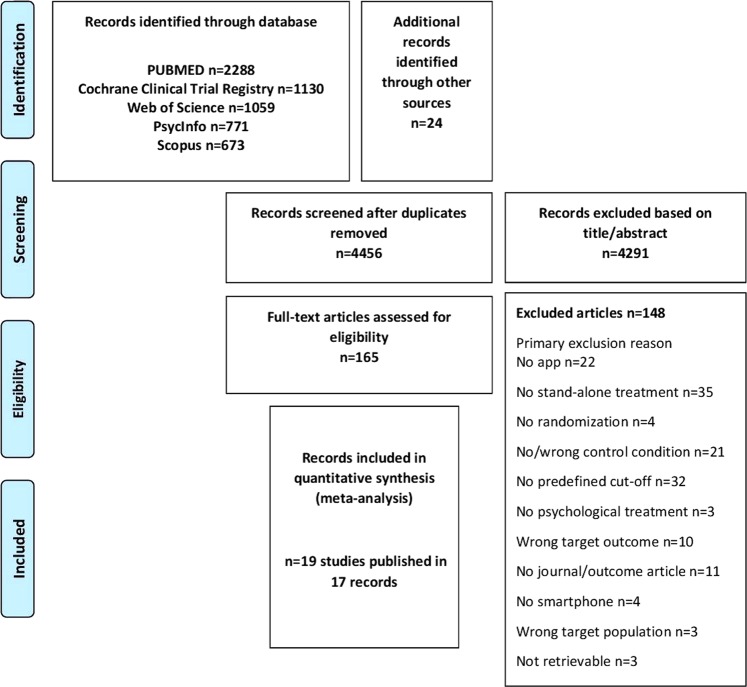
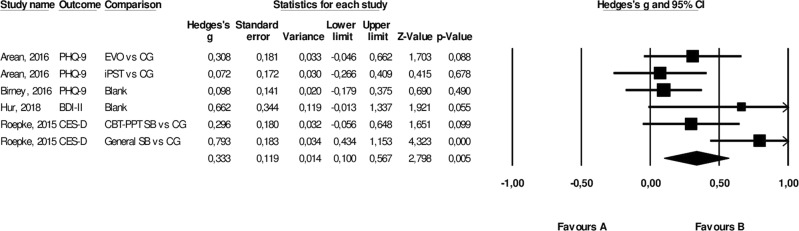
While smartphone usage is ubiquitous, and the app market for smartphone apps targeted at mental health is growing rapidly, the evidence of standalone apps for treating mental health symptoms is still unclear. This meta-analysis investigated the efficacy of standalone smartphone apps for mental health. A comprehensive literature search was conducted in February 2018 on randomized controlled trials investigating the effects of standalone apps for mental health in adults with heightened symptom severity, compared to a control group. A random-effects model was employed. When insufficient comparisons were available, data was presented in a narrative synthesis. Outcomes included assessments of mental health disorder symptom severity specifically targeted at by the app. In total, 5945 records were identified and 165 full-text articles were screened for inclusion by two independent researchers. Nineteen trials with 3681 participants were included in the analysis: depression ( k = 6), anxiety ( k = 4), substance use ( k = 5), self-injurious thoughts and behaviors ( k = 4), PTSD ( k = 2), and sleep problems ( k = 2). Effects on depression (Hedges’ g = 0.33, 95%CI 0.10–0.57, P = 0.005, NNT = 5.43, I 2 = 59%) and on smoking behavior ( g = 0.39, 95%CI 0.21–0.57, NNT = 4.59, P ≤ 0.001, I 2 = 0%) were significant. No significant pooled effects were found for anxiety, suicidal ideation, self-injury, or alcohol use ( g = −0.14 to 0.18). Effect sizes for single trials ranged from g = −0.05 to 0.14 for PTSD and g = 0.72 to 0.84 for insomnia. Although some trials showed potential of apps targeting mental health symptoms, using smartphone apps as standalone psychological interventions cannot be recommended based on the current level of evidence.
Overview
The claims and statistics of this paper haven’t been checked yet.
Free: it reads the open-access text and checks the first 5 claims that cite a source we can check. Create a free account to check every claim.
Integrity signals
Registry
Cites
Statistics
Figures
Verification
Claims the paper makes
The claims and statistics of this paper haven’t been checked yet.
Free: it reads the open-access text and checks the first 5 claims that cite a source we can check. Create a free account to check every claim.
Claims other papers make about this one
Each is checked against this paper’s own text: does it say what the citing paper says it does?
The cited source doesn’t support the claim as written.
In the citing paper
“The finding is inconsistent with other systematic reviews reporting that smartphone apps have small-to-moderate effect sizes on depression symptom reduction [4,10,12].”
From Effectiveness and Minimum Effective Dose of App-Based Mobile Health Interventions for Anxiety and Depression Symptom Reduction: Systematic Review and Meta-Analysis (2022) · cites this paper as [12]
Checked by a reasoning model — may be wrong.
Experimental — accuracy not yet measuredThe source backs part of the claim, not all of it — or backs it for a different population, condition or comparison.
In the citing paper
“Apps did not differ from non-specific controls on a combination of smoking and drinking outcomes (d = 0.18 [20]).”
From Mobile phone-based interventions for mental health: A systematic meta-review of 14 meta-analyses of randomized controlled trials (2022) · cites this paper as [20]
Experimental — accuracy not yet measuredThe source backs part of the claim, not all of it — or backs it for a different population, condition or comparison.
In the citing paper
“Apps did not differ from non-specific controls (d = 0.14 [20]).”
From Mobile phone-based interventions for mental health: A systematic meta-review of 14 meta-analyses of randomized controlled trials (2022) · cites this paper as [20]
Experimental — accuracy not yet measuredThe source backs part of the claim, not all of it — or backs it for a different population, condition or comparison.
In the citing paper
“People can benefit from fully automated, unguided DMHTs (36); however, at a population level, they show small benefits, likely because dropout rates are higher in unguided than guided interventions (37, 38).”
From Banbury forum consensus statement on the path forward for digital mental health treatment (2021) · cites this paper as [38]
Experimental — accuracy not yet measuredThe source backs part of the claim, not all of it — or backs it for a different population, condition or comparison.
In the citing paper
“In an unguided format, the effectiveness of iCBT, including digital health apps, seems to be limited [19,20]”
From Barriers to and Facilitators of a Blended Cognitive Behavioral Therapy Program for Depression and Anxiety Based on Experiences of University Students: Qualitative Interview Study (2023) · cites this paper as [20]
Experimental — accuracy not yet measured
19 more claims about this paper
Create a free account to see every claim other papers make about this one.
Self-check
Percentages, sums and reported differences re-computed from the paper’s own numbers.
The self-check needs the paper’s full text.
Citations
Cites
Diagnostic and Statistical Manual of Mental Disorders
American Psychiatric Association (2013) · doi:10.1176/appi.books.9780890425596 · Cited by 116,369
Measuring inconsistency in meta-analyses
Higgins, J. P. T., Thompson, S. G., Deeks, J. J., & Altman, D. G. (2003) · BMJ · doi:10.1136/bmj.327.7414.557 · Cited by 63,139
Liberati, A., Altman, D. G., Tetzlaff, J., Mulrow, C., Gøtzsche, P. C., Ioannidis, J. P. A., Clarke, M., Devereaux, P. J., Kleijnen, J., & Moher, D. (2009) · PLoS Medicine · doi:10.1371/journal.pmed.1000100 · Cited by 28,164
Duval, S., & Tweedie, R. (2000) · Biometrics · doi:10.1111/j.0006-341x.2000.00455.x · Cited by 14,099
Borenstein, M., Hedges, L. V., Higgins, J. P. T., & Rothstein, H. R. (2021) · doi:10.1002/9781119558378 · Cited by 9,799
Gulliver, A., Griffiths, K. M., & Christensen, H. (2010) · BMC Psychiatry · doi:10.1186/1471-244x-10-113 · Cited by 3,292
Scaling-up treatment of depression and anxiety: a global return on investment analysis
Chisholm, D., Sweeny, K., Sheehan, P., Rasmussen, B., Smit, F., Cuijpers, P., & Saxena, S. (2016) · The Lancet Psychiatry · doi:10.1016/s2215-0366(16)30024-4 · Cited by 1,451
Self-citationAndrews, G., Cuijpers, P., Craske, M. G., McEvoy, P., & Titov, N. (2010) · PLoS ONE · doi:10.1371/journal.pone.0013196 · Cited by 1,311 · cited 1×
“31 The same goes for PTSD, for which the most recent review found an average pooled effect of 0.95, 32 while the two only randomized trials that we were able to include in this study evaluating standalone apps for PTSD did not fi nd signi fi cant effects.”
InfluentialSelf-citationSmartphones for smarter delivery of mental health programs: A systematic review
Donker, T., Petrie, K., Proudfoot, J., Clarke, J., Birch, M.-R., & Christensen, H. (2013) · Journal of Medical Internet Research · doi:10.2196/jmir.2791 · Cited by 1,136
Firth, J., Torous, J., Nicholas, J., Carney, R., Pratap, A., Rosenbaum, S., & Sarris, J. (2017) · World Psychiatry · doi:10.1002/wps.20472 · Cited by 1,097
Cited by
Torous, J., Bucci, S., Bell, I. H., Kessing, L. V., Faurholt‐Jepsen, M., Whelan, P., Carvalho, A. F., Keshavan, M., Linardon, J., & Firth, J. (2021) · World Psychiatry · doi:10.1002/wps.20883 · Cited by 1,199
Torous, J., Jän Myrick, K., Rauseo-Ricupero, N., & Firth, J. (2020) · JMIR Mental Health · doi:10.2196/18848 · Cited by 946
“Current evidence for apps for behavior change remains limited [17], and self-help for mental health remains equally limited [18].”
BackgroundMethodInfluentialArtificially intelligent chatbots in digital mental health interventions: a review
Boucher, E. M., Harake, N. R., Ward, H. E., Stoeckl, S. E., Vargas, J., Minkel, J., Parks, A. C., & Zilca, R. (2021) · Expert Review of Medical Devices · doi:10.1080/17434440.2021.2013200 · Cited by 440
“engagement features [31], though other meta-analyses found significant pooled effects for depression but not for other psychological outcomes, including anxiety [32].”
BackgroundDigital interventions for the treatment of depression: a meta-analytic review
Moshe, I., Terhorst, Y., Philippi, P., Domhardt, M., Cuijpers, P., Cristea, I., Pulkki-Råback, L., Baumeister, H., & Sander, L. B. (2021) · Psychological Bulletin · doi:10.1037/bul0000334 · Cited by 390
Self-citationMobile Apps for Mental Health Issues: Meta-Review of Meta-Analyses
Lecomte, T., Potvin, S., Corbière, M., Guay, S., Samson, C., Cloutier, B., Francoeur, A., Pennou, A., & Khazaal, Y. (2020) · JMIR mHealth and uHealth · doi:10.2196/17458 · Cited by 336
“Although Weisel et al [41] do not recommend stand-alone apps for mental health problems, our results are more nuanced.”
BackgroundResultValidation of the Mobile Application Rating Scale (MARS)
Terhorst, Y., Philippi, P., Sander, L. B., Schultchen, D., Paganini, S., Bardus, M., Santo, K., Knitza, J., Machado, G. C., Schoeppe, S., et al. (2020) · PLOS ONE · doi:10.1371/journal.pone.0241480 · Cited by 276
Self-citationGoldberg, S. B., Lam, S. U., Simonsson, O., Torous, J., & Sun, S. (2022) · PLOS Digital Health · doi:10.1371/journal.pdig.0000002 · Cited by 237
“While our review included several meta-analyses investigating text messaging for smoking cessation, only one effect size included assessment of other addictive behaviors (smoking and drinking combined [20]).”
BackgroundInfluentialFiol-DeRoque, M. A., Serrano-Ripoll, M. J., Jiménez, R., Zamanillo-Campos, R., Yáñez-Juan, A. M., Bennasar-Veny, M., Leiva, A., Gervilla, E., García-Buades, M. E., García-Toro, M., et al. (2021) · JMIR mHealth and uHealth · doi:10.2196/27039 · Cited by 190
“RenderX finding is consistent with findings from a recent systematic review, which showed a lack of effect of mental mHealth interventions when used as a standalone therapy [43].”
ResultSaleem, M., Kühne, L., De Santis, K. K., Christianson, L., Brand, T., & Busse, H. (2021) · JMIR Mental Health · doi:10.2196/30000 · Cited by 199
“Anonymous use is desired to bypass barriers because of the stigma of seeking help for mental health concerns [4,6,7].”
BackgroundMethodInfluentialEisenstadt, M., Liverpool, S., Infanti, E., Ciuvat, R. M., & Carlsson, C. (2021) · JMIR Mental Health · doi:10.2196/31170 · Cited by 182
“Owing to the focus of this study on the general population, we also excluded records focusing on diagnosed health disorders (eg, PTSD, schizophrenia, major depression) and neurodiverse conditions (eg, dyslexia and autism spectrum disorders).”
InfluentialSpanhel, K., Balci, S., Feldhahn, F., Bengel, J., Baumeister, H., & Sander, L. B. (2021) · npj Digital Medicine · doi:10.1038/s41746-021-00498-1 · Cited by 178
Self-citationWu, A., Scult, M. A., Barnes, E. D., Betancourt, J. A., Falk, A., & Gunning, F. M. (2021) · npj Digital Medicine · doi:10.1038/s41746-021-00386-8 · Cited by 161
“We conducted a systematic search of the literature to identify empirical studies that (1) investigate standalone apps for depression and/or anxiety in symptomatic participants and (2) report at least one measure of engagement.”
MethodFischer, R., Bortolini, T., Karl, J. A., Zilberberg, M., Robinson, K., Rabelo, A., Gemal, L., Wegerhoff, D., Nguyễn, T. B. T., Irving, B., et al. (2020) · Frontiers in Psychology · doi:10.3389/fpsyg.2020.563876 · Cited by 153
Digital Technologies for Emotion-Regulation Assessment and Intervention: A Conceptual Review
Bettis, A. H., Burke, T. A., Nesi, J., & Liu, R. T. (2022) · Clinical Psychological Science · doi:10.1177/21677026211011982 · Cited by 133
“Feasibility and acceptability of digital health interventions is generally high; however, preliminary evidence suggests they are most effective when paired with other treatment modalities (Grist et al., 2017; Weisel et al., 2019).”
Actionable health app evaluation: translating expert frameworks into objective metrics
Lagan, S., Aquino, P., Emerson, M. R., Fortuna, K., Walker, R., & Torous, J. (2020) · npj Digital Medicine · doi:10.1038/s41746-020-00312-4 · Cited by 144
Banbury forum consensus statement on the path forward for digital mental health treatment
Mohr, D. C., Azocar, F., Bertagnolli, A., Choudhury, T., Chrisp, P., Frank, R., Harbin, H., Histon, T., Kaysen, D., Nebeker, C., et al. (2021) · Psychiatric Services · doi:10.1176/appi.ps.202000561 · Cited by 115
“People can benefit from fully automated, unguided DMHTs (36); however, at a population level, they show small benefits, likely because dropout rates are higher in unguided than guided interventions (37, 38).”
Friis-Healy, E. A., Nagy, G. A., & Kollins, S. H. (2021) · JMIR Mental Health · doi:10.2196/25456 · Cited by 106
“Continued growth, however, portends continued saturation of the marketplace with apps that make unwarranted claims, offer minimal protection of user data, or are ineffective [23-25].”
BackgroundAlvarez-Jimenez, M., Rice, S., D'Alfonso, S., Leicester, S., Bendall, S., Pryor, I., Russon, P., McEnery, C., Santesteban-Echarri, O., Da Costa, G., et al. (2020) · Journal of Medical Internet Research · doi:10.2196/17155 · Cited by 106
“However, a more recent meta-analysis including only mobile apps designed to treat mental health symptoms found small significant effects on depression, with no significant effects on anxiety, suicidal ideation, self-injury, or alcohol use [32].”
BackgroundAI-Based and Digital Mental Health Apps: Balancing Need and Risk
Hamdoun, S., Monteleone, R., Bookman, T., & Michael, K. (2023) · IEEE Technology and Society Magazine · doi:10.1109/mts.2023.3241309 · Cited by 103
“In a systematic review and meta-analysis of standalone applications for depression, anxiety, substance use, self-injury, and sleep problems conducted in 2019 [28], the only significant positive effects noted were for applications addressing depression, with some indications for efficacy in applications for smoking ces…”
BackgroundA systematic review of digital and face-to-face cognitive behavioral therapy for depression
Kambeitz-Ilankovic, L., Rzayeva, U., Völkel, L., Wenzel, J., Weiske, J., Jessen, F., Reininghaus, U., Uhlhaas, P. J., Alvarez-Jimenez, M., & Kambeitz, J. (2022) · npj Digital Medicine · doi:10.1038/s41746-022-00677-8 · Cited by 103
Serrano-Ripoll, M. J., Zamanillo-Campos, R., Fiol-DeRoque, M. A., Castro, A., & Ricci-Cabello, I. (2022) · JMIR mHealth and uHealth · doi:10.2196/29621 · Cited by 96
“Most of the available reviews offer an overview of the impact of mental mHealth interventions but do not focus on their specific impact on depression [14-18].”
BackgroundResultInfluentialSix, S. G., Byrne, K. A., Tibbett, T. P., & Pericot-Valverde, I. (2021) · JMIR Mental Health · doi:10.2196/32199 · Cited by 95
“Following previous meta-analyses comparing intervention effects on depressive symptoms [26,37,41], the effectiveness of mental health apps was assessed using one outcome: difference in depressive symptoms between intervention and control groups at posttreatment.”
BackgroundMethodResultInfluentialForbes, A., Keleher, M. R., Venditto, M., & DiBiasi, F. (2023) · Journal of Medical Internet Research · doi:10.2196/43727 · Cited by 94
“However, there is no consensus in the field yet on whether digital interventions are most useful before beginning psychotherapy or best when used as stand-alone treatments [54,68,86,168,169].”
Wasil, A. R., Gillespie, S., Patel, R., Petre, A., Venturo-Conerly, K. E., Shingleton, R. M., Weisz, J. R., & DeRubeis, R. J. (2020) · Journal of Consulting and Clinical Psychology · doi:10.1037/ccp0000604 · Cited by 86
Lifestyle medicine for depression: A meta-analysis of randomized controlled trials
Wong, V. W.-H., Ho, F. Y.-Y., Shi, N.-K., Sarris, J., Chung, K.-F., & Yeung, W.-F. (2021) · Journal of Affective Disorders · doi:10.1016/j.jad.2021.02.012 · Cited by 90
Multiscale modeling in smart cities: A survey on applications, current trends, and challenges
Khan, A., Aslam, S., Aurangzeb, K., Alhussein, M. A., & Javaid, N. (2021) · Sustainable Cities and Society · doi:10.1016/j.scs.2021.103517 · Cited by 100
Mobile Apps to Reduce Tobacco, Alcohol, and Illicit Drug Use: Systematic Review of the First Decade
Staiger, P. K., O'Donnell, R., Liknaitzky, P., Bush, R., & Milward, J. (2020) · Journal of Medical Internet Research · doi:10.2196/17156 · Cited by 84
“Indeed, app interventions have generated considerable interest in public health research, with some promising signs emerging from mental health apps [15], although see study by Weisel et al [16].”
BackgroundAl-Refae, M., Al-Refae, A., Munroe, M., Sardella, N. A., & Ferrari, M. (2021) · Frontiers in Psychology · doi:10.3389/fpsyg.2021.648087 · Cited by 78
Digital Mental Health: The Answer to the Global Mental Health Crisis?
Rudd, B. N., & Beidas, R. S. (2020) · JMIR Mental Health · doi:10.2196/18472 · Cited by 81
“However, the evidence supporting their efficacy is mixed [16,17], and engagement with digital mental health interventions, particularly mobile apps that lack ancillary human interaction, is abysmal [18].”
BackgroundReynard, S., Dias, J., Mitić, M., Schrank, B., & Woodcock, K. A. (2022) · JMIR Serious Games · doi:10.2196/31456 · Cited by 112
“Mental health digital interventions for youth have attracted a number of recent systematic reviews and meta-analyses [12,35-37].”
BackgroundConnolly, S. L., Hogan, T. P., Shimada, S. L., & Miller, C. J. (2020) · Journal of Technology in Behavioral Science · doi:10.1007/s41347-020-00165-4 · Cited by 95
Schultchen, D., Terhorst, Y., Holderied, T., Stach, M., Messner, E.-M., Baumeister, H., & Sander, L. B. (2021) · International Journal of Behavioral Medicine · doi:10.1007/s12529-020-09944-y · Cited by 76
Self-citationAlliance with an unguided smartphone app: validation of the digital working alliance inventory
Goldberg, S. B., Baldwin, S. A., Riordan, K. M., Torous, J., Dahl, C. J., Davidson, R. J., & Hirshberg, M. J. (2022) · Assessment · doi:10.1177/10731911211015310 · Cited by 74
Szinay, D., Perski, O., Jones, A., Chadborn, T., Brown, J., & Naughton, F. (2021) · JMIR mhealth and uhealth · doi:10.2196/29098 · Cited by 91
“Health apps are also considered a cost-effective solution [7,13] and have the potential to increase access for hard-to-reach populations that are resistant or unable to seek face-to-face support, for instance, because of stigma or geographical barriers [14].”
BackgroundTomasik, J., Han, S. Y. S., Barton‐Owen, G., Mirea, D.-M., Martin-Key, N. A., Rustogi, N., Lago, S. G., Olmert, T., Cooper, J. D., Özcan, S., et al. (2021) · Translational Psychiatry · doi:10.1038/s41398-020-01181-x · Cited by 81
Huberty, J., Puzia, M. E., Green, J., Vlisides-Henry, R. D., Larkey, L., Irwin, M. R., & Vranceanu, A.-M. (2021) · General Hospital Psychiatry · doi:10.1016/j.genhosppsych.2021.09.004 · Cited by 75
Jabir, A. I., Lin, X., Martinengo, L., Sharp, G., Theng, Y.-L., & Tudor Car, L. (2024) · Journal of Medical Internet Research · doi:10.2196/48168 · Cited by 66
Linguistic features of suicidal thoughts and behaviors: A systematic review
Homan, S., Gabi, M., Klee, N., Bachmann, S., Moser, A.-M., Duri', M., Michel, S., Bertram, A.-M., Maatz, A., Seiler, G., et al. (2022) · Clinical Psychology Review · doi:10.1016/j.cpr.2022.102161 · Cited by 93
Artificial intelligence and machine learning in mobile apps for mental health: A scoping review
Milne-Ives, M., Selby, E., Inkster, B., Lam, C., & Meinert, E. (2022) · PLOS Digital Health · doi:10.1371/journal.pdig.0000079 · Cited by 68
“Most of these systematic reviews found methodological issues (such as a lack of control or comparison groups or representative samples, and a high risk of bias) [9,10] and insufficient evidence of effectiveness of mental health apps for changing behaviours or improving clinical outcomes [9,11,13].”
BackgroundBruhns, A., Lüdtke, T., Moritz, S., & Bücker, L. (2021) · JMIR mHealth and uHealth · doi:10.2196/26498 · Cited by 68
“33) [34,35] in reducing depressive symptoms.”
Stirman, S. W., & Beidas, R. S. (2020) · American Psychologist · doi:10.1037/amp0000774 · Cited by 71
“Promising research by colleagues on DMHI (Weisel et al., 2019) and single session interventions (Schleider et al., 2020, in press) suggest the potential of a stepped approach globally.”
BackgroundInfluentialArtificial Intelligence for Biology
Hassoun, S., Jefferson, F., Shi, X., Stucky, B., Wang, J., & Rosa, E. (2022) · Integrative and Comparative Biology · doi:10.1093/icb/icab188 · Cited by 64
Ramos, G., Hernandez-Ramos, R., Taylor, M. E., & Schueller, S. M. (2024) · Behavior Therapy · doi:10.1016/j.beth.2024.04.004 · Cited by 73
Digital solutions for migrant and refugee health: a framework for analysis and action
Matlin, S. A., Hanefeld, J., Côrte-Real, A., da Cunha, P. R., de Gruchy, T., Manji, K., Netto, G., Nunes, T., Yüksel, İ. Ş., Takian, A., et al. (2024) · The Lancet Regional Health - Europe · doi:10.1016/j.lanepe.2024.101190 · Cited by 90
The effects of mobile apps on stress, anxiety, and depression: overview of systematic reviews
Khademian, F., Aslani, A., & Bastani, P. (2021) · International Journal of Technology Assessment in Health Care · doi:10.1017/s0266462320002093 · Cited by 62
“Moreover, it can be effective for people who are not seeking treatment (64), whereas nonvalidated apps can have negative impacts on patients (65).”
BackgroundIs There an App for That?: Ethical Issues in the Digital Mental Health Response to COVID-19
Skorburg, J. A., & Yam, J. (2022) · AJOB Neuroscience · doi:10.1080/21507740.2021.1918284 · Cited by 64
“In this recent meta-analysis and systematic review, Weisel et al. (2019) focus specifically on standalone smartphone apps for a variety of mental health conditions including depression, anxiety, substance use, self-injurious thoughts and behaviors, and sleep problems.”
BackgroundTeepe, G. W., Fonseca, A. D., Kleim, B., Jacobson, N. C., Salamanca-Sanabria, A., Car, L. T., Fleisch, E., & Kowatsch, T. (2021) · Journal of Medical Internet Research · doi:10.2196/29412 · Cited by 74
“Finally, apps can be used in real-life situations, where behavior change is most desirable and clinicians are unable to intervene [14].”
InfluentialTowards clinically actionable digital phenotyping targets in schizophrenia
Henson, P., Barnett, I., Keshavan, M. S., & Torous, J. B. (2020) · Schizophrenia · doi:10.1038/s41537-020-0100-1 · Cited by 68
“Using such data to inform just-in-time adaptive interventions for mental health 7 may increase access to evidence-based care, although to date, research and products have focused primarily on mood disorders 8 .”
MethodEngagement with mobile health interventions for depression: A systematic review
Molloy, A., & Anderson, P. L. (2021) · Internet Interventions · doi:10.1016/j.invent.2021.100454 · Cited by 59
O'Brien, H. L., Morton, E., Kampen, A., Barnes, S. J., & Michalak, E. E. (2020) · BJPsych Open · doi:10.1192/bjo.2020.72 · Cited by 57
Almuqrin, A., Hammoud, R., Terbagou, I., Tognin, S., & Mechelli, A. (2025) · BMJ Open · doi:10.1136/bmjopen-2024-093932 · Cited by 61
“34 85 86 Therefore, future mental health apps should involve service users early in the development stage.”
Gutiérrez, L. J., Rabbani, K., Ajayi, O. J., Gebresilassie, S. K., Rafferty, J., Castro, L. A., & Baños, O. (2021) · International Journal of Environmental Research and Public Health · doi:10.3390/ijerph18031327 · Cited by 59
“Some of them have focused on analyzing the efficacy of smartphone apps for mental health [27], or guiding the development of those apps [28].”
BackgroundBalci, S., Spanhel, K., Sander, L., & Baumeister, H. (2022) · npj Digital Medicine · doi:10.1038/s41746-022-00569-x · Cited by 60
Self-citationConley, C. S., Raposa, E. B., Bartolotta, K., Broner, S. E., Hareli, M., Forbes, N., Christensen, K. M., & Assink, M. (2022) · JMIR Mental Health · doi:10.2196/34254 · Cited by 63
“The literature on the efficacy of mobile TDIs, or mTDIs, is growing, with multiple meta-analytic reviews indicating positive impacts on a range of psychological outcomes in adults [42,53,61-63].”
BackgroundUlrich, S., Lienhard, N., Künzli, H., & Kowatsch, T. (2024) · JMIR mHealth and uHealth · doi:10.2196/54945 · Cited by 36
“A meta-analysis by Weisel et al [28] highlighted the advantages of apps, including location and time independence, reduced stigmatization, and low costs [29].”
MethodWang, Y., Li, X., Zhang, Q., Yeung, D., & Wu, Y. (2025) · JMIR mHealth and uHealth · doi:10.2196/63806 · Cited by 35
“This aligns with findings from a meta-analysis, which reported stronger effects of digital interventions for depression compared to anxiety disorders, particularly when human guidance was minimal [59].”
App-Based Interventions for Moderate to Severe Depression: A Systematic Review and Meta-Analysis
Bae, H., Shin, H., Ji, H.-G., Kwon, J. S., Kim, H., & Hur, J.-W. (2023) · JAMA Network Open · doi:10.1001/jamanetworkopen.2023.44120 · Cited by 47
Research Trends on Mobile Mental Health Application for General Population: A Scoping Review
Hwang, W. J., Ha, J. S., & Kim, M. J. (2021) · International Journal of Environmental Research and Public Health · doi:10.3390/ijerph18052459 · Cited by 56
Mohr, D. C., Kwasny, M., Meyerhoff, J., Graham, A. K., & Lattie, E. G. (2021) · Behaviour Research and Therapy · doi:10.1016/j.brat.2021.103972 · Cited by 50
Bauermeister, J., Choi, S. K., Bruehlman-Senecal, E., Golinkoff, J., Taboada, A., Lavra, J., Ramazzini, L., Dillon, F., & Haritatos, J. (2022) · Journal of Medical Internet Research · doi:10.2196/39094 · Cited by 45
“Study Objectives Although these findings suggest that SGM youth perceive web-based asynchronous interventions to be acceptable, there is a need to increase the empirical evidence base for the efficacy of these interventions [27].”
Carl, J. R., Jones, D. J., Lindhiem, O. J., Doss, B. D., Weingardt, K. R., Timmons, A. C., & Comer, J. S. (2021) · British Journal of Clinical Psychology · doi:10.1111/bjc.12286 · Cited by 50
Lu, S.-C., Xu, M., Wang, M., Hardi, A., Cheng, A. L., Chang, S.-H., & Yen, P.-Y. (2022) · JMIR Mental Health · doi:10.2196/39454 · Cited by 45
“…smartphone apps for depression (Hedge g=.34, 95% CI 0.18-0.49, P .001) and anxiety (Hedge g=.43, 95% CI 0.19-0.66, P ≤ .001) symptom reduction [12] Nevertheless, although previous studies have examined intervention features and components to identify the most effective design for app-based…”
InfluentialMobile Health App Database - A Repository for Quality Ratings of mHealth Apps
Stach, M., Kraft, R., Probst, T., Meßner, E.-M., Terhorst, Y., Baumeister, H., Schickler, M., Reichert, M., Sander, L., & Pryss, R. C. (2020) · Proceedings - IEEE Symposium on Computer-Based Medical Systems · doi:10.1109/cbms49503.2020.00087 · Cited by 52
“In general, the evidence-base of most of the mHealth apps is low at the moment [14], [37], [38].”
BackgroundSelf-citationDigital chemsex support and care: The potential of just-in-time adaptive interventions
Platteau, T., Herrijgers, C., & de Wit, J. B. F. (2020) · International Journal of Drug Policy · doi:10.1016/j.drugpo.2020.102927 · Cited by 56
Hawker, C. O., Merkouris, S., Youssef, G. J., & Dowling, N. A. (2021) · Journal of Medical Internet Research · doi:10.2196/25786 · Cited by 53
“There is growing evidence for the acceptability, feasibility, and preliminary effectiveness of smartphone-delivered interventions for numerous chronic medical conditions [21-23] and mental health concerns [24,25].”
Domhardt, M., Messner, E.-M., Eder, A.-S., Engler, S., Sander, L. B., Baumeister, H., & Terhorst, Y. (2021) · Child and Adolescent Psychiatry and Mental Health · doi:10.1186/s13034-021-00401-6 · Cited by 43
“Recent metaanalyses indicate that also app-based psychotherapeutic interventions are efficacious [32, 33]: For instance, for depressive symptoms (SMD = 0.”
BackgroundSelf-citationSystematic evaluation of content and quality of English and German pain apps in European app stores
Terhorst, Y., Meßner, E.-M., Schultchen, D., Paganini, S., Portenhauser, A. A., Eder, A.-S., Bauer, M., Papenhoff, M. C., Baumeister, H., & Sander, L. (2021) · Internet Interventions · doi:10.1016/j.invent.2021.100376 · Cited by 47
“Given their time- and location-independent nature, mobile health applications (MHA) might provide an opportunity to improve health care for people with pain (Albrecht, 2016; Donker et al., 2013; Linardon et al., 2019; Thurnheer et al., 2018; Weisel et al., 2019).”
BackgroundSelf-citationEl-Haj-Mohamad, R., Nohr, L., Niemeyer, H., Böttche, M., & Knaevelsrud, C. (2023) · Cambridge Prisms Global Mental Health · doi:10.1017/gmh.2022.61 · Cited by 40
Sarubbi, S., Rogante, E., Erbuto, D., Cifrodelli, M., Sarli, G., Polidori, L., Lester, D., Berardelli, I., & Pompili, M. (2022) · Journal of Clinical Medicine · doi:10.3390/jcm11195616 · Cited by 45
Bell, I., Arnold, C., Gilbertson, T., D’Alfonso, S., Castagnini, E., Chen, N. A., Nicholas, J., O’Sullivan, S., Valentine, L., & Álvarez‐Jiménez, M. (2023) · Journal of Medical Internet Research · doi:10.2196/47860 · Cited by 45
“Research has found that smartphone-based interventions can be used to effectively treat a range of mental disorders in adults [31] and youth [32,33].”
InfluentialBaumel, A., Torous, J., Edan, S., & Kane, J. M. (2020) · Journal of Affective Disorders · doi:10.1016/j.jad.2020.05.011 · Cited by 41
Wienert, J., & Zeeb, H. (2021) · Frontiers in Public Health · doi:10.3389/fpubh.2021.610237 · Cited by 38
“One example is apps for depression therapy: Recent meta-analyses confirm the effectiveness of apps that address depression in terms of reduced symptoms, however, little is known about if and how such effective apps are used for prevention or how these apps are implemented into health systems (5, 6).”
MethodRauseo-Ricupero, N., Henson, P., Agate-Mays, M., & Torous, J. B. (2021) · International Review of Psychiatry · doi:10.1080/09540261.2020.1859465 · Cited by 45
“While digital tools, like smartphone apps, are often proposed as solutions to further increase access to care, real world use data suggests that offering self-help apps alone is neither effective (Weisel et al., 2019) nor engaging (Bamuel et al., 2019).”
BackgroundSteare, T., Giorgalli, M., Free, K., Harju‐Seppänen, J., Akther, S. F., Eskinazi, M., O’Hanlon, P., Rostill, H., Amani, S., Lloyd‐Evans, B., et al. (2021) · BMC Psychiatry · doi:10.1186/s12888-021-03317-9 · Cited by 43
“A recent meta-analysis has suggested that Smartphone apps used across a range of mental health problems are not effective when used independently [44] further suggesting that developing and testing apps that are more integrated with clinical care and for which clinician support is more readily mobilised may be an appr…”
Gasteiger, N., Dowding, D., Norman, G., McGarrigle, L., Eost‐Telling, C., Jones, D. J., Vercell, A., Ali, S. M., & O’Connor, S. (2023) · BMJ Open · doi:10.1136/bmjopen-2023-073283 · Cited by 44
“18 The process of systematically reviewing published studies then provides an overview of the evidence base for the use and effectiveness of different types of mHealth interventions for different patient populations and various purposes.”
MethodSeegan, P. L., Miller, M. J., Heliste, J. L., Fathi, L., & Mcguire, J. F. (2023) · Journal of Psychiatric Research · doi:10.1016/j.jpsychires.2023.06.019 · Cited by 48
Ulrich, S., Gantenbein, A. R., Zuber, V., Von Wyl, A., Kowatsch, T., & Künzli, H. (2024) · Journal of Medical Internet Research · doi:10.2196/50132 · Cited by 36
“Reminders (Figure 1C) are an effective way of improving engagement, especially when they address specific needs [76,77]; refer to Multimedia Appendix 4 [49,56,68,78-81] for the detailed aspects of the engagements implemented.”
Patient and physician perspectives of a smartphone application for depression: a qualitative study
Patoz, M.-C., Hidalgo‐Mazzei, D., Blanc, O., Verdolini, N., Pacchiarotti, I., Murru, A., Zukerwar, L., Vieta, E., Llorca, P., & Samalin, L. (2021) · BMC Psychiatry · doi:10.1186/s12888-021-03064-x · Cited by 41
“Although m-health is a promising field for increasing access to mental health programmes, their current use in clinical practice is limited and most of the available apps have not yet consistently demonstrated their effectiveness in the management of depression [14].”
BackgroundChatbots and mental health: a scoping review of reviews
Mayor, E. (2025) · Current Psychology · doi:10.1007/s12144-025-08094-2 · Cited by 51
Spadaro, B., Martin-Key, N. A., Funnell, E., & Bahn, S. (2022) · JMIR mhealth and uhealth · doi:10.2196/30724 · Cited by 34
Ariöz, U., Smrke, U., Plohl, N., & Mlakar, I. (2022) · Diagnostics · doi:10.3390/diagnostics12112683 · Cited by 48
Szinay, D., Perski, O., Jones, A., Chadborn, T., Brown, J., & Naughton, F. (2021) · JMIR mhealth and uhealth · doi:10.2196/27173 · Cited by 37
“In addition, health apps can reach those resistant to seeking help in person (because of stigma) by improving access to behavior change interventions [17].”
BackgroundМалинаускас, Р. К., & Malinauskiene, V. A. (2022) · International Journal of Environmental Research and Public Health · doi:10.3390/ijerph19159199 · Cited by 44
Cao, W., Kadir, A. A., Tang, W., Wang, J., Yuan, J., & Hassan, I. I. (2024) · BMC Medical Informatics and Decision Making · doi:10.1186/s12911-023-02391-1 · Cited by 46
“Finally, Weisel et al. [55] highlighted that engagement is linked to the efficacy of apps, and adherence to app should be further investigated.”
BackgroundLockwood, J., Williams, L., Martin, J. L., Rathee, M., & Hill, C. (2022) · JMIR Mental Health · doi:10.2196/29008 · Cited by 35
Is the world ready for ChatGPT therapists?
Graber-Stiehl, I. (2023) · Nature · doi:10.1038/d41586-023-01473-4 · Cited by 32
Tng, G. Y. Q., Koh, J., Soh, X. C., Majeed, N. M., & Hartanto, A. (2024) · Journal of Affective Disorders · doi:10.1016/j.jad.2024.04.074 · Cited by 33
Wang, L., Fagan, C., & Yu, C.-L. (2020) · Journal of Psychotherapy Integration · doi:10.1037/int0000204 · Cited by 38
Bryant, B. R., Sisk, M. R., & McGuire, J. F. (2024) · JAMA Pediatrics · doi:10.1001/jamapediatrics.2024.3139 · Cited by 30
Huang, Z., Epps, J., Joachim, D., Stasak, B., Williamson, J. R., & Quatieri, T. F. (2020) · Interspeech (USB) · doi:10.21437/interspeech.2020-3135 · Cited by 44
Figueroa, C. A., Aguilera, A., Chakraborty, B., Modiri, A., Aggarwal, J., Deliu, N., Sarkar, U., Williams, J. J., & Lyles, C. R. (2021) · Journal of the American Medical Informatics Association · doi:10.1093/jamia/ocab001 · Cited by 47
“10 One explanation for low retention and declining effectiveness of apps is that they are not responsive enough to users’ changing needs.”
BackgroundTele‐medicine and improvement of mental health problems in COVID‐19 pandemic: A systematic review
Hatami, H., Deravi, N., Danaei, B., Zangiabadian, M., Bonjar, A. H. S., Kheradmand, A., & Nasiri, M. J. (2022) · International Journal of Methods in Psychiatric Research · doi:10.1002/mpr.1924 · Cited by 35
“mHealth interventions when used as a standalone therapy (Weisel et al., 2019).”
MethodResultGonzález‐Pérez, A., Matey-Sanz, M., Granell, C., Díaz-Sanahuja, L., Bretón-López, J. M., & Casteleyn, S. (2023) · Journal of Biomedical Informatics · doi:10.1016/j.jbi.2023.104359 · Cited by 38
Reininghaus, U., Daemen, M., Postma, M. R., Schick, A., Hoes-van der Meulen, I., Volbragt, N., Nieman, D., Delespaul, P., de Haan, L., van der Pluijm, M., et al. (2024) · JAMA Psychiatry · doi:10.1001/jamapsychiatry.2023.4590 · Cited by 28
Serrano‐Ripoll, M. J., Ricci‐Cabello, I., Jiménez, R., Zamanillo‐Campos, R., Yañez‐Juan, A. M., Bennasar‐Veny, M., Sitges, C., Gervilla, E., Leiva, A., García‐Campayo, J., et al. (2021) · Journal of Advanced Nursing · doi:10.1111/jan.14813 · Cited by 28
“Recent systematic reviews investigating the efficacy of standalone smartphone apps for mental health show that, although they have potential for improving mental health symptoms, the available evidence is still scarce and more rigorous trials are needed (Miralles et al., 2020; Weisel et al., 2019).”
BackgroundBoucher, E. M., Honomichl, R. D., Ward, H. E., Powell, T., Stoeckl, S. E., & Parks, A. C. (2022) · JMIR Aging · doi:10.2196/39851 · Cited by 32
“Over the past 2 decades, a number of digital interventions have been developed to address the general unmet need for mental health care [16], and research suggests that these can effectively help improve mental health, including depression, anxiety, and stress [17-20].”
BackgroundVertsberger, D., Naor, N., & Winsberg, M. E. (2022) · JMIR AI · doi:10.2196/38171 · Cited by 37
“…mHealth interventions are either aimed at complementing traditional mental health treatments or providing mental health support to those who are unable to receive quality mental health services—for example, due to long waiting lists [19]—and were found to be beneficial to adult populations [19-21].”
BackgroundWoensel, W. V., Roy, P. C., Abidi, S. S. R., & Abidi, S. (2020) · Artificial Intelligence in Medicine · doi:10.1016/j.artmed.2020.101931 · Cited by 31
Serrano-Ripoll, M. J., Ricci-Cabello, I., Jiménez, R., Zamanillo-Campos, R., Yañez Juan, A. M., Bennasar-Veny, M., Sitges, C., Gervilla, E., Leiva, A., García-Campayo, J., et al. (2020) · doi:10.1101/2020.11.03.20225102 · Cited by 28
Andersson, C., Bergsten, K. L., Lilliengren, P., Norbäck, K., Rask, K., Einhorn, S., & Osika, W. (2020) · Journal of Clinical Psychology · doi:10.1002/jclp.23092 · Cited by 37
Metadata
- Authors
- Weisel, K. K., Fuhrmann, L. M., Berking, M., Baumeister, H., Cuijpers, P., & Ebert, D. D.
- Affiliations
- Friedrich-Alexander-Universität Erlangen-Nürnberg (DE)
- Universität Ulm (DE)
- Amsterdam Public Health (NL)
- Corresponding author
- Weisel, Kiona K.
- ORCID
- Venue
- npj Digital Medicine
- Published
- 2019-12-02
- Volume
- 2
- Issue
- 1
- Pages
- 118-118
- ISSN
- 2398-6352 (ISSN-L)
- PMC
- PMC6889400
- OpenAlex
- W2990241465
- Cited by
- 447
- References
- 64
- Citations by year
- 2026: 32 · 2025: 63 · 2024: 67 · 2023: 61 · 2022: 91 · 2021: 79 · 2020: 54
- FWCI
- 7.93
- Type
- journal article
- Language
- en
- Open access
- gold
- doi.org
- Licence
- cc-by
- creativecommons.org/licenses/by/4.0 (tdm)
- creativecommons.org/licenses/by/4.0 (vor)
- Locations
- npj Digital Medicine (publishedVersion, cc-by)
- PubMed Central (publishedVersion, cc-by)
- PubMed (publishedVersion)
- VU Research Portal (publishedVersion, cc-by)
- DOAJ (DOAJ: Directory of Open Access Journals) (submittedVersion)
- OPUS FAU (Kooperativer Bibliotheksverbund Berlin-Brandenburg (KOBV), on behalf of the Universitätsbibliothek Erlangen-Nürnberg) (submittedVersion, cc-by)
- Data Archiving and Networked Services (DANS) (submittedVersion, other-oa)
- Funders
- National Institute for Health and Care Research
- Topics
- Social Sciences › Psychology › Applied Psychology › Digital Mental Health Interventions
- Health Sciences › Health Professions › General Health Professions › Mobile Health and mHealth Applications
- Social Sciences › Psychology › Experimental and Cognitive Psychology › Mental Health Research Topics
- Keywords
- mobile application, mental health apps, digital mental health interventions, depression, anxiety, substance use, self-harm, suicidal ideation, post-traumatic stress disorder, insomnia, smoking cessation, app efficacy
About these checks
Registry, retraction, Cites and statistics results are computed, not judged, with one exception: a printed reference that no index lists is read once by a model before it counts as a citation error. Claims are extracted by a model and kept only when their quote appears verbatim in the text; each cited source is then checked, with a model’s help, for whether it says what the claim relies on. Those verdicts can be wrong — read the claim’s quote and the cited source before relying on one.
Statistics and arithmetic are recomputed, not judged.
Confidence bands are shown only for fields calibrated on our annotated test set. None is calibrated yet, so no band is shown.
What counts as a claim ›How we measure confidence ›How we check this ›
Are you an author, or do you see a problem with this page? Request a review
Data sources
Bibliographic data: Semantic Scholar, OpenAlex, Crossref.
Contains information from the Semantic Scholar Academic Graph Datasets, made available under the ODC Attribution License (ODC-BY 1.0).
Semantic Scholar’s data is described in: Kinney, R., et al. (2023). The Semantic Scholar Open Data Platform. arXiv:2301.10140.
