

Standalone smartphone apps for mental health—a systematic review and meta-analysis
Open accessThe DOI matches its Crossref record; 64 of the 64 references it cites were found in a registry or an index.
Abstract
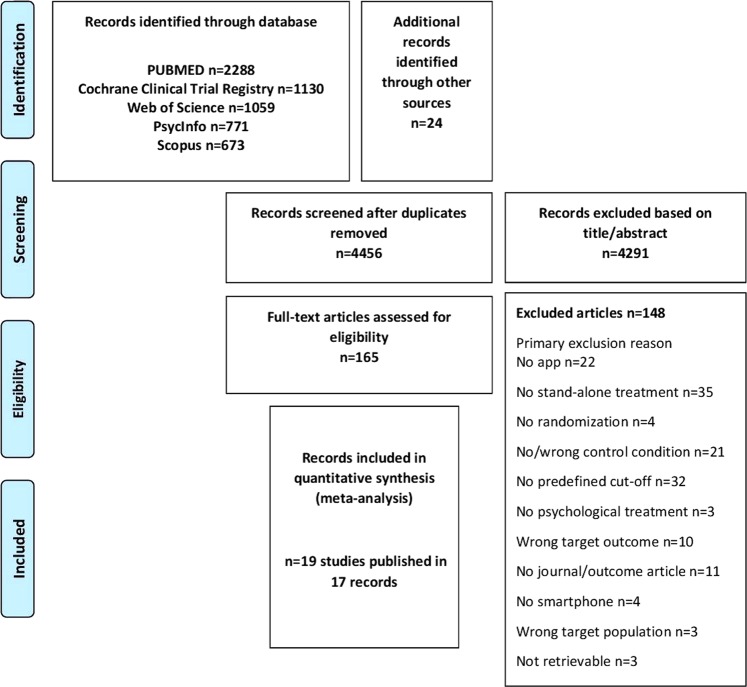
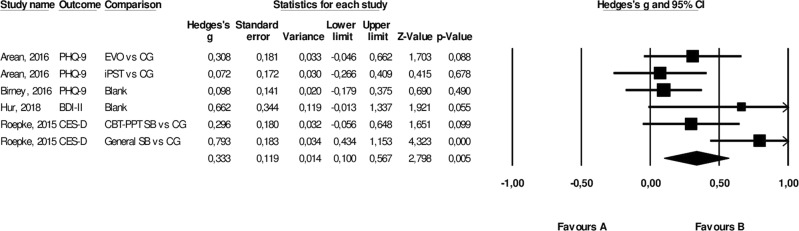
While smartphone usage is ubiquitous, and the app market for smartphone apps targeted at mental health is growing rapidly, the evidence of standalone apps for treating mental health symptoms is still unclear. This meta-analysis investigated the efficacy of standalone smartphone apps for mental health. A comprehensive literature search was conducted in February 2018 on randomized controlled trials investigating the effects of standalone apps for mental health in adults with heightened symptom severity, compared to a control group. A random-effects model was employed. When insufficient comparisons were available, data was presented in a narrative synthesis. Outcomes included assessments of mental health disorder symptom severity specifically targeted at by the app. In total, 5945 records were identified and 165 full-text articles were screened for inclusion by two independent researchers. Nineteen trials with 3681 participants were included in the analysis: depression ( k = 6), anxiety ( k = 4), substance use ( k = 5), self-injurious thoughts and behaviors ( k = 4), PTSD ( k = 2), and sleep problems ( k = 2). Effects on depression (Hedges’ g = 0.33, 95%CI 0.10–0.57, P = 0.005, NNT = 5.43, I 2 = 59%) and on smoking behavior ( g = 0.39, 95%CI 0.21–0.57, NNT = 4.59, P ≤ 0.001, I 2 = 0%) were significant. No significant pooled effects were found for anxiety, suicidal ideation, self-injury, or alcohol use ( g = −0.14 to 0.18). Effect sizes for single trials ranged from g = −0.05 to 0.14 for PTSD and g = 0.72 to 0.84 for insomnia. Although some trials showed potential of apps targeting mental health symptoms, using smartphone apps as standalone psychological interventions cannot be recommended based on the current level of evidence.
Overview
The claims and statistics of this paper haven’t been checked yet.
Free: it reads the open-access text and checks the first 5 claims that cite a source we can check. Create a free account to check every claim.
Integrity signals
Registry
Cites
Statistics
Figures
Verification
Claims the paper makes
The claims and statistics of this paper haven’t been checked yet.
Free: it reads the open-access text and checks the first 5 claims that cite a source we can check. Create a free account to check every claim.
Claims other papers make about this one
Each is checked against this paper’s own text: does it say what the citing paper says it does?
The cited source doesn’t support the claim as written.
In the citing paper
“The finding is inconsistent with other systematic reviews reporting that smartphone apps have small-to-moderate effect sizes on depression symptom reduction [4,10,12].”
From Effectiveness and Minimum Effective Dose of App-Based Mobile Health Interventions for Anxiety and Depression Symptom Reduction: Systematic Review and Meta-Analysis (2022) · cites this paper as [12]
Checked by a reasoning model — may be wrong.
Experimental — accuracy not yet measuredThe source backs part of the claim, not all of it — or backs it for a different population, condition or comparison.
In the citing paper
“Apps did not differ from non-specific controls on a combination of smoking and drinking outcomes (d = 0.18 [20]).”
From Mobile phone-based interventions for mental health: A systematic meta-review of 14 meta-analyses of randomized controlled trials (2022) · cites this paper as [20]
Experimental — accuracy not yet measuredThe source backs part of the claim, not all of it — or backs it for a different population, condition or comparison.
In the citing paper
“Apps did not differ from non-specific controls (d = 0.14 [20]).”
From Mobile phone-based interventions for mental health: A systematic meta-review of 14 meta-analyses of randomized controlled trials (2022) · cites this paper as [20]
Experimental — accuracy not yet measuredThe source backs part of the claim, not all of it — or backs it for a different population, condition or comparison.
In the citing paper
“People can benefit from fully automated, unguided DMHTs (36); however, at a population level, they show small benefits, likely because dropout rates are higher in unguided than guided interventions (37, 38).”
From Banbury forum consensus statement on the path forward for digital mental health treatment (2021) · cites this paper as [38]
Experimental — accuracy not yet measuredThe source backs part of the claim, not all of it — or backs it for a different population, condition or comparison.
In the citing paper
“In an unguided format, the effectiveness of iCBT, including digital health apps, seems to be limited [19,20]”
From Barriers to and Facilitators of a Blended Cognitive Behavioral Therapy Program for Depression and Anxiety Based on Experiences of University Students: Qualitative Interview Study (2023) · cites this paper as [20]
Experimental — accuracy not yet measured
19 more claims about this paper
Create a free account to see every claim other papers make about this one.
Self-check
Percentages, sums and reported differences re-computed from the paper’s own numbers.
The self-check needs the paper’s full text.
Citations
Cites
Diagnostic and Statistical Manual of Mental Disorders
American Psychiatric Association (2013) · doi:10.1176/appi.books.9780890425596 · Cited by 116,369
Measuring inconsistency in meta-analyses
Higgins, J. P. T., Thompson, S. G., Deeks, J. J., & Altman, D. G. (2003) · BMJ · doi:10.1136/bmj.327.7414.557 · Cited by 63,139
Liberati, A., Altman, D. G., Tetzlaff, J., Mulrow, C., Gøtzsche, P. C., Ioannidis, J. P. A., Clarke, M., Devereaux, P. J., Kleijnen, J., & Moher, D. (2009) · PLoS Medicine · doi:10.1371/journal.pmed.1000100 · Cited by 28,164
Duval, S., & Tweedie, R. (2000) · Biometrics · doi:10.1111/j.0006-341x.2000.00455.x · Cited by 14,099
Borenstein, M., Hedges, L. V., Higgins, J. P. T., & Rothstein, H. R. (2021) · doi:10.1002/9781119558378 · Cited by 9,799
Gulliver, A., Griffiths, K. M., & Christensen, H. (2010) · BMC Psychiatry · doi:10.1186/1471-244x-10-113 · Cited by 3,292
Scaling-up treatment of depression and anxiety: a global return on investment analysis
Chisholm, D., Sweeny, K., Sheehan, P., Rasmussen, B., Smit, F., Cuijpers, P., & Saxena, S. (2016) · The Lancet Psychiatry · doi:10.1016/s2215-0366(16)30024-4 · Cited by 1,451
Self-citationAndrews, G., Cuijpers, P., Craske, M. G., McEvoy, P., & Titov, N. (2010) · PLoS ONE · doi:10.1371/journal.pone.0013196 · Cited by 1,311 · cited 1×
“31 The same goes for PTSD, for which the most recent review found an average pooled effect of 0.95, 32 while the two only randomized trials that we were able to include in this study evaluating standalone apps for PTSD did not fi nd signi fi cant effects.”
InfluentialSelf-citationSmartphones for smarter delivery of mental health programs: A systematic review
Donker, T., Petrie, K., Proudfoot, J., Clarke, J., Birch, M.-R., & Christensen, H. (2013) · Journal of Medical Internet Research · doi:10.2196/jmir.2791 · Cited by 1,136
Firth, J., Torous, J., Nicholas, J., Carney, R., Pratap, A., Rosenbaum, S., & Sarris, J. (2017) · World Psychiatry · doi:10.1002/wps.20472 · Cited by 1,097
Cited by
Items 201–300 of 444
Dardas, L. A., Al-leimon, O., Gladstone, T. R. G., Dabbas, A. A., Alammouri, I., & Voorhees, B. W. V. (2025) · Frontiers in Psychiatry · doi:10.3389/fpsyt.2025.1529006 · Cited by 10
The Future of the Psychiatrist
Potash, J. B., McClanahan, A., Davidson, J., Butler, W., Carroll, N., Ruble, A. E., Yaden, M. E., King, D. R., Torous, J. B., Zandi, P. P., et al. (2025) · Psychiatric Research and Clinical Practice · doi:10.1176/appi.prcp.20240130 · Cited by 13
“A meta ‐ analysis demonstrated mixed evidence for the utility of stand ‐ alone mental health apps (39).”
Taylor, T., D’Alfonso, S., Dolan, M. J. T., Yiend, J., & Jacobsen, P. C. (2025) · BMC Public Health · doi:10.1186/s12889-025-23603-5 · Cited by 14
McGee-Vincent, P. A., Mackintosh, M., Jamison, A. L., Juhasz, K. M., Becket-Davenport, C., Bosch, J. O., Avery, T. J., Glamb, L., & Hampole, S. R. (2023) · JMIR Mental Health · doi:10.2196/41773 · Cited by 11
“With an estimated 10,000 mental health apps available [5] and minimal quality control or gatekeeping in the app marketplaces [6], it is important that VA staff recommend apps that are evidence-informed and do not compromise patient privacy.”
Chau, L. W., Murphy, J., Nguyen, V. C., Xie, H. W., Lam, R. W. M., Minas, H., Zheng, Y., Krebs, E., Hayashi, K., Anh, S. D., et al. (2023) · PLoS ONE · doi:10.1371/journal.pone.0290328 · Cited by 9
Farrand, P. A., Raue, P. J., Ward, E. C., Repper, D., Baker, J., & Areán, P. (2024) · JMIR mhealth and uhealth · doi:10.2196/47321 · Cited by 33
“Maximizing engagement may be achieved by implementing mental well-being apps for use adjuvant to health professional support and integrated into clinical settings [54].”
Rowan, A. B., Magnante, A. T., Urh, N., & Figueroa, L. M. (2024) · Journal of Clinical Psychology in Medical Settings · doi:10.1007/s10880-023-09992-y · Cited by 9
“…a recent meta-analysis of mental health apps found an overlap in effect size confidence intervals between RCTs of two self-management sleep apps, one of which was a publicly available CBT-I app included in this review (Horsch et al., 2017), and Internet-based interventions (Weisel et al., 2019).”
Valentine, L., Arnold, C., Nicholas, J., Castagnini, E., Malouf, J., Álvarez‐Jiménez, M., & Bell, I. (2024) · Journal of Medical Internet Research · doi:10.2196/63732 · Cited by 9
“Smartphone technologies present an important opportunity to address the growing burden of mental ill-health among young people by providing real-time support without reliance on traditional face-to-face services [12,13].”
Köhne, S., Schweiger, U., Jacob, G. A., Braakmann, D., Klein, J. P., Borgwardt, S., Assmann, N., Rogg, M., Schaich, A., & Faßbinder, E. (2020) · International Journal of Environmental Research and Public Health · doi:10.3390/ijerph17176436 · Cited by 12
Wirkfaktoren und Veränderungsmechanismen digitaler psychotherapeutischer Interventionen
Domhardt, M., & Baumeister, H. (2021) · Psychotherapeut · doi:10.1007/s00278-021-00525-2 · Cited by 12
Self-citationTechnology-Based Ecological Momentary Assessment in Clinical Psychology
Colombo, D., Suso‐Ribera, C., Fernández‐Álvarez, J., Cipresso, P., García‐Palacios, A., Riva, G., & Botella, C. (2020) · Elsevier eBooks · doi:10.1016/b978-0-12-818697-8.00003-0 · Cited by 9
Yang, X., Yang, Y., Qin, D., & Zhong, M. (2025) · Current Psychology · doi:10.1007/s12144-025-07334-9 · Cited by 10
“Recent academic debate centers on whether mobile phone addiction (MPA) causes mental health issues or vice versa (Fumero et al., 2018; Versluis et al., 2016; Weisel et al., 2019; Vahedi & Saiphoo, 2018).”
Blending digital therapeutics within the healthcare system
Keller, O. C., Budney, A. J., Struble, C. A., & Teepe, G. W. (2022) · Elsevier eBooks · doi:10.1016/b978-0-323-90045-4.00016-2 · Cited by 14
Jongeneel, A., Libedinsky, I., Reinbergen, A., Tromp, N., Delespaul, P., Riper, H. M., van der Gaag, M., & van den Berg, D. P. G. (2022) · Internet Interventions · doi:10.1016/j.invent.2022.100580 · Cited by 8
“That would be important to know, as a recent meta-analysis showed that stand-alone use of an app usually yields no or a very small effect (Weisel et al., 2019).”
BackgroundMeyerhoff, J., Beltzer, M., Popowski, S. A., Karr, C. J., Nguyen, T., Williams, J. J., Krause, C. J., Kumar, H., Bhattacharjee, A., Mohr, D. C., et al. (2023) · Journal of Affective Disorders · doi:10.1016/j.jad.2023.10.119 · Cited by 11
Clary, K. L., Nason, E. E., Selber, K., & Smith, K. S. (2022) · Smith College Studies in Social Work · doi:10.1080/00377317.2022.2041148 · Cited by 8
“While there are some studies that show the positive potential for utilizing apps to reduce and treat mental health symptoms/disorders, using smartphone apps as a standalone treatment modality is not recommended based on a large systematic review and meta-analysis (Weisel et al., 2019).”
BackgroundTechnological Interventions for Emotion Regulation
Fernández‐Álvarez, J., Díaz‐García, A., Colombo, D., Botella, C., Cipresso, P., & Riva, G. (2020) · Elsevier eBooks · doi:10.1016/b978-0-12-818697-8.00033-9 · Cited by 8
Rahaman, M. A., Lopa, M., Uddin, K. M. F., Baqui, M. A., Keya, S. P., Faruk, M. O., Sarker, S., Basiruzzaman, M., Islam, M., Albanna, A., et al. (2020) · Journal of Autism and Developmental Disorders · doi:10.1007/s10803-020-04703-0 · Cited by 11
Digital interventions in smoking cessation: a brief overview of systematic reviews and meta-analyses
Gliwska, E., & Mańczuk, M. (2024) · Nowotwory Journal of Oncology · doi:10.5603/njo.98341 · Cited by 7
“Simultaneously, research by Weisel stated that while certain trials indicated the potential of mental he-alth-focused apps, relying on smartphone apps as independent psychological interventions cannot be endorsed, given the current state of the evidence [18].”
BackgroundA Smart Solution? Efficacy of a Self-Management Smartphone App for Panic Disorder and Agoraphobia
Spies, J., Lang�, T., & Helbig‐Lang, S. (2024) · Cognitive Therapy and Research · doi:10.1007/s10608-024-10513-w · Cited by 8
“The significant reduction of PD/A symptoms found in the current study is also in line with recent meta-analyses and systematic reviews on DHA for PD/A (Andrews et al., 2018 ; Domhardt et al., 2020 ; Stech et al., 2020 ; Weisel et al., 2019).”
Designing Human-Centric AI Mental Health Chatbots: A Case Study of Two Apps
Lee, K. S., Yeung, J., Kurniawati, A., & Chou, D. T. (2025) · Lecture notes in networks and systems · doi:10.1007/978-981-96-1747-0_36 · Cited by 9
Bendig, E., Meißner, E., Erb, B., Weger, L., Küchler, A., Bauereiß, N., Ebert, D. D., & Baumeister, H. (2021) · BMJ Open · doi:10.1136/bmjopen-2020-041573 · Cited by 7
“33 Evidence shows that the effectiveness of IMIs might be in part attributable to other effect factors than in face- to-face therapy.”
Self-citationA systematic quality rating of available mobile health apps for borderline personality disorder
Steubl, L., Reimann, J., Simon, L., Terhorst, Y., Stach, M., Baumeister, H., Sander, L., & Meßner, E.-M. (2022) · Borderline Personality Disorder and Emotion Dysregulation · doi:10.1186/s40479-022-00186-w · Cited by 13
Self-citationGoldberg, S. B., Jiwani, Z., Bolt, D. M., Riordan, K. M., Davidson, R. J., & Hirshberg, M. J. (2023) · Clinical Psychological Science · doi:10.1177/21677026231184890 · Cited by 9
“There is some evidence supporting the efficacy of mHealth interventions; meta-analyses of RCTs have shown positive effects on common mental-health symptoms (e.g., depression, anxiety; Goldberg, Lam, et al., 2022; Linardon et al., 2019; Weisel et al., 2019).”
BackgroundJudging Mental Health Disorders Using Decision Tree Models
Roy, S., Aithal, P. S., & Bose, R. (2021) · International Journal of Health Sciences and Pharmacy · doi:10.47992/ijhsp.2581.6411.0058 · Cited by 9
“When now the application of smart phone is found everywhere, and the application sector for smart phone applications is aimed at the incessant rise of psychological health, it is yet to be clear, why the discrete applications are applied for the therapy of psychological health signs [39].”
BackgroundSo, M., Sekizawa, Y., Hashimoto, S., Kashimura, M., Yamakage, H., & Watanabe, N. (2026) · Journal of Medical Internet Research · doi:10.2196/76902 · Cited by 9
Sandra, L. (2025) · BMC Psychology · doi:10.1186/s40359-025-03727-4 · Cited by 7
“These programs typically include components such as attention training, values clarification, and behavioral monitoring techniques [71, 72].”
Mannapperuma, D., & Kirupananada, A. (2020) · IEEE International Women in Engineering (WIE) Conference on Electrical and Computer Engineering (WIECON-ECE) · doi:10.1109/wiecon-ece52138.2020.9397932 · Cited by 6
“Although such physical interventions are well-established, there has also been an increase in popularity among eHealth interventions throughout the past decade, aimed at reducing the symptoms of depression, anxiety, stress and distress [13].”
BackgroundAlgorithmic surveillance in the era of the mental health appsphere
Abdillahi, I. S. (2024) · American Journal of Community Psychology · doi:10.1002/ajcp.12743 · Cited by 6
Martínez‐García, L., Fadrique‐Jiménez, A., -Galán, V.-F., Flors, C. R., & Osma, J. (2024) · BMC Medical Informatics and Decision Making · doi:10.1186/s12911-024-02679-w · Cited by 6
“In this regard, a systematic review and meta-analysis does not recommend to use apps as standalone psychological interventions but to combine them with face-to-face therapy (“blended care”; BC) [14].”
BackgroundEffects of Using Mobile Apps for Mental Health Care in Korea: A Systematic Review
Lee, J., & Choi, H. (2022) · Journal of Korean Academy of Psychiatric and Mental Health Nursing · doi:10.12934/jkpmhn.2022.31.1.88 · Cited by 6
“특히 인지행동치료를 기반으 로 내용을 구성한 애플리케이션이 가장 많았으며, 이는 다른 외 국의 체계적 문헌 고찰 결과와 일치한다[14,24,25].”
Steubl, L., & Baumeister, H. (2023) · Bundesgesundheitsblatt - Gesundheitsforschung - Gesundheitsschutz · doi:10.1007/s00103-022-03644-6 · Cited by 6
“So können psychotherapeutische Inhalte beispielsweise in begleiteten oder unbegleiteten Selbsthilfe-Interventionen – zertifiziert zum Verschreiben auf Rezept digitale Gesundheitsanwendungen (DiGA) genannt – mittels Smartphone-Apps oder verfügbar über einen Web-Browser dargeboten werden [5, 6].”
BackgroundSelf-citationMental health mobile app use to manage psychological difficulties: an umbrella review
Badesha, K., Wilde, S., & Dawson, D. L. (2022) · Mental Health Review Journal · doi:10.1108/mhrj-02-2021-0014 · Cited by 11
Smith, M. E., Sharma, D., Rivero‐Arias, O., Rand, K., Barrack, L., Ogburn, E., Young, M. R., Field, P., Multmeier, J., & Muzaffar, J. (2024) · PLoS ONE · doi:10.1371/journal.pone.0292562 · Cited by 6
“These have been deployed most extensively for mental health conditions with both primary research and evidence synthesis to support their use [11].”
BackgroundAllen, A., Young, A. H., Jellesma, F. C., Vorobev, A., Ivanova, E., Babakov, N., Gisnarian, A., & Kannis‐Dymand, L. (2026) · Journal of Affective Disorders · doi:10.1016/j.jad.2026.121275 · Cited by 9
Wiśniewska, M., & Szyłak-Szydłowski, M. (2024) · Applied Sciences · doi:10.3390/app142210708 · Cited by 5
Bouws, J., Uyttebroek, L., Beames, J. R., de Koning, M. B., Schirmbeck, F. N., Henrard, A., Reininghaus, U., de Haan, L., & Myin‐Germeys, I. (2025) · Early Intervention in Psychiatry · doi:10.1111/eip.70073 · Cited by 7
“Blending the use of apps with evidence-based, i.e., face- to-face, therapy has been mentioned as a field worthy of investigation in a meta-analysis that found insignificant or small pooled effects of stand-alone smartphone-based interventions for mental health issues (Weisel et al. 2019).”
Targeting mechanisms of change as a path to precision psychotherapy for community settings
Solomonov, N. (2025) · Psychotherapy Research · doi:10.1080/10503307.2025.2545284 · Cited by 7
“The commercial mar-ketplace has been flooded with new mental health apps, but many lack scientific basis and are ineffective (Weisel et al., 2019).”
Operationalizing Engagement With an Interpretation Bias Smartphone App Intervention: Case Series
Ramadurai, R., Beckham, E. E., McHugh, R. K., Björgvinsson, Þ., & Beard, C. (2022) · JMIR Mental Health · doi:10.2196/33545 · Cited by 5
“Compared with the number of apps available, research testing the efficacy of apps is extremely limited [2,3].”
BackgroundTorous, J. B. (2021) · JAMA · doi:10.1001/jama.2021.5047 · Cited by 5
Allen, R. R., Malik, M. A., Aquin, C., Herceg, L., Brémault‐Phillips, S., & Sevigny, P. R. (2025) · JMIR mhealth and uhealth · doi:10.2196/64098 · Cited by 5
“Many mobile apps have not been subjected to research validation and have privacy and confidentiality concerns [29], with evidence suggesting that the effectiveness and efficacy of mobile apps are questionable [23,26-29].”
InfluentialFuhrmann, L. M., Lukas, C. A., Schindler‐Gmelch, L., & Berking, M. (2025) · Scientific Reports · doi:10.1038/s41598-025-06588-4 · Cited by 8
Self-citationChoi, I., Petrie, K., Einboden, R., Collins, D., Ryan, R., Johnston, D., Harvey, S., Glozier, N., Wray, A., & Deady, M. (2022) · JMIR Human Factors · doi:10.2196/35661 · Cited by 4
“Although many evidence-based smartphone mental health apps exist, most focus on mental health problems, such as depression, anxiety, or distress [20,41].”
BackgroundSteyn, S., & Slabbert, M. (2025) · JMIR Formative Research · doi:10.2196/54216 · Cited by 6
Jeong, H., Kim, H., Jeon, Y., & Kim, H. (2025) · International Journal of Mental Health Nursing · doi:10.1111/inm.70001 · Cited by 5
“Such an app should be very easy to use and sensitive to meet their needs when dealing with mental health issues in daily life (Dubov et al. 2021; Weisel et al. 2019).”
Sentiment Analysis using Chatbot and Mental Health Tracker
Bhangdia, C., Jadhav, S., Gadgil, T., Kumari, A., & Dasari, M. (2022) · International Journal of Scientific Research in Computer Science Engineering and Information Technology · doi:10.32628/cseit217687 · Cited by 5
Mental Health Mobile Application with Diagnosis, Sentiment Analysis and Chatbot
Gadgil, T., Jadhav, S., Kumari, A., Dasari, M., & Bhangdia, C. (2022) · International Journal of Scientific Research in Computer Science Engineering and Information Technology · doi:10.32628/cseit228327 · Cited by 4
Sit, H. F., Li, G., Chen, W. L., Sou, E. K. L., Wong, M., Burchert, S., Hong, I. W., Sit, H. Y., Lam, A. I. F., & Hall, B. J. (2022) · Internet Interventions · doi:10.1016/j.invent.2022.100579 · Cited by 6
Ran, M. O., Jiandong, F. A. N. G., & CHANG, B. (2023) · Advances in Psychological Science · doi:10.3724/sp.j.1042.2023.01742 · Cited by 5
“…ISIs) 也应运而生(Mrazek et al., 2019)。近年来,ISIs 的可行、有效性得到了较多 证据支持(Izzaty et al., 2021; Johansson et al., 2021; Sun et al., 2021; Taylor et al., 2021; Weisel et al., 2019),但用户的高脱落率及低参与度 仍 是 ISIs 当 下 要 面 临 的 巨 大 挑 战 (Taylor et al., 2021) 。 所 谓 参 与 度 (Engagement),指的是用户体验或用户参与 ISIs 内容的程度(Christensen et…”
Entwicklung und Evaluation einer Emotionsregulations-App
Böhme, S., & Berking, M. (2021) · Prävention und Gesundheitsförderung · doi:10.1007/s11553-021-00866-5 · Cited by 4
Self-citationNetter, A.-L., Beintner, I., & Brakemeier, E. (2022) · JMIR Formative Research · doi:10.2196/35482 · Cited by 6
Emotion-aware Human–Robot Interaction and Social Robots
Tian, L., Oviatt, S. L., Muszyński, M., Chamberlain, B. C., Healey, J., & Sano, A. (2022) · ACM eBooks · doi:10.1145/3502398.3502407 · Cited by 6
Mobile mental health: Bridging psychiatry and neurology through engaging innovations
Torous, J. B., & Huffman, J. C. (2021) · General Hospital Psychiatry · doi:10.1016/j.genhosppsych.2021.05.008 · Cited by 4
Kikas, K., O'Moore, K., Miller, R. K., Matheson, J.-A. T., Li, S., Varghese, K., Baldwin, P., Cockayne, N., Whitton, A. E., & Newby, J. M. (2025) · JMIR Human Factors · doi:10.2196/69499 · Cited by 3
“DMHIs can be used in a self-guided format (ie, without human support) [8,9], guided format (ie, with remote support from a health professional or coach), or together with face-to-face therapy sessions in person or with telehealth in a “blended” format (blended care) [12-14].”
eHealth treatments for compulsive overeating: A narrative review
Moghimi, E., Davis, C. A., & Rotondi, M. (2020) · Current Addiction Reports · doi:10.1007/s40429-020-00312-0 · Cited by 3
Wirz, C., Boettcher, J., Knaevelsrud, C., & Heeke, C. (2021) · Psychotherapeut · doi:10.1007/s00278-021-00534-1 · Cited by 3
“Obgleich Prä-post-Effekte mittlere Symptomreduktionen widerspiegeln, bleibt die Wirksamkeit im Vergleich zu Kontrollgruppen fraglich (Goreis et al. 2020; Wickersham et al. 2019).”
BackgroundBrinberg, M., Jones, S. M., Birnbaum, M. L., Bodie, G. D., Ram, N., & Solomon, D. H. (2024) · Health Communication · doi:10.1080/10410236.2024.2360178 · Cited by 5
“Even so, technology enabled supportive conversations may be an effective adjunctive option to assist recovery for those already receiving professional support, especially given the lack of support for using stand-alone apps to treat severe mental health conditions (Weisel et al., 2019).”
Coffield, E., & Kausar, K. (2025) · JMIR Formative Research · doi:10.2196/66301 · Cited by 4
“While digital mental health apps have been found to be effective and cost-effective [11], evidence regarding the effectiveness of digital mental health apps is inconsistent across digital mental health app types (eg, guidance within an app likely matters [7,12]).”
Daros, A. R., Patel, A., Otevwe, O., Sotelo, S., Saab, B. J., & Quilty, L. C. (2025) · BMC Digital Health · doi:10.1186/s44247-025-00155-7 · Cited by 5
“Mental health apps have been accessible on smart-phones for over a decade, with growing evidence for their ability to reduce depression, anxiety, and other psychiatric symptoms [9–12].”
Gamified interventions for schizophrenia rehabilitation: A systematic scoping review
Yang, H., Chang, F., Zhu, D., Muroi, F., Liu, Z., Zhang, W., & Cai, J. (2025) · Clinical Psychology Review · doi:10.1016/j.cpr.2025.102651 · Cited by 4
Swipe to diagnose: College students, social media, and the stigma of self-diagnosis
Madsen, A., & Raikhel, E. (2025) · SSM - Mental Health · doi:10.1016/j.ssmmh.2025.100572 · Cited by 7
Vernmark, K., Geranmayeh, A., Topooco, N., Andersson, G., & Shahnavaz, S. (2026) · JMIR Human Factors · doi:10.2196/75263 · Cited by 4
“Other digital formats, such as chat, email therapy, and smartphone apps, are being provided by mental health care professionals and have shown promising results [22-25].”
Talking about mental health with AI-based digital personas: Understanding what users disclose
Carre, N., Aghakhani, S., Šipošová, B., Polónyová, M. S., Pazderová, T., & Bunge, E. L. (2026) · Computers in Human Behavior Artificial Humans · doi:10.1016/j.chbah.2026.100311 · Cited by 3
Advanced sensors for smart healthcare: an introduction
Diraco, G. (2025) · Elsevier eBooks · doi:10.1016/b978-0-443-24790-3.00002-8 · Cited by 4
Meßner, E.-M., & Feikes, K. I. (2021) · Psychotherapeut · doi:10.1007/s00278-021-00544-z · Cited by 3
Mobile Mental Health: Opportunities and Challenges
de Almeida, R. S. (2021) · Advances in psychology, mental health, and behavioral studies (APMHBS) book series · doi:10.4018/978-1-7998-8634-1.ch001 · Cited by 4
Shahsavar, Y., & Choudhury, A. (2024) · Journal of Behavioral and Cognitive Therapy · doi:10.1016/j.jbct.2024.100508 · Cited by 4
Global mental health and the DIADA project
Uribe-Restrepo, J. M., Gómez-Ayala, M. C., Rosas-Romero, J. C., Cubillos, L., Cepeda, M., & Gómez–Restrepo, C. (2021) · Revista Colombiana de Psiquiatría (English ed ) · doi:10.1016/j.rcpeng.2021.07.001 · Cited by 4
Recinos, M., O'Hara, K., Tiwari, A., Whitaker, D. J., Wekerle, C., & Self‐Brown, S. (2024) · Child Protection and Practice · doi:10.1016/j.chipro.2024.100075 · Cited by 3
The Promise and Peril of Mental Health Apps
Kushlev, K., Moon, K., Harris, M., & Falgoust, G. (2025) · Policy Insights from the Behavioral and Brain Sciences · doi:10.1177/23727322251405255 · Cited by 3
“Another meta-analysis focusing on the ef fi cacy of self-guided apps among users with more severe symptoms found a small-to-medium effect of self-guided apps on depression, but no effect on anxiety (Weisel et al., 2019).”
Modernizing the Traditional Psychologist Role: Paraprofessionals in Psychological Health Care
McGrath, P. J., Crombach, A., Preston, J. M., & Kaltenbach, E. (2021) · Elsevier eBooks · doi:10.1016/b978-0-12-818697-8.00148-5 · Cited by 4
Areán, P. A., & Allred, R. (2022) · Elsevier eBooks · doi:10.1016/b978-0-323-90045-4.00011-3 · Cited by 3
Wasil, A. R., Malhotra, T., Tuteja, N., Nandakumar, N., Pandole, L., DeRubeis, R. J., Lorenzo‐Luaces, L., Naslund, J. A., & Bhatia, A. (2020) · PsyArXiv (OSF Preprints) · doi:10.31234/osf.io/q8krz · Cited by 4
Emotion Recognition in the Wild
Tian, L., Oviatt, S. L., Muszyński, M., Chamberlain, B. C., Healey, J., & Sano, A. (2022) · ACM eBooks · doi:10.1145/3502398.3502404 · Cited by 3
Hasanah, I., Sari, A. S., Nursalam, N., Safinatunnaja, B., Krisnana, I., Basuni, H. L., Haikal, Z., & Ramdani, W. F. (2024) · Africa Journal of Nursing and Midwifery · doi:10.25159/2520-5293/15152 · Cited by 3
Forewarned is forearmed: Practical prevention strategies for method-specific suicide
Haryadi, R., Ramli, M., Hidayah, N., Muslihati, M., Rofiqah, T., & Yanizon, A. (2025) · Journal of Affective Disorders · doi:10.1016/j.jad.2025.03.142 · Cited by 2
Kalon, L., Freund, H., Rinn, A., Watkins, P. C., Zarski, A., & Lehr, D. (2025) · Journal of Affective Disorders · doi:10.1016/j.jad.2025.119664 · Cited by 2
Banbury Forum Consensus Statement on the Path Forward for Digital Mental Health Treatment
Mohr, D. C., Azocar, F., Bertagnolli, A., Choudhury, T., Chrisp, P., Frank, R. G., Harbin, H. T., Histon, T., Kaysen, D. L., Nebeker, C., et al. (2025) · FOCUS The Journal of Lifelong Learning in Psychiatry · doi:10.1176/appi.focus.25023021 · Cited by 2
Why Is It Essential to Address Digital Public Health in an Interdisciplinary Way?
Maaß, L., Dassow, H.-H., Diethei, D., Freye, M., Niess, J., & Do, S. (2025) · Springer series on epidemiology and public health · doi:10.1007/978-3-031-90154-6_1 · Cited by 3
Ji, B., Batubara, I. M. S., Batten, J., Peng, X., Chen, S., & Ni, Z. (2025) · BMC Psychology · doi:10.1186/s40359-025-03219-5 · Cited by 4
“Furthermore, due to the lack of quality assessment standards for digital mental health interventions [151], we did not exclude studies based on the potentially suboptimal quality of the digital applications used.”
MENTAL HEALTH IN HEALTHCARE WORKERS: CURRENT CHALLENGES, INTERVENTIONS AND FUTURE DIRECTIONS
Bajaj, L. L. (2025) · Lex localis - Journal of Local Self-Government · doi:10.52152/800626 · Cited by 2
“Healthcare workers can receive support at any time through mobile apps, which offer tools for coping with stress, guidance for meditation and monitoring of behavior [21].”
Socias-Soler, J., Péris-Baquero, Ó., Martínez‐García, L., Prieto‐Rollan, I., & Osma, J. (2026) · Psychology and Psychotherapy Theory Research and Practice · doi:10.1111/papt.70047 · Cited by 2
“…of these types of apps for the treat-ment of mental health problems is still inconclusive (Lu et al., 2022), and previous research suggests that combining digital tools with therapist guidance, commonly referred to as blended formats, may yield more consistent outcomes (Weisel et al., 2019).”
Elbarbary, K., Alfudoul, A., Samir, A. A., Hussain, H. A. H., Altayib, B., Al, A. M. A. A., Jabrieh, G., Shaban, R., Shoib, S., & El‐Gilany, A. (2026) · Cambridge Prisms Global Mental Health · doi:10.1017/gmh.2026.10260 · Cited by 2
“…0.14 to 0.18 across these outcomes), even while modest effects on depression were observed ( g = 0.33), underscoring the difficulty of achieving suicidality-specific outcomes through unguided digital tools and reinforcing why clinical framework integration is essential (Weisel et al., 2019).”
InfluentialShirish, A. (2021) · Advances in marketing, customer relationship management, and e-services book series · doi:10.4018/978-1-7998-7263-4.ch012 · Cited by 2
Shanholtz, C. E., Ridings, L. E., Espeleta, H. C., Anton, M. T., Hanson, R. F., Saunders, B. E., Ruggiero, K. J., & Davidson, T. M. (2023) · Community Mental Health Journal · doi:10.1007/s10597-023-01099-w · Cited by 2
“, apps, mHealth interventions) have been developed to target mental health directly and support EBP delivery (i.e. Donker et al., 2013; Weisel et al., 2019).”
BackgroundRinn, A., Hannibal, S., Goetsch, S., Weise, C., & Lehr, D. (2023) · Bundesgesundheitsblatt - Gesundheitsforschung - Gesundheitsschutz · doi:10.1007/s00103-023-03805-1 · Cited by 4
Searby, A., & Burr, D. (2024) · Issues in Mental Health Nursing · doi:10.1080/01612840.2024.2414748 · Cited by 2
“However, meta-analysis of several studies involving smartphone apps indicated there is little pooled effect for reduced alcohol use (Weisel et al., 2019).”
Bowers, E. M., Klimczak, K. S., & Levin, M. E. (2025) · Journal of Contextual Behavioral Science · doi:10.1016/j.jcbs.2025.100897 · Cited by 4
Hoang, H., Ha, H., Nguyen, H. T., Watton, P. N., & Ngo, L. T. (2025) · Biomedical Engineering Letters · doi:10.1007/s13534-025-00505-4 · Cited by 3
“The majority of research applications are developed for An - droid, as it provides more open access to raw sensor and usage data compared to the more restrictive iOS platform [32, 38].”
Xie, Q., Amo, V., Nahum-Shani, I. B., & Goldberg, S. B. (2025) · Journal of Technology in Behavioral Science · doi:10.1007/s41347-025-00568-1 · Cited by 2
“Mobile health (mHealth) technologies have emerged as a means to expand access to MBIs. mHealth could effectively reduce logistical barriers, as well as those related to cost and reliance on trained instructors (Weisel et al., 2019).”
Salud Mental Global y el Proyecto DIADA
Uribe-Restrepo, J. M., Gómez-Ayala, M. C., Rosas-Romero, J. C., Cubillos, L., Cepeda, M., & Gómez–Restrepo, C. (2021) · Revista Colombiana de Psiquiatría · doi:10.1016/j.rcp.2020.12.002 · Cited by 3
Tael‐Öeren, M., Jordan, I., Coughlin, D., & Turnbull, S. (2022) · JMIR Formative Research · doi:10.2196/25715 · Cited by 2
“Mental health apps vary by different factors, such as the mental health conditions they target [59,60] and the BCTs used [17].”
BackgroundSextl-Plötz, T., Franke, M., Baumeister, H., & Ebert, D. D. (2023) · Springer eBooks · doi:10.1007/978-3-662-65816-1_3 · Cited by 2
Self-citationWang, Y., Yang, X., Chen, H., & Xu, Y. (2021) · Medicine · doi:10.1097/md.0000000000025479 · Cited by 4
“Previous studies have suggested that the intervention of mental illness based on smartphone app is effective.([30,31]) Therefore, mobile app may have potential advantages in terms of improving PTSD.”
BackgroundDigitale Verfahren zur Behandlung psychischer Störungen in der COVID-19-Pandemie
Stricker, J., & Lukies, R. (2021) · Fortschritte der Neurologie · Psychiatrie · doi:10.1055/a-1486-7019 · Cited by 4
“[26] Weisel KK, Fuhrmann LM, Berking M et al.”
BackgroundPersonality and Individual Differences
Ellis, D. A. (2020) · Cambridge University Press eBooks · doi:10.1017/9781108671408.006 · Cited by 5
Ellis, D. A. (2020) · Cambridge University Press eBooks · doi:10.1017/9781108671408.003 · Cited by 2
Polhemus, A. M., Simblett, S. K., Dawe‐Lane, E., Gilpin, G., Elliott, B., Jilka, S., Novák, J. M., Nica, R. I., Temesi, G., & Wykes, T. (2022) · doi:10.2196/preprints.40133 · Cited by 2
Technological Interventions for Posttraumatic Stress Disorder
Miniati, F., Palomba, S. G., Lernia, D. D., & Riva, G. (2021) · Elsevier eBooks · doi:10.1016/b978-0-12-818697-8.00126-6 · Cited by 2
Digital interventions for mental health care
Naslund, J. A., & Babalola, D. (2025) · Elsevier eBooks · doi:10.1016/b978-0-443-15728-8.00023-9 · Cited by 3
Metadata
- Authors
- Weisel, K. K., Fuhrmann, L. M., Berking, M., Baumeister, H., Cuijpers, P., & Ebert, D. D.
- Affiliations
- Friedrich-Alexander-Universität Erlangen-Nürnberg (DE)
- Universität Ulm (DE)
- Amsterdam Public Health (NL)
- Corresponding author
- Weisel, Kiona K.
- ORCID
- Venue
- npj Digital Medicine
- Published
- 2019-12-02
- Volume
- 2
- Issue
- 1
- Pages
- 118-118
- ISSN
- 2398-6352 (ISSN-L)
- PMC
- PMC6889400
- OpenAlex
- W2990241465
- Cited by
- 447
- References
- 64
- Citations by year
- 2026: 32 · 2025: 63 · 2024: 67 · 2023: 61 · 2022: 91 · 2021: 79 · 2020: 54
- FWCI
- 7.93
- Type
- journal article
- Language
- en
- Open access
- gold
- doi.org
- Licence
- cc-by
- creativecommons.org/licenses/by/4.0 (tdm)
- creativecommons.org/licenses/by/4.0 (vor)
- Locations
- npj Digital Medicine (publishedVersion, cc-by)
- PubMed Central (publishedVersion, cc-by)
- PubMed (publishedVersion)
- VU Research Portal (publishedVersion, cc-by)
- DOAJ (DOAJ: Directory of Open Access Journals) (submittedVersion)
- OPUS FAU (Kooperativer Bibliotheksverbund Berlin-Brandenburg (KOBV), on behalf of the Universitätsbibliothek Erlangen-Nürnberg) (submittedVersion, cc-by)
- Data Archiving and Networked Services (DANS) (submittedVersion, other-oa)
- Funders
- National Institute for Health and Care Research
- Topics
- Social Sciences › Psychology › Applied Psychology › Digital Mental Health Interventions
- Health Sciences › Health Professions › General Health Professions › Mobile Health and mHealth Applications
- Social Sciences › Psychology › Experimental and Cognitive Psychology › Mental Health Research Topics
- Keywords
- mobile application, mental health apps, digital mental health interventions, depression, anxiety, substance use, self-harm, suicidal ideation, post-traumatic stress disorder, insomnia, smoking cessation, app efficacy
About these checks
Registry, retraction, Cites and statistics results are computed, not judged, with one exception: a printed reference that no index lists is read once by a model before it counts as a citation error. Claims are extracted by a model and kept only when their quote appears verbatim in the text; each cited source is then checked, with a model’s help, for whether it says what the claim relies on. Those verdicts can be wrong — read the claim’s quote and the cited source before relying on one.
Statistics and arithmetic are recomputed, not judged.
Confidence bands are shown only for fields calibrated on our annotated test set. None is calibrated yet, so no band is shown.
What counts as a claim ›How we measure confidence ›How we check this ›
Are you an author, or do you see a problem with this page? Request a review
Data sources
Bibliographic data: Semantic Scholar, OpenAlex, Crossref.
Contains information from the Semantic Scholar Academic Graph Datasets, made available under the ODC Attribution License (ODC-BY 1.0).
Semantic Scholar’s data is described in: Kinney, R., et al. (2023). The Semantic Scholar Open Data Platform. arXiv:2301.10140.
