

Fusion of medical imaging and electronic health records using deep learning: a systematic review and implementation guidelines
Open accessThe DOI matches its Crossref record; 55 of the 60 references it cites were found in a registry or an index; 38 of the 90 sources its claims cite were checked for support.
Abstract
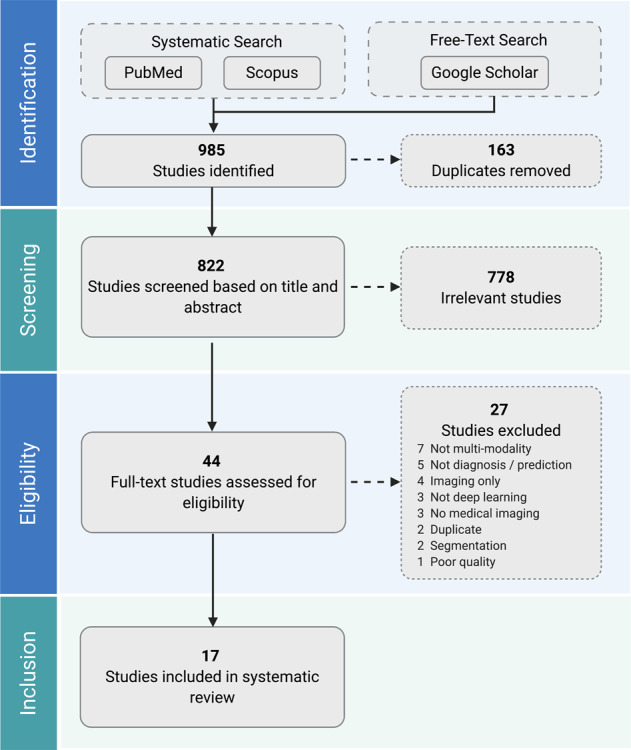
In this paper, we describe different data fusion techniques that can be applied to combine medical imaging with EHR, and systematically review medical data fusion literature published between 2012 and 2020. We conducted a systematic search on PubMed and Scopus for original research articles leveraging deep learning for fusion of multimodality data. In total, we screened 985 studies and extracted data from 17 papers. By means of this systematic review, we present current knowledge, summarize important results and provide implementation guidelines to serve as a reference for researchers interested in the application of multimodal data fusion.
Overview
CoChat Summary
TL;DR
This systematic review consolidates deep learning approaches that fuse medical imaging with electronic health record (EHR) data, defining early, joint, and late fusion strategies and reviewing 17 eligible studies published between 2012 and 2020. It concludes that multimodal fusion generally improves performance over single-modality models, though no single fusion strategy is consistently optimal, and provides implementation guidelines for future work.
Key findings
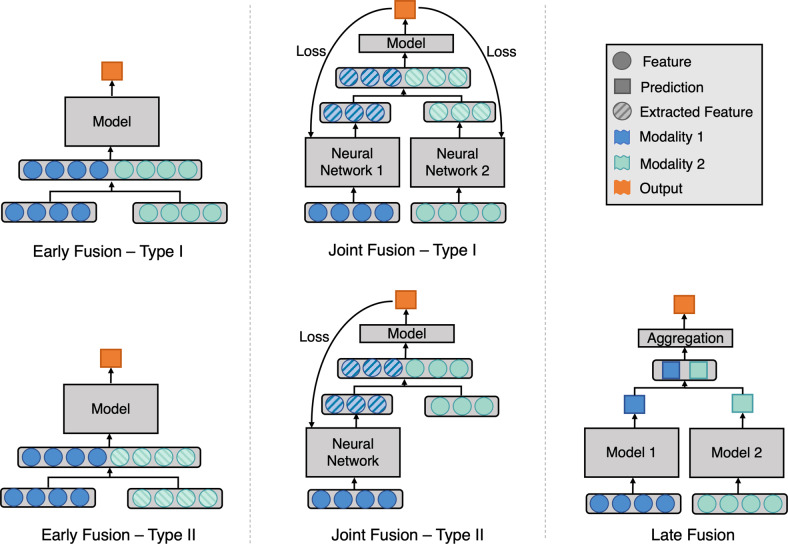
- From 985 screened studies, 44 underwent full-text screening and 17 met eligibility criteria; early fusion was used in 11/17 studies, joint fusion in 4/17, and late fusion in 3/17.
- Across reviewed studies, multimodal fusion generally improved performance over single-modality models, with reported accuracy gains of 1.2–27.7% and AUROC gains of 0.02–0.16.
- No single fusion strategy consistently led to optimal performance across all clinical domains; examples include Kharazmi et al. achieving 91.1% accuracy with fusion versus 84.7% for dermoscopic images and 75.6% for patient profile, and Yala et al. achieving 0.70 AUROC with joint fusion versus 0.68 for mammograms and 0.67 for risk scores.
- Non-imaging EHR data in the included studies were limited, mostly to basic demographics, a narrow range of categorical clinical history, or disease-specific features such as APOE4 or PSA, rather than feature-rich or time-series EHR data.
Methods
- PRISMA-based systematic review with searches in PubMed and Scopus for papers published 2012–2020, using key themes of “deep learning,” “multimodality fusion,” and “medical imaging”; segmentation, registration, and reconstruction terms were exclusion criteria, and preprints were excluded.
- Inclusion required original research applying deep learning for clinical outcome prediction or diagnosis by fusing medical imaging with EHR data; two independent researchers screened records using Covidence, with disagreements resolved by discussion and a third researcher if needed.
- Data extracted from each included study included fusion strategy, year, authors, clinical domain, target outcome, fusion details, imaging modality, non-imaging modality, number of samples, and model performance; AUROC was extracted when reported, otherwise accuracy, using the best-performing fusion experiment.
Limitations
- The paper states that its search excluded pre-2012 papers, that publication bias may overrepresent fusion advantages, that it only covered clinical prediction and diagnosis rather than segmentation or registration, and that heterogeneity across studies prevented meta-analysis; it also notes that some studies lacked independent test sets and that classifying unconventional fusion implementations introduced subjectivity.
- The paper states that the limited number of studies per medical field and heterogeneity made qualitative comparison difficult.
- Evident from the text: the review includes only 17 studies, and the non-imaging EHR data used across those studies were narrow, limiting conclusions about fusion with richer or time-series clinical data.
Model-written summary. Check it against the paper before relying on it.
Integrity signals
Registry
Cites
Statistics
Figures
Verification
Claims the paper makes
19 Valid · 3 Not valid · 15 Not checked · 39 Own results and interpretations
The cited sources support only part of this claim — read each source’s verdict below.
In the paper
“In a survey of radiologists, the majority (87%) stated that clinical information had a significant impact on interpretation3.”
§ Fusion of medical imaging and electronic health records using deep learning: a systematic review and implementation guidelines > Introduction
What the sources say
- Partly supportedcites [3] Boonn WW Langlotz CP Radiologist use of and perceived need for patient data access J. Digit. Imaging 2009 22 357 362 10.1007/s10278-008-9115-2 18459002 PMC3043710 sourceExperimental — accuracy not yet measured
The Results report that more than 87% of surveyed radiologists considered additional clinical information important and said it could change or modify their interpretive report. Table 1 records 87.0% as willing to modify or change a diagnosis based on such information. These are judgments about its potential impact, not reports that it had already significantly affected their interpretations. (LLM, conf=0.82)
plain- Asserted: passes — The authors put it forward as true.
- Checkable: passes — It can be checked against evidence.
- Load-bearing: unclear — It is unclear whether the paper’s conclusions depend on it.
- Based: passes — The paper gives a reason why it holds.
- Partly supported
The cited sources that could be checked couldn’t confirm or dispute this claim.
In the paper
“When the different input modalities have very different numbers of features, predictions might be overly influenced by the most feature-rich modality (e.g., Reda et al.40).”
§ Fusion of medical imaging and electronic health records using deep learning: a systematic review and implementation guidelines > Discussion > Implementation guidelines for fusion models
What the sources say
- Could not verifycites Reda et al.40 Reda I Deep learning role in early diagnosis of prostate cancer Technol. Cancer Res. Treat. 2018 17 153303461877553 10.1177/1533034618775530 PMC5972199 29804518 sourceExperimental — accuracy not yet measured
The Imaging Features and Clinical Biomarkers and Experimental Results sections describe combining low-dimensional PSA data with DW-MRI features through diagnostic probabilities. Neither section says that a modality with more features might disproportionately influence predictions; searches for feature-count imbalance and modality dominance found no such passage. Page numbers were not available in our copy. (LLM, conf=0.73)
hedgedstates a possible cause- Asserted: passes — The authors put it forward as true.
- Checkable: passes — It can be checked against evidence.
- Load-bearing: passes — The paper’s conclusions depend on it.
- Based: passes — The paper gives a reason why it holds.
- Could not verify
Every source the paper cites for this claim was checked and supports it.
In the paper
“Fusion approaches in other less complex clinical applications also improved performance over single modality models, even those in which single modality models have been widely reported to achieve high performance, such as pixel-based models for automated skin cancer detection43.”
§ Fusion of medical imaging and electronic health records using deep learning: a systematic review and implementation guidelines > Discussion
What the sources say
- Supportedcites [43] Esteva A Dermatologist-level classification of skin cancer with deep neural networks Nature 2017 542 115 118 10.1038/nature21056 28117445 PMC8382232 source
Split into 2 atoms — 2 confirmed, 0 partially supported, 0 disputed, 0 misattributed, 0 unverifiable. Expand the claim to see per-atom verdicts.
plainstates a cause- Asserted: passes — The authors put it forward as true.
- Checkable: passes — It can be checked against evidence.
- Load-bearing: unclear — It is unclear whether the paper’s conclusions depend on it.
- Based: passes — The paper gives a reason why it holds.
- Supported
The cited sources support only part of this claim — read each source’s verdict below.
In the paper
“while physicians struggle with accurate and reliable diagnostics even when multimodality is present, as proven by histopathological correlation42.”
§ Fusion of medical imaging and electronic health records using deep learning: a systematic review and implementation guidelines > Discussion
What the sources say
- Partly supportedcites [42] Beach TG Monsell SE Phillips LE Kukull W Accuracy of the Clinical Diagnosis of Alzheimer Disease at National Institute on Aging Alzheimer Disease Centers, 2005–2010 J. Neuropathol. Exp. Neurol. 2012 71 266 273 10.1097/NEN.0b013e31824b211b 22437338 PMC3331862 sourceExperimental — accuracy not yet measured
The Results (Diagnostic Classification Comparison; page unavailable) show imperfect agreement between clinical Alzheimer disease diagnoses and neuropathological findings, supporting the point that clinicians can have difficulty diagnosing AD accurately against a histopathological standard. The Materials and Methods (Analysis Strategy; page unavailable) do not establish that the clinical diagnoses used multiple diagnostic modalities, and the study does not assess diagnostic reliability. Its findings concern AD at participating disease centers, not physicians’ diagnostics generally. (LLM, conf=0.88)
boosted- Asserted: passes — The authors put it forward as true.
- Checkable: passes — It can be checked against evidence.
- Load-bearing: passes — The paper’s conclusions depend on it.
- Based: passes — The paper gives a reason why it holds.
- Partly supported
The sources with a verdict support this claim; the rest weren’t checked yet, have no full text we could read, or their verdicts aren’t rated yet.
In the paper
“The importance of clinical context for accurate interpretation of imaging data is not limited to radiology; instead many other imaging-based medical specialties such as pathology, ophthalmology, and dermatology, also rely on clinical data to guide image interpretation in practice4–6.”
§ Fusion of medical imaging and electronic health records using deep learning: a systematic review and implementation guidelines > Introduction
What the sources say
- Not checked — no full text of the sourcecites [4] Comfere NI Provider-to-provider communication in dermatology and implications of missing clinical information in skin biopsy requisition forms: a systematic review Int. J. Dermatol. 2014 53 549 557 10.1111/ijd.12330 24116717 source
- Supportedcites [5] Comfere NI Dermatopathologists’ concerns and challenges with clinical information in the skin biopsy requisition form: a mixed-methods study: Clinical information in dermatopathology J. Cutan. Pathol. 2015 42 333 345 10.1111/cup.12485 25757028 PMC4701217 source
The Discussion says clinical information is crucial for accurate dermatopathologic interpretation and emphasizes the importance of clinical context. The Results report that most respondents considered the quality of clinical information to have a large impact on diagnostic accuracy. This supports the dermatopathology example to which this source is pertinent. (LLM, conf=0.91)
- Not checked — no full text of the sourcecites [6] Jonas JB Glaucoma The Lancet 2017 390 2183 2193 10.1016/S0140-6736(17)31469-1 28577860 source
plainstates a cause- Asserted: passes — The authors put it forward as true.
- Checkable: passes — It can be checked against evidence.
- Load-bearing: unclear — It is unclear whether the paper’s conclusions depend on it.
- Based: passes — The paper gives a reason why it holds.
38 more claims · 9 with their cited sources checked
Create a free account to see all 76 claims and to verify the 3 references still open.
- It may state two separate claims as one. 20
- Probably not a substantial claim. 17
Claims other papers make about this one
Each is checked against this paper’s own text: does it say what the citing paper says it does?
The source backs part of the claim, not all of it — or backs it for a different population, condition or comparison.
In the citing paper
“Recent studies have proposed increasingly sophisticated fusion architectures, including attention-based models, variational autoencoders, and graph neural networks, often reporting improved predictive performance in complex biomedical and neuroimaging tasks [6,9,45,46,47].”
From Benchmarking Multimodal Deep Fusion Strategies for Heterogeneous Neuroimaging and Cognitive Data Using a Controlled Sex Classification Task (2026) · cites this paper as [9]
Experimental — accuracy not yet measuredThe source backs part of the claim, not all of it — or backs it for a different population, condition or comparison.
In the citing paper
“In contrast, late fusion offers practical robustness for incomplete or asynchronous clinical data through modular development, albeit without modeling inter-modal relationships”
From Multimodal neuroimaging and AI integration in cognitive disorders: advances, challenges, and future directions for precision medicine (2026) · cites this paper as Huang et al., 2020
Experimental — accuracy not yet measuredThe source backs part of the claim, not all of it — or backs it for a different population, condition or comparison.
In the citing paper
“Joint fusion learns a shared embedding space across modalities, which can represent cross-modal relationships beyond those considered in early or late fusion.”
From MoMA: a mixture-of-multimodal-agents architecture for enhancing clinical prediction modelling (2025) · cites this paper as [8]
Experimental — accuracy not yet measuredThe source backs part of the claim, not all of it — or backs it for a different population, condition or comparison.
In the citing paper
“A meta-analysis of fusion strategies for combining imaging and EHR data show that multimodal integration leads to better predictive performance in various clinical tasks41.”
From K-STAMM: a knowledge-enhanced spatial - temporal attention model with multimodal fusion for pneumonia prediction (2026) · cites this paper as [41]
Experimental — accuracy not yet measuredThe cited source says what the claim attributes to it.
In the citing paper
“Training a model on multiple data types may improve the performance of ML systems (14).”
From Mitigating Bias in Radiology Machine Learning: 1. Data Handling (2022) · cites this paper as [14]
5 more claims about this paper
Create a free account to see every claim other papers make about this one.
Citations
Cites
Preferred Reporting Items for Systematic Reviews and Meta-Analyses: the PRISMA statement
Moher, D., Liberati, A., Tetzlaff, J., Altman, D. G., & for the PRISMA Group (2009) · BMJ · doi:10.1136/bmj.b2535 · Cited by 83,823
Preferred Reporting Items for Systematic Reviews and Meta-Analyses: The PRISMA Statement
Moher, D., Liberati, A., Tetzlaff, J., Altman, D. G., & The PRISMA Group (2009) · PLoS Medicine · doi:10.1371/journal.pmed.1000097 · Cited by 64,042
Regularization and Variable Selection Via the Elastic Net
Zou, H., & Hastie, T. (2005) · Journal of the Royal Statistical Society Series B: Statistical Methodology · doi:10.1111/j.1467-9868.2005.00503.x · Cited by 20,957
Wang, G., Ma, R., Qiao, G., Wada, K., Aizawa, Y., & Satoh, T. (2015) · Integrative Medicine International · doi:10.1159/000368408 · Cited by 18,657
Dermatologist-level classification of skin cancer with deep neural networks
Esteva, A., Kuprel, B., Novoa, R. A., Ko, J., Swetter, S. M., Blau, H. M., & Thrun, S. (2017) · Nature · doi:10.1038/nature21056 · Cited by 14,362
Gulshan, V., Peng, L., Coram, M., Stumpe, M. C., Wu, D., Narayanaswamy, A., Venugopalan, S., Widner, K., Madams, T., Cuadros, J., et al. (2016) · JAMA · doi:10.1001/jama.2016.17216 · Cited by 7,697 · cited 1×
“Early applications of CNNs for image analysis in medicine include diabetic retinopathy, skin cancer, and chest X-rays 11 – 18 .”
BackgroundLarge-Scale Video Classification with Convolutional Neural Networks
Karpathy, A., Toderici, G., Shetty, S., Leung, T., Sukthankar, R., & Fei-Fei, L. (2014) · 2014 IEEE Conference on Computer Vision and Pattern Recognition · doi:10.1109/cvpr.2014.223 · Cited by 6,354
(2011) · Cited by 2,752
MIMIC-CXR, a de-identified publicly available database of chest radiographs with free-text reports
Johnson, A. E. W., Pollard, T. J., Berkowitz, S. J., Greenbaum, N. R., Lungren, M. P., Deng, C.-Y., Mark, R. G., & Horng, S. (2019) · Scientific Data · doi:10.1038/s41597-019-0322-0 · Cited by 1,816
Self-citationRajpurkar, P., Irvin, J., Ball, R. L., Zhu, K., Yang, B., Mehta, H., Duan, T., Ding, D., Bagul, A., Langlotz, C. P., et al. (2018) · PLOS Medicine · doi:10.1371/journal.pmed.1002686 · Cited by 1,449 · cited 3×
“The imaging fi ndings on chest X-rays consistent with pneumonia, despite having imaging features that can generally differentiate alternative diagnoses, are nonspeci fi c and accurate diagnosis requires the context of clinical and laboratory data.”
Self-citation
Research works printed but not linked: 2
- Liu Mingqian Lan Jun Chen Xu, Yu Guangjun Yang Xiujun Bone age assessment model based on multi-dimensional feature fusion using deep learning Acad. J. Second Mil. Med. Univ. 2018 39 909 916
- Goodfellow, I., Bengio, Y. & Courville, C. Deep Learning (MIT Press, 2017).
Cited by
Rajpurkar, P., Chen, E., Banerjee, O., & Topol, E. J. (2022) · Nature Medicine · doi:10.1038/s41591-021-01614-0 · Cited by 3,212
“Some deep learning models integrate multiple sources of medical data for a multimodal approach 64–68 .”
BackgroundAcosta, J. N., Falcone, G. J., Rajpurkar, P., & Topol, E. J. (2022) · Nature Medicine · doi:10.1038/s41591-022-01981-2 · Cited by 1,365
The Role of AI in Hospitals and Clinics: Transforming Healthcare in the 21st Century
Maleki Varnosfaderani, S., & Forouzanfar, M. (2024) · Bioengineering · doi:10.3390/bioengineering11040337 · Cited by 931
“In the case of complex diseases, AI can combine information from imaging, laboratory tests, and patient histories to provide a more comprehensive diagnostic insight [109].”
BackgroundArtificial intelligence for multimodal data integration in oncology
Lipkova, J., Chen, R. J., Chen, B., Lu, M. Y., Barbieri, M., Shao, D., Vaidya, A. J., Chen, C., Zhuang, L., Williamson, D. F. K., et al. (2022) · Cancer Cell · doi:10.1016/j.ccell.2022.09.012 · Cited by 777
Multimodal machine learning in precision health: A scoping review
Kline, A., Wang, H., Li, Y., Dennis, S., Hutch, M., Xu, Z., Wang, F., Cheng, F., & Luo, Y. (2022) · npj Digital Medicine · doi:10.1038/s41746-022-00712-8 · Cited by 528
de Hond, A. A. H., Leeuwenberg, A. M., Hooft, L., Kant, I. M. J., Nijman, S. W. J., van Os, H. J. A., Aardoom, J. J., Debray, T. P. A., Schuit, E., van Smeden, M., et al. (2022) · npj Digital Medicine · doi:10.1038/s41746-021-00549-7 · Cited by 499
Artificial intelligence and machine learning for medical imaging: A technology review
Barragán-Montero, A., Javaid, U., Valdés, G., Nguyen, D., Desbordes, P., Macq, B., Willems, S., Vandewinckele, L., Holmström, M., Löfman, F., et al. (2021) · Physica Medica · doi:10.1016/j.ejmp.2021.04.016 · Cited by 450
“…some examples include the addition of electronic health records and clinical data, like text and laboratory re-sults, to the image data [213 – 215], or having first-order prior or approximations of the expected output [175,216 – 219] Integrating domain-specific knowledge cannot only serve to…”
The current and future state of AI interpretation of medical images
Rajpurkar, P., & Lungren, M. P. (2023) · New England Journal of Medicine · doi:10.1056/nejmra2301725 · Cited by 443
Self-citationMultimodal data fusion for cancer biomarker discovery with deep learning
Steyaert, S., Pizurica, M., Nagaraj, D., Khandelwal, P., Hernandez-Boussard, T., Gentles, A. J., & Gevaert, O. (2023) · Nature Machine Intelligence · doi:10.1038/s42256-023-00633-5 · Cited by 402
Integrated multimodal artificial intelligence framework for healthcare applications
Soenksen, L. R., Ma, Y., Zeng, C., Boussioux, L., Villalobos Carballo, K., Na, L., Wiberg, H. M., Li, M. L., Fuentes, I., & Bertsimas, D. (2022) · npj Digital Medicine · doi:10.1038/s41746-022-00689-4 · Cited by 380
Healthcare on the brink: navigating the challenges of an aging society in the United States
Jones, C. H., & Dolsten, M. (2024) · npj Aging · doi:10.1038/s41514-024-00148-2 · Cited by 363
“Thelarge volume of data used in such efforts has generated interest for the application of machine-learning, particularly deep learning, to parse through complex and multivariate relationships identi fi able within patient records 39 – 41 .”
MethodZhou, H.-Y., Yu, Y., Wang, C., Zhang, S., Gao, Y., Pan, J., Shao, J., Lu, G., Zhang, K., & Li, W. (2023) · Nature Biomedical Engineering · doi:10.1038/s41551-023-01045-x · Cited by 343
The shaky foundations of large language models and foundation models for electronic health records
Wornow, M., Xu, Y., Thapa, R., Patel, B., Steinberg, E., Fleming, S., Pfeffer, M. A., Fries, J., & Shah, N. H. (2023) · npj Digital Medicine · doi:10.1038/s41746-023-00879-8 · Cited by 324
AI pitfalls and what not to do: mitigating bias in AI
Gichoya, J. W., Thomas, K., Celi, L. A., Safdar, N., Banerjee, I., Banja, J. D., Seyyed-Kalantari, L., Trivedi, H., & Purkayastha, S. (2023) · The British Journal of Radiology · doi:10.1259/bjr.20230023 · Cited by 277
Self-citationMultistain deep learning for prediction of prognosis and therapy response in colorectal cancer
Foersch, S., Glasner, C., Woerl, A.-C., Eckstein, M., Wagner, D.-C., Schulz, S., Kellers, F., Fernandez, A., Tserea, K., Kloth, M., et al. (2023) · Nature Medicine · doi:10.1038/s41591-022-02134-1 · Cited by 251
Artificial intelligence-based methods for fusion of electronic health records and imaging data
Mohsen, F., Ali, H., El Hajj, N., & Shah, Z. (2022) · Scientific Reports · doi:10.1038/s41598-022-22514-4 · Cited by 250
Review of multimodal machine learning approaches in healthcare
Krones, F., Marikkar, U., Parsons, G., Szmul, A., & Mahdi, A. (2025) · Information Fusion · doi:10.1016/j.inffus.2024.102690 · Cited by 235
Deep multimodal fusion of image and non-image data in disease diagnosis and prognosis: a review
Cui, C., Yang, H., Wang, Y., Zhao, S., Asad, Z., Coburn, L. A., Wilson, K. T., Landman, B. A., & Huo, Y. (2023) · Progress in Biomedical Engineering · doi:10.1088/2516-1091/acc2fe · Cited by 218
AI-enabled organoids: Construction, analysis, and application
Bai, L., Wu, Y., Li, G., Zhang, W., Zhang, H., & Su, J. (2024) · Bioactive Materials · doi:10.1016/j.bioactmat.2023.09.005 · Cited by 207
A Review on Explainability in Multimodal Deep Neural Nets
Joshi, G., Walambe, R., & Kotecha, K. (2021) · IEEE Access · doi:10.1109/access.2021.3070212 · Cited by 204
“The loss is propagated back to the feature extractor network during the training process [111].”
BackgroundMulti-modality approaches for medical support systems: A systematic review of the last decade
Salvi, M., Loh, H. W., Seoni, S., Barua, P. D., García, S., Molinari, F., & Acharya, U. R. (2024) · Information Fusion · doi:10.1016/j.inffus.2023.102134 · Cited by 144
“Alternately, the features are fused at an intermediate stage after initial modality-specific processing [6].”
BackgroundMethodMitigating Bias in Radiology Machine Learning: 1. Data Handling
Rouzrokh, P., Khosravi, B., Faghani, S., Moassefi, M., Vera Garcia, D. V., Singh, Y., Zhang, K., Conte, G. M., & Erickson, B. J. (2022) · Radiology: Artificial Intelligence · doi:10.1148/ryai.210290 · Cited by 145
Ahmed, A., Xi, R., Hou, M., Shah, S. A., & Hameed, S. (2023) · IEEE Access · doi:10.1109/access.2023.3323574 · Cited by 199
“Missing data is commonly reported in multimodal data [86], [113].”
BackgroundMethodSaravi, B., Hassel, F., Ülkümen, S., Zink, A., Shavlokhova, V., Couillard‐Després, S., Boeker, M., Obid, P., & Lang, G. M. (2022) · Journal of Personalized Medicine · doi:10.3390/jpm12040509 · Cited by 165
“Notably, the majority of studies published to date using multi-input models applied early concatenating strategies [54].”
InfluentialHe, S., Leanse, L. G., & Feng, Y. (2021) · Advanced Drug Delivery Reviews · doi:10.1016/j.addr.2021.113922 · Cited by 141
Machine learning in vascular surgery: a systematic review and critical appraisal
Li, B., Feridooni, T., Cuen-Ojeda, C., Kishibe, T., de Mestral, C., Mamdani, M., & Al-Omran, M. (2022) · npj Digital Medicine · doi:10.1038/s41746-021-00552-y · Cited by 137
“ML has signi fi cant advantages over traditional risk prediction tools as they can learn from a wide range of data types, including structured clinical, laboratory, and genetic information along with unstructured imaging data and clinical notes 56 .”
BackgroundXue, P., Wang, J., Qin, D., Yan, H., Qu, Y., Seery, S., Jiang, Y., & Qiao, Y. (2022) · npj Digital Medicine · doi:10.1038/s41746-022-00559-z · Cited by 155
FusionM4Net: a multi-stage multi-modal learning algorithm for multi-label skin lesion classification
Tang, P., Yan, X., Nan, Y., Xiang, S., Krammer, S., & Lasser, T. (2022) · Medical Image Analysis · doi:10.1016/j.media.2021.102307 · Cited by 131
A Robust Heart Disease Prediction System Using Hybrid Deep Neural Networks
Reshan, M. S. A., Amin, S., Zeb, M. A., Sulaiman, A. A., Alshahrani, H. M., & Shaikh, A. (2023) · IEEE Access · doi:10.1109/access.2023.3328909 · Cited by 165
“A good example of the use of DL in intelligent healthcare systems is the processing of medical images [8], electronic health records [9], gene research [10], and disease detection in text data [11], which are all carried out with DL.”
MethodNakach, F.-Z., Idri, A., & Göçeri, E. (2024) · Artificial Intelligence Review · doi:10.1007/s10462-024-10984-z · Cited by 171
Xu, Y., & Chen, H. (2023) · 2023 IEEE/CVF International Conference on Computer Vision (ICCV) · doi:10.1109/iccv51070.2023.01942 · Cited by 134
“The most straightforward solution is fusion operators such as concatenation [18], Kronecker Product [35], etc.”
MethodMultimodal Deep Learning for Prognosis Prediction in Renal Cancer
Schulz, S., Woerl, A.-C., Jungmann, F., Glasner, C., Stenzel, P., Strobl, S., Fernandez, A., Wagner, D.-C., Haferkamp, A., Mildenberger, P., et al. (2021) · Frontiers in Oncology · doi:10.3389/fonc.2021.788740 · Cited by 123
GNN-LSTM-based fusion model for structural dynamic responses prediction
Kuo, P.-C., Chou, Y., Li, K., Chang, W.-T., Huang, Y., & Chen, C. (2024) · Engineering Structures · doi:10.1016/j.engstruct.2024.117733 · Cited by 148
Multimodal Classification: Current Landscape, Taxonomy and Future Directions
Sleeman, W. C., Kapoor, R., & Ghosh, P. (2023) · ACM Computing Surveys · doi:10.1145/3543848 · Cited by 124
“While depictions of early and late fusion styles have been relatively consistent across multiple papers [9, 17, 37, 41, 75, 84, 119], there are still cases where other terms have been used.”
BackgroundA scoping review of artificial intelligence-based methods for diabetes risk prediction
Mohsen, F., Al-Absi, H. R. H., Yousri, N. A., El Hajj, N., & Shah, Z. (2023) · npj Digital Medicine · doi:10.1038/s41746-023-00933-5 · Cited by 125
Luna-Jiménez, C., Kleinlein, R., Griol, D., Callejas, Z., Montero, J. M., & Fernández-Martínez, F. (2021) · Applied Sciences · doi:10.3390/app12010327 · Cited by 149
“Huang et al. [58] define joint fusion as “the process of joining learned feature representations from intermediate layers of neural networks with features from other modalities as input to a final model.”
Wenderott, K., Krups, J., Zaruchas, F., & Weigl, M. (2024) · npj Digital Medicine · doi:10.1038/s41746-024-01248-9 · Cited by 199
“For example, the combination of multimodal data, such as imaging and EHR data, could be bene fi cial for future decision processes in healthcare 65 .”
Morin, O., Vallières, M., Braunstein, S. E., Ginart, J. B., Upadhaya, T., Woodruff, H. C., Zwanenburg, A., Chatterjee, A., Villanueva-Meyer, J. E., Valdés, G., et al. (2021) · Nature Cancer · doi:10.1038/s43018-021-00236-2 · Cited by 132
Khare, S. K., March, S., Barua, P. D., Gadre, V. M., & Acharya, U. R. (2023) · Information Fusion · doi:10.1016/j.inffus.2023.101898 · Cited by 128
Khader, F., Müller-Franzes, G., Wang, T., Han, T., Tayebi Arasteh, S., Haarburger, C., Stegmaier, J., Bressem, K., Kuhl, C., Nebelung, S., et al. (2023) · Radiology · doi:10.1148/radiol.230806 · Cited by 107
Diagnosis of brain diseases in fusion of neuroimaging modalities using deep learning: A review
Shoeibi, A., Khodatars, M., Jafari, M., Ghassemi, N., Moridian, P., Alizadehsani, R., Ling, S. H., Khosravi, A., Alinejad‐Rokny, H., Lam, H., et al. (2022) · Information Fusion · doi:10.1016/j.inffus.2022.12.010 · Cited by 121
M3Care: Learning with Missing Modalities in Multimodal Healthcare Data
Zhang, C., Chu, X., Ma, L., Zhu, Y., Wang, Y., Wang, J., & Zhao, J. (2022) · Proceedings of the 28th ACM SIGKDD Conference on Knowledge Discovery and Data Mining · doi:10.1145/3534678.3539388 · Cited by 102
“The boxes in gray indicate the features exist, and others in black represent missing ones. in real-world clinical scenarios [23].”
BackgroundOptimization of Radiology Workflow with Artificial Intelligence
Ranschaert, E. R., Topff, L., & Pianykh, O. S. (2021) · Radiologic Clinics of North America · doi:10.1016/j.rcl.2021.06.006 · Cited by 111
Artificial Intelligence in Orthodontics: Critical Review
Nordblom, N. F., Büttner, M., & Schwendicke, F. (2024) · Journal of Dental Research · doi:10.1177/00220345241235606 · Cited by 175
“While powerful, this method makes the final decision based on an aggregation function of all models and is potentially missing cooperative information that could be abstracted from the combination of different data modalities (Huang et al. 2020; Acosta et al. 2022).”
MethodA Deep Learning Fusion Approach to Diagnosis the Polycystic Ovary Syndrome (PCOS)
Alamoudi, A., Khan, I. U., Aslam, N., Alqahtani, N., Alsaif, H. S., Dandan, O. S. A., Gadeeb, M. A., & Bahrani, R. A. (2023) · Applied Computational Intelligence and Soft Computing · doi:10.1155/2023/9686697 · Cited by 143
“Early fusion type I combines the actual features, whereas early fusion type II combines the extracted features whether through manual extraction, image analysis tools, or a learned representation from a neural network [49].”
BackgroundAbdar, M., Fahami, M. A., Chakrabarti, S., Khosravi, A., Pławiak, P., Acharya, U. R., Tadeusiewicz, R., & Nahavandi, S. (2021) · Information Sciences · doi:10.1016/j.ins.2021.07.024 · Cited by 101
A systematic review of intermediate fusion in multimodal deep learning for biomedical applications
Guarrasi, V., Aksu, F., Caruso, C. M., Di Feola, F., Rofena, A., Ruffini, F., & Soda, P. (2025) · Image and Vision Computing · doi:10.1016/j.imavis.2025.105509 · Cited by 95
Fully Automated Deep Learning Model to Detect Clinically Significant Prostate Cancer at MRI
Cai, J. C., Nakai, H., Kuanar, S. P., Froemming, A. T., Bolan, C. W., Kawashima, A., Takahashi, H., Mynderse, L. A., DORA, C. D., Humphreys, M. R., et al. (2024) · Radiology · doi:10.1148/radiol.232635 · Cited by 117
Generative AI in Medical Imaging: Applications, Challenges, and Ethics
Koohi-Moghadam, M., & Bae, K. T. (2023) · Journal of Medical Systems · doi:10.1007/s10916-023-01987-4 · Cited by 91
Narotamo, H., Dias, M., Santos, R., Carreiro, A. V., Gamboa, H. F. S., & Silveira, M. (2024) · Biomedical Signal Processing and Control · doi:10.1016/j.bspc.2024.106141 · Cited by 126
Teoh, J. R., Dong, J., Zuo, X., Lai, K. W., Hasikin, K. B., & Wu, X. (2024) · PeerJ Computer Science · doi:10.7717/peerj-cs.2298 · Cited by 143
“This process involves training separate models for different modalities and then employing an aggregation function to merge these models’ predictions ( Huang et al., 2020a ).”
InfluentialHong, N., Cho, S. W., Shin, S. J., Lee, S., Jang, S. A., Roh, S., Lee, Y. H., Rhee, Y., Cummings, S. R., Kim, H., et al. (2020) · Journal of Bone and Mineral Research · doi:10.1002/jbmr.4814 · Cited by 108
“Fusion of pixel data from imagingmodalities and clinical meta data improved model performance for various tasks in prior studies, by providing contextual information to image data.((37)) However, similar to our findings, for some tasks, studies showed that a fusion model of clinical features and pixel data from imagin…”
MethodResultSadr, H., Nazari, M., Khodaverdian, Z., Farzan, R., Yousefzadeh-Chabok, S., Ashoobi, M. T., Hemmati, H., Hendi, A., Ashraf, A., Pedram, M. M., et al. (2025) · European journal of medical research · doi:10.1186/s40001-025-02680-7 · Cited by 152
“In thrombosis, DL models analyze medical imaging data, such as CT scans, to detect blood clots and predict the risk of complications, improving patient outcomes [201].”
A review of cancer data fusion methods based on deep learning
Zhao, Y., Li, X., Zhou, C., Peng, H., Zheng, Z., Chen, J., & Ding, W. (2024) · Information Fusion · doi:10.1016/j.inffus.2024.102361 · Cited by 95
Barragán-Montero, A., Bibal, A., Dastarac, M. H., Draguet, C., Valdés, G., Nguyen, D., Willems, S., Vandewinckele, L., Holmström, M., Löfman, F., et al. (2022) · Physics in Medicine & Biology · doi:10.1088/1361-6560/ac678a · Cited by 84
“Finally, the late fusion strategy refers to the process of using a combination of outputs coming from multiple models to make a decision ( Huang et al 2020 ) .”
BackgroundPahud de Mortanges, A., Luo, H., Shu, S. Z., Kamath, A., Suter, Y., Shelan, M., Pöllinger, A., & Reyes, M. (2024) · npj Digital Medicine · doi:10.1038/s41746-024-01190-w · Cited by 93
“%) stated in a survey that clinical information impacts image interpretation signi fi cantly 9,10 .”
QNMF: A quantum neural network based multimodal fusion system for intelligent diagnosis
Qu, Z., Li, Y., & Tiwari, P. (2023) · Information Fusion · doi:10.1016/j.inffus.2023.101913 · Cited by 108
Ghadi, Y. Y., Shah, S. F. A., Waheed, W., Mazhar, T., Ahmad, W., Saeed, M. M. A., & Hamam, H. (2025) · Journal of Cloud Computing Advances Systems and Applications · doi:10.1186/s13677-025-00759-4 · Cited by 140
Artificial intelligence for medicine: Progress, challenges, and perspectives
Huang, T., Xu, H., Wang, H., Huang, H., Xu, Y., Li, B., Hong, S., Feng, G., Kui, S., Liu, G., et al. (2023) · The Innovation Medicine · doi:10.59717/j.xinn-med.2023.100030 · Cited by 108
Saboury, B., Bradshaw, T., Boellaard, R., Buvat, I., Dutta, J., Hatt, M., Jha, A. K., Li, Q., Liu, C., McMeekin, H., et al. (2022) · Journal of Nuclear Medicine · doi:10.2967/jnumed.121.263703 · Cited by 91
Simon, B. D., Ozyoruk, K. B., Gelikman, D. G., Harmon, S. A., & Türkbey, B. (2024) · Diagnostic and Interventional Radiology · doi:10.4274/dir.2024.242631 · Cited by 73
“40 However, without a graphical approach, there is potential for misinterpretation of the data’s relationship when arbitrarily fused in a tabular format.”
BackgroundKumar, A., Yadav, S. P., & Kumar, A. (2025) · Computers in Biology and Medicine · doi:10.1016/j.compbiomed.2025.109822 · Cited by 78
Mastrodicasa, D., van Assen, M., Huisman, M., Leiner, T., Williamson, E. E., Nicol, E. D., Allen, B. D., Saba, L., Vliegenthart, R., & Hanneman, K. (2025) · Radiology · doi:10.1148/radiol.240516 · Cited by 69
A scoping review on multimodal deep learning in biomedical images and texts
Sun, Z., Lin, M., Zhu, Q., Xie, Q., Wang, F., Lu, Z., & Peng, Y. (2023) · Journal of Biomedical Informatics · doi:10.1016/j.jbi.2023.104482 · Cited by 69
“Multimodal deep learning (MDL), which involves the integration of multiple modalities, such as medical images, unstructured text, and structured Electronic Health Records (EHRs) has gained significant attention in biomedical research [50].”
Artificial Intelligence: Present and Future Potential for Solid Organ Transplantation
Peloso, A., Moeckli, B., Delaune, V., Oldani, G., Andres, A., & Compagnon, P. (2022) · Transplant International · doi:10.3389/ti.2022.10640 · Cited by 67
Rigiroli, F., Hoye, J., Lerebours, R. C., Lafata, K. J., Li, C., Meyer, M., Lyu, P., Ding, Y., Schwartz, F. R., Mettu, N. B., et al. (2021) · Radiology · doi:10.1148/radiol.2021210699 · Cited by 70
“Future work may also incorporate more sophisticated modeling techniques, including unsupervised machine learning frameworks (33,34) and deep learning algorithms that fuse radiomics data with other types of clinical data (35).”
MethodLiu, J., Capurro, D., Nguyen, A., & Verspoor, K. (2023) · Journal of Biomedical Informatics · doi:10.1016/j.jbi.2023.104466 · Cited by 66
Artificial intelligence-based biomarkers for treatment decisions in oncology
Ligero, M., Nahhas, O. S. M. E., Aldea, M. D., & Kather, J. N. (2025) · Trends in cancer · doi:10.1016/j.trecan.2024.12.001 · Cited by 83
CNN‐Transformer for visual‐tactile fusion applied in road recognition of autonomous vehicles
Shi, R., Yang, S., Chen, Y., Wang, R., Zhang, M., Lu, J., & Cao, Y. (2022) · Pattern Recognition Letters · doi:10.1016/j.patrec.2022.11.023 · Cited by 71
Multimodal fusion models for pulmonary embolism mortality prediction
Cahan, N., Klang, E., Marom, E. M., Soffer, S., Barash, Y., Burshtein, E., Konen, E., & Greenspan, H. (2023) · Scientific Reports · doi:10.1038/s41598-023-34303-8 · Cited by 58
“Multimodal deep learning models for automated clinical decision support and outcome prediction have been gaining popularity in recent years 13 .”
Chest X-ray in Emergency Radiology: What Artificial Intelligence Applications Are Available?
Irmici, G., Cè, M., Caloro, E., Khenkina, N., Pepa, G. D., Ascenti, V., Martinenghi, C. M. A., Papa, S., Oliva, G., & Cellina, M. I. (2023) · Diagnostics · doi:10.3390/diagnostics13020216 · Cited by 74
“We need research on DL models capable of integrating multimodal data, such as clinical and genetic information [95].”
MethodHolste, G., Partridge, S. C., Rahbar, H., Biswas, D., Lee, C. I., & Alessio, A. M. (2021) · 2021 IEEE/CVF International Conference on Computer Vision Workshops (ICCVW) · doi:10.1109/iccvw54120.2021.00368 · Cited by 58
Baek, Y., Bae, B., Shin, H., Sonnadara, C. S. S., Cho, H., Lin, C., Mu, Y., Shen, C., Shah, S. S., Wang, G., et al. (2025) · npj Unconventional Computing · doi:10.1038/s44335-025-00040-6 · Cited by 112
Shad, R., Cunningham, J. P., Ashley, E. A., Langlotz, C. P., & Hiesinger, W. (2021) · Nature Machine Intelligence · doi:10.1038/s42256-021-00399-8 · Cited by 55
“14,51,52 55 Another newer approach is constraining a ML algorithm within the training logic, ensuring that optimization steps occur controlling for demographic variables of interest.”
BackgroundYao, W., Yin, K., Cheung, W. K., Liu, J., & Qin, J. (2024) · Proceedings of the AAAI Conference on Artificial Intelligence · doi:10.1609/aaai.v38i15.29578 · Cited by 166
Radiomics Applications in Head and Neck Tumor Imaging: A Narrative Review
Tortora, M., Gemini, L., Scaravilli, A., Ugga, L., Ponsiglione, A., Stanzione, A., D’Arco, F., D’Anna, G., & Cuocolo, R. (2023) · Cancers · doi:10.3390/cancers15041174 · Cited by 69
“Training a heterogeneous model can help machine-learning systems perform better [109].”
BackgroundCRNet: a multimodal deep convolutional neural network for customer revisit prediction
Park, E. (2023) · Journal Of Big Data · doi:10.1186/s40537-022-00674-4 · Cited by 59
“[23], because this fusion approach shows better performance than other fusion approaches, such as early and late (aggregation) fusions, in this task.”
BackgroundMachine Learning Use for Prognostic Purposes in Multiple Sclerosis
Seccia, R., Romano, S., Salvetti, M., Crisanti, A., Palagi, L., & Grassi, F. (2021) · Life · doi:10.3390/life11020122 · Cited by 71
Integrating self-powered medical devices with advanced energy harvesting: A review
Sohail, A., Ali, A., Shaukat, H., Bhatti, F. M., Ali, S., Kouritem, S. A., Noori, M. N., & Altabey, W. A. (2024) · Energy Strategy Reviews · doi:10.1016/j.esr.2024.101328 · Cited by 68
Multimodality Fusion Aspects of Medical Diagnosis: A Comprehensive Review
Kumar, S., Rani, S., Sharma, S., & Min, H. (2024) · Bioengineering · doi:10.3390/bioengineering11121233 · Cited by 86
Martinez-Ríos, E. A., Montesinos, L., & Alfaro-Ponce, M. (2022) · Computers in Biology and Medicine · doi:10.1016/j.compbiomed.2022.105479 · Cited by 59
Muse, E. D., & Topol, E. J. (2024) · Cell Metabolism · doi:10.1016/j.cmet.2024.02.002 · Cited by 50
RadioPathomics: Multimodal learning in non-small cell lung cancer for adaptive radiotherapy
Tortora, M., Cordelli, E., Sicilia, R., Nibid, L., Ippolito, E., Perrone, G., Ramella, S., & Soda, P. (2023) · IEEE Access · doi:10.1109/access.2023.3275126 · Cited by 49
Alam, M. U., & Rahmani, R. (2023) · Sensors · doi:10.3390/s23020970 · Cited by 64
“Typical medical diagnosis processes are multifaceted; therefore, a multi-modal approach provides a holistic method for diagnosis, resembling a real-world scenario instead of using only one modality [14].”
BackgroundAymerich, E., Sias, G., Pisano, F., Cannas, B., Carcangiu, S., Sozzi, C., Stuart, C., Carvalho, P. J., Fanni, A., & Contributors, J. (2022) · Nuclear Fusion · doi:10.1088/1741-4326/ac525e · Cited by 52
“trying an another fusion approach is preferred [37].”
BackgroundA review of multimodal deep learning methods for genomic-enabled prediction in plant breeding
Montesinos-López, O. A., Chavira-Flores, M., Kiasmiantini, Crespo-Herrera, L., Saint Piere, C., Li, H., Fritsche-Neto, R., Al-Nowibet, K., Montesinos-López, A., & Crossa, J. (2024) · GENETICS · doi:10.1093/genetics/iyae161 · Cited by 47
“A meticulous description of this topic can be found in the studies by Huang et al (2020), Boulahia et al .”
InfluentialDuenias, D., Nichyporuk, B., Arbel, T., & Raviv, T. R. (2025) · Medical Image Analysis · doi:10.1016/j.media.2025.103503 · Cited by 74
“Fusion strategies for combining medical imaging and tabular data can be categorized into three distinct types, as outlined in (Huang et al., 2020): early fusion, where original or extracted features are concatenated at the input level, e.g., (Chieregato et al., 2022); joint fusion (or intermediate…”
GAN-based generation of realistic 3D volumetric data: A systematic review and taxonomy
Ferreira, A. F., Li, J., Pomykala, K. L., Kleesiek, J., Alves, V., & Egger, J. (2024) · Medical Image Analysis · doi:10.1016/j.media.2024.103100 · Cited by 88
Jafari, M., Sadeghi, D., Shoeibi, A., Alinejad‐Rokny, H., Beheshti, A., López-García, D., Chen, Z., Acharya, U. R., & Górriz, J. M. (2023) · Applied Intelligence · doi:10.1007/s10489-023-05155-6 · Cited by 56
“generalizability, robustness to noise, and the capacity to learn complex relationships [228-230].”
Deep Learning-Based Algorithm for Automatic Detection of Pulmonary Embolism in Chest CT Angiograms
Greniér, P., Ayobi, A., Quenet, S., Tassy, M., Marx, M., Chow, D. S., Weinberg, B. D., Chang, P., & Chaibi, Y. (2023) · Diagnostics · doi:10.3390/diagnostics13071324 · Cited by 48
Islam, K. T., Wijewickrema, S. N. R., & O’Leary, S. J. (2022) · Sensors · doi:10.3390/s22020523 · Cited by 47
Saponaro, S., Lizzi, F., Serra, G., Mainas, F., Oliva, P., Giuliano, A., Calderoni, S., & Retico, A. (2024) · Brain Informatics · doi:10.1186/s40708-023-00217-4 · Cited by 58
“There are three main fusion strategies: early fusion , joint fusion , and late fusion , as discussed in Huang et al. [37] and Acosta et al. [2].”
BackgroundMethodLin, M., Hou, B., Liu, L., Gordon, M. O., Kass, M. A., Wang, F., Tassel, S. H. V., & Peng, Y. (2022) · Scientific Reports · doi:10.1038/s41598-022-17753-4 · Cited by 48
“Since we learned the feature representations from intermediate layers, our training strategy is closed to a joint fusion strategy 47 .”
BackgroundA deep learning-based multimodal medical imaging model for breast cancer screening
Chen, J., Pan, T., Zhu, Z., Liu, L., Zhao, N., Feng, X., Zhang, W., Wu, Y., Cai, C., Luo, X., et al. (2025) · Scientific Reports · doi:10.1038/s41598-025-99535-2 · Cited by 78
Multimodal Machine Learning for Stroke Prognosis and Diagnosis: A Systematic Review
Shurrab, S., Guerra-Manzanares, A., Magid, A., Piechowski‐Jóźwiak, B., Atashzar, S. F., & Shamout, F. E. (2024) · IEEE Journal of Biomedical and Health Informatics · doi:10.1109/jbhi.2024.3448238 · Cited by 58
“Existingliteraturereviews focusontheuseofElectronicHealthRecords(EHR),medical imagingandomicsdata[27],[28],[29],multimodalmedical imaging,[30],[31],structuredandfree-textEHRdata[32], andsmarthealthcaresystemsdata[33]foravarietyofclinical predictiontasks.”
AI in Computational Pathology of Cancer: Improving Diagnostic Workflows and Clinical Outcomes?
Çifçi, D., Veldhuizen, G. P., Foersch, S., & Kather, J. N. (2023) · Annual Review of Cancer Biology · doi:10.1146/annurev-cancerbio-061521-092038 · Cited by 54
Hong, G.-S., Jang, M., Kyung, S., Cho, K., Jeong, J., Lee, G. Y., Shin, K., Kim, K., Ryu, S. M., Seo, J. B., et al. (2023) · Korean Journal of Radiology · doi:10.3348/kjr.2023.0393 · Cited by 57
Developing medical imaging AI for emerging infectious diseases
Huang, S.-C., Chaudhari, A. S., Langlotz, C. P., Shah, N., Yeung, S., & Lungren, M. P. (2022) · Nature Communications · doi:10.1038/s41467-022-34234-4 · Cited by 42
Self-citationMulti-modal voice pathology detection architecture based on deep and handcrafted feature fusion
Ömeroğlu, A. N., Mohammed, H. M. A., & Oral, E. A. (2022) · Engineering Science and Technology an International Journal · doi:10.1016/j.jestch.2022.101148 · Cited by 55
Rahaman, M. A., Chen, J., Fu, Z., Lewis, N., Iraji, A., & Calhoun, V. D. (2021) · Annual International Conference of the IEEE Engineering in Medicine and Biology Society (EMBC) · doi:10.1109/embc46164.2021.9630693 · Cited by 59
Metadata
- Authors
- Huang, S.-C., Pareek, A., Seyyedi, S., Banerjee, I., & Lungren, M. P.
- Affiliations
- Stanford University (US)
- Stanford Medicine (US)
- Emory University (US)
- Corresponding author
- Huang, Shih-Cheng
- Venue
- npj Digital Medicine
- Published
- 2020-10-16
- Volume
- 3
- Issue
- 1
- Pages
- 136-136
- ISSN
- 2398-6352 (ISSN-L)
- PMC
- PMC7567861
- OpenAlex
- W3094595351
- Cited by
- 934
- References
- 60
- Citations by year
- 2026: 250 · 2025: 216 · 2024: 187 · 2023: 154 · 2022: 74 · 2021: 49 · 2020: 4
- FWCI
- 2.41
- Type
- journal article
- Language
- en
- Open access
- gold
- doi.org
- Licence
- cc-by
- creativecommons.org/licenses/by/4.0 (tdm)
- creativecommons.org/licenses/by/4.0 (vor)
- Locations
- npj Digital Medicine (publishedVersion, cc-by)
- PubMed Central (publishedVersion, cc-by)
- PubMed (publishedVersion)
- DOAJ (DOAJ: Directory of Open Access Journals) (submittedVersion, cc-by-sa)
- Funders
- National Institutes of Health
- U.S. National Library of Medicine (R01LM012966)
- Topics
- Physical Sciences › Computer Science › Artificial Intelligence › Machine Learning in Healthcare
- Health Sciences › Medicine › Health Informatics › Artificial Intelligence in Healthcare and Education
- Physical Sciences › Computer Science › Computer Vision and Pattern Recognition › Multimodal Machine Learning Applications
- Keywords
- multimodal fusion, diagnostic imaging, electronic health records, deep learning, clinical context, radiology, implementation guidelines
About these checks
Registry, retraction, Cites and statistics results are computed, not judged, with one exception: a printed reference that no index lists is read once by a model before it counts as a citation error. Claims are extracted by a model and kept only when their quote appears verbatim in the text; each cited source is then checked, with a model’s help, for whether it says what the claim relies on. Those verdicts can be wrong — read the claim’s quote and the cited source before relying on one.
The claim verdicts this report counts are experimental: their accuracy is not yet measured.
A language model drew the claims from the paper on 2026-10-10, under version 3 of the claim definition (model deepseek-v4.1-flash, prompt extract-v3).
A second model labelled each claim on 2026-10-10 (model jev-1.13-20260917, definition revision gold-guideline-v0.2).
Cited sources are checked with a language model’s help (gpt-6-sol).
Statistics and arithmetic are recomputed, not judged.
Confidence bands are shown only for fields calibrated on our annotated test set. None is calibrated yet, so no band is shown.
What counts as a claim ›How we measure confidence ›How we check this ›
Are you an author, or do you see a problem with this page? Request a review
Data sources
Bibliographic data: Semantic Scholar, OpenAlex, Crossref.
Contains information from the Semantic Scholar Academic Graph Datasets, made available under the ODC Attribution License (ODC-BY 1.0).
Semantic Scholar’s data is described in: Kinney, R., et al. (2023). The Semantic Scholar Open Data Platform. arXiv:2301.10140.
