

Indicators of retention in remote digital health studies: a cross-study evaluation of 100,000 participants
Open accessThe DOI matches its Crossref record; 84 of the 84 references it cites were found in a registry or an index.
Abstract
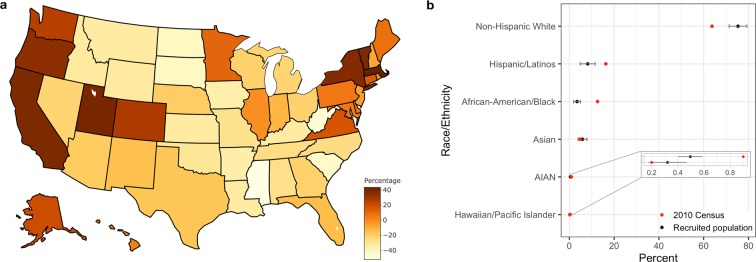
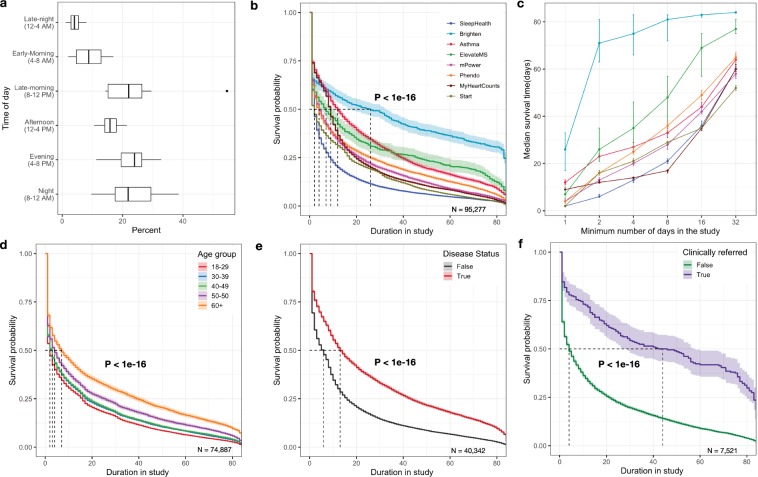
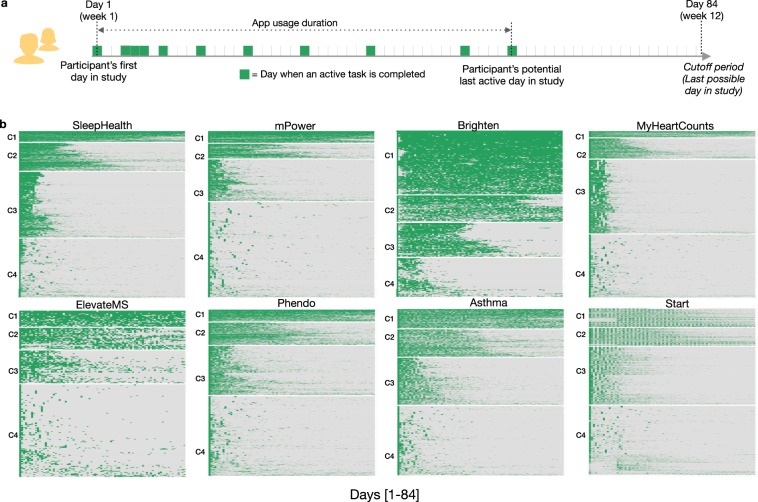
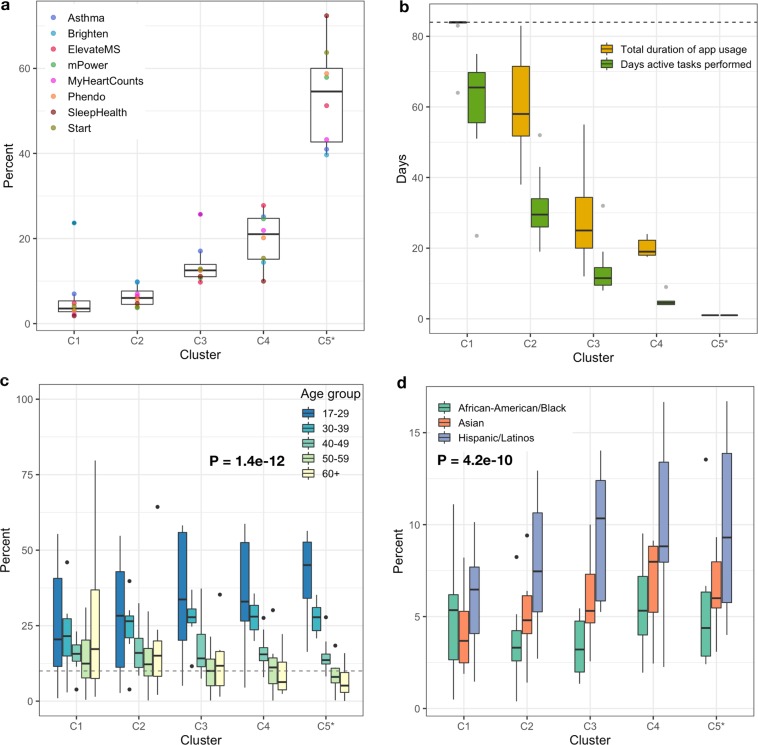
Digital technologies such as smartphones are transforming the way scientists conduct biomedical research. Several remotely conducted studies have recruited thousands of participants over a span of a few months allowing researchers to collect real-world data at scale and at a fraction of the cost of traditional research. Unfortunately, remote studies have been hampered by substantial participant attrition, calling into question the representativeness of the collected data including generalizability of outcomes. We report the findings regarding recruitment and retention from eight remote digital health studies conducted between 2014–2019 that provided individual-level study-app usage data from more than 100,000 participants completing nearly 3.5 million remote health evaluations over cumulative participation of 850,000 days. Median participant retention across eight studies varied widely from 2–26 days (median across all studies = 5.5 days). Survival analysis revealed several factors significantly associated with increase in participant retention time, including (i) referral by a clinician to the study (increase of 40 days in median retention time); (ii) compensation for participation (increase of 22 days, 1 study); (iii) having the clinical condition of interest in the study (increase of 7 days compared with controls); and (iv) older age (increase of 4 days). Additionally, four distinct patterns of daily app usage behavior were identified by unsupervised clustering, which were also associated with participant demographics. Most studies were not able to recruit a sample that was representative of the race/ethnicity or geographical diversity of the US. Together these findings can help inform recruitment and retention strategies to enable equitable participation of populations in future digital health research.
Overview
The claims and statistics of this paper haven’t been checked yet.
Free: it reads the open-access text and checks the first 5 claims that cite a source we can check. Create a free account to check every claim.
Integrity signals
Registry
Cites
Statistics
Figures
Verification
Claims the paper makes
The claims and statistics of this paper haven’t been checked yet.
Free: it reads the open-access text and checks the first 5 claims that cite a source we can check. Create a free account to check every claim.
Claims other papers make about this one
Each is checked against this paper’s own text: does it say what the citing paper says it does?
The source backs part of the claim, not all of it — or backs it for a different population, condition or comparison.
In the citing paper
“This level of attrition is commensurate with other digital mental health solution trial attrition rates [47,57].”
From A Therapeutic Relational Agent for Reducing Problematic Substance Use (Woebot): Development and Usability Study (2021) · cites this paper as [57]
Experimental — accuracy not yet measuredIn the citing paper
“This is especially important given the rapid dropout of user engagement for some forms of mobile phone interventions (e.g., health apps generally and mental health apps specifically [56, 57]).”
From Mobile phone-based interventions for mental health: A systematic meta-review of 14 meta-analyses of randomized controlled trials (2022) · cites this paper as [57]
Self-check
Percentages, sums and reported differences re-computed from the paper’s own numbers.
The self-check needs the paper’s full text.
Citations
Cites
Rogers, E. M., Singhal, A., & Quinlan, M. M. (2019) · An Integrated Approach to Communication Theory and Research · doi:10.4324/9780203710753-35 · Cited by 37,322
Miller, R. G. (1981) · Cited by 3,336
Johnson, C. O., Nguyen, M., Roth, G. A., Nichols, E., Alam, T., Abate, D., Abd-Allah, F., Abdelalim, A., Abraha, H. N., Abu-Rmeileh, N. M., et al. (2019) · The Lancet Neurology · doi:10.1016/s1474-4422(19)30034-1 · Cited by 3,264
Information bias in health research: definition, pitfalls, and adjustment methods
Althubaiti, A. (2016) · Journal of Multidisciplinary Healthcare · doi:10.2147/jmdh.s104807 · Cited by 3,018 · cited 1×
“Rather than retrospectively asking people to recall their health over the past week or month, researchers using mobile technologies can assess participants frequently including outside clinic and at important points in time without having to rely on recall that is known to have bias.(29) While these recent studies sho…”
Eysenbach, G. (2005) · Journal of Medical Internet Research · doi:10.2196/jmir.7.1.e11 · Cited by 2,524
The “All of Us” Research Program
The All of Us Research Program Investigators (2019) · New England Journal of Medicine · doi:10.1056/nejmsr1809937 · Cited by 2,440
Nahum-Shani, I., Smith, S. N., Spring, B. J., Collins, L. M., Witkiewitz, K., Tewari, A., & Murphy, S. A. (2018) · Annals of Behavioral Medicine · doi:10.1007/s12160-016-9830-8 · Cited by 2,171
Yardley, L., Morrison, L., Bradbury, K., & Muller, I. (2015) · Journal of Medical Internet Research · doi:10.2196/jmir.4055 · Cited by 1,442
Fogel, D. B. (2018) · Contemporary Clinical Trials Communications · doi:10.1016/j.conctc.2018.08.001 · Cited by 1,035
An Integrated Approach to Communication Theory and Research
(2014) · Routledge eBooks · doi:10.4324/9780203887011 · Cited by 981
Research works printed but not linked: 2
- Virtual Clinical Trials Challenges and Opportunities: Proceedings of a Workshop: Health and Medicine Division. (2019). http://www.nationalacademies.org/hmd/Reports/2019/virtual-clinical-trials-challenges-and-opportunities-pw.aspx. 31334937
- National Academies of Sciences, Engineering, and Medicine, Health and Medicine Division, Board on Health Sciences Policy & Committee on the Return of Individual-Specific Research Results Generated in Research Laboratories. Returning Individual Research Results to Participants: Guidance for a New Research Paradigm. (National Academies Press, 2018). 30001048
Cited by
Items 301–400 of 413
Remote monitoring of wide-ranging real-world changes in adults following ADHD medication initiation
Zhang, Y., Barnes, A. E., Veerakanjana, K., Denyer, H., Sankesara, H., Marriott, H., Rocks, P., Gerboni, G., Mortera, A., Müller, U., et al. (2025) · Translational Psychiatry · doi:10.1038/s41398-025-03764-y · Cited by 2
Sobolev, M., Śleboda, P., de la Torre, B. G., Muench, F. J., & Kuerbis, A. (2025) · Journal of Substance Use and Addiction Treatment · doi:10.1016/j.josat.2025.209856 · Cited by 1
Yu, Z., & Cheng, W. (2026) · Hypertension Research · doi:10.1038/s41440-025-02544-x · Cited by 1
Abdelkader, K., Barile, C. F., Jobe, N. I., Huey, N., Isaac, Z., Sarno, D. L., Kurz, J., & Barron, D. S. (2026) · BMJ Open · doi:10.1136/bmjopen-2025-104660 · Cited by 1
“In line with the current literature on DHT studies, 12 15 16 we struggled to promote participant engagement and retention for the initial participants before ‘DigitalPulse’ implementation.”
Kamolsathian, O., & Kratoo, W. (2026) · International Journal of Nursing Education · doi:10.37506/2k30n242 · Cited by 1
Lashinsky, A., Knapová, L., Burda, M., Kaštovská, B., Sebera, M., Blaschová, D., Filo, R., Uhrova, V., Revilla, M., & Elavsky, S. (2026) · International Journal of Behavioral Medicine · doi:10.1007/s12529-025-10433-3 · Cited by 2
Ceberio, M. R., & Putallaz, P. R. (2025) · Revista Psicológica Herediana · doi:10.20453/rph.v18i2.7652 · Cited by 1
“…herramien-tas potencialmente eficaces para ofrecer información, apoyo emocional y estrategias terapéuticas adaptadas al estilo de vida de los adolescentes, quienes se consideran nativos digitales por su familiaridad y cotidianeidad con estos dispositivos (Hollis et al., 2017; Pratap et al., 2020).”
Young, S. R., Dworak, E. M., Hauner, K. K. Y., Benavente, J. Y., Wolf, M. S., & Nowinski, C. J. (2026) · JAMIA Open · doi:10.1093/jamiaopen/ooag032 · Cited by 2
“17,18”
Sociotechnical-systems analysis of IoT-AI convergence in cosmetic health
Makhseed, A., Arian, H., & Shuaib, A. S. (2026) · Frontiers in Medicine · doi:10.3389/fmed.2026.1677802 · Cited by 1
Kuczynski, A. M., & Areán, P. A. (2026) · Current Treatment Options in Psychiatry · doi:10.1007/s40501-026-00380-5 · Cited by 1
Self-citationReminder Strategies to Improve Meal-Logging Adherence: Protocol for a Microrandomized Trial
Fuchs, M., Brügger, V., Jin, Q., Wirth, B., Bilz, S., von Wangenheim, F., Brändle, M., Kowatsch, T., & Jovanova, M. (2026) · JMIR Research Protocols · doi:10.2196/100239 · Cited by 1
“This strategy leverages adherence-contingent financial incentives, which have shown considerable success in increasing adherence in prior digital health studies [4,7,8,10].”
InfluentialHan, Q., & Zhao, C. (2026) · Digital Health · doi:10.1177/20552076261456584 · Cited by 1
“4 For symptom monitoring applications, whose value often depends on repeated use to track symptom trajectories, detect changes, or refine recommendations, continued use is therefore not a secondary outcome but a central requirement for real-world benefit.”
Rueda, A., Martin, J., Parkington, K. B., Perivolaris, A., Teferra, B. G., Lee, G. H., Tassone, V. K., Lin, Q., Ivanov, M., Darnell, B. C., et al. (2026) · JMIR Formative Research · doi:10.2196/77818 · Cited by 1
“%) substantially exceed those reported in large-scale remote digital health studies, where median retention ranges from days to a few weeks [32] and where attrition in mobile mental health trials is common [31].”
InfluentialGoodday, S., Karlin, E., Sorensen, M., Yang, R., Gordon, P., Opoku, C., Vuong, D., Wilson, J., McKenzie, D., Piccotti, J., et al. (2026) · JMIR mhealth and uhealth · doi:10.2196/85425 · Cited by 1
“Further, existing health-related apps show strikingly poor engagement [10-13].”
Lukkahatai, N., Jiang, Y., Zhang, J., Kawi, J., Wu, H., Wang, H., Campbell, C. M., Thrul, J., Abdi, S., Hacker, E. D., et al. (2026) · Journal of Cancer Survivorship · doi:10.1007/s11764-026-02104-3 · Cited by 1
“This pattern is consistent with prior digital health literature indicating that remotely delivered interventions often experience substantial attrition and that engagement improves when interventions include human support, reminders, or other features that sustain participant involvement [30–32].”
PD GENEration: an international Parkinson’s disease genetic research study
Galvelis, K. G., Dilliott, A. A., Dini, M., León, R. D., Thom, M., Azcárate, I., Bothwick, N., Caboy, L., Coral-Zambrano, A., Doshier, K., et al. (2026) · BMC Neurology · doi:10.1186/s12883-026-05426-y · Cited by 1
Digital Health Interventions to Empower People with Sickle Cell Disease: Toward Patient-Led Design
Issom, D.-Z. (2022) · IntechOpen eBooks · doi:10.5772/intechopen.104962 · Cited by 2
Karampatakis, G. D., Kimber, S., Wood, H. E., Griffiths, C., Taylor, S. J., Li, X., Day, B., Mant, J., Relton, C., Watson, J., et al. (2024) · European Journal of General Practice · doi:10.1080/13814788.2024.2407594 · Cited by 1
“…in the last 20 years through Ohcs (e.g. on Facebook and Reddit), promoting it as part of routine primary care is novel and requires innovative care models [13]. interactions with clinicians, especially face-to-face, are important in fostering patients’ engagement with digital interventions [14].”
Ogorek, B. A., Rhoads, T. P., & Smith, E. A. (2024) · JMIR Human Factors · doi:10.2196/60438 · Cited by 1
Hackett, K. L., Campbell, M., Pakpahan, E., Vines, J., Lendrem, D. W., McCready, J. L., Rapley, T., Ellis, J. G., Deary, V., McColl, E., et al. (2025) · Frontiers in Digital Health · doi:10.3389/fdgth.2025.1549093 · Cited by 1
Kenis, D., & Devos, I. (2025) · Social Science & Medicine · doi:10.1016/j.socscimed.2025.118444 · Cited by 2
König, L. M., Volpi, L., & Koch, T. (2026) · Digital Health · doi:10.1177/20552076261429621 · Cited by 2
“79,80 We also conducted an extensive assessment of socio-demographic characteristics that may be associated with mHealth app adoption.”
Mittermaier, M., Venkatesh, K. P., & Kvedar, J. C. (2023) · npj Digital Medicine · doi:10.1038/s41746-023-00789-9 · Cited by 1
Carvalho, L. R. B. D. A. (2023) · Digital Library of Theses and Dissertations (Universidade de São Paulo) · doi:10.11606/d.5.2023.tde-04082023-161602 · Cited by 1
Weber, A., Haderer, M., Hofmann, R., Masri, M. A., von Schau, N., & König, L. M. (2025) · medRxiv · doi:10.1101/2025.08.21.25334205 · Cited by 2
Carvalho, F. N. A. B. (2022) · Portuguese National Funding Agency for Science, Research and Technology (RCAAP Project by FCT) · doi:10.34626/6pjv-1n57 · Cited by 2
Mazéas, A. (2023) · theses.fr (ABES) · doi:10.70675/fee10bdcz3939z4feazbd43z0c792fd8a928 · Cited by 5
Milne‐Ives, M., Rahman, E., Bradwell, H. L., Baines, R., Boey, T., Potter, A., Lawrence, W. T., van Velthoven, M. H., & Meinert, E. (2022) · doi:10.2196/preprints.40151
Aging-related Factors in Digital Health: Design, Uptake, Engagement, and Outcomes
Branch, O. H., Graham, S. A., Moore, R. C., & Areán, P. A. (2023) · Frontiers research topics · doi:10.3389/978-2-8325-1408-5
Self-citationIntegrated Digital Platforms for Clinical Care
Larsen, M. E., Vo, L. C., Pratap, A., & Peters, D. (2023) · Springer eBooks · doi:10.1007/978-3-030-42825-9_148-1
Self-citationPredicting User Adoption and Attrition of Digital Health
Harrison, G., & Cleland, I. (2023) · Lecture notes in networks and systems · doi:10.1007/978-3-031-48306-6_18
Blockchain Implementation for Decentralized Real-World Research
Mehta, R., Díaz‐Mitoma, F., & Diaz, C. (2023) · Future of business and finance · doi:10.1007/978-3-031-45339-7_8
Mo, R., & Hu, S. (2024) · International Journal of Medical Informatics · doi:10.1016/j.ijmedinf.2024.105482
RetractedForging a Career in Digital Health Research
Hirten, R. P. (2024) · Gastroenterology · doi:10.1053/j.gastro.2024.07.013
Integrated Digital Platforms for Clinical Care
Larsen, M. E., Vo, L. C., Pratap, A., & Peters, D. (2024) · Springer eBooks · doi:10.1007/978-3-030-51366-5_148 · Cited by 1
Self-citationDaniore, P., Yan, C., Stanikić, M., Iaquinto, S., Ammann, S., Kamm, C. P., Zecca, C., Calabrese, P., Steinemann, N., & von Wyl, V. (2024) · PLOS Digital Health · doi:10.1371/journal.pdig.0000645
“For instance, a study on retention indicators across multiple remote digital health studies found that contextual factors, such as clinical referral to join a study, helped identify participant subgroups based on retention [50].”
Hamitouche, D., Barkat, Y., Parekh, D., Hammer, E., & Benrimoh, D. A. (2024) · arXiv (Cornell University) · doi:10.48550/arxiv.2412.00942 · Cited by 2
Current Treatments for Anxiety and Trauma-Related Disorders
Szuhany, K. L., Feldman, B. H., Malgaroli, M., & Simon, N. M. (2025) · Oxford University Press eBooks · doi:10.1093/med/9780197640654.003.0042
Berron, D. (2025) · Elsevier eBooks · doi:10.1016/b978-0-12-822240-9.00009-0
Lenze, E. J., Nykamp, M., Miller, J. P., Stevens, A., Schweiger, J. A., Gettinger, T. R., Yingling, M. D., Zhang, Y., Nicol, G. E., Zorumski, C. F., et al. (2025) · Clinical and Translational Science · doi:10.1111/cts.70292
Näher, A., Schmidt, L., Kopka, M., Schulte‐Althoff, M., & Ahmed, A. (2025) · medRxiv · doi:10.1101/2025.07.28.25332315
Nejat, P., Bachman, A. D., Stubbs, V. M., Duffy, J. R., Stricker, J. L., Herasevich, V., Jones, D. T., Utianski, R. L., & Botha, H. (2025) · medRxiv · doi:10.1101/2025.08.18.25333909
“While younger individuals may be more comfortable with technology, our results and others suggest that younger participants are more likely to disengage or drop out of digital studies over time 21,22 .”
Nejat, P., Bachman, A. D., Stubbs, V. M., Duffy, J. R., Stricker, J. L., Herasevich, V., Jones, D. T., Utianski, R. L., & Botha, H. (2025) · doi:10.2196/preprints.83432
Milne‐Ives, M., Ananthakrishnan, A., Homer, S. R., Andrade, J., & Meinert, E. (2025) · JMIR Research Protocols · doi:10.2196/71551
“We will also explore how engagement is associated with recruitment methods—whether participants found out about the study via their HCP or via social media advertisement—as previous research has found a positive relationship between clinical referral and engagement [61].”
The CASE Framework -- A New Architecture for Participatory Research and Digital Health SurveillancePreprint
Hirsch, M., Hevesi, P., & Lukowicz, P. (2025) · arXiv (Cornell University) · doi:10.48550/arxiv.2505.23516
“Furthermore, while they support some sensor integration, they do not provide the event-driven context-aware survey logic that enables real-time adaptation based on external data sources or complex management of the state of participants in multiple studies [31].”
A General Framework for Off-Policy Learning with Partially-Observed RewardPreprint
Takehi, R., Asami, M., Kawakami, K., & Saito, Y. (2025) · arXiv (Cornell University) · doi:10.48550/arxiv.2506.14439
Engagement and retention with remote monitoring in psoriasis: Findings from the mySkin study
Ye, W., Dooley, N., Tan, W. R., Coker, B., Tsakok, T., Moorhead, L., Pizzato, J., Powell, K., Kroah‐Hartman, M., Paolino, A., et al. (2025) · Journal of the European Academy of Dermatology and Venereology · doi:10.1111/jdv.70153
McCormick, C. E. B., Osnaya, R. A., Borosh, A. M., Collins, H., Kelleher, B., & DeMaria, A. L. (2025) · Journal of Autism and Developmental Disorders · doi:10.1007/s10803-025-07089-z
Zheng, P. Z., Miclau, T., Goenawan, B., Johnson, G. T. A., O'Neill, C., Tamura, L., Wu, P. I., & Smuck, M. W. (2025) · Interventional Pain Medicine · doi:10.1016/j.inpm.2025.100709
“Pratap and colleagues theorized that patients ’ trust in clinicians may contribute to the higher retention rates in mHealth application based studies recommended by physicians [15].”
InfluentialRemote Neuroassessment and Telepsychiatry, A New Paradigm for Care Delivery
Eze, C. N. (2025) · Digital Neuropsychiatry · doi:10.64229/yqag4w60
“Meta-analyses confirm high inter-rater reliability and patient/clinician satisfaction [10].”
Gates, E., Hole, B. D., Hayward, S., Chesnaye, N. C., Meuleman, Y., Dekker, F. W., Evans, M., Heimbürger, O., Torino, C., Porto, G., et al. (2022) · Figshare · doi:10.6084/m9.figshare.19164473
Gates, E., Hole, B. D., Hayward, S., Chesnaye, N. C., Meuleman, Y., Dekker, F. W., Evans, M., Heimbürger, O., Torino, C., Porto, G., et al. (2022) · Figshare · doi:10.6084/m9.figshare.19164470
Pelimuotoisten digitaalisten mielenterveysinterventioiden käyttäjäkeskeinen suunnittelu
Lukka, L. (2024) · Aaltodoc (Aalto University)
Factors Influencing Fertility & Menstrual App Uptake by Diverse Women: A Stated Choice Experiment
Hogervorst, E. (. (2024) · Research Repository (Delft University of Technology)
Efficacy of digital health interventions for chronic kidney disease management
정문경 (2024) · Seoul National University Open Repository (Seoul National University)
eHealth support for people with serious illness and their family caregivers
Goethem, V. V. (2024) · Ghent University Academic Bibliography (Ghent University)
Subotic-Kerry, M., Mackinnon, A. J., Gallen, D., Baker, S. T. E., Parker, B., Achilles, M. R., Chakouch, C., Cockayne, N. L., Christensen, H. M., & O’Dea, B. (2025) · Child and Adolescent Psychiatry and Mental Health · doi:10.1186/s13034-025-00975-5
“…for improving individuals’ engagement with interventions in structured settings (e.g., 20) and for increasing retention and participation (e.g., 21, 23, 25), the use of such strategies to supporting the implementation of digital mental health interventions in Australian secondary schools requires…”
Nwaogwugwu, C. J., Olutunde, O. K., Onwuegbuchulam, A. J., Jessica, O. C., & Osiegbu, E. U. (2023) · Iconic Research and Engineering Journals · doi:10.64388/irev7i6-1713179
Sala, M., Kober, H., Levinson, C. A., Ascarrunz, D., Stern, C. M., & Roos, C. R. (2026) · International Journal of Eating Disorders · doi:10.1002/eat.70037 · Cited by 1
Halog, G. B., Barfoot, J., Whittingham, K., & Mitchell, A. E. (2026) · Journal of Workplace Behavioral Health · doi:10.1080/15555240.2025.2600664
Sing, M., & Chen, P.-T. (2026) · doi:10.2196/preprints.92689
Martins, E. D., Tavares, C. A. M., Favaro, L., Monfardini, F., Mourad, J., Khunti, K., Savarese, G., Berwanger, O., & Santo, K. (2026) · American Heart Journal · doi:10.1016/j.ahj.2026.107380
Vij, R., & Narula, A. (2026) · Advances in computational intelligence and robotics book series · doi:10.4018/979-8-3373-9220-2.ch017
Evaluating Accessibility in Sequential Onboarding Flows: A Conceptual Framework and Scoring RubricPreprint
Akeji, I. U., & Okwoli, D. E. (2026) · Research Square · doi:10.21203/rs.3.rs-8795738/v1
Knox, L., Kennedy, P., Gilsenan, D., Murray, D., Galvin, M., Ali, Y., Hardiman, O., McDermott, C. J., & Hobson, E. (2026) · Neurodegenerative Disease Management · doi:10.1080/17582024.2026.2629783
An app responding to behavior of people to promote mental wellbeing in anxious youth
Hagalwadi, J., Sutherland, D., Dölek, S., Marin-Dragu, S., Bagnell, A. L., Wozney, L., Orji, R., & Sandra, M. (2026) · Journal of Affective Disorders · doi:10.1016/j.jad.2026.121503
Mahmood, R., David, A., Hu, D., Alshurafa, N. I., Haux, L. M., Hester, J. D., Kiselica, A. M., Liu, S., Qiu, C., Wu, C.-Y., et al. (2026) · JMIR Formative Research · doi:10.2196/84618 · Cited by 2
Ефективність інноваційної системи психологічної діагностики «DASS-UA» для студентської молоді
Алексіна, Н. Ю. (2025) · eKNUTSHIR
Hatzinger, L. A., Crosley‐Lyons, R., Hewus, M., Wang, W.-L., Huh, J., Dyck, D. V., & Dunton, G. F. (2026) · Digital Health · doi:10.1177/20552076261435865
“11 Additionally, digital engagement with intervention delivery and digital compliance to intervention may in fl u-ence the degree of behavioral adherence to nondigital intervention strategies (i.e., behavioral adherence) of DTx.”
Roos, C. R., Witkiewitz, K. A., Bowen, S. W., Kiluk, B. D., Bricker, J. B., Mun, C. J., Baillet, E., John, M., & Kober, H. (2026) · Mindfulness · doi:10.1007/s12671-026-02836-4
Adamyan, L. V., Plavunov, I. N., & Владимировна, К. О. (2026) · Russian Journal of Human Reproduction · doi:10.17116/repro2026320216
Smartphone Missingness as a Depression Biomarker: A Baseline-Controlled Re-analysis of StudentLifePreprint
Olcan, C. (2026) · medRxiv · doi:10.64898/2026.04.30.26351977
Comtois, K. A., Smythe, P., Kerbrat, A. H., Kim, E., Crouch, N., Homiar, A., Mosser, B., Sams, N., Harvey, M. L., Bagge, C. L., et al. (2026) · Journal of Medical Internet Research · doi:10.2196/83637 · Cited by 1
Self-citationPatient engagement with consumer wearable devices in the electronic health record
Sobolev, M., Clark, A., Kamrava, M., Pevnick, J. M., Spiegel, B. M. R., Duncan, R., & Gresham, G. K. (2026) · Frontiers in Digital Health · doi:10.3389/fdgth.2026.1784621
“Future analyses will focus on long-term engagement patterns, and are likely to yield different results, especially considering the addition of other unaccounted for risk factors (e.g., disease status, cancer diagnosis, etc.) (19, 31).”
Zhang, S., Ahsan, A. M., Agarwal, R., Han, K. H., Green, S., Feldman, J. M., Reznik, M., Su, Z., Zheng, K., & Jariwala, S. P. (2026) · Respiratory Care · doi:10.1177/19433654261444702 · Cited by 1
“26 Factors such as clinician referral, compensation, presence of the disease of interest, and older age are associated with increased retention, but fi ndings are inconsistent.”
Feldman, T. B., Eugene, R., Kapadia, N., Indic, P., Hampton, J., & Carreiro, S. (2026) · Research Square · doi:10.21203/rs.3.rs-9497767/v1
“Pratap et al. reported similar findings in a cross-study evaluation of health-related apps 44 .”
Steps toward developing an algorithm to facilitate recognition of translational science
Martin, P. J., Saelens, B. E., Johnson, T., Harniss, M. K., Coker, T. R., Blakeney, E. A., Isoherranen, N., Sun, T., Bansal, N., Lee, S. J., et al. (2026) · Journal of Clinical and Translational Science · doi:10.1017/cts.2026.10753
Ramos, S. R., Boerger, L. L., Restar, A., Phadke, M. A., Jeon, S., Johnson, C., Melkus, G. D., Kershaw, T. C., Reynolds, H., & Vorderstrasse, A. A. (2026) · Journal of Medical Internet Research · doi:10.2196/91145
“Sixth, the study’s educational content was grounded in the American Heart Association Life’s Essential 8 framework [38] for cardiovascular health, lending credibility to the prevention messaging delivered through the VE [60].”
Hoang, M.-N., Kim, L., Fisher, L., DuBose, L., Ory, M. G., Lee, S., Falohun, T., & Fan, Q. (2026) · JMIR Formative Research · doi:10.2196/92967
“The study aimed to recruit approximately 150 participants initially, with the anticipation of 50% completing the full 4-week study and exit survey that included a modified TAS to meet the minimum requirement for bivariate analyses [55].”
Mantena, S., Johnson, A., Schütz, N., Tolas, A., Montalvo, S., Delgado-SanMartin, J., Ramírez‐Posada, M., Du, L., Zhang, S., Huynh, A. D., et al. (2026) · medRxiv · doi:10.64898/2026.05.26.26354165
Aboagye, N. Y., Baker, M. R., Baker, K., & Din, S. D. (2026) · JMIR Formative Research · doi:10.2196/91829
“Digital health technologies that combine wearable activity monitors with symptom tracking apps provide opportunities to study activity and symptom patterns in real-world settings [14,15].”
Huang, Y., Taylor, D., Kubler, M., Burger, S.-A., Itallie, A. K. V., Vandelanotte, C., & Robinson, M. (2026) · Journal of Physical Activity and Health · doi:10.1123/jpah.2025-0740
Dini, M., Maida, E., Lavorgna, L., Buizer, A. I., Fanciulli, A., Medijainen, K., Nonnekes, J. H., Ortigoza‐Escobar, J. D., Salamon, A., Timmann, D., et al. (2026) · Journal of Neurology · doi:10.1007/s00415-026-13911-0
“This could counterbalance the known loss of adherence which commonly occurs in active telemonitoring studies [38, 40, 41], thus enabling very long-term follow-up.”
Kokwaro, L., Krüger, H., Stratmann, D., Schulze, D., Fürstenau, D., Friedel, E., Quinlivan, E., Soekadar, S. R., Lech, S., & Schreiter, S. (2026) · Bipolar Disorders · doi:10.1111/bdi.70128
Zimmerman, C. S., Pei, P., Carayannopoulos, A. G., & Petzschner, F. H. (2026) · medRxiv · doi:10.64898/2026.06.08.26355180
“Pratap et al. (2020) found that compensation was associated with longer retention in remote digital health studies, but whether any of these features had incremental effects beyond the others cannot be determined here (Pratap et al. 2020).”
InfluentialLucca, E. R.-D., Heavey, K., & Murnane, E. L. (2026) · Journal of Affective Disorders Reports · doi:10.1016/j.jadr.2026.101111
Bader, A., Hofmann, R., Haderer, M., von Schau, N., & König, L. M. (2026) · BMC Digital Health · doi:10.1186/s44247-026-00282-9
“In addition, the sample was relatively highly educated [21], as common in digital health studies [64], and likely affected by self-selection bias, resulting in a predominance of motivated and digitally literate participants, which may additionally limit generalizability.”
Marzorati, D., Rossi, A. D., Švihrová, R., Baldassari, A., Kochergin, V., Grossenbacher, M., & Faraci, F. D. (2026) · Digital Health · doi:10.1177/20552076261427103 · Cited by 1
“23,26,52 We considered as event the last day in which study participants wore the smartwatch for at least 70% of the day.”
Tsanas, A., Steffan, B., Dixon, B., Hay, K., Pschetz, L., Jandrić, J., & Loretto, W. (2026) · Scientific Reports · doi:10.1038/s41598-026-58229-z
Janowski, R., Cluver, L. D., Wamoyi, J., Meléndez‐Torres, G. J., Lachman, J. M., Stern, D., van Niekerk, L.-J., & Shenderovich, Y. (2026) · JMIR Pediatrics and Parenting · doi:10.2196/86129
“This mirrors broader trends in digital health interventions, where attrition is typically concentrated in the early stages of program use [38].”
Digital Monitoring and Chronic Pain Trajectories in Patients Receiving Tertiary Pain Care
Kerckhove, N., Soubeiga, A., Phalip, J., Bertin, C., Doreau, B., Moisset, X., Delage, N., Authier, N., Antoine, V., & Pereira, B. (2026) · JAMA Network Open · doi:10.1001/jamanetworkopen.2026.27217
Gerhardt, U., & Kreuzenbeck, C. C. J. (2026) · AI & Society · doi:10.1007/s00146-026-03264-7 · Cited by 1
“However, two studies by Pratap et al. (2020) and Baumel et al. (2019) with possible approaches to analyzing the DHA dropout causes were considered in RQ2.”
Pang, R., Xu, Y., Yu, X., Wang, J., Yang, Z., Li, H., Zhang, X., Chen, N., Liang, X. H., & Pan, H. (2026) · Journal of Medical Internet Research · doi:10.2196/89124
“A cross-cohort analysis of more than 100,000 participants in remote digital studies presented attrition curves with displayed steep early decay [49], and panel analysis of mental-health app usage by Baumel et al [50] found median open-day windows under 1 month.”
Exploring engagement patterns in a reproductive health app using the Technology Acceptance Model
Kazakoff, A., & Doyle–Baker, P. K. (2026) · Frontiers in Reproductive Health · doi:10.3389/frph.2026.1904798
Adhia, D. (2026) · Research Square · doi:10.21203/rs.3.rs-10819991/v1
Gottlieb, M. A., Pallok, K., Zimmermann, L., Thompson, D., Ansell, D. A., Weaver, A., Kersemakers, D., Niehaus, K. E., & Walker, G. (2026) · Journal of General Internal Medicine · doi:10.1007/s11606-026-10684-0
Kőrösi, G., Rafael, B., & Kósa, I. (2026) · Online Journal of Public Health Informatics · doi:10.2196/92710
“When engagement declines—as is commonly observed in many digital health deployments [9-11]—datasets become dominated by irregular sampling, substantial temporal gaps, and highly variable completeness across individuals [12,13].”
Influential
Metadata
- Authors
- Pratap, A., Neto, E. C., Snyder, P., Stepnowsky, C., Elhadad, N., Grant, D., Mohebbi, M. H., Mooney, S., Suver, C., Wilbanks, J., Mangravite, L., Heagerty, P. J., Areán, P., & Omberg, L.
- Affiliations
- Sage Bionetworks (US)
- University of California San Diego (US)
- Columbia University (US)
- University of Washington (US)
- Corresponding author
- Pratap, Abhishek
- ORCID
- Venue
- npj Digital Medicine
- Published
- 2020-02-17
- Volume
- 3
- Issue
- 1
- Pages
- 21-21
- ISSN
- 2398-6352 (ISSN-L)
- PMC
- PMC7026051
- OpenAlex
- W2978342502
- Semantic Scholar
- 8ba6198f7cbbcbfcb483575fe7817f70b8f4dc61
- Cited by
- 410
- References
- 84
- Citations by year
- 2026: 65 · 2025: 71 · 2024: 75 · 2023: 56 · 2022: 81 · 2021: 38 · 2020: 24
- FWCI
- 51.78
- Type
- journal article
- Language
- en
- Open access
- gold
- doi.org
- Licence
- cc-by
- creativecommons.org/licenses/by/4.0 (tdm)
- creativecommons.org/licenses/by/4.0 (vor)
- Locations
- npj Digital Medicine (publishedVersion, cc-by)
- PubMed Central (publishedVersion, cc-by)
- PubMed (publishedVersion)
- arXiv (Cornell University) (submittedVersion)
- DOAJ (DOAJ: Directory of Open Access Journals) (submittedVersion, cc-by-sa)
- arXiv (Cornell University)
- Synapse
- Funders
- U.S. Department of Health & Human Services | NIH | National Institute of Mental Health (MH100466)
- Robert Wood Johnson Foundation (73205)
- American Sleep Apnea Foundation, Washington, DC
- U.S. Department of Health & Human Services | NIH | National Center for Advancing Translational Sciences (1UL1TR002319-01)
- Topics
- Health Sciences › Health Professions › General Health Professions › Mobile Health and mHealth Applications
- Health Sciences › Medicine › Public Health, Environmental and Occupational Health › Ethics in Clinical Research
- Physical Sciences › Computer Science › Computer Science Applications › Mobile Crowdsensing and Crowdsourcing
- Keywords
- participant retention, participant attrition, smartphone app usage, participant recruitment, clinician referral, app usage patterns, demographic representativeness, health equity, real-world data
About these checks
Registry, retraction, Cites and statistics results are computed, not judged, with one exception: a printed reference that no index lists is read once by a model before it counts as a citation error. Claims are extracted by a model and kept only when their quote appears verbatim in the text; each cited source is then checked, with a model’s help, for whether it says what the claim relies on. Those verdicts can be wrong — read the claim’s quote and the cited source before relying on one.
Statistics and arithmetic are recomputed, not judged.
Confidence bands are shown only for fields calibrated on our annotated test set. None is calibrated yet, so no band is shown.
What counts as a claim ›How we measure confidence ›How we check this ›
Are you an author, or do you see a problem with this page? Request a review
Data sources
Bibliographic data: Semantic Scholar, OpenAlex, Crossref.
Contains information from the Semantic Scholar Academic Graph Datasets, made available under the ODC Attribution License (ODC-BY 1.0).
Semantic Scholar’s data is described in: Kinney, R., et al. (2023). The Semantic Scholar Open Data Platform. arXiv:2301.10140.
