

Indicators of retention in remote digital health studies: a cross-study evaluation of 100,000 participants
Open accessThe DOI matches its Crossref record; 84 of the 84 references it cites were found in a registry or an index.
Abstract
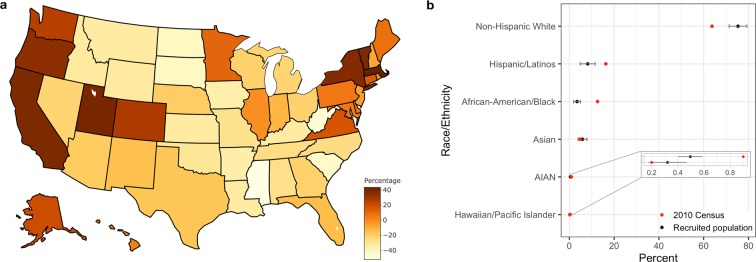
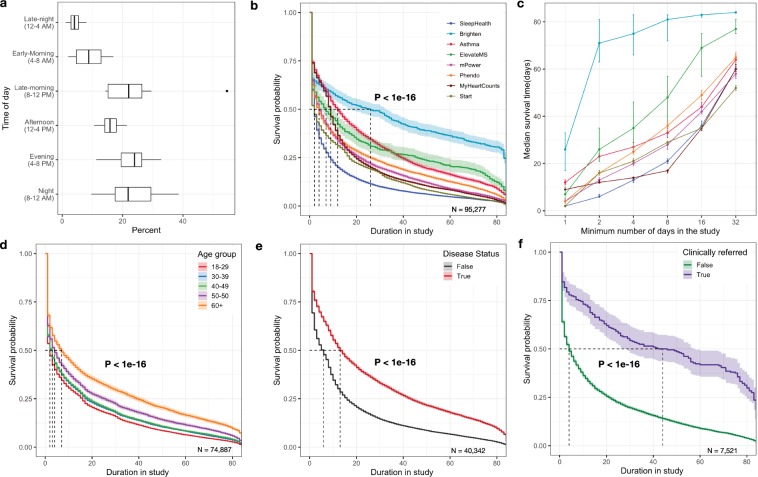
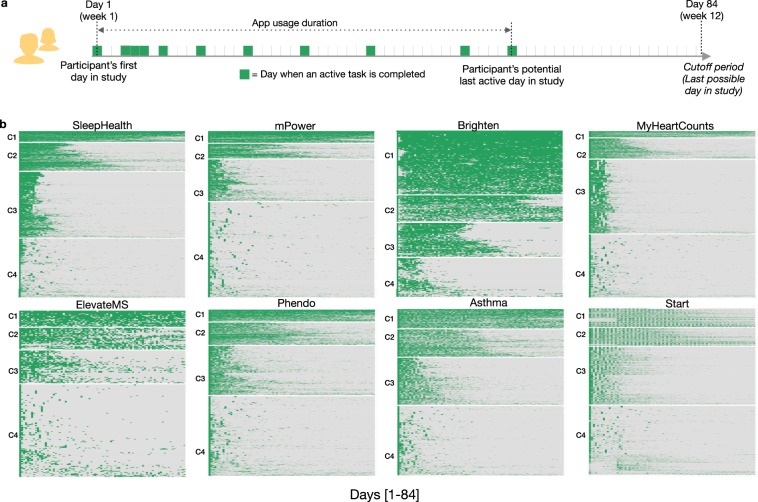
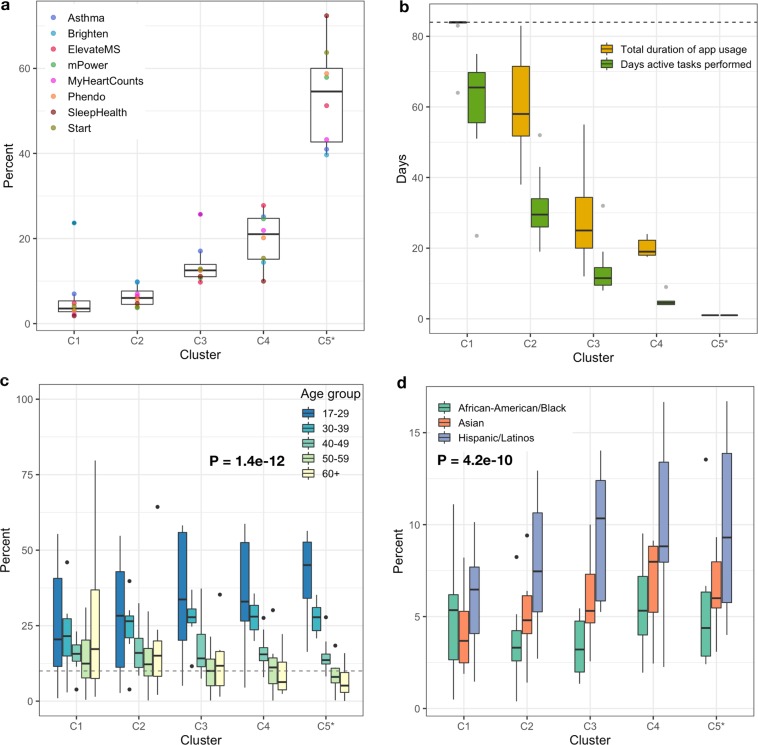
Digital technologies such as smartphones are transforming the way scientists conduct biomedical research. Several remotely conducted studies have recruited thousands of participants over a span of a few months allowing researchers to collect real-world data at scale and at a fraction of the cost of traditional research. Unfortunately, remote studies have been hampered by substantial participant attrition, calling into question the representativeness of the collected data including generalizability of outcomes. We report the findings regarding recruitment and retention from eight remote digital health studies conducted between 2014–2019 that provided individual-level study-app usage data from more than 100,000 participants completing nearly 3.5 million remote health evaluations over cumulative participation of 850,000 days. Median participant retention across eight studies varied widely from 2–26 days (median across all studies = 5.5 days). Survival analysis revealed several factors significantly associated with increase in participant retention time, including (i) referral by a clinician to the study (increase of 40 days in median retention time); (ii) compensation for participation (increase of 22 days, 1 study); (iii) having the clinical condition of interest in the study (increase of 7 days compared with controls); and (iv) older age (increase of 4 days). Additionally, four distinct patterns of daily app usage behavior were identified by unsupervised clustering, which were also associated with participant demographics. Most studies were not able to recruit a sample that was representative of the race/ethnicity or geographical diversity of the US. Together these findings can help inform recruitment and retention strategies to enable equitable participation of populations in future digital health research.
Overview
The claims and statistics of this paper haven’t been checked yet.
Free: it reads the open-access text and checks the first 5 claims that cite a source we can check. Create a free account to check every claim.
Integrity signals
Registry
Cites
Statistics
Figures
Verification
Claims the paper makes
The claims and statistics of this paper haven’t been checked yet.
Free: it reads the open-access text and checks the first 5 claims that cite a source we can check. Create a free account to check every claim.
Claims other papers make about this one
Each is checked against this paper’s own text: does it say what the citing paper says it does?
The source backs part of the claim, not all of it — or backs it for a different population, condition or comparison.
In the citing paper
“This level of attrition is commensurate with other digital mental health solution trial attrition rates [47,57].”
From A Therapeutic Relational Agent for Reducing Problematic Substance Use (Woebot): Development and Usability Study (2021) · cites this paper as [57]
Experimental — accuracy not yet measuredIn the citing paper
“This is especially important given the rapid dropout of user engagement for some forms of mobile phone interventions (e.g., health apps generally and mental health apps specifically [56, 57]).”
From Mobile phone-based interventions for mental health: A systematic meta-review of 14 meta-analyses of randomized controlled trials (2022) · cites this paper as [57]
Self-check
Percentages, sums and reported differences re-computed from the paper’s own numbers.
The self-check needs the paper’s full text.
Citations
Cites
Rogers, E. M., Singhal, A., & Quinlan, M. M. (2019) · An Integrated Approach to Communication Theory and Research · doi:10.4324/9780203710753-35 · Cited by 37,322
Miller, R. G. (1981) · Cited by 3,336
Johnson, C. O., Nguyen, M., Roth, G. A., Nichols, E., Alam, T., Abate, D., Abd-Allah, F., Abdelalim, A., Abraha, H. N., Abu-Rmeileh, N. M., et al. (2019) · The Lancet Neurology · doi:10.1016/s1474-4422(19)30034-1 · Cited by 3,264
Information bias in health research: definition, pitfalls, and adjustment methods
Althubaiti, A. (2016) · Journal of Multidisciplinary Healthcare · doi:10.2147/jmdh.s104807 · Cited by 3,018 · cited 1×
“Rather than retrospectively asking people to recall their health over the past week or month, researchers using mobile technologies can assess participants frequently including outside clinic and at important points in time without having to rely on recall that is known to have bias.(29) While these recent studies sho…”
Eysenbach, G. (2005) · Journal of Medical Internet Research · doi:10.2196/jmir.7.1.e11 · Cited by 2,524
The “All of Us” Research Program
The All of Us Research Program Investigators (2019) · New England Journal of Medicine · doi:10.1056/nejmsr1809937 · Cited by 2,440
Nahum-Shani, I., Smith, S. N., Spring, B. J., Collins, L. M., Witkiewitz, K., Tewari, A., & Murphy, S. A. (2018) · Annals of Behavioral Medicine · doi:10.1007/s12160-016-9830-8 · Cited by 2,171
Yardley, L., Morrison, L., Bradbury, K., & Muller, I. (2015) · Journal of Medical Internet Research · doi:10.2196/jmir.4055 · Cited by 1,442
Fogel, D. B. (2018) · Contemporary Clinical Trials Communications · doi:10.1016/j.conctc.2018.08.001 · Cited by 1,035
An Integrated Approach to Communication Theory and Research
(2014) · Routledge eBooks · doi:10.4324/9780203887011 · Cited by 981
A practical guide to understanding Kaplan‐Meier curves
Rich, J. T., Neely, J. G., Paniello, R. C., Voelker, C. C. J., Nussenbaum, B., & Wang, E. W. (2010) · Otolaryngology–Head and Neck Surgery · doi:10.1016/j.otohns.2010.05.007 · Cited by 962
Delivering interventions for depression by using the internet: randomised controlled trial
Christensen, H. (2004) · BMJ · doi:10.1136/bmj.37945.566632.ee · Cited by 928
Bland, J. M., & Altman, D. G. (2004) · BMJ · doi:10.1136/bmj.328.7447.1073 · Cited by 928
The “All of Us” Research Program
(2019) · New England Journal of Medicine · doi:10.1056/nejmc1912496 · Cited by 843
The emerging field of mobile health
Steinhubl, S. R., Muse, E. D., & Topol, E. J. (2015) · Science Translational Medicine · doi:10.1126/scitranslmed.aaa3487 · Cited by 822 · cited 1×
“Brighten App where monetary incentives were given to participants showed the longest retention time(Median = 26 days, 95% CI= 17-33) followed by Asthma(Median = 12 days, 95% CI= 11-13), MyHeartCounts(Median = 9 days, 95% CI= 9-9), ElevateMS(Median = 7 days, 95% CI= 5-10), mPower(Median = 5 days, 95% CI= 4-5), Phe…”
Income inequality, mortality, and self rated health: meta-analysis of multilevel studies
Kondo, N., Sembajwe, G., Kawachi, I., van Dam, R. M., Subramanian, S. V., & Yamagata, Z. (2009) · BMJ · doi:10.1136/bmj.b4471 · Cited by 713
Krieger, N., Chen, J. T., Waterman, P. D., Rehkopf, D. H., & Subramanian, S. V. (2003) · American Journal of Public Health · doi:10.2105/ajph.93.10.1655 · Cited by 711
O’Connor, S., Hanlon, P., O’Donnell, C. A., Garcia, S., Glanville, J., & Mair, F. S. (2016) · BMC Medical Informatics and Decision Making · doi:10.1186/s12911-016-0359-3 · Cited by 636
(2019) · Cited by 633
The mPower study, Parkinson disease mobile data collected using ResearchKit
Bot, B. M., Suver, C., Neto, E. C., Kellen, M., Klein, A., Bare, C., Doerr, M., Pratap, A., Wilbanks, J., Dorsey, E. R., et al. (2016) · Scientific Data · doi:10.1038/sdata.2016.11 · Cited by 630 · cited 1×
“Brighten App where monetary incentives were given to participants showed the longest retention time(Median = 26 days, 95% CI= 17-33) followed by Asthma(Median = 12 days, 95% CI= 11-13), MyHeartCounts(Median = 9 days, 95% CI= 9-9), ElevateMS(Median = 7 days, 95% CI= 5-10), mPower(Median = 5 days, 95% CI= 4-5), Phe…”
Self-citationTraditional reviews, meta-analyses and pooled analyses in epidemiology
Blettner, M. (1999) · International Journal of Epidemiology · doi:10.1093/ije/28.1.1 · Cited by 594 · cited 1×
“IPDA has shown to yield more reliable inference compared to pooling estimates from published studies.(86) Logrank test(87) was used to compare significant differences in participant retention between different comparator groups of interest.”
Diversity in clinical and biomedical research: a promise yet to be fulfilled
Oh, S. S., Galanter, J., Thakur, N., Pino-Yanes, M., Barcelo, N. E., White, M. J., de Bruin, D. M., Greenblatt, R. M., Bibbins-Domingo, K., Wu, A. H. B., et al. (2015) · PLOS Medicine · doi:10.1371/journal.pmed.1001918 · Cited by 585
Statistics review 12: survival analysis.
Bewick, V., Cheek, L., & Ball, J. (2004) · Critical Care · doi:10.1186/cc2955 · Cited by 516
Sim, I. (2019) · New England Journal of Medicine · doi:10.1056/nejmra1806949 · Cited by 491 · cited 1×
“Brighten App where monetary incentives were given to participants showed the longest retention time(Median = 26 days, 95% CI= 17-33) followed by Asthma(Median = 12 days, 95% CI= 11-13), MyHeartCounts(Median = 9 days, 95% CI= 9-9), ElevateMS(Median = 7 days, 95% CI= 5-10), mPower(Median = 5 days, 95% CI= 4-5), Phe…”
What's the Price of a Research Subject? Approaches to Payment for Research Participation
Dickert, N., & Grady, C. (1999) · New England Journal of Medicine · doi:10.1056/nejm199907153410312 · Cited by 465
Big Data and Large Sample Size: A Cautionary Note on the Potential for Bias
Kaplan, R. M., Chambers, D. A., & Glasgow, R. E. (2014) · Clinical and Translational Science · doi:10.1111/cts.12178 · Cited by 421
The Use and Effectiveness of Mobile Apps for Depression: Results From a Fully Remote Clinical Trial
Arean, P. A., Hallgren, K. A., Jordan, J. T., Gazzaley, A., Atkins, D. C., Heagerty, P. J., & Anguera, J. A. (2016) · Journal of Medical Internet Research · doi:10.2196/jmir.6482 · Cited by 376
Self-citationA systematic literature review: Opinion mining studies from mobile app store user reviews
Genc-Nayebi, N., & Abran, A. (2017) · Journal of Systems and Software · doi:10.1016/j.jss.2016.11.027 · Cited by 358
Bhattacharya, D., Aldus, C. F., Barton, G., Bond, C. M., Boonyaprapa, S., Charles, I. S., Fleetcroft, R., Holland, R., Jerosch‐Herold, C., Salter, C., et al. (2016) · Cited by 339
Proportional hazards model: a review
Kumar, D., & Klefsjö, B. (1994) · Reliability Engineering & System Safety · doi:10.1016/0951-8320(94)90010-8 · Cited by 333
The influence of risk and monetary payment on the research participation decision making process
Bentley, J. P., & Thacker, P. G. (2004) · Journal of Medical Ethics · doi:10.1136/jme.2002.001594 · Cited by 316
Trends and Patterns of Geographic Variation in Cardiovascular Mortality Among US Counties, 1980-2014
Roth, G. A., Dwyer-Lindgren, L., Bertozzi-Villa, A., Stubbs, R. W., Morozoff, C., Naghavi, M., Mokdad, A. H., & Murray, C. J. L. (2017) · JAMA · doi:10.1001/jama.2017.4150 · Cited by 270
Greenhalgh, T., Stramer, K., Bratan, T., Byrne, E., Mohammad, Y., & Russell, J. (2008) · BMJ · doi:10.1136/bmj.a1786 · Cited by 257
Christensen, H., Griffiths, K. M., Korten, A. E., Brittliffe, K., & Groves, C. (2004) · Journal of Medical Internet Research · doi:10.2196/jmir.6.4.e46 · Cited by 240 · cited 1×
“Brighten App where monetary incentives were given to participants showed the longest retention time(Median = 26 days, 95% CI= 17-33) followed by Asthma(Median = 12 days, 95% CI= 11-13), MyHeartCounts(Median = 9 days, 95% CI= 9-9), ElevateMS(Median = 7 days, 95% CI= 5-10), mPower(Median = 5 days, 95% CI= 4-5), Phe…”
McConnell, M. V., Shcherbina, A., Pavlovic, A., Homburger, J. R., Goldfeder, R. L., Waggot, D., Cho, M. K., Rosenberger, M. E., Haskell, W. L., Myers, J., et al. (2017) · JAMA Cardiology · doi:10.1001/jamacardio.2016.4395 · Cited by 239
Briel, M., Olu, K. K., von Elm, E., Kasenda, B., Alturki, R., Agarwal, A., Bhatnagar, N., & Schandelmaier, S. (2016) · Journal of Clinical Epidemiology · doi:10.1016/j.jclinepi.2016.07.016 · Cited by 214 · cited 3×
“We identified two major challenges with remote data collection: (1) more than half of the participants discontinued participation within the first week of a study but that the rates at which people discontinued was drastically different based on age, disease status, clinical referral, and use of monetary incentives an…”
The Asthma Mobile Health Study, a large-scale clinical observational study using ResearchKit
Chan, Y.-F. Y., Wang, P., Rogers, L., Tignor, N., Zweig, M., Hershman, S. G., Genes, N., Scott, E. R., Krock, E., Badgeley, M., et al. (2017) · Nature Biotechnology · doi:10.1038/nbt.3826 · Cited by 204
A Framework for Ethical Payment to Research Participants
Gelinas, L., Largent, E. A., Cohen, I. G., Kornetsky, S., Bierer, B. E., & Fernandez Lynch, H. (2018) · New England Journal of Medicine · doi:10.1056/nejmsb1710591 · Cited by 193
Recruitment and retention strategies in longitudinal clinical studies with low-income populations
Nicholson, L. M., Schwirian, P. M., Klein, E. G., Skybo, T., Murray-Johnson, L., Eneli, I., Boettner, B., French, G. M., & Groner, J. A. (2011) · Contemporary Clinical Trials · doi:10.1016/j.cct.2011.01.007 · Cited by 192
Public Attitudes Regarding Willingness to Participate in Medical Research Studies
Trauth, J. M., Musa, D., Siminoff, L., Jewell, I. K., & Ricci, E. (2000) · Journal of Health & Social Policy · doi:10.1300/j045v12n02_02 · Cited by 191
Ward, R. (2013) · Health Policy and Technology · doi:10.1016/j.hlpt.2013.07.002 · Cited by 173
Anguera, J. A., Jordan, J. T., Castaneda, D., Gazzaley, A., & Areán, P. A. (2016) · BMJ Innovations · doi:10.1136/bmjinnov-2015-000098 · Cited by 172 · cited 2×
“These studies are able to recruit at-scale because participants can be identified and consented(28) to participate in the study without ever having stepped foot in a research lab, with significantly lower costs than conventional clinical trials.(23,24) Mobile technologies also allow investigators an opportunity to col…”
Self-citationFluctuating cognition in dementia with Lewy bodies and Alzheimer's disease is qualitatively distinct
Bradshaw, J. (2004) · Journal of Neurology, Neurosurgery & Psychiatry · doi:10.1136/jnnp.2002.002576 · Cited by 169 · cited 1×
“Additionally, clinical research suffers from several other challenges(1,2) including (1) recruiting sufficiently large and diverse cohorts quickly, and (2) tracking day-to-day fluctuations in disease severity that often go undetected in study-related intermittent protocolized in-clinic evaluations.(3,4) Scientists hav…”
Pablos-Méndez, A., Barr, R. G., & Shea, S. (1998) · JAMA · doi:10.1001/jama.279.3.222 · Cited by 164
Nicholson, L. M., Schwirian, P. M., & Groner, J. A. (2015) · Contemporary Clinical Trials · doi:10.1016/j.cct.2015.07.008 · Cited by 163
Factors that influence African-Americans' willingness to participate in medical research studies
Shavers, V. L., Lynch, C. F., & Burmeister, L. F. (2001) · Cancer · doi:10.1002/1097-0142(20010101)91:1+<233::aid-cncr10>3.0.co;2-8 · Cited by 162
The Law of Attrition Revisited
Christensen, H., & Mackinnon, A. (2006) · Journal of Medical Internet Research · doi:10.2196/jmir.8.3.e20 · Cited by 161
Maximizing Engagement in Mobile Health Studies
Druce, K. L., Dixon, W. G., & McBeth, J. (2019) · Rheumatic Disease Clinics of North America · doi:10.1016/j.rdc.2019.01.004 · Cited by 158 · cited 1×
“While these recent studies show the utility of mobile technology, challenges in participant diversity and long-term participant retention still remain a significant problem.(30) Digital studies continue to suffer from participant retention problems that also plagued internet-based studies(31,32) in the early 2000s.”
The use of smartphones for health research
Dorsey, E. R., “Yvonne” Chan, Y.-F., McConnell, M. V., Shaw, S. Y., Trister, A. D., & Friend, S. H. (2017) · Academic Medicine · doi:10.1097/acm.0000000000001205 · Cited by 154 · cited 1×
“Brighten App where monetary incentives were given to participants showed the longest retention time(Median = 26 days, 95% CI= 17-33) followed by Asthma(Median = 12 days, 95% CI= 11-13), MyHeartCounts(Median = 9 days, 95% CI= 9-9), ElevateMS(Median = 7 days, 95% CI= 5-10), mPower(Median = 5 days, 95% CI= 4-5), Phe…”
Orri, M., Lipset, C. H., Jacobs, B. P., Costello, A. J., & Cummings, S. R. (2014) · Contemporary Clinical Trials · doi:10.1016/j.cct.2014.04.009 · Cited by 147
How behavioral science can advance digital health
Pagoto, S., & Bennett, G. G. (2013) · Translational Behavioral Medicine · doi:10.1007/s13142-013-0234-z · Cited by 143
Patient Perceptions of a Personal Health Record: A Test of the Diffusion of Innovation Model
Emani, S., Yamin, C. K., Peters, E., Karson, A. S., Lipsitz, S. R., Wald, J. S., Williams, D. H., & Bates, D. W. (2012) · Journal of Medical Internet Research · doi:10.2196/jmir.2278 · Cited by 135
Use of health information technology among racial and ethnic underserved communities.
Gibbons, M. C. (2011) · PubMed Central · Cited by 129
e-Consent: The Design and Implementation of Consumer Consent Mechanisms in an Electronic Environment
Coiera, E. (2003) · Journal of the American Medical Informatics Association · doi:10.1197/jamia.m1480 · Cited by 129
Pratap, A., Renn, B. N., Volponi, J., Mooney, S. D., Gazzaley, A., Arean, P. A., & Anguera, J. A. (2018) · Journal of Medical Internet Research · doi:10.2196/10130 · Cited by 120 · cited 2×
“These studies are able to recruit at-scale because participants can be identified and consented(28) to participate in the study without ever having stepped foot in a research lab, with significantly lower costs than conventional clinical trials.(23,24) Mobile technologies also allow investigators an opportunity to col…”
Self-citationDigital medicine, on its way to being just plain medicine
Steinhubl, S. R., & Topol, E. J. (2018) · npj Digital Medicine · doi:10.1038/s41746-017-0005-1 · Cited by 81 · cited 1×
“The global penetration(9) and high-frequency usage of smartphones (up to 4 h daily(10,11)) offer researchers a potentially costeffective means to recruit a large number of participants into health research across the US (and the world).(12,13) In the last 5 years, investigators have conducted several large-scale studi…”
Crouthamel, M., Quattrocchi, E., Watts, S., Wang, S., Berry, P., Garcia-Gancedo, L., Hamy, V., & Williams, R. E. (2018) · JMIR mHealth and uHealth · doi:10.2196/mhealth.9656 · Cited by 76
Hershman, S. G., Bot, B. M., Shcherbina, A., Doerr, M., Moayedi, Y., Pavlovic, A., Waggott, D., Cho, M. K., Rosenberger, M. E., Haskell, W. L., et al. (2019) · Scientific Data · doi:10.1038/s41597-019-0016-7 · Cited by 75
Perry, B., Herrington, W., Goldsack, J. C., Grandinetti, C. A., Vasisht, K. P., Landray, M. J., Bataille, L., DiCicco, R. A., Bradley, C., Narayan, A., et al. (2018) · Digital Biomarkers · doi:10.1159/000486347 · Cited by 71 · cited 1×
“The global penetration(9) and high-frequency usage of smartphones (up to 4 h daily(10,11)) offer researchers a potentially costeffective means to recruit a large number of participants into health research across the US (and the world).(12,13) In the last 5 years, investigators have conducted several large-scale studi…”
The Mole Mapper Study, mobile phone skin imaging and melanoma risk data collected using ResearchKit
Webster, D. E., Suver, C., Doerr, M., Mounts, E., Domenico, L., Petrie, T., Leachman, S. A., Trister, A. D., & Bot, B. M. (2017) · Scientific Data · doi:10.1038/sdata.2017.5 · Cited by 70 · cited 1×
“Brighten App where monetary incentives were given to participants showed the longest retention time(Median = 26 days, 95% CI= 17-33) followed by Asthma(Median = 12 days, 95% CI= 11-13), MyHeartCounts(Median = 9 days, 95% CI= 9-9), ElevateMS(Median = 7 days, 95% CI= 5-10), mPower(Median = 5 days, 95% CI= 4-5), Phe…”
Self-citationRandomized clinical trials with run-in periods: frequency, characteristics and reporting
Laursen, D. R. T., Paludan-Müller, A. S., & Hróbjartsson, A. (2019) · Clinical Epidemiology · doi:10.2147/clep.s188752 · Cited by 66 · cited 1×
“One solution could be the use of a flexible randomized withdrawal design.(42) Temporal retention analysis (Fig.”
First, design for data sharing
Wilbanks, J., & Friend, S. H. (2016) · Nature Biotechnology · doi:10.1038/nbt.3516 · Cited by 62
Self-citationDesigning in the Dark: Eliciting Self-tracking Dimensions for Understanding Enigmatic Disease
McKillop, M., Mamykina, L., & Elhadad, N. (2018) · Proceedings of the 2018 CHI Conference on Human Factors in Computing Systems · doi:10.1145/3173574.3174139 · Cited by 61 · cited 1×
“Brighten App where monetary incentives were given to participants showed the longest retention time(Median = 26 days, 95% CI= 17-33) followed by Asthma(Median = 12 days, 95% CI= 11-13), MyHeartCounts(Median = 9 days, 95% CI= 9-9), ElevateMS(Median = 7 days, 95% CI= 5-10), mPower(Median = 5 days, 95% CI= 4-5), Phe…”
Self-citationNebeker, C., Murray, K., Holub, C., Haughton, J., & Arredondo, E. M. (2017) · JMIR mHealth and uHealth · doi:10.2196/mhealth.6494 · Cited by 59
Pratap, A., Allred, R., Duffy, J., Rivera, D., Lee, H. S., Renn, B. N., & Areán, P. A. (2019) · JAMA Network Open · doi:10.1001/jamanetworkopen.2019.15717 · Cited by 58
Self-citationDruce, K. L., McBeth, J., van der Veer, S. N., Selby, D. A., Vidgen, B., Georgatzis, K., Hellman, B., Lakshminarayana, R., Chowdhury, A., Schultz, D. M., et al. (2017) · JMIR mHealth and uHealth · doi:10.2196/mhealth.8162 · Cited by 55
Consent Processes for Mobile App Mediated Research: Systematic Review
Moore, S., Tassé, A.-M., Thorogood, A., Winship, I., Zawati, M., & Doerr, M. (2017) · JMIR mHealth and uHealth · doi:10.2196/mhealth.7014 · Cited by 52
The asthma mobile health study, smartphone data collected using ResearchKit
Chan, Y.-F. Y., Bot, B. M., Zweig, M., Tignor, N., Ma, W., Suver, C., Cedeno, R., Scott, E. R., Gregory Hershman, S., Schadt, E. E., et al. (2018) · Scientific Data · doi:10.1038/sdata.2018.96 · Cited by 50
Self-citationA review of mobile sensing systems, applications, and opportunities
Laport, F., Serrano, E., Bajo, J., & Campbell, A. T. (2019) · Knowledge and Information Systems · doi:10.1007/s10115-019-01346-1 · Cited by 43
Snyder, M. P., & Zhou, W. (2019) · The Lancet Digital Health · doi:10.1016/s2589-7500(19)30109-8 · Cited by 43 · cited 1×
“Additionally, clinical research suffers from several other challenges(1,2) including (1) recruiting sufficiently large and diverse cohorts quickly, and (2) tracking day-to-day fluctuations in disease severity that often go undetected in study-related intermittent protocolized in-clinic evaluations.(3,4) Scientists hav…”
Liu, H.-E., & Li, M. (2018) · PeerJ · doi:10.7717/peerj.4874 · Cited by 40
Smartphones as new tools in the management and understanding of Parkinson’s disease
Trister, A. D., Dorsey, E. R., & Friend, S. H. (2016) · npj Parkinson's Disease · doi:10.1038/npjparkd.2016.6 · Cited by 35 · cited 1×
“Brighten App where monetary incentives were given to participants showed the longest retention time(Median = 26 days, 95% CI= 17-33) followed by Asthma(Median = 12 days, 95% CI= 11-13), MyHeartCounts(Median = 9 days, 95% CI= 9-9), ElevateMS(Median = 7 days, 95% CI= 5-10), mPower(Median = 5 days, 95% CI= 4-5), Phe…”
Clinical trial costs go under the microscope
May, M. (2019) · Nature Medicine · doi:10.1038/d41591-019-00008-7 · Cited by 34 · cited 1×
“Scientists have recently turned to digital technology(5,6) to address these challenges, hoping to collect real-world evidence(7) from large and diverse populations to track long-term health outcomes and variations in disease trajectories at a fraction of the cost of traditional research.(8) The global penetration(9) a…”
Reasons behind the participation in biomedical research: a brief review
Dainesi, S. M., & Goldbaum, M. (2014) · Revista Brasileira de Epidemiologia · doi:10.1590/1809-4503201400040004 · Cited by 30
ElZarrad, M. K., & Corrigan‐Curay, J. (2019) · Clinical Pharmacology & Therapeutics · doi:10.1002/cpt.1389 · Cited by 26 · cited 1×
“Mobile technologies also allow investigators an opportunity to collect data in real-time based on people’s daily lived experiences of the disease, that is, real-world data.(7) Rather than retrospectively asking people to recall their health over the past week or month, researchers using mobile technologies can assess…”
Lessons learned and future directions
Eliot, R. S. (1988) · American Heart Journal · doi:10.1016/0002-8703(88)90569-8 · Cited by 26
The Law of Attrition Revisited – Author’s Reply
Eysenbach, G. (2006) · Journal of Medical Internet Research · doi:10.2196/jmir.8.3.e21 · Cited by 25
Waalen, J., Peters, M., Ranamukhaarachchi, D. G., Li, J., Ebner, G. S., Senkowsky, J., Topol, E. J., & Steinhubl, S. R. (2019) · PLoS ONE · doi:10.1371/journal.pone.0215468 · Cited by 18 · cited 1×
“Brighten App where monetary incentives were given to participants showed the longest retention time(Median = 26 days, 95% CI= 17-33) followed by Asthma(Median = 12 days, 95% CI= 11-13), MyHeartCounts(Median = 9 days, 95% CI= 9-9), ElevateMS(Median = 7 days, 95% CI= 5-10), mPower(Median = 5 days, 95% CI= 4-5), Phe…”
Introduction to Machine Learning by Ethem Alpaydin, MIT Press, 0-262-01211-1, 400 pp., $50.00/£32.95
Parsons, S. (2005) · The Knowledge Engineering Review · doi:10.1017/s0269888906220745 · Cited by 17
A Permutation Approach to Assess Confounding in Machine Learning Applications for Digital Health
Chaibub Neto, E., Pratap, A., Perumal, T. M., Tummalacherla, M., Bot, B. M., Mangravite, L., & Omberg, L. (2019) · Proceedings of the 25th ACM SIGKDD International Conference on Knowledge Discovery & Data Mining · doi:10.1145/3292500.3330903 · Cited by 13
Self-citationClinical trials go virtual, big pharma dives in
Smalley, E. (2018) · Nature Biotechnology · doi:10.1038/nbt0718-561 · Cited by 13 · cited 1×
“Brighten App where monetary incentives were given to participants showed the longest retention time(Median = 26 days, 95% CI= 17-33) followed by Asthma(Median = 12 days, 95% CI= 11-13), MyHeartCounts(Median = 9 days, 95% CI= 9-9), ElevateMS(Median = 7 days, 95% CI= 5-10), mPower(Median = 5 days, 95% CI= 4-5), Phe…”
Satcher, D. S. (2001) · Cancer · doi:10.1002/1097-0142(20010101)91:1+<237::aid-cncr11>3.0.co;2-u · Cited by 10
“Preference Reversals” and the Theory of Decision Making under Risk
Karni, E., & Safra, Z. (1988) · Springer eBooks · doi:10.1007/978-94-009-4019-2_11 · Cited by 8
Massoud, M. R., & Kimble, L. E. (2016) · Faculty Opinions – Post-Publication Peer Review of the Biomedical Literature · doi:10.3410/f.726353640.793525182 · Cited by 5
Research works printed but not linked: 2
- Virtual Clinical Trials Challenges and Opportunities: Proceedings of a Workshop: Health and Medicine Division. (2019). http://www.nationalacademies.org/hmd/Reports/2019/virtual-clinical-trials-challenges-and-opportunities-pw.aspx. 31334937
- National Academies of Sciences, Engineering, and Medicine, Health and Medicine Division, Board on Health Sciences Policy & Committee on the Return of Individual-Specific Research Results Generated in Research Laboratories. Returning Individual Research Results to Participants: Guidance for a New Research Paradigm. (National Academies Press, 2018). 30001048
Cited by
Torous, J., Bucci, S., Bell, I. H., Kessing, L. V., Faurholt‐Jepsen, M., Whelan, P., Carvalho, A. F., Keshavan, M., Linardon, J., & Firth, J. (2021) · World Psychiatry · doi:10.1002/wps.20883 · Cited by 1,199
Wearable sensor data and self-reported symptoms for COVID-19 detection
Quer, G., Radin, J. M., Gadaleta, M., Baca-Motes, K., Ariniello, L., Ramos, E., Kheterpal, V., Topol, E. J., & Steinhubl, S. R. (2021) · Nature Medicine · doi:10.1038/s41591-020-1123-x · Cited by 447
“This has proven to be extremely challenging, with a recent analysis of eight different digital research programs involving 100,000 participants having a median duration of retention of only 5.5 days 29 .”
InfluentialLubitz, S. A., Faranesh, A. Z., Selvaggi, C., Atlas, S. J., McManus, D. D., Singer, D. E., Pagoto, S., McConnell, M. V., Pantelopoulos, A., & Foulkes, A. S. (2022) · Circulation · doi:10.1161/circulationaha.122.060291 · Cited by 355
Challenges in Participant Engagement and Retention Using Mobile Health Apps: Literature Review
Amagai, S., Pila, S., Kaat, A. J., Nowinski, C. J., & Gershon, R. C. (2022) · Journal of Medical Internet Research · doi:10.2196/35120 · Cited by 343
“In their cross-study evaluation of 100,000 participants, Pratap et al [10] analyzed individual-level study app use data from 8 studies that accumulated nearly 3.”
InfluentialProchaska, J. J., Vogel, E. A., Chieng, A., Kendra, M., Baiocchi, M., Pajarito, S., & Robinson, A. (2021) · Journal of Medical Internet Research · doi:10.2196/24850 · Cited by 257
“commensurate with other digital mental health solution trial attrition rates [47,57].”
Metadata
- Authors
- Pratap, A., Neto, E. C., Snyder, P., Stepnowsky, C., Elhadad, N., Grant, D., Mohebbi, M. H., Mooney, S., Suver, C., Wilbanks, J., Mangravite, L., Heagerty, P. J., Areán, P., & Omberg, L.
- Affiliations
- Sage Bionetworks (US)
- University of California San Diego (US)
- Columbia University (US)
- University of Washington (US)
- Corresponding author
- Pratap, Abhishek
- ORCID
- Venue
- npj Digital Medicine
- Published
- 2020-02-17
- Volume
- 3
- Issue
- 1
- Pages
- 21-21
- ISSN
- 2398-6352 (ISSN-L)
- PMC
- PMC7026051
- OpenAlex
- W2978342502
- Cited by
- 410
- References
- 84
- Citations by year
- 2026: 65 · 2025: 71 · 2024: 75 · 2023: 56 · 2022: 81 · 2021: 38 · 2020: 24
- FWCI
- 51.78
- Type
- journal article
- Language
- en
- Open access
- gold
- doi.org
- Licence
- cc-by
- creativecommons.org/licenses/by/4.0 (tdm)
- creativecommons.org/licenses/by/4.0 (vor)
- Locations
- npj Digital Medicine (publishedVersion, cc-by)
- PubMed Central (publishedVersion, cc-by)
- PubMed (publishedVersion)
- arXiv (Cornell University) (submittedVersion)
- DOAJ (DOAJ: Directory of Open Access Journals) (submittedVersion, cc-by-sa)
- arXiv (Cornell University)
- Synapse
- Funders
- U.S. Department of Health & Human Services | NIH | National Institute of Mental Health (MH100466)
- Robert Wood Johnson Foundation (73205)
- American Sleep Apnea Foundation, Washington, DC
- U.S. Department of Health & Human Services | NIH | National Center for Advancing Translational Sciences (1UL1TR002319-01)
- Topics
- Health Sciences › Health Professions › General Health Professions › Mobile Health and mHealth Applications
- Health Sciences › Medicine › Public Health, Environmental and Occupational Health › Ethics in Clinical Research
- Physical Sciences › Computer Science › Computer Science Applications › Mobile Crowdsensing and Crowdsourcing
- Keywords
- participant retention, participant attrition, smartphone app usage, participant recruitment, clinician referral, app usage patterns, demographic representativeness, health equity, real-world data
About these checks
Registry, retraction, Cites and statistics results are computed, not judged, with one exception: a printed reference that no index lists is read once by a model before it counts as a citation error. Claims are extracted by a model and kept only when their quote appears verbatim in the text; each cited source is then checked, with a model’s help, for whether it says what the claim relies on. Those verdicts can be wrong — read the claim’s quote and the cited source before relying on one.
Statistics and arithmetic are recomputed, not judged.
Confidence bands are shown only for fields calibrated on our annotated test set. None is calibrated yet, so no band is shown.
What counts as a claim ›How we measure confidence ›How we check this ›
Are you an author, or do you see a problem with this page? Request a review
Data sources
Bibliographic data: Semantic Scholar, OpenAlex, Crossref.
Contains information from the Semantic Scholar Academic Graph Datasets, made available under the ODC Attribution License (ODC-BY 1.0).
Semantic Scholar’s data is described in: Kinney, R., et al. (2023). The Semantic Scholar Open Data Platform. arXiv:2301.10140.
