

Deep representation learning of electronic health records to unlock patient stratification at scale
Open accessThe DOI matches its Crossref record; 62 of the 62 references it cites were found in a registry or an index.
Abstract
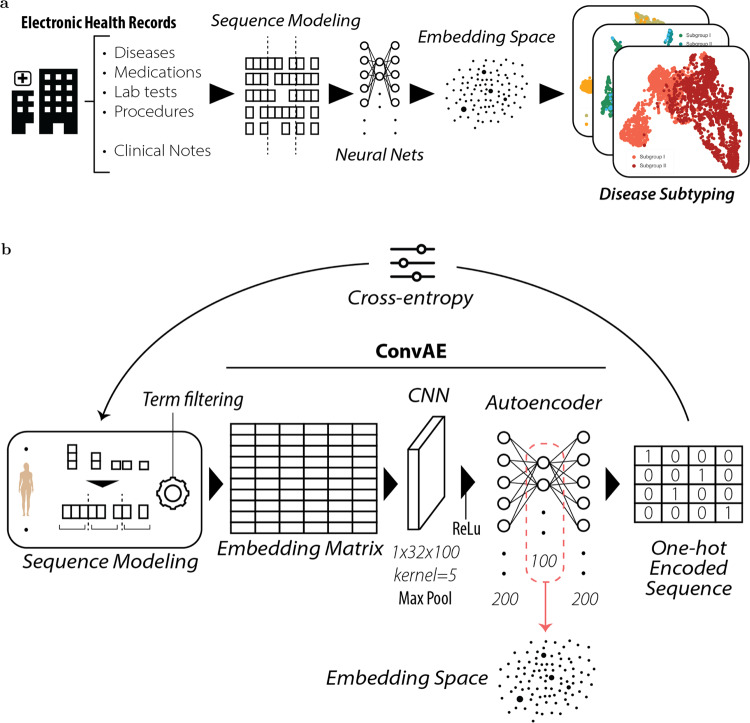
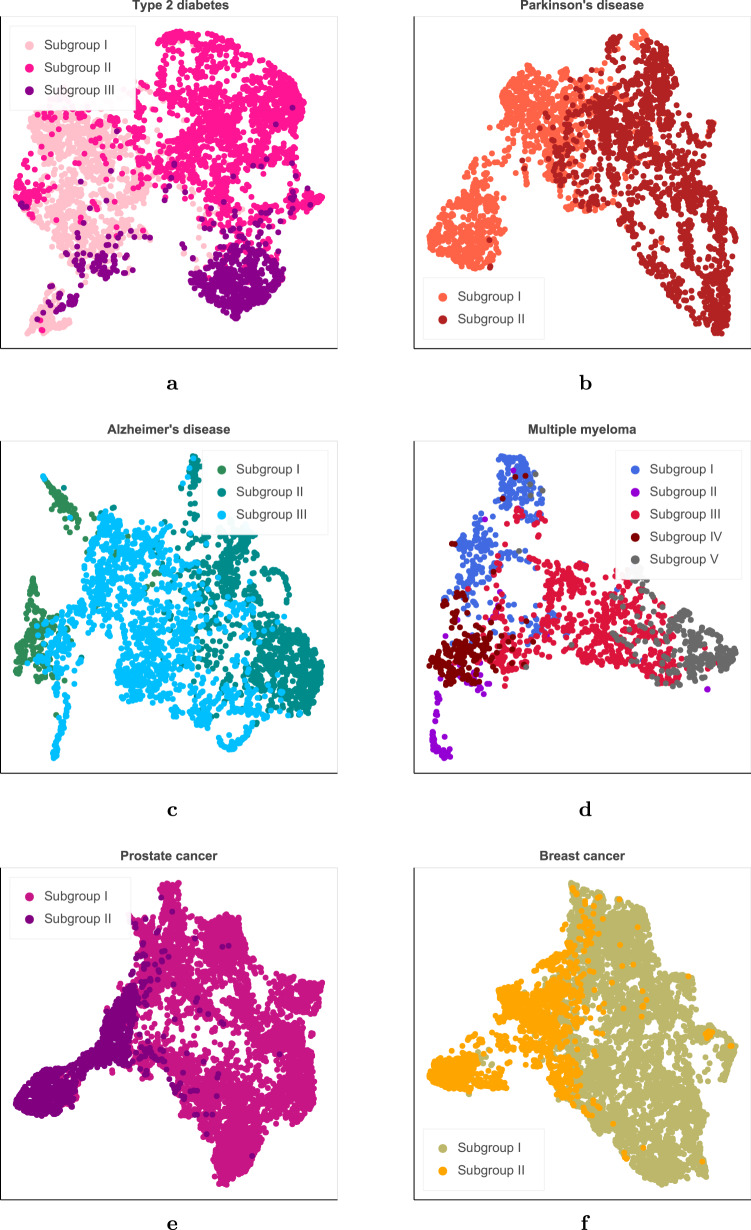
Deriving disease subtypes from electronic health records (EHRs) can guide next-generation personalized medicine. However, challenges in summarizing and representing patient data prevent widespread practice of scalable EHR-based stratification analysis. Here we present an unsupervised framework based on deep learning to process heterogeneous EHRs and derive patient representations that can efficiently and effectively enable patient stratification at scale. We considered EHRs of 1,608,741 patients from a diverse hospital cohort comprising a total of 57,464 clinical concepts. We introduce a representation learning model based on word embeddings, convolutional neural networks, and autoencoders (i.e., ConvAE) to transform patient trajectories into low-dimensional latent vectors. We evaluated these representations as broadly enabling patient stratification by applying hierarchical clustering to different multi-disease and disease-specific patient cohorts. ConvAE significantly outperformed several baselines in a clustering task to identify patients with different complex conditions, with 2.61 entropy and 0.31 purity average scores. When applied to stratify patients within a certain condition, ConvAE led to various clinically relevant subtypes for different disorders, including type 2 diabetes, Parkinson’s disease, and Alzheimer’s disease, largely related to comorbidities, disease progression, and symptom severity. With these results, we demonstrate that ConvAE can generate patient representations that lead to clinically meaningful insights. This scalable framework can help better understand varying etiologies in heterogeneous sub-populations and unlock patterns for EHR-based research in the realm of personalized medicine.
Overview
The claims and statistics of this paper haven’t been checked yet.
Free: it reads the open-access text and checks the first 5 claims that cite a source we can check. Create a free account to check every claim.
Integrity signals
Registry
Cites
Statistics
Figures
Verification
Claims the paper makes
The claims and statistics of this paper haven’t been checked yet.
Free: it reads the open-access text and checks the first 5 claims that cite a source we can check. Create a free account to check every claim.
Claims other papers make about this one
Each is checked against this paper’s own text: does it say what the citing paper says it does?
The check wasn’t confident either way, so it gives no verdict — never disputed.
In the citing paper
“For example, changes in physical activity and movement patterns, driving behavior, sleep patterns, everyday speech, eye tracking, facial expressions, technology use, writing, texting, and keyboard typing dynamics have all been shown to differentiate those with and without neurodegenerative disease.111–119”
From Review of Artificial Intelligence for Clinical Use in Alzheimer's Disease and Related Dementias (2026) · cites this paper as [113]
Experimental — accuracy not yet measured
Self-check
Percentages, sums and reported differences re-computed from the paper’s own numbers.
The self-check needs the paper’s full text.
Citations
Cites
LeCun, Y., Bengio, Y., & Hinton, G. (2015) · Nature · doi:10.1038/nature14539 · Cited by 84,126
Scikit-learn: Machine Learning in Python
Pedregosa, F., Varoquaux, G., Gramfort, A., Michel, V., Thirion, B., Grisel, O., Blondel, M., Müller, A., Nothman, J., Louppe, G., et al. (2012) · arXiv · doi:10.48550/arxiv.1201.0490 · Cited by 71,016 · cited 2×
“2, using scikit-learn and pytorch as machine learning libraries [62, 63].”
Method(2003) · Journal of Machine Learning Research · doi:10.5555/944919.944937 · Cited by 32,337
Efficient Estimation of Word Representations in Vector Space
Mikolov, T., Chen, K., Corrado, G., & Dean, J. (2013) · arXiv · doi:10.48550/arxiv.1301.3781 · Cited by 26,568 · cited 2×
“Adding a semantic modeling component based on, e.g., topic modeling [47] or word embeddings [48], might lead to more clinically meaningful patterns.”
BackgroundMethodRepresentation Learning: A Review and New Perspectives
Bengio, Y., Courville, A., & Vincent, P. (2013) · IEEE Transactions on Pattern Analysis and Machine Intelligence · doi:10.1109/tpami.2013.50 · Cited by 13,001
(2017) · Cited by 11,625
UMAP: Uniform Manifold Approximation and Projection
McInnes, L., Healy, J., Saul, N., & Großberger, L. (2018) · Journal of Open Source Software · doi:10.21105/joss.00861 · Cited by 9,826 · cited 2×
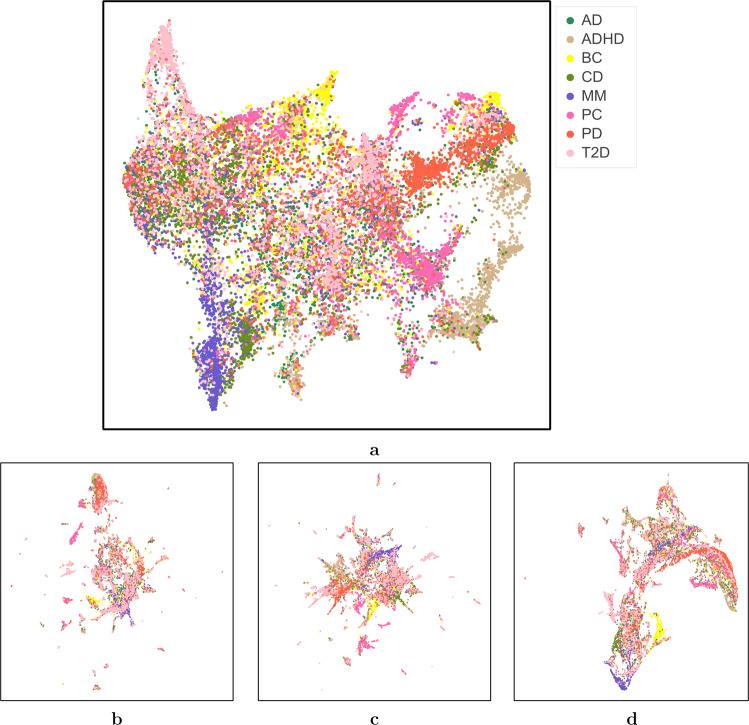
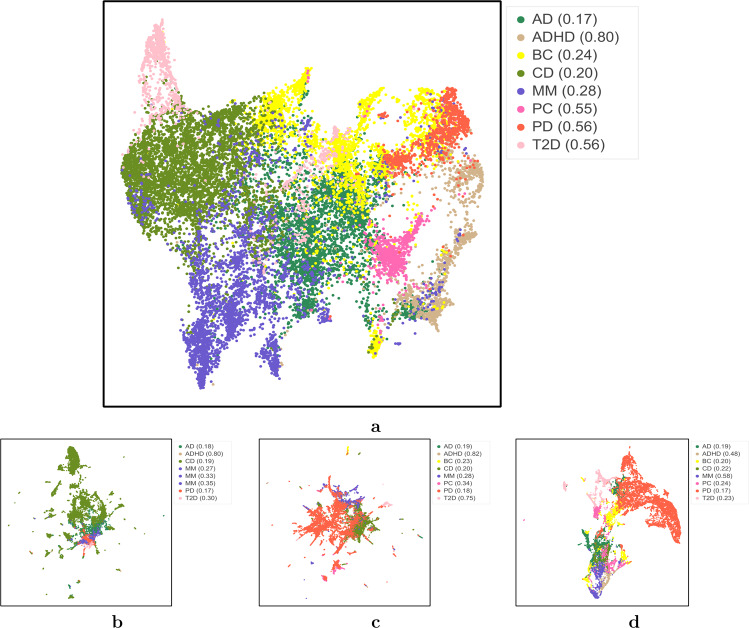
“Figure 2 visualizes the distribution of the different patient representations along with their disease cohort labels obtained using UMAP (Uniform manifold approximation and projection for dimension reduction [25]).”
MethodUMAP: Uniform Manifold Approximation and Projection for Dimension Reduction
McInnes, L., Healy, J., & Melville, J. (2018) · arXiv · doi:10.48550/arxiv.1802.03426 · Cited by 7,101 · cited 1×
“Figure 2 visualizes the distribution of the different patient representations along with their disease cohort labels obtained using UMAP (Uniform Manifold Approximation and Projection for dimension reduction [19]).”
MethodRepeated observation of breast tumor subtypes in independent gene expression data sets
Sørlie, T., Tibshirani, R., Parker, J., Hastie, T., Marron, J. S., Nobel, A., Deng, S., Johnsen, H., Pesich, R., Geisler, S., et al. (2003) · Proceedings of the National Academy of Sciences · doi:10.1073/pnas.0932692100 · Cited by 5,429
Epidemiology of Parkinson's disease
de Lau, L. M., & Breteler, M. M. (2006) · The Lancet Neurology · doi:10.1016/s1474-4422(06)70471-9 · Cited by 4,110 · cited 3×
“, averaged increased prevalence after 60 years of age) [26, 27, 28, 29, 30, 31].”
BackgroundInfluential
Research works printed but not linked: 1
- 64. Kingma, D. & Adam, J. B. Adam: a method for stochastic optimization. In Proc. 3rd International Conference on Learning Representations (eds Bengio, Y. & LeCun, Y.) 1-15, https://dblp.org/db/conf/iclr/iclr2015 (2015).
Cited by
Artificial Intelligence in Cancer Research and Precision Medicine
Bhinder, B., Gilvary, C., Madhukar, N. S., & Elemento, O. (2021) · Cancer Discovery · doi:10.1158/2159-8290.cd-21-0090 · Cited by 781
“This is further aided by user-friendly software that allows visualization of longitudinal patient data (e.g., PatientExploreR) and frameworks that facilitate mining of EHR to make clinically relevant predictions (126, 127).”
MethodArtificial intelligence for proteomics and biomarker discovery
Mann, M., Kumar, C., Zeng, W.-F., & Strauss, M. T. (2021) · Cell Systems · doi:10.1016/j.cels.2021.06.006 · Cited by 385
Kraljevic, Z., Searle, T., Shek, A., Roguski, L., Noor, K., Bean, D., Mascio, A., Zhu, L., Folarin, A. A., Roberts, A., et al. (2021) · Artificial Intelligence in Medicine · doi:10.1016/j.artmed.2021.102083 · Cited by 220
Peng, J., Jury, E. C., Dönnes, P., & Ciurtin, C. (2021) · Frontiers in Pharmacology · doi:10.3389/fphar.2021.720694 · Cited by 229
“Applying ML to data from EMR/EHRs is a major area of interest within the fi eld of personalised diagnosis and treatment (Landi et al., 2020).”
MethodXie, F., Yuan, H., Ning, Y., Ong, M. E. H., Feng, M., Hsu, W., Chakraborty, B., & Liu, N. (2022) · Journal of Biomedical Informatics · doi:10.1016/j.jbi.2021.103980 · Cited by 153
Transforming Drug Therapy with Deep Learning: The Future of Personalized Medicine
Mulani, A. O., Deshmukh, M. S., Jadhav, V., Chaudhari, K., Mathew, A. A., & Salunkhe, S. S. (2025) · Drug Research · doi:10.1055/a-2682-5167 · Cited by 193
“Autoencoders are unsupervised learning algorithms that can be used for dimensionality reduction and feature extraction [20].”
InfluentialPrecision subclassification of type 2 diabetes: a systematic review
Misra, S., Wagner, R. J., Özkan, B., Schön, M., Sevilla-González, M. D. R., Prystupa, K., Wang, C. C., Kreienkamp, R. J., CROMER, S. J., Rooney, M. R., et al. (2023) · Communications Medicine · doi:10.1038/s43856-023-00360-3 · Cited by 152
AI in Rehabilitation Medicine: Opportunities and Challenges
Lanotte, F., O’Brien, M. K., & Jayaraman, A. (2023) · Annals of Rehabilitation Medicine · doi:10.5535/arm.23131 · Cited by 148
“In a medical care setting, health data may include diagnostic exams, functional test scores, medications, and laboratory analyses, complemented by demographic information, medical history, comorbidities, and additional clinical notes [9,10].”
BackgroundEvaluating and mitigating bias in machine learning models for cardiovascular disease prediction
Li, F., Wu, P., Ong, H. H., Peterson, J. F., Wei, W.-Q., & Zhao, J. (2023) · Journal of Biomedical Informatics · doi:10.1016/j.jbi.2023.104294 · Cited by 81
Ren, F., Wei, J., Chen, Q., Hu, M., Yu, L., Mi, J., Zhou, X., Qin, D., Wu, J., & Wu, A. (2025) · Acta Pharmaceutica Sinica B · doi:10.1016/j.apsb.2025.07.030 · Cited by 97
Sim, J.-A., Huang, X., Horan, M. R., Stewart, C. M., Robison, L. L., Hudson, M. M., Baker, J. N., & Huang, I. (2023) · Artificial Intelligence in Medicine · doi:10.1016/j.artmed.2023.102701 · Cited by 107
The clinical application of artificial intelligence in cancer precision treatment
Wang, J., Zeng, Z., Li, Z., Liu, G., Zhang, S., Luo, C., Hu, S., Wan, S., & Zhao, L.-Y. (2025) · Journal of Translational Medicine · doi:10.1186/s12967-025-06139-5 · Cited by 105
Harnessing EHR data for health research
Tang, A. S., Woldemariam, S. R., Miramontes, S., Norgeot, B., Oskotsky, T. T., & Sirota, M. (2024) · Nature Medicine · doi:10.1038/s41591-024-03074-8 · Cited by 87
“…or dimensionality reduction approaches (for example, body mass index as one dimen-sion instead of height and weight as two dimensions), can also aid in visualizing clusters of pathways or differences in patient populations due to the observed clinical profile 21,22,40 (for example, body mass index”
Lu, H. Y., Ding, X., Hirst, J. E., Yang, Y., Yang, J., Mackillop, L. H., & Clifton, D. A. (2023) · IEEE Reviews in Biomedical Engineering · doi:10.1109/rbme.2023.3242261 · Cited by 78
“…tobeusefulinresearchandclinicalpracticesforpatientmoni-toringusingriskstratification,patientsubgroupdiscovery,and naturallanguageprocessing-basedoutcomepredictionmodels [119],[120],[121],[122],[123],[124],[125],[126],[127], [128],[129],[130],similarapproachesforGDMareyettobe developed.”
An Ensemble Learning Approach for Enhanced Classification of Patients With Hepatitis and Cirrhosis
Chicco, D., & Jurman, G. (2021) · IEEE Access · doi:10.1109/access.2021.3057196 · Cited by 73
“In fact, EHRs play nowadays a major role as a data source, not only for standard shallow computational intelligence approaches but also for the growing literature trend associated with the quick development of novel deep learning algorithms [58], applied also imaging data [59], [60].”
BackgroundAlexander, N., Alexander, D. C., Barkhof, F., & Denaxas, S. (2021) · BMC Medical Informatics and Decision Making · doi:10.1186/s12911-021-01693-6 · Cited by 76
“…learning model and hierarchical clustering on Mount Sinai Health System data and found 3 subtypes: an early onset mostly female cluster, a late onset cluster with mild neuropsychiatric symptoms and cerebrovascular disease and finally a cluster with mild to moderate dementia symptoms [10].”
MethodResultArtificial Intelligence in Breast Cancer Screening and Diagnosis
Dileep, G., & Gianchandani, S. (2022) · Cureus · doi:10.7759/cureus.30318 · Cited by 74
“Easy-to-access databases and user-friendly software must be incorporated into the software systems of hospitals worldwide, which is a difficult task at the moment and necessitates the combined efforts of the medical and engineering communities [40,41].”
Pavia, G., Branda, F., Ciccozzi, A., Romano, C., Locci, C., Azzena, I., Pascale, N., Marascio, N., Quirino, A., Matera, G., et al. (2024) · Vaccines · doi:10.3390/vaccines12080847 · Cited by 74
A scoping review of neurodegenerative manifestations in explainable digital phenotyping
Alfalahi, H., Dias, S. B., Khandoker, A. H., Chaudhuri, К. R., & Hadjileontiadis, L. J. (2023) · npj Parkinson's Disease · doi:10.1038/s41531-023-00494-0 · Cited by 67
A Survey of Deep Learning for Alzheimer’s Disease
Zhou, Q., Wang, J., Yu, X., Wang, S., & Zhang, Y. (2023) · Machine Learning and Knowledge Extraction · doi:10.3390/make5020035 · Cited by 71
An open-source framework for end-to-end analysis of electronic health record data
Heumos, L., Ehmele, P., Treis, T., zu Belzen, J. U., Roellin, E., May, L., Namsaraeva, A., Horlava, N., Shitov, V. A., Zhang, X., et al. (2024) · Nature Medicine · doi:10.1038/s41591-024-03214-0 · Cited by 59
Advances in AI‐based Cancer Cytopathology (3/2023)
Yang, Y., Guan, S., Ou, Z., Li, W., Yan, L., & Situ, B. (2023) · Interdisciplinary medicine · doi:10.1002/inmd.20230013 · Cited by 51
Freitas, J. K. D., Johnson, K. W., Golden, E., Nadkarni, G. N., Dudley, J. T., Böttinger, E. P., Glicksberg, B. S., & Miotto, R. (2021) · Patterns · doi:10.1016/j.patter.2021.100337 · Cited by 52
Self-citationBarco, T. L., Kuchenbuch, M., Garcelon, N., Neuraz, A., & Nabbout, R. (2021) · Orphanet Journal of Rare Diseases · doi:10.1186/s13023-021-01936-9 · Cited by 48
Artificial Intelligence in Plastic Surgery: Advancements, Applications, and Future
Duong, T. V., Vy, V. P. T., & Hung, T. N. K. (2024) · Cosmetics · doi:10.3390/cosmetics11040109 · Cited by 50
GenHPF: General Healthcare Predictive Framework for Multi-Task Multi-Source Learning
Hur, K., Oh, J., Kim, J., Kim, J., Lee, M. J., Cho, E., Moon, S.-E., Kim, Y., Atallah, L., & Choi, E. (2023) · IEEE Journal of Biomedical and Health Informatics · doi:10.1109/jbhi.2023.3327951 · Cited by 66
“With the rapid adoption of artificial intelligence (AI) in healthcare, healthcare providers continue to develop models for different applications such as predicting patient outcomes [1]–[3], optimizing effective hospital operations [4], [5] and diagnosing diseases [6]–[8].”
BackgroundNasarudin, N. A., Jasmi, F. A., Sinnott, R., Zaki, N., Alashwal, H., Mohamed, E. A., & Mohamad, M. S. (2024) · Artificial Intelligence Review · doi:10.1007/s10462-024-10876-2 · Cited by 44
“ConvAE is a platform for unsupervised deep learning designed to quickly and accurately assess diverse EHR data (Landi et al. 2020).”
Qiu, J., Hu, Y., Li, L., Erzurumluoglu, A. M., Brænne, I., Whitehurst, C. E., Schmitz, J., Arora, J., Bartholdy, B., Gandhi, S., et al. (2025) · Nature Communications · doi:10.1038/s41467-025-56625-z · Cited by 44
Picchio, V., Pontecorvi, V., Dhori, X., Bordin, A., Floris, E., Cozzolino, C., Frati, G., Pagano, F., Chimenti, I., & FALCO, E. D. (2025) · Life Sciences · doi:10.1016/j.lfs.2025.123752 · Cited by 41
Wang, R., Kuo, P., Chen, L.-C., Seastedt, K. P., Gichoya, J. W., & Celi, L. A. (2024) · EBioMedicine · doi:10.1016/j.ebiom.2024.105047 · Cited by 39
Contrastive learning improves critical event prediction in COVID-19 patients
Wanyan, T., Honarvar, H., Jaladanki, S. K., Zang, C., Naik, N., Somani, S. S., Freitas, J. K. D., Paranjpe, I., Vaid, A., Zhang, J., et al. (2021) · Patterns · doi:10.1016/j.patter.2021.100389 · Cited by 39
Self-citationKhowaja, S. A., Lee, I. H., Dev, K., Jarwar, M. A., & Qureshi, N. M. F. (2022) · IEEE Transactions on Network Science and Engineering · doi:10.1109/tnse.2022.3188575 · Cited by 36
“Some systems that are popular and being used in the medical field are but not limited to: 1) DL based breast cancer risk prediction frommammograms [2]; 2) Detection of macular edema and diabetic retinopathy using DL and retinal fundus images [3]; 3) Pattern detection from electronic health records using DL to determin…”
MethodBrain Hemorrhage Classification in CT Scan Images Using Minimalist Machine Learning
Solorio-Ramírez, J.-L., Saldaña-Pérez, M., Lytras, M. D., Moreno-Ibarra, M., & Yáñez-Márquéz, C. (2021) · Diagnostics · doi:10.3390/diagnostics11081449 · Cited by 35
Bias in Reinforcement Learning: A Review in Healthcare Applications
Smith, B., Khojandi, A., & Vasudevan, R. K. (2023) · ACM Computing Surveys · doi:10.1145/3609502 · Cited by 42
“Together, this information can create useful datasets of retrospective temporal data to train RL models [50].”
BackgroundSu, X., Grabowska, M. E., Kullo, I. J., Luo, Y., Smoller, J. W., Walunas, T. L., Wei, W., Jarvik, G. P., Mooney, S. D., & Crosslin, D. R. (2025) · npj Digital Medicine · doi:10.1038/s41746-025-01872-z · Cited by 43
Wanyan, T., Honarvar, H., Azad, A., Ding, Y., & Glicksberg, B. S. (2021) · Data Intelligence · doi:10.1162/dint_a_00097 · Cited by 35
“In healthcare-related CNN models, various medical features are normally concatenated to be directly used as inputs and create embeddings [18, 5, 15].”
BackgroundSelf-citationModeling electronic health record data using an end-to-end knowledge-graph-informed topic model
Zou, Y., Pesaranghader, A., Song, Z., Verma, A. D., Buckeridge, D. L., & Li, Y. (2022) · Scientific Reports · doi:10.1038/s41598-022-22956-w · Cited by 36
“Discussion In this study, we present an end-to-end graph-embedded topic model that: (1) learns interpretable topic and code embeddings in the same embedding space; (2) is able to handle multimodal data; and, (3) leverages a medical knowledge graph to improve performance quantitatively and qualitatively.”
BackgroundPatient Information Summarization in Clinical Settings: Scoping Review
Keszthelyi, D., Gaudet-Blavignac, C., Bjelogrlic, M., & Lovis, C. (2023) · JMIR Medical Informatics · doi:10.2196/44639 · Cited by 38
Predictive structured–unstructured interactions in EHR models: A case study of suicide prediction
Bayramli, I., Castro, V. M., Barak‐Corren, Y., Madsen, E. M., Nock, M. K., Smoller, J. W., & Reis, B. Y. (2022) · npj Digital Medicine · doi:10.1038/s41746-022-00558-0 · Cited by 30
Chen, A., & Chen, D. O. (2022) · Scientific Reports · doi:10.1038/s41598-022-23011-4 · Cited by 35
“Deep neural network learning of EHRs was able to unlock patient stratification at a scale suitable for personalized medicine 15 .”
BackgroundSoman, K., Nelson, C., Cerono, G., Goldman, S. M., Baranzini, S. E., & Brown, E. G. (2023) · Frontiers in Medicine · doi:10.3389/fmed.2023.1081087 · Cited by 34
Estimating redundancy in clinical text
Searle, T., Ibrahim, Z. M., Teo, J., & Dobson, R. (2021) · Journal of Biomedical Informatics · doi:10.1016/j.jbi.2021.103938 · Cited by 32
“…work has shown EHR text analysis offers insights in diverse areas such as disease classification (Perlis et al., 2012), trajectory modelling (Paik et al., 2019), patient stratification (Landi et al., 2020), therapeutic development (Maudsley et al., 2018) and person-alised medicine (Topol, 2019).”
BackgroundLiu, Z., Zhang, J., Hou, Y., Zhang, X., Li, G., & Xiang, Y. (2023) · Communications in computer and information science · doi:10.1007/978-981-19-9865-2_10 · Cited by 36
Patient Health Representation Learning via Correlational Sparse Prior of Medical Features
Ma, X., Wang, Y., Chu, X., Ma, L., Tang, W., Zhao, J., Yuan, Y., & Wang, G. (2022) · IEEE Transactions on Knowledge and Data Engineering · doi:10.1109/tkde.2022.3230454 · Cited by 43
“[31] use a linear projection to learn feature correlations and map raw features into latent spaces.”
BackgroundDeep representation learning determines drug mechanism of action from cell painting images
Wong, D. R., Logan, D. J., Hariharan, S., Stanton, R. V., Clevert, D.-A., & Kiruluta, A. J. M. (2023) · Digital Discovery · doi:10.1039/d3dd00060e · Cited by 32
Agarwal, K., Choudhury, S., Tipirneni, S., Mukherjee, P., Ham, C., Tamang, S. R., Baker, M. C., Tang, S., Kocaman, V., Gevaert, O., et al. (2022) · Scientific Reports · doi:10.1038/s41598-022-13072-w · Cited by 31
An Alzheimer’s disease category progression sub-grouping analysis using manifold learning on ADNI
van der Haar, D. T., Moustafa, A. A., Warren, S. L., Alashwal, H., & van Zyl, T. L. (2023) · Scientific Reports · doi:10.1038/s41598-023-37569-0 · Cited by 27
“In another study, Landi et al. 56 used a combined autoencoder and convolutional neural network model to distinguish various disorders in electronic health records.”
MethodTanaka, M., Battaglia, S., & Liloia, D. (2025) · Biomedicines · doi:10.3390/biomedicines13051045 · Cited by 24
“Additionally, the interplay between comorbidities and mental health remains underexplored, underscoring the need for integrative approaches [45,48–51].”
Boussina, A. E., Wardi, G., Shashikumar, S. P., Malhotra, A., Zheng, K., & Nemati, S. (2023) · Journal of Medical Internet Research · doi:10.2196/45614 · Cited by 27
“…than relying on arbitrary criteria (ie, quick Sequential Organ Failure Assessment [SOFA] or Systemic Inflammatory Response Syndrome criteria), representation learning provides a principled strategy for deriving informative compressed summaries or encodings from underlying clinical data [13,14].”
A 5-min Cognitive Task With Deep Learning Accurately Detects Early Alzheimer's Disease
Almubark, I., Chang, L., Shattuck, K. F., Nguyen, T., Turner, R. S., & Jiang, X. (2020) · Frontiers in Aging Neuroscience · doi:10.3389/fnagi.2020.603179 · Cited by 24
“…(http://adni.loni. usc.edu/)], deep learning has been applied to biospecimens (Lee et al., 2019b; Lin et al., 2020), electronic health records (Landi et al., 2020; Nori et al., 2020), speech (Lopez-de-Ipina et al., 2018), neuropsychological data (Choi et al., 2018; Kang et al., 2019), and a…”
BackgroundUnsupervised pre-training of graph transformers on patient population graphs
Pellegrini, C., Navab, N., & Kazi, A. (2023) · Medical Image Analysis · doi:10.1016/j.media.2023.102895 · Cited by 25
Liu, P., Wang, Z., Liu, N., & Peres, M. A. (2023) · Journal of the American Medical Informatics Association · doi:10.1093/jamia/ocad111 · Cited by 22
Cardiometabolic and renal phenotypes and transitions in the United States population
Lhoste, V. P. F., Zhou, B., Mishra, A., Bennett, J. E., Filippi, S., Asaria, P., Gregg, E. W., Danaei, G., & Ezzati, M. (2023) · Nature Cardiovascular Research · doi:10.1038/s44161-023-00391-y · Cited by 22
Ranking sets of morbidities using hypergraph centrality
Rafferty, J., Watkins, A. J., Lyons, J., Lyons, R. A., Akbari, A., Peek, N. B., Jalalinajafabadi, F., Dhafari, T. B., Pate, A., Martin, G. P., et al. (2021) · Journal of Biomedical Informatics · doi:10.1016/j.jbi.2021.103916 · Cited by 26
“For example, cluster analysis [4], latent class analysis [5,6], deep learning [7], multi state models [8] and association rule analysis have all been explored as a means to understand multi-morbidity.”
BackgroundWang, M., Sushil, M., Miao, B. Y., & Butte, A. J. (2023) · Journal of the American Medical Informatics Association · doi:10.1093/jamia/ocad085 · Cited by 23
Multimodal Wearable Biosensing Meets Multidomain AI: A Pathway to Decentralized Healthcare
Liu, C., Fan, H., Kim, M., Zhou, T., Yang, P., Zhao, L., Wang, Y., Che, Z., Liu, C., Li, B., et al. (2026) · Advanced Science · doi:10.1002/advs.202522900 · Cited by 32
Hypergraph Transformers for EHR-based Clinical Predictions.
Xu, R., Ali, M. K., Ho, J. C., & Yang, C. (2023) · PubMed Central · Cited by 40
Sivarajkumar, S., Huang, Y., & Wang, Y. (2023) · Journal of Biomedical Informatics · doi:10.1016/j.jbi.2023.104544 · Cited by 24
Kirchler, M., Ferro, M., Lorenzini, V., van de Water, R. P., FinnGen, Ganna, A., Lippert, C., & Ganna, A. (2026) · npj Digital Medicine · doi:10.1038/s41746-026-02363-5 · Cited by 26
Zhou, D., Tong, H., Wang, L., Liu, S., Xiong, X., Gan, Z., Griffier, R., Hejblum, B. P., Liu, Y., Hong, C., et al. (2026) · Nature Communications · doi:10.1038/s41467-026-71152-1 · Cited by 21
Tang, A., Woldemariam, S. R., Roger, J. M., & Sirota, M. (2022) · Yearbook of Medical Informatics · doi:10.1055/s-0042-1742513 · Cited by 19
“Unsupervised machine learning algorithms trained on clinical data have identified novel subtypes in many diseases, including type 2 diabetes, Parkinson’s disease, Alzheimer’s disease, and depression [32–34].”
BackgroundPretrained transformer framework on pediatric claims data for population specific tasks
Zeng, X., Linwood, S. L., & Liu, C. (2022) · Scientific Reports · doi:10.1038/s41598-022-07545-1 · Cited by 15
Yuanyuan, Z., Bensahla, A., Bjelogrlic, M., Zaghir, J., Turbé, H., Bednarczyk, L., Gaudet-Blavignac, C., Ehrsam, J., Marchand‐Maillet, S., & Lovis, C. (2025) · npj Digital Medicine · doi:10.1038/s41746-025-01692-1 · Cited by 22
Rigny, L., Fletcher‐Lloyd, N., Capstick, A., Nilforooshan, R., & Barnaghi, P. M. (2024) · Communications Medicine · doi:10.1038/s43856-024-00646-0 · Cited by 15
Representational ethical model calibration
Carruthers, R., Straw, I., Ruffle, J. K., Herron, D., Nelson, A., Bzdok, D., Fernández-Reyes, D., Rees, G. E., & Nachev, P. (2022) · npj Digital Medicine · doi:10.1038/s41746-022-00716-4 · Cited by 18
“Three hidden layers of neurons were used, with the number of neurons in each layer being (16,16,8), yielding 753 parameters.”
MethodMachine learning based on laboratory data for disease prediction
Gusev, A. V., Novitskiy, R. E., Ivshin, А. А., & Alekseev, A. A. (2021) · FARMAKOEKONOMIKA Modern Pharmacoeconomics and Pharmacoepidemiology · doi:10.17749/2070-4909/farmakoekonomika.2021.115 · Cited by 17
Multi-Gate Mixture of Multi-View Graph Contrastive Learning on Electronic Health Record
Cao, Y., Wang, Q., Wang, X., Peng, D., & Li, P. (2023) · IEEE Journal of Biomedical and Health Informatics · doi:10.1109/jbhi.2023.3325221 · Cited by 14
HealthGAT: Node Classifications in Electronic Health Records using Graph Attention Networks
Piya, F. L., Gupta, M., & Beheshti, R. (2024) · IEEE/ACM Conference on Connected Health: Applications, Systems and Engineering Technologies · doi:10.1109/chase60773.2024.00022 · Cited by 19
“This technique effectively captures the dynamic interplay between various health components, shedding light on critical relationships such as causal or associative links between diagnoses and treatments, as well as connections between patients and healthcare providers [18].”
Rajagopalan, S. S., & Tammimies, K. (2024) · Journal of Neurodevelopmental Disorders · doi:10.1186/s11689-024-09579-0 · Cited by 15
“Landi et al. [51] have proposed a representation learning model using word embeddings, convolutional neural networks, and autoencoders to transform patient history in EHRs into a set of low-dimensional vectors.”
Teikari, P., & Pietrusz, A. (2021) · SportRxiv (OSF Preprints) · doi:10.31236/osf.io/w734a · Cited by 17
Leveraging Support Vector Machine for Accurate Sentiment Analysis in Healthcare
Gupta, P., Tyagi, H., Gupta, N., & Tyagi, A. D. (2025) · International Conference on Disruptive Technologies (ICDT) · doi:10.1109/icdt63985.2025.10986432 · Cited by 13
Embedding Methods for Electronic Health Record Research
Kauffman, J., Miotto, R., Klang, E., Costa, A. B., Norgeot, B., Žitnik, M., Shameer, K., Fei, W., Nadkarni, G. N., & Glicksberg, B. S. (2025) · Annual Review of Biomedical Data Science · doi:10.1146/annurev-biodatasci-103123-094729 · Cited by 16
Self-citationPetit, P., Berger, F. R., Bonneterre, V., & Vuillerme, N. (2025) · npj Parkinson s Disease · doi:10.1038/s41531-024-00864-2 · Cited by 14
Maurits, M. P., Korsunsky, I., Raychaudhuri, S., Murphy, S. N., Smoller, J. W., Weiss, S. T., Petukhova, L., Weng, C., Wei, W., Huizinga, T. W. J., et al. (2022) · Journal of the American Medical Informatics Association · doi:10.1093/jamia/ocac008 · Cited by 12
Leveraging electronic health record data for endometriosis research
Penrod, N. M., Okeh, C. C., Edwards, D. R. V., Barnhart, K. T., Senapati, S., & Verma, S. S. (2023) · Frontiers in Digital Health · doi:10.3389/fdgth.2023.1150687 · Cited by 14
“Algorithms can be trained to identify subgroups by finding combinations of unique data elements (39, 40).”
BackgroundChinese experts’ consensus on the application of intensive care big data
Su, L., Liu, S., Long, Y., Chen, C., Chen, K., Chen, M., Chen, Y., Cheng, Y., Cui, Y., Ding, Q., et al. (2024) · Frontiers in Medicine · doi:10.3389/fmed.2023.1174429 · Cited by 11
Split Learning for Distributed Collaborative Training of Deep Learning Models in Health InformaticsPreprint
Li, Z., Yan, C., Zhang, X., Gharibi, G., Yin, Z., Jiang, X., & Malin, B. (2023) · PubMed Central · doi:10.48550/arxiv.2308.11027 · Cited by 40
“…enabled the development of neural networks with promising performance for a variety of healthcare data types that were previously considered challenging with traditional statistical methods, including medical images [1], natural languages [2], and structured electronic health records (EHR) [3].”
BackgroundAutomated Risk Assessment of COVID-19 Patients at Diagnosis Using Electronic Healthcare Records
Giuste, F., He, L., Isgut, M., Shi, W., Anderson, B. J., & Wang, M. D. (2021) · IEEE-EMBS International Conference on Biomedical and Health Informatics (BHI ...) · doi:10.1109/bhi50953.2021.9508512 · Cited by 10
Clinical outcome-guided deep temporal clustering for disease progression subtyping
Wang, D., Ma, X., Schulz, P. E., Jiang, X., & Kim, Y. (2024) · Journal of Biomedical Informatics · doi:10.1016/j.jbi.2024.104732 · Cited by 10
Liu, Y., Zhang, Z., Mi, J., Pan, S., Chen, T., Guo, Y. M., He, X., & Bian, J. (2024) · Journal of Biomedical Informatics · doi:10.1016/j.jbi.2025.104851 · Cited by 11
Papanastasiou, G., Yang, G., Fotiadis, D. I., Δικαίος, Ν., Wang, C., Huda, A., Sobolevsky, L., Raasch, J. P., Pérez, E., Sidhu, G. S., et al. (2023) · Communications Medicine · doi:10.1038/s43856-023-00412-8 · Cited by 10
Personalized survival probabilities for SARS-CoV-2 positive patients by explainable machine learning
Zucco, A. G., Agius, R., Svanberg, R., Moestrup, K. S., Marandi, R. Z., MacPherson, C. R., Lundgren, J. D., Ostrowski, S. R., & Niemann, C. U. (2022) · Scientific Reports · doi:10.1038/s41598-022-17953-y · Cited by 10
“In contrast, we identified an increased risk of death for patients with BMI below 30.”
BackgroundMethodWest, M., Cheng, Y., He, Y., Leng, Y., Magdamo, C., Hyman, B. T., Dickson, J. R., Serrano-Pozo, A., Blacker, D., & Das, S. (2025) · JMIR Aging · doi:10.2196/65178 · Cited by 8
“Landi et al [23] used unsupervised deep learning to encode EHRs with temporal information, identifying early-onset AD, later-onset AD with mild comorbidities, and typical-onset AD with moderate symptoms.”
Rodriguez‐Martinez, A., Kothalawala, D. M., Carrillo-Larco, R. M., & Poulakakis-Daktylidis, A. (2025) · Emerging Topics in Life Sciences · doi:10.1042/etls20240011 · Cited by 9
“The increasing availability of longitudinal EHRs is driving a new era of disease subtyping, enabling the discovery of novel patient subgroups based on common disease trajectories or comorbidity patterns [42,43].”
Zeng, X., Lin, S. M., & Liu, C. (2021) · ACM International Conference on Bioinformatics, Computational Biology, and Health Informatics (ACM-BCB) · doi:10.1145/3459930.3469519 · Cited by 14
“Inspired by the position embedding technique [25,26] and recent practices on variable encoding methods, we utilize an embedding map to convert the medical expenditure variable and service date variable into continuous embedding space.”
MethodChen, A., Lu, R., Han, R., Huang, R., Qin, G., Wen, J. G., Li, Q., Zhang, Z., & Jiang, W. (2022) · Cancer Epidemiology Biomarkers & Prevention · doi:10.1158/1055-9965.epi-22-0792 · Cited by 10
Analysing The Patient Sentiments in Healthcare Domain Using Machine Learning
Madan, P. M., Madan, M., & Thakur, D. P. (2024) · Procedia Computer Science · doi:10.1016/j.procs.2024.06.077 · Cited by 8
Hamilton, J. E., Suchting, R., Thomas, T., & Buck, D. (2021) · Journal of Social Distress and the Homeless · doi:10.1080/10530789.2021.1892930 · Cited by 8
Hur, K., Lee, J., Oh, J., Price, W., Kim, Y., & Choi, E. (2021) · doi:10.2196/preprints.32523 · Cited by 8
Machine Learning Approaches for Segmentation of Cardiovascular Neurocristopathy Related Images
Iqbal, T., Soliman, O. I. I., Sultan, S., & Ullah, I. (2023) · IEEE Access · doi:10.1109/access.2023.3325960 · Cited by 8
“Deep learning is a sub-branch of machine learning that utilizes structured and unstructured data to learn abstract representations [46].”
BackgroundContinually-Adaptive Representation Learning Framework for Time-Sensitive Healthcare Applications
Choudhuri, A., Jang, H., Segre, A. M., Polgreen, P. M., Jha, K., & Adhikari, B. (2023) · ACM International Conference on Information and Knowledge Management (CIKM) · doi:10.1145/3583780.3615464 · Cited by 9
Xiong, S., Wang, Z.-H., Chen, Z., Li, G., & Zhang, H. (2025) · Information Sciences · doi:10.1016/j.ins.2025.121956 · Cited by 7
Lee, S., Kang, S., Eun, Y., Won, H., Kim, H., Cha, H., Koh, E., & Lee, J. (2021) · Arthritis Research & Therapy · doi:10.1186/s13075-021-02647-z · Cited by 7
Standard-based personalized healthcare delivery for kidney illness using deep learning
Sachdeva, S. (2023) · Physiological Measurement · doi:10.1088/1361-6579/ace09f · Cited by 7
“Papers referred for the intra disciplinary domain (deep learning on standardized EHRs and Predictive Analysis) are (Nguyen et al 2017, Suo et al 2018, Landi et al 2020, Solares et al 2020, Aggarwal et al 2021).”
BackgroundNew diagnostic technologies in laboratory medicine: Potential benefits and challenges
Nagler, M., Nilius, H., Michielin, G., Masoodi, M., & Largiadèr, C. R. (2024) · Polskie Archiwum Medycyny Wewnętrznej · doi:10.20452/pamw.16772 · Cited by 8
“59,60 One of the key capabilities of ML models is classification, which can be used to diagnose pa‑ tients or stratify them.”
Review of Artificial Intelligence for Clinical Use in Alzheimer's Disease and Related Dementias
Breithaupt, A. G., Tang, A., Paolillo, E. W., Bibars, M., Johnson, E. C. B., Saloner, R., Possin, K. L., Windon, C. C., Hill-Jarrett, T. G., Giorgio, J., et al. (2026) · Seminars in Neurology · doi:10.1055/a-2744-9871 · Cited by 6
Naumova, K., Devos, A., Karimireddy, S. P., Jaggi, M., & Hartley, M. (2024) · npj Digital Medicine · doi:10.1038/s41746-024-01226-1 · Cited by 8
Systematic review of the use and challenges of electronic health records in physiotherapy practice
Vaz, S. L., Rodrigues, C., Pereira, C. M., & Moreira-Rosário, A. (2025) · BMJ Open · doi:10.1136/bmjopen-2024-097649 · Cited by 7
“6 These systems have the potential to transcend the simple”
A Survey of Large-Scale Deep Learning Models in Medicine and Healthcare
Chen, Z., Liu, R., Huang, S., Guo, Y., & Ren, Y. (2025) · Computer Modeling in Engineering & Sciences · doi:10.32604/cmes.2025.067809 · Cited by 11
Isgut, M., Hornback, A. M., Bao, H., Sun, Y., Choi, K., Anderson, B. J., Deshpande, S. R., Chang, A., & Wang, M. D. (2025) · Communications Medicine · doi:10.1038/s43856-025-01138-5 · Cited by 6
Metadata
- Authors
- Landi, I., Glicksberg, B. S., Lee, H.-C., Cherng, S., Landi, G., Danieletto, M., Dudley, J. T., Furlanello, C., & Miotto, R.
- Affiliations
- University of Trento (IT)
- Icahn School of Medicine at Mount Sinai (US)
- Fondazione Bruno Kessler (IT)
- Corresponding author
- Miotto, Riccardo
- Venue
- npj Digital Medicine
- Published
- 2020-07-17
- Volume
- 3
- Issue
- 1
- Pages
- 96-96
- ISSN
- 2398-6352 (ISSN-L)
- PMC
- PMC7367859
- OpenAlex
- W3042895962
- Semantic Scholar
- f37dce7bdf0a3e9703a2a4f0441910e840f1b879
- Cited by
- 213
- References
- 56
- Citations by year
- 2026: 43 · 2025: 40 · 2024: 36 · 2023: 38 · 2022: 20 · 2021: 31 · 2020: 5
- FWCI
- 9.24
- Type
- journal article
- Language
- en
- Open access
- gold
- doi.org
- Licence
- cc-by
- creativecommons.org/licenses/by/4.0 (tdm)
- creativecommons.org/licenses/by/4.0 (vor)
- Locations
- npj Digital Medicine (publishedVersion, cc-by)
- PubMed Central (publishedVersion, cc-by)
- PubMed (publishedVersion)
- arXiv (Cornell University) (submittedVersion)
- DOAJ (DOAJ: Directory of Open Access Journals) (submittedVersion, cc-by-sa)
- arXiv (Cornell University)
- Funders
- Alzheimer's Drug Discovery Foundation
- Nvidia
- Hasso Plattner Foundation
- Topics
- Physical Sciences › Computer Science › Artificial Intelligence › Machine Learning in Healthcare
- Health Sciences › Health Professions › Health Information Management › Electronic Health Records Systems
- Health Sciences › Medicine › Epidemiology › Chronic Disease Management Strategies
- Keywords
- electronic health records, patient stratification, disease subtypes, deep representation learning, convolutional autoencoder, word embeddings, hierarchical clustering, personalized medicine, comorbidities, type 2 diabetes, Parkinson's disease, Alzheimer's disease, patient trajectories
About these checks
Registry, retraction, Cites and statistics results are computed, not judged, with one exception: a printed reference that no index lists is read once by a model before it counts as a citation error. Claims are extracted by a model and kept only when their quote appears verbatim in the text; each cited source is then checked, with a model’s help, for whether it says what the claim relies on. Those verdicts can be wrong — read the claim’s quote and the cited source before relying on one.
Statistics and arithmetic are recomputed, not judged.
Confidence bands are shown only for fields calibrated on our annotated test set. None is calibrated yet, so no band is shown.
What counts as a claim ›How we measure confidence ›How we check this ›
Are you an author, or do you see a problem with this page? Request a review
Data sources
Bibliographic data: Semantic Scholar, OpenAlex, Crossref.
Contains information from the Semantic Scholar Academic Graph Datasets, made available under the ODC Attribution License (ODC-BY 1.0).
Semantic Scholar’s data is described in: Kinney, R., et al. (2023). The Semantic Scholar Open Data Platform. arXiv:2301.10140.
