

Deep representation learning of electronic health records to unlock patient stratification at scale
Open accessThe DOI matches its Crossref record; 62 of the 62 references it cites were found in a registry or an index.
Abstract
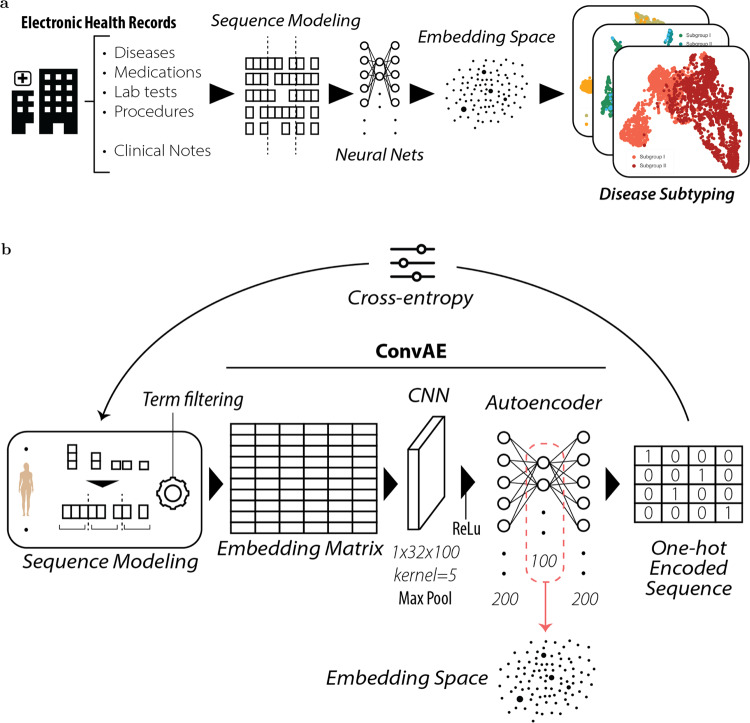
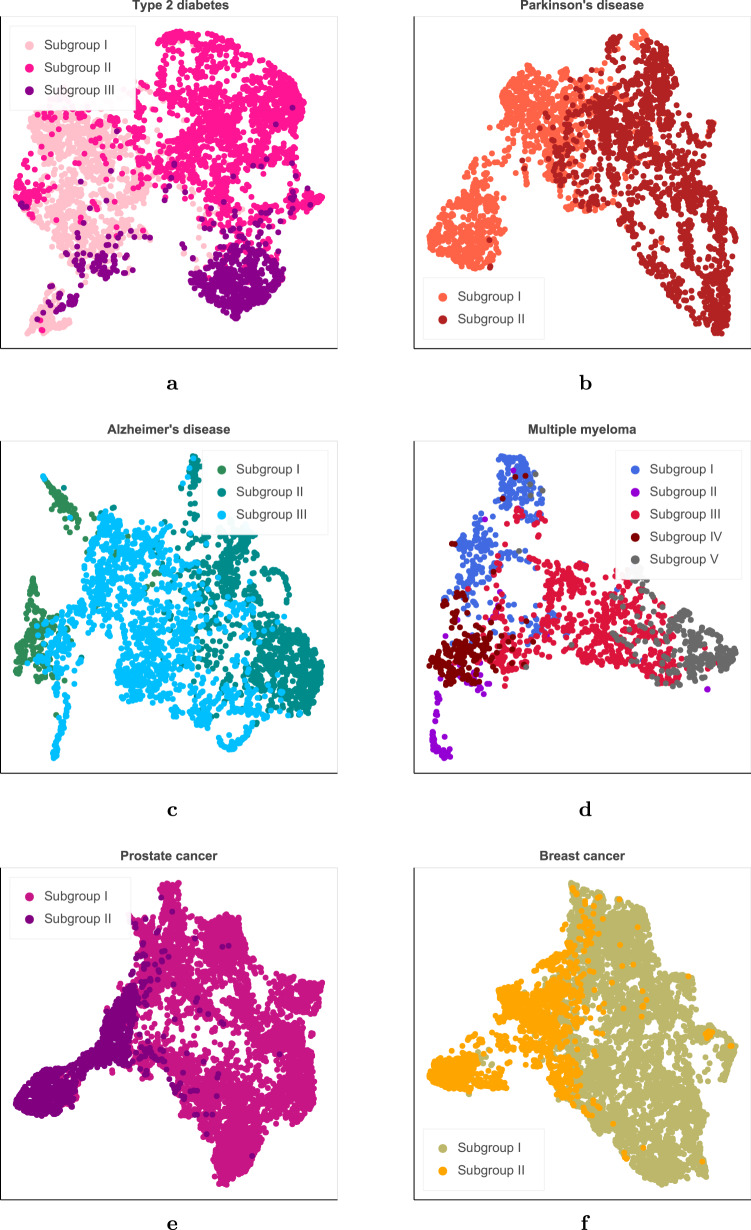
Deriving disease subtypes from electronic health records (EHRs) can guide next-generation personalized medicine. However, challenges in summarizing and representing patient data prevent widespread practice of scalable EHR-based stratification analysis. Here we present an unsupervised framework based on deep learning to process heterogeneous EHRs and derive patient representations that can efficiently and effectively enable patient stratification at scale. We considered EHRs of 1,608,741 patients from a diverse hospital cohort comprising a total of 57,464 clinical concepts. We introduce a representation learning model based on word embeddings, convolutional neural networks, and autoencoders (i.e., ConvAE) to transform patient trajectories into low-dimensional latent vectors. We evaluated these representations as broadly enabling patient stratification by applying hierarchical clustering to different multi-disease and disease-specific patient cohorts. ConvAE significantly outperformed several baselines in a clustering task to identify patients with different complex conditions, with 2.61 entropy and 0.31 purity average scores. When applied to stratify patients within a certain condition, ConvAE led to various clinically relevant subtypes for different disorders, including type 2 diabetes, Parkinson’s disease, and Alzheimer’s disease, largely related to comorbidities, disease progression, and symptom severity. With these results, we demonstrate that ConvAE can generate patient representations that lead to clinically meaningful insights. This scalable framework can help better understand varying etiologies in heterogeneous sub-populations and unlock patterns for EHR-based research in the realm of personalized medicine.
Overview
The claims and statistics of this paper haven’t been checked yet.
Free: it reads the open-access text and checks the first 5 claims that cite a source we can check. Create a free account to check every claim.
Integrity signals
Registry
Cites
Statistics
Figures
Verification
Claims the paper makes
The claims and statistics of this paper haven’t been checked yet.
Free: it reads the open-access text and checks the first 5 claims that cite a source we can check. Create a free account to check every claim.
Claims other papers make about this one
Each is checked against this paper’s own text: does it say what the citing paper says it does?
The check wasn’t confident either way, so it gives no verdict — never disputed.
In the citing paper
“For example, changes in physical activity and movement patterns, driving behavior, sleep patterns, everyday speech, eye tracking, facial expressions, technology use, writing, texting, and keyboard typing dynamics have all been shown to differentiate those with and without neurodegenerative disease.111–119”
From Review of Artificial Intelligence for Clinical Use in Alzheimer's Disease and Related Dementias (2026) · cites this paper as [113]
Experimental — accuracy not yet measured
Self-check
Percentages, sums and reported differences re-computed from the paper’s own numbers.
The self-check needs the paper’s full text.
Citations
Cites
LeCun, Y., Bengio, Y., & Hinton, G. (2015) · Nature · doi:10.1038/nature14539 · Cited by 84,126
Scikit-learn: Machine Learning in Python
Pedregosa, F., Varoquaux, G., Gramfort, A., Michel, V., Thirion, B., Grisel, O., Blondel, M., Müller, A., Nothman, J., Louppe, G., et al. (2012) · arXiv · doi:10.48550/arxiv.1201.0490 · Cited by 71,016 · cited 2×
“2, using scikit-learn and pytorch as machine learning libraries [62, 63].”
Method(2003) · Journal of Machine Learning Research · doi:10.5555/944919.944937 · Cited by 32,337
Efficient Estimation of Word Representations in Vector Space
Mikolov, T., Chen, K., Corrado, G., & Dean, J. (2013) · arXiv · doi:10.48550/arxiv.1301.3781 · Cited by 26,568 · cited 2×
“Adding a semantic modeling component based on, e.g., topic modeling [47] or word embeddings [48], might lead to more clinically meaningful patterns.”
BackgroundMethodRepresentation Learning: A Review and New Perspectives
Bengio, Y., Courville, A., & Vincent, P. (2013) · IEEE Transactions on Pattern Analysis and Machine Intelligence · doi:10.1109/tpami.2013.50 · Cited by 13,001
(2017) · Cited by 11,625
UMAP: Uniform Manifold Approximation and Projection
McInnes, L., Healy, J., Saul, N., & Großberger, L. (2018) · Journal of Open Source Software · doi:10.21105/joss.00861 · Cited by 9,826 · cited 2×
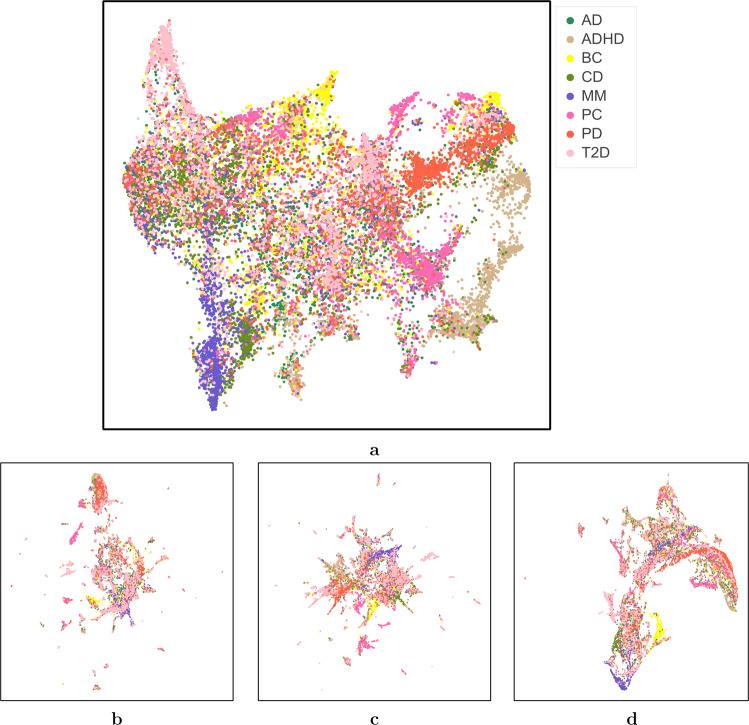
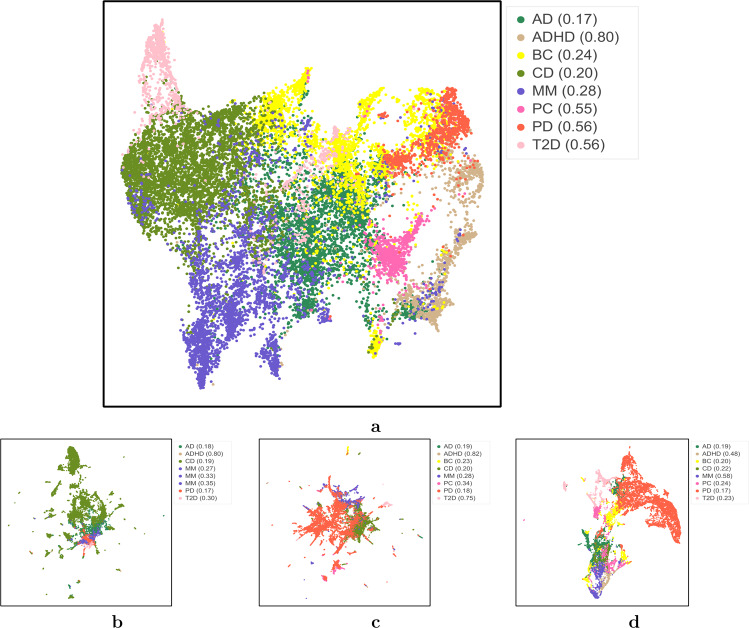
“Figure 2 visualizes the distribution of the different patient representations along with their disease cohort labels obtained using UMAP (Uniform manifold approximation and projection for dimension reduction [25]).”
MethodUMAP: Uniform Manifold Approximation and Projection for Dimension Reduction
McInnes, L., Healy, J., & Melville, J. (2018) · arXiv · doi:10.48550/arxiv.1802.03426 · Cited by 7,101 · cited 1×
“Figure 2 visualizes the distribution of the different patient representations along with their disease cohort labels obtained using UMAP (Uniform Manifold Approximation and Projection for dimension reduction [19]).”
MethodRepeated observation of breast tumor subtypes in independent gene expression data sets
Sørlie, T., Tibshirani, R., Parker, J., Hastie, T., Marron, J. S., Nobel, A., Deng, S., Johnsen, H., Pesich, R., Geisler, S., et al. (2003) · Proceedings of the National Academy of Sciences · doi:10.1073/pnas.0932692100 · Cited by 5,429
Epidemiology of Parkinson's disease
de Lau, L. M., & Breteler, M. M. (2006) · The Lancet Neurology · doi:10.1016/s1474-4422(06)70471-9 · Cited by 4,110 · cited 3×
“, averaged increased prevalence after 60 years of age) [26, 27, 28, 29, 30, 31].”
BackgroundInfluential
Research works printed but not linked: 1
- 64. Kingma, D. & Adam, J. B. Adam: a method for stochastic optimization. In Proc. 3rd International Conference on Learning Representations (eds Bengio, Y. & LeCun, Y.) 1-15, https://dblp.org/db/conf/iclr/iclr2015 (2015).
Cited by
Items 101–200 of 227
Visualizing Semantic Structure of a Clinical Text Document
Kenei, J., Opiyo, E. T. O., & Oboko, R. O. (2020) · European Journal of Electrical Engineering and Computer Science · doi:10.24018/ejece.2020.4.6.256 · Cited by 6
“For individual patients, patient trajectories can help individual care; across a population, they can provide important information for secondary purposes such as population health management and inform healthcare policies [30].”
BackgroundTariq, A., Tang, S., Sakhi, H., Celi, L. A., Newsome, J. M., Rubin, D. L., Trivedi, H., Gichoya, J. W., & Banerjee, I. (2023) · Journal of medical imaging · doi:10.1117/1.jmi.10.3.034004 · Cited by 6
“Transformer and variational autoencoder type models have been used for this task using general physician practice or hospital visit data for millions of patients.(45,46) In comparison, we fuse imaging and non-imaging EHR data elements in a supervised fashion by building a relational graph using minimally processed EHR…”
MethodAlSaad, R., Malluhi, Q. M., Abd-Alrazaq, A. A., & Boughorbel, S. (2024) · Artificial Intelligence in Medicine · doi:10.1016/j.artmed.2024.102802 · Cited by 9
CROCS: Clustering and Retrieval of Cardiac Signals Based on Patient Disease Class, Sex, and AgePreprint
Kiyasseh, D., Zhu, T., & Clifton, D. A. (2020) · arXiv (Cornell University) · doi:10.48550/arxiv.2011.14230 · Cited by 7
“Specifically, a query retrieves the closest K = [1, 5, 10] previously unseen cardiac signals, and assigns them to its associated set of patient attributes.”
BackgroundXu, J., Yin, R., Huang, Y., Gao, H., Wu, Y., Guo, J., Smith, G. E., DeKosky, S. T., Wang, F., Guo, Y., et al. (2023) · doi:10.1101/2023.07.27.23293270 · Cited by 5
“19 This framework enables the creation of patient representations that facilitate large-scale patient stratification in a precise and efficient manner.”
BackgroundWang, L., Venkatesh, S., Morris, M. M., Li, M., Srivastava, R., Visweswaran, S., López, O. L., Xia, Z., & Cai, T. (2026) · Communications Medicine · doi:10.1038/s43856-026-01511-y · Cited by 5
Machine learning for the prediction of urosepsis using electronic health record data
Sarwal, V., Rakocz, N., Dominique, G., Chiang, J. N., & Ackerman, A. L. (2025) · PLOS Digital Health · doi:10.1371/journal.pdig.0000896 · Cited by 5
“Deriving disease subtypes from patient features that are available from electronic health records (EHRs) can help clinicians make better decisions for healthcare operation policies and guide next-generation personalized medicine [21,22].”
Li, D., Aditi, S., Chandaka, S., Taylor, B., Xu, J., & Liu, M. (2025) · JMIR Medical Informatics · doi:10.2196/68830 · Cited by 6
“In personalized medicine, AEs are increasingly applied to enhance similar patient retrieval [21-23].”
Luo, J., Huang, S., Lan, L., Yang, S., Cao, T., Yin, J. Y., Qiu, J., Yang, X., Guo, Y., & Zhou, X. (2024) · Computer Methods and Programs in Biomedicine · doi:10.1016/j.cmpb.2024.108521 · Cited by 5
Fusing Echocardiography Images and Medical Records for Continuous Patient Stratification
Painchaud, N., Stym-Popper, J., Courand, P., Thome, N., Jodoin, P., Duchateau, N., & Bernard, O. (2025) · IEEE Transactions on Ultrasonics Ferroelectrics and Frequency Control · doi:10.1109/tuffc.2025.3600902 · Cited by 6
“Still, some works used representation learning and clustering to perform unsupervised stratification [21], [24].”
Leveraging patient similarities via graph neural networks to predict phenotypes from temporal data
Proios, D., Yazdani, A., Bornet, A., Ehrsam, J., Rekik, I., & Teodoro, D. (2023) · IEEE International Conference on Data Science and Advanced Analytics (DSAA) · doi:10.1109/dsaa60987.2023.10302556 · Cited by 7
“…learning have been proposed to learn clinical and non-clinical concept representations directly from raw patient data, enabling the association of patients with diverse phenotypes [16], [17], demonstrating promising results for cohort creation [18], [19] and supervised automated phenotyping [8].”
BackgroundShafik, W. (2025) · Advances in computational intelligence and robotics book series · doi:10.4018/979-8-3693-6180-1.ch002 · Cited by 5
Unsupervised Learning to Subphenotype Heart Failure Patients from Electronic Health Records
Hackl, M., Datta, S., Miotto, R., & Böttinger, E. P. (2021) · Lecture notes in computer science · doi:10.1007/978-3-030-77211-6_24 · Cited by 5
Self-citationGiacobbe, D. R., Ahmad, R., Akıllı, F. M., Ascandari, A., Eyre, D. W., Gallardo‐Pizarro, A., García‐Vidal, C., Lopes, B. S., Lyutsova, E., Rakhimov, R., et al. (2026) · Expert Review of Anti-infective Therapy · doi:10.1080/14787210.2026.2625382 · Cited by 5
“…patient-specific clinical data with local epidemiology, providing guidance for the decision-making process in empirical antibiotic therapy with the aim of minimizing the risk of inadequate empiric treatment while systematically limiting unnecessary exposure to broad-spectrum antibiotics [117].”
Zhu, D., Xue, B., Shah, N. A., Payne, P., Lu, C., & Said, A. S. (2024) · JAMIA Open · doi:10.1093/jamiaopen/ooae158 · Cited by 5
“13–15 The National COVID Cohort Collaborative (N3C) was established to meet the urgent need for comprehensive, multi-institutional data during the pandemic.”
Somani, S. S., Yoffie, S., Teng, S., Havaldar, S., Nadkarni, G. N., Zhao, S., & Glicksberg, B. S. (2021) · JAMIA Open · doi:10.1093/jamiaopen/ooab068 · Cited by 4
Self-citationExplaining predictive factors in patient pathways using autoencoders
Oliveira, H. D., Prodel, M., Lamarsalle, L., Augusto, V., & Xie, X. (2022) · PLoS ONE · doi:10.1371/journal.pone.0277135 · Cited by 4
Unsupervised discovery of clinical disease signatures using probabilistic independence
Lasko, T. A., Stead, W. W., Still, J. M., Li, T., Kammer, M. N., Mota, M. B., Strobl, E. V., Landman, B. A., & Maldonado, F. (2025) · Journal of Biomedical Informatics · doi:10.1016/j.jbi.2025.104837 · Cited by 5
He, Z., Tian, S., Erdengasileng, A., Charness, N. H., & Bian, J. (2022) · PubMed · doi:10.48550/arxiv.2202.10991 · Cited by 7
“7,8 Nonetheless, some clusters do share similar characteristics with previous studies.”
ResultRobust extraction of pneumonia-associated clinical states from electronic health records
Xu, F., Morales, F. L., & Amaral, L. A. N. (2024) · Proceedings of the National Academy of Sciences · doi:10.1073/pnas.2417688121 · Cited by 3
Opportunistic screening of type 2 diabetes with deep metric learning using electronic health records
Jin, Q., Zhang, H., Szczerbiński, Ł., Zhu, J., Gerych, W., Xu, X., Wang, K., Hsu, S. C., Mandla, R., Deutsch, A. J., et al. (2025) · Scientific Reports · doi:10.1038/s41598-025-25759-x · Cited by 3
“For deep learning baselines, we compare against state-of-the-art latent embedding models with contrastive learning (SCARF 22 , transformers-based encoders (TabTransformer 23 , conditional variational autoencoders (CVAE 24 , and a prior T2D subtyping model (ConvAE) from Landi et al. 14 .”
InfluentialReconstructing developmental and disease progression with sample-level embeddings
Jiang, L., Tan, Z. C., Grabski, I. N., Hao, Y., Nakatsuka, N. J., Sarkar, S., Shenoy, A., & Satija, R. (2026) · Cell · doi:10.64898/2025.12.10.693462 · Cited by 3
Advancing cell and gene therapy: Application of AI/ML in clinical development and patient management
Speth, K. A., Sengupta, S., Shamsuzzaman, M., Whitmore, J. B., Li, D., Chiang, A. Y., Xu, Z., & Song, Q. (2026) · Journal of Biopharmaceutical Statistics · doi:10.1080/10543406.2026.2629434 · Cited by 3
Xiao, J., Kendal, E. S., & Kwa, F. A. A. (2024) · Biomedicines · doi:10.3390/biomedicines13010042 · Cited by 3
“With the employment of the electronic health record (EHR) system, we now have a de facto health data source for models that target clinical screening, early detection, and prognosis [25].”
A Novel Paradigm in Cardiovascular Disease Risk Prediction Through Hybrid Machine Learning
Rahi, P., & Kang, S. S. (2025) · Systems Engineering and Information Technologies · doi:10.54708/2658-5014-siit-2025-no3-p48 · Cited by 13
A Model for Forex Market Price Prediction using Deep Learning
Makiya, D. N., & Kasamani, B. S. (2022) · International Conference on Innovation and Intelligence for Informatics, Computing, and Technologies (3ICT) · doi:10.1109/3ict56508.2022.9990616 · Cited by 3
Ho, M. D., Levy, T. J., Koulas, I., Founta, K., Coppa, K., Hirsch, J. S., Davidson, K. W., Spyropoulos, A. C., & Zanos, T. P. (2023) · International Journal of Medical Informatics · doi:10.1016/j.ijmedinf.2023.105286 · Cited by 4
Onthoni, D. D., Lin, M., Lan, K.-Y., Huang, T.-H., Lin, H., Chiou, H., Hsu, C., & Chung, R. (2024) · Computers in Biology and Medicine · doi:10.1016/j.compbiomed.2024.109243 · Cited by 3
Extraction of patients subpopulations with psychiatric symptoms using a transformer architecture
Holmes, B., Raymer, M. L., & Banerjee, T. (2024) · Annual International Conference of the IEEE Engineering in Medicine and Biology Society (EMBC) · doi:10.1109/embc53108.2024.10781648 · Cited by 3
Challenges, Limitations, and Ethical Considerations of AI in Immunology and Healthcare
Rajchenberg, D., Hess, R., Lins, M. P., Manor, A., Degany, O., & Shoenfeld, Y. (2025) · Advances in computational intelligence and robotics book series · doi:10.4018/979-8-3693-9725-1.ch014 · Cited by 5
Meng, W., Yang, Q., Xu, J., Huang, Y., Wang, C., Song, Q., Song, L., Bian, J., Ma, Q., Ma, A., et al. (2026) · EBioMedicine · doi:10.1016/j.ebiom.2026.106391 · Cited by 4
“A novel autoencoder was developed involving a three-layer encoder and a three-layer decoder to generate outcome-oriented latent representations that reflect disease trajectory.”
Costa, J. B., Silva‐Correia, J., Reis, R. L., & Oliveira, J. M. (2021) · Journal of 3D Printing in Medicine · doi:10.2217/3dp-2021-0007 · Cited by 3
Multi-view Clustering of Heterogeneous Health Data: Application to Systemic Sclerosis
José-García, A., Jacques, J., Filiot, A., Handl, J., Launay, D., Sobanski, V., & Dhaenens, C. (2022) · Lecture notes in computer science · doi:10.1007/978-3-031-14721-0_25 · Cited by 3
Representation Learning With Autoencoders For Electronic Health Records
Sadatijafarkalaei, N. (2020) · Human Biology · Cited by 3
A Multi-Graph Fusion Framework for Patient Representation Learning
Liu, Y., Zhang, Z., Qin, S., & Salim, F. D. (2024) · IEEE International Conference on Healthcare Informatics (ICHI) · doi:10.1109/ichi61247.2024.00036 · Cited by 2
Petit, P., Bonneterre, V., & Vuillerme, N. (2025) · Mental Illness · doi:10.1155/mij/5570491 · Cited by 2
Clustering Techniques for Machine Learning with Electronic Healthcare Data
Prasath, M. R., Ravishankar, G., Kumar, K., Ram, M. P., Mary, M. S. I., & Lakshmi, S. J. (2025) · International Conference on Computing Methodologies and Communication (ICCMC) · doi:10.1109/iccmc65190.2025.11140609 · Cited by 2
“Upon patient admission to the hospital, the following graph illustrates the anticipated inpatient mortality rate [10].”
Predicting mortality dynamics in cancer patients: A machine learning approach to pre-death events
Yamamoto, T., Sakuragi, M., Tuji, Y., Okamoto, Y., Uchino, E., Yanagita, M., Muto, M., Kamada, M., & Okuno, Y. (2025) · PLoS ONE · doi:10.1371/journal.pone.0331650 · Cited by 2
“However, the use of feature–value–based stratification in many studies overlooks the predictive importance of each feature and limits their effectiveness in capturing the dynamics and variations of internal states before death [16,17].”
Network analysis of longitudinal electronic health records using linear mixed models
Marina, V.-F., Luna, J. D. D., Martorell‐Marugán, J., & Carmona‐Sáez, P. (2026) · BioData Mining · doi:10.1186/s13040-025-00508-y · Cited by 3
“To this end, researchers increasingly adopt a systems-level perspective to study healthcare dynamics [4, 5].”
Yin, C., Sun, X., Dai, A., Ye, X., Lu, Y., Wang, W., Chen, Y., Jiang, H., Yu, J., Chong, S., et al. (2026) · APL Bioengineering · doi:10.1063/5.0299327 · Cited by 2
Perspective Chapter: Pattern Recognition for Mass-Spectrometry-Based Proteomics
Bangert, P. D., Balasubramaniam, N. K., Parker, C. E., & Borchers, C. H. (2024) · Biomedical engineering · doi:10.5772/intechopen.108422 · Cited by 2
Huang, X., Arora, J., Erzurumluoglu, A. M., Stanhope, S. A., Lam, D. D., Sciences, B. I. C. B. A. D., Arora, J., Erzurumluoglu, A. M., Lam, D. D., Khoueiry, P., et al. (2024) · Journal of the American Medical Informatics Association · doi:10.1093/jamia/ocae297 · Cited by 2
Chi, S., Tian, Y., Li, X., Wang, F., Wang, Y., Zhou, T., Zhang, P., Chen, J., & Li, J. (2025) · Journal of Healthcare Informatics Research · doi:10.1007/s41666-024-00184-3 · Cited by 4
AI in the Detection of Breast Cancer and Related Ethical and Legal Issues
Mukhopadhyay, K. D., Guha, T., & Basu, A. (2025) · Lecture notes in networks and systems · doi:10.1007/978-981-97-8457-8_9 · Cited by 2
Péalat, C., Bouleux, G., Cheutet, V., Maignan, M., Provoost, L., Pillet, S., & Mory, O. (2023) · Expert Systems with Applications · doi:10.1016/j.eswa.2023.120620 · Cited by 2
A Heuristic Approach: Against Consensus Definitions of Psychedelics
Lepow, L., Kronman, H. G., & Yehuda, R. (2023) · Psychedelic Medicine · doi:10.1089/psymed.2023.0031 · Cited by 2
Medical Reports Simplification Using Large Language Models
Almezhghwi, K., Hassan, M. A., Ghadedo, A., Belhaj, F., & Shwehdi, R. (2024) · Lecture notes in networks and systems · doi:10.1007/978-3-031-64813-7_6 · Cited by 2
Pyzowski, P., Herbert, B., & Malik, W. Q. (2020) · medRxiv · doi:10.1101/2020.08.10.20163881 · Cited by 2
Is plantar thermography a valid digital biomarker for characterising diabetic foot ulceration risk?Preprint
Jagadeesh, A., Aramrat, C., Nur, A. A., Mallinson, P. A. C., & Kinra, S. (2024) · arXiv (Cornell University) · doi:10.48550/arxiv.2407.04676 · Cited by 2
“We used the ‘Ward’ method of hierarchical clustering 12 to generate clusters within thermographic representations.”
MethodInfluentialA Self-Supervised Framework for Laboratory Data Imputation in Electronic Health Records
Heilbroner, S. P., Carter, C., Vidmar, D. M., Mueller, E. T., Stumpe, M. C., & Miotto, R. (2025) · Communications Medicine · doi:10.1038/s43856-025-00973-w · Cited by 1
Self-citationArtificial intelligence in neurologic disease
McEvoy, D., Zukotynski, K., Black, S. E., Gaudet, V., & Koff, D. (2024) · Elsevier eBooks · doi:10.1016/b978-0-443-13671-9.00016-8 · Cited by 1
Guyomard, M., Bouhnik, A., Tassy, L., & Ureña, R. (2024) · Proceedings - IEEE Symposium on Computer-Based Medical Systems · doi:10.1109/cbms61543.2024.00028 · Cited by 1
“Finally, the last type of representation aims to create a whole patient representation [7], [20], [23] and [22].”
BackgroundMethodInfluentialA Two-Stage Deep Learning Model for Mortality Risk Prediction in the General Elderly Population
Lu, Q., Qian, Z., & Cheng, A. (2024) · International Conference on Intelligent Medicine and Health (ICIMH) · doi:10.1145/3715931.3715932 · Cited by 1
Katabathula, S., Gurney, M. E., Perry, G. L., Davis, P. B., & Xu, R. (2025) · Journal of Alzheimer s Disease · doi:10.1177/13872877251351622 · Cited by 1
ADF-SL: An Adaptive and Fair Scheme for Smart Learning Task Distribution
Al-Saedi, A. A., & Boeva, V. (2025) · IEEE Access · doi:10.1109/access.2025.3586544 · Cited by 1
“Recent advancements in Artificial Intelligence (AI) have created new opportunities for promising performance in healthcare applications [1], [2].”
Unbiased self supervised learning of kidney histology reveals phenotypic and prognostic insights
Pandit, K., Coudray, N., Quiros, A. C., Surapaneni, A., Upadhyay, D., Vanguri, R., Hirohama, D., Mohandes, S., Schlosser, P., Thiessen‐Philbrook, H., et al. (2025) · Scientific Reports · doi:10.1038/s41598-025-19193-2 · Cited by 2
Hierarchical spatio-temporal graph network for risk prediction
Chen, F., Jia, H. B., Zhou, W., Zhu, L., & Xiao, L. (2025) · Scientific Reports · doi:10.1038/s41598-025-33873-z · Cited by 1
“Deep survival models 34 acquired temporal patterns but overlooked code semantics.”
AI-Driven Advances in Personalized Therapeutic Strategies for Precision Medicine
Simone, L., Chen, Y. F. F., Lussier, Y. A., Elkin, P., & Zhu, X. (2026) · Springer eBooks · doi:10.1007/978-3-031-98022-0_26 · Cited by 2
Sreenivasan, M., Madhavendranath, S., & Chacko, A. M. (2026) · Biomedical Physics & Engineering Express · doi:10.1088/2057-1976/ae38de · Cited by 3
Evaluating The Role Of Deep Learning In Enhancing Renal Health Assessment: A Comprehensive Review
Bist, L., Agarwal, S., Gajbhiye, A., Ray, S. P., & Sharma, S. K. (2026) · KIDNEYS · doi:10.65327/kidneys.v15i1.596 · Cited by 1
Huang, Y., Xu, J., Fan, Z., Hu, Y., He, X., Chen, A., Liu, Y., Yin, R., Guo, J., DeKosky, S. T., et al. (2026) · Journal of Healthcare Informatics Research · doi:10.1007/s41666-026-00230-2 · Cited by 3
Harnessing artificial intelligence for pediatric health: Current trends and future opportunities
Wu, J., Chen, B., Chan, K. C. C., Liang, M., Lyu, Y., Yu, P., Feng, T., Xie, F., Yu, S., Zhang, F., et al. (2026) · iScience · doi:10.1016/j.isci.2026.115962 · Cited by 2
“20,38,39 Aside from the challenges mentioned above regarding the diagnosis of mental disorders in children, it is important to note that pediatric diagnoses present unique challenges, primarily due to the developmental and communicative limitations of very young or non-verbal children.”
Raza, M. M., Shimizu, M. R., Xiao, P., Li, Z., Freeman, I. A., & Kwon, Y. (2026) · The Journal of Arthroplasty · doi:10.1016/j.arth.2026.05.001 · Cited by 1
Pegorini, C., Cattaneo, D., Meotti, M., Baglio, F., Mannini, A., Cordani, C., & Gervasoni, E. (2026) · Journal of Neurology · doi:10.1007/s00415-026-13828-8 · Cited by 1
“…developments are expected to focus on multimodal data integration, combining medical history, imaging, biomarkers, and real-time performance metrics from both clinical and home settings into a unified system; however, this implementation remains technically and logistically challenging [76, 77].”
Bhasker, A. K., Singh, A., Chandra, G., & Yadav, S. (2026) · 2026 ASU International Conference in Emerging Technologies for Sustainability and Intelligent Systems (ICETSIS) · doi:10.1109/icetsis68266.2026.11549397 · Cited by 1
“In EHR systems, deep representation learning has revolutionized patient modeling [18], [19].”
Zhang, S. W., & Wang, W. (2026) · Frontiers in Cardiovascular Medicine · doi:10.3389/fcvm.2026.1834641 · Cited by 1
AI-powered medicinal chemistry and translational drug development
Kaicheng, U., Zhang, S. M., Yu, Z., Zhang, Z., Zhang, J., He, C., Liu, A., Chen, R., Wang, S., Yan, L., et al. (2026) · Chemical Society Reviews · doi:10.1039/d5cs01469g · Cited by 1
Applications, Issues, and Deep Learning Analysis of Electronic Health Records
Wani, S. A., Quadri, S. M. K., & Mohiudin, G. (2023) · Lecture notes in electrical engineering · doi:10.1007/978-981-99-1312-1_4 · Cited by 1
Advances in the Development of Representation Learning and Its Innovations against COVID-19
Li, P., Mosharaf, M. P., Zhang, C., Guo, S., & Zhang, J. (2023) · COVID · doi:10.3390/covid3090096 · Cited by 1
Predictive modeling of patient pathways using process mining and deep learning
Oliveira, H. D. (2020) · theses.fr (ABES) · doi:10.70675/e0e96fe1zffbfz4eb5zb795z2d1914f6a364 · Cited by 2
Beyond P-values: A Multi-Metric Framework for Robust Feature Selection and Predictive ModelingPreprint
Chen, R., Ghosh, A., Hu, J., Chen, Y., Moore, J. H., & Li, R. (2025) · bioRxiv (Cold Spring Harbor Laboratory) · doi:10.1101/2025.10.05.680380 · Cited by 2
“Similarly, large number of clinical features in electronic health records are routinely mined for associations with disease prognosis and progression [Miotto et al., 2016, Shickel et al., 2017, Landi et al., 2020].”
Discovering Key Topics From Short, Real-World Medical Inquiries via Natural Language Processing
Ziletti, A., Berns, C., Treichel, O., Weber, T., Liang, J. J., Kammerath, S., Schwaerzler, M., Virayah, J., Ruau, D., Ma, X., et al. (2021) · Frontiers in Computer Science · doi:10.3389/fcomp.2021.672867
Unifying Heterogenous Electronic Health Records Systems via Text-Based Code EmbeddingPreprint
Hur, K., Lee, J., Oh, J., Price, W., Kim, Y., & Choi, E. (2021) · arXiv (Cornell University) · Cited by 3
Extracting Disease-Relevant Features with Adversarial Regularization
Chen, J., Sun, L., Yu, K., & Batmanghelich, K. N. (2021) · IEEE International Conference on Bioinformatics and Biomedicine (BIBM) · doi:10.1109/bibm52615.2021.9669878
“Extracting hidden phenotype from such high-dimensional data is essential for disease subtyping [14], [26], diagnosis [2], [35] and understanding of disease etiology [25], [39], The hidden phenotype is usually a low-dimensional representation that comprehensively describes the disease.”
BackgroundKapur, K., Freidank, M., & Rebhan, M. (2022) · medRxiv · doi:10.1101/2022.10.25.22280440
“A method employing a convolutional autoencoder (ConvAE) recently demonstrated the ability to derive disease sub-types from EHRs at scale (Landi et al. 2020a).”
MethodInfluentialLarge-scale deep learning analysis for the early diagnosis of primary immunodeficienciesPreprint
Papanastasiou, G., Yang, G., Fotiadis, D. I., Δικαίος, Ν., Wang, C., Huda, A., Sobolevsky, L., Sidhu, G. S., & Palumbo, D. R. (2022) · Research Square · doi:10.21203/rs.3.rs-2422924/v1
Duchateau, N., Cámara, Ó., Sebastián, R., & King, A. P. (2023) · Springer eBooks · doi:10.1007/978-3-031-05071-8_10
Predictive Model of Electronic Medical Record for Diabetic Nephropathy
Palaur, S., Mahapatra, R. K., Rout, N. K., Patnaik, A. P., Dash, S. R., & Barra, P. (2024) · International Conference on Advancements in Smart, Secure and Intelligent Computing (ASSIC) · doi:10.1109/assic60049.2024.10507894
“It worked extraordinarily well in composite settings and recognized the subcategories of disease clinically [20].”
BackgroundHealthcare analytic for disease prediction using machine learning
Singh, S. K., Bhatia, M., Madaan, R., & Wadhwa, B. (2024) · AIP conference proceedings · doi:10.1063/5.0193679
2023 Activity Report -- Orpailleur Team (LORIA) : Knowledge Discovery and Knowledge Engineering
Napoli, A., Blansché, A., Boudjeloud-Assala, L., Conan‐Guez, B., Couceiro, M., Gély, A., Pennerath, F., Toussaint, Y., & Valencia-Pabon, M. (2024) · HAL · Cited by 1
Cirrhosis Disease Prediction Using Machine Learning
Premalatha, J., Narendranath, K., Saran, M. S., Vigneswaran, G., & Kayethri, D. (2024) · Lecture notes in networks and systems · doi:10.1007/978-3-031-64776-5_42
BARToM: a Transformer-based approach for multimodal electronic health records transformation
Li, R., & Kawakami, E. (2024) · International Conference on Medical and Health Informatics (ICMHI) · doi:10.1145/3673971.3673999
Extraction of patient subpopulations using transformer-encoded vectors
Holmes, B., Raymer, M. L., & Banerjee, T. (2024) · IEEE National Aerospace and Electronics Conference (NAECON) · doi:10.1109/naecon61878.2024.10670637
Shi, Y., Zhu, H., & Wang, R. (2025) · Computer Networks · doi:10.1016/j.comnet.2025.111201
Lee, Y., Lee, Y. J., & Ha, I. (2025) · International Journal of Medical Informatics · doi:10.1016/j.ijmedinf.2025.106056
de Filippis, R., & Foysal, A. A. (2025) · OALib · doi:10.4236/oalib.1113955
Baek, N. J., & Park, S. (2025) · Journal of Shoulder and Elbow Surgery · doi:10.1016/j.jse.2025.07.035
Tang, A., Zeng, B., Rankin, K. P., Miller, B. L., Gorno‐Tempini, M. L., Seeley, W. W., Rosen, H. J., Rabinovici, G. D., Oskotsky, T., Sirota, M., et al. (2025) · medRxiv · doi:10.1101/2025.10.01.25336815 · Cited by 2
Understanding AI and Machine Learning for Public Health
Leung, R. (2025) · Springer eBooks · doi:10.1007/978-3-032-08677-8_2
Multimorbidity measurement strategies for predicting hospital visits
Neves, B. D., Moreira, J. M., Gonçalves, S., Cerejo, J., Mota, I., Silva, N. A., Leite, F., & Silva, M. J. (2025) · BMC Health Services Research · doi:10.1186/s12913-025-13817-z
An MLI-Guided Framework for Subgroup-Aware Modeling in Electronic Health Records (AdaptHetero)Preprint
Liao, L., & Aagaard, E. (2025) · arXiv (Cornell University) · doi:10.48550/arxiv.2507.21197
Lee, S., Kang, S., Eun, Y., Won, H.-H., Kim, H., Cha, H.-S., Koh, E.-M., & Lee, J. (2021) · Figshare · doi:10.6084/m9.figshare.17020910
Lee, S., Kang, S., Eun, Y., Won, H.-H., Kim, H., Cha, H.-S., Koh, E.-M., & Lee, J. (2021) · Figshare · doi:10.6084/m9.figshare.17020913
2024 Activity Report — Orpailleur Team (LORIA) : Knowledge Discovery and Knowledge Engineering
Couceiro, M., Pennerath, F., Napoli, A., Boudjeloud-Assala, L., Conan‐Guez, B., & Gély, A. (2025) · HAL
de Filippis, R., & Foysal, A. A. (2026) · OALib · doi:10.4236/oalib.1114444
Multi-disease risk prediction models for population-scale personalised screeningPreprint
Oexner, R. R., Schmitt, R., Kals, M., Ahn, H., Khawaja, S. S., Biswas, D., Shah, R. A., Chowienczyk, P., Zoccarato, A., Priit, P., et al. (2026) · medRxiv · doi:10.64898/2026.02.02.26345271
Jiang, H., Xu, Y., Wu, X., Yang, T., & Zhang, W. (2026) · ACM Transactions on Information Systems · doi:10.1145/3797873
Alkam, T., Tarshizi, E., & Benschoten, A. H. V. (2026) · Journal of Alzheimer s Disease · doi:10.1177/13872877261430952
Transparent approach based on deep learning and multiagent argumentation for hypertension management
Sendi, N. (2020) · theses.fr (ABES) · doi:10.70675/287e3bf5z984az4b7azbffaz0e578f463977
Metadata
- Authors
- Landi, I., Glicksberg, B. S., Lee, H.-C., Cherng, S., Landi, G., Danieletto, M., Dudley, J. T., Furlanello, C., & Miotto, R.
- Affiliations
- University of Trento (IT)
- Icahn School of Medicine at Mount Sinai (US)
- Fondazione Bruno Kessler (IT)
- Corresponding author
- Miotto, Riccardo
- Venue
- npj Digital Medicine
- Published
- 2020-07-17
- Volume
- 3
- Issue
- 1
- Pages
- 96-96
- ISSN
- 2398-6352 (ISSN-L)
- PMC
- PMC7367859
- OpenAlex
- W3042895962
- Semantic Scholar
- f37dce7bdf0a3e9703a2a4f0441910e840f1b879
- Cited by
- 213
- References
- 56
- Citations by year
- 2026: 43 · 2025: 40 · 2024: 36 · 2023: 38 · 2022: 20 · 2021: 31 · 2020: 5
- FWCI
- 9.24
- Type
- journal article
- Language
- en
- Open access
- gold
- doi.org
- Licence
- cc-by
- creativecommons.org/licenses/by/4.0 (tdm)
- creativecommons.org/licenses/by/4.0 (vor)
- Locations
- npj Digital Medicine (publishedVersion, cc-by)
- PubMed Central (publishedVersion, cc-by)
- PubMed (publishedVersion)
- arXiv (Cornell University) (submittedVersion)
- DOAJ (DOAJ: Directory of Open Access Journals) (submittedVersion, cc-by-sa)
- arXiv (Cornell University)
- Funders
- Alzheimer's Drug Discovery Foundation
- Nvidia
- Hasso Plattner Foundation
- Topics
- Physical Sciences › Computer Science › Artificial Intelligence › Machine Learning in Healthcare
- Health Sciences › Health Professions › Health Information Management › Electronic Health Records Systems
- Health Sciences › Medicine › Epidemiology › Chronic Disease Management Strategies
- Keywords
- electronic health records, patient stratification, disease subtypes, deep representation learning, convolutional autoencoder, word embeddings, hierarchical clustering, personalized medicine, comorbidities, type 2 diabetes, Parkinson's disease, Alzheimer's disease, patient trajectories
About these checks
Registry, retraction, Cites and statistics results are computed, not judged, with one exception: a printed reference that no index lists is read once by a model before it counts as a citation error. Claims are extracted by a model and kept only when their quote appears verbatim in the text; each cited source is then checked, with a model’s help, for whether it says what the claim relies on. Those verdicts can be wrong — read the claim’s quote and the cited source before relying on one.
Statistics and arithmetic are recomputed, not judged.
Confidence bands are shown only for fields calibrated on our annotated test set. None is calibrated yet, so no band is shown.
What counts as a claim ›How we measure confidence ›How we check this ›
Are you an author, or do you see a problem with this page? Request a review
Data sources
Bibliographic data: Semantic Scholar, OpenAlex, Crossref.
Contains information from the Semantic Scholar Academic Graph Datasets, made available under the ODC Attribution License (ODC-BY 1.0).
Semantic Scholar’s data is described in: Kinney, R., et al. (2023). The Semantic Scholar Open Data Platform. arXiv:2301.10140.
