

Deep representation learning of electronic health records to unlock patient stratification at scale
Open accessThe DOI matches its Crossref record; 62 of the 62 references it cites were found in a registry or an index.
Abstract
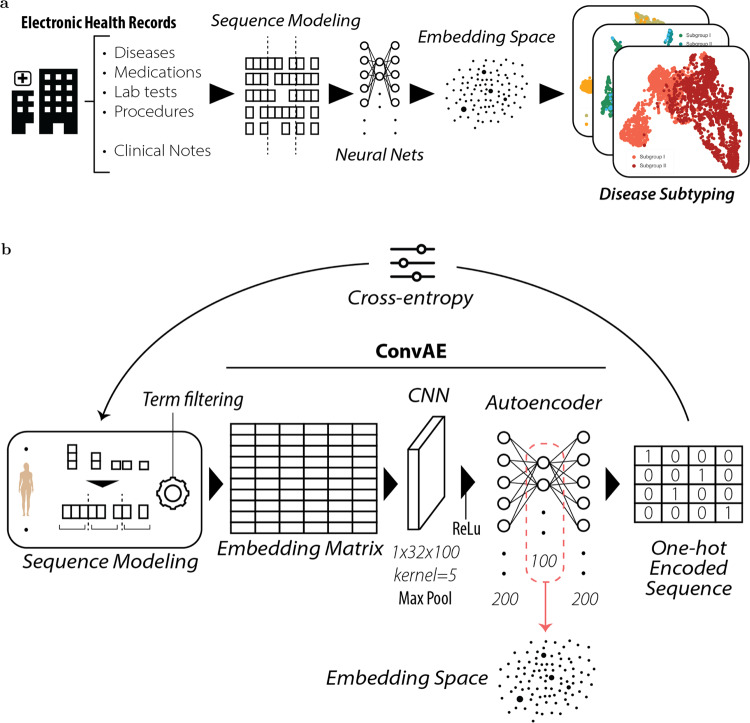
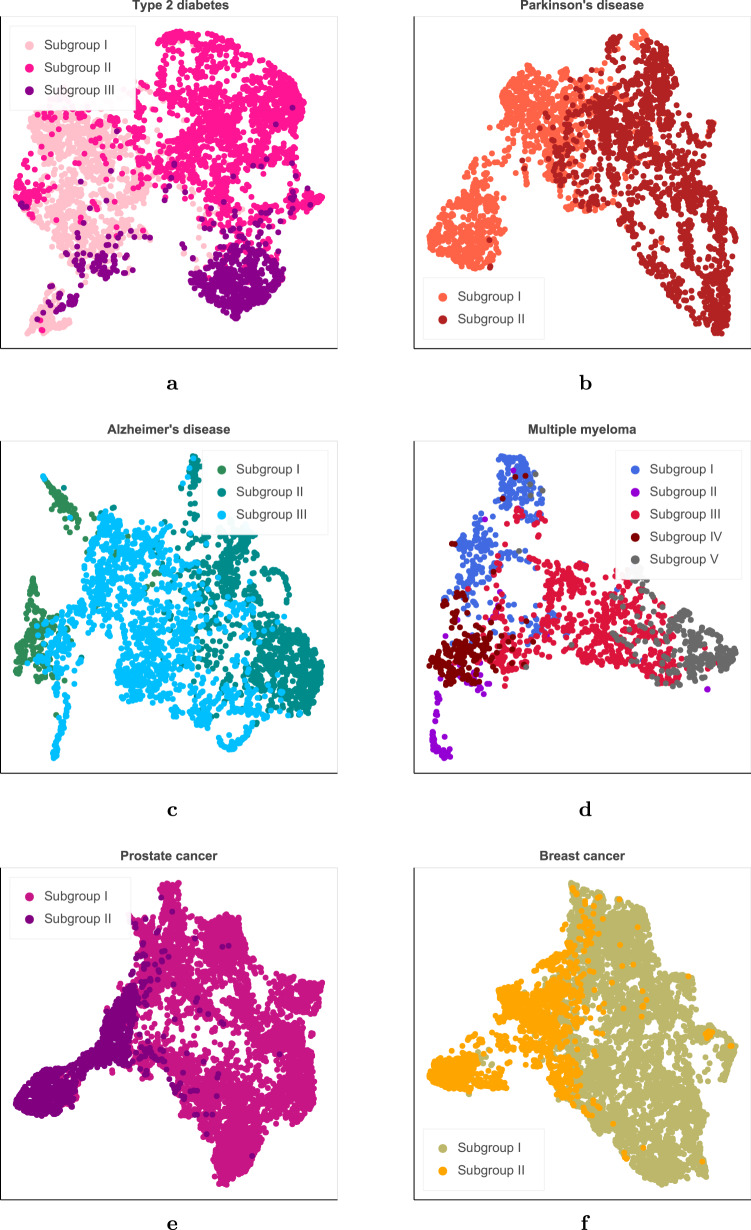
Deriving disease subtypes from electronic health records (EHRs) can guide next-generation personalized medicine. However, challenges in summarizing and representing patient data prevent widespread practice of scalable EHR-based stratification analysis. Here we present an unsupervised framework based on deep learning to process heterogeneous EHRs and derive patient representations that can efficiently and effectively enable patient stratification at scale. We considered EHRs of 1,608,741 patients from a diverse hospital cohort comprising a total of 57,464 clinical concepts. We introduce a representation learning model based on word embeddings, convolutional neural networks, and autoencoders (i.e., ConvAE) to transform patient trajectories into low-dimensional latent vectors. We evaluated these representations as broadly enabling patient stratification by applying hierarchical clustering to different multi-disease and disease-specific patient cohorts. ConvAE significantly outperformed several baselines in a clustering task to identify patients with different complex conditions, with 2.61 entropy and 0.31 purity average scores. When applied to stratify patients within a certain condition, ConvAE led to various clinically relevant subtypes for different disorders, including type 2 diabetes, Parkinson’s disease, and Alzheimer’s disease, largely related to comorbidities, disease progression, and symptom severity. With these results, we demonstrate that ConvAE can generate patient representations that lead to clinically meaningful insights. This scalable framework can help better understand varying etiologies in heterogeneous sub-populations and unlock patterns for EHR-based research in the realm of personalized medicine.
Overview
The claims and statistics of this paper haven’t been checked yet.
Free: it reads the open-access text and checks the first 5 claims that cite a source we can check. Create a free account to check every claim.
Integrity signals
Registry
Cites
Statistics
Figures
Verification
Claims the paper makes
The claims and statistics of this paper haven’t been checked yet.
Free: it reads the open-access text and checks the first 5 claims that cite a source we can check. Create a free account to check every claim.
Claims other papers make about this one
Each is checked against this paper’s own text: does it say what the citing paper says it does?
The check wasn’t confident either way, so it gives no verdict — never disputed.
In the citing paper
“For example, changes in physical activity and movement patterns, driving behavior, sleep patterns, everyday speech, eye tracking, facial expressions, technology use, writing, texting, and keyboard typing dynamics have all been shown to differentiate those with and without neurodegenerative disease.111–119”
From Review of Artificial Intelligence for Clinical Use in Alzheimer's Disease and Related Dementias (2026) · cites this paper as [113]
Experimental — accuracy not yet measured
Self-check
Percentages, sums and reported differences re-computed from the paper’s own numbers.
The self-check needs the paper’s full text.
Citations
Cites
LeCun, Y., Bengio, Y., & Hinton, G. (2015) · Nature · doi:10.1038/nature14539 · Cited by 84,126
Scikit-learn: Machine Learning in Python
Pedregosa, F., Varoquaux, G., Gramfort, A., Michel, V., Thirion, B., Grisel, O., Blondel, M., Müller, A., Nothman, J., Louppe, G., et al. (2012) · arXiv · doi:10.48550/arxiv.1201.0490 · Cited by 71,016 · cited 2×
“2, using scikit-learn and pytorch as machine learning libraries [62, 63].”
Method(2003) · Journal of Machine Learning Research · doi:10.5555/944919.944937 · Cited by 32,337
Efficient Estimation of Word Representations in Vector Space
Mikolov, T., Chen, K., Corrado, G., & Dean, J. (2013) · arXiv · doi:10.48550/arxiv.1301.3781 · Cited by 26,568 · cited 2×
“Adding a semantic modeling component based on, e.g., topic modeling [47] or word embeddings [48], might lead to more clinically meaningful patterns.”
BackgroundMethodRepresentation Learning: A Review and New Perspectives
Bengio, Y., Courville, A., & Vincent, P. (2013) · IEEE Transactions on Pattern Analysis and Machine Intelligence · doi:10.1109/tpami.2013.50 · Cited by 13,001
(2017) · Cited by 11,625
UMAP: Uniform Manifold Approximation and Projection
McInnes, L., Healy, J., Saul, N., & Großberger, L. (2018) · Journal of Open Source Software · doi:10.21105/joss.00861 · Cited by 9,826 · cited 2×
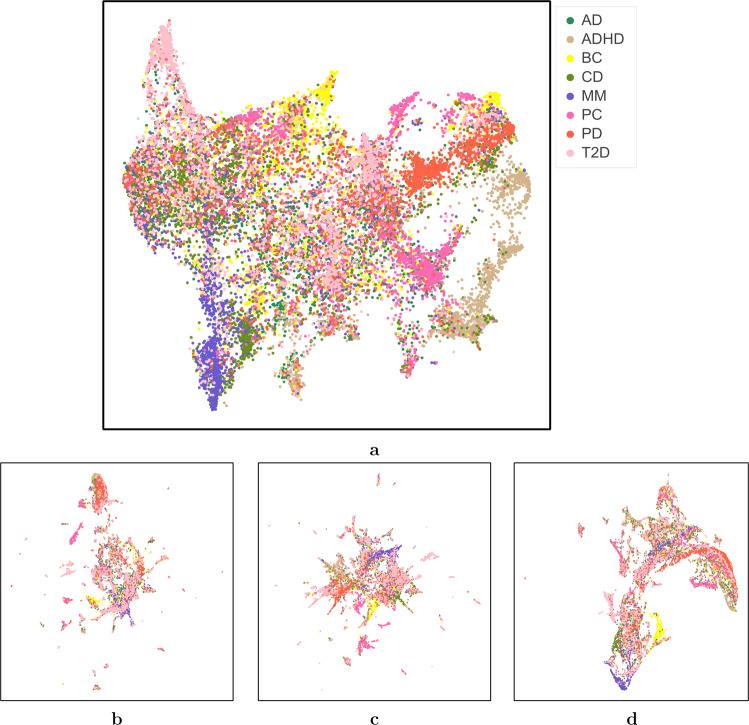
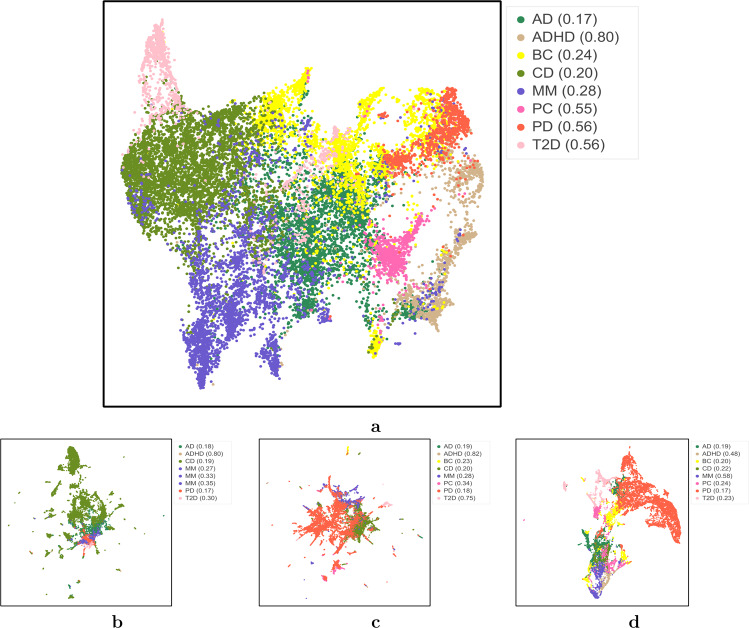
“Figure 2 visualizes the distribution of the different patient representations along with their disease cohort labels obtained using UMAP (Uniform manifold approximation and projection for dimension reduction [25]).”
MethodUMAP: Uniform Manifold Approximation and Projection for Dimension Reduction
McInnes, L., Healy, J., & Melville, J. (2018) · arXiv · doi:10.48550/arxiv.1802.03426 · Cited by 7,101 · cited 1×
“Figure 2 visualizes the distribution of the different patient representations along with their disease cohort labels obtained using UMAP (Uniform Manifold Approximation and Projection for dimension reduction [19]).”
MethodRepeated observation of breast tumor subtypes in independent gene expression data sets
Sørlie, T., Tibshirani, R., Parker, J., Hastie, T., Marron, J. S., Nobel, A., Deng, S., Johnsen, H., Pesich, R., Geisler, S., et al. (2003) · Proceedings of the National Academy of Sciences · doi:10.1073/pnas.0932692100 · Cited by 5,429
Epidemiology of Parkinson's disease
de Lau, L. M., & Breteler, M. M. (2006) · The Lancet Neurology · doi:10.1016/s1474-4422(06)70471-9 · Cited by 4,110 · cited 3×
“, averaged increased prevalence after 60 years of age) [26, 27, 28, 29, 30, 31].”
BackgroundInfluentialDeep learning for healthcare: review, opportunities and challenges
Miotto, R., Wang, F., Wang, S., Jiang, X., & Dudley, J. T. (2018) · Briefings in Bioinformatics · doi:10.1093/bib/bbx044 · Cited by 3,076 · cited 3×
“Deep learning has extensively been used to model EHRs for medical analysis [15, 16], including clinical prediction, such as disease onset, mortality, and readmission [45, 46, 47], and disease phenotyping [20, 48].”
BackgroundMethodSelf-citationScalable and accurate deep learning with electronic health records
Rajkomar, A., Oren, E., Chen, K., Dai, A. M., Hajaj, N., Hardt, M., Liu, P. J., Liu, X., Marcus, J., Sun, M., et al. (2018) · npj Digital Medicine · doi:10.1038/s41746-018-0029-1 · Cited by 2,648
Lyketsos, C. G., Lopez, O., Jones, B., Fitzpatrick, A. L., Breitner, J., & DeKosky, S. (2002) · JAMA · doi:10.1001/jama.288.12.1475 · Cited by 2,049 · cited 1×
“61), suggest a late AD onset, with a progression characterized by a slower rate of cognitive ability decline [34].”
BackgroundMiotto, R., Li, L., Kidd, B. A., & Dudley, J. T. (2016) · Scientific Reports · doi:10.1038/srep26094 · Cited by 1,710 · cited 5×
“[20].”
BackgroundMethodInfluentialSelf-citationMining electronic health records: towards better research applications and clinical care
Jensen, P. B., Jensen, L. J., & Brunak, S. (2012) · Nature Reviews Genetics · doi:10.1038/nrg3208 · Cited by 1,680 · cited 3×
“References [1] Jensen, P.”
BackgroundMethodInfluentialEpidemiology of Alzheimer's disease: occurrence, determinants, and strategies toward intervention
Qiu, C., Kivipelto, M., & von Strauss, E. (2009) · Dialogues in Clinical Neuroscience · doi:10.31887/dcns.2009.11.2/cqiu · Cited by 1,261
Lenalidomide, Bortezomib, and Dexamethasone with Transplantation for Myeloma
Attal, M., Lauwers-Cances, V., Hulin, C., Leleu, X., Caillot, D., Escoffre, M., Arnulf, B., Macro, M., Belhadj, K., Garderet, L., et al. (2017) · New England Journal of Medicine · doi:10.1056/nejmoa1611750 · Cited by 1,257
Donepezil for dementia due to Alzheimer’s disease.
Birks, J. S., & Harvey, R. J. (2018) · Cochrane Database of Systematic Reviews · doi:10.1002/14651858.cd001190.pub3 · Cited by 1,200 · cited 2×
“[42] Birks, J.”
MethodImpaired Leucocyte Functions in Diabetic Patients
Delamaire, M., Maugendre, D., Moreno, M., Le Goff, M.-C., Allannic, H., & Genetet, B. (1997) · Diabetic Medicine · doi:10.1002/(sici)1096-9136(199701)14:1<29::aid-dia300>3.0.co;2-v · Cited by 1,074 · cited 2×
“[34] Delamaire, M.”
ResultCystic fibrosis genetics: from molecular understanding to clinical application
Cutting, G. R. (2015) · Nature Reviews Genetics · doi:10.1038/nrg3849 · Cited by 965 · cited 2×
“However, even seemingly simple diseases can show different degrees of complexity that can create challenges for identification, treatment, and prognosis, despite equivalence at the diagnostic level [2, 3].”
BackgroundMethodA comparison of extrinsic clustering evaluation metrics based on formal constraints
Amigó, E., Gonzalo, J., Artiles, J., & Verdejo, F. (2009) · Information Retrieval · doi:10.1007/s10791-008-9066-8 · Cited by 831 · cited 2×
“For this reason, we used, rather than estimation error analysis, transparent external metrics, such as entropy and purity scores, which evaluate cluster composition and also account for possible subgroups of complex diseases [24].”
Xiao, C., Choi, E., & Sun, J. (2018) · Journal of the American Medical Informatics Association · doi:10.1093/jamia/ocy068 · Cited by 792 · cited 3×
“Deep learning has extensively been used to model EHRs for medical analysis [15, 16], including clinical prediction, such as disease onset, mortality, and readmission [45, 46, 47], and disease phenotyping [20, 48].”
BackgroundMethodMultiple myeloma epidemiology and survival: A unique malignancy
Kazandjian, D. (2016) · Seminars in Oncology · doi:10.1053/j.seminoncol.2016.11.004 · Cited by 765 · cited 2×
“, averaged increased prevalence after 60 years of age) [20, 21, 22, 23, 24, 25].”
BackgroundPatient Subtyping via Time-Aware LSTM Networks
Baytas, I. M., Xiao, C., Zhang, X., Wang, F., Jain, A. K., & Zhou, J. (2017) · Proceedings of the 23rd ACM SIGKDD International Conference on Knowledge Discovery and Data Mining · doi:10.1145/3097983.3097997 · Cited by 613 · cited 5×
“Baytas et al. used time-aware Long Short-Term Memory (LSTM) networks to leverage stratification of longitudinal data of PD patients [8].”
BackgroundMethodInfluentialVascular contributions to cognitive impairment and dementia including Alzheimer's disease
Snyder, H. M., Corriveau, R. A., Craft, S., Faber, J. E., Greenberg, S. M., Knopman, D., Lamb, B. T., Montine, T. J., Nedergaard, M., Schaffer, C. B., et al. (2015) · Alzheimer's & Dementia · doi:10.1016/j.jalz.2014.10.008 · Cited by 603 · cited 2×
“Cerebrovascular diseases are common in aging, and can often be associated with AD [41].”
BackgroundThe parkinson's complex: Parkinsonism is just the tip of the iceberg
Langston, J. W. (2006) · Annals of Neurology · doi:10.1002/ana.20834 · Cited by 583 · cited 3×
“[4] Langston, J.”
Background(2016) · PubMed · Cited by 576
Identification of type 2 diabetes subgroups through topological analysis of patient similarity
Li, L., Cheng, W.-Y., Glicksberg, B. S., Gottesman, O., Tamler, R., Chen, R., Bottinger, E. P., & Dudley, J. T. (2015) · Science Translational Medicine · doi:10.1126/scitranslmed.aaa9364 · Cited by 549
Self-citationDrug development in the era of precision medicine
Dugger, S. A., Platt, A., & Goldstein, D. B. (2018) · Nature Reviews Drug Discovery · doi:10.1038/nrd.2017.226 · Cited by 493 · cited 3×
“[7] Dugger, S.”
BackgroundInfluentialComorbidity clusters in autism spectrum disorders: an electronic health record time-series analysis
Doshi-Velez, F., Ge, Y., & Kohane, I. (2014) · Pediatrics · doi:10.1542/peds.2013-0819 · Cited by 412 · cited 4×
“Previous studies mostly focused on a specific disease using ad hoc cohorts of patients and features [8, 9, 10, 11, 43, 44].”
BackgroundMethodInfluentialPheKB: a catalog and workflow for creating electronic phenotype algorithms for transportability
Kirby, J. C., Speltz, P., Rasmussen, L. V., Basford, M., Gottesman, O., Peissig, P. L., Pacheco, J. A., Tromp, G., Pathak, J., Carrell, D. S., et al. (2016) · Journal of the American Medical Informatics Association · doi:10.1093/jamia/ocv202 · Cited by 368 · cited 1×
“The use of phenotyping algorithms based on manual rules, e.g., PheKB [44], or semi-automated approaches, e.g. [45, 46]), should help identify better cohorts of patients and, consequently, better disease subtypes.”
Method$\mathtt {Deepr}$: A Convolutional Net for Medical Records
Nguyen, P., Tran, T., Wickramasinghe, N., & Venkatesh, S. (2017) · IEEE Journal of Biomedical and Health Informatics · doi:10.1109/jbhi.2016.2633963 · Cited by 352
Randomized controlled trial of a 12-week digital care program in improving low back pain
Shebib, R., Bailey, J. F., Smittenaar, P., Perez, D. A., Mecklenburg, G., & Hunter, S. (2019) · npj Digital Medicine · doi:10.1038/s41746-018-0076-7 · Cited by 341
Common Misdiagnosis of a Common Neurological Disorder: How Are We Misdiagnosing Essential Tremor?
Jain, S., Lo, S. E., & Louis, E. D. (2006) · Archives of Neurology · doi:10.1001/archneur.63.8.1100 · Cited by 304 · cited 1×
“However, when the tremor is severe, it is difficult to distinguish action tremor from resting tremor, leading to the aforementioned misdiagnosis [29].”
BackgroundFatigue in Parkinson's disease: A systematic review and meta‐analysis
Siciliano, M., Trojano, L., Santangelo, G., De Micco, R., Tedeschi, G., & Tessitore, A. (2018) · Movement Disorders · doi:10.1002/mds.27461 · Cited by 291
DeepCare: A Deep Dynamic Memory Model for Predictive Medicine
Pham, T., Tran, T., Phung, D., & Venkatesh, S. (2016) · Lecture Notes in Computer Science · doi:10.1007/978-3-319-31750-2_3 · Cited by 269
Pathophysiology of the Diabetic Kidney
Vallon, V., & Komers, R. (2011) · Comprehensive Physiology · doi:10.1002/cphy.c100049 · Cited by 259 · cited 2×
“[32] Vallon, V.”
BackgroundLearning Low-Dimensional Representations of Medical Concepts.
Choi, Y., Chiu, C. Y.-I., & Sontag, D. A. (2016) · PubMed Central · Cited by 258
The open biomedical annotator.
Jonquet, C., Shah, N. H., & Musen, M. A. (2009) · PubMed Central · Cited by 257
Type 2 diabetes: a multifaceted disease
Pearson, E. R. (2019) · Diabetologia · doi:10.1007/s00125-019-4909-y · Cited by 257 · cited 4×
“Peripheral nerve damage is also one of the most significant non-hematologic toxicities of Bortezomib [6].”
BackgroundInfluentialModel-based evaluation of clustering validation measures
Brun, M., Sima, C., Hua, J., Lowey, J., Carroll, B., Suh, E., & Dougherty, E. R. (2007) · Pattern Recognition · doi:10.1016/j.patcog.2006.06.026 · Cited by 238 · cited 2×
“[23] Brun, M.”
BackgroundWei, W.-Q., Teixeira, P. L., Mo, H., Cronin, R. M., Warner, J. L., & Denny, J. C. (2016) · Journal of the American Medical Informatics Association · doi:10.1093/jamia/ocv130 · Cited by 230 · cited 3×
“[51] Wei, W.”
BackgroundAdvances in Electronic Phenotyping: From Rule-Based Definitions to Machine Learning Models
Banda, J. M., Seneviratne, M., Hernandez-Boussard, T., & Shah, N. H. (2018) · Annual Review of Biomedical Data Science · doi:10.1146/annurev-biodatasci-080917-013315 · Cited by 221 · cited 1×
“We first evaluated the extent to which ConvAE-based patient representations can be used to identify different clinical diagnoses in the EHRs (i.e., disease phenotyping [16]).”
BackgroundIs fatigue an independent and persistent symptom in patients with Parkinson disease?
Alves, G., Wentzel-Larsen, T., & Larsen, J. P. (2004) · Neurology · doi:10.1212/01.wnl.0000144277.06917.cc · Cited by 215 · cited 2×
“[36] Alves, G.”
BackgroundManchia, M., Cullis, J., Turecki, G., Rouleau, G. A., Uher, R., & Alda, M. (2013) · PLoS ONE · doi:10.1371/journal.pone.0076295 · Cited by 195 · cited 2×
“By generating disease subgroups from large-scale EHR data, this architecture can help disentangle clinical heterogeneity and identify high-impact patterns within complex disorders, whose effect may be masked in case-control studies [17].”
BackgroundProgress in Medical Information Management: Systematized Nomenclature of Medicine (SNOMED)
Côté, R. A. (1980) · JAMA · doi:10.1001/jama.1980.03300340032015 · Cited by 172 · cited 1×
“We used SNOMED [17] to find all patients in the data warehouse diagnosed with these conditions; see Supplementary Table 2 and the “Multi-Disease Clustering Analysis” subsection in “Methods” for more details.”
MethodSemi-supervised learning of the electronic health record for phenotype stratification
Beaulieu-Jones, B. K., & Greene, C. S. (2016) · Journal of Biomedical Informatics · doi:10.1016/j.jbi.2016.10.007 · Cited by 171
Electronic medical record phenotyping using the anchor and learn framework
Halpern, Y., Horng, S., Choi, Y., & Sontag, D. (2016) · Journal of the American Medical Informatics Association · doi:10.1093/jamia/ocw011 · Cited by 153 · cited 2×
“[53, 54]), should help identify better cohorts of patients and, consequently, better disease subtypes.”
BackgroundData-driven subtyping of Parkinson's disease using longitudinal clinical records: a cohort study
Zhang, X., Chou, J., Liang, J., Xiao, C., Zhao, Y., Sarva, H., Henchcliffe, C., & Wang, F. (2019) · Scientific Reports · doi:10.1038/s41598-018-37545-z · Cited by 137 · cited 6×
“used LSTM to identify three subgroups of patients with idiopathic PD that differ in disease progression patterns and symptom severity [11].”
BackgroundMethodResultInfluentialDeep Patient Similarity Learning for Personalized Healthcare
Suo, Q., Ma, F., Yuan, Y., Huai, M., Zhong, W., Gao, J., & Zhang, A. (2018) · IEEE Transactions on NanoBioscience · doi:10.1109/tnb.2018.2837622 · Cited by 135 · cited 2×
“CNNs were already used to model EHRs for specific predictive analysis, as part of supervised architectures [49, 50].”
MethodStevens, E., Dixon, D. R., Novack, M. N., Granpeesheh, D., Smith, T., & Linstead, E. (2019) · International Journal of Medical Informatics · doi:10.1016/j.ijmedinf.2019.05.006 · Cited by 120 · cited 2×
“Previous studies mostly focused on a specific disease using ad hoc cohorts of patients and features [8, 9, 10, 11, 43, 44].”
MethodMeasuring Patient Similarities via a Deep Architecture with Medical Concept Embedding
Zhu, Z., Yin, C., Qian, B., Cheng, Y., Wei, J., & Wang, F. (2016) · 2016 IEEE 16th International Conference on Data Mining (ICDM) · doi:10.1109/icdm.2016.0086 · Cited by 114 · cited 1×
“A filter can be defined as k ∈ Rh×N , where h is the variable window size and N is the embedding dimension [52, 53].”
BackgroundThe role of immunity in elderly cancer
Malaguarnera, L., Cristaldi, E., & Malaguarnera, M. (2009) · Critical Reviews in Oncology/Hematology · doi:10.1016/j.critrevonc.2009.06.002 · Cited by 110 · cited 2×
“[33] Malaguarnera, L.”
ResultAnnotation Analysis for Testing Drug Safety Signals using Unstructured Clinical Notes
LePendu, P., Iyer, S. V., Fairon, C., & Shah, N. H. (2012) · Journal of Biomedical Semantics · doi:10.1186/2041-1480-3-s1-s5 · Cited by 96 · cited 2×
“We pre-processed clinical notes using a tool based on the Open Biomedical Annotator that extracts clinical concepts from the free-text [57, 58].”
MethodPersonalized disease prediction using a CNN-based similarity learning method
Suo, Q., Ma, F., Yuan, Y., Huai, M., Zhong, W., Zhang, A., & Gao, J. (2017) · 2017 IEEE International Conference on Bioinformatics and Biomedicine (BIBM) · doi:10.1109/bibm.2017.8217759 · Cited by 90
Unsupervised data-driven stratification of mentalizing heterogeneity in autism
Lombardo, M. V., Lai, M.-C., Auyeung, B., Holt, R. J., Allison, C., Smith, P., Chakrabarti, B., Ruigrok, A. N. V., Suckling, J., Bullmore, E. T., et al. (2016) · Scientific Reports · doi:10.1038/srep35333 · Cited by 88 · cited 2×
“[43] Lombardo, M.”
HIV, dementia and antiretroviral drugs: 30 years of an epidemic
Manji, H., Jäger, H. R., & Winston, A. (2013) · Journal of Neurology, Neurosurgery & Psychiatry · doi:10.1136/jnnp-2012-304022 · Cited by 68 · cited 2×
“, HIV, Syphilis, Hepatitis C, Chlamydia/Gonorrhoea) that are possible causes of early-onset dementia [39], and screened via structural neuroimaging, e.”
BackgroundAutomated disease cohort selection using word embeddings from Electronic Health Records
Glicksberg, B. S., Miotto, R., Johnson, K. W., Shameer, K., Li, L., Chen, R., & Dudley, J. T. (2018) · Biocomputing 2018 · doi:10.1142/9789813235533_0014 · Cited by 65
Self-citationA probabilistic theory of clustering
Dougherty, E. R., & Brun, M. (2003) · Pattern Recognition · doi:10.1016/j.patcog.2003.10.003 · Cited by 62 · cited 2×
“It is worth saying that, without a predictive theory of clustering [21, 22], validation metrics frequently fail to correlate with clustering errors [23].”
BackgroundImplications of Heterogeneity in Multiple Myeloma
de Mel, S., Lim, S. H., Tung, M. L., & Chng, W.-J. (2014) · BioMed Research International · doi:10.1155/2014/232546 · Cited by 59 · cited 3×
“It can be used: 1) for patients ineligible for hematopoietic cell transplantation (HCT); 2) as a maintenance therapy; or 3) in conjunction with HCT for newly-diagnosed patients [5].”
BackgroundMethodAlexandrov, V., Brunner, D., Menalled, L., Kudwa, A. E., Watson-Johnson, J., Mazzella, M. J., Russell, I., Ruiz, M. C., Torello, J., Sabath, E. V., et al. (2016) · Nature Biotechnology · doi:10.1038/nbt.3587 · Cited by 51
Optimal clustering under uncertainty
Dalton, L. A., Benalcázar, M. E., & Dougherty, E. R. (2018) · PLoS ONE · doi:10.1371/journal.pone.0204627 · Cited by 6 · cited 2×
“[22] Dalton, L.”
Background
Research works printed but not linked: 1
- 64. Kingma, D. & Adam, J. B. Adam: a method for stochastic optimization. In Proc. 3rd International Conference on Learning Representations (eds Bengio, Y. & LeCun, Y.) 1-15, https://dblp.org/db/conf/iclr/iclr2015 (2015).
Cited by
Artificial Intelligence in Cancer Research and Precision Medicine
Bhinder, B., Gilvary, C., Madhukar, N. S., & Elemento, O. (2021) · Cancer Discovery · doi:10.1158/2159-8290.cd-21-0090 · Cited by 781
“This is further aided by user-friendly software that allows visualization of longitudinal patient data (e.g., PatientExploreR) and frameworks that facilitate mining of EHR to make clinically relevant predictions (126, 127).”
MethodArtificial intelligence for proteomics and biomarker discovery
Mann, M., Kumar, C., Zeng, W.-F., & Strauss, M. T. (2021) · Cell Systems · doi:10.1016/j.cels.2021.06.006 · Cited by 385
Kraljevic, Z., Searle, T., Shek, A., Roguski, L., Noor, K., Bean, D., Mascio, A., Zhu, L., Folarin, A. A., Roberts, A., et al. (2021) · Artificial Intelligence in Medicine · doi:10.1016/j.artmed.2021.102083 · Cited by 220
Peng, J., Jury, E. C., Dönnes, P., & Ciurtin, C. (2021) · Frontiers in Pharmacology · doi:10.3389/fphar.2021.720694 · Cited by 229
“Applying ML to data from EMR/EHRs is a major area of interest within the fi eld of personalised diagnosis and treatment (Landi et al., 2020).”
MethodXie, F., Yuan, H., Ning, Y., Ong, M. E. H., Feng, M., Hsu, W., Chakraborty, B., & Liu, N. (2022) · Journal of Biomedical Informatics · doi:10.1016/j.jbi.2021.103980 · Cited by 153
Metadata
- Authors
- Landi, I., Glicksberg, B. S., Lee, H.-C., Cherng, S., Landi, G., Danieletto, M., Dudley, J. T., Furlanello, C., & Miotto, R.
- Affiliations
- University of Trento (IT)
- Icahn School of Medicine at Mount Sinai (US)
- Fondazione Bruno Kessler (IT)
- Corresponding author
- Miotto, Riccardo
- Venue
- npj Digital Medicine
- Published
- 2020-07-17
- Volume
- 3
- Issue
- 1
- Pages
- 96-96
- ISSN
- 2398-6352 (ISSN-L)
- PMC
- PMC7367859
- OpenAlex
- W3042895962
- Semantic Scholar
- f37dce7bdf0a3e9703a2a4f0441910e840f1b879
- Cited by
- 213
- References
- 56
- Citations by year
- 2026: 43 · 2025: 40 · 2024: 36 · 2023: 38 · 2022: 20 · 2021: 31 · 2020: 5
- FWCI
- 9.24
- Type
- journal article
- Language
- en
- Open access
- gold
- doi.org
- Licence
- cc-by
- creativecommons.org/licenses/by/4.0 (tdm)
- creativecommons.org/licenses/by/4.0 (vor)
- Locations
- npj Digital Medicine (publishedVersion, cc-by)
- PubMed Central (publishedVersion, cc-by)
- PubMed (publishedVersion)
- arXiv (Cornell University) (submittedVersion)
- DOAJ (DOAJ: Directory of Open Access Journals) (submittedVersion, cc-by-sa)
- arXiv (Cornell University)
- Funders
- Alzheimer's Drug Discovery Foundation
- Nvidia
- Hasso Plattner Foundation
- Topics
- Physical Sciences › Computer Science › Artificial Intelligence › Machine Learning in Healthcare
- Health Sciences › Health Professions › Health Information Management › Electronic Health Records Systems
- Health Sciences › Medicine › Epidemiology › Chronic Disease Management Strategies
- Keywords
- electronic health records, patient stratification, disease subtypes, deep representation learning, convolutional autoencoder, word embeddings, hierarchical clustering, personalized medicine, comorbidities, type 2 diabetes, Parkinson's disease, Alzheimer's disease, patient trajectories
About these checks
Registry, retraction, Cites and statistics results are computed, not judged, with one exception: a printed reference that no index lists is read once by a model before it counts as a citation error. Claims are extracted by a model and kept only when their quote appears verbatim in the text; each cited source is then checked, with a model’s help, for whether it says what the claim relies on. Those verdicts can be wrong — read the claim’s quote and the cited source before relying on one.
Statistics and arithmetic are recomputed, not judged.
Confidence bands are shown only for fields calibrated on our annotated test set. None is calibrated yet, so no band is shown.
What counts as a claim ›How we measure confidence ›How we check this ›
Are you an author, or do you see a problem with this page? Request a review
Data sources
Bibliographic data: Semantic Scholar, OpenAlex, Crossref.
Contains information from the Semantic Scholar Academic Graph Datasets, made available under the ODC Attribution License (ODC-BY 1.0).
Semantic Scholar’s data is described in: Kinney, R., et al. (2023). The Semantic Scholar Open Data Platform. arXiv:2301.10140.
