

Clinical artificial intelligence quality improvement: towards continual monitoring and updating of AI algorithms in healthcare
Open accessThe DOI matches its Crossref record; 89 of the 89 references it cites were found in a registry or an index.
Abstract
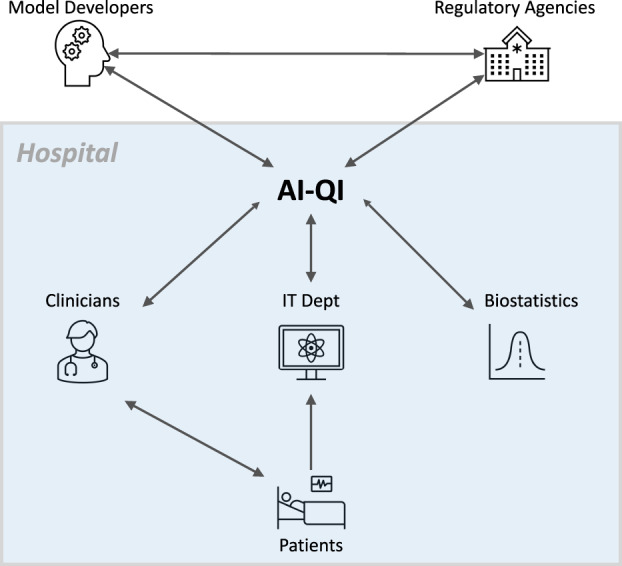
Machine learning (ML) and artificial intelligence (AI) algorithms have the potential to derive insights from clinical data and improve patient outcomes. However, these highly complex systems are sensitive to changes in the environment and liable to performance decay. Even after their successful integration into clinical practice, ML/AI algorithms should be continuously monitored and updated to ensure their long-term safety and effectiveness. To bring AI into maturity in clinical care, we advocate for the creation of hospital units responsible for quality assurance and improvement of these algorithms, which we refer to as “AI-QI” units. We discuss how tools that have long been used in hospital quality assurance and quality improvement can be adapted to monitor static ML algorithms. On the other hand, procedures for continual model updating are still nascent. We highlight key considerations when choosing between existing methods and opportunities for methodological innovation.
Overview
The claims and statistics of this paper haven’t been checked yet.
Free: it reads the open-access text and checks the first 5 claims that cite a source we can check. Create a free account to check every claim.
Integrity signals
Registry
Cites
Statistics
Figures
Verification
Claims the paper makes
The claims and statistics of this paper haven’t been checked yet.
Free: it reads the open-access text and checks the first 5 claims that cite a source we can check. Create a free account to check every claim.
Claims other papers make about this one
Each is checked against this paper’s own text: does it say what the citing paper says it does?
In the citing paper
“The establishment of a dedicated department within hospitals for algorithm quality control has been advocated [90].”
From Fairness of artificial intelligence in healthcare: review and recommendations (2024) · cites this paper as [90]
Self-check
Percentages, sums and reported differences re-computed from the paper’s own numbers.
The self-check needs the paper’s full text.
Citations
Cites
The Elements of Statistical Learning
Hastie, T., Tibshirani, R., & Friedman, J. (2009) · Springer Series in Statistics · doi:10.1007/978-0-387-84858-7 · Cited by 25,970
MIMIC-III, a freely accessible critical care database
Johnson, A. E. W., Pollard, T. J., Shen, L., Lehman, L.-W. H., Feng, M., Ghassemi, M., Moody, B., Szolovits, P., Anthony Celi, L., & Mark, R. G. (2016) · Scientific Data · doi:10.1038/sdata.2016.35 · Cited by 8,141 · cited 1×
“Although large publicly available datasets such as the Medical Information Mart for Intensive Care (MIMIC) database 102 are moving in the direction of releasing more accurate timestamps, random date shifts used for data de-identi fi cation have the unfortunate side effect of dampening temporal…”
MethodPAGE, E. S. (1954) · Biometrika · doi:10.1093/biomet/41.1-2.100 · Cited by 5,739 · cited 2×
“Commonly used control charts that fall in this category include Shewhart control charts, cumulative sum (CUSUM) control charts 35 , and exponentially weighted moving average (EWMA) control charts 31 .”
BackgroundMethodA guide to deep learning in healthcare
Esteva, A., Robicquet, A., Ramsundar, B., Kuleshov, V., DePristo, M., Chou, K., Cui, C., Corrado, G., Thrun, S., & Dean, J. (2019) · Nature Medicine · doi:10.1038/s41591-018-0316-z · Cited by 5,312
Causal Inference for Statistics, Social, and Biomedical Sciences: An Introduction
Imbens, G. W., & Rubin, D. B. (2015) · doi:10.1017/cbo9781139025751 · Cited by 4,210
Causal Diagrams for Epidemiologic Research
Greenland, S., Pearl, J., & Robins, J. M. (1999) · Epidemiology · doi:10.1097/00001648-199901000-00008 · Cited by 3,728
Hannun, A. Y., Rajpurkar, P., Haghpanahi, M., Tison, G. H., Bourn, C., Turakhia, M. P., & Ng, A. Y. (2019) · Nature Medicine · doi:10.1038/s41591-018-0268-3 · Cited by 3,148 · cited 1×
“The use of arti fi cial intelligence (AI) and machine learning (ML) in the clinical arena has developed tremendously over the past decades, with numerous examples in medical imaging, cardiology, and acute care 1 – 6 .”
BackgroundAir Pollution and Hospital Admissions for Heart Disease in Eight U.S. Counties
Schwartz, J. (1999) · Epidemiology · doi:10.1097/00001648-199901000-00005 · Cited by 3,038
A Kernel Method for the Two-Sample-Problem
Gretton, A., Borgwardt, K. M., Rasch, M., Schölkopf, B., & Smola, A. J. (2007) · Advances in Neural Information Processing Systems 19 · doi:10.7551/mitpress/7503.003.0069 · Cited by 2,167
Predicting good probabilities with supervised learning
Niculescu-Mizil, A., & Caruana, R. (2005) · Proceedings of the 22nd international conference on Machine learning - ICML '05 · doi:10.1145/1102351.1102430 · Cited by 1,884
Research works printed but not linked: 17
- Subbaswamy, A., Schulam, P. & Saria, S. Preventing failures due to dataset shift: Learning predictive models that transport. In: Proc. Machine Learning Research Vol. 89 (eds. Chaudhuri, K. & Sugiyama, M.) 3118–3127 (PMLR, 2019).
- Schölkopf, B. et al. On causal and anticausal learning. In: Proc. 29th International Coference on International Conference on Machine Learning, ICML’12 459–466 (Omnipress, 2012).
- Montgomery, D. Introduction to Statistical Quality Control (Wiley, 2020).
- Boracchi, G., Carrera, D., Cervellera, C. & Macciò, D. QuantTree: Histograms for change detection in multivariate data streams. In: Proc. 35th International Conference on Machine Learning Vol. 80 (eds. Dy, J. & Krause, A.) 639–648 (PMLR, 2018).
- Rabanser, S., Günnemann, S. & Lipton, Z. Failing Loudly: An Empirical Study of Methods for Detecting Dataset Shift. In: Advances in Neural Information Processing Systems Vol. 32 (eds. Wallach, H., Larochelle, H., Beygelzimer, A., d’Alché-Buc, F., Fox, E. & Garnett, R.) 1396–1408 https://proceedings.neurips.cc/paper/2019/file/846c260d715e5b854ffad5f70a516c88-Paper.pdf (Curran Associates, Inc., 2019).
- Harchaoui, Z., Moulines, E. & Bach, F. Kernel change-point analysis. In Advances in Neural Information Processing Systems Vol. 21 (eds. Koller, D., Schuurmans, D., Bengio, Y. & Bottou, L.) (Curran Associates, Inc., 2009).
- Perdomo, J., Zrnic, T., Mendler-Dünner, C. & Hardt, M. Performative prediction. In Proc. of the 37th International Conference on Machine Learning Vol. 119 (eds. Daumé. H. III & Singh, A.) 7599–7609 http://proceedings.mlr.press/v119/perdomo20a/perdomo20a.pdf (PMLR, 2020).
- Ensign, D., Friedler, S. A., Neville, S., Scheidegger, C. & Venkatasubramanian, S. Runaway feedback loops in predictive policing. In: Accountability and Transparency Vol. 81 (eds. Friedler, S. A. & Wilson, C.) 160–171 (PMLR, 2018).
- Hashimoto, T., Srivastava, M., Namkoong, H. & Liang, P. Fairness without demographics in repeated loss minimization. In Proc. 35th International Conference on Machine Learning Vol. 80 (eds. Dy, J. & Krause, A.) 1929–1938 (PMLR, 2018).
- Platt J Probabilistic outputs for support vector machines and comparisons to regularized likelihood methods Adv. Large Margin Classifiers 1999 10 61 74
- Guo C Pleiss G Sun Y Weinberger KQ On calibration of modern neural networks Int. Conf. Mach. Learning 2017 70 1321 1330
- Steyerberg, E. W. Clinical Prediction Models: A Practical Approach to Development, Validation, and Updating (Springer, 2009)..
- Vokinger KN Feuerriegel S Kesselheim AS Continual learning in medical devices: FDA’s action plan and beyond Lancet Digit Health 2021 3 e337 e338 10.1016/S2589-7500(21)00076-5 33933404 · DOI · Paper page
- Harvey, H. & Cabitza, F. Algorithms are the new drugs? Reflections for a culture of impact assessment and vigilance. In: IADIS International Conference ICT, Society and Human Beings 2018 (eds. Macedo, M. & Kommers, P.) (part of MCCSIS 2018) (2018).
- Zeileis A Leisch F Hornik K Kleiber C strucchange: an r package for testing for structural change in linear regression models J. Statistical Softw. Articles 2002 7 1 38
- Bifet A Holmes G Kirkby R Pfahringer B MOA: massive online analysis J. Mach. Learn. Res. 2010 11 1601 1604
- Montiel J Read J Bifet A Abdessalem T Scikit-multiflow: a multi-output streaming framework J. Mach. Learn. Res. 2018 19 1 5
Cited by
Items 201–300 of 503
Rethinking bioinformatics expertise in the era of artificial intelligence
Goh, W. W. B., Polster, A., Wong, L., & Cvijović, M. (2026) · npj Digital Medicine · doi:10.1038/s41746-026-02777-1 · Cited by 6
“Thisisnotunlikepost-deploymentcontinuousmonitoringmechanisms thathavealsobeenspelledoutinclinicalapplications 18,19 .”
Flehmig, N., Lundteigen, M. A., & Yin, S. (2024) · Annual Conference of the IEEE Industrial Electronics Society (IECON) · doi:10.1109/iecon55916.2024.10906021 · Cited by 9
“A broader definition of monitoring can include more than evaluating the AI component’s performance and the impact of the updating, by incorporating concept drift detection and understanding [18], [20], [23].”
InfluentialChiu, E. K.-Y., Sridhar, S., Wong, S. S. Y., Tam, A. R., Choi, M.-H., Lau, A. W.-T., Wong, W.-C., Chiu, K. H., Ng, Y.-Z., Yuen, K., et al. (2025) · Healthcare · doi:10.3390/healthcare13070744 · Cited by 9
Chen, D. C., He, E., Pace, K., Chekay, M., & Raman, S. (2025) · The Oncologist · doi:10.1093/oncolo/oyaf112 · Cited by 6
“42 External validation of AI interventions remains a necessary step towards fostering clinical trust and adoption across diverse clinical settings, ensuring that both performance metrics and patient outcomes are positively impacted by the introduction of the AI intervention.”
Pruski, M. (2024) · Journal of Medical Ethics · doi:10.1136/jme-2023-109675 · Cited by 6
“25 This might mean the AI is not calibrated for use in a locality even if the patient population on which the AI was trained is similar to that of the deployment locality.”
ResultBarea‐Mendoza, J. A., Fernández, M. V., Pardo, À., & Álvarez, J. G. (2024) · Medicina Intensiva · doi:10.1016/j.medin.2024.03.007 · Cited by 9
Kale, A. U., Hogg, H. D. J., Pearson, R. V., Glocker, B., Golder, S., Coombe, A., Waring, J. J., Liu, X., Moore, D., & Denniston, A. K. (2024) · JMIR Research Protocols · doi:10.2196/51614 · Cited by 8
“There is an urgent need to investigate how such technologies can be evaluated and monitored to ensure clinical benefit and avoid patient harm [9-12].”
BackgroundAI-Driven Cybersecurity for Telemedicine: Enhancing Protection Through Autonomous Defense Systems
Wahed, M. K. Y. A., Wahed, S. A., & Alzoubi, A. E. (2025) · Advances in computational intelligence and robotics book series · doi:10.4018/979-8-3373-0954-5.ch013 · Cited by 9
Bellini, V., Russo, M., Lanza, R., Domenichetti, T., Compagnone, C., Maggiore, S. M., Cammarota, G., Pelosi, P. P., Vetrugno, L., & BIGNAMI, E. G. (2023) · Minerva Anestesiologica · doi:10.23736/s0375-9393.23.17279-8 · Cited by 6
Monitoring performance of clinical artificial intelligence: a scoping review protocol
Andersen, E. S., Birk‐Korch, J. B., Röttger, R., Brasen, C. L., Brandslund, I., & Madsen, J. S. (2024) · JBI Evidence Synthesis · doi:10.11124/jbies-23-00390 · Cited by 7
Negi, R., Chopra, D., Maheshwari, K., Mahajan, A., Badyal, D. K., & Venkataramani, P. (2025) · Medical Journal Armed Forces India · doi:10.1016/j.mjafi.2025.08.010 · Cited by 6
Schönfelder, A., Eberlein-Gonska, M., Hülsken-Giesler, M., Jovy-Klein, F., Kather, J. N., Kohoutek, E., Lennefer, T., Liebert, E., Lipprandt, M., Mathias, R., et al. (2026) · Journal of Medical Internet Research · doi:10.2196/80754 · Cited by 6
“They establish comprehensive risk management systems (eg, handling device failures or malfunctions) [87] and drive standardization.”
InfluentialIntegrating Artificial Intelligence in a University Counseling Clinic
Sheperis, D., & Sharvit, S. S. (2025) · Journal of Counselor Preparation and Supervision · doi:10.70013/wdo9cs4m · Cited by 5
Integrating wearable devices with AI to explore a disease world spanning time and space
Liu, Y., Wu, Y., Ren, H.-X., Wu, S., Hong, J., Du, J., Sun, M., Lin, Z.-H., & Miao, Y.-B. (2025) · Nano Energy · doi:10.1016/j.nanoen.2025.111481 · Cited by 6
A systematic review and analysis of COVID-19 disruptions to supply chains
Hung, T., Chuang, C.-H., & Suresh, N. C. (2026) · International Journal of Engineering Business Management · doi:10.1177/18479790251394774 · Cited by 5
Wenderott, K., Krups, J., & Weigl, M. (2026) · BMJ Open Quality · doi:10.1136/bmjoq-2025-003639 · Cited by 6
Dashboarding to Monitor Machine-Learning-Based Clinical Decision Support Interventions
Hekman, D. J., Barton, H. J., Maru, A., Wills, G. J., Cochran, A. L., Fritsch, C., Wiegmann, D. A., Liao, F., & Patterson, B. W. (2023) · Applied Clinical Informatics · doi:10.1055/a-2219-5175 · Cited by 6
“22,28,31 When applied to ML-CDS, control charts offer implementers the ability to “ zoomin ” fromtheoverallviewtoamorefocusedexamination of speci fi c steps of the intervention.”
BackgroundMethodInfluentialThe Impact of Artificial Intelligence on Human Resource Management: Barriers and Benefits
Maota, T., & Naidoo, V. (2025) · IGI Global eBooks · doi:10.4018/979-8-3693-8679-8.ch016 · Cited by 5
Kusztos, V. E., & Simonetto, D. A. (2025) · Journal of Clinical and Experimental Hepatology · doi:10.1016/j.jceh.2025.102579 · Cited by 5
“Voice is the New Blood”: a discourse analysis of voice AI health-tech start-up websites
Blatter, A., Gallois, H., Evangelista, E. G., Bensoussan, Y. E., & Bélisle‐Pipon, J. (2025) · Frontiers in Digital Health · doi:10.3389/fdgth.2025.1568159 · Cited by 5
“Algorithmic models based on correlation work well when the target population is similar to the training data, but when in a dynamic clinical environment with a heterogeneous population a model that worked in one setting may fail in another (41).”
Building AI-Ready Infrastructure for U.S. Healthcare: A Product Management Perspective
Oke, F., Bolaji, O., Umakor, M. F., & Dopamu, O. (2025) · World Journal of Advanced Research and Reviews · doi:10.30574/wjarr.2025.27.2.2892 · Cited by 6
“Therefore, hospitals should plan for regular re-validation of AI tools and fairness monitoring, with feedback channels for frontline users (Feng et al., 2022; Andersen et al., 2024).”
Zhang, L., Zhao, W., Fang, M., Yuan, K., Cheng, S., Jia, W., & Bai, L. (2025) · Mathematics · doi:10.3390/math13213490 · Cited by 6
Yang, H., Chang, F., Muroi, F., Liu, Z., Zhang, W., & Cai, J. (2026) · Translational Psychiatry · doi:10.1038/s41398-026-03872-3 · Cited by 5
Exploring the utility and limitations of ChatGPT in scientific literature searches
Corti, C., Castellano, G., & Curigliano, G. (2023) · ESMO Real World Data and Digital Oncology · doi:10.1016/j.esmorw.2023.09.001 · Cited by 6
Implementing Quality Improvement Initiatives Within Community Psychiatry: Challenges and Strategies
Ogbu-Nwobodo, L., Fang, A., Gill, H., Saenz, S. R., Wallace, P., Mangurian, C. V., & Folk, J. B. (2024) · Community Mental Health Journal · doi:10.1007/s10597-024-01375-3 · Cited by 5
“Additionally, given the burgeoning of technological advancements, including artificial intelligence—a rapidly evolving space for healthcare in general—exploring the integration of these tools could potentially help advance QI initiatives (Feng et al., 2022).”
Chen, Z., Li, W., & Lin, Z. (2026) · PLOS Digital Health · doi:10.1371/journal.pdig.0001283 · Cited by 7
“Without them, there is a substantial risk of extrapolating performance metrics derived from privileged patients to disadvantaged groups—an oversight that may erode trust and further entrench global health disparities [53–56].”
Casey, A., Ansari, S., Nakisa, B., Kelly, B., Brown, P., Cooper, P., Muhammad, I., Livingstone, S., Reddy, S., & Mäkinen, V. (2023) · JMIR AI · doi:10.2196/42313 · Cited by 7
“However, most stakeholders are eager for this discourse to move beyond theoretical or experimental confines to adoption and integration in clinical and real-world health care environments [1,4,5].”
BackgroundThe Impact of Artificial Intelligence on Diagnostic Medicine
Wheatley, M. (2024) · Premier Journal of Artificial Intelligence · doi:10.70389/pjai.100007 · Cited by 6
Cheong, S. C., So, S. L., Lal, A., & Coveliers-Munzi, J. (2025) · Frontiers in Pediatrics · doi:10.3389/fped.2025.1581578 · Cited by 4
Vita, E. D., Caivano, G., Sciarra, F. M., Bianco, S. L., Messina, P., Cumbo, E. M. G., Caradonna, L., Nigliaccio, S., Fontana, D. A., Scardina, A., et al. (2025) · Applied Sciences · doi:10.3390/app152212005 · Cited by 5
Liang, Y., Wei, Z., Yi, D., Chen, X., Siyao, D. U., Wong, C., Xu, Z., Gao, W., Han, C., Chen, K., et al. (2026) · Nature Communications · doi:10.1038/s41467-026-69212-7 · Cited by 5
Clinical trials for continuously monitored and updated AI systems
van Amsterdam, W. A. C., Oberst, M., Feng, J., Wiens, J., Tang, S., Joshi, S. D., Ranganath, R., Sendak, M., Shalit, U., Vogt, J. E., et al. (2026) · Nature Medicine · doi:10.1038/s41591-026-04368-9 · Cited by 7
Self-citationHuang, C., Fang, W., Chen, K.-H., Lin, S.-Y., Ho, C. K., Hwang, J., Tai, T., Liu, Y., Shih, C., Chen, J., et al. (2026) · Osteoporosis International · doi:10.1007/s00198-026-08067-6 · Cited by 5
“This collaborative improvement cycle is how AI can become safer and more accurate over time [70].”
Rusdiana, R., & Cahyadi, A. (2026) · Al Ghazali. · doi:10.69900/ag.v6i3.608 · Cited by 6
MRI radiomics based machine learning model of the periaqueductal gray matter in migraine patients
Meşe, İ., Karacı, R., Taşlıçay, C. A., Taslicay, C., Akansel, G., & Domaç, S. F. M. (2024) · Ideggyógyászati Szemle · doi:10.18071/isz.77.0039 · Cited by 4
AI Code of Conduct—Safety, Inclusivity, and Sustainability
Gonzalez, A. A., Crowell, T., & Lin, S. (2024) · JAMA Internal Medicine · doi:10.1001/jamainternmed.2024.4340 · Cited by 4
Inconsistency of AI in intracranial aneurysm detection with varying dose and image reconstruction
Goelz, L., Laudani, A., Genske, U., Scheel, M., Böhner, G., Bauknecht, H.-C., Mutze, S., Hamm, B., & Jahnke, P. (2025) · Scientific Reports · doi:10.1038/s41598-025-04830-7 · Cited by 4
“This requires consistency testing, which is also relevant beyond intended modifications of imaging equipment to monitor and detect AI decay 13,23 .”
Raz, A. E., Inbar, Y., Avnoon, N., Lifshitz-Milwidsky, L. B., Hofman, B., Honig, A., & Paz, Z. (2025) · Frontiers in Medicine · doi:10.3389/fmed.2025.1651934 · Cited by 4
Abdollahifard, S., Farrokhi, A., Mowla, A., & Liebeskind, D. S. (2024) · Neurologic Clinics · doi:10.1016/j.ncl.2024.03.001 · Cited by 4
Ramadhan, M., Wijaya, D. T., Aminanto, M. E., Henri, A., Anwar, O., & Asyhari, A. T. (2024) · IEEE International Conference on Communication, Networks and Satellite (COMNETSAT) · doi:10.1109/comnetsat63286.2024.10862480 · Cited by 4
Monitoring Methodology for an AI Tool for Breast Cancer Screening Deployed in Clinical Centers
Aguilar, C., Pacilè, S., Weber, N., & Fillard, P. (2023) · Life · doi:10.3390/life13020440 · Cited by 5
“described several methods for monitoring clinical AI algorithms [11].”
BackgroundMethodML-based clinical decision support models based on metabolomics data
Burdukiewicz, M., Chilimoniuk, J., Grzesiak, K., Kretowski, A. J., & Ciborowski, M. (2024) · TrAC Trends in Analytical Chemistry · doi:10.1016/j.trac.2024.117819 · Cited by 4
Fiduciary AI for the Future of Brain-Technology InteractionsPreprint
Bhattacharjee, A., Pilkington, J., & Farahany, N. A. (2025) · arXiv (Cornell University) · Cited by 5
Directions of Technical Innovation for Regulatable AI Systems
Shen, X., Brown, H., Tao, J., Strobel, M., Tong, Y., Narayan, A., Soh, H., & Doshi-Velez, F. (2024) · Communications of the ACM · doi:10.1145/3653670 · Cited by 3
“18 It is crucial to translate the monitored statistics are made public, what kind of access is granted to trusted audi-tors—must also be resolved within the broader sociotechnical context.”
Guérendel, C., Petrychenko, L., Chupetlovska, K., Bodalal, Z., Beets‐Tan, R. G. H., & Benson, S. (2024) · European Radiology · doi:10.1007/s00330-024-11321-2 · Cited by 3
Kılınç, Ö., & Demirtaş, İ. (2025) · Revista da Associação Médica Brasileira · doi:10.1590/1806-9282.20250892 · Cited by 3
“This is related to ChatGPT-4’s occasional failure to cite sources and provide incomplete references 18,19 .”
Li, Y., Li, Y., Zhang, W., & Li, J. (2026) · Worldviews on Evidence-Based Nursing · doi:10.1111/wvn.70117 · Cited by 3
Dorostkar, E., Ziari, K., & Najarsadeghi, M. (2026) · Transportation Research Interdisciplinary Perspectives · doi:10.1016/j.trip.2026.101892 · Cited by 3
Farahani, S., Ieva, A. D., Coiera, E. W., & Liu, S. (2026) · European Journal of Radiology Artificial Intelligence · doi:10.1016/j.ejrai.2026.100092 · Cited by 4
Rotalinti, Y., Ordish, J., Liu, X., Glocker, B., Denniston, A. K., Wright, P. S. R., Yau, C., Kale, A. U., Grainger, D., Branson, R., et al. (2026) · BMJ Digital Health & AI · doi:10.1136/bmjdh-2026-000085 · Cited by 3
“30 By systematically categorising different types of drift and proposing specific risk assessment methodologies, this work offers valuable insights that can directly enhance the formulation and execution of PCCPs.”
Iqbal, S., Zhong, X., Khan, M. A., Wu, Z., Almujally, N. A., Liu, W., Cambria, E., & Hussain, A. (2026) · Information Fusion · doi:10.1016/j.inffus.2026.104483 · Cited by 3
Tian, J., Song, Y., Tang, L., An, L., & Zhou, J. (2026) · Risk Management and Healthcare Policy · doi:10.2147/rmhp.s604289 · Cited by 4
“23,24 Suspension in this case allowed accountability boundaries and update authority to be reviewed before routine use continued under defined oversight arrangements.”
AI-based augmentation of oncology clinical trials
Villa, A., Eadie, A. L., Synnott, D., Romanò, R., Piffoux, M., Wong, E. Y. T., Scheinerman, N., Tan, D. S. W., de Braud, F., Koopman, M., et al. (2026) · Nature Reviews Clinical Oncology · doi:10.1038/s41571-026-01189-0 · Cited by 3
A five-phase evaluation framework for diagnostic and predictive medical artificial intelligence
Ye, Z., Chen, Y., Huang, X., Chen, M., Wang, W., Zhu, H., Han, K., Wang, J., Lu, Q., Zhao, Y., et al. (2026) · npj Digital Medicine · doi:10.1038/s41746-026-03155-7 · Cited by 4
Capes, N., Patel, H., Sarhan, I., Ashwood, N., Dekker, A., & Shehata, R. (2023) · International Journal of Intelligence Science · doi:10.4236/ijis.2023.133005 · Cited by 3
Restructuring the Landscape of Generative AI Research
Edam, S. M. I. (2024) · Advances in educational technologies and instructional design book series · doi:10.4018/979-8-3693-0884-4.ch012 · Cited by 3
Edge Artificial Intelligence for Electrical Anomaly Detection Based on Process-In-Memory Chip
Jin, J., Qiu, X., & Lu, C. (2024) · Electronics · doi:10.3390/electronics13214255 · Cited by 3
Correa, F. S., Rohini, R., Patil, S., Das, S. R., Sairam, K., & Singh, J. (2024) · Seminars in Medical Writing and Education · doi:10.56294/mw2024493 · Cited by 3
Kemna, R., Zeeuw, M. J., Ziesemer, K. A., Ali, M., Bereska, J. I., Marquering, H. A., Stoker, J., Verpalen, I. M., Swijnenburg, R., Huiskens, J., et al. (2025) · Oncology · doi:10.1159/000546572 · Cited by 5
“Sixth, continuously monitor and evaluate performance of the developed model to make in-time adjustments to maintain ef fi cacy [53].”
Woite, N. L., Gameiro, R. R., Leite, M. G. H. S. J., Hammond, A., Cobanaj, M., & Celi, L. A. (2025) · Critical Care Science · doi:10.62675/2965-2774.20250380 · Cited by 7
“(60) However, transparency should not be confused with explainability.”
Self-citationDR-AIR: A data repository bridging the research gap in AI reliability
Zheng, S., Clark, J. M., Salboukh, F., Silva, P. M. D. C., da Mata, K. A., Pan, F., Min, J., Lian, J., King, C., Fiondella, L., et al. (2025) · Quality Engineering · doi:10.1080/08982112.2025.2539834 · Cited by 5
Top Ten Tips Palliative Care Clinicians Should Know About the Future of Artificial Intelligence
Patel, P., Patel, R., Kuperman, G. J., Consolandi, M., Collett, D., Nakagawa, S., Burry, N., Bezak, K. B., Strand, J., Kamdar, M. M., et al. (2026) · Journal of Palliative Medicine · doi:10.1177/10966218251366117 · Cited by 3
“35 This approach, often referred to as the human-in-the-loop model, emphasizes the importance of input from both clinicians and patients (i.e., the end-user input).”
Chemistries and applications of DNA-natural product conjugate
Chen, Y., Li, W., & Xing, H. (2022) · Frontiers in Chemistry · doi:10.3389/fchem.2022.984916 · Cited by 3
“, 2022), and artificial intelligence (AI)-assisted machine-learning technology (Bowen et al., 2020; Feng et al., 2022), high potent natural products isolated from plants and other natural sources remain an important source of new chemical entity drugs (Frantz and Smith, 2003).”
BackgroundArtificial intelligence in cancer research and precision medicine
Corti, C., Cobanaj, M., Criscitiello, C., & Curigliano, G. (2024) · Elsevier eBooks · doi:10.1016/b978-0-443-13671-9.00005-3 · Cited by 4
AI-Powered Diagnosis: A New Weapon Against Cancer and Microbial InfectionsPreprint
Sharma, A., Sharma, N., Gagneja, S., Billa, A., Bhardwaj, N., George, A., Capalash, N., & Sharma, P. (2025) · Preprints.org · doi:10.20944/preprints202506.1301.v1 · Cited by 3
Reliable agent engineering should integrate machine-compatible organizational principlesPreprint
Xian, R. P., Gabison, G. A., Alaa, A., Riedl, C., & Chrysos, G. G. (2025) · arXiv (Cornell University) · doi:10.48550/arxiv.2512.07665 · Cited by 3
“Two main aspects of software maintenance are monitoring and adaptation (Banker et al., 1993; Banker & Slaughter, 1997; Feng et al., 2022).”
A foundation for evaluating the surgical artificial intelligence literature
Hashimoto, D. A., Sambasastry, S. K., Singh, V., Kurada, S., Altieri, M. S., Yoshida, T., Madani, A., & Jogan, M. (2024) · European Journal of Surgical Oncology · doi:10.1016/j.ejso.2024.108014 · Cited by 3
Raz, A. E., Lifshitz-Milwidsky, L. B., & Inbar, Y. (2025) · SSM - Qualitative Research in Health · doi:10.1016/j.ssmqr.2025.100642 · Cited by 2
AI for Lesion Detection in Musculoskeletal Radiology
Kim, S. J., Lee, H. S., Hwang, S., & Yoon, Y. (2025) · Journal of the Korean Society of Radiology · doi:10.3348/jksr.2025.0081 · Cited by 2
Bishara, A. M., Lin, M.-P., Digitale, J. C., Yim, J. W. L., Soleimani, H., Robinowitz, D. L., Pletcher, M. J., & Ramaswamy, P. (2025) · NEJM AI · doi:10.1056/aioa2401198 · Cited by 2
Self-citationSidhu, R., Selvamogan, A., Abdellatif, M., Franscois, R., & Boddy, A. (2025) · Annals of The Royal College of Surgeons of England · doi:10.1308/rcsann.2025.0089 · Cited by 2
“19,20 Without consistent, veri fi able sources, such content risks being perceived as less trustworthy or authoritative, potentially undermining patient decision making or discouraging the use of AI tools altogether.”
CIRCLE: A Framework for Evaluating AI from a Real-World Lens
Schwartz, R., Westling, C. E. I., Briggs, M., Fadaee, M., Nejadgholi, I., Holmes, M., Rashid, F., Carlyle, M., Taïk, A., Wilson, K., et al. (2026) · Lecture notes in networks and systems · doi:10.1007/978-3-032-32732-1_41 · Cited by 3
“See Table 2.”
Seringa, J., Cordeiro, J. V., Santana, R. M., & Magalhães, T. (2026) · Frontiers in Digital Health · doi:10.3389/fdgth.2026.1781497 · Cited by 2
“Continuous assessment is crucial due to AI’s learning nature (73).”
Zhou, Q., Sun, L., Ou, Y., Liu, H., Gao, J., Dai, R., Li, Y., Cheng, G., Tao, Y., Pan, Y., et al. (2026) · Briefings in Bioinformatics · doi:10.1093/bib/bbag107 · Cited by 2
Syailendra, E. A., Arshad, H., Lopez‐Ramirez, F., Tixier, F., Kawamoto, S., Fishman, E. K., & Chu, L. C. H. (2026) · Korean Journal of Radiology · doi:10.3348/kjr.2026.0003 · Cited by 2
“Without monitoring, model drift undermines clinical reliability [78-80].”
Bias and Fairness Across the Healthcare AI Lifecycle: A Clinician-Oriented Review
Koçak, B., Ponsiglione, A., Dang, V. N., Dietzel, M., Lekadir, K., & Cuocolo, R. (2026) · Balkan Medical Journal · doi:10.4274/balkanmedj.galenos.2026.2026-6-3 · Cited by 2
“89,131,132 115-117, 133 Although these safeguards are valuable, their limitations should be recognized.”
Artificial Intelligence in Newborn Medicine
Huisman, T. A. G. M., & Huisman, T. A. G. M. (2024) · Newborn · doi:10.5005/jp-journals-11002-0095 · Cited by 2
Evaluating the Influence of Chatbots and AI Assistants on Medical Communication and Patient Trust
Chandana, P., Samrat, B., Suri, S., Majumder, R., Patil, S., & Sahu, P. K. (2024) · Seminars in Medical Writing and Education · doi:10.56294/mw2024495 · Cited by 2
Analyzing the Impact of Digital Health Communication on Patient Engagement and Treatment Adherence
Bhardwaj, U., Malathi, H., Gambhir, V., Das, A., Sudhir, R., Kaur, A., & Dev, A. (2024) · Seminars in Medical Writing and Education · doi:10.56294/mw2024492 · Cited by 2
Towards Reliable Prediction: A Bayesian Continual Learning Approach for Clinical Time-Series Data
Cao, Z., Jun, J. P. W., Guo, Y., Gautam, C., Nambiar, M., Chia, S. Y., Salim, N. N. M., Lee, S., Oh, H. C., Bee, Y. M., et al. (2025) · IEEE Journal of Biomedical and Health Informatics · doi:10.1109/jbhi.2025.3598718 · Cited by 2
Are You Leading an Artificial Intelligence-Capable Healthcare Organization?
Arnaout, A. (2025) · Healthcare Management Forum · doi:10.1177/08404704251375388 · Cited by 7
Regulação da inteligência artificial na saúde
Dourado, D. D. A. (2024) · Digital Library of Theses and Dissertations (Universidade de São Paulo) · doi:10.11606/t.5.2024.tde-23042024-111255 · Cited by 11
Quantitative neuroimaging with handcrafted and deep radiomics in neurological diseases
Lavrova, E. (2024) · Research Publications (Maastricht University) · doi:10.26481/dis.20240531el · Cited by 2
Hosseinkhani, N. T. (2025) · SSRN Electronic Journal · doi:10.2139/ssrn.5385517 · Cited by 3
Madhukar, A. (2025) · Preprints.org · doi:10.20944/preprints202508.1986.v1 · Cited by 2
Multimodal Generative AI in Diagnostics: Bridging Medical Imaging and Clinical ReasoningPreprint
Maleki, M., & Ghahari, S. (2025) · Preprints.org · doi:10.20944/preprints202508.1425.v2 · Cited by 4
Day, P. L., Wieczorek, M. A., Rokke, D., Lantz, E., Bornhorst, J. A., Jannetto, P. J., & Carter, R. E. (2026) · Clinical Chemistry · doi:10.1093/clinchem/hvag001 · Cited by 1
Open-source tool for model performance analysis for subpopulations
Vandewiele, S., Vylder, J. D., Diricx, B., Sandra, E., & Kimpe, T. R. L. (2023) · SPIE Medical Imaging: Computer-Aided Diagnosis · doi:10.1117/12.2653453 · Cited by 1
“Beside AI model performance evaluation, other topics such as data selection strategy, subpopulation and scope determination [6], AI model monitoring [7], and AI model fairness evaluation [3][4][8][9] all have their own dedicated metrics.”
MethodMyška, V., Mezina, A., Vaněk, P., Bürget, R., Genzor, S., Mizera, J., Štýbnar, M., Kiac, M., & Frolka, J. (2023) · International Congress on Ultra Modern Telecommunications and Control Systems and Workshops (ICUMT) · doi:10.1109/icumt61075.2023.10333292 · Cited by 1
“Despite the rapid development of AI algorithms, not only those with COVID-19 associated, is their adoption into clinical practice still limited [2].”
BackgroundRodríguez, A. H., Gómez, J., Franquet, Á., Trefler, S., Díaz, E., Solé‐Violán, J., Zaragoza, R., Papiol, E., Suberviola, B., Vallverdú, M., et al. (2024) · Medicina Intensiva · doi:10.1016/j.medine.2024.02.006 · Cited by 4
Hillmer, T., Riech, K., Gisch, S., Bergh, B., Schreiweis, B., & Ulrich, H. (2024) · Studies in health technology and informatics · doi:10.3233/shti240661 · Cited by 1
Empowering Nurses with Technology: A Practical Guide to Nurse Informatics
McGrow, K. (2024) · Productivity Press eBooks · doi:10.4324/9781003439721 · Cited by 1
Leveraging AI-Driven Health Informatics for Predictive Analytics in Chronic Disease Management
Sharma, P., Verma, V. V., Mane, M., Patil, S., Samal, A., Sruthi, M., & Faiz, A. (2024) · Seminars in Medical Writing and Education · doi:10.56294/mw2024507 · Cited by 1
Opgenorth, D. L., Bialy, L. M., Robertson, K., Bowker, S. L., Sinnadurai, S., Morrissey, J., Pannu, N., Klarenbach, S. W., James, M. T., Tolwani, A., et al. (2025) · BMJ Open · doi:10.1136/bmjopen-2024-093334 · Cited by 1
Ethical Considerations for Microbiome Research
Ramanathan, J. (2025) · Springer eBooks · doi:10.1007/978-3-031-80029-0_11 · Cited by 1
Meditrack Plus for Enhanced Medicine Monitoring
Chandrasekaran, G., Pragadeswaran, S., Ragupathi, N., Sanjay, S., Suvathy, K., & Vignesh, V. (2025) · International Conference on Inventive Computation Technologies (ICICT) · doi:10.1109/icict64420.2025.11005297 · Cited by 1
AI-based Diagnostic X-Ray Quality Assurance
Mbire, P., Chitiza, K. T., Dzingirai, K. P., Sadock, B., & Dube, T. L. (2025) · Advances in computational intelligence and robotics book series · doi:10.4018/979-8-3693-9301-7.ch002 · Cited by 2
Advances in Intelligent Healthcare from e-Health to Self-Care
Azorín-López, J., Fuster-Guilló, A., García-D’Urso, N., Rocamora-García, P., & Saval-Calvo, M. (2025) · Springer eBooks · doi:10.1007/978-3-031-83571-1_10 · Cited by 1
Alanís, A. Y., Mendez-Palos, E., Sánchez, O. D., & Magaña, R. D. S. G. (2025) · Elsevier eBooks · doi:10.1016/b978-0-44-332856-5.00014-9 · Cited by 1
Sidhu, R. S., & Selvamogan, A. (2025) · Clinical Surgical Oncology · doi:10.1016/j.cson.2025.100092 · Cited by 1
Metadata
- Authors
- Feng, J., Phillips, R. V., Malenica, I., Bishara, A., Hubbard, A. E., Celi, L. A., & Pirracchio, R.
- Affiliations
- University of California, San Francisco (US)
- University of California, Berkeley (US)
- Beth Israel Deaconess Medical Center (US)
- Corresponding author
- Feng, Jean
- ORCID
- Venue
- npj Digital Medicine
- Published
- 2022-05-31
- Volume
- 5
- Issue
- 1
- Pages
- 66-66
- ISSN
- 2398-6352 (ISSN-L)
- PMC
- PMC9156743
- OpenAlex
- W4281681378
- Cited by
- 423
- References
- 88
- Citations by year
- 2026: 128 · 2025: 131 · 2024: 110 · 2023: 41 · 2022: 13
- FWCI
- 5.06
- Type
- journal article
- Language
- en
- Open access
- gold
- doi.org
- Licence
- cc-by
- creativecommons.org/licenses/by/4.0 (tdm)
- creativecommons.org/licenses/by/4.0 (vor)
- Locations
- npj Digital Medicine (publishedVersion, cc-by)
- PubMed Central (publishedVersion, cc-by)
- PubMed (publishedVersion)
- DOAJ (DOAJ: Directory of Open Access Journals) (submittedVersion, cc-by-sa)
- eScholarship (California Digital Library) (submittedVersion, cc-by)
- Funders
- Foundation for Anesthesia Education and Research
- U.S. Department of Health & Human Services | NIH | National Institute of Biomedical Imaging and Bioengineering (R01EB017205)
- Topics
- Health Sciences › Medicine › Health Informatics › Artificial Intelligence in Healthcare and Education
- Physical Sciences › Computer Science › Artificial Intelligence › Machine Learning in Healthcare
- Physical Sciences › Computer Science › Artificial Intelligence › Ethics and Social Impacts of AI
- Keywords
- artificial intelligence in healthcare, machine learning algorithms, performance degradation, hospital quality improvement
About these checks
Registry, retraction, Cites and statistics results are computed, not judged, with one exception: a printed reference that no index lists is read once by a model before it counts as a citation error. Claims are extracted by a model and kept only when their quote appears verbatim in the text; each cited source is then checked, with a model’s help, for whether it says what the claim relies on. Those verdicts can be wrong — read the claim’s quote and the cited source before relying on one.
Statistics and arithmetic are recomputed, not judged.
Confidence bands are shown only for fields calibrated on our annotated test set. None is calibrated yet, so no band is shown.
What counts as a claim ›How we measure confidence ›How we check this ›
Are you an author, or do you see a problem with this page? Request a review
Data sources
Bibliographic data: Semantic Scholar, OpenAlex, Crossref.
Contains information from the Semantic Scholar Academic Graph Datasets, made available under the ODC Attribution License (ODC-BY 1.0).
Semantic Scholar’s data is described in: Kinney, R., et al. (2023). The Semantic Scholar Open Data Platform. arXiv:2301.10140.
