

Clinical artificial intelligence quality improvement: towards continual monitoring and updating of AI algorithms in healthcare
Open accessThe DOI matches its Crossref record; 89 of the 89 references it cites were found in a registry or an index.
Abstract
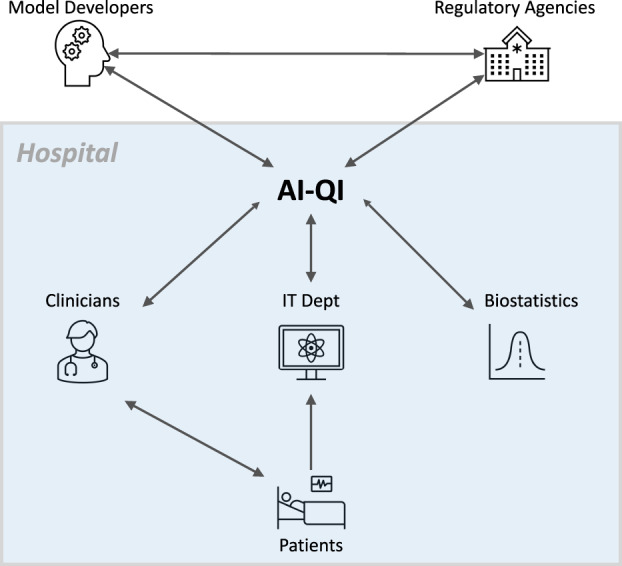
Machine learning (ML) and artificial intelligence (AI) algorithms have the potential to derive insights from clinical data and improve patient outcomes. However, these highly complex systems are sensitive to changes in the environment and liable to performance decay. Even after their successful integration into clinical practice, ML/AI algorithms should be continuously monitored and updated to ensure their long-term safety and effectiveness. To bring AI into maturity in clinical care, we advocate for the creation of hospital units responsible for quality assurance and improvement of these algorithms, which we refer to as “AI-QI” units. We discuss how tools that have long been used in hospital quality assurance and quality improvement can be adapted to monitor static ML algorithms. On the other hand, procedures for continual model updating are still nascent. We highlight key considerations when choosing between existing methods and opportunities for methodological innovation.
Overview
The claims and statistics of this paper haven’t been checked yet.
Free: it reads the open-access text and checks the first 5 claims that cite a source we can check. Create a free account to check every claim.
Integrity signals
Registry
Cites
Statistics
Figures
Verification
Claims the paper makes
The claims and statistics of this paper haven’t been checked yet.
Free: it reads the open-access text and checks the first 5 claims that cite a source we can check. Create a free account to check every claim.
Claims other papers make about this one
Each is checked against this paper’s own text: does it say what the citing paper says it does?
In the citing paper
“The establishment of a dedicated department within hospitals for algorithm quality control has been advocated [90].”
From Fairness of artificial intelligence in healthcare: review and recommendations (2024) · cites this paper as [90]
Self-check
Percentages, sums and reported differences re-computed from the paper’s own numbers.
The self-check needs the paper’s full text.
Citations
Cites
The Elements of Statistical Learning
Hastie, T., Tibshirani, R., & Friedman, J. (2009) · Springer Series in Statistics · doi:10.1007/978-0-387-84858-7 · Cited by 25,970
MIMIC-III, a freely accessible critical care database
Johnson, A. E. W., Pollard, T. J., Shen, L., Lehman, L.-W. H., Feng, M., Ghassemi, M., Moody, B., Szolovits, P., Anthony Celi, L., & Mark, R. G. (2016) · Scientific Data · doi:10.1038/sdata.2016.35 · Cited by 8,141 · cited 1×
“Although large publicly available datasets such as the Medical Information Mart for Intensive Care (MIMIC) database 102 are moving in the direction of releasing more accurate timestamps, random date shifts used for data de-identi fi cation have the unfortunate side effect of dampening temporal…”
MethodPAGE, E. S. (1954) · Biometrika · doi:10.1093/biomet/41.1-2.100 · Cited by 5,739 · cited 2×
“Commonly used control charts that fall in this category include Shewhart control charts, cumulative sum (CUSUM) control charts 35 , and exponentially weighted moving average (EWMA) control charts 31 .”
BackgroundMethodA guide to deep learning in healthcare
Esteva, A., Robicquet, A., Ramsundar, B., Kuleshov, V., DePristo, M., Chou, K., Cui, C., Corrado, G., Thrun, S., & Dean, J. (2019) · Nature Medicine · doi:10.1038/s41591-018-0316-z · Cited by 5,312
Causal Inference for Statistics, Social, and Biomedical Sciences: An Introduction
Imbens, G. W., & Rubin, D. B. (2015) · doi:10.1017/cbo9781139025751 · Cited by 4,210
Causal Diagrams for Epidemiologic Research
Greenland, S., Pearl, J., & Robins, J. M. (1999) · Epidemiology · doi:10.1097/00001648-199901000-00008 · Cited by 3,728
Hannun, A. Y., Rajpurkar, P., Haghpanahi, M., Tison, G. H., Bourn, C., Turakhia, M. P., & Ng, A. Y. (2019) · Nature Medicine · doi:10.1038/s41591-018-0268-3 · Cited by 3,148 · cited 1×
“The use of arti fi cial intelligence (AI) and machine learning (ML) in the clinical arena has developed tremendously over the past decades, with numerous examples in medical imaging, cardiology, and acute care 1 – 6 .”
BackgroundAir Pollution and Hospital Admissions for Heart Disease in Eight U.S. Counties
Schwartz, J. (1999) · Epidemiology · doi:10.1097/00001648-199901000-00005 · Cited by 3,038
A Kernel Method for the Two-Sample-Problem
Gretton, A., Borgwardt, K. M., Rasch, M., Schölkopf, B., & Smola, A. J. (2007) · Advances in Neural Information Processing Systems 19 · doi:10.7551/mitpress/7503.003.0069 · Cited by 2,167
Predicting good probabilities with supervised learning
Niculescu-Mizil, A., & Caruana, R. (2005) · Proceedings of the 22nd international conference on Machine learning - ICML '05 · doi:10.1145/1102351.1102430 · Cited by 1,884
Research works printed but not linked: 17
- Subbaswamy, A., Schulam, P. & Saria, S. Preventing failures due to dataset shift: Learning predictive models that transport. In: Proc. Machine Learning Research Vol. 89 (eds. Chaudhuri, K. & Sugiyama, M.) 3118–3127 (PMLR, 2019).
- Schölkopf, B. et al. On causal and anticausal learning. In: Proc. 29th International Coference on International Conference on Machine Learning, ICML’12 459–466 (Omnipress, 2012).
- Montgomery, D. Introduction to Statistical Quality Control (Wiley, 2020).
- Boracchi, G., Carrera, D., Cervellera, C. & Macciò, D. QuantTree: Histograms for change detection in multivariate data streams. In: Proc. 35th International Conference on Machine Learning Vol. 80 (eds. Dy, J. & Krause, A.) 639–648 (PMLR, 2018).
- Rabanser, S., Günnemann, S. & Lipton, Z. Failing Loudly: An Empirical Study of Methods for Detecting Dataset Shift. In: Advances in Neural Information Processing Systems Vol. 32 (eds. Wallach, H., Larochelle, H., Beygelzimer, A., d’Alché-Buc, F., Fox, E. & Garnett, R.) 1396–1408 https://proceedings.neurips.cc/paper/2019/file/846c260d715e5b854ffad5f70a516c88-Paper.pdf (Curran Associates, Inc., 2019).
- Harchaoui, Z., Moulines, E. & Bach, F. Kernel change-point analysis. In Advances in Neural Information Processing Systems Vol. 21 (eds. Koller, D., Schuurmans, D., Bengio, Y. & Bottou, L.) (Curran Associates, Inc., 2009).
- Perdomo, J., Zrnic, T., Mendler-Dünner, C. & Hardt, M. Performative prediction. In Proc. of the 37th International Conference on Machine Learning Vol. 119 (eds. Daumé. H. III & Singh, A.) 7599–7609 http://proceedings.mlr.press/v119/perdomo20a/perdomo20a.pdf (PMLR, 2020).
- Ensign, D., Friedler, S. A., Neville, S., Scheidegger, C. & Venkatasubramanian, S. Runaway feedback loops in predictive policing. In: Accountability and Transparency Vol. 81 (eds. Friedler, S. A. & Wilson, C.) 160–171 (PMLR, 2018).
- Hashimoto, T., Srivastava, M., Namkoong, H. & Liang, P. Fairness without demographics in repeated loss minimization. In Proc. 35th International Conference on Machine Learning Vol. 80 (eds. Dy, J. & Krause, A.) 1929–1938 (PMLR, 2018).
- Platt J Probabilistic outputs for support vector machines and comparisons to regularized likelihood methods Adv. Large Margin Classifiers 1999 10 61 74
- Guo C Pleiss G Sun Y Weinberger KQ On calibration of modern neural networks Int. Conf. Mach. Learning 2017 70 1321 1330
- Steyerberg, E. W. Clinical Prediction Models: A Practical Approach to Development, Validation, and Updating (Springer, 2009)..
- Vokinger KN Feuerriegel S Kesselheim AS Continual learning in medical devices: FDA’s action plan and beyond Lancet Digit Health 2021 3 e337 e338 10.1016/S2589-7500(21)00076-5 33933404 · DOI · Paper page
- Harvey, H. & Cabitza, F. Algorithms are the new drugs? Reflections for a culture of impact assessment and vigilance. In: IADIS International Conference ICT, Society and Human Beings 2018 (eds. Macedo, M. & Kommers, P.) (part of MCCSIS 2018) (2018).
- Zeileis A Leisch F Hornik K Kleiber C strucchange: an r package for testing for structural change in linear regression models J. Statistical Softw. Articles 2002 7 1 38
- Bifet A Holmes G Kirkby R Pfahringer B MOA: massive online analysis J. Mach. Learn. Res. 2010 11 1601 1604
- Montiel J Read J Bifet A Abdessalem T Scikit-multiflow: a multi-output streaming framework J. Mach. Learn. Res. 2018 19 1 5
Cited by
Items 301–400 of 503
From Evidence to Recommendations With Large Language Models: A Feasibility Study
Zhao, W., Xia, D., Ye, Z., Lai, H., Sun, M., Huang, J., Liu, J., Liu, J., & Ge, L. (2025) · Journal of Evidence-Based Medicine · doi:10.1111/jebm.70067 · Cited by 1
“Furthermore, AI can discern subtle distinctions within integrated clinical data [30–33], identifying information clinicians might overlook and structuring it for output.”
Obafemi-Ajayi, T., Bright, T. J., Wong, E., Wunsch, D. C., Peckham, J., & Moore, J. H. (2025) · International Joint Conference on Neural Networks (IJCNN) · doi:10.1109/ijcnn64981.2025.11227432 · Cited by 1
“Establishment of continuous monitoring protocols is critical to uphold system safety and effectiveness, as outlined in [41].”
A perspective on foundation models in intensive care medicine
Harris, C., Schmidgall, S., Rapuri, S., Hwang, K., Moor, M., & Stevens, R. D. (2026) · Artificial Intelligence in Medicine · doi:10.1016/j.artmed.2026.103515 · Cited by 2
Bouderhem, R. (2026) · Springer eBooks · doi:10.1007/978-981-96-7448-0_29-1 · Cited by 2
Applications of Decision Tree in Healthcare: Advancements and Challenges: A Review
Doelakeh, E. S., Narad, S., Chakole, V., Akpabio, E. I., & Apetorgbor, M. (2026) · Lecture notes in networks and systems · doi:10.1007/978-981-95-2878-3_48 · Cited by 1
Angelia, C., Renata, R., & Samuel, S. (2026) · Perinatal Journal · doi:10.57239/prn.26.0342006 · Cited by 2
The Coming Age of Interdependence
Epner, P. L., & Kanter, M. H. (2026) · The Journal of Applied Laboratory Medicine · doi:10.1093/jalm/jfag014 · Cited by 1
Zhou, F., Wu, X., Yang, Y., Cao, Y., Cheng, B., & Wang, S. (2026) · Discover Oncology · doi:10.1007/s12672-026-04889-2 · Cited by 1
“This will require ongoing collaboration among bioinformaticians, clinicians, and molecular biologists to refine the model, improve its transparency, and ensure its relevance in a clinical context [28].”
Kaushik, R., & Rapaka, R. (2026) · Discoveries · doi:10.15190/d.2026.3 · Cited by 1
“Moreover, error logs and feedback systems (which include clinician feedback) offer further opportunities for improvement 130 .”
Four Aspirations for Evaluating AI-Infused Technologies: A Narrative Review
Morey, D. A., Jalaeian, M., Reynolds, M. E., McGeorge, N., Oldham, H. K., & Rayo, M. F. (2026) · Journal of Cognitive Engineering and Decision Making · doi:10.1177/15553434261443032 · Cited by 1
“The ability of online algorithms to continually change ampli fi es the need for continual monitoring, which is a recognized requirement even for of fl ine algorithms in safety-critical settings (Feng et al., 2022).”
Eixenberger, C., & O'Reilly-Shah, V. (2026) · Springer eBooks · doi:10.1007/978-3-032-18058-2_39 · Cited by 1
Ahmed, M. M., Okesanya, O. J., Othman, Z. K., Adebayo, U. O., Oso, T. A., & Lucero‐Prisno, D. E. (2026) · Informatics and Health · doi:10.1016/j.infoh.2026.03.002 · Cited by 1
Bisset, B., Kainkaryam, V., Marhamati, S. H., Moradi, A., Amin, R., & Houman, J. (2026) · Journal of Medical Internet Research · doi:10.2196/81314 · Cited by 1
“…assurance, patient monitoring agents can leverage ongoing changes in patient data from electronic health records, wearable devices, and digital sources to recognize deviations in expected outcomes, poor adherence to treatment recommendations, safety issues, and support quality improvement [90,91].”
Poltronieri, T. S., da Silva, B. R., Bennett, J. P., Heymsfield, S. B., Shepherd, J., & Prado, C. M. M. (2026) · Nutrition · doi:10.1016/j.nut.2026.113299 · Cited by 1
Guideline for secondary use of health records within Norwegian and EU regulatory frameworks
Pant, D., Røst, T. B., Krüger, H., Toussaint, P. J., & Øystein Nytrø, A. (2026) · npj Digital Medicine · doi:10.1038/s41746-026-02784-2 · Cited by 1
“35 , 37,38, 39).”
InfluentialEthical and Legal Implications of Implementing AI in Gastrointestinal Endoscopy
El-Sayed, A., Geelani, S. B., El‐Sayed, S., Choudry, H. A., Lovat, L. B., & Ahmad, O. F. (2026) · Digestive Endoscopy · doi:10.1111/den.70198 · Cited by 1
“Continuous real-world monitoring, coupled with structured reporting of adverse events and near misses, can identify performance issues, support timely model updates, and help ensure safe implementation of AI in endoscopy [29].”
Gerbaud, A. F., de la Guardia, M. E. B., Booth, S. C., Adams, L., Cox, M. D., Hunsinger, K., Tan, N., Gulden, M., Menser, T. L., Reichard, R., et al. (2026) · Mayo Clinic Proceedings Innovations Quality & Outcomes · doi:10.1016/j.mayocpiqo.2026.100725 · Cited by 1
“70 There are many areas in the process where automation-related activities can be effectively implemented.”
The HALO Model: A Learning Health System Framework for Artificial Intelligence
Zai, A., Adibuzzaman, M., McManus, D. D., & Walkey, A. J. (2026) · Learning Health Systems · doi:10.1002/lrh2.70100 · Cited by 1
One scan, two answers: RAPID vs Brainomix agreement in thrombectomy patients
McHugh, P., Boylan, E., Looby, S. T., Farrell, T., Griffin, E., Bruen, R., Briody, H., Brosnan, C., Schulze-Zachau, V., Fearon, P. A., et al. (2026) · Journal of NeuroInterventional Surgery · doi:10.1136/jnis-2026-025132 · Cited by 1
“There is limited data directly comparing outputs between the platforms in the same patients, 5–7 and prior validation studies typically compared one platform against an imaging gold-standard (e.g. 11 We sought to directly compare CTP outputs from RAPID and Brainomix in a large consecutive…”
Chen, C., Huang, E. P., Sung, C., Fan, C., Huang, C., Huang, C.-H., Huang, S., Huang, C., Lee, A.-F., Chen, Y., et al. (2026) · Journal of the American Heart Association · doi:10.1161/jaha.125.047815 · Cited by 1
“32 Finally, clinician trust, interpretability, and institutional support will be essential to promote adoption and ensure that algorithmic recommendations complement, rather than replace, clinical judgment.”
Self-adaptive AI in Clinical Decision Support: A Systematic Review
Wendakoon, K., & Tripathi, N. (2026) · Communications in computer and information science · doi:10.1007/978-3-032-28819-6_41 · Cited by 1
Zhu, M., Luo, B., Wu, X., Zhao, Y., Wang, S., Hu, Y., Liu, R., Zhang, C., Li, J., Wang, H., et al. (2026) · Applied Clinical Informatics · doi:10.1055/a-2921-5990
Deep Learning-Enabled Cross-Device Calibration for Smartphone-Based Optical Biosensing: A Review
Zuo, H.-M., Geng, Q., Li, H.-Y., Tao, M.-X., Feng, Y.-X., & Geng, Z.-X. (2026) · IEEE Sensors Journal · doi:10.1109/jsen.2026.3716330
“…should be supported by targeted regression tests against reference materials and field-facing monitoring of invalid-rate, bias, threshold stability, and version-specific performance so that calibrated readouts remain interpretable over time [74], [105], [111], [112], [123], [124], [125], [126].”
Fosset, M., Pensier, J., Jung, B., Siddiqi, A., Mamdani, M. M., & Celi, L. A. (2026) · PLOS Digital Health · doi:10.1371/journal.pdig.0001621 · Cited by 2
“Existing frameworks address these activities separately: quality-improvement frameworks specify monitoring protocols without defining when a formal trial should follow [14], while reporting guidelines govern trial conduct without linking it to the operational signals that motivated the evaluation.”
Self-citationErkayıran, O. (2026) · Bandırma Onyedi Eylül Üniversitesi Sağlık Bilimleri ve Araştırmaları Dergisi · doi:10.46413/boneyusbad.1755590 · Cited by 1
Cabrera-Rodríguez, R., Reyes-Castañeda, I., Lorenzo-Sánchez, I., Valenzuela-Fernández, A., & Trujillo‐González, R. (2026) · New Microbes and New Infections · doi:10.1016/j.nmni.2026.101843 · Cited by 1
Dzokoto, S. K., Marrah, S. A., Computer, S. T. R., Arhin, K. M., Dzokoto, F. K., Nawaz, S., & Arisiya, E. (2026) · Journal of Scientific Reports · doi:10.58970/jsr.1238 · Cited by 1
Li, J., Xiao, L., Qu, X., Du, L., Gong, T., Yu, Y., Li, Y., 谢鹏飞, Chu, G., Li, H., et al. (2026) · Radiology · doi:10.1148/radiol.253579 · Cited by 1
Machine Learning Observability in Practice
Leest, J., Gerostathopoulos, I., Lago, P., & Raibulet, C. (2026) · IEEE/ACM International Conference on AI Engineering – Software Engineering for AI (CAIN) · doi:10.1145/3793653.3793771 · Cited by 1
Italian Physicians' Trust Towards Artificial Intelligence: a Multicentric Cross-Sectional Study
Nicolò, V. D., & Torre, D. L. (2024) · ASU International Conference in Emerging Technologies for Sustainability and Intelligent Systems (ICETSIS) · doi:10.1109/icetsis61505.2024.10459557 · Cited by 2
Can Machine Learning Personalize Cardiovascular Therapy in Sepsis?
Catling, F. J. R., Nagendran, M., Festor, P., Bien, Z., Harris, S. K., Faisal, A. A., Gordon, A. C., & Komorowski, M. (2024) · Critical Care Explorations · doi:10.1097/cce.0000000000001087 · Cited by 3
“The unforeseen poor performance of current sepsis decision support systems (54) emphasizes the importance of post-deployment surveillance (55), including surveillance of how system predictions are operationalized, which may change after initial trials.”
BackgroundArtificial Intelligence in Cutaneous Lesions: Where do we Stand and What is Next?
(2024) · Frontiers research topics · doi:10.3389/978-2-8325-4911-7 · Cited by 2
Artificial Intelligence and Machine Learning Model for Healthcare
Trivedi, H. K., Prabhu, S., Prabhu, P., & Prabhu, A. (2023) · IEEE Technology & Engineering Management Conference - Asia Pacific (TEMSCON-ASPAC) · doi:10.1109/temscon-aspac59527.2023.10531300 · Cited by 1
“Because of the focus on efficiency, the strategy is scalable and productive, allowing providers to lower healthcare expenses and enhance clinical health outcomes for patients [11].”
Brosula, R. J., Corbin, C. K., & Chen, J. H. (2024) · PubMed Central · Cited by 5
-, S. D., Khairari, A., Thatoi, P., Selvarathinam, A. L., & Rout, S. S. (2024) · International Journal For Multidisciplinary Research · doi:10.36948/ijfmr.2024.v06i05.27789 · Cited by 2
“AI algorithms [33] help doctors make more informed decisions by ensuring speedier diagnoses and treatment planning.”
BackgroundTemporal Signal Intelligence for Pervasive ICU Sensing and Continuous Patient Monitoring
Nakamura, H., Kato, Y., & El-Kholy, A. (2024) · Journal of Artificial Intelligence for Healthcare Systems · doi:10.68159/t351403748 · Cited by 1
A Real-Time Hospital Capacity Intelligence Framework for Operational Resilience
Ramirez, C., Torres, E., Ortega, P., Mendes, S., & Costa, L. (2025) · Journal of Artificial Intelligence for Healthcare Systems · doi:10.68159/z634369903 · Cited by 1
Bringing artificial intelligence safely to the clinics: hope is not a strategy
Andersen, E. S. (2024) · JBI Evidence Synthesis · doi:10.11124/jbies-24-00501 · Cited by 1
Quality Control for Multi-Analyte Calculations
Butler, W. J., & Herman, D. S. (2025) · The Journal of Applied Laboratory Medicine · doi:10.1093/jalm/jfae147 · Cited by 1
Becker, K., Oppelt, M. P., Zech, T. S., Seyferth, M., Cabon, S., Mišković, V., Cimrák, I., Kozubek, M., D’Avenio, G., Campioni, I., et al. (2026) · arXiv (Cornell University) · doi:10.48550/arxiv.2601.22702 · Cited by 1
Rodríguez, A. H., Gómez, J., Franquet, Á., Trefler, S., Díaz, E., Solé‐Violán, J., Zaragoza, R., Papiol, E., Suberviola, B., Vallverdú, M., et al. (2023) · Research Square · doi:10.21203/rs.3.rs-2598565/v1
Weaver, J. K., Martin-Olenski, M., Logan, J., Broms, R., Antony, M. B., Batavia, J. V., Weiß, D., Long, C., Smith, A. L., Zderic, S. A., et al. (2023) · The Journal of Urology · doi:10.1097/ju.0000000000003267.03
Todd, J., & Gepp, A. (2023) · SSRN Electronic Journal · doi:10.2139/ssrn.4524699
Fernández-Narro, D., Ferri, P., Gutiérrez‐Sacristán, A., Garcia-Gomez, J. M., & Sáez, C. (2024) · SSRN Electronic Journal · doi:10.2139/ssrn.4777345
Monitoring of Artificial Intelligence in Hospitals
Ranjbar, A., & Ravn, J. (2024) · Studies in health technology and informatics · doi:10.3233/shti240506
Hypodermoclysis As a Care Tool: Algorithm Construction and Validation
Barbosa, J. V. S., Toscano, M. L. S., Araújo, D. A. D. S., Moreira, M. M. C., da Nóbrega, W. G., & Martins, Q. C. S. (2024) · Aquichan · doi:10.5294/aqui.2024.24.3.5
“Its construction allowed to summarize the main available evidence, and from that, base the dissemination of knowledge about the technique, in addition to contributing to decision making and, consequently, more qualified nursing care (3,15).”
CLIAS, Esteban, S., CLIAS, Pace, R. A., CLIAS, Pennini, V. A., CLIAS, Santoro, A., CLIAS, Rubinstein, A. L., et al. (2024) · The Global Health Network eBooks · doi:10.48060/tghn.134
Vijay, B., Swarup, L., Gandhi, A., Mehta, S., Kaushik, N., & Choudhury, S. (2024) · Seminars in Medical Writing and Education · doi:10.56294/mw2024502
Zinchenko, V. V., Владзимирский, А. В., & Арзамасов, К. М. (2025) · Modelirovanie, optimizaciâ i informacionnye tehnologii. · doi:10.26102/2310-6018/2025.49.2.016
Abebe, B. K., Guo, J., Jilo, D. D., Wang, J., Yu, S., Liu, H., Cheng, G., & Zan, L. (2025) · Mammalian Genome · doi:10.1007/s00335-025-10129-9
“Furthermore, AI improves quality control measures by incorporating advanced sensor technologies and imaging techniques to identify carcinogenic compounds during the processing phase (Feng et al. 2022; Li et al. 2020b).”
González, H., Arizmendi, C., & Giraldo, B. F. (2025) · Waste as a resource · doi:10.1007/978-3-031-84359-4_20
van Mossel, S., Bijlstra, O. D., van Delft, F. A., Boekestijn, B., Burgmans, M. C., Hendriks, P., Kapiteijn, E., Mieog, J. S. D., van Meerten, E. L. V. P., Rietbergen, D. D. D., et al. (2025) · European Journal of Radiology · doi:10.1016/j.ejrad.2025.112277
Vo, M., NGUYEN, H. D., & Nguyen, D. (2025) · Journal Health and Technology - JHT · doi:10.71328/jht.v6i1.64
“These recommendations – such as hyper-customized interventions (Li et al., 2024), real-time alerts (Feng et al., 2022), and precision lifestyle guidance (Porter; Teisberg, 2006).”
Deep Learning-Based Techniques for Detection of Cancer
Sompura, D. U., & Tripathy, B. K. (2025) · Springer eBooks · doi:10.1007/978-981-96-8176-1_17 · Cited by 1
Pavić, O., Geroski, T., Dašić, L., & Filipović, N. (2025) · Lecture notes in networks and systems · doi:10.1007/978-3-031-99201-8_26
Autonomous medical diagnosis: How to balance accuracy and accountability?
Gaur, L., & Abraham, A. (2025) · Elsevier eBooks · doi:10.1016/b978-0-443-33124-4.00007-2
Integrating Generative AI into Clinical Practice
Quinn, C. E. (2025) · Springer eBooks · doi:10.1007/978-3-032-01613-3_11
Advancing AI in healthcare: three strategic roles for quality and safety leaders
Rakover, J., Renton, M., Barker, P., & Kantor, G. S. A. (2025) · BMJ Quality & Safety · doi:10.1136/bmjqs-2025-019050
“21 Such work should include collaboration with administrators, IT leaders, hospital AI experts and clinicians, given the relevance of system and process level factors to performance.”
AI-Driven Quality Control in the Built Environment: A Machine Learning and Expert System Approach
Stephen, S. S., & Aigbavboa, C. O. (2025) · Lecture notes in networks and systems · doi:10.1007/978-3-032-07989-3_28
Artificial intelligence in quality control and product development
AYDINOCAK, E. U. (2025) · Elsevier eBooks · doi:10.1016/b978-0-443-34076-5.00004-3
Explainable Concept Drift Detection: A SHAP-Centric Approach for Identifying Evolving Distributions
Stodt, J., Reich, C., & Ziekow, H. (2025) · Lecture notes in networks and systems · doi:10.1007/978-3-032-07986-2_32
Equipping mathematical models for hospital dynamics using information theory
Balch, J. A., Brandberg, J. G., Andris, R. T., Mesner, I. G., Nametz, D. C., Megjhani, M., Ruppert, M. M., Hu, D., Clark, M., Shickel, B., et al. (2025) · npj Digital Medicine · doi:10.1038/s41746-025-02013-2
Will Machines Take Over? Algorithms for Human-Machine Collaborative Decision Making in HealthcarePreprint
Ahsen, M. E., Ayvaci, M., & Mookerjee, R. V. (2025) · SSRN Electronic Journal · doi:10.2139/ssrn.5744362
XAI-MRI: A Multilayered Framework for Explainable AI driven Medical Risk Identification
Akre, V. L., AlHajri, L., & Raman, R. (2025) · International Conference on Innovations in Intelligent Systems and Applications (INISTA) · doi:10.1109/inista68122.2025.11249512
“AI models that are like a “black box”; meaning you cannot see inside them; thereby reducing trust and hence limiting their use in real hospitals [6].”
Artificial intelligence in antimicrobial stewardship
Mondal, H., Mondal, S., & Bhattacharjee, S. (2025) · Elsevier eBooks · doi:10.1016/b978-0-443-33702-4.00012-8
Leveraging artificial intelligence to support the application of quality improvement in healthcare
Sorlie, C., Preston, C., Aurelio, M. G., Glynn, E., Miller, L., Purani, A., Chitewe, A., McAllister, S., Moore, J., & Shah, A. (2025) · British Journal of Healthcare Management · doi:10.12968/bjhc.2025.0027
Zhu, L., Rong, Y., Yu, N. Y., Holmes, J., Vargas, C., James, S. E., Lu, S., Rwigema, J. M., & Chen, Q. (2025) · Physics and Imaging in Radiation Oncology · doi:10.1016/j.phro.2025.100886
“It is necessary to establish a quality monitoring system capable of detecting out-of-distribution out-liers [14] to alert clinicians to potential issues in clinically implemented artificial intelligence (AI) models.”
Multimorbidity measurement strategies for predicting hospital visits
Neves, B. D., Moreira, J. M., Gonçalves, S., Cerejo, J., Mota, I., Silva, N. A., Leite, F., & Silva, M. J. (2025) · BMC Health Services Research · doi:10.1186/s12913-025-13817-z
Chung, H. W., Chen, J.-C., Chen, H.-L., Ko, F.-Y., & Ho, S.-Y. (2024) · Figshare · doi:10.6084/m9.figshare.25231373
Chung, H. W., Chen, J.-C., Chen, H.-L., Ko, F.-Y., & Ho, S.-Y. (2024) · Figshare · doi:10.6084/m9.figshare.26681464
Chung, H. W., Chen, J.-C., Chen, H.-L., Ko, F.-Y., & Ho, S.-Y. (2024) · Figshare · doi:10.6084/m9.figshare.25231144
Chung, H. W., Chen, J.-C., Chen, H.-L., Ko, F.-Y., & Ho, S.-Y. (2024) · Figshare · doi:10.6084/m9.figshare.26681461
Melo, J. A. G. D. M. E. C. E. (2024) · Portuguese National Funding Agency for Science, Research and Technology (RCAAP Project by FCT)
Moron Bolangger, O. N. (2022) · LA Referencia (Red Federada de Repositorios Institucionales de Publicaciones Científicas)
Ethical and Legal Considerations
Pham, T. D., Holmes, S., Chatzopoulou, D., & Coulthard, P. (2026) · Springer eBooks · doi:10.1007/978-3-032-11531-7_13
AI Governance and Implementation in Radiography Practice
Malamateniou, C., Kumar, A., Lip, G., Pierce, R. L., & Kyratsis, Y. (2026) · Springer eBooks · doi:10.1007/978-3-032-05080-9_4
Borges, J. (2026) · Research Square · doi:10.21203/rs.3.rs-8651972/v2
AI technologies for precision and personalized medicine
Kim, S., & Lee, J. W. (2026) · Elsevier eBooks · doi:10.1016/b978-0-443-34059-8.00009-9
Tu, X., Shi, C., Qian, P., & Wang, L. (2025) · doi:10.2196/preprints.79922
TEORI DAN IMPLEMENTASI SUMBER DAYA MANUSIA Artificial Intelligence dalam Rekrutmen dan Seleksi SDM
Mayasari, N., Suhara, A. (., Azis, S. A. (., Azhari, M. (., Mauldfi, S. A. H. (., Nugraha, A. M. (. )., Feriandy, F. (., Saragih, B. E. (., Damayanti, W. (., & Maqfirah, P. A. (. (2025) · Neliti · Cited by 3
Satisfying Model Validity for Robust Clinical Machine Learning for Time-Series
Nestor, B. (2023) · TSpace (University of Toronto) · Cited by 1
Colacci, M. (2025) · TSpace (University of Toronto)
Ethical and Regulatory Considerations in AI-Driven Healthcare
Sah, A. K., Kumar, R., Patel, S., Mishra, P. S., Doshi, H., & Mishra, R. (2026) · Advances in computational intelligence and robotics book series · doi:10.4018/979-8-3373-3121-8.ch009
Artificial intelligence in primary care: the health equity and levelling-down objection
Armitage, R. C. (2026) · The Lancet Primary Care · doi:10.1016/j.lanprc.2026.100141
Ai-Powered Disease Detection and Root Cause Analysis in Healthcare
Parameswari, M., Mohanraj, V., Ramya, D., Saranya, D. S., & Ravikumar, S. (2026) · International Conference on Intelligent Data Communication Technologies and Internet of Things (IDCIoT) · doi:10.1109/idciot67589.2026.11455634
“Studies relating to socio-technical issues, like Apell and Eriksson [3] discussing the industry-wide obstacles or gender-related biases in pharmaceutical reviews by [4], highlight the necessity of a just system and administrative models.”
Will machines take over? Algorithms for human–machine collaborative decision making in healthcare
Ahsen, M. E., Mookerjee, R. V., & Ayvaci, M. (2026) · Production and Operations Management · doi:10.1177/10591478261443194 · Cited by 2
“However, results vary widely across datasets, populations, and clinical environments (e.g., Goh et al., 2025; Rajpurkar and Lungren, 2023), and performance may degrade outside the training domain (Feng et al., 2022).”
Adaptation des cartes de contrôle au suivi des variations temporelles de résultats en chirurgie
Cordier, Q. (2025) · theses.fr (ABES) · doi:10.70675/55cfc5e0z0390z4913za022zb46235605089
A Combination of Human Wisdom and Artificial Intelligence will Win the Game
He, L., Harold, S. F. (., & Frydrysiak-Brzozowska, A. (2026) · Newborn · doi:10.5005/newborn-5-1-iv
Mian, Q., Guillen, P. A. V., Nooruddin, M., Alami, L., Vintimilla, B., Castillo, J., Satea, S. R. S. A. M., & Shafeea, M. S. (2026) · IntechOpen eBooks · doi:10.5772/intechopen.1015203
Millar, A. S., Roman, C., Gouripeddi, R., & Facelli, J. C. (2026) · medRxiv · doi:10.64898/2026.05.12.26353057
“…in real-world environments characterized by heterogeneous patient populations, varying imaging protocols, and evolving disease presentations [3], [4], [5], [6], [7], [8] Translational efforts to bridge the development-to-deployment gap are particularly challenged in low-prevalence and…”
Nolin-Lapalme, A., Tastet, O., Sowa, A., Delfrate, J., Adib, I. E., Morisset, J., Ahuja, R., Banerjee, R., Lessard, M.-G., Vadeboncœur, A., et al. (2026) · Journal of Electrocardiology · doi:10.1016/j.jelectrocard.2026.154359 · Cited by 2
Harrison, C. A., Wu, M., White, O. A., Hopkinson, G., Hughes, J., Robertson, S., Scurr, E. D., Shur, J. D., Castagnoli, F., Charles‐Edwards, G., et al. (2026) · medRxiv · doi:10.64898/2026.05.18.26353474
A Deployment Audit of Release-Side Risk in Conformal Triage under Prevalence ShiftPreprint
Li, C., Liu, X., Zhang, H., Peng, H., Ruan, Y., Ma, H., Miao, C., Zhou, Q., Qi, X., & Yu, P. S. (2026) · arXiv (Cornell University) · doi:10.48550/arxiv.2605.20956
“…deployment populations across sites, time periods, acquisition protocols, and disease prevalence makes this audit a practical necessity rather than a theoretical concern (Moreno-Torres et al., 2012; Guo et al., 2017; Ovadia et al., 2019; Wiens et al., 2019; Feng et al., 2022; Godau et al., 2023).”
Drift isn’t a bug, it’s the work: post-deployment surveillance for clinical artificial intelligence
Syailendra, E. A. (2026) · BMJ Digital Health & AI · doi:10.1136/bmjdh-2026-000111
Ethical and Legal Implications in Medical AI
Khullar, S., Ahmed, I., Kapoor, S. K., Joshi, M. L., & Arora, A. (2026) · Advances in computational intelligence and robotics book series · doi:10.4018/979-8-2600-2173-6.ch005
Bobadilla, A. R., Ocampo, S. A. B., & Ocampo, I. C. B. (2026) · Cureus · doi:10.7759/cureus.110205
“In addition, models may degrade over time because of changes in patient populations, clinical practice, information systems, and data quality; therefore, they require longitudinal surveillance, controlled updating, institutional quality improvement processes, and responsible governance [8,9].”
From Integrated Care to Learning Systems
Tsitiridis, A., Perakis, Κ., Antoniades, A., & Manias, G. (2026) · Healthcare · doi:10.3390/healthcare14121612
“…new field: it integrates established adjacent strands from the learning health system literature [26–28], the clinical AI lifecycle and MLOps literatures [29,30], the post-deployment monitoring and dynamic AI literatures [31–33], and the algorithmic stewardship and oversight literatures [25,34–36].”
Varadarajan, G. K., Selvaraj, D., Vanamamaley, S. R., Seerangan, K., Rajendhiran, S., Yadav, R. K., & Kumar, G. (2026) · Scientific Reports · doi:10.1038/s41598-026-56254-6
Adesuyi, A., Singh, S., Patel, V., & Saravanan, P. (2026) · JMIR AI · doi:10.2196/93900
“Information governance and procurement-related domains had relatively higher completeness, whereas workforce readiness, local validation, and monitoring/stop-rule domains were less complete at the point of go-live or pilot initiation [4,8].”
Metadata
- Authors
- Feng, J., Phillips, R. V., Malenica, I., Bishara, A., Hubbard, A. E., Celi, L. A., & Pirracchio, R.
- Affiliations
- University of California, San Francisco (US)
- University of California, Berkeley (US)
- Beth Israel Deaconess Medical Center (US)
- Corresponding author
- Feng, Jean
- ORCID
- Venue
- npj Digital Medicine
- Published
- 2022-05-31
- Volume
- 5
- Issue
- 1
- Pages
- 66-66
- ISSN
- 2398-6352 (ISSN-L)
- PMC
- PMC9156743
- OpenAlex
- W4281681378
- Cited by
- 423
- References
- 88
- Citations by year
- 2026: 128 · 2025: 131 · 2024: 110 · 2023: 41 · 2022: 13
- FWCI
- 5.06
- Type
- journal article
- Language
- en
- Open access
- gold
- doi.org
- Licence
- cc-by
- creativecommons.org/licenses/by/4.0 (tdm)
- creativecommons.org/licenses/by/4.0 (vor)
- Locations
- npj Digital Medicine (publishedVersion, cc-by)
- PubMed Central (publishedVersion, cc-by)
- PubMed (publishedVersion)
- DOAJ (DOAJ: Directory of Open Access Journals) (submittedVersion, cc-by-sa)
- eScholarship (California Digital Library) (submittedVersion, cc-by)
- Funders
- Foundation for Anesthesia Education and Research
- U.S. Department of Health & Human Services | NIH | National Institute of Biomedical Imaging and Bioengineering (R01EB017205)
- Topics
- Health Sciences › Medicine › Health Informatics › Artificial Intelligence in Healthcare and Education
- Physical Sciences › Computer Science › Artificial Intelligence › Machine Learning in Healthcare
- Physical Sciences › Computer Science › Artificial Intelligence › Ethics and Social Impacts of AI
- Keywords
- artificial intelligence in healthcare, machine learning algorithms, performance degradation, hospital quality improvement
About these checks
Registry, retraction, Cites and statistics results are computed, not judged, with one exception: a printed reference that no index lists is read once by a model before it counts as a citation error. Claims are extracted by a model and kept only when their quote appears verbatim in the text; each cited source is then checked, with a model’s help, for whether it says what the claim relies on. Those verdicts can be wrong — read the claim’s quote and the cited source before relying on one.
Statistics and arithmetic are recomputed, not judged.
Confidence bands are shown only for fields calibrated on our annotated test set. None is calibrated yet, so no band is shown.
What counts as a claim ›How we measure confidence ›How we check this ›
Are you an author, or do you see a problem with this page? Request a review
Data sources
Bibliographic data: Semantic Scholar, OpenAlex, Crossref.
Contains information from the Semantic Scholar Academic Graph Datasets, made available under the ODC Attribution License (ODC-BY 1.0).
Semantic Scholar’s data is described in: Kinney, R., et al. (2023). The Semantic Scholar Open Data Platform. arXiv:2301.10140.
