

Clinical artificial intelligence quality improvement: towards continual monitoring and updating of AI algorithms in healthcare
Open accessThe DOI matches its Crossref record; 89 of the 89 references it cites were found in a registry or an index.
Abstract
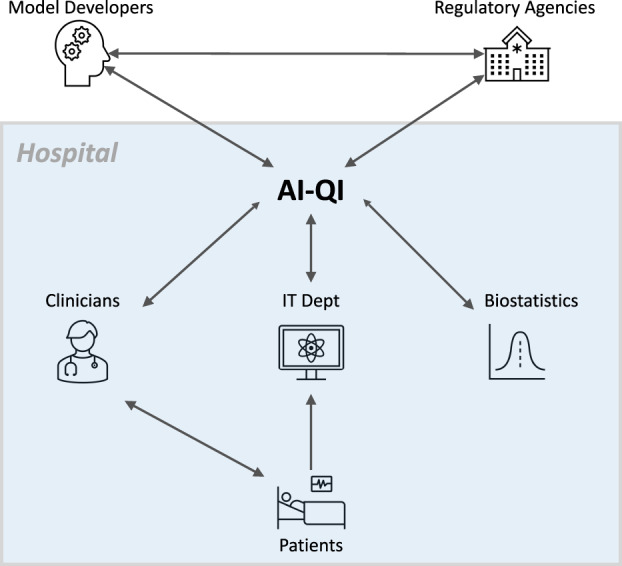
Machine learning (ML) and artificial intelligence (AI) algorithms have the potential to derive insights from clinical data and improve patient outcomes. However, these highly complex systems are sensitive to changes in the environment and liable to performance decay. Even after their successful integration into clinical practice, ML/AI algorithms should be continuously monitored and updated to ensure their long-term safety and effectiveness. To bring AI into maturity in clinical care, we advocate for the creation of hospital units responsible for quality assurance and improvement of these algorithms, which we refer to as “AI-QI” units. We discuss how tools that have long been used in hospital quality assurance and quality improvement can be adapted to monitor static ML algorithms. On the other hand, procedures for continual model updating are still nascent. We highlight key considerations when choosing between existing methods and opportunities for methodological innovation.
Overview
The claims and statistics of this paper haven’t been checked yet.
Free: it reads the open-access text and checks the first 5 claims that cite a source we can check. Create a free account to check every claim.
Integrity signals
Registry
Cites
Statistics
Figures
Verification
Claims the paper makes
The claims and statistics of this paper haven’t been checked yet.
Free: it reads the open-access text and checks the first 5 claims that cite a source we can check. Create a free account to check every claim.
Claims other papers make about this one
Each is checked against this paper’s own text: does it say what the citing paper says it does?
In the citing paper
“The establishment of a dedicated department within hospitals for algorithm quality control has been advocated [90].”
From Fairness of artificial intelligence in healthcare: review and recommendations (2024) · cites this paper as [90]
Self-check
Percentages, sums and reported differences re-computed from the paper’s own numbers.
The self-check needs the paper’s full text.
Citations
Cites
The Elements of Statistical Learning
Hastie, T., Tibshirani, R., & Friedman, J. (2009) · Springer Series in Statistics · doi:10.1007/978-0-387-84858-7 · Cited by 25,970
MIMIC-III, a freely accessible critical care database
Johnson, A. E. W., Pollard, T. J., Shen, L., Lehman, L.-W. H., Feng, M., Ghassemi, M., Moody, B., Szolovits, P., Anthony Celi, L., & Mark, R. G. (2016) · Scientific Data · doi:10.1038/sdata.2016.35 · Cited by 8,141 · cited 1×
“Although large publicly available datasets such as the Medical Information Mart for Intensive Care (MIMIC) database 102 are moving in the direction of releasing more accurate timestamps, random date shifts used for data de-identi fi cation have the unfortunate side effect of dampening temporal…”
MethodPAGE, E. S. (1954) · Biometrika · doi:10.1093/biomet/41.1-2.100 · Cited by 5,739 · cited 2×
“Commonly used control charts that fall in this category include Shewhart control charts, cumulative sum (CUSUM) control charts 35 , and exponentially weighted moving average (EWMA) control charts 31 .”
BackgroundMethodA guide to deep learning in healthcare
Esteva, A., Robicquet, A., Ramsundar, B., Kuleshov, V., DePristo, M., Chou, K., Cui, C., Corrado, G., Thrun, S., & Dean, J. (2019) · Nature Medicine · doi:10.1038/s41591-018-0316-z · Cited by 5,312
Causal Inference for Statistics, Social, and Biomedical Sciences: An Introduction
Imbens, G. W., & Rubin, D. B. (2015) · doi:10.1017/cbo9781139025751 · Cited by 4,210
Causal Diagrams for Epidemiologic Research
Greenland, S., Pearl, J., & Robins, J. M. (1999) · Epidemiology · doi:10.1097/00001648-199901000-00008 · Cited by 3,728
Hannun, A. Y., Rajpurkar, P., Haghpanahi, M., Tison, G. H., Bourn, C., Turakhia, M. P., & Ng, A. Y. (2019) · Nature Medicine · doi:10.1038/s41591-018-0268-3 · Cited by 3,148 · cited 1×
“The use of arti fi cial intelligence (AI) and machine learning (ML) in the clinical arena has developed tremendously over the past decades, with numerous examples in medical imaging, cardiology, and acute care 1 – 6 .”
BackgroundAir Pollution and Hospital Admissions for Heart Disease in Eight U.S. Counties
Schwartz, J. (1999) · Epidemiology · doi:10.1097/00001648-199901000-00005 · Cited by 3,038
A Kernel Method for the Two-Sample-Problem
Gretton, A., Borgwardt, K. M., Rasch, M., Schölkopf, B., & Smola, A. J. (2007) · Advances in Neural Information Processing Systems 19 · doi:10.7551/mitpress/7503.003.0069 · Cited by 2,167
Predicting good probabilities with supervised learning
Niculescu-Mizil, A., & Caruana, R. (2005) · Proceedings of the 22nd international conference on Machine learning - ICML '05 · doi:10.1145/1102351.1102430 · Cited by 1,884
Research works printed but not linked: 17
- Subbaswamy, A., Schulam, P. & Saria, S. Preventing failures due to dataset shift: Learning predictive models that transport. In: Proc. Machine Learning Research Vol. 89 (eds. Chaudhuri, K. & Sugiyama, M.) 3118–3127 (PMLR, 2019).
- Schölkopf, B. et al. On causal and anticausal learning. In: Proc. 29th International Coference on International Conference on Machine Learning, ICML’12 459–466 (Omnipress, 2012).
- Montgomery, D. Introduction to Statistical Quality Control (Wiley, 2020).
- Boracchi, G., Carrera, D., Cervellera, C. & Macciò, D. QuantTree: Histograms for change detection in multivariate data streams. In: Proc. 35th International Conference on Machine Learning Vol. 80 (eds. Dy, J. & Krause, A.) 639–648 (PMLR, 2018).
- Rabanser, S., Günnemann, S. & Lipton, Z. Failing Loudly: An Empirical Study of Methods for Detecting Dataset Shift. In: Advances in Neural Information Processing Systems Vol. 32 (eds. Wallach, H., Larochelle, H., Beygelzimer, A., d’Alché-Buc, F., Fox, E. & Garnett, R.) 1396–1408 https://proceedings.neurips.cc/paper/2019/file/846c260d715e5b854ffad5f70a516c88-Paper.pdf (Curran Associates, Inc., 2019).
- Harchaoui, Z., Moulines, E. & Bach, F. Kernel change-point analysis. In Advances in Neural Information Processing Systems Vol. 21 (eds. Koller, D., Schuurmans, D., Bengio, Y. & Bottou, L.) (Curran Associates, Inc., 2009).
- Perdomo, J., Zrnic, T., Mendler-Dünner, C. & Hardt, M. Performative prediction. In Proc. of the 37th International Conference on Machine Learning Vol. 119 (eds. Daumé. H. III & Singh, A.) 7599–7609 http://proceedings.mlr.press/v119/perdomo20a/perdomo20a.pdf (PMLR, 2020).
- Ensign, D., Friedler, S. A., Neville, S., Scheidegger, C. & Venkatasubramanian, S. Runaway feedback loops in predictive policing. In: Accountability and Transparency Vol. 81 (eds. Friedler, S. A. & Wilson, C.) 160–171 (PMLR, 2018).
- Hashimoto, T., Srivastava, M., Namkoong, H. & Liang, P. Fairness without demographics in repeated loss minimization. In Proc. 35th International Conference on Machine Learning Vol. 80 (eds. Dy, J. & Krause, A.) 1929–1938 (PMLR, 2018).
- Platt J Probabilistic outputs for support vector machines and comparisons to regularized likelihood methods Adv. Large Margin Classifiers 1999 10 61 74
- Guo C Pleiss G Sun Y Weinberger KQ On calibration of modern neural networks Int. Conf. Mach. Learning 2017 70 1321 1330
- Steyerberg, E. W. Clinical Prediction Models: A Practical Approach to Development, Validation, and Updating (Springer, 2009)..
- Vokinger KN Feuerriegel S Kesselheim AS Continual learning in medical devices: FDA’s action plan and beyond Lancet Digit Health 2021 3 e337 e338 10.1016/S2589-7500(21)00076-5 33933404 · DOI · Paper page
- Harvey, H. & Cabitza, F. Algorithms are the new drugs? Reflections for a culture of impact assessment and vigilance. In: IADIS International Conference ICT, Society and Human Beings 2018 (eds. Macedo, M. & Kommers, P.) (part of MCCSIS 2018) (2018).
- Zeileis A Leisch F Hornik K Kleiber C strucchange: an r package for testing for structural change in linear regression models J. Statistical Softw. Articles 2002 7 1 38
- Bifet A Holmes G Kirkby R Pfahringer B MOA: massive online analysis J. Mach. Learn. Res. 2010 11 1601 1604
- Montiel J Read J Bifet A Abdessalem T Scikit-multiflow: a multi-output streaming framework J. Mach. Learn. Res. 2018 19 1 5
Cited by
Items 101–200 of 503
Chow, J., Lee, R., & Wu, H. (2025) · Journal of Imaging Informatics in Medicine · doi:10.1007/s10278-025-01493-8 · Cited by 27
“Feng et al. [6] propose an alternative methodology for monitoring AI algorithms using concepts such as statistical process control which are typically employed in industrial manufacturing but can also be used to support quality improvement in healthcare.”
van der Vorst, J. P., Smit, J. M., van de Sande, D., van der Ster, B. J. P., Daams, F. D., Schasfoort, R. A., Gommers, D. A. M. P. J., Verhoef, C. K., Grünhagen, D. J., van Genderen, M. E., et al. (2025) · BMJ Digital Health & AI · doi:10.1136/bmjdhai-2025-000046 · Cited by 25
“11 Furthermore, multivariate monitoring evaluates features collectively, capturing interdependencies and joint distributions that univariate approaches may overlook.”
Transforming Healthcare with Artificial Intelligence in Pakistan: A Comprehensive Overview
Umer, L., Khan, M. H., & Ayaz, Y. (2023) · Pakistan Armed Forces Medical Journal · doi:10.51253/pafmj.v73i4.10852 · Cited by 27
Koçak, B., & Cuocolo, R. (2026) · Diagnostic and Interventional Radiology · doi:10.4274/dir.2026.263780 · Cited by 25
Baecher, H., Hoch, C. C., Knoedler, S. A., Maheta, B. J., Kauke‐Navarro, M., Safi, A., Alfertshofer, M. G., & Knoedler, L. (2023) · Frontiers in Medicine · doi:10.3389/fmed.2023.1246690 · Cited by 25
“Here, ML and deep learning (DL) allow AI to extract information from big data sets to autonomically develop AI’s capacities and enhance the use of AI in VSP (43).”
BackgroundArtificial Intelligence in Quality Assurance: A New Paradigm for Total Quality Management
Jothikumar, R., K, M. R. S., MOHAN, Y. C., Susi, S., & Kumar, J. (2025) · Operations Research Forum · doi:10.1007/s43069-025-00476-3 · Cited by 23
Shlobin, N. A., Ward, M., Shah, H. A., Brown, E. D. L., Sciubba, D. M., Langer, D. J., & D’Amico, R. S. (2024) · World Neurosurgery · doi:10.1016/j.wneu.2024.04.165 · Cited by 22
Yang, H. S., Çubukçu, H. C., Ben, F. D., Duan, X., Feng, J., Frans, G., Gruson, D., King, M. C., Nieto, J., Wang, B., et al. (2026) · Clinical Chemistry and Laboratory Medicine (CCLM) · doi:10.1515/cclm-2025-1322 · Cited by 19
“…framework, analogous to PBRTQC in laboratory testing [42, 43], could provide an advanced layer of surveillance by automatically tracking input and output distributions and detecting shifts in distribution caused by unexpected deviation, rather than relying on periodic retrospective audits [44].”
Self-citationMultimodal Wearable Biosensing Meets Multidomain AI: A Pathway to Decentralized Healthcare
Liu, C., Fan, H., Kim, M., Zhou, T., Yang, P., Zhao, L., Wang, Y., Che, Z., Liu, C., Li, B., et al. (2026) · Advanced Science · doi:10.1002/advs.202522900 · Cited by 32
Enhancing skin lesion classification: a CNN approach with human baseline comparison
Ajabani, D., Shaikh, Z. A., Yousef, A., Ali, K., & Albahar, M. A. (2025) · PeerJ Computer Science · doi:10.7717/peerj-cs.2795 · Cited by 18
Li, J., Wang, X., Cai, L., Sun, J., Yang, Z., Liu, W., Wang, Z., & Lv, H. (2023) · Cancer Medicine · doi:10.1002/cam4.6523 · Cited by 18
Using AI-Supported Supervision in a University Telemental Health Training Clinic
Sheperis, D., & Sadeh‐Sharvit, S. (2023) · Journal of Technology in Counselor Education and Supervision · doi:10.61888/2692-4129.1093 · Cited by 19
Conte, L., Rizzo, E., Civino, E., Tarantino, P., Nunzio, G. D., & Matteis, E. D. (2024) · Applied Sciences · doi:10.3390/app14188474 · Cited by 21
“ML can also be continuously updated as new data are collected, ensuring they remain accurate or improve over time and adapt to changes in population health dynamics [42].”
Artificial Intelligence in Ischemic Heart Disease Prevention
Parsa, S., Shah, P., Doijad, R., & Rodríguez, F. (2025) · Current Cardiology Reports · doi:10.1007/s11886-025-02203-0 · Cited by 21
“Static ML models should be regularly retrained using raw features over consistent time intervals to help avoid performance deterioration [ 70].”
The promise and limitations of artificial intelligence in CTPA-based pulmonary embolism detection
Li, L., Peng, M., Zou, Y., Li, Y., & Qiao, P. (2025) · Frontiers in Medicine · doi:10.3389/fmed.2025.1514931 · Cited by 19
“Regular model updates incorporate new data and feedback from radiologists, allowing the systems to adapt to local practice patterns and emerging clinical guidelines (68).”
Can Artificial Intelligence Assist in Delivering Continuous Renal Replacement Therapy?
Hammouda, N., & Neyra, J. A. (2022) · Advances in Chronic Kidney Disease · doi:10.1053/j.ackd.2022.08.001 · Cited by 20
Leveraging AI-Driven Sales Intelligence to Revolutionize CRM Forecasting with Predictive Analytics
Kotte, G. (2025) · Journal of Science and Technology · doi:10.46243/jst.2025.v10.i05.pp29-37 · Cited by 21
“AI models continually learn and improve by incorporating more data and improving their predictions over time [14].”
Larson, D. B., Doo, F. X., Allen, B., Mongan, J., Flanders, A. E., & Wald, C. (2024) · Journal of the American College of Radiology · doi:10.1016/j.jacr.2024.01.024 · Cited by 18
Smartphone-Based Oral Lesion Image Segmentation Using Deep Learning
Thakuria, T., Mahanta, L. B., Khataniar, S. K., Goswami, R. D., Baruah, N., & Bharali, T. (2025) · Journal of Imaging Informatics in Medicine · doi:10.1007/s10278-025-01455-0 · Cited by 19
“Segmentation plays a pivotal role not only in helping clinicians isolate affected regions for accurate diagnosis but also in enabling DL models to focus on relevant features, thus enhancing classification accuracy and supporting clinical decision-making [4].”
Monitoring strategies for continuous evaluation of deployed clinical prediction models
Kim, G. Y. E., Corbin, C. K., Grolleau, F., Baiocchi, M., & Chen, J. H. (2025) · Journal of Biomedical Informatics · doi:10.1016/j.jbi.2025.104854 · Cited by 20
Mauro, L. D., Capasso, E., Tettamanti, C., Casella, C., Francaviglia, M., Volonnino, G., Rinaldi, R., Esposito, M., & Chisari, M. G. (2025) · Journal of Forensic and Legal Medicine · doi:10.1016/j.jflm.2025.102941 · Cited by 19
Stogiannos, N., O’Regan, T., Scurr, E. D., Litosseliti, L., Pogose, M., Harvey, H., Kumar, A., Malik, R., Barnes, A., McEntee, M. F., et al. (2024) · Journal of medical imaging and radiation sciences · doi:10.1016/j.jmir.2024.101797 · Cited by 17
Pawelczyk, J., Kraus, M., Voigtlaender, S., Siebenlist, S., & Rupp, M. (2025) · HSS Journal® The Musculoskeletal Journal of Hospital for Special Surgery · doi:10.1177/15563316251341321 · Cited by 21
“Technical limitations—such as performance decay under distribution shifts and limited generalizability—combined with insufficient external validation, further compromise reliability [17,70].”
Nolin-Lapalme, A., Corbin, D., Tastet, O., Avram, R., & Hussin, J. (2024) · Canadian Journal of Cardiology · doi:10.1016/j.cjca.2024.04.026 · Cited by 21
Artificial intelligence in stroke risk assessment and management via retinal imaging
Khalafi, P., Morsali, S., Hamidi, S., Ashayeri, H., Sobhi, N., Pedrammehr, S., & Jafarizadeh, A. (2025) · Frontiers in Computational Neuroscience · doi:10.3389/fncom.2025.1490603 · Cited by 17
Diagnosing and remediating harmful data shifts for the responsible deployment of clinical AI modelsPreprint
Subasri, V., Krishnan, A., Dhalla, A., Pandya, D., Malkin, D. M., Razak, F. A., Verma, A. A., Goldenberg, A., & Dolatabadi, E. (2023) · medRxiv · doi:10.1101/2023.03.26.23286718 · Cited by 17
Kaas, M. H. L., Porter, Z., Lim, E., Higham, A., Khavandi, S., & Habli, I. (2023) · International Symposium on Trustworthy Autonomous Systems (TAS) · doi:10.1145/3597512.3599713 · Cited by 16
Predicting Male Infertility Using Artificial Neural Networks: A Review of the Literature
Arroyo, V. S., Iosa, M., Antonucci, G., & Bartolo, D. D. (2024) · Healthcare · doi:10.3390/healthcare12070781 · Cited by 16
“Predictive analytics in medicine leverages AI to forecast patient outcomes, identify potential health risks, and optimize care pathways using algorithms such as the Random Forest (RF) Classifier [19,20].”
MethodResultMachine Learning for Smart Healthcare Management Using IoT
Yigit, Y., Duran, K., Moradpoor, N., Maglaras, L. A., Huynh, N. V., & Canberk, B. (2024) · Studies in computational intelligence · doi:10.1007/978-981-97-5624-7_4 · Cited by 14
Chiu, E. K.-Y., & Chung, T. W. (2025) · PLoS ONE · doi:10.1371/journal.pone.0300487 · Cited by 15
“Advances in machine learning suggest that GenAI performances could be improved with continued exposure to clinical scenarios [22], a factor that our current zero-shot prompting protocol does not address.”
Cao, C., Zhao, W., Guo, J., Wang, Z., Lü, A., & Liang, C. C. (2025) · The Innovation Medicine · doi:10.59717/j.xinn-med.2025.100154 · Cited by 14
AI INTEGRATION IN BUSINESS ANALYTICS: A REVIEW OF USA AND AFRICAN TRENDS
Osasona, F., Daraojimba, A. I., Atadoga, A., Onwusinkwue, S., Obi, O. C., & Dawodu, S. O. (2024) · Computer Science & IT Research Journal · doi:10.51594/csitrj.v5i2.793 · Cited by 21
Shedding Needed Light on a Black Box Approach to Prediction of Hypotension
Vistisen, S. T., London, M. J., Mathis, M. R., van Klei, W. A., Huzurbazar, S. V., & Jacquet‐Lagrèze, M. (2024) · Anesthesiology · doi:10.1097/aln.0000000000005099 · Cited by 15
Learning Health Systems provide a glide path to safe landing for AI in health
Ćurčin, V., Delaney, B. C., Alkhatib, A., Cockburn, N., Dann, O., Kostopoulou, O., Leightley, D., Maddocks, M., Modgil, S., Nirantharakumar, K., et al. (2025) · Artificial Intelligence in Medicine · doi:10.1016/j.artmed.2025.103346 · Cited by 14
Deployment and validation of the CLL treatment infection model adjoined to an EHR system
Agius, R., Riis-Jensen, A. C., Wimmer, B., da Cunha‐Bang, C., Murray, D. D., Poulsen, C. B., Bertelsen, M. B., Schwartz, B., Lundgren, J. D., Langberg, H., et al. (2024) · npj Digital Medicine · doi:10.1038/s41746-024-01132-6 · Cited by 14
Huang, H., Perone, F., Leung, K. S. K., Ullah, I., Lee, Q., Chew, N., Liu, T., & Tse, G. (2024) · Heart and Mind · doi:10.4103/hm.hm-d-23-00061 · Cited by 13
Mudrik, A., & Efros, O. (2025) · Acta Haematologica · doi:10.1159/000545760 · Cited by 15
“It is also important to ensure that the models are continuously monitored and updated, re fl ecting the latest advancements in medical research, clinical guidelines, and treatment protocols [79].”
KI-gestützte klinische Entscheidungsunterstützungssysteme: Herausforderungen und Potenziale
Tschochohei, M., Adams, L. C., Bressem, K. K., & Lammert, J. (2025) · Bundesgesundheitsblatt - Gesundheitsforschung - Gesundheitsschutz · doi:10.1007/s00103-025-04092-8 · Cited by 15
Prochaska, M. T., & Alfandre, D. (2024) · Journal of Hospital Medicine · doi:10.1002/jhm.13364 · Cited by 15
“4,6,7 Hospitalists are likely to use AI in a number of ways, including triaging patients, automating progress notes, diagnosing patients, assessing risk, and identifying treatment plans.”
Conformal Triage for Medical Imaging AI DeploymentPreprint
Angelopoulos, A. N., Pomerantz, S. R., Do, S., Bates, S., Bridge, C. P., Elton, D. C., Lev, M. H., González, R. G., Jordan, M. I., & Malik, J. (2024) · medRxiv · doi:10.1101/2024.02.09.24302543 · Cited by 27
“AI models for medical imaging often fail to match their initial training and testing accuracy when implemented clinically [5, 6].”
BackgroundRosen, K. L., & Mandl, K. D. (2025) · medRxiv · doi:10.1101/2025.08.26.25334477 · Cited by 16
Harnessing AI in critical care: opportunities, challenges and key steps for success
Kalimouttou, A., Stevens, R. D., & Pirracchio, R. (2026) · Thorax · doi:10.1136/thorax-2024-222125 · Cited by 12
“59 60 This monitoring includes auditing the output of the algorithm and its performance over time and in different contexts and populations.”
Self-citationChung, H., Chen, J.-C., Chen, H., Ko, F.-Y., Ho, S., on behalf of the Taiwan Premature Infant Follow-up Network, Chang, J., Tsou, K.-I., Tsao, P., Mu, S., et al. (2024) · BMC Medicine · doi:10.1186/s12916-024-03286-2 · Cited by 12
“Consequently, it becomes evident that continuous model updates are imperative to adapt to the ever-evolving landscape of medical advancements [46].”
BackgroundThe Role of Data Quality for Reliable AI Performance in Medical Applications
Enshaei, N., & Naderkhani, F. (2024) · IEEE reliability magazine · doi:10.1109/mrl.2024.3430192 · Cited by 17
“…adherence to high data quality standards, healthcare can fully leverage the potential of AI to enhance patient outcomes and operational efficiency [2], [20], [21], [22]. t his article Discusses the most common data-related challenges in AI/ML systems within medical applications, focusing on…”
BackgroundFathi, M., Vakili, K. G., Hajibeygi, R., Bahrami, A., Behzad, S., Tafazolimoghadam, A., Aghabozorgi, H., Eshraghi, R., Bhatt, V. V., & Gholamrezanezhad, A. (2024) · Clinical Imaging · doi:10.1016/j.clinimag.2024.110356 · Cited by 12
Bai, X., Yang, Y., Chu, J., Deng, Y., Li, M., & Yang, H. (2025) · Frontiers in Bioengineering and Biotechnology · doi:10.3389/fbioe.2025.1643430 · Cited by 14
Fang, Z., Johnston, A., Cheuy, L. Y., Na, H. S., Paschali, M., González, C., Armstrong, B. A., Koirala, A., Laurel, D., Campion, A., et al. (2025) · npj Digital Medicine · doi:10.1038/s41746-025-02007-0 · Cited by 14
“In this manner, the EMM approach can provide another dimension to the current radiology statistical process/quality control pipelines for continuous background monitoring 41,42 , in addition to reporting concordance.”
Hanna, J. J., & Medford, R. J. (2024) · Current Opinion in Infectious Diseases · doi:10.1097/qco.0000000000001028 · Cited by 14
Fostering Trust in AI-Driven Healthcare: A Brief Review of Ethical and Practical Considerations
Sîrbu, C. L., & Mercioni, M. A. (2024) · International Symposium on Electronics and Telecommunications (ISETC) · doi:10.1109/isetc63109.2024.10797264 · Cited by 15
“These practices ensure that AI systems stay accurate, fair, and effective as conditions and demographics change [28], [29].”
Broadening the HTA of medical AI: A review of the literature to inform a tailored approach
Boverhof, B.-J., Redekop, K., Visser, J. J., Groot, C. A. U., & Mölken, M. R. (2024) · Health Policy and Technology · doi:10.1016/j.hlpt.2024.100868 · Cited by 11
Hatherley, J. J. (2024) · Journal of Medical Ethics · doi:10.1136/jme-2024-109905 · Cited by 12
Using artificial intelligence for spiritual well-being: conceptualizing predictive models
Kumar, D., & Uchoi, E. (2025) · Journal of Spirituality in Mental Health · doi:10.1080/19349637.2025.2454427 · Cited by 12
“New data, new needs, and a constantly changing nature of spirituality (Feng et al., 2022; Pianykh et al., 2020).”
The urgency of centering safety-net organizations in AI governance
Nong, P., Maurer, E. W., & Dwivedi, R. (2025) · npj Digital Medicine · doi:10.1038/s41746-025-01479-4 · Cited by 12
Lonsdale, H., Burns, M. L., Epstein, R. H., Hofer, I. S., Tighe, P. J., Delgado, J. A. G., Kor, D. J., MacKay, E. J., Rashidi, P., Wanderer, J. P., et al. (2025) · Anesthesia & Analgesia · doi:10.1213/ane.0000000000007474 · Cited by 14
Partridge, B., Janda, M., Gillespie, N. A., Silva, C. V., Arnold, C., Abbott, L. M., Caccetta, T. P., & Soyer, H. P. (2025) · Australasian Journal of Dermatology · doi:10.1111/ajd.14524 · Cited by 14
Post-deployment Monitoring of AI Performance in Intracranial Hemorrhage Detection by ChatGPT
ROHREN, E. M., Ahmadzade, M., Colella, S., Kottler, N. E., Krishnan, S., Poff, J. A., Rastogi, N., Wiggins, W. F., Yee, J., Zuluaga, C., et al. (2025) · Academic Radiology · doi:10.1016/j.acra.2025.07.055 · Cited by 14
Ethics framework for predictive clinical AI model updating
Pruski, M. (2023) · Ethics and Information Technology · doi:10.1007/s10676-023-09721-x · Cited by 14
Lin, G. S. S., Tan, W. W., & Hashim, H. (2024) · BDJ · doi:10.1038/s41415-024-7184-3 · Cited by 12
Why and How to Monitor Deployed AI Systems in Health Care
Keyes, T., Callahan, A., Pandya, A. S., Ambers, N., Banda, J. M., Fuentes, M., Lugtu, C., Masariya, P., Nallan, S., O’Brien, C., et al. (2026) · NEJM Catalyst · doi:10.1056/cat.25.0372 · Cited by 10
Societal factors influencing the implementation of AI-driven technologies in (smart) hospitals
de Graaf, Y., Ahmed, A., Sanges, C., Herbst, L., & Vrijhoef, H. J. (2025) · PLoS ONE · doi:10.1371/journal.pone.0325718 · Cited by 12
Xu, P., Liu, M., Liu, M., & Shen, A. (2025) · Intelligent Oncology · doi:10.1016/j.intonc.2025.09.001 · Cited by 15
Shah, C., Ghodasara, S., Chen, D., & Chen, P. (2025) · Journal of the American College of Radiology · doi:10.1016/j.jacr.2025.09.032 · Cited by 14
Scalable drift monitoring in medical imaging AI
Merkow, J., Dorfner, F. J., Yang, X., Ersoy, A., Dasegowda, G., Kalra, M. K., Lungren, M. P., Bridge, C. P., & Tarapov, I. (2026) · npj Digital Medicine · doi:10.21203/rs.3.rs-8744472/v1 · Cited by 13
Human-AI co-design for clinical prediction models
Feng, J., Kothari, A., Vossler, P., Bishara, A. M., Zier, L. S., Addo, N., Kornblith, A. E., Tan, Y. S., & Singh, C. (2026) · npj Digital Medicine · doi:10.1038/s41746-026-02838-5 · Cited by 12
“In addition, carefulattentionto fairness, bias, and equity is essential for understanding the model ’ s ability to generalize across patient populations and temporal shifts in the data 16,69 – 72 .”
Self-citationCurrent perspectives on the use of artificial intelligence in critical patient safety
Barea‐Mendoza, J. A., Fernández, M. V., Pardo, À., & Álvarez, J. G. (2024) · Medicina Intensiva (English Edition) · doi:10.1016/j.medine.2024.04.002 · Cited by 10
Informatics in Emergency Medicine: A Literature Review
Conforti, R. (2024) · Emergency Care and Medicine · doi:10.3390/ecm2010002 · Cited by 14
“The development of AI systems that can continuously learn and adapt based on new data and feedback could lead to more robust and up-to-date clinical decision support tools [103].”
Hatherley, J. J. (2025) · Ethics and Information Technology · doi:10.1007/s10676-025-09829-2 · Cited by 15
“…systems with the passing of time (Finlayson et al. 2021; Guo et al. 2021), and some scholarly literature has begun to appear that addresses emerging challenges and concerns associated with different model updating methodologies (Adam et al. 2022; Feng et al. 2022; Jenkins et al. 2021; Pruski 2023).”
The unintended negative consequences of artificial intelligence use for psychologists
van Zyl, L. E. (2026) · Frontiers in Psychology · doi:10.3389/fpsyg.2026.1729050 · Cited by 13
“Machine learning algorithms are highly sensitive to environmental changes and liable to performance decay even after successful integration into practice (Feng et al., 2022).”
Artificial superintelligence alignment in healthcare
Ueda, D., Walston, S. L., Kurokawa, R., Saida, T., Honda, M., Iima, M., Watabe, T., Yanagawa, M., Nishioka, K., Sofue, K., et al. (2025) · Japanese Journal of Radiology · doi:10.1007/s11604-025-01907-1 · Cited by 10
“Rather than one-time certification, aligned healthcare AI requires ongoing moni - toring through a “human in the loop” that remains account - able or sophisticated “control panels” that track behavioral indicators in real-time [ 59 , 88 , 103].”
Vagliano, I., Schut, M. C., Abu–Hanna, A., Dongelmans, D. A., de Lange, D. W., Gommers, D. A. M. P. J., Cremer, O. L., Bosman, R. J., Rigter, S., Wils, E., et al. (2022) · International Journal of Medical Informatics · doi:10.1016/j.ijmedinf.2022.104863 · Cited by 9
“and effectiveness has also been underlined by previous studies [33,34].”
ResultAdvanced Artificial Intelligence Methods for Medical Applications
Siriborvornratanakul, T. (2023) · Lecture notes in computer science · doi:10.1007/978-3-031-35748-0_24 · Cited by 9
Wang, B., Dohopolski, M. J., Bai, T., Wu, J., Hannan, R., Desai, N. B., Garant, A., Yang, D. X., Nguyen, D. T. D., Lin, M., et al. (2024) · Machine Learning Science and Technology · doi:10.1088/2632-2153/ad580f · Cited by 12
“Similar to the data distribution discrepancies between institutions, there may also be temporal discrepancies([29]) even within the same institution.”
ResultHealthcare artificial intelligence: the road to hell is paved with good intentions
Iqbal, U., Celi, L. A., Hsu, Y.-H. E., & Li, Y. (2022) · BMJ Health & Care Informatics · doi:10.1136/bmjhci-2022-100650 · Cited by 9
Self-citationMazzi, F. (2025) · Health Affairs Scholar · doi:10.1093/haschl/qxaf108 · Cited by 8
Kolla, L., Linn, K. A., Navathe, A. S., Kreisler, C., Roberts, C. B., Park, S.-H., Singh, H., Feng, J., Chen, J., & Parikh, R. B. (2025) · JAMA Health Forum · doi:10.1001/jamahealthforum.2025.2717 · Cited by 8
Self-citationReinforcement Learning in Medical Imaging: Taxonomy, LLMs, and Clinical Challenges
Riad, A. K. I., Barek, M. A., Shahriar, H., Francia, G., & Ahamed, S. I. (2025) · Future Internet · doi:10.3390/fi17090396 · Cited by 11
“Moreover, they are not inherently designed for sequential or interactive decision-making tasks—capabilities that are increasingly critical for real-time clinical workflows and personalized diagnostics [4].”
IFCN position statement: use of artificial intelligence in clinical neurophysiology
Husain, A. M., Beniczky, S., Bensalem‐Owen, M., Bland, J., Brinkmann, B. H., Hanajima, R., Holub, M., Jehi, L. E., Nandedkar, S. D., Shahrizaila, N., et al. (2026) · Clinical Neurophysiology · doi:10.1016/j.clinph.2026.2111893 · Cited by 10
“Validation is especially important when acquisition hardware changes or software updates are introduced (Feng et al., 2022).”
Janani, L., Phillips, R., Vogt, E. V., Liu, X., Waddington, C. S., & Cro, S. (2024) · Clinical & Experimental Immunology · doi:10.1093/cei/uxae104 · Cited by 10
Self-citationArtificial intelligence and pediatric acute kidney injury: a mini-review and white paper
Hu, J., & Raina, R. (2025) · Frontiers in Nephrology · doi:10.3389/fneph.2025.1548776 · Cited by 9
Weaver, J. K., Logan, J., Batavia, J. V., Weiß, D., Long, C., Smith, A. L., Zderic, S. A., Gan, Z. S., Godlewski, K. F., Broms, R., et al. (2025) · The Journal of Urology · doi:10.1097/ju.0000000000004547 · Cited by 8
Dynamic Updating of Psychosis Prediction Models in Individuals at Ultra-High Risk of Psychosis
Hartmann, S., Dwyer, D., Scott, I., Wannan, C., Nguyen, J., Lin, A. P., Middeldorp, C. M., Wood, S. J., Yung, A. R., McGorry, P. D., et al. (2025) · Biological Psychiatry Cognitive Neuroscience and Neuroimaging · doi:10.1016/j.bpsc.2025.03.006 · Cited by 10
Doria, A. S. (2023) · Expert Review of Hematology · doi:10.1080/17474086.2023.2192474 · Cited by 11
“Further, there is a need for continuous monitoring and update of AI algorithms to ensure their long-term safety and effectiveness [46,47].”
BackgroundMarey, A., Serdysnki, K. C., Killeen, B. D., Unberath, M., & Umair, M. (2024) · BJR|Artificial Intelligence · doi:10.1093/bjrai/ubae008 · Cited by 7
ICU scoring systems: current perspectives and future directions
Salluh, J. I., Moralez, G. M., Tracy, A., & Deliberato, R. O. (2025) · Current Opinion in Critical Care · doi:10.1097/mcc.0000000000001305 · Cited by 7
From Tea Leaves to System Maps: A Survey and Framework on Context-Aware Machine Learning Monitoring
Leest, J., Raibulet, C., Lago, P., & Gerostathopoulos, I. (2025) · IEEE Transactions on Software Engineering · doi:10.1109/tse.2025.3602520 · Cited by 10
“In Section VI-A, we present the resulting catalog of patterns, and in Section VI-B we analyze at their mappings to monitoring activities.”
InfluentialTu, X., Shi, C. X., Qian, P., & Wang, L. (2026) · JMIR Medical Informatics · doi:10.2196/79922 · Cited by 7
“Continuous monitoring should also include version control and scheduled updates of external data sources to prevent outdated or inconsistent information from influencing clinical recommendations [56].”
Scaling medical device regulatory science using large language models
Li, H., He, X., Subbaswamy, A., Vossler, P., Gossmann, A., Singh, K., & Feng, J. S. (2026) · npj Digital Medicine · doi:10.1038/s41746-026-02353-7 · Cited by 15
Self-citationPerdomo-Lampignano, J. A., Kale, A. U., Kumar, S., Shah, D., Reddy, B., & Lowe, D. J. (2026) · Journal of Medical Systems · doi:10.1007/s10916-026-02426-w · Cited by 7
“Prior work has emphasised the need for such combined clinical, technical, and informatics expertise that is not yet routinely embedded in healthcare organisations [16, 47, 48], underscoring governance capacity as a critical determinant of safe AI deployment.”
Dabbagh, A., & Sabouri, A. S. (2025) · Anesthesiology Clinics · doi:10.1016/j.anclin.2025.04.002 · Cited by 9
Improving Prospective Healthcare Outcomes by Leveraging Open Data and Explainable AI
Alam, G., McChesney, I., Nicholl, P., & Rafferty, J. (2023) · International Conference on Computing and Information Technology (ICCIT) · doi:10.1109/iccit58132.2023.10273878 · Cited by 7
“In turn, this can help the AI model perform better and maintain its usefulness over time [40].”
BackgroundAssessing retrieval-augmented large language models for medical coding
Klang, E., Tessler, I., Apakama, D. U., Abbott, E., Glicksberg, B. S., Arnold, M., Moses, A., Sakhuja, A., Soroush, A., Charney, A. W., et al. (2025) · NEJM AI · doi:10.1056/aics2401161 · Cited by 6
Sidhu, R. S., & Selvamogan, A. (2025) · Clinical Surgical Oncology · doi:10.1016/j.cson.2025.100094 · Cited by 6
Jena, T., Suryodai, R., Reddy, D. N., Kumar, K. V., Muniyandy, E., & Kumar, N. V. P. S. (2025) · Intelligence-Based Medicine · doi:10.1016/j.ibmed.2025.100302 · Cited by 23
Fernández-Narro, D., Ferri, P., Gutiérrez‐Sacristán, A., Garcia-Gomez, J. M., & Sáez, C. (2025) · JMIR Medical Informatics · doi:10.2196/78309 · Cited by 9
Muda, N. B., & Sulaiman, M. A. (2026) · Scientific Reports · doi:10.1038/s41598-026-36550-x · Cited by 7
State of the AI: Post-Deployment Monitoring of Radiology-Focused Internally Developed AI
Cook, C. J., Klug, J. R., Kandler, B. W., Suárez, A. B., Dachowicz, A. P., Blezek, D. J., Missert, A. D., Conte, G. M., Benfield, J. D., Mensing-Diggs, A., et al. (2026) · Mayo Clinic Proceedings Digital Health · doi:10.1016/j.mcpdig.2026.100342 · Cited by 9
“6,12,13 Though some examples exist for monitoring AI in health care, 13 few, if any, articles exist describing practical experience in monitoring radiology algorithms.”
Defining operational safety in clinical artificial intelligence systems
Kim, Y.-T., Kim, H., Bahl, M., Lev, M. H., González, R. G., Gee, M. S., & Do, S. (2026) · npj Digital Medicine · doi:10.1038/s41746-026-02450-7 · Cited by 8
“Systematic analysis of this cohort offers a powerful opportunity for a continuous learning loop 49,50 .”
Zhang, Y., Kirchler, T., & Wang, A. (2026) · Journal of Medical Systems · doi:10.1007/s10916-026-02376-3 · Cited by 7
“It is not a uni - versally preferable split or an inherent benefit of allocat - ing less data to model development [76, 77].”
Christodoulou, R. C., Papageorgiou, P. S., Eller, D., Vassiliou, E. K., Papageorgiou, S. G., Solomou, E. E., & Georgiou, M. F. (2026) · Frontiers in Oncology · doi:10.3389/fonc.2026.1812518 · Cited by 6
Mishra, S. K., Hamadou, M., Gurung, K., Subba, A., Mukhia, P., Chhetri, T., Roy, A., Rai, P., & Georrge, J. J. (2026) · Archives of Computational Methods in Engineering · doi:10.1007/s11831-026-10617-4 · Cited by 6
“Continuous monitoring tracks stratified performance met - rics, triggering alerts when disparities exceed thresholds [266 ].”
Influential
Metadata
- Authors
- Feng, J., Phillips, R. V., Malenica, I., Bishara, A., Hubbard, A. E., Celi, L. A., & Pirracchio, R.
- Affiliations
- University of California, San Francisco (US)
- University of California, Berkeley (US)
- Beth Israel Deaconess Medical Center (US)
- Corresponding author
- Feng, Jean
- ORCID
- Venue
- npj Digital Medicine
- Published
- 2022-05-31
- Volume
- 5
- Issue
- 1
- Pages
- 66-66
- ISSN
- 2398-6352 (ISSN-L)
- PMC
- PMC9156743
- OpenAlex
- W4281681378
- Cited by
- 423
- References
- 88
- Citations by year
- 2026: 128 · 2025: 131 · 2024: 110 · 2023: 41 · 2022: 13
- FWCI
- 5.06
- Type
- journal article
- Language
- en
- Open access
- gold
- doi.org
- Licence
- cc-by
- creativecommons.org/licenses/by/4.0 (tdm)
- creativecommons.org/licenses/by/4.0 (vor)
- Locations
- npj Digital Medicine (publishedVersion, cc-by)
- PubMed Central (publishedVersion, cc-by)
- PubMed (publishedVersion)
- DOAJ (DOAJ: Directory of Open Access Journals) (submittedVersion, cc-by-sa)
- eScholarship (California Digital Library) (submittedVersion, cc-by)
- Funders
- Foundation for Anesthesia Education and Research
- U.S. Department of Health & Human Services | NIH | National Institute of Biomedical Imaging and Bioengineering (R01EB017205)
- Topics
- Health Sciences › Medicine › Health Informatics › Artificial Intelligence in Healthcare and Education
- Physical Sciences › Computer Science › Artificial Intelligence › Machine Learning in Healthcare
- Physical Sciences › Computer Science › Artificial Intelligence › Ethics and Social Impacts of AI
- Keywords
- artificial intelligence in healthcare, machine learning algorithms, performance degradation, hospital quality improvement
About these checks
Registry, retraction, Cites and statistics results are computed, not judged, with one exception: a printed reference that no index lists is read once by a model before it counts as a citation error. Claims are extracted by a model and kept only when their quote appears verbatim in the text; each cited source is then checked, with a model’s help, for whether it says what the claim relies on. Those verdicts can be wrong — read the claim’s quote and the cited source before relying on one.
Statistics and arithmetic are recomputed, not judged.
Confidence bands are shown only for fields calibrated on our annotated test set. None is calibrated yet, so no band is shown.
What counts as a claim ›How we measure confidence ›How we check this ›
Are you an author, or do you see a problem with this page? Request a review
Data sources
Bibliographic data: Semantic Scholar, OpenAlex, Crossref.
Contains information from the Semantic Scholar Academic Graph Datasets, made available under the ODC Attribution License (ODC-BY 1.0).
Semantic Scholar’s data is described in: Kinney, R., et al. (2023). The Semantic Scholar Open Data Platform. arXiv:2301.10140.
