

Clinical artificial intelligence quality improvement: towards continual monitoring and updating of AI algorithms in healthcare
Open accessThe DOI matches its Crossref record; 89 of the 89 references it cites were found in a registry or an index.
Abstract
Machine learning (ML) and artificial intelligence (AI) algorithms have the potential to derive insights from clinical data and improve patient outcomes. However, these highly complex systems are sensitive to changes in the environment and liable to performance decay. Even after their successful integration into clinical practice, ML/AI algorithms should be continuously monitored and updated to ensure their long-term safety and effectiveness. To bring AI into maturity in clinical care, we advocate for the creation of hospital units responsible for quality assurance and improvement of these algorithms, which we refer to as “AI-QI” units. We discuss how tools that have long been used in hospital quality assurance and quality improvement can be adapted to monitor static ML algorithms. On the other hand, procedures for continual model updating are still nascent. We highlight key considerations when choosing between existing methods and opportunities for methodological innovation.
Overview
The claims and statistics of this paper haven’t been checked yet.
Free: it reads the open-access text and checks the first 5 claims that cite a source we can check. Create a free account to check every claim.
Integrity signals
Registry
Cites
Statistics
Figures
Verification
Claims the paper makes
The claims and statistics of this paper haven’t been checked yet.
Free: it reads the open-access text and checks the first 5 claims that cite a source we can check. Create a free account to check every claim.
Claims other papers make about this one
Each is checked against this paper’s own text: does it say what the citing paper says it does?
In the citing paper
“The establishment of a dedicated department within hospitals for algorithm quality control has been advocated [90].”
From Fairness of artificial intelligence in healthcare: review and recommendations (2024) · cites this paper as [90]
Self-check
Percentages, sums and reported differences re-computed from the paper’s own numbers.
The self-check needs the paper’s full text.
Citations
Cites
The Elements of Statistical Learning
Hastie, T., Tibshirani, R., & Friedman, J. (2009) · Springer Series in Statistics · doi:10.1007/978-0-387-84858-7 · Cited by 25,970
MIMIC-III, a freely accessible critical care database
Johnson, A. E. W., Pollard, T. J., Shen, L., Lehman, L.-W. H., Feng, M., Ghassemi, M., Moody, B., Szolovits, P., Anthony Celi, L., & Mark, R. G. (2016) · Scientific Data · doi:10.1038/sdata.2016.35 · Cited by 8,141 · cited 1×
“Although large publicly available datasets such as the Medical Information Mart for Intensive Care (MIMIC) database 102 are moving in the direction of releasing more accurate timestamps, random date shifts used for data de-identi fi cation have the unfortunate side effect of dampening temporal…”
MethodSelf-citationPAGE, E. S. (1954) · Biometrika · doi:10.1093/biomet/41.1-2.100 · Cited by 5,739 · cited 2×
“Commonly used control charts that fall in this category include Shewhart control charts, cumulative sum (CUSUM) control charts 35 , and exponentially weighted moving average (EWMA) control charts 31 .”
BackgroundMethodA guide to deep learning in healthcare
Esteva, A., Robicquet, A., Ramsundar, B., Kuleshov, V., DePristo, M., Chou, K., Cui, C., Corrado, G., Thrun, S., & Dean, J. (2019) · Nature Medicine · doi:10.1038/s41591-018-0316-z · Cited by 5,312
Causal Inference for Statistics, Social, and Biomedical Sciences: An Introduction
Imbens, G. W., & Rubin, D. B. (2015) · doi:10.1017/cbo9781139025751 · Cited by 4,210
Causal Diagrams for Epidemiologic Research
Greenland, S., Pearl, J., & Robins, J. M. (1999) · Epidemiology · doi:10.1097/00001648-199901000-00008 · Cited by 3,728
Hannun, A. Y., Rajpurkar, P., Haghpanahi, M., Tison, G. H., Bourn, C., Turakhia, M. P., & Ng, A. Y. (2019) · Nature Medicine · doi:10.1038/s41591-018-0268-3 · Cited by 3,148 · cited 1×
“The use of arti fi cial intelligence (AI) and machine learning (ML) in the clinical arena has developed tremendously over the past decades, with numerous examples in medical imaging, cardiology, and acute care 1 – 6 .”
BackgroundAir Pollution and Hospital Admissions for Heart Disease in Eight U.S. Counties
Schwartz, J. (1999) · Epidemiology · doi:10.1097/00001648-199901000-00005 · Cited by 3,038
A Kernel Method for the Two-Sample-Problem
Gretton, A., Borgwardt, K. M., Rasch, M., Schölkopf, B., & Smola, A. J. (2007) · Advances in Neural Information Processing Systems 19 · doi:10.7551/mitpress/7503.003.0069 · Cited by 2,167
Predicting good probabilities with supervised learning
Niculescu-Mizil, A., & Caruana, R. (2005) · Proceedings of the 22nd international conference on Machine learning - ICML '05 · doi:10.1145/1102351.1102430 · Cited by 1,884
Research works printed but not linked: 17
- Subbaswamy, A., Schulam, P. & Saria, S. Preventing failures due to dataset shift: Learning predictive models that transport. In: Proc. Machine Learning Research Vol. 89 (eds. Chaudhuri, K. & Sugiyama, M.) 3118–3127 (PMLR, 2019).
- Schölkopf, B. et al. On causal and anticausal learning. In: Proc. 29th International Coference on International Conference on Machine Learning, ICML’12 459–466 (Omnipress, 2012).
- Montgomery, D. Introduction to Statistical Quality Control (Wiley, 2020).
- Boracchi, G., Carrera, D., Cervellera, C. & Macciò, D. QuantTree: Histograms for change detection in multivariate data streams. In: Proc. 35th International Conference on Machine Learning Vol. 80 (eds. Dy, J. & Krause, A.) 639–648 (PMLR, 2018).
- Rabanser, S., Günnemann, S. & Lipton, Z. Failing Loudly: An Empirical Study of Methods for Detecting Dataset Shift. In: Advances in Neural Information Processing Systems Vol. 32 (eds. Wallach, H., Larochelle, H., Beygelzimer, A., d’Alché-Buc, F., Fox, E. & Garnett, R.) 1396–1408 https://proceedings.neurips.cc/paper/2019/file/846c260d715e5b854ffad5f70a516c88-Paper.pdf (Curran Associates, Inc., 2019).
- Harchaoui, Z., Moulines, E. & Bach, F. Kernel change-point analysis. In Advances in Neural Information Processing Systems Vol. 21 (eds. Koller, D., Schuurmans, D., Bengio, Y. & Bottou, L.) (Curran Associates, Inc., 2009).
- Perdomo, J., Zrnic, T., Mendler-Dünner, C. & Hardt, M. Performative prediction. In Proc. of the 37th International Conference on Machine Learning Vol. 119 (eds. Daumé. H. III & Singh, A.) 7599–7609 http://proceedings.mlr.press/v119/perdomo20a/perdomo20a.pdf (PMLR, 2020).
- Ensign, D., Friedler, S. A., Neville, S., Scheidegger, C. & Venkatasubramanian, S. Runaway feedback loops in predictive policing. In: Accountability and Transparency Vol. 81 (eds. Friedler, S. A. & Wilson, C.) 160–171 (PMLR, 2018).
- Hashimoto, T., Srivastava, M., Namkoong, H. & Liang, P. Fairness without demographics in repeated loss minimization. In Proc. 35th International Conference on Machine Learning Vol. 80 (eds. Dy, J. & Krause, A.) 1929–1938 (PMLR, 2018).
- Platt J Probabilistic outputs for support vector machines and comparisons to regularized likelihood methods Adv. Large Margin Classifiers 1999 10 61 74
- Guo C Pleiss G Sun Y Weinberger KQ On calibration of modern neural networks Int. Conf. Mach. Learning 2017 70 1321 1330
- Steyerberg, E. W. Clinical Prediction Models: A Practical Approach to Development, Validation, and Updating (Springer, 2009)..
- Vokinger KN Feuerriegel S Kesselheim AS Continual learning in medical devices: FDA’s action plan and beyond Lancet Digit Health 2021 3 e337 e338 10.1016/S2589-7500(21)00076-5 33933404 · DOI · Paper page
- Harvey, H. & Cabitza, F. Algorithms are the new drugs? Reflections for a culture of impact assessment and vigilance. In: IADIS International Conference ICT, Society and Human Beings 2018 (eds. Macedo, M. & Kommers, P.) (part of MCCSIS 2018) (2018).
- Zeileis A Leisch F Hornik K Kleiber C strucchange: an r package for testing for structural change in linear regression models J. Statistical Softw. Articles 2002 7 1 38
- Bifet A Holmes G Kirkby R Pfahringer B MOA: massive online analysis J. Mach. Learn. Res. 2010 11 1601 1604
- Montiel J Read J Bifet A Abdessalem T Scikit-multiflow: a multi-output streaming framework J. Mach. Learn. Res. 2018 19 1 5
Cited by
Lekadir, K., Frangi, A. F., Porras, A. R., Glocker, B., Cintas, C., Langlotz, C. P., Weicken, E., Asselbergs, F. W., Prior, F., Collins, G. S., et al. (2025) · BMJ · doi:10.1136/bmj-2024-081554 · Cited by 957
“For quality control of the AI decisions, uncertainty estimates should be provided (and calibrated 53 ) to inform the end users about the degree of confidence in the results.”
InfluentialThe Role of AI in Hospitals and Clinics: Transforming Healthcare in the 21st Century
Maleki Varnosfaderani, S., & Forouzanfar, M. (2024) · Bioengineering · doi:10.3390/bioengineering11040337 · Cited by 931
“Performance monitoring: Continuously tracking the effectiveness of the AI tool in achieving its intended outcomes [159].”
BackgroundFairness of artificial intelligence in healthcare: review and recommendations
Ueda, D., Kakinuma, T., Fujita, S., Kamagata, K., Fushimi, Y., Ito, R., Matsui, Y., Nozaki, T., Nakaura, T., Fujima, N., et al. (2024) · Japanese Journal of Radiology · doi:10.1007/s11604-023-01474-3 · Cited by 607
“The establishment of a dedicated department within hospitals for algorithm quality con‑ trol has been advocated [90].”
BackgroundThe current and future state of AI interpretation of medical images
Rajpurkar, P., & Lungren, M. P. (2023) · New England Journal of Medicine · doi:10.1056/nejmra2301725 · Cited by 443
Ethical and legal considerations in healthcare AI: innovation and policy for safe and fair use
Pham, T. (2025) · Royal Society Open Science · doi:10.1098/rsos.241873 · Cited by 261
Ethical and regulatory challenges of large language models in medicine
Ong, J. C. L., Chang, S. Y.-H., William, W., Butte, A. J., Shah, N. H., Chew, L. S. T., Liu, N., Doshi-Velez, F., Lu, W., Savulescu, J., et al. (2024) · The Lancet Digital Health · doi:10.1016/s2589-7500(24)00061-x · Cited by 342
Fahim, Y. A., Hasani, I. W., Kabba, S., & Ragab, W. M. (2025) · European Journal of Medical Research · doi:10.1186/s40001-025-03196-w · Cited by 329
“Examples like IBM Watson Health, which updates its knowledge base with current research and trial data, underscore the importance of regular model refinement to sustain accuracy, effectiveness, and trustworthiness [153].”
Data drift in medical machine learning: implications and potential remedies
Sahiner, B., Chen, W., Samala, R. K., & Petrick, N. (2023) · The British Journal of Radiology · doi:10.1259/bjr.20220878 · Cited by 279
Shaping the future of AI in healthcare through ethics and governance
Bouderhem, R. (2024) · Humanities and Social Sciences Communications · doi:10.1057/s41599-024-02894-w · Cited by 162
“Such approach will ensure that AI is ef fi cient and that all potential errors have been addressed by all stakeholders such as developers and physicians; AI algorithms in healthcare should be constantly updated and monitored (Feng et al. 2022).”
AI, Health, and Health Care Today and Tomorrow: The JAMA Summit Report on Artificial Intelligence
Angus, D. C., Khera, R., Lieu, T., Liu, V., Ahmad, F. S., Anderson, B., Bhavani, S. V., Bindman, A., Brennan, T., Celi, L. A., et al. (2025) · JAMA · doi:10.1001/jama.2025.18490 · Cited by 195
Self-citationZahlan, A., Ranjan, R. P., & Hayes, D. (2023) · Technology in Society · doi:10.1016/j.techsoc.2023.102321 · Cited by 152
Use of Artificial Intelligence in Triage in Hospital Emergency Departments: A Scoping Review
Tyler, S., Olis, M., Aust, N., Patel, L., Simon, L., Triantafyllidis, C., Patel, V., Lee, D. W., Ginsberg, B., Ahmad, H., et al. (2024) · Cureus · doi:10.7759/cureus.59906 · Cited by 210
Petch, J., Kemppainen, J., Pettengell, C., Aviv, S., Butler, B., Pond, G. R., Saha, A., Bogach, J., Allard-Coutu, A., Sztur, P., et al. (2023) · JCO Clinical Cancer Informatics · doi:10.1200/cci.22.00182 · Cited by 147
Foundation Models in Radiology: What, How, Why, and Why Not
Paschali, M., Chen, Z., Blankemeier, L., Varma, M., Youssef, A., Blüthgen, C., Langlotz, C. P., Gatidis, S., & Chaudhari, A. S. (2025) · Radiology · doi:10.1148/radiol.240597 · Cited by 167
Zhou, M., Pan, Y., Zhang, Y., Song, X., & Zhou, Y. (2025) · International Journal of Medical Informatics · doi:10.1016/j.ijmedinf.2025.105871 · Cited by 142
Transparent medical image AI via an image–text foundation model grounded in medical literature
Kim, C., Gadgil, S. U., DeGrave, A. J., Omiye, J. A., Cai, Z. R., Daneshjou, R., & Lee, S.-I. (2024) · Nature Medicine · doi:10.1038/s41591-024-02887-x · Cited by 125
Empirical data drift detection experiments on real-world medical imaging data
Kore, A., Abbasi Bavil, E., Subasri, V., Abdalla, M., Fine, B., Dolatabadi, E., & Abdalla, M. (2024) · Nature Communications · doi:10.1038/s41467-024-46142-w · Cited by 124
Corti, C., Cobanaj, M., Dee, E. C., Criscitiello, C., Tolaney, S. M., Celi, L. A., & Curigliano, G. (2022) · Cancer Treatment Reviews · doi:10.1016/j.ctrv.2022.102498 · Cited by 119
Self-citationNew Horizons in artificial intelligence in the healthcare of older people
Shiwani, T., Relton, S. D., Evans, R., Kale, A. U., Heaven, A., Clegg, A. P., Abuzour, A. S., Alderman, J. E., Anand, A., Bhanu, C., et al. (2023) · Age and Ageing · doi:10.1093/ageing/afad219 · Cited by 116
Oculomics: Current concepts and evidence
Zhu, Z., Wang, Y., Qi, Z., Hu, W., Zhang, X., Wagner, S. K., Wang, Y., Ran, A. R., Ong, J., Waisberg, E., et al. (2025) · Progress in Retinal and Eye Research · doi:10.1016/j.preteyeres.2025.101350 · Cited by 118
Derraz, B., Breda, G., Kaempf, C., Baenke, F., Cotte, F., Reiche, K., Köhl, U., Kather, J. N., Eskenazy, D., & Gilbert, S. (2024) · npj Precision Oncology · doi:10.1038/s41698-024-00517-w · Cited by 94
“…for PMS, but these are not focused on the developer ’ s narrow AI-product rather than the interactive complex system that is the hospital 100,112 . the AI-based design of proteins and receptors has only been from 2022 18,28,29,32,52,68,98 , it is not surprising that regulatory frameworks…”
BackgroundSantamato, V., Tricase, C., Faccilongo, N., Iacoviello, M., & Marengo, A. (2024) · Applied Sciences · doi:10.3390/app142210144 · Cited by 117
“The continuous evolution of AI/ML algorithms requires constant monitoring and updating, underscoring the importance of maintaining high standards of quality and reliability in AI clinical applications [16].”
Wells, B. J., Nguyen, H. M., McWilliams, A., Pallini, M., Bovi, A., Kuzma, A., Kramer, J., Chou, S.-H., Hetherington, T., Corn, P., et al. (2025) · npj Digital Medicine · doi:10.1038/s41746-025-01900-y · Cited by 90
“Implemented AI solutions need continuous monitoring as they may fail to adapt to new data or practice changes, which can lead to inaccurate results and increasing bias over time 40,41 .”
Detecting and Remediating Harmful Data Shifts for the Responsible Deployment of Clinical AI Models
Subasri, V., Krishnan, A., Kore, A., Dhalla, A., Pandya, D., Wang, B., Malkin, D., Razak, F., Verma, A. A., Goldenberg, A., et al. (2025) · JAMA Network Open · doi:10.1001/jamanetworkopen.2025.13685 · Cited by 87
Obaido, G., Achilonu, O., Ogbuokiri, B., Amadi, C. S., Habeebullahi, L., O’Halloran, T., Chukwu, C. W., Mienye, E. D., Aliyu, M., Fasawe, O., et al. (2024) · IEEE Access · doi:10.1109/access.2024.3418974 · Cited by 90
“Machine Learning (ML), a key branch of artificial intelligence (AI), employs a variety of algorithms to learn from data, continuously improving its performance through learning and adjustments [31], [32], [33], [34], [34], [35], [36], [37], [38].”
BackgroundArtificial intelligence in cancer diagnosis: Opportunities and challenges
Alshuhri, M. S., Al‐Musawi, S. G., Al-Alwany, A. A., Uinarni, H., Rasulova, I., Rodrigues, P., Alkhafaji, A. T., Alshanberi, A. M., Alawadi, A. H., & Abbas, A. H. (2023) · Pathology - Research and Practice · doi:10.1016/j.prp.2023.154996 · Cited by 88
Lambin, P., Woodruff, H. C., Mali, S. A., Zhong, X., Kuang, S., Lavrova, E., Khan, H., Lekadir, K., Zwanenburg, A., Deasy, J. O., et al. (2025) · Nature Reviews Clinical Oncology · doi:10.1038/s41571-025-01067-1 · Cited by 94
“strategies to manage performance drift to safeguard the consistency and reliability of radiomics tools 90 .”
Guiding principles for the responsible development of artificial intelligence tools for healthcare
Badal, K., Lee, C. M., & Esserman, L. J. (2023) · Communications Medicine · doi:10.1038/s43856-023-00279-9 · Cited by 77
Monitoring performance of clinical artificial intelligence in health care: a scoping review
Andersen, E. S., Birk-Korch, J. B., Hansen, R. S., Fly, L. H., Röttger, R., Arcani, D. M. C., Brasen, C. L., Brandslund, I., & Madsen, J. S. (2024) · JBI Evidence Synthesis · doi:10.11124/jbies-24-00042 · Cited by 73
“In all cases, area under the receiver operating characteristics curve (AUROC) was mentioned, 6,14,27,32, 38,42,43,47,51,53,57 while 3 sources also mentioned area under the precision-recall curve (AUPRC).”
InfluentialLiu, Y., Liu, C., Zheng, J., Xu, C., & Wang, D. (2025) · Journal of Medical Internet Research · doi:10.2196/73374 · Cited by 80
“Integrability difficulties are also linked to the lack of semantic interoperability standards [70].”
Artificial Intelligence Applications in Smart Healthcare: A Survey
Gao, X., He, P., Zhou, Y. X., & Qin, X. (2024) · Future Internet · doi:10.3390/fi16090308 · Cited by 91
“Additionally, the adoption of advanced surgical techniques, such as robot-assisted minimally invasive surgeries, necessitates that AI models incorporate new procedural data and outcomes to provide current and relevant guidance [123].”
Ramola, A., Shakya, A. K., & Bergman, A. (2025) · Photonics · doi:10.3390/photonics12060565 · Cited by 75
Transparency of medical artificial intelligence systems
Kim, C., Gadgil, S. U., & Lee, S. (2025) · Nature Reviews Bioengineering · doi:10.1038/s44222-025-00363-w · Cited by 81
“Continuous monitoring of input data quality and model behaviour enables early detection of distribution shifts 130 , facilitating timely model updates through retraining, fine-tuning or other adaptive techniques 213,214 .”
Lessons learned from translating AI from development to deployment in healthcare
Widner, K., Virmani, S., Krause, J., Nayar, J., Tiwari, R., Pedersen, E. R., Jeji, D., Hammel, N., Matias, Y., Corrado, G. S., et al. (2023) · Nature Medicine · doi:10.1038/s41591-023-02293-9 · Cited by 73
Chen, E., Prakash, S., Reddi, V. J., Kim, D. A., & Rajpurkar, P. (2023) · Nature Biomedical Engineering · doi:10.1038/s41551-023-01115-0 · Cited by 83
“In the ClinAIOps framework, the AI developer uses feedback from both patient monitoring and clinician decision-making to ensure continual quality assurance and model improvement 48 .”
Effectiveness of automated alerting system compared to usual care for the management of sepsis
Zhang, Z., Chen, L., Xu, P., Wang, Q., Zhang, J., Chen, K., Clements, C. M., Celi, L. A., Herasevich, V., & Hong, Y. (2022) · npj Digital Medicine · doi:10.1038/s41746-022-00650-5 · Cited by 69
Self-citationAchieving large-scale clinician adoption of AI-enabled decision support
Scott, I. A., van der Vegt, A., Lane, P., McPhail, S., & Magrabi, F. (2024) · BMJ Health & Care Informatics · doi:10.1136/bmjhci-2023-100971 · Cited by 65
“37 Ongoing monitoring of tool performance, tool auditing processes 38 and in-built self-improvement feedback loops will be needed in ensuring tool resilience to data set shifts, noise and cyberattacks.”
BackgroundCorbin, C. K., Maclay, R., Acharya, A., Mony, S., Punnathanam, S., Thapa, R., Kotecha, N., Shah, N. H., & Chen, J. H. (2023) · Journal of the American Medical Informatics Association · doi:10.1093/jamia/ocad114 · Cited by 50
Rahardja, U., Aini, Q., Bist, A. S., Maulana, S., & Millah, S. (2024) · Jurnal Dinamika Manajemen · doi:10.15294/jdm.v15i1.48914 · Cited by 154
Machine learning in transfusion medicine: A scoping review
Maynard, S., Farrington, J., Alimam, S., Evans, H. G., Li, K., Wong, W. K., & Stanworth, S. J. (2023) · Transfusion · doi:10.1111/trf.17582 · Cited by 63
“107 The ability to fine-tune and update models using local 108 and/or more recent data 109 offers huge potential advantage of ML-based predictive modeling over historic simplified scores and static prediction rules in addressing these challenges, enabling models to accommodate new clinical trends…”
Kalsi, D., Thomas, L., Hyde, C., Dan, M., Greenhalgh, J., & Ko, J. (2023) · Frontiers in Medicine · doi:10.3389/fmed.2023.1264846 · Cited by 57
Boverhof, B.-J., Redekop, K., Bos, D., Starmans, M. P. A., Birch, J. V., Rockall, A., & Visser, J. J. (2024) · Insights into Imaging · doi:10.1186/s13244-023-01599-z · Cited by 58
“This continuous oversight helps counter challenges such as “model drift” [39, 40], where variations in new data inputs could compromise AI performance.”
BackgroundThe medical profession transformed by artificial intelligence: Qualitative study
Mosch, L., Fürstenau, D., Brandt, J., Wagnitz, J., Klopfenstein, S. A., Poncette, A.-S., & Balzer, F. (2022) · DIGITAL HEALTH · doi:10.1177/20552076221143903 · Cited by 39
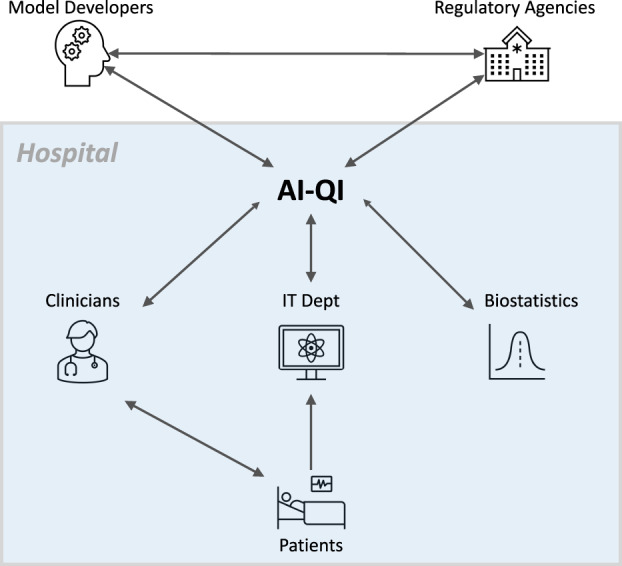
“model developers, hospital administrators, and regulatory agencies collaborate to monitor and improve the quality of AI systems deployed in a hospital setting.(65) The numerous ethical, social, and legal challenges require the augmentation of inter- and transdisciplinary teams.”
BackgroundVaid, A., Sawant, A., Suarez-Farinas, M., Lee, J., Kaul, S., Kovatch, P., Freeman, R., Jiang, J., Jayaraman, P., Fayad, Z., et al. (2023) · Annals of Internal Medicine · doi:10.7326/m23-0949 · Cited by 44
“Questions have arisen about the best way to assess the ongoing usefulness and accuracy of these models once implemented (11).”
BackgroundGuan, H., Bates, D. W., & Zhou, L. N. (2025) · IEEE Transactions on Biomedical Engineering · doi:10.1109/tbme.2025.3642706 · Cited by 60
“Such temporal variations can occur abruptly, triggering a sharp drop in performance that can be classified as an anomaly event.”
Macrae, C. (2024) · Risk Analysis · doi:10.1111/risa.14273 · Cited by 57
“An enormous amount of work is currently underway to understand how to safely deploy, integrate, use, and manage AI in different health-care settings (CQC, 2020; Feng et al., 2022; Sendak, 2020; Svedberg et al., 2022; Wiens et al., 2019; Winter & Carusi, 2023).”
Levkovich, I., & Omar, M. (2024) · Journal of Medical Systems · doi:10.1007/s10916-024-02134-3 · Cited by 57
“Amin et al. reported that while RoBERTa outperformed GPT, GPT still achieved an accuracy of 92.7% [57].”
InfluentialArtificial Intelligence-Based Methods for Drug Repurposing and Development in Cancer
Herráiz-Gil, S., Nygren-Jiménez, E., Acosta-Alonso, D. N., León, C., & Guerrero‐Aspizua, S. (2025) · Applied Sciences · doi:10.3390/app15052798 · Cited by 50
Sustainable deployment of clinical prediction tools—a 360° approach to model maintenance
Davis, S. E., Embí, P. J., & Matheny, M. E. (2024) · Journal of the American Medical Informatics Association · doi:10.1093/jamia/ocae036 · Cited by 46
Clinical deployment environments: Five pillars of translational machine learning for health
Harris, S. K., Bonnici, T., Keen, T., Lilaonitkul, W., White, M. J., & Swanepoel, N. (2022) · Frontiers in Digital Health · doi:10.3389/fdgth.2022.939292 · Cited by 54
“Others have made similar proposals and labeled this as “ algorithmic stewardship ” or “ AI-QI ” (12, 27).”
Ramadan, E., Ismeal, A. A. A., & Naguib, Y. W. (2024) · Journal of Personalized Medicine · doi:10.3390/jpm14111092 · Cited by 50
The paradigm of digital health: AI applications and transformative trends
Rashid, Z., Ahmed, H., Nadeem, N., Zafar, S. B., & Yousaf, M. Z. (2025) · Neural Computing and Applications · doi:10.1007/s00521-025-11081-0 · Cited by 56
MED-Prompt: A novel prompt engineering framework for medicine prediction on free-text clinical notes
Ahmed, A., Zeng, X., Xi, R., Hou, M., & Shah, S. A. (2024) · Journal of King Saud University - Computer and Information Sciences · doi:10.1016/j.jksuci.2024.101933 · Cited by 35
“In recent years, the healthcare domain has experienced a notable surge in the adoption of applied artificial intelligence applications (Feng et al., 2022; Javaid et al., 2022).”
Integrating Machine Learning in Metabolomics: A Path to Enhanced Diagnostics and Data Interpretation
Xu, Y., Cao, L., Chen, Y., Zhang, Z., Liu, W., Li, H., Ding, C., Pu, J., Qian, K., & Xu, W. L. (2024) · Small Methods · doi:10.1002/smtd.202400305 · Cited by 49
Gaffney, H. J., & Mirza, K. (2025) · Academic Pathology · doi:10.1016/j.acpath.2025.100166 · Cited by 49
“111 Additionally, institutions could provide ongoing training programs for pathologists and laboratory staff, focusing on responsible AI use, ethical considerations, and understanding the limitations of AI models in the context of pathology.”
Navigating the AI Revolution: The Case for Precise Regulation in Health Care
Reddy, S. (2023) · Journal of Medical Internet Research · doi:10.2196/49989 · Cited by 42
“One of the most significant challenges is ensuring the safety and quality of clinical AI applications [13,14].”
Carstens, M., Vasisht, S., Zhang, Z., Barbur, I., Reinke, A., Maier-Hein, L., Hashimoto, D. A., & Kolbinger, F. R. (2025) · npj Digital Medicine · doi:10.1038/s41746-025-02227-4 · Cited by 49
“TheneedformulticenterdataforthedevelopmentofrobustclinicalAI tools has been widely acknowledged by the research community across clinical fi elds 30 – 33 .”
Ladin, K., Cuddeback, J. K., Duru, O. K., Goel, S., Harvey, W., Park, J. G., Paulus, J. K., Sackey, J., Sharp, R. R., Steyerberg, E. W., et al. (2024) · npj Digital Medicine · doi:10.1038/s41746-024-01245-y · Cited by 41
The ethics of using artificial intelligence in medical research
Yu, S., Lee, S., & Hwang, H. (2024) · Kosin Medical Journal · doi:10.7180/kmj.24.140 · Cited by 47
Artificial Intelligence (AI) in Breast Imaging: A Scientometric Umbrella Review
Tan, X. J., Cheor, W. L., Lim, L. L., Rahman, K. S. A., & Bakrin, I. H. (2022) · Diagnostics · doi:10.3390/diagnostics12123111 · Cited by 43
Evans, H., & Snead, D. R. J. (2023) · Histopathology · doi:10.1111/his.15071 · Cited by 40
Critical review of self‐diagnosis of mental health conditions using artificial intelligence
Wimbarti, S., Kairupan, B. H. R., & Tallei, T. E. (2024) · International Journal of Mental Health Nursing · doi:10.1111/inm.13303 · Cited by 42
Out-of-Distribution Detection and Radiological Data Monitoring Using Statistical Process Control
Zamzmi, G., Venkatesh, K., Nelson, B., Prathapan, S., Yi, P. H., Sahiner, B., & Delfino, J. G. (2024) · Journal of Imaging Informatics in Medicine · doi:10.1007/s10278-024-01212-9 · Cited by 39
“Recently, Feng et al. [2, 46] discussed the need to adapt quality control methods for the monitoring of deployed AI systems.”
Machine Learning for Acute Kidney Injury Prediction in the Intensive Care Unit
Gottlieb, E. R., Samuel, M. C., Bonventre, J. V., Celi, L. A., & Mattie, H. (2022) · Advances in Chronic Kidney Disease · doi:10.1053/j.ackd.2022.06.005 · Cited by 38
Self-citationWeidener, L., & Fischer, M. (2024) · JMIR AI · doi:10.2196/51204 · Cited by 39
“Furthermore, how AI processes and interprets this information, such as through its underlying algorithms and decision-making logic, is highly important for diagnostic accuracy [40].”
BackgroundTransforming medicine: artificial intelligence integration in the peripheral nervous system
Qian, Y., Alhaskawi, A., Dong, Y., Ni, J., Abdalbary, S. A., & Lü, H. (2024) · Frontiers in Neurology · doi:10.3389/fneur.2024.1332048 · Cited by 38
Algorithmovigilance, lessons from pharmacovigilance
Balendran, A., Benchoufi, M., Evgeniou, T., & Ravaud, P. (2024) · npj Digital Medicine · doi:10.1038/s41746-024-01237-y · Cited by 34
“Updating AI systems is also inherently easierthanupdatingdrugs:AIsystemscanpotentiallybeupdatedatvarying frequenciesandcomplexities,withdifferentlevelsofperformance guarantees 40 .”
BackgroundThe unintended consequences of artificial intelligence in paediatric radiology
Ciet, P., Eade, C., Ho, M., Laborie, L. B., Mahomed, N., Naidoo, J., Pace, E., Segal, B., Toso, S., Tschauner, S., et al. (2023) · Pediatric Radiology · doi:10.1007/s00247-023-05746-y · Cited by 35
“Whilst internal and external testing is required for regulatory compliance, there are currently no standard industry pathways to continuously monitor and test AI medical imaging solutions once deployed, and this is one major aspect that has been over-looked [10, 29].”
Ethical and social issues related to AI in healthcare
Mondal, H., & Mondal, S. (2024) · Methods in microbiology · doi:10.1016/bs.mim.2024.05.009 · Cited by 44
Mou, A. J. (2024) · doi:10.63125/5w76qb87 · Cited by 41
Toward governance of artificial intelligence in pediatric healthcare
Richter, F., Holmes, E., Richter, F., Guttmann, K., Duong, S. Q., Gangadharan, S., Schadt, E., Salmasian, H., Gelb, B. D., & Glicksberg, B. S. (2025) · npj Digital Medicine · doi:10.1038/s41746-025-02000-7 · Cited by 33
“Numerous studies have demonstrated differing AI performance in different hospitals, population groups, and units 59,60 .”
Wang, H., Lin, W.-Y., Zhou, C., Yang, Z., Kalpana, S., & Lebowitz, M. (2024) · Cancers · doi:10.3390/cancers16050862 · Cited by 42
“However, the robustness of the medical AI models is suboptimal when deployed into real-world settings [87].”
BackgroundPrivacy-by-Design with Federated Learning will drive future Rare Disease Research
Süwer, S., Ullah, M. S., Probul, N., Maier, A., & Baumbach, J. (2024) · Journal of Neuromuscular Diseases · doi:10.1177/22143602241296276 · Cited by 37
Domesticating AI in medical diagnosis
Williams, R., Anderson, S., Cresswell, K. M., Kannelønning, M. S., Mozaffar, H., & Yang, X. (2024) · Technology in Society · doi:10.1016/j.techsoc.2024.102469 · Cited by 36
“This will require new methodologies and infrastructures for efficiently and reliably achieving post-market surveillance [8].”
BackgroundMethodA review of artificial intelligence impacting statistical process monitoring and future directions
Chang, S. I., Ghafariasl, P., & Aryal, B. (2026) · Computers & Industrial Engineering · doi:10.1016/j.cie.2026.111989 · Cited by 39
Algorithmic accountabilities and health systems: A review and sociomaterial approach
Donia, J. (2025) · Big Data & Society · doi:10.1177/20539517251334099 · Cited by 33
“…and assess public health and healthcare practices, services, and programmes, as for example in the use of AI for clinical quality improvement (Feng et al., 2022), insurance fraud detection (Cevolini and Esposito, 2020), pharmacist support for identi fi cation of atypical medication orders…”
Romagnoli, A., Ferrara, F., Langella, R., & Zovi, A. (2024) · Pharmaceutical Research · doi:10.1007/s11095-024-03685-3 · Cited by 33
“Key stakeholders are pushing for a concrete integration of AI into clinical practice, transcending the theoretical or experimental boundaries discussed so far [13, 14].”
Rony, M. K. K., Akter, K., Debnath, M., Rahman, M. M., Johra, F. T., Akter, F., Das, D. C., Mondal, S., Das, M., Uddin, M. J., et al. (2024) · Journal of Medicine Surgery and Public Health · doi:10.1016/j.glmedi.2024.100113 · Cited by 34
An operational guide to translational clinical machine learning in academic medical centers
Poddar, M., Marwaha, J. S., Yuan, W., Brufau, S. R., & Brat, G. A. (2024) · npj Digital Medicine · doi:10.1038/s41746-024-01094-9 · Cited by 30
Raghavan, N., Patel, P. C., Limon, D., Morris, M. X., Kempenich, J. W., & Rajesh, A. (2025) · The American Surgeon · doi:10.1177/00031348251397597 · Cited by 30
“48 While useful for optimization, these data sets may include sensitive trainee information, raising risks of privacy breaches, misuse, or even monetization.”
Language-based detection of depression with machine learning: systematic review and meta-analysis
Fisher, H., Jaffe, N. M., Pidvirny, K., Tierney, A. O., Vaidean, M. S., Dongre, P., & Webb, C. A. (2026) · npj Digital Medicine · doi:10.1038/s41746-026-02448-1 · Cited by 29
Not All Clinical AI Monitoring Systems Are Created Equal: Review and Recommendations
Feng, J., Xia, F., Singh, K., & Pirracchio, R. (2025) · NEJM AI · doi:10.1056/aira2400657 · Cited by 28
Self-citationYang, Y.-Y., Ho, M.-Y., Tai, C.-H., Wu, R., Kuo, M., & Tseng, Y. J. (2024) · npj Digital Medicine · doi:10.1038/s41746-024-01022-x · Cited by 31
Subbaswamy, A., Sahiner, B., Petrick, N., Pai, V. M., Adams, R., Diamond, M. C., & Saria, S. (2024) · npj Digital Medicine · doi:10.1038/s41746-024-01275-6 · Cited by 36
Bahadori, S., Buckle, P., Soukup, T., Ghafur, S., & Kierkegaard, P. (2025) · JMIR mhealth and uhealth · doi:10.2196/67435 · Cited by 28
“For example, AI algorithms can continuously learn and improve from new data, which necessitates a different approach to evidence generation compared to static digital technologies [9].”
Mapping the Landscape of Care Providers’ Quality Assurance Approaches for AI in Diagnostic Imaging
Lundström, C. F., & Lindvall, M. (2022) · Journal of Imaging Informatics in Medicine · doi:10.1007/s10278-022-00731-7 · Cited by 29
“Also from a healthcare perspective, the importance of such continuous QA for AI solutions in clinical use has been thoroughly underlined [2, 12, 13], and it is highlighted also from a regulatory stand-point by the Food and Drugs Administration as part of the post-market surveillance [14].”
BackgroundMethodInfluentialCordella, C., Marte, M. J., Liu, H., & Kiran, S. (2024) · Perspectives of the ASHA Special Interest Groups · doi:10.1044/2024_persp-24-00037 · Cited by 32
“…interdisciplinary collaboration among clinicians, data scientists, and information technology professionals is increasingly vital for enhancing clinical ML systems and effectively bridging the gap between ML technology and practical health care applications (Feng et al., 2022; Sendak et al., 2020).”
A roadmap for safe, regulation-compliant Living Labs for AI and digital health development
Gilbert, S., Mathias, R., Schönfelder, A., Wekenborg, M., Steinigen-Fuchs, J., Dillenseger, A., & Ziemssen, T. (2025) · Science Advances · doi:10.1126/sciadv.adv7719 · Cited by 29
“These staff members would work alongside clinicians and researchers while maintaining independent quality responsibilities and goals focused on quality, ethical practice, regulatory documentation, and compliance ( 58 ).”
Professional identity and its relationships with AI readiness and interprofessional collaboration
Ta’an, W., Damrah, S., Al‐Hammouri, M. M., & Williams, B. A. (2025) · PLoS ONE · doi:10.1371/journal.pone.0322794 · Cited by 33
“The readiness of healthcare professionals to embrace and integrate AI technologies is a critical determinant of the industry’s ability to leverage the benefits of AI advancements [8].”
Transforming healthcare delivery with conversational AI platforms
Mahajan, A., & Powell, D. (2025) · npj Digital Medicine · doi:10.1038/s41746-025-01968-6 · Cited by 27
Du, X., Zhou, Z., Wang, Y., Chuang, Y.-W., Li, Y., Yang, R., Hong, P., Bates, D. W., & Zhou, L. (2026) · International Journal of Medical Informatics · doi:10.1016/j.ijmedinf.2025.106091 · Cited by 26
Agentic AI in Radiology: Evolution from Large Language Models to Future Clinical Integration
Khosravi, B., Rouzrokh, P., D’Antonoli, T. A., Moassefi, M., Faghani, S., Mansuri, A., Bressem, K. K., Tejani, A. S., & Gichoya, J. W. (2026) · Radiology Artificial Intelligence · doi:10.1148/ryai.250651 · Cited by 38
Patient and Staff Experience of Remote Patient Monitoring—What to Measure and How: Systematic Review
Pannunzio, V., Ornelas, H. C. M., Gurung, P., van Kooten, R. T., Snelders, D., van Os, H. J. A., Wouters, M. W. J. M., Tollenaar, R. A. �. �., Atsma, D. E., & Kleinsmann, M. S. (2024) · Journal of Medical Internet Research · doi:10.2196/48463 · Cited by 28
“This is especially true in the case of RPM systems including artificial intelligence (AI) components, which require continuous monitoring and updating of algorithms [48-50].”
Sheikh, M. S., Thongprayoon, C., Qureshi, F., Suppadungsuk, S., KASHANI, K. B., Miao, J., Craici, I. M., & Cheungpasitporn, W. (2024) · Journal of Personalized Medicine · doi:10.3390/jpm14030233 · Cited by 29
“Informed Consent Statement: Not applicable.”
McLeish, E., Slater, N., Mastaglia, F. L., Needham, M., & Coudert, J. D. (2023) · Briefings in Bioinformatics · doi:10.1093/bib/bbad514 · Cited by 25
“Efforts are being made to address these issues, including the development of standardized protocols for data sharing and analysis, and the establishment of benchmark datasets for evaluating the performance of ML algorithms [84].”
BackgroundJain, S. S., Goto, S., Hall, J. L., Khan, S. S., MacRae, C. A., Ofori, C., Pegus, C., Pencina, M., Peterson, E. D., Schwamm, L. H., et al. (2025) · Circulation · doi:10.1161/cir.0000000000001400 · Cited by 23
The Role of Artificial Intelligence in Chronic Liver Diseases and Liver Transplantation
Spann, A., Strauss, A. T., Davis, S. E., & Bhat, M. (2025) · Gastroenterology · doi:10.1053/j.gastro.2025.05.012 · Cited by 24
Boltaboyeva, A., Baigarayeva, Z., Иманбек, Б., Ozhikenov, К., Getahun, A. J., Aidarova, T., & Karymsakova, N. (2025) · Applied Sciences · doi:10.3390/app15126840 · Cited by 27
A Review of Methods for Trustworthy AI in Medical Imaging: The FUTURE-AI Guidelines
Kondylakis, H., Osuala, R. O., Puig-Bosch, X., Lazrak, N., Díaz, O., Kushibar, K., Chouvarda, I., Charalambous, S., Starmans, M. P. A., Colantonio, S., et al. (2025) · IEEE Journal of Biomedical and Health Informatics · doi:10.1109/jbhi.2025.3614546 · Cited by 30
Lonsdale, H., Burns, M. L., Epstein, R. H., Hofer, I. S., Tighe, P. J., Delgado, J. A. G., Kor, D. J., MacKay, E. J., Rashidi, P., Wanderer, J. P., et al. (2025) · Anesthesiology · doi:10.1097/aln.0000000000005326 · Cited by 26
Metadata
- Authors
- Feng, J., Phillips, R. V., Malenica, I., Bishara, A., Hubbard, A. E., Celi, L. A., & Pirracchio, R.
- Affiliations
- University of California, San Francisco (US)
- University of California, Berkeley (US)
- Beth Israel Deaconess Medical Center (US)
- Corresponding author
- Feng, Jean
- ORCID
- Venue
- npj Digital Medicine
- Published
- 2022-05-31
- Volume
- 5
- Issue
- 1
- Pages
- 66-66
- ISSN
- 2398-6352 (ISSN-L)
- PMC
- PMC9156743
- OpenAlex
- W4281681378
- Cited by
- 423
- References
- 88
- Citations by year
- 2026: 128 · 2025: 131 · 2024: 110 · 2023: 41 · 2022: 13
- FWCI
- 5.06
- Type
- journal article
- Language
- en
- Open access
- gold
- doi.org
- Licence
- cc-by
- creativecommons.org/licenses/by/4.0 (tdm)
- creativecommons.org/licenses/by/4.0 (vor)
- Locations
- npj Digital Medicine (publishedVersion, cc-by)
- PubMed Central (publishedVersion, cc-by)
- PubMed (publishedVersion)
- DOAJ (DOAJ: Directory of Open Access Journals) (submittedVersion, cc-by-sa)
- eScholarship (California Digital Library) (submittedVersion, cc-by)
- Funders
- Foundation for Anesthesia Education and Research
- U.S. Department of Health & Human Services | NIH | National Institute of Biomedical Imaging and Bioengineering (R01EB017205)
- Topics
- Health Sciences › Medicine › Health Informatics › Artificial Intelligence in Healthcare and Education
- Physical Sciences › Computer Science › Artificial Intelligence › Machine Learning in Healthcare
- Physical Sciences › Computer Science › Artificial Intelligence › Ethics and Social Impacts of AI
- Keywords
- artificial intelligence in healthcare, machine learning algorithms, performance degradation, hospital quality improvement
About these checks
Registry, retraction, Cites and statistics results are computed, not judged, with one exception: a printed reference that no index lists is read once by a model before it counts as a citation error. Claims are extracted by a model and kept only when their quote appears verbatim in the text; each cited source is then checked, with a model’s help, for whether it says what the claim relies on. Those verdicts can be wrong — read the claim’s quote and the cited source before relying on one.
Statistics and arithmetic are recomputed, not judged.
Confidence bands are shown only for fields calibrated on our annotated test set. None is calibrated yet, so no band is shown.
What counts as a claim ›How we measure confidence ›How we check this ›
Are you an author, or do you see a problem with this page? Request a review
Data sources
Bibliographic data: Semantic Scholar, OpenAlex, Crossref.
Contains information from the Semantic Scholar Academic Graph Datasets, made available under the ODC Attribution License (ODC-BY 1.0).
Semantic Scholar’s data is described in: Kinney, R., et al. (2023). The Semantic Scholar Open Data Platform. arXiv:2301.10140.
