

Clinical artificial intelligence quality improvement: towards continual monitoring and updating of AI algorithms in healthcare
Open accessThe DOI matches its Crossref record; 89 of the 89 references it cites were found in a registry or an index.
Abstract
Machine learning (ML) and artificial intelligence (AI) algorithms have the potential to derive insights from clinical data and improve patient outcomes. However, these highly complex systems are sensitive to changes in the environment and liable to performance decay. Even after their successful integration into clinical practice, ML/AI algorithms should be continuously monitored and updated to ensure their long-term safety and effectiveness. To bring AI into maturity in clinical care, we advocate for the creation of hospital units responsible for quality assurance and improvement of these algorithms, which we refer to as “AI-QI” units. We discuss how tools that have long been used in hospital quality assurance and quality improvement can be adapted to monitor static ML algorithms. On the other hand, procedures for continual model updating are still nascent. We highlight key considerations when choosing between existing methods and opportunities for methodological innovation.
Overview
The claims and statistics of this paper haven’t been checked yet.
Free: it reads the open-access text and checks the first 5 claims that cite a source we can check. Create a free account to check every claim.
Integrity signals
Registry
Cites
Statistics
Figures
Verification
Claims the paper makes
The claims and statistics of this paper haven’t been checked yet.
Free: it reads the open-access text and checks the first 5 claims that cite a source we can check. Create a free account to check every claim.
Claims other papers make about this one
Each is checked against this paper’s own text: does it say what the citing paper says it does?
In the citing paper
“The establishment of a dedicated department within hospitals for algorithm quality control has been advocated [90].”
From Fairness of artificial intelligence in healthcare: review and recommendations (2024) · cites this paper as [90]
Self-check
Percentages, sums and reported differences re-computed from the paper’s own numbers.
The self-check needs the paper’s full text.
Citations
Cites
The Elements of Statistical Learning
Hastie, T., Tibshirani, R., & Friedman, J. (2009) · Springer Series in Statistics · doi:10.1007/978-0-387-84858-7 · Cited by 25,970
MIMIC-III, a freely accessible critical care database
Johnson, A. E. W., Pollard, T. J., Shen, L., Lehman, L.-W. H., Feng, M., Ghassemi, M., Moody, B., Szolovits, P., Anthony Celi, L., & Mark, R. G. (2016) · Scientific Data · doi:10.1038/sdata.2016.35 · Cited by 8,141 · cited 1×
“Although large publicly available datasets such as the Medical Information Mart for Intensive Care (MIMIC) database 102 are moving in the direction of releasing more accurate timestamps, random date shifts used for data de-identi fi cation have the unfortunate side effect of dampening temporal…”
MethodSelf-citationPAGE, E. S. (1954) · Biometrika · doi:10.1093/biomet/41.1-2.100 · Cited by 5,739 · cited 2×
“Commonly used control charts that fall in this category include Shewhart control charts, cumulative sum (CUSUM) control charts 35 , and exponentially weighted moving average (EWMA) control charts 31 .”
BackgroundMethodA guide to deep learning in healthcare
Esteva, A., Robicquet, A., Ramsundar, B., Kuleshov, V., DePristo, M., Chou, K., Cui, C., Corrado, G., Thrun, S., & Dean, J. (2019) · Nature Medicine · doi:10.1038/s41591-018-0316-z · Cited by 5,312
Causal Inference for Statistics, Social, and Biomedical Sciences: An Introduction
Imbens, G. W., & Rubin, D. B. (2015) · doi:10.1017/cbo9781139025751 · Cited by 4,210
Causal Diagrams for Epidemiologic Research
Greenland, S., Pearl, J., & Robins, J. M. (1999) · Epidemiology · doi:10.1097/00001648-199901000-00008 · Cited by 3,728
Hannun, A. Y., Rajpurkar, P., Haghpanahi, M., Tison, G. H., Bourn, C., Turakhia, M. P., & Ng, A. Y. (2019) · Nature Medicine · doi:10.1038/s41591-018-0268-3 · Cited by 3,148 · cited 1×
“The use of arti fi cial intelligence (AI) and machine learning (ML) in the clinical arena has developed tremendously over the past decades, with numerous examples in medical imaging, cardiology, and acute care 1 – 6 .”
BackgroundAir Pollution and Hospital Admissions for Heart Disease in Eight U.S. Counties
Schwartz, J. (1999) · Epidemiology · doi:10.1097/00001648-199901000-00005 · Cited by 3,038
A Kernel Method for the Two-Sample-Problem
Gretton, A., Borgwardt, K. M., Rasch, M., Schölkopf, B., & Smola, A. J. (2007) · Advances in Neural Information Processing Systems 19 · doi:10.7551/mitpress/7503.003.0069 · Cited by 2,167
Predicting good probabilities with supervised learning
Niculescu-Mizil, A., & Caruana, R. (2005) · Proceedings of the 22nd international conference on Machine learning - ICML '05 · doi:10.1145/1102351.1102430 · Cited by 1,884
An Introduction to Statistical Learning: with Applications in R
James, G., Witten, D., Hastie, T., & Tibshirani, R. (2021) · Springer Texts in Statistics · doi:10.1007/978-1-0716-1418-1 · Cited by 1,755
Sheller, M. J., Edwards, B., Reina, G. A., Martin, J., Pati, S., Kotrotsou, A., Milchenko, M., Xu, W., Marcus, D., Colen, R. R., et al. (2020) · Scientific Reports · doi:10.1038/s41598-020-69250-1 · Cited by 1,646 · cited 1×
“The advantage of this option is that it minimizes the burden on the AI-QI team and the model vendor can leverage data from multiple institutions to improve model monitoring and maintenance 97,98 .”
BackgroundDataset Shift in Machine Learning
(2008) · doi:10.7551/mitpress/9780262170055.001.0001 · Cited by 1,553 · cited 2×
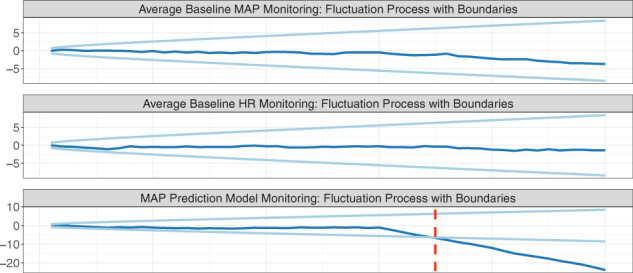
“Two shifts occur at time point 30: we introduce a small shift to the average baseline MAP, and a larger shift in the conditional relationship between the outcome and the two input variables.”
BackgroundMethodBenjamens, S., Dhunnoo, P., & Meskó, B. (2020) · npj Digital Medicine · doi:10.1038/s41746-020-00324-0 · Cited by 1,215 · cited 1×
“Indeed, the list of AI/ML-based algorithms approved for clinical use by the United States Food and Drug Administration (FDA) continues to grow at a rapid rate 7 .”
BackgroundSoftware Engineering for Machine Learning: A Case Study
Amershi, S., Begel, A., Bird, C., DeLine, R., Gall, H., Kamar, E., Nagappan, N., Nushi, B., & Zimmermann, T. (2019) · 2019 IEEE/ACM 41st International Conference on Software Engineering: Software Engineering in Practice (ICSE-SEIP) · doi:10.1109/icse-seip.2019.00042 · Cited by 1,135 · cited 3×
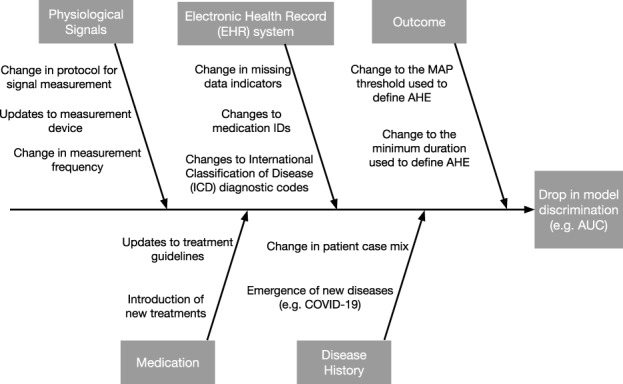
“…a performance drop in an ML algorithm for determining which patients were at high risk of hospital admission based on their emergency department (ED) presentation that relied on input variables like respiratory rate and arrival mode, which were signi fi cantly affected by the spread of COVID-19.”
Backgroundstrucchange: An R Package for Testing for Structural Change in Linear Regression Models
Zeileis, A., Leisch, F., Hornik, K., & Kleiber, C. (2002) · Journal of Statistical Software · doi:10.18637/jss.v007.i02 · Cited by 1,053 · cited 1×
“Using the monitoring software provided by the strucchange R package 68 , we construct control limits such that the false alarm rate is 0.05 in each of the control charts.”
MethodInfluentialStatistical process control as a tool for research and healthcare improvement
Benneyan, J. C. (2003) · Quality and Safety in Health Care · doi:10.1136/qhc.12.6.458 · Cited by 1,045
Swarm Learning for decentralized and confidential clinical machine learning
Warnat-Herresthal, S., Schultze, H., Shastry, K. L., Manamohan, S., Mukherjee, S., Garg, V., Sarveswara, R., Händler, K., Pickkers, P., Aziz, N. A., et al. (2021) · Nature · doi:10.1038/s41586-021-03583-3 · Cited by 884 · cited 1×
“The advantage of this option is that it minimizes the burden on the AI-QI team and the model vendor can leverage data from multiple institutions to improve model monitoring and maintenance 97,98 .”
BackgroundThe Clinician and Dataset Shift in Artificial Intelligence
Finlayson, S. G., Subbaswamy, A., Singh, K., Bowers, J., Kupke, A., Zittrain, J., Kohane, I. S., & Saria, S. (2021) · New England Journal of Medicine · doi:10.1056/nejmc2104626 · Cited by 855 · cited 1×
“Although the importance of continual monitoring and updating has been acknowledged in a number of recent papers 15 – 17 , most articles provide limited details on how to implement such systems.”
BackgroundOn Optimum Methods in Quickest Detection Problems
Shiryaev, A. N. (1963) · Theory of Probability & Its Applications · doi:10.1137/1108002 · Cited by 839 · cited 1×
“To monitor changes in the conditional distribution Y ∣ X , one can apply generalizations of the CUSUM procedure such as the Shiryaev-Roberts procedure 47,48 and the generalized likelihood ratio test (GLRT) 49,50 .”
MethodKollár, Á. F. (2000) · REAL-EOD (Library of the Hungarian Academy of Sciences and the Information Center Oriental Collection) · Cited by 618
Hatib, F., Jian, Z., Buddi, S., Lee, C., Settels, J., Sibert, K., Rinehart, J., & Cannesson, M. (2018) · Anesthesiology · doi:10.1097/aln.0000000000002300 · Cited by 614 · cited 1×
“Finally, to ground our discussion, we will use the example of a hypothetical AI-based early warning system for acute hypotensive episodes (AHEs), inspired by the FDA-approved Edwards ’ Acumen Hypotension Prediction Index 23 .”
MethodInfluentialThe Use of Control Charts in Health-Care and Public-Health Surveillance
Woodall, W. H. (2006) · Journal of Quality Technology · doi:10.1080/00224065.2006.11918593 · Cited by 583 · cited 1×
“Prior work has described how to address differences between health-related control chart applications and industrial applications 58 .”
BackgroundSteyerberg, E. W., Borsboom, G. J. J. M., van Houwelingen, H. C., Eijkemans, M. J. C., & Habbema, J. D. F. (2004) · Statistics in Medicine · doi:10.1002/sim.1844 · Cited by 552
A Comparison of Some Control Chart Procedures
Roberts, S. W. (1966) · Technometrics · doi:10.1080/00401706.1966.10490374 · Cited by 542 · cited 1×
“To monitor changes in the conditional distribution Y ∣ X , one can apply generalizations of the CUSUM procedure such as the Shiryaev-Roberts procedure 47,48 and the generalized likelihood ratio test (GLRT) 49,50 .”
MethodHow to Read Articles That Use Machine Learning: Users’ Guides to the Medical Literature
Liu, Y., Chen, P.-H. C., Krause, J., & Peng, L. (2019) · JAMA · doi:10.1001/jama.2019.16489 · Cited by 516
The myth of generalisability in clinical research and machine learning in health care
Futoma, J., Simons, M., Panch, T., Doshi-Velez, F., & Celi, L. A. (2020) · The Lancet Digital Health · doi:10.1016/s2589-7500(20)30186-2 · Cited by 467
Self-citationRole of artificial intelligence in patient safety outcomes: systematic literature review
Choudhury, A., & Asan, O. (2020) · JMIR Medical Informatics · doi:10.2196/18599 · Cited by 440
Application of statistical process control in healthcare improvement: systematic review
Thor, J., Lundberg, J., Ask, J., Olsson, J., Carli, C., Harenstam, K. P., & Brommels, M. (2007) · Quality and Safety in Health Care · doi:10.1136/qshc.2006.022194 · Cited by 430
Causality matters in medical imaging
Castro, D. C., Walker, I., & Glocker, B. (2020) · Nature Communications · doi:10.1038/s41467-020-17478-w · Cited by 364
Calibration drift in regression and machine learning models for acute kidney injury
Davis, S. E., Lasko, T. A., Chen, G., Siew, E. D., & Matheny, M. E. (2017) · Journal of the American Medical Informatics Association · doi:10.1093/jamia/ocx030 · Cited by 312 · cited 1×
“Indeed, many have documented ML performance decay due to patient case mix, clinical practice patterns, treatment options, and more 9 – 11 .”
BackgroundThe ML test score: A rubric for ML production readiness and technical debt reduction
Breck, E., Cai, S., Nielsen, E., Salib, M., & Sculley, D. (2017) · 2017 IEEE International Conference on Big Data (Big Data) · doi:10.1109/bigdata.2017.8258038 · Cited by 310 · cited 2×
“Given the complexity of ML algorithms, a number of papers have suggested monitoring ML explainability metrics, such as variable importance (VI) 18,24 .”
BackgroundUsing the Generalized Likelihood Ratio Statistic for Sequential Detection of a Change-Point
Siegmund, D., & Venkatraman, E. S. (1995) · The Annals of Statistics · doi:10.1214/aos/1176324466 · Cited by 298 · cited 1×
“To monitor changes in the conditional distribution Y ∣ X , one can apply generalizations of the CUSUM procedure such as the Shiryaev-Roberts procedure 47,48 and the generalized likelihood ratio test (GLRT) 49,50 .”
MethodCausality matters in medical imaging
Castro, D. C., Walker, I. D., & Glocker, B. (2020) · RePEc: Research Papers in Economics · Cited by 288
Detecting Concept Drift Using Statistical Testing
Nishida, K., & Yamauchi, K. (2007) · Lecture Notes in Computer Science · doi:10.1007/978-3-540-75488-6_27 · Cited by 285 · cited 1×
“The most intuitive approach, perhaps, is to monitor performance metrics that were used to train or test the original model 46 .”
BackgroundCabitza, F., Campagner, A., Soares, F., García de Guadiana-Romualdo, L., Challa, F., Sulejmani, A., Seghezzi, M., & Carobene, A. (2021) · Computer Methods and Programs in Biomedicine · doi:10.1016/j.cmpb.2021.106288 · Cited by 284 · cited 1×
“Prior to model deployment, developers can calibrate the model and characterize common-cause variation using independent data 25 – 27 .”
MethodClinical applications of continual learning machine learning
Lee, C. S., & Lee, A. Y. (2020) · The Lancet Digital Health · doi:10.1016/s2589-7500(20)30102-3 · Cited by 254 · cited 1×
“Nevertheless, there are many challenges in implementing continual updating procedures 13 .”
BackgroundMultivariate Statistical Process Control Using LASSO
Zou, C., & Qiu, P. (2009) · Journal of the American Statistical Association · doi:10.1198/jasa.2009.tm08128 · Cited by 225
Reinforcement learning for clinical decision support in critical care: comprehensive review
Liu, S., See, K. C., Ngiam, K. Y., Celi, L. A., Sun, X., & Feng, M. (2020) · Journal of Medical Internet Research · doi:10.2196/18477 · Cited by 225
Self-citationThe Frontiers of Fairness in Machine Learning
Chouldechova, A., & Roth, A. (2018) · arXiv (Cornell University) · doi:10.48550/arxiv.1810.08810 · Cited by 219 · cited 1×
“These challenges have spurred research to design performance metrics that maintain or even promote algorithmic fairness and are resistant to the creation of deleterious feedback loops 74 – 76 .”
BackgroundMachine Learning: The High Interest Credit Card of Technical Debt
Sculley, D., Holt, G. D., Golovin, D., Davydov, E. V., Phillips, T., Ebner, D., Chaudhary, V., & Young, M. (2014) · Cited by 218
Quality improvement into practice
Backhouse, A., & Ogunlayi, F. (2020) · BMJ · doi:10.1136/bmj.m865 · Cited by 190 · cited 1×
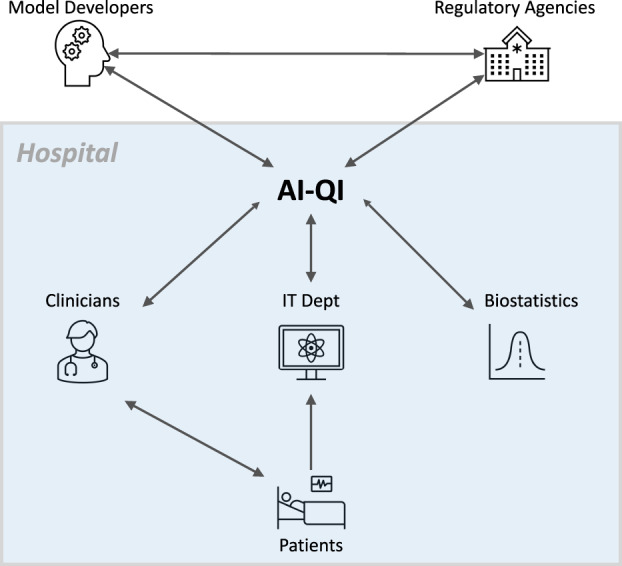
“In this work, we look to existing hospital quality assurance (QA) and quality improvement (QI) efforts 20 – 22 as a template for designing similar initiatives for clinical AI algorithms, which we refer to as AI-QI.”
BackgroundGeneralized M‐fluctuation tests for parameter instability
Zeileis, A., & Hornik, K. (2007) · Statistica Neerlandica · doi:10.1111/j.1467-9574.2007.00371.x · Cited by 175 · cited 1×
“Furthermore, one can consider a broader class of so-called generalized M-fl uctuation tests that gives the user more fl exibility in deciding which metrics to track 51 .”
BackgroundHarrison, D. A., Brady, A. R., Parry, G. J., Carpenter, J. R., & Rowan, K. (2006) · Critical Care Medicine · doi:10.1097/01.ccm.0000216702.94014.75 · Cited by 168 · cited 2×
“Given the complexities of continual model updating, current real-world updates to clinical prediction model have generally been con fi ned to ad-hoc one-time updates 69,70 .”
BackgroundHigh-dimensional change-point detection under sparse alternatives
Enikeeva, F., & Harchaoui, Z. (2019) · The Annals of Statistics · doi:10.1214/18-aos1740 · Cited by 160
Detection of calibration drift in clinical prediction models to inform model updating
Davis, S. E., Greevy, R. A., Lasko, T. A., Walsh, C. G., & Matheny, M. E. (2020) · Journal of Biomedical Informatics · doi:10.1016/j.jbi.2020.103611 · Cited by 160 · cited 2×
“Most studies have considered either simulated data or data from a single, private medical dataset 52,92,93 .”
BackgroundMethodDelayed Impact of Fair Machine Learning
Liu, L. T., Dean, S., Rolf, E., Simchowitz, M., & Hardt, M. (2019) · Proceedings of the Twenty-Eighth International Joint Conference on Artificial Intelligence · doi:10.24963/ijcai.2019/862 · Cited by 157
Likelihood Ratio-Based Distribution-Free EWMA Control Charts
Zou, C., & Tsung, F. (2010) · Journal of Quality Technology · doi:10.1080/00224065.2010.11917815 · Cited by 153 · cited 1×
“Recent works have looked to relax common assumptions, including nonparametric extensions 53,54 and meth-ods for handling high-dimensional X 55 – 57 .”
BackgroundHellinger distance based drift detection for nonstationary environments
Ditzler, G., & Robi Polikar, A. (2011) · IEEE Symposium on Computational Intelligence in Dynamic and Uncertain Environments (CIDUE) · doi:10.1109/cidue.2011.5948491 · Cited by 147 · cited 1×
“Recent work has proposed new distance measures between high-dimensional multivariate probability distributions, such as the Wasserstein distance, f-divergences 42 , and kernel-based measures 43,44 .”
Backgroundvan den Boogaard, M., Schoonhoven, L., Maseda, E., Plowright, C. I., Jones, C., Luetz, A., Sackey, P., Jorens, P. G., Aitken, L. M., van Haren, F. M. P., et al. (2014) · Intensive Care Medicine · doi:10.1007/s00134-013-3202-7 · Cited by 145 · cited 2×
“Given the complexities of continual model updating, current real-world updates to clinical prediction model have generally been con fi ned to ad-hoc one-time updates 69,70 .”
BackgroundQahtan, A. A., Alharbi, B., Wang, S., & Zhang, X. (2015) · Proceedings of the 21th ACM SIGKDD International Conference on Knowledge Discovery and Data Mining · doi:10.1145/2783258.2783359 · Cited by 128 · cited 1×
“This can be addressed using variable selection 37 , dimension reduction techniques 38 , or histogram binning 39 .”
MethodAlgorithms on regulatory lockdown in medicine
Babic, B., Gerke, S., Evgeniou, T., & Cohen, I. G. (2019) · Science · doi:10.1126/science.aay9547 · Cited by 123
Efficient nonparametric statistical inference on population feature importance using Shapley values
Williamson, B. D., & Feng, J. (2020) · PubMed · doi:10.48550/arxiv.2006.09481 · Cited by 119 · cited 1×
“To monitor population-level variable importance instead 45 , we suggest monitoring the relationship between X and Y using techniques described in the following section.”
MethodSelf-citationResearch Trends in Artificial Intelligence Applications in Human Factors Health Care: Mapping Review
Asan, O., & Choudhury, A. (2021) · JMIR Human Factors · doi:10.2196/28236 · Cited by 114 · cited 1×
“In such situations, we must account for the role of human factors 61 and confounding medical interventions (CMIs), because we cannot observe the counterfactual outcome that would have occurred if the prediction were not available.”
BackgroundKohane, I. S., Aronow, B. J., Avillach, P., Beaulieu-Jones, B. K., Bellazzi, R., Bradford, R. L., Brat, G. A., Cannataro, M., Cimino, J. J., García-Barrio, N., et al. (2021) · Journal of Medical Internet Research · doi:10.2196/22219 · Cited by 113 · cited 1×
“Unfortunately, the most readily available data streams in medical settings are observational in nature and subject to confounding, structural biases, missingness, and misclassi fi cation of outcomes, among others 94,95 .”
BackgroundArtificial Intelligence in Imaging: The Radiologist’s Role
Rubin, D. L. (2019) · Journal of the American College of Radiology · doi:10.1016/j.jacr.2019.05.036 · Cited by 110 · cited 1×
“Prior to model deployment, developers can calibrate the model and characterize common-cause variation using independent data 25 – 27 .”
MethodDuckworth, C., Chmiel, F. P., Burns, D. K., Zlatev, Z. D., White, N. M., Daniels, T. W. V., Kiuber, M., & Boniface, M. J. (2021) · Scientific Reports · doi:10.1038/s41598-021-02481-y · Cited by 109 · cited 4×
“A recent example is the emergence of COVID-19 24 documented a performance drop in an ML algorithm for determining which patients were at high risk of hospital admission based on their emergency department (ED) presentation that relied on input variables like respiratory rate and arrival mode, which were signi fi cantly…”
BackgroundInfluentialBeesley, L. J., Salvatore, M., Fritsche, L. G., Pandit, A., Rao, A., Brummett, C., Willer, C. J., Lisabeth, L. D., & Mukherjee, B. (2020) · Statistics in Medicine · doi:10.1002/sim.8445 · Cited by 104 · cited 1×
“Unfortunately, the most readily available data streams in medical settings are observational in nature and subject to confounding, structural biases, missingness, and misclassi fi cation of outcomes, among others 94,95 .”
BackgroundChen, J. H., Alagappan, M., Goldstein, M. K., Asch, S. M., & Altman, R. B. (2017) · International Journal of Medical Informatics · doi:10.1016/j.ijmedinf.2017.03.006 · Cited by 101 · cited 1×
“To decide how much data should be used to retrain the model, one can simulate the online learning procedure on retrospective data to assess the risk of catastrophic forgetting and the relevance of past data (see e.g. 10 ).”
MethodContinual learning in medical devices: FDA's action plan and beyond
Vokinger, K. N., Feuerriegel, S., & Kesselheim, A. S. (2021) · The Lancet Digital Health · doi:10.1016/s2589-7500(21)00076-5 · Cited by 95 · cited 1×
“To ensure the long-term reliability and effectiveness of AI/ML-based clinical algorithms, it is crucial that we establish systems for regular monitoring and maintenance 12 – 14 .”
BackgroundPrognostic models will be victims of their own success, unless…
Lenert, M. C., Matheny, M. E., & Walsh, C. G. (2019) · Journal of the American Medical Informatics Association · doi:10.1093/jamia/ocz145 · Cited by 92 · cited 1×
“Although confounding occurs in the absence of AI-based predictions 62,63 , the CMIs becomes much more severe when clinicians utilize AI algorithms in their decision-making process 64 – 66 .”
BackgroundDynamic Logistic Regression and Dynamic Model Averaging for Binary Classification
McCormick, T. H., Raftery, A. E., Madigan, D., & Burd, R. S. (2012) · Biometrics · doi:10.1111/j.1541-0420.2011.01645.x · Cited by 91 · cited 1×
“Procedures like online cross-validation 85 and Bayesian model averaging 86 can help one dynamically select the most appropriate model complexity over time.”
MethodDeveloping predictive models using electronic medical records: challenges and pitfalls.
Paxton, C., Niculescu-Mizil, A., & Saria, S. (2013) · Europe PMC (PubMed Central) · Cited by 86
Sequential Change-Point Detection When the Pre- and Post-Change Parameters are Unknown
Lai, T. L., & Xing, H. (2010) · Sequential Analysis · doi:10.1080/07474941003741078 · Cited by 85 · cited 1×
“To monitor changes in the conditional distribution Y ∣ X , one can apply generalizations of the CUSUM procedure such as the Shiryaev-Roberts procedure 47,48 and the generalized likelihood ratio test (GLRT) 49,50 .”
MethodCabitza, F., & Zeitoun, J.-D. (2019) · Annals of Translational Medicine · doi:10.21037/atm.2019.04.07 · Cited by 72 · cited 1×
“To this end, existing post-market surveillance systems like the FDA ’ s Sentinel Initiative 99 could be adapted to monitor AI-based algorithms in healthcare, extending the scope of these programs to not only include pharmacosurveillance but “ technovigilence ” 100,101 .”
BackgroundNestor, B. A., McDermott, M. B. A., Boag, W., Berner, G., Naumann, T., Hughes, M. C., Goldenberg, A., & Ghassemi, M. (2019) · arXiv (Cornell University) · doi:10.48550/arxiv.1908.00690 · Cited by 71 · cited 1×
“Indeed, many have documented ML performance decay due to patient case mix, clinical practice patterns, treatment options, and more 9 – 11 .”
BackgroundOnline cross‐validation‐based ensemble learning
Benkeser, D. C., Ju, C., Lendle, S., & van der Laan, M. J. (2017) · Statistics in Medicine · doi:10.1002/sim.7320 · Cited by 63 · cited 1×
“Procedures like online cross-validation 85 and Bayesian model averaging 86 can help one dynamically select the most appropriate model complexity over time.”
MethodBig Data? Statistical Process Control Can Help!
Qiu, P. (2019) · The American Statistician · doi:10.1080/00031305.2019.1700163 · Cited by 61 · cited 1×
“For complex data types like physiological waveforms, medical images, and clinical notes, representation learning methods can transform the data into a lower-dimensional vector that is suitable for inputting into traditional control charts 40,41 .”
MethodBig data and targeted machine learning in action to assist medical decision in the ICU
Pirracchio, R., Cohen, M. J., Malenica, I., Cohen, J., Chambaz, A., Cannesson, M., Lee, C., Resche-Rigon, M., & Hubbard, A. (2019) · Anaesthesia Critical Care & Pain Medicine · doi:10.1016/j.accpm.2018.09.008 · Cited by 59
Self-citationComparing Biomarkers as Principal Surrogate Endpoints
Huang, Y., & Gilbert, P. B. (2011) · Biometrics · doi:10.1111/j.1541-0420.2011.01603.x · Cited by 58
Computationally efficient change point detection for high-dimensional regressionPreprint
Leonardi, F., & Bühlmann, P. (2016) · arXiv (Cornell University) · doi:10.48550/arxiv.1601.03704 · Cited by 53
Strobl, A. N., Vickers, A. J., Van Calster, B., Steyerberg, E., Leach, R. J., Thompson, I. M., & Ankerst, D. P. (2015) · Journal of Biomedical Informatics · doi:10.1016/j.jbi.2015.05.001 · Cited by 46 · cited 2×
“The latter is much less common in clinical practice, though there have been multiple calls for regular model updating 87 – 89 .”
BackgroundAn Introduction to Outlier Ensembles
Aggarwal, C. C., & Sathe, S. K. (2017) · Springer eBooks · doi:10.1007/978-3-319-54765-7_1 · Cited by 46
Estimation of the Optimal Surrogate Based on a Randomized Trial
Price, B. L., Gilbert, P. B., & van der Laan, M. J. (2018) · Biometrics · doi:10.1111/biom.12879 · Cited by 45 · cited 1×
“We note that surrogate outcomes in the context of AI-QI do not necessarily need to satisfy the same formal properties used to measure treatment ef fi cacy 59,60 , because the cost of a false alarm is much lower in our setting.”
BackgroundThe clinical artificial intelligence department: a prerequisite for success
Cosgriff, C. V., Stone, D. J., Weissman, G., Pirracchio, R., & Celi, L. A. (2020) · BMJ Health & Care Informatics · doi:10.1136/bmjhci-2020-100183 · Cited by 43 · cited 1×
“Alter-natively, hospitals may look to create dedicated Clinical AI departments, which would centralize efforts to develop, deploy, and maintain AI models in clinical care 96 .”
BackgroundSelf-citationThe Value of Monitoring Clinical Decision Support Interventions
Yoshida, E., Fei, S., Bavuso, K., Lagor, C., & Maviglia, S. (2018) · Applied Clinical Informatics · doi:10.1055/s-0038-1632397 · Cited by 41 · cited 1×
“To ensure the long-term reliability and effectiveness of AI/ML-based clinical algorithms, it is crucial that we establish systems for regular monitoring and maintenance 12 – 14 .”
BackgroundArtificial Intelligence to Improve Health Outcomes in the NICU and PICU: A Systematic Review
Adegboro, C. O., Choudhury, A., Asan, O., & Kelly, M. M. (2022) · Hospital Pediatrics · doi:10.1542/hpeds.2021-006094 · Cited by 41
Learning (predictive) risk scores in the presence of censoring due to interventions
Dyagilev, K., & Saria, S. (2016) · Machine Learning · doi:10.1007/s10994-015-5527-7 · Cited by 36 · cited 1×
“Although confounding occurs in the absence of AI-based predictions 62,63 , the CMIs becomes much more severe when clinicians utilize AI algorithms in their decision-making process 64 – 66 .”
BackgroundCalibration of medical diagnostic classifier scores to the probability of disease
Chen, W., Sahiner, B., Samuelson, F., Pezeshk, A., & Petrick, N. (2018) · Statistical Methods in Medical Research · doi:10.1177/0962280216661371 · Cited by 29 · cited 1×
“The simplest type of model update is recalibration, in which continuous scores (e.g. predicted risks) produced by the original model are mapped to new values; examples include Platt scaling, temperature scaling, and isotonic regression 79 – 82 .”
BackgroundFeng, J., Emerson, S., & Simon, N. (2021) · Biometrics · doi:10.1111/biom.13379 · Cited by 26 · cited 1×
“Among such methods, online hypothesis testing provides strongest guarantees 90,91 .”
MethodSelf-citationMultivariate statistical process control charts: an overview
Bersimis, S., Psarakis, S., & Panaretos, J. (2006) · Quality and Reliability Engineering International · doi:10.1002/qre.829 · Cited by 23
Machine Learning in Health Care
Byrne, M. D. (2018) · Journal of PeriAnesthesia Nursing · doi:10.1016/j.jopan.2018.07.001 · Cited by 22
Model updating after interventions paradoxically introduces bias
Liley, J., Emerson, S. R., Mateen, B. A., Vallejos, C. A., Aslett, L. J. M., & Vollmer, S. J. (2020) · Durham Research Online (Durham University) · doi:10.48550/arxiv.2010.11530 · Cited by 20 · cited 2×
“Although confounding occurs in the absence of AI-based predictions 62,63 , the CMIs becomes much more severe when clinicians utilize AI algorithms in their decision-making process 64 – 66 .”
BackgroundFeng, J., Gossmann, A., Sahiner, B., & Pirracchio, R. (2021) · Journal of the American Medical Informatics Association · doi:10.1093/jamia/ocab280 · Cited by 20
Self-citationLearning to safely approve updates to machine learning algorithms
Feng, J. (2021) · ACM Conference on Health, Inference, and Learning (CHIL) · doi:10.1145/3450439.3451864 · Cited by 9 · cited 2×
“Most studies have considered either simulated data or data from a single, private medical dataset 52,92,93 .”
BackgroundMethodSelf-citationMaking Learners (More) Monotone
Viering, T. J., Mey, A., & Loog, M. (2020) · Lecture notes in computer science · doi:10.1007/978-3-030-44584-3_42 · Cited by 8
Nonparametric Iterated-Logarithm Extensions of the Sequential Generalized Likelihood Ratio Test
Shin, J., Ramdas, A., & Rinaldo, A. (2021) · IEEE Journal on Selected Areas in Information Theory · doi:10.1109/jsait.2021.3081105 · Cited by 8 · cited 1×
“Recent works have looked to relax common assumptions, including nonparametric extensions 53,54 and meth-ods for handling high-dimensional X 55 – 57 .”
BackgroundGossmann, A., Cha, K. H., & Sun, X. (2020) · SPIE Medical Imaging: Computer-Aided Diagnosis · doi:10.1117/12.2551346 · Cited by 4
Score-Based Change Detection For Gradient-Based Learning Machines
Liu, L., Salmon, J., & Harchaoui, Z. (2021) · IEEE International Conference on Acoustics Speech and Signal Processing · doi:10.1109/icassp39728.2021.9414085 · Cited by 2 · cited 1×
“Recent works have looked to relax common assumptions, including nonparametric extensions 53,54 and meth-ods for handling high-dimensional X 55 – 57 .”
Background
Research works printed but not linked: 17
- Subbaswamy, A., Schulam, P. & Saria, S. Preventing failures due to dataset shift: Learning predictive models that transport. In: Proc. Machine Learning Research Vol. 89 (eds. Chaudhuri, K. & Sugiyama, M.) 3118–3127 (PMLR, 2019).
- Schölkopf, B. et al. On causal and anticausal learning. In: Proc. 29th International Coference on International Conference on Machine Learning, ICML’12 459–466 (Omnipress, 2012).
- Montgomery, D. Introduction to Statistical Quality Control (Wiley, 2020).
- Boracchi, G., Carrera, D., Cervellera, C. & Macciò, D. QuantTree: Histograms for change detection in multivariate data streams. In: Proc. 35th International Conference on Machine Learning Vol. 80 (eds. Dy, J. & Krause, A.) 639–648 (PMLR, 2018).
- Rabanser, S., Günnemann, S. & Lipton, Z. Failing Loudly: An Empirical Study of Methods for Detecting Dataset Shift. In: Advances in Neural Information Processing Systems Vol. 32 (eds. Wallach, H., Larochelle, H., Beygelzimer, A., d’Alché-Buc, F., Fox, E. & Garnett, R.) 1396–1408 https://proceedings.neurips.cc/paper/2019/file/846c260d715e5b854ffad5f70a516c88-Paper.pdf (Curran Associates, Inc., 2019).
- Harchaoui, Z., Moulines, E. & Bach, F. Kernel change-point analysis. In Advances in Neural Information Processing Systems Vol. 21 (eds. Koller, D., Schuurmans, D., Bengio, Y. & Bottou, L.) (Curran Associates, Inc., 2009).
- Perdomo, J., Zrnic, T., Mendler-Dünner, C. & Hardt, M. Performative prediction. In Proc. of the 37th International Conference on Machine Learning Vol. 119 (eds. Daumé. H. III & Singh, A.) 7599–7609 http://proceedings.mlr.press/v119/perdomo20a/perdomo20a.pdf (PMLR, 2020).
- Ensign, D., Friedler, S. A., Neville, S., Scheidegger, C. & Venkatasubramanian, S. Runaway feedback loops in predictive policing. In: Accountability and Transparency Vol. 81 (eds. Friedler, S. A. & Wilson, C.) 160–171 (PMLR, 2018).
- Hashimoto, T., Srivastava, M., Namkoong, H. & Liang, P. Fairness without demographics in repeated loss minimization. In Proc. 35th International Conference on Machine Learning Vol. 80 (eds. Dy, J. & Krause, A.) 1929–1938 (PMLR, 2018).
- Platt J Probabilistic outputs for support vector machines and comparisons to regularized likelihood methods Adv. Large Margin Classifiers 1999 10 61 74
- Guo C Pleiss G Sun Y Weinberger KQ On calibration of modern neural networks Int. Conf. Mach. Learning 2017 70 1321 1330
- Steyerberg, E. W. Clinical Prediction Models: A Practical Approach to Development, Validation, and Updating (Springer, 2009)..
- Vokinger KN Feuerriegel S Kesselheim AS Continual learning in medical devices: FDA’s action plan and beyond Lancet Digit Health 2021 3 e337 e338 10.1016/S2589-7500(21)00076-5 33933404 · DOI · Paper page
- Harvey, H. & Cabitza, F. Algorithms are the new drugs? Reflections for a culture of impact assessment and vigilance. In: IADIS International Conference ICT, Society and Human Beings 2018 (eds. Macedo, M. & Kommers, P.) (part of MCCSIS 2018) (2018).
- Zeileis A Leisch F Hornik K Kleiber C strucchange: an r package for testing for structural change in linear regression models J. Statistical Softw. Articles 2002 7 1 38
- Bifet A Holmes G Kirkby R Pfahringer B MOA: massive online analysis J. Mach. Learn. Res. 2010 11 1601 1604
- Montiel J Read J Bifet A Abdessalem T Scikit-multiflow: a multi-output streaming framework J. Mach. Learn. Res. 2018 19 1 5
Cited by
Lekadir, K., Frangi, A. F., Porras, A. R., Glocker, B., Cintas, C., Langlotz, C. P., Weicken, E., Asselbergs, F. W., Prior, F., Collins, G. S., et al. (2025) · BMJ · doi:10.1136/bmj-2024-081554 · Cited by 957
“For quality control of the AI decisions, uncertainty estimates should be provided (and calibrated 53 ) to inform the end users about the degree of confidence in the results.”
InfluentialThe Role of AI in Hospitals and Clinics: Transforming Healthcare in the 21st Century
Maleki Varnosfaderani, S., & Forouzanfar, M. (2024) · Bioengineering · doi:10.3390/bioengineering11040337 · Cited by 931
“Performance monitoring: Continuously tracking the effectiveness of the AI tool in achieving its intended outcomes [159].”
BackgroundFairness of artificial intelligence in healthcare: review and recommendations
Ueda, D., Kakinuma, T., Fujita, S., Kamagata, K., Fushimi, Y., Ito, R., Matsui, Y., Nozaki, T., Nakaura, T., Fujima, N., et al. (2024) · Japanese Journal of Radiology · doi:10.1007/s11604-023-01474-3 · Cited by 607
“The establishment of a dedicated department within hospitals for algorithm quality con‑ trol has been advocated [90].”
BackgroundThe current and future state of AI interpretation of medical images
Rajpurkar, P., & Lungren, M. P. (2023) · New England Journal of Medicine · doi:10.1056/nejmra2301725 · Cited by 443
Ethical and legal considerations in healthcare AI: innovation and policy for safe and fair use
Pham, T. (2025) · Royal Society Open Science · doi:10.1098/rsos.241873 · Cited by 261
Metadata
- Authors
- Feng, J., Phillips, R. V., Malenica, I., Bishara, A., Hubbard, A. E., Celi, L. A., & Pirracchio, R.
- Affiliations
- University of California, San Francisco (US)
- University of California, Berkeley (US)
- Beth Israel Deaconess Medical Center (US)
- Corresponding author
- Feng, Jean
- ORCID
- Venue
- npj Digital Medicine
- Published
- 2022-05-31
- Volume
- 5
- Issue
- 1
- Pages
- 66-66
- ISSN
- 2398-6352 (ISSN-L)
- PMC
- PMC9156743
- OpenAlex
- W4281681378
- Cited by
- 423
- References
- 88
- Citations by year
- 2026: 128 · 2025: 131 · 2024: 110 · 2023: 41 · 2022: 13
- FWCI
- 5.06
- Type
- journal article
- Language
- en
- Open access
- gold
- doi.org
- Licence
- cc-by
- creativecommons.org/licenses/by/4.0 (tdm)
- creativecommons.org/licenses/by/4.0 (vor)
- Locations
- npj Digital Medicine (publishedVersion, cc-by)
- PubMed Central (publishedVersion, cc-by)
- PubMed (publishedVersion)
- DOAJ (DOAJ: Directory of Open Access Journals) (submittedVersion, cc-by-sa)
- eScholarship (California Digital Library) (submittedVersion, cc-by)
- Funders
- Foundation for Anesthesia Education and Research
- U.S. Department of Health & Human Services | NIH | National Institute of Biomedical Imaging and Bioengineering (R01EB017205)
- Topics
- Health Sciences › Medicine › Health Informatics › Artificial Intelligence in Healthcare and Education
- Physical Sciences › Computer Science › Artificial Intelligence › Machine Learning in Healthcare
- Physical Sciences › Computer Science › Artificial Intelligence › Ethics and Social Impacts of AI
- Keywords
- artificial intelligence in healthcare, machine learning algorithms, performance degradation, hospital quality improvement
About these checks
Registry, retraction, Cites and statistics results are computed, not judged, with one exception: a printed reference that no index lists is read once by a model before it counts as a citation error. Claims are extracted by a model and kept only when their quote appears verbatim in the text; each cited source is then checked, with a model’s help, for whether it says what the claim relies on. Those verdicts can be wrong — read the claim’s quote and the cited source before relying on one.
Statistics and arithmetic are recomputed, not judged.
Confidence bands are shown only for fields calibrated on our annotated test set. None is calibrated yet, so no band is shown.
What counts as a claim ›How we measure confidence ›How we check this ›
Are you an author, or do you see a problem with this page? Request a review
Data sources
Bibliographic data: Semantic Scholar, OpenAlex, Crossref.
Contains information from the Semantic Scholar Academic Graph Datasets, made available under the ODC Attribution License (ODC-BY 1.0).
Semantic Scholar’s data is described in: Kinney, R., et al. (2023). The Semantic Scholar Open Data Platform. arXiv:2301.10140.
