

Multimodal machine learning in precision health: A scoping review
Open accessThe DOI matches its Crossref record; 199 of the 203 references it cites were found in a registry or an index; 22 of the 44 sources its claims cite were checked for support.
Abstract
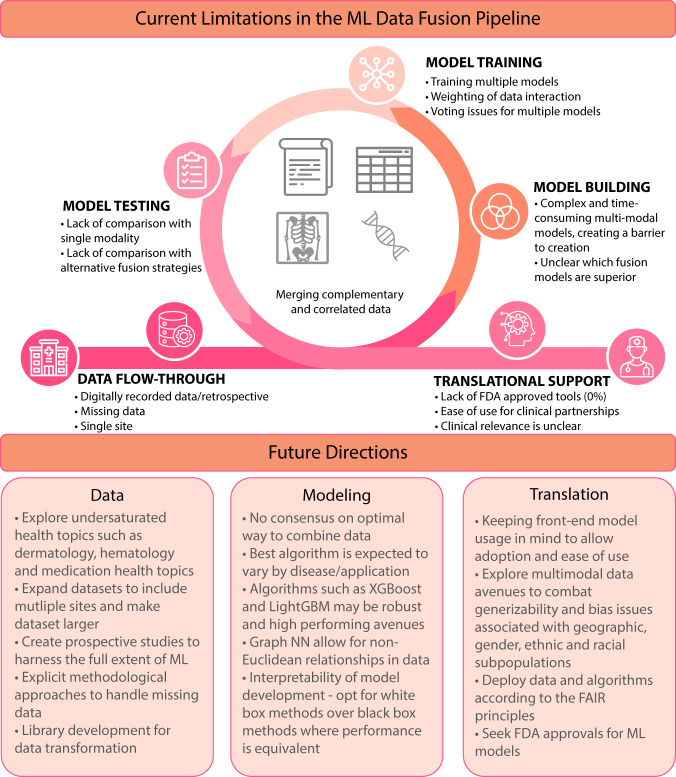
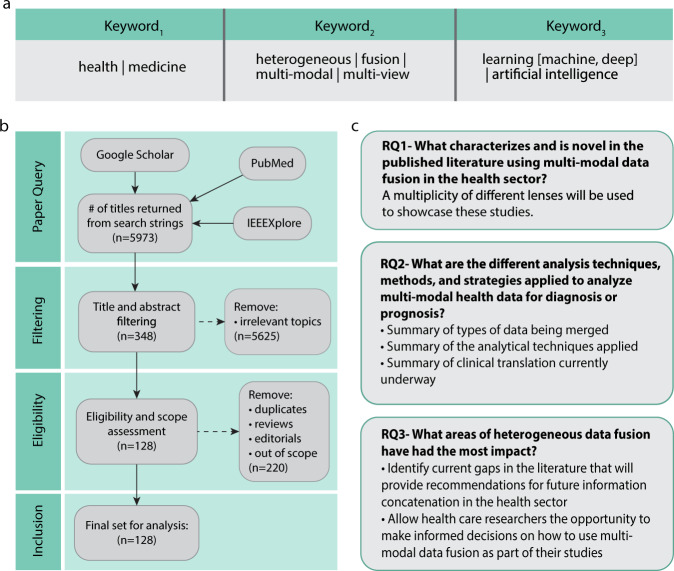
Machine learning is frequently being leveraged to tackle problems in the health sector including utilization for clinical decision-support. Its use has historically been focused on single modal data. Attempts to improve prediction and mimic the multimodal nature of clinical expert decision-making has been met in the biomedical field of machine learning by fusing disparate data. This review was conducted to summarize the current studies in this field and identify topics ripe for future research. We conducted this review in accordance with the PRISMA extension for Scoping Reviews to characterize multi-modal data fusion in health. Search strings were established and used in databases: PubMed, Google Scholar, and IEEEXplore from 2011 to 2021. A final set of 128 articles were included in the analysis. The most common health areas utilizing multi-modal methods were neurology and oncology. Early fusion was the most common data merging strategy. Notably, there was an improvement in predictive performance when using data fusion. Lacking from the papers were clear clinical deployment strategies, FDA-approval, and analysis of how using multimodal approaches from diverse sub-populations may improve biases and healthcare disparities. These findings provide a summary on multimodal data fusion as applied to health diagnosis/prognosis problems. Few papers compared the outputs of a multimodal approach with a unimodal prediction. However, those that did achieved an average increase of 6.4% in predictive performance (as measured by AUC) over the single best unimodal model.
Overview
CoChat Summary
## TL;DR
This scoping review summarizes 128 articles on multimodal machine learning in health from 2011–2021 and finds that early fusion was the most common data-merging strategy. Across the included studies, multimodal approaches generally improved predictive performance over unimodal methods, but clinical translation, FDA approval, and rigorous reporting were largely lacking.
## Key findings
- The final cohort included 128 articles, and the most common health areas were neurology and oncology.
- 126/128 papers explicitly reported a validation procedure; the most common were N-fold cross validation (55), train-test split (51), leave-one-out cross validation (10), and external dataset validation (10).
- Early fusion was the most common data-merging strategy; late fusion was much less common, with n = 20 papers.
- Among papers that compared multimodal vs unimodal prediction, the multimodal approach achieved an average increase of 6.4% in predictive accuracy/AUC.
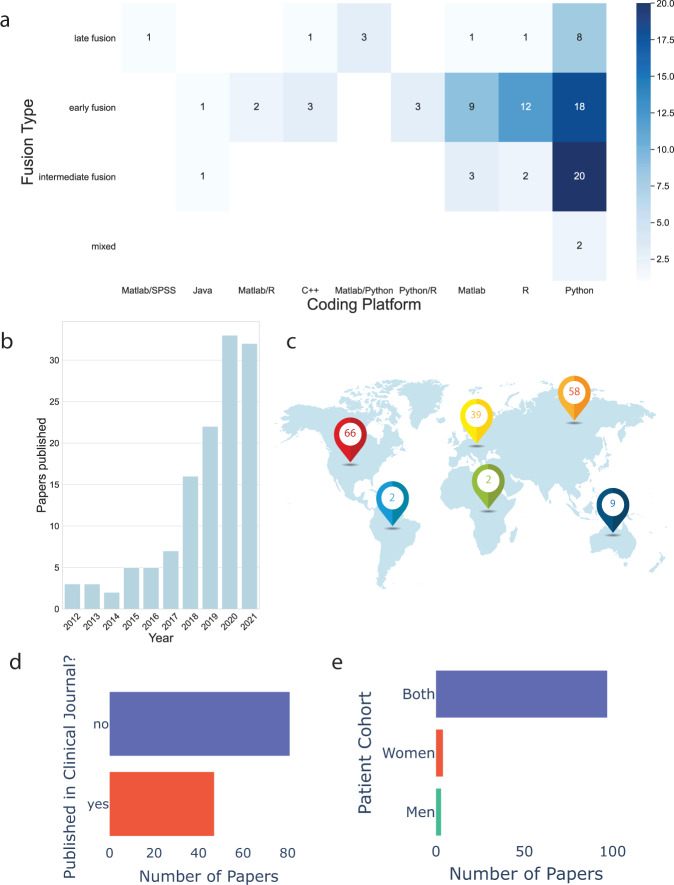
- Less than half of the papers were published in journals intended for a clinical audience (37.6%), and none had FDA-approved clinical tools.
## Methods
- The authors conducted a PRISMA-ScR scoping review of multimodal/multiview machine learning in health, searching PubMed, Google Scholar, and IEEEXplore for studies published 2011–2021 in English.
- Inclusion criteria required original research on multimodal or multiview machine learning for diagnostic or prognostication applications in human-derived data; 128 articles met criteria after 2-person verification.
- They extracted study characteristics, health topics, modality combinations, fusion type, machine-learning methods, validation, outcomes, and limitations, and summarized the literature descriptively.
## Limitations
- The paper states that it was not a systematic review, so some eligible titles may have been missed.
- The authors note that they did not perform a critical appraisal of methodological quality of the included studies.
- Evident from the text: many included studies had common methodological issues such as single-site cohorts, small sample sizes, retrospective data, imbalanced samples, missing-data handling, confounding, and limited interpretability, which likely affect generalizability and clinical use.
Model-written summary. Check it against the paper before relying on it.
Integrity signals
Registry
Cites
Statistics
Figures
Verification
Claims the paper makes
16 Valid · 3 Not valid · 14 Not checked · 40 Own results and interpretations
Every source the paper cites for this claim was checked and supports it.
In the paper
“Data from different sources and file formats are rarely uniform, and this is especially the case with clinical data21.”
§ Multimodal machine learning in precision health: A scoping review > Introduction
What the sources say
- Supportedcites [21] Kohane IS What every reader should know about studies using electronic health record data but may be afraid to ask J. Med. Internet Res. 2021 23 e22219 10.2196/22219 33600347 PMC7927948 source
The Data Collection and Handling section says clinical data elements can use different units and codes across hospitals and even within one health system, requiring harmonization. The Data Type section also describes differences between codified records and clinical narrative text. Together, these support the cited point that clinical data from different sources are often not uniform. (LLM, conf=0.87)
plain- Asserted: passes — The authors put it forward as true.
- Checkable: passes — It can be checked against evidence.
- Load-bearing: passes — The paper’s conclusions depend on it.
- Based: passes — The paper gives a reason why it holds.
- Supported
Every source the paper cites for this claim was checked and supports it.
In the paper
“Medication/drug topics present an underrepresented area, with only two papers being published in this field50,66.”
§ Multimodal machine learning in precision health: A scoping review > Discussion
What the sources say
- Supportedcites [50] Sivan K Predicting risk for Alcohol Use Disorder using longitudinal data with multimodal biomarkers and family history: A machine learning study Mol. Psychiatry 2021 26 1133 1141 10.1038/s41380-019-0534-x 31595034 PMC7138692 source
The Methods (Participants; page not supplied) describe this as a study predicting later alcohol use disorder, so the source serves as an example of a drug-related paper. The statement that there were only two such papers is the citing authors’ count, not a finding attributed to this individual study. (LLM, conf=0.86)
- Supportedcites [66] Yi, Z. et al. Predicting adverse drug reactions of combined medication from heterogeneous pharmacologic databases. BMC Bioinform.19, 517 (2018). PMC6311930 30598065 source
The Abstract Background and Background and motivation identify this paper as research on adverse drug reactions from combined medication. The citation identifies one of the two medication/drug papers counted by the citing authors; it does not attribute the literature count to this source. (LLM, conf=0.90)
plain- Asserted: passes — The authors put it forward as true.
- Checkable: passes — It can be checked against evidence.
- Load-bearing: passes — The paper’s conclusions depend on it.
- Based: passes — The paper gives a reason why it holds.
- Supported
The cited sources support only part of this claim — read each source’s verdict below.
In the paper
“Seldom were machine learning investigations on prospective data, an issue endemic in the field84.”
§ Multimodal machine learning in precision health: A scoping review > Discussion
What the sources say
- Partly supportedcites [84] Niha, B. et al. Radiogenomic analysis of hypoxia pathway is predictive of overall survival in Glioblastoma. Sci. Rep.8, 7 (2018). PMC5758516 29311558 sourceExperimental — accuracy not yet measured
The Methods (Study Population) describe this machine-learning study as a retrospective analysis, and the Discussion identifies retrospective data collection as a limitation. That supports one example of non-prospective research, but the paper does not establish that prospective machine-learning investigations are seldom conducted across the field. (LLM, conf=0.78)
plain- Asserted: passes — The authors put it forward as true.
- Checkable: passes — It can be checked against evidence.
- Load-bearing: unclear — It is unclear whether the paper’s conclusions depend on it.
- Based: passes — The paper gives a reason why it holds.
- Partly supported
The cited sources support only part of this claim — read each source’s verdict below.
In the paper
“Multiple studies have now pointed out that if the data an ML model is trained on is biased this often yields bias in the predictions186,187.”
§ Multimodal machine learning in precision health: A scoping review > Discussion
What the sources say
- Partly supportedcites [186] Obermeyer Z Powers B Vogeli C Mullainathan S Dissecting racial bias in an algorithm used to manage the health of populations Science 2019 366 447 53. 10.1126/science.aax2342 31649194 sourceExperimental — accuracy not yet measured
The paper explains that using health care costs as a training label produced racially biased predictions of health needs because costs reflect unequal access to care (p. 2; Mechanism of bias, p. 4). This supports the claim that bias in training data can lead to biased predictions, but the study does not establish that this *often* happens across ML models. (LLM, conf=0.82)
- Not checked — no full text of the sourcecites [187] Wang H Using machine learning to integrate sociobehavioral factors in predicting cardiovascular-related mortality risk Stud. Health Technol. Inf. 2019 264 433 437 31437960 source
hedgedstates a possible cause- Asserted: passes — The authors put it forward as true.
- Checkable: passes — It can be checked against evidence.
- Load-bearing: passes — The paper’s conclusions depend on it.
- Based: passes — The paper gives a reason why it holds.
- Partly supported
The sources with a verdict support this claim; the rest weren’t checked yet, have no full text we could read, or their verdicts aren’t rated yet.
In the paper
“While incorporating disparate data does lend itself to seemingly better predictions139, as knowledge around certain diseases accumulates, data fusion in healthcare is an evolving target that warrants proactively adapting to the dynamic landscape190.”
§ Multimodal machine learning in precision health: A scoping review > Discussion
What the sources say
- Supportedcites [139] Nikolaos K Prediction models of functional outcomes for individuals in the clinical high-risk state for psychosis or with recent-onset depression: A multimodal, multisite machine learning analysis JAMA Psychiatry 2018 75 1156 1172 10.1001/jamapsychiatry.2018.2165 30267047 PMC6248111 source
The Discussion reports improved prognostic performance from blending structural MRI and functional data, particularly for patients with ambiguous clinical decision scores. It describes these results as evidence of improvements from multimodal risk assessment, supporting the citing sentence’s qualified claim. The supplied passages do not provide page numbers. (LLM, conf=0.90)
- Not checked — no full text of the sourcecites [190] Luo Y Wunderink RG Lloyd-Jones D Proactive vs reactive machine learning in health care: Lessons from the COVID-19 pandemic JAMA 2022 327 623 624 10.1001/jama.2021.24935 35085382 source
hedgedstates a possible cause- Asserted: passes — The authors put it forward as true.
- Checkable: passes — It can be checked against evidence.
- Load-bearing: unclear — It is unclear whether the paper’s conclusions depend on it.
- Based: passes — The paper gives a reason why it holds.
- Supported
32 more claims · 1 with their cited sources checked
Create a free account to see all 73 claims and to verify the 2 references still open.
- Probably not a substantial claim. 22
- It may state two separate claims as one. 18
Claims other papers make about this one
Each is checked against this paper’s own text: does it say what the citing paper says it does?
The source backs part of the claim, not all of it — or backs it for a different population, condition or comparison.
In the citing paper
“Generative AI can analyse a patient’s genetic makeup, lifestyle and medical history to predict how they might respond to different treatments [48].”
From Generative AI in healthcare: an implementation science informed translational path on application, integration and governance (2024) · cites this paper as [48]
Experimental — accuracy not yet measuredThe source backs part of the claim, not all of it — or backs it for a different population, condition or comparison.
In the citing paper
“Machine learning models that integrate task-relevant multimodal EHR have been shown to yield superior performance compared to those relying on a single modality2–6.”
From MoMA: a mixture-of-multimodal-agents architecture for enhancing clinical prediction modelling (2025) · cites this paper as [6]
Experimental — accuracy not yet measuredThe source backs part of the claim, not all of it — or backs it for a different population, condition or comparison.
In the citing paper
“By using various fusion strategies designed to integrate information from multiple data modalities effectively, multimodal models allow for the compensation of information that may be missing or incomplete in any single modality, thus providing more comprehensive and clinically relevant insights into a patient’s condition that can match the cognitive behavior of healthcare providers [7,8,16,17].”
From Multimodal Artificial Intelligence for Precision Critical Care: A Scoping Review (2026) · cites this paper as [17]
Experimental — accuracy not yet measuredThe source backs part of the claim, not all of it — or backs it for a different population, condition or comparison.
In the citing paper
“In multimodal AI, variations in clinical practice, resource availability, and patient characteristics can lead to systematic underrepresentation of certain patient groups or clinical scenarios in the data, resulting in biased model training and reduced fairness [8,17].”
From Multimodal Artificial Intelligence for Precision Critical Care: A Scoping Review (2026) · cites this paper as [17]
Experimental — accuracy not yet measuredThe cited source says what the claim attributes to it.
In the citing paper
“which aligns with the 6.4 percentage points improvement reported previously by Kline et al. (2022).”
From Navigating the landscape of multimodal AI in medicine: A scoping review on technical challenges and clinical applications (2025) · cites this paper as Kline et al. (2022)
6 more claims about this paper
Create a free account to see every claim other papers make about this one.
Citations
Cites
PRISMA Extension for Scoping Reviews (PRISMA-ScR): Checklist and Explanation
Tricco, A. C., Lillie, E., Zarin, W., O'Brien, K. K., Colquhoun, H., Levac, D., Moher, D., Peters, M. D. J., Horsley, T., Weeks, L., et al. (2018) · Annals of Internal Medicine · doi:10.7326/m18-0850 · Cited by 43,565
The FAIR Guiding Principles for scientific data management and stewardship
Wilkinson, M. D., Dumontier, M., Aalbersberg, I. J., Appleton, G., Axton, M., Baak, A., Blomberg, N., Boiten, J.-W., da Silva Santos, L. B., Bourne, P. E., et al. (2016) · Scientific Data · doi:10.1038/sdata.2016.18 · Cited by 18,423
LightGBM: A Highly Efficient Gradient Boosting Decision Tree
(2017) · HAL · Cited by 10,512
The cancer genome atlas pan-cancer analysis project
The Cancer Genome Atlas Research Network, Weinstein, J. N., Collisson, E. A., Mills, G. B., Shaw, K. R. M., Ozenberger, B. A., Ellrott, K., Shmulevich, I., Sander, C., & Stuart, J. M. (2013) · Nature Genetics · doi:10.1038/ng.2764 · Cited by 9,092 · cited 1×
“This is likely fostered by curated databases that lend themselves to multi-modality predictions such as Alzheimer ’ s Disease Neuroimaging Initiative 165 and The Cancer Genome Atlas Program 166 .”
BackgroundDissecting racial bias in an algorithm used to manage the health of populations
Obermeyer, Z., Powers, B., Vogeli, C., & Mullainathan, S. (2019) · Science · doi:10.1126/science.aax2342 · Cited by 7,137
By the 2019 American Geriatrics Society Beers Criteria® Update Expert Panel (2019) · Journal of the American Geriatrics Society · doi:10.1111/jgs.15767 · Cited by 3,163
Key challenges for delivering clinical impact with artificial intelligence
Kelly, C. J., Karthikesalingam, A., Suleyman, M., Corrado, G., & King, D. (2019) · BMC Medicine · doi:10.1186/s12916-019-1426-2 · Cited by 3,136
Deep learning for healthcare: review, opportunities and challenges
Miotto, R., Wang, F., Wang, S., Jiang, X., & Dudley, J. T. (2018) · Briefings in Bioinformatics · doi:10.1093/bib/bbx044 · Cited by 3,076 · cited 1×
“Clinical decision support has long been an aim for those implementing algorithms and machine learning in the health sphere 1 – 3 .”
Self-citationEnsemble based systems in decision making
Polikar, R. (2006) · IEEE Circuits and Systems Magazine · doi:10.1109/mcas.2006.1688199 · Cited by 2,938
Alzheimer's Disease Neuroimaging Initiative (ADNI)
Petersen, R. C., Aisen, P. S., Beckett, L. A., Donohue, M. C., Gamst, A. C., Harvey, D. J., Jack, C. R., Jagust, W. J., Shaw, L. M., Toga, A. W., et al. (2010) · Neurology · doi:10.1212/wnl.0b013e3181cb3e25 · Cited by 2,572
Research works printed but not linked: 8
- Alan NS Christopher LB Franklin EW Revisions to the JDL data fusion model Sens. Fusion.: Architectures, Algorithms, Appl. III 1999 3719 430
- Xiaosong, W., Yifan, P., Le, L., Zhiyong, L. & Ronald, M. S. TieNet: Text-Image embedding network for common thorax disease classification and reporting in chest X-rays. In Proceedings of the IEEE Computer Society Conference on Computer Vision and Pattern Recognition 9049–9058 (IEEE Computer Society, 2018).
- Yanbo, X., Siddharth, B., Shriprasad, R. D., Kevin, O. M. & Jimeng, S. RAIM: Recurrent attentive and intensive model of multimodal patient monitoring data. In Proceedings of the ACM SIGKDD International Conference on Knowledge Discovery and Data Mining 2565–2573 (Association for Computing Machinery, 2018).
- Esra, Z. et al. Multimodal fusion strategies for outcome prediction in Stroke. In HEALTHINF 2020 - 13th International Conference on Health Informatics, Proceedings
- Wenhuan Z Anupam G Daniel HH On the application of advanced machine learning methods to analyze enhanced, multimodal data from persons infected with covid-19 Computation 2021 9 1 15
- Cao, W. et al. Brits: Bidirectional Recurrent Rmputation for Time Series. NeurIPS, 31 (2018).
- Luo, Y. & Mao, C. ScanMap: Supervised confounding aware non-negative matrix factorization for polygenic risk modeling. In Machine Learning for Healthcare Conference; 2020: PMLR 27–45 (2020).
- Kalavathy R Suresh RM Pharmacovigilance from electronic medical records to report adverse events J. Chem. Pharm. Sci. 2015 2015 188 191
Cited by
Items 101–200 of 524
Sobkowich, K. E. (2025) · American Journal of Veterinary Research · doi:10.2460/ajvr.24.09.0275 · Cited by 26
Multimodal Machine Learning for Prediction of 30-Day Readmission Risk in Elderly Population
Loutati, R., Ben‐Yehuda, A., Rosenberg, S., & Rottenberg, Y. (2024) · The American Journal of Medicine · doi:10.1016/j.amjmed.2024.04.002 · Cited by 18
Machine learning‐assisted point‐of‐care diagnostics for cardiovascular healthcare
Wang, K., Tan, B., Wang, X., Qiu, S., Zhang, Q., Wang, S., Yen, Y., Jing, N., Liu, C., Chen, X., et al. (2025) · Bioengineering & Translational Medicine · doi:10.1002/btm2.70002 · Cited by 22
Gezimati, M., & Singh, G. K. (2025) · IEEE Transactions on Instrumentation and Measurement · doi:10.1109/tim.2025.3547084 · Cited by 16
“A recent review reported the fusion of imaging and omics data [33], and a more inclusive review study highlighted the application of machine learning protocol for the fusion of all current information types or sources [34].”
Li, Y., Chang, X., Wu, J., Liu, Y., Wang, H., & Zhang, Y. (2025) · Brain Network Disorders · doi:10.1016/j.bnd.2025.04.001 · Cited by 21
Self-citationWang, X., Wang, Q., Ding, G., Wang, J., Tang, Y., & Feng, Y. (2025) · iScience · doi:10.1016/j.isci.2025.114082 · Cited by 28
Wang, D., Hu, Q., Cao, C.-G., Feng, X., Wu, H., Zhu, S., Wang, H., & Yang, C. (2024) · Expert Systems with Applications · doi:10.1016/j.eswa.2024.123869 · Cited by 18
Self-citationResponsible adoption of multimodal artificial intelligence in health care: promises and challenges
Azarfar, G., Naimimohasses, S., Rambhatla, S., Komorowski, M., Ferro, D., Lewis, P. R., Gates, D., Shara, N. M., Gascon, G. M., Chang, A. C., et al. (2025) · The Lancet Digital Health · doi:10.1016/j.landig.2025.100917 · Cited by 32
Scaling medical AI across clinical contexts
Li, M. M., Reis, B. Y., Rodman, A. M., Cai, T., Dagan, N., Balicer, R. D., Loscalzo, J., Kohane, I. S., & Žitnik, M. (2026) · Nature Medicine · doi:10.1038/s41591-025-04184-7 · Cited by 32
“https://doi.org/10.1038/s41591-025-04184-7 learn joint representations from raw inputs, and hybrid approaches combine both 79–82 .”
InfluentialOxygenation Fluctuations Associated with Severe Retinopathy of Prematurity
Lin, W.-C., Jordan, B. K., Scottoline, B. P., Ostmo, S. R., Coyner, A. S., Singh, P., Kalpathy–Cramer, J., Erdogmus, D., Chan, R. V. P., Chiang, M. F., et al. (2023) · Ophthalmology Science · doi:10.1016/j.xops.2023.100417 · Cited by 21
“32 The purpose of this study is to evaluate our gap in knowledge regarding time-dependent variables in the EHR and ROP and to compare prediction models using these variables compared to standard static variables (birth weight and gestational age [GA]).”
MethodAdvancing spine care through AI and machine learning: overview and applications
Cina, A., & Galbusera, F. (2024) · EFORT Open Reviews · doi:10.1530/eor-24-0019 · Cited by 18
Genetic biomarkers and machine learning techniques for predicting diabetes: systematic review
Khan, S., Mohsen, F., & Shah, Z. (2024) · Artificial Intelligence Review · doi:10.1007/s10462-024-11020-w · Cited by 20
Natraj, S., Kojovic, N., Maillart, T., & Schaer, M. (2024) · PLoS ONE · doi:10.1371/journal.pone.0308388 · Cited by 22
Qi, W., Shen, S., Dong, C., Zhao, M., Zang, S., Zhu, X., Li, J., Wang, B., Shi, Y., Dong, Y., et al. (2025) · Journal of Medical Internet Research · doi:10.2196/71560 · Cited by 22
“Multimodal fusion strategies are typically categorized into 4 types: early fusion, midlevel fusion, late fusion, and hybrid fusion [101].”
Wang, S., Wang, K., & Lin, J. (2025) · Scientific Reports · doi:10.1038/s41598-025-05505-z · Cited by 19
Huo, T., Wu, W., Chen, X., Xue, M., Liu, P., Zhang, J., Xie, Y., Wang, H., Zhou, H., Yan, Z., et al. (2025) · Intelligent Oncology · doi:10.1016/j.intonc.2025.06.005 · Cited by 18
Self-citationLi, H., Zhang, T., Han, G., Huang, Z., Xiao, H., Ni, Y., Liu, B., Lin, W., & Yuan, L. (2025) · BMC Medical Informatics and Decision Making · doi:10.1186/s12911-025-03120-6 · Cited by 18
“Many previous studies rely on either isolated imaging data or a limited set of clinical features for risk assessment, resulting in reduced model robustness and high sensitivity to data dimensionality and quality constraints [38, 39].”
Sensing in Smart Cities: A Multimodal Machine Learning Perspective
Sadiq, T., & Omlin, C. W. P. (2025) · Smart Cities · doi:10.3390/smartcities9010003 · Cited by 26
“Recent studies [133] have formulated predictive multimodal deep learning healthcare analytic frameworks integrating data from EHR, wearable devices, and environmental sensors to predict health outcomes and enable timely interventions.”
Luo, Y., Mao, C., Sanchez-Pinto, L. N., Ahmad, F. S., Naidech, A. M., Rasmussen, L. V., Pacheco, J. A., Schneider, D., Mithal, L. B., Dresden, S. M., et al. (2024) · Learning Health Systems · doi:10.1002/lrh2.10417 · Cited by 21
“89 For example, as mentioned in previous sections, our adoption of bulk NLP for automating breast cancer recurrence registration, previously a manual task, has significantly improved data management and impacted clinical practices within our health system.”
BackgroundSelf-citationThe Emerging and Important Role of Artificial Intelligence in Cardiac Surgery
Nedadur, R., Bhatt, N., Liu, T. X., Chu, M. W. A., McCarthy, P. M., & Kline, A. S. (2024) · Canadian Journal of Cardiology · doi:10.1016/j.cjca.2024.07.027 · Cited by 32
Self-citationBaharoon, M., Almatar, H., Alduhayan, R., Aldebasi, T. M., Alahmadi, B., Bokhari, Y., Alawad, M., Almazroa, A. A., & Aljouie, A. (2024) · Bioengineering · doi:10.3390/bioengineering11111080 · Cited by 25
“Specifically, we were unable to assess the capability of our model for predicting the different stages of HTN because we did not have information on the HTN stage for each patient.”
Zhou, X., Chen, X., Song, H., Lv, X., Gu, J., Chen, C., & Chen, C. (2025) · Microchemical Journal · doi:10.1016/j.microc.2025.112870 · Cited by 15
Spector‐Bagdady, K. (2025) · The American Journal of Bioethics · doi:10.1080/15265161.2025.2554770 · Cited by 13
“Vision-language models have made it possible to learn from medical imaging, clinical notes, and structured clinical data (Alayrac et al. 2022; Kline et al. 2022).”
Chinni, B. K., & Manlhiot, C. (2024) · Canadian Journal of Cardiology · doi:10.1016/j.cjca.2024.07.026 · Cited by 27
Khairuddin, M. Z. F., Hasikin, K. B., Razak, N. A. A., Mohshim, S. A., & Ibrahim, S. S. (2023) · IEEE Access · doi:10.1109/access.2023.3304328 · Cited by 18
“Multimodal learning is defined as ‘the area of applying machine and deep learning techniques in integrating multiple types of data into a single model to optimum the uniqueness and valuable information in an algorithmic framework’ [24].”
BackgroundNie, D., Zhan, Y., Xu, K., Zou, H., Li, K., Chen, L., Chen, Q., Zheng, W., Peng, X., Yu, M., et al. (2023) · International Journal of Rheumatic Diseases · doi:10.1111/1756-185x.14956 · Cited by 15
“12,13 For example, the FDA has approved several AI/machine learning-based software systems for diabetic retinopathy, stroke, atrial fibrillation, and coronary artery calcification.”
BackgroundMennickent, D., Albornoz, L. R., Gutiérrez-Vega, S., Aguayo, C. R., Marini, F., Guzmán‐Gutiérrez, E., & Araya, J. (2024) · Biomedicines · doi:10.3390/biomedicines12061142 · Cited by 12
Multimodal learning for mapping genotype–phenotype dynamics
Khodaee, F., Zandie, R., & Edelman, E. R. (2025) · Nature Computational Science · doi:10.1038/s43588-024-00765-7 · Cited by 14
“Multimodal machine learning offers several unique advantages 10 , such as enhanced learning for a more comprehensive understanding of the data 11 , improved robustness in dealing with noisy or incomplete data 12 , and cross-modal understanding between different data modalities.”
van der Plas, N. E., Noordermeer, S. D. S., Oosterlaan, J., & Luman, M. (2025) · Journal of the American Academy of Child & Adolescent Psychiatry · doi:10.1016/j.jaac.2025.04.012 · Cited by 19
Introduction to health care data analytics- an overview
Worku, A., Arage, F. G., & Kebede, F. B. (2025) · Discover Health Systems · doi:10.1007/s44250-025-00291-x · Cited by 18
“Since big data is often a necessary requirement for AI and data science utilization, it is important to explore data-driven methods that can work well at a small size [63, 64].”
Multimodal Wearable Biosensing Meets Multidomain AI: A Pathway to Decentralized Healthcare
Liu, C., Fan, H., Kim, M., Zhou, T., Yang, P., Zhao, L., Wang, Y., Che, Z., Liu, C., Li, B., et al. (2026) · Advanced Science · doi:10.1002/advs.202522900 · Cited by 32
“In real world settings, incomplete or missing modalities are common due to resource constraints, patient adherence, or device failure, requiring systems to operate robustly under partial observability [ 220, 221 ].”
The Emerging Role of Artificial Intelligence in Valvular Heart Disease
Canning, C., Guo, J., Narang, A., Thomas, J. D., & Ahmad, F. S. (2023) · Heart Failure Clinics · doi:10.1016/j.hfc.2023.03.001 · Cited by 13
Use of Computation Ecosystems to Analyze the Kidney-Heart Crosstalk
Wu, Z., Lohmöller, J., Kuhl, C. K., Wehrle, K., & Jankowski, J. (2023) · Circulation Research · doi:10.1161/circresaha.123.321765 · Cited by 12
“178 Furthermore, the amount of data at different time points varies significantly, for example, -omics data are accumulated within a research study which renders it a sparse data source compared to clinical data.”
BackgroundmBGT: Encoding Brain Signals With Multimodal Brain Graph Transformer
Peng, C., Guo, T., Xie, C., Bai, X., Zhou, J., Zhao, X., He, E., & Xia, F. (2024) · IEEE Transactions on Consumer Electronics · doi:10.1109/tce.2024.3425478 · Cited by 19
“Particularly, combining multimodal medical data benefits clinical analysis, ultimately providing decision-making support for both patients and medical estab-lishments [18].”
Sun, D., Macedonia, C. R., Chen, Z., Chandrasekaran, S., Najarian, K., Zhou, S. Y., Cernak, T., Ellingrod, V. L., Jagadish, H. V., Marini, B. L., et al. (2024) · Journal of Medicinal Chemistry · doi:10.1021/acs.jmedchem.4c01684 · Cited by 15
Self-citationRobust multi-modal fusion architecture for medical data with knowledge distillation
Wang, M., Fan, S., Li, Y., Gao, B., Xie, Z., & Chen, H. (2024) · Computer Methods and Programs in Biomedicine · doi:10.1016/j.cmpb.2024.108568 · Cited by 19
Self-citationRecent advancements in digital health management using multi-modal signal monitoring
Fu, J., Wang, H., Na, R., Jisaihan, A., Wang, Z., & Ohno, Y. (2023) · Mathematical Biosciences & Engineering · doi:10.3934/mbe.2023241 · Cited by 13
Self-citationModel-Free-Communication Federated Learning: Framework and application to Precision Medicine
Falco, I. D., Cioppa, A. D., Koutný, T., Scafuri, U., & Tarantino, E. (2023) · Biomedical Signal Processing and Control · doi:10.1016/j.bspc.2023.105416 · Cited by 13
Anokwuru, E. A., Mends, K. Y. O., & Okoh, O. F. (2023) · International Journal of Scientific Research and Modern Technology. · doi:10.38124/ijsrmt.v2i12.1037 · Cited by 13
Biosensors integrated within wearable devices for monitoring chronic wound status
Szunerits, S., Boukherroub, R., Kleber, C., Knoll, W., Yunda, J. A., Rumipamba, J., Llerena, G. T., & Melinte, S. (2025) · APL Bioengineering · doi:10.1063/5.0220516 · Cited by 16
Zhou, Y., Khasentino, J., Yun, T., Biradar, M. I., Shreibati, J. B., Lai, D., Schwantes-An, T.-H. L., Luben, R., McCaw, Z. R., Engmann, J., et al. (2025) · The American Journal of Human Genetics · doi:10.1016/j.ajhg.2025.05.015 · Cited by 17
Robustness and Reliability Testing in Healthcare Using Artificial Intelligence
Khinvasara, T., Shankar, A., & Wong, C. (2024) · Asian Journal of Research in Computer Science · doi:10.9734/ajrcos/2024/v17i7482 · Cited by 12
AI-Enhanced Lung Cancer Prediction: A Hybrid Model's Precision Triumph
Kesiku, C. Y., & García-Zapirain, B. (2024) · IEEE Journal of Biomedical and Health Informatics · doi:10.1109/jbhi.2024.3447583 · Cited by 13
The Transition From Homogeneous to Heterogeneous Machine Learning in Neuropsychiatric Research
Zhao, Q., Nooner, K. B., Tapert, S. F., Adeli, E., Pohl, K. M., Kuceyeski, A. F., & Sabuncu, M. R. (2024) · Biological Psychiatry Global Open Science · doi:10.1016/j.bpsgos.2024.100397 · Cited by 13
“To explicitly link those latent factors with interpretable environmental and sociodemographic factors, multimodal predictive models can be used to combine imaging and nonimaging (e.g., tabular) data as the input (i.e., multimodal data fusion) (86 – 89) to learn factor-modulated mapping functions.”
Use of Multimodal Artificial Intelligence in Surgical Instrument Recognition
Haider, S. A., Ho, O. A., Borna, S., et al. (2025) · Bioengineering · doi:10.3390/bioengineering12010072 · Cited by 10
Rawat, K., & Sharma, T. (2025) · Scientific Reports · doi:10.1038/s41598-025-96052-0 · Cited by 13
“Zhang et al. 12,13 presented a multimodal framework for automatic depression and bipolar disorder detection using speech, facial expressions, and physiological signs.”
Assessment of brain cancer atlas maps with multimodal imaging features
Capobianco, E., & Dominietto, M. D. (2023) · Journal of Translational Medicine · doi:10.1186/s12967-023-04222-3 · Cited by 14
“One is inherent to the definition of multimodality (restricted to imaging or inclusive of other data types) [58].”
BackgroundSageshima, J., Than, P. A., Goussous, N. M., Mineyev, N. M., & Perez, R. V. (2023) · JAMA Surgery · doi:10.1001/jamasurg.2023.4679 · Cited by 15
Kim, Y. E., Dobko, M., Li, H., Shao, T., Periyakoil, P., Tipton, C., Colasacco, C., Serpedin, A., Elemento, O., Sabuncu, M., et al. (2025) · The Laryngoscope · doi:10.1002/lary.32036 · Cited by 9
“34 With DL models applied to VLS, it will be important to explore whether combining audio with video data enhances performance compared to using video input alone.”
Demrozi, F., Farmanbar, M., & Engan, K. (2025) · Current Opinion in Biomedical Engineering · doi:10.1016/j.cobme.2025.100632 · Cited by 21
He, Z., Chen, Y., Li, G., Wang, J., Wang, Y., Tu, P., Huang, Y., Zhao, L., Pan, X., Liu, H., et al. (2025) · Cancers · doi:10.3390/cancers18010089 · Cited by 11
Complication Prediction after Esophagectomy with Machine Learning
van de Beld, J.-J., Crull, D., Mikhal, J., Geerdink, J., Veldhuis, A., Poel, M., & Kouwenhoven, E. A. (2024) · Diagnostics · doi:10.3390/diagnostics14040439 · Cited by 15
“Multiple fusion strategies have been used in medical machine learning and come in three broad categories: early, intermediate, and late fusion [22].”
BackgroundMethodInfluentialMess, F., Blaschke, S., Gebhard, D., & Friedrich, J. (2024) · Frontiers in Public Health · doi:10.3389/fpubh.2024.1444521 · Cited by 15
Overview of Multimodal Machine Learning
Al‐Zoghby, A. M., Al-Awadly, E. M. K., Ebada, A. I., & Awad, W. A. (2025) · ACM Transactions on Asian and Low-Resource Language Information Processing · doi:10.1145/3701031 · Cited by 18
Stefano, G. B., Büttiker, P., Weissenberger, S., Esch, T., Michaelsen, M. M., Anders, M., Raboch, J., & Ptáček, R. (2023) · Brain Sciences · doi:10.3390/brainsci13071055 · Cited by 14
Multi-modal deep learning for automated assembly of periapical radiographs
Pfänder, L., Schneider, L., Büttner, M., Krois, J., Meyer‐Lueckel, H., & Schwendicke, F. (2023) · Journal of Dentistry · doi:10.1016/j.jdent.2023.104588 · Cited by 9
Enhancing heart failure diagnosis through multi-modal data integration and deep learning
Liu, Y., Li, D., Zhao, J., & Liang, Y. (2023) · Multimedia Tools and Applications · doi:10.1007/s11042-023-17716-5 · Cited by 9
“With the increasing availability of datasets, multimodal deep learning methods can learn the complex regulatory dynamics behind health and disease [16].”
Multimodal masked siamese network improves chest X-ray representation learning
Shurrab, S., Guerra-Manzanares, A., & Shamout, F. E. (2024) · Scientific Reports · doi:10.1038/s41598-024-74043-x · Cited by 13
“Van et al 34 . explored the impact of various image augmentation techniques on siamese representation learning for CXR.Medical data is inherently multimodal, encompassing various types of modalities, such as medical images, Electronic Health Records (EHR), clinical notes, and omics 35 .”
Phillips, E., O’Donoghue, O., Zhang, Y., Tsimpos, P., Mallinger, L. A., Chatzidakis, S., Pohlmann, J. E., Du, Y., Kim, I. S. Y., Song, J. J., et al. (2025) · npj Digital Medicine · doi:10.1038/s41746-025-01687-y · Cited by 9
“This multi-modal approach builds on prior research showing that integrating data of different types from multiple sources into a single model leads to improved predictive performance over models which used just one data type 27 .”
Wang, Y., Li, Y., Liu, L., Hong, P., & Xu, H. (2025) · Journal of Chemical Information and Modeling · doi:10.1021/acs.jcim.5c00430 · Cited by 22
Self-citationSahli, C., Pham, T. T., & Kenry, K. (2025) · Precision Chemistry · doi:10.1021/prechem.5c00028 · Cited by 13
Towards deployment-centric multimodal AI beyond vision and language
Liu, X., Zhang, J., Zhou, S., van der Plas, T. L., Vijayaraghavan, A., Grishina, A., Zhuang, M., Schofield, D., Tomlinson, C., Wang, Y., et al. (2025) · Nature Machine Intelligence · doi:10.1038/s42256-025-01116-5 · Cited by 27
“Multimodal AI systems can also help detect online criminal activity 9 and analyse societal trends to inform public policy 10 .”
Lü, Y., Chen, C., Qiu, J., Ji, Q., Zhou, L. D., Xiong, H., & Wu, T. (2025) · Renal Failure · doi:10.1080/0886022x.2025.2587490 · Cited by 11
Rueda, M., Leist, I. C., & Gut, I. G. (2023) · Journal of Biomedical Informatics · doi:10.1016/j.jbi.2023.104558 · Cited by 7
Kishikawa, R., Kodera, S., Setoguchi, N., Tanabe, K., Kushida, S., Nanasato, M., Maki, H., Fujita, H., Kato, N., Watanabe, H., et al. (2025) · European Heart Journal - Digital Health · doi:10.1093/ehjdh/ztae097 · Cited by 8
“34 However, because of differences in the data sets used for each model, precise accuracy comparisons among these four models were not possible.”
Cirincione, A., Lynch, K. M., Bennett, J., Choupan, J., Varghese, B. A., Sheikh‐Bahaei, N., & Pandey, G. S. (2024) · Heliyon · doi:10.1016/j.heliyon.2024.e36728 · Cited by 7
“Since manual analysis of these large multimodal datasets is challenging, computational algorithms, especially from machine learning (ML), have been applied to these data for the study of dementia and other neurodegenerative disorders, often with encouraging results [15,16].”
Cho, E., Yi, J.-M., Chun, J., Jang, H. G., Yoon, S. H., Lee, S. H., Jang, S. H., Park, D. W., Kim, S. J., Um, S., et al. (2025) · Integrative Cancer Therapies · doi:10.1177/15347354251319339 · Cited by 8
“55 SD is a unique diagnosis based on a combination of the patient’s subjective complaints and objective assessments by practitioners of traditional medicine that provides evidence-based treatment in East Asia.”
Ntam, V. A., Huebner, T., Steffens, M., & Scholl, C. (2025) · Frontiers in Psychiatry · doi:10.3389/fpsyt.2025.1588963 · Cited by 10
“However, in cases where a comparison was provided predictive accuracy was increased with the multimodal approach (69).”
Multimodal artificial intelligence in medicine: a task-oriented framework for clinical translation
Zhang, R.-Y., Chen, Y., Yue, W., Zhang, Y., Li, X., Feng, S., Yuan, F., & Luo, M. (2026) · Frontiers in Medicine · doi:10.3389/fmed.2025.1736272 · Cited by 20
Mahmud, M. I., & Banerjee, T. (2026) · Briefings in Bioinformatics · doi:10.1093/bib/bbag229 · Cited by 16
“Finally, while Multi-Modal Learning promises holistic “digital twins” by fusing diverse omics layers, it necessitates solving complex alignment problems between heterogeneous data spaces which are challenges that simpler unimodal models avoid [11, 12].”
Medical Data Analysis Using AutoML Frameworks
Shin, S., Park, D. J., Ji, S., Joo, G., & Im, H. (2024) · Journal of Electrical Engineering and Technology · doi:10.1007/s42835-024-01919-3 · Cited by 8
(2023) · romanian journal of ophthalmology · doi:10.22336/rjo.2023.53 · Cited by 7
“Looking ahead, future research directions should explore the integration of multimodal imaging to improve DR diagnosis and monitoring [ 39,40 ].”
BackgroundXu, Z., Scharp, D., Hobensack, M., Ye, J., Zou, J., Ding, S., Shang, J., & Topaz, M. (2024) · Journal of the American Medical Informatics Association · doi:10.1093/jamia/ocae278 · Cited by 8
Self-citationA Bayesian network combiner for multimodal handwriting analysis in Alzheimer’s disease detection
Nardone, E., D’Alessandro, T., Stefano, C. D., Fontanella, F., & di Freca, A. S. (2025) · Pattern Recognition Letters · doi:10.1016/j.patrec.2025.02.019 · Cited by 7
Saras, M. A. M., Mitra, M. K., & Tyagi, S. (2025) · Biology Methods and Protocols · doi:10.1093/biomethods/bpaf028 · Cited by 7
“Instead, they focus on the correlation be-tween individual data type analysis [13].”
Early Prediction of Chronic Diseases Through Multimodal Data Fusion in Machine Learning: A Survey
Sunil, D. M., & Joshi, P. V. (2025) · International Conference on Intelligent Sustainable Systems (ICISS) · doi:10.1109/iciss63372.2025.11076438 · Cited by 9
“Traditional methods of detecting these diseases wait for symptoms to appear, wasting valuable time[1][2].”
A survey on electronic health record driven multimodal representation learning
Dou, Y., Liu, Y., Zou, H., Zeng, W., Xu, K., & Peng, S. (2025) · Information Fusion · doi:10.1016/j.inffus.2025.103810 · Cited by 11
A Representation Fusion Framework for Decoupling Diagnostic Information in Multimodal Learning
Tonekaboni, S., Friedman, S. F., Zhang, X., Maddah, M., & Uhler, C. (2025) · npj Digital Medicine · doi:10.1038/s41746-025-02144-6 · Cited by 17
One step forward to personalized medicine?
Dodge, H. H., & Arnold, S. E. (2023) · Alzheimer s & Dementia Translational Research & Clinical Interventions · doi:10.1002/trc2.12435 · Cited by 7
Becker, M., Fehr, K. B., Goguen, S., Miliku, K., Field, C. J., Robertson, B., Yonemitsu, C., Bode, L., Simons, E., Marshall, J. S., et al. (2024) · Scientific Reports · doi:10.1038/s41598-024-52323-w · Cited by 10
“Machine learning methods can simultaneously investigate a multitude of modalities and reveal clinically meaningful associations 29,30 .”
Bernal‐Casas, D., Serrano‐Marín, J., Sánchez-Navés, J., Oller, J. M., & Franco, R. (2024) · Metabolites · doi:10.3390/metabo14030149 · Cited by 7
“Medical data from, among others, ultrasound, MRI, mammography, genomics, or positron emission tomography would feed any approach aimed at benefiting patient diagnosis and treatment [10–13].”
MethodDeep learning for multisource medical information processing
Gezimati, M., & Singh, G. K. (2024) · Elsevier eBooks · doi:10.1016/b978-0-44-313233-9.00009-6 · Cited by 9
Moore, A., Orset, B., Yassaee, A., Irving, B., & Morelli, D. (2024) · ACM Transactions on Computing for Healthcare · doi:10.1145/3665899 · Cited by 11
Guo, X., Ma, M., Zhao, L., Wu, J., Lin, Y., Fei, F., Tarimo, C. S., Wang, S., Zhang, J., Cheng, X., et al. (2025) · BMC Public Health · doi:10.1186/s12889-025-21339-w · Cited by 13
“Unlike conventional statistical models that rely on predefined hypotheses and assumptions, ML algorithms can identify intricate patterns and nonlinear relationships within data, offering a more holistic and data-driven perspective 9,10 .”
“Liver Disease Risk Prediction Using Regularized Deep Learning: A Novel Approach”
Rahi, P., Kang, S. S., Singh, A. P., & Singh, I. (2024) · International Conference on Advancements and Key Challenges in Green Energy and Computing (AKGEC) · doi:10.1109/akgec62572.2024.10868777 · Cited by 6
Cross-Domain Multi-Modal Few-Shot Object Detection via Rich Text
Shangguan, Z., Seita, D., & Rostami, M. G. (2025) · IEEE Winter Conference on Applications of Computer Vision · doi:10.1109/wacv61041.2025.00640 · Cited by 18
“These methods encompass various techniques, including, visual question-answering [3, 16, 52], robotics [2, 25], continual learning [4,42], and medical image analysis [22,31].”
“Advanced Anxiety Risk Stratification Using Regularized Deep Neural Networks”
Rahi, P., Kang, S. S., Singh, A. P., & Singh, I. (2024) · International Conference on Progressive Innovations in Intelligent Systems and Data Science (ICPIDS) · doi:10.1109/icpids65698.2024.00087 · Cited by 6
“Initial trials in deep reinforcement learning show promising results in personalized anxiety management strategies, emphasizing the potential of adaptive learning techniques in tailoring interventions [18].”
Bhardwaj, S., Vekariya, V., Singh, B., Vinay, S., Arul, A., & Roopa, M. D. (2024) · Measurement Sensors · doi:10.1016/j.measen.2024.101053 · Cited by 12
The health technology assessment in the artificial intelligence era: the AI surgical department
Bellini, V., Panizzi, M., & Bignami, E. G. (2024) · Artificial Intelligence Surgery · doi:10.20517/ais.2024.10 · Cited by 7
Precision Digital Health: A Proposed Framework and Future Research Opportunities
Baird, A. M., & Xia, Y. (2024) · Business & Information Systems Engineering · doi:10.1007/s12599-024-00867-6 · Cited by 9
Feng, Z., Sivak, J. A., & Krishnamurthy, A. K. (2024) · Lecture notes in computer science · doi:10.1007/978-3-031-66535-6_25 · Cited by 11
“There are numerous modalities in medical data, such as imaging, lab tests, prescriptions, clinical notes, and genomics and [7,1] review multimodal AI methods in healthcare.”
BackgroundMethodXAI-based Data Visualization in Multimodal Medical DataPreprint
Sharma, S., Singh, M., Mcdaid, L. J., & Bhattacharyya, S. (2025) · bioRxiv (Cold Spring Harbor Laboratory) · doi:10.1101/2025.07.11.664302 · Cited by 16
Flexible imputation toolkit for electronic health records
Sadr, A. V., Li, J., Hwang, W., Yeasin, M., Wang, M., Lehmann, H. P., Zand, R., & Abedi, V. (2025) · Scientific Reports · doi:10.1038/s41598-025-02276-5 · Cited by 13
Xiang, Z., Deng, J., Liang, H., Jiang, M., Liang, Y., Liu, Z., Wu, Y., Peng, L., Dai, X., & Zhu, Z. (2025) · Annals of Medicine · doi:10.1080/07853890.2025.2568118 · Cited by 8
“A scoping review showed that multi-modal machine learning was more robust in its estimations over unimodal methods, with an average increase of 6.4% in predictive accuracy [33].”
InfluentialGustafson, D., Mistry, P., Ching, C., Nardi-Agmon, I., Yu, C., Fan, C.-P. S., Houbois, C., Amir, E., Marwick, T. H., Abdel-Qadir, H., et al. (2025) · JACC CardioOncology · doi:10.1016/j.jaccao.2025.09.004 · Cited by 10
Imran, M., & Lee, Y. (2026) · IEEE Access · doi:10.1109/access.2026.3656368 · Cited by 15
Application of artificial intelligence in oral health management: challenges and opportunities
Li, H., Chen, S., Chang, B., Wang, X., He, Y., Xu, B., Sun, G., Yang, C., Li, G., Li, S., et al. (2026) · Frontiers in Medicine · doi:10.3389/fmed.2026.1700529 · Cited by 16
Artificial Intelligence-Driven Wearable Sensors for Cardiovascular Health Monitoring
Deng, H. T., Ma, B., Chen, G., Chi, J., Tong, J., Yu, F., Lü, B., Chen, Y., Zhao, C., Zhang, C., et al. (2026) · ACS Sensors · doi:10.1021/acssensors.5c04840 · Cited by 8
Ganjizadeh, A., Zawada, S. J., Langer, S. G., & Erickson, B. J. (2024) · Journal of Imaging Informatics in Medicine · doi:10.1007/s10278-024-00977-3 · Cited by 5
Evaluating the Effectiveness of Large Language Models in Converting Clinical Data to FHIR Format
Delaunay, J., Girbes, D., & Cusidó, J. (2025) · Applied Sciences · doi:10.3390/app15063379 · Cited by 12
Metadata
- Authors
- Kline, A., Wang, H., Li, Y., Dennis, S., Hutch, M., Xu, Z., Wang, F., Cheng, F., & Luo, Y.
- Affiliations
- Northwestern University (US)
- Cornell University (US)
- Cleveland Clinic Lerner College of Medicine (US)
- Corresponding author
- Luo, Yuan
- Venue
- npj Digital Medicine
- Published
- 2022-11-07
- Volume
- 5
- Issue
- 1
- Pages
- 171-171
- ISSN
- 2398-6352 (ISSN-L)
- PMC
- PMC9640667
- OpenAlex
- W4308885870
- Cited by
- 528
- References
- 203
- Citations by year
- 2026: 162 · 2025: 173 · 2024: 114 · 2023: 64 · 2022: 3
- FWCI
- 105.22
- Type
- journal article
- Language
- en
- Open access
- gold
- doi.org
- Licence
- cc-by
- creativecommons.org/licenses/by/4.0 (tdm)
- creativecommons.org/licenses/by/4.0 (vor)
- Locations
- npj Digital Medicine (publishedVersion, cc-by)
- PubMed (publishedVersion)
- PubMed Central (submittedVersion, cc-by)
- DOAJ (DOAJ: Directory of Open Access Journals) (submittedVersion, cc-by-sa)
- Topics
- Health Sciences › Health Professions › Health Information Management › Artificial Intelligence in Healthcare
- Physical Sciences › Computer Science › Artificial Intelligence › Machine Learning in Healthcare
- Health Sciences › Medicine › Radiology, Nuclear Medicine and Imaging › COVID-19 diagnosis using AI
- Keywords
- multimodal fusion, precision health, clinical decision support, feature-level fusion, neurology, prediction accuracy, clinical deployment, health care disparities
About these checks
Registry, retraction, Cites and statistics results are computed, not judged, with one exception: a printed reference that no index lists is read once by a model before it counts as a citation error. Claims are extracted by a model and kept only when their quote appears verbatim in the text; each cited source is then checked, with a model’s help, for whether it says what the claim relies on. Those verdicts can be wrong — read the claim’s quote and the cited source before relying on one.
The claim verdicts this report counts are experimental: their accuracy is not yet measured.
A language model drew the claims from the paper on 2026-10-09, under version 3 of the claim definition (model deepseek-v4.1-flash, prompt extract-v3).
A second model labelled each claim on 2026-10-09 (model jev-1.13-20260917, definition revision gold-guideline-v0.2).
Cited sources are checked with a language model’s help (gpt-6-sol).
Statistics and arithmetic are recomputed, not judged.
Confidence bands are shown only for fields calibrated on our annotated test set. None is calibrated yet, so no band is shown.
What counts as a claim ›How we measure confidence ›How we check this ›
Are you an author, or do you see a problem with this page? Request a review
Data sources
Bibliographic data: Semantic Scholar, OpenAlex, Crossref.
Contains information from the Semantic Scholar Academic Graph Datasets, made available under the ODC Attribution License (ODC-BY 1.0).
Semantic Scholar’s data is described in: Kinney, R., et al. (2023). The Semantic Scholar Open Data Platform. arXiv:2301.10140.
