

A systematic review and meta-analysis of diagnostic performance comparison between generative AI and physicians
Open accessPublished version of a preprint
The DOI matches its Crossref record; 135 of the 135 references it cites were found in a registry or an index.
Abstract
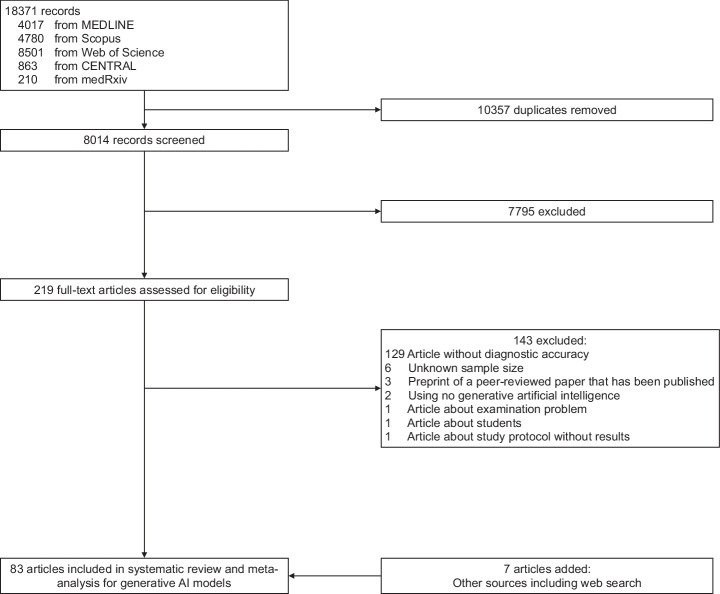
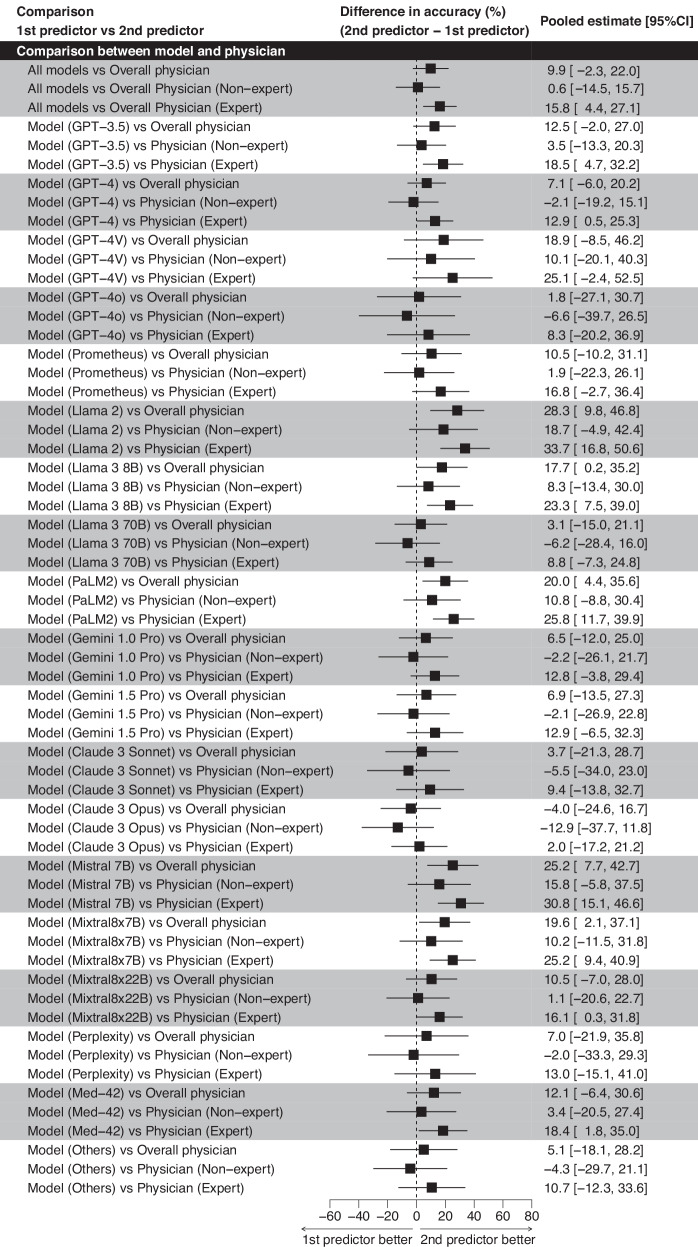
While generative artificial intelligence (AI) has shown potential in medical diagnostics, comprehensive evaluation of its diagnostic performance and comparison with physicians has not been extensively explored. We conducted a systematic review and meta-analysis of studies validating generative AI models for diagnostic tasks published between June 2018 and June 2024. Analysis of 83 studies revealed an overall diagnostic accuracy of 52.1%. No significant performance difference was found between AI models and physicians overall ( p = 0.10) or non-expert physicians ( p = 0.93). However, AI models performed significantly worse than expert physicians ( p = 0.007). Several models demonstrated slightly higher performance compared to non-experts, although the differences were not significant. Generative AI demonstrates promising diagnostic capabilities with accuracy varying by model. Although it has not yet achieved expert-level reliability, these findings suggest potential for enhancing healthcare delivery and medical education when implemented with appropriate understanding of its limitations.
Overview
The claims and statistics of this paper haven’t been checked yet.
Free: it reads the open-access text and checks the first 5 claims that cite a source we can check. Create a free account to check every claim.
Integrity signals
Registry
Cites
Statistics
Figures
Verification
Claims the paper makes
The claims and statistics of this paper haven’t been checked yet.
Free: it reads the open-access text and checks the first 5 claims that cite a source we can check. Create a free account to check every claim.
Claims other papers make about this one
Each is checked against this paper’s own text: does it say what the citing paper says it does?
The source backs part of the claim, not all of it — or backs it for a different population, condition or comparison.
In the citing paper
“AI has moderate accuracy overall but performs better in controlled settings.”
From Artificial Intelligence in Detecting Statistical Errors: Implications for Authors, Reviewers, and Editors (2025) · cites this paper as [27]
Experimental — accuracy not yet measuredThe cited source says what the claim attributes to it.
In the citing paper
“For instance, a meta-analysis by Takita et al.27 evaluated studies between 2018–2024, and concluded that among different AI models, AI had a diagnostic accuracy of 52% (95% confidence interval, 47.0–57.1%).”
From Artificial Intelligence in Detecting Statistical Errors: Implications for Authors, Reviewers, and Editors (2025) · cites this paper as [27]
Self-check
Percentages, sums and reported differences re-computed from the paper’s own numbers.
The self-check needs the paper’s full text.
Citations
Cites
Preferred Reporting Items for Systematic Reviews and Meta-Analyses: the PRISMA statement
Moher, D., Liberati, A., Tetzlaff, J., Altman, D. G., & for the PRISMA Group (2009) · BMJ · doi:10.1136/bmj.b2535 · Cited by 83,823
Bias in meta-analysis detected by a simple, graphical test
Egger, M., Smith, G. D., Schneider, M., & Minder, C. (1997) · BMJ · doi:10.1136/bmj.315.7109.629 · Cited by 56,722
Preferred reporting items for systematic reviews and meta-analyses: the PRISMA Statement.
(2009) · PubMed Central · Cited by 44,859
Preferred reporting items for systematic reviews and meta-analyses: The PRISMA statement
Moher, D., Liberati, A., Tetzlaff, J., Altman, D. G., & the PRISMA Group* (2009) · Annals of Internal Medicine · doi:10.7326/0003-4819-151-4-200908180-00135 · Cited by 37,554
Language Models are Few-Shot Learners
Brown, T. B., Mann, B., Ryder, N., Subbiah, M., Kaplan, J., Dhariwal, P., Neelakantan, A., Shyam, P., Sastry, G., Askell, A., et al. (2020) · arXiv · doi:10.48550/arxiv.2005.14165 · Cited by 23,372
LLaMA: Open and Efficient Foundation Language Models
Touvron, H., Lavril, T., Izacard, G., Martinet, X., Lachaux, M.-A., Lacroix, T., Rozière, B., Goyal, N., Hambro, E., Azhar, F., et al. (2023) · arXiv · doi:10.48550/arxiv.2302.13971 · Cited by 4,602
Large Language Models Encode Clinical Knowledge
Singhal, K., Azizi, S., Tu, T., Mahdavi, S. S., Wei, J., Chung, H. W., Scales, N., Tanwani, A., Cole-Lewis, H., Pfohl, S., et al. (2022) · arXiv · doi:10.48550/arxiv.2212.13138 · Cited by 4,083
Large language models encode clinical knowledge
Singhal, K., Azizi, S., Tu, T., Mahdavi, S. S., Wei, J., Chung, H. W., Scales, N., Tanwani, A., Cole-Lewis, H., Pfohl, S., et al. (2023) · Nature · doi:10.1038/s41586-023-06291-2 · Cited by 4,083
Large language models in medicine
Thirunavukarasu, A. J., Ting, D. S. J., Elangovan, K., Gutierrez, L., Tan, T. F., & Ting, D. S. W. (2023) · Nature Medicine · doi:10.1038/s41591-023-02448-8 · Cited by 3,944
McInnes, M. D. F., Moher, D., Thombs, B. D., McGrath, T. A., Bossuyt, P. M., and the PRISMA-DTA Group, Clifford, T., Cohen, J. F., Deeks, J. J., Gatsonis, C., et al. (2018) · JAMA · doi:10.1001/jama.2017.19163 · Cited by 3,210
PROBAST: A Tool to Assess the Risk of Bias and Applicability of Prediction Model Studies
Wolff, R. F., Moons, K. G. M., Riley, R. D., Whiting, P. F., Westwood, M., Collins, G. S., Reitsma, J. B., Kleijnen, J., Mallett, S., & for the PROBAST Group† (2019) · Annals of Internal Medicine · doi:10.7326/m18-1376 · Cited by 2,984 · cited 3×
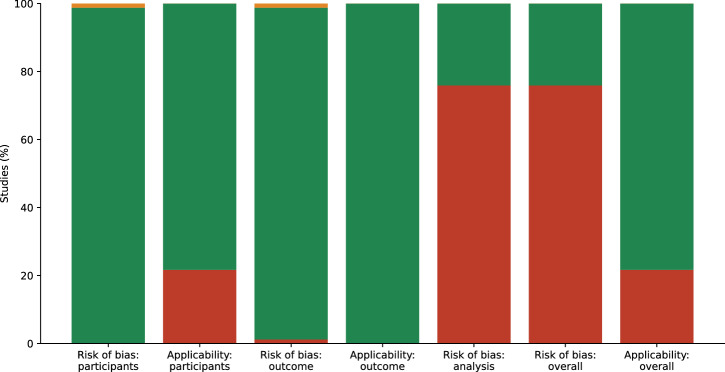
“We used PROBAST to assess papers for bias and applicability 114 .”
InfluentialLlama 2: Open Foundation and Fine-Tuned Chat Models
Touvron, H., Martin, L., Stone, K., Albert, P., Almahairi, A., Babaei, Y., Bashlykov, N., Batra, S., Bhargava, P., Bhosale, S., et al. (2023) · arXiv · doi:10.48550/arxiv.2307.09288 · Cited by 2,604
PaLM: Scaling Language Modeling with Pathways
Chowdhery, A., Narang, S., Devlin, J., Bosma, M., Mishra, G., Roberts, A., Barham, P., Chung, H. W., Sutton, C., Gehrmann, S., et al. (2022) · arXiv · doi:10.48550/arxiv.2204.02311 · Cited by 2,590 · cited 2×
“The search strategy was as follows: articles in English that included the words “ large language model, ” “ LLM, ” “ generative arti fi cial intelligence, ” “ generative AI, ” “ generative pre-trained transformers, ” 1 “ GPT, ” “ Bing, ” “ Prometheus, ” “ Bard, ” “ PaLM, ” 6,7 “ Pathways Language Model, ” “ LaMDA, ” 8…”
The future landscape of large language models in medicine
Clusmann, J., Kolbinger, F. R., Muti, H. S., Carrero, Z. I., Eckardt, J.-N., Laleh, N. G., Löffler, C. M. L., Schwarzkopf, S.-C., Unger, M., Veldhuizen, G. P., et al. (2023) · Communications Medicine · doi:10.1038/s43856-023-00370-1 · Cited by 1,045
Gemini: A Family of Highly Capable Multimodal Models
Gemini Team, Anil, R., Borgeaud, S., Alayrac, J.-B., Yu, J., Soricut, R., Schalkwyk, J., Dai, A. M., Hauth, A., Millican, K., et al. (2023) · arXiv · doi:10.48550/arxiv.2312.11805 · Cited by 990
DeGroat, W., Abdelhalim, H., Patel, K., Mendhe, D., Zeeshan, S., & Ahmed, Z. (2024) · Scientific Reports · doi:10.1038/s41598-023-50600-8 · Cited by 845
Anil, R., Dai, A. M., Firat, O., Johnson, M., Lepikhin, D., Passos, A., Shakeri, S., Taropa, E., Bailey, P., Chen, Z., et al. (2023) · arXiv · doi:10.48550/arxiv.2305.10403 · Cited by 834
Evaluation and mitigation of the limitations of large language models in clinical decision-making
Hager, P., Jungmann, F., Holland, R., Bhagat, K., Hubrecht, I., Knauer, M., Vielhauer, J., Makowski, M., Braren, R., Kaissis, G., et al. (2024) · Nature Medicine · doi:10.1038/s41591-024-03097-1 · Cited by 798 · cited 1×
“…physicians outperformed the model, whereas negative values (to the left) indicate that the model was more accurate than the physicians. that of physicians, recent research demonstrates that generative AI may perform signi fi cantly worse than physicians in more complex scenarios 80 .”
Wahl, B., Cossy-Gantner, A., Germann, S., & Schwalbe, N. R. (2018) · BMJ Global Health · doi:10.1136/bmjgh-2018-000798 · Cited by 796
LaMDA: Language Models for Dialog Applications
Thoppilan, R., De Freitas, D., Hall, J., Shazeer, N., Kulshreshtha, A., Cheng, H.-T., Jin, A., Bos, T., Baker, L., Du, Y., et al. (2022) · arXiv · doi:10.48550/arxiv.2201.08239 · Cited by 778 · cited 1×
“In recent years, the advent of generative arti fi cial intelligence (AI) has marked a transformative era in our society 1 – 8 .”
Fairness of artificial intelligence in healthcare: review and recommendations
Ueda, D., Kakinuma, T., Fujita, S., Kamagata, K., Fushimi, Y., Ito, R., Matsui, Y., Nozaki, T., Nakaura, T., Fujima, N., et al. (2024) · Japanese Journal of Radiology · doi:10.1007/s11604-023-01474-3 · Cited by 607
Self-citationPreiksaitis, C., & Rose, C. (2023) · JMIR Medical Education · doi:10.2196/48785 · Cited by 552
Grattafiori, A., Dubey, A., Jauhri, A., Pandey, A., Kadian, A., Al-Dahle, A., Letman, A., Mathur, A., Schelten, A., Vaughan, A., et al. (2024) · arXiv · doi:10.48550/arxiv.2407.21783 · Cited by 505
Accuracy of a Generative Artificial Intelligence Model in a Complex Diagnostic Challenge
Kanjee, Z., Crowe, B., & Rodman, A. (2023) · JAMA · doi:10.1001/jama.2023.8288 · Cited by 449
Aya Model: An Instruction Finetuned Open-Access Multilingual Language ModelPreprint
Ustun, A., Aryabumi, V., Yong, Z.-X., Ko, W.-Y., D'Souza, D., Onilude, G., Bhandari, N., Singh, S., Ooi, H.-L., Kayid, A., et al. (2024) · Annual Meeting of the Association for Computational Linguistics · doi:10.48550/arxiv.2402.07827 · Cited by 448
Hirosawa, T., Harada, Y., Yokose, M., Sakamoto, T., Kawamura, R., & Shimizu, T. (2023) · International Journal of Environmental Research and Public Health · doi:10.3390/ijerph20043378 · Cited by 343
Jiang, A. Q., Sablayrolles, A., Mensch, A., Bamford, C., Chaplot, D. S., Casas, D. D. L., Bressand, F., Lengyel, G., Lample, G., Saulnier, L., et al. (2023) · arXiv · doi:10.48550/arxiv.2310.06825 · Cited by 340
Gemini 1.5: Unlocking multimodal understanding across millions of tokens of context
Gemini Team, Georgiev, P., Lei, V. I., Burnell, R., Bai, L., Gulati, A., Tanzer, G., Vincent, D., Pan, Z., Wang, S., et al. (2024) · arXiv · doi:10.48550/arxiv.2403.05530 · Cited by 306
Savage, T., Nayak, A., Gallo, R., Rangan, E., & Chen, J. H. (2024) · npj Digital Medicine · doi:10.1038/s41746-024-01010-1 · Cited by 265
OpenAssistant Conversations - Democratizing Large Language Model Alignment
Köpf, A., Kilcher, Y., von Rütte, D., Anagnostidis, S., Tam, Z.-R., Stevens, K., Barhoum, A., Duc, N. M., Stanley, O., Nagyfi, R., et al. (2023) · arXiv · doi:10.48550/arxiv.2304.07327 · Cited by 218
Levine, D. M., Tuwani, R., Kompa, B., Varma, A., Finlayson, S. G., Mehrotra, A., & Beam, A. (2024) · The Lancet Digital Health · doi:10.1016/s2589-7500(24)00097-9 · Cited by 199
Use of a Large Language Model to Assess Clinical Acuity of Adults in the Emergency Department
Williams, C. Y. K., Zack, T., Miao, B. Y., Sushil, M., Wang, M., Kornblith, A. E., & Butte, A. J. (2024) · JAMA Network Open · doi:10.1001/jamanetworkopen.2024.8895 · Cited by 148
Jiang, A. Q., Sablayrolles, A., Roux, A., Mensch, A., Savary, B., Bamford, C., Chaplot, D. S., Casas, D. D. L., Hanna, E. B., Bressand, F., et al. (2024) · arXiv · doi:10.48550/arxiv.2401.04088 · Cited by 143
Ueda, D., Mitsuyama, Y., Takita, H., Horiuchi, D., Walston, S. L., Tatekawa, H., & Miki, Y. (2023) · Radiology · doi:10.1148/radiol.231040 · Cited by 142
Self-citationHirosawa, T., Kawamura, R., Harada, Y., Mizuta, K., Tokumasu, K., Kaji, Y., Suzuki, T., & Shimizu, T. (2023) · JMIR Medical Informatics · doi:10.2196/48808 · Cited by 130
Fraser, H., Crossland, D., Bacher, I., Ranney, M., Madsen, T., & Hilliard, R. (2023) · JMIR mHealth and uHealth · doi:10.2196/49995 · Cited by 128
Horiuchi, D., Tatekawa, H., Shimono, T., Walston, S. L., Takita, H., Matsushita, S., Oura, T., Mitsuyama, Y., Miki, Y., & Ueda, D. (2023) · Neuroradiology · doi:10.1007/s00234-023-03252-4 · Cited by 127
Self-citationMEDITRON-70B: Scaling Medical Pretraining for Large Language Models
Chen, Z., Cano, A. H., Romanou, A., Bonnet, A., Matoba, K., Salvi, F., Pagliardini, M., Fan, S., Köpf, A., Mohtashami, A., et al. (2023) · arXiv · doi:10.48550/arxiv.2311.16079 · Cited by 122
The Use of ChatGPT to Assist in Diagnosing Glaucoma Based on Clinical Case Reports
Delsoz, M., Raja, H., Madadi, Y., Tang, A. A., Wirostko, B. M., Kahook, M. Y., & Yousefi, S. (2023) · Ophthalmology and Therapy · doi:10.1007/s40123-023-00805-x · Cited by 116
Diagnostic accuracy of a large language model in rheumatology: comparison of physician and ChatGPT-4
Krusche, M., Callhoff, J., Knitza, J., & Ruffer, N. (2023) · Rheumatology International · doi:10.1007/s00296-023-05464-6 · Cited by 116
Assessing GPT-4 multimodal performance in radiological image analysis
Brin, D., Sorin, V., Barash, Y., Konen, E., Glicksberg, B. S., Nadkarni, G. N., & Klang, E. (2024) · European Radiology · doi:10.1007/s00330-024-11035-5 · Cited by 112
Horiuchi, D., Tatekawa, H., Oura, T., Shimono, T., Walston, S. L., Takita, H., Matsushita, S., Mitsuyama, Y., Miki, Y., & Ueda, D. (2024) · European Radiology · doi:10.1007/s00330-024-10902-5 · Cited by 108
Self-citationWizardLM: Empowering large pre-trained language models to follow complex instructions
Xu, C., Sun, Q., Zheng, K., Geng, X., Zhao, P., Feng, J., Tao, C., Lin, Q., & Jiang, D. (2023) · arXiv (Cornell University) · doi:10.48550/arxiv.2304.12244 · Cited by 106
The Diagnostic and Triage Accuracy of the GPT-3 Artificial Intelligence Model
Levine, D. M., Tuwani, R., Kompa, B., Varma, A., Finlayson, S. G., Mehrotra, A., & Beam, A. (2023) · doi:10.1101/2023.01.30.23285067 · Cited by 106
MedAlpaca -- An Open-Source Collection of Medical Conversational AI Models and Training Data
Han, T., Adams, L. C., Papaioannou, J.-M., Grundmann, P., Oberhauser, T., Figueroa, A., Löser, A., Truhn, D., & Bressem, K. K. (2023) · arXiv (Cornell University) · doi:10.48550/arxiv.2304.08247 · Cited by 103
Artificial intelligence chatbot performance in triage of ophthalmic conditions
Lyons, R. J., Arepalli, S. R., Fromal, O., Choi, J. D., & Jain, N. (2024) · Canadian Journal of Ophthalmology · doi:10.1016/j.jcjo.2023.07.016 · Cited by 101
Shieh, A., Tran, B., He, G., Kumar, M., Freed, J. A., & Majety, P. (2024) · Scientific Reports · doi:10.1038/s41598-024-58760-x · Cited by 101
Diagnostic performances of GPT-4o, Claude 3 Opus, and Gemini 1.5 Pro in “Diagnosis Please” cases
Sonoda, Y., Kurokawa, R., Nakamura, Y., Kanzawa, J., Kurokawa, M., Ohizumi, Y., Gonoi, W., & Abe, O. (2024) · Japanese Journal of Radiology · doi:10.1007/s11604-024-01619-y · Cited by 100
ChatGPT and Generating a Differential Diagnosis Early in an Emergency Department Presentation
Berg, H. T., van Bakel, B., van de Wouw, L., Jie, K. E., Schipper, A., Jansen, H., O’Connor, R. D., van Ginneken, B., & Kurstjens, S. (2024) · Annals of Emergency Medicine · doi:10.1016/j.annemergmed.2023.08.003 · Cited by 97
Nakaura, T., Yoshida, N., Kobayashi, N., Shiraishi, K., Nagayama, Y., Uetani, H., Kidoh, M., Hokamura, M., Funama, Y., & Hirai, T. (2024) · Japanese Journal of Radiology · doi:10.1007/s11604-023-01487-y · Cited by 96
Performance of ChatGPT in Diagnosis of Corneal Eye Diseases
Delsoz, M., Madadi, Y., Raja, H., Munir, W. M., Tamm, B., Mehravaran, S., Soleimani, M., Djalilian, A., & Yousefi, S. (2024) · Cornea · doi:10.1097/ico.0000000000003492 · Cited by 86
Gebrael, G., Sahu, K. K., Chigarira, B., Tripathi, N., Mathew Thomas, V., Sayegh, N., Maughan, B. L., Agarwal, N., Swami, U., & Li, H. (2023) · Cancers · doi:10.3390/cancers15143717 · Cited by 85
Comparative Analysis of Multimodal Large Language Model Performance on Clinical Vignette Questions
Han, T., Adams, L. C., Bressem, K. K., Busch, F., Nebelung, S., & Truhn, D. (2024) · JAMA · doi:10.1001/jama.2023.27861 · Cited by 83
Horiuchi, D., Tatekawa, H., Oura, T., Oue, S., Walston, S. L., Takita, H., Matsushita, S., Mitsuyama, Y., Shimono, T., Miki, Y., et al. (2024) · Clinical Neuroradiology · doi:10.1007/s00062-024-01426-y · Cited by 81
Self-citationShea, Y.-F., Lee, C. M. Y., Ip, W. C. T., Luk, D. W. A., & Wong, S. S. W. (2023) · JAMA Network Open · doi:10.1001/jamanetworkopen.2023.25000 · Cited by 80
Koga, S., Martin, N. B., & Dickson, D. W. (2024) · Brain Pathology · doi:10.1111/bpa.13207 · Cited by 78
Abdullahi, T., Singh, R., & Eickhoff, C. (2024) · JMIR Medical Education · doi:10.2196/51391 · Cited by 76
ChatGPT for Clinical Vignette Generation, Revision, and Evaluation
Benoit, J. R. A. (2023) · doi:10.1101/2023.02.04.23285478 · Cited by 74
McInnes, M. D. F., Moher, D., Thombs, B. D., McGrath, T. A., Bossuyt, P. M., Group, P.-D., Clifford, T., Cohen, J. F., Deeks, J. J., Gatsonis, C., et al. (2018) · Open Access CRIS of the University of Bern · doi:10.7892/boris.110778 · Cited by 74
Franc, J. M., Cheng, L. T. W., Hart, A., Hata, R., & Hertelendy, A. (2024) · Canadian Journal of Emergency Medicine · doi:10.1007/s43678-023-00616-w · Cited by 66
Evaluation of large language models as a diagnostic aid for complex medical cases
Ríos-Hoyo, A., Shan, N. L., Li, A., Pearson, A. T., Pusztai, L., & Howard, F. M. (2024) · Frontiers in Medicine · doi:10.3389/fmed.2024.1380148 · Cited by 66
Liu, X., Duan, C., Kim, M.-K., Zhang, L., Jee, E., Maharjan, B., Huang, Y., Du, D., & Jiang, X. L. (2024) · JMIR Medical Informatics · doi:10.2196/59273 · Cited by 64
Ito, N., Kadomatsu, S., Fujisawa, M., Fukaguchi, K., Ishizawa, R., Kanda, N., Kasugai, D., Nakajima, M., Goto, T., & Tsugawa, Y. (2023) · JMIR Medical Education · doi:10.2196/47532 · Cited by 63
Mitsuyama, Y., Tatekawa, H., Takita, H., Sasaki, F., Tashiro, A., Oue, S., Walston, S. L., Nonomiya, Y., Shintani, A., Miki, Y., et al. (2024) · European Radiology · doi:10.1007/s00330-024-11032-8 · Cited by 62
Self-citationSuthar, P. P., Kounsal, A., Chhetri, L., Saini, D., & Dua, S. G. (2023) · Cureus · doi:10.7759/cureus.43958 · Cited by 60
Large language models: a new chapter in digital health
Health, T. L. D. (2023) · The Lancet Digital Health · doi:10.1016/s2589-7500(23)00254-6 · Cited by 60
Schramm, S., Preis, S., Metz, M., Jung, K., Schmitz‐Koep, B., Zimmer, C., Wiestler, B., Hedderich, D. M., & Kim, S. H. (2025) · Radiology · doi:10.1148/radiol.240689 · Cited by 57
Assessing the medical reasoning skills of GPT-4 in complex ophthalmology cases
Milad, D., Antaki, F., Milad, J., Farah, A., Khairy, T., Mikhail, D., Giguère, C.-É., Touma, S., Bernstein, A., Szigiato, A.-A., et al. (2024) · British Journal of Ophthalmology · doi:10.1136/bjo-2023-325053 · Cited by 56
ChatGPT Assisting Diagnosis of Neuro-Ophthalmology Diseases Based on Case Reports
Madadi, Y., Delsoz, M., Lao, P. A., Fong, J. W., Hollingsworth, T. J., Kahook, M. Y., & Yousefi, S. (2025) · Journal of Neuro-Ophthalmology · doi:10.1097/wno.0000000000002274 · Cited by 56
Stoneham, S., Livesey, A., Cooper, H., & Mitchell, C. (2024) · Clinical and Experimental Dermatology · doi:10.1093/ced/llad402 · Cited by 53
What can GPT-4 do for Diagnosing Rare Eye Diseases? A Pilot Study
Hu, X., Ran, A. R., Nguyen, T. X., Szeto, S., Yam, J. C., Chan, C. K. M., & Cheung, C. Y. (2023) · Ophthalmology and Therapy · doi:10.1007/s40123-023-00789-8 · Cited by 52
Sorin, V., Kapelushnik, N., Hecht, I., Zloto, O., Glicksberg, B. S., Bufman, H., Livne, A., Barash, Y., Nadkarni, G. N., & Klang, E. (2025) · Scientific Reports · doi:10.1038/s41598-025-88948-8 · Cited by 52
Daher, M., Koa, J., Boufadel, P., Singh, J., Fares, M. Y., & Abboud, J. A. (2023) · JSES International · doi:10.1016/j.jseint.2023.07.018 · Cited by 49
Diagnostic accuracy of large language models in psychiatry
Gargari, O. K., Fatehi, F., Mohammadi, I., Firouzabadi, S. R., Shafiee, A., & Habibi, G. (2024) · Asian Journal of Psychiatry · doi:10.1016/j.ajp.2024.104168 · Cited by 48
Bushuven, S., Bentele, M., Bentele, S., Gerber, B., Bansbach, J., Ganter, J., Trifunovic-Koenig, M., & Ranisch, R. (2023) · Journal of Medical Systems · doi:10.1007/s10916-023-02019-x · Cited by 47
On the limitations of large language models in clinical diagnosis
Reese, J. T., Danis, D., Caufield, J. H., Groza, T., Casiraghi, E., Valentini, G., Mungall, C. J., & Robinson, P. N. (2023) · medRxiv · doi:10.1101/2023.07.13.23292613 · Cited by 46
Evaluating GPT-4-based ChatGPT’s Clinical Potential on the NEJM Quiz
Ueda, D., Walston, S. L., Matsumoto, T., Deguchi, R., Tatekawa, H., & Miki, Y. (2023) · doi:10.1101/2023.05.04.23289493 · Cited by 45
Self-citationEvaluating GPT-4-based ChatGPT's clinical potential on the NEJM quiz
Ueda, D., Walston, S. L., Matsumoto, T., Deguchi, R., Tatekawa, H., & Miki, Y. (2024) · BMC Digital Health · doi:10.1186/s44247-023-00058-5 · Cited by 44
Self-citationLevartovsky, A., Ben-Horin, S., Kopylov, U., Klang, E., & Barash, Y. (2023) · American Journal of Gastroenterology · doi:10.14309/ajg.0000000000002483 · Cited by 43
Rojas-Carabali, W. A., Sen, A. C., Agarwal, A. K., Tan, G. S. W., Cheung, C. Y.-L., Rousselot, A., Agrawal, R., Liu, R., Cifuentes‐González, C., Elze, T., et al. (2023) · Ocular Immunology and Inflammation · doi:10.1080/09273948.2023.2266730 · Cited by 42
Comparative Evaluation of Diagnostic Accuracy Between Google Bard and Physicians
Hirosawa, T., Mizuta, K., Harada, Y., & Shimizu, T. (2023) · The American Journal of Medicine · doi:10.1016/j.amjmed.2023.08.003 · Cited by 41
Diagnostic and Management Performance of ChatGPT in Obstetrics and Gynecology
Allahqoli, L., Ghiasvand, M. M., Mazidimoradi, A., Salehiniya, H., & Alkatout, I. (2023) · Gynecologic and Obstetric Investigation · doi:10.1159/000533177 · Cited by 40
Abi‐Rafeh, J., Hanna, S., Bassiri-Tehrani, B., Kazan, R., & Nahai, F. (2023) · Aesthetic Plastic Surgery · doi:10.1007/s00266-023-03538-1 · Cited by 38
ChatGPT Assisting Diagnosis of Neuro-ophthalmology Diseases Based on Case ReportsPreprint
Madadi, Y., Delsoz, M., Lao, P. A., et al. (2023) · medRxiv · doi:10.1101/2023.09.13.23295508 · Cited by 38
Clinical Camel: An Open Expert-Level Medical Language Model with Dialogue-Based Knowledge Encoding
Toma, A., Lawler, P. R., Ba, J., Krishnan, R. G., Rubin, B. B., & Wang, B. (2023) · arXiv · doi:10.48550/arxiv.2305.12031 · Cited by 36
Assessing DxGPT: Diagnosing Rare Diseases with Various Large Language ModelsPreprint
do Olmo, J., Logroño, J., Mascías, C., Martínez, M., & Isla, J. (2024) · medRxiv · doi:10.1101/2024.05.08.24307062 · Cited by 34
Performance of ChatGPT in Diagnosis of Corneal Eye DiseasesPreprint
Delsoz, M., Madadi, Y., Munir, W. M., et al. (2023) · medRxiv · doi:10.1101/2023.08.25.23294635 · Cited by 32
Knebel, D., Priglinger, S., Scherer, N., Klaas, J., Siedlecki, J., & Schworm, B. (2024) · Klinische Monatsblätter für Augenheilkunde · doi:10.1055/a-2149-0447 · Cited by 32
The Comparative Diagnostic Capability of Large Language Models in Otolaryngology
Warrier, A. K., Singh, R., Haleem, A., Zaki, H., & Eloy, J. A. (2024) · The Laryngoscope · doi:10.1002/lary.31434 · Cited by 32
Diagnostic accuracy of GPT ‐4 on common clinical scenarios and challenging cases
Rutledge, G. W. (2024) · Learning Health Systems · doi:10.1002/lrh2.10438 · Cited by 32
Knebel, D., Priglinger, S., Scherer, N., Siedlecki, J., & Schworm, B. (2023) · doi:10.1101/2023.04.16.23288645 · Cited by 32
Güneş, Y. C., & Cesur, T. (2024) · Journal of Thoracic Imaging · doi:10.1097/rti.0000000000000805 · Cited by 31
Data set terminology of deep learning in medicine: a historical review and recommendation
Walston, S. L., Seki, H., Takita, H., Mitsuyama, Y., Sato, S., Hagiwara, A., Ito, R., Hanaoka, S., Miki, Y., & Ueda, D. (2024) · Japanese Journal of Radiology · doi:10.1007/s11604-024-01608-1 · Cited by 29
Self-citationShikino, K., Shimizu, T., Otsuka, Y., Tago, M., Takahashi, H., Watari, T., Sasaki, Y., Iizuka, G., Tamura, H., Nakashima, K., et al. (2024) · JMIR Medical Education · doi:10.2196/58758 · Cited by 29
Yazaki, M., Maki, S., Furuya, T., Inoue, K., Nagai, K., Nagashima, Y., Maruyama, J., Toki, Y., Kitagawa, K., Iwata, S., et al. (2025) · Prehospital Emergency Care · doi:10.1080/10903127.2024.2374400 · Cited by 29
Diagnostic performance of generative artificial intelligences for a series of complex case reports
Hirosawa, T., Harada, Y., Mizuta, K., Sakamoto, T., Tokumasu, K., & Shimizu, T. (2024) · Digital Health · doi:10.1177/20552076241265215 · Cited by 29
Xv, Y., Peng, C., Wei, Z., Liao, F., & Xiao, M. (2023) · World Journal of Urology · doi:10.1007/s00345-023-04539-0 · Cited by 26
Evaluating the Diagnostic Performance of Large Language Models on Complex Multimodal Medical Cases
Chiu, K. W.-H., Ko, K. W. S., Cho, W. C. S., Hui, S. Y. J., Chan, L., & Kuo, M. (2024) · Journal of Medical Internet Research · doi:10.2196/53724 · Cited by 26
Pillai, J. P., & Pillai, K. (2023) · Journal of Translational Autoimmunity · doi:10.1016/j.jtauto.2023.100213 · Cited by 25
Wada, A., Akashi, T., Shih, G., Hagiwara, A., Nishizawa, M., Hayakawa, Y., Kikuta, J., Shimoji, K., Sano, K., Kamagata, K., et al. (2024) · Diagnostics · doi:10.3390/diagnostics14141541 · Cited by 25
Assessing GPT-4 Multimodal Performance in Radiological Image AnalysisPreprint
Brin, D., Sorin, V., Barash, Y., et al. (2023) · medRxiv · doi:10.1101/2023.11.15.23298583 · Cited by 24
GPT-4 Multimodal Analysis on Ophthalmology Clinical Cases Including Text and ImagesPreprint
Sorin, V., Kapelushnik, N., Hecht, I., et al. (2023) · medRxiv · doi:10.1101/2023.11.24.23298953 · Cited by 22
Ravipati, A., Pradeep, T., & Elman, S. A. (2023) · International Journal of Dermatology · doi:10.1111/ijd.16746 · Cited by 21
Galetta, K. M., & Meltzer, E. I. (2023) · Journal of the Neurological Sciences · doi:10.1016/j.jns.2023.120804 · Cited by 21
Han, T., Adams, L. C., Bressem, K. K., Busch, F., Huck, L. C., Nebelung, S., & Truhn, D. (2023) · medRxiv · doi:10.1101/2023.11.03.23297957 · Cited by 21
Cesur, T., Güneş, Y. C., Çamur, E., & Dağlı, M. N. (2025) · Journal of Thoracic Imaging · doi:10.1097/rti.0000000000000846 · Cited by 21
“Vertigo, likely peripheral”: the dizzying rise of ChatGPT
Chee, J., Kwa, E. D., & Goh, X. (2023) · European Archives of Oto-Rhino-Laryngology · doi:10.1007/s00405-023-08135-1 · Cited by 20
FROM TEXT TO DIAGNOSE: CHATGPT’S EFFICACY IN MEDICAL DECISION-MAKING
Mykhalko, Y. O., Kish, P. P., Rubtsova, Y. I., Kutsin, O. O., & Koval, V. (2023) · Wiadomości Lekarskie · doi:10.36740/wlek202311101 · Cited by 20
Luk, D. W. A., Ip, W. C., & Shea, Y. F. (2024) · Journal of the Chinese Medical Association · doi:10.1097/jcma.0000000000001064 · Cited by 20
Interpretation of Clinical Retinal Images Using an Artificial Intelligence Chatbot
Mihalache, A., Huang, R. S., Mikhail, D., Popovic, M. M., Shor, R., Pereira, A., Kwok, J. M., Yan, P., Wong, D. T., Kertes, P. J., et al. (2024) · Ophthalmology Science · doi:10.1016/j.xops.2024.100556 · Cited by 20
Bridges, J. M. (2024) · Diagnosis · doi:10.1515/dx-2024-0033 · Cited by 20
Horiuchi, D., Tatekawa, H., Oura, T., Shimono, T., Walston, S. L., Takita, H., Matsushita, S., Mitsuyama, Y., Miki, Y., & Ueda, D. (2023) · medRxiv · doi:10.1101/2023.12.07.23299707 · Cited by 19
Self-citationYang, J., Shu, L., Han, M., Pan, J., Chen, L., Yuan, T., Tan, L., Shu, Q., Duan, H., & Li, H. (2024) · Computers in Biology and Medicine · doi:10.1016/j.compbiomed.2024.107924 · Cited by 18
APPLICATIONS OF MULTIMODAL GENERATIVE ARTIFICIAL INTELLIGENCE IN A REAL-WORLD RETINA CLINIC SETTING
Ghalibafan, S., Gonzalez, D. J. T., CAI, L. Z., Chou, B. G., Panneerselvam, S., Barrett, S. C., Djulbegovic, M. B., & Yannuzzi, N. A. (2024) · Retina · doi:10.1097/iae.0000000000004204 · Cited by 18
Rundle, C. W., Szeto, M. D., Presley, C. L., Shahwan, K. T., & Carr, D. R. (2023) · Journal of the American Academy of Dermatology · doi:10.1016/j.jaad.2023.10.040 · Cited by 16
Using ChatGPT to Predict Cancer Predisposition Genes: A Promising Tool for Pediatric Oncologists
Sultan, I. Y., Al‐Abdallat, H., Alnajjar, Z., Ismail, L., Khashabeh, R. A., Bitar, L., & Shanap, M. A. (2023) · Cureus · doi:10.7759/cureus.47594 · Cited by 15
Evaluating the Multimodal Capabilities of Generative AI in Complex Clinical DiagnosticsPreprint
Schubert, M. C., Lasotta, M., Sahm, F., Wick, W., & Venkataramani, V. (2023) · medRxiv · doi:10.1101/2023.11.01.23297938 · Cited by 14
GPT-4V(ision) Unsuitable for Clinical Care and Education: A Clinician-Evaluated AssessmentPreprint
Senkaiahliyan, S., Toma, A., Ma, J., Chan, A., Ha, A. C. T., An, K. R., Suresh, H., Rubin, B. B., & Wang, B. (2023) · medRxiv · doi:10.1101/2023.11.15.23298575 · Cited by 14
Wei, Q., Cui, Y., Wei, B. W., Qian, C., & Xu, X. (2023) · Psychiatry Research · doi:10.1016/j.psychres.2023.115351 · Cited by 13
Large language model may assist diagnosis of SAPHO syndrome by bone scintigraphy
Mori, Y., Izumiyama, T., Kanabuchi, R., Mori, N., & Aizawa, T. (2023) · Modern Rheumatology · doi:10.1093/mr/road115 · Cited by 13
Harnessing the open access version of ChatGPT for enhanced clinical opinions
Tenner, Z. M., Cottone, M., & Chavez, M. R. (2024) · PLOS Digital Health · doi:10.1371/journal.pdig.0000355 · Cited by 13
Kumar, R. P., Sivan, V., Bachir, H., Sarwar, S. A., Ruzicka, F., O'Malley, G. R., Lobo, P., Morales, I. C., Cassimatis, N. D., Hundal, J. S., et al. (2024) · World Neurosurgery · doi:10.1016/j.wneu.2024.05.052 · Cited by 11
Kikuchi, T., Nakao, T., Nakamura, Y., Hanaoka, S., Mori, H., & Yoshikawa, T. (2024) · American Journal of Neuroradiology · doi:10.3174/ajnr.a8332 · Cited by 9
Horiuchi, D., Tatekawa, H., Oura, T., Oue, S., Walston, S. L., Takita, H., Matsushita, S., Mitsuyama, Y., Shimono, T., Miki, Y., et al. (2023) · medRxiv · doi:10.1101/2023.08.28.23294607 · Cited by 9
Self-citationWilliams, C., Zack, T., Miao, B., Sushil, M., Wang, M., & Butte, A. (2023) · medRxiv · doi:10.1101/2023.08.09.23293795 · Cited by 8
Güneş, Y. C., & Cesur, T. (2024) · medRxiv · doi:10.1101/2024.01.18.24301495 · Cited by 7
Olshaker, H., Brin, D., Kalderon, E., Kraus, M., Konen, E., & Klang, E. (2024) · medRxiv · doi:10.1101/2024.06.05.24308335 · Cited by 6
Schramm, S., Preis, S., Metz, M., et al. (2024) · medRxiv · doi:10.1101/2024.03.05.24303767 · Cited by 5
Mitsuyama, Y., Tatekawa, H., Takita, H., Sasaki, F., Tashiro, A., Oue, S., Walston, S. L., Miki, Y., & Ueda, D. (2023) · medRxiv · doi:10.1101/2023.10.27.23297585 · Cited by 5
Self-citationHarnessing the Open Access Version of ChatGPT for Enhanced Clinical OpinionsPreprint
Tenner, Z. M., Cottone, M., & Chavez, M. (2023) · medRxiv · doi:10.1101/2023.08.23.23294478 · Cited by 4
Accuracy of ChatGPT for the diagnosis of clinical entities in the field of internal medicine
Andrade-Castellanos, C. A., la Paz, M. T. T.-D., & Farfán-Flores, P. E. (2023) · Gaceta Médica de México · doi:10.24875/gmm.m23000824 · Cited by 4
Cesur, T., Güneş, Y. C., Çamur, E., et al. (2024) · medRxiv · doi:10.1101/2024.06.25.24309247 · Cited by 4
Large language models to differentiate vasospastic angina using patient informationPreprint
Kiyohara, Y., Kodera, S., Sato, M., Ninomiya, K., Satô, M., Shinohara, H., Takeda, N., Akazawa, H., Morita, H., & Komuro, I. (2023) · medRxiv · doi:10.1101/2023.06.26.23291913 · Cited by 3
Mental health and wellbeing: Meet James Glass
Glass, J. (2024) · BSAVA Companion · doi:10.22233/20412495.1224.22 · Cited by 1
OpenAI, Achiam, J., Adler, S., Agarwal, S., Ahmad, L., Akkaya, I., Aleman, F. L., Almeida, D., Altenschmidt, J., Altman, S., et al. (2023) · arXiv · doi:10.48550/arxiv.2303.08774
Cited by
Haltaufderheide, J., & Ranisch, R. (2024) · npj Digital Medicine · doi:10.1038/s41746-024-01157-x · Cited by 396
Human–AI collectives most accurately diagnose clinical vignettes
Zöller, N., Berger, J., Lin, I., Fu, N., Komarneni, J., Barabucci, G., Laskowski, K., Shia, V., Harack, B., Chu, E. A., et al. (2025) · Proceedings of the National Academy of Sciences · doi:10.1073/pnas.2426153122 · Cited by 98
Chalmers, D. M., Hunt, R. A., Pachidi, S., Potočnik, K., & Townsend, D. M. (2026) · Journal of Management Studies · doi:10.1111/joms.70063 · Cited by 93
Shan, G., Chen, X., Wang, C., Liu, L., Gu, Y., Jiang, H., & Shi, T. (2025) · JMIR Medical Informatics · doi:10.2196/64963 · Cited by 71
Human–large language model collaboration in clinical medicine: a systematic review and meta-analysis
Wang, G., Zhang, K., Jiang, J., Wang, C., Bi, H., Liang, H., Qi, Z., Huang, Y., Li, Y., & Yang, X. (2026) · npj Digital Medicine · doi:10.1038/s41746-026-02382-2 · Cited by 68
Metadata
- Authors
- Takita, H., Kabata, D., Walston, S. L., Tatekawa, H., Saito, K., Tsujimoto, Y., Miki, Y., & Ueda, D.
- Affiliations
- Osaka Metropolitan University (JP)
- Center for Mathematical and Data Sciences, Kobe University (JP)
- Kyoto University (JP)
- Corresponding author
- Ueda, Daiju
- ORCID
- Venue
- npj Digital Medicine
- Published
- 2025-03-22
- Volume
- 8
- Issue
- 1
- Pages
- 175-175
- ISSN
- 2398-6352 (ISSN-L)
- PMC
- PMC11929846
- OpenAlex
- W4408736524
- Cited by
- 203
- References
- 123
- Citations by year
- 2026: 122 · 2025: 74
- FWCI
- 11.59
- Type
- journal article
- Language
- en
- Open access
- gold
- doi.org
- Licence
- cc-by
- creativecommons.org/licenses/by/4.0 (tdm)
- creativecommons.org/licenses/by/4.0 (vor)
- Locations
- npj Digital Medicine (publishedVersion, cc-by)
- medRxiv (acceptedVersion, cc-by)
- Europe PMC (PubMed Central) (publishedVersion, cc-by)
- PubMed Central (publishedVersion, cc-by)
- PubMed (publishedVersion)
- DOAJ (DOAJ: Directory of Open Access Journals) (submittedVersion, cc-by-sa)
- Topics
- Health Sciences › Medicine › Health Informatics › Artificial Intelligence in Healthcare and Education
- Health Sciences › Health Professions › Health Information Management › Artificial Intelligence in Healthcare
- Physical Sciences › Computer Science › Artificial Intelligence › AI in cancer detection
- Keywords
- generative AI, diagnosis, diagnostic accuracy, AI validation, clinical decision support, medical education
About these checks
Registry, retraction, Cites and statistics results are computed, not judged, with one exception: a printed reference that no index lists is read once by a model before it counts as a citation error. Claims are extracted by a model and kept only when their quote appears verbatim in the text; each cited source is then checked, with a model’s help, for whether it says what the claim relies on. Those verdicts can be wrong — read the claim’s quote and the cited source before relying on one.
Statistics and arithmetic are recomputed, not judged.
Confidence bands are shown only for fields calibrated on our annotated test set. None is calibrated yet, so no band is shown.
What counts as a claim ›How we measure confidence ›How we check this ›
Are you an author, or do you see a problem with this page? Request a review
Data sources
Bibliographic data: Semantic Scholar, OpenAlex, Crossref.
Contains information from the Semantic Scholar Academic Graph Datasets, made available under the ODC Attribution License (ODC-BY 1.0).
Semantic Scholar’s data is described in: Kinney, R., et al. (2023). The Semantic Scholar Open Data Platform. arXiv:2301.10140.
