

Qubits made by advanced semiconductor manufacturing
Open accessThe DOI matches its Crossref record; 68 of the 68 references it cites were found in a registry or an index.
Abstract
Full-scale quantum computers require the integration of millions of qubits, and the potential of using industrial semiconductor manufacturing to meet this need has driven the development of quantum computing in silicon quantum dots. However, fabrication has so far relied on electron-beam lithography and, with a few exceptions, conventional lift-off processes that suffer from low yield and poor uniformity. Here we report quantum dots that are hosted at a 28 Si/ 28 SiO 2 interface and fabricated in a 300 mm semiconductor manufacturing facility using all-optical lithography and fully industrial processing. With this approach, we achieve nanoscale gate patterns with excellent yield. In the multi-electron regime, the quantum dots allow good tunnel barrier control—a crucial feature for fault-tolerant two-qubit gates. Single-spin qubit operation using magnetic resonance in the few-electron regime reveals relaxation times of over 1 s at 1 T and coherence times of over 3 ms.
Overview
The claims and statistics of this paper haven’t been checked yet.
Free: it reads the open-access text and checks the first 5 claims that cite a source we can check. Create a free account to check every claim.
Integrity signals
Registry
Cites
Statistics
Figures

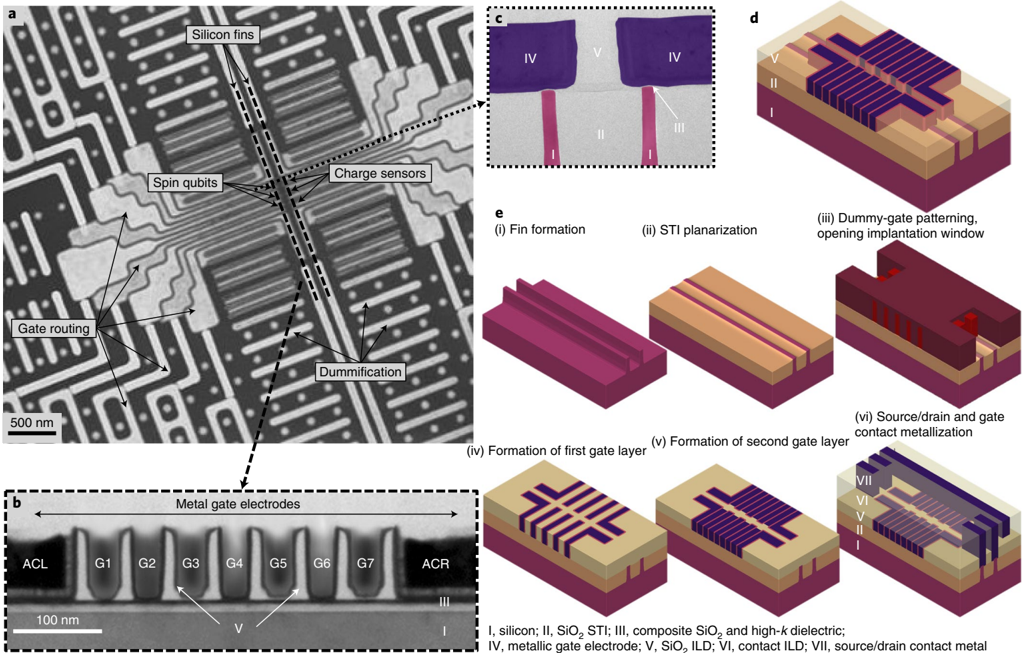
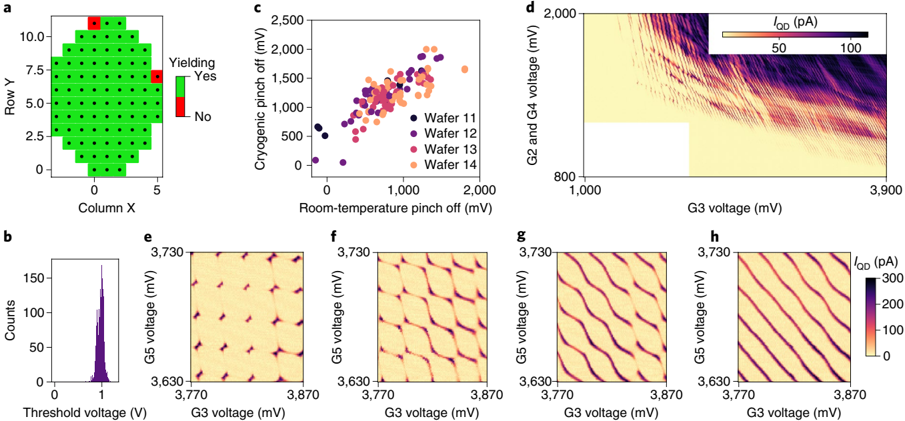
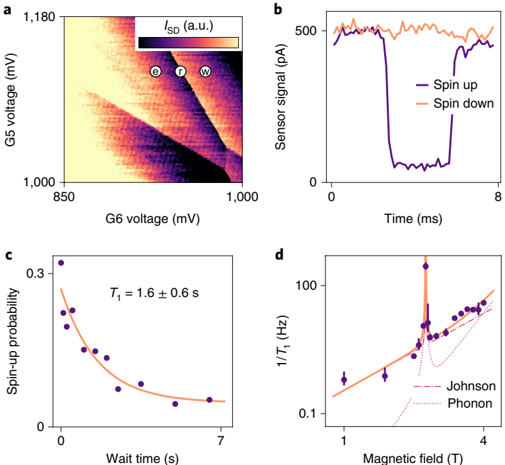
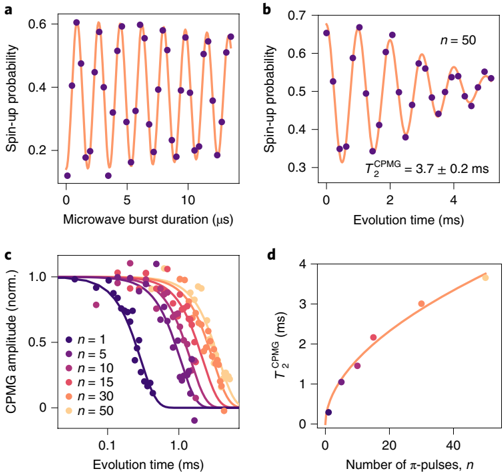
Verification
Claims the paper makes
The claims and statistics of this paper haven’t been checked yet.
Free: it reads the open-access text and checks the first 5 claims that cite a source we can check. Create a free account to check every claim.
Claims other papers make about this one
Each is checked against this paper’s own text: does it say what the citing paper says it does?
The source backs part of the claim, not all of it — or backs it for a different population, condition or comparison.
In the citing paper
“More fully industry-compatible devices in Si-MOS have also been demonstrated25,26 but are at present limited by high levels of disorder owing to the qubits being formed directly at the Si/SiO2 interface.”
From Probing single electrons across 300-mm spin qubit wafers (2024) · cites this paper as [26]
Experimental — accuracy not yet measured
Self-check
Percentages, sums and reported differences re-computed from the paper’s own numbers.
The self-check needs the paper’s full text.
Citations
Cites
Simulating physics with computers
Feynman, R. P. (1982) · International Journal of Theoretical Physics · doi:10.1007/bf02650179 · Cited by 7,691
Quantum computation with quantum dots
Loss, D., & DiVincenzo, D. P. (1998) · Physical Review A · doi:10.1103/physreva.57.120 · Cited by 6,840
Surface codes: Towards practical large-scale quantum computation
Fowler, A. G., Mariantoni, M., Martinis, J. M., & Cleland, A. N. (2012) · Physical Review A · doi:10.1103/physreva.86.032324 · Cited by 3,059 · cited 2×
“The most promising architectures require a scalable qubit system of individually-addressable qubits with a gate fidelity over 99% and tunable nearest-neighbour couplings [17, 18].”
BackgroundSpins in few-electron quantum dots
Hanson, R., Kouwenhoven, L. P., Petta, J. R., Tarucha, S., & Vandersypen, L. M. K. (2007) · Reviews of Modern Physics · doi:10.1103/revmodphys.79.1217 · Cited by 2,665
Self-citationMOS /metal oxide semiconductor/ physics and technology
Nicollian, E. H., & Brews, J. R. (1982) · CERN Document Server (European Organization for Nuclear Research) · Cited by 2,098
Electron transport through double quantum dots
van der Wiel, W. G., De Franceschi, S., Elzerman, J. M., Fujisawa, T., Tarucha, S., & Kouwenhoven, L. P. (2002) · Reviews of Modern Physics · doi:10.1103/revmodphys.75.1 · Cited by 1,820 · cited 2×
“At these points, the electrochemical potentials of the reservoirs are aligned with the electrochemical potentials of the left and the right dot, such that electrons can tunnel sequentially through the two dots [38].”
BackgroundSingle-shot read-out of an individual electron spin in a quantum dot
Elzerman, J. M., Hanson, R., Willems van Beveren, L. H., Witkamp, B., Vandersypen, L. M. K., & Kouwenhoven, L. P. (2004) · Nature · doi:10.1038/nature02693 · Cited by 1,679 · cited 2×
“Spin readout In order to read out the spin eigenstate we use energyselective tunneling to the electron reservoir [46].”
MethodSelf-citationDriven coherent oscillations of a single electron spin in a quantum dot
Koppens, F. H. L., Buizert, C., Tielrooij, K. J., Vink, I. T., Nowack, K. C., Meunier, T., Kouwenhoven, L. P., & Vandersypen, L. M. K. (2006) · Nature · doi:10.1038/nature05065 · Cited by 1,359 · cited 2×
“Furthermore, bringing the quantum dots on the inside of the stripline [48] will increase the ratio of magnetic field and (unwanted) electric fields and heating.”
BackgroundMethodSelf-citationZwanenburg, F. A., Dzurak, A. S., Morello, A., Simmons, M. Y., Hollenberg, L. C. L., Klimeck, G., Rogge, S., Coppersmith, S. N., & Eriksson, M. A. (2013) · Reviews of Modern Physics · doi:10.1103/revmodphys.85.961 · Cited by 1,210
Randomized benchmarking of quantum gates
Knill, E., Leibfried, D., Reichle, R., Britton, J., Blakestad, R. B., Jost, J. D., Langer, C., Ozeri, R., Seidelin, S., & Wineland, D. J. (2008) · Physical Review A · doi:10.1103/physreva.77.012307 · Cited by 1,019 · cited 1×
“To analyse the single-qubit gate fidelity, we employ randomised benchmarking [49] (Extended Fig.”
Method
Research works printed but not linked: 1
- Xue, X. et al. Benchmarking gate fidelities in a Si/SiGe two-qubit device. Phys. Rev. X 9, 021011 (2019).
Cited by
Items 301–400 of 516
End-to-End Analysis of Charge Stability Diagrams with TransformersPreprint
Marchand, R., Schorling, L., Carlsson, C., Schuff, J., van Straaten, B., Patti, T. L., Fedele, F., Ziegler, J., Girdhar, P., Vaidhyanathan, P., et al. (2025) · arXiv (Cornell University) · doi:10.48550/arxiv.2508.15710 · Cited by 4
Pandey, N., Basu, D., Register, L. F., & Banerjee, S. (2025) · arXiv (Cornell University) · doi:10.48550/arxiv.2510.07831 · Cited by 4
“The progression from [1,0] to [2,2] illustrates the emergence of oscillatory nodes in the transverse profile.”
Spin-orbit-enabled realization of arbitrary two-qubit gates on moving spinsPreprint
Fernández-Fernández, D., Matsumoto, Y., Vandersypen, L. M. K., Platero, G., & Bosco, S. (2025) · arXiv (Cornell University) · doi:10.48550/arxiv.2508.08394 · Cited by 4
Self-citationMatsuoka, R., Wachi, Y., Tsuchiya, R., Mizuno, H., & Kodera, T. (2025) · Japanese Journal of Applied Physics · doi:10.35848/1347-4065/adeb23 · Cited by 3
Quantum gates in coupled quantum dots controlled by coupling modulation
Bendersky, A. D., Gómez, S. S., & Romero, R. H. (2026) · Quantum Science and Technology · doi:10.1088/2058-9565/ae3a12 · Cited by 3
Measuring pulse heating in Si quantum dots with individual two-level fluctuators
Ye, F., Dhami, L. S., & Nichol, J. M. (2026) · Physical Review Applied · doi:10.1103/1fz7-tjq8 · Cited by 3
“The raw data are available from the corresponding author upon reasonable request.”
Constraints on atomistic disorder for scalable electron spin shuttling
Prentki, R. J., Philippopoulos, P., Mostaan, M. R., & Beaudoin, F. (2026) · Applied Physics Letters · doi:10.1063/5.0345368 · Cited by 3
Leakage-Protected Idle Operation of a Triangular Exchange-Only Spin Qubit
Broz, J., Hoke, J. C., Acuna, E., & Petta, J. R. (2026) · PRX Quantum · doi:10.1103/sljc-cmdw · Cited by 3
Quantum error correction assisted axion search in CMOS spin qubit arrays
Tan, X., & Wang, Z. M. (2026) · Physical review. D/Physical review. D. · doi:10.1103/2y5c-x1kz · Cited by 3
Samaha, P., Torki, A., Renaud, Y., Fiette, S., Chanrion, E., Mortemousque, P.-A., & Beilliard, Y. (2026) · Machine Learning Science and Technology · doi:10.1088/2632-2153/ae7cda · Cited by 3
Modeling the Impact of Device Imperfections on Electron Shuttling in SiMOS devices
Anonymous, Binder, C. W., Burkard, G., & Fisher, A. J. (2026) · PRX Quantum · doi:10.1103/hyfp-rmrr · Cited by 3
“Silicon-based spin qubits have emerged as a strong candidate for scalable quantum architectures due to their high packing density [1], long coherence times [2, 3], and compatibility with industry fabrication processes [4, 5].”
Mitigating residual exchange coupling in resonant singlet-triplet qubits
Anonymous, Torres-Leal, F., & Nichol, J. M. (2026) · Physical Review Applied · doi:10.1103/gjn5-kc41 · Cited by 3
Confinement Drives Valley Splitting above 4 K in Buried Silicon Quantum Wells
Esposti, D. D., Brann, E., Elsayed, A., Costa, D., Friesen, M. G., & Scappucci, G. (2026) · Nano Letters · doi:10.1021/acs.nanolett.6c04172 · Cited by 4
Self-citationElectric field dependence of spin qubit in a Si-MOS quantum dot
Ma, R.-L., 倪, M. 铭. N., 周, Y.-C. 雨. Z., 孔, Z.-Z. 真. K., 王, G.-L. 桂. W., 刘, D. 頔. L., 罗, G. 刚. L., Cao, G., Li, H.-O., & Guo, G. (2024) · Chinese Physics B · doi:10.1088/1674-1056/ad3812 · Cited by 3
Transport diagrams of germanium double quantum dots/Si barriers using photocurrent measurement
Wang, I.-H., Chiu, Y.-W., Lin, H., & Li, P.-W. (2024) · Scientific Reports · doi:10.1038/s41598-024-71177-w · Cited by 3
Reichmann, F., Mistroni, A., Yamamoto, Y., Kulse, P., Marschmeyer, S., Wolansky, D., Fursenko, O. V., Zöllner, M. H., Capellini, G., Diebel, L. K., et al. (2024) · ECS Transactions · doi:10.1149/11402.0109ecst · Cited by 3
Bashir, I., Sokolov, A., Wu, X., Giounanlis, P., Petropoulos, N., Leipold, D. R., Asker, M., Esmailiyan, A., Andrade‐Miceli, D., Haenlein, H., et al. (2024) · International Journal of Circuit Theory and Applications · doi:10.1002/cta.4350 · Cited by 3
“Spin qubits realized with this technology have been re-ported with a spin relaxation time ( T 1 ) of 1.6 s, a spin dephasing time ( T 2 ) of 24 μ s and single-qubit gate fidelity of 99 % [18] when cooled to ultralow temperatures of 10 mK (although the control IC chips reside at 4 K [13, 14]).”
InfluentialXue, H.-B., & Jing, H.-Y. (2025) · Chinese Journal of Physics · doi:10.1016/j.cjph.2025.05.009 · Cited by 3
Chen, K., Godfrin, C., Simion, G., Fattal, I., Jussot, J., Kubicek, S., Beyne, S., Raes, B., Loenders, A., Kao, K.-H., et al. (2025) · Physical review. B./Physical review. B · doi:10.1103/physrevb.111.125301 · Cited by 3
Kamli, A. A., & Moiseev, S. A. (2025) · Plasmonics · doi:10.1007/s11468-025-03282-z · Cited by 3
“Such quantum processors can be various natural and artificial atoms with a sufficiently long quantum coherence time, for example, quantum dots [70], color centers in diamond [71], super-conducting qubits [72], rare-earth ions [73] etc.”
All-quantum-dot information system
Chen, J., Dai, C. M., Zheng, Y., Zhao, D., & Bao, J. (2024) · Nano Research · doi:10.1007/s12274-024-6911-z · Cited by 3
Large magnetoresistance in a quantum dot between two reservoirs with spin accumulation
Jansen, R., & Yuasa, S. (2025) · Physical review. B./Physical review. B · doi:10.1103/physrevb.111.104407 · Cited by 3
RF simulation platform of qubit control using FDSOI technology for quantum computing
Jacquinot, H., Maurand, R., Fernández-Bada, G. T., Bertrand, B., Cassé, M., Niquet, Y., Franceschi, S. D., Meunier, T., & Vinet, M. (2022) · Solid-State Electronics · doi:10.1016/j.sse.2022.108488 · Cited by 3
Guo, K. S., Feng, M., Huang, J. Y., Gilbert, W., Itoh, K. M., Hudson, F. E., Chan, K. W., Lim, W. H., Dzurak, A. S., & Saraiva, A. (2023) · arXiv (Cornell University) · doi:10.48550/arxiv.2308.12626 · Cited by 3
RF-Squad: A radiofrequency simulator for quantum dot arraysPreprint
Murphy, T., Brlec, K., Oakes, G. A., Peri, L., Sirringhaus, H., Moss, H. B., González-Zalba, M. F., & Wise, D. F. (2025) · arXiv (Cornell University) · doi:10.48550/arxiv.2511.11504 · Cited by 3
Atomistic Modeling of Si Spin Qubits From First Principles
Cvitkovich, L. (2024) · reposiTUm (TU Wien) · doi:10.34726/hss.2024.123305 · Cited by 3
Durand, A. (2021) · theses.fr (ABES) · doi:10.70675/74a1aa10z8f39z425bz8ba8zb0221afb79d9 · Cited by 3
Zeng, J., Tan, X., Wang, H., Zhang, Y., Bian, W., Wu, L., Yang, C., Guo, Z., Li, J., Wang, Y., et al. (2026) · arXiv (Cornell University) · doi:10.48550/arxiv.2606.28695 · Cited by 3
Integration of buried nanomagnet and silicon spin qubits in a one-dimensional fin structure
Iizuka, S., Kato, K., Yagishita, A., Asai, H., Ueda, T., Oka, H., Hattori, J., Ikegami, T., Fukuda, K., & Mori, T. (2024) · Japanese Journal of Applied Physics · doi:10.35848/1347-4065/ad59ea · Cited by 2
Zhu, X., & Yin, H. (2024) · Results in Physics · doi:10.1016/j.rinp.2024.107856 · Cited by 2
Kato, K., Asai, H., Oka, H., Iizuka, S., Fuketa, H., Inaba, T., & Mori, T. (2024) · Solid-State Electronics · doi:10.1016/j.sse.2024.109013 · Cited by 2
Single-electron charge sensor self-aligned to a quantum dot array by double-gate patterning process
Kuno, T., Utsugi, T., Tsuchiya, R., Lee, N., Mine, T., Yanagi, I., Mizokuchi, R., Yoneda, J., Kodera, T., Saito, S., et al. (2024) · Japanese Journal of Applied Physics · doi:10.35848/1347-4065/ada348 · Cited by 2
Ballast Charges for Semiconductor Spin Qubits
Choi, Y., Nichol, J. M., & Barnes, E. (2025) · Physical Review Letters · doi:10.1103/81qt-48bl · Cited by 2
“They have reached the fidelities needed for fault-tolerant operation [2–5] and are also compatible with CMOS manufacturing infrastructure [6, 7].”
BackgroundTsuzuki, T., Yuta, H., Muto, Y., Ludwig, A., Wieck, A. D., Oiwa, A., & Fujita, T. (2026) · Japanese Journal of Applied Physics · doi:10.35848/1347-4065/ae2b7a · Cited by 2
Quantum Technologies: Trends and Implications for Cyber Defense
Jang‐Jaccard, J., Caroff, P., Blezinger, E., Mulder, V., Mermoud, A., & Lenders, V. (2025) · Springer eBooks · doi:10.1007/978-3-031-90727-2 · Cited by 2
Peetroons, X., Luo, X., Yang, T.-Y., Mertig, N., Beyne, S., Jussot, J., Shimura, Y., Godfrin, C., Raes, B., Li, R., et al. (2026) · Applied Physics Letters · doi:10.1063/5.0352438 · Cited by 2
Growth and Quantum Transport in sGe/GeO 2 Quantum Wells
Zhang, Y., Kong, Z., Sun, X., Li, J., Qin, Y., Wang, X. Z., Fan, W., Cao, G., guo, G., Zhao, C., et al. (2025) · ACS Applied Electronic Materials · doi:10.1021/acsaelm.5c02046 · Cited by 2
Quantum Inspired Technique for Cracking RSA
Rijwani, N. K., & Chaurasia, B. K. (2025) · International Conference on Information Systems and Computer Networks (ISCON) · doi:10.1109/iscon65210.2025.11340888 · Cited by 2
Lee, Y. R., Devitt, C., Zhu, X., Yost, N., Gu, Y., & Bhave, S. A. (2026) · Microsystems & Nanoengineering · doi:10.1038/s41378-026-01178-4 · Cited by 2
Mohamed, A.-B. A., Jaradat, E. K., Khedr, A. N., & Alharbi, S. S. (2026) · The European Physical Journal Plus · doi:10.1140/epjp/s13360-026-07607-7 · Cited by 2
Concatenated continuous driving of silicon qubit by amplitude and phase modulation
Kuno, T., Utsugi, T., Ramsay, A. J., Mertig, N., Lee, N., Yanagi, I., Mine, T., Kusuno, N., Arimoto, H., Beyne, S., et al. (2026) · Physical review. B./Physical review. B · doi:10.1103/f2kd-x628 · Cited by 2
Impedance‐Matched High‐Overtone Thickness‐Shear Bulk Acoustic Resonators With Scalable Mode Volume
Zhang, Z., Qin, Z.-H., He, Y., Cheng, Y., Yan, H., Yu, S., lu, M. A. Ç., & Chen, Y. (2026) · Advanced Science · doi:10.1002/advs.75456 · Cited by 2
“Notably, Intel has adopted HR-Si in quantum research to leverage the mature silicon fabrication ecosystem 36 .”
Harris, V. G., & Andalib, P. (2024) · Frontiers in Materials · doi:10.3389/fmats.2024.1343005 · Cited by 2
QuantuML: Machine Learning Algorithms and K-Means on Quantum Cloud Offering
Bitsakos, C., Nikas, K., & Koziris, N. (2025) · Lecture notes in computer science · doi:10.1007/978-3-031-94677-6_9 · Cited by 2
Nano-MOSFET – Foundation of Quantum Computing Part I
Xue, X., Hart, P. A. T., Charbon, E., Sebastiano, F., & Vladimirescu, A. (2023) · IEEE Nanotechnology Magazine · doi:10.1109/mnano.2022.3228097 · Cited by 2
“Leveraging advanced manufacturing technologies, spin qubits have been successfully made by intel using commercial FinFet technology on 300 mm wafers [21]. the potential of silicon spin qubits is under-lined by recent efforts on advancing this technology, such as ibM [22], HrL [23], iMeC [24], and…”
MethodDesign of Nanoscale Quantum Interconnects Aided by Conditional Generative Adversarial Networks
Preda, A. T., Pantis-Simut, C.-A., Marciu, M., Anghel, D.-V., Allosh, A., Ion, L., Manolescu, A. R., & Nemneş, G. A. (2024) · Applied Sciences · doi:10.3390/app14031111 · Cited by 2
Atomistic description of Si etching with HCl
Martínez, B., Li, J., Prats, H., & Sklénard, B. (2024) · Applied Surface Science · doi:10.1016/j.apsusc.2024.159836 · Cited by 2
Amitonov, S. V., Aprá, A., Asker, M., Bals, R., Barry, B., Bashir, I., Blokhina, E., Giounanlis, P., Harkin, M., Hanos-Puskai, P., et al. (2026) · Applied Physics Letters · doi:10.1063/5.0312195 · Cited by 2
Self-citationEffect of interface trap charge on Coulomb oscillation in MOS-type quantum dots
Asai, H., Iizuka, S., Hattori, J., Fukuda, K., Ikegami, T., Oka, H., Inaba, T., Shitakata, S., Kato, K., Nakayama, T., et al. (2025) · Japanese Journal of Applied Physics · doi:10.35848/1347-4065/adabee · Cited by 2
Ibberson, D. J., Kirkman, J., Morton, J. J. L., González-Zalba, M. F., & Gomez-Saiz, A. (2024) · IEEE International Conference on Electronics, Circuits and Systems (ICECS) · doi:10.1109/icecs61496.2024.10848854 · Cited by 2
“…units of up to 6 qubits have been fabricated using experimental processes [2]–[4] but substantial further scaling may be subject to exploiting silicon’s CMOS manufacturing infrastructure [5] enabling integration with classical cryo-electronics to form a compact quantum computing system [6], [7].”
RF detection of split-gate modes in Si-MOS quantum dots
楚, N. 凝. C., Zhu, S.-K., Li, A.-R., Wang, C., Liao, W.-Z., 曹, G. 刚. C., Li, H.-O., & Guo, G. (2025) · Chinese Physics B · doi:10.1088/1674-1056/adb68b · Cited by 2
Law, C. K. D., & Bernád, J. Z. (2025) · Physical Review A · doi:10.1103/physreva.111.042218 · Cited by 2
Complete switching of transverse and longitudinal spin-photon coupling in silicon
Li, F.-G., Cai, R., Wei, Z.-C., Wang, B., Li, H.-O., Cao, G., & Guo, G. (2025) · Science China Physics Mechanics and Astronomy · doi:10.1007/s11433-025-2695-7 · Cited by 2
Silicon-based Quantum Computing: High-density, High-temperature Qubits
Dzurak, A. S. (2021) · Technical digest - International Electron Devices Meeting/Technical digest · doi:10.1109/iedm19574.2021.9720602 · Cited by 2
Aarab, A., Azouit, R., Reiher, V., & Bérubé-Lauzière, Y. (2022) · Physical review. B./Physical review. B · doi:10.1103/physrevb.106.235309 · Cited by 2
Spin-based Quantum Computing in Silicon: Scaling with CMOS
González-Zalba, M. F. (2022) · IEEE International Conference on Electronics, Circuits and Systems (ICECS) · doi:10.1109/icecs202256217.2022.9971032 · Cited by 2
Denisov, A. O., Fuchs, G., Oh, S. W., & Petta, J. R. (2023) · PRX Quantum · doi:10.1103/prxquantum.4.030309 · Cited by 2
“Long coherence times [9], compatibility with industrial fabrication techniques [10, 11], and the potential for integration with classical silicon electronics [12] make them one of the most promising platforms for quantum computing [13, 14].”
Brackmann, V., Neul, M., Friedrich, M., Langheinrich, W., Simon, M., Muster, P., Pregl, S., Demmler, A., Hanisch, N., Lederer, M., et al. (2023) · European Mask and Lithography Conference (EMLC) · doi:10.1117/12.2675943 · Cited by 2
Cryogenic CMOS for Quantum Computing
Absar, R., Elgabra, H., Ma, D., Zhao, Y., & Wei, L. (2023) · Springer eBooks · doi:10.1007/978-3-031-42478-6_22 · Cited by 2
How quantum computing contributes to achieving sustainable IT
Gloukhovtsev, M. (2024) · Elsevier eBooks · doi:10.1016/b978-0-443-13597-2.00014-5 · Cited by 2
Hot qubits in silicon for quantum computation
Eenink, H. G. J. (2021) · Research Repository (Delft University of Technology) · doi:10.4233/uuid:a4e87a46-cdd9-459b-a073-c5b31ca4a73d · Cited by 2
Towards scalable cryogenic quantum dot biasing using memristor-based DC sourcesPreprint
Mouny, P.-A., Dawant, R., Dufour, P., Valdenaire, M., Ecoffey, S., Pioro-Ladrière, M., Beillard, Y., & Drouin, D. (2024) · arXiv (Cornell University) · doi:10.48550/arxiv.2404.10694 · Cited by 2
“Additionally, QDs appear to be a highly scalable technology thanks to their compatibility with industrial semiconductor fabrication processes [13], [14], demonstrating their potential for industrial-scale production and monolithic co-integration with control electronics [15].”
BackgroundAb Initio DFT Approaches to CMOS Quantum Dot Simulation
Bharadwaj, A. V. (2022) · TSpace (University of Toronto) · Cited by 2
Towards Scalable Si and Ge Spin Qubit Architectures : Highlights from Modelling
Martínez, B. (2022) · theses.fr (ABES) · doi:10.70675/255c74a8z7866z4efczbf93ze3a557f678c1 · Cited by 2
Suppressing spin qubit decoherence during shuttling via confinement modulationPreprint
Nguyen, D. Q. L., Rimbach-Russ, M., & Bosco, S. (2026) · arXiv (Cornell University) · doi:10.48550/arxiv.2605.00611 · Cited by 2
“Semiconductor spin qubits [1] are a promising platform to host large-scale quantum computers, owing to their compatibility with established semiconductor fabrication techniques [2–6].”
Pulse-optimised circuit elements for scalable and noise-resilient quantum chemistryPreprint
Gothen, H., Long, C. K., Hiller, D., Qian, Y., Barnes, C. H. W., Mertig, N., & Arvidsson-Shukur, D. R. M. (2026) · arXiv (Cornell University) · doi:10.48550/arxiv.2606.17357 · Cited by 2
“Our choice is motivated by silicon quantum dots’ compatibility with industrial foundries and the qubits’ small size [54–59].”
Spin qubit operations by conveyor-mode shuttlingPreprint
Smet, M. D., Y.Matsumoto, Fernández-Fernández, D., Tryputen, L., de Snoo, S. L., Michalak, D. J., Eenink, H. G. J., Platero, G., Bosco, S., Scappucci, G., et al. (2026) · arXiv (Cornell University) · doi:10.48550/arxiv.2606.21452 · Cited by 2
Self-citationCao, D. L., & Dinh, K. (2023) · Journal of Quantum Information Science · doi:10.4236/jqis.2023.133008 · Cited by 1
Song, Z., Ding, K., Hu, S., Zhao, S., Zhang, L., & Jiang, S. (2023) · International Workshop on Advanced Patterning Solutions (IWAPS) · doi:10.1109/iwaps60466.2023.10366130 · Cited by 1
Ukai, R., Yoshimura, C., & Mizuno, H. (2025) · Concurrency and Computation Practice and Experience · doi:10.1002/cpe.8351 · Cited by 1
Ferrandis, P., Bédécarrats, T., & Cassé, M. (2025) · Applied Physics Letters · doi:10.1063/5.0255225 · Cited by 1
Semiconductors: History and Applications
Hosseinpour, M., & Abdoos, H. (2025) · IntechOpen eBooks · doi:10.5772/intechopen.1008474 · Cited by 1
Long-range transport in asymmetric quadruple quantum dot configurations
Fernández-Fernández, D., Bayer, J. C., Haug, R. J., & Platero, G. (2025) · Communications Physics · doi:10.1038/s42005-025-02319-3 · Cited by 1
“However,thecoremechanism,namely,long-rangetransfermedi-atedbyvirtualtransitions,isexpectedtoremainapplicabletosiliconQDsas well,providedthevalleysplittingexceedsboththetunnelingamplitudesand thermalenergy, Δ VS ~ 250 μ eV ≫ τ i ~ 10 μ eV, k B T ~ 1 μ eV 46 – 48 .”
Phonon-induced frequency shift in semiconductor spin qubits
Heinz, I., Danon, J., & Burkard, G. (2026) · Physical review. B./Physical review. B · doi:10.1103/7wp1-zgs7 · Cited by 1
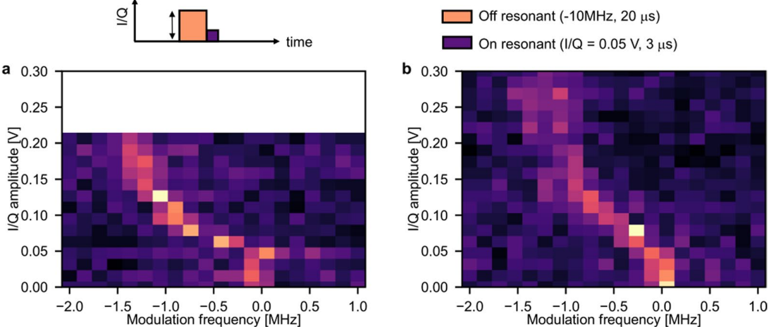
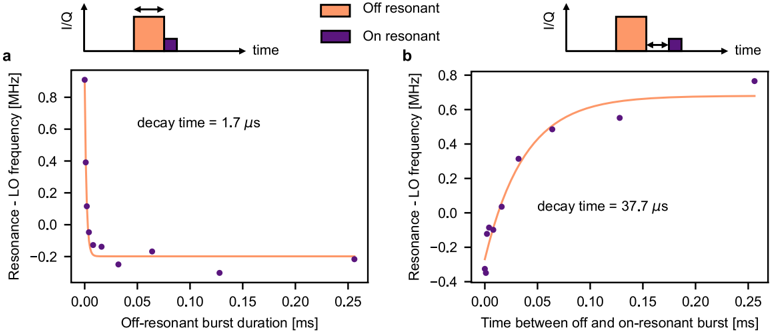
“- 10 4 10 2 However, in experiments, temperature-dependent frequency shifts are often obtained using an off-resonant microwave burst employed prior to the measurement to change the temperature of the sample [2, 14, 15, 17, 19].”
Lai, W.-Y., Yang, H., & Tang, Y. (2026) · IEEE Electron Device Letters · doi:10.1109/led.2025.3648448 · Cited by 1
Cryogenic CMOS RF AWGs for Qubit Control
Chakraborty, S., Kossel, M., Brändli, M., Francese, P. A., Prathapan, M., Rosno, P., Yeck, M., Bulzacchelli, J. F., Frolov, D., Frank, D. J., et al. (2026) · IEEE Open Journal of the Solid-State Circuits Society · doi:10.1109/ojsscs.2026.3660196 · Cited by 1
“Quantum processors based on superconducting qubits have shown continuous growth in the number of qubits realized and in the performance of individual qubits, resulting in their establishment as a leading qubit platform in the field [1], [2], [3], [4], [5], [6], [7], [8], [9], [10], [11], [12].”
Matsuoka, R., Mizokuchi, R., Yoneda, J., & Kodera, T. (2026) · Applied Physics Express · doi:10.35848/1882-0786/ae420b · Cited by 1
Quantum Semiconductor Devices: Current Progress and Future Trends
Rahimunnisa, K. (2026) · Journal of Electronics and Informatics · doi:10.36548/jei.2026.1.001 · Cited by 1
Chiashi, Y., Kato, K., Iba, Y., Oka, H., Iizuka, S., Asai, H., Ogura, M., Inaba, T., & Mori, T. (2026) · APL Electronic Devices · doi:10.1063/5.0312498 · Cited by 1
Cryogenic Characterization of Advanced Technology Node Devices for Scalable Quantum Computing
Sharma, D., Ghoshal, P., & Dixit, A. (2025) · IEEE International Conference on Emerging Electronics (ICEE) · doi:10.1109/icee67165.2025.11409715 · Cited by 1
“Realizing these goals is increasingly possible with advanced commercial CMOS platforms, incorporating few process modifications to support quantum device integration [1].”
Chowdhury, S. M., & Akther, S. (2026) · Materials Advances · doi:10.1039/d6ma00156d · Cited by 1
Statistical structure of charge disorder in Si / Si - Ge quantum dots
Samadi, S., Cywiński, Ł., & Krzywda, J. A. (2026) · Physical Review Applied · doi:10.1103/x86t-n64x · Cited by 1
Matsuoka, R., Matsuda, T., Tsuchiya, R., Mine, T., Hisamoto, D., Mizuno, H., Mizokuchi, R., Kodera, T., & Yoneda, J. (2026) · Applied Physics Letters · doi:10.1063/5.0327539 · Cited by 1
Myronov, M., Yonjali, Y. K., Mnaymneh, K., & Studenikin, S. (2026) · APL Quantum · doi:10.1063/5.0332643 · Cited by 1
A study of qubit modalities in contemporary quantum computing
Govindankutty, A. (2026) · Discover Quantum Science · doi:10.1007/s44464-026-00033-9 · Cited by 1
“A central motivation for spin-based quantum computing is its compatibility with advanced silicon manufacturing [214, 215].”
Gate-dielectric stack engineering for high-mobility and low-noise SiMOS quantum devices
Rahman, M. M., Vahapoglu, E., Chan, K. W., Tanttu, T., Dash, A., Huang, J. Y., Yianni, S. A., Chenniappan, V., Cifuentes, J. D., Hudson, F. E., et al. (2026) · npj Quantum Materials · doi:10.1038/s41535-026-00934-z · Cited by 1
CMOS-Compatible Electrostatic SWAP Gate in Silicon Quantum Dots: Tight-Binding Model and Beyond
Pomorski, K. D., Hałubek, E., & Michalak, A. (2026) · Microelectronics · doi:10.3390/microelectronics2040015 · Cited by 1
Modelling of Electron Injection and Confinement in Cryogenic 22-nm FD-SOI Quantum Dot Arrays
Power, C., Andrade‐Miceli, D., Bashir, I., Asker, M., Leipold, D. R., Staszewski, R. B., & Blokhina, E. (2022) · IEEE International Conference on Electronics, Circuits and Systems (ICECS) · doi:10.1109/icecs202256217.2022.9971046 · Cited by 1
“leveraging industrial fabrication processes for scalability [3] [4] and co-integration with classical control electronics [5].”
BackgroundCryogenic Transistor Confinement Well Simulation through Material and Carrier Transport Decoupling
Power, C., Staszewski, R. B., & Blokhina, E. (2022) · IEEE International Conference on Electronics, Circuits and Systems (ICECS) · doi:10.1109/icecs202256217.2022.9970779 · Cited by 1
“Various transistor implementations of qubits are under consideration in the space of quantum computing due to their potential for scalability [4].”
BackgroundTomari, K., Yoneda, J., & Kodera, T. (2023) · IEICE Transactions on Electronics · doi:10.1587/transele.2022fus0001 · Cited by 1
“They can be operated with high fidelities [5-8] and are considered suitable for large-scale integration in the future owing to high compatibility with conventional CMOS technologies [9-12].”
BackgroundThakur, U. S. (2023) · Devices for Integrated Circuit (DevIC) · doi:10.1109/devic57758.2023.10134806 · Cited by 1
Threshold-independent method for single-shot readout of spin qubits in semiconductor quantum dots
Hu, R.-Z., Zhu, S.-K., Zhang, X., Zhou, Y. L., Ni, M., Ma, R.-L., Luo, G., Kong, Z., Wang, G., Cao, G., et al. (2023) · Chinese Physics B · doi:10.1088/1674-1056/ace3a9 · Cited by 1
“Spin qubits in gate-defined silicon quantum dots (QDs) are promising to realize quantum computation for their long coherence time [1, 2], small footprint [3], potential scalability [4], and industrial manufacturability [5, 6].”
BackgroundSemiconductor quantum computing
ZHANG, J., Li, H.-O., & Guo, G. (2023) · Scientia Sinica Informationis · doi:10.1360/ssi-2023-0333 · Cited by 1
Ukai, R., Yoshimura, C., & Mizuno, H. (2023) · International Symposium on Computing and Networking · doi:10.1109/candar60563.2023.00034 · Cited by 1
“Since a qubit will gradually change even when no quantum operations are performed on the qubit, it is necessary to complete a series of processes within an acceptable time for the state change, called the relaxation time.”
Silicon spin qubits: A scalable solution for quantum computing
Kriekouki, I., Power, C., Bashir, I., & Blokhina, E. (2025) · IEEE International Symposium on Circuits and Systems proceedings · doi:10.1109/iscas56072.2025.11043641 · Cited by 1
QUANTUM COMPUTERS: AN OVERVIEW OF THEIR MARKET AND PHYSICAL REALISATIONS
MARMELLO, P. T. D. S. M., & PAULA, C. D. P. (2022) · doi:10.17771/pucrio.acad.61595 · Cited by 1
The Ground SwitcherPreprint
Thakur, U. S. (2023) · doi:10.36227/techrxiv.22257148 · Cited by 1
Paul, N., Chowdhury, B. N., & Chattopadhyay, S. (2023) · SSRN Electronic Journal · doi:10.2139/ssrn.4502694 · Cited by 1
Spatial correlations of charge noise captured
Cywiński, Ł. (2023) · Nature Physics · doi:10.1038/s41567-023-02189-y · Cited by 1
Static Quantum Errors and PurificationPreprint
Kim, J., Seo, S., Yun, J., & Bae, J. (2024) · arXiv (Cornell University) · doi:10.48550/arxiv.2405.06291 · Cited by 1
Metadata
- Authors
- Zwerver, A. M. J., Krähenmann, T., Watson, T. F., Lampert, L., George, H. C., Pillarisetty, R., Bojarski, S. A., Amin, P., Amitonov, S. V., Boter, J. M., Caudillo, R., Correas-Serrano, D., Dehollain, J. P., Droulers, G., Henry, E. M., Kotlyar, R., Lodari, M., Lüthi, F., Michalak, D. J., Mueller, B. K., Neyens, S., Roberts, J., Samkharadze, N., Zheng, G., Zietz, O. K., Scappucci, G., Veldhorst, M., Vandersypen, L. M. K., & Clarke, J. S.
- Affiliations
- QuTech (NL)
- Intel (United States) (US)
- Corresponding author
- Vandersypen, L. M. K.
- Clarke, J. S.
- ORCID
- Venue
- Nature Electronics
- Published
- 2022-03-29
- Volume
- 5
- Issue
- 3
- Pages
- 184-190
- ISSN
- 2520-1131 (ISSN-L)
- OpenAlex
- W3128881740
- Cited by
- 364
- References
- 67
- Citations by year
- 2026: 49 · 2025: 94 · 2024: 85 · 2023: 88 · 2022: 40
- FWCI
- 31.47
- Type
- journal article
- Language
- en
- Update notices
- correction (2022-04-27)
- Open access
- hybrid
- doi.org
- Licence
- cc-by
- creativecommons.org/licenses/by/4.0 (tdm)
- creativecommons.org/licenses/by/4.0 (vor)
- Locations
- Nature Electronics (publishedVersion, cc-by)
- arXiv (Cornell University) (submittedVersion)
- OPUS - Open Publications of UTS Scholars (University of Technology Sydney) (submittedVersion)
- Research Repository (Delft University of Technology) (submittedVersion, cc-by)
- Data Archiving and Networked Services (DANS) (submittedVersion, other-oa)
- arXiv (Cornell University)
- Funders
- Intel Corporation
- European Commission (HORIZON2020)
- Nederlandse Organisatie voor Wetenschappelijk Onderzoek
- QuantERA
- Topics
- Physical Sciences › Physics and Astronomy › Condensed Matter Physics › Quantum and electron transport phenomena
- Physical Sciences › Physics and Astronomy › Atomic and Molecular Physics, and Optics › Semiconductor Quantum Structures and Devices
- Physical Sciences › Materials Science › Materials Chemistry › Diamond and Carbon-based Materials Research
- Keywords
- silicon quantum dots, qubits, semiconductor manufacturing, two-qubit gates, single spin qubits, magnetic resonance, spin relaxation, coherence time, industrial fabrication
About these checks
Registry, retraction, Cites and statistics results are computed, not judged, with one exception: a printed reference that no index lists is read once by a model before it counts as a citation error. Claims are extracted by a model and kept only when their quote appears verbatim in the text; each cited source is then checked, with a model’s help, for whether it says what the claim relies on. Those verdicts can be wrong — read the claim’s quote and the cited source before relying on one.
Statistics and arithmetic are recomputed, not judged.
Confidence bands are shown only for fields calibrated on our annotated test set. None is calibrated yet, so no band is shown.
What counts as a claim ›How we measure confidence ›How we check this ›
Are you an author, or do you see a problem with this page? Request a review
Data sources
Bibliographic data: Semantic Scholar, OpenAlex, Crossref.
Contains information from the Semantic Scholar Academic Graph Datasets, made available under the ODC Attribution License (ODC-BY 1.0).
Semantic Scholar’s data is described in: Kinney, R., et al. (2023). The Semantic Scholar Open Data Platform. arXiv:2301.10140.
