

Qubits made by advanced semiconductor manufacturing
Open accessThe DOI matches its Crossref record; 68 of the 68 references it cites were found in a registry or an index.
Abstract
Full-scale quantum computers require the integration of millions of qubits, and the potential of using industrial semiconductor manufacturing to meet this need has driven the development of quantum computing in silicon quantum dots. However, fabrication has so far relied on electron-beam lithography and, with a few exceptions, conventional lift-off processes that suffer from low yield and poor uniformity. Here we report quantum dots that are hosted at a 28 Si/ 28 SiO 2 interface and fabricated in a 300 mm semiconductor manufacturing facility using all-optical lithography and fully industrial processing. With this approach, we achieve nanoscale gate patterns with excellent yield. In the multi-electron regime, the quantum dots allow good tunnel barrier control—a crucial feature for fault-tolerant two-qubit gates. Single-spin qubit operation using magnetic resonance in the few-electron regime reveals relaxation times of over 1 s at 1 T and coherence times of over 3 ms.
Overview
The claims and statistics of this paper haven’t been checked yet.
Free: it reads the open-access text and checks the first 5 claims that cite a source we can check. Create a free account to check every claim.
Integrity signals
Registry
Cites
Statistics
Figures

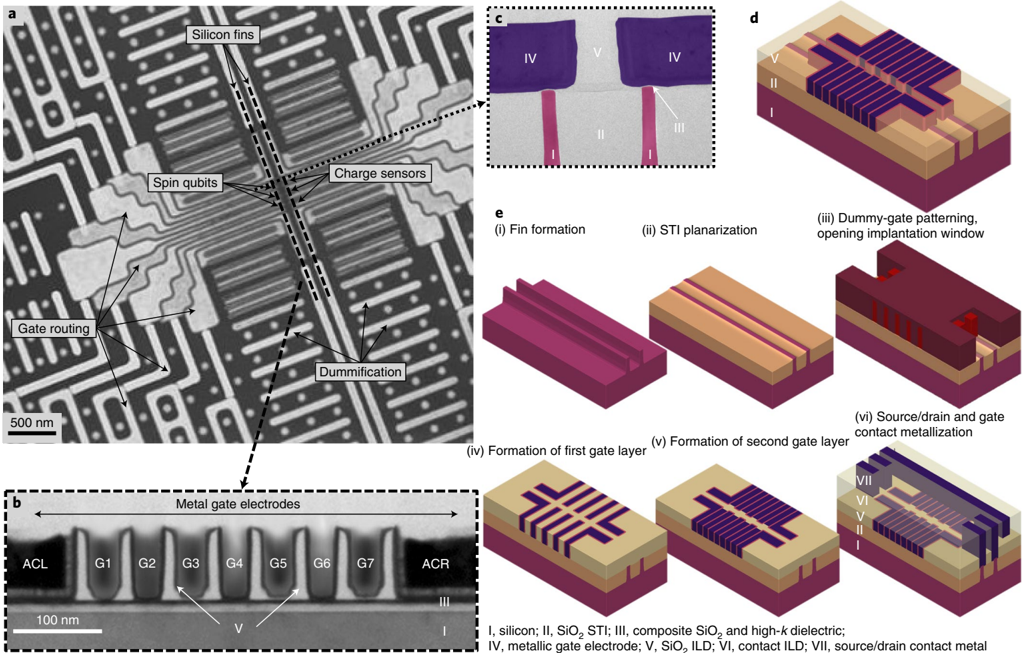
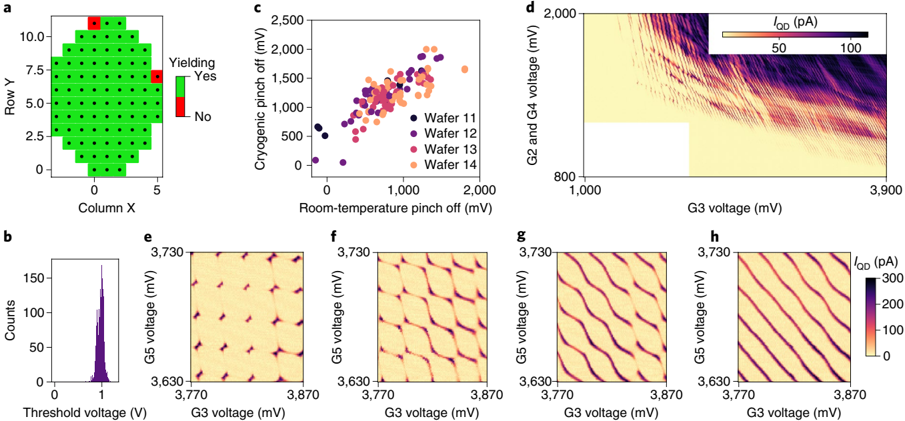
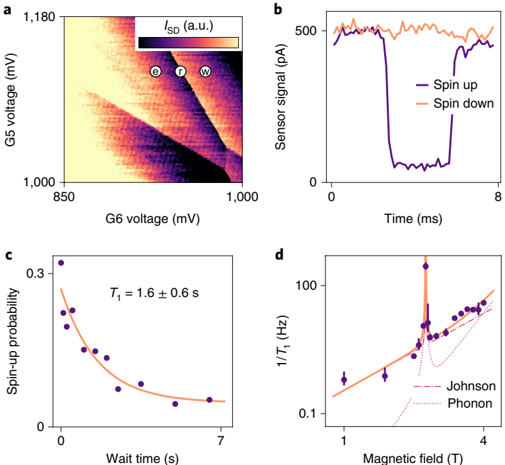
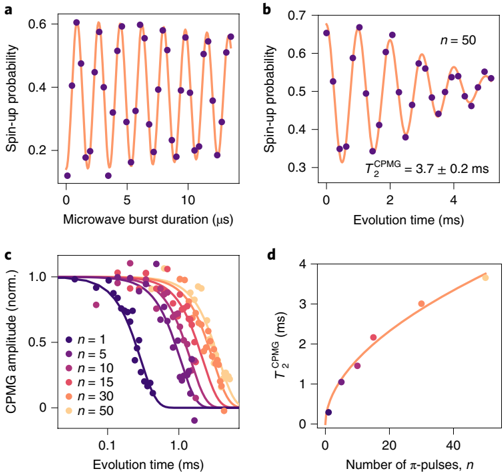
Verification
Claims the paper makes
The claims and statistics of this paper haven’t been checked yet.
Free: it reads the open-access text and checks the first 5 claims that cite a source we can check. Create a free account to check every claim.
Claims other papers make about this one
Each is checked against this paper’s own text: does it say what the citing paper says it does?
The source backs part of the claim, not all of it — or backs it for a different population, condition or comparison.
In the citing paper
“More fully industry-compatible devices in Si-MOS have also been demonstrated25,26 but are at present limited by high levels of disorder owing to the qubits being formed directly at the Si/SiO2 interface.”
From Probing single electrons across 300-mm spin qubit wafers (2024) · cites this paper as [26]
Experimental — accuracy not yet measured
Self-check
Percentages, sums and reported differences re-computed from the paper’s own numbers.
The self-check needs the paper’s full text.
Citations
Cites
Simulating physics with computers
Feynman, R. P. (1982) · International Journal of Theoretical Physics · doi:10.1007/bf02650179 · Cited by 7,691
Quantum computation with quantum dots
Loss, D., & DiVincenzo, D. P. (1998) · Physical Review A · doi:10.1103/physreva.57.120 · Cited by 6,840
Surface codes: Towards practical large-scale quantum computation
Fowler, A. G., Mariantoni, M., Martinis, J. M., & Cleland, A. N. (2012) · Physical Review A · doi:10.1103/physreva.86.032324 · Cited by 3,059 · cited 2×
“The most promising architectures require a scalable qubit system of individually-addressable qubits with a gate fidelity over 99% and tunable nearest-neighbour couplings [17, 18].”
BackgroundSpins in few-electron quantum dots
Hanson, R., Kouwenhoven, L. P., Petta, J. R., Tarucha, S., & Vandersypen, L. M. K. (2007) · Reviews of Modern Physics · doi:10.1103/revmodphys.79.1217 · Cited by 2,665
Self-citationMOS /metal oxide semiconductor/ physics and technology
Nicollian, E. H., & Brews, J. R. (1982) · CERN Document Server (European Organization for Nuclear Research) · Cited by 2,098
Electron transport through double quantum dots
van der Wiel, W. G., De Franceschi, S., Elzerman, J. M., Fujisawa, T., Tarucha, S., & Kouwenhoven, L. P. (2002) · Reviews of Modern Physics · doi:10.1103/revmodphys.75.1 · Cited by 1,820 · cited 2×
“At these points, the electrochemical potentials of the reservoirs are aligned with the electrochemical potentials of the left and the right dot, such that electrons can tunnel sequentially through the two dots [38].”
BackgroundSingle-shot read-out of an individual electron spin in a quantum dot
Elzerman, J. M., Hanson, R., Willems van Beveren, L. H., Witkamp, B., Vandersypen, L. M. K., & Kouwenhoven, L. P. (2004) · Nature · doi:10.1038/nature02693 · Cited by 1,679 · cited 2×
“Spin readout In order to read out the spin eigenstate we use energyselective tunneling to the electron reservoir [46].”
MethodSelf-citationDriven coherent oscillations of a single electron spin in a quantum dot
Koppens, F. H. L., Buizert, C., Tielrooij, K. J., Vink, I. T., Nowack, K. C., Meunier, T., Kouwenhoven, L. P., & Vandersypen, L. M. K. (2006) · Nature · doi:10.1038/nature05065 · Cited by 1,359 · cited 2×
“Furthermore, bringing the quantum dots on the inside of the stripline [48] will increase the ratio of magnetic field and (unwanted) electric fields and heating.”
BackgroundMethodSelf-citationZwanenburg, F. A., Dzurak, A. S., Morello, A., Simmons, M. Y., Hollenberg, L. C. L., Klimeck, G., Rogge, S., Coppersmith, S. N., & Eriksson, M. A. (2013) · Reviews of Modern Physics · doi:10.1103/revmodphys.85.961 · Cited by 1,210
Randomized benchmarking of quantum gates
Knill, E., Leibfried, D., Reichle, R., Britton, J., Blakestad, R. B., Jost, J. D., Langer, C., Ozeri, R., Seidelin, S., & Wineland, D. J. (2008) · Physical Review A · doi:10.1103/physreva.77.012307 · Cited by 1,019 · cited 1×
“To analyse the single-qubit gate fidelity, we employ randomised benchmarking [49] (Extended Fig.”
Method
Research works printed but not linked: 1
- Xue, X. et al. Benchmarking gate fidelities in a Si/SiGe two-qubit device. Phys. Rev. X 9, 021011 (2019).
Cited by
Burkard, G., Ladd, T. D., Pan, A., Nichol, J. M., & Petta, J. R. (2023) · Reviews of Modern Physics · doi:10.1103/revmodphys.95.025003 · Cited by 715
Quantum logic with spin qubits crossing the surface code threshold
Xue, X., Russ, M., Samkharadze, N., Undseth, B., Sammak, A., Scappucci, G., & Vandersypen, L. M. K. (2022) · Nature · doi:10.1038/s41586-021-04273-w · Cited by 524
“These qubits are well positioned for scaling as they can leverage advanced semiconductor technology [3].”
BackgroundSelf-citationUniversal control of a six-qubit quantum processor in silicon
Philips, S. G. J., Mądzik, M. T., Amitonov, S. V., de Snoo, S. L., Russ, M., Kalhor, N., Volk, C., Lawrie, W. I. L., Brousse, D., Tryputen, L., et al. (2022) · Nature · doi:10.1038/s41586-022-05117-x · Cited by 410
“…path topractical large-scale quantum computation, electron spin qubits in semiconductor quantum dots 12 show promise because of their inherent potential for scaling through their small size 13,14 , long-lived coherence 4 and compatibility with advanced semiconductor manufacturing techniques 15 .”
BackgroundSelf-citationScaling silicon-based quantum computing using CMOS technology
Gonzalez-Zalba, M. F., de Franceschi, S., Charbon, E., Meunier, T., Vinet, M., & Dzurak, A. S. (2021) · Nature Electronics · doi:10.1038/s41928-021-00681-y · Cited by 272
“So far, two technological paths have been pursued to introduce the exchange gates: (i) three levels of overlapping gates [39, 55] and (ii) self-aligned barrier gates [19, 56].”
BackgroundHigh-fidelity spin qubit operation and algorithmic initialization above 1 K
Huang, J. Y., Su, R. Y., Lim, W. H., Feng, M., van Straaten, B., Severin, B., Gilbert, W., Stuyck, N. D., Tanttu, T., Serrano, S., et al. (2024) · Nature · doi:10.1038/s41586-024-07160-2 · Cited by 194
“Spins in semiconductor quantum dot arrays have been considered a rising candidate for this undertaking, thanks to their low error rates, long information hold time, and industrial compatibility [2, 3, 5, 23].”
A hole spin qubit in a fin field-effect transistor above 4 kelvin
Camenzind, L. C., Geyer, S., Fuhrer, A., Warburton, R. J., Zumbühl, D. M., & Kuhlmann, A. V. (2022) · Nature Electronics · doi:10.1038/s41928-022-00722-0 · Cited by 190
“In addition, a high degree of process flexibility and a short turnaround are achieved by using electron-beam instead of advanced optical lithography [32].”
BackgroundMethodIndustry-compatible silicon spin-qubit unit cells exceeding 99% fidelity
Steinacker, P., Stuyck, N. D., Lim, W. H., Tanttu, T., Feng, M., Serrano, S., Nickl, A., Candido, M., Cifuentes, J. D., Vahapoglu, E., et al. (2025) · Nature · doi:10.1038/s41586-025-09531-9 · Cited by 187
Noisy intermediate-scale quantum computers
Cheng, B., Deng, X., Gu, X. Q., He, Y., Hu, G., Huang, P., Li, J., Lin, B., Lu, D., Lu, Y., et al. (2023) · Frontiers of Physics · doi:10.1007/s11467-022-1249-z · Cited by 182
Probing single electrons across 300-mm spin qubit wafers
Neyens, S., Zietz, O. K., Watson, T. F., Luthi, F., Nethwewala, A., George, H. C., Henry, E., Islam, M., Wagner, A. J., Borjans, F., et al. (2024) · Nature · doi:10.1038/s41586-024-07275-6 · Cited by 178
“More fully industry-compatible devices in Si-MOS have also been demonstrated 25,26 but are at present limited by high levels of disorder owing to the qubits being formed directly at the Si/SiO 2 interface.”
Self-citationQuantum error correction with silicon spin qubits
Takeda, K., Noiri, A., Nakajima, T., Kobayashi, T., & Tarucha, S. (2022) · Nature · doi:10.1038/s41586-022-04986-6 · Cited by 172
Pal, A., Zhang, S., Chavan, T., Agashiwala, K., Yeh, C., Cao, W., & Banerjee, K. (2022) · Advanced Materials · doi:10.1002/adma.202109894 · Cited by 173
Shared control of a 16 semiconductor quantum dot crossbar array
Borsoi, F., Hendrickx, N. W., John, V., Meyer, M., Motz, S., van Riggelen, F., Sammak, A., de Snoo, S. L., Scappucci, G., & Veldhorst, M. (2024) · Nature Nanotechnology · doi:10.1038/s41565-023-01491-3 · Cited by 165
“12 and”
BackgroundMethodInfluentialSelf-citationReview of performance metrics of spin qubits in gated semiconducting nanostructures
Stano, P., & Loss, D. (2022) · Nature Reviews Physics · doi:10.1038/s42254-022-00484-w · Cited by 165
Fan, J., Han, C., Yang, G., Song, B., Xu, R., Xiang, C., Zhang, T., & Qian, L. (2024) · Advanced Materials · doi:10.1002/adma.202312948 · Cited by 160
Direct manipulation of a superconducting spin qubit strongly coupled to a transmon qubit
Pita‐Vidal, M., Bargerbos, A., Žitko, R., Splitthoff, L. J., Grünhaupt, L., Wesdorp, J. J., Liu, Y., Kouwenhoven, L. P., Aguado, R., van Heck, B., et al. (2023) · Nature Physics · doi:10.1038/s41567-023-02071-x · Cited by 162
Sweet-spot operation of a germanium hole spin qubit with highly anisotropic noise sensitivity
Hendrickx, N. W., Massai, L., Mergenthaler, M., Schupp, F. J., Paredes, S., Bedell, S. W., Salis, G., & Fuhrer, A. (2024) · Nature Materials · doi:10.1038/s41563-024-01857-5 · Cited by 158
“Furthermore, we confirm the predicted Ising-type hyperfine interaction and show that qubit coherence is ultimately limited by 1/ f charge noise, where f is the frequency.”
BackgroundConveyor-mode single-electron shuttling in Si/SiGe for a scalable quantum computing architecture
Seidler, I., Struck, T., Xue, R., Focke, N., Trellenkamp, S., Bluhm, H., & Schreiber, L. R. (2022) · npj Quantum Information · doi:10.1038/s41534-022-00615-2 · Cited by 151
A single hole spin with enhanced coherence in natural silicon
Piot, N., Brun, B., Schmitt, V., Zihlmann, S., Michal, V. P., Aprá, A., Abadillo-Uriel, J. C., Jehl, X., Bertrand, B., Niebojewski, H., et al. (2022) · Nature Nanotechnology · doi:10.1038/s41565-022-01196-z · Cited by 146
“The dephasing experienced by the spin as a consequence of voltage noise is characterized by the decay of the off-diagonal element of the spin density matrix in the rotating frame(51): 〈ρ̃01〉(t) = ρ̃01(0)〈e〉 = ρ̃01(0)e 1 2 〈δφ(2)(t)〉 , (12) where 〈·〉 denotes an ensemble average (over the random processes), and, for the…”
12-Spin-Qubit Arrays Fabricated on a 300 mm Semiconductor Manufacturing Line
George, H. C., Mądzik, M. T., Henry, E., Wagner, A. J., Islam, M. M., Borjans, F., Connors, E. J., Corrigan, J., Curry, M., Harper, M. K., et al. (2024) · Nano Letters · doi:10.1021/acs.nanolett.4c05205 · Cited by 139
“The cointegration of the SG and plunger/barrier gates, shown in the 3D device schematic of Fig.2e, allows full electrostatic control of an otherwise planar heterostructure, in contrast to Intel’s previously reported fin-and gate-defined qubit devices [9, 22].”
Self-citationRoadmap for unconventional computing with nanotechnology
Finocchio, G., Incorvia, J. A. C., Friedman, J. S., Qu, Y., Giordano, A., Grollier, J., Yang, H., Ciubotaru, F., Chumak, A. V., Naeemi, A., et al. (2024) · Nano Futures · doi:10.1088/2399-1984/ad299a · Cited by 139
High-fidelity single-spin shuttling in silicon
Smet, M. D., Matsumoto, Y., Zwerver, A.-M., Tryputen, L., de Snoo, S. L., Amitonov, S. V., Katiraee-Far, S. R., Sammak, A., Samkharadze, N., Gül, Ö., et al. (2025) · Nature Nanotechnology · doi:10.1038/s41565-025-01920-5 · Cited by 138
“Moreover, spin qubits are an attractive choice for densely packed quantum processors because of their compatibility with existing semiconductor fabrication techniques [31, 32] and pitch of about 100 nm.”
Self-citationThe SpinBus architecture for scaling spin qubits with electron shuttling
Künne, M., Willmes, A., Oberländer, M., Gorjaew, C., Teske, J. D., Bhardwaj, H., Beer, M., Kammerloher, E., Otten, R., Seidler, I., et al. (2024) · Nature Communications · doi:10.1038/s41467-024-49182-4 · Cited by 133
“Electron-spin qubits in semiconductor quantum dots have the unique feature of being directly compatible with industrial CMOS processing 2 .”
InfluentialScalable, High-Fidelity All-Electronic Control of Trapped-Ion Qubits
Löschnauer, C., Toba, J. M., Hughes, A. C., King, S. A., Weber, M., Srinivas, R., Matt, R., Nourshargh, R., Allcock, D. T. C., Ballance, C. J., et al. (2025) · PRX Quantum · doi:10.1103/h4wk-v31j · Cited by 134
Universal logic with encoded spin qubits in silicon
Weinstein, A. J., Reed, M. D., Jones, A. M., Andrews, R. W., Barnes, D., Blumoff, J. Z., Euliss, L. E., Eng, K., Fong, B. H., Ha, S. D., et al. (2023) · Nature · doi:10.1038/s41586-023-05777-3 · Cited by 124
Reducing charge noise in quantum dots by using thin silicon quantum wells
Wuetz, B. P., Esposti, D. D., Zwerver, A.-M., Amitonov, S. V., Botifoll, M., Arbiol, J., Vandersypen, L. M. K., Rimbach-Russ, M., & Scappucci, G. (2023) · Nature Communications · doi:10.1038/s41467-023-36951-w · Cited by 122
Self-citationCavity-mediated iSWAP oscillations between distant spins
Dijkema, J., Xue, X., Harvey-Collard, P., Rimbach-Russ, M., de Snoo, S. L., Zheng, G., Sammak, A., Scappucci, G., & Vandersypen, L. M. K. (2024) · Nature Physics · doi:10.1038/s41567-024-02694-8 · Cited by 119
“For semiconductor spin qubits 3,4 , the small qubit footprint together with the capabilities of advanced semiconductor manufacturing 5,6 may enable a large-scale modular processor integrated on a single chip 7 .”
Self-citationAtomic fluctuations lifting the energy degeneracy in Si/SiGe quantum dots
Wuetz, B. P., Losert, M. P., Koelling, S., Stehouwer, L. E. A., Zwerver, A.-M., Philips, S. G. J., Mądzik, M. T., Xue, X., Zheng, G., Lodari, M., et al. (2022) · Nature Communications · doi:10.1038/s41467-022-35458-0 · Cited by 116
Self-citationLow charge noise quantum dots with industrial CMOS manufacturing
Elsayed, A., Shehata, M. M. E. K., Godfrin, C., Kubicek, S., Massar, S., Canvel, Y., Jussot, J., Simion, G., Mongillo, M., Wan, D., et al. (2024) · npj Quantum Information · doi:10.1038/s41534-024-00864-3 · Cited by 113
“Nonetheless, the statistical analysis on SETs in the mK range still highlights the uniformity with CMOS manufacturing and provides initial guidelines for the design of a large-scale spin qubit array 8,60 .”
InfluentialA Review on Photonic Sensing Technologies: Status and Outlook
Butt, M. A., Kazanskiy, N. L., Khonina, S. N., Voronkov, G. S., Grakhova, E. P., & Kutluyarov, R. V. (2023) · Biosensors · doi:10.3390/bios13050568 · Cited by 111
“Using optical Si WGs in this field is crucial, as demonstrated by recent work with Intel on quantum computers [39].”
Anisotropic exchange interaction of two hole-spin qubits
Geyer, S., Hetényi, B., Bosco, S., Camenzind, L. C., Eggli, R. S., Fuhrer, A., Loss, D., Warburton, R. J., Zumbühl, D. M., & Kuhlmann, A. V. (2024) · Nature Physics · doi:10.1038/s41567-024-02481-5 · Cited by 100
Langrock, V., Krzywda, J. A., Focke, N., Seidler, I., Schreiber, L. R., & Cywiński, Ł. (2023) · PRX Quantum · doi:10.1103/prxquantum.4.020305 · Cited by 97
Park, J.-S., Subramanian, S., Lampert, L. F., Mladenov, T., Klotchkov, I., Kurian, D. J., Juarez-Hernandez, E., Esparza, B. P., Kale, S. R., T., A. B. K., et al. (2021) · IEEE Journal of Solid-State Circuits · doi:10.1109/jssc.2021.3115988 · Cited by 96
Self-citationSchrödinger cat states of a nuclear spin qudit in silicon
Yu, X., Wilhelm, B., Holmes, D., Vaartjes, A., Schwienbacher, D., Nurizzo, M., Kringhøj, A., van Blankenstein, M. R., Jakob, A. M., Gupta, P., et al. (2025) · Nature Physics · doi:10.1038/s41567-024-02745-0 · Cited by 94
“…in building such a device remain formidable, but the formation of deterministic donor arrays by ion implantation is well underway 37 , and the technology is compatible with industry-standard metal–oxide–semiconductor processes, which are being adapted to the development of quantum hardware 41 .”
Jnane, H., Undseth, B., Cai, Z., Benjamin, S. C., & Koczor, B. (2022) · Physical Review Applied · doi:10.1103/physrevapplied.18.044064 · Cited by 92
Shuttling an Electron Spin through a Silicon Quantum Dot Array
Zwerver, A.-M., Amitonov, S. V., de Snoo, S. L., Mądzik, M. T., Rimbach-Russ, M., Sammak, A., Scappucci, G., & Vandersypen, L. M. K. (2023) · PRX Quantum · doi:10.1103/prxquantum.4.030303 · Cited by 91
Self-citationFast High-Fidelity Single-Shot Readout of Spins in Silicon Using a Single-Electron Box
Oakes, G. A., Ciriano-Tejel, V. N., Wise, D. F., Fogarty, M. A., Lundberg, T., Lainé, C., Schaal, S., Martins, F., Ibberson, D. J., Hutin, L., et al. (2023) · Physical Review X · doi:10.1103/physrevx.13.011023 · Cited by 90
Hotter is Easier: Unexpected Temperature Dependence of Spin Qubit Frequencies
Undseth, B., Pietx-Casas, O., Raymenants, E., Mehmandoost, M., Mądzik, M. T., Philips, S. G. J., de Snoo, S. L., Michalak, D. J., Amitonov, S. V., Tryputen, L., et al. (2023) · Physical Review X · doi:10.1103/physrevx.13.041015 · Cited by 86
Self-citationSpin-EPR-pair separation by conveyor-mode single electron shuttling in Si/SiGe
Struck, T., Volmer, M., Visser, L., Offermann, T., Xue, R., Tu, J., Trellenkamp, S., Cywiński, Ł., Bluhm, H., & Schreiber, L. R. (2024) · Nature Communications · doi:10.1038/s41467-024-45583-7 · Cited by 86
Colloquium : Advances in automation of quantum dot devices control
Zwolak, J. P., & Taylor, J. M. (2023) · Reviews of Modern Physics · doi:10.1103/revmodphys.95.011006 · Cited by 87
Indistinguishable photons from an artificial atom in silicon photonics
Komza, L., Samutpraphoot, P., Odeh, M., Tang, Y., Mathew, M., Chang, J., Song, H., Kim, M., Xiong, Y., Hautier, G., et al. (2024) · Nature Communications · doi:10.1038/s41467-024-51265-1 · Cited by 80
“Silicon quantum technologies based on spin qubits [1] and integrated photonics [2] offer a promising path to scaling by leveraging advanced semiconductor manufacturing and integration capabilities [3, 4].”
On-demand electrical control of spin qubits
Gilbert, W., Tanttu, T., Lim, W. H., Feng, M., Huang, J. Y., Cifuentes, J. D., Serrano, S., Mai, P. Y., Leon, R. C. C., Escott, C. C., et al. (2023) · Nature Nanotechnology · doi:10.1038/s41565-022-01280-4 · Cited by 78
A Flexible Design Platform for Si/SiGe Exchange-Only Qubits with Low Disorder
Ha, W., Ha, S. D., Choi, M. D., Tang, Y., Schmitz, A. E., Levendorf, M. P., Lee, K., Chappell, J. M., Adams, T. S., Hulbert, D. R., et al. (2022) · Nano Letters · doi:10.1021/acs.nanolett.1c03026 · Cited by 76
Large Dispersive Interaction between a CMOS Double Quantum Dot and Microwave Photons
Ibberson, D. J., Lundberg, T., Haigh, J. A., Hutin, L., Bertrand, B., Barraud, S., Lee, C.-M., Stelmashenko, N. A., Oakes, G. A., Cochrane, L., et al. (2021) · PRX Quantum · doi:10.1103/prxquantum.2.020315 · Cited by 72
“[9] AMJ Zwerver, T Krähenmann, TF Watson, L Lampert, HC George, R Pillarisetty, SA Bojarski, P Amin, SV Amitonov, JM Boter, et al.”
BackgroundFully Tunable Longitudinal Spin-Photon Interactions in Si and Ge Quantum Dots
Bosco, S., Scarlino, P., Klinovaja, J., & Loss, D. (2022) · Physical Review Letters · doi:10.1103/physrevlett.129.066801 · Cited by 70
Materials for Silicon Quantum Dots and their Impact on Electron Spin Qubits
Saraiva, A., Lim, W. H., Yang, C. H., Escott, C. C., Laucht, A., & Dzurak, A. S. (2021) · Advanced Functional Materials · doi:10.1002/adfm.202105488 · Cited by 70
Dielectrics for Two-Dimensional Transition-Metal Dichalcogenide Applications
Lau, C. S., Das, S., Verzhbitskiy, I., Huang, D., Zhang, Y., Talha-Dean, T., Fu, W., Venkatakrishnarao, D., & Goh, K. E. J. (2023) · ACS Nano · doi:10.1021/acsnano.3c03455 · Cited by 70
Silicon spin qubits from laboratory to industry
Michielis, M. D., Ferraro, E., Prati, E., Hutin, L., Bertrand, B., Charbon, E., Ibberson, D. J., & González-Zalba, M. F. (2023) · Journal of Physics D Applied Physics · doi:10.1088/1361-6463/acd8c7 · Cited by 64
“[217] The spin qubit is based on a single electron confined in a QD.”
BackgroundAdvanced CMOS manufacturing of superconducting qubits on 300 mm wafers
Van Damme, J., Massar, S., Acharya, R., Ivanov, T., Perez Lozano, D., Canvel, Y., Demarets, M., Vangoidsenhoven, D., Hermans, Y., Lai, J. G., et al. (2024) · Nature · doi:10.1038/s41586-024-07941-9 · Cited by 63
“…lithography and reactive-ion etching of 300-mm-diameter wafers is an attractive alternative, as it could fully leverage the state of the art in advanced complementary metal–oxide–semiconductor (CMOS) fabrication, in line with recent developments in silicon quantum-dot qubit fabrication 23,24 .”
BackgroundVariability of Electron and Hole Spin Qubits Due to Interface Roughness and Charge Traps
Martínez, B., & Niquet, Y. (2022) · Physical Review Applied · doi:10.1103/physrevapplied.17.024022 · Cited by 63
A digitally controlled silicon quantum processing unit
Members of the HRL Quantum Team and Collaborators, Abraham, M., Acuna, E., Adams, T. S., Akmal, M., Alfaro, M. R., Alvarado, I., Amontree, J., Andrews, C., Andrews, R. W., et al. (2026) · Nature · doi:10.1038/s41586-026-10754-7 · Cited by 64
Superconducting quantum computers: who is leading the future?
AbuGhanem, M. (2025) · EPJ Quantum Technology · doi:10.1140/epjqt/s40507-025-00405-7 · Cited by 61
Corley-Wiciak, C. X., Richter, C., Zoellner, M. H., Zaitsev, I., Manganelli, C. L., Zatterin, E. M., Schülli, T. U., Corley‐Wiciak, A. A., Katzer, J., Reichmann, F., et al. (2023) · ACS Applied Materials & Interfaces · doi:10.1021/acsami.2c17395 · Cited by 57
Self-citationShehata, M. M. E. K., Simion, G., Li, R., Mohiyaddin, F. A., Wan, D., Mongillo, M., Govoreanu, B., Radu, I. P., Greve, K. D., & Dorpe, P. V. (2023) · Physical review. B./Physical review. B · doi:10.1103/physrevb.108.045305 · Cited by 57
Optical single-shot readout of spin qubits in silicon
Gritsch, A., Ulanowski, A., Pforr, J., & Reiserer, A. (2025) · Nature Communications · doi:10.1038/s41467-024-55552-9 · Cited by 58
Bounds to electron spin qubit variability for scalable CMOS architectures
Cifuentes, J. D., Tanttu, T., Gilbert, W., Huang, J. Y., Vahapoglu, E., Leon, R. C. C., Serrano, S., Otter, D., Dunmore, D., Mai, P. Y., et al. (2024) · Nature Communications · doi:10.1038/s41467-024-48557-x · Cited by 56
“However, despite the improvements in gate uniformity demonstrated by the integration of foundry-level manufacturing techniques 9 , new concerns are stirred by the fragility of spins to effects that are ignored in classical transistor technology, such as variations in spin – orbit coupling…”
BackgroundSimultaneous high-fidelity single-qubit gates in a spin qubit array
Wu, Y.-H., Camenzind, L. C., Bütler, P., Jin, I. K., Noiri, A., Takeda, K., Nakajima, T., Kobayashi, T., Scappucci, G., Goan, H., et al. (2026) · Nature Physics · doi:10.1038/s41567-026-03466-2 · Cited by 56
“Spin qubits in solid-state devices [1, 2] are a leading candidate, owing to their compact footprint and compatibility with industrial semiconductor fabrication [3, 4, 5, 6], which is a key advantage for scaling to the large qubit numbers required for fault-tolerant quantum computing [7].”
Self-citationCoherent control of electron spin qubits in silicon using a global field
Vahapoglu, E., Slack-Smith, J., Leon, R. C. C., Lim, W. H., Hudson, F. E., Day, T., Cifuentes, J. D., Tanttu, T., Yang, C. H., Saraiva, A., et al. (2022) · npj Quantum Information · doi:10.1038/s41534-022-00645-w · Cited by 55
Multiscale quantum algorithms for quantum chemistry
Ma, H., Liu, J., Shang, H., Fan, Y., Li, Z., & Yang, J. (2023) · Chemical Science · doi:10.1039/d2sc06875c · Cited by 56
Mazur, G. P., van Loo, N., van Driel, D., Wang, J., Badawy, G., Gazibegović, S., Bakkers, E. P. A. M., & Kouwenhoven, L. P. (2024) · Physical Review Applied · doi:10.1103/physrevapplied.22.054034 · Cited by 55
Cryogenic CMOS for Qubit Control and Readout
Pellerano, S., Subramanian, S., Park, J.-S., Patra, B., Mladenov, T., Xue, X., Vandersypen, L. M. K., Babaie, M., Charbon, E., & Sebastiano, F. (2022) · Custom Integrated Circuits Conference · doi:10.1109/cicc53496.2022.9772841 · Cited by 56
“A bolder solution is monolithic co-integration, which is very suitable for spin qubits based on semiconductor quantum dots that are in principle compatible with advanced CMOS manufacturing [50].”
MethodSelf-citationExploiting strained epitaxial germanium for scaling low-noise spin qubits at the micrometre scale
Stehouwer, L. E. A., Yu, C. X., van Straaten, B., Tosato, A., John, V., Esposti, D. D., Elsayed, A., Costa, D., Oosterhout, S. D., Hendrickx, N. W., et al. (2025) · Nature Materials · doi:10.1038/s41563-025-02276-w · Cited by 54
Self-citationAccelerating defect predictions in semiconductors using graph neural networks
Rahman, M. H., Gollapalli, P., Manganaris, P., Yadav, S. K., Pilania, G., DeCost, B., Choudhary, K. K., & Mannodi‐Kanakkithodi, A. (2024) · APL Machine Learning · doi:10.1063/5.0176333 · Cited by 53
An electrically driven single-atom “flip-flop” qubit
Savytskyy, R., Botzem, T., de Fuentes, I. F., Joecker, B., Pla, J. J., Hudson, F. E., Itoh, K. M., Jakob, A. M., Johnson, B. C., Jamieson, D. N., et al. (2023) · Science Advances · doi:10.1126/sciadv.add9408 · Cited by 51
Single G centers in silicon fabricated by co-implantation with carbon and proton
Baron, Y., Durand, A., Herzig, T., Khoury, M., Pezzagna, S., Meijer, J., Robert-Philip, I., Abbarchi, M., Hartmann, J., Reboh, S., et al. (2022) · Applied Physics Letters · doi:10.1063/5.0097407 · Cited by 50
“On the one hand, individual dopants [1, 2] and gate-defined quantum dots [3, 4] have already emerged for implementing electrical qubits in silicon.”
BackgroundTowards Early Fault Tolerance on a 2 × N Array of Qubits Equipped with Shuttling
Siegel, A. C., Strikis, A., & Fogarty, M. A. (2024) · PRX Quantum · doi:10.1103/prxquantum.5.040328 · Cited by 48
“While the number of shuttles is constant, note that, in general, the shuttling distance for these codes scale with the size of the code block.”
An 11-qubit atom processor in silicon
Edlbauer, H., Wang, J., Huq, A. M. S., Thorvaldson, I., Jones, M. T., Misha, S. H., Pappas, W. J., Moehle, C. M., Hsueh, Y., Bornemann, H., et al. (2025) · Nature · doi:10.1038/s41586-025-09827-w · Cited by 49
“In this context, silicon quantum processors are emerging as a promising platform owing to their small footprint and materials compatibility with industrial manufacturing 8,13,14 .”
Fernández de Fuentes, I., Botzem, T., Johnson, M. A. I., Vaartjes, A., Asaad, S., Mourik, V., Hudson, F. E., Itoh, K. M., Johnson, B. C., Jakob, A. M., et al. (2024) · Nature Communications · doi:10.1038/s41467-024-45368-y · Cited by 46
“…quantum devices 14 host spin qubits that combine exceptionally long coherence times 15 , exceeding 30 seconds in nuclear spins 16 , one-and two-qubit gate fi delities above 99% 17 – 20 , and compatibility with the manufacturing processes that underpin the established semiconductor industry 21 .”
Fully autonomous tuning of a spin qubit
Schuff, J., Carballido, M. J., Kotzagiannidis, M. S., Calvo, J., Caselli, M., Rawling, J. H., Craig, D., van Straaten, B., Severin, B., Fedele, F., et al. (2026) · Nature Electronics · doi:10.1038/s41928-025-01562-4 · Cited by 46
“This has been accompanied by advances in the wafer-scale manufacturing of these devices 16,17 as well as their efficient testing at cryogenic temperatures 18,19 .”
Ussia, M., Privitera, V., & Scalese, S. (2024) · Advanced Materials Interfaces · doi:10.1002/admi.202300970 · Cited by 46
Baseband control of single-electron silicon spin qubits in two dimensions
Unseld, F. K., Undseth, B., Raymenants, E., Matsumoto, Y., de Snoo, S. L., Karwal, S., Pietx-Casas, O., Ivlev, A., Meyer, M., Sammak, A., et al. (2025) · Nature Communications · doi:10.1038/s41467-025-60351-x · Cited by 46
Self-citationÇalıkyılmaz, U., Groppe, S., Groppe, J., Winker, T., Prestel, S., Shagieva, F., Arya, D., Preis, F., & Gruenwald, L. (2023) · Proceedings of the VLDB Endowment · doi:10.14778/3598581.3598603 · Cited by 47
Ultrafast and Electrically Tunable Rabi Frequency in a Germanium Hut Wire Hole Spin Qubit
Liu, H., Wang, K., Gao, F., Leng, J., Liu, Y., Zhou, Y.-C., Cao, G., Wang, T., Zhang, J., Huang, P., et al. (2023) · Nano Letters · doi:10.1021/acs.nanolett.3c00213 · Cited by 44
Real-time two-axis control of a spin qubit
Berritta, F., Rasmussen, T., Krzywda, J. A., van der Heijden, J., Fedele, F., Fallahi, S., Gardner, G. C., Manfra, M. J., van Nieuwenburg, E., Danon, J., et al. (2024) · Nature Communications · doi:10.1038/s41467-024-45857-0 · Cited by 44
“The protocol involves two key steps: fi rst, rapid estimation of the instantaneous magnitude of one of the fl uctuating fi elds (nuclear fi eld gradient) effectively creates one qubit control axis.”
MethodToward Robust Autotuning of Noisy Quantum dot Devices
Ziegler, J., McJunkin, T., Joseph, E. S., Kalantre, S. S., Harpt, B., Savage, D. E., Lagally, M. G., Eriksson, M. A., Taylor, J. M., & Zwolak, J. P. (2022) · Physical Review Applied · doi:10.1103/physrevapplied.17.024069 · Cited by 43
Coherent spin–valley oscillations in silicon
Cai, X., Connors, E. J., Edge, L. F., & Nichol, J. M. (2023) · Nature Physics · doi:10.1038/s41567-022-01870-y · Cited by 42
Industrial 300 mm wafer processed spin qubits in natural silicon/silicon-germanium
Koch, T., Godfrin, C., Adam, V., Ferrero, J., Schroller, D., Glaeser, N., Kubicek, S., Li, R., Loo, R., Massar, S., et al. (2025) · npj Quantum Information · doi:10.1038/s41534-025-01016-x · Cited by 41
Tuning Arrays with Rays: Physics-Informed Tuning of Quantum Dot Charge States
Ziegler, J., Luthi, F., Ramsey, M., Borjans, F., Zheng, G., & Zwolak, J. P. (2023) · Physical Review Applied · doi:10.1103/physrevapplied.20.034067 · Cited by 42
“Advantages of this platform include a small device footprint [4–7], compatibility with industrial semiconductor fabrication techniques [4–6], and potential for operation with baseband pulses [7].”
BackgroundSelf-citationToward Molecular Spin Qubit Devices: Integration of Magnetic Molecules into Solid-State Devices
Fursina, A. A., & Sinitskii, A. S. (2023) · ACS Applied Electronic Materials · doi:10.1021/acsaelm.3c00472 · Cited by 40
CMOS compatibility of semiconductor spin qubits
Stuyck, N. D., Saraiva, A., Gilbert, W., Pardo, J. C., Li, R., Escott, C. C., Greve, K. D., Voinigescu, S. P., Reilly, D. J., & Dzurak, A. S. (2026) · Nature Reviews Electrical Engineering · doi:10.1038/s44287-026-00283-w · Cited by 42
“As qubit arrays increase in size, volume testing will become essential 12,15,169 .”
InfluentialLong optical and electron spin coherence times for erbium ions in silicon
Berkman, I. R., Lyasota, A., de Boo, G. G., Bartholomew, J. G., Lim, S. Q., Johnson, B. C., McCallum, J. C., Xu, B.-B., Xie, S., Abrosimov, N. V., et al. (2025) · npj Quantum Information · doi:10.1038/s41534-025-01008-x · Cited by 40
Compromise-free scaling of qubit speed and coherence
Carballido, M. J., Svab, S., Eggli, R. S., Patlatiuk, T., Kwon, P. C., Schuff, J., Kaiser, R. M., Camenzind, L. C., Li, A., Ares, N., et al. (2025) · Nature Communications · doi:10.1038/s41467-025-62614-z · Cited by 39
“Their success is attributed to their competitive coherence times 4,5 , the demonstration of robust multi-qubit operations 6 – 8 , coherent spin control above 1 K 9 – 12 and their compatibility with industrial fabrication techniques 13 – 15 .”
Operating two exchange-only qubits in parallel
Mądzik, M. T., Luthi, F., Guerreschi, G. G., Mohiyaddin, F. A., Borjans, F., Chadwick, J. D., Curry, M., Ziegler, J., Atanasov, S. E., Bavdaz, P. L., et al. (2025) · Nature · doi:10.1038/s41586-025-09767-5 · Cited by 39
Self-citationScappucci, G., Taylor, P. J., Williams, J. R., Ginley, T., & Law, S. (2021) · MRS Bulletin · doi:10.1557/s43577-021-00147-8 · Cited by 38
Self-citationModular Autonomous Virtualization System for Two-Dimensional Semiconductor Quantum Dot Arrays
Rao, A. S., Buterakos, D. L., van Straaten, B., John, V., Yu, C. X., Oosterhout, S. D., Stehouwer, L. E. A., Scappucci, G., Veldhorst, M., Borsoi, F., et al. (2025) · Physical Review X · doi:10.1103/physrevx.15.021034 · Cited by 38
Self-citationKlemt, B., El-Homsy, V., Nurizzo, M., Hamonic, P., Martínez, B., Paz, B. C., Spence, C., Dartiailh, M., Jadot, B., Chanrion, E., et al. (2023) · npj Quantum Information · doi:10.1038/s41534-023-00776-8 · Cited by 37
“This value is one to two orders of magnitude higher compared to commonly reported values in literature[5, 38, 39], but similar to foundry fabricated spin qubits [8].”
Quantum Control of Hole Spin Qubits in Double Quantum Dots
Fernández-Fernández, D., Ban, Y., & Platero, G. (2022) · Physical Review Applied · doi:10.1103/physrevapplied.18.054090 · Cited by 37
A 1-GS/s 6–8-b Cryo-CMOS SAR ADC for Quantum Computing
Kiene, G., Overwater, R. W. J., Catania, A., Sreenivasulu, A. G., Bruschi, P., Charbon, E., Babaie, M., & Sebastiano, F. (2023) · IEEE Journal of Solid-State Circuits · doi:10.1109/jssc.2023.3237603 · Cited by 37
“with CMOS technology [12], thus offering the potential of”
High-Fidelity Spin Qubit Shuttling via Large Spin-Orbit Interactions
Bosco, S., Zou, J., & Loss, D. (2024) · PRX Quantum · doi:10.1103/prxquantum.5.020353 · Cited by 36
Rawat, K. S., & Yadav, M. (2025) · Archives of Computational Methods in Engineering · doi:10.1007/s11831-025-10312-w · Cited by 36
“[ 174] and [175] emphasized materials innovation with quantum precision.”
Charge-Noise-Induced Dephasing in Silicon Hole-Spin Qubits
Malkoc, O., Stano, P., & Loss, D. (2022) · Physical Review Letters · doi:10.1103/physrevlett.129.247701 · Cited by 35
Robust technology computer-aided design of gated quantum dots at cryogenic temperature
Beaudoin, F., Philippopoulos, P., Zhou, C., Kriekouki, I., Pioro-Ladrière, M., Guo, H. M., & Galy, P. (2022) · Applied Physics Letters · doi:10.1063/5.0097202 · Cited by 35
Ultra-low-power cryogenic complementary metal oxide semiconductor technology
Zhao, Q., Han, Y., Han, H.-C., Schreiber, L. R., Lee, T.-E., Chiang, H.-L., Radu, I. P., Enz, C., Grützmacher, D., Stampfer, C., et al. (2025) · Nature Reviews Electrical Engineering · doi:10.1038/s44287-025-00157-7 · Cited by 34
Hole Spin Qubits in Thin Curved Quantum Wells
Bosco, S., & Loss, D. (2022) · Physical Review Applied · doi:10.1103/physrevapplied.18.044038 · Cited by 34
Lall, D., Agarwal, A., Zhang, W., Lindoy, L. P., Lindström, T., Webster, S., Hall, S., Chancellor, N., Wallden, P., García−Patrón, R., et al. (2025) · doi:10.59161/azye8097 · Cited by 33
Single-Electron Spin Qubits in Silicon for Quantum Computing
Hu, G., Huang, W., Cai, R., Wang, L., Yang, C. H., Cao, G., Xue, X., Huang, P., & He, Y. (2025) · Intelligent Computing · doi:10.34133/icomputing.0115 · Cited by 33
Ali, S., Wadho, S. A., Talpur, K. R., Talpur, B. A., Alshudukhi, K. S., Humayun, M., Talpur, S. R., Mamun, M. A. A., Naseem, M., Abro, A., et al. (2025) · Computers & Electrical Engineering · doi:10.1016/j.compeleceng.2025.110649 · Cited by 33
Electrical Control of Uniformity in Quantum Dot Devices
Meyer, M., Déprez, C., van Abswoude, T. R., Meijer, I. N., Liu, D., Wang, C.-A., Karwal, S., Oosterhout, S. D., Borsoi, F., Sammak, A., et al. (2023) · Nano Letters · doi:10.1021/acs.nanolett.2c04446 · Cited by 33
“Spin qubits can be operated at comparatively high temperatures [16–18] and their compatibility with semiconductor technologies spurred the realization of qubits made in industrial foundries [19, 20].”
Self-citationQuantum Snakes on a Plane: Mobile, Low-Dimensional Logical Qubits on a 2D Surface
Siegel, A., Cai, Z., Jnane, H., Koczor, B., Pexton, S., Strikis, A., & Benjamin, S. C. (2026) · PRX Quantum · doi:10.1103/494s-jd8h · Cited by 32
A bright future for silicon in quantum technologies
Khoury, M., & Abbarchi, M. (2022) · Journal of Applied Physics · doi:10.1063/5.0093822 · Cited by 32
Valley splitting correlations across a silicon quantum well containing germanium
Marcks, J. C., Eagen, E., Brann, E., Losert, M. P., Oh, T., Reily, J., Wang, C., Keith, D., Mohiyaddin, F. A., Luthi, F., et al. (2025) · Nature Communications · doi:10.1038/s41467-025-67325-z · Cited by 31
“Recent demonstrations of industrial manufacturing of Si quantum dot devices 15 – 20 bring the expertise of the semiconductor industry to the challenge of producing uniform, low-noise, scalable quantum dot processors 21 .”
Metadata
- Authors
- Zwerver, A. M. J., Krähenmann, T., Watson, T. F., Lampert, L., George, H. C., Pillarisetty, R., Bojarski, S. A., Amin, P., Amitonov, S. V., Boter, J. M., Caudillo, R., Correas-Serrano, D., Dehollain, J. P., Droulers, G., Henry, E. M., Kotlyar, R., Lodari, M., Lüthi, F., Michalak, D. J., Mueller, B. K., Neyens, S., Roberts, J., Samkharadze, N., Zheng, G., Zietz, O. K., Scappucci, G., Veldhorst, M., Vandersypen, L. M. K., & Clarke, J. S.
- Affiliations
- QuTech (NL)
- Intel (United States) (US)
- Corresponding author
- Vandersypen, L. M. K.
- Clarke, J. S.
- ORCID
- Venue
- Nature Electronics
- Published
- 2022-03-29
- Volume
- 5
- Issue
- 3
- Pages
- 184-190
- ISSN
- 2520-1131 (ISSN-L)
- OpenAlex
- W3128881740
- Cited by
- 364
- References
- 67
- Citations by year
- 2026: 49 · 2025: 94 · 2024: 85 · 2023: 88 · 2022: 40
- FWCI
- 31.47
- Type
- journal article
- Language
- en
- Update notices
- correction (2022-04-27)
- Open access
- hybrid
- doi.org
- Licence
- cc-by
- creativecommons.org/licenses/by/4.0 (tdm)
- creativecommons.org/licenses/by/4.0 (vor)
- Locations
- Nature Electronics (publishedVersion, cc-by)
- arXiv (Cornell University) (submittedVersion)
- OPUS - Open Publications of UTS Scholars (University of Technology Sydney) (submittedVersion)
- Research Repository (Delft University of Technology) (submittedVersion, cc-by)
- Data Archiving and Networked Services (DANS) (submittedVersion, other-oa)
- arXiv (Cornell University)
- Funders
- Intel Corporation
- European Commission (HORIZON2020)
- Nederlandse Organisatie voor Wetenschappelijk Onderzoek
- QuantERA
- Topics
- Physical Sciences › Physics and Astronomy › Condensed Matter Physics › Quantum and electron transport phenomena
- Physical Sciences › Physics and Astronomy › Atomic and Molecular Physics, and Optics › Semiconductor Quantum Structures and Devices
- Physical Sciences › Materials Science › Materials Chemistry › Diamond and Carbon-based Materials Research
- Keywords
- silicon quantum dots, qubits, semiconductor manufacturing, two-qubit gates, single spin qubits, magnetic resonance, spin relaxation, coherence time, industrial fabrication
About these checks
Registry, retraction, Cites and statistics results are computed, not judged, with one exception: a printed reference that no index lists is read once by a model before it counts as a citation error. Claims are extracted by a model and kept only when their quote appears verbatim in the text; each cited source is then checked, with a model’s help, for whether it says what the claim relies on. Those verdicts can be wrong — read the claim’s quote and the cited source before relying on one.
Statistics and arithmetic are recomputed, not judged.
Confidence bands are shown only for fields calibrated on our annotated test set. None is calibrated yet, so no band is shown.
What counts as a claim ›How we measure confidence ›How we check this ›
Are you an author, or do you see a problem with this page? Request a review
Data sources
Bibliographic data: Semantic Scholar, OpenAlex, Crossref.
Contains information from the Semantic Scholar Academic Graph Datasets, made available under the ODC Attribution License (ODC-BY 1.0).
Semantic Scholar’s data is described in: Kinney, R., et al. (2023). The Semantic Scholar Open Data Platform. arXiv:2301.10140.
