

Qubits made by advanced semiconductor manufacturing
Open accessThe DOI matches its Crossref record; 68 of the 68 references it cites were found in a registry or an index.
Abstract
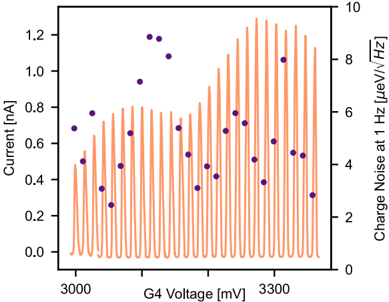
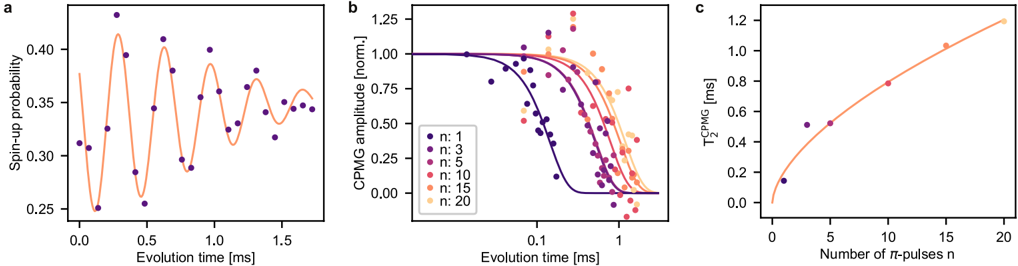
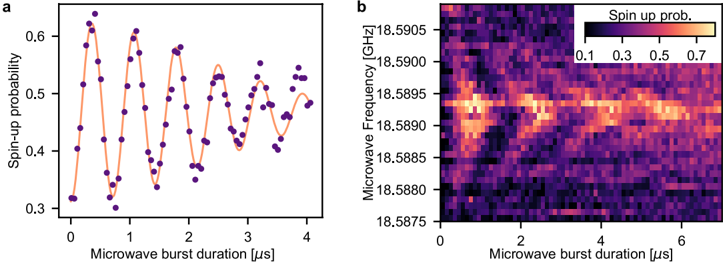
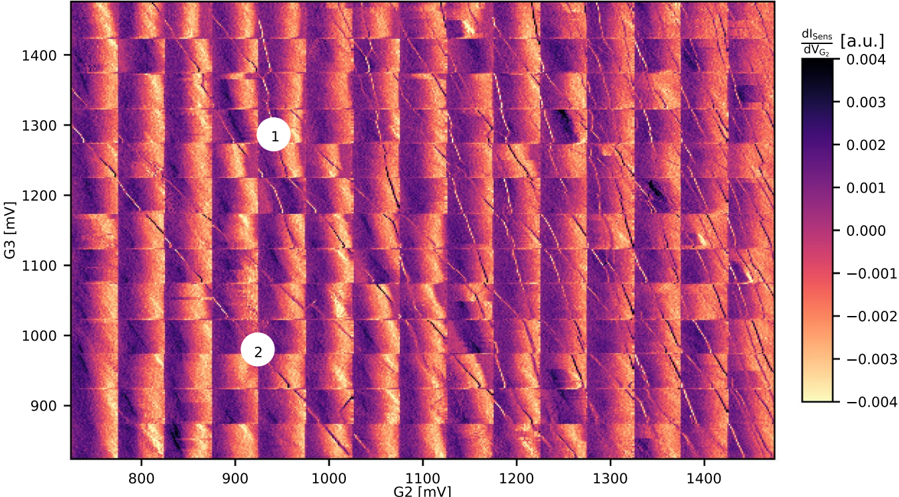
Full-scale quantum computers require the integration of millions of qubits, and the potential of using industrial semiconductor manufacturing to meet this need has driven the development of quantum computing in silicon quantum dots. However, fabrication has so far relied on electron-beam lithography and, with a few exceptions, conventional lift-off processes that suffer from low yield and poor uniformity. Here we report quantum dots that are hosted at a 28 Si/ 28 SiO 2 interface and fabricated in a 300 mm semiconductor manufacturing facility using all-optical lithography and fully industrial processing. With this approach, we achieve nanoscale gate patterns with excellent yield. In the multi-electron regime, the quantum dots allow good tunnel barrier control—a crucial feature for fault-tolerant two-qubit gates. Single-spin qubit operation using magnetic resonance in the few-electron regime reveals relaxation times of over 1 s at 1 T and coherence times of over 3 ms.
Overview
The claims and statistics of this paper haven’t been checked yet.
Free: it reads the open-access text and checks the first 5 claims that cite a source we can check. Create a free account to check every claim.
Integrity signals
Registry
Cites
Statistics
Figures

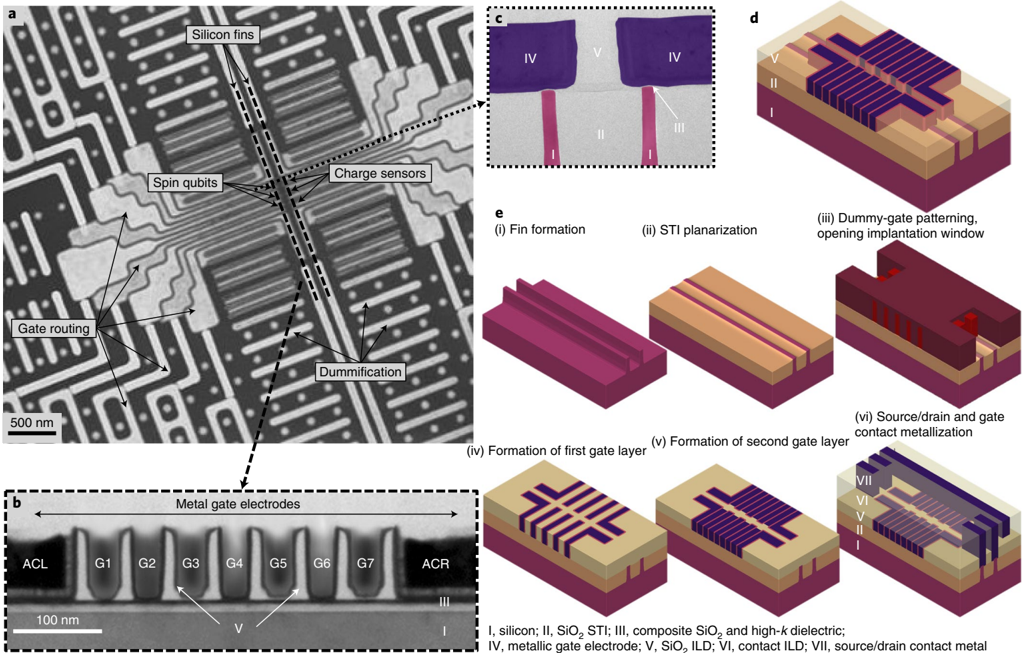
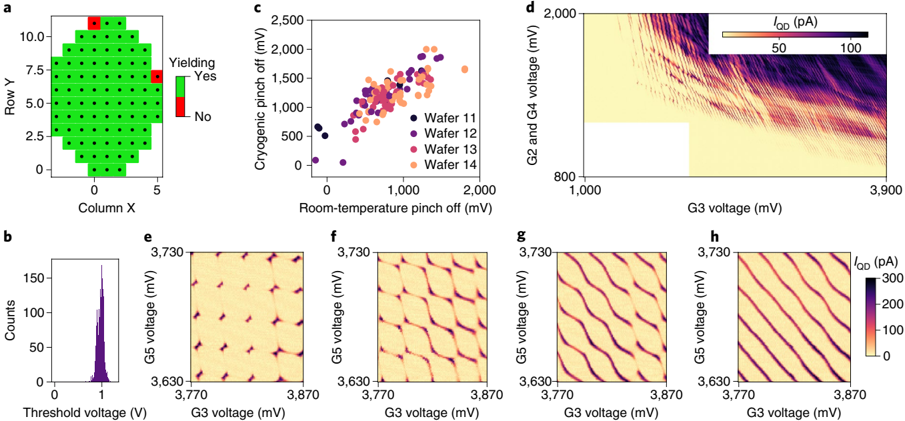
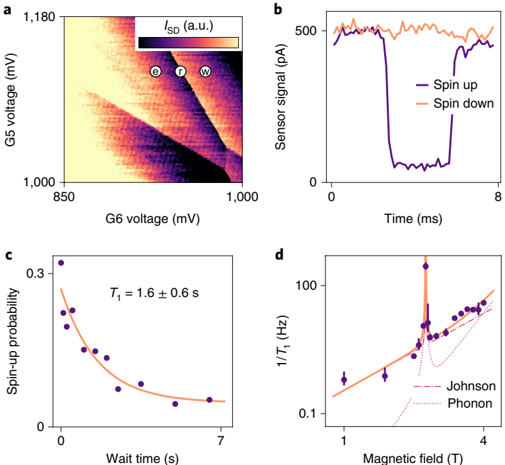
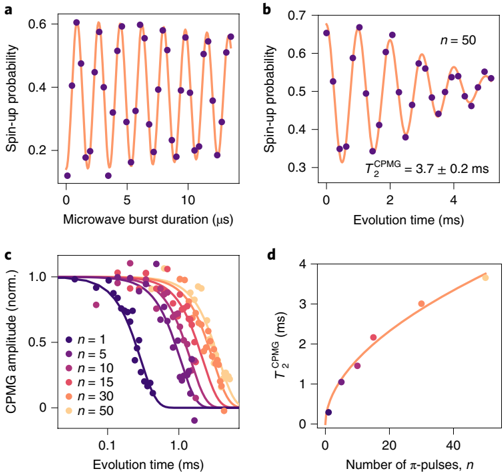
Verification
Claims the paper makes
The claims and statistics of this paper haven’t been checked yet.
Free: it reads the open-access text and checks the first 5 claims that cite a source we can check. Create a free account to check every claim.
Claims other papers make about this one
Each is checked against this paper’s own text: does it say what the citing paper says it does?
The source backs part of the claim, not all of it — or backs it for a different population, condition or comparison.
In the citing paper
“More fully industry-compatible devices in Si-MOS have also been demonstrated25,26 but are at present limited by high levels of disorder owing to the qubits being formed directly at the Si/SiO2 interface.”
From Probing single electrons across 300-mm spin qubit wafers (2024) · cites this paper as [26]
Experimental — accuracy not yet measured
Self-check
Percentages, sums and reported differences re-computed from the paper’s own numbers.
The self-check needs the paper’s full text.
Citations
Cites
Simulating physics with computers
Feynman, R. P. (1982) · International Journal of Theoretical Physics · doi:10.1007/bf02650179 · Cited by 7,691
Quantum computation with quantum dots
Loss, D., & DiVincenzo, D. P. (1998) · Physical Review A · doi:10.1103/physreva.57.120 · Cited by 6,840
Surface codes: Towards practical large-scale quantum computation
Fowler, A. G., Mariantoni, M., Martinis, J. M., & Cleland, A. N. (2012) · Physical Review A · doi:10.1103/physreva.86.032324 · Cited by 3,059 · cited 2×
“The most promising architectures require a scalable qubit system of individually-addressable qubits with a gate fidelity over 99% and tunable nearest-neighbour couplings [17, 18].”
BackgroundSpins in few-electron quantum dots
Hanson, R., Kouwenhoven, L. P., Petta, J. R., Tarucha, S., & Vandersypen, L. M. K. (2007) · Reviews of Modern Physics · doi:10.1103/revmodphys.79.1217 · Cited by 2,665
Self-citationMOS /metal oxide semiconductor/ physics and technology
Nicollian, E. H., & Brews, J. R. (1982) · CERN Document Server (European Organization for Nuclear Research) · Cited by 2,098
Electron transport through double quantum dots
van der Wiel, W. G., De Franceschi, S., Elzerman, J. M., Fujisawa, T., Tarucha, S., & Kouwenhoven, L. P. (2002) · Reviews of Modern Physics · doi:10.1103/revmodphys.75.1 · Cited by 1,820 · cited 2×
“At these points, the electrochemical potentials of the reservoirs are aligned with the electrochemical potentials of the left and the right dot, such that electrons can tunnel sequentially through the two dots [38].”
BackgroundSingle-shot read-out of an individual electron spin in a quantum dot
Elzerman, J. M., Hanson, R., Willems van Beveren, L. H., Witkamp, B., Vandersypen, L. M. K., & Kouwenhoven, L. P. (2004) · Nature · doi:10.1038/nature02693 · Cited by 1,679 · cited 2×
“Spin readout In order to read out the spin eigenstate we use energyselective tunneling to the electron reservoir [46].”
MethodSelf-citationDriven coherent oscillations of a single electron spin in a quantum dot
Koppens, F. H. L., Buizert, C., Tielrooij, K. J., Vink, I. T., Nowack, K. C., Meunier, T., Kouwenhoven, L. P., & Vandersypen, L. M. K. (2006) · Nature · doi:10.1038/nature05065 · Cited by 1,359 · cited 2×
“Furthermore, bringing the quantum dots on the inside of the stripline [48] will increase the ratio of magnetic field and (unwanted) electric fields and heating.”
BackgroundMethodSelf-citationZwanenburg, F. A., Dzurak, A. S., Morello, A., Simmons, M. Y., Hollenberg, L. C. L., Klimeck, G., Rogge, S., Coppersmith, S. N., & Eriksson, M. A. (2013) · Reviews of Modern Physics · doi:10.1103/revmodphys.85.961 · Cited by 1,210
Randomized benchmarking of quantum gates
Knill, E., Leibfried, D., Reichle, R., Britton, J., Blakestad, R. B., Jost, J. D., Langer, C., Ozeri, R., Seidelin, S., & Wineland, D. J. (2008) · Physical Review A · doi:10.1103/physreva.77.012307 · Cited by 1,019 · cited 1×
“To analyse the single-qubit gate fidelity, we employ randomised benchmarking [49] (Extended Fig.”
Method
Research works printed but not linked: 1
- Xue, X. et al. Benchmarking gate fidelities in a Si/SiGe two-qubit device. Phys. Rev. X 9, 021011 (2019).
Cited by
Items 101–200 of 516
Two-Dimensional Si Spin Qubit Arrays with Multilevel Interconnects
Ha, S. D., Acuna, E., Raach, K., Bloom, Z. T., Brecht, T. L., Chappell, J. M., Choi, M. D., Christensen, J. E., Counts, I. T. H., Daprano, D., et al. (2025) · PRX Quantum · doi:10.1103/sgn1-1t2d · Cited by 30
Two-qubit logic and teleportation with mobile spin qubits in silicon
Matsumoto, Y., Smet, M. D., Tryputen, L., de Snoo, S. L., Amitonov, S. V., Sammak, A., Rimbach-Russ, M., Scappucci, G., & Vandersypen, L. M. K. (2026) · Nature · doi:10.1038/s41586-026-10423-9 · Cited by 29
Self-citationJi, S., Peng, D., Sun, F., You, Q., Wang, R., Yan, N., Zhou, Y., Wang, W., Tang, Q. H., Xia, N., et al. (2023) · Journal of the American Chemical Society · doi:10.1021/jacs.3c07007 · Cited by 29
Simultaneous operation of an 18-qubit modular array in germaniumPreprint
Dijkema, J., Zhang, X., Bardakas, A., Bouman, D., Cuzzocrea, A., van Driel, D., Girardi, D., Stehouwer, L. E. A., Scappucci, G., Zwerver, A.-M., et al. (2026) · arXiv (Cornell University) · doi:10.48550/arxiv.2604.01063 · Cited by 29
“Semiconductor-based quantum technologies are particularly promising in this regard, as they build directly on the mature infrastructure of the semiconductor industry [2–4].”
Self-citationPipeline quantum processor architecture for silicon spin qubits
Patomäki, S. M., González-Zalba, M. F., Fogarty, M. A., Cai, Z., Benjamin, S. C., & Morton, J. J. L. (2024) · npj Quantum Information · doi:10.1038/s41534-024-00823-y · Cited by 28
“In addition, silicon on insulator (SOI) nanowire and fi n fi eld-effect transistors (nwFET and fi nFET) devices 40 – 42 have been used to con fi ne spin qubits within etched silicon structures, and have been proposed for sparsely-connected two-dimensional qubit architectures 43 .”
Signatures of Andreev Blockade in a Double Quantum Dot Coupled to a Superconductor
Zhang, P., Wu, H., Chen, J., Khan, S. A., Krogstrup, P., Pekker, D., & Frolov, S. (2022) · Physical Review Letters · doi:10.1103/physrevlett.128.046801 · Cited by 28
Characterization of individual charge fluctuators in Si/SiGe quantum dots
Ye, F., Ellaboudy, A. A., Albrecht, D., Vudatha, R., Jacobson, N. T., & Nichol, J. M. (2024) · Physical review. B./Physical review. B · doi:10.1103/physrevb.110.235305 · Cited by 27
“This sensitive voltage dependence is a possible explanation for the variation of charge noise between transport peaks observed by other groups [3, 5, 23].”
Harvey, S. P. (2022) · Oxford University Press eBooks · doi:10.1093/acrefore/9780190871994.013.83 · Cited by 27
“A Si-MOS spin qubit has also been fabricated using fully industry processing and showed similar noise levels to those made with standard techniques [161].”
MethodRunning a Six-Qubit Quantum Circuit on a Silicon Spin-Qubit Array
de Fuentes, I. F., Raymenants, E., Undseth, B., Pietx-Casas, O., Philips, S. G. J., Mądzik, M. T., de Snoo, S. L., Amitonov, S. V., Tryputen, L., Schmitz, A. T., et al. (2026) · PRX Quantum · doi:10.1103/f285-l2v5 · Cited by 26
Self-citationFlopping-mode spin qubit in a Si-MOS quantum dot
Hu, R.-Z., Ma, R.-L., Ni, M., Zhou, Y. L., Chu, N., Liao, W.-Z., Kong, Z., Cao, G., Wang, G., Li, H.-O., et al. (2023) · Applied Physics Letters · doi:10.1063/5.0137259 · Cited by 26
Oka, H., Inaba, T., Shitakata, S., Kato, K., Iizuka, S., Asai, H., Fuketa, H., & Mori, T. (2023) · IEEE Access · doi:10.1109/access.2023.3327731 · Cited by 26
“Among the various types of quantum bits (qubits), Si spin qubits have an advantage in the large-scale integration of qubit due to its compatibility with the Si CMOS manufacturing technology [1], [2], [3].”
BackgroundRecent Advancement in Microwave Photonics Sensing Technologies: A Review
Kumar, C., Nadeem, M. D., Raghuwanshi, S. K., & Kumar, S. (2024) · IEEE Sensors Journal · doi:10.1109/jsen.2024.3367963 · Cited by 26
“This field requires the use of photonic Si WGs, as evidenced by recent work on quantum computers with Intel [27].”
MethodCross-architecture tuning of silicon and SiGe-based quantum devices using machine learning
Severin, B., Lennon, D. T., Camenzind, L. C., Vigneau, F., Fedele, F., Jirovec, D., Ballabio, A., Chrastina, D., Isella, G., de Kruijf, M., et al. (2024) · Scientific Reports · doi:10.1038/s41598-024-67787-z · Cited by 27
Defect modeling in semiconductors: the role of first principles simulations and machine learning
Rahman, M. H., & Mannodi‐Kanakkithodi, A. (2025) · Journal of Physics Materials · doi:10.1088/2515-7639/adb181 · Cited by 25
Quantum geometric protocols for fast high-fidelity adiabatic state transfer
Meinersen, C. V., Bosco, S., & Rimbach-Russ, M. (2025) · EPJ Quantum Technology · doi:10.1140/epjqt/s40507-025-00426-2 · Cited by 25
Fast Bayesian Tomography of a Two-Qubit Gate Set in Silicon
Evans, T. J., Huang, W., Yoneda, J., Harper, R., Tanttu, T., Chan, K. W., Hudson, F. E., Itoh, K. M., Saraiva, A., Yang, C. H., et al. (2022) · Physical Review Applied · doi:10.1103/physrevapplied.17.024068 · Cited by 25
Feedback-based active reset of a spin qubit in silicon
Kobayashi, T., Nakajima, T., Takeda, K., Noiri, A., Yoneda, J., & Tarucha, S. (2023) · npj Quantum Information · doi:10.1038/s41534-023-00719-3 · Cited by 25
Bell inequality violation in gate-defined quantum dots
Steinacker, P., Tanttu, T., Lim, W. H., Stuyck, N. D., Feng, M., Serrano, S., Vahapoglu, E., Su, R. Y., Huang, J. Y., Jones, C., et al. (2025) · Nature Communications · doi:10.1038/s41467-025-57987-0 · Cited by 25
“This most likely originates from charge noise that affects both qubits slightly since nuclear spin noise is expected to be uncorrelated.”
A crossbar chip for benchmarking semiconductor spin qubits
Tosato, A., Elsayed, A., Poggiali, F., Stehouwer, L. E. A., Costa, D., Hudson, K., Esposti, D. D., & Scappucci, G. (2026) · Nature Electronics · doi:10.1038/s41928-026-01569-5 · Cited by 24
“The recent demonstration of spin qubits [1] manufactured in a modern semiconductor foundry [2] offers a promising avenue to address scalability challenges of quantum technology, by leveraging decades of technology development in the semiconductor industry.”
Self-citationFermion-parity qubit in a proximitized double quantum dot
Geier, M., Souto, R. S., Schulenborg, J., Asaad, S., Leijnse, M., & Flensberg, K. (2024) · Physical Review Research · doi:10.1103/physrevresearch.6.023281 · Cited by 24
“A more promising route is silicon or germanium based systems [83, 91, 92].”
BackgroundScalable on-chip multiplexing of silicon single and double quantum dots
Bohuslavskyi, H., Ronzani, A., Hätinen, J., Rantala, A., Shchepetov, A., Koppinen, P. J., Lehtinen, J. S., & Prunnila, M. (2024) · Communications Physics · doi:10.1038/s42005-024-01806-3 · Cited by 25
“…recent demonstration of SiMOS electron spin qubit quantum dot devices on 300 mm wafers with S e (1 Hz) as low as 3.6 (0.6) μeV/√Hz with lever arm 𝛼 = 0.3 (0.1) eV/V measured at mK temperatures that used Poly-Si/ SiO 2 /Si MOS stack strongly supports the “all-silicon” gate-stack approach [50,51] .”
InfluentialIndustrially Fabricated Single-Electron Quantum Dots in Si/Si—Ge Heterostructures
Huckemann, T., Muster, P., Langheinrich, W., Brackmann, V., Friedrich, M., Komericki, N. D., Diebel, L. K., Stieß, V., Bougeard, D., Yamamoto, Y., et al. (2025) · IEEE Electron Device Letters · doi:10.1109/led.2025.3553672 · Cited by 24
“The platforms, on which industrial progress has recently been made, include fully depleted silicon-on-insulator (FDSOI) nanowires [12], FinFET devices [13] and Si/Si–Ge heterostructures [14] using CMOS pilot lines.”
Impact of the local valley splitting on the coherence of conveyor-belt spin shuttling in 28Si/SiGe
Volmer, M., Struck, T., Sala, A., Tu, J., Trellenkamp, S., Esposti, D. D., Scappucci, G., Cywiński, Ł., Bluhm, H., & Schreiber, L. R. (2026) · Nature Communications · doi:10.1038/s41467-026-74382-5 · Cited by 23
“Spin qubits in silicon excel due to their tiny footprint and compatibility with silicon foundry fabrication [15–18].”
Self-citationMatrix-induced defects and molecular doping in the afterglow of SiO2 microparticles
Chen, X., Che, M., Xu, W., Wu, Z., Suh, Y. D., Wu, S., Liu, X., & Huang, W. (2024) · Nature Communications · doi:10.1038/s41467-024-51591-4 · Cited by 23
Characterization and Modeling of Quantum Dot Behavior in FDSOI Devices
Tripathi, S. P., Bonen, S., Bharadwaj, A., Jager, T., Nastase, C., Iordanescu, S. A., Boldeiu, G., Pasteanu, M., Nicoloiu, A., Zdru, I., et al. (2022) · IEEE Journal of the Electron Devices Society · doi:10.1109/jeds.2022.3176205 · Cited by 23
Gradwohl, K., Cvitkovich, L., Lu, C.-H., Koelling, S., Oezkent, M., Liu, Y., Waldhoer, D., Grasser, T., Niquet, Y., Albrecht, M., et al. (2025) · Nano Letters · doi:10.1021/acs.nanolett.4c05326 · Cited by 22
Corley-Wiciak, C. X., Zoellner, M. H., Zaitsev, I., Anand, K., Zatterin, E. M., Yamamoto, Y., Corley‐Wiciak, A. A., Reichmann, F., Langheinrich, W., Schreiber, L. R., et al. (2023) · Physical Review Applied · doi:10.1103/physrevapplied.20.024056 · Cited by 23
SWAP Gate for Spin Qubits Based on Silicon Devices Integrated with a Micromagnet
Ni, M., Ma, R.-L., Kong, Z., Xue, X., Zhu, S.-K., Wang, C., Li, A.-R., Chu, N., Liao, W.-Z., Cao, G., et al. (2025) · Nano Letters · doi:10.1021/acs.nanolett.4c05540 · Cited by 22
“Single-spin qubit in a silicon quantum dot is an attractive platform for quantum information processing due to its long coherence times 1-4 , robustness against thermal noise 5,6 , and potential for scalability with advanced semiconductor manufacturing technology 7-9 .”
Automatic virtual voltage extraction of a 2x2 array of quantum dots with machine learningPreprint
Oakes, G. A., Duan, J., Morton, J. J. L., Lee, A. A., Smith, C. G., & González-Zalba, M. F. (2020) · arXiv (Cornell University) · doi:10.48550/arxiv.2012.03685 · Cited by 22
Scalable entanglement of nuclear spins mediated by electron exchange
Stemp, H. G., van Blankenstein, M. R., Asaad, S., Mądzik, M. T., Joecker, B., Firgau, H. R., Laucht, A., Hudson, F. E., Dzurak, A. S., Itoh, K. M., et al. (2025) · Science · doi:10.1126/science.ady3799 · Cited by 21
Novel qubits in hybrid semiconductor–superconductor nanostructures
Pita‐Vidal, M., Souto, R. S., Goswami, S., Andersen, C. K., Katsaros, G., Shabani, J., & Aguado, R. (2026) · Physics Reports · doi:10.1016/j.physrep.2026.10.002 · Cited by 21
Probing the Jaynes-Cummings Ladder with Spin Circuit Quantum Electrodynamics
Bonsen, T., Harvey-Collard, P., Rimbach-Russ, M., Dijkema, J., Sammak, A., Scappucci, G., & Vandersypen, L. M. K. (2023) · Physical Review Letters · doi:10.1103/physrevlett.130.137001 · Cited by 21
Self-citationvon Horstig, F.-E., Ibberson, D. J., Oakes, G. A., Cochrane, L., Wise, D. F., Stelmashenko, N. A., Barraud, S., Robinson, J. W. A., Martins, F., & González-Zalba, M. F. (2024) · Physical Review Applied · doi:10.1103/physrevapplied.21.044016 · Cited by 21
Non-symmetric Pauli spin blockade in a silicon double quantum dot
Lundberg, T., Ibberson, D. J., Li, J., Hutin, L., Abadillo-Uriel, J. C., Filippone, M., Bertrand, B., Nunnenkamp, A., Lee, C.-M., Stelmashenko, N. A., et al. (2024) · npj Quantum Information · doi:10.1038/s41534-024-00820-1 · Cited by 21
“1b, we fi rst consider the pair of neighboring ICTs between the (7,8), (6,9) and (5,10) charge states highlighted by the dotted boxes in Fig.”
Quantum Computing for Databases: Overview and ChallengesPreprint
Yuan, G., Chen, Y., Lu, J., Wu, S., Ye, Z., Qian, L., & Chen, G. (2024) · arXiv (Cornell University) · doi:10.48550/arxiv.2405.12511 · Cited by 22
“…of quantum computers includes superconducting [32, 48], trapped ion [22, 26], photonic [70, 81, 82], neutral-atom [3, 15, 37], semiconductor [29, 89, 112, 133], and topological quantum computers [58, 59], among which superconducting quantum computers are developing most rapidly (see Table 1).”
BackgroundRimbach-Russ, M., John, V., van Straaten, B., & Bosco, S. (2025) · Physical Review Letters · doi:10.1103/mvtj-zhrl · Cited by 20
Accelerated Adiabatic Passage of a Single Electron Spin Qubit in Quantum Dots
Liu, X.-F., Matsumoto, Y., Fujita, T., Ludwig, A., Wieck, A. D., & Oiwa, A. (2024) · Physical Review Letters · doi:10.1103/physrevlett.132.027002 · Cited by 21
“The spin qubit of QDs is a promising candidate for fault-tolerant solid-state quantum computing due to its high-fidelity quantum operation [3–6], potential scalability [7–9], and well compatibility with manufacturing technology of semi-conductor industry [10].”
BackgroundBergamaschi, F. E., Frutuoso, T. M., Paz, B. C., Billiot, G., Jansen, A. G. M., Galy, P., Vincent, E., Gaillard, F., Duriez, B., & Cassé, M. (2024) · IEEE Transactions on Electron Devices · doi:10.1109/ted.2024.3367316 · Cited by 20
“…the electrical performance improvement, such as increase in drift velocity and in carrier mobility, higher output current and lower OFF -state current [6], [7], [8], the operation in extremely low temperatures allows for better high frequency and large bandwidth control and readout electronics [9].”
BackgroundWyss, R. M., Kewes, G., Marabotti, P., Koepfli, S. M., Schlichting, K.-P., Parzefall, M., Bonvin, E., Sarott, M. F., Trassin, M., Oezkent, M., et al. (2024) · Nature Communications · doi:10.1038/s41467-024-49130-2 · Cited by 20
“These SiGe heterostructures are utilized as electron spin qubits in gate-de fi ned silicon quantum dots and represent a promising and fast-developing technology for quantum computing 40,41 .”
Autonomous bootstrapping of quantum dot devices
Zubchenko, A., Middlebrooks, D., Rasmussen, T., Lausen, L., Kuemmeth, F., Chatterjee, A., & Zwolak, J. P. (2025) · Physical Review Applied · doi:10.1103/physrevapplied.23.014072 · Cited by 20
Multi-time quantum process tomography on a superconducting qubit
Giarmatzi, C., Jones, T., Gilchrist, A., Pakkiam, P., Fedorov, A., & Costa, F. (2025) · Quantum · doi:10.22331/q-2025-12-18-1952 · Cited by 20
Effective out-of-plane g factor in strained-Ge/SiGe quantum dots
Miller, A. J., Hardy, W., Luhman, D., Brickson, M. I., Baczewski, A., Liu, C.-Y., Li, J., Lilly, M. P., & Lu, T. (2022) · Physical review. B./Physical review. B · doi:10.1103/physrevb.106.l121402 · Cited by 20
Simulation of 1/f charge noise affecting a quantum dot in a Si/SiGe structure
Kępa, M., Focke, N., Cywiński, Ł., & Krzywda, J. A. (2023) · Applied Physics Letters · doi:10.1063/5.0151029 · Cited by 20
Hasan, M. J., & Mahdy, M. R. C. (2023) · arXiv (Cornell University) · doi:10.48550/arxiv.2311.13810 · Cited by 20
“The transient stability of qubits, a topic explored by [19], and the intricate challenge of manipulating quantum states, as demonstrated by [20], add layers of complexity to quantum computing.”
BackgroundLight-hole gate-defined spin-orbit qubit
Vecchio, P. D., & Moutanabbir, O. (2023) · Physical review. B./Physical review. B · doi:10.1103/physrevb.107.l161406 · Cited by 19
“Ge/Ge1−xSnx hole spin devices combine all advantages that are inherent to group IV semiconductors [17, 18].”
BackgroundA Cryogenic CMOS Current Integrator and Correlation Double Sampling Circuit for Spin Qubit Readout
Fuketa, H., Akita, I., Ishikawa, T., Koike, H., & Mori, T. (2023) · IEEE Transactions on Circuits and Systems I Regular Papers · doi:10.1109/tcsi.2023.3317895 · Cited by 19
“In addition, Intel fabricated qubits and charge sensors on an isotopically enriched 28 Si epilayer using the manufacturing facility, which is compatible with the widely used CMOS process [16].”
MethodSingle-spin-qubit geometric gate in a silicon quantum dot
Ma, R.-L., Li, A.-R., Wang, C., Kong, Z., Liao, W.-Z., Ni, M., Zhu, S.-K., Chu, N., Zhang, C., Liu, D., et al. (2024) · Physical Review Applied · doi:10.1103/physrevapplied.21.014044 · Cited by 19
“Especially, silicon becomes a promising candidate for realizing large-scale quantum computing owing to its long dephasing time of up to 120 µ s [9], high control fidelity exceeding 99.9 % [11–13] and compatibility with the well-established semiconductor industry [14, 15].”
BackgroundInfluentialEntangling gates on degenerate spin qubits dressed by a global field
Hansen, I., Seedhouse, A. E., Serrano, S., Nickl, A., Feng, M., Huang, J. Y., Tanttu, T., Stuyck, N. D., Lim, W. H., Hudson, F. E., et al. (2024) · Nature Communications · doi:10.1038/s41467-024-52010-4 · Cited by 19
Nanomaterials for spin-based quantum information
Ding, P., Chen, D., Ko, P. K., Qammar, M., Geng, P., Guo, L., & Halpert, J. E. (2025) · Nanoscale · doi:10.1039/d4nr04012k · Cited by 19
Taylor, J., & Sarma, S. D. (2025) · Physical review. B./Physical review. B · doi:10.1103/physrevb.111.035301 · Cited by 19
Single-Step High-Fidelity Three-Qubit Gates by Anisotropic Chiral Interactions
Nguyen, M. T. P., Rimbach-Russ, M., Vandersypen, L. M. K., & Bosco, S. (2025) · PRX Quantum · doi:10.1103/kp8s-py9m · Cited by 19
Self-citationOsada, A., Taniguchi, K., Shigefuji, M., & Noguchi, A. (2022) · Physical Review Research · doi:10.1103/physrevresearch.4.033245 · Cited by 19
A quantum dot crossbar with sublinear scaling of interconnects at cryogenic temperature
Bavdaz, P. L., Eenink, H. G. J., van Staveren, J., Lodari, M., Almudever, C. G., Clarke, J. S., Sebasatiano, F., Veldhorst, M., & Scappucci, G. (2022) · npj Quantum Information · doi:10.1038/s41534-022-00597-1 · Cited by 18
“2d are the vertical lines of similarly low pinch-off voltages located at odd BGs (11, 23, 27), corresponding to right barrier gates of the FETs.”
BackgroundSelf-citationBuried Unstrained Germanium Channels: A Lattice‐Matched Platform for Quantum Technology
Costa, D., Vecchio, P. D., Hudson, K., Stehouwer, L. E. A., Tosato, A., Esposti, D. D., Calvi, V., Moreschini, L., Lodari, M., Bosco, S., et al. (2026) · Advanced Science · doi:10.1002/advs.202600066 · Cited by 18
“Yet, qubits in Si-MOS are defined at the semiconductor-oxide interface, introducing electrostatic disorder and charge noise and posing a challenge for scaling [16].”
Self-citationQuantum Dot-Based Frequency Multiplier
Oakes, G. A., Peri, L., Cochrane, L., Martins, F., Hutin, L., Bertrand, B., Vinet, M., Gomez-Saiz, A., Ford, C. J. B., Smith, C. G., et al. (2023) · PRX Quantum · doi:10.1103/prxquantum.4.020346 · Cited by 18
Seeking a quantum advantage for machine learning
(2023) · Nature Machine Intelligence · doi:10.1038/s42256-023-00710-9 · Cited by 18
Ademi, Z., Bassi, M., Yu, C. X., Oosterhout, S. D., Matsumoto, Y., de Snoo, S. L., Sammak, A., Vandersypen, L. M. K., Scappucci, G., Déprez, C., et al. (2025) · arXiv (Cornell University) · doi:10.48550/arxiv.2510.26860 · Cited by 18
“To enhance the controlled-Z gate fidelity, the barrier-gate pulses are shaped with a Hamming windows [3].”
Self-citationMeasurement of cryoelectronics heating using a local quantum dot thermometer in silicon
de Kruijf, M., Noah, G. M., Gomez-Saiz, A., Morton, J. J. L., & González-Zalba, M. F. (2024) · Chip · doi:10.1016/j.chip.2024.100097 · Cited by 17
Scalable parity architecture with a shuttling-based spin qubit processor
Ginzel, F., Fellner, M., Ertler, C., Schreiber, L. R., Bluhm, H., & Lechner, W. (2024) · Physical review. B./Physical review. B · doi:10.1103/physrevb.110.075302 · Cited by 17
“This, combined with their small size of only a few tens of nanometers per QD, may allow for the fabrication of quantum computers with millions of qubits that can easily be mass-produced [5].”
BackgroundOperating Semiconductor Qubits without Individual Barrier Gates
Ivlev, A., Crielaard, D. R., Meyer, M., Lawrie, W. I. L., Hendrickx, N. W., Sammak, A., Matsumoto, Y., Vandersypen, L. M. K., Scappucci, G., Déprez, C., et al. (2025) · Physical Review X · doi:10.1103/xhq3-4jxz · Cited by 17
“We proceed to measure exchange oscillations at varying t exc with a doubly decoupled sequence to fit the exchange energy (see figures S3c-d), as is done in the main text.”
Self-citationSolid neon as a noise-resilient host for electron qubits above 100 mK
Li, X., Wang, C. S., Dizdar, B., Huang, Y., Wen, Y., Guo, W., Zhang, X., Han, X., Zhou, X., & Jin, D. (2026) · Nature Electronics · doi:10.1038/s41928-026-01613-4 · Cited by 16
“In Si/SiO 2 systems, the extreme proximity of the qubit to the oxide interface and electrical gates can introduce notable disorder and noise 18,37 .”
Integrated Photonics for IoT, RoF, and Distributed Fog–Cloud Computing: A Comprehensive Review
Castañón, G., Cerroni, W., & Sarmiento-Moncada, A. M. (2025) · Applied Sciences · doi:10.3390/app15137494 · Cited by 17
Single-Electron Occupation in Quantum Dot Arrays at Selectable Plunger Gate Voltage
Meyer, M., Déprez, C., Meijer, I. N., Unseld, F. K., Karwal, S., Sammak, A., Scappucci, G., Vandersypen, L. M. K., & Veldhorst, M. (2023) · Nano Letters · doi:10.1021/acs.nanolett.3c03349 · Cited by 17
Self-citationImpact of electrostatic crosstalk on spin qubits in dense CMOS quantum dot arrays
Cifuentes, J. D., Tanttu, T., Steinacker, P., Serrano, S., Hansen, I., Slack-Smith, J., Gilbert, W., Huang, J. Y., Vahapoglu, E., Leon, R. C. C., et al. (2024) · Physical review. B./Physical review. B · doi:10.1103/physrevb.110.125414 · Cited by 17
Kriekouki, I., Beaudoin, F., Philippopoulos, P., Zhou, C., Lemyre, J. C., Rochette, S., Mir, S., Barragán, M. J., Pioro-Ladrière, M., & Galy, P. (2022) · Solid-State Electronics · doi:10.1016/j.sse.2022.108355 · Cited by 17
Gate reflectometry in dense quantum dot arrays
Ansaloni, F., Bohuslavskyi, H., Fedele, F., Rasmussen, T., Brovang, B., Berritta, F., Heskes, A., Li, J., Hutin, L., Venitucci, B., et al. (2023) · New Journal of Physics · doi:10.1088/1367-2630/acc126 · Cited by 18
“…by industrial 300 mm-wafer processes already show coherent single-spin rotations [5–8], with further efforts spanning planar Si/SiGe heterostructures [9], planar Si/SiO 2 interfaces [7, 10], fully-depleted silicon-on-insulator (FDSOI) silicon nanowires [11, 12] as well as 28 Si/SiO 2 fins [8].”
Hamiltonian phase error in resonantly driven CNOT gate above the fault-tolerant threshold
Wu, Y.-H., Camenzind, L. C., Noiri, A., Takeda, K., Nakajima, T., Kobayashi, T., Chang, C. Y., Sammak, A., Scappucci, G., Goan, H., et al. (2024) · npj Quantum Information · doi:10.1038/s41534-023-00802-9 · Cited by 16
Self-citationZhou, Z. G., Li, Y., Wu, Z., Ma, X., Fan, S., & Huang, S. (2024) · Journal of Semiconductors · doi:10.1088/1674-4926/24050043 · Cited by 16
Peri, L., Oakes, G. A., Cochrane, L., Ford, C. J. B., & González-Zalba, M. F. (2024) · Quantum · doi:10.22331/q-2024-03-21-1294 · Cited by 16
1/f noise in quantum nanoscience
Falci, G., Hakonen, P. J., & Paladino, E. (2023) · Elsevier eBooks · doi:10.1016/b978-0-323-90800-9.00250-x · Cited by 16
Meunier, T., Daval, N., Perruchot, F., & Vinet, M. (2025) · The European Physical Journal A · doi:10.1140/epja/s10050-025-01514-8 · Cited by 15
“The state-of-the-art (99% fidelity) for VLSI-compatible quantum circuits was obtained with Si 28 FinFET technology [12], and more recently in FdSOI holes devices [38].”
Memristor-Based Cryogenic Programmable DC Sources for Scalable In Situ Quantum-Dot Control
Mouny, P.-A., Beilliard, Y., Graveline, S., Roux, M.-A., Mesoudy, A. E., Dawant, R., Gliech, P., Ecoffey, S., Alibart, F., Pioro-Ladrière, M., et al. (2023) · IEEE Transactions on Electron Devices · doi:10.1109/ted.2023.3244133 · Cited by 15
“[13] Y. Beilliard, F. Paquette, F. Brousseau, S. Ecoffey, F. Alibart, and D. Drouin, “Conductive filament evolution dynamics revealed by cryogenic (1.5 K) multilevel switching of CMOS-compatible Al2O3/TiO2 resistive memories,” Nanotechnology, vol. 31, no. 44, Aug. 2020, Art. no. 445205.”
BackgroundInfluentialDesigning Globally Time-Optimal Entangling Gates Using Geometric Space Curves
Tang, H. L., Connelly, K., Warren, A., Zhuang, F., Economou, S. E., & Barnes, E. (2023) · Physical Review Applied · doi:10.1103/physrevapplied.19.044094 · Cited by 15
How Fault-Tolerant Quantum Computing Benefits from Cryo-CMOS Technology
Chiang, H.-L., Hadi, R. A., Wang, J.-F., Han, H.-C., Wu, J.-J., Hsieh, H.-H., Horng, J.-J., Chou, W.-S., Lien, B., Chang, Y., et al. (2023) · IEEE Symposium on VLSI Technology and Circuits (VLSI Technology and Circuits) · doi:10.23919/vlsitechnologyandcir57934.2023.10185325 · Cited by 15
Noro, K., Kozuka, Y., Matsumura, K., Kumasaka, T., Fujiwara, Y., Tsukazaki, A., Kawasaki, M., & Otsuka, T. (2024) · Nature Communications · doi:10.1038/s41467-024-53890-2 · Cited by 14
Jnane, H., & Benjamin, S. C. (2025) · Physical Review Applied · doi:10.1103/rm43-nh9b · Cited by 14
Tracking spin qubit frequency variations over 912 days
Capannelli, K., Undseth, B., de Fuentes, I. F., Raymenants, E., Unseld, F. K., Pietx-Casas, O., Philips, S. G. J., Mądzik, M. T., Amitonov, S. V., Tryputen, L., et al. (2025) · npj Quantum Information · doi:10.1038/s41534-025-01134-6 · Cited by 14
Self-citationValley Splitting in Silicon from the Interference Pattern of Quantum Oscillations
Lodari, M., Lampert, L., Zietz, O., Pillarisetty, R., Clarke, J. S., & Scappucci, G. (2022) · Physical Review Letters · doi:10.1103/physrevlett.128.176603 · Cited by 14
Self-citationSilicon qubits move a step closer to achieving error correction
Warren, A., & Economou, S. E. (2022) · Nature · doi:10.1038/d41586-022-00047-0 · Cited by 14
Modular nanomagnet design for spin qubits confined in a linear chain
Aldeghi, M., Allenspach, R., & Salis, G. (2023) · Applied Physics Letters · doi:10.1063/5.0139670 · Cited by 14
Acceptor-based qubit in silicon with tunable strain
Zhang, S., He, Y., & Huang, P. (2023) · Physical review. B./Physical review. B · doi:10.1103/physrevb.107.155301 · Cited by 13
van Staveren, J., Enthoven, L., Bavdaz, P. L., Meyer, M., Déprez, C., Nuutinen, V., Lake, R. E., Esposti, D. D., Carlsson, C., Tosato, A., et al. (2025) · IEEE Transactions on Quantum Engineering · doi:10.1109/tqe.2025.3580377 · Cited by 13
“In addition, various industrial CMOS technologies [4], [5], [6], [7] have been shown to be suitable for the development of semiconductor spin qubits, providing a promising path toward the monolithic integration of control electronics and qubits in CMOS as the ultimate solution for scalability.”
Self-citationMei, D., Panamaldeniya, S. A., Dong, K., Bhattarai, S., Budhathoki, N., & Warren, A. (2025) · Quantum Science and Technology · doi:10.1088/2058-9565/ae0a7d · Cited by 13
“Si spin qubits have achieved long coherence times [5] and have been implemented using industry-standard fabrication techniques [6].”
Sensing and Control of Single Trapped Electrons above 1 K
Castoria, K. E., Beysengulov, N. R., Koolstra, G., Byeon, H., Glen, E. O., Sammon, M., Lyon, S. A., Pollanen, J., & Rees, D. G. (2025) · Physical Review X · doi:10.1103/vcl7-73ms · Cited by 13
Robust spin-qubit control in a natural Si-MOS quantum dot using phase modulation
Kuno, T., Utsugi, T., Ramsay, A. J., Mertig, N., Lee, N., Yanagi, I., Mine, T., Kusuno, N., Mizokuchi, R., Nakajima, T., et al. (2026) · npj Quantum Information · doi:10.1038/s41534-026-01185-3 · Cited by 13
“Silicon quantum dots are promising quantum computing platforms because of their small size, kelvin-scale temperature operation [1–4] and compatibility with the well-established complementary metal-oxide-semiconductor technology [5–11].”
Single-electron pump in a quantum dot array for silicon quantum computers
Utsugi, T., Lee, N., Tsuchiya, R., Mine, T., Mizokuchi, R., Yoneda, J., Kodera, T., Saito, S., Hisamoto, D., & Mizuno, H. (2023) · Japanese Journal of Applied Physics · doi:10.35848/1347-4065/acac36 · Cited by 13
Control of dephasing in spin qubits during coherent transport in silicon
Feng, M., Yoneda, J., Huang, W., Su, Y., Tanttu, T., Yang, C. H., Cifuentes, J. D., Chan, K. W., Gilbert, W., Leon, R. C. C., et al. (2023) · Physical review. B./Physical review. B · doi:10.1103/physrevb.107.085427 · Cited by 13
Singh, S. K., Sharma, D., Vega, R. A., & Dixit, A. (2023) · IEEE Transactions on Electron Devices · doi:10.1109/ted.2023.3265943 · Cited by 13
“Evidently, the experimental investigation on the single electron behavior in cryogenic operation of CMOS technologies has recently gained considerable attention [2], [3], [4].”
BackgroundProgress of Gate‐Defined Semiconductor Spin Qubit: Host Materials and Device Geometries
Liu, Y., Guan, S., Luo, J., & Li, S. (2024) · Advanced Functional Materials · doi:10.1002/adfm.202304725 · Cited by 13
Unified evolutionary optimization for high-fidelity spin qubit operationsPreprint
Katiraee-Far, S. R., Matsumoto, Y., Undseth, B., Smet, M. D., Gualtieri, V., Meinersen, C. V., de Fuentes, I. F., Capannelli, K., Rimbach-Russ, M., Scappucci, G., et al. (2025) · arXiv (Cornell University) · doi:10.48550/arxiv.2503.12256 · Cited by 13
“Semiconductor quantum devices are one of the prominent quantum computing platforms due to their scalability through foundry-compatible fabrication methods [1–6].”
Self-citationRadiofrequency cascade readout of coupled spin qubits
Chittock-Wood, J. F., Leon, R. C. C., Fogarty, M. A., Murphy, T., von Horstig, F.-E., Patomäki, S. M., Oakes, G. A., Williams, J., Johnson, N., Jussot, J., et al. (2026) · Nature Electronics · doi:10.1038/s41928-026-01582-8 · Cited by 12
“The MOS approach shares similarities with modern silicon field-effect transistor manufacturing, which can be used to form MOS QDs in both planar devices 11,18,19,21–23 and etched silicon structures, such as nanowires 4,24,25 and fin field-effect transistors 26,27 .”
Experimental Online Quantum Dots Charge Autotuning Using Neural Networks
Yon, V., Galaup, B., Rohrbacher, C., Rivard, J., Morel, A., Leclerc, D., Godfrin, C., Li, R., Kubicek, S., Greve, K. D., et al. (2025) · Nano Letters · doi:10.1021/acs.nanolett.4c04889 · Cited by 6
Pulse shaping for ultra-fast adiabatic quantum gates
Polat, İ., Overwater, R. W. J., Rimbach-Russ, M., & Sebastiano, F. (2026) · npj Quantum Information · doi:10.1038/s41534-026-01245-8 · Cited by 12
Fully Integrated Cryo-CMOS Spin-to-Digital Readout for Semiconductor Qubits
Castriotta, M., Prati, E., & Ferrari, G. (2023) · IEEE Solid-State Circuits Letters · doi:10.1109/lssc.2023.3292523 · Cited by 12
“The detection consists in distinguishing the current associated with the spin-up state, which can be in the order of a few nA, compared to the one related to the spin-down state, which can be tens of pA for milli-Kelvin spin qubits [7], [8].”
BackgroundInteracting random-field dipole defect model for heating in semiconductor-based qubit devices
Choi, Y., & Joynt, R. (2024) · Physical Review Research · doi:10.1103/physrevresearch.6.013168 · Cited by 12
“5 ms [1] to 38 μs [19] having been observed.”
BackgroundAnalysis and 3D TCAD simulations of single-qubit control in an industrially-compatible FD-SOI device
Philippopoulos, P., Beaudoin, F., & Galy, P. (2024) · Solid-State Electronics · doi:10.1016/j.sse.2024.108883 · Cited by 12
Quantum Interference and Coherent Population Trapping in a Double Quantum Dot
Zhou, Y. L., Leng, J., Wang, K., Gao, F., Xu, G., Liu, H., Ma, R.-L., Cao, G., Zhang, J., Guo, G., et al. (2024) · Nano Letters · doi:10.1021/acs.nanolett.4c01781 · Cited by 12
Moskaleva, D. A., Korshakov, N. D., Moskalev, D. O., Solovyova, A. A., Matanin, A. R., Malevannaya, E. I., Smirnov, N. S., Teleganov, M., Panfilov, Y. V., & Rodionov, I. A. (2025) · Scientific Reports · doi:10.1038/s41598-025-08787-5 · Cited by 11
Eight-qubit operation of a 300 mm SiMOS foundry-fabricated device
Nickl, A., Stuyck, N. D., Steinacker, P., Cifuentes, J. D., Serrano, S., Feng, M., Vahapoglu, E., Hudson, F. E., Chan, K. W., Kubicek, S., et al. (2026) · Nature Communications · doi:10.1038/s41467-026-74597-6 · Cited by 11
“Among the leading platforms, silicon spin qubits in quantum dots stand out due to their compatibility with CMOS manufacturing 5–7 , long coherence times in isotopically purified materials, and the possibility of integrating control and readout circuitry in a scalable architecture 8–10 .”
Demonstration of an always-on exchange-only spin qubit
Broz, J., Hoke, J. C., Acuna, E., & Petta, J. R. (2026) · Nature Communications · doi:10.1038/s41467-026-70943-w · Cited by 11
“J single-qubit Clifford gates C , we can directly measure the fidelity, F ( ˆ U, ˆ 1 ), of ˆ U relative to the identity [3, 4]: In practice, each term in the summation is obtained by initializing the qubit in | 0 ð , applying the sequence ˆ C † i ˆ U ˆ C i , and then measuring the probability that…”
Metadata
- Authors
- Zwerver, A. M. J., Krähenmann, T., Watson, T. F., Lampert, L., George, H. C., Pillarisetty, R., Bojarski, S. A., Amin, P., Amitonov, S. V., Boter, J. M., Caudillo, R., Correas-Serrano, D., Dehollain, J. P., Droulers, G., Henry, E. M., Kotlyar, R., Lodari, M., Lüthi, F., Michalak, D. J., Mueller, B. K., Neyens, S., Roberts, J., Samkharadze, N., Zheng, G., Zietz, O. K., Scappucci, G., Veldhorst, M., Vandersypen, L. M. K., & Clarke, J. S.
- Affiliations
- QuTech (NL)
- Intel (United States) (US)
- Corresponding author
- Vandersypen, L. M. K.
- Clarke, J. S.
- ORCID
- Venue
- Nature Electronics
- Published
- 2022-03-29
- Volume
- 5
- Issue
- 3
- Pages
- 184-190
- ISSN
- 2520-1131 (ISSN-L)
- OpenAlex
- W3128881740
- Cited by
- 364
- References
- 67
- Citations by year
- 2026: 49 · 2025: 94 · 2024: 85 · 2023: 88 · 2022: 40
- FWCI
- 31.47
- Type
- journal article
- Language
- en
- Update notices
- correction (2022-04-27)
- Open access
- hybrid
- doi.org
- Licence
- cc-by
- creativecommons.org/licenses/by/4.0 (tdm)
- creativecommons.org/licenses/by/4.0 (vor)
- Locations
- Nature Electronics (publishedVersion, cc-by)
- arXiv (Cornell University) (submittedVersion)
- OPUS - Open Publications of UTS Scholars (University of Technology Sydney) (submittedVersion)
- Research Repository (Delft University of Technology) (submittedVersion, cc-by)
- Data Archiving and Networked Services (DANS) (submittedVersion, other-oa)
- arXiv (Cornell University)
- Funders
- Intel Corporation
- European Commission (HORIZON2020)
- Nederlandse Organisatie voor Wetenschappelijk Onderzoek
- QuantERA
- Topics
- Physical Sciences › Physics and Astronomy › Condensed Matter Physics › Quantum and electron transport phenomena
- Physical Sciences › Physics and Astronomy › Atomic and Molecular Physics, and Optics › Semiconductor Quantum Structures and Devices
- Physical Sciences › Materials Science › Materials Chemistry › Diamond and Carbon-based Materials Research
- Keywords
- silicon quantum dots, qubits, semiconductor manufacturing, two-qubit gates, single spin qubits, magnetic resonance, spin relaxation, coherence time, industrial fabrication
About these checks
Registry, retraction, Cites and statistics results are computed, not judged, with one exception: a printed reference that no index lists is read once by a model before it counts as a citation error. Claims are extracted by a model and kept only when their quote appears verbatim in the text; each cited source is then checked, with a model’s help, for whether it says what the claim relies on. Those verdicts can be wrong — read the claim’s quote and the cited source before relying on one.
Statistics and arithmetic are recomputed, not judged.
Confidence bands are shown only for fields calibrated on our annotated test set. None is calibrated yet, so no band is shown.
What counts as a claim ›How we measure confidence ›How we check this ›
Are you an author, or do you see a problem with this page? Request a review
Data sources
Bibliographic data: Semantic Scholar, OpenAlex, Crossref.
Contains information from the Semantic Scholar Academic Graph Datasets, made available under the ODC Attribution License (ODC-BY 1.0).
Semantic Scholar’s data is described in: Kinney, R., et al. (2023). The Semantic Scholar Open Data Platform. arXiv:2301.10140.
