

Glucose-dependent insulinotropic polypeptide regulates body weight and food intake via GABAergic neurons in mice
Open accessThe DOI matches its Crossref record; 36 of the 36 references it cites were found in a registry or an index.
Abstract
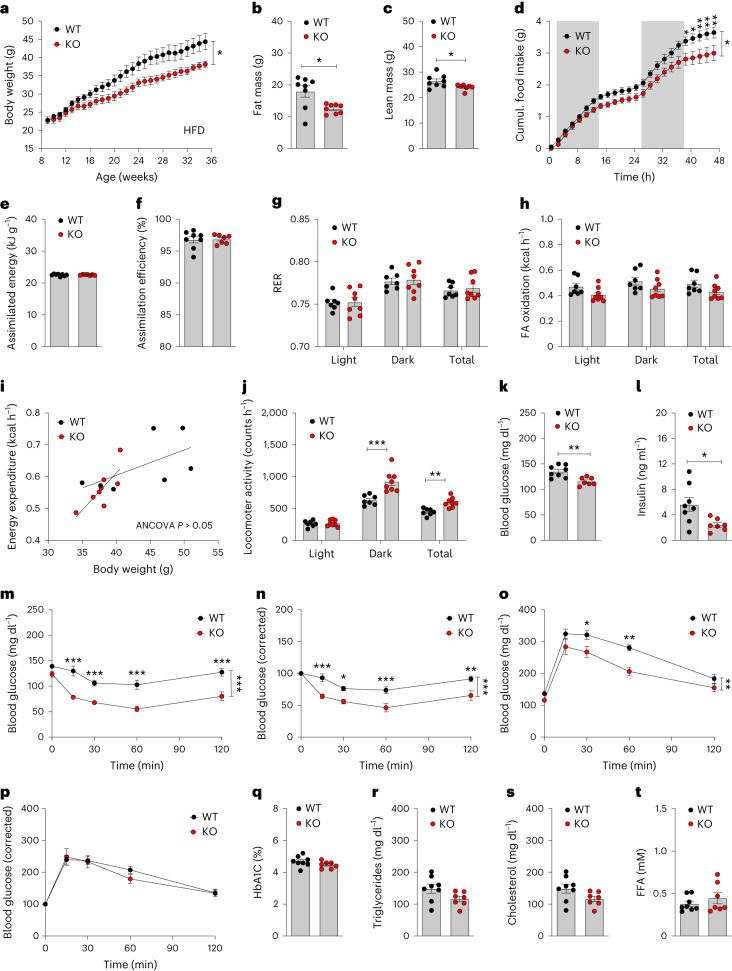
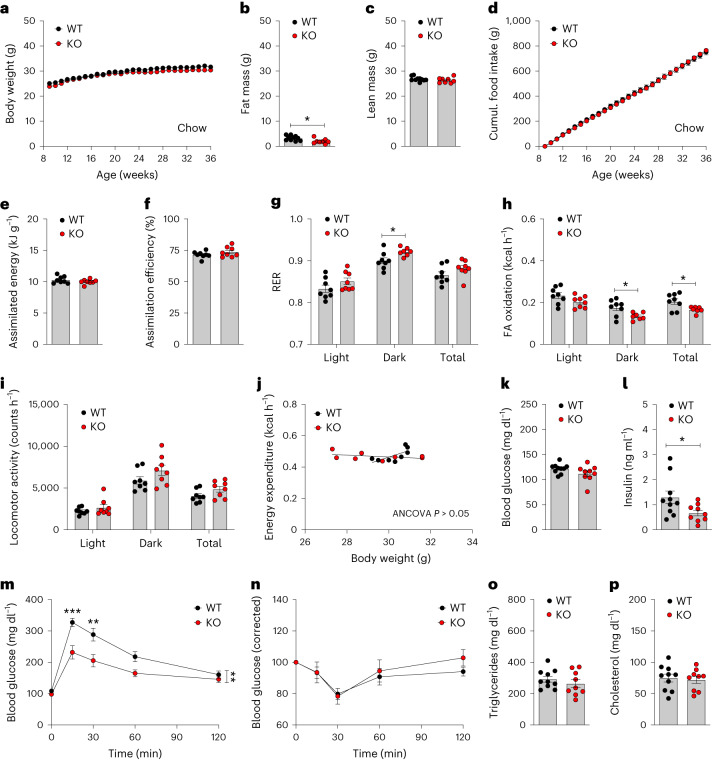
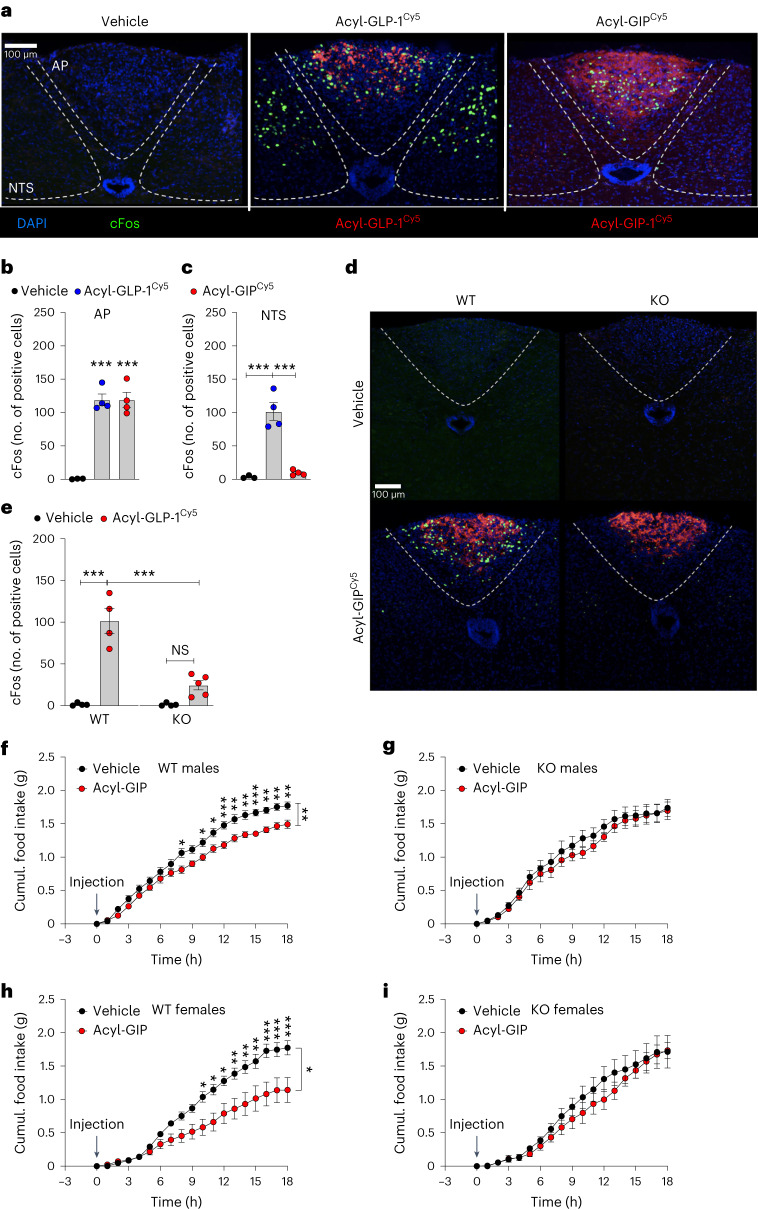
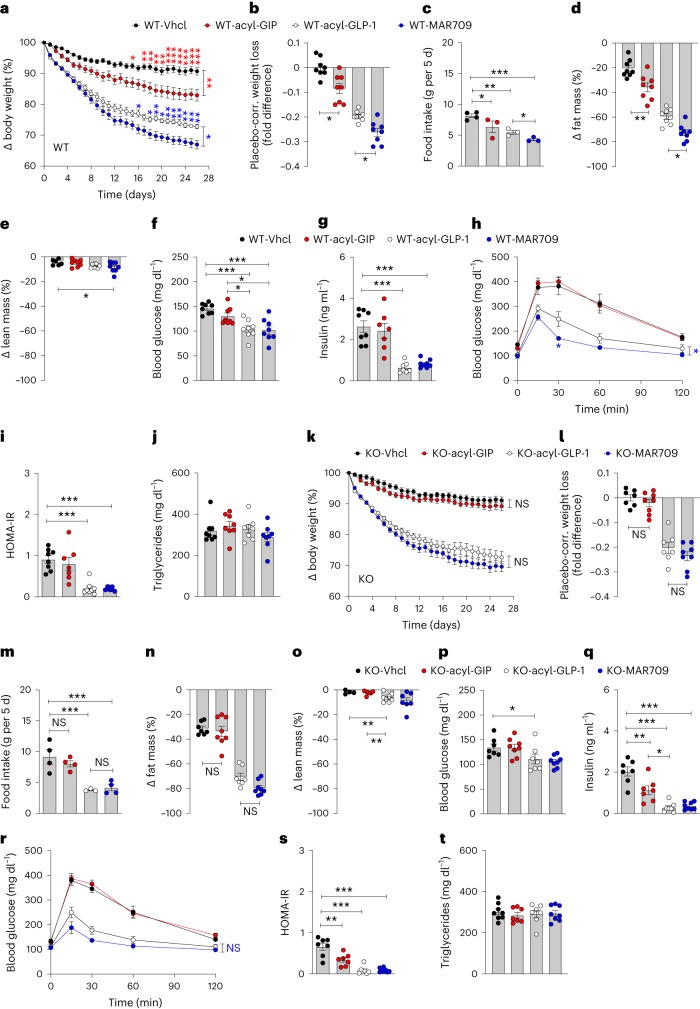
The development of single-molecule co-agonists for the glucagon-like peptide-1 (GLP-1) receptor (GLP-1R) and glucose-dependent insulinotropic polypeptide (GIP) receptor (GIPR) is considered a breakthrough in the treatment of obesity and type 2 diabetes. But although GIPR–GLP-1R co-agonism decreases body weight with superior efficacy relative to GLP-1R agonism alone in preclinical 1–3 and clinical studies 4,5 , the role of GIP in regulating energy metabolism remains enigmatic. Increasing evidence suggests that long-acting GIPR agonists act in the brain to decrease body weight through the inhibition of food intake 3,6–8 ; however, the mechanisms and neuronal populations through which GIP affects metabolism remain to be identified. Here, we report that long-acting GIPR agonists and GIPR–GLP-1R co-agonists decrease body weight and food intake via inhibitory GABAergic neurons. We show that acyl-GIP decreases body weight and food intake in male diet-induced obese wild-type mice, but not in mice with deletion of Gipr in Vgat (also known as Slc32a1 )-expressing GABAergic neurons ( Vgat-Gipr knockout). Whereas the GIPR–GLP-1R co-agonist MAR709 leads, in male diet-induced obese wild-type mice, to greater weight loss and further inhibition of food intake relative to a pharmacokinetically matched acyl-GLP-1 control, this superiority over GLP-1 vanishes in Vgat-Gipr knockout mice. Our data demonstrate that long-acting GIPR agonists crucially depend on GIPR signaling in inhibitory GABAergic neurons to decrease body weight and food intake.
Overview
The claims and statistics of this paper haven’t been checked yet.
Free: it reads the open-access text and checks the first 5 claims that cite a source we can check. Create a free account to check every claim.
Integrity signals
Registry
Cites
Statistics
Figures
Verification
Claims the paper makes
The claims and statistics of this paper haven’t been checked yet.
Free: it reads the open-access text and checks the first 5 claims that cite a source we can check. Create a free account to check every claim.
Claims other papers make about this one
Each is checked against this paper’s own text: does it say what the citing paper says it does?
The source backs part of the claim, not all of it — or backs it for a different population, condition or comparison.
In the citing paper
“Similar effects of GIP receptor agonism and antagonism on bodyweight can be explained by their different target pathways: GIP receptor agonists act on GABAergic neurons, which leads to reduced food (energy) intake, 11 whereas GIP receptor knock-out in GABAergic neurons sensitises people to weight loss induced by GLP-1 receptor agonists.154”
From GLP-1 receptor agonists and next-generation incretin-based medications: metabolic, cardiovascular, and renal benefits (2026) · cites this paper as [11]
Experimental — accuracy not yet measuredThe cited source says what the claim attributes to it.
In the citing paper
“GIPR agonism further promotes bone formation [40], has beneficial effects in animal models for atherosclerosis [41–43] and neurodegenerative diseases [44, 45], and decreases body weight in obese rodents via inhibition of food intake [46, 47].”
From Dual and Triple Incretin-Based Co-agonists: Novel Therapeutics for Obesity and Diabetes (2024) · cites this paper as [47]
The cited source says what the claim attributes to it.
In the citing paper
“a GLP-1/GIP dual agonist produced greater reductions in body weight than GLP-1 monoagonists alone in DIO mice [46, 47, 89].”
From Dual and Triple Incretin-Based Co-agonists: Novel Therapeutics for Obesity and Diabetes (2024) · cites this paper as [47]
The cited source says what the claim attributes to it.
In the citing paper
“an effect subsequently shown to result from GIPR signaling in inhibitory γ-aminobutyric acid (GABA)-ergic neurons [47].”
From Dual and Triple Incretin-Based Co-agonists: Novel Therapeutics for Obesity and Diabetes (2024) · cites this paper as [47]
The cited source says what the claim attributes to it.
In the citing paper
“In a recent study Liskiewicz and colleagues found that GABAergic neurons expressing the GIPR in the area postrema are activated by long-acting GIPR agonists, and GIPR signaling in GABAergic neurons is required for the body weight-lowering effects of GIP [47].”
From Dual and Triple Incretin-Based Co-agonists: Novel Therapeutics for Obesity and Diabetes (2024) · cites this paper as [47]
1 more claim about this paper
Create a free account to see every claim other papers make about this one.
Self-check
Percentages, sums and reported differences re-computed from the paper’s own numbers.
The self-check needs the paper’s full text.
Citations
Cites
Analysis of Relative Gene Expression Data Using Real-Time Quantitative PCR and the 2−ΔΔCT Method
Livak, K. J., & Schmittgen, T. D. (2001) · Methods · doi:10.1006/meth.2001.1262 · Cited by 180,860
QuPath: Open source software for digital pathology image analysis
Bankhead, P., Loughrey, M. B., Fernández, J. A., Dombrowski, Y., McArt, D. G., Dunne, P. D., McQuaid, S., Gray, R. T., Murray, L. J., Coleman, H. G., et al. (2017) · Scientific Reports · doi:10.1038/s41598-017-17204-5 · Cited by 8,908 · cited 1×
“The Allen Brain Atlas was imputed and aligned to the whole slide images using Fiji with the ABBA plugin and the number of cFos-positive cells in each identified region was measured by using QuPath v.0.4.4 software 30 .”
MethodInfluentialSCANPY: large-scale single-cell gene expression data analysis
Wolf, F. A., Angerer, P., & Theis, F. J. (2018) · Genome Biology · doi:10.1186/s13059-017-1382-0 · Cited by 8,881
Spatial reconstruction of single-cell gene expression data
Satija, R., Farrell, J. A., Gennert, D., Schier, A. F., & Regev, A. (2015) · Nature Biotechnology · doi:10.1038/nbt.3192 · Cited by 7,055
Mutation of the mouse klotho gene leads to a syndrome resembling ageing
Kuro-o, M., Matsumura, Y., Aizawa, H., Kawaguchi, H., Suga, T., Utsugi, T., Ohyama, Y., Kurabayashi, M., Kaname, T., Kume, E., et al. (1997) · Nature · doi:10.1038/36285 · Cited by 3,837
Tirzepatide versus Semaglutide Once Weekly in Patients with Type 2 Diabetes
Frías, J. P., Davies, M. J., Rosenstock, J., Pérez Manghi, F. C., Fernández Landó, L., Bergman, B. K., Liu, B., Cui, X., & Brown, K. (2021) · New England Journal of Medicine · doi:10.1056/nejmoa2107519 · Cited by 2,096 · cited 1×
“But although GIPR–GLP-1R co-agonism decreases body weight with superior efficacy relative to GLP-1R agonism alone in preclinical 1–3 and clinical studies 4,5 , the role of GIP in regulating energy metabolism remains enigmatic.”
BackgroundAnti-obesity drug discovery: advances and challenges
Müller, T. D., Blüher, M., Tschöp, M. H., & DiMarchi, R. D. (2022) · Nature Reviews Drug Discovery · doi:10.1038/s41573-021-00337-8 · Cited by 1,021 · cited 1×
“The development of GIPR–GLP-1R co-agonists have been a major advancement in the treatment of obesity and diabetes 9 , but the mechanisms through which GIP affects systemic energy metabolism remain largely unknown.”
BackgroundSelf-citationInhibition of gastric inhibitory polypeptide signaling prevents obesity
Miyawaki, K., Yamada, Y., Ban, N., Ihara, Y., Tsukiyama, K., Zhou, H., Fujimoto, S., Oku, A., Tsuda, K., Toyokuni, S., et al. (2002) · Nature Medicine · doi:10.1038/nm727 · Cited by 963
Coskun, T., Sloop, K. W., Loghin, C., Alsina-Fernandez, J., Urva, S., Bokvist, K. B., Cui, X., Briere, D. A., Cabrera, O., Roell, W. C., et al. (2018) · Molecular Metabolism · doi:10.1016/j.molmet.2018.09.009 · Cited by 882
A guide to analysis of mouse energy metabolism
Tschöp, M. H., Speakman, J. R., Arch, J. R. S., Auwerx, J., Brüning, J. C., Chan, L., Eckel, R. H., Farese, R. V., Galgani, J. E., Hambly, C., et al. (2012) · Nature Methods · doi:10.1038/nmeth.1806 · Cited by 813 · cited 2×
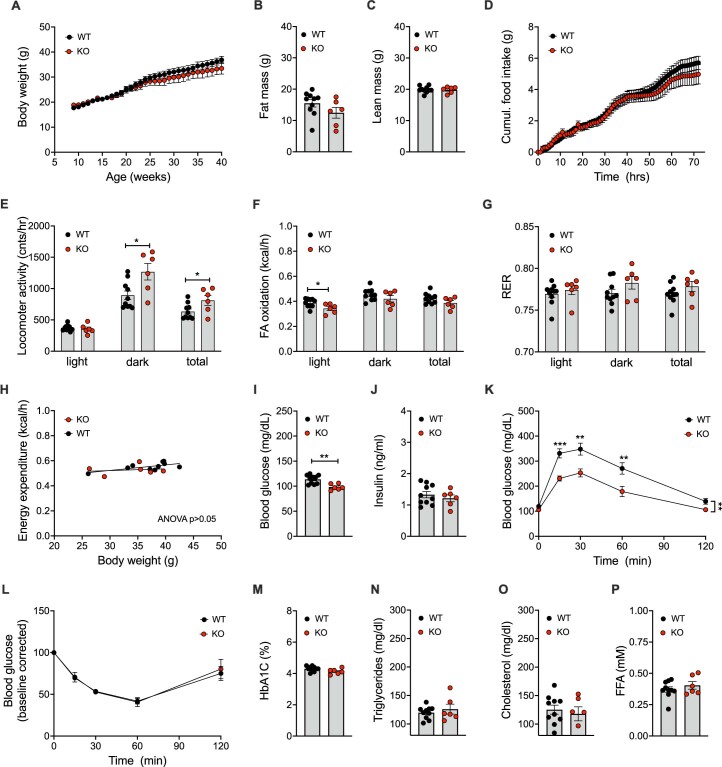
“Data for energy expenditure were analyzed using ANCOVA with body weight as a covariate as previously suggested 26,27 .”
MethodSelf-citationQuPath: Open source software for digital pathology image analysisPreprint
Bankhead, P., Loughrey, M. B., Fernández, J. A., et al. (2017) · bioRxiv (Cold Spring Harbor Laboratory) · doi:10.1101/099796 · Cited by 808
Unimolecular Dual Incretins Maximize Metabolic Benefits in Rodents, Monkeys, and Humans
Finan, B., Ma, T., Ottaway, N., Müller, T. D., Habegger, K. M., Heppner, K. M., Kirchner, H., Holland, J., Hembree, J., Raver, C., et al. (2013) · Science Translational Medicine · doi:10.1126/scitranslmed.3007218 · Cited by 696 · cited 1×
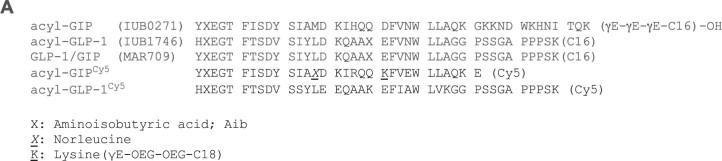
“Based on recent data indicating that GIP acts on hindbrain GIPR neurons to regulate food intake 6 , we next assessed whether validated long-acting (fatty acid acylated) GLP-1R and GIPR agonists 2,3,8 (Extended Data Fig.”
BackgroundSelf-citationVisualizing Hypothalamic Network Dynamics for Appetitive and Consummatory Behaviors
Jennings, J. H., Ung, R. L., Resendez, S. L., Stamatakis, A. M., Taylor, J. G., Huang, J., Veleta, K., Kantak, P. A., Aita, M., Shilling-Scrivo, K., et al. (2015) · Cell · doi:10.1016/j.cell.2014.12.026 · Cited by 542 · cited 2×
“Emphasizing their potential role in energy balance regulation, Vgat -expressing GABA neurons are implicated in the control of eating behavior 18–20 , and while optogenetic stimulation of VGAT neurons in the lateral hypothalamus promotes food intake, genetic ablation of these neurons has the…”
BackgroundA protocol for islet isolation from mouse pancreas
Li, D.-S., Yuan, Y.-H., Tu, H.-J., Liang, Q.-L., & Dai, L.-J. (2009) · Nature Protocols · doi:10.1038/nprot.2009.150 · Cited by 338 · cited 1×
“Islets were isolated via collagenase P perfusion of the pancreas 31 .”
MethodAdriaenssens, A. E., Biggs, E. K., Darwish, T., Tadross, J., Sukthankar, T., Girish, M., Polex-Wolf, J., Lam, B. Y., Zvetkova, I., Pan, W., et al. (2019) · Cell Metabolism · doi:10.1016/j.cmet.2019.07.013 · Cited by 324 · cited 4×
“…in GABAergic neurons 7,11,14,15 , and the demonstration that selective activation of hypothalamic and hindbrain GIPR neurons decreases food intake in mice 6,7 , we here assessed whether the metabolic effects of GIP and GIPR–GLP-1R co-agonism depend on GIPR signaling in inhibitory GABAergic neurons.”
BackgroundInfluentialZhang, Q., Delessa, C. T., Augustin, R., Bakhti, M., Colldén, G., Drucker, D. J., Feuchtinger, A., Caceres, C. G., Grandl, G., Harger, A., et al. (2021) · Cell Metabolism · doi:10.1016/j.cmet.2021.01.015 · Cited by 322 · cited 7×
“Based on recent data indicating that GIP acts on hindbrain GIPR neurons to regulate food intake 6 , we next assessed whether validated long-acting (fatty acid acylated) GLP-1R and GIPR agonists 2,3,8 (Extended Data Fig.”
BackgroundResultInfluentialSelf-citationHeise, T., Mari, A., DeVries, J. H., Urva, S., Li, J., Pratt, E. J., Coskun, T., Thomas, M. K., Mather, K. J., Haupt, A., et al. (2022) · The Lancet Diabetes & Endocrinology · doi:10.1016/s2213-8587(22)00085-7 · Cited by 268 · cited 1×
“But although GIPR–GLP-1R co-agonism decreases body weight with superior efficacy relative to GLP-1R agonism alone in preclinical 1–3 and clinical studies 4,5 , the role of GIP in regulating energy metabolism remains enigmatic.”
BackgroundHypoMap—a unified single-cell gene expression atlas of the murine hypothalamus
Steuernagel, L., Lam, B. Y. H., Klemm, P., Dowsett, G. K. C., Bauder, C. A., Tadross, J. A., Hitschfeld, T. S., del Rio Martin, A., Chen, W., de Solis, A. J., et al. (2022) · Nature Metabolism · doi:10.1038/s42255-022-00657-y · Cited by 267 · cited 5×
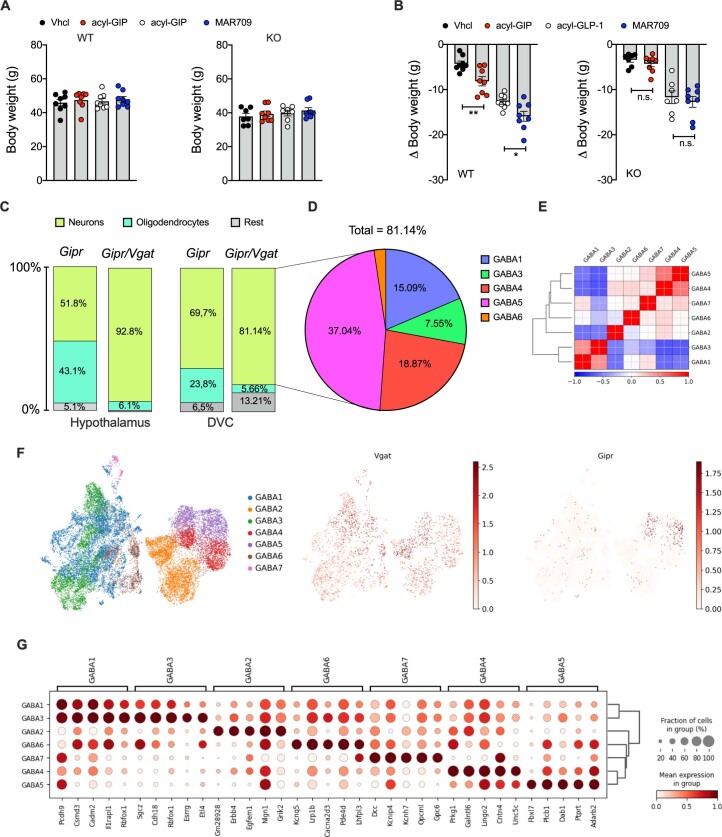
“Data shown in panels C, D, E, F, G were generated based on publicly available snRNA Seq datasets of hypothalamus (Steuernagel et al. 15 ) or DVC (Lugwig et al. 17 ).”
BackgroundMethodInfluentialArea postrema cell types that mediate nausea-associated behaviors
Zhang, C., Kaye, J. A., Cai, Z., Wang, Y., Prescott, S. L., & Liberles, S. D. (2021) · Neuron · doi:10.1016/j.neuron.2020.11.010 · Cited by 263 · cited 2×
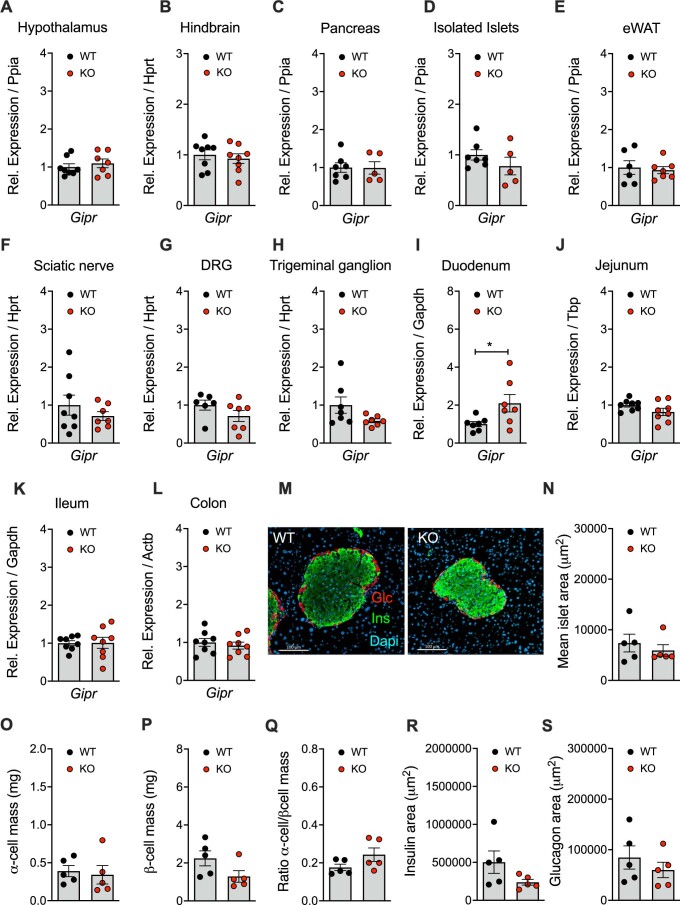
“Although being expressed in only 14–18% of all Gipr cells in the hypothalamus 15 and the hindbrain 14 , Vgat it is found in around 32% of hypothalamic Gipr neurons 15 and, depending on the study, in up to 55% of hindbrain Gipr neurons 14,16,17,21 (Extended Data Table 1).”
BackgroundOptimized GIP analogs promote body weight lowering in mice through GIPR agonism not antagonism
Mroz, P. A., Finan, B., Gelfanov, V., Yang, B., Tschöp, M. H., DiMarchi, R. D., & Perez-Tilve, D. (2019) · Molecular Metabolism · doi:10.1016/j.molmet.2018.12.001 · Cited by 229 · cited 4×
“Accumulating evidence indicates that long-acting GIPR agonists act in the brain to decrease body weight through inhibition of food intake 3,6–8 .”
BackgroundInfluentialSelf-citationBorner, T., Geisler, C. E., Fortin, S. M., Cosgrove, R., Alsina-Fernandez, J., Dogra, M., Doebley, S., Sanchez-Navarro, M. J., Leon, R. M., Gaisinsky, J., et al. (2021) · Diabetes · doi:10.2337/db21-0459 · Cited by 202 · cited 4×
“Based on the expression of Gipr in GABAergic neurons 7,11,14,15 , and the demonstration that selective activation of hypothalamic and hindbrain GIPR neurons decreases food intake in mice 6,7 , we here assessed whether the metabolic effects of GIP and GIPR–GLP-1R co-agonism depend on GIPR signaling…”
BackgroundInfluentialA genetic map of the mouse dorsal vagal complex and its role in obesity
Ludwig, M. Q., Cheng, W., Gordian, D., Lee, J., Paulsen, S. J., Hansen, S. N., Egerod, K. L., Barkholt, P., Rhodes, C. J., Secher, A., et al. (2021) · Nature Metabolism · doi:10.1038/s42255-021-00363-1 · Cited by 186 · cited 3×
“Although being expressed in only 14–18% of all Gipr cells in the hypothalamus 15 and the hindbrain 14 , Vgat it is found in around 32% of hypothalamic Gipr neurons 15 and, depending on the study, in up to 55% of hindbrain Gipr neurons 14,16,17,21 (Extended Data Table 1).”
BackgroundRevisiting energy expenditure: how to correct mouse metabolic rate for body mass
Müller, T. D., Klingenspor, M., & Tschöp, M. H. (2021) · Nature Metabolism · doi:10.1038/s42255-021-00451-2 · Cited by 144 · cited 2×
“Data for energy expenditure were analyzed using ANCOVA with body weight as a covariate as previously suggested 26,27 .”
MethodSelf-citationTCF1 links GIPR signaling to the control of beta cell function and survival
Campbell, J. E., Ussher, J. R., Mulvihill, E. E., Kolic, J., Baggio, L. L., Cao, X., Liu, Y., Lamont, B. J., Morii, T., Streutker, C. J., et al. (2016) · Nature Medicine · doi:10.1038/nm.3997 · Cited by 142 · cited 2×
“Gipr flx/flx mice 22,23 were crossed with Vgat-cre +/− mice to obtain Vgat-cre +/− Gipr flx+/flx+ ( Vgat-Gipr KO).”
MethodThe incretin co-agonist tirzepatide requires GIPR for hormone secretion from human islets
El, K., Douros, J. D., Willard, F. S., Novikoff, A., Sargsyan, A., Perez-Tilve, D., Wainscott, D. B., Yang, B., Chen, A., Wothe, D., et al. (2023) · Nature Metabolism · doi:10.1038/s42255-023-00811-0 · Cited by 118 · cited 1×
“And while the GIPR–GLP-1R co-agonist tirzepatide promotes insulin secretion in isolated human islets primarily via the GIP receptor 10 , long-acting GIPR agonists attenuate the emetic effect of GLP-1R agonism in experimental animals 11,12 and hence likely contribute to greater tolerability of…”
BackgroundSelf-citationUssher, J. R., Campbell, J. E., Mulvihill, E. E., Baggio, L. L., Bates, H. E., McLean, B. A., Gopal, K., Capozzi, M. E., Yusta, B., Cao, X., et al. (2017) · Cell Metabolism · doi:10.1016/j.cmet.2017.11.003 · Cited by 108
A survey of the mouse hindbrain in the fed and fasted states using single-nucleus RNA sequencing
Dowsett, G. K. C., Lam, B. Y. H., Tadross, J. A., Cimino, I., Rimmington, D., Coll, A. P., Polex-Wolf, J., Knudsen, L. B., Pyke, C., & Yeo, G. S. H. (2021) · Molecular Metabolism · doi:10.1016/j.molmet.2021.101240 · Cited by 98 · cited 4×
“Although being expressed in only 14–18% of all Gipr cells in the hypothalamus 15 and the hindbrain 14 , Vgat it is found in around 32% of hypothalamic Gipr neurons 15 and, depending on the study, in up to 55% of hindbrain Gipr neurons 14,16,17,21 (Extended Data Table 1).”
BackgroundInfluentialAdriaenssens, A., Broichhagen, J., de Bray, A., Ast, J., Hasib, A., Jones, B., Tomas, A., Burgos, N. F., Woodward, O., Lewis, J., et al. (2023) · JCI Insight · doi:10.1172/jci.insight.164921 · Cited by 77 · cited 6×
“Based on recent data indicating that GIP acts on hindbrain GIPR neurons to regulate food intake 6 , we next assessed whether validated long-acting (fatty acid acylated) GLP-1R and GIPR agonists 2,3,8 (Extended Data Fig.”
BackgroundInfluentialA brainstem circuit for nausea suppression
Zhang, C., Vincelette, L. K., Reimann, F., & Liberles, S. D. (2022) · Cell Reports · doi:10.1016/j.celrep.2022.110953 · Cited by 68 · cited 1×
“…secretion in isolated human islets primarily via the GIP receptor 10 , long-acting GIPR agonists attenuate the emetic effect of GLP-1R agonism in experimental animals 11,12 and hence likely contribute to greater tolerability of GIPR–GLP-1R co-agonism relative to GLP-1R agonism at higher doses.”
BackgroundMarino, R. A. M., McDevitt, R. A., Gantz, S. C., Shen, H., Pignatelli, M., Xin, W., Wise, R. A., & Bonci, A. (2020) · Proceedings of the National Academy of Sciences · doi:10.1073/pnas.1909340117 · Cited by 64
GIP receptor agonism blocks chemotherapy-induced nausea and vomiting
Borner, T., Reiner, B. C., Crist, R. C., Furst, C. D., Doebley, S. A., Halas, J. G., Ai, M., Samms, R. J., Jonghe, B. C. D., & Hayes, M. R. (2023) · Molecular Metabolism · doi:10.1016/j.molmet.2023.101743 · Cited by 41 · cited 2×
“GABAergic Gipr neurons seem crucial for the anti-emetic effect of GIPR agonism 11,13 , but their role in energy metabolism remains unknown.”
BackgroundSingle-Cell Mapping of GLP-1 and GIP Receptor Expression in the Dorsal Vagal Complex
Ludwig, M. Q., Todorov, P. V., Egerod, K. L., Olson, D. P., & Pers, T. H. (2021) · Diabetes · doi:10.2337/dbi21-0003 · Cited by 38 · cited 3×
“Although being expressed in only 14–18% of all Gipr cells in the hypothalamus 15 and the hindbrain 14 , Vgat it is found in around 32% of hypothalamic Gipr neurons 15 and, depending on the study, in up to 55% of hindbrain Gipr neurons 14,16,17,21 (Extended Data Table 1).”
BackgroundKNOP, F. K., URVA, S., RETTIGANTI, M., BENSON, C., ROELL, W., MATHER, K. J., HAUPT, A., & PRATT, E. J. (2023) · Diabetes · doi:10.2337/db23-56-or · Cited by 29
Neuronal loss of TRPM8 leads to obesity and glucose intolerance in male mice
Liśkiewicz, D., Zhang, Q., Barthem, C. S., Jastroch, M., Liśkiewicz, A., Khajavi, N., Grandl, G., Coupland, C. A. C., Kleinert, M., García‐Cáceres, C., et al. (2023) · Molecular Metabolism · doi:10.1016/j.molmet.2023.101714 · Cited by 17
Self-citationRusso, F. M., Bie, F. R. D., Partridge, E. A., Allegaert, K., & Deprest, J. A. (2022) · European Journal of Pediatrics · doi:10.1007/s00431-022-04569-7 · Cited by 7 · cited 1×
“Emphasizing their potential role in energy balance regulation, Vgat -expressing GABA neurons are implicated in the control of eating behavior 18–20 , and while optogenetic stimulation of VGAT neurons in the lateral hypothalamus promotes food intake, genetic ablation of these neurons has the…”
BackgroundPratt, E. J., Knop, F. K., Urva, S., Rettiganti, M. R., Benson, C., Roell, W. C., Mather, K. J., Haupt, A., & Pfeiffer, A. F. H. (2024) · Diabetologie und Stoffwechsel · doi:10.1055/s-0044-1785388 · Cited by 3 · cited 1×
“Notably, our data are further in line with the recent demonstration that a long-acting GIPR agonist decreases body weight in healthy humans 25 .”
Result
Cited by
Transforming obesity: The advancement of multi-receptor drugs
Kusminski, C. M., Perez-Tilve, D., Müller, T. D., DiMarchi, R. D., Tschöp, M. H., & Scherer, P. E. (2024) · Cell · doi:10.1016/j.cell.2024.06.003 · Cited by 126
Self-citationGLP-1 physiology in obesity and development of incretin-based drugs for chronic weight management
Holst, J. J. (2024) · Nature Metabolism · doi:10.1038/s42255-024-01113-9 · Cited by 125
“By contrast, in mice, recent evidence supports a role for GIP in regulation of food intake, and cerebral pathways responsible for this have been identified 170 .”
Lombardi, L., Genio, V. D., Alberício, F., & Williams, D. R. (2025) · Chemical Reviews · doi:10.1021/acs.chemrev.4c00989 · Cited by 147
Once-monthly maridebart cafraglutide for the treatment of obesity—a phase 2 trial
Jastreboff, A. M., Ryan, D. H., Bays, H. E., Ebeling, P. R., Mackowski, M. G., Philipose, N., Ross, L., Liu, Y., Burns, C. E., Abbasi, S. A., et al. (2025) · New England Journal of Medicine · doi:10.1056/nejmoa2504214 · Cited by 110
Nauck, M. A., Tuttle, K. R., Tschöp, M. H., & Blüher, M. (2026) · The Lancet · doi:10.1016/s0140-6736(25)02105-1 · Cited by 123
Self-citation
Metadata
- Authors
- Liskiewicz, A., Khalil, A., Liskiewicz, D., Novikoff, A., Grandl, G., Maity-Kumar, G., Gutgesell, R. M., Bakhti, M., Bastidas-Ponce, A., Czarnecki, O., Makris, K., Lickert, H., Feuchtinger, A., Tost, M., Coupland, C., Ständer, L., Akindehin, S., Prakash, S., Abrar, F., Castelino, R. L., He, Y., Knerr, P. J., Yang, B., Hogendorf, W. F. J., Zhang, S., Hofmann, S. M., Finan, B., DiMarchi, R. D., Tschöp, M. H., Douros, J. D., & Müller, T. D.
- Affiliations
- Helmholtz Munich (DE)
- Indiana University Bloomington (US)
- Corresponding author
- Müller, Timo D.
- ORCID
- Liskiewicz, Arkadiusz
- Khalil, Ahmed
- Novikoff, Aaron
- Grandl, Gerald
- Gutgesell, Robert M.
- Bakhti, Mostafa
- Bastidas-Ponce, Aimée
- Czarnecki, Oliver
- Makris, Konstantinos
- Lickert, Heiko
- Feuchtinger, Annette
- Coupland, Callum
- Akindehin, Seun
- Castelino, Russell L.
- He, Yantao
- Yang, Bin
- Hogendorf, Wouter F. J.
- Zhang, Shiqi
- Hofmann, Susanna M.
- Finan, Brian
- DiMarchi, Richard D.
- Tschöp, Matthias H.
- Douros, Jonathan D.
- Müller, Timo D.
- Venue
- Nature Metabolism
- Published
- 2023-11-09
- Volume
- 5
- Issue
- 12
- Pages
- 2075-2085
- ISSN
- 2522-5812 (ISSN-L)
- PMC
- PMC10730394
- OpenAlex
- W4388524094
- Cited by
- 110
- References
- 35
- Citations by year
- 2026: 37 · 2025: 46 · 2024: 25 · 2023: 2
- FWCI
- 16.35
- Type
- journal article
- Language
- en
- Open access
- hybrid
- doi.org
- Licence
- cc-by
- creativecommons.org/licenses/by/4.0 (tdm)
- creativecommons.org/licenses/by/4.0 (vor)
- Locations
- Nature Metabolism (publishedVersion, cc-by)
- PubMed Central (publishedVersion, cc-by)
- PubMed (publishedVersion)
- mediaTUM – the media and publications repository of the Technical University Munich (Technical University Munich) (submittedVersion)
- PuSH - Publication Server of Helmholtz Zentrum München (submittedVersion)
- Funders
- Deutsche Forschungsgemeinschaft (GRK2816/1, TRR- 152, SFB1123, RTG 2816, TRR296)
- Helmholtz Zentrum München
- H2020 European Research Council (695054)
- HORIZON EUROPE European Research Council (101044445)
- Topics
- Life Sciences › Neuroscience › Endocrine and Autonomic Systems › Regulation of Appetite and Obesity
- Health Sciences › Medicine › Endocrinology, Diabetes and Metabolism › Diabetes Treatment and Management
- Health Sciences › Medicine › Pharmacology (medical) › Pharmacology and Obesity Treatment
- Keywords
- glucose-dependent insulinotropic polypeptide, GIP receptor, GLP-1 receptor, GABAergic neurons, vesicular GABA transporter, dietary intake, body weight regulation, diet-induced obesity, energy metabolism
- MeSH terms
- Animals, Diabetes Mellitus, Type 2, Eating, Gastric Inhibitory Polypeptide, Glucose, Male, Obesity, Receptors, G-Protein-Coupled, Mice, Glucagon-Like Peptide 1, GABAergic Neurons
About these checks
Registry, retraction, Cites and statistics results are computed, not judged, with one exception: a printed reference that no index lists is read once by a model before it counts as a citation error. Claims are extracted by a model and kept only when their quote appears verbatim in the text; each cited source is then checked, with a model’s help, for whether it says what the claim relies on. Those verdicts can be wrong — read the claim’s quote and the cited source before relying on one.
Statistics and arithmetic are recomputed, not judged.
Confidence bands are shown only for fields calibrated on our annotated test set. None is calibrated yet, so no band is shown.
What counts as a claim ›How we measure confidence ›How we check this ›
Are you an author, or do you see a problem with this page? Request a review
Data sources
Bibliographic data: Semantic Scholar, OpenAlex, Crossref.
Contains information from the Semantic Scholar Academic Graph Datasets, made available under the ODC Attribution License (ODC-BY 1.0).
Semantic Scholar’s data is described in: Kinney, R., et al. (2023). The Semantic Scholar Open Data Platform. arXiv:2301.10140.
