

The future landscape of large language models in medicine
Open accessThe DOI matches its Crossref record; 70 of the 70 references it cites were found in a registry or an index; 35 of the 78 sources its claims cite were checked for support.
Abstract
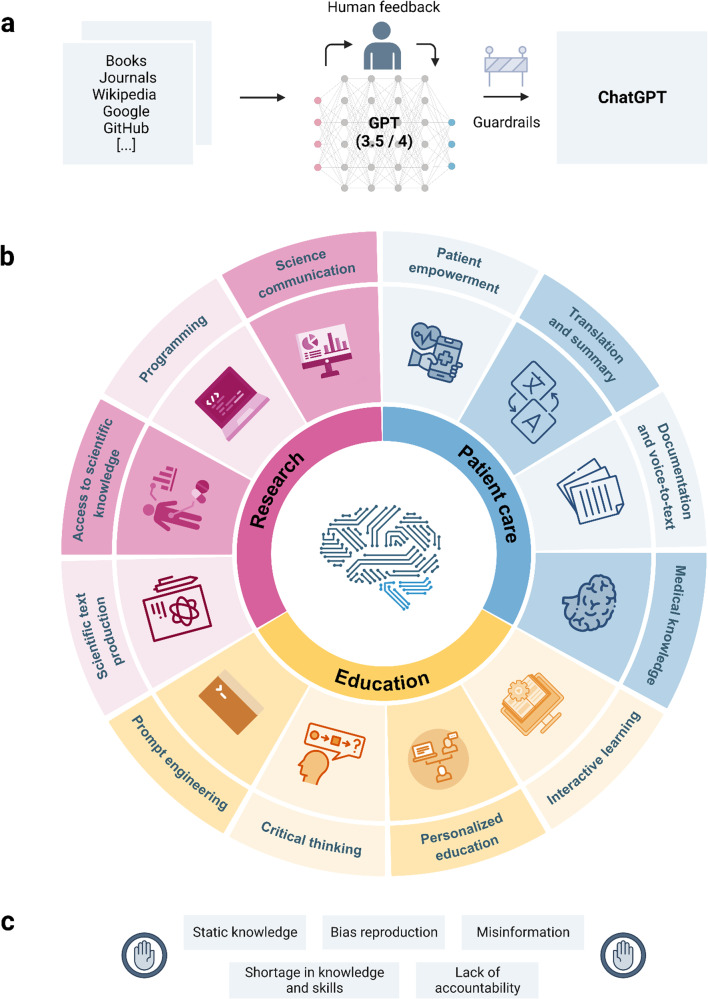
Large language models (LLMs) are artificial intelligence (AI) tools specifically trained to process and generate text. LLMs attracted substantial public attention after OpenAI’s ChatGPT was made publicly available in November 2022. LLMs can often answer questions, summarize, paraphrase and translate text on a level that is nearly indistinguishable from human capabilities. The possibility to actively interact with models like ChatGPT makes LLMs attractive tools in various fields, including medicine. While these models have the potential to democratize medical knowledge and facilitate access to healthcare, they could equally distribute misinformation and exacerbate scientific misconduct due to a lack of accountability and transparency. In this article, we provide a systematic and comprehensive overview of the potentials and limitations of LLMs in clinical practice, medical research and medical education.
Overview
CoChat Summary
TL;DR
This review surveys how large language models (LLMs) may affect patient care, medical research, and medical education, emphasizing both their capabilities and their risks. It argues that LLMs could democratize medical knowledge and assist communication, documentation, research, and teaching, but current limitations in factuality, bias, accountability, transparency, and reproducibility must be addressed before clinical use.
Key findings
- LLMs can augment patient care through medical knowledge and reasoning, translations, summaries, and documentation; GPT-4 “now exceeds the passing score on every step of the US-medical licensing exam (USMLE),” and documentation/administrative requirements consume around 25% of clinicians’ workdays.
- In medical research, LLMs can summarize evidence, generate scientific abstracts that humans struggle to differentiate from human-written ones, and assist with coding, but outputs currently require significant human revision and LLMs do not always provide appropriate detailed summaries or critical appraisals of up-to-date, high-quality, peer-reviewed evidence.
- In medical education, LLMs can serve as personalized teaching assistants, simplify complex concepts, and simulate patient conversations, but they risk decreasing critical thinking and creativity and may lead to “externalization of medical reasoning.”
- Ethical and safety concerns include misinformation, data privacy and leakage, prompt injection attacks, lack of public training datasets and source code, commercial monopolies, and reproducibility problems due to model version changes; the authors observed substantial differences between GPT-3.5 and GPT-4 prompted queries and minor changes across GPT-3.5 versions.
Methods
- Narrative review/overview; the abstract describes it as a “systematic and comprehensive overview of the potentials and limitations of LLMs in clinical practice, medical research and medical education.”
- No primary data, sample, or formal quantitative analysis are reported; illustrative model outputs were generated using ChatGPT (GPT-4—May 3, 2023; GPT-3.5—May 3, 2023) and additional examples are in Supplementary Data.
- The main analysis is a qualitative synthesis across patient care, medical research, and medical education, with example prompts and outputs used to illustrate capabilities and limitations.
Limitations
- Stated by the paper: LLMs reproduce existing biases, hallucinate false information, spread misinformation, lack accountability, and currently have no mechanisms to ensure output correctness; their knowledge is static, reproducibility is compromised by model updates or access restrictions, training datasets and source code are often not public, and development is driven primarily by commercial companies.
- Stated by the paper: safety guardrails can themselves pose limitations, for example if bias prevention leads to different symptoms in men and women being overlooked.
- Evident from the text: despite being described as “systematic,” no formal systematic review methodology, search strategy, inclusion criteria, or data extraction process is reported, and the illustrative examples are limited to selected ChatGPT versions rather than a comprehensive empirical evaluation.
Model-written summary. Check it against the paper before relying on it.
Integrity signals
Registry
Cites
Statistics
Figures
Verification
Claims the paper makes
16 Valid · 3 Not valid · 21 Not checked · 36 Own results and interpretations
The cited sources support only part of this claim — read each source’s verdict below.
In the paper
“Through their text simplification capabilities33, LLMs may improve communication between healthcare staff and patients34.”
§ The future landscape of large language models in medicine > Patient care > Medical knowledge and medical core competencies
What the sources say
- Partly supportedcites [33] Devaraj, A., Marshall, I., Wallace, B. & Li, J. J. Paragraph-level simplification of medical texts. In Proc. 2021 Conference of the North American Chapter of the Association for Computational Linguistics: Human Language Technologies, 4972–4984. 10.18653/v1/2021.naacl-main.395 (Association for Computational Linguistics, 2021). PMC9161242 35663507 sourceExperimental — accuracy not yet measured
The Introduction (page unavailable) says automatic simplification may make specialist medical information accessible to a wider audience, and the Conclusions report simpler model outputs. The paper does not examine communication between healthcare staff and patients, so it supports the proposed mechanism but not that specific application. (LLM, conf=0.83)
- Supportedcites [34] Ayers, J. W. et al. Comparing physician and artificial intelligence Chatbot responses to patient questions posted to a public social media forum. JAMA Intern. Med. 10.1001/jamainternmed.2023.1838 (2023). PMC10148230 37115527 source
The Discussion says chatbots could assist clinicians in messaging patients by drafting replies and could help staff improve their communication skills. The citing sentence attaches a separate citation to text simplification; this paper supports the hedged communication claim attributed to it. (LLM, conf=0.90)
hedgedstates a possible cause- Asserted: passes — The authors put it forward as true.
- Checkable: passes — It can be checked against evidence.
- Load-bearing: unclear — It is unclear whether the paper’s conclusions depend on it.
- Based: passes — The paper gives a reason why it holds.
- Partly supported
The cited sources support only part of this claim — read each source’s verdict below.
In the paper
“GPT-4 thus far demonstrates the highest medical domain knowledge of LLMs to date5.”
§ The future landscape of large language models in medicine > Patient care > Medical knowledge and medical core competencies
What the sources say
- Partly supportedcites [5] Nori, H., King, N., McKinney, S. M., Carignan, D. & Horvitz, E. Capabilities of GPT-4 on medical challenge problems. Preprint at arXiv10.48550/arXiv.2303.13375 (2023). sourceExperimental — accuracy not yet measured
The Abstract (p. 1) reports that GPT-4 outperformed GPT-3.5 and a medically tuned model on medical examinations and benchmarks. The Conclusion (p. 22) says it outperformed Flan-PaLM 540B on all but one MultiMedQA dataset. These comparisons support strong medical-benchmark performance, but not the unqualified claim that GPT-4 had the highest medical domain knowledge of all LLMs to date. (LLM, conf=0.86)
boosted- Asserted: passes — The authors put it forward as true.
- Checkable: passes — It can be checked against evidence.
- Load-bearing: unclear — It is unclear whether the paper’s conclusions depend on it.
- Based: passes — The paper gives a reason why it holds.
- Partly supported
The cited sources support only part of this claim — read each source’s verdict below.
In the paper
“Technical options to overcome limitations in factuality and mitigate (bias-related) harms can generally be implemented throughout the entire development process of LLMs.”
§ The future landscape of large language models in medicine > Ethical use and misinformation
What the sources say
- Partly supportedcites [33] Devaraj, A., Marshall, I., Wallace, B. & Li, J. J. Paragraph-level simplification of medical texts. In Proc. 2021 Conference of the North American Chapter of the Association for Computational Linguistics: Human Language Technologies, 4972–4984. 10.18653/v1/2021.naacl-main.395 (Association for Computational Linguistics, 2021). PMC9161242 35663507 sourceExperimental — accuracy not yet measured
The Ethical Considerations section says hallucinations in generated medical summaries can misinform readers and recommends examining outputs before use. That supports a limited way to address factuality harms, but the paper does not discuss bias-related harms or establish that technical options can be implemented throughout the entire LLM development process. (LLM, conf=0.79)
- Not checked yetcites [64] Kumar, S., Balachandran, V., Njoo, L., Anastasopoulos, A. & Tsvetkov, Y. Language generation models can cause harm: so what can we do about it? An actionable survey. In Proc. 17th Conference of the European Chapter of the Association for Computational Linguistics, 3299–3321 (Association for Computational Linguistics, 2023). source
- Not checked yetcites [65] Ma, Y., Seneviratne, S. & Daskalaki, E. Improving text simplification with factuality error detection. In Proc. Workshop on Text Simplification, Accessibility, and Readability (TSAR–2022), 173–178 (Association for Computational Linguistics, 2022). source
- Partly supportedcites [66] Devaraj, A., Sheffield, W., Wallace, B. & Li, J. J. Evaluating factuality in text simplification. In Proc. 60th Annual Meeting of the Association for Computational Linguistics (Volume 1: Long Papers), 7331–7345. 10.18653/v1/2022.acl-long.506 (Association for Computational Linguistics, 2022). PMC9671157 36404800 sourceExperimental — accuracy not yet measured
The Qualitative Analysis section suggests including document context or decontextualizing text before simplification, and the Conclusion describes work on automatic factuality assessment. These support technical approaches to factuality in text simplification, but the paper does not establish that options can be implemented throughout LLM development or address mitigation of bias-related harms. The cited passages provide no page numbers. (LLM, conf=0.78)
- Partly supportedcites [67] Fleisig, E. et al. FairPrism: evaluating fairness-related harms in text generation. In Proc. 61st Annual Meeting of the Association for Computational Linguistics (Volume 1: Long Papers), 6231–6251 (Association for Computational Linguistics, 2023). sourceExperimental — accuracy not yet measured
The Recommendations (p. 8) describe ways to improve datasets for measuring and mitigating harms in AI-generated text. They do not address factuality or say that technical options can be implemented throughout the entire LLM development process; the paper's supported point is narrower. (LLM, conf=0.85)
- Not checked yetcites [68] Sha, L., Li, Y., Gasevic, D. & Chen, G. Bigger data or fairer data? Augmenting BERT via active sampling for educational text classification. In Proc. 29th International Conference on Computational Linguistics, 1275–1285 (International Committee on Computational Linguistics, 2022).
plain- Asserted: passes — The authors put it forward as true.
- Checkable: passes — It can be checked against evidence.
- Load-bearing: unclear — It is unclear whether the paper’s conclusions depend on it.
- Based: passes — The paper gives a reason why it holds.
- Partly supported
Every source the paper cites for this claim was checked and supports it.
In the paper
“Lastly, to date, the development of LLMs has been driven primarily by commercial companies such as OpenAI/Microsoft21, Meta24, and Google2.”
§ The future landscape of large language models in medicine > Ethical use and misinformation
What the sources say
- Supportedcites [21] OpenAI. GPT-4 Technical Report. Preprint at arXiv10.48550/arXiv.2303.08774 (2023). source
The citation is attached to OpenAI/Microsoft as an example, rather than to the claims about Meta or Google. The report identifies GPT-4 as a model developed by OpenAI (Abstract, p. 1) and credits Microsoft Azure with supporting its training infrastructure (Authorship & credit attribution, p. 17). (LLM, conf=0.88)
- Supportedcites [24] Touvron, H. et al. LLaMA: open and efficient foundation language models. Preprint at arXiv10.48550/arXiv.2302.13971 (2023). source
The citation is attached to Meta in a list of companies developing LLMs. The title page (p. 1) identifies the LLaMA authors as Meta AI, and the Abstract (p. 1) says they developed the LLaMA foundation language models. This supports Meta as an example; this citation need not establish the sentence’s broader claim about who primarily drives LLM development. (LLM, conf=0.91)
- Supportedcites [2] Singhal, K. et al. Large language models encode clinical knowledge. Nature620, 172–180 (2023). PMC10396962 37438534 source
The citation is attached specifically to Google as an example of an LLM developer. The Methods > Modelling section describes the authors building Med-PaLM from PaLM and Flan-PaLM, supporting that example; it does not establish the separate, broader assertion that commercial companies primarily drive LLM development. (LLM, conf=0.86)
plainstates a cause- Asserted: passes — The authors put it forward as true.
- Checkable: passes — It can be checked against evidence.
- Load-bearing: passes — The paper’s conclusions depend on it.
- Based: passes — The paper gives a reason why it holds.
- Supported
The cited sources support only part of this claim — read each source’s verdict below.
In the paper
“as misconceived prompts may result in biases or misinformation with potentially serious consequences4.”
§ The future landscape of large language models in medicine > Medical education > Education about LLMs
What the sources say
- Partly supportedcites [4] Binz M Schulz E Using cognitive psychology to understand GPT-3 Proc. Natl Acad. Sci. USA 2023 120 e2218523120 10.1073/pnas.2218523120 36730192 PMC9963545 sourceExperimental — accuracy not yet measured
In Results, under “Problems with vignette-based investigations” (page unavailable), the paper reports that slightly modified prompts produced incorrect or contradictory GPT-3 answers. This supports the possibility that poorly framed prompts yield misleading responses, but the cited passages do not establish that such responses have potentially serious consequences. (LLM, conf=0.84)
hedgedstates a possible cause- Asserted: passes — The authors put it forward as true.
- Checkable: passes — It can be checked against evidence.
- Load-bearing: passes — The paper’s conclusions depend on it.
- Based: passes — The paper gives a reason why it holds.
- Partly supported
23 more claims
Create a free account to see all 76 claims and to verify the 43 references still open.
- It may state two separate claims as one. 31
- Probably not a substantial claim. 29
Claims other papers make about this one
Each is checked against this paper’s own text: does it say what the citing paper says it does?
The source backs part of the claim, not all of it — or backs it for a different population, condition or comparison.
In the citing paper
“Further to this, there is potential for these LLM-based applications to reduce medical errors and capturing missed information by providing a layer of scrutiny when embedded in EHRs [45].”
From Generative AI in healthcare: an implementation science informed translational path on application, integration and governance (2024) · cites this paper as [45]
Experimental — accuracy not yet measuredThe source backs part of the claim, not all of it — or backs it for a different population, condition or comparison.
In the citing paper
“Use cases like workflow and documentation automation, personalized predictive analytics, and patient education chatbots confirm vast potential [26, 41, 45], provided the technology supports rather than supplants human expertise.”
From Generative AI in healthcare: an implementation science informed translational path on application, integration and governance (2024) · cites this paper as [45]
Experimental — accuracy not yet measuredThe source backs part of the claim, not all of it — or backs it for a different population, condition or comparison.
In the citing paper
“Large language models (LLMs) have been shown to interpret complex clinical situations and offer recommendations, from differential diagnoses to care management, leading to growing interest in their application in the medical field [13-16].”
From Identifying Deprescribing Opportunities With Large Language Models in Older Adults: Retrospective Cohort Study (2025) · cites this paper as [13]
Experimental — accuracy not yet measuredThe source backs part of the claim, not all of it — or backs it for a different population, condition or comparison.
In the citing paper
“they lack the nuanced understanding, empathy, and ethical reasoning inherent to human practitioners [19].”
From Mitigating cognitive biases in clinical decision-making through multi-agent conversations using large language models: simulation study (2024) · cites this paper as [19]
Experimental — accuracy not yet measuredThe source backs part of the claim, not all of it — or backs it for a different population, condition or comparison.
In the citing paper
“While we recognize that these issues are affected by the use of LLMs in significant ways6,98,99 these, challenges are not specific to health-related applications.”
From The ethics of ChatGPT in medicine and healthcare: a systematic review on large language models (LLMs) (2024) · cites this paper as [6]
Experimental — accuracy not yet measured
5 more claims about this paper
Create a free account to see every claim other papers make about this one.
Citations
Cites
BERT: Pre-training of Deep Bidirectional Transformers for Language Understanding
Devlin, J., Chang, M.-W., Lee, K., & Toutanova, K. (2019) · Proceedings of the 2019 Conference of the North American Chapter of the Association for Computational Linguistics: Human Language Technologies, Volume 1 (Long and Short Papers) · doi:10.18653/v1/n19-1423 · Cited by 54,325
BioBERT: a pre-trained biomedical language representation model for biomedical text mining
Lee, J., Yoon, W., Kim, S., Kim, D., Kim, S., So, C. H., & Kang, J. (2020) · Bioinformatics · doi:10.1093/bioinformatics/btz682 · Cited by 7,218
LLaMA: Open and Efficient Foundation Language Models
Touvron, H., Lavril, T., Izacard, G., Martinet, X., Lachaux, M.-A., Lacroix, T., Rozière, B., Goyal, N., Hambro, E., Azhar, F., et al. (2023) · arXiv · doi:10.48550/arxiv.2302.13971 · Cited by 4,602 · cited 5×
“this was followed by the release of other LLMs from companies such as Google and Meta 2,15 – 17 .”
MethodInfluentialKung, T. H., Cheatham, M., Medenilla, A., Sillos, C., De Leon, L., Elepaño, C., Madriaga, M., Aggabao, R., Diaz-Candido, G., Maningo, J., et al. (2023) · PLOS Digital Health · doi:10.1371/journal.pdig.0000198 · Cited by 4,115 · cited 3×
“Nonetheless, using LLMs for scienti fi c writing currently requires signi fi cant revisions by human authors due to inaccurate, shallow and repetitive outputs (Supplementary Data, example 6).”
BackgroundMethodKung, T. H., Cheatham, M., ChatGPT, Medenilla, A., Sillos, C., De Leon, L., Elepaño, C., Madriaga, M., Aggabao, R., Diaz-Candido, G., et al. (2022) · doi:10.1101/2022.12.19.22283643 · Cited by 4,115
Large language models encode clinical knowledge
Singhal, K., Azizi, S., Tu, T., Mahdavi, S. S., Wei, J., Chung, H. W., Scales, N., Tanwani, A., Cole-Lewis, H., Pfohl, S., et al. (2023) · Nature · doi:10.1038/s41586-023-06291-2 · Cited by 4,083
Large Language Models Encode Clinical Knowledge
Singhal, K., Azizi, S., Tu, T., Mahdavi, S. S., Wei, J., Chung, H. W., Scales, N., Tanwani, A., Cole-Lewis, H., Pfohl, S., et al. (2022) · arXiv · doi:10.48550/arxiv.2212.13138 · Cited by 4,083
SciBERT: A Pretrained Language Model for Scientific Text
Beltagy, I., Lo, K., & Cohan, A. (2019) · Proceedings of the 2019 Conference on Empirical Methods in Natural Language Processing and the 9th International Joint Conference on Natural Language Processing (EMNLP-IJCNLP) · doi:10.18653/v1/d19-1371 · Cited by 3,218
Sallam, M. (2023) · Healthcare · doi:10.3390/healthcare11060887 · Cited by 3,126
Ayers, J. W., Poliak, A., Dredze, M., Leas, E. C., Zhu, Z., Kelley, J. B., Faix, D. J., Goodman, A. M., Longhurst, C. A., Hogarth, M., et al. (2023) · JAMA Internal Medicine · doi:10.1001/jamainternmed.2023.1838 · Cited by 2,613 · cited 1×
“Through their text simpli fi cation capabilities 33 , LLMs may improve communication between healthcare staff and patients 34 .”
Background
Research works printed but not linked: 2
- Xiu Y Thompson P Flipped university class: a study of motivation and learning Int. J. Inf. Commun. Technol. Educ. 2020 19 41 63
- Sha, L., Li, Y., Gasevic, D. & Chen, G. Bigger data or fairer data? Augmenting BERT via active sampling for educational text classification. In Proc. 29th International Conference on Computational Linguistics, 1275–1285 (International Committee on Computational Linguistics, 2022).
Cited by
Items 301–400 of 1,017
Abhari, S., Afshari, Y., Fatehi, F., Salmani, H., Garavand, A., Chumachenko, D., Zakerabasali, S., & Morita, P. P. (2024) · Annals of Medicine and Surgery · doi:10.1097/ms9.0000000000002716 · Cited by 13
“Healthcare providers and clinicians can harness ChatGPT ’ s capabilities to aid in screening, diagnosis, treatment planning, medication management, and rehabilitation planning, potentially optimizing patient care and clinical decision-making [6,10,11] .”
Exploring the Role of Large Language Models in Melanoma: A Systematic Review
Zarfati, M., Nadkarni, G. N., Glicksberg, B. S., Harats, M., Greenberger, S., Klang, E., & Soffer, S. (2024) · Journal of Clinical Medicine · doi:10.3390/jcm13237480 · Cited by 18
Investigating the role of large language models on questions about refractive surgery
Demir, S. (2025) · International Journal of Medical Informatics · doi:10.1016/j.ijmedinf.2025.105787 · Cited by 15
Analysing the potential of ChatGPT to support plant disease risk forecasting systems
Calone, R., Raparelli, E., Bajocco, S., Rossi, E., Crecco, L., Morelli, D., Bassi, C., Tiso, R., Bugiani, R., Pietrangeli, F., et al. (2025) · Smart Agricultural Technology · doi:10.1016/j.atech.2025.100824 · Cited by 19
Singh, R., Hamouda, M., Chamberlin, J., Tóth, A., Munford, J., Silbergleit, M., Baruah, D., Burt, J. R., & Kabakus, I. M. (2025) · Clinical Imaging · doi:10.1016/j.clinimag.2025.110455 · Cited by 13
Challenging Futures: Using Chatbots to Reflect on Aging and Dementia
Khot, R., Arets, T., Wester, J., Burger, F., van Berkel, N., Brankaert, R., IJsselsteijn, W. A., & Lee, M. (2025) · CHI Conference on Human Factors in Computing Systems · doi:10.1145/3706598.3713727 · Cited by 18
Kim, H., Lee, S., You, S. C., Huh, S., Kim, J.-E., Kim, S.-T., Ko, D.-R., Kim, J. H., Lee, J. H., Lim, J. S., et al. (2025) · JMIR Medical Informatics · doi:10.2196/76848 · Cited by 20
“Large language models (LLMs) have recently garnered significant attention, raising expectations for their applications in health care systems, encompassing clinical care support, research, and education [1,2].”
Leon, M., Ruaengsri, C., Pelletier, G., Bethencourt, D., Shibata, M., Flores, M. Q., & Shudo, Y. (2024) · Journal of Clinical Medicine · doi:10.3390/jcm13216543 · Cited by 12
“This superiority is largely attributed to ChatGPT’s extensive training on diverse datasets and the implementation of RLHF, which enhances the model’s ability to generate credible and contextually appropriate outputs [5].”
BackgroundMethodInfluentialForero, D. A., Abreu, S. E., Riveros, B. E. T., & Oermann, M. H. (2025) · Journal of the American Medical Informatics Association · doi:10.1093/jamia/ocaf117 · Cited by 15
Kasagga, A., Sapkota, A., Changaramkumarath, G., Abucha, J. M., Wollel, M. M., Somannagari, N., Husami, M. Y., Hailu, K. T., & Kasagga, E. (2025) · Cureus · doi:10.7759/cureus.94300 · Cited by 26
“Because of their uniform structure, strong content validity, and international reach, they serve as reliable benchmarks for evaluating LLM performance [3,6].”
Impact of patient communication style on agentic AI-generated clinical advice in E-medicine
Omar, M., Gorenshtein, A., Agbareia, R., Hijazi, K., Charney, A. W., Freeman, R., Nadkarni, G. N., & Klang, E. (2026) · The American Journal of Medicine · doi:10.1016/j.amjmed.2025.12.027 · Cited by 20
Artificial intelligence-generated synthetic data for cancer research and clinical trials
Eckardt, J., Hahn, W., Prelaj, A., Bornhäuser, M., Middeke, J. M., & Kather, J. N. (2026) · Nature reviews. Cancer · doi:10.1038/s41568-026-00912-4 · Cited by 16
Self-citationGiuffrè, M., & Shung, D. L. (2024) · Clinical Gastroenterology and Hepatology · doi:10.1016/j.cgh.2024.01.024 · Cited by 12
Wang, Z., Reddy, V., Ingersoll, K. S., Flickinger, T., & Barnes, L. E. (2024) · CHI Conference Extended Abstracts on Human Factors in Computing Systems (CHI EA) · doi:10.1145/3613905.3651077 · Cited by 16
Kang, K., Yang, Y., Wu, Y., & Luo, R. (2024) · Annals of Biomedical Engineering · doi:10.1007/s10439-024-03554-5 · Cited by 16
Zhu, L., Rong, Y., McGee, L. A., Rwigema, J. M., & Patel, S. H. (2024) · Cancers · doi:10.3390/cancers16132311 · Cited by 17
“5 [8], indicating that current LLM-based chatbots may not be sufficiently reliable enough for direct use by cancer patients.”
BackgroundThe Emerging Role of Large Language Models in Improving Prostate Cancer Literacy
Geantă, M., Bădescu, D., Chirca, N., Nechita, O. C., Radu, C. G., Rașcu, Ș., Radavoi, D. G., Sima, C., Toma, C. V., & Jinga, V. (2024) · Bioengineering · doi:10.3390/bioengineering11070654 · Cited by 14
“Their ability to quickly synthesize and relay complex medical information can improve health literacy among the general public, a critical factor in the prevention and management of diseases [2].”
BackgroundCusumano, G., D'arrigo, S., Terminella, A., & Lococo, F. (2024) · Journal of Clinical Medicine · doi:10.3390/jcm13133750 · Cited by 16
“These include ethical and copyright concerns regarding the data used to train such models, as well as the potential for inaccuracies in responses, occasionally lacking real or scientific validation, a phenomenon often referred to as “hallucination” [6,7].”
BackgroundCapabilities of GPT-4o and Gemini 1.5 Pro in Gram stain and bacterial shape identification
Hindy, J.-R., Souaid, T., & Kovacs, C. (2024) · Future Microbiology · doi:10.1080/17460913.2024.2381967 · Cited by 13
“Some of these most recent and advanced models are trained on vast amounts of data and use deep learning t echniques t o understand c omplex inputs and produc e language [ 5 ].”
de Oliveira, A. C., Bessa, R. F., & Teles, A. S. (2024) · Cadernos de Saúde Pública · doi:10.1590/0102-311xen028824 · Cited by 15
“…as BERT-based and generative models, can be integrated into NLP-based suicide prevention support systems for remote patient monitoring 21 , identification of suicidal ideation manifestations on digital platforms (e.g., mobile applications and social networks) 17,28,29 , and automated diagnosis 30 .”
Performance Assessment of Large Language Models in Medical Consultation: Comparative Study
Seo, S., Kim, K., & Yang, H. (2025) · JMIR Medical Informatics · doi:10.2196/64318 · Cited by 16
Freyer, O., Wiest, I. C., & Gilbert, S. (2025) · Mayo Clinic Proceedings Digital Health · doi:10.1016/j.mcpdig.2025.100196 · Cited by 16
“8,9 Because LLM-HAs operate within the medical domain, developers and regulators need to address how they, as a group of products, are treated under medical device (MD) regulations.”
Abdelnabi, A. A. B., Soykan, B., Bhatti, D., & Rabadi, G. (2026) · ACM Transactions on Computing for Healthcare · doi:10.1145/3712298 · Cited by 17
“ChatGPT, a Large Language Model (LLM) built based on the Generative Pre-Trained Transformer (GPT) architecture, is trained on extensive text datasets from the Internet and uses computational AI methods to produce language that mimics human content [2].”
InfluentialCan OpenAI's New o1 Model Outperform Its Predecessors in Common Eye Care Queries?
Pushpanathan, K., Zou, M., Srinivasan, S., Wong, W., Mangunkusumo, E. A., Thomas, G. N., Lai, Y., Sun, C., Lam, J. S. H., Tan, M. C. J., et al. (2025) · Ophthalmology Science · doi:10.1016/j.xops.2025.100745 · Cited by 12
A simplified retriever to improve accuracy of phenotype normalizations by large language models
Hier, D. B., Do, T. S., & Obafemi-Ajayi, T. (2025) · Frontiers in Digital Health · doi:10.3389/fdgth.2025.1495040 · Cited by 16
“Large pre-trained language models (LLM) are increasingly used in healthcare care, showing promise in performing a variety of complex natural language processing (NLP) tasks, such as text summarization, concept recognition, and answer questions [1, 2, 3].”
Using large language models as decision support tools in emergency ophthalmology
Krešo, A., Boban, Z., Kabić, Š., Rada, F., Batistic, D., Barun, I., Znaor, L., Kumrić, M., Božić, J., & Vrdoljak, J. (2025) · International Journal of Medical Informatics · doi:10.1016/j.ijmedinf.2025.105886 · Cited by 16
Yin, Y., Zeng, M., Wang, H., Yang, H., Zhou, C., Jiang, F., Wu, S., Huang, T., Yuan, S., Lin, J., et al. (2025) · Frontiers in Pediatrics · doi:10.3389/fped.2025.1461026 · Cited by 13
“However, Information errors, privacy issues, and ethical challenges and potential harm to patient care remain signi fi cant challenges (9).”
Hier, D. B., Carrithers, M. D., Platt, S. K., Nguyen, A. Q., Giannopoulos, I., & Obafemi-Ajayi, T. (2025) · Information · doi:10.3390/info16060446 · Cited by 15
Gao, C., Gheihman, G., Kaplan, T., McCoy, L. G., Collins, L. C., Wenzel, T., Paul, A. M., Reda, H. M., Stein, L. K., Kimbaris, G., et al. (2025) · Neurology Education · doi:10.1212/ne9.0000000000200250 · Cited by 12
Multi-omics analytics and biosensors to enable digital twin platforms for P4 medicine
Han, S., Yea, J., Song, S. H., Lee, S., Choi, J.-W., Lee, Y. K., Park, J., & Jang, K.-I. (2025) · Device · doi:10.1016/j.device.2025.101017 · Cited by 17
Yang, K., Lee, J., Jang, J. W., Yoon, S. K., Sung, P. S., & Han, J. W. (2026) · PLoS Medicine · doi:10.1371/journal.pmed.1004855 · Cited by 16
Sousa, M. S. A., Peiris, S., Figueiró, M. F., Haby, M. M., Baraldi, A. C., Revéiz, L., & Souza, J. P. (2026) · Systematic Reviews · doi:10.1186/s13643-025-02842-y · Cited by 14
“As such, LLMs constitute some of the most advanced and accessible NLP solutions today that imitate understanding, processing and production of human communication [19, 20] are they being used to optimise and accelerate any of the ES steps in the health field?”
Yang, S., & Chang, M. C. (2024) · Medicine · doi:10.1097/md.0000000000038445 · Cited by 14
“[6] 9] This method is expected to be useful for applications in the medical field.”
MethodKnowledge graphs in psychiatric research: Potential applications and future perspectives
Freidel, S., & Schwarz, E. (2024) · Acta Psychiatrica Scandinavica · doi:10.1111/acps.13717 · Cited by 20
Rodriguez, D. V., Andreadis, K., Chen, J., González, J., & Mann, D. (2024) · IEEE International Conference on Healthcare Informatics (ICHI) · doi:10.1109/ichi61247.2024.00052 · Cited by 11
“[25] [26] This study aims to investigate the integration of LLMs in RPM for hypertension management, assessing their potential to enhance patient care and streamline clinical workflows.”
BackgroundWiest, I. C., Ferber, D., Wittlinger, S., Ebert, M. P., Belle, S., & Kather, J. N. (2024) · iGIE · doi:10.1016/j.igie.2024.08.001 · Cited by 12
Self-citationHow Interoperability Can Enable Artificial Intelligence in Clinical Applications
Rehburg, F., Graefe, A. S. L., Hübner, M. R., & Thun, S. (2024) · Studies in health technology and informatics · doi:10.3233/shti240485 · Cited by 18
Large Language Models in Neurosurgery
Ieva, A. D., Stewart, C., & Molina, E. S. (2024) · Advances in experimental medicine and biology · doi:10.1007/978-3-031-64892-2_11 · Cited by 12
Gill, G. S., Blair, J., & Litinsky, S. M. (2024) · Cureus · doi:10.7759/cureus.73812 · Cited by 12
Large language models in cancer: potentials, risks, and safeguards
Zitu, M. M., Le, T. D., Duong, T., Haddadan, S., Garcia, M. A., Amorrortu, R. P., Zhao, Y., Rollison, D. E. M., & Thieu, T. (2024) · BJR|Artificial Intelligence · doi:10.1093/bjrai/ubae019 · Cited by 31
“19 Despite these challenges, AI adoption in oncology is growing, particularly with tools like ChatGPT and specialized chatbots.”
Kim, K., & Kim, S. (2025) · Journal of Medical Internet Research · doi:10.2196/63631 · Cited by 14
“Several examples include analyzing health and medical information [20,21], pretesting the effect of health campaign messages [22], predicting psychological experimental results [23], and simulating sociodemographic groups and their reactions to social issues [24].”
Marcaccini, G., Seth, I., Novo, J., McClure, V., Sacks, B. K., Lim, K., Ng, S., Cuomo, R., & Rozen, W. M. (2025) · Technologies · doi:10.3390/technologies13040142 · Cited by 11
“Among AI-driven tools, large language models (LLMs), such as ChatGPT, DeepSeek, Gemini 2, and Copilot, have gained significant attention for their ability to generate medical information and answer clinical questions based on extensive datasets [4,5].”
Navigating the Impact of Artificial Intelligence on Medical Writing
Kapoor, M. (2025) · Annals of Cardiac Anaesthesia · doi:10.4103/aca.aca_14_25 · Cited by 13
“[4] Many tools have been developed to assist medical research and writing in daily practice.”
Moldt, J.-A., Wietek, T. F., Fuhl, W., Zabel, S., Claassen, M., Wagner, S., Nieselt, K., & Herrmann‐Werner, A. (2025) · BMJ Open · doi:10.1136/bmjopen-2024-096208 · Cited by 17
Self-citationAI Veterinary Assistance: Enhancing Clinical Decision-Making in Animal Healthcare
Jin, Y.-G., Wu, G., Seo, J. Y., Park, S.-J., Hur, S.-H., Aliyeva, D., Park, J.-H., & Kim, K.-M. (2025) · IEEE Access · doi:10.1109/access.2025.3587787 · Cited by 14
“Although dynamically updating the model can improve its performance compared to the previous model, such updates will cause the knowledge mastered by the model to change, which will in turn damage the reliability and consistency of the results [68].”
Technosolutionism and the empathetic medical chatbot
Sharon, T. (2025) · AI & Society · doi:10.1007/s00146-025-02441-4 · Cited by 17
“…that can be used to summarize, paraphrase, and generate text-based content, have become a source of excitement in the medical and healthcare fields (Clusmann et al. 2023), with tech developers and medical practitioners celebrating their potential to “reshape modern medicine” (Li et al. 2023; Moor…”
Advanced AI-based technologies for early detection and personalized management of cervical cancer
Zhang, Y., Xu, Y., Wang, C., Zhang, Z., Zhou, K., Zhu, Y., & Yu, X. (2025) · Biomedical Technology · doi:10.1016/j.bmt.2025.100100 · Cited by 15
Moreira‐Filho, J. T., Ranganath, D., Tieghi, R. S., Patton, R. M., Sutherland, V. L., Schmitt, C., Rooney, A. A., Fostel, J. M., Walker, V. R., Saddler, T. O., et al. (2025) · Wiley Interdisciplinary Reviews Computational Molecular Science · doi:10.1002/wcms.70047 · Cited by 14
A resource to empirically establish drug exposure records directly from untargeted metabolomics data
Zhao, H. N., Kvitne, K. E., Brungs, C., Mohan, S., Charron‐Lamoureux, V., Bittremieux, W., Tang, R., Schmid, R., Lamichhane, S., Xing, S., et al. (2025) · Nature Communications · doi:10.1038/s41467-025-65993-5 · Cited by 16
“Although large language models or similar text mining strategies can assist, the results still need manual veri fi cation to con fi rm accuracy 21 – 23 .”
Patterson, B. W., Hekman, D. J., Liao, F., Hamedani, A. G., Shah, M. N., & Afshar, M. (2024) · JAMIA Open · doi:10.1093/jamiaopen/ooae039 · Cited by 15
“24 These models can be trained to generate concise and relevant summaries of patient notes, allowing physicians to quickly grasp essential information without sifting through extensive text data.”
BackgroundScaling text de-identification using locally augmented ensemblesPreprint
Murugadoss, K., Killamsetty, S., Doddahonnaiah, D., Iyer, N., Pencina, M. J., Ferranti, J. M., Halamka, J. D., Malin, B., & Ardhanari, S. (2024) · medRxiv · doi:10.1101/2024.06.20.24308896 · Cited by 17
Benchmarking the Confidence of Large Language Models in Clinical Questions
Omar, M., Agbareia, R., Glicksberg, B. S., Nadkarni, G. N., & Klang, E. (2024) · doi:10.1101/2024.08.11.24311810 · Cited by 10
LongHealth: A Question Answering Benchmark with Long Clinical Documents
Adams, L., Busch, F., Han, T., Excoffier, J.-B., Ortala, M., Löser, A., Aerts, H. J., Kather, J. N., Truhn, D., & Bressem, K. (2024) · arXiv · doi:10.48550/arxiv.2401.14490 · Cited by 10
“The integration of LLMs into medical settings is increasingly recognized as a promising approach to improve the efficiency of healthcare professionals [1].”
Self-citationApplying Large Language Models to Interpret Qualitative Interviews in Healthcare
Wosny, M., & Hastings, J. (2024) · Studies in health technology and informatics · doi:10.3233/shti240530 · Cited by 10
Oncology education in the age of artificial intelligence
Prelaj, A., Scoazec, G., Ferber, D., & Kather, J. N. (2024) · ESMO Real World Data and Digital Oncology · doi:10.1016/j.esmorw.2024.100079 · Cited by 11
Self-citationGenerative Pre-trained Transformer 4 (GPT-4) in clinical settings
Bellini, V., & Bignami, E. G. (2024) · The Lancet Digital Health · doi:10.1016/j.landig.2024.12.002 · Cited by 17
Benchmarking Vision Capabilities of Large Language Models in Surgical Examination Questions
Bereuter, J., Geissler, M. E., Klimová, A., Steiner, R.-P., Pfeiffer, K., Kolbinger, F. R., Wiest, I. C., Muti, H. S., & Kather, J. N. (2025) · Journal of surgical education · doi:10.1016/j.jsurg.2025.103442 · Cited by 12
Self-citationRoy, R., Gupta, S., Das, D., & Chowdhury, P. (2025) · Journal of Postgraduate Medicine · doi:10.4103/jpgm.jpgm_775_24 · Cited by 14
Sumner, J., Shankar, R., Bundele, A., Yap, A. E., Ali, J. M., Teng, G. G., Phang, K. F., Yip, A. W., & Lim, Y. W. (2025) · International Journal of Medical Informatics · doi:10.1016/j.ijmedinf.2025.106044 · Cited by 12
Qadir, M. I., Baril, J. A., Yip-Schneider, M., Schonlau, D., Tran, T. T. T., Schmidt, C. M., & Kolbinger, F. R. (2025) · PLOS Digital Health · doi:10.1371/journal.pdig.0000920 · Cited by 13
“Similarly, traditional natural language processing (NLP) models and, more recently, large language models (LLMs), facilitate the interpretation of written reports, which may support clinical decision-making and personalization of patient care [30,31].”
Self-citationVladić, N., Nopp, S., Pabinger, I., Ageno, W., Connors, J. M., Eichinger, S., & Ay, C. (2025) · Journal of Thrombosis and Haemostasis · doi:10.1016/j.jtha.2025.09.004 · Cited by 10
Jacobs, M. M. G., Oosterhoff, J. H. F., Agricola, R., & van der Weegen, W. (2025) · International Journal of Medical Informatics · doi:10.1016/j.ijmedinf.2025.106250 · Cited by 15
Zouakia, Z., Logak, E., Szymczak, A., Jaïs, J., Burgun, A., & Tsopra, R. (2026) · JMIR Medical Education · doi:10.2196/82116 · Cited by 11
“Finally, these findings should be interpreted with caution because technology is rapidly evolving [68,69].”
Glinkowski, W., Spalińska, A., Wołk, A., & Wołk, K. (2026) · Journal of Clinical Medicine · doi:10.3390/jcm15051751 · Cited by 14
Large Language Models for Global Health Clinics: Opportunities and Challenges
Tripathi, S., Alkhulaifat, D., Muppuri, M., Elahi, A., & Dako, F. (2025) · Journal of the American College of Radiology · doi:10.1016/j.jacr.2025.04.007 · Cited by 11
How to read a paper involving artificial intelligence (AI)
Dijkstra, H. P., Greenhalgh, T., Mekki, Y. M., & Morley, J. (2025) · BMJ Medicine · doi:10.1136/bmjmed-2025-001394 · Cited by 13
Novák, A., Zeljković, I., Rode, F., Lisičić, A., Nola, I. A., Pavlović, N., & Manola, Š. (2023) · medRxiv · doi:10.1101/2023.08.08.23293689 · Cited by 13
Large language models in simplifying radiological reports: systematic reviewPreprint
Artsi, Y., Sorin, V., Konen, E., Glicksberg, B. S., Nadkarni, G. N., & Klang, E. (2024) · medRxiv · doi:10.1101/2024.01.05.24300884 · Cited by 15
Large Language Model in Critical Care Medicine: Opportunities and Challenges
Juneja, D., Nasa, P., & Hajijama, S. (2024) · Indian Journal of Critical Care Medicine · doi:10.5005/jp-journals-10071-24743 · Cited by 11
Li, A., Shrestha, R., Jegatheeswaran, T., Chan, H. O., Hong, C., & Joshi, R. (2024) · medRxiv · doi:10.1101/2024.09.27.24314506 · Cited by 15
Kumar, H., Yoo, S., Bernuy, A., Shi, J., Luo, H., Williams, J. J., Kuzminykh, A., Anderson, A., & Kornfield, R. (2024) · doi:10.2139/ssrn.4892998 · Cited by 9
Hugging Face's impact on medical applications of artificial intelligence
Riva, M., Parigi, T. L., Ungaro, F., & Massimino, L. (2024) · Computational and Structural Biotechnology Reports · doi:10.1016/j.csbr.2024.100003 · Cited by 12
Abdulnazar, A., Roller, R., Schulz, S., & Kreuzthaler, M. (2024) · Digital Health · doi:10.1177/20552076241288681 · Cited by 13
“43 For these reasons, it is crucial to weigh the implications and explore privacy-focused alternatives.”
BackgroundEvaluating Text-to-Image Generated Photorealistic Images of Human Anatomy
Muhr, P., Pan, Y., Tumescheit, C., Kübler, A.-K., Parmaksiz, H. K., Cheng, C., Orozco, P. S. B., Lienkamp, S. S., & Hastings, J. (2024) · Cureus · doi:10.7759/cureus.74193 · Cited by 10
LLMs beyond the lab: the ethics and epistemics of real-world AI research
Mollen, J. (2024) · Ethics and Information Technology · doi:10.1007/s10676-024-09819-w · Cited by 12
“Similar anticipatory studies have stressed the social impact of large language models on medical research and care (Clusmann et al., 2023), the labor market (Eloundou et al., 2023), mental health services (Van Heerden et al., 2023), and crime (Europol, 2023), among others.”
Realising the potential impact of artificial intelligence for rare diseases – A framework
Groza, T., Chan, C., Pearce, D. A., & Baynam, G. S. (2024) · Rare · doi:10.1016/j.rare.2024.100057 · Cited by 13
Application of large language models in healthcare: A bibliometric analysis
Zhang, L., Zhao, Q., Zhang, D., Song, M., Zhang, Y., & Wang, X. (2025) · Digital Health · doi:10.1177/20552076251324444 · Cited by 15
“8,9 Despite the impressive technological advances and capabilities of LLMs, most existing research has primarily focused on their technical aspects.”
Comparison of ChatGPT ‐4, Copilot, Bard and Gemini Ultra on an Otolaryngology Question Bank
Ramchandani, R., Guo, E., Mostowy, M., Kreutz, J., Sahlollbey, N., Carr, M. M., Chung, J., & Caulley, L. (2025) · Clinical Otolaryngology · doi:10.1111/coa.14302 · Cited by 10
“In response, Google launched Bard and Gemini, while Microsoft introduced Copilot, which is used by Perplexity [2].”
InfluentialBridging Gaps in Cancer Care: Utilizing Large Language Models for Accessible Dietary Recommendations
Logan, J. A., Sadhu, S., Hazlewood, C., Denton, M., Burke, S. E., Simone-Soule, C. A., Black, C., Ciaverelli, C., Stulb, J., Nourzadeh, H., et al. (2025) · Nutrients · doi:10.3390/nu17071176 · Cited by 12
“Over the past decade, advances in artificial intelligence and natural language processing have led to the widespread availability of large language models (LLMs), which have been increasingly integrated into various aspects of healthcare [18].”
Performance of GPT-4 Turbo and GPT-4o in Korean Society of Radiology In-Training Examinations
Choi, A., Kim, H. G., Choi, M. H., Ramasamy, S. K., Kim, Y. M., & Jung, S. E. (2025) · Korean Journal of Radiology · doi:10.3348/kjr.2024.1096 · Cited by 12
Artificial intelligence performance in pediatric asthma
Yiğit, E. Ş., Taşkırdı, İ., Hacı, İ. A., & Tunçel, T. (2025) · Journal of Asthma · doi:10.1080/02770903.2025.2531500 · Cited by 9
“It answers questions with key-words, images or plugins (7,8).”
Naghdi, M., Cao, P., Essers, R., Heijligers, M., Paulussen, A. D. C., van der Lugt, A., Ruiter, R. A. C., van Zelst–Stams, W. A. G., Salumets, A., & Esteki, M. Z. (2025) · Human Reproduction · doi:10.1093/humrep/deaf135 · Cited by 14
“LLMs have shown substantial potential across a range of medical applications (Clusmann et al. , 2023; Sarangi et al. , 2023).”
Eltaybani, S., Ali, H. F. M., & Abdelhalim, G. E. (2025) · Nurse Education in Practice · doi:10.1016/j.nepr.2025.104502 · Cited by 12
Šimunović, I., Rezić, K., Franić, N., Boduljak, G., Batinić, M., Jukić, I. K. D., Jelovina, I., Biočić, J., Pogorelić, Z., & Markić, J. (2025) · BMC Medical Informatics and Decision Making · doi:10.1186/s12911-025-03258-3 · Cited by 9
“LLMs require minimal data preprocessing and can generate natural, human-like explanations, making them well-suited for integration into physicians’ workflows [37, 38].”
Robitschek, E. J., Bastani, A., Horwath, K., Sordean, S., Pletcher, M. J., Lai, J. C., Galletta, S., Ash, E., Ge, J., & Chen, I. Y. (2025) · npj Digital Medicine · doi:10.1038/s41746-025-02025-y · Cited by 18
“Our analysis implicitly sets social worker labels as the gold standard; however, more scrupulous analysis of automated labeling by LLMs may be warranted, especially since automated NLP labeling techniques may skew downstream ML results for different patient subpopulations.”
Skjervold, K., Sævig, H. N., Ræder, H., Lundervold, A., & Lundervold, A. S. (2025) · Frontiers in Artificial Intelligence · doi:10.3389/frai.2025.1652556 · Cited by 13
Salehin, I., Sajib, M. T. A., Badhon, N. H., Rifat, M. S. H., Amin, N., & Moon, N. N. (2025) · Engineering Reports · doi:10.1002/eng2.70365 · Cited by 13
Yijun, W. A. N. G., Luan, Y., Cheng, S., Hao, M., Tan, W., Hu, R., Yao, Z., Wang, J., & Wu, J. (2026) · Hypertension Research · doi:10.1038/s41440-025-02481-9 · Cited by 11
Large Language Models and Their Applications in Mental Health: Scoping Review
Lokadjaja, M. C., Kho, J. J., Schulz, P. J., & Goh, W. W. B. (2026) · JMIR Mental Health · doi:10.2196/88057 · Cited by 12
“Since the inception of ChatGPT (OpenAI) in November 2022, the field has witnessed rapid advancements with the emergence of specialized, fine-tuned models tailored for health care [1,2].”
Trustworthy AI in digital health: a comprehensive review of robustness and explainability
Mamun, A., Soumma, S. B., & Ghasemzadeh, H. G. (2026) · Progress in Biomedical Engineering · doi:10.1088/2516-1091/ae4e74 · Cited by 12
“The advent of systems like ChatGPT has showcased the potential of LLMs to enhance research, education, and medical practices by democratizing access to information and improving decision-making capabilities [52].”
A Study of Generative Large Language Model for Healthcare
Park, S.-G., Kim, A., Yoon, T., Kamyod, C., & Kim, C. G. (2023) · doi:10.1109/incit60207.2023.10412989 · Cited by 11
“They are Natural Language Processing (NLP) tools that are developed for general-purpose use and use artificial intelligence to generate text after a user enters a prompt [1,2].”
BackgroundExploring ChatGPT’s potential in the clinical stream of neurorehabilitation
Maggio, M. G., Tartarisco, G., Cardile, D., Bonanno, M., Bruschetta, R., Pignolo, L., Pioggia, G., Calabrò, R. S., & Cerasa, A. (2024) · Frontiers in Artificial Intelligence · doi:10.3389/frai.2024.1407905 · Cited by 9
Digital health innovation and artificial intelligence in cardiovascular care: a case-based review
Grant, J. K., Javaid, A., Carrick, R. T., Koester, M., Kassamali, A. A., Kim, C. H., Isakadze, N., Wu, K. C., Blaha, M. J., Whelton, S. P., et al. (2024) · npj Cardiovascular Health · doi:10.1038/s44325-024-00020-y · Cited by 14
“In cardiology, these models provide multiple opportunities to aid patients, clinicians, and researchers 25 .”
Addressing the Productivity Paradox in Healthcare with Retrieval Augmented Generative AI Chatbots
Ranasinghe, S., Silva, D. D., Mills, N., Alahakoon, D., Manic, M., Lim, Y., & Ranasinghe, W. K. B. (2024) · IEEE International Conference on Industrial Technology (ICIT) · doi:10.1109/icit58233.2024.10540818 · Cited by 10
“LLMs, with their advanced NLP capabilities, can summarise complex medical discussions into concise, easily understandable notes [15].”
BackgroundOSCEai: personalized interactive learning for undergraduate medical education
Guo, E., Ramchandani, R., Park, Y., & Gupta, M. (2024) · Canadian Medical Education Journal · doi:10.36834/cmej.79220 · Cited by 17
“11,12 The natural language capabilities of LLMs have led to their use in other domains such as finance, research, and law.”
Performance Characterization of Expert Router for Scalable LLM Inference
Pichlmeier, J., Ross, P., & Luckow, A. (2024) · IEEE International Conference on Big Data (BigData) · doi:10.1109/bigdata62323.2024.10826121 · Cited by 13
“Foundation models, particularly large language models (LLMs) like GPT-4 [1], Claude 3 [2], and Llama 3 [3] offer versatile applications across diverse industrial and scientific domains [4], such as the automotive domain [5], software development [6], physics [7], and medicine [8].”
Guo, L., Zuo, Y., Yisha, Z., Liu, J., Gu, A., Yushan, R., Liu, G., Li, S., Liu, T., & Wang, X. (2025) · BMC Urology · doi:10.1186/s12894-025-01740-8 · Cited by 9
“Recent years have witnessed remarkable advancements in artificial intelligence (AI), particularly in the development of large language models (LLMs) with visual processing capabilities [5].”
Dennstädt, F., Schmerder, M., Riggenbach, E., Mose, L., Bryjova, K., Bachmann, N., Mackeprang, P., Ahmadsei, M., Sinovcic, D., Windisch, P. Y., et al. (2025) · Journal of Medical Internet Research · doi:10.2196/69752 · Cited by 10
“They have shown promising capabilities in answering questions from various medical and nonmedical domains [1].”
Dall-E in hand surgery: Exploring the utility of ChatGPT image generation
Soroudi, D., Rouhani, D. S., Patel, A. U., Sadjadi, R., Behnam-Hanona, R., Oleck, N. C., Falade, I. O., Piper, M. L., & Hansen, S. L. (2025) · Surgery Open Science · doi:10.1016/j.sopen.2025.04.012 · Cited by 11
“At the forefront of recent AI advancements are large language models (LLMs), sophisticated neural networks trained on vast text datasets capable of generating human-like language and responding contextually to user prompts [5].”
Stakeholder-centric participation in large language models enhanced health systems
Wang, Z., Yan, R., Francis, S., Diaz, C., Flickinger, T., Lin, Y., Xiao, H., Barnes, L. E., & LeBaron, V. T. (2025) · npj Health Systems · doi:10.1038/s44401-025-00024-5 · Cited by 11
“NumerousLLMs,bothopen-sourceandproprietary,havebeen developed globally, with several tailored speci fi cally for healthcare applications, including Med-PaLM, GatorTron, and ClinicalBERT-which support tasks from medical documentation processing 2 to clinical decision-making 3 andpatienteducation 4 .”
Metadata
- Authors
- Clusmann, J., Kolbinger, F. R., Muti, H. S., Carrero, Z. I., Eckardt, J.-N., Laleh, N. G., Löffler, C. M. L., Schwarzkopf, S.-C., Unger, M., Veldhuizen, G. P., Wagner, S. J., & Kather, J. N.
- Affiliations
- Universitätsklinikum Aachen (DE)
- University Hospital Carl Gustav Carus (DE)
- Else Kröner Fresenius Center for Digital Health (DE)
- Helmholtz Munich (DE)
- Heidelberg University (DE)
- Corresponding author
- Kather, Jakob Nikolas
- ORCID
- Venue
- Communications Medicine
- Published
- 2023-10-10
- Volume
- 3
- Issue
- 1
- Pages
- 141-141
- ISSN
- 2730-664X (ISSN-L)
- PMC
- PMC10564921
- OpenAlex
- W4387500346
- Semantic Scholar
- 282c568302701bc163d454702eae10e43ca784a3
- Cited by
- 1,045
- References
- 63
- Citations by year
- 2026: 304 · 2025: 435 · 2024: 293 · 2023: 13
- FWCI
- 12.29
- Type
- journal article
- Language
- en
- Open access
- gold
- doi.org
- Licence
- cc-by
- creativecommons.org/licenses/by/4.0 (tdm)
- creativecommons.org/licenses/by/4.0 (vor)
- Locations
- Communications Medicine (publishedVersion, cc-by)
- PubMed Central (publishedVersion, cc-by)
- PubMed (publishedVersion)
- Qucosa (Saxon State and University Library Dresden) (submittedVersion, cc-by)
- DOAJ (DOAJ: Directory of Open Access Journals) (submittedVersion, cc-by-sa)
- mediaTUM – the media and publications repository of the Technical University Munich (Technical University Munich) (submittedVersion, other-oa)
- Funders
- European Union’s Horizon Europe and innovation programme
- Topics
- Health Sciences › Medicine › Health Informatics › Artificial Intelligence in Healthcare and Education
- Physical Sciences › Computer Science › Artificial Intelligence › Machine Learning in Healthcare
- Physical Sciences › Computer Science › Artificial Intelligence › Artificial Intelligence Applications
- Keywords
- large language models, ChatGPT, artificial intelligence in healthcare, clinical practice, medical research, medical education, misinformation, research misconduct, transparency and accountability, health care access
About these checks
Registry, retraction, Cites and statistics results are computed, not judged, with one exception: a printed reference that no index lists is read once by a model before it counts as a citation error. Claims are extracted by a model and kept only when their quote appears verbatim in the text; each cited source is then checked, with a model’s help, for whether it says what the claim relies on. Those verdicts can be wrong — read the claim’s quote and the cited source before relying on one.
The claim verdicts this report counts are experimental: their accuracy is not yet measured.
A language model drew the claims from the paper on 2026-10-04, under version 3 of the claim definition (model deepseek-v4.1-flash, prompt extract-v3).
A second model labelled each claim on 2026-10-04 (model jev-1.13-20260917, definition revision gold-guideline-v0.2).
Cited sources are checked with a language model’s help (gpt-6-sol).
Statistics and arithmetic are recomputed, not judged.
Confidence bands are shown only for fields calibrated on our annotated test set. None is calibrated yet, so no band is shown.
What counts as a claim ›How we measure confidence ›How we check this ›
Are you an author, or do you see a problem with this page? Request a review
Data sources
Bibliographic data: Semantic Scholar, OpenAlex, Crossref.
Contains information from the Semantic Scholar Academic Graph Datasets, made available under the ODC Attribution License (ODC-BY 1.0).
Semantic Scholar’s data is described in: Kinney, R., et al. (2023). The Semantic Scholar Open Data Platform. arXiv:2301.10140.
