

Network integration of thermal proteome profiling with multi-omics data decodes PARP inhibition
Open accessThe DOI matches its Crossref record; 44 of the 44 references it cites were found in a registry or an index; 21 of the 37 sources its claims cite were checked for support.
Abstract
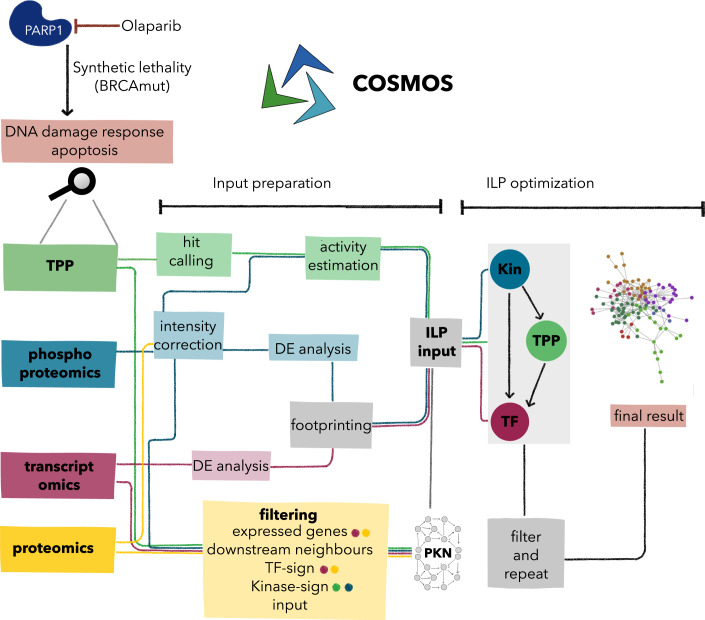
Complex disease phenotypes often span multiple molecular processes. Functional characterization of these processes can shed light on disease mechanisms and drug effects. Thermal Proteome Profiling (TPP) is a mass-spectrometry (MS) based technique assessing changes in thermal protein stability that can serve as proxies of functional protein changes. These unique insights of TPP can complement those obtained by other omics technologies. Here, we show how TPP can be integrated with phosphoproteomics and transcriptomics in a network-based approach using COSMOS, a multi-omics integration framework, to provide an integrated view of transcription factors, kinases and proteins with altered thermal stability. This allowed us to recover consequences of Poly (ADP-ribose) polymerase (PARP) inhibition in ovarian cancer cells on cell cycle and DNA damage response as well as interferon and hippo signaling. We found that TPP offers a complementary perspective to other omics data modalities, and that its integration allowed us to obtain a more complete molecular overview of PARP inhibition. We anticipate that this strategy can be used to integrate functional proteomics with other omics to study molecular processes.
Overview
CoChat Summary
TL;DR
The paper integrates thermal proteome profiling (TPP) with phosphoproteomics and transcriptomics using COSMOS to model olaparib-induced PARP inhibition in UWB1.289 ovarian cancer cells. It reports that TPP adds complementary functional information and improves recovery of cell cycle, DNA damage response, interferon, and hippo/YAP-TEAD signaling.
Key findings
- After 24 h olaparib treatment, transcriptomics identified 20,493 expressed genes with 44 significantly changed; phosphoproteomics identified 11,615 phosphosites with 256 significantly changed; TPP identified 9,455 proteins with 76 thermal stability changes (FDR < 0.1).
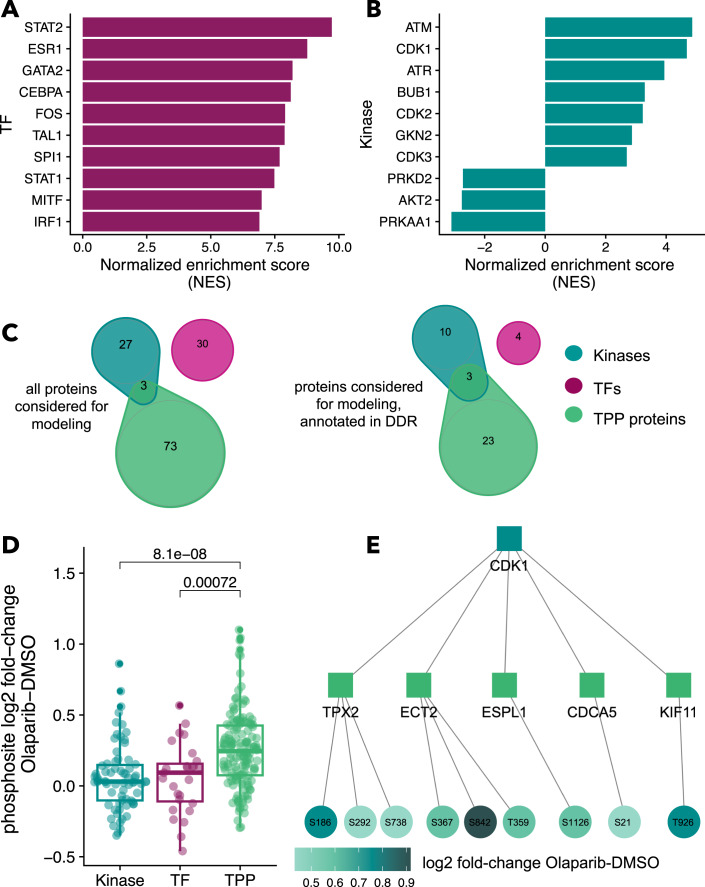
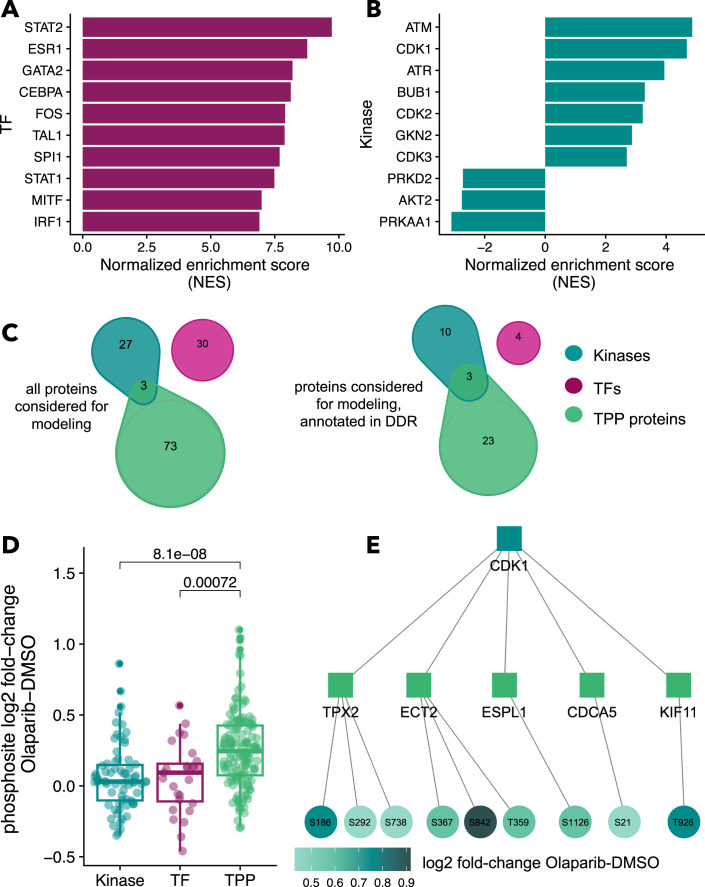
- Footprint analysis yielded activity estimates for 229 transcription factors and 170 kinases, of which 123/229 and 48/170 were deregulated (absNES > 1.7); top 30 of each were used for network modeling. Prominent TPP hits included CHEK2, PARP1, RNF146, MX1, cyclins (stabilized), and RRN3 (destabilized).
- TPP hits overlapped little with kinases and transcription factors: three DDR proteins (CDK1, CDK2, CCNB1) overlapped between TPP hits and kinases, and there was no overlap between altered kinases and transcription factors. TPP hits had 149 detected phosphorylation events and appeared more phosphorylated than kinases and transcription factors; 24/30 top kinases had direct connections to at least one TPP hit, and CDK1 had direct edges to 20 TPP hits.
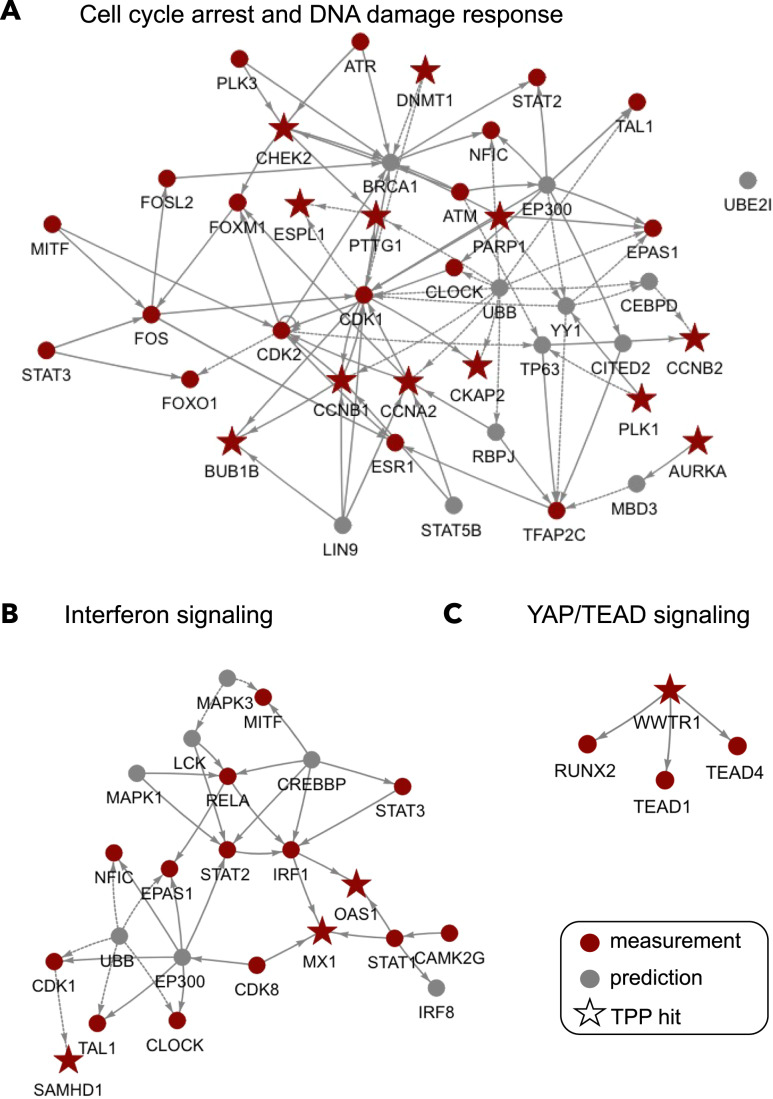
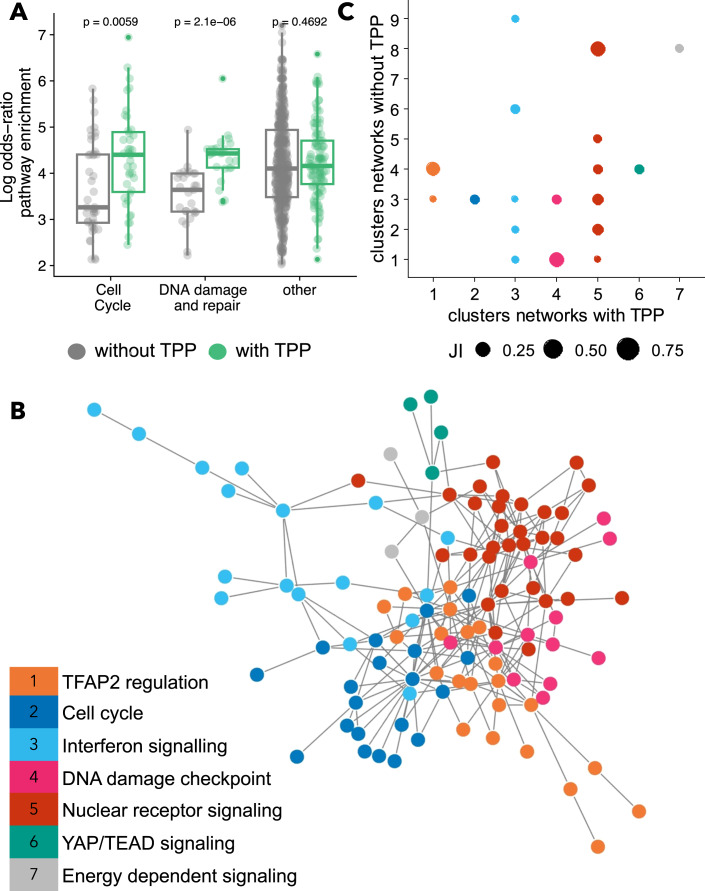
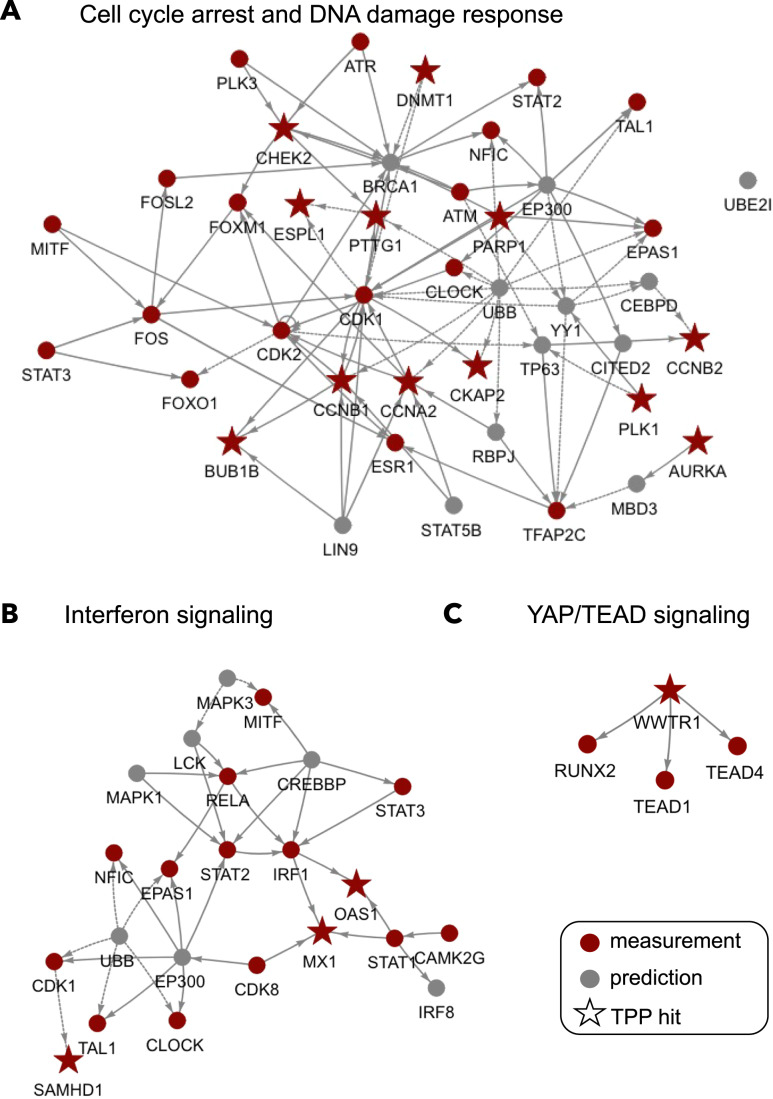
- Inclusion of TPP in COSMOS networks made cell cycle and DNA damage pathways significantly more prominent (p < 0.05, Wilcoxon test), with some DDR-associated pathways significant exclusively in networks with TPP. Clustering identified interferon signaling and YAP/TEAD signaling; maximum Jaccard index between clusters with and without TPP was 0.28 for DDR and nuclear receptor signaling.
Methods
- UWB1.289 (BRCA1-deficient ovarian cancer) cells were treated with 4 µM olaparib or DMSO for 24 h; transcriptomics, MS-based proteomics/phosphoproteomics, and 2D-TPP were generated. Three independent replicates were generated per data point per readout, though TPP used four olaparib concentrations (0.4, 1, 4, 10 µM) or DMSO with one replicate per treatment.
- TPP was performed across 12 temperatures (42.1–63.9 °C), with TMT10 multiplexing; hits were called using an F-statistic-based method with 10% FDR.
- COSMOS/CARNIVAL integration used Viper footprinting for TF and kinase/phosphatase activities, top 30 TFs (NES > 4), top 30 kinases/phosphatases (NES > 2), and 76 TPP hits; two prior knowledge networks were used (COSMOS, 30k interactions; MetaBase, 117k interactions), with two-round optimization and ReactomePA enrichment.
Limitations
- Stated: the study is the first example of TPP in network-based multi-omics; more comprehensive datasets covering additional contexts and data modalities are needed to draw conclusions about generalizability. The authors also note that TPP data often contain more than binary stabilization/destabilization information, such as effect size or quantitative drug response curves, which could improve modeling.
- Evident from the text: the analysis is limited to one cell line (UWB1.289), one PARP inhibitor (olaparib), and one treatment time (24 h). TPP was performed with one replicate per treatment, whereas transcriptomics and proteomics/phosphoproteomics had three independent replicates. The network results also depend on prior knowledge resources, and the authors note an expected influence of the prior knowledge resource.
Model-written summary. Check it against the paper before relying on it.
Integrity signals
Registry
Cites
Statistics
Figures
Verification
Claims the paper makes
16 Valid · 3 Not valid · 12 Not checked · 59 Own results and interpretations
The cited sources support only part of this claim — read each source’s verdict below.
In the paper
“Especially in combination with quantitative changes measured by e.g., phosphoproteomics, TPP can be used to identify functionally relevant alterations and link them to signaling and phenotypic consequences (Savitski et al, 2014; Mateus et al, 2020).”
§ Network integration of thermal proteome profiling with multi-omics data decodes PARP inhibition > Introduction
What the sources say
- Not checked — no full text of the sourcecites Savitski et al, 2014 matched to “Tracking cancer drugs in living cells by thermal profiling of the proteome” (2014) source
- Partly supportedcites Mateus et al, 2020 matched to “Thermal proteome profiling for interrogating protein interactions” (2020) sourceExperimental — accuracy not yet measured
The Introduction (page unavailable) says phosphorylation can alter protein thermal stability and that TPP can capture intracellular signaling. The Outlook says TPP can help study mechanisms of perturbations, but the cited paper does not describe combining TPP with quantitative phosphoproteomics to link alterations to phenotypic consequences. (LLM, conf=0.84)
plainstates an association- Asserted: passes — The authors put it forward as true.
- Checkable: passes — It can be checked against evidence.
- Load-bearing: passes — The paper’s conclusions depend on it.
- Based: passes — The paper gives a reason why it holds.
The cited sources support only part of this claim — read each source’s verdict below.
In the paper
“To characterize such links and integrate the different data modalities, we used COSMOS (Dugourd et al, 2021), that has been developed to model functional states of proteins (e.g., activities) which are more informative than protein abundance as shown before (Szalai and Saez-Rodriguez, 2020; Dugourd and Saez-Rodriguez, 2019).”
§ Network integration of thermal proteome profiling with multi-omics data decodes PARP inhibition > Discussion
What the sources say
- Supportedcites Szalai and Saez-Rodriguez, 2020 matched to “Why do pathway methods work better than they should?” (2020) source
In the part of the citing sentence this citation is offered for — that protein functional states (activities) are more informative than abundance — our copy agrees: the Abstract (p. 2) states 'pathways are constituted by signaling proteins, and their activity - not their abundance - defines the activity of the pathway', and the Introduction (pp. 4-5) elaborates that activity is controlled by localization and PTMs, so footprint/activity-based inference outperforms abundance/mapping-based. This paper does not mention COSMOS itself, but that identification is carried by the accompanying Dugourd et al. 2021 citation, not by this source. (LLM, conf=0.80)
- Partly supportedcites Dugourd and Saez-Rodriguez, 2019 matched to “Footprint-based functional analysis of multiomic data” (2019) sourceExperimental — accuracy not yet measured
The Introduction describes estimating protein activities from downstream molecular readouts rather than from the proteins’ own measured abundance. The Pathway activity section says footprint gene sets are more informative than mapping or ontology gene sets, but it does not establish the broader comparison that protein functional states are more informative than protein abundance. The sentence attributes COSMOS’s development to a separate 2021 citation. (LLM, conf=0.82)
plainstates an association- Asserted: passes — The authors put it forward as true.
- Checkable: passes — It can be checked against evidence.
- Load-bearing: passes — The paper’s conclusions depend on it.
- Based: passes — The paper gives a reason why it holds.
- Supported
A result the paper reports from its own data — it cites no other source for it, so there is none to check. The quote shows it is in the paper.
In the paper
“Analyses with different numbers of TPP proteins and different prior knowledge resources (Omnipath or MetaBase) showed good reproducibility between replicates, a robust clustering of networks with TPP versus networks without TPP, and an expected influence of the prior knowledge resource.”
§ Network integration of thermal proteome profiling with multi-omics data decodes PARP inhibition > Results > COSMOS robustly connects kinases and transcription factors with TPP hits
plainstates an association- Asserted: passes — The authors put it forward as true.
- Checkable: passes — It can be checked against evidence.
- Load-bearing: passes — The paper’s conclusions depend on it.
- Based: passes — The paper gives a reason why it holds.
A result the paper reports from its own data — it cites no other source for it, so there is none to check. The quote shows it is in the paper.
In the paper
“This COSMOS setup yielded a maximum of integrated TPP proteins in the resulting network.”
§ Network integration of thermal proteome profiling with multi-omics data decodes PARP inhibition > Results > COSMOS robustly connects kinases and transcription factors with TPP hits
plainstates a cause- Asserted: passes — The authors put it forward as true.
- Checkable: passes — It can be checked against evidence.
- Load-bearing: unclear — It is unclear whether the paper’s conclusions depend on it.
- Based: passes — The paper gives a reason why it holds.
A result the paper reports from its own data — it cites no other source for it, so there is none to check. The quote shows it is in the paper.
In the paper
“Analyses with different numbers of TPP proteins and different prior knowledge resources (Omnipath or MetaBase) showed good reproducibility between replicates, a robust clustering of networks with TPP versus networks without TPP, and an expected influence of the prior knowledge resource.”
§ Network integration of thermal proteome profiling with multi-omics data decodes PARP inhibition > Results > COSMOS robustly connects kinases and transcription factors with TPP hits
plainstates an association- Asserted: passes — The authors put it forward as true.
- Checkable: passes — It can be checked against evidence.
- Load-bearing: unclear — It is unclear whether the paper’s conclusions depend on it.
- Based: passes — The paper gives a reason why it holds.
41 more claims
Create a free account to see all 90 claims and to verify the 5 references still open.
- Probably not a substantial claim. 32
- It may state two separate claims as one. 15
- Borderline: one of the tests for a substantial claim is unclear. 2
Self-check
Percentages, sums and reported differences re-computed from the paper’s own numbers.
Each contradiction between two passages listed here was confirmed by an independent check.
Rated major: it would touch a result — a value a result rests on, reported and recomputed p-values on opposite sides of the significance level, two passages that conflict with no sign which is right, or a cited work retracted before this paper was published.
In the paper
§ Network integration of thermal proteome profiling with multi-omics data decodes PARP inhibition > Results > Multi-omic profiling of the response to Olaparib in ovarian cancer cells
“from which 44 changed significantly in response to the treatment (absolute logFC > log2(1.2) and adjusted p value <0.05, DESeq2)”
§ Network integration of thermal proteome profiling with multi-omics data decodes PARP inhibition > Methods > Methods and protocols
“The criteria to consider a gene differentially regulated was an adjusted P value lower than 0.05 and an absolute log2 fold change in expression greater than 1.5.”
Rated minor: it would not touch a result — a value no result rests on, a p-value that stays on the same side of the significance level, or a conflict that is clerical, resolved elsewhere in the paper, or outside its own findings.
In the paper
§ Network integration of thermal proteome profiling with multi-omics data decodes PARP inhibition > Results > Inclusion of TPP hits enhances biological information content in resulting networks
“significantly more prominent in networks with TPP (Fig. 3A, p value <0.05, Wilcoxon test)”
§ Network integration of thermal proteome profiling with multi-omics data decodes PARP inhibition > Methods > Methods and protocols
“A t-test was used to determine the differences between biological processes in networks with TPP and networks without TPP.”
Citations
Cites
Moderated estimation of fold change and dispersion for RNA-seq data with DESeq2
Love, M. I., Huber, W., & Anders, S. (2014) · Genome Biology · doi:10.1186/s13059-014-0550-8 · Cited by 95,106
Trimmomatic: a flexible trimmer for Illumina sequence data
Bolger, A. M., Lohse, M., & Usadel, B. (2014) · Bioinformatics · doi:10.1093/bioinformatics/btu170 · Cited by 65,548
STAR: ultrafast universal RNA-seq aligner
Dobin, A., Davis, C. A., Schlesinger, F., Drenkow, J., Zaleski, C., Jha, S., Batut, P., Chaisson, M., & Gingeras, T. R. (2013) · Bioinformatics · doi:10.1093/bioinformatics/bts635 · Cited by 51,709 · cited 1×
“96) with STAR v. 1.3.4 (Dobin et al, 2013).”
Influentiallimma: Linear Models for Microarray Data
Smyth, G. K. (2005) · Statistics for Biology and Health · doi:10.1007/0-387-29362-0_23 · Cited by 5,796 · cited 2×
“Differential expression analysis of treatment and control samples was performed using DESeq2 (Love et al, 2014) for transcriptomics data and using limma (Smyth, 2005) for proteomics and phosphoproteomics data.”
MethodThe reactome pathway knowledgebase 2022
Gillespie, M., Jassal, B., Stephan, R., Milacic, M., Rothfels, K., Senff-Ribeiro, A., Griss, J., Sevilla, C., Matthews, L., Gong, C., et al. (2022) · Nucleic Acids Research · doi:10.1093/nar/gkab1028 · Cited by 2,339
The multifaceted roles of PARP1 in DNA repair and chromatin remodelling
Ray Chaudhuri, A., & Nussenzweig, A. (2017) · Nature Reviews Molecular Cell Biology · doi:10.1038/nrm.2017.53 · Cited by 1,786 · cited 2×
“These processes are well-known to happen in response to PARP inhibition and depict the biggest part of the network (Ray Chaudhuri and Nussenzweig, 2017; Masutani et al, 1995).”
BackgroundMatthews, H. K., Bertoli, C., & de Bruin, R. A. M. (2022) · Nature Reviews Molecular Cell Biology · doi:10.1038/s41580-021-00404-3 · Cited by 1,506
Tracking cancer drugs in living cells by thermal profiling of the proteome
Savitski, M. M., Reinhard, F. B. M., Franken, H., Werner, T., Savitski, M. F., Eberhard, D., Molina, D. M., Jafari, R., Dovega, R. B., Klaeger, S., et al. (2014) · Science · doi:10.1126/science.1255784 · Cited by 1,187 · cited 5×
“Thermal proteome pro fi ling (TPP, Savitski et al, 2014) is a mass-spectrometry (MS) based functional proteomics method that can identify shifts in protein thermal stability across different conditions (Mateus et al, 2020).”
BackgroundMethodInfluentialSelf-citationBenchmark and integration of resources for the estimation of human transcription factor activities
Garcia-Alonso, L., Holland, C. H., Ibrahim, M. M., Turei, D., & Saez-Rodriguez, J. (2019) · Genome Research · doi:10.1101/gr.240663.118 · Cited by 1,122 · cited 1×
“For transcription factors, the DOROTHEA database was used to obtain TF-target interactions with a con fi dence level of A, B, or C (Garcia-Alonso et al, 2019).”
MethoddecoupleR: ensemble of computational methods to infer biological activities from omics data
(2022) · doi:10.1093/bioadv/vbac016 · Cited by 1,098
Self-citationAlvarez, M. J., Shen, Y., Giorgi, F. M., Lachmann, A., Ding, B. B., Ye, B. H., & Califano, A. (2016) · Nature Genetics · doi:10.1038/ng.3593 · Cited by 966 · cited 1×
“In order to estimate the activity of different input nodes (transcription factors kinases, phosphatases), the Viper algorithm was used (Alvarez et al, 2016).”
MethodA decade of clinical development of PARP inhibitors in perspective
Mateo, J., Lord, C. J., Serra, V., Tutt, A., Balmaña, J., Castroviejo-Bermejo, M., Cruz, C., Oaknin, A., Kaye, S. B., & de Bono, J. S. (2019) · Annals of Oncology · doi:10.1093/annonc/mdz192 · Cited by 743 · cited 5×
“Besides the stabilization of PARP1 as a drug target, different proteins stabilized potentially upon phosphorylation, for example, CHEK2, the major downstream target of the cell cycle arrest kinases, ATM, and ATR (Matthews et al, 2022).”
BackgroundInfluentialOmniPath: guidelines and gateway for literature-curated signaling pathway resources
Türei, D., Korcsmáros, T., & Saez-Rodriguez, J. (2016) · Nature Methods · doi:10.1038/nmeth.4077 · Cited by 687
Self-citationPARPs and ADP-ribosylation: recent advances linking molecular functions to biological outcomes
Gupte, R., Liu, Z., & Kraus, W. L. (2017) · Genes & Development · doi:10.1101/gad.291518.116 · Cited by 681 · cited 2×
“PARP activity has been shown to be important for a series of cellular processes, such as DNA repair, transcription, cell fate, and stress response (Gupte et al, 2017).”
BackgroundThe functional landscape of the human phosphoproteome
Ochoa, D., Jarnuczak, A. F., Viéitez, C., Gehre, M., Soucheray, M., Mateus, A., Kleefeldt, A. A., Hill, A., Garcia-Alonso, L., Stein, F., et al. (2020) · Nature Biotechnology · doi:10.1038/s41587-019-0344-3 · Cited by 491 · cited 1×
“…response, whereas proteins with altered thermal stability re fl ect less annotated parts of the signaling space with strong links to the phosphoproteomic measurements which aligns with observations linking functionality of phosphosites with thermal stability (Ochoa et al, 2020; Potel et al, 2021).”
BackgroundRegulation of TEAD Transcription Factors in Cancer Biology
Huh, H., Kim, D., Jeong, H.-S., & Park, H. (2019) · Cells · doi:10.3390/cells8060600 · Cited by 259 · cited 2×
“In addition, we detect the induction of interferon signaling at the transcriptional level as well as less characterized effects such as signaling through the YAP1-TEAD complex indicated by a TPP and transcriptional signal (Huh et al, 2019; Calses et al, 2023; Vikas et al, 2020; Wang et al, 2019).”
BackgroundThermal proteome profiling for interrogating protein interactions
Mateus, A., Kurzawa, N., Becher, I., Sridharan, S., Helm, D., Stein, F., Typas, A., & Savitski, M. M. (2020) · Molecular Systems Biology · doi:10.15252/msb.20199232 · Cited by 258
Niraparib activates interferon signaling and potentiates anti-PD-1 antibody efficacy in tumor models
Wang, Z., Sun, K., Xiao, Y., Feng, B., Mikule, K., Ma, X., Feng, N., Vellano, C. P., Federico, L., Marszalek, J. R., et al. (2019) · Scientific Reports · doi:10.1038/s41598-019-38534-6 · Cited by 253 · cited 1×
“In addition, we detect the induction of interferon signaling at the transcriptional level as well as less characterized effects such as signaling through the YAP1-TEAD complex indicated by a TPP and transcriptional signal (Huh et al, 2019; Calses et al, 2023; Vikas et al, 2020; Wang et al, 2019).”
BackgroundThermal proximity coaggregation for system-wide profiling of protein complex dynamics in cells
Tan, C. S. H., Go, K. D., Bisteau, X., Dai, L., Yong, C. H., Prabhu, N., Ozturk, M. B., Lim, Y. T., Sreekumar, L., Lengqvist, J., et al. (2018) · Science · doi:10.1126/science.aan0346 · Cited by 224 · cited 1×
“Changes in thermal protein stability can re fl ect a series of processes that in fl uence protein structure and its interactions independent of changes in protein abundance (Potel et al, 2021; Tan et al, 2018).”
BackgroundRegulation of Human Separase by Securin Binding and Autocleavage
Waizenegger, I. C., Giménez-Abián, J. F., Wernic, D., & Peters, J.-M. (2002) · Current Biology · doi:10.1016/s0960-9822(02)01073-4 · Cited by 222 · cited 2×
“…us to retrieve detailed mechanistic insight into well-known consequences of PARP inhibition, such as DNA damage signaling via the ATM-ATR-CHEK2 axis or cell cycle arrest via modulation of cyclin degradation or the formation of the ESPL1-PTTG1 complex (Matthews et al, 2022; Waizenegger et al, 2002).”
BackgroundPARP family enzymes: regulation and catalysis of the poly(ADP-ribose) posttranslational modification
Langelier, M.-F., Eisemann, T., Riccio, A. A., & Pascal, J. M. (2018) · Current Opinion in Structural Biology · doi:10.1016/j.sbi.2018.11.002 · Cited by 196 · cited 1×
“PARPs are a family of 17 nucleoproteins, which transfer one or multiple ADP-ribose units to target proteins in a process called PARylation (Langelier et al, 2018).”
BackgroundTherapeutic Potential of Combining PARP Inhibitor and Immunotherapy in Solid Tumors
Vikas, P., Borcherding, N., Chennamadhavuni, A., & Garje, R. (2020) · Frontiers in Oncology · doi:10.3389/fonc.2020.00570 · Cited by 179 · cited 2×
“In addition, we detect the induction of interferon signaling at the transcriptional level as well as less characterized effects such as signaling through the YAP1-TEAD complex indicated by a TPP and transcriptional signal (Huh et al, 2019; Calses et al, 2023; Vikas et al, 2020; Wang et al, 2019).”
BackgroundIdentifying drug targets in tissues and whole blood with thermal-shift profiling
Perrin, J., Werner, T., Kurzawa, N., Rutkowska, A., Childs, D. D., Kalxdorf, M., Poeckel, D., Stonehouse, E., Strohmer, K., Heller, B., et al. (2020) · Nature Biotechnology · doi:10.1038/s41587-019-0388-4 · Cited by 178 · cited 3×
“TPP has been used successfully in the past for drug pro fi ling, but it generates complex data that are dif fi cult to interpret and potentially bene fi t from integration with other data types (Savitski et al, 2014; Perrin et al, 2020; Mateus et al, 2020).”
MethodInfluentialSelf-citationLiu, A., Trairatphisan, P., Gjerga, E., Didangelos, A., Barratt, J., & Saez-Rodriguez, J. (2019) · npj Systems Biology and Applications · doi:10.1038/s41540-019-0118-z · Cited by 151 · cited 10×
“Having a set of input nodes of interest (TF, kinases, TPP proteins) and a preprocessed prior knowledge network, a network optimization was run using CARNIVAL (Liu et al, 2019).”
MethodInfluentialCausal integration of multi‐omics data with prior knowledge to generate mechanistic hypotheses
Dugourd, A., Kuppe, C., Sciacovelli, M., Gjerga, E., Gabor, A., Emdal, K. B., Vieira, V., Bekker‐Jensen, D. B., Kranz, J., Bindels, E. M. J., et al. (2021) · Molecular Systems Biology · doi:10.15252/msb.20209730 · Cited by 149 · cited 7×
“Details of the optimization process are provided in the CARNIVAL and COSMOS publications (Liu et al, 2019; Dugourd et al, 2021).”
InfluentialMRTF potentiates TEAD‐YAP transcriptional activity causing metastasis
Kim, T., Hwang, D., Lee, D., Kim, J., Kim, S., & Lim, D. (2017) · The EMBO Journal · doi:10.15252/embj.201695137 · Cited by 114
Characterization of the 2'-5'-oligoadenylate synthetase ubiquitin-like family
Eskildsen, S. (2003) · Nucleic Acids Research · doi:10.1093/nar/gkg427 · Cited by 112 · cited 1×
“This transcriptional response is connected and complemented by the two TPP hits, MX1 and OAS1 which are activated upon interferon signaling (Liao and Gao, 2022; Eskildsen et al, 2003).”
BackgroundImpact of phosphorylation on thermal stability of proteins
Potel, C. M., Kurzawa, N., Becher, I., Typas, A., Mateus, A., & Savitski, M. M. (2021) · Nature Methods · doi:10.1038/s41592-021-01177-5 · Cited by 103 · cited 2×
“Changes in thermal protein stability can re fl ect a series of processes that in fl uence protein structure and its interactions independent of changes in protein abundance (Potel et al, 2021; Tan et al, 2018).”
BackgroundCausal Interactions from Proteomic Profiles: Molecular Data Meets Pathway Knowledge
Babur, Ö., Luna, A., Korkut, A., Durupınar, F., Siper, M. C., Doğrusöz, U., Jácome, A. S. V., Peckner, R., Christianson, K. E., Jaffe, J. D., et al. (2020) · Patterns · doi:10.1016/j.patter.2021.100257 · Cited by 89
Integrating knowledge and omics to decipher mechanisms via large‐scale models of signaling networks
Garrido‐Rodriguez, M., Zirngibl, K., Ivanova, O., Lobentanzer, S., & Saez‐Rodriguez, J. (2022) · Molecular Systems Biology · doi:10.15252/msb.202211036 · Cited by 70
Self-citationMetaBase--the wiki-database of biological databases
Bolser, D. M., Chibon, P., Palópoli, N., Gong, S., Jacob, D. J., Angel, V. D. D., Swan, D., Bassi, S., González, V., Suravajhala, P., et al. (2011) · Nucleic Acids Research · doi:10.1093/nar/gkr1099 · Cited by 63
Role of poly(ADP-ribose) polymerase in cell-cycle checkpoint mechanisms following γ-irradiation
Masutani, M., Nozaki, T., Wakabayashi, K., & Sugimura, T. (1995) · Biochimie · doi:10.1016/0300-9084(96)88161-2 · Cited by 61 · cited 1×
“These processes are well-known to happen in response to PARP inhibition and depict the biggest part of the network (Ray Chaudhuri and Nussenzweig, 2017; Masutani et al, 1995).”
BackgroundFootprint-based functional analysis of multiomic data
Dugourd, A., & Saez-Rodriguez, J. (2019) · Current Opinion in Systems Biology · doi:10.1016/j.coisb.2019.04.002 · Cited by 53
Kurzawa, N., Becher, I., Sridharan, S., Franken, H., Mateus, A., Anders, S., Bantscheff, M., Huber, W., & Savitski, M. M. (2020) · Nature Communications · doi:10.1038/s41467-020-19529-8 · Cited by 53 · cited 2×
“To identify signi fi cantly (de)stabilized proteins as hits in the 2D-TPP dataset, we used a recently introduced method (Kurzawa et al, 2020).”
MethodSelf-citationDeep thermal profiling for detection of functional proteoform groups
Kurzawa, N., Leo, I. R., Stahl, M. M. S., Kunold, E., Becher, I., Audrey, A., Mermelekas, G., Huber, W. K., Mateus, A., Savitski, M. M., et al. (2023) · Nature Chemical Biology · doi:10.1038/s41589-023-01284-8 · Cited by 50
Improved Proteomics-Based Drug Mechanism-of-Action Studies Using 16-Plex Isobaric Mass Tags
Zinn, N., Werner, T., Doce, C., Mathieson, T., Boecker, C., Sweetman, G., Fufezan, C., & Bantscheff, M. (2021) · Journal of Proteome Research · doi:10.1021/acs.jproteome.0c00900 · Cited by 49 · cited 2×
“Measurements and analyses were performed as described before (Zinn et al, 2021).”
MethodSelf-citationPalve, V. C., Knezevic, C. E., Bejan, D. S., Luo, Y., Li, X., Novakova, S., Welsh, E. A., Fang, B., Kinose, F., Haura, E. B., et al. (2021) · Cell chemical biology · doi:10.1016/j.chembiol.2021.07.008 · Cited by 41
Kelstrup, C. D., Aizikov, K., Batth, T. S., Kreutzman, A., Grinfeld, D., Lange, O., Mourad, D., Makarov, A. A., & Olsen, J. V. (2018) · Journal of Proteome Research · doi:10.1021/acs.jproteome.8b00381 · Cited by 40
Why do pathway methods work better than they should?
Szalai, B., & Saez‐Rodriguez, J. (2020) · FEBS Letters · doi:10.1002/1873-3468.14011 · Cited by 34
TEAD Proteins Associate With DNA Repair Proteins to Facilitate Cellular Recovery From DNA Damage
Calses, P. C., Pham, V. C., Guarnaccia, A. D., Choi, M., Verschueren, E., Bakker, S. T., Pham, T. H., Hinkle, T., Liu, C., Chang, M. T., et al. (2023) · Molecular & Cellular Proteomics · doi:10.1016/j.mcpro.2023.100496 · Cited by 22 · cited 2×
“In addition, we detect the induction of interferon signaling at the transcriptional level as well as less characterized effects such as signaling through the YAP1-TEAD complex indicated by a TPP and transcriptional signal (Huh et al, 2019; Calses et al, 2023; Vikas et al, 2020; Wang et al, 2019).”
BackgroundAffinity Enrichment Chemoproteomics for Target Deconvolution and Selectivity Profiling
Werner, T., Steidel, M., Eberl, H. C., & Bantscheff, M. (2021) · Methods in molecular biology · doi:10.1007/978-1-0716-1024-4_17 · Cited by 10
Self-citationPerez, J. M., Twigg, C. A. I., Guan, W., & Thomas, S. N. (2021) · Journal of the American Society for Mass Spectrometry · doi:10.1021/jasms.1c00215 · Cited by 10
MxA: a broadly acting effector of interferon-induced human innate immunity
Liao, S., & Gao, S. (2022) · Visualized Cancer Medicine · doi:10.1051/vcm/2022002 · Cited by 6 · cited 1×
“This transcriptional response is connected and complemented by the two TPP hits, MX1 and OAS1 which are activated upon interferon signaling (Liao and Gao, 2022; Eskildsen et al, 2003).”
BackgroundStolzenburg, L. R., Ainsworth, B., Riley-Gillis, B. M., Pakozdi, T., Ammar, A., Ellis, P. A., Wilsbacher, J. L., & Ramathal, C. Y. (2022) · Oncotarget · doi:10.18632/oncotarget.28162 · Cited by 5
Cited by
Evaluating signaling pathway inference from kinase-substrate interactions and phosphoproteomics dataPreprint
Garrido‐Rodríguez, M., Potel, C. M., Burtscher, M. L., Becher, I., Rodríguez-Mier, P., Müller‐Dott, S., Savitski, M. M., & Sáez-Rodríguez, J. (2024) · bioRxiv (Cold Spring Harbor Laboratory) · doi:10.1101/2024.10.21.619348 · Cited by 7
Self-citationGarrido‐Rodríguez, M., Potel, C. M., Burtscher, M. L., Becher, I., Rodríguez-Mier, P., Müller‐Dott, S., Savitski, M. M., & Sáez-Rodríguez, J. (2026) · Nature Communications · doi:10.1038/s41467-026-69332-0 · Cited by 12
Self-citationDORSSAA: Drug-Target interactOmics Resource Based on Stability/Solubility Alteration Assay
Zangene, E., Gholizadeh, E., Schwämmle, V., Saei, A. A., Wilhelm, M., Käll, L., & Jafari, M. (2026) · Molecular & Cellular Proteomics · doi:10.1016/j.mcpro.2026.101603 · Cited by 3
Proteome‐Wide Profiling of Olaparib Interactors Using a Biotinylated Photoaffinity Probe
van der Heijden, F. L. A. M., Weijers, S. A., Bleijerveld, O. B., Kliza, K. W., Vermeulen, M., & Filippov, D. V. (2025) · ChemBioChem · doi:10.1002/cbic.202400882 · Cited by 2
Metadata
- Authors
- Burtscher, M. L., Gade, S., Garrido-Rodriguez, M., Rutkowska, A., Werner, T., Eberl, H. C., Petretich, M., Knopf, N., Zirngibl, K., Grandi, P., Bergamini, G., Bantscheff, M., Fälth-Savitski, M., & Saez-Rodriguez, J.
- Affiliations
- Heidelberg University (DE)
- GlaxoSmithKline (Germany) (DE)
- ORCID
- Venue
- Molecular Systems Biology
- Published
- 2024-03-07
- Volume
- 20
- Issue
- 4
- Pages
- 458-474
- ISSN
- 1744-4292 (ISSN-L)
- PMC
- PMC10987601
- OpenAlex
- W4392544555
- Cited by
- 7
- References
- 44
- Citations by year
- 2026: 3 · 2025: 3 · 2024: 1
- FWCI
- 0.87
- Type
- journal article
- Language
- en
- Open access
- gold
- doi.org
- Licence
- cc-by
- creativecommons.org/licenses/by/4.0 (tdm)
- creativecommons.org/licenses/by/4.0 (vor)
- Locations
- Molecular Systems Biology (publishedVersion, cc-by)
- PubMed Central (publishedVersion, cc-by)
- PubMed (publishedVersion)
- DOAJ (DOAJ: Directory of Open Access Journals) (submittedVersion)
- Funders
- GlaxoSmithKline
- Pfizer
- Sanofi
- Travere Therapeutics
- Stadapharm
- Astex Pharmaceuticals
- Grunenthal
- Topics
- Physical Sciences › Chemistry › Spectroscopy › Advanced Proteomics Techniques and Applications
- Life Sciences › Biochemistry, Genetics and Molecular Biology › Molecular Biology › Bioinformatics and Genomic Networks
- Health Sciences › Medicine › Oncology › PARP inhibition in cancer therapy
- Keywords
- thermal proteome profiling, PARP inhibition, multi-omics integration, cosmos, phosphoproteomics, transcriptomics, protein thermal stability, ovarian cancer, DNA damage response, cell cycle, interferon signaling, Hippo signaling pathway, transcription factors, kinases, pharmacological activity
- MeSH terms
- Poly(ADP-ribose) Polymerase Inhibitors, Multiomics, Poly(ADP-ribose) Polymerases, Proteome, Proteomics
About these checks
Registry, retraction, Cites and statistics results are computed, not judged, with one exception: a printed reference that no index lists is read once by a model before it counts as a citation error. Claims are extracted by a model and kept only when their quote appears verbatim in the text; each cited source is then checked, with a model’s help, for whether it says what the claim relies on. Those verdicts can be wrong — read the claim’s quote and the cited source before relying on one.
The claim verdicts this report counts are experimental: their accuracy is not yet measured.
A language model drew the claims from the paper on 2026-10-10, under version 3 of the claim definition (model deepseek-v4.1-flash, prompt extract-v3).
A second model labelled each claim on 2026-10-10 (model jev-1.13-20260917, definition revision gold-guideline-v0.2).
Cited sources are checked with a language model’s help (gpt-6-sol and qwen3.8-omni-flash).
Statistics and arithmetic are recomputed, not judged.
Confidence bands are shown only for fields calibrated on our annotated test set. None is calibrated yet, so no band is shown.
What counts as a claim ›How we measure confidence ›How we check this ›
Are you an author, or do you see a problem with this page? Request a review
Data sources
Bibliographic data: Semantic Scholar, OpenAlex, Crossref.
Contains information from the Semantic Scholar Academic Graph Datasets, made available under the ODC Attribution License (ODC-BY 1.0).
Semantic Scholar’s data is described in: Kinney, R., et al. (2023). The Semantic Scholar Open Data Platform. arXiv:2301.10140.
