

The DOI matches its Crossref record; 4 of the 4 references it cites were found in a registry or an index.
Validation of microinjection methods for generating knockout mice by CRISPR/Cas-mediated genome engineering
Abstract
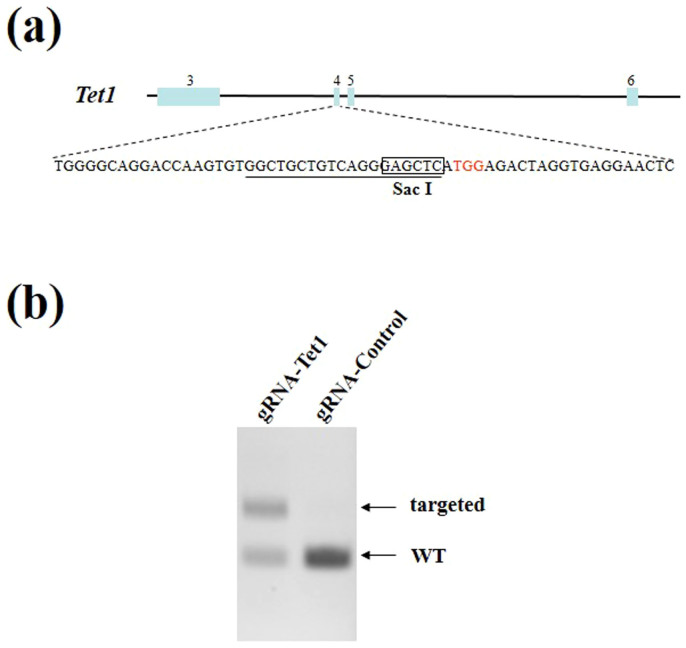
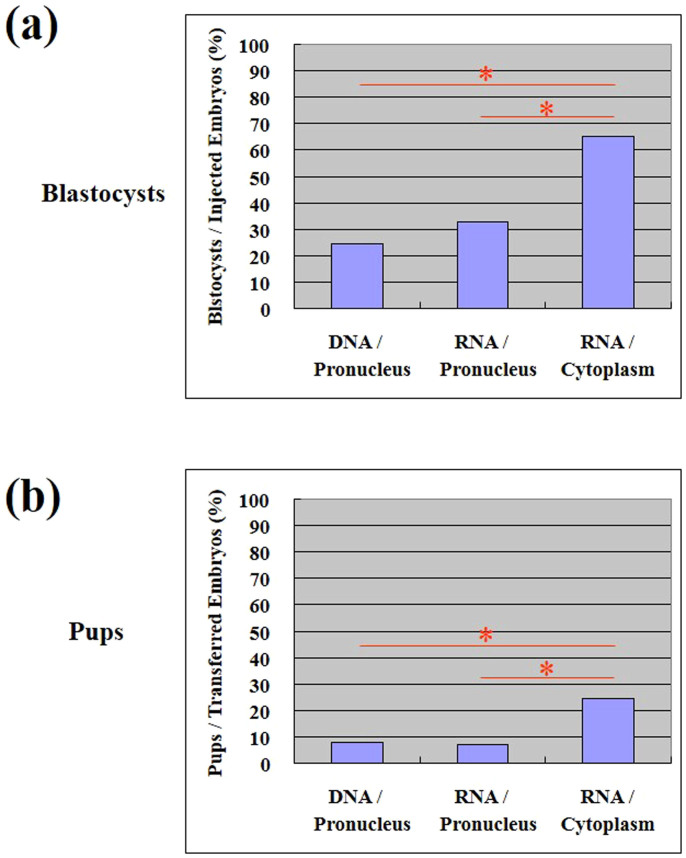
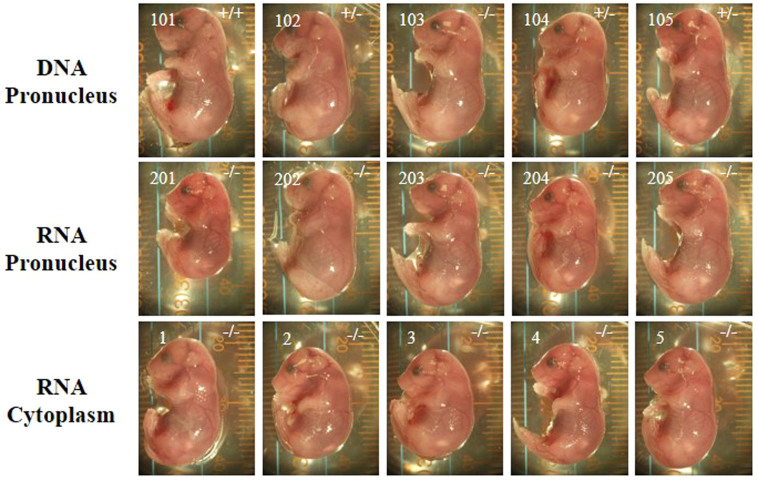
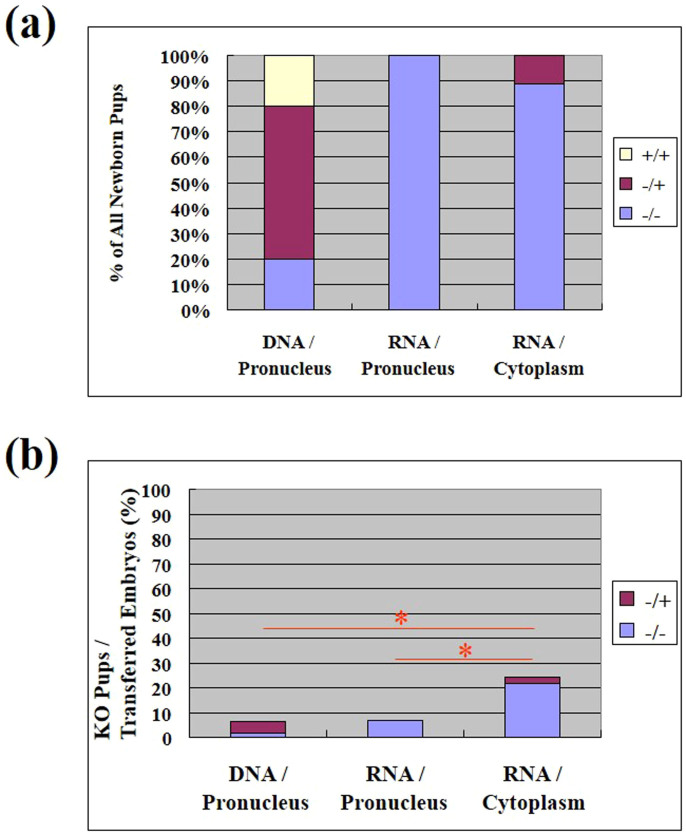
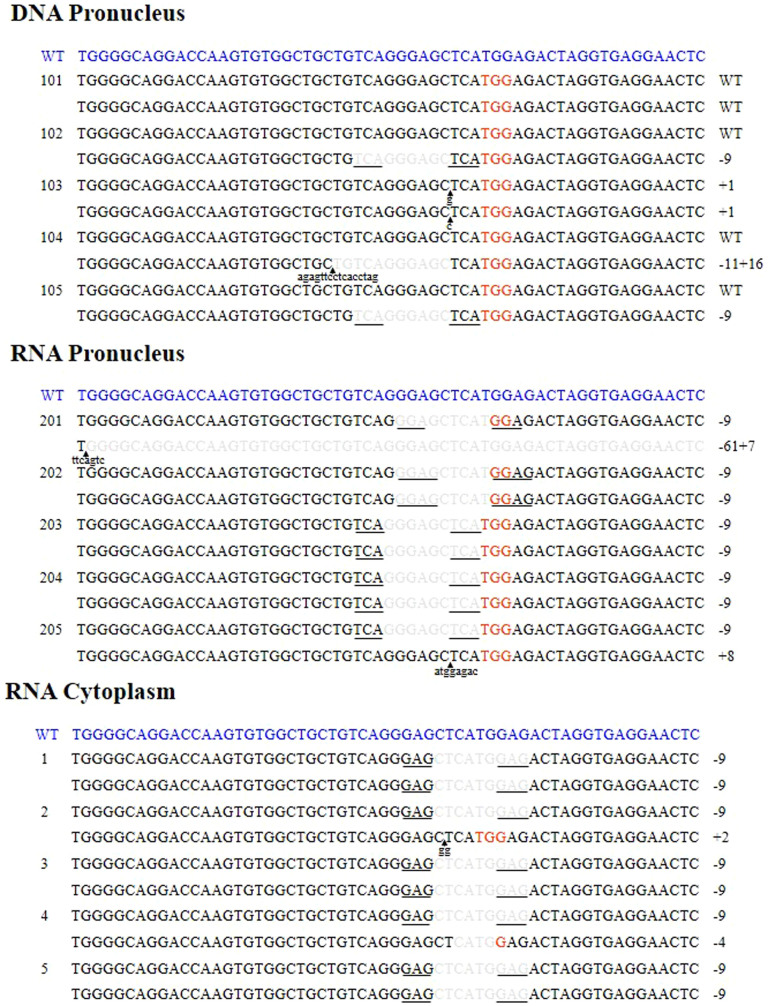
The CRISPR/Cas system, in which the Cas9 endonuclease and a guide RNA complementary to the target are sufficient for RNA-guided cleavage of the target DNA, is a powerful new approach recently developed for targeted gene disruption in various animal models. However, there is little verification of microinjection methods for generating knockout mice using this approach. Here, we report the verification of microinjection methods of the CRISPR/Cas system. We compared three methods for injection: (1) injection of DNA into the pronucleus, (2) injection of RNA into the pronucleus and (3) injection of RNA into the cytoplasm. We found that injection of RNA into the cytoplasm was the most efficient method in terms of the numbers of viable blastocyst stage embryos and full-term pups generated. This method also showed the best overall knockout efficiency.
Overview
The claims and statistics of this paper haven’t been checked yet.
Run the check — free, no account needed. It reads the open-access text and checks the sources it cites.
Integrity signals
Registry
Cites
Statistics
Figures
Verification
Claims the paper makes
The claims and statistics of this paper haven’t been checked yet.
Run the check — free, no account needed. It reads the open-access text and checks the sources it cites.
Claims other papers make about this one
Each is checked against this paper’s own text: does it say what the citing paper says it does?
The source backs part of the claim, not all of it — or backs it for a different population, condition or comparison.
In the citing paper
“Traditional physical methods such as microinjection [136,137] or electroporation [138,139] have been successfully used with CRISPR to engineer embryonic stem cells and zygotes that later originate genetically modified animals.”
From CRISPR-Cas: Converting A Bacterial Defence Mechanism into A State-of-the-Art Genetic Manipulation Tool (2019) · cites this paper as [137]
Experimental — accuracy not yet measuredThe cited source says what the claim attributes to it.
In the citing paper
“In addition, there is evidence that injection of Cas9 mRNA and sgRNA into the zygote cytoplasm is the most efficient method for yielding normal embryos and full-term mouse pups harboring the desired modification (Horii et al., 2014).”
From Delivering CRISPR: a review of the challenges and approaches (2018) · cites this paper as Horii et al., 2014
Self-check
Percentages, sums and reported differences re-computed from the paper’s own numbers.
The self-check needs the paper’s full text.
Citations
Cites
RNA-Guided Human Genome Engineering via Cas9
Mali, P., Yang, L., Esvelt, K. M., Aach, J., Guell, M., DiCarlo, J. E., Norville, J. E., & Church, G. M. (2013) · Science · doi:10.1126/science.1232033 · Cited by 9,210
Wang, H., Yang, H., Shivalila, C. S., Dawlaty, M. M., Cheng, A. W., Zhang, F., & Jaenisch, R. (2013) · Cell · doi:10.1016/j.cell.2013.04.025 · Cited by 3,495
RNA-guided genetic silencing systems in bacteria and archaea
Wiedenheft, B., Sternberg, S. H., & Doudna, J. A. (2012) · Nature · doi:10.1038/nature10886 · Cited by 1,851
Heritable genome editing in C. elegans via a CRISPR-Cas9 system
Friedland, A. E., Tzur, Y. B., Esvelt, K. M., Colaiácovo, M. P., Church, G. M., & Calarco, J. A. (2013) · Nature Methods · doi:10.1038/nmeth.2532 · Cited by 899
Research works printed but not linked: 20
- Porteus, M. H. & Carroll, D. Gene targeting using zinc finger nucleases. Nat Biotechnol 23, 967–973 (2005). · DOI · Paper page
- Miller, J. C. et al. A TALE nuclease architecture for efficient genome editing. Nat Biotechnol 29, 143–148 (2011). · DOI · Paper page
- Jinek, M. et al. A programmable dual-RNA-guided DNA endonuclease in adaptive bacterial immunity. Science 337, 816–821 (2012). · DOI · Paper page
- Cong, L. et al. Multiplex genome engineering using CRISPR/Cas systems. Science 339, 819–823 (2013). · DOI · Paper page
- Yang, H. et al. One-step generation of mice carrying reporter and conditional alleles by CRISPR/Cas-mediated genome engineering. Cell 154, 1370–1379 (2013). · DOI · Paper page
- Tahiliani, M. et al. Conversion of 5-methylcytosine to 5-hydroxymethylcytosine in mammalian DNA by MLL partner TET1. Science 324, 930–935 (2009). · DOI · Paper page
- Dawlaty, M. M. et al. Tet1 is dispensable for maintaining pluripotency and its loss is compatible with embryonic and postnatal development. Cell Stem Cell 9, 166–175 (2011). · DOI · Paper page
- Bassett, A. R., Tibbit, C., Ponting, C. P. & Liu, J. L. Highly efficient targeted mutagenesis of Drosophila with the CRISPR/Cas9 system. Cell Rep 4, 220–228 (2013). · DOI
- Hwang, W. Y. et al. Heritable and precise zebrafish genome editing using a CRISPR-Cas system. PLoS One 8, e68708 (2013). · DOI
- Shan, Q. et al. Targeted genome modification of crop plants using a CRISPR-Cas system. Nat Biotechnol 31, 686–688 (2013). · DOI · Paper page
- Jiang, W. et al. Demonstration of CRISPR/Cas9/sgRNA-mediated targeted gene modification in Arabidopsis, tobacco, sorghum and rice. Nucleic Acids Res 41, e188 (2013). · DOI
- Upadhyay, S. K., Kumar, J., Alok, A. & Tuli, R. RNA Guided Genome Editing for Target Gene Mutations in Wheat. G3 (Bethesda) 3, 2233–2238 (2013). · DOI
- Blitz, I. L., Biesinger, J., Xie, X. & Cho, K. W. Biallelic genome modification in F0 Xenopus tropicalis embryos using the CRISPR/Cas system. Genesis, 1–8 (2013). · DOI
- Wang, Y. et al. The CRISPR/Cas System mediates efficient genome engineering in Bombyx mori. Cell Res (2013). · DOI
- McVey, M. & Lee, S. E. MMEJ repair of double-strand breaks (director's cut): deleted sequences and alternative endings. Trends Genet 24, 529–538 (2008). · DOI
- Symington, L. S. & Gautier, J. Double-strand break end resection and repair pathway choice. Annu Rev Genet 45, 247–271 (2011). · DOI
- Tesson, L. et al. Knockout rats generated by embryo microinjection of TALENs. Nat Biotechnol 29, 695–696 (2011). · DOI
- Horii, T., Tamura, D., Morita, S., Kimura, M. & Hatada, I. Generation of an ICF syndrome model by efficient genome editing of human induced pluripotent stem cells using the CRISPR system. Int J Mol Sci 14, 19774–19781 (2013). · DOI · Paper page
- Mashiko, D. et al. Generation of mutant mice by pronuclear injection of circular plasmid expressing Cas9 and single guided RNA. Sci Rep 3, 3355 (2013). · DOI
- Horii, T. et al. Genome engineering of mammalian haploid embryonic stem cells using the Cas9/RNA system. Peer J 1, e230 (2013). · DOI
Cited by
Sorted by citations
Delivering CRISPR: a review of the challenges and approaches
Lino, C. A., Harper, J. C., Carney, J. P., & Timlin, J. A. (2018) · Drug Delivery · doi:10.1080/10717544.2018.1474964 · Cited by 1,185
Delivery strategies of the CRISPR-Cas9 gene-editing system for therapeutic applications
Liu, C., Zhang, L., Liu, H., & Cheng, K. (2017) · Journal of Controlled Release · doi:10.1016/j.jconrel.2017.09.012 · Cited by 607
Past, present, and future of CRISPR genome editing technologies
Pacesa, M., Pelea, O., & Jinek, M. (2024) · Cell · doi:10.1016/j.cell.2024.01.042 · Cited by 609
Mangeot, P. E., Risson, V., Fusil, F., Marnef, A., Laurent, E., Blin, J., Mournetas, V., Massouridès, E., Sohier, T. J. M., Corbin, A., et al. (2019) · Nature Communications · doi:10.1038/s41467-018-07845-z · Cited by 346
Somatic mosaicism and allele complexity induced by CRISPR/Cas9 RNA injections in mouse zygotes
Yen, S.-T., Zhang, M., Deng, J. M., Usman, S. J., Smith, C. N., Parker-Thornburg, J., Swinton, P. G., Martin, J. F., & Behringer, R. R. (2014) · Developmental Biology · doi:10.1016/j.ydbio.2014.06.017 · Cited by 300
Loureiro, A., & da Silva, G. J. (2019) · Antibiotics · doi:10.3390/antibiotics8010018 · Cited by 129
Metadata
- Authors
- Horii, T., Arai, Y., Yamazaki, M., Morita, S., Kimura, M., Itoh, M., Abe, Y., & Hatada, I.
- Venue
- Scientific Reports
- Published
- 2014-03-28
- Volume
- 4
- Issue
- 1
- ISSN
- 2045-2322
- PMC
- PMC5380110
- Cited by
- 175
- References
- 4
- Language
- en
About these checks
Registry, retraction, Cites and statistics results are computed, not judged, with one exception: a printed reference that no index lists is read once by a model before it counts as a citation error. Claims are extracted by a model and kept only when their quote appears verbatim in the text; each cited source is then checked, with a model’s help, for whether it says what the claim relies on. Those verdicts can be wrong — read the claim’s quote and the cited source before relying on one.
Statistics and arithmetic are recomputed, not judged.
Confidence bands are shown only for fields calibrated on our annotated test set. None is calibrated yet, so no band is shown.
What counts as a claim ›How we measure confidence ›How we check this ›
Are you an author, or do you see a problem with this page? Request a review
