

Cosmic radiation exposure and persistent cognitive dysfunction
Open accessThe DOI matches its Crossref record; 37 of the 37 references it cites were found in a registry or an index.
Abstract
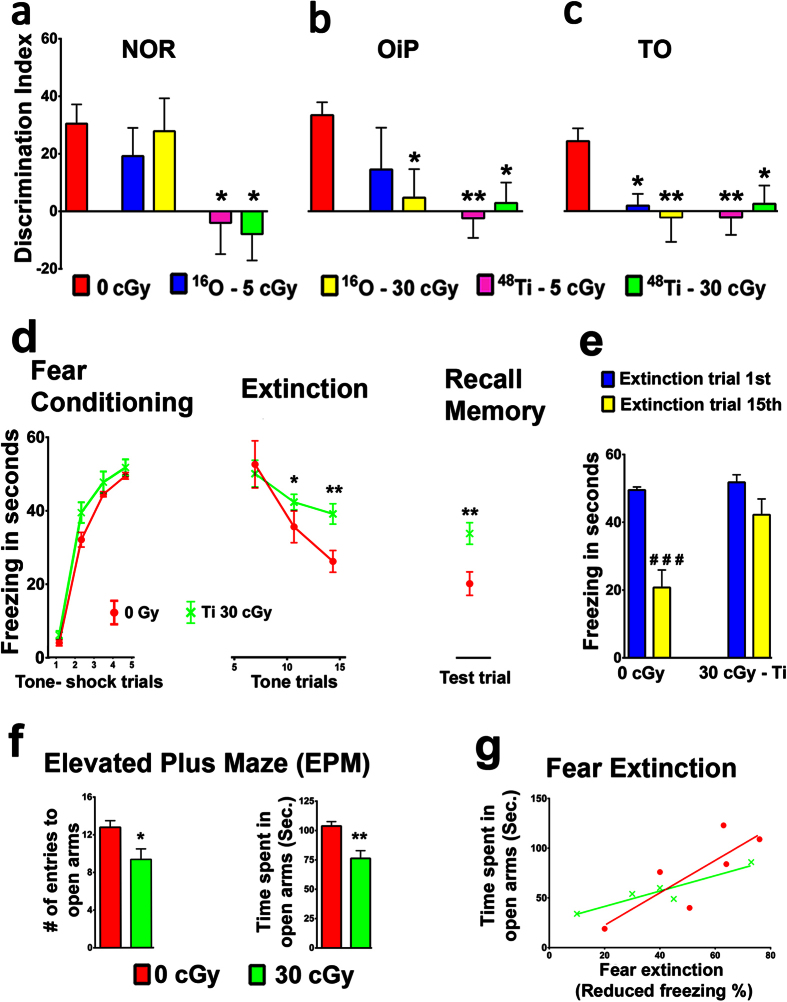
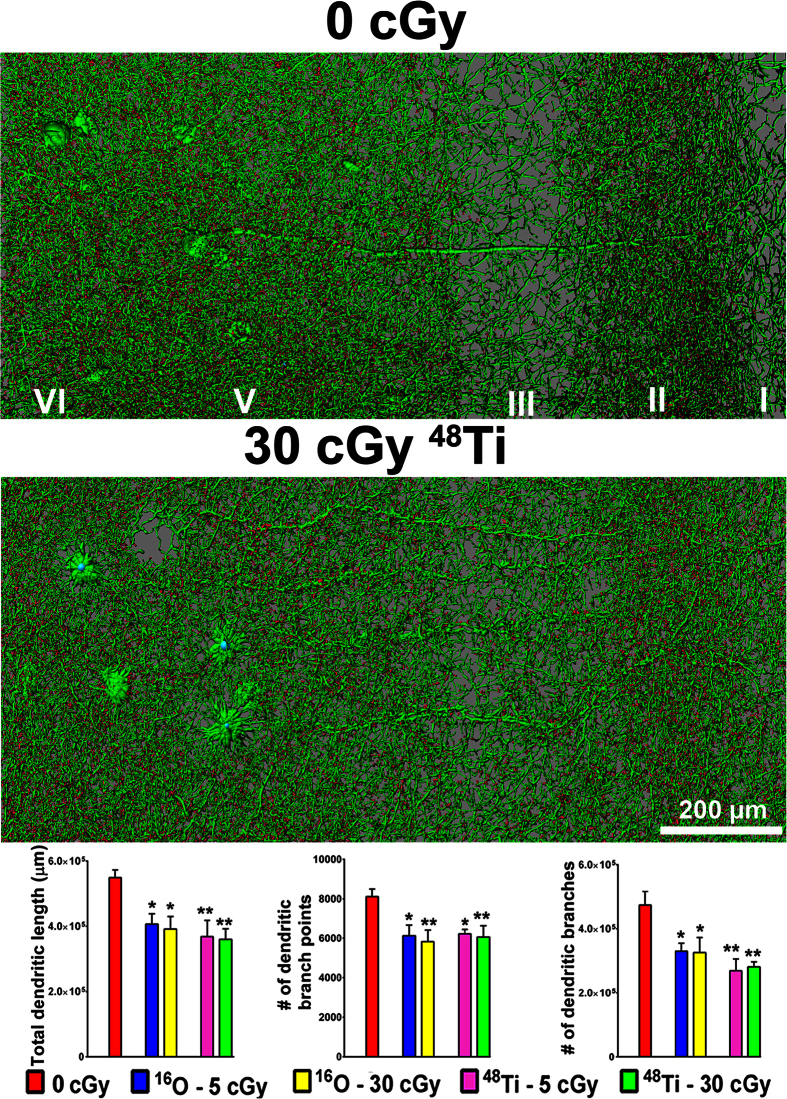
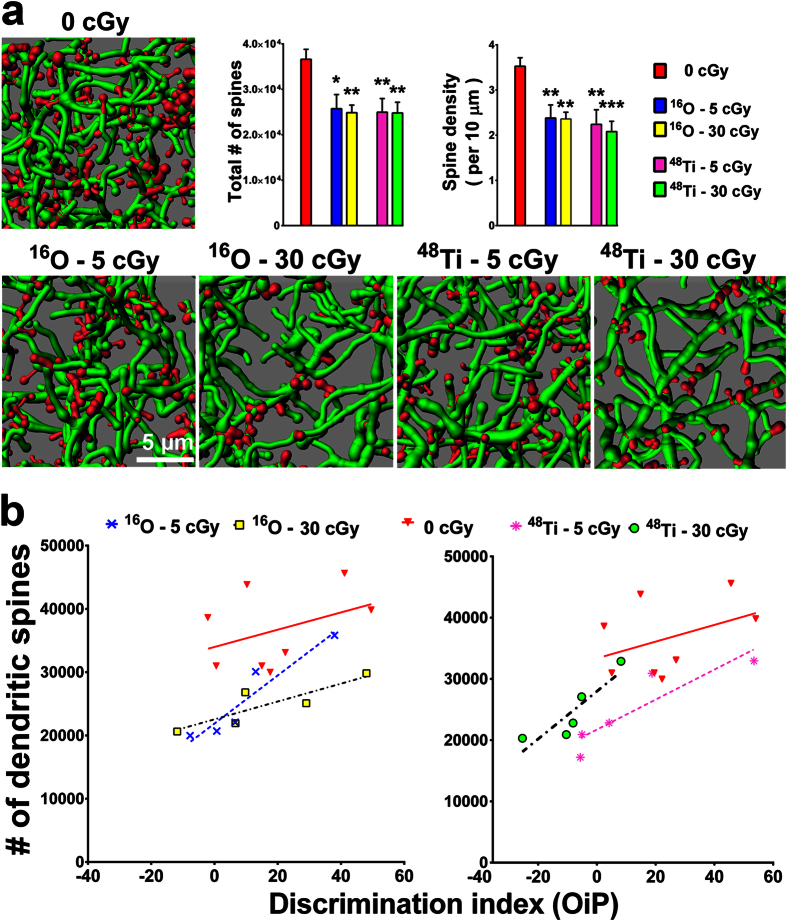
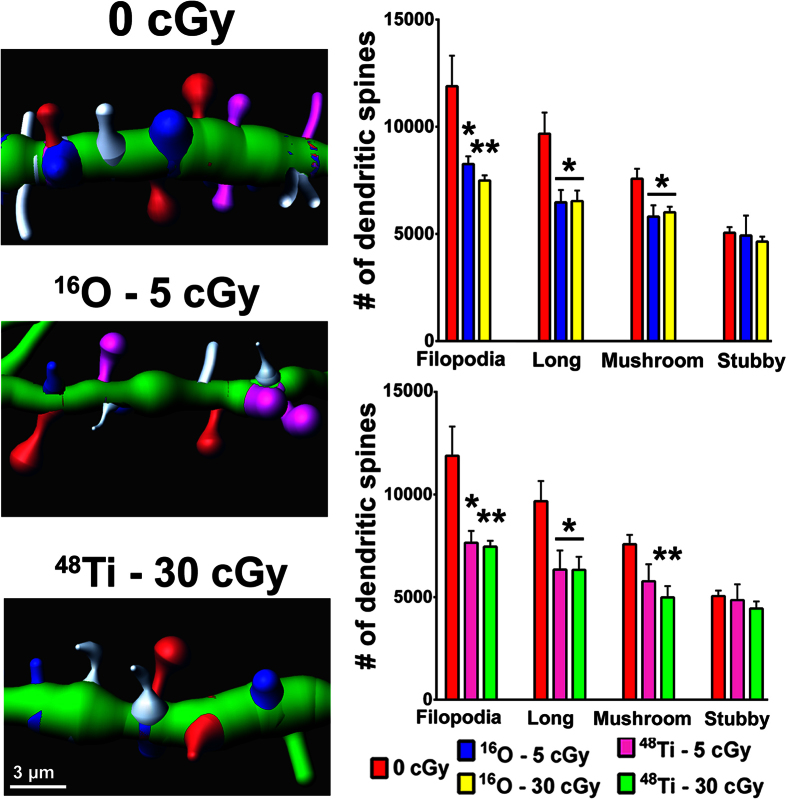
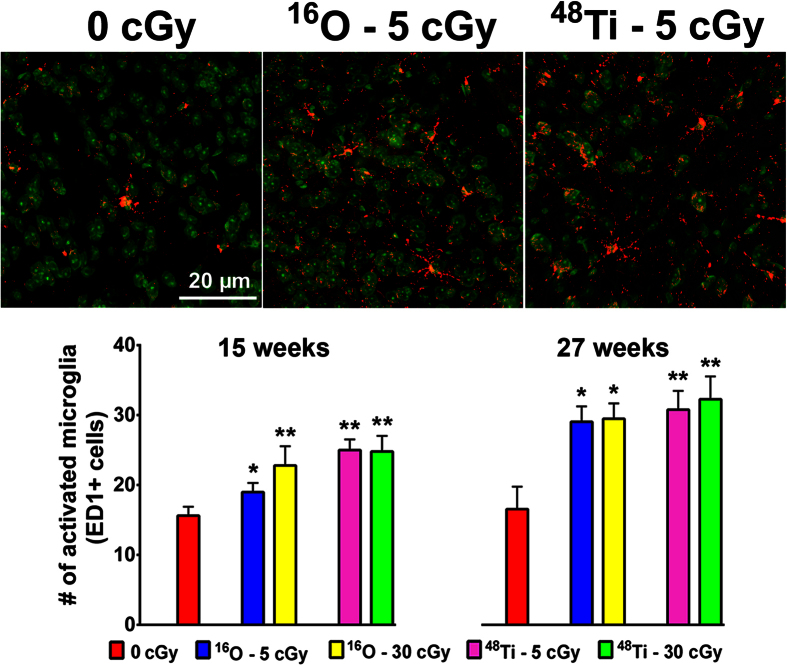
The Mars mission will result in an inevitable exposure to cosmic radiation that has been shown to cause cognitive impairments in rodent models, and possibly in astronauts engaged in deep space travel. Of particular concern is the potential for cosmic radiation exposure to compromise critical decision making during normal operations or under emergency conditions in deep space. Rodents exposed to cosmic radiation exhibit persistent hippocampal and cortical based performance decrements using six independent behavioral tasks administered between separate cohorts 12 and 24 weeks after irradiation. Radiation-induced impairments in spatial, episodic and recognition memory were temporally coincident with deficits in executive function and reduced rates of fear extinction and elevated anxiety. Irradiation caused significant reductions in dendritic complexity, spine density and altered spine morphology along medial prefrontal cortical neurons known to mediate neurotransmission interrogated by our behavioral tasks. Cosmic radiation also disrupted synaptic integrity and increased neuroinflammation that persisted more than 6 months after exposure. Behavioral deficits for individual animals correlated significantly with reduced spine density and increased synaptic puncta, providing quantitative measures of risk for developing cognitive impairment. Our data provide additional evidence that deep space travel poses a real and unique threat to the integrity of neural circuits in the brain.
Overview
The claims and statistics of this paper haven’t been checked yet.
Free: it reads the open-access text and checks the first 5 claims that cite a source we can check. Create a free account to check every claim.
Integrity signals
Registry
Cites
Statistics
Figures


Verification
Claims the paper makes
The claims and statistics of this paper haven’t been checked yet.
Free: it reads the open-access text and checks the first 5 claims that cite a source we can check. Create a free account to check every claim.
Claims other papers make about this one
Each is checked against this paper’s own text: does it say what the citing paper says it does?
The source backs part of the claim, not all of it — or backs it for a different population, condition or comparison.
In the citing paper
“Therefore, the value of a “Sievert” for cognitive risks is undefined until threshold doses and RBE's are determined (or alternative biophysical approaches to risks assessment are created), and could be greatly above 600 mSv based on several experiments reported recently (Britten et al., 2017;Cucinotta and Cacao, 2019;Parihar et al., 2016;Parihar et al., 2015;Parihar et al., 2020;Raber et al., 2016”
From A proposed change to astronaut exposures limits is a giant leap backwards for radiation protection (2021) · cites this paper as Parihar et al., 2016
Experimental — accuracy not yet measuredThe source backs part of the claim, not all of it — or backs it for a different population, condition or comparison.
In the citing paper
“The 100 mGy limit was based on earlier studies of cognitive risks, while investigators continue to document cognitive detriments at lower doses, including several studies at 50 mGy (Britten et al., 2017;Cucinotta and Cacao, 2019;Parihar et al., 2016;Parihar et al., 2015;Parihar et al., 2020;Raber et al., 2016).”
From A proposed change to astronaut exposures limits is a giant leap backwards for radiation protection (2021) · cites this paper as Parihar et al., 2016
Experimental — accuracy not yet measuredThe cited source says what the claim attributes to it.
In the citing paper
“Rodent studies conducted with HZE ions at low, mission-relevant doses and time frames show a variety of structural and functional alterations to neurons and neural circuits with associated performance deficits39–44.”
From Red risks for a journey to the red planet: The highest priority human health risks for a mission to Mars (2020) · cites this paper as [39]
Self-check
Percentages, sums and reported differences re-computed from the paper’s own numbers.
The self-check needs the paper’s full text.
Citations
Cites
Neurons in medial prefrontal cortex signal memory for fear extinction
Milad, M. R., & Quirk, G. J. (2002) · Nature · doi:10.1038/nature01138 · Cited by 1,836
The role of medial prefrontal cortex in memory and decision making
Euston, D. R., Gruber, A. J., & McNaughton, B. L. (2012) · Neuron · doi:10.1016/j.neuron.2012.12.002 · Cited by 1,541
Neural correlates, computation and behavioural impact of decision confidence
Kepecs, A., Uchida, N., Zariwala, H. A., & Mainen, Z. F. (2008) · Nature · doi:10.1038/nature07200 · Cited by 809
Radiation-induced brain injury: A review
Greene-Schloesser, D., Robbins, M. E., Peiffer, A. M., Shaw, E. G., Wheeler, K. T., & Chan, M. D. (2012) · Frontiers in Oncology · doi:10.3389/fonc.2012.00073 · Cited by 700
Barker, G. R. I., Bird, F., Alexander, V., & Warburton, E. C. (2007) · The Journal of Neuroscience · doi:10.1523/jneurosci.5289-06.2007 · Cited by 691
Measurements of energetic particle radiation in transit to Mars on the Mars Science Laboratory
Zeitlin, C., Hassler, D. M., Cucinotta, F. A., Ehresmann, B., Wimmer-Schweingruber, R. F., Brinza, D. E., Kang, S., Weigle, G., Böttcher, S., Böhm, E., et al. (2013) · Science · doi:10.1126/science.1235989 · Cited by 641
Gating of Fear in Prelimbic Cortex by Hippocampal and Amygdala Inputs
Sotres-Bayon, F., Sierra-Mercado, D., Pardilla-Delgado, E., & Quirk, G. J. (2012) · Neuron · doi:10.1016/j.neuron.2012.09.028 · Cited by 450
Microglia: actively surveying and shaping neuronal circuit structure and function
Wake, H., Moorhouse, A. J., Miyamoto, A., & Nabekura, J. (2013) · Trends in Neurosciences · doi:10.1016/j.tins.2012.11.007 · Cited by 448
The dendritic tree and brain disorders
Kulkarni, V. A., & Firestein, B. L. (2012) · Molecular and Cellular Neuroscience · doi:10.1016/j.mcn.2012.03.005 · Cited by 390
Molecular Pathways: Radiation-Induced Cognitive Impairment
Greene-Schloesser, D., Moore, E., & Robbins, M. E. (2013) · Clinical Cancer Research · doi:10.1158/1078-0432.ccr-11-2903 · Cited by 284
Space radiation risks to the central nervous system
Cucinotta, F. A., Alp, M., Sulzman, F. M., & Wang, M. (2014) · Life Sciences in Space Research · doi:10.1016/j.lssr.2014.06.003 · Cited by 262
Guidance on Radiation Received in Space Activities
Lushbaugh, C. C. (1990) · Radiation Research · doi:10.2307/3577786 · Cited by 244
Cranial irradiation compromises neuronal architecture in the hippocampus
Parihar, V. K., & Limoli, C. L. (2013) · Proceedings of the National Academy of Sciences · doi:10.1073/pnas.1307301110 · Cited by 242
Self-citationWhat happens to your brain on the way to Mars
Parihar, V. K., Allen, B., Tran, K. K., Macaraeg, T. G., Chu, E. M., Kwok, S. F., Chmielewski, N. N., Craver, B. M., Baulch, J. E., Acharya, M. M., et al. (2015) · Science Advances · doi:10.1126/sciadv.1400256 · Cited by 217
Self-citationExcitation control: balancing PSD-95 function at the synapse
Keith, D. (2008) · Frontiers in Molecular Neuroscience · doi:10.3389/neuro.02.004.2008 · Cited by 210
Space Radiation and Human Exposures, A Primer
Nelson, G. A. (2016) · Radiation Research · doi:10.1667/rr14311.1 · Cited by 184
Neurocognitive dysfunction in cancer patients.
Meyers, C. A. (2000) · PubMed · Cited by 170
Persistent changes in neuronal structure and synaptic plasticity caused by proton irradiation
Parihar, V. K., Pasha, J., Tran, K. K., Craver, B. M., Acharya, M. M., & Limoli, C. L. (2015) · Brain Structure and Function · doi:10.1007/s00429-014-0709-9 · Cited by 169
Self-citationManaging the cognitive effects of brain tumor radiation therapy
Butler, J. M., Rapp, S. R., & Shaw, E. G. (2006) · Current Treatment Options in Oncology · doi:10.1007/s11864-006-0026-5 · Cited by 166
Barker, G. R. I., & Warburton, E. C. (2015) · Cerebral Cortex · doi:10.1093/cercor/bht245 · Cited by 159
Activity-Independent Regulation of Dendrite Patterning by Postsynaptic Density Protein PSD-95
Charych, E. I., Akum, B. F., Goldberg, J. S., Jörnsten, R. J., Rongo, C., Zheng, J. Q., & Firestein, B. L. (2006) · The Journal of Neuroscience · doi:10.1523/jneurosci.2379-06.2006 · Cited by 141
Britten, R. A., Davis, L. K., Johnson, A. M., Keeney, S., Siegel, A., Sanford, L. D., Singletary, S. J., & Lonart, G. (2012) · Radiation Research · doi:10.1667/rr2637.1 · Cited by 134
Self-citationImplications of the space radiation environment for human exploration in deep space
Townsend, L. W. (2005) · Radiation Protection Dosimetry · doi:10.1093/rpd/nci141 · Cited by 131
Cranial Irradiation Alters Dendritic Spine Density and Morphology in the Hippocampus
Chakraborti, A., Allen, A., Allen, B., Rosi, S., & Fike, J. R. (2012) · PLoS ONE · doi:10.1371/journal.pone.0040844 · Cited by 119
Self-citationDavis, C. M., DeCicco-Skinner, K. L., Roma, P. G., & Hienz, R. D. (2014) · Radiation Research · doi:10.1667/rr13359.1 · Cited by 102
A Sequence of events model of episodic memory shows parallels in rats and humans
Allen, T. A., Morris, A. M., Mattfeld, A. T., Stark, C. E. L., & Fortin, N. J. (2014) · Hippocampus · doi:10.1002/hipo.22301 · Cited by 97
Britten, R. A., Davis, L. K., Jewell, J. S., Miller, V. D., Hadley, M. M., Sanford, L. D., Machida, M., & Lónárt, G. (2014) · Radiation Research · doi:10.1667/rr3766.1 · Cited by 75
Self-citationMicroglial production of TNF-alpha is a key element of sustained fear memory
Yu, Z., Fukushima, H., Ono, C., Sakai, M., Kasahara, Y., Kikuchi, Y., Gunawansa, N., Takahashi, Y., Matsuoka, H., Kida, S., et al. (2016) · Brain Behavior and Immunity · doi:10.1016/j.bbi.2016.08.011 · Cited by 75
Executive Function in Rats is Impaired by Low (20 cGy) Doses of 1 GeV/u56Fe Particles
Lonart, G., Parris, B., Johnson, A. M., Miles, S., Sanford, L. D., Singletary, S. J., & Britten, R. A. (2012) · Radiation Research · doi:10.1667/rr2862.1 · Cited by 70
Self-citationDavis, C. M., DeCicco-Skinner, K. L., & Hienz, R. D. (2015) · PLoS ONE · doi:10.1371/journal.pone.0144556 · Cited by 63
56Fe Irradiation Alters Spine Density and Dendritic Complexity in the Mouse Hippocampus
Allen, A. R., Raber, J., Chakraborti, A., Sharma, S., & Fike, J. R. (2015) · Radiation Research · doi:10.1667/rr14103.1 · Cited by 58
Plante, I., Ponomarev, A. L., & Cucinotta, F. A. (2011) · Radiation Protection Dosimetry · doi:10.1093/rpd/ncq526 · Cited by 41
Hadley, M. M., Davis, L. K., Jewell, J. S., Miller, V. D., & Britten, R. A. (2016) · Radiation Research · doi:10.1667/rr14086.1 · Cited by 35
Self-citationIrradiation of Neurons with High-Energy Charged Particles: An In Silico Modeling Approach
Alp, M., Parihar, V. K., Limoli, C. L., & Cucinotta, F. A. (2015) · PLoS Computational Biology · doi:10.1371/journal.pcbi.1004428 · Cited by 34
Self-citationPlante, I., & Cucinotta, F. A. (2009) · Radiation and Environmental Biophysics · doi:10.1007/s00411-009-0255-7 · Cited by 33
Preissmann, D., Leuba, G., Savary, C., Vernay, A., Kraftsik, R., Riederer, I. M., Schenk, F., Riederer, B. M., & Savioz, A. (2012) · Experimental Biology and Medicine · doi:10.1258/ebm.2012.012020 · Cited by 27
Raber, J., Allen, A. R., Weber, S. J., Chakraborti, A., Sharma, S., & Fike, J. R. (2016) · Behavioural Brain Research · doi:10.1016/j.bbr.2016.01.035 · Cited by 24
Cited by
Long-term neurocognitive benefits of FLASH radiotherapy driven by reduced reactive oxygen species
Montay-Gruel, P., Acharya, M. M., Petersson, K., Alikhani, L., Yakkala, C., Allen, B. D., Ollivier, J., Petit, B., Jorge, P. G., Syage, A. R., et al. (2019) · Proceedings of the National Academy of Sciences · doi:10.1073/pnas.1901777116 · Cited by 599
“Early testing (1 mo) was conducted over 2 wk and included three open-field, spontaneous exploration tasks following our previously described protocols (10, 19, 35, 47).”
BackgroundMethodSelf-citationPatel, Z. S., Brunstetter, T. J., Tarver, W. J., Whitmire, A. M., Zwart, S. R., Smith, S. M., & Huff, J. L. (2020) · npj Microgravity · doi:10.1038/s41526-020-00124-6 · Cited by 373
Space Radiation Biology for “Living in Space”
Furukawa, S., Nagamatsu, A., Nenoi, M., Fujimori, A., Kakinuma, S., Katsube, T., Wang, B., Tsuruoka, C., Shirai, T., Nakamura, A. J., et al. (2020) · BioMed Research International · doi:10.1155/2020/4703286 · Cited by 181
Parihar, V. K., Maroso, M., Syage, A., Allen, B. D., Angulo, M. C., Soltesz, I., & Limoli, C. L. (2018) · Experimental Neurology · doi:10.1016/j.expneurol.2018.03.009 · Cited by 127
“Individual animals often exhibit deficits in multiple behavioral paradigms implicating different brain regions (Britten et al. 2016b; Parihar et al. 2015a; Parihar et al. 2016), and while this is consistent with the mode of exposure, the nature of the deficits found at low dose suggest that irradiation is capable of d…”
BackgroundResultInfluentialSelf-citationFemale mice are protected from space radiation-induced maladaptive responses
Krukowski, K., Grue, K. A., Frias, E. S., Pietrykowski, J., Jones, T., Nelson, G. A., & Rosi, S. (2018) · Brain Behavior and Immunity · doi:10.1016/j.bbi.2018.08.008 · Cited by 135
“…previous reports in male rodents that have identified alterations in recognition memory following individual ion exposures with iron (Impey, 2016; Britten, 2016), helium (Krukowski et al., 2018; Rabin et al., 2015), oxygen, titanium or protons alone (Parihar, 2015; Parihar, 2016; Britten, 2017).”
BackgroundMethodInfluential
Metadata
- Authors
- Parihar, V. K., Allen, B. D., Caressi, C., Kwok, S., Chu, E., Tran, K. K., Chmielewski, N. N., Giedzinski, E., Acharya, M. M., Britten, R. A., Baulch, J. E., & Limoli, C. L.
- Affiliations
- University of California, Irvine (US)
- Eastern Virginia Medical School (US)
- Corresponding author
- Limoli, Charles L.
- ORCID
- Venue
- Scientific Reports
- Published
- 2016-10-10
- Volume
- 6
- Issue
- 1
- Pages
- 34774-34774
- ISSN
- 2045-2322 (ISSN-L)
- PMC
- PMC5056393
- OpenAlex
- W2529882214
- Cited by
- 221
- References
- 37
- Citations by year
- 2026: 11 · 2025: 17 · 2024: 27 · 2023: 26 · 2022: 28 · 2021: 37 · 2020: 23 · 2019: 21 · 2018: 23 · 2017: 8
- FWCI
- 13.94
- Type
- journal article
- Language
- en
- Open access
- gold
- doi.org
- Licence
- cc-by
- creativecommons.org/licenses/by/4.0 (tdm)
- creativecommons.org/licenses/by/4.0 (vor)
- Locations
- Scientific Reports (publishedVersion, cc-by)
- PubMed Central (publishedVersion, cc-by)
- PubMed (publishedVersion)
- eScholarship (California Digital Library) (submittedVersion)
- Funders
- National Aeronautics and Space Administration (NNX13AK70G, NAS2-03144, NNX13AD59G, NNX10AD59G, NNX15AI22G, NNX14AE73G)
- National Institutes of Health (UL1TR001414, KL2TR001416)
- National Center for Advancing Translational Sciences
- Topics
- Health Sciences › Medicine › Physiology (medical) › Spaceflight effects on biology
- Health Sciences › Medicine › Radiology, Nuclear Medicine and Imaging › Effects of Radiation Exposure
- Health Sciences › Medicine › Oncology › Cancer-related cognitive impairment studies
- Keywords
- cosmic rays, cognitive impairment, deep space travel, Mars missions, hippocampus, medial prefrontal cortex, dendritic spine density, synaptic integrity, neuroinflammation, memory impairment, executive function, fear extinction, anxiety, long-term radiation effects, astronaut health
- MeSH terms
- Disks Large Homolog 4 Protein, Animals, Behavior, Animal, Cell Count, Cosmic Radiation, Dendrites, Dose-Response Relationship, Radiation, Inflammation, Male, Mice, Transgenic, Neurons, Rats, Wistar, Prefrontal Cortex, Cognitive Dysfunction
About these checks
Registry, retraction, Cites and statistics results are computed, not judged, with one exception: a printed reference that no index lists is read once by a model before it counts as a citation error. Claims are extracted by a model and kept only when their quote appears verbatim in the text; each cited source is then checked, with a model’s help, for whether it says what the claim relies on. Those verdicts can be wrong — read the claim’s quote and the cited source before relying on one.
Statistics and arithmetic are recomputed, not judged.
Confidence bands are shown only for fields calibrated on our annotated test set. None is calibrated yet, so no band is shown.
What counts as a claim ›How we measure confidence ›How we check this ›
Are you an author, or do you see a problem with this page? Request a review
Data sources
Bibliographic data: Semantic Scholar, OpenAlex, Crossref.
Contains information from the Semantic Scholar Academic Graph Datasets, made available under the ODC Attribution License (ODC-BY 1.0).
Semantic Scholar’s data is described in: Kinney, R., et al. (2023). The Semantic Scholar Open Data Platform. arXiv:2301.10140.
