

AlphaFold accelerates artificial intelligence powered drug discovery: efficient discovery of a novel CDK20 small molecule inhibitor
Open accessThe DOI matches its Crossref record; 59 of the 59 references it cites were found in a registry or an index.
Abstract
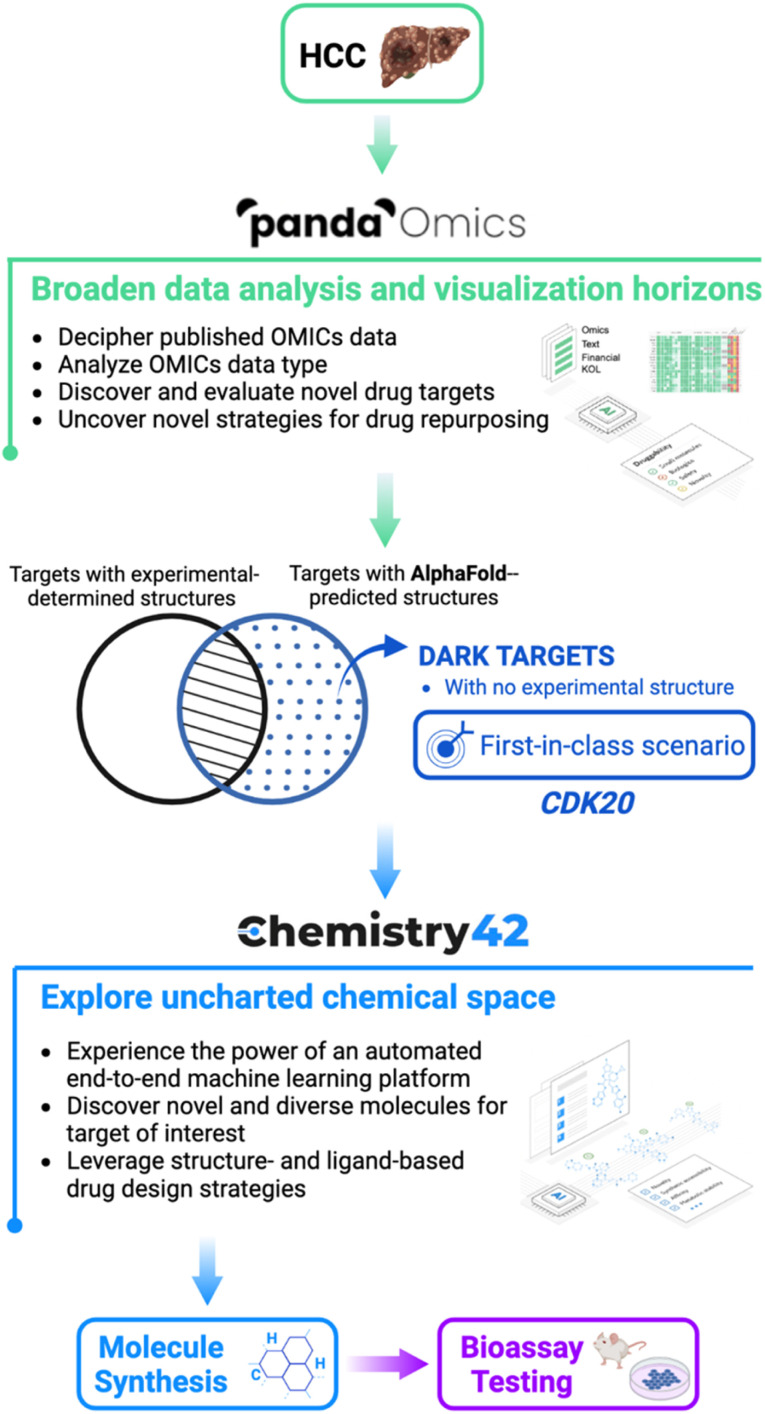
A novel CDK20 small molecule inhibitor discovered by artificial intelligence based on an AlphaFold-predicted structure demonstrates the first application of AlphaFold in hit identification for efficient drug discovery.
Overview
The claims and statistics of this paper haven’t been checked yet.
Free: it reads the open-access text and checks the first 5 claims that cite a source we can check. Create a free account to check every claim.
Integrity signals
Registry
Cites
Statistics
Figures


Verification
Claims the paper makes
The claims and statistics of this paper haven’t been checked yet.
Free: it reads the open-access text and checks the first 5 claims that cite a source we can check. Create a free account to check every claim.
Claims other papers make about this one
Each is checked against this paper’s own text: does it say what the citing paper says it does?
The check wasn’t confident either way, so it gives no verdict — never disputed.
In the citing paper
“Preclinical models of fibrosis demonstrate that inhibition or deletion of JNK has a protective effect against progression of fibrosis [141–144].”
From Emerging pharmacological options in the treatment of idiopathic pulmonary fibrosis (IPF) (2024) · cites this paper as [142]
Experimental — accuracy not yet measuredThe check wasn’t confident either way, so it gives no verdict — never disputed.
In the citing paper
“Lungs of patients with IPF have increased level of activated JNK, which do correspond to severity of fibrosis [141–144].”
From Emerging pharmacological options in the treatment of idiopathic pulmonary fibrosis (IPF) (2024) · cites this paper as [142]
Experimental — accuracy not yet measuredThe check wasn’t confident either way, so it gives no verdict — never disputed.
In the citing paper
“JNK is increased in cellular stress and leads to inflammatory gene expression and start of the fibrotic process [141–144].”
From Emerging pharmacological options in the treatment of idiopathic pulmonary fibrosis (IPF) (2024) · cites this paper as [142]
Experimental — accuracy not yet measuredIn the citing paper
“This holistic approach represents a paradigm shift toward predictive, preventive, personalized, and participatory (P4) medicine, which could transform cancer care by enabling earlier intervention and more precise therapeutic matching [99,100].”
From Artificial Intelligence in Clinical Oncology: From Productivity Enhancement to Creative Discovery (2025) · cites this paper as [100]
Self-check
Percentages, sums and reported differences re-computed from the paper’s own numbers.
The self-check needs the paper’s full text.
Citations
Cites
Sung, H., Ferlay, J., Siegel, R. L., Laversanne, M., Soerjomataram, I., Jemal, A., & Bray, F. (2021) · CA: A Cancer Journal for Clinicians · doi:10.3322/caac.21660 · Cited by 108,699
Highly accurate protein structure prediction with AlphaFold
Jumper, J., Evans, R., Pritzel, A., Green, T., Figurnov, M., Ronneberger, O., Tunyasuvunakool, K., Bates, R., Žídek, A., Potapenko, A., et al. (2021) · Nature · doi:10.1038/s41586-021-03819-2 · Cited by 43,764
Tissue-based map of the human proteome
Uhlén, M., Fagerberg, L., Hallström, B. M., Lindskog, C., Oksvold, P., Mardinoglu, A., Sivertsson, Å., Kampf, C., Sjöstedt, E., Asplund, A., et al. (2015) · Science · doi:10.1126/science.1260419 · Cited by 15,286
Varadi, M., Anyango, S., Deshpande, M., Nair, S., Natassia, C., Yordanova, G., Yuan, D., Stroe, O., Wood, G., Laydon, A., et al. (2022) · Nucleic Acids Research · doi:10.1093/nar/gkab1061 · Cited by 7,850
Accurate prediction of protein structures and interactions using a 3-track network
Baek, M., DiMaio, F., Anishchenko, I., Dauparas, J., Ovchinnikov, S., Lee, G. R., Wang, J., Cong, Q., Kinch, L. N., Schaeffer, R. D., et al. (2021) · doi:10.1101/2021.06.14.448402 · Cited by 5,549
Self-citationProtein complex prediction with AlphaFold-Multimer
Evans, R., O’Neill, M., Pritzel, A., Antropova, N., Senior, A., Green, T., Žídek, A., Bates, R., Blackwell, S., Yim, J., et al. (2021) · doi:10.1101/2021.10.04.463034 · Cited by 3,808
Deep learning enables rapid identification of potent DDR1 kinase inhibitors
Zhavoronkov, A., Ivanenkov, Y. A., Aliper, A., Veselov, M. S., Aladinskiy, V. A., Aladinskaya, A. V., Terentiev, V. A., Polykovskiy, D. A., Kuznetsov, M. D., Asadulaev, A., et al. (2019) · Nature Biotechnology · doi:10.1038/s41587-019-0224-x · Cited by 1,573
Self-citationMolecular Sets (MOSES): A Benchmarking Platform for Molecular Generation Models
Polykovskiy, D., Zhebrak, A., Sanchez-Lengeling, B., Golovanov, S., Tatanov, O., Belyaev, S., Kurbanov, R., Artamonov, A., Aladinskiy, V., Veselov, M., et al. (2020) · Frontiers in Pharmacology · doi:10.3389/fphar.2020.565644 · Cited by 849
Self-citationA Structure-Based Drug Discovery Paradigm
Batool, M., Ahmad, B., & Choi, S. (2019) · International Journal of Molecular Sciences · doi:10.3390/ijms20112783 · Cited by 744
A structural biology community assessment of AlphaFold2 applications
Akdel, M., Pires, D. E. V., Pardo, E. P., Jänes, J., Zalevsky, A. O., Mészáros, B., Bryant, P., Good, L. L., Laskowski, R. A., Pozzati, G., et al. (2022) · Nature Structural & Molecular Biology · doi:10.1038/s41594-022-00849-w · Cited by 675
Self-citation
Research works printed but not linked: 5
- Lin, 2021, Life, 11
- UniProt , UniProt Database , 2022 , https://www.uniprot.org/
- Science's 2021 Breakthrough of the Year: AI brings protein structures to all , https://www.science.org/content/article/breakthrough-2021 , 2022
- Zhavoronkov, 2022, Bioengineering
- M.Kuznetsov and D.Polykovskiy , Proceedings of the AAAI Conference on Artificial Intelligence , 2021 , vol. 35 , pp. 8226–8234
Cited by
Computational approaches streamlining drug discovery
Sadybekov, A. V., & Katritch, V. (2023) · Nature · doi:10.1038/s41586-023-05905-z · Cited by 1,279
Self-Driving Laboratories for Chemistry and Materials Science
Tom, G., Schmid, S. P., Baird, S. G., Cao, Y., Darvish, K., Hao, H., Lo, S., Pablo-García, S., Rajaonson, E. M., Skreta, M., et al. (2024) · Chemical Reviews · doi:10.1021/acs.chemrev.4c00055 · Cited by 707
Self-citationAlphaFold2 and its applications in the fields of biology and medicine
Yang, Z., Zeng, X., Zhao, Y., & Chen, R. (2023) · Signal Transduction and Targeted Therapy · doi:10.1038/s41392-023-01381-z · Cited by 577
Precision treatment in advanced hepatocellular carcinoma
Yang, X., Yang, C., Zhang, S., Geng, H., Zhu, A. X., Bernards, R., Qin, W., Fan, J., Wang, C., & Gao, Q. (2024) · Cancer Cell · doi:10.1016/j.ccell.2024.01.007 · Cited by 429
A small-molecule TNIK inhibitor targets fibrosis in preclinical and clinical models
Ren, F., Aliper, A., Chen, J., Zhao, H., Rao, S., Kuppe, C., Ozerov, I. V., Zhang, M., Witte, K., Kruse, C., et al. (2025) · Nature Biotechnology · doi:10.1038/s41587-024-02143-0 · Cited by 348
“40,41,75–77) to discover the lead inhibitory compounds targeting this kinase.”
Self-citationAI-powered therapeutic target discovery
Pun, F. W., Ozerov, I. V., & Zhavoronkov, A. (2023) · Trends in Pharmacological Sciences · doi:10.1016/j.tips.2023.06.010 · Cited by 341
Self-citationTransforming Cardiovascular Care With Artificial Intelligence: From Discovery to Practice
Khera, R., Oikonomou, E. K., Nadkarni, G. N., Morley, J. R., Wiens, J., Butte, A. J., & Topol, E. J. (2024) · Journal of the American College of Cardiology · doi:10.1016/j.jacc.2024.05.003 · Cited by 264
Chemistry42: An AI-Driven Platform for Molecular Design and Optimization
Ivanenkov, Y. A., Polykovskiy, D., Bezrukov, D., Zagribelnyy, B., Aladinskiy, V., Kamya, P., Aliper, A., Ren, F., & Zhavoronkov, A. (2023) · Journal of Chemical Information and Modeling · doi:10.1021/acs.jcim.2c01191 · Cited by 231
Self-citationMachine learning in preclinical drug discovery
Catacutan, D. B., Alexander, J., Arnold, A., & Stokes, J. M. (2024) · Nature Chemical Biology · doi:10.1038/s41589-024-01679-1 · Cited by 204
Gangwal, A., Ansari, A., Ahmad, I., Azad, A. K., Kumarasamy, V., Subramaniyan, V., & Wong, L. S. (2024) · Frontiers in Pharmacology · doi:10.3389/fphar.2024.1331062 · Cited by 189
Machine learning-aided generative molecular design
Du, Y., Jamasb, A. R., Guo, J., Fu, T., Harris, C., Wang, Y., Duan, C., Liò, P., Schwaller, P., & Blundell, T. L. (2024) · Nature Machine Intelligence · doi:10.1038/s42256-024-00843-5 · Cited by 169
PandaOmics: An AI-Driven Platform for Therapeutic Target and Biomarker Discovery
Kamya, P. R. N., Ozerov, I. V., Pun, F. W., Tretina, K., Fokina, T., Chen, S., Naumov, V., Long, X., Lin, S., Korzinkin, M., et al. (2024) · Journal of Chemical Information and Modeling · doi:10.1021/acs.jcim.3c01619 · Cited by 165
Self-citationTheranostics and artificial intelligence: new frontiers in personalized medicine
Bilgin, G. B., Bilgin, C., Burkett, B. J., Orme, J. J., Childs, D. S., Thorpe, M. P., Halfdanarson, T. R., Johnson, G. B., Kendi, A. T., & Sartor, O. A. (2024) · Theranostics · doi:10.7150/thno.94788 · Cited by 165
AI is a viable alternative to high throughput screening: a 318-target study
Program, T. A. A., Wallach, I., Bernard, D., Nguyen, K. T., Ho, G., Morrison, A., Stecuła, A., Rosnik, A. M., O’Sullivan, A. M., Davtyan, A., et al. (2024) · Scientific Reports · doi:10.1038/s41598-024-54655-z · Cited by 149
Benchmarking Refined and Unrefined AlphaFold2 Structures for Hit Discovery
(2023) · doi:10.1021/acs.jcim.2c01219 · Cited by 136
A generative deep learning approach to de novo antibiotic design
Krishnan, A., Anahtar, M. N., Valeri, J. A., Jin, W., Donghia, N. M., Sieben, L., Luttens, A., Zhang, Y., Modaresi, S. M., Hennes, A. D., et al. (2025) · Cell · doi:10.1016/j.cell.2025.07.033 · Cited by 140
AI empowering traditional Chinese medicine?
Song, Z., Chen, G., & Chen, C. Y. (2024) · Chemical Science · doi:10.1039/d4sc04107k · Cited by 142
Quantum-computing-enhanced algorithm unveils potential KRAS inhibitors
Vakili, M. G., Gorgulla, C., Snider, J. D., Nigam, A., Bezrukov, D. S., Varoli, D., Aliper, A., Polykovskiy, D. A., Das, K. M., Cox, H., et al. (2025) · Nature Biotechnology · doi:10.1038/s41587-024-02526-3 · Cited by 141
Self-citationLarge language models for drug discovery and development
Zheng, Y., Koh, H. Y., Ju, J., Yang, M., May, L. T., Webb, G. I., Li, L., Pan, S., & Church, G. M. (2025) · Patterns · doi:10.1016/j.patter.2025.101346 · Cited by 133
Generative artificial intelligence in medicine
Teo, Z. L., Thirunavukarasu, A. J., Elangovan, K., Cheng, H., Moova, P., Soetikno, B., Nielsen, C., Pollreisz, A., Ting, D. S. J., Morris, R. J. T., et al. (2025) · Nature Medicine · doi:10.1038/s41591-025-03983-2 · Cited by 119
da Silva, R. G. L. (2024) · Globalization and Health · doi:10.1186/s12992-024-01049-5 · Cited by 136
A practical guide to machine-learning scoring for structure-based virtual screening
Tran‐Nguyen, V., Junaid, M., Simeon, S., & Ballester, P. J. (2023) · Nature Protocols · doi:10.1038/s41596-023-00885-w · Cited by 114
Qiu, X., Li, H., Steeg, G. V., & Godzik, A. (2024) · Biomolecules · doi:10.3390/biom14030339 · Cited by 104
He, X., Li, J. X., Shen, S.-Y., & Xu, H. E. (2024) · Acta Pharmacologica Sinica · doi:10.1038/s41401-024-01429-y · Cited by 105
A Survey of Generative AI Applications
Gozalo-Brizuela, R., & Merchan, E. E. G. (2024) · Journal of Computer Science · doi:10.3844/jcssp.2024.801.818 · Cited by 101
Quantum computing for near-term applications in generative chemistry and drug discovery.
Pyrkov, A., Aliper, A., Bezrukov, D., Lin, Y.-C., Polykovskiy, D., Kamya, P., Ren, F., & Zhavoronkov, A. (2023) · Drug Discovery Today · doi:10.1016/j.drudis.2023.103675 · Cited by 100
Self-citationDas, U. (2025) · Medicine in Drug Discovery · doi:10.1016/j.medidd.2025.100213 · Cited by 103
Impact of AlphaFold on structure prediction of protein complexes: The CASP15‐CAPRI experiment
Lensink, M. F., Brysbaert, G., RAOURAOUA, N., Bates, P. A., Giulini, M., Honorato, R. V., van Noort, C. W., Teixeira, J. M. C., Bonvin, A. M. J. J., Kong, R., et al. (2023) · Proteins Structure Function and Bioinformatics · doi:10.1002/prot.26609 · Cited by 92
Self-citationApplication of Artificial Intelligence In Drug-target Interactions Prediction: A Review
Liao, Q., Zhang, Y., Chu, Y., Ding, Y., Liu, Z., Zhao, X., Wang, Y., Wan, J., Ding, Y., Tiwari, P., et al. (2025) · npj Biomedical Innovations · doi:10.1038/s44385-024-00003-9 · Cited by 82
Targeting PI3K/AKT/mTOR signaling to overcome drug resistance in cancer
Tufail, M., Wan, W., Jiang, C., & Li, N. (2024) · Chemico-Biological Interactions · doi:10.1016/j.cbi.2024.111055 · Cited by 81
Zebrafish as a Useful Model System for Human Liver Disease
Shimizu, N., Shiraishi, H., & Hanada, T. (2023) · Cells · doi:10.3390/cells12182246 · Cited by 77
Enhancing head and neck tumor management with artificial intelligence: Integration and perspectives
Zhong, N., Wang, H., Huang, X., Li, Z., Cao, L., Huo, F., Liu, B., & Bu, L. (2023) · Seminars in Cancer Biology · doi:10.1016/j.semcancer.2023.07.002 · Cited by 87
Artificial Intelligence in Clinical Oncology: From Data to Digital Pathology and Treatment
Kumar, K. S., Miskovic, V., Blasiak, A., Sundar, R., Pedrocchi, A., Pearson, A. T., Prelaj, A., & Ho, D. (2023) · American Society of Clinical Oncology Educational Book · doi:10.1200/edbk_390084 · Cited by 81
AlphaFold 3: an unprecedent opportunity for fundamental research and drug development
Fang, Z., Ran, H., Zhang, Y., Chen, C., Ping, L., Zhang, X., & Wu, M. (2025) · Precision Clinical Medicine · doi:10.1093/pcmedi/pbaf015 · Cited by 75
Accelerating drug target inhibitor discovery with a deep generative foundation model
Chenthamarakshan, V., Hoffman, S. C., Owen, C. D., Lukacik, P., Strain-Damerell, C. M., Fearon, D., Malla, T. R., Tumber, A., Schofield, C. J., Duyvesteyn, H. M. E., et al. (2023) · Science Advances · doi:10.1126/sciadv.adg7865 · Cited by 78
Wellawatte, G. P., & Schwaller, P. (2025) · Communications Chemistry · doi:10.1038/s42004-024-01393-y · Cited by 74
Artificial intelligence in cancer: applications, challenges, and future perspectives
Cheng, H., & Shi, S.-S. (2025) · Molecular Cancer · doi:10.1186/s12943-025-02450-3 · Cited by 76
Artificial Intelligence in Chemistry Research─Implications for Teaching and Learning
Berber, S., Brückner, M., Maurer, N., & Huwer, J. (2025) · Journal of Chemical Education · doi:10.1021/acs.jchemed.4c01033 · Cited by 63
From understanding diseases to drug design: can artificial intelligence bridge the gap?
Pushkaran, A. C., & Arabi, A. A. (2024) · Artificial Intelligence Review · doi:10.1007/s10462-024-10714-5 · Cited by 72
Role of artificial intelligence in cancer drug discovery and development
Sarvepalli, S., & Vadarevu, S. (2025) · Cancer Letters · doi:10.1016/j.canlet.2025.217821 · Cited by 68
Sample efficient reinforcement learning with active learning for molecular design
Dodds, M., Guo, J., Löhr, T., Tibo, A., Engkvist, O., & Janet, J. P. (2024) · Chemical Science · doi:10.1039/d3sc04653b · Cited by 69
The Hitchhiker’s Guide to Deep Learning Driven Generative Chemistry
Ivanenkov, Y. A., Zagribelnyy, B. A., Малышев, А. В., Evteev, S. A., Terentiev, V. A., Kamya, P. R. N., Bezrukov, D. S., Aliper, A., Ren, F., & Zhavoronkov, A. A. (2023) · ACS Medicinal Chemistry Letters · doi:10.1021/acsmedchemlett.3c00041 · Cited by 61
Self-citationGenerative Deep Learning for de Novo Drug Design─A Chemical Space Odyssey
Özçelik, R., Brinkmann, H., Criscuolo, E., & Grisoni, F. (2025) · Journal of Chemical Information and Modeling · doi:10.1021/acs.jcim.5c00641 · Cited by 71
Lakioti, E., Pagonis, N., Flegkas, D., Itziou, A., Moustakas, K. G., & Karayannis, V. (2025) · Sustainability · doi:10.3390/su17115063 · Cited by 56
Modeling protein–ligand interactions for drug discovery in the era of deep learning
Wang, Y., Li, Y., Chen, J., & Lai, L. (2025) · Chemical Society Reviews · doi:10.1039/d5cs00415b · Cited by 53
Biomolecular NMR spectroscopy in the era of artificial intelligence
Shukla, V. K., Heller, G. T., & Hansen, D. F. (2023) · Structure · doi:10.1016/j.str.2023.09.011 · Cited by 52
Ma, B., Liu, D., Wang, Z., Zhang, D., Jian, Y., Zhang, K., Zhou, T., Gao, Y., Fan, Y., Ma, J., et al. (2024) · Journal of Medicinal Chemistry · doi:10.1021/acs.jmedchem.4c00828 · Cited by 53
Artificial intelligence for small molecule anticancer drug discovery
Duo, L., Liu, Y., Ren, J., Tang, B., & Hirst, J. D. (2024) · Expert Opinion on Drug Discovery · doi:10.1080/17460441.2024.2367014 · Cited by 56
Self-citationAmbreen, S., Umar, M., Noor, A., Jain, H., & Ali, R. (2024) · European Journal of Medicinal Chemistry · doi:10.1016/j.ejmech.2024.117164 · Cited by 53
AI-Driven Drug Discovery for Rare Diseases
Gangwal, A., & Lavecchia, A. (2024) · Journal of Chemical Information and Modeling · doi:10.1021/acs.jcim.4c01966 · Cited by 50
Structure-Based Drug Design with a Deep Hierarchical Generative Model
Weller, J. A., & Rohs, R. (2024) · Journal of Chemical Information and Modeling · doi:10.1021/acs.jcim.4c01193 · Cited by 47
Artificial Intelligence-Based Methods for Drug Repurposing and Development in Cancer
Herráiz-Gil, S., Nygren-Jiménez, E., Acosta-Alonso, D. N., León, C., & Guerrero‐Aspizua, S. (2025) · Applied Sciences · doi:10.3390/app15052798 · Cited by 50
Leading artificial intelligence–driven drug discovery platforms: 2025 landscape and global outlook
Dharmasivam, M., Kaya, B., Akinware, A., Azad, M. G., & Richardson, D. R. (2025) · Pharmacological Reviews · doi:10.1016/j.pharmr.2025.100102 · Cited by 51
Future directions in regulatory affairs
Chisholm, O., & Critchley, H. (2023) · Frontiers in Medicine · doi:10.3389/fmed.2022.1082384 · Cited by 54
QSARtuna: An Automated QSAR Modeling Platform for Molecular Property Prediction in Drug Design
Mervin, L., Voronov, A., Kabeshov, M., & Engkvist, O. (2024) · Journal of Chemical Information and Modeling · doi:10.1021/acs.jcim.4c00457 · Cited by 48
Recent Advances and Challenges in Protein Structure Prediction
Peng, C., Liang, F., Xia, Y., Zhao, K., Hou, M., & Zhang, G. (2023) · Journal of Chemical Information and Modeling · doi:10.1021/acs.jcim.3c01324 · Cited by 47
AlphaFold and Protein Folding: Not Dead Yet! The Frontier Is Conformational Ensembles
Bowman, G. R. (2024) · Annual Review of Biomedical Data Science · doi:10.1146/annurev-biodatasci-102423-011435 · Cited by 47
Buller, R., Damborský, J., Hilvert, D., & Bornscheuer, U. T. (2024) · Angewandte Chemie International Edition · doi:10.1002/anie.202421686 · Cited by 46
Accelerating discovery of bioactive ligands with pharmacophore-informed generative models
Xie, W., Zhang, J., Xie, Q., Gong, C., Ren, Y., Xie, J. H., Sun, Q., Xu, Y., Lai, L., & Pei, J. (2025) · Nature Communications · doi:10.1038/s41467-025-56349-0 · Cited by 52
Applications of Artificial Intelligence in Biotech Drug Discovery and Product Development
Liu, Y., Zhang, L., Jiang, Z., Tian, X., Li, P., Wu, P., Du, W., Yuan, B., Xie, C., Bu, G., et al. (2025) · MedComm · doi:10.1002/mco2.70317 · Cited by 50
Self-citationArtificial intelligence in small molecule drug discovery from 2018 to 2023: Does it really work?
Lv, Q., Zhou, F., Liu, X., & Zhi, L. (2023) · Bioorganic Chemistry · doi:10.1016/j.bioorg.2023.106894 · Cited by 47
A novel, covalent broad-spectrum inhibitor targeting human coronavirus Mpro
Sun, J., Sun, D., Yang, Q., Wang, D., Peng, J., Guo, H., Ding, X., Zhao, C., Yuan, B., Ivanenkov, Y. A., et al. (2025) · Nature Communications · doi:10.1038/s41467-025-59870-4 · Cited by 44
Self-citationWang, Y., Wang, C., Liu, T., Qi, H., Chen, S., Cai, X., Zhang, M., Aliper, A., Ren, F., Ding, X., et al. (2023) · Journal of Medicinal Chemistry · doi:10.1021/acs.jmedchem.3c01476 · Cited by 39
Self-citationAranganathan, A., Gu, X., Wang, D., Vani, B. P., & Tiwary, P. (2025) · Current Opinion in Structural Biology · doi:10.1016/j.sbi.2025.103000 · Cited by 52
Analysing protein complexes in plant science: insights and limitation with AlphaFold 3
Lin, P.-Y., Huang, S.-C., Chen, K.-L., Huang, Y., Liao, C.-Y., Lin, G.-J., Lee, H., & Chen, P. (2025) · Botanical studies · doi:10.1186/s40529-025-00462-2 · Cited by 41
Challenges in bridging the gap between protein structure prediction and functional interpretation
Varadi, M., Tsenkov, M., & Velankar, S. (2025) · Proteins: Structure, Function, and Bioinformatics · doi:10.1002/prot.26614 · Cited by 36
O’Connor, O., & McVeigh, T. P. (2025) · BJC Reports · doi:10.1038/s44276-025-00135-4 · Cited by 44
Sestak, F., Schneckenreiter, L., Brandstetter, J., Hochreiter, S., Mayr, A., & Klambauer, G. (2025) · Journal of Cheminformatics · doi:10.1186/s13321-025-01127-9 · Cited by 43
Endowing protein language models with structural knowledge
Hartout, P., Chen, D., Pellizzoni, P., Oliver, C., & Borgwardt, K. M. (2025) · Bioinformatics · doi:10.1093/bioinformatics/btaf582 · Cited by 43
Advancing structural biology through breakthroughs in AI
Aithani, L., Alcaide, E., Bartunov, S., Cooper, C. D. O., Dore, A. S., Lane, T. J., Maclean, F., Rucktooa, P., Shaw, R. A., & Skerratt, S. E. (2023) · Current Opinion in Structural Biology · doi:10.1016/j.sbi.2023.102601 · Cited by 36
Reinforced Genetic Algorithm for Structure-Based Drug Design
Fu, T., Gao, W., Coley, C. W., & Sun, J. (2022) · neural information processing systems · doi:10.52202/068431-0895 · Cited by 110
Emerging frontiers in protein structure prediction following the AlphaFold revolution
Rennie, M. L., & Oliver, M. R. (2025) · Journal of The Royal Society Interface · doi:10.1098/rsif.2024.0886 · Cited by 38
Are fibrinaloid microclots a cause of autoimmunity in Long Covid and other post-infection diseases?
Kell, D. B., & Pretorius, E. (2023) · Biochemical Journal · doi:10.1042/bcj20230241 · Cited by 34
Empowering AlphaFold2 for protein conformation selective drug discovery with AlphaFold2-RAVE
Gu, X., Aranganathan, A., & Tiwary, P. (2024) · eLife · doi:10.7554/elife.99702.3 · Cited by 33
Progress of AI-Driven Drug–Target Interaction Prediction and Lead Optimization
Wang, Q., Sun, B., Yi, Y., Velkov, T., Shen, J., Dai, C., & Jiang, H. (2025) · International Journal of Molecular Sciences · doi:10.3390/ijms262010037 · Cited by 38
Baselious, F., Hilscher, S., Robaa, D., Barinka, C., Schutkowski, M., & Sippl, W. (2024) · International Journal of Molecular Sciences · doi:10.3390/ijms25021358 · Cited by 32
“In a recent study by Ren et al. [35], AI-driven molecular generation was combined with utilization of the AlphaFold model for the aim of drug discovery for cyclin-dependent kinase 20 (CDK20).”
Gupta, U. C., Pranav, A., Kohli, A., Ghosh, S., & Singh, D. (2024) · Microorganisms for sustainability · doi:10.1007/978-981-99-9621-6_1 · Cited by 42
Augmented Memory: Sample-Efficient Generative Molecular Design with Reinforcement Learning
Guo, J., & Schwaller, P. (2024) · JACS Au · doi:10.1021/jacsau.4c00066 · Cited by 56
Wilczok, D. (2025) · Aging · doi:10.18632/aging.206190 · Cited by 39
Zhu, W., Liu, X., Li, Q., Gao, F., Liu, T., Chen, X., Zhang, M., Aliper, A., Ren, F., Ding, X., et al. (2023) · Bioorganic & Medicinal Chemistry · doi:10.1016/j.bmc.2023.117414 · Cited by 32
Self-citationGoel, I., Bhaskar, Y., Kumar, N., Singh, S., Amanullah, M., Dhar, R., & Karmakar, S. (2025) · Frontiers in Digital Health · doi:10.3389/fdgth.2025.1550407 · Cited by 31
Target identification and assessment in the era of AI
Pun, F. W., Podolskiy, D. I., Izumchenko, E., Mortlock, A. A., Oprea, T. I., Scheibye‐Knudsen, M., Fortney, K., Morgen, E. K., Ren, F., & Zhavoronkov, A. A. (2026) · Nature Reviews Drug Discovery · doi:10.1038/s41573-026-01412-8 · Cited by 40
Self-citationMontoya, J. H., Grimley, C. A., Aykol, M., Ophus, C., Sternlicht, H., Savitzky, B. H., Minor, A. M., Torrisi, S. B., Goedjen, J., Chung, C., et al. (2024) · Chemical Science · doi:10.1039/d3sc04823c · Cited by 35
Peng, J., Ding, X., Chen, C. X., Zhao, P., Ding, X., Zhang, M., Aliper, A. M., Ren, F., Lu, H., & Zhavoronkov, A. A. (2024) · Journal of Medicinal Chemistry · doi:10.1021/acs.jmedchem.4c02421 · Cited by 29
Self-citationArtificial Intelligence-Driven de Novo Design of Robust Enzymes to Enhance Their Performance
Tang, M., Ge, F., Li, A., Hu, L., Wang, C., Tang, J., Song, X., Liu, X., Shi, H. S., & Tan, Z. (2025) · ACS Synthetic Biology · doi:10.1021/acssynbio.5c00452 · Cited by 30
Chigozie, V. U., Ugochukwu, C. G., Igboji, K. O., & Okoye, F. B. (2025) · BMC Artificial Intelligence · doi:10.1186/s44398-025-00004-7 · Cited by 30
Nandi, S., Bhaduri, S., Das, D., Ghosh, P., Mandal, M., & Mitra, P. (2024) · Molecular Pharmaceutics · doi:10.1021/acs.molpharmaceut.3c01161 · Cited by 32
Digital Alchemy: The Rise of Machine and Deep Learning in Small-Molecule Drug Discovery
Manan, A., Baek, E., Ilyas, S., & Lee, D. (2025) · International Journal of Molecular Sciences · doi:10.3390/ijms26146807 · Cited by 32
AI-Driven Decision-Making Applications in Pharmaceutical Sciences
Yingngam, B., Navabhatra, A., & Sillapapibool, P. (2024) · Advances in media, entertainment and the arts (AMEA) book series · doi:10.4018/979-8-3693-0639-0.ch001 · Cited by 39
Reliability of AlphaFold2 Models in Virtual Drug Screening: A Focus on Selected Class A GPCRs
Alhumaid, N. K., & Tawfik, E. A. (2024) · International Journal of Molecular Sciences · doi:10.3390/ijms251810139 · Cited by 31
AlphaFold and what is next: bridging functional, systems and structural biology
Szczepski, K., & Jaremko, Ł. (2025) · Expert Review of Proteomics · doi:10.1080/14789450.2025.2456046 · Cited by 28
Artificial intelligence in molecular de novo design: Integration with experiment
Janet, J. P., Mervin, L., & Engkvist, O. (2023) · Current Opinion in Structural Biology · doi:10.1016/j.sbi.2023.102575 · Cited by 26
Leveraging AI-Enabled Information Systems for Healthcare Management
Amiri, Z. (2024) · Journal of Computer Information Systems · doi:10.1080/08874417.2024.2414216 · Cited by 25
Explainability and human intervention in autonomous scanning probe microscopy
Liu, Y., Ziatdinov, M. A., Vasudevan, R. K., & Kalinin, S. V. (2023) · Patterns · doi:10.1016/j.patter.2023.100858 · Cited by 24
Self-citationInnovating cancer drug discovery with refined phenotypic screens
Wang, Z., Hulíková, A., & Swietach, P. (2024) · Trends in Pharmacological Sciences · doi:10.1016/j.tips.2024.06.001 · Cited by 25
DrugDiff: small molecule diffusion model with flexible guidance towards molecular properties
Oestreich, M., Merdivan, E., Lee, M., Schultze, J. L., Piraud, M., & Becker, M. (2025) · Journal of Cheminformatics · doi:10.1186/s13321-025-00965-x · Cited by 28
Artificial intelligence for radiopharmaceutical and molecular imaging
Tao, J., Liang, L., Hao, S., Chen, Y., Yang, Z., Cai, Y., & Zhu, H. (2025) · Acta Pharmaceutica Sinica B · doi:10.1016/j.apsb.2025.09.039 · Cited by 25
Huwer, J., Thyssen, C., Becker, S., von Kotzebue, L., Finger, A., Kremser, E., Berber, S., Brückner, M., Maurer, N., Bruckermann, T., et al. (2025) · Computers and Education Open · doi:10.1016/j.caeo.2025.100303 · Cited by 24
Mkrtchyan, G. V., Veviorskiy, A., Izumchenko, E., Shneyderman, A., Pun, F. W., Ozerov, I. V., Aliper, A., Zhavoronkov, A. A., & Scheibye‐Knudsen, M. (2022) · Cell Death and Disease · doi:10.1038/s41419-022-05437-w · Cited by 23
Self-citationArtificial intelligence in tumor drug resistance: Mechanisms and treatment prospects
Gu, J., Zhang, J., Zeng, S., Zhang, W., Xia, R., Wang, X., Zhou, Q., Guo, S., Wang, H., & Chen, Z.-S. (2025) · Intelligent Oncology · doi:10.1016/j.intonc.2025.02.001 · Cited by 26
Metadata
- Authors
- Ren, F., Ding, X., Zheng, M., Korzinkin, M., Cai, X., Zhu, W., Mantsyzov, A., Aliper, A., Aladinskiy, V., Cao, Z., Kong, S., Long, X., Man Liu, B. H., Liu, Y., Naumov, V., Shneyderman, A., Ozerov, I. V., Wang, J., Pun, F. W., Polykovskiy, D. A., Sun, C., Levitt, M., Aspuru-Guzik, A., & Zhavoronkov, A.
- Affiliations
- Insilico Medicine Shanghai Ltd, Suite 901, Tower C, Changtai Plaza, 2889 Jinke Road. Pudong New District, Shanghai 201203, China
- Insilico Medicine Kong Kong Ltd, Unit 310, 3/F, Building 8W, Phase 2, Hong Kong Science Park, Pak Shek Kok, Hong Kong, China
- Canadian Institute for Advanced Research (CA)
- Stanford University (US)
- Department of Chemistry, Department of Computer Science, University of Toronto, Vector Institute for Artificial Intelligence, Canadian Institute for Advanced Research, Toronto, Ontario, Canada
- Corresponding author
- Zhavoronkov, Alex
- ORCID
- Venue
- Chemical Science
- Publisher
- Royal Society of Chemistry (RSC)
- Published
- 2023
- Volume
- 14
- Issue
- 6
- Pages
- 1443-1452
- ISSN
- 2041-6520 (ISSN-L)
- 2041-6539
- PMC
- PMC9906638
- OpenAlex
- W4313880353
- Cited by
- 365
- References
- 57
- Citations by year
- 2026: 93 · 2025: 118 · 2024: 97 · 2023: 55
- FWCI
- 51.96
- Type
- journal article
- Language
- en
- Open access
- diamond
- doi.org
- Licence
- Locations
- Chemical Science (publishedVersion, cc-by)
- PubMed Central (publishedVersion, cc-by)
- PubMed (publishedVersion)
- Funders
- National Institute of General Medical Sciences (R35GM122543)
- Topics
- Life Sciences › Pharmacology, Toxicology and Pharmaceutics › Drug Discovery › Computational Drug Discovery Methods
- Life Sciences › Biochemistry, Genetics and Molecular Biology › Molecular Biology › Protein Degradation and Inhibitors
- Life Sciences › Biochemistry, Genetics and Molecular Biology › Molecular Biology › Protein Structure and Dynamics
- Keywords
- AlphaFold, small molecule inhibitors, hit identification, drug discovery, protein structure prediction, kinase inhibitors
About these checks
Registry, retraction, Cites and statistics results are computed, not judged, with one exception: a printed reference that no index lists is read once by a model before it counts as a citation error. Claims are extracted by a model and kept only when their quote appears verbatim in the text; each cited source is then checked, with a model’s help, for whether it says what the claim relies on. Those verdicts can be wrong — read the claim’s quote and the cited source before relying on one.
Statistics and arithmetic are recomputed, not judged.
Confidence bands are shown only for fields calibrated on our annotated test set. None is calibrated yet, so no band is shown.
What counts as a claim ›How we measure confidence ›How we check this ›
Are you an author, or do you see a problem with this page? Request a review
Data sources
Bibliographic data: Semantic Scholar, OpenAlex, Crossref.
Contains information from the Semantic Scholar Academic Graph Datasets, made available under the ODC Attribution License (ODC-BY 1.0).
Semantic Scholar’s data is described in: Kinney, R., et al. (2023). The Semantic Scholar Open Data Platform. arXiv:2301.10140.
