

Fundamental limits on dynamic inference from single-cell snapshots
Open accessPublished version of a preprint
The DOI matches its Crossref record; 48 of the 48 references it cites were found in a registry or an index.
Abstract
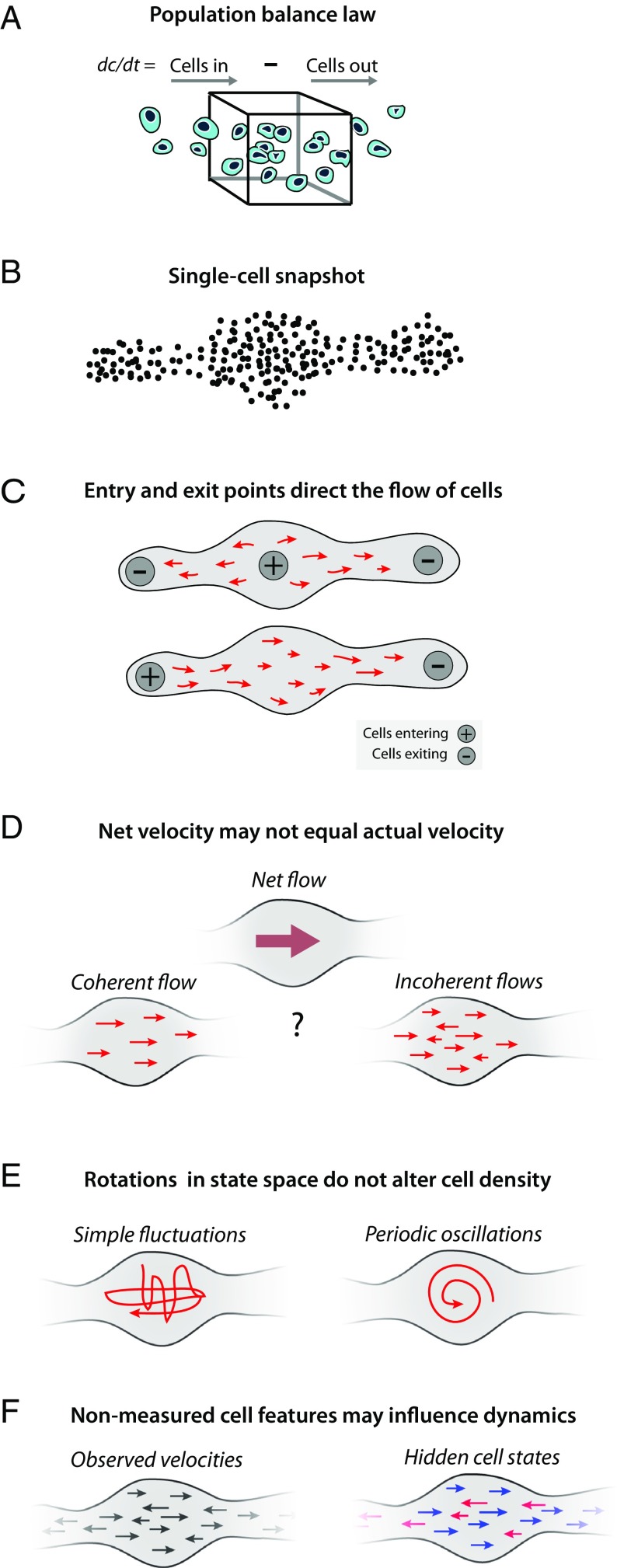
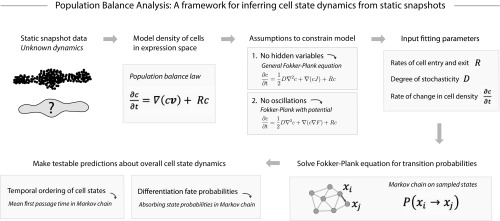
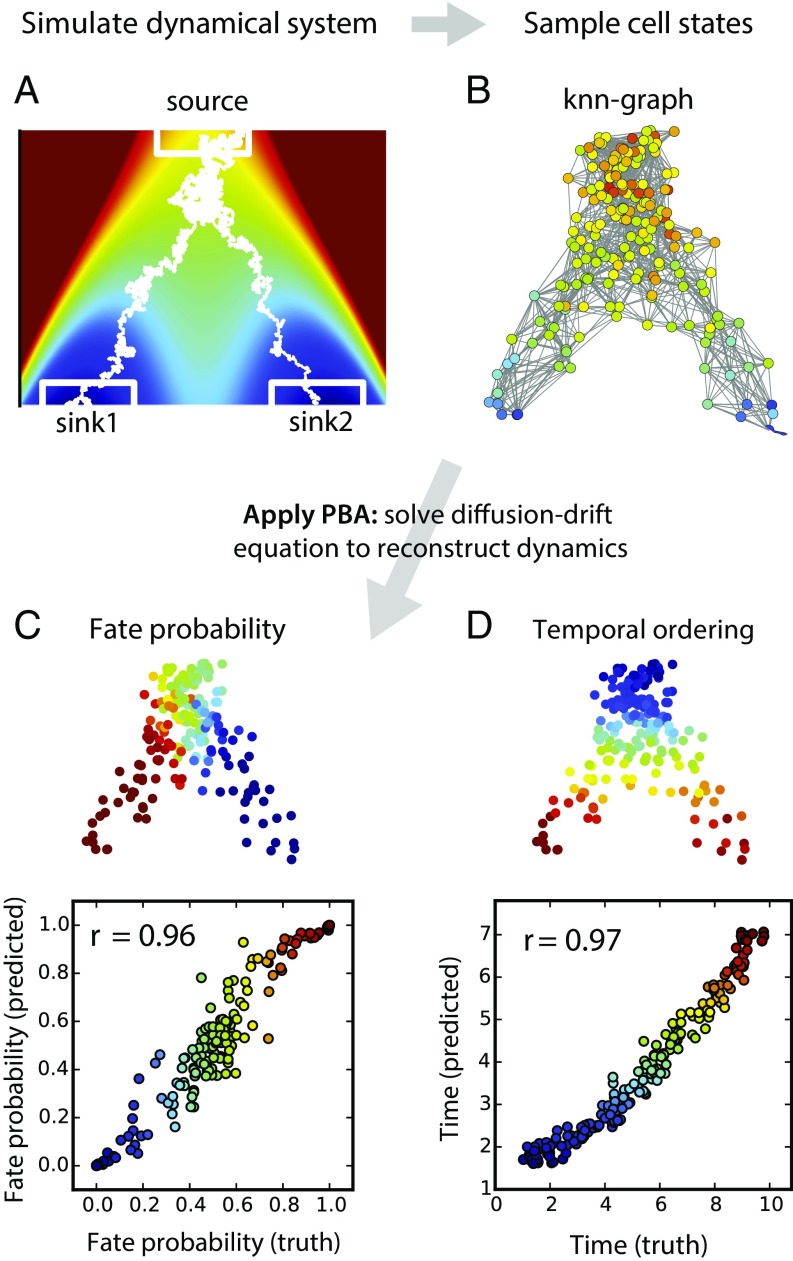
Significance: Seeing a snapshot of individuals at different stages of a dynamic process can reveal what the process would look like for a single individual over time. Biologists apply this principle to infer temporal sequences of gene expression states in cells from measurements made at a single moment in time. However, the sparsity and high dimensionality of single-cell data have made inference difficult using formal approaches. Here, we apply recent innovations in spectral graph theory to devise a simple and asymptotically exact algorithm for inferring the unique dynamic solution under defined approximations and apply it to data from bone marrow stem cells.
Overview
The claims and statistics of this paper haven’t been checked yet.
Free: it reads the open-access text and checks the first 5 claims that cite a source we can check. Create a free account to check every claim.
Integrity signals
Registry
Cites
Statistics
Figures
Verification
Claims the paper makes
The claims and statistics of this paper haven’t been checked yet.
Free: it reads the open-access text and checks the first 5 claims that cite a source we can check. Create a free account to check every claim.
Claims other papers make about this one
Each is checked against this paper’s own text: does it say what the citing paper says it does?
The source backs part of the claim, not all of it — or backs it for a different population, condition or comparison.
In the citing paper
“scSeq captures mature cell types alongside all stages of cell differentiation, revealing a ‘state map’ in gene expression space.”
From Lineage tracing on transcriptional landscapes links state to fate during differentiation (2020) · cites this paper as [4]
Experimental — accuracy not yet measuredThe source backs part of the claim, not all of it — or backs it for a different population, condition or comparison.
In the citing paper
“For cells undergoing multi-lineage fate choice, scSeq has been used to estimate lineage hierarchy based on the assumption that cell types with transcriptionally similar differentiation pathways are clonally related (3–5, 7).”
From Lineage tracing on transcriptional landscapes links state to fate during differentiation (2020) · cites this paper as [4]
Experimental — accuracy not yet measuredThe cited source says what the claim attributes to it.
In the citing paper
“In addition, the high-dimensional nature of scSeq allows more than one approach to constructing cell state trajectories from the same data (4).”
From Lineage tracing on transcriptional landscapes links state to fate during differentiation (2020) · cites this paper as [4]
Self-check
Percentages, sums and reported differences re-computed from the paper’s own numbers.
The self-check needs the paper’s full text.
Citations
Cites
Stochastic Problems in Physics and Astronomy
Chandrasekhar, S. (1943) · Reviews of Modern Physics · doi:10.1103/revmodphys.15.1 · Cited by 8,470 · cited 1×
“The ubiquity of diffusion-drift equations in fields of quantitative biology (17) and physics (18) suggests that applications of these methods may exist in other fields.”
BackgroundHighly parallel genome-wide expression profiling of individual cells using nanoliter droplets.
Macosko, E. Z., Basu, A., Satija, R., Nemesh, J., Shekhar, K., Goldman, M., Tirosh, I., Bialas, A. R., Kamitaki, N., Martersteck, E. M., et al. (2015) · Cell · doi:10.1016/j.cell.2015.05.002 · Cited by 7,110
A synthetic oscillatory network of transcriptional regulators
Elowitz, M. B., & Leibler, S. (2000) · Nature · doi:10.1038/35002125 · Cited by 4,630 · cited 1×
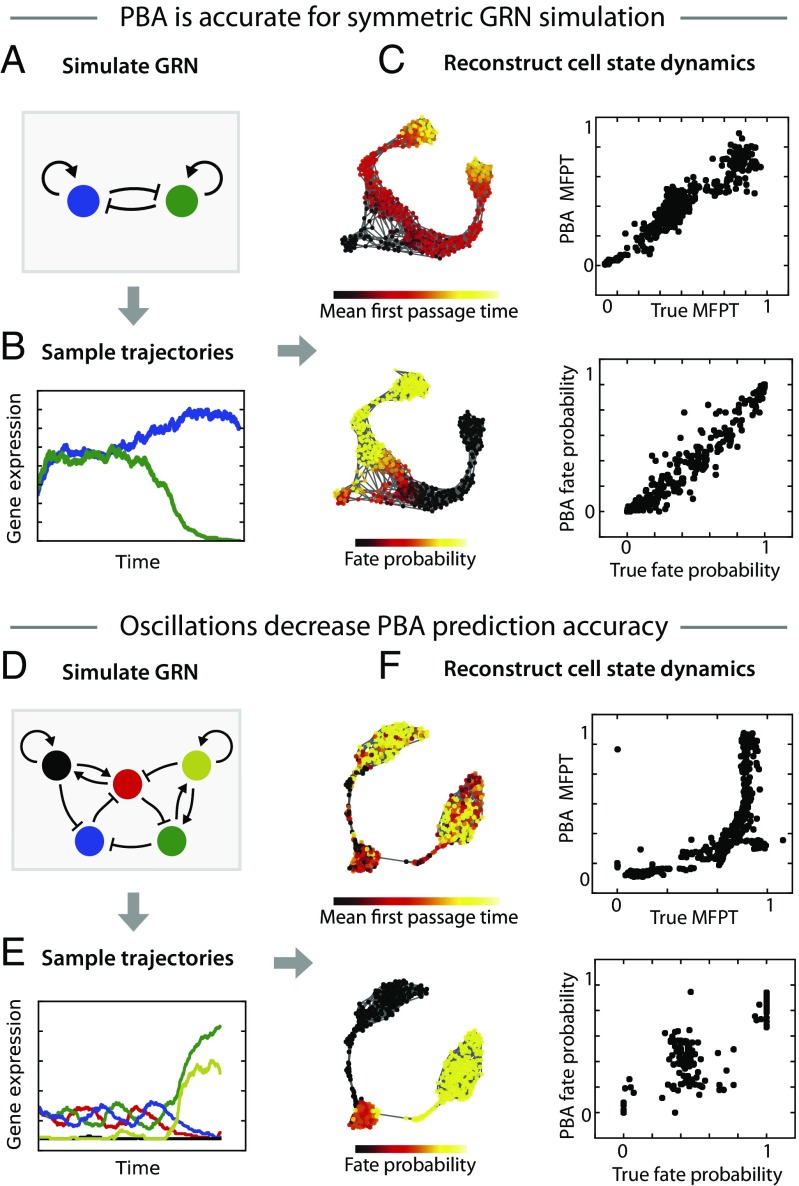
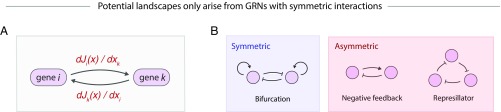
“We simulated an oscillatory GRN in the form of a “ repressilator ” circuit (26) with the addition of positive-feedback loops that create two “ escape routes ” leading to alternative stable fixed points of the dynamics (Fig.”
MethodDroplet barcoding for single-cell transcriptomics applied to embryonic stem cells
Klein, A. M., Mazutis, L., Akartuna, I., Tallapragada, N., Veres, A., Li, V., Peshkin, L., Weitz, D. A., & Kirschner, M. W. (2015) · Cell · doi:10.1016/j.cell.2015.04.044 · Cited by 3,356 · cited 7×
“Therefore, it is unclear how well PBA can infer cell trajectories that result from GRNs with oscillatory dynamics.”
BackgroundInfluentialSelf-citationA clonogenic common myeloid progenitor that gives rise to all myeloid lineages
Akashi, K., Traver, D., Miyamoto, T., & Weissman, I. L. (2000) · Nature · doi:10.1038/35004599 · Cited by 2,617 · cited 2×
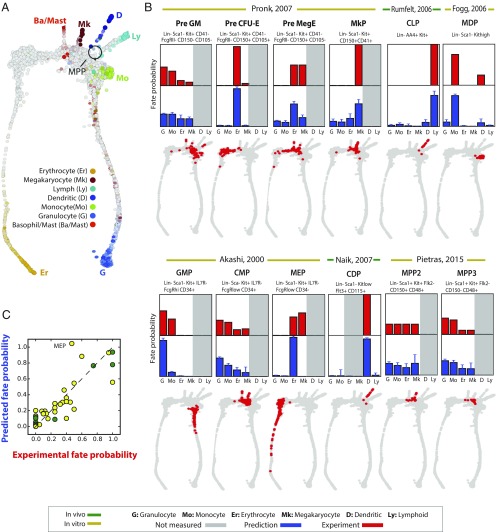
“The main qualitative disagreement be-tween PBA predictions and experiment was in the behavior of Lin − Sca1 − Kit + IL7R − FcgR low CD34 − HPCs, previously defined as megakaryocyte-erythroid precursors (31).”
BackgroundSingle-cell chromatin accessibility reveals principles of regulatory variation
Buenrostro, J. D., Wu, B., Litzenburger, U. M., Ruff, D., Gonzales, M. L., Snyder, M. P., Chang, H. Y., & Greenleaf, W. J. (2015) · Nature · doi:10.1038/nature14590 · Cited by 2,308 · cited 1×
“Rapidly maturing technologies are also enabling single-cell measurements of the epigenome (4), the proteome (5, 6), and the spatial organization of chromatin (7).”
BackgroundBendall, S. C., Simonds, E. F., Qiu, P., Amir, E.-A. D., Krutzik, P. O., Finck, R., Bruggner, R. V., Melamed, R., Trejo, A., Ornatsky, O. I., et al. (2011) · Science · doi:10.1126/science.1198704 · Cited by 2,279 · cited 1×
“Rapidly maturing technologies are also enabling single-cell measurements of the epigenome (4), the proteome (5, 6), and the spatial organization of chromatin (7).”
BackgroundStochastic Simulation of Chemical Kinetics
Gillespie, D. T. (2007) · Annual Review of Physical Chemistry · doi:10.1146/annurev.physchem.58.032806.104637 · Cited by 2,115 · cited 1×
“Although Fokker–Planck descriptions are necessarily approximations, their emergence from first-principles descriptions of transcriptional dynamics in terms of chemical master equations (21), and their ubiquity in describing chemical reaction systems (22), help justify their use instead of the more general form of Eq.”
Coifman, R. R., Lafon, S., Lee, A. B., Maggioni, M., Nadler, B., Warner, F., & Zucker, S. W. (2005) · Proceedings of the National Academy of Sciences · doi:10.1073/pnas.0500334102 · Cited by 1,675 · cited 1×
“Interestingly, several recent studies (8, 15, 43) have developed k-nearest neighbor graph-based representations of single-cell data, and others have suggested embedding cells in diffusion maps (24, 44) on the basis of other similarity kernels.”
BackgroundDiffusion pseudotime robustly reconstructs lineage branching
Haghverdi, L., Büttner, M., Wolf, F. A., Buettner, F., & Theis, F. J. (2016) · Nature Methods · doi:10.1038/nmeth.3971 · Cited by 1,385
Cited by
Items 201–300 of 407
Stochastic force inference via density estimationPreprint
Chardès, V., Maddu, S., & Shelley, M. J. (2023) · arXiv (Cornell University) · doi:10.13140/rg.2.2.28910.18241 · Cited by 8
Wang, S., Lei, J., Zou, X., & Jin, S. (2025) · PLoS Computational Biology · doi:10.1371/journal.pcbi.1012815 · Cited by 7
“In general, the infu-PLOS [9,12] and epigenetic inheritance during the process of cell proliferation [13].”
FatePredictor: Cell fate decision-making prediction with an ensemble deep learning model
Shen, J., Chen, N., Niu, B., Zhong, J., & Liu, R. (2025) · The Innovation · doi:10.1016/j.xinn.2025.101010 · Cited by 7
“11 To identifycellsubpopulationsanduncovertime-series-spe-cific transcriptomic changes, computational approaches based on pseudotime analysis have been developed to reconstruct the temporal dynamics of cellular progression.”
Han, Y., Chen, B., Zhang, J., & Shang, X. (2025) · Briefings in Bioinformatics · doi:10.1093/bib/bbaf661 · Cited by 7
“One of the pioneering works comes from Weinreb et al. [95], who proposed population balance analysis, an elegant approach with provable guarantees using spectral graph theory.”
Quantifying Individual Health Status from Multi-omics Data by Health State Manifold
Zhang, X., Zhang, C., Wu, Y., Lin, X., Liu, X., & Chen, L. (2025) · Phenomics · doi:10.1007/s43657-024-00188-4 · Cited by 7
“…dynamical systems viewpoint, then the health potential of the individual can be decomposed into (1) phenotypic state/potential and (2) its homeostatic resilience/potential based on the diffusion map theory and continuous birth–death process (Shi et al. 2019; Wang et al. 2011; Weinreb et al. 2018).”
scRL: Utilizing Reinforcement Learning to Evaluate Fate Decisions in Single-Cell Data
Fu, Z., Chen, C., Wang, S., Wang, J., & Chen, S. (2025) · Biology · doi:10.3390/biology14060679 · Cited by 7
“More fundamentally, the assumption that shortest-path distances correspond to developmental time may not accurately reflect cellular differentiation dynamics, particularly in systems with rapid state transitions or non-monotonic developmental patterns [52,53].”
Zhu, L., & Wang, J. (2025) · JACS Au · doi:10.1021/jacsau.5c00620 · Cited by 7
From mathematical modeling and machine learning to clinical reality
MacArthur, B. D., Stumpf, P. S., & Oreffo, R. O. C. (2020) · Elsevier eBooks · doi:10.1016/b978-0-12-818422-6.00001-0 · Cited by 7
Cell fate decision in erythropoiesis: Insights from multiomics studies
Tur, S., Palii, C. G., & Brand, M. (2024) · Experimental Hematology · doi:10.1016/j.exphem.2024.104167 · Cited by 7
Coupled differentiation and division of embryonic stem cells inferred from clonal snapshots
Ruske, L. J., Kursawe, J., Tsakiridis, A., Wilson, V., Fletcher, A. G., Blythe, R. A., & Schumacher, L. J. (2020) · Physical Biology · doi:10.1088/1478-3975/aba041 · Cited by 7
“Examples include fitting drift-diffusion equations on a k-nearest neighbour graph [5] or along one-dimensional pseudotime trajectories [31], simulating cell trajectories in dimensionally reduced gene expression space based on RNA velocity estimates [32], and continuous state Markov process from single-cell time series…”
MethodLatent causal diffusions for single-cell perturbation modeling
Lorch, L., Zhang, J., Bunne, C., Krause, A., Schölkopf, B., & Uhler, C. (2026) · Proceedings of the National Academy of Sciences · doi:10.1073/pnas.2602630123 · Cited by 7
“1 A , Center ) (23, 31).”
InfluentialZhang, C., & Li, C. (2021) · Physical Review Research · doi:10.1103/physrevresearch.3.013186 · Cited by 6
“Ofnote, recently Weinreb et al. concluded that the assumption of a potential landscape imposes symmetry on the gene regulatory network [58].”
On the Mathematics of RNA Velocity II: Algorithmic Aspects
Li, T., Wang, Y. W. Y., Yang, G., & Zhou, P. (2024) · CSIAM Transactions on Applied Mathematics · doi:10.4208/csiam-am.so-2023-0026 · Cited by 6
Wheat, J. C., & Steidl, U. G. (2021) · Blood · doi:10.1182/blood.2019004261 · Cited by 6
Inference of high-resolution trajectories in single cell RNA-Seq data from RNA velocityPreprint
Zhang, Z., & Zhang, X. (2020) · bioRxiv (Cold Spring Harbor Laboratory) · doi:10.1101/2020.09.30.321125 · Cited by 6
Dhapola, P., Eldeeb, M., Ugale, A. S., Olofzon, R., Erlandsson, E., Soneji, S., Bryder, D., & Göran, K. (2020) · bioRxiv (Cold Spring Harbor Laboratory) · doi:10.1101/2020.09.30.321216 · Cited by 6
“To quantify the differentiation state of the reference cells, we assigned the differentiation potential for each cell (Weinreb et al., 2018) ( figure 5D ) and inferred a pseudo-time axis of the data ( figure 5E ).”
MethodCell division history encodes directional information of fate transitionsPreprint
Wang, K., Hou, L., Lu, Z., Wang, X., Zi, Z., Zhai, W., He, X., Curtis, C. N., Zhou, D., & Hu, Z. (2022) · bioRxiv (Cold Spring Harbor Laboratory) · doi:10.1101/2022.10.06.511094 · Cited by 6
“Given the phylogenetic velocity v, the gene expression matrix X2×D = (x0, x5,⋯ , x2), and an embedding with n positions of cells S = (s0, s5,⋯ , s2), where n is the number of cells, m is the total number of genes, x = (x0, x5, ⋯ , xD) For cell i, we first calculated the difference between x and other cell express…”
BackgroundSingle-cell morphodynamics predict cell fate decisions during mucociliary epithelial differentiation
Tolonen, M., Xu, Z., Beker, O., Kapoor, V., Dumitrascu, B., & Sedzinski, J. (2026) · Molecular Systems Biology · doi:10.1038/s44320-026-00212-x · Cited by 6
“Trajectory-resolved phenotypic data could complement transcrip-tomics approaches, as it provides a more continuous view of cellular state transitions over time (Weinreb et al, 2018).”
Inferring stochastic dynamics with growth from cross-sectional data
Zhang, S. X., Maddu, S., Qiu, X., & Chardès, V. (2025) · neural information processing systems · doi:10.52202/085713-4219 · Cited by 5
Pretschner, A., Pabel, S., Haas, M., Heiner, M., & Marwan, W. (2021) · Frontiers in Genetics · doi:10.3389/fgene.2020.612256 · Cited by 5
Lei, J. (2025) · Lecture notes on mathematical modelling in the life sciences · doi:10.1007/978-3-031-82396-1_4 · Cited by 5
Xu, L., & Wang, J. (2020) · Elsevier eBooks · doi:10.1016/b978-0-12-817996-3.00002-5 · Cited by 5
Determining travel fluxes in epidemic areas
Chen, D., Xue, Y., & Xiao, Y. (2021) · PLoS Computational Biology · doi:10.1371/journal.pcbi.1009473 · Cited by 5
Profiling intermediate cell states in high resolution
MacLean, A. L. (2022) · Cell Reports Methods · doi:10.1016/j.crmeth.2022.100204 · Cited by 5
“There are limitations to the extent to which dynamic processes can be quantified by single-cell sequencing overall (Weinreb et al., 2018), in part due to the snapshot nature of the data, although new technologies and methodologies may helptoovercomesomeofthese challenges (Lange et al., 2022; Qiu et…”
BackgroundDeep Lineage: Single-cell lineage tracing and fate inference using deep learning
Sadria, M., Zhang, A. A., Lai, H. G., & Bader, G. D. (2026) · Cell Systems · doi:10.1101/2024.04.25.591126 · Cited by 5
“This constraint poses challenges in tracing lineage relationships and tracking cell trajectories over time (3).”
BackgroundUnveiling the Dynamics behind Glioblastoma Multiforme Single-Cell Data Heterogeneity
Vieira, M. G., Cortês, A., Carneiro, F. R. G., Carels, N., & da Silva, F. A. B. (2024) · International Journal of Molecular Sciences · doi:10.3390/ijms25094894 · Cited by 5
“This interpretation allows studying system dynamics indirectly by observing the data variability [55].”
BackgroundResultComputational single-cell methods for predicting cancer risk
Teschendorff, A. E. (2024) · Biochemical Society Transactions · doi:10.1042/bst20231488 · Cited by 5
Sun, R. X., Cao, W., Li, S. Z., Jiang, J., Shi, Y.-Z., & Zhang, B. (2024) · PLoS Computational Biology · doi:10.1371/journal.pcbi.1012638 · Cited by 5
“The stoichiometric matrix and propensity function of the chemical reaction (Table 2) are as follows [22].”
A scalable gene network model of regulatory dynamics in single cellsPreprint
Bertin, P., Viviano, J. D., Tejada-Lapuerta, A., Wang, W., Bauer, S., Theis, F. J., & Bengio, Y. (2025) · arXiv (Cornell University) · doi:10.48550/arxiv.2503.20027 · Cited by 5
“The transport cost is the euclidean distance in either PCA space (dimension 50) or UMAP space.”
Zhang, S. Y., & Stumpf, M. P. H. (2025) · arXiv (Cornell University) · doi:10.48550/arxiv.2505.16644 · Cited by 5
“This is a central problem with applications arising across the natural and social sciences, whenever longitudinal tracking of individuals over time is either impossible or impractical [52, 33, 45, 40, 32, 1].”
Learning dynamical information from static protein and sequencing data
Pearce, P., Woodhouse, F. G., Forrow, A., Kelly, A., Kusumaatmaja, H., & Dunkel, J. (2018) · doi:10.1101/401067 · Cited by 4
Lin, Y., Chen, X., Wu, L., Zhou, Y., & Lin, Y. (2026) · Cell Systems · doi:10.1016/j.cels.2026.101621 · Cited by 4
A dynamic model for Waddington’s landscape accounting for cell-to-cell communication
Merkt, S., Fuhrmann, L., Dudkin, E., Schlitzer, A., Niethammer, B., & Hasenauer, J. (2025) · Mathematical Biosciences · doi:10.1016/j.mbs.2025.109537 · Cited by 4
Decoding cell fate: integrated experimental and computational analysis at the single-cell level
Zhou, Y., Hou, S., Miao, X., Zhang, G., Li, Z., Zhang, D., Lin, Y., & Lin, Y. (2025) · Bioinformatics · doi:10.1093/bioinformatics/btaf603 · Cited by 4
“Although integrated single-cell omics provide comprehensive characterization of cell states (Stuart et al. 2019, Welch et al. 2019), they typically require cell destruction for data extraction, offering only static snapshots (Weinreb et al. 2018).”
Rätzel, V., Werthmann, B., Haas, M., Strube, J., & Marwan, W. (2020) · Biosystems · doi:10.1016/j.biosystems.2019.104092 · Cited by 4
Inferring the structures of signaling motifs from paired dynamic traces of single cells
Haggerty, R. A., & Purvis, J. E. (2021) · PLoS Computational Biology · doi:10.1371/journal.pcbi.1008657 · Cited by 4
“It is commonly stated in the field that single-cell measurements contain information that is obscured by population-averaged methods such as western blotting and quantitative PCR [32– 37].”
MethodProgram Synthesis for Systems Biology
Köksal, A. S. (2018) · eScholarship (California Digital Library) · Cited by 4
Hematopoiesis at single cell resolution spanning human development and maturationPreprint
Li, H., Ezike, J., Afanassiev, A., Greenstreet, L., Zhang, S. X., Whangbo, J., Butty, V. L., Moiso, E., Connelly, G. G., Morris, V., et al. (2021) · bioRxiv (Cold Spring Harbor Laboratory) · doi:10.1101/2021.08.25.457678 · Cited by 4
How Our Cells Become Our Selves: The Cellular Phylodynamic Biology of Growth and DevelopmentPreprint
Chodrow, P. S., Lasky-Su, J. A., Lee, D., Ahmed, T., He, N., Man, R. D., Tiwari, A., Mannherz, W. P., Citi, L., DiCorpo, D., et al. (2021) · bioRxiv (Cold Spring Harbor Laboratory) · doi:10.1101/2021.09.22.461268 · Cited by 4
Methodology for inference of intercellular gene interactionsPreprint
Modi, S., Zurakowski, R., & Gleghorn, J. P. (2023) · bioRxiv (Cold Spring Harbor Laboratory) · doi:10.1101/2023.02.26.530111 · Cited by 4
“However, regulatory connections and rate parameters encoded in dynamic information are not possible to infer as this methodology only provides data at a single snapshot in time [26].”
BackgroundA Call to Lagrangian Action: Learning Population Mechanics from Temporal SnapshotsPreprint
Guan, V., Atanackovic, L., & Neklyudov, K. (2026) · arXiv (Cornell University) · doi:10.48550/arxiv.2605.08550 · Cited by 4
“The predominant approach in machine learning and computational biology has been to model population dynamics as a gradient flow (Hashimoto et al., 2016; Weinreb et al., 2018; Lavenant et al., 2021; Bunne et al., 2022; Terpin et al., 2024; Guan et al., 2026).”
From pseudo to real-time dynamics of T cell thymic differentiation
Gavish, A., Chain, B., Salame, T. M., Antebi, Y. E., Nevo, S., Reich-Zeliger, S., & Friedman, N. (2022) · iScience · doi:10.1016/j.isci.2022.105826 · Cited by 3
Evaluating discrepancies in dimensionality reduction for time-series single-cell RNA-sequencing data
Hackenberg, M., Guitart, L. C., Backofen, R., & Binder, H. (2025) · Briefings in Bioinformatics · doi:10.1093/bib/bbaf287 · Cited by 3
Noori, A., Fishman, N., Fang, A., Fesser, L., & Žitnik, M. (2026) · Cell · doi:10.1016/j.cell.2026.08.032 · Cited by 6
The mathematical exploration for the mechanism of lung adenocarcinoma formation and progression
Han, Y., Chen, B., Bi, Z., Bian, J., Kang, R., & Shang, X. (2024) · Briefings in Bioinformatics · doi:10.1093/bib/bbae603 · Cited by 3
Empirical methods that provide physical descriptions of dynamic cellular processes
Seim, I., & Grill, S. W. (2024) · Biophysical Journal · doi:10.1016/j.bpj.2024.12.003 · Cited by 3
“In cases of development, regeneration, reprogramming, or disease in which detailed time ordering or previous knowledge about lineages is unavailable (33,34), this task is more complex.”
Cellular proliferation biases clonal lineage tracing and trajectory inference
Bonham-Carter, B., & Schiebinger, G. R. (2024) · Bioinformatics · doi:10.1093/bioinformatics/btae483 · Cited by 3
“…on computational methods for inferring developmental trajectories from static snapshots (Setty et al. 2016, Farrell et al. 2018, Street et al. 2018, Weinreb et al. 2018, Cao et al. 2019, Chen et al. 2019, Lin and Bar-Joseph 2019, Saelens et al. 2019, Schiebinger et al. 2019, Setty et al. 2019,…”
MethodDas, J., & Lanier, L. L. (2019) · Journal of Leukocyte Biology · doi:10.1002/jlb.6mr1218-505r · Cited by 3
The role of fluctuations in determining cellular network thermodynamics
Hubbard, J. B., Halter, M. W., Sarkar, S., & Plant, A. L. (2020) · PLoS ONE · doi:10.1371/journal.pone.0230076 · Cited by 3
“Although transcriptomics analysis can probe a larger number of genes compared to live cell imaging, the appropriate interpretation of the relative significance of these changes to network function and their relationships to one another can be ambiguous [21, 33].”
Probing pluripotency gene regulatory networks with quantitative live cell imaging
Plant, A. L., Halter, M. W., & Stinson, J. (2020) · Computational and Structural Biotechnology Journal · doi:10.1016/j.csbj.2020.09.025 · Cited by 3
“scriptomics measurements), but correlation does not guarantee causation [4,5].”
BackgroundModeling Stem Cell Fates using Non-Markov Processes
Stumpf, P. S., Arai, F., & MacArthur, B. D. (2021) · Cell stem cell · doi:10.1016/j.stem.2021.01.009 · Cited by 3
MLBKFD: Probabilistic Model Methods to Infer Pseudo Trajectories from Single-cell Data
Han, C., Cao, W., Li, C., Guo, Y., Wang, Y., Shi, Y.-Z., & Zhang, B. (2024) · Journal of Computational Biophysics and Chemistry · doi:10.1142/s2737416524400015 · Cited by 3
Lee, C. Y. C., Clatworthy, M. R., & Withers, D. R. (2024) · Immunology and Cell Biology · doi:10.1111/imcb.12787 · Cited by 3
“39,40 Finally, feature selection for temporal ordering can affect output; insufficient or biased cell sampling may preclude representation of rare, transient cell states and result in incomplete trajectories; and more broadly, transcriptomic similarity may not imply a temporal or developmental…”
Mircea, M., Garlaschelli, D., & Semrau, S. (2024) · arXiv (Cornell University) · doi:10.48550/arxiv.2401.07379 · Cited by 4
“In fact, if only single-cell snapshot data is used and there is no prior biological knowledge, there are fundamental limits to GRN inference [21].”
BackgroundConsistent diffusion matrix estimation from population time seriesPreprint
Forrow, A. (2024) · arXiv (Cornell University) · doi:10.48550/arxiv.2408.14408 · Cited by 3
“Instead, those that quantitatively estimate dynamics either focus on drift alone [15] or require the user to set a hyperparameter corresponding directly or indirectly to the level of biological stochasticity [6, 11, 12, 16, 21, 22].”
BackgroundMethodInfluentialPrivate Continuous-Time Synthetic Trajectory Generation via Mean-Field Langevin DynamicsPreprint
Gu, A., Chien, E., & Greenewald, K. H. (2025) · arXiv (Cornell University) · doi:10.48550/arxiv.2506.12203 · Cited by 3
Gradient-flow SDEs have unique transient population dynamicsPreprint
Guan, V., Janssen, J., Lanzetti, N., Terpin, A., Schiebinger, G. R., & Robeva, E. (2025) · arXiv (Cornell University) · doi:10.3929/ethz-c-000788594 · Cited by 3
PACE: Geometry-Aware Bridge Transport for Single-Cell Trajectory InferencePreprint
Yu, C., Wang*, C., Liao, B., & Wu, T. (2026) · arXiv (Cornell University) · doi:10.48550/arxiv.2605.18587 · Cited by 4
“This mismatch makes trajectory inference from destructive snapshots fundamentally ambiguous [13, 20]: the cross-time coupling is not observed and is generally not identifiable from marginal distributions alone.”
Mapping human neurodevelopment—Brain organoids meet lineage tracing
Liaci, C., & Quadrato, G. (2025) · FEBS Letters · doi:10.1002/1873-3468.70250 · Cited by 2
AI-driven gene-sets, networks, pathways, and interactions analyses of multi-omics data
Yue, Z., Zhang, Z., Thanh, Q., Nguyen, T. M., Sembay, Z., Chen, H., Welner, R. S., & Chen, J. Y. (2026) · Progress in molecular biology and translational science · doi:10.1016/bs.pmbts.2026.01.023 · Cited by 2
Multiscale learning of gene network-driven phenotypic dynamics of single cells
Zhang, D., Li, J., Nie, Q. H., & (493308), X. S. (2026) · Molecular Systems Biology · doi:10.1038/s44320-026-00220-x · Cited by 3
“Next, we quantitatively compared GRNvelo with other six trajectory inference methods: TIGON (Sha et al, 2024), Trajector-yNet (Tong et al, 2020), MIOFlow (Huguet et al, 2022), PBA (Weinreb et al, 2018), WOT (Schiebinger et al, 2019), and FateID (Herman and Sagar 2018).”
Comprehensive benchmarking of RNA velocity methods across single-cell datasets
Wu, Y., Kong, C., Liao, X., Lin, Z., Sun, X., & Liu, J. H. (2026) · Genome biology · doi:10.1186/s13059-026-04182-z · Cited by 2
“Despite the fact that scRNA-seq yields only static snapshots of cellular states [3, 4], trajectory inference (TI) methods were developed to reconstruct the temporal ordering of cells based on these gene expression profiles [5–7].”
Liu, J., Zhou, P., Nie, Q. H., & Li, C. (2026) · Science Advances · doi:10.1126/sciadv.aeb4205 · Cited by 2
“1) can be viewed as an SDE in terms of gene expression (Materials and Methods) ( 34 , 36 ).”
Single-Cell RNA-Seq Data Clustering: Highlighting Computational Challenges and Considerations
Nossier, M., Moussa, S. M., & Badr, N. L. (2023) · IEEE International Conference on Bioinformatics and Biomedicine (BIBM) · doi:10.1109/bibm58861.2023.10385639 · Cited by 2
“Overall, it is generally recommended to consider both the discrete and continuous views when studying the underlying biological compositional patterns of scRNAseq data [41], especially when there is no prior knowledge available for the data being studied.”
BackgroundEryDB: A Transcriptomic Profile Database for Erythropoiesis and Erythroid-related Diseases
Zheng, G., Wu, S., Zhang, Z., Xin, Z., Zhang, L., Zhao, S., Wu, J., Liu, Y., Li, M., Ruan, X., et al. (2024) · Genomics Proteomics & Bioinformatics · doi:10.1093/gpbjnl/qzae029 · Cited by 2
Genome-wide chromatin recording resolves dynamic cell state changes
Takei, Y., Lay, J. A., Linton, J. M., Chadly, D. M., Ochiai, Y., Hadas, R., Perez, A. A., Blanco, M. R., Laurino, P., Guttman, M., et al. (2026) · Cell Systems · doi:10.1016/j.cels.2026.101717 · Cited by 2
“…two-timepoint approaches alone do not establish direct causality between earlier chromatin states and subsequent cell fate transitions, they can reveal candidate molecular signatures and temporal ordering of events that are typically inaccessible from static, single time-point measurements 8,18 .”
Hematopoiesis in High Definition: Combining State and Fate Mapping
Chahi, A. K., & Hope, K. J. (2020) · Cell stem cell · doi:10.1016/j.stem.2020.08.010 · Cited by 2
Sun, L., Wang, G., & Zhang, Z. (2022) · Briefings in Bioinformatics · doi:10.1093/bib/bbac590 · Cited by 2
Wu, X., Wollman, R., & MacLean, A. L. (2023) · Journal of The Royal Society Interface · doi:10.1098/rsif.2023.0172 · Cited by 2
Therapeutic algebra of immunomodulatory drug responses at single-cell resolutionPreprint
Jiang, J., Chen, S., Tsou, T., McGinnis, C. S., Khazaei, T., Zhu, Q., Park, J. H., Rivaud, P., Strazhnik, I.-M., Chow, E. D., et al. (2022) · arXiv (Cornell University) · doi:10.48550/arxiv.2208.10661 · Cited by 2
“is an energy function that weights the impact of the gene-program interaction network, J, and the drug-specific biasing vector, hi, and Z is a normalizing constant to ensure all probabilities sum to 1 (SI Text) [20, 21].”
BackgroundPartially Observed Trajectory Inference using Optimal Transport and a Dynamics PriorPreprint
Gu, A., Chien, E., & Greenewald, K. H. (2024) · arXiv (Cornell University) · doi:10.48550/arxiv.2406.07475 · Cited by 2
“[55] consider the limits of trajectory inference from single-cell snapshots in the equilibrium setting.”
BackgroundFundamental Limits of Inferring Dynamical Gene Regulatory Models from Single-Cell DataPreprint
Balubaid, A., Bernal-Tamayo, J. P., Kumar, R., Agboola, H., Gómez-Cabrero, D., Kiani, N. A., & Tegner, J. N. (2025) · bioRxiv (Cold Spring Harbor Laboratory) · doi:10.1101/2025.09.12.674509 · Cited by 2
“These datasets enable the reconstruction of cellular trajectories and the inference of gene regulatory networks (GRNs) but remain inherently static snapshots, limiting their ability to capture cellular dynamics fully [2, 3, 4].”
A Roadmap for Predictive Human ImmunologyPreprint
Khan, A. A., Perera, J., Zou, J., Royer, L. A., Lowe, A. R., Carr, A., Karaletsos, T., Brennan, P., Parsa, R., Clark, M. R., et al. (2025) · arXiv (Cornell University) · doi:10.48550/arxiv.2511.03041 · Cited by 2
“As high-dimensional, static snapshots of a dynamic process, they make it challenging to derive causal insights or predict future states 56,57 .”
Barkan, C. O., & Chou, T. (2026) · PRX Life · doi:10.1103/thys-1k71 · Cited by 1
“Mathematical models of development often consider a single-cell fates and state changes [3, 8, 13– 22]; those that incorporate cell population dynamics through birth and death typically neglect cell-cell interactions [23–28].”
Simple systems, complex dynamics: Lessons from minimal gene regulatory networks
Maretvadakethope, S., & Perez‐Carrasco, R. (2026) · Current Opinion in Systems Biology · doi:10.1016/j.coisb.2026.100587 · Cited by 1
Clonal analysis for understanding fate biases in developing embryos
Isaev, S. V., & Adameyko, I. I. (2026) · Current Opinion in Genetics & Development · doi:10.1016/j.gde.2026.102475 · Cited by 1
A modeller's guide for biomedical discovery
Greulich, P. (2026) · Disease Models & Mechanisms · doi:10.1242/dmm.052807 · Cited by 1
“…concern dynamic processes, such as how cells divide and differentiate over time; yet, in vivo measurements are often limited to static snapshots (such as immunostaining of fixed tissue samples or single-time-point gene-expression measurements) (Kretzschmar and Watt, 2012; Weinreb et al., 2018).”
Baumann, C. T., Hydorn, M. A., Cooke, S. F., Dworkin, J. E., & Rosenthal, A. Z. (2026) · Science Advances · doi:10.1126/sciadv.adz1707 · Cited by 1
“As single-cell RNA sequencing (RNA-seq) measurements provide a snapshot in time ( 16 , 17 ), inferring a physiological state with an inventory of transcripts does not always provide a straightforward interpretation.”
Technique to measure the expression dynamics of each gene in a single cell
Klein, A. M. (2018) · Nature · doi:10.1038/d41586-018-05882-8 · Cited by 1
Self-citationThe path from stem cells to red blood cells
Harigae, H. (2022) · International Journal of Hematology · doi:10.1007/s12185-022-03413-w · Cited by 1
Elucidating dynamic cell lineages and gene networks in time-course single cell differentiation
Zhang, M., Chen, Y., Yu, D., Zhong, W., Zhang, J., & Ma, P. (2023) · Artificial Intelligence in the Life Sciences · doi:10.1016/j.ailsci.2023.100068 · Cited by 1
Properties of a Multidimensional Landscape Model for Determining Cellular Network ThermodynamicsPreprint
Hubbard, J. B., Halter, M. W., & Plant, A. L. (2019) · bioRxiv (Cold Spring Harbor Laboratory) · doi:10.1101/682690 · Cited by 1
“While “omics” analysis methods can probe many variables simultaneously, they provide only a snapshot in time; the lack of dynamic data in individual cells precludes rigorous determination of mechanisms (10, 25).”
BackgroundInference of Stochastic Dynamical Systems from Cross-Sectional Population DataPreprint
Tsourtis, A., Pantazis, Y., & Tsamardinos, I. (2020) · arXiv (Cornell University) · doi:10.48550/arxiv.2012.05055 · Cited by 1
“Hence the algorithm would not able to deduce the underlying interactions correctly without more frequent temporal measurements (as shown in the supplementary material), as there exist multiple dynamics that could give rise to the measured distributions or in other words, multiple possibilities for the underlying mecha…”
BackgroundMethodMaity, A. K., & Teschendorff, A. E. (2023) · bioRxiv (Cold Spring Harbor Laboratory) · doi:10.1101/2023.04.28.538653 · Cited by 1
PhyloVelo enhances transcriptomic velocity field mapping using monotonically expressed genesPreprint
Hu, Z., Wang, K., Hou, L., Wang, X., Zhai, X., Lu, Z., Zi, Z., Zhai, W., He, X., Curtis, C. N., et al. (2023) · Research Square · doi:10.21203/rs.3.rs-2197712/v1 · Cited by 1
CC-Tempo: A cell-cell communication aware temporal model of cellular dynamicsPreprint
Jony, S. S. R., Rahman, M. S., & Samee, M. A. H. (2023) · bioRxiv (Cold Spring Harbor Laboratory) · doi:10.1101/2023.12.04.569835 · Cited by 1
“They evaluated various existing methods for predicting cell fate based on single-cell RNA sequencing (scRNA-seq) data, including Population Balance Analysis (PBA) 9 , WaddingtonOT 8 , and FateID 7 .”
BackgroundMethodInfluentialMath models expose myeloid bias mechanisms in hematopoiesis
Fassoni, A. C., & Glauche, I. (2025) · Blood · doi:10.1182/blood.2024027777 · Cited by 1
Simulation-free Structure Learning for Stochastic Population Dynamics
Rimawi-Fine, N. E., Stecklov, A., Nelson, L., Blanchette, M., Tong, A., Zhang, S. Y., & Atanackovic, L. (2026) · Transactions on machine learning research · doi:10.48550/arxiv.2510.16656 · Cited by 1
Cell State Transitions Beyond the Small-Noise LimitPreprint
Wei, J., Zhu, J., Chu, P., Luo, L., & Fu, X. (2025) · arXiv (Cornell University) · doi:10.48550/arxiv.2510.07797 · Cited by 1
Identifying drift, diffusion, and causal structure from temporal snapshots
Rahmani, H. (2025) · cIRcle (University of British Columbia) · doi:10.14288/1.0450482 · Cited by 1
Su, C., & Emad, A. (2026) · bioRxiv (Cold Spring Harbor Laboratory) · doi:10.64898/2026.02.25.707938 · Cited by 1
Wen, Y., Xiong, J., Gong, F., Ma, L., & Wan, L. (2026) · bioRxiv (Cold Spring Harbor Laboratory) · doi:10.64898/2026.03.10.710716 · Cited by 1
“There is always a trade-off: emphasizing expression continuity maintains smooth gradients of cellular states but blurs or erases the true lineage structure [18,19], whereas preserving lineage fidelity recovers ancestral connections but disrupts continuous expression-defined trajectories.”
Trajectory inference for aging time courses of single-cell data
Boyle, C. (2026) · cIRcle (University of British Columbia) · doi:10.14288/1.0451843 · Cited by 1
Relative Entropy Estimation in Function Space: Theory and Applications to Trajectory InferencePreprint
Wang, C., Nepote, L., Franzese, G., & Pietro Michiardi, A. (2026) · arXiv (Cornell University) · doi:10.48550/arxiv.2604.20775 · Cited by 1
“A major challenge is that omics measurements are destructive, providing only snapshots of cellular states at discrete time points rather than continuous trajectories (Trapnell et al., 2014; Nowakowski et al., 2017; Weinreb et al., 2018; La Manno, 2018; Trevino et al., 2021).”
Quantitative Engineering and Investigation of Synthetic Sponge RNAs in E. coliPreprint
Stacey, S. B., Sechkar, K., Corrao, M., Steel, H., & Papachristodoulou, A. (2026) · bioRxiv (Cold Spring Harbor Laboratory) · doi:10.64898/2026.05.19.726096 · Cited by 1
“Infrequent sampling or steady-state-only measurements can obscure important dynamical features 81 .”
Gu, R., Zhang, R. Z., & Miles, C. E. (2026) · arXiv (Cornell University) · doi:10.48550/arxiv.2607.01749 · Cited by 1
“Related examples include fundamental limits in expression-state dynamics [31] and movement–growth confounding in cross-sectional cell-state data [25].”
Time-resolved operator archetypes characterize dynamical sensitivity during cell-state transitionsPreprint
Redd, D. M., Green, S. G., & Terooatea, T. W. (2026) · bioRxiv (Cold Spring Harbor Laboratory) · doi:10.64898/2026.08.21.745996 · Cited by 1
“As established by Weinreb et al. [12], a snap-shot fixes the density of cell states but not the velocity field that generated it; we argue this boundary is a property of the snapshot data modality shared by all such methods, not of scJDO specifically.”
Fassoni, A. C. (2026) · arXiv (Cornell University) · doi:10.48550/arxiv.2609.37703 · Cited by 1
“The steady-state assumption matters: out of saturation, or under non-uniform competition, a snapshot mixes proliferation with transport [102], whereas in a saturated population under uniform competition it approaches the stationary density of the switching dynamics alone after a time of order 1/ λ…”
Simulation-Free Learning of Population Dynamics with Wasserstein Lagrangian ResidualsPreprint
Сергеев, Ф., Heinonen, M., Waxman, D., Cooijmans, T., Baptista, R., Batenkov, D., & Bingham, E. (2026) · arXiv (Cornell University) · doi:10.48550/arxiv.2610.03679 · Cited by 1
“The dynamics of a continuous-time probability distribution are not identifiable from a finite set of snapshots (Weinreb et al., 2018; Guan et al., 2026a).”
Lineages and molecular heterogeneity in the developing nervous system
Manno, G. L. (2018) · Figshare
Metadata
- Authors
- Weinreb, C., Wolock, S., Tusi, B. K., Socolovsky, M., & Klein, A. M.
- Affiliations
- Harvard University (US)
- University of Massachusetts Chan Medical School (US)
- Corresponding author
- Klein, Allon M.
- Venue
- Proceedings of the National Academy of Sciences
- Publisher
- National Academy of Sciences
- Published
- 2018-02-20
- Volume
- 115
- Issue
- 10
- Pages
- E2467-E2476
- ISSN
- 0027-8424 (ISSN-L)
- 1091-6490
- PMC
- PMC5878004
- OpenAlex
- W2952840385
- Cited by
- 341
- References
- 45
- Citations by year
- 2026: 58 · 2025: 35 · 2024: 39 · 2023: 33 · 2022: 37 · 2021: 46 · 2020: 46 · 2019: 31 · 2018: 16
- FWCI
- 12.36
- Type
- journal article
- Language
- en
- Open access
- hybrid
- doi.org
- Licence
- Locations
- Proceedings of the National Academy of Sciences (publishedVersion, cc-by-nc-nd)
- PubMed Central (publishedVersion, cc-by-nc-nd)
- PubMed (publishedVersion)
- The Journal of the American Medical Association (JAMA) Network (American Medical Association) (submittedVersion, cc-by)
- Digital Access to Scholarship at Harvard (DASH) (Harvard University) (submittedVersion, cc-by)
- Funders
- Leukemia and Lymphoma Society
- Edward Mallinckrodt, Jr. Foundation
- National Institutes of Health
- National Institute of General Medical Sciences (T32GM080177)
- National Institute of Diabetes and Digestive and Kidney Diseases (R01DK100915)
- Topics
- Life Sciences › Biochemistry, Genetics and Molecular Biology › Molecular Biology › Single-cell and spatial transcriptomics
- Life Sciences › Biochemistry, Genetics and Molecular Biology › Molecular Biology › Gene Regulatory Network Analysis
- Life Sciences › Biochemistry, Genetics and Molecular Biology › Molecular Biology › Gene expression and cancer classification
- Keywords
- gene expression dynamics, trajectory reconstruction, spectral graph theory, hematopoietic progenitor cells, cell fate, gene expression regulation, experimental design
- MeSH terms
- Algorithms, Animals, Hematopoiesis, Hematopoietic Stem Cells, Gene Expression Profiling, Mice, Single-Cell Analysis
About these checks
Registry, retraction, Cites and statistics results are computed, not judged, with one exception: a printed reference that no index lists is read once by a model before it counts as a citation error. Claims are extracted by a model and kept only when their quote appears verbatim in the text; each cited source is then checked, with a model’s help, for whether it says what the claim relies on. Those verdicts can be wrong — read the claim’s quote and the cited source before relying on one.
Statistics and arithmetic are recomputed, not judged.
Confidence bands are shown only for fields calibrated on our annotated test set. None is calibrated yet, so no band is shown.
What counts as a claim ›How we measure confidence ›How we check this ›
Are you an author, or do you see a problem with this page? Request a review
Data sources
Bibliographic data: Semantic Scholar, OpenAlex, Crossref.
Contains information from the Semantic Scholar Academic Graph Datasets, made available under the ODC Attribution License (ODC-BY 1.0).
Semantic Scholar’s data is described in: Kinney, R., et al. (2023). The Semantic Scholar Open Data Platform. arXiv:2301.10140.
