

Fundamental limits on dynamic inference from single-cell snapshots
Open accessPublished version of a preprint
The DOI matches its Crossref record; 48 of the 48 references it cites were found in a registry or an index.
Abstract
Significance: Seeing a snapshot of individuals at different stages of a dynamic process can reveal what the process would look like for a single individual over time. Biologists apply this principle to infer temporal sequences of gene expression states in cells from measurements made at a single moment in time. However, the sparsity and high dimensionality of single-cell data have made inference difficult using formal approaches. Here, we apply recent innovations in spectral graph theory to devise a simple and asymptotically exact algorithm for inferring the unique dynamic solution under defined approximations and apply it to data from bone marrow stem cells.
Overview
The claims and statistics of this paper haven’t been checked yet.
Free: it reads the open-access text and checks the first 5 claims that cite a source we can check. Create a free account to check every claim.
Integrity signals
Registry
Cites
Statistics
Figures
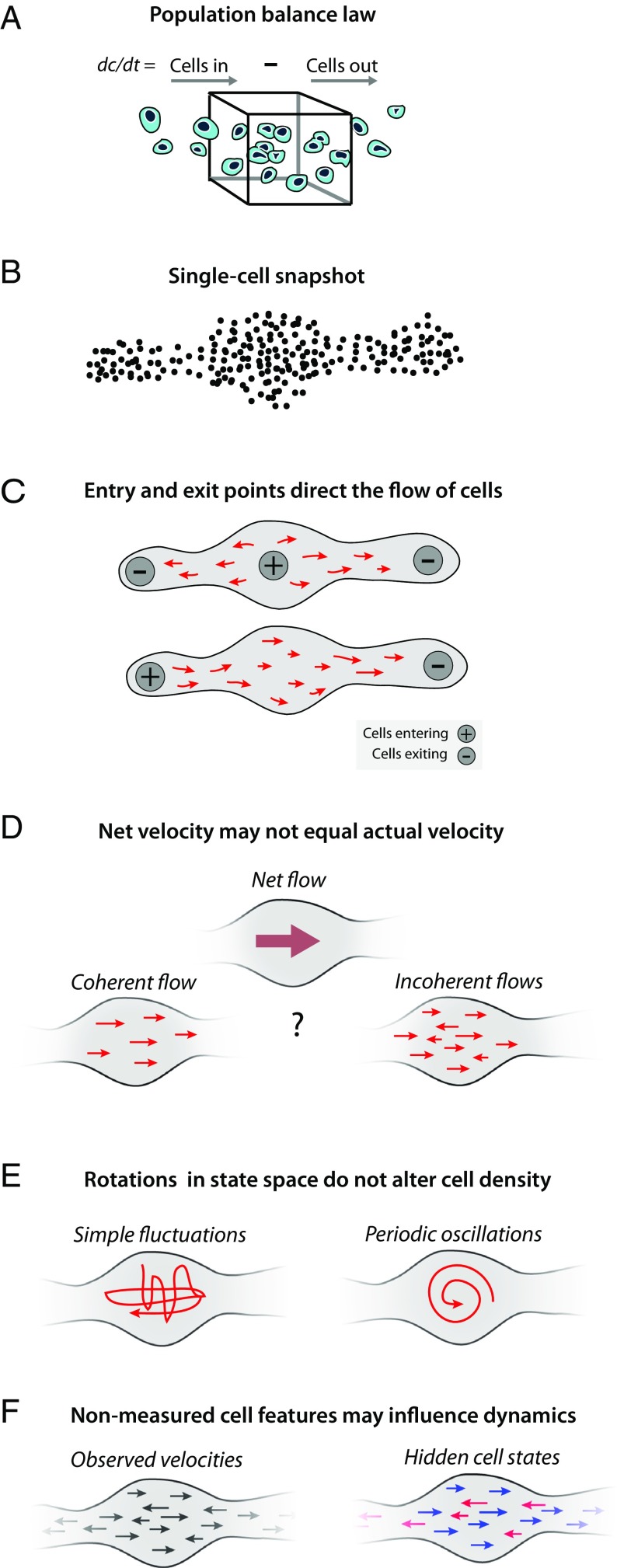
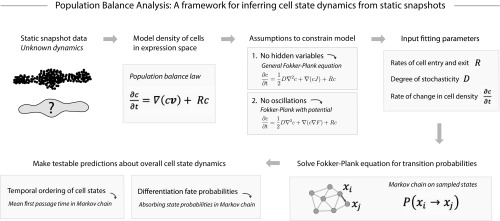
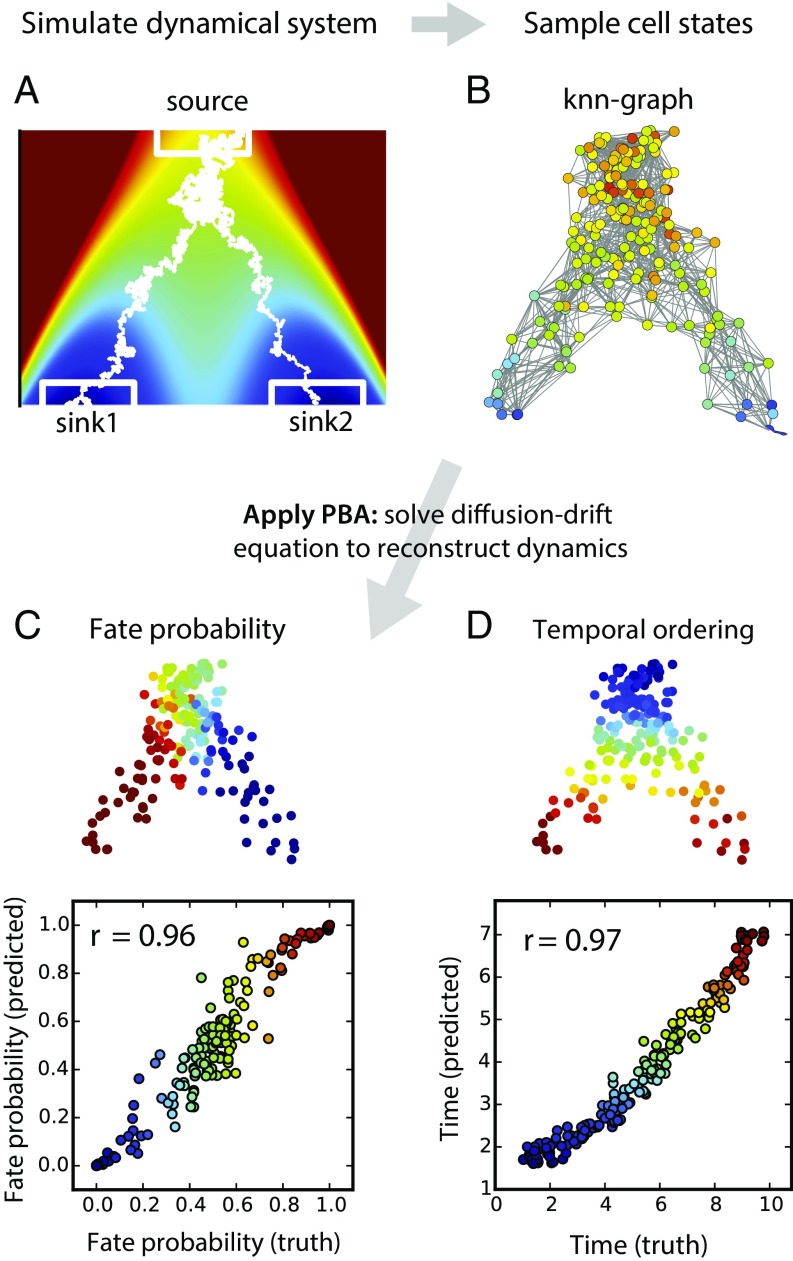
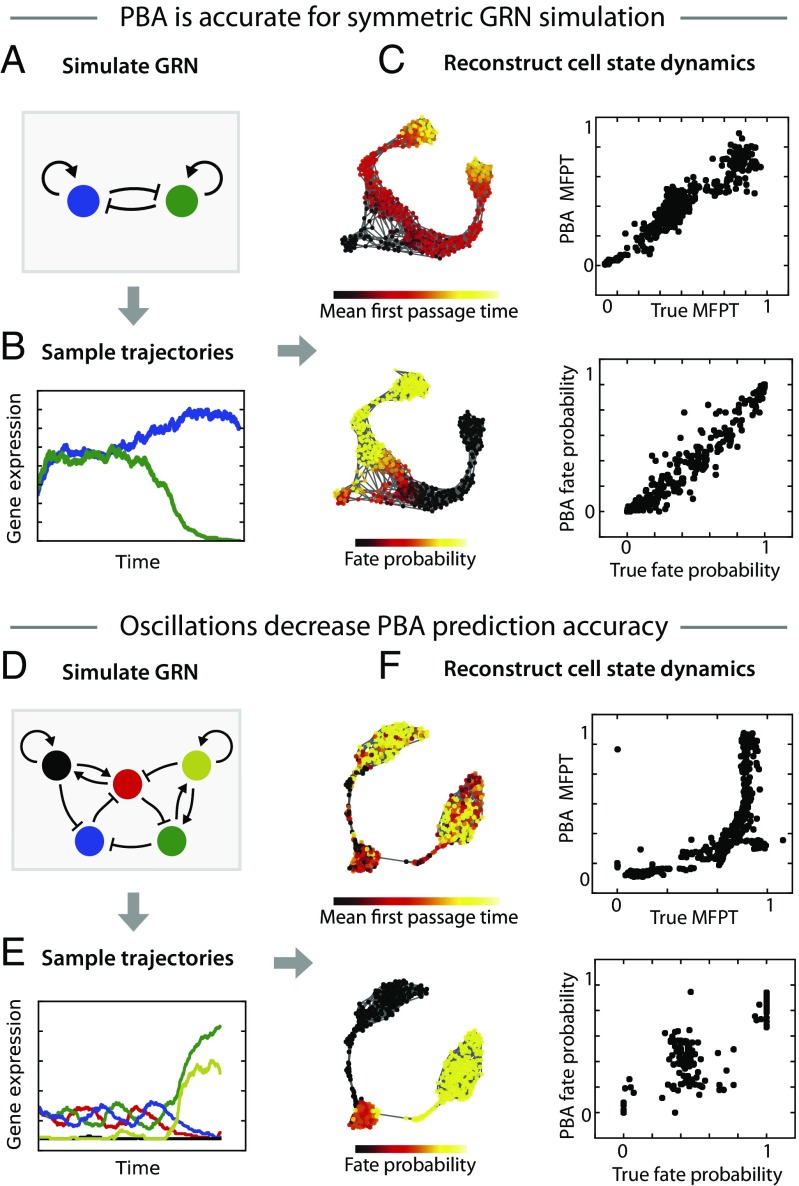
Verification
Claims the paper makes
The claims and statistics of this paper haven’t been checked yet.
Free: it reads the open-access text and checks the first 5 claims that cite a source we can check. Create a free account to check every claim.
Claims other papers make about this one
Each is checked against this paper’s own text: does it say what the citing paper says it does?
The source backs part of the claim, not all of it — or backs it for a different population, condition or comparison.
In the citing paper
“scSeq captures mature cell types alongside all stages of cell differentiation, revealing a ‘state map’ in gene expression space.”
From Lineage tracing on transcriptional landscapes links state to fate during differentiation (2020) · cites this paper as [4]
Experimental — accuracy not yet measuredThe source backs part of the claim, not all of it — or backs it for a different population, condition or comparison.
In the citing paper
“For cells undergoing multi-lineage fate choice, scSeq has been used to estimate lineage hierarchy based on the assumption that cell types with transcriptionally similar differentiation pathways are clonally related (3–5, 7).”
From Lineage tracing on transcriptional landscapes links state to fate during differentiation (2020) · cites this paper as [4]
Experimental — accuracy not yet measuredThe cited source says what the claim attributes to it.
In the citing paper
“In addition, the high-dimensional nature of scSeq allows more than one approach to constructing cell state trajectories from the same data (4).”
From Lineage tracing on transcriptional landscapes links state to fate during differentiation (2020) · cites this paper as [4]
Self-check
Percentages, sums and reported differences re-computed from the paper’s own numbers.
The self-check needs the paper’s full text.
Citations
Cites
Stochastic Problems in Physics and Astronomy
Chandrasekhar, S. (1943) · Reviews of Modern Physics · doi:10.1103/revmodphys.15.1 · Cited by 8,470 · cited 1×
“The ubiquity of diffusion-drift equations in fields of quantitative biology (17) and physics (18) suggests that applications of these methods may exist in other fields.”
BackgroundHighly parallel genome-wide expression profiling of individual cells using nanoliter droplets.
Macosko, E. Z., Basu, A., Satija, R., Nemesh, J., Shekhar, K., Goldman, M., Tirosh, I., Bialas, A. R., Kamitaki, N., Martersteck, E. M., et al. (2015) · Cell · doi:10.1016/j.cell.2015.05.002 · Cited by 7,110
A synthetic oscillatory network of transcriptional regulators
Elowitz, M. B., & Leibler, S. (2000) · Nature · doi:10.1038/35002125 · Cited by 4,630 · cited 1×
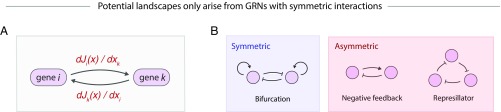
“We simulated an oscillatory GRN in the form of a “ repressilator ” circuit (26) with the addition of positive-feedback loops that create two “ escape routes ” leading to alternative stable fixed points of the dynamics (Fig.”
MethodDroplet barcoding for single-cell transcriptomics applied to embryonic stem cells
Klein, A. M., Mazutis, L., Akartuna, I., Tallapragada, N., Veres, A., Li, V., Peshkin, L., Weitz, D. A., & Kirschner, M. W. (2015) · Cell · doi:10.1016/j.cell.2015.04.044 · Cited by 3,356 · cited 7×
“Therefore, it is unclear how well PBA can infer cell trajectories that result from GRNs with oscillatory dynamics.”
BackgroundInfluentialSelf-citationA clonogenic common myeloid progenitor that gives rise to all myeloid lineages
Akashi, K., Traver, D., Miyamoto, T., & Weissman, I. L. (2000) · Nature · doi:10.1038/35004599 · Cited by 2,617 · cited 2×
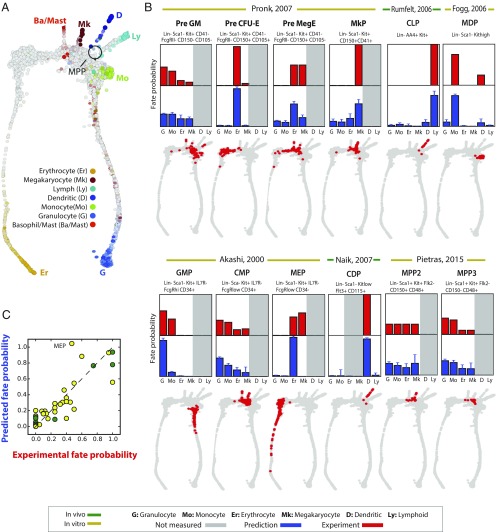
“The main qualitative disagreement be-tween PBA predictions and experiment was in the behavior of Lin − Sca1 − Kit + IL7R − FcgR low CD34 − HPCs, previously defined as megakaryocyte-erythroid precursors (31).”
BackgroundSingle-cell chromatin accessibility reveals principles of regulatory variation
Buenrostro, J. D., Wu, B., Litzenburger, U. M., Ruff, D., Gonzales, M. L., Snyder, M. P., Chang, H. Y., & Greenleaf, W. J. (2015) · Nature · doi:10.1038/nature14590 · Cited by 2,308 · cited 1×
“Rapidly maturing technologies are also enabling single-cell measurements of the epigenome (4), the proteome (5, 6), and the spatial organization of chromatin (7).”
BackgroundBendall, S. C., Simonds, E. F., Qiu, P., Amir, E.-A. D., Krutzik, P. O., Finck, R., Bruggner, R. V., Melamed, R., Trejo, A., Ornatsky, O. I., et al. (2011) · Science · doi:10.1126/science.1198704 · Cited by 2,279 · cited 1×
“Rapidly maturing technologies are also enabling single-cell measurements of the epigenome (4), the proteome (5, 6), and the spatial organization of chromatin (7).”
BackgroundStochastic Simulation of Chemical Kinetics
Gillespie, D. T. (2007) · Annual Review of Physical Chemistry · doi:10.1146/annurev.physchem.58.032806.104637 · Cited by 2,115 · cited 1×
“Although Fokker–Planck descriptions are necessarily approximations, their emergence from first-principles descriptions of transcriptional dynamics in terms of chemical master equations (21), and their ubiquity in describing chemical reaction systems (22), help justify their use instead of the more general form of Eq.”
Coifman, R. R., Lafon, S., Lee, A. B., Maggioni, M., Nadler, B., Warner, F., & Zucker, S. W. (2005) · Proceedings of the National Academy of Sciences · doi:10.1073/pnas.0500334102 · Cited by 1,675 · cited 1×
“Interestingly, several recent studies (8, 15, 43) have developed k-nearest neighbor graph-based representations of single-cell data, and others have suggested embedding cells in diffusion maps (24, 44) on the basis of other similarity kernels.”
BackgroundDiffusion pseudotime robustly reconstructs lineage branching
Haghverdi, L., Büttner, M., Wolf, F. A., Buettner, F., & Theis, F. J. (2016) · Nature Methods · doi:10.1038/nmeth.3971 · Cited by 1,385
Cited by
Items 301–400 of 407
Taylor‐King, J. P., Regep, C., Soman, J., Tong, F., Cangea, C., & Roberts, C. (2020) · arXiv (Cornell University) · doi:10.48550/arxiv.2006.05138
“[32], it is shown there are limits on what may be inferred from snapshot data alone — there are too many models that are hypothetically possible.”
BackgroundComparative transcriptomics of host-pathogen interactions and hybridization in Candida pathogens
Hovhannisyan, H. (2020) · Tesis Doctorals en Xarxa (Consorci de Serveis Universitaris de Catalunya)
Cell states along oligodendrocyte development and disease
van Bruggen, D. (2020) · Figshare
Fincher, C. T. (2020) · DSpace@MIT (Massachusetts Institute of Technology)
Pathway-based Lineage Analysis of Time-course Single-cell RNA Sequencing Data
Tran, T. N. (2019) · TSpace (University of Toronto)
Statistical and network dynamics approaches to cancer genomics data analytics
Matteuzzi, T. (2021) · AMS Dottorato Institutional Doctoral Theses Repository (University of Bologna) · doi:10.48676/unibo/amsdottorato/9821
Artinger, K. (2021) · Faculty Opinions – Post-Publication Peer Review of the Biomedical Literature · doi:10.3410/f.733108089.793583884
From pseudotime to true dynamics: reconstructing a real-time axis for T cells differentiationPreprint
Gavish, A., Chain, B., Salame, T., Antebi, Y. E., Katz, S., Reich-Zeliger, S., & Friedman, N. (2022) · bioRxiv (Cold Spring Harbor Laboratory) · doi:10.1101/2022.06.09.495431
“Several studies attempted to describe true temporal dynamics using some a-priori knowledge about the system (Weinreb et al., 2018), reconstruct the trajectory using experiments to infer some time-points along it (Farbehi et al., 2019; Fischer et al., 2019), or ignored cell division and cell death…”
BackgroundFrom Pseudotime to True Dynamics: Reconstructing a Real-Time Axis for T Cells DifferentiationPreprint
Gavish, A., Chain, B., Salame, T., Antebi, Y. E., Katz, S., Reich-Zeliger, S., & Friedman, N. (2022) · SSRN Electronic Journal · doi:10.2139/ssrn.4133894
de Vries, D. H. (2022) · University of Groningen research database (University of Groningen / Centre for Information Technology) · doi:10.33612/diss.255266474
CD9 marks myeloid/MegE-biased human hematopoiesisPreprint
Safi, F., Dhapola, P., Sommarin, M. N. E., & Karlsson, G. (2023) · Research Square · doi:10.1101/2023.09.06.556527
The statistical physics of single cell genomics
Lemus, E. H. (2023) · Molecular Physics · doi:10.1080/00268976.2023.2297818
Li, H., & Hu, J. (2024) · International Conference on Biological Engineering and Medical Science (ICBioMed) · doi:10.1117/12.3012932
“[17].”
Analysis, calibration and evaluation of stochastic models of gene expression
Ventre, E. (2022) · theses.fr (ABES) · doi:10.70675/97ec9d1cz3030z4d64zb761z07e6f0e6c2aa
Identités et spécification des neurones de Cajal-Retzius dans le cortex murin
Moreau, M. X. (2022) · theses.fr (ABES) · doi:10.70675/bae08c46ze53bz4d26za547z0c7e6fe9d5e2
Nomura, S., Kojima, Y., Minoura, K., Hayashi, S., Abe, K., Hirose, H., & Shimamura, T. (2026) · Bioinformatics · doi:10.1093/bioinformatics/btag652
“However, owing to the destructive nature of sequencing experiments, single-cell data represent static snapshots at the time of measurement, hindering evaluation of the coordinated dynamic changes across modalities (Weinreb et al. 2018).”
Alternative approaches to single-cell trajectory inference using a commute time matrixPreprint
Houston, D. W. (2025) · bioRxiv (Cold Spring Harbor Laboratory) · doi:10.1101/2025.02.12.635984
Repele, A., Handzlik, J. E., Samarawickrama, N., Long, T., Nooti, S. K., Potluri, V., Loh, Y. L., & Manu (2026) · PLoS Computational Biology · doi:10.1371/journal.pcbi.1014276
“BM cells having a population balance analysis (PBA) [18] probability of more than 0.8 for a particular lineage are labeled as that lineage.”
InfluentialWang, J., Sun, L., Wei, N., Huang, Y., & Zhang, N. (2025) · Bioinformatics · doi:10.1093/bioinformatics/btaf454
“This limitation poses a significant challenge for the fine-grained reconstruction of continuous and dynamic cell-state transitions (Kolodziejczyk et al. 2015, Bacher and Kendziorski 2016, Weinreb et al. 2018).”
Shalom, I., Somer, J., Miyara, S., Mayo, A., Mannor, S., & Alon, U. (2025) · bioRxiv (Cold Spring Harbor Laboratory) · doi:10.1101/2025.09.02.673328
Computational methods to infer lineage decision-making in cancer using single-cell data
Setty, M. N. (2025) · Oxford University Press eBooks · doi:10.1093/med/9780192867636.003.0012
Emerging single-cell technologies and concepts to trace cancer progression and drug resistance
Ahmed, S. S., Pi, D., Bodkin, N., Rebecca, V. W., & Goyal, Y. (2025) · Oxford University Press eBooks · doi:10.1093/med/9780192867636.003.0014
Xing, J., & Wang, W. (2025) · Oxford University Press eBooks · doi:10.1093/med/9780192867636.003.0013
Quantifying coupled dynamics in phase-space from state distribution snapshots
Aghion, E., & Leibovich, N. (2026) · New Journal of Physics · doi:10.1088/1367-2630/ae5127
“There are two main hurdles [19]: (i) Numerical solvers are inaccurate at high-dimensions [35], and (ii) The exact multi-dimensional distribution can never be experimentally observed in every point in phase space, but only through a finite number of sampled data points.”
MITO: ROBUST INFERENCE OF MITOCHONDRIAL PHYLOGENIES AND CLONES
Cossa, A. (2025) · Archivio Istituzionale della Ricerca (Universita Degli Studi Di Milano) · doi:10.13130/cossa-andrea_phd2025-01-21
Trajectory inference for equilibrium systems with optimal transport
Zhang, J. (2024) · cIRcle (University of British Columbia) · doi:10.14288/1.0444197
Ranek, J. S., Stanley, N., & Purvis, J. E. (2022) · Figshare · doi:10.6084/m9.figshare.20968169
Wolf, F., Hamey, F., Plass, M., Solana, J., Dahlin, J. S., Göttgens, B., Rajewsky, N., Simon, L., & Theis, F. (2019) · Figshare · doi:10.6084/m9.figshare.7867448
Branching Brownian motion models for cell developmental trajectories
Gadhiwala, N. (2023) · cIRcle (University of British Columbia) · doi:10.14288/1.0435667
MOTIF INFERENCE FROM SINGLE CELL DYNAMICS
Haggerty, R. A. (2019) · Carolina Digital Repository (University of North Carolina at Chapel Hill) · doi:10.17615/4tmr-6s75
Ben-Kiki, O., Bercovich, A., Lifshitz, A., & Tanay, A. (2022) · Figshare · doi:10.6084/m9.figshare.19619390
Ben-Kiki, O., Bercovich, A., Lifshitz, A., & Tanay, A. (2022) · Figshare · doi:10.6084/m9.figshare.19619387
Additional file 2 of Biologically informed NeuralODEs for genome-wide regulatory dynamics
Hossain, I., Fanfani, V., Fischer, J., Quackenbush, J. F., & Burkholz, R. (2024) · Figshare · doi:10.6084/m9.figshare.26723726
Ranek, J. S., Stanley, N., & Purvis, J. E. (2022) · Figshare · doi:10.6084/m9.figshare.20968166
Additional file 1 of Biologically informed NeuralODEs for genome-wide regulatory dynamics
Hossain, I., Fanfani, V., Fischer, J., Quackenbush, J. F., & Burkholz, R. (2024) · Figshare · doi:10.6084/m9.figshare.26723723
Kyaw, W. (2025) · UNSWorks (University of New South Wales, Sydney, Australia) · doi:10.26190/unsworks/31409
Modi, S. (2021) · Library, Museums and Press - UDSpace (University of Delaware) · doi:10.58088/x5ge-as71
Additional file 3 of Biologically informed NeuralODEs for genome-wide regulatory dynamics
Hossain, I., Fanfani, V., Fischer, J., Quackenbush, J. F., & Burkholz, R. (2024) · Figshare · doi:10.6084/m9.figshare.26723729
Larsson, I. (2023) · Uppsala University Publications (Uppsala University)
Interpretable models of gene expression in single-cell immunology
Fischer, D. S., Theis, F. J., & München, T. U. (2021) · mediaTUM (Technical University of Munich)
Signals and the shape of developmental landscapes
Klein, A. M. (2026) · Proceedings of the National Academy of Sciences · doi:10.1073/pnas.2533095123
“Their inference strategy has precedents, including in learning single cell land - scapes confined to data ( 8 , 14 ) or learning dynamics that imply a landscape (16), but here these elements are adapted and assembled specifically to locate stable states and saddle points.”
Self-citationVAETracer: Mutation-Guided Lineage Reconstruction and Generational State Inference from scRNA-seqPreprint
Pan, L., Wang, K., & Chen, L. (2026) · bioRxiv (Cold Spring Harbor Laboratory) · doi:10.64898/2026.01.19.700238
More than co-occurrence: what amplicon time series data can tell us
Oldenburg, E., Saadat, N. P., Thielen, S. V., & Popa, O. (2026) · Deep Sea Research Part II Topical Studies in Oceanography · doi:10.1016/j.dsr2.2026.105599
Experimental Time Points Guided Transcriptomic Velocity InferencePreprint
Zang, X., Shu, X., Nz, Z., Wu, Y., Deng, M., Zhou, X., Yang, J., Zhang, C., Wang, X., Zhou, Z., et al. (2026) · bioRxiv (Cold Spring Harbor Laboratory) · doi:10.64898/2026.02.17.705910
Lance, C., Shitov, V. A., Wen, H., Ji, Y., Holderrieth, P., Wu, Y., Liu, R., Cannoodt, R., Tang, W., Waldrant, K., et al. (2026) · bioRxiv (Cold Spring Harbor Laboratory) · doi:10.64898/2026.02.24.707614
“Consequently, models trained exclusively at single time points may capture local cell state transitions, but fail to capture global distribution shifts during biological processes such as cell differentiation or disease progression and cannot reliably extrapolate future biological states 25,26 .”
Zhang, K. X. (2024) · TSpace (University of Toronto)
A Latent Space Thermodynamic Model of Cell DifferentiationPreprint
Poursina, A., Hajhashemi, S., Saberi, A., Namini, A. M., Madrigal, A., Emad, A., & Najafabadi, H. S. (2026) · bioRxiv (Cold Spring Harbor Laboratory) · doi:10.64898/2026.03.04.709512
“Importantly, however, population-level evolution does not uniquely determine the underlying cell-level dynamics 34 : in general, multiple state-dependent dynamical processes can generate the same sequence of cell-state distributions.”
Estimating time since influenza virus exposure using single-cell proteomic data
Nervo, K. R., Bidoki, N. H., Chen, H. M., Rahil, Z., Bjornson, Z. B., Kim, K., Bock, B., Affrime, M. B., Bauerle, L. V., Huynh, P. B. T., et al. (2026) · Frontiers in Immunology · doi:10.3389/fimmu.2026.1787198
“All analyses were performed in Python using the pandas, NumPy, SciPy, Matplotlib, Seaborn, and scikit-learn libraries (20, 21), as commonly adopted in other single-cell studies (22).”
Wu, J., Dong, H., Xu, X., & Wang, M. (2026) · Leukemia & lymphoma/Leukemia and lymphoma · doi:10.1080/10428194.2026.2649879
“Differences in sampling intervals, processing procedures, cell vitality and enrichment efficiency may lead to batch effects and technical deviations, making longitudinal comparisons difficult [65,86].”
Rotkevich, M., Merino, M. F., & Cosma, M. P. (2026) · Current Opinion in Systems Biology · doi:10.1016/j.coisb.2026.100590
Okochi, Y., Sawazaki, Y., Kondo, Y., & Naoki, H. (2026) · bioRxiv (Cold Spring Harbor Laboratory) · doi:10.64898/2026.04.14.718485
Mathematics-informed machine learning for mapping cell development
Goshu, B. S. (2026) · Brazilian Journal of Science · doi:10.14295/bjs.v5i4.842
“This moves analysis from correlative "pseudotime" ordering to the causal prediction of future states and responses to perturbations, a challenge at the heart of modern trajectory inference (Weinreb et al., 2020; Tong et al., 2020).”
Huang, Z., Yang, D., Zhang, R., Chen, Q., Zhao, H., & Xu, H. (2026) · bioRxiv (Cold Spring Harbor Laboratory) · doi:10.64898/2026.04.27.721026
The molecular asynchrony of single cellsPreprint
Fu, B., Tan, R., Cao, Z., Bai, X., Bai, D., Song, J., & Zhu, C. (2026) · bioRxiv (Cold Spring Harbor Laboratory) · doi:10.64898/2026.06.02.729594
“According to the Boltzmann distribution, the density of cells observed in a speci fi c cellular state (probability) is inversely, exponentially proportional to the “energy” of the state 17 .”
Fu, Z., Fu, J., Zhang, K., Ran, T., & Chen, C. (2026) · Frontiers in Genetics · doi:10.3389/fgene.2026.1838613
“Cellular differentiation unfolds as continuous dynamical processes governed by regulatory programs (Weinreb et al., 2018; La Manno et al., 2018).”
Saha, U. (2026) · Apollo (University of Cambridge) · doi:10.17863/cam.131958
Bowman, M., Bandopadhyay, R., Singh, V., Telpoukhovskaia, M. A., Velde, R. V., Shaffer, S. M., Trowbridge, J. J., & Bowman, R. L. (2026) · bioRxiv (Cold Spring Harbor Laboratory) · doi:10.64898/2026.07.01.735284
“Strategies have used temporal scRNA datasets to fit the diffusion models through neural networks[38, 39], optimal transport[6, 40], and Markov chains[41, 42].”
Geometry-informed bifurcation type identification via Zernike moments
Lu, X., Xue, Z., Yang, J., & Wang, R. (2026) · Chaos Solitons & Fractals · doi:10.1016/j.chaos.2026.118795
Global StationaryOT: trajectory inference for aging time courses of single-cell snapshots
Boyle, C., Ventre, E., & Schiebinger, G. R. (2026) · Bioinformatics · doi:10.1093/bioinformatics/btag532
“Alternatively, prior biological knowledge of cell type specific growth can also be used once cell identities have been inferred with marker genes (Weinreb et al. 2018, Rahni and Birnbaum 2019, Zhang et al. 2021).”
InfluentialFusedFCR: A Fused Forward Continuation-Ratio model for marker selection along cell-fate trajectoriesPreprint
Mattila, C., Chakraborty, A., Angel, P. M., Cao, S., Sonawane, K., Hill, E., Chung, D., Neelon, B., & Seal, S. (2026) · bioRxiv (Cold Spring Harbor Laboratory) · doi:10.64898/2026.07.20.739649
Xiang, Y., Li, Y., Tian, C., Gu, R., He, F., Wen, H., Xie, L., & Zhou, P. (2026) · bioRxiv (Cold Spring Harbor Laboratory) · doi:10.64898/2026.08.05.742921
Real-Time Measurement of Single-Cell Rotation Speed With OET System
Gai, D., Dang, D., Leng, L., Qin, H., & Zhang, C. (2026) · IEEE International Conference on Nano/Micro Engineered and Molecular Systems · doi:10.1109/nems69704.2026.11633696
“The analysis of single-cell dynamics has shifted focus from population-level averages to individual biological entities [1], [2].”
Genomic repeats for single-cell molecular recordingPreprint
Dveirin, R. K., Lin, J. D., Vyas, P., Lu, J., Yan, Y., Lee, J. J., Dong, X., Kannan, S., Langmead, B., Reddy, S., et al. (2026) · bioRxiv (Cold Spring Harbor Laboratory) · doi:10.64898/2026.08.06.743335
Decoding gene regulatory networks from single-cell RNA velocityPreprint
Meng, L., & Wang, S. M. (2026) · arXiv (Cornell University) · doi:10.48550/arxiv.2608.09722
Solving High-Dimensional Population Balance Equations via Dynamics-Preserving AutoencodersPreprint
Gupta, P., Verma, S., Grama, A. Y., & Ramkrishna, D. (2026) · bioRxiv (Cold Spring Harbor Laboratory) · doi:10.64898/2026.08.09.743783
Kinetic Remodeling in Durable Response and ResistancePreprint
Tsakona, D. C., & Papanikolaou, N. A. (2026) · SSRN Electronic Journal · doi:10.2139/ssrn.7251258
Baye, J. (2021) · Apollo (University of Cambridge) · doi:10.17863/cam.133581
Wang, B. (2026) · SSRN Electronic Journal · doi:10.2139/ssrn.7368638
liao, X.-R., Zheng, H., Luo, J.-Y., & Zheng, B. (2026) · Journal of Translational Medicine · doi:10.1186/s12967-026-08732-8
“However, pseudotime is not equivalent to biological time, and most DRG datasets do not track the same cells longitudinally [111].”
Lu, N. (2026) · Drug Discovery Today · doi:10.1016/j.drudis.2026.104795
Division-resolved inference of flow and trajectories in proliferating cell populationsPreprint
Shin, G., Miettinen, T. P., & Kang, J. H. (2026) · bioRxiv (Cold Spring Harbor Laboratory) · doi:10.64898/2026.09.03.747958
“Transient inference therefore requires a computational procedure for selecting stable, biologically plausible velocity fields and division-state densities among the multiple solutions consistent with the population balance and the measured data 45 .”
Zhao, J., Zhu, J., & Zhang, J. (2026) · International Journal of Molecular Sciences · doi:10.3390/ijms27177966
“Importantly, this inferred ordering primarily reflects transcriptional similarity and state relationships [26].”
Lineage relationships in muscle stem cells: linking functional fate to molecular state
Ashekyan, O., Catenacci, M., Guilhot, C., Lin, T., & Rudnicki, M. A. (2026) · Frontiers in Cell and Developmental Biology · doi:10.3389/fcell.2026.1930884
“Pseudotime ordering is based on transcriptional similarity only and is less confident in low-RNA-content quiescent MuSCs (Weinreb et al., 2018).”
Single-cell and spatial transcriptomics inform mechanistic physiology in non-model animals
Amin, A., & Zaman, W. (2026) · Functional & Integrative Genomics · doi:10.1007/s10142-026-02054-0
“Pseudotime, RNA velocity, expression correlation, and ligand–receptor inference are valuable within this framework, but each depends on assumptions that cannot be resolved from static transcriptomic snapshots alone (Weinreb et al. 2018; Armingol et al. 2021).”
Hu, J., Singh, H., Das, J., Pinello, L., & Ma, R. (2026) · bioRxiv (Cold Spring Harbor Laboratory) · doi:10.64898/2026.09.21.753192
Schlüter, J., & Schönhuth, A. (2026) · arXiv (Cornell University) · doi:10.48550/arxiv.2609.37735
“…the absence of paired measurements, lineage information, or longitudinal sampling, the relationship between an individual healthy-like epithelial cell and potential tumor-associated states is not directly observed, and a unique future tumor state cannot be inferred from snapshot data alone [4, 5].”
Investigating the molecular mechanisms of N-HELQ interaction with POLD3 and RPA1
Roberts, A. (2026) · Nottingham ePrints (University of Nottingham)
Bakibillah, A. S. M., Sasahara, H., & Imura, J. (2026) · Scientific Reports · doi:10.1038/s41598-026-73430-w
An inverse-stochastic-control Galerkin estimator for drift potentialsPreprint
Nakano, Y. (2026) · arXiv (Cornell University) · doi:10.48550/arxiv.2610.04268
“It does not identify a unique running– terminal cost decomposition, and marginals identify only the gradient component [45].”
Beyond molecular snapshots: Regulatory trajectories in dynamic epigenetic regulation
Amorim, M. Z., Estrada, M. M., & Zhenhua, C. U. I. (2026) · Biosystems · doi:10.1016/j.biosystems.2026.105984
Canova, N., & Fleck, J. S. (2026) · arXiv (Cornell University) · doi:10.48550/arxiv.2610.11318
Li, D.-M., Pei, K., Yang, B., Qie, M., Xu, J., Zhong, L., & Song, L. (2026) · Frontiers in Immunology · doi:10.3389/fimmu.2026.1981010
“…represent the dynamic processes of protein function and cellular interactions — the discordance between transcript abundance and protein activity remains an inherent limitation that is dif fi cult to circumvent when extrapolating clinical conclusions from single-cell transcriptomic data (123 – 125).”
Nguyen, T.-H., Nguyen, T.-D., Hoang, O.-T., Can, T.-T. T., Nguyen, M.-H. T., Tran, M.-H., Chu, H.-C., & Nguyen, D.-V. (2026) · Clinical Reviews in Allergy & Immunology · doi:10.1007/s12016-026-09211-0
Dynamic causal inference methods for modelling biological processes in cancer
Bernal, A. M. C. (2023) · Adelaide Research & Scholarship (AR&S) (University of Adelaide)
Decomposing multi-scale dynamic regulation from single-cell multiomics with scMagnify
Chen, X., Yan, X., Shen, B., Wang, H., Tang, Z., Zang, Y., Lin, P., Zhang, H., Li, Y., & Li, H. (2026) · Nature Communications · doi:10.1038/s41467-026-78441-9
A Cross-Condition Single-Cell Atlas Defines Skeletal Muscle Adaptation and Its Predictive Limits
Tong, W., Yang, R., Yu, Q., Shao, C., Yang, G., & Wang, Z. (2026) · Current Issues in Molecular Biology · doi:10.3390/cimb48101080
“Snapshot data cannot identify same-cell transitions, residence times or continuous-time transition rates [49].”
LineageFlow: growth-corrected state dynamics for probabilistic cell-fate predictionPreprint
Yang, L., Liu, Q., Wang, W., Liu, J., Wang, Y., & Zhang, W. (2026) · bioRxiv (Cold Spring Harbor Laboratory) · doi:10.64898/2026.10.17.759846
“These explanations need not be distinguishable from normalized state fractions alone, a confounding problem also recognized in models of population flux from single-cell time courses [15, 16].”
LoCoFlow: Local-Context Flow Matching for Single-Cell Dynamics and Fate InferencePreprint
Liu, C., Guan, Z., & Lan, X. (2026) · bioRxiv (Cold Spring Harbor Laboratory) · doi:10.64898/2026.10.15.758594
“Additionally, reconstructing continuous trajectories from snapshots alone yields multiple possible solutions, necessitating the use of temporal, geometric, or biological constraints to guide inference (Zhang et al., 2026; Weinreb et al., 2018).”
Conserved Brain-Associated CD8 + T Cell Programs and Their Regulation by the Brain MicroenvironmentPreprint
Park, K., Sanchez, T., Jeon, S., Schade, P. F., Hildebrand, D. G. C., & Yim, Y. S. (2026) · bioRxiv (Cold Spring Harbor Laboratory) · doi:10.64898/2026.10.22.761115
“42 Future studies using longitudinal sampling or lineage-tracing approaches will be necessary to determine how these states arise and whether brain-associated CD8 + T cells undergo progressive differentiation after entering the parenchyma.”
Building virtual cell dynamics that evolve with biological measurementsPreprint
Zhang, Z., Wang, Z., Tian, Q., Zhou, B., Tianyu, Z., Nie, Q. H., & Zhou, P. (2026) · bioRxiv (Cold Spring Harbor Laboratory) · doi:10.64898/2026.10.23.761350
Tanaka, N. (2026) · arXiv (Cornell University) · doi:10.48550/arxiv.2610.37500
“It is known from trajectory inference that snapshots do not identify divergence-free components of the drift [28].”
Graphical Modeling from Marginal Information via Optimal TransportPreprint
Naepels, U., Freulon, P., & Panaretos, V. M. (2026) · arXiv (Cornell University) · doi:10.48550/arxiv.2610.40070
“…available: this is typically the case for destructive measurements such as single-cell experiments [Saelens et al., 2019, Schiebinger et al., 2019, Weinreb et al., 2018, Wolf et al., 2019], or whenever individuals cannot be separately tracked [Bar-Shalom, 1978, Leonard et al., 2020, Ouellette et…”
Learning developmental dynamics from lineage contextPreprint
gowri, G., Fishman, N., Colgan, W. N., Wang, M., Kijima, Y., Kumar, S. A., Zimin, A., Koblan, L. W., Žitnik, M., Smith, Z. D., et al. (2026) · arXiv (Cornell University) · doi:10.48550/arxiv.2610.40447
LOTUS: lineage-aware optimal transport reconstructs continuous clonal fate dynamicsPreprint
Lu, J., Hou, H., Zhang, Z., Lin, Y., Lin, Y., & Zhou, P. (2026) · bioRxiv (Cold Spring Harbor Laboratory) · doi:10.64898/2026.10.28.762359
Mixing, competence, and commitment set the stability of cell identityPreprint
Strawbridge, S. E., & Fletcher, A. G. (2026) · bioRxiv (Cold Spring Harbor Laboratory) · doi:10.64898/2026.11.01.763472
Learning hidden-state dynamics from unpaired snapshots with lift-project SDEsPreprint
Wang, Q., George, U., & Jacobs, G. (2026) · arXiv (Cornell University) · doi:10.48550/arxiv.2611.00742
Zhang, Y., Xu, F., & Yan, J. (2026) · Agriculture Communications · doi:10.1016/j.agrcom.2026.100173
Metadata
- Authors
- Weinreb, C., Wolock, S., Tusi, B. K., Socolovsky, M., & Klein, A. M.
- Affiliations
- Harvard University (US)
- University of Massachusetts Chan Medical School (US)
- Corresponding author
- Klein, Allon M.
- Venue
- Proceedings of the National Academy of Sciences
- Publisher
- National Academy of Sciences
- Published
- 2018-02-20
- Volume
- 115
- Issue
- 10
- Pages
- E2467-E2476
- ISSN
- 0027-8424 (ISSN-L)
- 1091-6490
- PMC
- PMC5878004
- OpenAlex
- W2952840385
- Cited by
- 341
- References
- 45
- Citations by year
- 2026: 58 · 2025: 35 · 2024: 39 · 2023: 33 · 2022: 37 · 2021: 46 · 2020: 46 · 2019: 31 · 2018: 16
- FWCI
- 12.36
- Type
- journal article
- Language
- en
- Open access
- hybrid
- doi.org
- Licence
- Locations
- Proceedings of the National Academy of Sciences (publishedVersion, cc-by-nc-nd)
- PubMed Central (publishedVersion, cc-by-nc-nd)
- PubMed (publishedVersion)
- The Journal of the American Medical Association (JAMA) Network (American Medical Association) (submittedVersion, cc-by)
- Digital Access to Scholarship at Harvard (DASH) (Harvard University) (submittedVersion, cc-by)
- Funders
- Leukemia and Lymphoma Society
- Edward Mallinckrodt, Jr. Foundation
- National Institutes of Health
- National Institute of General Medical Sciences (T32GM080177)
- National Institute of Diabetes and Digestive and Kidney Diseases (R01DK100915)
- Topics
- Life Sciences › Biochemistry, Genetics and Molecular Biology › Molecular Biology › Single-cell and spatial transcriptomics
- Life Sciences › Biochemistry, Genetics and Molecular Biology › Molecular Biology › Gene Regulatory Network Analysis
- Life Sciences › Biochemistry, Genetics and Molecular Biology › Molecular Biology › Gene expression and cancer classification
- Keywords
- gene expression dynamics, trajectory reconstruction, spectral graph theory, hematopoietic progenitor cells, cell fate, gene expression regulation, experimental design
- MeSH terms
- Algorithms, Animals, Hematopoiesis, Hematopoietic Stem Cells, Gene Expression Profiling, Mice, Single-Cell Analysis
About these checks
Registry, retraction, Cites and statistics results are computed, not judged, with one exception: a printed reference that no index lists is read once by a model before it counts as a citation error. Claims are extracted by a model and kept only when their quote appears verbatim in the text; each cited source is then checked, with a model’s help, for whether it says what the claim relies on. Those verdicts can be wrong — read the claim’s quote and the cited source before relying on one.
Statistics and arithmetic are recomputed, not judged.
Confidence bands are shown only for fields calibrated on our annotated test set. None is calibrated yet, so no band is shown.
What counts as a claim ›How we measure confidence ›How we check this ›
Are you an author, or do you see a problem with this page? Request a review
Data sources
Bibliographic data: Semantic Scholar, OpenAlex, Crossref.
Contains information from the Semantic Scholar Academic Graph Datasets, made available under the ODC Attribution License (ODC-BY 1.0).
Semantic Scholar’s data is described in: Kinney, R., et al. (2023). The Semantic Scholar Open Data Platform. arXiv:2301.10140.
