

Circadian clock protein BMAL1 regulates IL-1β in macrophages via NRF2
Open accessThe DOI matches its Crossref record; 34 of the 34 references it cites were found in a registry or an index.
Abstract
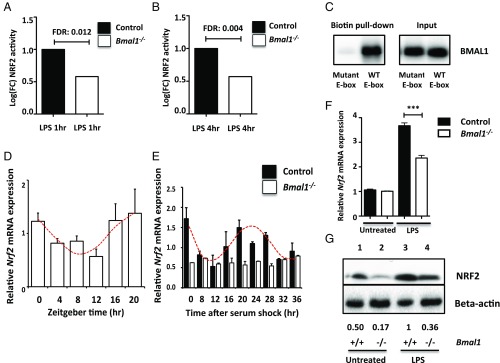
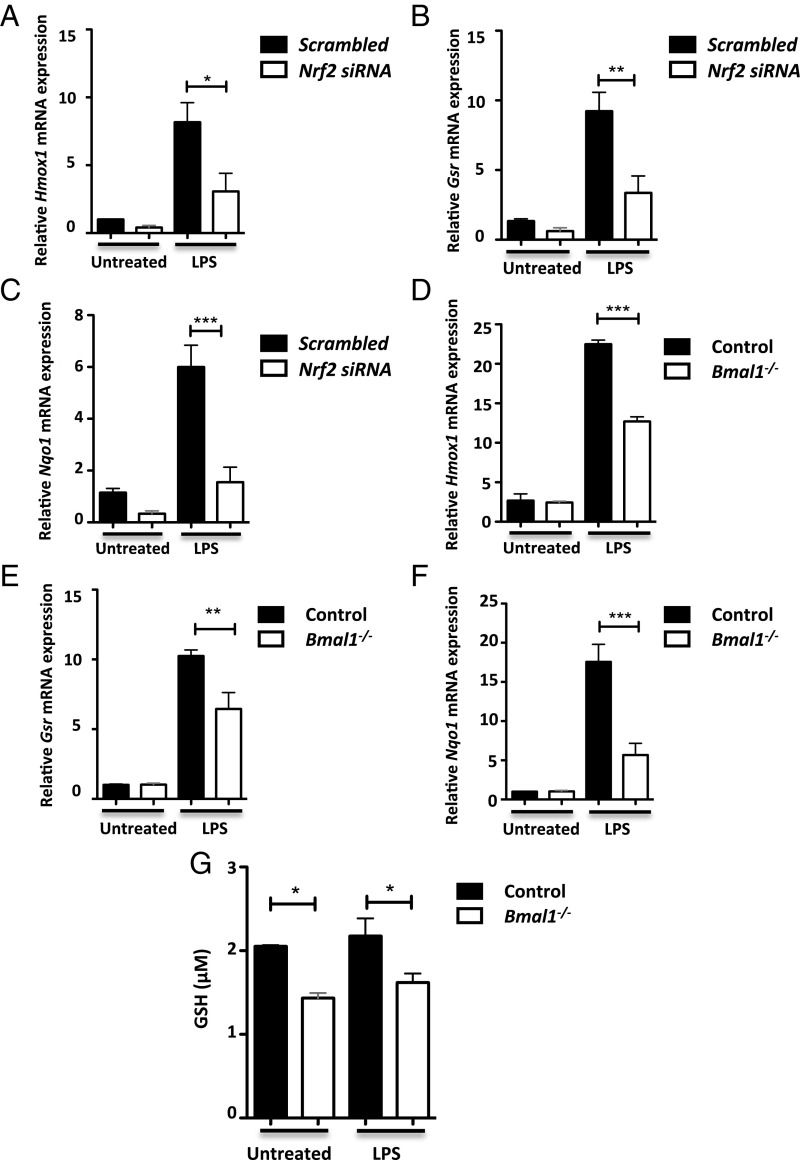
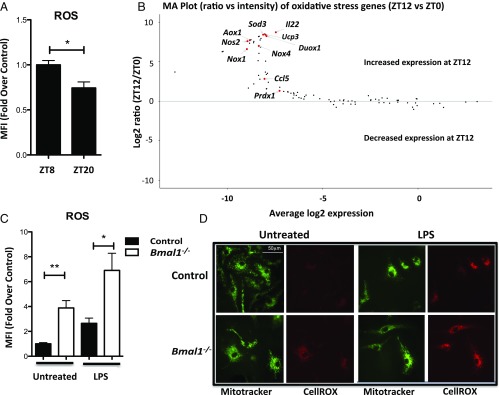
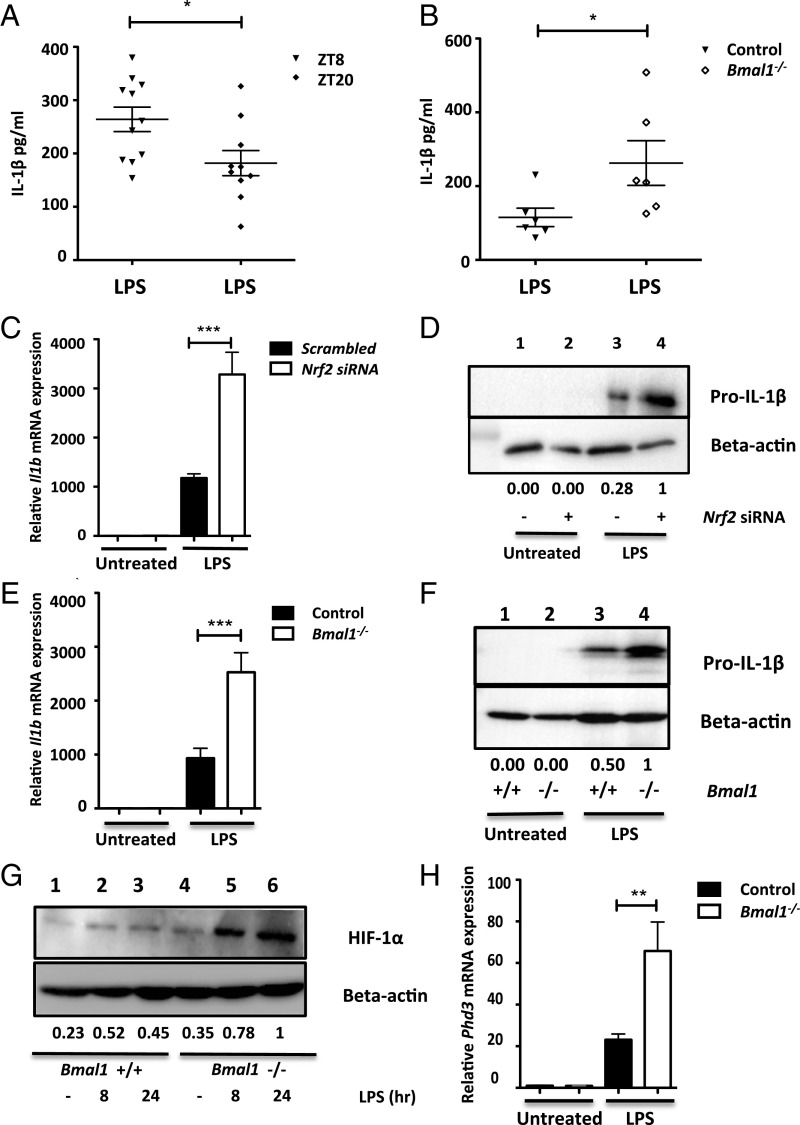
Significance: The molecular clock provides an anticipatory mechanism, allowing organisms to prepare and respond to daily changes in the external environment. The response of the innate immune system to pathogenic threats is dependent on time of day; however, the molecular mechanisms underlying this have yet to be fully uncovered. We observe that the core molecular clock component, BMAL1, is crucial in promoting an antioxidant response in myeloid cells. Deletion of Bmal1 in macrophages disrupts NRF2 activity, facilitating accumulation of reactive oxygen species and the proinflammatory cytokine, IL-1β. Thus the molecular clock directly controls NRF2 transcriptional activity and antioxidant capacity to regulate IL-1β in myeloid cells.
Overview
The claims and statistics of this paper haven’t been checked yet.
Free: it reads the open-access text and checks the first 5 claims that cite a source we can check. Create a free account to check every claim.
Integrity signals
Registry
Cites
Statistics
Figures
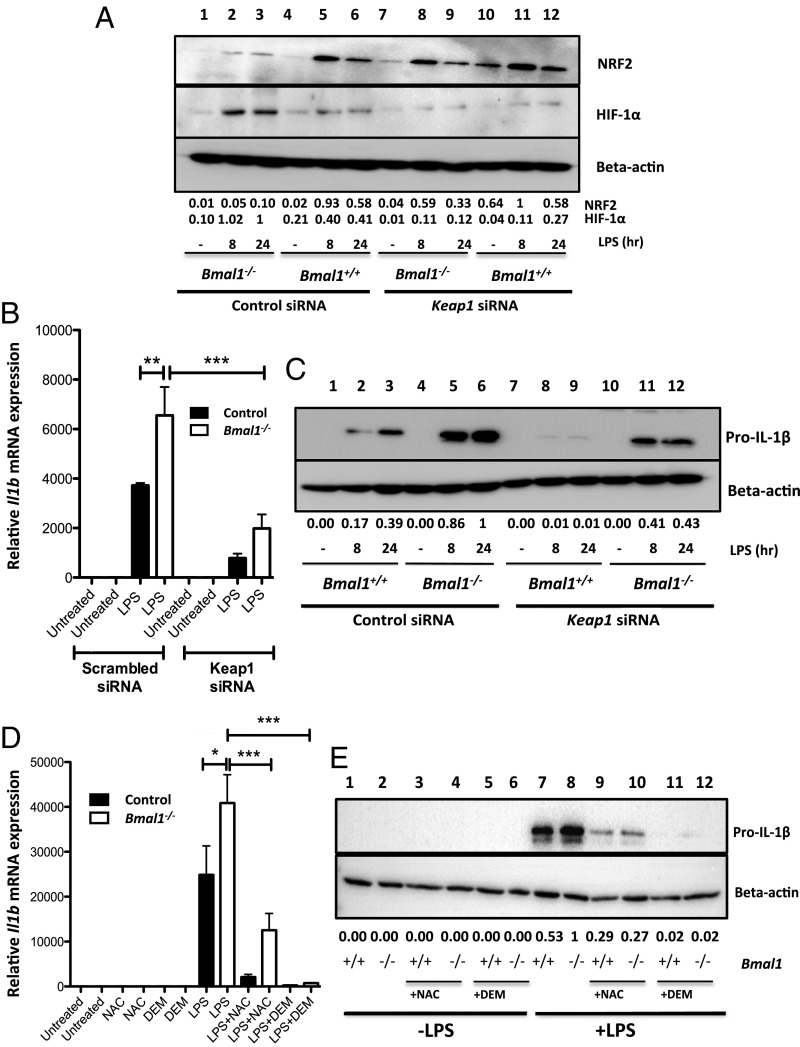
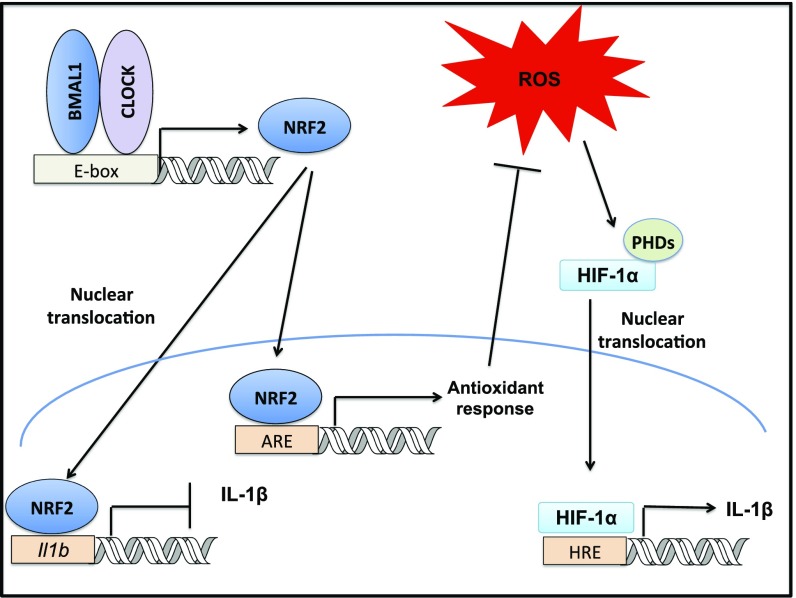
Verification
Claims the paper makes
The claims and statistics of this paper haven’t been checked yet.
Free: it reads the open-access text and checks the first 5 claims that cite a source we can check. Create a free account to check every claim.
Claims other papers make about this one
Each is checked against this paper’s own text: does it say what the citing paper says it does?
The source backs part of the claim, not all of it — or backs it for a different population, condition or comparison.
In the citing paper
“Inflammasomes in microglia can be activated by ROS, which causes inflammatory cytokines, including TNF-α, IL-1β, and IFN-γ, to be produced. 138”
From Major depressive disorder: hypothesis, mechanism, prevention and treatment (2024) · cites this paper as [138]
Experimental — accuracy not yet measuredThe check wasn’t confident either way, so it gives no verdict — never disputed.
In the citing paper
“Higher levels of inflammation increase the chance of developing new-onset depression. 138 , 139”
From Major depressive disorder: hypothesis, mechanism, prevention and treatment (2024) · cites this paper as [138]
Experimental — accuracy not yet measured
Self-check
Percentages, sums and reported differences re-computed from the paper’s own numbers.
The self-check needs the paper’s full text.
Citations
Cites
Role of nrf2 in oxidative stress and toxicity
Ma, Q. (2013) · Annual Review of Pharmacology and Toxicology · doi:10.1146/annurev-pharmtox-011112-140320 · Cited by 4,903
Reactive Oxygen Species in Inflammation and Tissue Injury
Mittal, M., Siddiqui, M. R., Tran, K., Reddy, S. P., & Malik, A. B. (2014) · Antioxidants & Redox Signaling · doi:10.1089/ars.2012.5149 · Cited by 4,897 · cited 2×
“Reactive oxygen species (ROS) are signaling molecules that are critical for the progression of an immune response (11).”
BackgroundSuccinate is an inflammatory signal that induces IL-1β through HIF-1α
Tannahill, G. M., Curtis, A. M., Adamik, J., Palsson-McDermott, E. M., McGettrick, A. F., Goel, G., Frezza, C., Bernard, N. J., Kelly, B., Foley, N. H., et al. (2013) · Nature · doi:10.1038/nature11986 · Cited by 4,176 · cited 2×
“However, in later stages of macrophage activation with LPS, ROS levels accumulate, stabilizing HIF-1α to drive IL-1β production (16, 28).”
BackgroundSelf-citationTargeting the KEAP1-NRF2 system to prevent kidney disease progression
Nezu, M., Suzuki, N., & Yamamoto, M. (2017) · American Journal of Nephrology · doi:10.1159/000475890 · Cited by 3,447
Mills, E. L., Kelly, B., Logan, A., Costa, A. S. H., Varma, M., Bryant, C. E., Tourlomousis, P., Däbritz, J. H. M., Gottlieb, E., Latorre, I., et al. (2016) · Cell · doi:10.1016/j.cell.2016.08.064 · Cited by 2,291 · cited 5×
“Circadian gating of NRF2 in macrophages would provide a mechanism by which BMAL1 may temporally regulate inflammation via modulation of ROS levels (16) and direct binding of NRF2 to the IL-1β promoter (23).”
BackgroundInfluentialSelf-citationA Serum Shock Induces Circadian Gene Expression in Mammalian Tissue Culture Cells
Balsalobre, A., Damiola, F., & Schibler, U. (1998) · Cell · doi:10.1016/s0092-8674(00)81199-x · Cited by 2,001
Itaconate is an anti-inflammatory metabolite that activates Nrf2 via alkylation of KEAP1
Mills, E. L., Ryan, D. G., Prag, H. A., Dikovskaya, D., Menon, D., Zaslona, Z., Jedrychowski, M. P., Costa, A. S. H., Higgins, M., Hams, E., et al. (2018) · Nature · doi:10.1038/nature25986 · Cited by 1,885 · cited 5×
“NRF2 has been demonstrated to limit IL-1β through this mechanism (22).”
BackgroundInfluentialSelf-citationNrf2 suppresses macrophage inflammatory response by blocking proinflammatory cytokine transcription
Kobayashi, E. H., Suzuki, T., Funayama, R., Nagashima, T., Hayashi, M., Sekine, H., Tanaka, N., Moriguchi, T., Motohashi, H., Nakayama, K., et al. (2016) · Nature Communications · doi:10.1038/ncomms11624 · Cited by 1,878 · cited 5×
“activating NRF2, but would also increase levels of NRF2 binding directly to the IL-1β promoter (23).”
BackgroundInfluentialLinker, R. A., Lee, D.-H., Ryan, S., van Dam, A. M., Conrad, R., Bista, P., Zeng, W., Hronowsky, X., Buko, A., Chollate, S., et al. (2011) · Brain · doi:10.1093/brain/awq386 · Cited by 1,155 · cited 2×
“For example, mice have a heightened response to Listeria monocytogenes, lipopolysaccharide (LPS), and induction of experimental autoimmune encephalomyelitis (EAE), a model of multiple sclerosis, ahead of their active phase, which is exacerbated with Bmal1 deletion (5, 7–9).”
Nrf2 is a critical regulator of the innate immune response and survival during experimental sepsis
Thimmulappa, R. K. (2006) · Journal of Clinical Investigation · doi:10.1172/jci25790 · Cited by 1,028 · cited 1×
“Intriguingly, suppression of NRF2 activity has previously been linked with pathogenesis of inflammatory conditions that are at least partly mediated by both myeloid cells and the circadian clock, such as EAE (29), sepsis (30), and asthma (31).”
Background
Cited by
Items 301–400 of 425
Cabral, P. C., Stegeman, S. K., Olivier, M., & Cermakian, N. (2024) · Parasite Immunology · doi:10.1111/pim.13053 · Cited by 4
“Evidence of clock control of ROS generation in macrophages has recently been shown [42].”
BackgroundChikungunya Virus, Metabolism, and Circadian Rhythmicity Interplay in Phagocytic Cells
Alvarez-García, L., Sánchez‐García, F. J., Vázquez-Pichardo, M., & Moreno‐Altamirano, M. M. B. (2023) · Metabolites · doi:10.3390/metabo13111143 · Cited by 3
Circadian metabolism in myeloid cells
Xu, Y., Wang, C., & Ho, P. (2025) · Life Metabolism · doi:10.1093/lifemeta/loaf018 · Cited by 3
Notch Signaling Pathway Regulates Ozone-Induced Lung Circadian Rhythm Disruption
Zhang, X., Jian, X., Miao, X., & Jia, Y. (2025) · Toxics · doi:10.3390/toxics13090733 · Cited by 3
“No-tably, BMAL1 can regulate Nrf2 mRNA expression by directly binding to the E-box in the Notch4 promoter, which in turn affects IL-1 β production in macrophages [51].”
Association of BMAL1 and CLOCK Gene Polymorphisms with Preeclampsia Risk with Subtype Analysis
Xia, F., Wang, P., Li, Z., Wei, J., Wei, J., Wu, Y., Liu, C., Lin, S., Guo, S., He, L., et al. (2025) · International Journal of Molecular Sciences · doi:10.3390/ijms262110797 · Cited by 3
Clocking the damage: circadian rhythm, redox homeostasis and genome integrity in cancer
Ganesh, J. M., Singh, P., Murali, R., Chandramoorthy, H. C. K., Perumalsamy, L. R., & Gandhirajan, R. K. (2025) · Molecular and Cellular Biochemistry · doi:10.1007/s11010-025-05449-y · Cited by 3
Myeloid diversity in tumors: Shaped by genes, location, and time
Nogales-Pons, M., Munárriz-Paños, M., Aceña-Gonzalo, T., & Casanova-Acebes, M. (2026) · The Journal of Experimental Medicine · doi:10.1084/jem.20252267 · Cited by 3
A temporal dialogue between the circadian clock and chronic inflammatory diseases
Chen, S., & Ray, D. W. (2026) · Disease Models & Mechanisms · doi:10.1242/dmm.052749 · Cited by 3
“Although RA patients show similar cortisol rhythms as healthy controls, their cortisol levels are insufficient to fully restrain the nocturnal cytokine increase, especially of plasma IL-6, which shows a markedly higher morning peak (Crofford et al., 1997).”
InfluentialMai, T., Cai, M., Tian, Y., Jiang, L., Fang, F., & Gu, W. (2026) · Journal of Pain Research · doi:10.2147/jpr.s605568 · Cited by 3
“21,22 Given the pivotal role of molecular clocks in inflammatory modulation, targeting circadian rhythms is regarded as a promising strategy for immune intervention, yet its precise mechanisms remain incompletely clarified.”
Chen, Y., Huang, H., Chen, Z., Hu, M., Jj, Z., Yu, Q., Liu, D., Yang, H., Du, Y., Li, Y., et al. (2026) · Redox Biology · doi:10.1016/j.redox.2026.104312 · Cited by 3
“BMAL1 regulates antioxidant defense, ROS detoxification, and glutathione metabolism [25 – 27].”
Шиловский, Г. А. (2022) · Biochemistry (Moscow) · doi:10.31857/s0320972522010067 · Cited by 3
Liang, Q., Wei, C., Guan, L., Chen, W., Ding, S., & Wu, H. (2025) · Journal of Assisted Reproduction and Genetics · doi:10.1007/s10815-024-03377-2 · Cited by 4
“Moreover, it has been found that BMAL1 can bind to the promoters of NRF2 [50], BCL-2 [51], WEE1 [52], CCNA1, and CDK1 [53] to directly regulate their expression levels, leading to abnormalities in cellular functions such as autophagy, apoptosis, and the cell cycle.”
Biological Clocks and Immune Function
Walker, W. H., Meléndez‐Fernández, O. H., Becker‐Krail, D. D., & Nelson, R. J. (2023) · Masterclass in neuroendocrinology · doi:10.1007/978-3-031-21358-8_11 · Cited by 3
Tian, Y., Luan, X., & Yang, K. (2024) · Heliyon · doi:10.1016/j.heliyon.2024.e30708 · Cited by 3
“Research has shown that the inflammatory cytokines released by macrophages follow a circadian rhythm [11].”
BackgroundLoss of ARNTL Enhances ER Stress and Apoptosis in CKD Through Disruption of NRF2 Signaling
He, L., Zhang, Q., Sheng, X., Yin, J., Yan, Y., Wu, M., Bao, H., Hu, S., Wang, N., & Cao, A. (2025) · The FASEB Journal · doi:10.1096/fj.202403398rrr · Cited by 3
“It also helps prevent cell death and inflammation during ER stress [21–24].”
Immune circadian clock and tumorigenesis
Wang, X., Yang, Y., Su, K., Zhao, Z., Liu, X., Xiong, Q., Peng, F., Liu, Q., & Cui, B. (2025) · Chinese Science Bulletin (Chinese Version) · doi:10.1360/tb-2024-0874 · Cited by 3
Park, M. S., Lee, S., Baek, Y., Lee, J., Park, S., Cho, J.-H., Jin, H., & Yoo, H.-R. (2023) · Genes & Genomics · doi:10.1007/s13258-023-01443-0 · Cited by 3
“The PPP is also important for glutathione reduction, NADPH production, and nucleic acid biosynthesis (Early et al. 2018).”
BackgroundBMAL1 in Astrocytes: A Protective Role in Alzheimer’s and Parkinson’s Disease
Brash-Arias, D., García, L. I., Aranda-Abreu, G. E., Toledo‐Cárdenas, M. R., Pérez-Estudillo, C. A., & Chi-Castañeda, D. (2025) · Neuroglia · doi:10.3390/neuroglia6010001 · Cited by 2
Liang, W., Song, Y., Yang, Z., Luo, R., Li, X., Guo, Y., Zhang, Y., Liu, Y., & Li, L. (2025) · Pain Research and Management · doi:10.1155/prm/5510019 · Cited by 2
“However, the high conservation of core clock genes (e.g., Clock , Bmal1 ) [33] and pathways like NRF2 [34], along with extensive genetic tools, make mice a practical model for mechanistic studies.”
Madhukar, M., Das, S., Kavipriya, M., Ray, S., & Rengan, A. K. (2025) · ACS Pharmacology & Translational Science · doi:10.1021/acsptsci.5c00617 · Cited by 2
Nervous and immune system crosstalk shapes cancer progression and treatment response
TArdah, M., AliBakr, R., Malathi, H., Arora, V., Priyadarshini‐Nayak, P., Urazbaeva, D., Djumaniyazova, M. X., Moxinur, S., & KarkonShayan, F. (2026) · Discover Oncology · doi:10.1007/s12672-026-04659-0 · Cited by 2
Yu, X., Gao, S., Chen, Y., Ye, L., Wang, B., Xu, L., Sun, A., Liang, C., Lu, S., Li, X., et al. (2026) · Neurotherapeutics · doi:10.1016/j.neurot.2026.e00862 · Cited by 3
Lei, T., Xia, J., Du, H., Xu, D., He, M., Liu, W., Hua, H., & Yang, T. (2026) · Journal of Photochemistry and Photobiology B Biology · doi:10.1016/j.jphotobiol.2026.113456 · Cited by 2
Circadian disruption in colorectal cancer: Promise of chronotherapy as precision medicine
Paul, R., & Roychowdhury, A. (2026) · Biochemical and Biophysical Research Communications · doi:10.1016/j.bbrc.2026.153923 · Cited by 2
Circadian rhythms, NRF2 signalling and redox homeostasis: A holy grail for a healthy life course?
Sutton, E., & Pekovic‐Vaughan, V. (2026) · Free Radical Biology and Medicine · doi:10.1016/j.freeradbiomed.2026.05.318 · Cited by 2
Tsuruta, A., Hirao, N., Shibata, M., Yoshida, Y., Izumi, Y., Shindo, N., Shiiba, Y., Higashi, K., Inoki, T., Kai, Y., et al. (2026) · Cell Reports · doi:10.1016/j.celrep.2026.117480 · Cited by 2
Teng, Y., Zhao, X., & Liu, A. (2026) · Biomarker Research · doi:10.1186/s40364-026-00952-w · Cited by 1
“BMAL1 regulates inflammation via NRF2-mediated IL-1β control [37], and modulates TLR4 responses through enhancer RNA transcription [38].”
Fujii, Y. R. (2021) · Advancements in Case Studies · doi:10.31031/aics.2021.03.000552 · Cited by 2
Sharma, S., Gowda, P., Lathoria, K., Mitra, M. K., & Sen, E. (2023) · Integrative Biology · doi:10.1093/intbio/zyad008 · Cited by 2
Up-regulation of BMAL1 by epigallocatechin-3-gallate improves neurological damage in SBI rats
Yu, J., Wu, M., Shi, M., Gong, Y., Gao, F., Gu, H., & Dang, B. (2024) · Brain Research Bulletin · doi:10.1016/j.brainresbull.2024.111033 · Cited by 2
“Many studies have demonstrated that BMAL1 regulates oxidative stress in a variety of tissue types (Xie et al., 2020; Ericka et al., 2020; Early et al., 2018).”
Dong, C., Zeng, C., Du, L., & Sun, Q. (2021) · BioMed Research International · doi:10.1155/2021/6683779 · Cited by 2
“Recent studies have shown that the circadian transcription factors such as circadian locomotor output cycle kaput (CLOCK) and brain and muscle aryl hydrocarbon receptor nuclear translocator(ARNT-) like protein 1 (BMAL1) can regulate the expression of Nrf2 and its downstream antioxidant stress proteins binding to perox…”
BackgroundTakaguri, A., Moriwaki, M., Tatsunami, R., Sato, K., & Satoh, K. (2021) · Pharmacology & Pharmacy · doi:10.4236/pp.2021.1211022 · Cited by 2
“In support of our findings, cardiomyocyte-specific BMAL1 deletion in mice was reported to induce proinflammatory cytokines [28], and BMAL1 deletion in macrophages was found to further increase lipopolysaccharide-induced IL-1β mRNA expression [29].”
BackgroundResultInsights into the effect of guanylate-binding protein 1 on the survival of Brucella intracellularly
Li, Z., Wang, S., Han, J., Yang, G., Xi, L., Zhang, C., Cui, Y., Yin, S., Zhang, H., & Zhang, H. (2024) · Veterinary Microbiology · doi:10.1016/j.vetmic.2024.110089 · Cited by 2
CRY-NLRP3 complexes define a circadian checkpoint controlling inflammasome activationPreprint
Bardoulet, L., Burlet, D., Leloup, H. B., Virard, F., Hacot, S., Guillot, E. G., Kasmi, N. E., Cosson, C., Moudombi, L., Michallet, M., et al. (2026) · bioRxiv (Cold Spring Harbor Laboratory) · doi:10.64898/2026.02.26.708242 · Cited by 2
Zhao, Y., Liu, Y., Wu, J., Kong, D., Zhao, S., Li, G., & Li, W. (2023) · Journal of Fish Biology · doi:10.1111/jfb.15471 · Cited by 1
Zielinski, M. R., & Gibbons, A. J. (2023) · Elsevier eBooks · doi:10.1016/b978-0-323-85841-0.00003-1 · Cited by 1
Impact of Circadian Rhythm Disruption on Breast Cancer: Mechanisms and Therapeutic Approaches
Zhou, S. (2025) · Theoretical and Natural Science · doi:10.54254/2753-8818/2024.la19347 · Cited by 1
Circadian rhythm in mycotoxin-induced immunotoxicity: an emerging regulatory axis?
You, L., Nepovimová, E., Sklenarikova, K., Wu, Q., & Kuča, K. (2025) · Frontiers in Pharmacology · doi:10.3389/fphar.2025.1700863 · Cited by 1
Zheng, L., Zhang, X., Feng, H., Guo, J., & Yu, Z. (2025) · Drug Discovery Today · doi:10.1016/j.drudis.2025.104566 · Cited by 1
TANK-binding Kinase 1 regulates the intracellular survival of Brucella
Li, Z., Wang, S., Li, R., Cui, Y., Zhang, J., Hao, J., Zhang, H., Li, Q., & Zhang, H. (2026) · Veterinary Microbiology · doi:10.1016/j.vetmic.2026.110904 · Cited by 1
Fan, Y., Luo, H., Zheng, N., Li, L., Zhang, J., Li, B., & Feng, H. (2026) · Physiology & Behavior · doi:10.1016/j.physbeh.2026.115245 · Cited by 1
Lin, Y.-N., Peng, W., Huang, Y.-C., Lai, C., Hsu, J., Wang, J.-Y., Kao, Y.-C., & Wu, L. (2026) · Journal of Translational Medicine · doi:10.1186/s12967-026-08000-9 · Cited by 1
“However, under metabolic stress such as obesity [23, 24], chronic inflammation [23, 25], or circadian misalignment [26, 27], Nfil3 expression becomes persistently elevated, repressing clock activators and thereby dismantling temporal homeostasis [20, 27].”
Circadian synchronization between diet and gut microbiota in modulating host's health
Ma, J., Zhen, Y., Weng, Y., Lin, J., Zhang, C., Zhong, Y., Zhou, J., & Wang, M. (2026) · Gut Microbes · doi:10.1080/19490976.2026.2647602 · Cited by 1
“188,257 These perturbations extend beyond mere clock gene dysregulation: they manifest in the physiological deficits—outlined above—driven by clock disruption and underscore that the microbiota modulates host circadian timing to impact health.”
Moreno, N. E., Serrano, B., Blanco–Penedo, I., Osés, L. L. D. A., Clavé, A. N., Sanz, A., & Rodríguez, J. Á. (2026) · Agriculture · doi:10.3390/agriculture16080859 · Cited by 1
“…genes, including those involved in antioxidant defence such as NRF2 , a key transcription factor that activates the antioxidant enzyme cascade [83,84], as well as NF-κB , another key transcription factor in inflammatory responses and cellular stress, and genes involved in energy metabolism.”
Gong, S., Chen, Y., Su, L., 姚恩生, Li, Z. L., Liu, X., & Li, S. (2026) · Brain Behavior & Immunity - Health · doi:10.1016/j.bbih.2026.101264 · Cited by 1
Tang, L., Du, Y., Liu, S., Huang, Y., He, W., Hu, H., Wang, J., Ji-yan, L., & Wang, Q. (2026) · Journal of Advanced Research · doi:10.1016/j.jare.2026.06.001 · Cited by 1
Huang, K., Qian, J., Yike, W., Zhang, F., Xu, Y., & Zhai, Q. (2026) · Aging Cell · doi:10.1111/acel.70582 · Cited by 1
“Previous studies have shown that Bmal1 knockdown promotes the secretion of IL-1β in macrophages (Early et al. 2018), suggesting it may also act as a potential regulator of bone metabolism.”
Wang, J., Xu, Q., Zhou, D., Zhang, B., Hu, X., & Chen, T. (2026) · Aging and Disease · doi:10.14336/ad.2026.0314 · Cited by 1
The Role of BMAL1 in Regulating Circadian Rhythms During Airway Remodeling in Asthma
Xiang, X., Zhong, C., & Tang, H. (2026) · Journal of Immunology Research · doi:10.1155/jimr/6983721 · Cited by 1
Circadian rhythm, oxidative stress, and cancer immunosuppression
Li, Y., Nepovimová, E., Wu, Q., & Kuča, K. (2026) · Archives of Toxicology · doi:10.1007/s00204-026-04500-1 · Cited by 1
“Notably, Nrf2 activation rescues the pro-inflammatory phenotype in BMAL1-deficient macrophages, highlighting a mechanism by which BMAL1 modulates inflammation through rhythmic control of Nrf2-mediated redox homeostasis (Early et al. 2018).”
Swathy Kuppala, G., & Khalid, M. (2025) · Archives of Medical Reports · doi:10.26524/amr.2025.3.3 · Cited by 1
Kundu, S., Islam, R., Sarkar, S., Chatterjee, O., Debnath, S., & Saha, L. (2026) · Genetics and Molecular Research · doi:10.4238/gcs7v027 · Cited by 1
Genomic Stress and DNA Repair During Macrophage Differentiation and Inflammatory Activation
Jo, S.-G., Jeon, J., Jeon, Y.-J., Park, S.-J., & Kang, T. (2026) · International Journal of Molecular Sciences · doi:10.3390/ijms27188276 · Cited by 1
“Higher NRF2 activity is associated with lower ROS accumulation and reduced HIF-1 α -dependent IL-1 β production [63].”
Song, S., Yang, Y., Jiang, H. B., Yang, M., & Wang, Y. (2020) · Kafkas Universitesi Veteriner Fakultesi Dergisi · doi:10.9775/kvfd.2020.24820 · Cited by 1
Sex Differences in Circadian Biology: Influences on Lung Health and Disease
Srinivasan, A., & Sundar, I. K. (2021) · Physiology in health and disease · doi:10.1007/978-3-030-63549-7_15 · Cited by 1
How Justified is the Assumption of Programmed Aging in Reminiscence of Weismann’s Theories?
Winterhalter, P. R., & Simm, A. (2022) · Biochemistry (Moscow) · doi:10.1134/s0006297922010047 · Cited by 1
Assanga, S. B. I., Luján, L. M. L., McCarty, M. F., & DiNicolantonio, J. J. (2022) · PharmaNutrition · doi:10.1016/j.phanu.2022.100327 · Cited by 1
[Diurnal differences in acute gout attacks: A clinical study of male gout patients].
Dong, H., Wang, L. M., Wang, Z. Q., Liu, Y. Q., Zhang, X. G., Zhang, M. M., Liu, J., & Li, Z. B. (2023) · PubMed Central · doi:10.19723/j.issn.1671-167x.2023.05.021 · Cited by 1
Circadian Control of the Response of Macrophages to Plasmodium Spp.–Infected Red Blood Cells
Cabral, P. C., Richard, V. R., Borchers, C. H., Olivier, M., & Cermakian, N. (2024) · ImmunoHorizons · doi:10.4049/immunohorizons.2400021 · Cited by 1
Ge, Y., Li, P.-J., Bu, Y.-R., Zhang, B., Xu, J., He, S.-Y., Cao, Q.-L., Bai, Y., Ma, J., Zhang, L., et al. (2024) · Research Square · doi:10.21203/rs.3.rs-4353009/v1 · Cited by 1
Fotobiomodulação transcraniana e o sistema nervoso central : uma análise in silico e in vivo
Bortoluzzi, L. (2025) · Lume (Universidade Federal do Rio Grande do Sul) · Cited by 1
Analysis of the role of Krebs cycle rewiring in macrophage cytokine production
Ryan, D. G. (2019) · Arrow@dit (Dublin Institute of Technology)
Self-citationThe Effect of BMAL1 on Intestinal Tumourigenesis
Trombley, C. (2020) · Scholarship at UWindsor (University of Windsor)
Шиловский, Г. А., Putyatina, T. S., Васильевна, М. Г., Селиверстов, А. В., Ashapkin, V. V., Сорокина, Е. В., Markov, A. V., & Skulachev, V. P. (2021) · Biochemistry (Moscow) · doi:10.31857/s0320972521040059
Насколько обоснованы предположения о запрограммированном старении в теориях Вейсмана?
Winterhalter, P. R., & Simm, A. (2022) · Biochemistry (Moscow) · doi:10.31857/s0320972522010092
Immunometabolic stress and herbal medicines in atherosclerosisPreprint
Liang, T., Xia, X., & Cui, H. (2023) · Authorea · doi:10.22541/au.169753474.45813768/v1
Clock Proteins and Circadian Rhythms in Immunity
Curtis, A. M., & KNAPP, M. S. (2024) · Royal Society of Chemistry eBooks · doi:10.1039/bk9781839167553-00270
Self-citationGe, Y., Liu, Y., Zhang, B., Xu, J., He, S.-Y., Cao, Q.-L., Li, P.-J., Bu, Y.-R., Bai, Y., Zhang, L., et al. (2024) · bioRxiv (Cold Spring Harbor Laboratory) · doi:10.1101/2024.04.02.587843
Circadian Regulation of Neuroinflammation
Saha, S., & Banerjee, A. (2024) · Progress in inflammation research · doi:10.1007/978-3-031-74744-1_1 · Cited by 1
Role of IL-10 signaling in the circadian control of host response to influenza infection
Forrest, K. M., Towers, M., Paul, O., Cho, H., Padmini, M. V., Naik, A. S., Lim, H. K., Issah, Y., Tang, S. Y., Deshmukh, H. S., et al. (2025) · Mucosal Immunology · doi:10.1016/j.mucimm.2025.11.010
Bmal1 mediates nucleolin phase separation and prevents sepsis-induced myocardial dysfunctionPreprint
Han, Q., Zhang, H., Xu, Y. F., Lu, T., Zhang, Y., Lv, X., Li, A., Zhao, Z., Liu, B., Yu, X., et al. (2025) · Research Square · doi:10.21203/rs.3.rs-8078806/v1
Teng, Y., Qi, F., Xu, G., & Wang, D. (2024) · PubMed Central · doi:10.3760/cma.j.cn501225-20230831-00071
Peng, P., Wang, D., Xu, X., Wang, D., Gao, B., Wang, H., Jia, H., Shang, Q., Zheng, C., Gao, C., et al. (2022) · Figshare · doi:10.6084/m9.figshare.20428479
Wang, D., & Qi, F. (2024) · PubMed Central · doi:10.3760/cma.j.cn501225-20240122-00027
Iweka, C. A., Seigneur, E. M., Latif‐Hernandez, A., Paredes, S. H., Cabrera, M., Blacher, E., Tsai, C. A., Longo, F. M., de Lecea, L., & Andreasson, K. I. (2024) · Figshare · doi:10.6084/m9.figshare.26571076
Liu, Y., Zhang, H., Yuan, G., Yao, M., Li, B., Chen, J., Fan, Y., Mo, R., Lai, F., Chen, X., et al. (2022) · Figshare · doi:10.6084/m9.figshare.21351406
Iweka, C. A., Seigneur, E. M., Latif‐Hernandez, A., Paredes, S. H., Cabrera, M., Blacher, E., Tsai, C. A., Longo, F. M., de Lecea, L., & Andreasson, K. I. (2024) · Figshare · doi:10.6084/m9.figshare.26571073
Regulación circadiana de los marcadores de células madre tumorales en el cáncer colorrectal
Aroca Siendones, M. I. (2022) · Institutional Repository of the University of Granada (University of Granada)
Circadian Medicine: Pioneering Translational Applications from Human to Veterinary Clinical Care
Farag, H. (2022) · The Atrium (University of Guelph)
Unraveling the Tapestry of Health: The Intricate Dance of Circadian Rhythms and Human Diseases
Parvez, S., Džupina, A., Fatima, G., Hadi, N. R., Fedačko, J., Magomedova, A. G., Raza, A. M., Yousif, N. G., & Al-Hmadi, H. B. (2026) · Bratislavské lekárske listy/Bratislava medical journal · doi:10.1007/s44411-025-00480-3
“The findings suggest that the molecular clock modulates Nrf2 in innate immune cells, thus modulating the inflammatory response [64].”
Li, Q., Liu, Y., Chen, D., Yuan, W., Liu, H., Zu, T., & Yan, J. (2026) · PeerJ · doi:10.7717/peerj.20885
Circadian rhythm involvement in the host immune response
Diallo, A. B. (2020) · theses.fr (ABES) · doi:10.70675/d0ae13c6zedf6z402cz9fbfz469e58c326a0
Circadian rhythm and host response : new insights on the role of the body temperature rhythm
Coiffard, B. (2021) · theses.fr (ABES) · doi:10.70675/3b9112a2z4af1z4ccdz9bf9z29331b5c67c4
Bmal2, a circadian-related gene as candidate in obesity and diabetes
Philippe, M. (2023) · theses.fr (ABES) · doi:10.70675/0649c89czc015z4d7fz8832z596152e96dc1
Ergosterol suppresses NLRP3 inflammasome-mediated inflammatory responses through Bmal1
Nguyen, P. L., Liu, B., Lan, S., Pattabiraman, M., & Yu, J. (2026) · Biomedicine & Pharmacotherapy · doi:10.1016/j.biopha.2026.119466 · Cited by 1
Hata, T., Tsuda, K., Hirayoshi, M., Miyanishi, H., Hikima, J.-I., & Kono, T. (2026) · Fish & Shellfish Immunology · doi:10.1016/j.fsi.2026.111416
Restoration of circadian rhythm as novel targets against sarcopenia
Wang, T., & Hong, Z. (2026) · Chinese Medical Journal · doi:10.1097/cm9.0000000000004087
“[112,113] In mammals, the circadian clock coordinates the functions of the antioxidant defense and oxidative stress response systems through the mediation of nuclear factor erythroid 2-related factor 2 (NRF2) signaling.”
Bashir, A., Wang, M., Liu, M., Cui, J., Nisar, M. F., Yan, C., & Zhong, J. (2026) · Journal of Photochemistry and Photobiology B Biology · doi:10.1016/j.jphotobiol.2026.113491 · Cited by 1
Dou, X., Zhang, J., Zhao, Y., You, H., Wang, X., & Xia, Y. (2026) · Calcified Tissue International · doi:10.1007/s00223-026-01560-4
“Specifically, BMAL1 restrains PKM2-dependent HIF-1α-driven glycolysis, thereby suppressing IL-1β production [ 38 ].”
Circadian control of innate immunity: molecular mechanisms and implications for allergic disorders
Nahas, A., Lupi, D. Z., Colao, B. N., & SACCO, K. (2026) · Current Opinion in Allergy and Clinical Immunology · doi:10.1097/aci.0000000000001176
Gu, D., & Yuan, G. (2026) · Immuno · doi:10.3390/immuno6030042
“Consequently, circadian disruption—via shift work or disease—dysregulates PTM homeostasis, leading to the aberrant NLRP3 activation and sustained tissue damage observed in chronic inflammatory states [69–72].”
ROLE OF ATM IN THE PATHOPHYSIOLOGY OF MAJOR DEPRESSIVE DISORDER (MDD)
Antonucci, F., Landsberger, N., & Briguglio, S. (2025) · Archivio Istituzionale della Ricerca (Universita Degli Studi Di Milano)
liang, J., Deng, S., Fang, Y., 毛剑婷, & Huang, X. (2026) · Human Nutrition & Metabolism · doi:10.1016/j.hnm.2026.200379
The circadian architecture of tumor immunity: mechanistic insights and treatment strategies
Wang, H. Y., Guo, B., Li, D., Liu, Y., Cheng, K., Zhang, W., & Liang, H. (2026) · Biomarker Research · doi:10.1186/s40364-026-00972-6
“Current evidence suggests that the BMAL1-HIF axis functions as a crucial bridge connecting circadian rhythms, immunity, and metabolism in the hypoxic microenvironment of solid tumors, representing an important “immunometabolic regulatory hub” within the TIME [205, 223, 266, 291, 292].”
Circadian clock and its potential as a therapy for ischemic heart disease
Wang, Y., Wang, H., Liu, N., Zhang, J., & Liu, B. (2026) · Cell Communication and Signaling · doi:10.1186/s12964-026-03073-x
“In addition, BMAL1 regulates the circadian migration of ECs and DCs by periodically binding to the E-box region of the CCL21, CCR7, and LYVE-1 promoters [97, 122–125].”
Yu, G., Fu, X., Zhou, D., Ma, Y., Zou, H., Song, R., Bian, J., Liu, Z., & Tong, X. (2026) · Ecotoxicology and Environmental Safety · doi:10.1016/j.ecoenv.2026.120563
Metadata
- Authors
- Early, J. O., Menon, D., Wyse, C. A., Cervantes-Silva, M. P., Zaslona, Z., Carroll, R. G., Palsson-McDermott, E. M., Angiari, S., Ryan, D. G., Corcoran, S. E., Timmons, G., Geiger, S. S., Fitzpatrick, D. J., O’Connell, D., Xavier, R. J., Hokamp, K., O’Neill, L. A. J., & Curtis, A. M.
- Affiliations
- Royal College of Surgeons in Ireland (IE)
- Trinity College Dublin (IE)
- Department of Molecular and Cellular Therapeutics, Tissue Engineering Regenerative Group, Royal College of Surgeons in Ireland, Dublin 2, Ireland;
- School of Biochemistry and Immunology, Trinity Biomedical Sciences Institute, Trinity College Dublin, Dublin 2, Ireland;
- Broad Institute (US)
- Corresponding author
- Curtis, Annie M.
- ORCID
- Venue
- Proceedings of the National Academy of Sciences
- Publisher
- National Academy of Sciences
- Published
- 2018-08-20
- Volume
- 115
- Issue
- 36
- Pages
- E8460-E8468
- ISSN
- 0027-8424 (ISSN-L)
- 1091-6490
- PMC
- PMC6130388
- OpenAlex
- W2888547429
- Cited by
- 389
- References
- 34
- Citations by year
- 2026: 61 · 2025: 54 · 2024: 51 · 2023: 59 · 2022: 57 · 2021: 51 · 2020: 38 · 2019: 15 · 2018: 3
- FWCI
- 15.02
- Type
- journal article
- Language
- en
- Open access
- hybrid
- doi.org
- Licence
- Locations
- Proceedings of the National Academy of Sciences (publishedVersion, cc-by-nc-nd)
- Europe PMC (PubMed Central) (publishedVersion, cc-by-nc-nd)
- PubMed Central (publishedVersion, cc-by-nc-nd)
- PubMed (publishedVersion)
- Arrow@dit (Dublin Institute of Technology) (submittedVersion, cc-by-nc-sa)
- Figshare (submittedVersion, cc-by-nc-sa)
- Edinburgh Research Explorer (University of Edinburgh) (submittedVersion, cc-by-nc-nd)
- Funders
- Science Foundation Ireland (13/SIRG/2130, 17/CDA/4688)
- Wellcome (205455)
- Topics
- Life Sciences › Neuroscience › Endocrine and Autonomic Systems › Circadian rhythm and melatonin
- Life Sciences › Biochemistry, Genetics and Molecular Biology › Molecular Biology › Genomics, phytochemicals, and oxidative stress
- Life Sciences › Neuroscience › Cognitive Neuroscience › Sleep and Wakefulness Research
- Keywords
- Bmal1, circadian clock, Nrf2, IL-1β, macrophages, reactive oxygen species, antioxidant response, innate immunity, myeloid cells, inflammatory cytokines
- MeSH terms
- Animals, Humans, Inflammation, Lipopolysaccharides, Macrophages, Reactive Oxygen Species, Mice, Knockout, Oxidative Stress, NF-E2-Related Factor 2, Mice, Hypoxia-Inducible Factor 1, alpha Subunit, Interleukin-1beta, ARNTL Transcription Factors, HEK293 Cells
About these checks
Registry, retraction, Cites and statistics results are computed, not judged, with one exception: a printed reference that no index lists is read once by a model before it counts as a citation error. Claims are extracted by a model and kept only when their quote appears verbatim in the text; each cited source is then checked, with a model’s help, for whether it says what the claim relies on. Those verdicts can be wrong — read the claim’s quote and the cited source before relying on one.
Statistics and arithmetic are recomputed, not judged.
Confidence bands are shown only for fields calibrated on our annotated test set. None is calibrated yet, so no band is shown.
What counts as a claim ›How we measure confidence ›How we check this ›
Are you an author, or do you see a problem with this page? Request a review
Data sources
Bibliographic data: Semantic Scholar, OpenAlex, Crossref.
Contains information from the Semantic Scholar Academic Graph Datasets, made available under the ODC Attribution License (ODC-BY 1.0).
Semantic Scholar’s data is described in: Kinney, R., et al. (2023). The Semantic Scholar Open Data Platform. arXiv:2301.10140.
