

Circadian clock protein BMAL1 regulates IL-1β in macrophages via NRF2
Open accessThe DOI matches its Crossref record; 34 of the 34 references it cites were found in a registry or an index.
Abstract
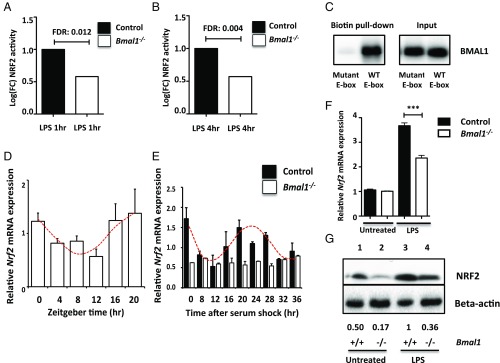
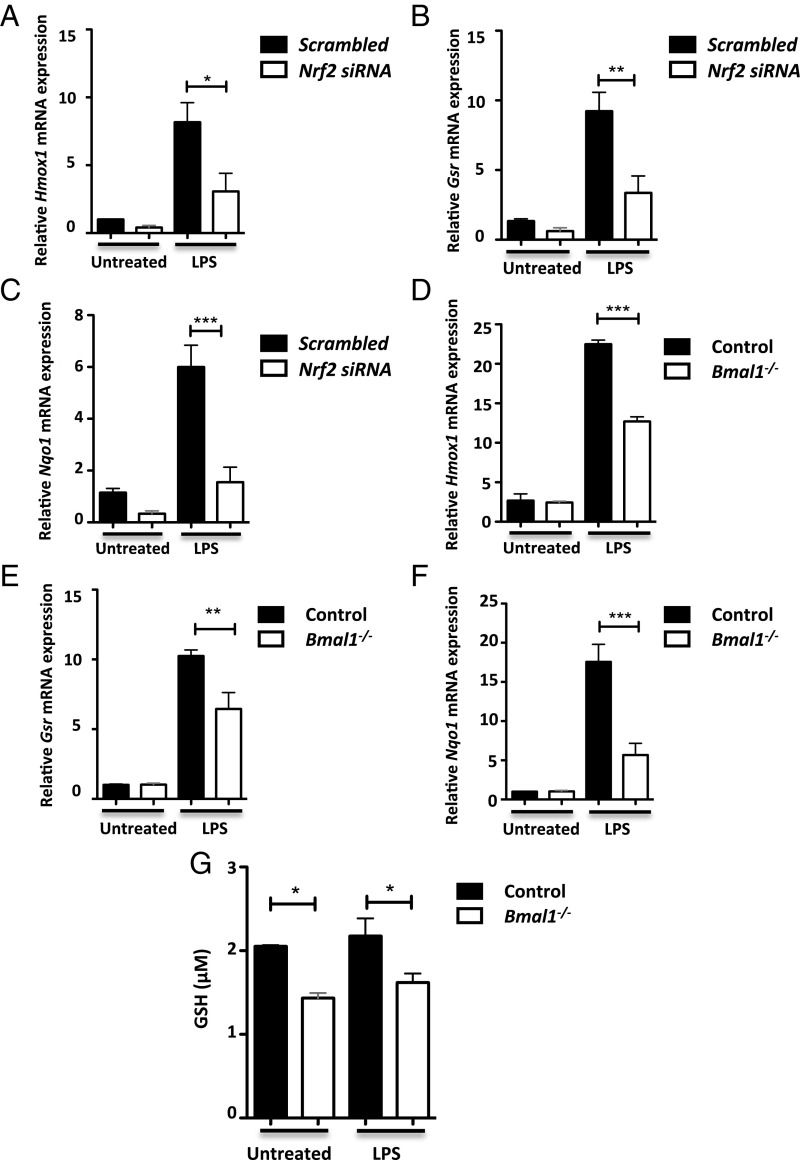
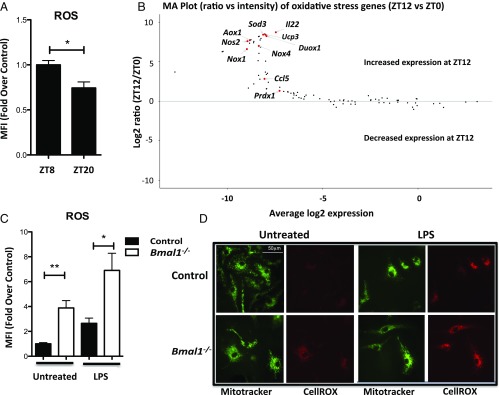
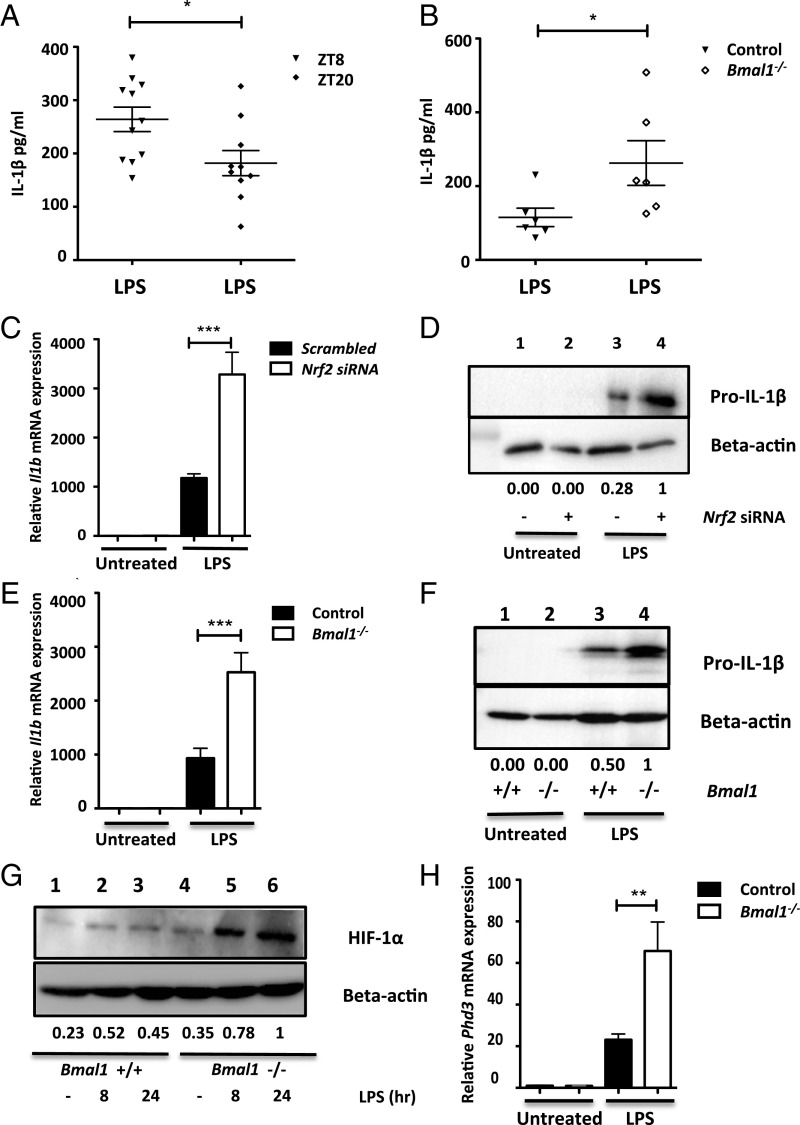
Significance: The molecular clock provides an anticipatory mechanism, allowing organisms to prepare and respond to daily changes in the external environment. The response of the innate immune system to pathogenic threats is dependent on time of day; however, the molecular mechanisms underlying this have yet to be fully uncovered. We observe that the core molecular clock component, BMAL1, is crucial in promoting an antioxidant response in myeloid cells. Deletion of Bmal1 in macrophages disrupts NRF2 activity, facilitating accumulation of reactive oxygen species and the proinflammatory cytokine, IL-1β. Thus the molecular clock directly controls NRF2 transcriptional activity and antioxidant capacity to regulate IL-1β in myeloid cells.
Overview
The claims and statistics of this paper haven’t been checked yet.
Free: it reads the open-access text and checks the first 5 claims that cite a source we can check. Create a free account to check every claim.
Integrity signals
Registry
Cites
Statistics
Figures
Verification
Claims the paper makes
The claims and statistics of this paper haven’t been checked yet.
Free: it reads the open-access text and checks the first 5 claims that cite a source we can check. Create a free account to check every claim.
Claims other papers make about this one
Each is checked against this paper’s own text: does it say what the citing paper says it does?
The source backs part of the claim, not all of it — or backs it for a different population, condition or comparison.
In the citing paper
“Inflammasomes in microglia can be activated by ROS, which causes inflammatory cytokines, including TNF-α, IL-1β, and IFN-γ, to be produced. 138”
From Major depressive disorder: hypothesis, mechanism, prevention and treatment (2024) · cites this paper as [138]
Experimental — accuracy not yet measuredThe check wasn’t confident either way, so it gives no verdict — never disputed.
In the citing paper
“Higher levels of inflammation increase the chance of developing new-onset depression. 138 , 139”
From Major depressive disorder: hypothesis, mechanism, prevention and treatment (2024) · cites this paper as [138]
Experimental — accuracy not yet measured
Self-check
Percentages, sums and reported differences re-computed from the paper’s own numbers.
The self-check needs the paper’s full text.
Citations
Cites
Role of nrf2 in oxidative stress and toxicity
Ma, Q. (2013) · Annual Review of Pharmacology and Toxicology · doi:10.1146/annurev-pharmtox-011112-140320 · Cited by 4,903
Reactive Oxygen Species in Inflammation and Tissue Injury
Mittal, M., Siddiqui, M. R., Tran, K., Reddy, S. P., & Malik, A. B. (2014) · Antioxidants & Redox Signaling · doi:10.1089/ars.2012.5149 · Cited by 4,897 · cited 2×
“Reactive oxygen species (ROS) are signaling molecules that are critical for the progression of an immune response (11).”
BackgroundSuccinate is an inflammatory signal that induces IL-1β through HIF-1α
Tannahill, G. M., Curtis, A. M., Adamik, J., Palsson-McDermott, E. M., McGettrick, A. F., Goel, G., Frezza, C., Bernard, N. J., Kelly, B., Foley, N. H., et al. (2013) · Nature · doi:10.1038/nature11986 · Cited by 4,176 · cited 2×
“However, in later stages of macrophage activation with LPS, ROS levels accumulate, stabilizing HIF-1α to drive IL-1β production (16, 28).”
BackgroundSelf-citationTargeting the KEAP1-NRF2 system to prevent kidney disease progression
Nezu, M., Suzuki, N., & Yamamoto, M. (2017) · American Journal of Nephrology · doi:10.1159/000475890 · Cited by 3,447
Mills, E. L., Kelly, B., Logan, A., Costa, A. S. H., Varma, M., Bryant, C. E., Tourlomousis, P., Däbritz, J. H. M., Gottlieb, E., Latorre, I., et al. (2016) · Cell · doi:10.1016/j.cell.2016.08.064 · Cited by 2,291 · cited 5×
“Circadian gating of NRF2 in macrophages would provide a mechanism by which BMAL1 may temporally regulate inflammation via modulation of ROS levels (16) and direct binding of NRF2 to the IL-1β promoter (23).”
BackgroundInfluentialSelf-citationA Serum Shock Induces Circadian Gene Expression in Mammalian Tissue Culture Cells
Balsalobre, A., Damiola, F., & Schibler, U. (1998) · Cell · doi:10.1016/s0092-8674(00)81199-x · Cited by 2,001
Itaconate is an anti-inflammatory metabolite that activates Nrf2 via alkylation of KEAP1
Mills, E. L., Ryan, D. G., Prag, H. A., Dikovskaya, D., Menon, D., Zaslona, Z., Jedrychowski, M. P., Costa, A. S. H., Higgins, M., Hams, E., et al. (2018) · Nature · doi:10.1038/nature25986 · Cited by 1,885 · cited 5×
“NRF2 has been demonstrated to limit IL-1β through this mechanism (22).”
BackgroundInfluentialSelf-citationNrf2 suppresses macrophage inflammatory response by blocking proinflammatory cytokine transcription
Kobayashi, E. H., Suzuki, T., Funayama, R., Nagashima, T., Hayashi, M., Sekine, H., Tanaka, N., Moriguchi, T., Motohashi, H., Nakayama, K., et al. (2016) · Nature Communications · doi:10.1038/ncomms11624 · Cited by 1,878 · cited 5×
“activating NRF2, but would also increase levels of NRF2 binding directly to the IL-1β promoter (23).”
BackgroundInfluentialLinker, R. A., Lee, D.-H., Ryan, S., van Dam, A. M., Conrad, R., Bista, P., Zeng, W., Hronowsky, X., Buko, A., Chollate, S., et al. (2011) · Brain · doi:10.1093/brain/awq386 · Cited by 1,155 · cited 2×
“For example, mice have a heightened response to Listeria monocytogenes, lipopolysaccharide (LPS), and induction of experimental autoimmune encephalomyelitis (EAE), a model of multiple sclerosis, ahead of their active phase, which is exacerbated with Bmal1 deletion (5, 7–9).”
Nrf2 is a critical regulator of the innate immune response and survival during experimental sepsis
Thimmulappa, R. K. (2006) · Journal of Clinical Investigation · doi:10.1172/jci25790 · Cited by 1,028 · cited 1×
“Intriguingly, suppression of NRF2 activity has previously been linked with pathogenesis of inflammatory conditions that are at least partly mediated by both myeloid cells and the circadian clock, such as EAE (29), sepsis (30), and asthma (31).”
Background
Cited by
Items 401–425 of 425
Sharma, P., Walton, J. C., Batchelor, T., Ranpara, A. C., Goldsmith, W. T., Nurkiewicz, T. R., & Nelson, R. J. (2026) · Journal of Toxicology and Environmental Health · doi:10.1080/15287394.2026.2708884
Burpee, P., Nasinec, D. A., Schell, M., Kee, Y., & Lee, Y. (2026) · Targets · doi:10.3390/targets4030026
Synchronizing immunity with time: unlocking the potential of chrono-immunotherapy in cancer
Li, L., Zhang, C., & Zhang, T. (2026) · Frontiers in Immunology · doi:10.3389/fimmu.2026.1887336
Temporal Rewiring of Innate Immunity by Vector-Borne Viruses for Host-Directed Antiviral Therapy
Kim, E., Baur, A. S., & Lee, J. (2026) · International Journal of Molecular Sciences · doi:10.3390/ijms27167292
Shan, C., Guo, M., Feng, F., Wang, X., Mohang, L., Xu, W., Jia, K., Liu, Y., & Jia, Y. (2026) · The EPMA Journal · doi:10.1007/s13167-026-00465-4
“This also reduces CD8⁺ T cell infiltration, promoting tumor growth [ 245].”
Ni, B., Chen, R., Sun, S., Liu, Z., Zhang, X., He, H., & Wang, J. (2026) · Frontiers in Immunology · doi:10.3389/fimmu.2026.1922510
“Furthermore, BMAL1 deletion directly compromises the NRF2-mediated cellular antioxidant defense system (34, 35).”
Akar, A., Erbil, G., Aykora, D., & Uzun, M. (2026) · Molecular Biology Reports · doi:10.1007/s11033-026-12670-5
“Furthermore, the rhythmic expression of Bmal1 contributes to regulating microglial metabolism, directing cellular energy toward physiological phagocytosis and the clearance of synaptic debris rather than inflammatory signaling [ 25].”
シスプラチン投与マウスの消化器障害と活動量低下に対する人参養栄湯の効果研究
波多江, 旺. (2025) · Institutional Repositories DataBase (IRDB)
Circadian mechanisms in heart failure: Cell-specific regulation and chrono-medicine
Cheng, S., Zhou, R., Zhang, Z., & Li, M. (2026) · Cell Insight · doi:10.1016/j.cellin.2026.100363
“…restrains redox-amplified cytokine production; loss of Bmal1 impairs mitochondrial fitness and enhances inflammatory activation in meta-bolically stressed macrophages (Alexander et al., 2020), while BMAL1-dependent NRF2 regulation limits ROS accumulation and IL-1 β production (Early et al., 2018).”
The oral immune and inflammatory network under circadian clock control
Sun, X., Ma, X., Ma, Y., Wang, X., Li, X., & Ji, M. (2026) · Frontiers in Immunology · doi:10.3389/fimmu.2026.1894302
Liang, Y., Chen, T., Wen, X., Liu, D., Zhang, Z., Li, W., & Zhang, H. (2026) · Molecular Medicine Reports · doi:10.3892/mmr.2026.14032
“Circadian antioxidant and inflammatory pathways may also modify ischemic injury, but much of the BMAL1‑specific evidence for nuclear factor erythroid 2‑related factor 2 (NRF2) and related signaling comes from macro‑ phages or non‑cardiovascular tissues (11,69).”
Kim, H., Yoo, J., Kim, S. G., & Kim, Y. J. (2026) · Journal of Korean Medical Association · doi:10.5124/jkma.26.0087
Li, C., Yu, R., Feng, G., Rao, J., Luo, L., Ma, Y., Wu, S., Shi, G., Jia, Y., & Ding, Y. (2026) · BMC Oral Health · doi:10.1186/s12903-026-10024-y
Circadian misalignment and low-grade inflammation: Failure of temporal gating by the molecular clock
Lee, Y., & Lee, H.-J. (2026) · Chronobiology International · doi:10.1080/07420528.2026.2743662
Wang, S., Zhang, Z., Huang, J., Tong, Y., Wu, C., Kobori, H., Seki, Y., Ma, S., & Suzuki, K. (2026) · Nutrients · doi:10.3390/nu18203384
Yan, S., Liu, Z., Xiong, J., Zhu, D., Chen, L., Jiang, Y., & Yu, T. (2026) · Research Square · doi:10.21203/rs.3.rs-11147554/v1
Zeng, H., Lin, J., & Chen, J. (2026) · Frontiers in Cardiovascular Medicine · doi:10.3389/fcvm.2026.1889670
Emerging evidence suggests that circadian disruption and muscle wasting form a self-reinforcing loop
Li, F., & Liu, C. (2026) · Chronobiology International · doi:10.1080/07420528.2026.2743668
Ardah, M. T., Bakr, R. A., Malathi, H., Arora, V., Nayak, P. P., Urazbaeva, D., Xusinovna, D. M., & Moxinur, S. (2026) · Immunology · doi:10.1111/imm.70210
Mazur, M., Baran, Z., Kłak, K., Maciuszek, M., Zawisza, M., Rarata, K., Widziolek, M., & Chadzińska, M. (2026) · Annals of the New York Academy of Sciences · doi:10.1111/nyas.70419
Zhao, W., Zhang, S., Deng, Y., 張雪媃, Wu, J., Jiang, L., Deng, C., & Qi, F. (2026) · Frontiers in Immunology · doi:10.3389/fimmu.2026.2007671
Tick tock: how the body’s circadian clock keeps cardiometabolic rhythm in check
Sato, M., Alammar, A., Gachon, F., Mauvoisin, D., & Karunakaran, D. (2026) · Clinical Science · doi:10.1042/cs20250046
Zhou, C., Hu, X., Zeng, L., Tang, Y., 易褚先, Zhang, G., & Sujuan, P. (2026) · Clinical and Translational Allergy · doi:10.1002/clt2.70221
Yang, Y., Zheng, S., He, H., Wang, Y., Yang, F., Cai, Z., Zhong, K., & Zhu, J. (2026) · Frontiers in Immunology · doi:10.3389/fimmu.2026.1995945
Pang, B., & Zhang, Y. (2026) · Journal of Inflammation Research · doi:10.2147/jir.s611993
Metadata
- Authors
- Early, J. O., Menon, D., Wyse, C. A., Cervantes-Silva, M. P., Zaslona, Z., Carroll, R. G., Palsson-McDermott, E. M., Angiari, S., Ryan, D. G., Corcoran, S. E., Timmons, G., Geiger, S. S., Fitzpatrick, D. J., O’Connell, D., Xavier, R. J., Hokamp, K., O’Neill, L. A. J., & Curtis, A. M.
- Affiliations
- Royal College of Surgeons in Ireland (IE)
- Trinity College Dublin (IE)
- Department of Molecular and Cellular Therapeutics, Tissue Engineering Regenerative Group, Royal College of Surgeons in Ireland, Dublin 2, Ireland;
- School of Biochemistry and Immunology, Trinity Biomedical Sciences Institute, Trinity College Dublin, Dublin 2, Ireland;
- Broad Institute (US)
- Corresponding author
- Curtis, Annie M.
- ORCID
- Venue
- Proceedings of the National Academy of Sciences
- Publisher
- National Academy of Sciences
- Published
- 2018-08-20
- Volume
- 115
- Issue
- 36
- Pages
- E8460-E8468
- ISSN
- 0027-8424 (ISSN-L)
- 1091-6490
- PMC
- PMC6130388
- OpenAlex
- W2888547429
- Cited by
- 389
- References
- 34
- Citations by year
- 2026: 61 · 2025: 54 · 2024: 51 · 2023: 59 · 2022: 57 · 2021: 51 · 2020: 38 · 2019: 15 · 2018: 3
- FWCI
- 15.02
- Type
- journal article
- Language
- en
- Open access
- hybrid
- doi.org
- Licence
- Locations
- Proceedings of the National Academy of Sciences (publishedVersion, cc-by-nc-nd)
- Europe PMC (PubMed Central) (publishedVersion, cc-by-nc-nd)
- PubMed Central (publishedVersion, cc-by-nc-nd)
- PubMed (publishedVersion)
- Arrow@dit (Dublin Institute of Technology) (submittedVersion, cc-by-nc-sa)
- Figshare (submittedVersion, cc-by-nc-sa)
- Edinburgh Research Explorer (University of Edinburgh) (submittedVersion, cc-by-nc-nd)
- Funders
- Science Foundation Ireland (13/SIRG/2130, 17/CDA/4688)
- Wellcome (205455)
- Topics
- Life Sciences › Neuroscience › Endocrine and Autonomic Systems › Circadian rhythm and melatonin
- Life Sciences › Biochemistry, Genetics and Molecular Biology › Molecular Biology › Genomics, phytochemicals, and oxidative stress
- Life Sciences › Neuroscience › Cognitive Neuroscience › Sleep and Wakefulness Research
- Keywords
- Bmal1, circadian clock, Nrf2, IL-1β, macrophages, reactive oxygen species, antioxidant response, innate immunity, myeloid cells, inflammatory cytokines
- MeSH terms
- Animals, Humans, Inflammation, Lipopolysaccharides, Macrophages, Reactive Oxygen Species, Mice, Knockout, Oxidative Stress, NF-E2-Related Factor 2, Mice, Hypoxia-Inducible Factor 1, alpha Subunit, Interleukin-1beta, ARNTL Transcription Factors, HEK293 Cells
About these checks
Registry, retraction, Cites and statistics results are computed, not judged, with one exception: a printed reference that no index lists is read once by a model before it counts as a citation error. Claims are extracted by a model and kept only when their quote appears verbatim in the text; each cited source is then checked, with a model’s help, for whether it says what the claim relies on. Those verdicts can be wrong — read the claim’s quote and the cited source before relying on one.
Statistics and arithmetic are recomputed, not judged.
Confidence bands are shown only for fields calibrated on our annotated test set. None is calibrated yet, so no band is shown.
What counts as a claim ›How we measure confidence ›How we check this ›
Are you an author, or do you see a problem with this page? Request a review
Data sources
Bibliographic data: Semantic Scholar, OpenAlex, Crossref.
Contains information from the Semantic Scholar Academic Graph Datasets, made available under the ODC Attribution License (ODC-BY 1.0).
Semantic Scholar’s data is described in: Kinney, R., et al. (2023). The Semantic Scholar Open Data Platform. arXiv:2301.10140.
