

The DOI matches its Crossref record; 72 of the 72 references it cites were found in a registry or an index.
Genetic analysis of social-class mobility in five longitudinal studies
Open accessAbstract
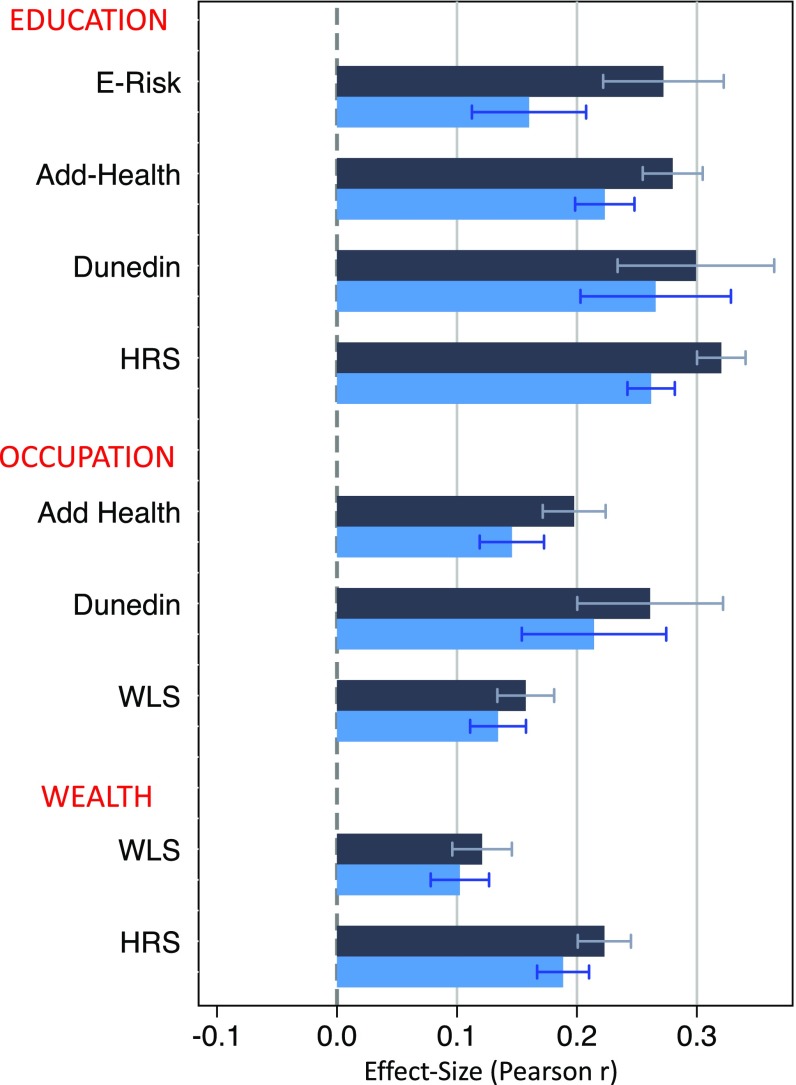
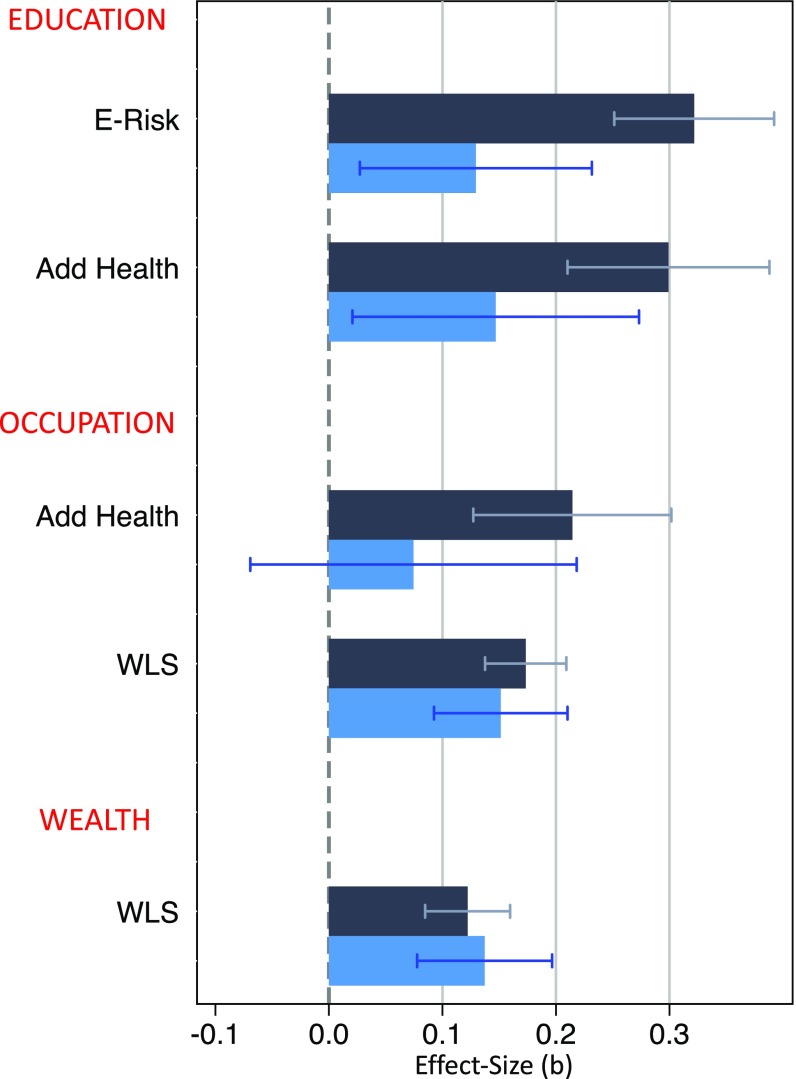
Significance: Genome-wide association study (GWAS) discoveries about educational attainment have raised questions about the meaning of the genetics of success. These discoveries could offer clues about biological mechanisms or, because children inherit genetics and social class from parents, education-linked genetics could be spurious correlates of socially transmitted advantages. To distinguish between these hypotheses, we studied social mobility in five cohorts from three countries. We found that people with more education-linked genetics were more successful compared with parents and siblings. We also found mothers’ education-linked genetics predicted their children’s attainment over and above the children’s own genetics, indicating an environmentally mediated genetic effect. Findings reject pure social-transmission explanations of education GWAS discoveries. Instead, genetics influences attainment directly through social mobility and indirectly through family environments.
Overview
The claims and statistics of this paper haven’t been checked yet.
Run the check — free, no account needed. It reads the open-access text and checks the sources it cites.
Integrity signals
Registry
Cites
Statistics
Figures
Verification
Claims the paper makes
The claims and statistics of this paper haven’t been checked yet.
Run the check — free, no account needed. It reads the open-access text and checks the sources it cites.
Claims other papers make about this one
Each is checked against this paper’s own text: does it say what the citing paper says it does?
The cited source says what the claim attributes to it.
In the citing paper
“This remainder is due to assortment on phenotypes correlated with the EA PGI other than EA, cognitive performance, and vocabulary—possibly including various personality traits42-44—and sources of social homogamy other than genetic ancestry captured by the top 40 PCs—possibly including geographic location at courtship age45,46, socioeconomic status, and social class47.”
From Polygenic prediction of educational attainment within and between families from genome-wide association analyses in 3 million individuals (2022) · cites this paper as [47]
Self-check
Percentages, sums and reported differences re-computed from the paper’s own numbers.
The self-check needs the paper’s full text.
Citations
Cites
Principal components analysis corrects for stratification in genome-wide association studies
Price, A. L., Patterson, N. J., Plenge, R. M., Weinblatt, M. E., Shadick, N. A., & Reich, D. (2006) · Nature Genetics · doi:10.1038/ng1847 · Cited by 10,248 · cited 1×
“Within each dataset, we regressed SSGAC-computed polygenic scores on the first 10 principal components estimated from the genome-wide SNP data (67) and calculated residual values.”
MethodSocial conditions as fundamental causes of disease.
Link, B. G., & Phelan, J. (1995) · Journal of Health and Social Behavior · doi:10.2307/2626958 · Cited by 5,722
The American Occupational Structure.
Blalock, H. M., Blau, P. M., Duncan, O. D., & Tyrée, A. (1968) · American Sociological Review · doi:10.2307/2092399 · Cited by 4,412
An atlas of genetic correlations across human diseases and traits
ReproGen Consortium, Bulik-Sullivan, B., Psychiatric Genomics Consortium, Genetic Consortium for Anorexia Nervosa of the Wellcome Trust Case Control Consortium 3, Finucane, H. K., Anttila, V., Gusev, A., Day, F. R., Loh, P.-R., Duncan, L., et al. (2015) · Nature Genetics · doi:10.1038/ng.3406 · Cited by 4,255
10 Years of GWAS Discovery: Biology, Function, and Translation
Visscher, P. M., Wray, N. R., Zhang, Q., Sklar, P., McCarthy, M. I., Brown, M. A., & Yang, J. (2017) · The American Journal of Human Genetics · doi:10.1016/j.ajhg.2017.06.005 · Cited by 3,719
How People Make Their Own Environments: A Theory of Genotype Environment Effects
Scarr, S., & McCartney, K. (1983) · Child Development · doi:10.1111/j.1467-8624.1983.tb03884.x · Cited by 2,895 · cited 3×
“This evidence supports theory in the social sciences that frames genetics as one mechanism among several through which social position is transmitted across generations (9, 20, 21, 59).”
BackgroundSocial Conditions as Fundamental Causes of Disease
Link, B. G., & Phelan, J. C. (1995) · PubMed · doi:10.13016/rpln-eiwa · Cited by 2,684
23andMe Research Team, Lee, J. J., COGENT (Cognitive Genomics Consortium), Social Science Genetic Association Consortium, Wedow, R., Okbay, A., Kong, E., Maghzian, O., Zacher, M., Nguyen-Viet, T. A., et al. (2018) · Nature Genetics · doi:10.1038/s41588-018-0147-3 · Cited by 2,470
Self-citationMeta-analysis of the heritability of human traits based on fifty years of twin studies
Polderman, T. J. C., Benyamin, B., de Leeuw, C. A., Sullivan, P. F., van Bochoven, A., Visscher, P. M., & Posthuma, D. (2015) · Nature Genetics · doi:10.1038/ng.3285 · Cited by 2,467
An Equilibrium Theory of the Distribution of Income and Intergenerational Mobility
Becker, G. S., & Tomes, N. (1979) · Journal of Political Economy · doi:10.1086/260831 · Cited by 2,243 · cited 1×
“This evidence supports theory in the social sciences that frames genetics as one mechanism among several through which social position is transmitted across generations (9, 20, 21, 59).”
Background
Research works printed but not linked: 2
- J Lee, , Gene discovery and polygenic prediction from a 1.1-million-person GWAS of educational attainment. Nat Genet, in press.
- WB Elley, JC Irving, Revised socioeconomic index for New-Zealand. N Z J Educ Stud 11, 25–36 (1976).
Cited by
Sorted by citations
Items 101–200 of 318
Child-Driven Parenting: Differential Early Childhood Investment by Offspring Genotype
Breinholt, A., & Conley, D. (2020) · National Bureau of Economic Research · doi:10.3386/w28217 · Cited by 23
“…variants are associated with early cognitive and socioemotional skills, school performance in adolescence, and educational attainment in adulthood (Belsky et al. 2016, 2018; Conley et al. 2015; Houmark, Ronda, and Rosholm 2020; Liu 2018; Smith-Woolley, Selzam, and Plomin 2019; Ward et al. 2014;…”
Self-citationAkimova, E. T., Wolfram, T., Ding, X., Tropf, F. C., & Mills, M. C. (2024) · Nature Human Behaviour · doi:10.1038/s41562-024-02076-3 · Cited by 37
“Molecular genetic research on SES proxies has focused on educational attainment 6,7,19–21 Article https://doi.org/10.1038/s41562-024-02076-3 broad categories of the UK Standard Occupational Classification (SOC) and an SNP heritability of 0.085 (ref.”
InfluentialGhirardi, G., & Bernardi, F. (2025) · Social Science Research · doi:10.1016/j.ssresearch.2025.103174 · Cited by 28
Genes Related to Education Predict Frailty Among Older Adults in the United States
Huibregtse, B. M., Newell‐Stamper, B. L., Domingue, B. W., & Boardman, J. D. (2019) · The Journals of Gerontology Series B · doi:10.1093/geronb/gbz092 · Cited by 22
“Finally, it is possible that there is an indirect effect of social origin (Belsky et al., 2018) wherein PGSeduc is correlated among relatives, in that those with higher scores are also more likely to benefit from the social advantages correlated with relative’s PGSeduc.”
BackgroundSelf-citationMak, J. K. L., Reynolds, C. A., Hägg, S., Li, X., Ericsson, M., Pedersen, N. L., Jylhävä, J., & Kuja‐Halkola, R. (2021) · Aging · doi:10.18632/aging.203262 · Cited by 22
“…genes associated with educational attainment have an inverse relationship with frailty [22, 36]; our finding may therefore imply a possible mechanism that education-associated genes are not directly influencing frailty, but indirectly through affecting individuals’ socioeconomic circumstances [37].”
Barcellos, S., Carvalho, L., & Turley, P. (2021) · National Bureau of Economic Research · doi:10.3386/w28750 · Cited by 24
van de Werfhorst, H. G. (2024) · American Sociological Review · doi:10.1177/00031224241292352 · Cited by 28
“Even if education gets more equally distributed across social classes, adult attainments may persistently be reproduced across generations if genetic predispositions to socioeconomic success are transmitted from parents to children (Belsky et al. 2018).”
Woodward, J., & Kendler, K. S. (2023) · Philosophy of Medicine · doi:10.5195/pom.2023.156 · Cited by 22
Rabinowitz, J. A., Kuo, S. I., Felder, W., Musci, R. J., Bettencourt, A. F., Benke, K. S., Sisto, D. Y., Smail, E. J., Uhl, G. R., Maher, B. S., et al. (2019) · Genes Brain & Behavior · doi:10.1111/gbb.12558 · Cited by 20
“In support of this idea, recent work indicates that parents' polygenic propensity for educational attainment influences their children's educational attainment through parents (a) transmitting their own genetics to their children, and (b) shaping the environments in which their children grow up in.(2,61) In terms of t…”
BackgroundResultDestination as a process: Sibling similarity in early socioeconomic trajectories
Karhula, A., Erola, J., Raab, M., & Fasang, A. E. (2019) · Advances in Life Course Research · doi:10.1016/j.alcr.2019.04.015 · Cited by 20
“) Regarding genetic similarity, as crucial components of ESETs, IQ, cognitive ability and education are genetically heritable, but the extent to which genes influence these characteristics vary across countries, suggesting that social policies and institutions also matter (Belsky et al., 2018; Branigan et al., 2013; C…”
BackgroundPopulation phenomena inflate genetic associations of complex social traits
Morris, T. T., Davies, N. M., Hemani, G., & Smith, G. D. (2020) · Science Advances · doi:10.1126/sciadv.aay0328 · Cited by 20
“Studies with a genetic focus that study complex social phenomena 16,17 may be particularly susceptible to these biases and we therefore focus on the growing area of sociogenomics, but our findings are relevant to the broader genetic literature.”
BackgroundNot only in my genes: The effects of peers’ genotype on obesity
Brunello, G., Sanz‐de‐Galdeano, A., & Terskaya, A. (2020) · Journal of Health Economics · doi:10.1016/j.jhealeco.2020.102349 · Cited by 20
“, 2019), social class mobility (Belsky et al., 2018), parental investment decisions (Breinholt and Conley, 2019; Sanz-de Galdeano and Terskaya, 2019; Wertz et al.”
BackgroundNivard, M. G., Belsky, D. W., Harden, K. P., Baier, T., Andreassen, O. A., Ystrøm, E., van Bergen, E., & Lyngstad, T. H. (2022) · doi:10.31234/osf.io/bhpm5 · Cited by 20
Self-citationPatel, P. C., Rietveld, C. A., Wolfe, M. T., & Wiklund, J. (2020) · Entrepreneurship Theory and Practice · doi:10.1177/1042258720936984 · Cited by 20
“…their PRS of SWB explains 0.9% of the variance in SWB. Similar levels of explained variance are found in other recent studies leveraging PRSs to predict later life socioeconomic outcomes (Barth, Papageorge, Thom, 2020; Belsky et al., 2018, 2019; Karlsson Linnér et al., 2019; Rimfeld et al., 2018).”
ResultInfluentialOvercoming attenuation bias in regressions using polygenic indices
van Kippersluis, H., Biroli, P., Pereira, R. D., Galama, T. J., von Hinke, S., Meddens, S. F. W., Muslimova, D., Slob, E. A. W., de Vlaming, R., & Rietveld, C. A. (2023) · Nature Communications · doi:10.1038/s41467-023-40069-4 · Cited by 25
Using DNA to predict educational trajectories in early adulthood.
Ayorech, Z., Plomin, R. J., & von Stumm, S. (2019) · Developmental Psychology · doi:10.1037/dev0000682 · Cited by 20
“For example among pairs of siblings, the sibling with the higher polygenic score typically goes on to complete more years of schooling compared to their lower scoring cosibling, despite being born to the same parents and raised in the same family home (Belsky et al., 2018; Domingue et al., 2015).”
BackgroundLiu, H. (2019) · Social Science Research · doi:10.1016/j.ssresearch.2019.04.008 · Cited by 15
Genetic associations with parental investment from conception to wealth inheritance in six cohorts
Wertz, J., Moffitt, T. E., Arseneault, L., Barnes, J. C., Boivin, M., Corcoran, D. L., Danese, A., Hancox, R. J., Harrington, H., Houts, R., et al. (2023) · Nature Human Behaviour · doi:10.1038/s41562-023-01618-5 · Cited by 21
Self-citationDoes sibling and twin similarity in cognitive ability differ by parents’ education?
Baier, T. (2019) · Journal of Family Research · doi:10.3224/zff.v31i1.04 · Cited by 17
“However, parents’ genes that are not transmitted also affect children’s outcomes, since parents select environments based on their genetic makeup (indirect genetic effects) (Belsky et al. 2018).”
Merz, E. C., Strack, J., Hurtado, H., Vainik, U., Thomas, M. L., Evans, A. C., & Khundrakpam, B. S. (2022) · Human Brain Mapping · doi:10.1002/hbm.26034 · Cited by 21
“Replicating previous findings (Belsky et al., 2016, 2018; Judd et al., 2020; Selzam et al., 2017), higher parental education was significantly correlated with higher PGS-EA in children and adolescents, which may indicate a gene-environment correlation.”
BackgroundResultHuman Capital Mediates Natural Selection in Contemporary Humans
Hugh-Jones, D., & Abdellaoui, A. (2022) · Behavior Genetics · doi:10.1007/s10519-022-10107-w · Cited by 20
“If inequalities in polygenic scores are important for understanding class mobility and structure (Belsky et al. 2018; Rimfeld et al. 2018), then these increases are substantially important.”
BackgroundSchrempft, S., Trofimova, O., Künzi, M., Draganski, B., Kliegel, M., & Stringhini, S. (2022) · Aging & Mental Health · doi:10.1080/13607863.2022.2084511 · Cited by 18
“The present study cannot identify the genetic and environmental contributions to the observed social mobility effects, but research indicates that both make a contribution (Belsky et al., 2018).”
BackgroundThe plateauing of cognitive ability among top earners
Keuschnigg, M., van de Rijt, A., & Bol, T. (2023) · European Sociological Review · doi:10.1093/esr/jcac076 · Cited by 18
Ghirardi, G., Gil-Hernández, C. J., Bernardi, F., van Bergen, E., & Demange, P. (2024) · Research in Social Stratification and Mobility · doi:10.1016/j.rssm.2024.100960 · Cited by 16
“The existing literature shows that genes and environments correlate and interact in a complex interplay to influence individuals’ educational attainment ( Papageorge and Thom, 2020; Belsky et al., 2018; Schmitz and Conley, 2017).”
BackgroundWhy are education, socioeconomic position and intelligence genetically correlated?Preprint
Morris, T., Davies, N. M., Hemani, G., & Smith, G. D. (2019) · bioRxiv (Cold Spring Harbor Laboratory) · doi:10.1101/630426 · Cited by 16
From Genotype to Phenotype: Polygenic Prediction of Complex Human Traits
Raben, T. G., Lello, L., Widén, E., & Hsu, S. (2022) · Methods in molecular biology · doi:10.1007/978-1-0716-2205-6_15 · Cited by 14
“There are now many validations of polygenic prediction in the scientific literature, conducted using groups of people born on different continents and in different decades than the original populations used in training [43, 44].”
BackgroundHerd, P., & Sicinski, K. (2021) · SSM - Population Health · doi:10.1016/j.ssmph.2021.100960 · Cited by 15
Self-citationGenetics and Child Development: Recent Advances and Their Implications for Developmental Research
Armstrong‐Carter, E., Wertz, J., & Domingue, B. W. (2021) · Child Development Perspectives · doi:10.1111/cdep.12400 · Cited by 18
“For example, children with higher education polygenic scores were more likely to break cycles of low educational attainment within families (Belsky et al., 2018) and to parent their children more positively than the parenting they experienced when they were young (Wertz et al., 2019).”
BackgroundSelf-citationStebbins, R. C., Yang, Y. C., Reason, M., Aiello, A. E., Belsky, D. W., Harris, K. M., & Plassman, B. L. (2022) · SSM - Population Health · doi:10.1016/j.ssmph.2022.101024 · Cited by 14
Self-citationThe Economics and Econometrics of Gene–Environment Interplay
Biroli, P., Galama, T. J., von Hinke, S., van Kippersluis, H., Rietveld, C. A., & Thom, K. (2025) · The Review of Economic Studies · doi:10.1093/restud/rdaf034 · Cited by 19
Combet, B. (2019) · Zeitschrift für Soziologie · doi:10.1515/zfsoz-2019-0021 · Cited by 16
3Ms of 3G: Testing three mechanisms of three-generational educational mobility in the U. S
Daw, J., Gaddis, S. M., & Morse, A. R. (2020) · Research in Social Stratification and Mobility · doi:10.1016/j.rssm.2020.100481 · Cited by 14
Graham, C. (2024) · SSM - Population Health · doi:10.1016/j.ssmph.2024.101639 · Cited by 13
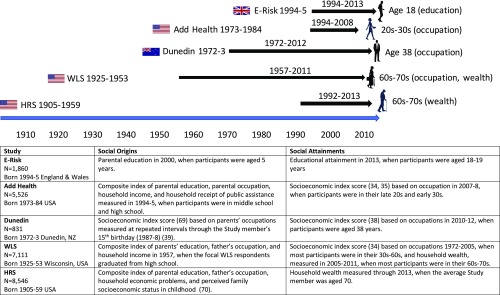
“The adolescent family socioeconomic status ( social origins (continuous)) measure was created by Belsky et al. (2018) using information from the Wave I parent/guardian survey including parental education, parental occupation, household income, and household receipt of public assistance.”
MethodO’Shields, J., Slavich, G. M., & Mowbray, O. P. (2025) · Psychological Medicine · doi:10.1017/s0033291725001102 · Cited by 14
“Control and demographic variables included several factors known to affect the association between CRP and depressive symptoms, as well as age, race, ethnicity, and socioeconomic indicators (Belsky et al., 2018; Belsky et al., 2019; Horn et al., 2018).”
Domingue, B. W., Cislaghi, B., Nagata, J. M., Shakya, H. B., Weber, A. M., Boardman, J. D., Darmstadt, G. L., & Harris, K. M. (2019) · The Lancet Planetary Health · doi:10.1016/s2542-5196(19)30191-3 · Cited by 13
Self-citationFaßbender, K., Wiebe, A. W., & Bates, T. C. (2019) · Behavior Genetics · doi:10.1007/s10519-018-9943-x · Cited by 15
Kim, R., Lippert, A. M., Wedow, R., Jimenez, M. P., & Subramanian, S. V. (2020) · American Journal of Epidemiology · doi:10.1093/aje/kwaa058 · Cited by 12
“Although the use of Europeanderived polygenic score prohibits direct comparison of genetic distributions between different ancestry groups, within-ancestral groups analyses are feasible (40).”
BackgroundSelf-citationEducational Influences on Late-Life Health: Genetic Propensity and Attained Education
Ericsson, M., Finch, B. K., Karlsson, I., Gatz, M., Reynolds, C. A., Pedersen, N. L., & Mosing, M. A. (2023) · The Journals of Gerontology Series B · doi:10.1093/geronb/gbad153 · Cited by 14
“For example, PGS Edu has been shown to be important for social mobility, where a higher The Journals of Gerontology Series B: Psychological and Social Sciences , 2024, Vol. 79, No. 1 PGS Edu predicts high SES and upward social mobility (Belsky et al., 2018).”
BackgroundAdverse childhood experiences and unhealthy dietary behaviours in adulthood
Testa, A. M., Zhang, L., Jackson, D. B., Ganson, K. T., Raney, J. H., & Nagata, J. M. (2024) · Public Health Nutrition · doi:10.1017/s1368980024000144 · Cited by 17
“…factor score of reports from Wave I based on parental education, parental occupation, household income and household receipt of public assistance (37) , the number of time a respondent reported eating (a) fruit or (b) vegetables the day before their Wave I interview (0 = none, 1 = once, 2 = more…”
BackgroundRea‐Sandin, G., Oro, V., Strouse, E., Clifford, S., Wilson, M. N., Shaw, D. S., & Lemery‐Chalfant, K. (2021) · Genes Brain & Behavior · doi:10.1111/gbb.12762 · Cited by 14
“prediction of EA PGS with early childhood inhibitory control in our study, as there is some evidence to suggest that polygenic scores from GWASs of European individuals are less predictive when used in admixed samples.(3,23) Other research has showed that childhood selfregulation, measured from ages 3 to 11, mediated…”
BackgroundBrennan, G. M., Moffitt, T. E., Ambler, A. P., Harrington, H., Hogan, S., Houts, R., Mani, R., Poulton, R., Ramrakha, S., & Caspi, A. (2023) · Psychological Medicine · doi:10.1017/s0033291723001320 · Cited by 12
“…across a variety of domains [e.g. crime, personality, and psycho-pathology (Caspi et al., 1994); parenting behavior (Wertz et al., in press); social mobility (Belsky et al., 2018)], it is unknown whether the present study ’ s findings will replicate in other geographic regions or ethnic groups.”
BackgroundSelf-citationThe Economics and Econometrics of Gene–Environment InterplayPreprint
Biroli, P., Galama, T. J., von Hinke, S., van Kippersluis, H., Rietveld, C. A., & Thom, K. (2022) · SSRN Electronic Journal · doi:10.2139/ssrn.4049250 · Cited by 12
Akimova, E. T., Wolfram, T., Ding, X., Tropf, F. C., & Mills, M. C. (2023) · bioRxiv (Cold Spring Harbor Laboratory) · doi:10.1101/2023.03.31.534944 · Cited by 12
Laidley, T., Vinneau, J., & Boardman, J. (2019) · Sociological Science · doi:10.15195/v6.a22 · Cited by 11
“In a similar line of work, researchers have also examined the influence of the parents’ genomes on educational outcomes net the children’s own endowment, whereby alleles that are not transmitted intergenerationally nevertheless have a putative effect on outcomes through environmental channels, or “genetic nurturance”…”
BackgroundInfluentialSelf-citationGenetic effects on educational attainment in Hungary
Ujma, P. P., Eszlári, N., Millinghoffer, A., Bruncsics, B., Török, D., Petschner, P., Antal, P., Deakin, J. F. W., Breen, G. D., Bagdy, G., et al. (2021) · Brain and Behavior · doi:10.1002/brb3.2430 · Cited by 11
“, 2018; Young, 2019), validity in within-family studies (Domingue et al., 2015; Belsky et al., 2018; Selzam et al., 2019) demonstrates that a substantial portion of PGS effects reflects actual genetic influences.”
InfluentialRasmussen, S. H. R., Weinschenk, A. C., Nørgaard, A. S., Hjelmborg, J., & Klemmensen, R. (2021) · Political Studies · doi:10.1177/00323217211008788 · Cited by 12
“…have demonstrated that genes associated with educational attainment are also associated with various economic measures such as social mobility (Belsky et al., 2018; McGue et al., 2020), labor earnings (Papageorge and Thom, 2020), inequality (Barth et al., 2020), and geographical sorting…”
BackgroundOvercoming Attenuation Bias in Regressions using Polygenic Indices: A Comparison of ApproachesPreprint
van Kippersluis, H., Biroli, P., Pereira, R. D., Galama, T. J., von Hinke, S., Meddens, S. F. W., Muslimova, D., Slob, E. A. W., de Vlaming, R., & Rietveld, C. A. (2021) · bioRxiv (Cold Spring Harbor Laboratory) · doi:10.1101/2021.04.09.439157 · Cited by 14
Gene–Environment Interplay in the Social Sciences
Pereira, R. D., Biroli, P., Galama, T. J., von Hinke, S., van Kippersluis, H., Rietveld, C. A., & Thom, K. (2022) · Oxford University Press eBooks · doi:10.1093/acrefore/9780190625979.013.804 · Cited by 15
“Belsky et al. (2018) explore five longitudinal studies in the United States, Britain, and New Zealand, comprising over 20,000 individuals in total.”
BackgroundAiello, A. E., Momkus, J., Stebbins, R. C., Zhang, Y. S., Martin, C. L., Yang, Y. C., Gaydosh, L. M., Hargrove, T. W., Hazzouri, A. Z. A., & Harris, K. M. (2025) · The Lancet Regional Health - Americas · doi:10.1016/j.lana.2025.101087 · Cited by 10
Self-citationLiu, H., Motz, R. T., Tanksley, P. T., Barnes, J. C., & Harris, K. M. (2021) · Journal of Developmental and Life-Course Criminology · doi:10.1007/s40865-021-00166-8 · Cited by 10
Self-citationGong, S., Li, Q., Su, S., & Zhang, J. (2023) · Management Science · doi:10.1287/mnsc.2023.4879 · Cited by 11
Morphometric traits predict educational attainment independently of socioeconomic background
Valge, M., Meitern, R., & Hõrak, P. (2019) · BMC Public Health · doi:10.1186/s12889-019-8072-7 · Cited by 13
“At the same time, the effect of education on reproduction involves a substantial non-genetic component too [14, 26].”
BackgroundInfluentialEducational Rationality: Measurement, Correlates, and Consequences
Karwowski, M., & Milerski, B. (2021) · Education Sciences · doi:10.3390/educsci11040182 · Cited by 10
Social adversity reduces polygenic score expressivity for general cognitive ability, but not height
Peñaherrera-Aguirre, M., Woodley, M. A., Sarraf, M. A., & Beaver, K. M. (2022) · Twin Research and Human Genetics · doi:10.1017/thg.2022.3 · Cited by 10
“…comparisons, being generally less predictive of relevant trait variance among populations that are ancestrally more distant from the populations in which the PGSs were originally estimated (e.g., Belsky et al., 2018; Duncan et al., 2019; Guo et al., 2019; Lee et al., 2018; Weissbrod et al., 2021).”
BackgroundColey, R. L., Sims, J., Thomson, D., & Votruba‐Drzal, E. (2019) · Journal of Children and Poverty · doi:10.1080/10796126.2019.1616165 · Cited by 12
“…predict educational and career success over and above neighborhood and school contexts, for example, suggests that unmeasured factors, such as parental inputs, preferences, or genetic capabilities, may also serve as key mediators of family SES (Belsky et al. 2018; Conley et al. 2015; Lareau 2011).”
BackgroundGenetic Endowment, Childhood Obesity, and Educational Achievements
Fan, M., Jin, Y., & Zhang, M. (2022) · Economics of Education Review · doi:10.1016/j.econedurev.2023.102408 · Cited by 13
Donnellan, M. B., Martin, M. J., & Senia, J. M. (2021) · Developmental Psychology · doi:10.1037/dev0000901 · Cited by 12
“…personality, the quality of social interactions, and educational attainment (e.g., Ayorech, Krapol, Plomin, & von Stumm, 2017; Belsky et al., 2016; Belsky et al., 2018; Cesarini & Visscher, 2017; Conley et al., 2015; Lee et al., 2018; Okbay e al., 2016; Reitveld et al. 2013; Reitveld et al. 2014;…”
BackgroundMethodInfluentialThe future of intelligence research and gifted education
Wai, J., & Worrell, F. C. (2021) · Intelligence · doi:10.1016/j.intell.2021.101546 · Cited by 9
Implications of the genomic revolution for education research and policy
Morris, T., von Hinke, S., Pike, L., Ingram, N., Smith, G. D., Munafo, M. R., & Davies, N. M. (2022) · British Educational Research Journal · doi:10.1002/berj.3784 · Cited by 10
“Existing studies of gene– environment interactions have for example shown that the social environment moderates genetic vulnerability to poor socioeconomic outcomes (see e.g. Belsky et al., 2016, 2018; Meyers et al., 2013; Papageorge & Thom, 2020; Rutter, 2006; Shanahan et al., 2008).”
BackgroundPolygenic influences associated with adolescent cognitive skills
Mitchell, B. L., Hansell, N. K., McAloney, K., Martin, N. G., Wright, M. J., Rentería, M. E., & Grasby, K. L. (2022) · Intelligence · doi:10.1016/j.intell.2022.101680 · Cited by 9
Non, A. L., & Cerdeña, J. P. (2023) · Behavior Genetics · doi:10.1007/s10519-023-10162-x · Cited by 8
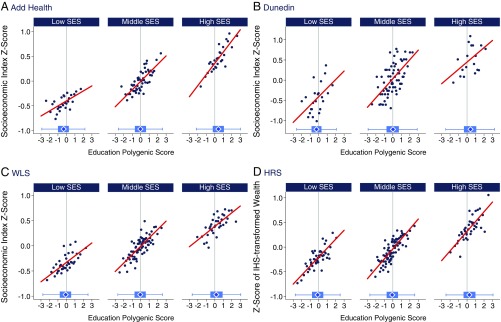
“However, when taking into account environmental context such as childhood SES, Belsky et al. (2018) discovered that the PGS for EA was much more predictive of social mobility (higher income in adulthood) for those with low relative to higher childhood SES.”
BackgroundHeritability of class and status: Implications for sociological theory and research
Hootegem, A. V., Rogne, A. F., & Lyngstad, T. H. (2024) · Research in Social Stratification and Mobility · doi:10.1016/j.rssm.2024.100940 · Cited by 11
Genetic Endowments, Educational Outcomes and the Mediating Influence of School InvestmentsPreprint
Arold, B. W., Hufe, P., & Stöckli, M. (2022) · SSRN Electronic Journal · doi:10.2139/ssrn.4167444 · Cited by 9
Marks, G. N., & O’Connell, M. (2021) · Intelligence · doi:10.1016/j.intell.2021.101582 · Cited by 10
From society to cells and back again: new opportunities for discovery at the biosocial interface
McDade, T. W., & Harris, K. M. (2022) · Discover Social Science and Health · doi:10.1007/s44155-022-00007-z · Cited by 8
Self-citationGlasser, N. J., Jameson, J. C., Tung, E. L., Lindau, S. T., & Pollack, H. A. (2024) · Journal of Adolescent Health · doi:10.1016/j.jadohealth.2023.11.018 · Cited by 8
Schrempft, S., Trofimova, O., Künzi, M., Ramponi, C., Lutti, A., Kherif, F., Latypova, A., Vollenweider, P., Marques-Vidal, P. M., Preisig, M., et al. (2024) · Journal of Neuroscience · doi:10.1523/jneurosci.1231-23.2024 · Cited by 8
Should Cognitive Differences Research Be Forbidden?
Meisenberg, G. (2019) · Psych · doi:10.3390/psych1010021 · Cited by 8
“There are three kinds of knowledge that support the hypothesis and that are candidates for prohibition, each of them already having strong scientific support: the heritability of intelligence [23]; the importance of intelligence for earnings, prestige, and social standing [50]; and social mobility as a consequence of…”
BackgroundRabinowitz, J. A., Kuo, S. I., Domingue, B. W., Smart, M. J., Felder, W., Benke, K. S., Maher, B. S., Ialongo, N. S., & Uhl, G. R. (2019) · Behavior Genetics · doi:10.1007/s10519-019-09982-7 · Cited by 9
Self-citationGenetic contributions of noncognitive skills to academic developmentPreprint
Malanchini, M., Allegrini, A. G., Nivard, M. G., Biroli, P., Rimfeld, K., Cheesman, R., von Stumm, S., Demange, P., van Bergen, E., Grotzinger, A. D., et al. (2023) · bioRxiv (Cold Spring Harbor Laboratory) · doi:10.1101/2023.04.03.535380 · Cited by 8
“33,34 Studies that examined this possibility have focused on the role of socioeconomic disadvantage across a broad range of contexts, including family socioeconomic status 35,36 and the school environment 37,38 .”
Gene-Environment Complementarity in Educational Attainment
Muslimova, D., van Kippersluis, H., Rietveld, C. A., von Hinke, S., & Meddens, S. F. W. (2024) · Journal of Labor Economics · doi:10.1086/734087 · Cited by 9
The Genome-Wide Study of Human Social Behavior and Its Application in Sociology
Tanksley, P. T., Motz, R. T., Kail, R. M., Barnes, J. C., & Liu, H. (2019) · Frontiers in Sociology · doi:10.3389/fsoc.2019.00053 · Cited by 8
“Considering the many intermediate and subsequent phenotypes that would result from a genetic propensity for education, studies have shown that a higher PGS for educational attainment also predicts greater social mobility (Belsky et al., 2018; Liu, 2018), labor market earning (Papageorge and Thom, 2018), parental inves…”
BackgroundNovel Functional Genomics Approaches Bridging Neuroscience and Psychiatry
Restrepo-Lozano, J. M., Flores, C., & Silveira, P. P. (2022) · Biological Psychiatry Global Open Science · doi:10.1016/j.bpsgos.2022.07.005 · Cited by 7
“(92) is a good example of how an individual’s environment can exert a powerful influence on his or her socioeconomic attainment.”
BackgroundFletcher, J. M. (2022) · Population and Development Review · doi:10.1111/padr.12487 · Cited by 7
Self-citationWang, P., Wang, F., Peng, Y., & Li, Z. (2025) · SAGE Open · doi:10.1177/21582440251336078 · Cited by 6
“Education is a crucial driver of intergenerational mobility and a primary mechanism for the reproduction of social class (Belsky et al., 2018).”
Mental Health Effects of Income over the Adult Life Course
Rauf, T. (2023) · Socius Sociological Research for a Dynamic World · doi:10.1177/23780231231186072 · Cited by 9
“…including, most directly, via educational attainment and through potential indirect pathways, including occupational aspirations, financial savvy, and selection of a spouse with high socioeconomic status (SES; Barban et al. 2021; Barth, Papageorge, and Thom 2019; Belsky et al. 2016, 2018).”
BackgroundSu, J., Kuo, S. I., Trevino, A. D., Barr, P. B., Alıev, F., Bucholz, K. K., Chan, G., Edenberg, H. J., Kuperman, S., Lai, D., et al. (2022) · Journal of Family Psychology · doi:10.1037/fam0001003 · Cited by 7
Salminen, J., & Lehti, H. (2023) · Journal of Biosocial Science · doi:10.1017/s0021932022000517 · Cited by 10
Fenton, M. P., Forthun, L. F., & Lynne‐Landsman, S. D. (2023) · Journal of Youth and Adolescence · doi:10.1007/s10964-023-01755-0 · Cited by 6
Breinholt, A., Ware, E. B., Fomby, P., Notterman, D. A., Schneper, L. M., & Mitchell, C. M. (2025) · Longitudinal and Life Course Studies · doi:10.1332/17579597y2025d000000042 · Cited by 5
Major Discrimination Experiences, Education, and Genes
Das, A. (2019) · Journal of Aging and Health · doi:10.1177/0898264319851661 · Cited by 6
“Similarly, studies examining genetic causation of transgenerational educational mobility have controlled parental education (Belsky et al., 2018).”
BackgroundPereira, R. D. (2021) · SSRN Electronic Journal · doi:10.1101/2021.12.14.472565 · Cited by 5
“PGS has been shown to predict educational attainment as well as upward social mobility (Domingue et al., 2015; Belsky et al., 2016, 2018).”
BackgroundInfluentialDeath of a Parent, Racial Inequities, and Cardiovascular Disease Risk in Early toMid-adulthood
Garcia, M. A., Needham, B. L., Goosby, B. J., Hummer, R. A., Liu, H., & Umberson, D. (2024) · Journal of Health and Social Behavior · doi:10.1177/00221465241273870 · Cited by 5
“…= fair/poor health) and childhood family SES measured at Wave I. Childhood family SES is a standardized measure constructed by Add Health that incorporates parent-reported educational attainment, parental occupation, household income, and household receipt of public assistance (Belsky et al. 2018).”
Social and Reproductive Success in the United States: The Roles of Income, Education and Cognition
Meisenberg, G. (2019) · Mankind Quarterly · doi:10.46469/mq.2019.59.3.5 · Cited by 5
Mackenbach, J. P. (2019) · Oxford University Press eBooks · doi:10.1093/oso/9780198831419.003.0001 · Cited by 6
Exploring the Fetal Origins Hypothesis Using Genetic Data
Trejo, S. (2024) · Social Forces · doi:10.1093/sf/soae018 · Cited by 8
“Thus, family fixed-effects regression models that compare genetic differences in siblings to phenotypic differences in siblings have a causal interpretation (Belsky et al. 2018; Conley and Rauscher 2013; Domingue et al. 2015; Lee et al. 2018; Rietveld et al. 2014; Trejo and Domingue 2019).”
BackgroundAhlskog, R., Dawes, C., Oskarsson, S., & Weinschenk, A. C. (2025) · Political Behavior · doi:10.1007/s11109-025-10020-y · Cited by 7
Patterns of health inequalities
Mackenbach, J. P. (2019) · Oxford University Press eBooks · doi:10.1093/oso/9780198831419.003.0002 · Cited by 5
Occupational mobility and cognitive ability: A commentary on Betthäuser, Bourne and Bukodi
Marks, G. N. (2020) · British Journal of Sociology · doi:10.1111/1468-4446.12777 · Cited by 5
Atherton, O. E., Graham, E. K., Dorame, A. N., Horgan, D., Luo, J., Nevarez, M. D., Ferrie, J. P., Spiro, A., Schulz, M. S., Waldinger, R. J., et al. (2023) · Journal of Family Psychology · doi:10.1037/fam0001144 · Cited by 5
Wickrama, K. A. S., O’Neal, C. W., Lee, T. K., & Lee, S. (2021) · PLoS ONE · doi:10.1371/journal.pone.0256967 · Cited by 6
Gene–environment pathways to cognitive intelligence and psychotic-like experiences in children
Park, J., Lee, E., Cho, G., Hwang, H., Kim, B., Kim, G., Joo, Y. Y., & Cha, J. (2023) · eLife · doi:10.7554/elife.88117 · Cited by 17
“See Appendix 2 for detailed results.”
ResultGenetic and Socioeconomic Achievement Gaps in Elementary School
Houmark, M. A., Ronda, V., Agerbo, E., Mortensen, P. B., & Rosholm, M. (2025) · The Economic Journal · doi:10.1093/ej/ueaf033 · Cited by 3
Burik, C. A. P., Kweon, H., & Koellinger, P. (2021) · SSRN Electronic Journal · doi:10.2139/ssrn.3839489 · Cited by 3
Gene-Environment Interplay in the Social SciencesPreprint
Pereira, R., Biroli, P., von hinke, S., van Kippersluis, H., Galama, T. J., Rietveld, N., & Thom, K. (2022) · doi:10.31219/osf.io/d96z3 · Cited by 4
Genetic Endowments, Educational Outcomes and the Mediating Influence of School InvestmentsPreprint
Arold, B. W., Hufe, P., & Stöckli, M. (2022) · SSRN Electronic Journal · doi:10.2139/ssrn.4163307 · Cited by 4
Spörlein, C., Zoch, G., & Schlueter, E. (2025) · Research in Social Stratification and Mobility · doi:10.1016/j.rssm.2025.101091 · Cited by 4
Ghirardi, G. (2025) · Social Science & Medicine · doi:10.1016/j.socscimed.2025.118539 · Cited by 3
Lin, Y., Procopio, F., Keser, E., Kawakami, K., Rimfeld, K., Malanchini, M., & Plomin, R. J. (2025) · Intelligence & Cognitive Abilities · doi:10.65550/001c.140654 · Cited by 3
Paul, S. E., Elsayed, N., Colbert, S. M. C., Bogdan, R., Hatoum, A. S., & Barch, D. M. (2024) · Development and Psychopathology · doi:10.1017/s0954579424001573 · Cited by 3
“…that directly influences cognitive ability as well as gene-environment correlations (e.g., between genetic propensity and higher SES environments with generally more access to cognitively stimulating activities that may be more amenable to environmental intervention (Belsky et al., 2018).”
Metadata
- Authors
- Belsky, D. W., Domingue, B. W., Wedow, R., Arseneault, L., Boardman, J. D., Caspi, A., Conley, D., Fletcher, J. M., Freese, J., Herd, P., Moffitt, T. E., Poulton, R., Sicinski, K., Wertz, J., & Harris, K. M.
- Affiliations
- Duke University (US)
- Stanford University (US)
- University of Colorado Boulder (US)
- King's College London (GB)
- Princeton University (US)
- University of Wisconsin–Madison (US)
- Department of Sociology, Stanford University, Stanford, CA 94305;
- University of Otago (NZ)
- University of North Carolina at Chapel Hill (US)
- Corresponding author
- Belsky, Daniel W.
- Harris, Kathleen Mullan
- ORCID
- Venue
- Proceedings of the National Academy of Sciences
- Publisher
- National Academy of Sciences
- Published
- 2018-07-09
- Volume
- 115
- Issue
- 31
- Pages
- E7275-E7284
- ISSN
- 0027-8424 (ISSN-L)
- 1091-6490
- PMC
- PMC6077729
- OpenAlex
- W2848694795
- Cited by
- 315
- References
- 72
- Citations by year
- 2026: 21 · 2025: 26 · 2024: 36 · 2023: 35 · 2022: 42 · 2021: 47 · 2020: 34 · 2019: 65 · 2018: 8
- FWCI
- 87.42
- Type
- journal article
- Language
- en
- Update notices
- correction (2018-11-05)
- Open access
- hybrid
- doi.org
- Licence
- Locations
- Proceedings of the National Academy of Sciences (publishedVersion, cc-by-nc-nd)
- Europe PMC (PubMed Central) (publishedVersion, cc-by-nc-nd)
- PubMed Central (publishedVersion, cc-by-nc-nd)
- PubMed (publishedVersion)
- RePEc: Research Papers in Economics (submittedVersion)
- Research Portal (King's College London) (submittedVersion, cc-by-nc-nd)
- Funders
- Office of Extramural Research, National Institutes of Health (R01HD077482, P01HD31921, R01HD073342, R01HD060726, R01AG032282)
- UK Medical Research Council (G1002190, MR/P005918/1)
- Jacobs Foundation (Jacobs Prize, Early Career Fellowship)
- Russel Sage Foundation (961704)
- National Science Foundation (DGE1144083)
- Topics
- Social Sciences › Sociology and Political Science › Intergenerational and Educational Inequality Studies
- Life Sciences › Biochemistry, Genetics and Molecular Biology › Genetics › Genetic Associations and Epidemiology
- Social Sciences › Psychology › Experimental and Cognitive Psychology › Cognitive Abilities and Testing
- Keywords
- social mobility, educational attainment, polygenic risk score, upward mobility, socioeconomic attainment, wealth accumulation, parental socioeconomic status, family environment
- MeSH terms
- Educational Status, Genetic Testing, Humans, Longitudinal Studies, Occupations, Social Class, Social Mobility, Siblings, Genome-Wide Association Study
About these checks
Registry, retraction, Cites and statistics results are computed, not judged, with one exception: a printed reference that no index lists is read once by a model before it counts as a citation error. Claims are extracted by a model and kept only when their quote appears verbatim in the text; each cited source is then checked, with a model’s help, for whether it says what the claim relies on. Those verdicts can be wrong — read the claim’s quote and the cited source before relying on one.
Statistics and arithmetic are recomputed, not judged.
Confidence bands are shown only for fields calibrated on our annotated test set. None is calibrated yet, so no band is shown.
What counts as a claim ›How we measure confidence ›How we check this ›
Are you an author, or do you see a problem with this page? Request a review
