

The DOI matches its Crossref record; 45 of the 46 references it cites were found in a registry or an index.
Facebook language predicts depression in medical records
Open accessAbstract
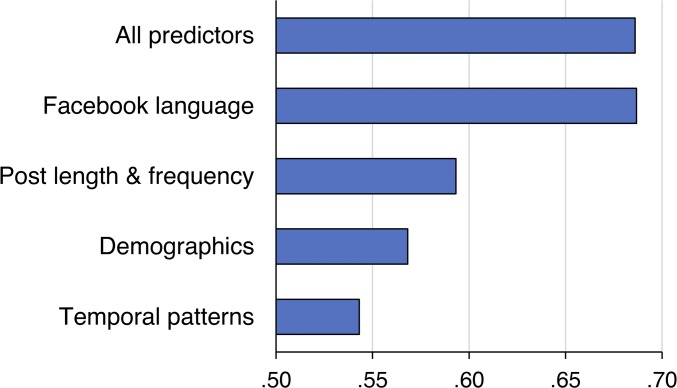
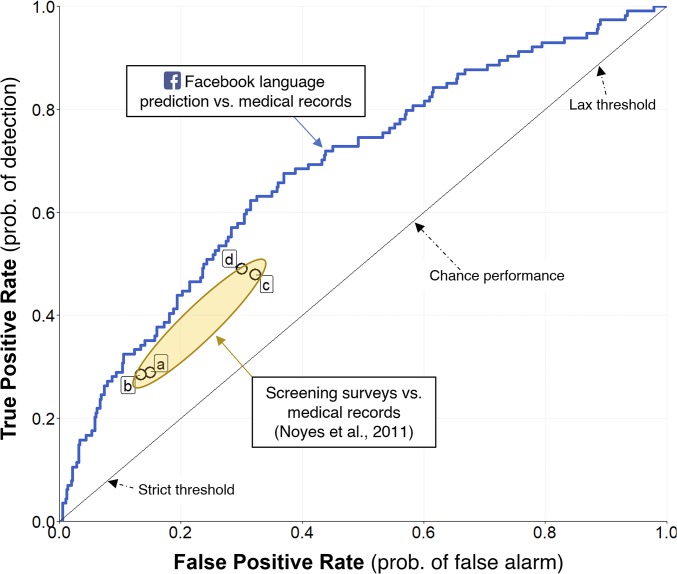
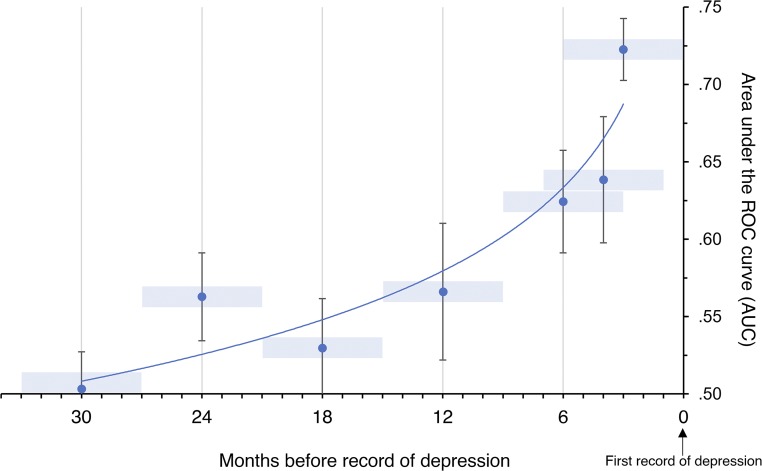
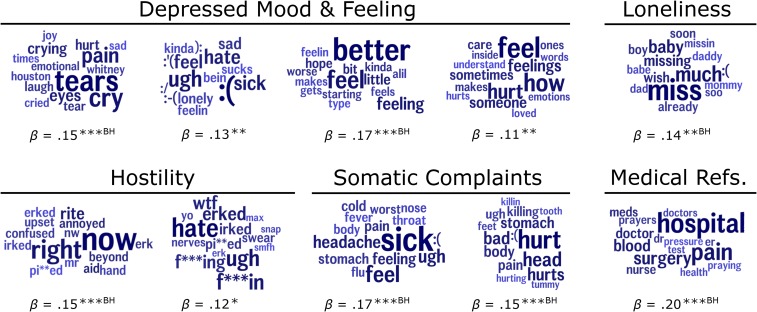
Significance: Depression is disabling and treatable, but underdiagnosed. In this study, we show that the content shared by consenting users on Facebook can predict a future occurrence of depression in their medical records. Language predictive of depression includes references to typical symptoms, including sadness, loneliness, hostility, rumination, and increased self-reference. This study suggests that an analysis of social media data could be used to screen consenting individuals for depression. Further, social media content may point clinicians to specific symptoms of depression.
Overview
The claims and statistics of this paper haven’t been checked yet.
Run the check — free, no account needed. It reads the open-access text and checks the sources it cites.
Integrity signals
Registry
Cites
Statistics
Figures
Verification
Claims the paper makes
The claims and statistics of this paper haven’t been checked yet.
Run the check — free, no account needed. It reads the open-access text and checks the sources it cites.
Claims other papers make about this one
Each is checked against this paper’s own text: does it say what the citing paper says it does?
In the citing paper
“These include words related to sadness, as well as words related to somatic health concerns (health and biology words, with the biology category combining body, health, sexual, and ingestion words) [22,23].”
From Behavioral Activation and Depression Symptomatology: Longitudinal Assessment of Linguistic Indicators in Text-Based Therapy Sessions (2021) · cites this paper as [23]
In the citing paper
“Over the years, Facebook developed machine learning algorithms studying the behavior of their users in detail on the platform. In order to get to know their users better, they do not only record what people ‘like’ (i.e., give a ‘thumbs up’) but also how long they hover over a certain post. This could be interpreted as showing a special interest in a certain area. ‘Textmining’ enables Facebook & Co”
From Addictive Features of Social Media/Messenger Platforms and Freemium Games against the Background of Psychological and Economic Theories (2019) · cites this paper as [67]
Self-check
Percentages, sums and reported differences re-computed from the paper’s own numbers.
The self-check needs the paper’s full text.
Citations
Cites
Controlling the False Discovery Rate: A Practical and Powerful Approach to Multiple Testing
Benjamini, Y., & Hochberg, Y. (1995) · Journal of the Royal Statistical Society Series B: Statistical Methodology · doi:10.1111/j.2517-6161.1995.tb02031.x · Cited by 109,482
(2003) · Journal of Machine Learning Research · doi:10.5555/944919.944937 · Cited by 32,337
Zhang, Q., Wang, C., Zheng, M., Li, Y., Li, J., Zhang, L., Shang, X., & Yan, C. (2014) · Cerebrovascular Diseases · doi:10.1159/000369778 · Cited by 11,609
Projections of Global Mortality and Burden of Disease from 2002 to 2030
Mathers, C. D., & Loncar, D. (2006) · PLoS Medicine · doi:10.1371/journal.pmed.0030442 · Cited by 11,386
Adjusting batch effects in microarray expression data using empirical Bayes methods
Johnson, W. E., Li, C., & Rabinovic, A. (2007) · Biostatistics · doi:10.1093/biostatistics/kxj037 · Cited by 8,658
Kessler, R. C., Berglund, P., Demler, O., Jin, R., Koretz, D., Merikangas, K. R., Rush, A. J., Walters, E. E., & Wang, P. S. (2003) · JAMA · doi:10.1001/jama.289.23.3095 · Cited by 7,988
Private traits and attributes are predictable from digital records of human behavior
Kosinski, M., Stillwell, D., & Graepel, T. (2013) · Proceedings of the National Academy of Sciences · doi:10.1073/pnas.1218772110 · Cited by 2,829
Wang, P. S., Lane, M., Olfson, M., Pincus, H. A., Wells, K. B., & Kessler, R. C. (2005) · Archives of General Psychiatry · doi:10.1001/archpsyc.62.6.629 · Cited by 2,695 · cited 1×
“E year, 7–26% of the US population experiences depression (1, 2), of whom only 13–49% receive minimally adequate treatment (3).”
BackgroundPredicting Depression via Social Media
Choudhury, M. D., Gamon, M., Counts, S., & Horvitz, E. (2021) · Proceedings of the International AAAI Conference on Web and Social Media · doi:10.1609/icwsm.v7i1.14432 · Cited by 1,583
Cited by
Sorted by citations
Items 401–500 of 640
Lam, C., & Chan, C. S. (2024) · Journal of Computational Social Science · doi:10.1007/s42001-024-00274-7 · Cited by 3
The effect of second-person self-talk on performance and motivation in Japanese individuals
Magata, Y., & Tanaka, A. (2024) · PLoS ONE · doi:10.1371/journal.pone.0305251 · Cited by 3
Patient electronic communication data in clinical care: what is known and what is needed
Lhaksampa, T. C., Nanavati, J., Chisolm, M. S., & Miller, L. (2021) · International Review of Psychiatry · doi:10.1080/09540261.2020.1856052 · Cited by 4
Examining the Role of Mood Patterns in Predicting Self-Reported Depressive symptoms
Chen, L., Magdy, W., Whalley, H., & Wolters, M. (2020) · Web Science Conference · doi:10.1145/3394231.3397906 · Cited by 14
WITHDRAWN: Depression detection using data mining algorithms from social media context
Tummala, R. K., Bhuvaneswari, E., John, T. J., Karthi, S., & Arjun, K. P. (2021) · Materials Today Proceedings · doi:10.1016/j.matpr.2021.02.240 · Cited by 3
RetractedSocial Media Surveillance and (Dis)Misinformation in the COVID ‐19 Pandemic
Spitzberg, B. H., Tsou, M., & Gawron, M. (2021) · Wiley eBooks · doi:10.1002/9781119751809.ch12 · Cited by 4
Markowitz, D. M. (2024) · Asian Communication Research · doi:10.20879/acr.2024.21.025 · Cited by 2
Yuan, Y., Liu, Z., Miao, W., & Tian, X. (2024) · Frontiers in Psychiatry · doi:10.3389/fpsyt.2024.1439720 · Cited by 4
Jeon, M.-J., Park, H., Son, Y., Hyun, J. W., & Park, J. Y. (2025) · Journal of Medical Internet Research · doi:10.2196/70689 · Cited by 2
An extended Chinese social evaluative word list
Li, L., Chen, Q., & Chuan-Peng, H. (2025) · Behavior Research Methods · doi:10.3758/s13428-025-02760-w · Cited by 2
Miller, L., Lhaksampa, T. C., Walker, A., Aguirre, C. A., DeCamp, M. W., Harrigian, K., Meuchel, J. M., Meyer, A. M., Nesbitt, B., Sthapit, S., et al. (2025) · JMIR Mental Health · doi:10.2196/74212 · Cited by 2
DepGLM: Depression degree recognition on social media based on large language models
Liu, J., Ding, P., & Chen, J. (2025) · Digital Health · doi:10.1177/20552076251408281 · Cited by 2
Syed, A. Z., Duman, Ş. B., Özen, D. Ç., Bayrakdar, İ. Ş., & Mupparapu, M. (2026) · Dental Clinics of North America · doi:10.1016/j.cden.2025.11.005 · Cited by 2
Khalid, M. U., Nauman, M. M., Rehman, S. U., Zaini, J., AlSagri, H. S., & Shafqat, S. N. (2026) · Expert Systems with Applications · doi:10.1016/j.eswa.2026.131771 · Cited by 2
Liu, J. (2026) · Computers in Human Behavior · doi:10.1016/j.chb.2026.108988 · Cited by 2
Krumsvik, R. J., Høydal, K. L., & Høydal, Ø. A. (2026) · Frontiers in Medicine · doi:10.3389/fmed.2026.1848732 · Cited by 2
Positive psychology 4.0: a science of consequence for a world that can no longer wait
van Zyl, L. E. (2026) · Frontiers in Psychology · doi:10.3389/fpsyg.2026.1726065 · Cited by 2
Implementation of the Internet of Medical Things (IoMT): Clinical and Policy Implications
D'Souza, R. D. (2021) · Internet of things · doi:10.1007/978-3-030-66633-0_14 · Cited by 2
Ireland, M. E., Adams, K., & Farrell, S. (2022) · Workshop on Computational Linguistics and Clinical Psychology (CLPsych) · doi:10.18653/v1/2022.clpsych-1.7 · Cited by 2
Zafar, S. H. A., Farooqui, R., Jawaid, I., Afroze, S., Karim, F., & Zafar, S. B. (2023) · Pakistan Journal of Rehabilitation · doi:10.36283/pjr.zu.12.1/015 · Cited by 2
Mittal, J., Belorkar, A., Jakhetiya, V., Pokuri, V., & Guntuku, S. C. (2023) · Web Science Conference · doi:10.1145/3578503.3583600 · Cited by 7
Comparing Selective Masking Methods for Depression Detection in Social Media
Pananookooln, C., Akaranee, J., & Silpasuwanchai, C. (2023) · Computational Linguistics · doi:10.1162/coli_a_00479 · Cited by 3
Yang, Q., Ledbetter, A. M., Zhuang, J., & Richards, A. S. (2023) · Human Communication Research · doi:10.1093/hcr/hqad023 · Cited by 2
Liu, Z., Ma, X., Zhang, P., Hao, C., Zhang, S., & Wang, L. (2023) · International Joint Conference on Neural Networks (IJCNN) · doi:10.1109/ijcnn54540.2023.10191660 · Cited by 2
Exploratory Data Analysis for the Survey of Social Media on Mental Health with Automation
Jadhav, P., Modhave, S., & Sangule, U. (2023) · International Conference on Computation, Automation and Knowledge Management (ICCAKM) · doi:10.1109/iccakm58659.2023.10449595 · Cited by 2
Written Language: A Promising Gateway to Anxiety Disorders Assessment
Avram, L., Ciumăgeanu, M. D., & Sava, F. A. (2024) · SAGE Open · doi:10.1177/21582440241241420 · Cited by 2
“How” web searches change under stress
Kelly, C., Blain, B., & Sharot, T. (2024) · Scientific Reports · doi:10.1038/s41598-024-65895-4 · Cited by 6
Qu, J., Chen, L., Zou, H., Hui, H., Zheng, W. X., Luo, J., Gong, Q., Zhang, Y., Wen, T., & Chen, Y. (2024) · Big Data & Society · doi:10.1177/20539517241270714 · Cited by 2
Machine Learning Can Predict Shooting Victimization Well Enough to Help Prevent It
Heller, S., Jakubowski, B., Jelveh, Z., & Kapustin, M. (2024) · The Review of Economics and Statistics · doi:10.1162/rest_a_01519 · Cited by 2
Sosyal Medya Etkileşimlerinde Depresyonu Tanımlamak için Derin Öğrenme Tekniklerinin Kullanılması
Nooruldeen, Ö. İ., & Savaş, S. (2024) · Sinop Üniversitesi Fen Bilimleri Dergisi · doi:10.33484/sinopfbd.1456956 · Cited by 3
One-shot intervention reduces online engagement with distorted content
Hasan, E., Epping, G. P., Lorenzo‐Luaces, L., Bollen, J., & Trueblood, J. S. (2025) · PNAS Nexus · doi:10.1093/pnasnexus/pgaf068 · Cited by 2
Kim, S., Lee, S., & Lee, E. (2025) · Issues in Mental Health Nursing · doi:10.1080/01612840.2025.2488328 · Cited by 3
This and that in depression: Cross-linguistic semantic effects
Kruse, L., Rocca, R., Todisco, E., Vesper, C., Waade, P. T., & Wallentin, M. (2025) · PLOS mental health. · doi:10.1371/journal.pmen.0000438 · Cited by 2
Detection of Social Media Users Who Lead a Healthy Lifestyle
Khalil, K., Станкевич, М., Smirnov, I., & Danina, M. (2020) · Lecture notes in computer science · doi:10.1007/978-3-030-59535-7_17 · Cited by 2
Transfer Learning for Automated Responses to the BDI Questionnaire
Spartalis, C., Drosatos, G., & Arampatzis, A. (2021) · Cross-Language Evaluation Forum · Cited by 2
Chen, J., Card, D., & Jurafsky, D. (2022) · Findings of the Association for Computational Linguistics: ACL (Findings of ACL) · doi:10.18653/v1/2022.findings-acl.288 · Cited by 3
The Influence of Text Length on Text Classification Model
Liu, T., Liang, Y., & Yu, Z. (2020) · Communications in computer and information science · doi:10.1007/978-981-33-4532-4_8 · Cited by 2
Wang, Y., Liu, X., Börner, K., Lin, J., Ju, Y., Sun, C., & Si, L. (2022) · Digital Health · doi:10.1177/20552076221089092 · Cited by 2
Detection of Depression-Positive Thai Facebook Users Using Posts and Their Usage Behavior
Hemtanon, S., Aekwarangkoon, S., & Kittiphattanabawon, N. (2021) · Lecture Notes in Networks and Systems · doi:10.1007/978-3-030-79757-7_8 · Cited by 3
Identificando sintomas de depressão em postagens do Twitter em português do Brasil
Mendes, A. R., Passador, R. V. P., & Caseli, H. D. M. (2021) · Simpósio Brasileiro de Tecnologia da Informação e da Linguagem Humana (STIL) · doi:10.5753/stil.2021.17795 · Cited by 2
Depressive Language on a Virtual Common: A Critical Discourse Analysis
Aperocho, M. D. B., & Tarusan, M. A. E. (2022) · International Journal of Multidisciplinary Applied Business and Education Research · doi:10.11594/ijmaber.03.03.15 · Cited by 2
Depression Detection in Online Social Media Users Using Natural Language Processing Techniques
Ahmad, H., Nasir, F., Faisal, C. M. N., & Ahmad, S. (2022) · Advances in web technologies and engineering book series · doi:10.4018/978-1-7998-9594-7.ch013 · Cited by 2
Tucaković, L., & Bojić, L. (2022) · Srpska politička misao · doi:10.22182/spm.7442021.10 · Cited by 2
Decision Level Fusion Using Hybrid Classifier for Mental Disease Classification
Ahmad, M., Wahid, N., Hamid, R. A., Sadiq, S., Mehmood, A., & Choi, G. S. (2022) · Computers, materials & continua/Computers, materials & continua (Print) · doi:10.32604/cmc.2022.026077 · Cited by 5
Dagum, P., & Montag, C. (2022) · Studies in neuroscience, psychology and behavioral economics · doi:10.1007/978-3-030-98546-2_3 · Cited by 2
A intellectual system of analysis of reactions to news based on data from Telegram channels
Nakonechnyi, O., Kapustian, O. A., Shevchuk, I. M., Loseva, M., & Косуха, О. Ю. (2022) · Bulletin of Taras Shevchenko National University of Kyiv Series Physics and Mathematics · doi:10.17721/1812-5409.2022/3.7 · Cited by 3
Investigating Comorbidity of Mental and Physical Disorders in Online Health Forums
Abdollahyan, M., Smeraldi, F., Patel, R., & Bessant, C. (2020) · Applications Intelligent Systems · doi:10.1145/3378184.3378195 · Cited by 3
Text Mining Analysis of Comments in Thai Language for Depression from Online Social Networks
Chaiwuttisak, P. (2020) · Studies in computational intelligence · doi:10.1007/978-3-030-49536-7_26 · Cited by 2
EmoCure: Utilising Social Media Data and Smartphones to Predict and Cure Depression
Basantani, A., Kesarwani, Y., Bhatia, S., & Jain, S. (2021) · IOP Conference Series Materials Science and Engineering · doi:10.1088/1757-899x/1110/1/012010 · Cited by 2
Shared Content on Facebook Often Propagates Inaccurate or Misleading Information Regarding Covid-19Preprint
Tewfik, G., Aziz, R., Shulman, S., Naftalovich, R., & Gilels, S. (2020) · doi:10.21203/rs.3.rs-31047/v1 · Cited by 2
Moshontz, H., Fronk, G. E., Sant'Ana, S. J. K., & Curtin, J. J. (2020) · PsyArXiv (OSF Preprints) · doi:10.31234/osf.io/ns9mj · Cited by 2
Personality Disorder and Verbal BehaviorPreprint
Entwistle, C., Marceau, E. M., & Boyd, R. L. (2021) · PsyArXiv (OSF Preprints) · doi:10.31234/osf.io/3gdpx · Cited by 2
Predicting dimensions of depression from smartphone dataPreprint
Holstein, V., Akre, S., Leenings, R., Chung, Y., Hahn, T., & Baker, J. T. (2024) · medRxiv · doi:10.1101/2024.01.08.23300679 · Cited by 2
Andrews, E. S., Grilli, M. D., Bethard, S. J., Mehl, M. R., Allen, J. J. B., Arch, J. J., & Andrews‐Hanna, J. R. (2024) · PsyArXiv (OSF Preprints) · doi:10.31234/osf.io/9vwkt · Cited by 2
Faulhaber, M. E. (2023) · doi:10.31274/td-20240617-356 · Cited by 2
James, P., Trudel‐Fitzgerald, C., Lee, H., Koga, H. K., Kubzansky, L. D., & Grodstein, F. (2021) · JMIR Formative Research · doi:10.2196/32423 · Cited by 1
Linguistic Features and Psychological States: The Case of Virginia Woolf
Du, X. (2022) · Frontiers in Psychology · doi:10.3389/fpsyg.2022.823313 · Cited by 1
Song, H., Shin, J., Lee, H., & Park, J. (2023) · Proceedings of the conference - Association for Computational Linguistics. Meeting · doi:10.18653/v1/2023.acl-long.681 · Cited by 4
#LetsTalk: Understanding Social Media Usage of Self-Harm Users in India
Chhikara, G., & Chakraborty, A. (2024) · Proceedings of the International AAAI Conference on Web and Social Media · doi:10.1609/icwsm.v18i1.31314 · Cited by 1
A Theoretical Shift in Educational Research?
Krumsvik, R. J. (2024) · Nordic Journal of Digital Literacy · doi:10.18261/njdl.19.3.1 · Cited by 1
Nie, H., & Wu, X. (2025) · Journal of Computer and Communications · doi:10.4236/jcc.2025.133009 · Cited by 1
DeLap, G. A. L., Chang, K. K., Santee, A. C., Sheinbaum, J. S., & Starr, L. R. (2025) · Journal of Psychopathology and Behavioral Assessment · doi:10.1007/s10862-025-10225-9 · Cited by 1
Wang, R., Luo, Y., Wang, Y., Zhang, L., & Wu, H. (2026) · Cognitive Affective & Behavioral Neuroscience · doi:10.3758/s13415-026-01413-5 · Cited by 2
First-Person Plural (Versus Singular) Pronoun Use Is Linked to Greater Perception of AI Threat
Li, C., Dang, J., & Liu, L. (2025) · Personality and Social Psychology Bulletin · doi:10.1177/01461672251356107 · Cited by 1
Zhu, J., Zhang, Z., Li, Z., & Hu, B. (2025) · Health Information Science and Systems · doi:10.1007/s13755-025-00372-4 · Cited by 1
Sheng, R., Zhang, K., Chang, L., Chu, Y., Lin, H., & Tu, J. (2025) · Applied Acoustics · doi:10.1016/j.apacoust.2025.111084 · Cited by 1
Alsarrani, R., Esposito, A. A., & Vinciarelli, A. (2025) · INTERNATIONAL CONFERENCE ON MULTIMODAL INTERACTION · doi:10.1145/3716553.3750809 · Cited by 1
Yang, Y., Qiao, W., Lin, Y., & Liu, R. (2025) · Industrial Management & Data Systems · doi:10.1108/imds-03-2025-0286 · Cited by 1
Thorbecke, L., Agarwal, A. K., & Guntuku, S. (2026) · npj Digital Public Health · doi:10.1038/s44482-025-00002-6 · Cited by 1
Cornaglia, F., Hackmann, M. B., Hackmann, N., Vigliotti, V. S., & Turri, M. G. (2026) · Wellbeing Space and Society · doi:10.1016/j.wss.2026.100388 · Cited by 1
Nilsson, A., Eijsbroek, V. C., Gu, Z., Kjell, K., Giorgi, S., Kotov, R., Ganesan, A. V., Schwartz, H. A., & Kjell, O. (2026) · Advances in Methods and Practices in Psychological Science · doi:10.1177/25152459261419036 · Cited by 2
Self-citationNatural language processing for mental health assessment: a survey and comparative evaluation
Cao, Y., Xiao, G. G., Xi, P., Okuhara, S., Fan, Y., & Liu, Z. (2026) · International Journal of Data Science and Analytics · doi:10.1007/s41060-026-01146-1 · Cited by 2
Unveiling trauma discourse: narratives, behavior, and support in online communities
Appling, S., Shani, C., Sherrill, A. M., & Arriaga, R. I. (2026) · Academia Mental Health and Well-Being · doi:10.20935/mhealthwellb8354 · Cited by 1
Neurology patient engagement with online health-related resources
Murphy, O. C., Suhaimi, S. S., & O’Sullivan, S. S. (2020) · Journal of the Neurological Sciences · doi:10.1016/j.jns.2020.117264 · Cited by 1
Stepanov, D. V., Smirnov, A. V., Ivanov, E., Smirnov, I., Станкевич, М., & Danina, M. (2021) · Lecture notes in networks and systems · doi:10.1007/978-3-030-82199-9_39 · Cited by 1
Le phénotypage digital pour une pratique clinique en santé mentale mieux informée
Bougeard, A., Hottin, R. G., Houde, V., Jean, T., Piront, T., Potvin, S., Bernard, P., Tourjman, V., Benedictis, L. D., & Orban, P. (2021) · Santé mentale au Québec · doi:10.7202/1081513ar · Cited by 1
Informatics Technologies in the Diagnosis and Treatment of Mental Health Conditions
Ingram, W. M., Khanna, R., & Weston, C. L. (2021) · Health informatics · doi:10.1007/978-3-030-70558-9_17 · Cited by 1
Linguistic Markers in Individuals With Symptoms of Depression in Bi-Multilingual Context
Savekar, A., Tarai, S., & Singh, M. (2021) · IGI Global eBooks · doi:10.4018/978-1-6684-3690-5.ch077 · Cited by 1
Estimating Mental Health Using Human-generated Big Data and Machine Learning
Fukazawa, Y. (2022) · The Brain & Neural Networks · doi:10.3902/jnns.29.78 · Cited by 1
Digital interventions for mental health
Hariman, K. W. (2022) · Oxford University Press eBooks · doi:10.1093/med/9780198861478.003.0055 · Cited by 1
Sodobne perspektive družbe: Umetna inteligenca na stičišču znanosti
Bregant, J., Aberšek, B., & Borstner, B. (2022) · doi:10.18690/um.ff.11.2022 · Cited by 8
Health emergencies in media context. Bibliometric review in scopus (2002-2022)
Moreno, Á. E. P., Zamora, L. A. S., & Garzón, E. Y. R. (2023) · Sapientiae · doi:10.37293/sapientiae82.05 · Cited by 1
Malko, A., Duenser, A., Kangas, M., Mollá, D., & Paris, C. L. (2023) · Computers in Human Behavior Reports · doi:10.1016/j.chbr.2023.100320 · Cited by 4
Lexical Features and Psychological States: A Quantitative Linguistic Approach
Du, X. (2023) · Journal of Quantitative Linguistics · doi:10.1080/09296174.2023.2256211 · Cited by 1
Dhaker, T., Kumar, A., & Abirami, G. (2023) · International Journal of Scientific Research in Computer Science Engineering and Information Technology · doi:10.32628/cseit2390510 · Cited by 2
Bao-yan, Y., Zhao, X., Wang, T., Zhong, Z., Zhang, Y., Su, S., Wang, J., Zhu, M., & Zang, H. (2023) · Acta Psychologica · doi:10.1016/j.actpsy.2023.104091 · Cited by 1
Depression Severity Detection from Social Media Posts
Recharla, N., Bolimera, P., Gupta, Y., & Kumar, M. A. (2024) · Lecture notes in electrical engineering · doi:10.1007/978-981-99-8646-0_32 · Cited by 1
Depression Detection from Network Behavior using Anomaly Detection and Feature Extraction Techniques
Li, L., Li, L. H., & Yang, L. (2023) · International Conference on Frontiers of Artificial Intelligence and Machine Learning (FAIML) · doi:10.1145/3616901.3616928 · Cited by 1
Generation Z, Social Media, AI, and Mental (Ill)Health and Education
Krumsvik, R. J. (2024) · Nordic Journal of Digital Literacy · doi:10.18261/njdl.19.2.5 · Cited by 1
A Comprehensive Review of Machine and Deep Learning for Personality Detection
Nadhim, M., & Al-Augby, S. (2024) · Journal of Kufa for Mathematics and Computer · doi:10.31642/jokmc/2018/110214 · Cited by 1
Markowitz, D. M. (2025) · Scientific Reports · doi:10.1038/s41598-024-85011-w · Cited by 2
Examining Social Support Conversations on Reddit During COVID-19 Using Computational Methods
Yang, Q., Luo, Z., & Ledbetter, A. M. (2025) · Health Communication · doi:10.1080/10410236.2025.2469933 · Cited by 1
Social Media Affects Emotional and Cognitive Status
Siriwat Wittaya Cambridge Program, P. R., & Chaeycharoen, S. (2022) · International Journal of Current Science Research and Review · doi:10.47191/ijcsrr/v5-i7-47 · Cited by 1
Social media reveals population dynamics of dysphoric dreaming
Mallett, R., Sowin, L., & Carr, M. (2026) · Sleep Epidemiology · doi:10.1016/j.sleepe.2026.100156
Learning to Personalize Medicine from Aggregate DataPreprint
Colbaugh, R., & Glass, K. (2020) · medRxiv · doi:10.1101/2020.07.07.20148205 · Cited by 1
O’Leary, K. R., Vallejos, E. P., Coulson, N., & McAuley, D. (2020) · arXiv (Cornell University) · doi:10.48550/arxiv.2008.03541 · Cited by 1
McNeilly, E. A., Mills, K. L., Kahn, L. E., Crowley, R. N., Pfeifer, J. H., & Allen, N. B. (2021) · doi:10.31234/osf.io/6gdkf · Cited by 1
The Semantic Librarian: A Search Engine Built from Vector-Space Models of SemanticsPreprint
Aujla, H., Crump, M. J. C., Cook, M. T., & Jamieson, R. K. (2019) · PsyArXiv (OSF Preprints) · doi:10.31234/osf.io/svmtd · Cited by 2
Modeling suicide mortality in US counties using population socioeconomic indicatorsPreprint
Kandula, S., Martínez‐Alés, G., Rutherford, C. G., Gimbrone, C., Olfson, M., Gould, M. S., Keyes, K. M., & Shaman, J. L. (2022) · medRxiv · doi:10.1101/2022.06.06.22275887 · Cited by 1
Authorship Identity and Spatiality: Social Influences on Text ProductionPreprint
Alvero, A., Luqueño, L. P., Pearman, F. A., & antonio, A. L. (2022) · SocArXiv (OSF Preprints) · doi:10.31235/osf.io/pt6b2 · Cited by 1
Metadata
- Authors
- Eichstaedt, J. C., Smith, R. J., Merchant, R. M., Ungar, L. H., Crutchley, P., Preoţiuc-Pietro, D., Asch, D. A., & Schwartz, H. A.
- Affiliations
- University of Pennsylvania (US)
- University of Pennsylvania Health System (US)
- Positive Psychology Center, University of Pennsylvania, Philadelphia, PA 19104;
- Philadelphia VA Medical Center (US)
- Stony Brook University (US)
- Corresponding author
- Eichstaedt, Johannes C.
- ORCID
- Venue
- Proceedings of the National Academy of Sciences
- Publisher
- National Academy of Sciences
- Published
- 2018-10-15
- Volume
- 115
- Issue
- 44
- Pages
- 11203-11208
- ISSN
- 0027-8424 (ISSN-L)
- 1091-6490
- PMC
- PMC6217418
- OpenAlex
- W2897583329
- Cited by
- 643
- References
- 46
- Citations by year
- 2026: 64 · 2025: 68 · 2024: 77 · 2023: 87 · 2022: 107 · 2021: 111 · 2020: 84 · 2019: 41 · 2018: 3
- FWCI
- 80.90
- Type
- journal article
- Language
- en
- Open access
- hybrid
- doi.org
- Licence
- Locations
- Proceedings of the National Academy of Sciences (publishedVersion, cc-by-nc-nd)
- Europe PMC (PubMed Central) (publishedVersion, cc-by-nc-nd)
- PubMed Central (publishedVersion, cc-by-nc-nd)
- PubMed (publishedVersion)
- Funders
- Robert Wood Johnson Foundation (Pioneer Award)
- Templeton Religion Trust (TRT0048)
- HHS | NIH | National Heart, Lung, and Blood Institute (HL122457)
- Topics
- Social Sciences › Psychology › Social Psychology › Mental Health via Writing
- Physical Sciences › Computer Science › Artificial Intelligence › Emotion and Mood Recognition
- Physical Sciences › Computer Science › Artificial Intelligence › Sentiment Analysis and Opinion Mining
- Keywords
- depression, Facebook posts, social media language, depression prediction, electronic health records, depression screening, emergency department patients, rumination, loneliness, sadness, self-absorption, hostility
- MeSH terms
- Adult, Depression, Depressive Disorder, Female, Humans, Language, Male, Surveys and Questionnaires, Electronic Health Records, Social Media
About these checks
Registry, retraction, Cites and statistics results are computed, not judged, with one exception: a printed reference that no index lists is read once by a model before it counts as a citation error. Claims are extracted by a model and kept only when their quote appears verbatim in the text; each cited source is then checked, with a model’s help, for whether it says what the claim relies on. Those verdicts can be wrong — read the claim’s quote and the cited source before relying on one.
Statistics and arithmetic are recomputed, not judged.
Confidence bands are shown only for fields calibrated on our annotated test set. None is calibrated yet, so no band is shown.
What counts as a claim ›How we measure confidence ›How we check this ›
Are you an author, or do you see a problem with this page? Request a review
