

The DOI matches its Crossref record; 45 of the 46 references it cites were found in a registry or an index.
Facebook language predicts depression in medical records
Open accessAbstract
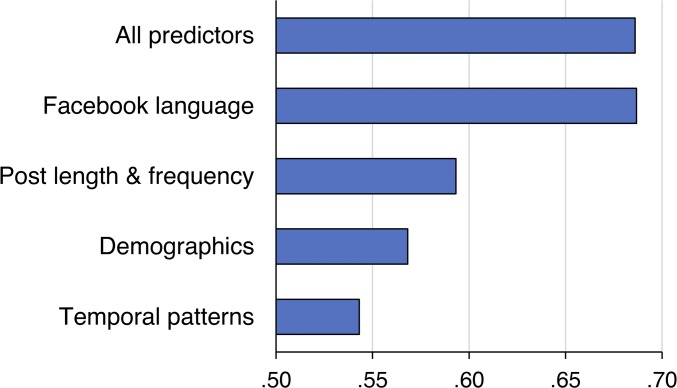
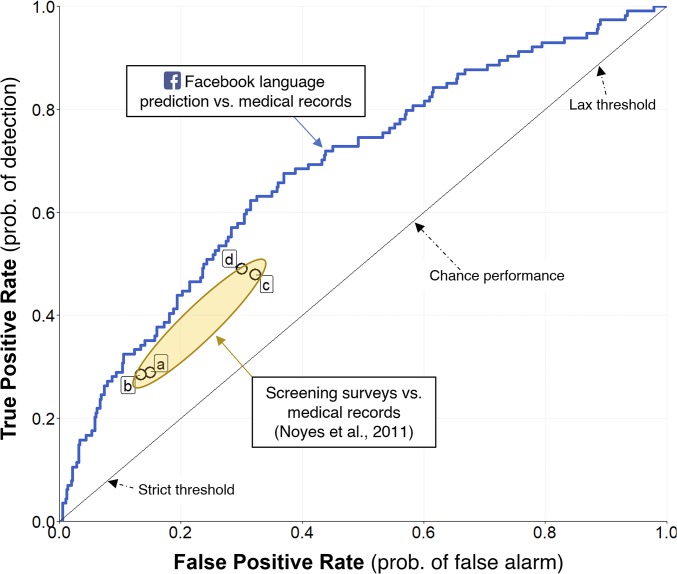
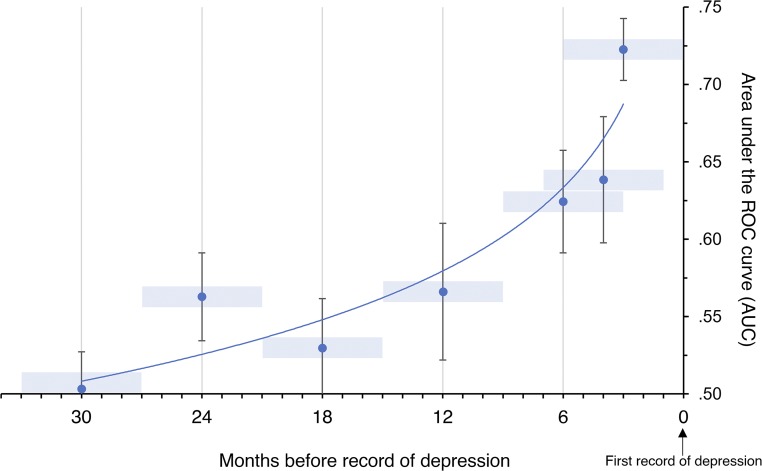
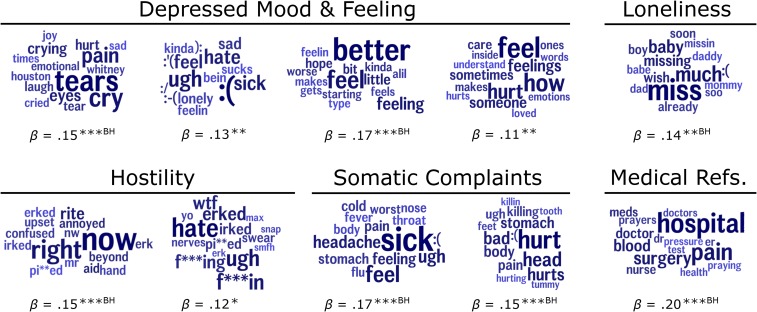
Significance: Depression is disabling and treatable, but underdiagnosed. In this study, we show that the content shared by consenting users on Facebook can predict a future occurrence of depression in their medical records. Language predictive of depression includes references to typical symptoms, including sadness, loneliness, hostility, rumination, and increased self-reference. This study suggests that an analysis of social media data could be used to screen consenting individuals for depression. Further, social media content may point clinicians to specific symptoms of depression.
Overview
The claims and statistics of this paper haven’t been checked yet.
Run the check — free, no account needed. It reads the open-access text and checks the sources it cites.
Integrity signals
Registry
Cites
Statistics
Figures
Verification
Claims the paper makes
The claims and statistics of this paper haven’t been checked yet.
Run the check — free, no account needed. It reads the open-access text and checks the sources it cites.
Claims other papers make about this one
Each is checked against this paper’s own text: does it say what the citing paper says it does?
In the citing paper
“These include words related to sadness, as well as words related to somatic health concerns (health and biology words, with the biology category combining body, health, sexual, and ingestion words) [22,23].”
From Behavioral Activation and Depression Symptomatology: Longitudinal Assessment of Linguistic Indicators in Text-Based Therapy Sessions (2021) · cites this paper as [23]
In the citing paper
“Over the years, Facebook developed machine learning algorithms studying the behavior of their users in detail on the platform. In order to get to know their users better, they do not only record what people ‘like’ (i.e., give a ‘thumbs up’) but also how long they hover over a certain post. This could be interpreted as showing a special interest in a certain area. ‘Textmining’ enables Facebook & Co”
From Addictive Features of Social Media/Messenger Platforms and Freemium Games against the Background of Psychological and Economic Theories (2019) · cites this paper as [67]
Self-check
Percentages, sums and reported differences re-computed from the paper’s own numbers.
The self-check needs the paper’s full text.
Citations
Cites
Controlling the False Discovery Rate: A Practical and Powerful Approach to Multiple Testing
Benjamini, Y., & Hochberg, Y. (1995) · Journal of the Royal Statistical Society Series B: Statistical Methodology · doi:10.1111/j.2517-6161.1995.tb02031.x · Cited by 109,482
(2003) · Journal of Machine Learning Research · doi:10.5555/944919.944937 · Cited by 32,337
Zhang, Q., Wang, C., Zheng, M., Li, Y., Li, J., Zhang, L., Shang, X., & Yan, C. (2014) · Cerebrovascular Diseases · doi:10.1159/000369778 · Cited by 11,609
Projections of Global Mortality and Burden of Disease from 2002 to 2030
Mathers, C. D., & Loncar, D. (2006) · PLoS Medicine · doi:10.1371/journal.pmed.0030442 · Cited by 11,386
Adjusting batch effects in microarray expression data using empirical Bayes methods
Johnson, W. E., Li, C., & Rabinovic, A. (2007) · Biostatistics · doi:10.1093/biostatistics/kxj037 · Cited by 8,658
Kessler, R. C., Berglund, P., Demler, O., Jin, R., Koretz, D., Merikangas, K. R., Rush, A. J., Walters, E. E., & Wang, P. S. (2003) · JAMA · doi:10.1001/jama.289.23.3095 · Cited by 7,988
Private traits and attributes are predictable from digital records of human behavior
Kosinski, M., Stillwell, D., & Graepel, T. (2013) · Proceedings of the National Academy of Sciences · doi:10.1073/pnas.1218772110 · Cited by 2,829
Wang, P. S., Lane, M., Olfson, M., Pincus, H. A., Wells, K. B., & Kessler, R. C. (2005) · Archives of General Psychiatry · doi:10.1001/archpsyc.62.6.629 · Cited by 2,695 · cited 1×
“E year, 7–26% of the US population experiences depression (1, 2), of whom only 13–49% receive minimally adequate treatment (3).”
BackgroundPredicting Depression via Social Media
Choudhury, M. D., Gamon, M., Counts, S., & Horvitz, E. (2021) · Proceedings of the International AAAI Conference on Web and Social Media · doi:10.1609/icwsm.v7i1.14432 · Cited by 1,583
Cited by
Sorted by citations
Items 201–300 of 640
Detecting depressed users in online forums
Shrestha, A., & Spezzano, F. (2019) · IEEE/ACM International Conference on Advances in Social Networks Analysis and Mining (ASONAM) · doi:10.1145/3341161.3343511 · Cited by 18
Ricard, B. J., & Hassanpour, S. (2021) · Journal of Medical Internet Research · doi:10.2196/27314 · Cited by 20
Suicide Risk Factors: A Language Analysis Approach in Social Media
Sierra, G., Andrade-Palos, P., Bel-Enguix, G., Osornio-Arteaga, A., Cabrera-Mora, A., García-Nieto, L., & Sierra-Aparicio, T. (2021) · Journal of Language and Social Psychology · doi:10.1177/0261927x211036171 · Cited by 20
Capturing mood dynamics through adolescent smartphone social communication.
Li, L. Y., Trivedi, E., Helgren, F., Allison, G. O., Zhang, E., Buchanan, S. N., Pagliaccio, D., Durham, K., Allen, N. B., Auerbach, R. P., et al. (2023) · Journal of Psychopathology and Clinical Science · doi:10.1037/abn0000855 · Cited by 18
Evaluating safety and toxicity
Bartosik, A., & Whittingham, H. (2021) · Elsevier eBooks · doi:10.1016/b978-0-12-820045-2.00008-8 · Cited by 19
Threlkeld, R., Ashiku, L., Canfield, C., Shank, D. B., Schnitzler, M., Lentine, K., Axelrod, D., Battineni, A. C. R., Randall, H., & Dagli, C. (2021) · Current Transplantation Reports · doi:10.1007/s40472-021-00351-0 · Cited by 12
Social Media in Oral Health Education: A Scoping Review
Apel, Z., Fagundes, N. C. F., Sharmin, N., Nassar, U., Gow, G. A., Apel, D., & Perez, A. J. (2024) · European Journal Of Dental Education · doi:10.1111/eje.13053 · Cited by 16
The construction of emotional meaning in language
Hoemann, K., Lee, Y., Dussault, È., Devylder, S., Ungar, L., Geeraerts, D., & Mesquita, B. (2025) · Communications Psychology · doi:10.1038/s44271-025-00255-0 · Cited by 38
Self-citationHow Successful Is Transfer Learning for Detecting Anorexia on Social Media?
Úbeda, P. L., Plaza-del-Arco, F. M., Díaz–Galiano, M. C., & Valdivia, M. T. M. (2021) · Applied Sciences · doi:10.3390/app11041838 · Cited by 18
Incorporating Forthcoming Events and Personality Traits in Social Media Based Stress Prediction
Li, N., Zhang, H., & Feng, L. (2021) · IEEE Transactions on Affective Computing · doi:10.1109/taffc.2021.3076294 · Cited by 17
SANE (Easy Gait Analysis System): Towards an AI-Assisted Automatic Gait-Analysis
Sipari, D., Rico, B. D. M. C., & Cafolla, D. (2022) · International Journal of Environmental Research and Public Health · doi:10.3390/ijerph191610032 · Cited by 16
AI-Enabled Deep Depression Detection and Evaluation Informed by DSM-5-TR
Prama, T. T., Islam, M. S., Anwar, M. M., & Jahan, I. (2024) · IEEE Transactions on Computational Social Systems · doi:10.1109/tcss.2024.3382139 · Cited by 18
Brewer, G., Centifanti, L. C. M., Caicedo, J. C., Huxley, G., Peddie, C., Stratton, K., & Lyons, M. T. (2021) · Illness Crisis & Loss · doi:10.1177/10541373211023951 · Cited by 18
MEANING OF AWE IN JAPANESE (CON)TEXT: BEYOND FEAR AND RESPECT
Nakayama, M., & Uchida, Y. (2020) · PSYCHOLOGIA · doi:10.2117/psysoc.2020-b004 · Cited by 19
Impacts of the COVID-19 Pandemic on the Bereaved: A Study of Bereaved Weibo Users
Han, N., Chen, G., Li, S., Huang, F., Wang, X., Ren, X., & Zhu, T. (2021) · Healthcare · doi:10.3390/healthcare9060724 · Cited by 17
Detecting Symptoms of Depression on Reddit
Liu, T., Jain, D., Rapole, S. R., Curtis, B. L., Eichstaedt, J. C., Ungar, L., & Guntuku, S. C. (2023) · ACM Web Science Conference (WebSci) · doi:10.1145/3578503.3583621 · Cited by 18
Self-citationGrande, D., Marti, X. L., Merchant, R. M., Asch, D. A., Dolan, A. R., Sharma, M., & Cannuscio, C. C. (2021) · Journal of Medical Internet Research · doi:10.2196/29395 · Cited by 15
Self-citationOn the Explainability of Automatic Predictions of Mental Disorders from Social Media Data
Uban, A. S., Chulvi, B., & Rosso, P. (2021) · Lecture notes in computer science · doi:10.1007/978-3-030-80599-9_27 · Cited by 16
From Symbols to Embeddings: A Tale of Two Representations in Computational Social Science
Chen, H., Yang, C. H., Zhang, X., Liu, Z., Sun, M., & Jin, J. (2021) · Journal of Social Computing · doi:10.23919/jsc.2021.0011 · Cited by 19
Wang, Y., Lin, J., Bi, S., Sun, C., Si, L., & Liu, X. (2021) · Expert Systems with Applications · doi:10.1016/j.eswa.2021.116232 · Cited by 15
The Hitchhiker’s Guide to Computational Linguistics in Suicide Prevention
Ophir, Y., Tikochinski, R., Klomek, A. B., & Reichart, R. (2021) · Clinical Psychological Science · doi:10.1177/21677026211022013 · Cited by 16
Kjell, O., Kjell, K., & Schwartz, H. A. (2023) · doi:10.31234/osf.io/yfd8g · Cited by 15
Self-citationSocial media big data analysis for mental health research
Wongkoblap, A., Vadillo, M. A., & Ćurčin, V. (2021) · Elsevier eBooks · doi:10.1016/b978-0-12-822201-0.00018-6 · Cited by 16
Merchant, R. M., Southwick, L., Beidas, R. S., Mandell, D. S., Guntuku, S. C., Pelullo, A., Yang, L., Mitra, N., Curtis, B. L., Ungar, L., et al. (2022) · Psychiatric Services · doi:10.1176/appi.ps.20220272 · Cited by 12
Self-citationCorbin, L., Griner, E. L., Seyedi, S. S., Jiang, Z., Roberts, K., Boazak, M., Rad, A. B., Clifford, G. D., & Cotes, R. O. (2023) · Journal of Affective Disorders Reports · doi:10.1016/j.jadr.2023.100645 · Cited by 14
Toward Personalized Medicine Approaches for Parkinson Disease Using Digital Technologies
Khanna, A., & Jones, G. B. (2023) · JMIR Formative Research · doi:10.2196/47486 · Cited by 15
Mining Facebook Data for Personality Prediction: An Overview
Marengo, D., & Settanni, M. (2019) · Studies in neuroscience, psychology and behavioral economics · doi:10.1007/978-3-030-31620-4_7 · Cited by 14
Internet Use and Depressive Symptoms in Adolescents: a Review
Бочавер, А. А., Dokuka, S., Сивак, Е., & Smirnov, I. (2019) · Clinical Psychology and Special Education · doi:10.17759/cpse.2019080301 · Cited by 17
Dean, H. J., & Boyd, R. L. (2020) · Journal of Affective Disorders · doi:10.1016/j.jad.2020.01.098 · Cited by 14
Detecting Early Onset of Depression from Social Media Text using Learned Confidence Scores
Bucur, A.-M., & Dinu, L. P. (2020) · Accademia University Press eBooks · doi:10.4000/books.aaccademia.8305 · Cited by 14
Affect across adulthood: Evidence from English, Dutch, and Spanish.
Kyröläinen, A.-J., Keuleers, E., Mandera, P., Brysbaert, M., & Kuperman, V. (2021) · Journal of Experimental Psychology General · doi:10.1037/xge0000950 · Cited by 15
Brinberg, M., Ram, N., Conroy, D. E., Pincus, A. L., & Gerstorf, D. (2021) · Psychological Methods · doi:10.1037/met0000380 · Cited by 14
Using Facebook language to predict and describe excessive alcohol use
Jose, R., Matero, M., Sherman, G. T., Curtis, B. L., Giorgi, S., Schwartz, H. A., & Ungar, L. (2022) · Alcoholism Clinical and Experimental Research · doi:10.1111/acer.14807 · Cited by 13
Self-citationDigitale Phänotypisierung in der Psychologie – ein Quantensprung in der psychologischen Forschung?
Baumeister, H., Garatva, P., Pryss, R. C., Ropinski, T., & Montag, C. (2022) · Psychologische Rundschau · doi:10.1026/0033-3042/a000609 · Cited by 15
Predicting Strategic Behavior from Free Text
Ben-Porat, O., Hirsch, S., Kuchi, L., Elad, G., Reichart, R., & Tennenholtz, M. (2020) · Journal of Artificial Intelligence Research · doi:10.1613/jair.1.11849 · Cited by 14
Artificial intelligence language predictors of two-year trauma-related outcomes
Oltmanns, J. R., Schwartz, H. A., Ruggero, C., Son, Y., Miao, J., Waszczuk, M., Clouston, S. A. P., Bromet, E. J., Luft, B. J., & Kotov, R. (2021) · Journal of Psychiatric Research · doi:10.1016/j.jpsychires.2021.09.015 · Cited by 13
Self-citationOn the State of NLP Approaches to Modeling Depression in Social Media: A Post-COVID-19 Outlook
Bucur, A.-M., Moldovan, A.-C., Parvatikar, K., Zampieri, M., KhudaBukhsh, A. R., & Dinu, L. P. (2025) · IEEE Journal of Biomedical and Health Informatics · doi:10.1109/jbhi.2025.3540507 · Cited by 16
Shankar, R., & Yip, A. W. (2025) · Scientific Reports · doi:10.1038/s41598-025-08599-7 · Cited by 15
Liu, T., Giorgi, S., Yadeta, K., Schwartz, H. A., Ungar, L., & Curtis, B. L. (2022) · The American Journal of Drug and Alcohol Abuse · doi:10.1080/00952990.2022.2091450 · Cited by 15
Self-citationSuicide and the agent–host–environment triad: leveraging surveillance sources to inform prevention
Keyes, K. M., Kandula, S., Olfson, M., Gould, M. S., Martínez‐Alés, G., Rutherford, C. G., & Shaman, J. L. (2021) · Psychological Medicine · doi:10.1017/s003329172000536x · Cited by 12
The Role and Impact of Social Media in Cardio-oncology During the COVID-19 Pandemic
Kwan, J. M., Henry, M. L., Christophers, B., Tamirisa, K. P., Thamman, R., Sadler, D. B., Aggarwal, N. R., Cheng, R. K.-H., Parwani, P. J., Dent, S. F., et al. (2021) · Current Oncology Reports · doi:10.1007/s11912-021-01081-3 · Cited by 13
Acceptability of Personal Sensing Among People With Alcohol Use Disorder: Observational Study
Wyant, K., Moshontz, H., Ward, S. B., Fronk, G. E., & Curtin, J. J. (2023) · JMIR mhealth and uhealth · doi:10.2196/41833 · Cited by 16
Identifying emerging mental illness utilizing search engine activity: A feasibility study
Birnbaum, M. L., Wen, H., Meter, A. V., Ernala, S. K., Rizvi, A. F., Arenare, E., Estrin, D. L., Choudhury, M. D., & Kane, J. M. (2020) · PLoS ONE · doi:10.1371/journal.pone.0240820 · Cited by 12
Block, J., Diegel, W., & Fisch, C. O. (2023) · Review of Managerial Science · doi:10.1007/s11846-023-00686-1 · Cited by 17
Kelly, D. L., Spaderna, M., Hodzic, V., Nair, S., Kitchen, C., Werkheiser, A. E., Powell, M. M., Liu, F., Coppersmith, G., Chen, S., et al. (2020) · Psychiatry Research · doi:10.1016/j.psychres.2020.113496 · Cited by 14
Affect-Dynamic Signatures of Psychosis Risk Across Multiple Time Scales and Contexts
Li, L. Y., Schiffman, J. E., & Martin, E. A. (2022) · Clinical Psychological Science · doi:10.1177/21677026211070794 · Cited by 14
Yoga-Veganism: Correlation Mining of Twitter Health Data.Preprint
Islam, T. (2019) · arXiv (Cornell University) · doi:10.07668/wisdom-kdd-2019 · Cited by 12
Can precision medicine advance psychiatry?
Roche, D., & Russell, V. (2020) · Irish Journal of Psychological Medicine · doi:10.1017/ipm.2020.79 · Cited by 14
Deep Neural Networks Detect Suicide Risk from Textual Facebook PostsPreprint
Ophir, Y., Tikochinski, R., Asterhan, C. S. C., Sisso, I., & Reichart, R. (2020) · PsyArXiv (OSF Preprints) · doi:10.31234/osf.io/k47hr · Cited by 13
Global renewable energy forecasting using hybrid ML/DL models: Economic and geospatial insights
Sarıman, G., & Keçebaş, A. (2025) · Energy Policy · doi:10.1016/j.enpol.2025.114929 · Cited by 12
Southwick, L., Suh, R., Kranzler, E. C., Bradley, M., & Merchant, R. M. (2022) · JMIR Formative Research · doi:10.2196/32103 · Cited by 9
Self-citationSocialni odnosi, animizem, antropomorfizem in interakcija z UI
Babić, N. Č. (2022) · doi:10.18690/um.ff.11.2022.12 · Cited by 10
Diagnosis of Mental Health from Social Networking Posts: An Improved ML-Based Approach
Sachan, R. K., Kumar, A., Shukla, D., Sharma, A., & Kumar, S. (2024) · Lecture notes in electrical engineering · doi:10.1007/978-981-99-8646-0_11 · Cited by 11
Technology in the Assessment, Treatment, and Management of Depression
Bader, C. S., Skurla, M. D., & Vahia, I. V. (2020) · Harvard Review of Psychiatry · doi:10.1097/hrp.0000000000000235 · Cited by 11
Orvell, A., Gelman, S. A., & Kross, E. F. (2022) · Social and Personality Psychology Compass · doi:10.1111/spc3.12665 · Cited by 14
Depression Detection on Social Media Using Text Mining
Dessai, S., & Usgaonkar, S. S. (2022) · International Conference for Emerging Technology (INCET) · doi:10.1109/incet54531.2022.9824931 · Cited by 11
Assessment of Depression in Adults and Youth
Klein, D. N. (2023) · Assessment · doi:10.1177/10731911231167446 · Cited by 13
A Psychologically Informed Part-of-Speech Analysis of Depression in Social Media
Bucur, A.-M., ̆, I. R. P., & Dinu, L. P. (2021) · International conference Recent advances in natural language processing · doi:10.26615/978-954-452-072-4_024 · Cited by 10
Liu, Q., Su, F., Mu, A., & Wu, X. (2024) · Psychology Research and Behavior Management · doi:10.2147/prbm.s450934 · Cited by 14
Unveiling the Landscape of Big Data Analytics in Healthcare: A Comprehensive Bibliometric Analysis
Daril, M. A. M., Fatima, F., Talpur, S. R., & Abbas, A. F. (2024) · International Journal of Online and Biomedical Engineering (iJOE) · doi:10.3991/ijoe.v20i06.48085 · Cited by 10
Presence and Pronouns: An Exploratory Investigation into the Language of Social VR
DeVeaux, C., Markowitz, D. M., Han, E., Miller, M. R., Hancock, J. T., & Bailenson, J. N. (2024) · Journal of Language and Social Psychology · doi:10.1177/0261927x241248646 · Cited by 10
Sikström, S., Valavičiūtė, I., Kuusela, I., & Evors, N. (2024) · Communications Psychology · doi:10.1038/s44271-024-00097-2 · Cited by 11
Kapitány‐Fövény, M., Vetró, M., Révy, G., Fabó, D., Szirmai, D., & Hullám, G. (2024) · Journal of Psychiatric Research · doi:10.1016/j.jpsychires.2024.08.002 · Cited by 10
Characterizing Anxiety Disorders with Online Social and Interactional Networks
Dutta, S., & Choudhury, M. D. (2020) · Lecture notes in computer science · doi:10.1007/978-3-030-60152-2_20 · Cited by 10
Suicidal Risk Detection for Military Personnel
Park, S., Park, K., Ahn, J., & Oh, A. H. (2020) · Conference on Empirical Methods in Natural Language Processing (EMNLP) · doi:10.18653/v1/2020.emnlp-main.198 · Cited by 9
Identifying Depression-Related Behavior on Facebook—An Experimental Study
Kmetty, Z., & Bozsonyi, K. (2022) · Social Sciences · doi:10.3390/socsci11030135 · Cited by 10
Simchon, A., Turkin, C., Svoray, T., Kloog, I., Dorman, M., & Gilead, M. (2021) · Journal of Experimental Social Psychology · doi:10.1016/j.jesp.2021.104221 · Cited by 10
The association of language style matching in text messages with mood and anxiety symptoms
Stamatis, C. A., Meyerhoff, J., Liu, T., Hou, Z., Sherman, G. T., Curtis, B. L., Ungar, L., & Mohr, D. C. (2022) · Procedia Computer Science · doi:10.1016/j.procs.2022.09.094 · Cited by 11
Self-citationIntelligent Data Prognosis of Recurrent of Depression in Medical Diagnosis
Chanda, K., Bhattacharjee, P., Roy, S., & Biswas, S. (2020) · International Conference on Reliability, Infocom Technologies and Optimization (Trends and Future Directions) (ICRITO) · doi:10.1109/icrito48877.2020.9197843 · Cited by 10
Depressed individuals express more distorted thinking on social mediaPreprint
Bathina, K. C., ten Thij, M., Lorenzo‐Luaces, L., Rutter, L. A., & Bollen, J. (2020) · arXiv (Cornell University) · doi:10.48550/arxiv.2002.02800 · Cited by 10
Machine Learning Can Predict Shooting Victimization Well Enough to Help Prevent It
Heller, S., Jakubowski, B., Jelveh, Z., & Kapustin, M. (2022) · National Bureau of Economic Research · doi:10.3386/w30170 · Cited by 9
Guo, Y., Zhang, Z., & Xu, X. (2023) · BMC Psychology · doi:10.1186/s40359-023-01460-4 · Cited by 9
Early warning signals observed in motor activity preceding mood state change in bipolar disorder
Jakobsen, P., Côté‐Allard, U., Riegler, M. A., Stabell, L. A., Stautland, A., Nordgreen, T., Tørresen, J., Fasmer, O. B., & Oedegaard, K. J. (2024) · Bipolar Disorders · doi:10.1111/bdi.13430 · Cited by 11
Hridoy, M. T. A., Saha, S. R., Islam, M. M., Uddin, M. A., & Mahmud, M. Z. (2024) · Social Network Analysis and Mining · doi:10.1007/s13278-024-01392-w · Cited by 12
Trelles, A., Fontaines-Ruíz, T., & Rojo, A. P. (2025) · Behavioral Sciences · doi:10.3390/bs15111476 · Cited by 14
Evaluating Contextual Embeddings and their Extraction Layers for Depression Assessment
Matero, M., Hung, A., & Schwartz, H. A. (2022) · Workshop on Computational Approaches to Subjectivity, Sentiment and Social Media Analysis (WASSA) · doi:10.18653/v1/2022.wassa-1.9 · Cited by 14
Self-citationUban, A. S., Chulvi, B., & Rosso, P. (2022) · Studies in computational intelligence · doi:10.1007/978-3-031-04431-1_13 · Cited by 12
Savekar, A., Tarai, S., & Singh, M. (2022) · European Journal of Applied Linguistics · doi:10.1515/eujal-2022-0022 · Cited by 9
Esmaeilzadeh, P. (2024) · JMIR Formative Research · doi:10.2196/45573 · Cited by 12
Nalabandian, T., & Ireland, M. E. (2019) · Workshop on Computational Linguistics and Clinical Psychology (CLPsych) · doi:10.18653/v1/w19-3008 · Cited by 9
BDNF Genetic Variant and Its Genotypic Fluctuation in Major Depressive Disorder
Fratelli, C. F., Siqueira, J. W. S., Gontijo, B. R., dos Santos, M. L., Silva, C. M. D. S., & da Silva, I. C. R. (2021) · Behavioural Neurology · doi:10.1155/2021/7117613 · Cited by 9
A new type of mental health assessment using artificial intelligence technique
Jiang, L., Tian, X., Ren, P., & Fang, L. U. O. (2021) · Advances in Psychological Science · doi:10.3724/sp.j.1042.2022.00157 · Cited by 9
Teo, A. R., Strange, W., Bui, R., Dobscha, S. K., & Ono, S. S. (2020) · Journal of Medical Internet Research · doi:10.2196/22076 · Cited by 9
Artificial Intelligence and Machine Learning in Healthcare Sector
Chavda, V. P., Patel, K., Patel, S. H., & Apostolopoulos, V. (2023) · Wiley eBooks · doi:10.1002/9781119865728.ch13 · Cited by 11
Othman, N. A., Panchapakesan, C., Loh, S. B., Zhang, M., Gupta, R. K., Martanto, W., Phang, Y. S., Morris, R. J. T., Loke, W. C., Tan, K. B., et al. (2024) · Scientific Reports · doi:10.1038/s41598-024-73978-5 · Cited by 8
Mussgnug, A. M. (2025) · Philosophy & Technology · doi:10.1007/s13347-025-00938-w · Cited by 15
Ghenimi, N., Govender, R. D., & Moodley, K. (2025) · AI & Society · doi:10.1007/s00146-025-02418-3 · Cited by 9
Dowell, N., McKay, T. A., & Perrett, G. (2021) · AERA Open · doi:10.1177/23328584211011611 · Cited by 9
Enabling the Analysis of Mental Health Patterns Using an Efficient Machine Learning Approach
Afzoon, S., Rezvani, N., & Khunjush, F. (2021) · IEEE International Enterprise Distributed Object Computing Conference Workshops (EDOCW) · doi:10.1109/edocw52865.2021.00033 · Cited by 8
Alves, V., Garcia, F. E., Saud, C. S., Mendes, A. J., Caseli, H. D. M., Motti, V. G., Neris, L. D. O., Bleicher, T., & Néris, V. P. D. A. (2023) · Interaction design & architecture(s)/ID&A Interaction design & architecture(s) · doi:10.55612/s-5002-059-003 · Cited by 9
Marengo, D., & Settanni, M. (2024) · Data · doi:10.3390/data9040051 · Cited by 8
Your Smartphone Knows you Better than you May Think: Emotional Assessment ‘on the Go’ Via TapSense
Ghosh, S., Löchner, J., Mitra, B., & De, P. (2022) · Health informatics · doi:10.1007/978-3-030-94212-0_10 · Cited by 8
Development of a Machine Learning Model to Estimate US Firearm Homicides in Near Real Time
Swedo, E. A., Alic, A., Law, R., Sumner, S. A., Chen, M. S., Zwald, M. L., Dyke, M. E. V., Bowen, D. A., & Mercy, J. A. (2023) · JAMA Network Open · doi:10.1001/jamanetworkopen.2023.3413 · Cited by 8
Bak, M., Chiu, C., & Chin, J. (2023) · Cyberpsychology Behavior and Social Networking · doi:10.1089/cyber.2022.0116 · Cited by 11
Hackl, W. O., Hoerbst, A., & Systems, S. E. F. T. I. Y. S. O. C. I. (2019) · Yearbook of Medical Informatics · doi:10.1055/s-0039-1677919 · Cited by 8
Stade, E. C., Ungar, L., Eichstaedt, J. C., Sherman, G. T., & Ruscio, A. M. (2023) · doi:10.31234/osf.io/7qvcz · Cited by 8
Self-citationHindcasts and forecasts of suicide mortality in US: A modeling study
Kandula, S., Olfson, M., Gould, M. S., Keyes, K. M., & Shaman, J. L. (2023) · PLoS Computational Biology · doi:10.1371/journal.pcbi.1010945 · Cited by 7
Eyrikaya, E., & Dağ, İ. (2025) · Depression and Anxiety · doi:10.1155/da/9943590 · Cited by 7
Garzón‐Partida, A. P., Padilla-Gómez, C. B., Martínez-Fernández, D. E., Garcı́a‐Estrada, J., Luquı́n, S., & Fernández-Quezada, D. (2025) · Frontiers in Digital Health · doi:10.3389/fdgth.2025.1595243 · Cited by 10
Metadata
- Authors
- Eichstaedt, J. C., Smith, R. J., Merchant, R. M., Ungar, L. H., Crutchley, P., Preoţiuc-Pietro, D., Asch, D. A., & Schwartz, H. A.
- Affiliations
- University of Pennsylvania (US)
- University of Pennsylvania Health System (US)
- Positive Psychology Center, University of Pennsylvania, Philadelphia, PA 19104;
- Philadelphia VA Medical Center (US)
- Stony Brook University (US)
- Corresponding author
- Eichstaedt, Johannes C.
- ORCID
- Venue
- Proceedings of the National Academy of Sciences
- Publisher
- National Academy of Sciences
- Published
- 2018-10-15
- Volume
- 115
- Issue
- 44
- Pages
- 11203-11208
- ISSN
- 0027-8424 (ISSN-L)
- 1091-6490
- PMC
- PMC6217418
- OpenAlex
- W2897583329
- Cited by
- 643
- References
- 46
- Citations by year
- 2026: 64 · 2025: 68 · 2024: 77 · 2023: 87 · 2022: 107 · 2021: 111 · 2020: 84 · 2019: 41 · 2018: 3
- FWCI
- 80.90
- Type
- journal article
- Language
- en
- Open access
- hybrid
- doi.org
- Licence
- Locations
- Proceedings of the National Academy of Sciences (publishedVersion, cc-by-nc-nd)
- Europe PMC (PubMed Central) (publishedVersion, cc-by-nc-nd)
- PubMed Central (publishedVersion, cc-by-nc-nd)
- PubMed (publishedVersion)
- Funders
- Robert Wood Johnson Foundation (Pioneer Award)
- Templeton Religion Trust (TRT0048)
- HHS | NIH | National Heart, Lung, and Blood Institute (HL122457)
- Topics
- Social Sciences › Psychology › Social Psychology › Mental Health via Writing
- Physical Sciences › Computer Science › Artificial Intelligence › Emotion and Mood Recognition
- Physical Sciences › Computer Science › Artificial Intelligence › Sentiment Analysis and Opinion Mining
- Keywords
- depression, Facebook posts, social media language, depression prediction, electronic health records, depression screening, emergency department patients, rumination, loneliness, sadness, self-absorption, hostility
- MeSH terms
- Adult, Depression, Depressive Disorder, Female, Humans, Language, Male, Surveys and Questionnaires, Electronic Health Records, Social Media
About these checks
Registry, retraction, Cites and statistics results are computed, not judged, with one exception: a printed reference that no index lists is read once by a model before it counts as a citation error. Claims are extracted by a model and kept only when their quote appears verbatim in the text; each cited source is then checked, with a model’s help, for whether it says what the claim relies on. Those verdicts can be wrong — read the claim’s quote and the cited source before relying on one.
Statistics and arithmetic are recomputed, not judged.
Confidence bands are shown only for fields calibrated on our annotated test set. None is calibrated yet, so no band is shown.
What counts as a claim ›How we measure confidence ›How we check this ›
Are you an author, or do you see a problem with this page? Request a review
