

Fighting misinformation on social media using crowdsourced judgments of news source quality
Open accessThe DOI matches its Crossref record; 26 of the 26 references it cites were found in a registry or an index.
Abstract
Significance: Many people consume news via social media. It is therefore desirable to reduce social media users’ exposure to low-quality news content. One possible intervention is for social media ranking algorithms to show relatively less content from sources that users deem to be untrustworthy. But are laypeople’s judgments reliable indicators of quality, or are they corrupted by either partisan bias or lack of information? Perhaps surprisingly, we find that laypeople—on average—are quite good at distinguishing between lower- and higher-quality sources. These results indicate that incorporating the trust ratings of laypeople into social media ranking algorithms may prove an effective intervention against misinformation, fake news, and news content with heavy political bias.
Overview
The claims and statistics of this paper haven’t been checked yet.
Free: it reads the open-access text and checks the first 5 claims that cite a source we can check. Create a free account to check every claim.
Integrity signals
Registry
Cites
Statistics
Figures
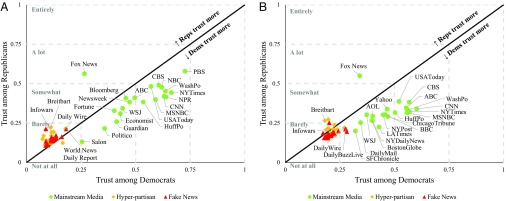
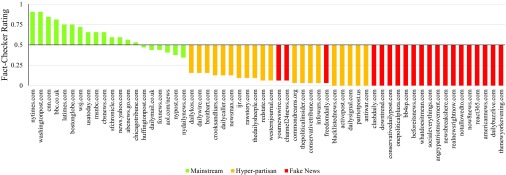
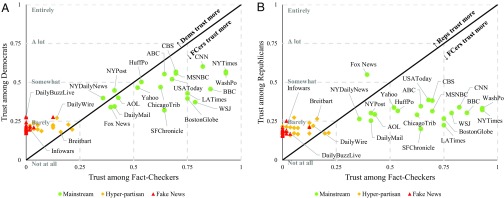
Verification
Claims the paper makes
The claims and statistics of this paper haven’t been checked yet.
Free: it reads the open-access text and checks the first 5 claims that cite a source we can check. Create a free account to check every claim.
Claims other papers make about this one
Each is checked against this paper’s own text: does it say what the citing paper says it does?
The source backs part of the claim, not all of it — or backs it for a different population, condition or comparison.
In the citing paper
“Recent empirical research finds that averaged responses of ordinary people are on par with third-party fact-checkers for both factual claims in articles (47) and overall accuracy of content from URL domain names (48, 49).”
From Deepfake detection by human crowds, machines, and machine-informed crowds (2022) · cites this paper as [49]
Experimental — accuracy not yet measuredThe cited source says what the claim attributes to it.
In the citing paper
“These approaches rely on the collective contributions and crowd signals (Tschiatschek et al. 2018) of a group of people for the aggregation of crowd intelligence to detect fake news (Tchakounté et al. 2020) and to reduce the spread of misinformation on social media (Pennycook and Rand 2019; Micallef et al. 2020).”
From Fake news, disinformation and misinformation in social media: a review (2023) · cites this paper as Pennycook and Rand 2019
The cited source says what the claim attributes to it.
In the citing paper
“Recent research suggests that human reasoning is “meaningfully directed toward the formation of accurate, rather than merely identity-confirming, beliefs” (ref. 24 p. 2525)”
From Factual knowledge can reduce attitude polarization (2025) · cites this paper as [24]
The cited source says what the claim attributes to it.
In the citing paper
“Research on news source quality demonstrates that people in the United States are generally accurate at identifying high and low-quality publishers54”
From Human detection of political speech deepfakes across transcripts, audio, and video (2024) · cites this paper as [54]
The cited source says what the claim attributes to it.
In the citing paper
“The crowdsourced accuracy ratings generated by this process may also be useful for identifying misinformation, as has been found for crowd ratings of source trustworthiness 138,139 .”
From Using social and behavioural science to support COVID-19 pandemic response (2020) · cites this paper as [139]
1 more claim about this paper
Create a free account to see every claim other papers make about this one.
Self-check
Percentages, sums and reported differences re-computed from the paper’s own numbers.
The self-check needs the paper’s full text.
Citations
Cites
Cognitive Reflection and Decision Making
Frederick, S. (2005) · Journal of Economic Perspectives · doi:10.1257/089533005775196732 · Cited by 5,256
Lazer, D. M. J., Baum, M. A., Benkler, Y., Berinsky, A. J., Greenhill, K. M., Menczer, F., Metzger, M. J., Nyhan, B., Pennycook, G., Rothschild, D., et al. (2018) · Science · doi:10.1126/science.aao2998 · Cited by 4,160 · cited 1×
“This is illustrated by the recent rise of an old form of misinformation: blatantly false news stories that are presented as if they are legitimate (2).”
BackgroundSelf-citationMisinformation and Its Correction: Continued Influence and Successful Debiasing
Lewandowsky, S., Ecker, U. K. H., Seifert, C. M., Schwarz, N., & Cook, J. (2012) · Psychological Science in the Public Interest · doi:10.1177/1529100612451018 · Cited by 2,920
Evidence for a Collective Intelligence Factor in the Performance of Human Groups
Woolley, A. W., Chabris, C. F., Pentland, A., Hashmi, N., & Malone, T. W. (2010) · Science · doi:10.1126/science.1193147 · Cited by 2,685 · cited 1×
“Here, we consider an alternative approach that builds off the large literature on collective intelligence and the “ wisdom of crowds ” (10, 11): using crowdsourcing (rather than professional fact-checkers) to assess the reliability of news websites (rather than individual stories), and then…”
BackgroundWhy do humans reason? Arguments for an argumentative theory
Mercier, H., & Sperber, D. (2011) · Behavioral and Brain Sciences · doi:10.1017/s0140525x10000968 · Cited by 2,254
Pennycook, G., & Rand, D. G. (2019) · Cognition · doi:10.1016/j.cognition.2018.06.011 · Cited by 2,022
Self-citationFake news on Twitter during the 2016 U.S. presidential election
Grinberg, N., Joseph, K., Friedland, L., Swire-Thompson, B., & Lazer, D. (2019) · Science · doi:10.1126/science.aau2706 · Cited by 1,803 · cited 1×
“(25), as well as websites that generated fake stories (as indicated by snopes.”
BackgroundIdeology, motivated reasoning, and cognitive reflection
Kahan, D. M. (2013) · Judgment and Decision Making · doi:10.1017/s1930297500005271 · Cited by 1,302 · cited 1×
“Specifically, motivated reasoning accounts (17, 30, 31) argue that humans reason akin to lawyers (as opposed to philosophers): We engage analytic thought as a means to justify our prior beliefs and thus facilitate argumentation.”
BackgroundPrior exposure increases perceived accuracy of fake news
Pennycook, G., Cannon, T. D., & Rand, D. G. (2018) · Journal of Experimental Psychology General · doi:10.1037/xge0000465 · Cited by 1,268
Self-citationCoppock, A., & McClellan, O. A. (2019) · Research & Politics · doi:10.1177/2053168018822174 · Cited by 987 · cited 1×
“In the second study, we tested the generalizability of our findings by surveying an additional n = 970 Americans recruited from Lucid, providing a subject pool that is nationally representative on age, gender, ethnicity, and geography (27).”
Result
Research works printed but not linked: 3
- 10.1037/h0101809 · doi:10.1037/h0101809 · Paper page
- G Pennycook DG Rand The implied truth effect: Attaching warnings to a subset of fake news stories increases perceived accuracy of stories without warnings. Available at https://papers.ssrn.com/sol3/papers.cfm?abstract_id=3035384. Accessed December 10 2017. (2017).
- RM Faris Partisanship propaganda and disinformation: Online media and the 2016 US Presidential Election. Berkman Klein Center for Internet Society and Research Paper . Available at https://papers.ssrn.com/sol3/papers.cfm?abstract_id=3019414. Accessed August 28 2017. (2017).
Cited by
Items 301–400 of 944
Leveraging Chatbots to Combat Health Misinformation for Older Adults: Participatory Design Study
Peng, W., Lee, H. R., & Lim, S. (2024) · JMIR Formative Research · doi:10.2196/60712 · Cited by 33
“…to curb the spread of misinformation and alleviate the negative impact by implementing media literacy programs to equip people with skills to critically evaluate information [14,15] and artificial intelligence (AI)–based corrective responses to detect and flag misinformation claims [16,17].”
BackgroundZuo, Q., Du, K., Li, A., Zhang, C., Guo, R., Chen, P., Du, W.-S., Zuo, Y.-L., & Li, S.-M. (2025) · Frontiers in Digital Health · doi:10.3389/fdgth.2025.1623247 · Cited by 26
“First, platform algorithms likely influence the visibility of high-quality content (31).”
Digital Economic Policy: The Economics of Digital Markets from a European Union Perspective
Mariniello, M. (2022) · doi:10.1093/oso/9780198831471.001.0001 · Cited by 24
Semi-supervised bidirectional RNN for misinformation detection
Dong, X., & Qian, L. (2022) · Machine Learning with Applications · doi:10.1016/j.mlwa.2022.100428 · Cited by 27
He, L., & He, C. (2022) · Proceedings of the ACM on Human-Computer Interaction · doi:10.1145/3555138 · Cited by 21
“…literature on understanding and improving laypeople ’ s information debunking strategies and performances provides valuable insights [5,10,12,21,46], most regarded information debunking as an individual endeavor, without investigating the potential interaction among the individual debunkers,…”
BackgroundIntegrating Human-in-the-loop into Swarm Learning for Decentralized Fake News Detection
Dong, X., Sarker, S., & Qian, L. (2022) · International Conference on Intelligent Data Science Technologies and Applications (IDSTA) · doi:10.1109/idsta55301.2022.9923043 · Cited by 21
“Social media has dominated information generation and spreading, which results in that it is becoming more and more challenging for people to live without social media [1], [2], [3].”
BackgroundReliability Criteria for News Websites
Heuer, H., & Glassman, E. L. (2024) · ACM Transactions on Computer-Human Interaction · doi:10.1145/3635147 · Cited by 20
“…objectivity, Chołoniewski et al. [ 13 ] point out that, despite their imper-fections, they have been judged as “accurate enough to be used as ground-truth for, e.g., media bias classifiers [ 47 , 49 , 50 ], fake news studies [ 51 , 52 , 53 ], and automatic fact-checking systems [ 55 , 56 , 57 ].””
MethodIncorporating Psychological Science Into Policy Making: The Case of Misinformation
Kozyreva, A., Smillie, L., & Lewandowsky, S. (2023) · European Psychologist · doi:10.1027/1016-9040/a000493 · Cited by 20
Jahng, M. R., Stoycheff, E., & Rochadiat, A. M. P. (2021) · Mass Communication & Society · doi:10.1080/15205436.2020.1870143 · Cited by 21
“As individuals are prone to make intuitive “snap judgments” in an online environment especially when faced with disagreeing positions (Pennycook & Rand, 2019b).”
BackgroundInfluentialInternational AI Safety Report
Bengio, Y., Mindermann, S., Privitera, D., Besiroglu, T., Bommasani, R., Casper, S., Choi, Y., Fox, P., Garfinkel, B., Goldfarb, D., et al. (2025) · arXiv · doi:10.48550/arxiv.2501.17805 · Cited by 16
Belief updating in the face of misinformation: The role of source reliability
Sanna, G. A., & Lagnado, D. A. (2025) · Cognition · doi:10.1016/j.cognition.2025.106090 · Cited by 24
“In the political realm, understanding how to correct misinformation is crucial for maintaining an informed electorate (Pennycook & Rand, 2019).”
Shibuya, Y., Nakazato, T., & Takagi, S. (2025) · International Journal of Human-Computer Studies · doi:10.1016/j.ijhcs.2025.103485 · Cited by 19
Chipidza, W., & Yan, J. (2022) · Journal of the Association for Information Science and Technology · doi:10.1002/asi.24705 · Cited by 19
Bhattacherjee, A. (2022) · Journal of Electronic Business & Digital Economics · doi:10.1108/jebde-09-2022-0031 · Cited by 23
Adjusting news accuracy perceptions after deepfakes exposure: Evidence from a non-Western context
Ahmed, S., Wang, Y., & Bee, A. W. T. (2023) · Telematics and Informatics · doi:10.1016/j.tele.2023.102047 · Cited by 22
Pyle, C., Ellison, N. B., & Andalibi, N. (2023) · Proceedings of the ACM on Human-Computer Interaction · doi:10.1145/3610087 · Cited by 22
“While this approach has primarily been applied to trust and credibility ratings in the context of misinformation detection (e.g., [100]), it may be similarly feasible in labeling content for potential triggers on Reddit.”
Profiling the Dynamics of Trust & Distrust in Social Media: A Survey Study
Zhang, Y., Wang, Y., Yongsatianchot, N., Gaggiano, J. D., Suhaimi, N. M., Okrah, A., Kim, M., Griffin, J., & Parker, A. G. (2024) · Proceedings of the CHI Conference on Human Factors in Computing Systems · doi:10.1145/3613904.3642927 · Cited by 15
“In recent years, social media platforms have implemented various strategies to counter misinformation, anticipating that it would enhance trust and diminish distrust, such as fact-checking, warning labels, and content removal [50].”
BackgroundRethinking Right-Wing Media in the Wake of an Attempted Coup
Yang, Y. (2024) · Oxford University Press eBooks · doi:10.1093/oso/9780197758526.003.0018 · Cited by 15
A desinformação no Brasil durante a pandemia de Covid-19: temas, plataformas e atores
Gehrke, M., & Benetti, M. (2021) · Fronteiras - estudos midiáticos · doi:10.4013/fem.2021.232.02 · Cited by 31
Nissen, I. A., Walter, J. G., Charquero‐Ballester, M., & Bechmann, A. (2022) · Digital Journalism · doi:10.1080/21670811.2022.2026795 · Cited by 21
“Platforms and content creators might also affect how much misinformation is trusted or believed, and therefore affect how effective the misinformation is (cp. Pennycook and Rand 2019).”
BackgroundSocial Media Analytics and Its Applications in Marketing
Moon, S., & Iacobucci, D. (2022) · Foundations and Trends® in Marketing · doi:10.1561/1700000073 · Cited by 30
The Manufacture of Partisan Echo Chambers by Follow Train Abuse on Twitter
Torres-Lugo, C., Yang, K.-C., & Menczer, F. (2022) · Proceedings of the International AAAI Conference on Web and Social Media · doi:10.1609/icwsm.v16i1.19354 · Cited by 28
“This approach is widely adopted in the literature (Shao et al. 2018; Grinberg et al. 2019; Pennycook and Rand 2019; Bovet and Makse 2019; Yang, Torres-Lugo, and Menczer 2020) because labeling at the level of individual articles is not feasible (Lazer et al. 2018).”
MethodBelievability and Harmfulness Shape the Virality of Misleading Social Media Posts
Drolsbach, C., & Pröllochs, N. (2023) · International World Wide Web Conference (WWW) · doi:10.1145/3543507.3583857 · Cited by 26
“Experimental studies suggest that the crowd can be highly accurate in identifying misinformation and even relatively small crowds can yield performance similar to experts [10, 15, 38].”
BackgroundInfluentialCombating Misinformation and Fake News: The Potential of AI and Media Literacy Education
Washington, J. (2023) · doi:10.2139/ssrn.4580385 · Cited by 14
Political Polarization Triggers Conservatives’ Misinformation Spread to Attain Ingroup Dominance
Zhu, X., & Pechmann, C. (2024) · Journal of Marketing · doi:10.1177/00222429241264997 · Cited by 20
How Twitter data sampling biases U.S. voter behavior characterizations
Yang, K.-C., Hui, P.-M., & Menczer, F. (2022) · PeerJ Computer Science · doi:10.7717/peerj-cs.1025 · Cited by 22
“A domain is labeled as low-credibility if it is either (a) labeled as low-credibility by Shao et al. [38]; (b) labeled as either “fakenews” or “hyperpartisan” by Pennycook and Rand [36]; (c) labeled as “fakenews,” “extremeright,” or “extremeleft” by Bovet and Makse [10]; or (d) labeled as “Black,” “Red,” or “Satire” b…”
MethodInfluentialLosing the battle over best-science guidance early in a crisis: COVID-19 and beyond
Illari, L., Restrepo, N. J., & Johnson, N. F. (2022) · Science Advances · doi:10.1126/sciadv.abo8017 · Cited by 16
Most Common Social Media Platforms in Saudi Arabia for Sharing COVID-19 Medical Information
Alotaibi, K., & Alotiby, A. A. (2022) · Saudi Journal of Health Systems Research · doi:10.1159/000523728 · Cited by 16
Resnick, P., Alfayez, A., Im, J., & Gilbert, É. (2023) · Collective Intelligence · doi:10.1177/26339137231173407 · Cited by 35
Shin, J., Lewis, S. C., Kim, S., & Thorson, K. (2024) · New Media & Society · doi:10.1177/14614448241228851 · Cited by 25
“As for accuracy assessment, recent findings (Allen et al., 2021; Pennycook and Rand, 2019; Resnick et al., 2023) showed a high level of consistency between journalists and regular audiences.”
Munk, A. K., Jacomy, M., Ficozzi, M., & Jensen, T. E. (2024) · Big Data & Society · doi:10.1177/20539517241255107 · Cited by 26
“…network analysis ” ), techniques used in sociology but not only ( “ principal component analysis ” ), sociology of algorithms ( “ socially responsible AI ” ), adjacent fi elds ( “ text search systems ” ) and some more distant fi elds ( “ fuzzy logic ” ). sources (e.g., Pennycook and Rand, 2019).”
He, B., Hu, Y., Lee, Y.-C., Oh, S., Verma, G., & Kumar, S. (2024) · ACM Transactions on Knowledge Discovery from Data · doi:10.1145/3694980 · Cited by 27
“For using evidenced counter-arguments, Wang et al. [104] highlighted the importance of citing evidence to enhance the debunking effect, which is better than debunking with uncited evidence ( p < 0 .”
InfluentialFalse failures, real distrust: the impact of an infrastructure failure deepfake on government trust
Ahmed, S., Masood, M., Bee, A. W. T., & Ichikawa, K. (2025) · Frontiers in Psychology · doi:10.3389/fpsyg.2025.1574840 · Cited by 27
“First, individuals with higher cognitive skills are generally better equipped to critically evaluate information and discern credible sources from misleading ones (Pennycook and Rand, 2019b).”
The Selective Communication of Political Information
Ekstrom, P. D., & Lai, C. K. (2020) · Social Psychological and Personality Science · doi:10.1177/1948550620942365 · Cited by 23
“Existing research suggests that everyday citizens can recognize flagrantly implausible “fake news” (Pennycook & Rand, 2019).”
Containing rumors spreading on correlated multiplex networks
Xian, J., Yang, D., Pan, L., Liu, M., & Wang, W. (2020) · Journal of Statistical Mechanics Theory and Experiment · doi:10.1088/1742-5468/ab6849 · Cited by 13
Character deprecation in fake news: Is it in supply or demand?
McPhetres, J., Rand, D. G., & Pennycook, G. (2021) · Group Processes & Intergroup Relations · doi:10.1177/1368430220965709 · Cited by 16
“Additionally, some research demonstrates that people higher in bullshit receptivity – that is, more likely to ascribe meaning to randomly generated statements (Pennycook et al., 2015) – and those who overclaim their knowledge level are more likely to fall for fake news (Pennycook & Rand, 2019b).”
BackgroundResultInfluentialSelf-citationDecision‐Making Models, Decision Support, and Problem Solving
Lehto, M. R., Nah, F. F., & Yi, J. S. (2012) · Wiley eBooks · doi:10.1002/9781118131350.ch7 · Cited by 21
The impact of online misinformation on U.S. COVID-19 vaccinationsPreprint
Pierri, F., Perry, B. L., DeVerna, M., Yang, K.-C., Flammini, A., Menczer, F., & Bryden, J. (2021) · arXiv (Cornell University) · Cited by 20
Attitudes Toward Civil Liberties and Rights Among Politically Charged Online Groups
Fasce, A., & Avendaño, D. (2022) · Social Psychology · doi:10.1027/1864-9335/a000496 · Cited by 15
Stachofsky, J., Schaupp, L. C., & Crossler, R. E. (2023) · Government Information Quarterly · doi:10.1016/j.giq.2023.101810 · Cited by 30
Matias, J. N. (2023) · Scientific Reports · doi:10.1038/s41598-023-38277-5 · Cited by 21
Prevalence and intervention strategies of health misinformation among older adults: A meta-analysis
Hu, B., Liu, X., Lu, C. F., & Ju, X. (2024) · Journal of Health Psychology · doi:10.1177/13591053241298362 · Cited by 16
“Authorities encourage users to report or flag misinformation to social media companies (Etienne and C x elebi, 2023; Gimpel et al., 2021; Pennycook and Rand, 2019a).”
Wagner, J. K., Madden, D., Oray, V., & Huston, S. (2019) · Frontiers in Genetics · doi:10.3389/fgene.2019.01232 · Cited by 15
Folkvord, F., Snelting, F., Anschütz, D. J., Hartmann, T., Theben, A., Gunderson, L., Vermeulen, I., & Lupiáñez‐Villanueva, F. (2021) · Journal of Medical Internet Research · doi:10.2196/27945 · Cited by 19
“The choice of the unreliable source was based on previous research by Pennycook and Rand [39], who used the existing news site Dailybuzzlive to represent an unreliable source.”
How to mitigate misinformation
Waldrop, M. M. (2023) · Proceedings of the National Academy of Sciences · doi:10.1073/pnas.2314143120 · Cited by 16
References to unbiased sources increase the helpfulness of community fact-checks
Solovev, K., & Pröllochs, N. (2025) · Scientific Reports · doi:10.1038/s41598-025-09372-6 · Cited by 27
“A community-based approach to fact-checking is promising as it offers the capacity to conduct numerous fact-checks at high frequency and low costs [14, 17].”
Ali, A., & Qazi, I. A. (2022) · Harvard Kennedy School Misinformation Review · doi:10.37016/mr-2020-101 · Cited by 17
“…scores are correlated with lower perceived accuracy of non-COVID fake news on a sample of U.S. adults recruited online (e.g., Lazer et al., 2018; Pennycook & Rand, 2019a) and COVID-19 misinformation among a sample of social media users in the United States (e.g., Pennycook et al., 2020) and…”
BackgroundResultCoSINT: Designing a Collaborative Capture the Flag Competition to Investigate Misinformation
Venkatagiri, S., Mukhopadhyay, A., Hicks, D. L., Brantly, A. F., & Luther, K. (2023) · Designing Interactive Systems Conference · doi:10.1145/3563657.3595997 · Cited by 13
“Pennycook and Rand [109] as well as Allen et al. [5] found that crowdsourced trustworthiness ratings can distinguish between real and fake news sources, though Godel et al. [50] found that real-time crowdsourced veracity ratings performed worse than professional fact checkers.”
MethodParticipatory Design and Power in Misinformation, Disinformation, and Online Hate Research
Schafer, J. S., Starbird, K., & Rosner, D. K. (2023) · Designing Interactive Systems Conference · doi:10.1145/3563657.3596119 · Cited by 17
“Platform users, broadly Understanding how misinformation can be mitigated by platform user news outlet quality assessments [94] 2.”
BackgroundCountering State-Controlled Media Propaganda Through Labeling: Evidence from Facebook
Moravec, P. L., Collis, A., & Wolczynski, N. (2023) · Information Systems Research · doi:10.1287/isre.2022.0305 · Cited by 20
The Puzzle of Misinformation: Exposure to Unreliable Content is Higher among the Better Informed
Zhou, A. Y., Tian, Y., & González‐Bailón, S. (2022) · New Media & Society · doi:10.1177/14614448231196863 · Cited by 14
“…demographic characteristics of misinformation’s likely audiences (e.g. Allcott and Gentzkow, 2017; Guess et al., 2019, 2021); and the impact of interventions designed to curtail or correct misinformation (e.g. Aslett et al., 2022; Pennycook and Rand, 2019; Vraga et al., 2022; Walter et al., 2020).”
Viblio: Introducing Credibility Signals and Citations to Video-Sharing Platforms
Hughes, E. M., Wang, R., Juneja, P., Li, T. W., Mitra, T., & Zhang, A. X. (2024) · CHI Conference on Human Factors in Computing Systems · doi:10.1145/3613904.3642490 · Cited by 20
“Prior initiatives to combat misinformation have taken many forms, including detecting false or misleading information using machine learning algorithms [27, 87, 91], crowd-sourcing tools [9, 16, 43, 66, 82], and providing fact-checked information related to circulated news claims [71, 77, 81, 108].”
BackgroundConversational Agents to Facilitate Deliberation on Harmful Content in WhatsApp Groups
Agarwal, D., Shahid, F., & Vashistha, A. (2024) · Proceedings of the ACM on Human-Computer Interaction · doi:10.1145/3687030 · Cited by 27
“Another approach is crowdsourcing, which involves aggregating content ratings from a crowd of users [3, 7, 9, 37, 57].”
BackgroundMeasuring coordinated versus spontaneous activity in online social movements
Francois, C., Barash, V., & Kelly, J. (2021) · New Media & Society · doi:10.1177/14614448211041176 · Cited by 19
“Other researchers (Pennycook and Rand, 2019) pro-pose using crowdsourced judgments of source quality for detecting and filtering out intentionally misrepresented news stories and find that users can distinguish between lower and higher quality sources.”
BackgroundInstitutional Counter-disinformation Strategies in a Networked Democracy
Stray, J. (2019) · International World Wide Web Conference (WWW) · doi:10.1145/3308560.3316740 · Cited by 12
“It’s also not clear how well user trust ratings align with the truth or falsity of sources, though perhaps surprisingly there may not be much partisan difference in American users’ source rankings [26].”
BackgroundCOVID-19 information-seeking behaviors and preventive behaviors among college students in Oklahoma
Chen, X., Ariati, J., McMaughan, D. J., Han, H., Hubach, R. D., & Miller, B. M. (2022) · Journal of American College Health · doi:10.1080/07448481.2022.2090842 · Cited by 12
Raising the Flag: Monitoring User Perceived Disinformation on Reddit
Achimescu, V., & Chachev, P. D. (2020) · Information · doi:10.3390/info12010004 · Cited by 19
“Rand and Pennycook [42] have found that, even when accounting for partisan bias, crowd estimates of trustworthy news sources are strongly correlated with expert estimates.”
Background(2021) · doi:10.31234/osf.io/ar96c · Cited by 12
Self-citationFactual knowledge can reduce attitude polarization
Stagnaro, M. N., & Amsalem, E. (2025) · Nature Communications · doi:10.1038/s41467-025-58697-3 · Cited by 14
Tong, Q., Zhang, Q., & Zhang, J. (2024) · International Journal of Sustainable Development & World Ecology · doi:10.1080/13504509.2024.2315553 · Cited by 15
“In addition, modern technologies, such as big data, can be leveraged to distinguish between interested and uninterested audiences and facilitate precise targeting of environmental information (Pennycook and Rand 2019).”
Tu, F. (2024) · Journal of Communication · doi:10.1093/joc/jqae007 · Cited by 15
Climate Change Misinformation in the United States: An Actor–Network Analysis
Magar, N. T., Thapa, B. J., & Li, Y. (2024) · Journalism and Media · doi:10.3390/journalmedia5020040 · Cited by 20
Kwao, L., Yang, Y., Zou, J., & Ma, J. (2025) · Wiley Interdisciplinary Reviews Data Mining and Knowledge Discovery · doi:10.1002/widm.70001 · Cited by 26
“Exploring blockchain for information verification (Alsaeedi and Al-Sarem 2020) and exploring ethical AI use in rumor detection (Dignum 2019; Friedman et al. 2013; Pennycook and Rand 2019) are areas of great importance.”
From intent to implementation: Factors affecting public involvement in life science research
Burns, J. A., Holden, S., Korzec, K., & Dorris, E. (2021) · PLoS ONE · doi:10.1371/journal.pone.0250023 · Cited by 16
“Misrepresentation (intentional or otherwise) coupled with the ecosystem of rapid spread of false information on public platforms, and the fear thereof, is a complex issue [59].”
BackgroundInformation Deprivation and Democratic Engagement
Yee, A. K. (2023) · Philosophy of Science · doi:10.1017/psa.2023.9 · Cited by 12
Fake News Sharing: An Investigation of Threat and Coping Cues in the Context of the Zika Virus
Valecha, R., Srinivasan, S. K., Volety, T., Kwon, K. H., Agrawal, M., & Rao, H. R. (2021) · Digital Threats Research and Practice · doi:10.1145/3410025 · Cited by 13
“Some studies have utilized crowdsourcing [45], while some have employed third-party fact-checking organizations like Snopes and PolitiFact to flag fake content [6, 16].”
BackgroundTabloidization versus Credibility: Short Term Gain for Long Term Pain
Spillane, B., Hoe, I., Brady, M., Wade, V., & Lawless, S. (2020) · CHI Conference on Human Factors in Computing Systems · doi:10.1145/3313831.3376388 · Cited by 16
Nudging social media sharing towards accuracyPreprint
Pennycook, G., & Rand, D. G. (2021) · PsyArXiv (OSF Preprints) · doi:10.31234/osf.io/tp6vy · Cited by 12
Self-citationCoconut oil: an overview of cardiometabolic effects and the public health burden of misinformation
Spiazzi, B. F., Duarte, A. C., Zingano, C. P., Teixeira, P. P., Amazarray, C. R., Merello, E. N., Wayerbacher, L. F., Farenzena, L. P., Correia, P. E., Bertoluci, M. C., et al. (2023) · Archives of Endocrinology and Metabolism · doi:10.20945/2359-3997000000641 · Cited by 17
“It is also possible to classify the credibility of information sources on social networks (65).”
BackgroundZhao, A., & Naaman, M. (2023) · Journal of Online Trust and Safety · doi:10.54501/jots.v2i1.118 · Cited by 24
Bhattacherjee, A. (2023) · MIS Quarterly · doi:10.25300/misq/2023/17688 · Cited by 20
Brocca, N., Masia, V., & Garassino, D. (2024) · Language Teaching Research · doi:10.1177/13621688241235019 · Cited by 25
“Other tools, such as crowdsourced judgments on the quality of news sources (Pennycook & Rand, 2019), are limited to information conveyed by institutional sources and overlook the spontaneous spread of information in social networks.”
Considering information-sharing motives to reduce misinformation
Globig, L. K., & Sharot, T. (2024) · Current Opinion in Psychology · doi:10.1016/j.copsyc.2024.101852 · Cited by 15
Who Shares Fake News? Uncovering Insights from Social Media Users’ Post Histories
Schoenmueller, V., Blanchard, S. J., & Johar, G. V. (2024) · Journal of Marketing Research · doi:10.1177/00222437241281873 · Cited by 22
“Additionally, studying more personality traits, such as the Dark Triad (narcissism, psychopathy, and Machiavellianism; see Calvillo, León, and Rutchick 2023) or cognitive re fl ection (Pennycook and Rand 2019b) is important.”
InfluentialGilbert, C., & Gilbert, M. A. (2024) · International Journal of Scientific Research and Modern Technology. · doi:10.38124/ijsrmt.v3i11.76 · Cited by 19
Supernotes: Driving Consensus in Crowd-Sourced Fact-Checking
De, S., Bakker, M. A., Baxter, J., & Saveski, M. (2025) · International World Wide Web Conference (WWW) · doi:10.1145/3696410.3714934 · Cited by 55
“LLMs can support various aspects of group decision-making, such as increasing accessibility through translation, facilitating brainstorming, mediating deliberations, and aggregating diverse perspectives [5].”
SPICE-19: a 3-Month Prospective Cohort Study of 640 Medical Students and Foundation Doctors
Bandyopadhyay, S., Georgiou, I., Bligh, E. R., Coyle, C., Pancharatnam, R. A., Saunders, K., Collaborative, T. N., Crespo, M. D. A., Handa, A. I., Gillespie, C. S., et al. (2021) · Medical Science Educator · doi:10.1007/s40670-021-01349-0 · Cited by 11
Ruffo, G., & Semeraro, A. (2022) · Future Internet · doi:10.3390/fi14100283 · Cited by 13
“Also Pennycook et al. [37] investigated the role of the website that news is taken from, finding that most people is capable of telling a mainstream news website from a low-credibility one just by looking at them.”
BackgroundPersily, N., & Tucker, J. A. (2020) · Cambridge University Press eBooks · doi:10.1017/9781108890960.002 · Cited by 11
Updating false beliefs: The role of misplaced vs. well-placed certainty
Ökten, I. O., Huang, T., & Oettingen, G. (2022) · Psychonomic Bulletin & Review · doi:10.3758/s13423-022-02196-9 · Cited by 11
“Other theoretically relevant constructs, including overclaiming (Pennycook & Rand, 2019), overconfidence (Salovich et al., 2021), certainty about the future (Olcaysoy Okten et al., 2022), or reliance on a single (vs. multiple) hypothesis in evaluations (Dougherty et al., 2010) were also shown to…”
BackgroundMiyazaki, K., Uchiba, T., Tanaka, K., An, J., Kwak, H., & Sasahara, K. (2023) · Proceedings of the International AAAI Conference on Web and Social Media · doi:10.1609/icwsm.v17i1.22176 · Cited by 21
Human-in-the-loop Evaluation for Early Misinformation Detection: A Case Study of COVID-19 Treatments
Mendes, E., Chen, Y., Xu, W. H., & Ritter, A. (2023) · Proceedings of the conference - Association for Computational Linguistics. Meeting · doi:10.18653/v1/2023.acl-long.881 · Cited by 30
Dinamika Komunikasi Digital: Tren, Tantangan, dan Prospek Masa Depan
Andzani, D., & Irwansyah, I. (2023) · Jurnal Syntax Admiration · doi:10.46799/jsa.v4i11.743 · Cited by 10
A Multi-Platform Analysis of Political News Discussion and Sharing on Web Communities
Wang, Y.-P., Zannettou, S., Blackburn, J., Bradlyn, B., Cristofaro, E. D., & Stringhini, G. (2021) · IEEE International Conference on Big Data (BigData) · doi:10.1109/bigdata52589.2021.9671843 · Cited by 15
“Pennycook and Rand [63] assess the trustworthiness of a news outlet based on laymen’s evaluations, showing that crowdsourced judgements are successful in assessing trustworthy news sources, although not as much as professional fact-checkers.”
BackgroundVICTOR: An Implicit Approach to Mitigate Misinformation via Continuous Verification Reading
Lo, K.-C., Dai, S.-C., Xiong, A., Jiang, J., & Ku, L. (2022) · International World Wide Web Conference (WWW) · doi:10.1145/3485447.3512246 · Cited by 12
“Pennycook and Rand [23] conduct crowd-sourcing to rate the trustworthiness of the media outlet.”
BackgroundInteractive crowdsourcing to fact-check politicians.
Espina-Mairal, S., Bustos, F., Solovey, G., & Navajas, J. (2024) · Journal of Experimental Psychology Applied · doi:10.1037/xap0000492 · Cited by 14
Braasch, J. L. G. (2019) · Journal for the Study of Education and Development Infancia y Aprendizaje · doi:10.1080/02103702.2019.1690851 · Cited by 16
“…predisposición de los usuarios frecuentes de las RS para evaluar críticamente las características de las fuentes podría hacerlos más vulnerables a las informaciones falsas o incorrectas de fuentes poco fiables que encuentren en Internet (Pennycook, Cannon, & Rand, 2018; Pennycook & Rand, 2019).”
BackgroundThe Covid-19 Infodemic and the Efficacy of CorrectionsPreprint
Kreps, S. E., & Kriner, D. L. (2020) · SSRN Electronic Journal · doi:10.2139/ssrn.3624517 · Cited by 12
Interventions to Reduce Partisan AnimosityPreprint
Hartman, R., Blakey, W., Womick, J., Bail, C. A., Finkel, E. J., Han, H. C., Sarrouf, J., Schroeder, J., Sheeran, P., Bavel, J. J. V., et al. (2022) · doi:10.31234/osf.io/ha2tf · Cited by 10
Pehlivanoglu, D., Lin, T., Deceus, F. G., Heemskerk, A., Ebner, N. C., & Cahill, B. S. (2020) · PsyArXiv (OSF Preprints) · doi:10.31234/osf.io/98zwc · Cited by 12
DECISION‐MAKING MODELS, DECISION SUPPORT, AND PROBLEM SOLVING
Lehto, M. R., Nanda, G., & Nanda, G. (2021) · Wiley eBooks · doi:10.1002/9781119636113.ch6 · Cited by 13
OECD (2023) · Education policy pointers · doi:10.1787/2166378c-en · Cited by 10
Community notes reduce the spread of misleading posts on XPreprint
Chuai, Y., Pilarski, M., Lenzini, G., & Pröllochs, N. (2024) · OSF Preprints (OSF Preprints) · doi:10.31219/osf.io/3a4fe · Cited by 19
Older Americans are more vulnerable to prior exposure effects in news evaluation
Lyons, B. A. (2023) · Harvard Kennedy School Misinformation Review · doi:10.37016/mr-2020-118 · Cited by 18
“These headlines were chosen from outlets listed as hyperpartisan in prior work (e.g., Pennycook & Rand, 2019).”
MethodI like, I share, I vote: Mapping the dynamic system of political marketing
Kübler, R. V., Manke, K., & Pauwels, K. H. (2024) · Journal of Business Research · doi:10.1016/j.jbusres.2024.115014 · Cited by 19
Real-Time Detection of Fake News Articles Using Deep Learning Techniques
Nandan, K., Pakruddin, B., Afridi, S., R., S. K., & Pati, S. V. (2025) · International Conference on Next Generation Communication & Information Processing (INCIP) · doi:10.1109/incip64058.2025.11019208 · Cited by 13
“The pooling layer then enhances the convolutional layer by lowering the computational complexity, which increases the model's efficiency without deleting significant information, including misinformation prevention on social media; Pennycook & Rand, 2020 [13].”
Tang, H., Sun, S., Nie, K., Li, A., Sergeeva, A., & Lc, R. (2025) · Proceedings of the ACM on Human-Computer Interaction · doi:10.1145/3748600 · Cited by 14
“This selective consumption reinforces trust in these sources, even when they may be classified as biased or unreliable [107].”
Moisescu, O., Sterie, L.-G., & Mican, D. (2026) · Computers in Human Behavior · doi:10.1016/j.chb.2025.108842 · Cited by 11
Importance of Digital Literacy in the Process of Confronting the Stress During COVID-19 Pandemic
Bosanac, D., & Luić, L. (2021) · Medical Informatics Europe · doi:10.3233/shti210343 · Cited by 7
The influence of emotions on online information sharing behavior
Dabbous, A., & Barakat, K. A. (2023) · Journal of Systems and Information Technology · doi:10.1108/jsit-03-2022-0060 · Cited by 14
Metadata
- Authors
- Pennycook, G., & Rand, D. G.
- Affiliations
- University of Regina (CA)
- Massachusetts Institute of Technology (US)
- Corresponding author
- Pennycook, Gordon
- Rand, David G.
- Venue
- Proceedings of the National Academy of Sciences
- Publisher
- National Academy of Sciences
- Published
- 2019-01-28
- Volume
- 116
- Issue
- 7
- Pages
- 2521-2526
- ISSN
- 0027-8424 (ISSN-L)
- 1091-6490
- PMC
- PMC6377495
- OpenAlex
- W2913081045
- Cited by
- 947
- References
- 26
- Citations by year
- 2026: 99 · 2025: 152 · 2024: 139 · 2023: 126 · 2022: 138 · 2021: 142 · 2020: 125 · 2019: 22
- FWCI
- 214.50
- Type
- journal article
- Language
- en
- Open access
- hybrid
- doi.org
- Licence
- Locations
- Proceedings of the National Academy of Sciences (publishedVersion, cc-by-nc-nd)
- Europe PMC (PubMed Central) (publishedVersion, cc-by-nc-nd)
- PubMed Central (publishedVersion, cc-by-nc-nd)
- PubMed (publishedVersion)
- DSpace@MIT (Massachusetts Institute of Technology) (submittedVersion)
- OSF Preprints (OSF Preprints) (submittedVersion)
- Funders
- Miami Foundation (-1)
- Templeton World Charity Foundation (TWCF0209)
- DOD | Defense Advanced Research Projects Agency (D17AC00005)
- Gouvernement du Canada | Social Sciences and Humanities Research Council of Canada (430-2018-00452)
- Topics
- Social Sciences › Sociology and Political Science › Misinformation and Its Impacts
- Social Sciences › Sociology and Political Science › Media Influence and Politics
- Physical Sciences › Computer Science › Information Systems › Spam and Phishing Detection
- Keywords
- misinformation, fake news, social media, source trustworthiness, ranking algorithms, partisan bias, political bias
- MeSH terms
- Algorithms, Humans, Judgment, Politics, Social Media, Crowdsourcing
About these checks
Registry, retraction, Cites and statistics results are computed, not judged, with one exception: a printed reference that no index lists is read once by a model before it counts as a citation error. Claims are extracted by a model and kept only when their quote appears verbatim in the text; each cited source is then checked, with a model’s help, for whether it says what the claim relies on. Those verdicts can be wrong — read the claim’s quote and the cited source before relying on one.
Statistics and arithmetic are recomputed, not judged.
Confidence bands are shown only for fields calibrated on our annotated test set. None is calibrated yet, so no band is shown.
What counts as a claim ›How we measure confidence ›How we check this ›
Are you an author, or do you see a problem with this page? Request a review
Data sources
Bibliographic data: Semantic Scholar, OpenAlex, Crossref.
Contains information from the Semantic Scholar Academic Graph Datasets, made available under the ODC Attribution License (ODC-BY 1.0).
Semantic Scholar’s data is described in: Kinney, R., et al. (2023). The Semantic Scholar Open Data Platform. arXiv:2301.10140.
