

Fighting misinformation on social media using crowdsourced judgments of news source quality
Open accessThe DOI matches its Crossref record; 26 of the 26 references it cites were found in a registry or an index.
Abstract
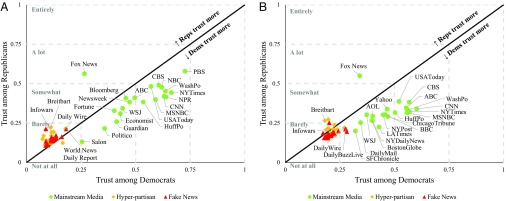
Significance: Many people consume news via social media. It is therefore desirable to reduce social media users’ exposure to low-quality news content. One possible intervention is for social media ranking algorithms to show relatively less content from sources that users deem to be untrustworthy. But are laypeople’s judgments reliable indicators of quality, or are they corrupted by either partisan bias or lack of information? Perhaps surprisingly, we find that laypeople—on average—are quite good at distinguishing between lower- and higher-quality sources. These results indicate that incorporating the trust ratings of laypeople into social media ranking algorithms may prove an effective intervention against misinformation, fake news, and news content with heavy political bias.
Overview
The claims and statistics of this paper haven’t been checked yet.
Free: it reads the open-access text and checks the first 5 claims that cite a source we can check. Create a free account to check every claim.
Integrity signals
Registry
Cites
Statistics
Figures
Verification
Claims the paper makes
The claims and statistics of this paper haven’t been checked yet.
Free: it reads the open-access text and checks the first 5 claims that cite a source we can check. Create a free account to check every claim.
Claims other papers make about this one
Each is checked against this paper’s own text: does it say what the citing paper says it does?
The source backs part of the claim, not all of it — or backs it for a different population, condition or comparison.
In the citing paper
“Recent empirical research finds that averaged responses of ordinary people are on par with third-party fact-checkers for both factual claims in articles (47) and overall accuracy of content from URL domain names (48, 49).”
From Deepfake detection by human crowds, machines, and machine-informed crowds (2022) · cites this paper as [49]
Experimental — accuracy not yet measuredThe cited source says what the claim attributes to it.
In the citing paper
“These approaches rely on the collective contributions and crowd signals (Tschiatschek et al. 2018) of a group of people for the aggregation of crowd intelligence to detect fake news (Tchakounté et al. 2020) and to reduce the spread of misinformation on social media (Pennycook and Rand 2019; Micallef et al. 2020).”
From Fake news, disinformation and misinformation in social media: a review (2023) · cites this paper as Pennycook and Rand 2019
The cited source says what the claim attributes to it.
In the citing paper
“Recent research suggests that human reasoning is “meaningfully directed toward the formation of accurate, rather than merely identity-confirming, beliefs” (ref. 24 p. 2525)”
From Factual knowledge can reduce attitude polarization (2025) · cites this paper as [24]
The cited source says what the claim attributes to it.
In the citing paper
“Research on news source quality demonstrates that people in the United States are generally accurate at identifying high and low-quality publishers54”
From Human detection of political speech deepfakes across transcripts, audio, and video (2024) · cites this paper as [54]
The cited source says what the claim attributes to it.
In the citing paper
“The crowdsourced accuracy ratings generated by this process may also be useful for identifying misinformation, as has been found for crowd ratings of source trustworthiness 138,139 .”
From Using social and behavioural science to support COVID-19 pandemic response (2020) · cites this paper as [139]
1 more claim about this paper
Create a free account to see every claim other papers make about this one.
Self-check
Percentages, sums and reported differences re-computed from the paper’s own numbers.
The self-check needs the paper’s full text.
Citations
Cites
Cognitive Reflection and Decision Making
Frederick, S. (2005) · Journal of Economic Perspectives · doi:10.1257/089533005775196732 · Cited by 5,256
Lazer, D. M. J., Baum, M. A., Benkler, Y., Berinsky, A. J., Greenhill, K. M., Menczer, F., Metzger, M. J., Nyhan, B., Pennycook, G., Rothschild, D., et al. (2018) · Science · doi:10.1126/science.aao2998 · Cited by 4,160 · cited 1×
“This is illustrated by the recent rise of an old form of misinformation: blatantly false news stories that are presented as if they are legitimate (2).”
BackgroundSelf-citationMisinformation and Its Correction: Continued Influence and Successful Debiasing
Lewandowsky, S., Ecker, U. K. H., Seifert, C. M., Schwarz, N., & Cook, J. (2012) · Psychological Science in the Public Interest · doi:10.1177/1529100612451018 · Cited by 2,920
Evidence for a Collective Intelligence Factor in the Performance of Human Groups
Woolley, A. W., Chabris, C. F., Pentland, A., Hashmi, N., & Malone, T. W. (2010) · Science · doi:10.1126/science.1193147 · Cited by 2,685 · cited 1×
“Here, we consider an alternative approach that builds off the large literature on collective intelligence and the “ wisdom of crowds ” (10, 11): using crowdsourcing (rather than professional fact-checkers) to assess the reliability of news websites (rather than individual stories), and then…”
BackgroundWhy do humans reason? Arguments for an argumentative theory
Mercier, H., & Sperber, D. (2011) · Behavioral and Brain Sciences · doi:10.1017/s0140525x10000968 · Cited by 2,254
Pennycook, G., & Rand, D. G. (2019) · Cognition · doi:10.1016/j.cognition.2018.06.011 · Cited by 2,022
Self-citationFake news on Twitter during the 2016 U.S. presidential election
Grinberg, N., Joseph, K., Friedland, L., Swire-Thompson, B., & Lazer, D. (2019) · Science · doi:10.1126/science.aau2706 · Cited by 1,803 · cited 1×
“(25), as well as websites that generated fake stories (as indicated by snopes.”
BackgroundIdeology, motivated reasoning, and cognitive reflection
Kahan, D. M. (2013) · Judgment and Decision Making · doi:10.1017/s1930297500005271 · Cited by 1,302 · cited 1×
“Specifically, motivated reasoning accounts (17, 30, 31) argue that humans reason akin to lawyers (as opposed to philosophers): We engage analytic thought as a means to justify our prior beliefs and thus facilitate argumentation.”
BackgroundPrior exposure increases perceived accuracy of fake news
Pennycook, G., Cannon, T. D., & Rand, D. G. (2018) · Journal of Experimental Psychology General · doi:10.1037/xge0000465 · Cited by 1,268
Self-citationCoppock, A., & McClellan, O. A. (2019) · Research & Politics · doi:10.1177/2053168018822174 · Cited by 987 · cited 1×
“In the second study, we tested the generalizability of our findings by surveying an additional n = 970 Americans recruited from Lucid, providing a subject pool that is nationally representative on age, gender, ethnicity, and geography (27).”
Result
Research works printed but not linked: 3
- 10.1037/h0101809 · doi:10.1037/h0101809 · Paper page
- G Pennycook DG Rand The implied truth effect: Attaching warnings to a subset of fake news stories increases perceived accuracy of stories without warnings. Available at https://papers.ssrn.com/sol3/papers.cfm?abstract_id=3035384. Accessed December 10 2017. (2017).
- RM Faris Partisanship propaganda and disinformation: Online media and the 2016 US Presidential Election. Berkman Klein Center for Internet Society and Research Paper . Available at https://papers.ssrn.com/sol3/papers.cfm?abstract_id=3019414. Accessed August 28 2017. (2017).
Cited by
Using social and behavioural science to support COVID-19 pandemic response
Bavel, J. J. V., Baicker, K., Boggio, P. S., Capraro, V., Cichocka, A., Cikara, M., Crockett, M. J., Crum, A. J., Douglas, K. M., Druckman, J. N., et al. (2020) · Nature Human Behaviour · doi:10.1038/s41562-020-0884-z · Cited by 4,964
Self-citationThe future of social media in marketing
Appel, G., Grewal, L., Hadi, R., & Stephen, A. T. (2020) · Journal of the Academy of Marketing Science · doi:10.1007/s11747-019-00695-1 · Cited by 1,893
“In response, research has begun to explore ways that social media platforms can combat fake news through algorithms that determine the quality of shared content (e.g., Pennycook and Rand 2019).”
BackgroundPennycook, G., McPhetres, J., Zhang, Y., Lu, J. G., & Rand, D. G. (2020) · Psychological Science · doi:10.1177/0956797620939054 · Cited by 1,715
“…2017; Van Bavel & Pereira, 2018), our data are more consistent with recent studies on political misinformation that provide both correlational (Pennycook & Rand, 2019b; including data from Twitter sharing, Mosleh, Pennycook, Arechar, & Rand, 2020) and experimental (Bago, Rand, & Pennycook,…”
BackgroundResultInfluentialSelf-citationThe psychological drivers of misinformation belief and its resistance to correction
Ecker, U. K. H., Lewandowsky, S., Cook, J., Schmid, P., Fazio, L. K., Brashier, N., Kendeou, P., Vraga, E. K., & Amazeen, M. A. (2022) · Nature Reviews Psychology · doi:10.1038/s44159-021-00006-y · Cited by 1,372
Pennycook, G., & Rand, D. G. (2021) · Trends in Cognitive Sciences · doi:10.1016/j.tics.2021.02.007 · Cited by 1,360
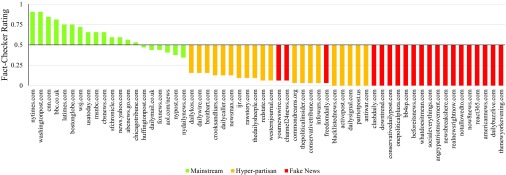
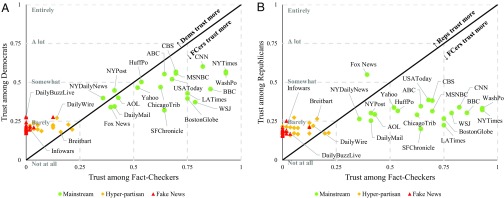
“Despite potential concerns about political bias or lack of knowledge, recent work has found high agreement between layperson crowds and fact-checkers when evaluating the trustworthiness of news publishers: the average Democrat, Republican, and fact-checker all gave fake news and hyperpartisan sites very low trust rati…”
Self-citationShifting attention to accuracy can reduce misinformation online
Pennycook, G., Epstein, Z., Mosleh, M., Arechar, A. A., Eckles, D., & Rand, D. G. (2021) · Nature · doi:10.1038/s41586-021-03344-2 · Cited by 1,155
Self-citationPennycook, G., & Rand, D. G. (2020) · Journal of Personality · doi:10.1111/jopy.12476 · Cited by 879
Self-citationGuess, A. M., Lerner, M., Lyons, B., Montgomery, J. M., Nyhan, B., Reifler, J., & Sircar, N. (2020) · Proceedings of the National Academy of Sciences · doi:10.1073/pnas.1920498117 · Cited by 773
“We selected these stories from hyperpartisan sources identified in prior work (58) (SI Appendix, section H).”
MethodFake news, disinformation and misinformation in social media: a review
Aïmeur, E., Amri, S., & Brassard, G. (2023) · Social Network Analysis and Mining · doi:10.1007/s13278-023-01028-5 · Cited by 772
“Unlike the previously mentioned researchers who focus on news content in their approaches, Pennycook and Rand (2019) focus on using crowdsourced judgments of the quality of news sources to combat social media disinformation.”
BackgroundInfluentialPennycook, G., Bear, A., Collins, E. T., & Rand, D. G. (2020) · Management Science · doi:10.1287/mnsc.2019.3478 · Cited by 714
“…that individuals who are more analytic and deliberative are less likely to believe politically concordant false news (Bronstein et al. 2019; Pennycook and Rand 2019b, c), rather than more likely according to the motivated cognition account (Kahan et al. 2012, Kahan 2017), and that insofar…”
BackgroundResultSelf-citationOur future in the Anthropocene biosphere
Folke, C., Polasky, S., Rockström, J., Galaz, V., Westley, F., Lamont, M., Scheffer, M., Österblom, H., Carpenter, S. R., Chapin, F. S., et al. (2021) · Ambio · doi:10.1007/s13280-021-01544-8 · Cited by 696
OSMUNDSEN, M., BOR, A., VAHLSTRUP, P. B., BECHMANN, A., & PETERSEN, M. B. (2021) · American Political Science Review · doi:10.1017/s0003055421000290 · Cited by 614
“Better performance on the CRT correlates positively with the ability to discern political fake news from real news (Pennycook and Rand 2019b).”
BackgroundResultInfluentialThe crisis of democracy and the science of deliberation
Dryzek, J. S., Bächtiger, A., Chambers, S., Cohen, J., Druckman, J. N., Felicetti, A., Fishkin, J. S., Farrell, D. M., Fung, A., Gutmann, A., et al. (2019) · Science · doi:10.1126/science.aaw2694 · Cited by 589
Islam, A. K. M. N., Laato, S., Talukder, S., & Sutinen, E. (2020) · Technological Forecasting and Social Change · doi:10.1016/j.techfore.2020.120201 · Cited by 538
“First, the quantity and quality of available information have a significant impact on developing SMF (Bright et al., 2015; Pentina and Tarafdar, 2014).”
BackgroundEvaluating the fake news problem at the scale of the information ecosystem
Allen, J., Howland, B., Mobius, M., Rothschild, D., & Watts, D. J. (2020) · Science Advances · doi:10.1126/sciadv.aay3539 · Cited by 528
“First, Americans consume news online via desktop computers and increasingly mobile devices as well as on television; yet no single source of data covers all three modes.”
Calvillo, D. P., Ross, B. J., Garcia, R. J. B., Smelter, T. J., & Rutchick, A. M. (2020) · Social Psychological and Personality Science · doi:10.1177/1948550620940539 · Cited by 514
“We also replicated previous research showing that CRT performance predicts news discernment (e.g., Pennycook & Rand, 2019b, 2020).”
BackgroundMethodResultInfluentialCitizens Versus the Internet: Confronting Digital Challenges With Cognitive Tools
Kozyreva, A., Lewandowsky, S., & Hertwig, R. (2020) · Psychological Science in the Public Interest · doi:10.1177/1529100620946707 · Cited by 479
Reliance on emotion promotes belief in fake news
Martel, C., Pennycook, G., & Rand, D. G. (2020) · Cognitive Research: Principles and Implications · doi:10.1186/s41235-020-00252-3 · Cited by 470
Self-citationOnline misinformation about climate change
Treen, K. M. D., Williams, H. T. P., & O'Neill, S. J. (2020) · WIREs Climate Change · doi:10.1002/wcc.665 · Cited by 441
“Pennycook and Rand (2019) propose using crowdsourcing to judge the quality of news content and then incorporating these judgments into the ranking algorithms with their results indicating this would be an effective intervention against misinformation.”
BackgroundBrady, W. J., Crockett, M. J., & Van Bavel, J. J. (2020) · Perspectives on Psychological Science · doi:10.1177/1745691620917336 · Cited by 417
“For instance, shifting people’s attention to other aspects of fake news content such as the trustworthiness of the source may also help to combat the consumption and spread of fake news (Pennycook & Rand, 2019).”
BackgroundPennycook, G., McPhetres, J., Zhang, Y., Lu, J. G., & Rand, D. G. (2020) · doi:10.31234/osf.io/uhbk9 · Cited by 390
Self-citationMisinformation in and about science
West, J. D., & Bergstrom, C. T. (2021) · Proceedings of the National Academy of Sciences · doi:10.1073/pnas.1912444117 · Cited by 391
Brashier, N. M., & Schacter, D. L. (2020) · Current Directions in Psychological Science · doi:10.1177/0963721420915872 · Cited by 366
Evaluating the Impact of Attempts to Correct Health Misinformation on Social Media: A Meta-Analysis
Walter, N., Brooks, J. J., Saucier, C. J., & Suresh, S. (2021) · Health Communication · doi:10.1080/10410236.2020.1794553 · Cited by 374
“Specifically, interventions have employed a variety of strategies designed to debunk misinformation, including algorithmic corrections (Bode & Vraga, 2015) and user-generated credibility ratings (Pennycook & Rand, 2019).”
BackgroundSocial Media, Echo Chambers, and Political Polarization
Barberá, P. (2020) · Social Media and Democracy · doi:10.1017/9781108890960.004 · Cited by 373
Understanding, explaining, and utilizing medical artificial intelligence
Cadario, R., Longoni, C., & Morewedge, C. K. (2021) · Nature Human Behaviour · doi:10.1038/s41562-021-01146-0 · Cited by 342
Tsfati, Y., Boomgaarden, H. G., Strömbäck, J., Vliegenthart, R., Damstra, A., & Lindgren, E. (2020) · Annals of the International Communication Association · doi:10.1080/23808985.2020.1759443 · Cited by 337
Brashier, N. M., & Marsh, E. J. (2020) · Annual Review of Psychology · doi:10.1146/annurev-psych-010419-050807 · Cited by 288
Misinformation, Disinformation, and Online Propaganda
Guess, A. M., & Lyons, B. A. (2020) · Social Media and Democracy · doi:10.1017/9781108890960.003 · Cited by 284
Pennycook, G., & Rand, D. G. (2022) · Nature Communications · doi:10.1038/s41467-022-30073-5 · Cited by 270
“…role of ideology, we also re-analyze data from a Twitter fi eld experiment 24 in which an overwhelmingly conservative set of users who had previously shared links to Breitbart or Infowars – far-right sites that were rated as untrustworthy by fact-checkers 41 – were prompted to consider accuracy.”
MethodSelf-citationDeepfake detection by human crowds, machines, and machine-informed crowds
Groh, M., Epstein, Z., Firestone, C., & Picard, R. (2022) · Proceedings of the National Academy of Sciences · doi:10.1073/pnas.2110013119 · Cited by 248
Why do so few people share fake news? It hurts their reputation
Altay, S., Hacquin, A.-S., & Mercier, H. (2022) · New Media & Society · doi:10.1177/1461444820969893 · Cited by 241
“Some evidence suggests that US participants are able to discriminate between real and fake news in this manner (Altay et al., 2020; Bago et al., 2020; Pennycook and Rand, 2019b; Pennycook et al., 2019, 2020).”
BackgroundMethodResultInfluentialPennycook, G., McPhetres, J., Bago, B., & Rand, D. G. (2022) · Personality and Social Psychology Bulletin · doi:10.1177/01461672211023652 · Cited by 242
Self-citationPorter, E., & Wood, T. J. (2021) · Proceedings of the National Academy of Sciences · doi:10.1073/pnas.2104235118 · Cited by 235
How behavioural sciences can promote truth, autonomy and democratic discourse online
Lorenz-Spreen, P., Lewandowsky, S., Sunstein, C. R., & Hertwig, R. (2020) · Nature Human Behaviour · doi:10.1038/s41562-020-0889-7 · Cited by 223
“For instance, social media platforms could provide a transparent crowd-sourced voting system 100 or display informative metrics about the behaviour and reactions of others (for example, including passive behaviour, like the total number of people who scrolled over a post), which might counter…”
BackgroundPolitical Psychology in the Digital (mis)Information age: A Model of News Belief and Sharing
Van Bavel, J. J., Harris, E. A., Pärnamets, P., Rathje, S., Doell, K. C., & Tucker, J. A. (2021) · Social Issues and Policy Review · doi:10.1111/sipr.12077 · Cited by 213
The COVID-19 Infodemic: Twitter versus Facebook
Yang, K.-C., Pierri, F., Hui, P.-M., Axelrod, D., Torres-Lugo, C., Bryden, J., & Menczer, F. (2021) · Big Data & Society · doi:10.1177/20539517211013861 · Cited by 206
“redibility information We focus on news articles linked in social media posts and identify those pertaining to lowcredibility domains by matching the URLs to sources, following a corpus of literature [17, 36,16,29,3]. We dene our list of low-credibility domains based on information provided by the Media Bias/Fact Chec…”
MethodSocial media can have an impact on how we manage and investigate the COVID-19 pandemic
Cuello-Garcia, C., Pérez-Gaxiola, G., & van Amelsvoort, L. (2020) · Journal of Clinical Epidemiology · doi:10.1016/j.jclinepi.2020.06.028 · Cited by 198
“’ Whether by serving as a professional fact-checker for a news network, or by crowdsourcing (the use of multiple minds to reach a common goal of better knowledge) on any of these platforms, their shared knowledge will always be the best source to scrutinize the news [19].”
Scaling up fact-checking using the wisdom of crowds
Allen, J., Arechar, A. A., Pennycook, G., & Rand, D. G. (2021) · Science Advances · doi:10.1126/sciadv.abf4393 · Cited by 234
“Second, publisher trust ratings are largely driven by familiarity: People overwhelmingly distrust news publishers that they are unfamiliar with ( 20 , 21 ).”
InfluentialSelf-citationSpread of misinformation on social media: What contributes to it and how to combat it
Chen, S., Xiao, L., & Kumar, A. (2023) · Computers in Human Behavior · doi:10.1016/j.chb.2022.107643 · Cited by 187
Chambers, S. (2021) · Political Studies · doi:10.1177/0032321719890811 · Cited by 185
Reshares on social media amplify political news but do not detectably affect beliefs or opinions
Guess, A. M., Malhotra, N., Pan, J., Barberá, P., Allcott, H., Brown, T., Crespo-Tenorio, A., Dimmery, D., Freelon, D., Gentzkow, M., et al. (2023) · Science · doi:10.1126/science.add8424 · Cited by 184
Information gerrymandering and undemocratic decisions
Stewart, A. J., Mosleh, M., Diakonova, M., Arechar, A. A., Rand, D. G., & Plotkin, J. B. (2019) · Nature · doi:10.1038/s41586-019-1507-6 · Cited by 176
Cognitive reflection correlates with behavior on Twitter
Mosleh, M., Pennycook, G., Arechar, A. A., & Rand, D. G. (2021) · Nature Communications · doi:10.1038/s41467-020-20043-0 · Cited by 175
Self-citationWagner, M. C., & Boczkowski, P. J. (2019) · Digital Journalism · doi:10.1080/21670811.2019.1653208 · Cited by 173
“It has largely resorted to cognitive and social networks frameworks, and from computational methods, which have been able to illustrate the spread of falsehood online (Allcott and Gentzkow 2017; Guess, Nagler, and Tucker 2019; Pennycook and Rand, 2019a; Tandoc Jr, Wei Lim, and Richard Ling 2018).”
BackgroundStier, S., Kirkizh, N., Froio, C., & Schroeder, R. (2020) · The International Journal of Press/Politics · doi:10.1177/1940161220907018 · Cited by 171
Effects of Credibility Indicators on Social Media News Sharing Intent
Yaqub, W., Kakhidze, O., Brockman, M. L., Memon, N., & Patil, S. (2020) · Proceedings of the 2020 CHI Conference on Human Factors in Computing Systems · doi:10.1145/3313831.3376213 · Cited by 171
Examining the consumption of radical content on YouTube
Hosseinmardi, H., Ghasemian, A., Clauset, A., Mobius, M., Rothschild, D. M., & Watts, D. J. (2021) · Proceedings of the National Academy of Sciences · doi:10.1073/pnas.2101967118 · Cited by 171
Interventions to reduce partisan animosity
Hartman, R., Blakey, W., Womick, J., Bail, C., Finkel, E. J., Han, H., Sarrouf, J., Schroeder, J., Sheeran, P., Van Bavel, J. J., et al. (2022) · Nature Human Behaviour · doi:10.1038/s41562-022-01442-3 · Cited by 171
Fighting fake news in the COVID-19 era: policy insights from an equilibrium model
Hartley, K., & Vu, M. K. (2020) · Policy Sciences · doi:10.1007/s11077-020-09405-z · Cited by 160
“2014), and the development of crowdsourcing capabilities for the same purpose (Pennycook and Rand 2019; Kim et al.”
BackgroundResultBecker, J., Porter, E., & Centola, D. (2019) · Proceedings of the National Academy of Sciences · doi:10.1073/pnas.1817195116 · Cited by 157
“Journal of Personality 550 and Social Psychology 12(2):125–135.”
BackgroundCan self-regulation save digital platforms?
Cusumano, M. A., Gawer, A., & Yoffie, D. B. (2021) · Industrial and Corporate Change · doi:10.1093/icc/dtab052 · Cited by 181
Quantifying the impact of misinformation and vaccine-skeptical content on Facebook
Allen, J. N. L., Watts, D. J., & Rand, D. G. (2024) · Science · doi:10.1126/science.adk3451 · Cited by 261
Self-citationBoberg, S., Quandt, T., Schatto-Eckrodt, T., & Frischlich, L. (2020) · arXiv · doi:10.48550/arxiv.2004.02566 · Cited by 141
“It is noteworthy that this information mix is much more likely to contribute to the feared “infodemic” (WHO, 2020a) as media users are usually better in noting highly non-credible sources and disinformation bits (Pennycook et al., 2017; Pennycook and Rand, 2019).”
BackgroundPereira, A., Harris, E., & Van Bavel, J. J. (2023) · Group Processes & Intergroup Relations · doi:10.1177/13684302211030004 · Cited by 139
“…over 2 billion Facebook users were subject to a news rating system that prioritizes trusted news sources in their feed (Dwoskin & Shaban, 2018; Pennycook & Rand, 2019), and scientists across numerous disciplines are also striving to tackle this issue (Lazer et al., 2018; Roozenbeek & van der…”
BackgroundA meta-analysis of correction effects in science-relevant misinformation
Chan, M.-P. S., & Albarracín, D. (2023) · Nature Human Behaviour · doi:10.1038/s41562-023-01623-8 · Cited by 108
“However, studies that included outcome measures of misinformation sharing (intentions) 10,89–92 , the quality judgement of news sources 93 , self-efficacy, openness to the messages 94 and whether participants responded to/ignored the corrections were excluded 95 .”
BackgroundEmphasizing publishers does not effectively reduce susceptibility to misinformation on social media
Dias, N., Pennycook, G., & Rand, D. G. (2020) · Harvard Kennedy School Misinformation Review · doi:10.37016/mr-2020-001 · Cited by 145
“Yet, others (Austin & Dong, 1994, Pennycook & Rand, 2019b, Jakesch et al., 2018) have failed to demonstrate that assessments of news stories are changed by source information.”
BackgroundMethodResultInfluentialSelf-citationKisa, S., & Kisa, A. (2024) · Journal of Medical Internet Research · doi:10.2196/56931 · Cited by 132
“In addition, Pennycook and Rand [41] highlighted how political beliefs and affiliations can influence people’s interpretation of information, thus impacting their acceptance or rejection of official guidance during public health crises.”
A Survey on Stance Detection for Mis- and Disinformation Identification
Hardalov, M., Arora, A., Nakov, P., & Augenstein, I. (2022) · Findings of the Association for Computational Linguistics: NAACL · doi:10.18653/v1/2022.findings-naacl.94 · Cited by 229
Clark, C. J., & Winegard, B. M. (2020) · Psychological Inquiry · doi:10.1080/1047840x.2020.1721233 · Cited by 128
Combining interventions to reduce the spread of viral misinformation
Bak-Coleman, J. B., Kennedy, I., Wack, M., Beers, A., Schafer, J. S., Spiro, E. S., Starbird, K., & West, J. D. (2022) · Nature Human Behaviour · doi:10.1038/s41562-022-01388-6 · Cited by 145
“1), (3) the fit did not contain divergent transitions and (4) the event lasted longer than an hour (that is, >12 data points to fit).”
BackgroundBeyond “fake news”: Analytic thinking and the detection of false and hyperpartisan news headlines
Ross, R. M., Rand, D. G., & Pennycook, G. (2021) · Judgment and Decision Making · doi:10.1017/s1930297500008640 · Cited by 124
“In a pair of studies, Pennycook and Rand (2019c) tested the two accounts in the context of political fake news.”
InfluentialSelf-citationSocial Media and Democracy: The State of the Field, Prospects for Reform
(2020) · Cambridge University Press eBooks · doi:10.1017/9781108890960 · Cited by 295
Approaches to Identify Fake News: A Systematic Literature Review
de Beer, D., & Matthee, M. C. (2020) · Lecture notes in networks and systems · doi:10.1007/978-3-030-49264-9_2 · Cited by 160
Trends in combating fake news on social media – a survey
Collins, B., Hoang, D. T., Nguyên, N. T., & Hwang, D. (2020) · Journal of Information and Telecommunication · doi:10.1080/24751839.2020.1847379 · Cited by 191
“While a study by Pennycook and Rand (2019) allude that the crowd is limited in many areas since they are composed of laypeople and at such, they will give the wrong prediction to content which they are unfamiliar with.”
BackgroundInfluentialBuilding Human Values into Recommender Systems: An Interdisciplinary Synthesis
Stray, J., Halevy, A., Assar, P., Hadfield-Menell, D., Boutilier, C., Ashar, A., Bakalar, C., Beattie, L., Ekstrand, M., Leibowicz, C., et al. (2024) · ACM Transactions on Recommender Systems · doi:10.1145/3632297 · Cited by 122
“, 2019) plus (ii) a wide variety of scoring signals that range from source credibility (Pennycook and Rand, 2019) to playlist diversity (Mehrotra et al.”
BackgroundMeasuring the news and its impact on democracy
Watts, D. J., Rothschild, D. M., & Mobius, M. (2021) · Proceedings of the National Academy of Sciences · doi:10.1073/pnas.1912443118 · Cited by 121
“For example, recent work has found that subjects rate mainstream publications as more trustworthy than fake or highly partisan sites irrespective of their own partisanship (12), and that deliberation reduces belief in false headlines but not in true ones, again irrespective of partisan alignment (19).”
BackgroundThe Impact of Political Sophistication and Motivated Reasoning on Misinformation
Vegetti, F., & Mancosu, M. (2020) · Political Communication · doi:10.1080/10584609.2020.1744778 · Cited by 120
Siegel, A. A. (2020) · Social Media and Democracy · doi:10.1017/9781108890960.005 · Cited by 99
Ideology, Not Affect: What Americans Want from Political Representation
Costa, M. (2021) · American Journal of Political Science · doi:10.1111/ajps.12571 · Cited by 118
Allen, J. N. L., Martel, C., & Rand, D. G. (2022) · CHI Conference on Human Factors in Computing Systems · doi:10.1145/3491102.3502040 · Cited by 185
“Prior work has found that when users are randomly assigned publishers or news headlines to rate, layperson crowds show a high level of agreement with professional factcheckers [2, 18, 25, 52, 58] - even when they believe their ratings may infuence what content is shown by social media companies [20].”
BackgroundSelf-citationAccuracy and Political Bias of News Source Credibility Ratings by Large Language Models
Yang, K.-C., & Menczer, F. (2023) · arXiv · doi:10.48550/arxiv.2304.00228 · Cited by 115
Jahanbakhsh, F., Zhang, A. X., Berinsky, A. J., Pennycook, G., Rand, D. G., & Karger, D. R. (2021) · Proceedings of the ACM on Human-Computer Interaction · doi:10.1145/3449092 · Cited by 112
“Some of these initiatives include detecting false or misleading information using machine learning algorithms [12, 57, 67] and crowdsourcing [5, 9, 19, 33, 54], identifying bad actors and helping good actors differentiate themselves1 [82], and providing fact-checked information related to circulated news claims [23, 3…”
BackgroundSelf-citationAccuracy and social motivations shape judgements of (mis)information
Rathje, S., Roozenbeek, J., Van Bavel, J. J., & van der Linden, S. (2023) · Nature Human Behaviour · doi:10.1038/s41562-023-01540-w · Cited by 110
“Since true news often contains more recognizable sources with partisan connotations (e.g. “nytimes.com” as opposed to the fake news website “yournewswire.com”) 56 , this may explain why incentives only impacted judgements of true news in Experiments 1 and 2.”
A Psychological Profile of the Alt-Right
Forscher, P. S., & Kteily, N. S. (2020) · Perspectives on Psychological Science · doi:10.1177/1745691619868208 · Cited by 110
“…by choosing two and three outlets, respectively, that seemed representative of the mainstream and alternative groupings: CNN and The New York Times (mainstream) and Fox News, Breitbart, and the Rush Limbaugh Show (alternative; see Benkler, Faris, Roberts, & Zuckerman, 2017; Pennycook & Rand, 2019).”
BackgroundWeber, T. J., Hydock, C., Ding, W., Gardner, M., Jacob, P., Mandel, N., Sprott, D. E., & Steenburg, E. V. (2021) · Journal of Public Policy & Marketing · doi:10.1177/0743915621991103 · Cited by 143
The Emerging Science of Content Labeling: Contextualizing Social Media Content Moderation
Morrow, G., Swire‐Thompson, B., Polny, J. M., Kopec, M., & Wihbey, J. (2020) · Journal of the Association for Information Science and Technology · doi:10.1002/asi.24637 · Cited by 163
“Alterna-tively, there is concern that news outlets could “ game ” the crowdsourcing system, and it is also not clear what criteria would be used to select the members of the “ crowd ” who would do the ratings or how the crowd members would be recruited (Pennycook & Rand, 2019a).”
BackgroundMosleh, M., Martel, C., Eckles, D., & Rand, D. (2021) · Proceedings of the 2021 CHI Conference on Human Factors in Computing Systems · doi:10.1145/3411764.3445642 · Cited by 106
“To do so, we analyzed the 9,289 links shared through primary tweets during the experiment and 7,215 links shared through retweets during the experiment for which quality scores were available via [39] (11.”
BackgroundMethodSelf-citationTraberg, C. S., & van der Linden, S. (2022) · Personality and Individual Differences · doi:10.1016/j.paid.2021.111269 · Cited by 101
Aslett, K., Guess, A. M., Bonneau, R., Nagler, J., & Tucker, J. A. (2022) · Science Advances · doi:10.1126/sciadv.abl3844 · Cited by 102
“This approach builds on humans’ tendency to rely on cognitive shortcuts and heuristics, which, depending on context, can be relatively informative (17, 18) or potentially distorting (19).”
BackgroundSocial media behavior is associated with vaccine hesitancy
Rathje, S., He, J. K., Roozenbeek, J., Van Bavel, J. J., & van der Linden, S. (2022) · PNAS Nexus · doi:10.1093/pnasnexus/pgac207 · Cited by 100
“A total of 1030 hyper-partisan websites were shared in the full sample,and people shared about 0.77 (SD = 5.34) hyper-partisan news URLs on their Twitter timeline on average.”
BackgroundInfluentialThe social media context interferes with truth discernment
Epstein, Z., Sirlin, N., Arechar, A., Pennycook, G., & Rand, D. (2023) · Science Advances · doi:10.1126/sciadv.abo6169 · Cited by 100
“This could, for example, be achieved in part by nudging users to consider the concept of accuracy while scrolling through their newsfeed ( 21 , 24 , 26 ) or redesigning how social cues are displayed ( 20 ).”
Self-citationCognitive Reflection and the 2016 U.S. Presidential Election
Pennycook, G., & Rand, D. G. (2019) · Personality and Social Psychology Bulletin · doi:10.1177/0146167218783192 · Cited by 97
Self-citationHuman Cooperation and the Crises of Climate Change, COVID-19, and Misinformation
Lange, P. A. M. V., & Rand, D. G. (2021) · Annual Review of Psychology · doi:10.1146/annurev-psych-020821-110044 · Cited by 129
Self-citationPennycook, G., McPhetres, J., Bago, B., & Rand, D. G. (2020) · doi:10.31234/osf.io/zhjkp · Cited by 95
“The bullshit receptivity scale, despite using a specific form of bullshit, correlates with a wide range of epistemically suspect beliefs (including belief in fake news; (Pennycook & Rand, 2019c) and therefore appears to measure general receptivity to bullshit.”
BackgroundInfluentialSelf-citationAn Assessment of the Rapid Decline of Trust in US Sources of Public Information about COVID-19
Latkin, C. A., Dayton, L., Strickland, J. C., Colon, B., Rimal, R. N., & Boodram, B. (2020) · Journal of Health Communication · doi:10.1080/10810730.2020.1865487 · Cited by 117
“This finding is consistent with a prior Mturk study of United States residents in which mainstream media was perceived as more trustworthy among Democrats than Republicans, but with both groups reporting higher trust in mainstream media, such as New York Times and Washington Post, than in hyper-partisan and fake news,…”
BackgroundPrevalence of Low-Credibility Information on Twitter During the COVID-19 OutbreakPreprint
Yang, K.-C., Torres-Lugo, C., & Menczer, F. (2020) · arXiv (Cornell University) · doi:10.48550/arxiv.2004.14484 · Cited by 150
Public Discourse and Social Network Echo Chambers Driven by Socio-Cognitive Biases
Wang, X., Sirianni, A. D., Tang, S., Zheng, Z., & Fu, F. (2020) · Physical Review X · doi:10.1103/physrevx.10.041042 · Cited by 93
Evolution of honesty in higher-order social networks
Kumar, A., Chowdhary, S., Capraro, V., & Perc, M. (2021) · Physical review. E · doi:10.1103/physreve.104.054308 · Cited by 101
Measuring exposure to misinformation from political elites on Twitter
Mosleh, M., & Rand, D. G. (2022) · Nature Communications · doi:10.1038/s41467-022-34769-6 · Cited by 90
Self-citationThe evil within: The AMORAL model of dark creativity
Kapoor, H., & Kaufman, J. C. (2022) · Theory & Psychology · doi:10.1177/09593543221074326 · Cited by 104
“Similarly, weaponizing sociocultural values in innovative ways by using misinformation is an instance of dark creativity, relevant in modern times of partisan political ideologies (e.g., Pennycook & Rand, 2019).”
BackgroundPeople believe misinformation is a threat because they assume others are gullible
Altay, S., & Acerbi, A. (2024) · New Media & Society · doi:10.1177/14614448231153379 · Cited by 88
“Second, people generally distrust hyperpartisan and fake news sources, and as a result largely avoid consuming misinformation (Allen et al., 2020; Guess et al., 2019; Pennycook and Rand, 2019).”
Navigating the maze: Deepfakes, cognitive ability, and social media news skepticism
Ahmed, S. (2023) · New Media & Society · doi:10.1177/14614448211019198 · Cited by 87
“Recent disinformation research suggests that those with higher cognitive skills perform better in discerning fake news from real news (Pennycook and Rand, 2018), and those who generally believe in fake news are not skeptical of the content (Pennycook and Rand, 2019).”
BackgroundTackling misinformation: What researchers could do with social media data
Pasquetto, I., Swire-Thompson, B., & Amazeen, M. A. (2020) · Harvard Kennedy School Misinformation Review · doi:10.37016/mr-2020-49 · Cited by 86
“Finally, we would also be interested in assessing the impact of incorporating layperson (user) accuracy ratings, either of news sources (Epstein et al, 2020; Pennycook & Rand, 2019) or individual pieces of content (Allen, Arechar, et al. 2020), into social media ranking algorithms.”
Crowds Can Effectively Identify Misinformation at Scale
Martel, C., Allen, J., Pennycook, G., & Rand, D. G. (2024) · Perspectives on Psychological Science · doi:10.1177/17456916231190388 · Cited by 84
“Pennycook and Rand (2019) across two online studies in which participants rated familiarity with, and trust in, 60 news sources—consisting of mainstream media outlets, hyperpartisan sites, and websites producing blatantly false content.”
BackgroundInfluentialSelf-citationExposure to social engagement metrics increases vulnerability to misinformation
Avram, M., Micallef, N., Patil, S., & Menczer, F. (2020) · Harvard Kennedy School Misinformation Review · doi:10.37016/mr-2020-033 · Cited by 83
Nudging Social Media toward Accuracy
Pennycook, G., & Rand, D. G. (2022) · The ANNALS of the American Academy of Political and Social Science · doi:10.1177/00027162221092342 · Cited by 106
“Ideally, the results of these experiments would be shared with the public, including investigating potential negative externalities (such as decreasing sharing of accurate news from unknown, and thus distrusted, sources; Pennycook and rand 2019b).”
BackgroundSelf-citationThe Psychology of Fake News: Accepting, Sharing, and Correcting Misinformation
Greifeneder, R., Jaffé, M. E., Newman, E. J., & Schwarz, N. (2020) · Routledge eBooks · doi:10.4324/9780429295379 · Cited by 188
Two-Path Deep Semisupervised Learning for Timely Fake News Detection
Dong, X., Victor, U., & Qian, L. (2020) · IEEE Transactions on Computational Social Systems · doi:10.1109/tcss.2020.3027639 · Cited by 90
“, Twitter and Facebook) has become a new ecosystem for spreading news [1].”
BackgroundThe digital transformation of knowledge order: a model for the analysis of the epistemic crisis
Neuberger, C., Bartsch, A., Fröhlich, R., Hanitzsch, T., Reinemann, C., & Schindler, J. (2023) · Annals of the International Communication Association · doi:10.1080/23808985.2023.2169950 · Cited by 139
“Platforms engage in this realm by attaching warnings to false news (Pennycook et al., 2020) and by crowdsourcing judgments of news source quality (Pennycook & Rand, 2019).”
Background
Metadata
- Authors
- Pennycook, G., & Rand, D. G.
- Affiliations
- University of Regina (CA)
- Massachusetts Institute of Technology (US)
- Corresponding author
- Pennycook, Gordon
- Rand, David G.
- Venue
- Proceedings of the National Academy of Sciences
- Publisher
- National Academy of Sciences
- Published
- 2019-01-28
- Volume
- 116
- Issue
- 7
- Pages
- 2521-2526
- ISSN
- 0027-8424 (ISSN-L)
- 1091-6490
- PMC
- PMC6377495
- OpenAlex
- W2913081045
- Cited by
- 947
- References
- 26
- Citations by year
- 2026: 99 · 2025: 152 · 2024: 139 · 2023: 126 · 2022: 138 · 2021: 142 · 2020: 125 · 2019: 22
- FWCI
- 214.50
- Type
- journal article
- Language
- en
- Open access
- hybrid
- doi.org
- Licence
- Locations
- Proceedings of the National Academy of Sciences (publishedVersion, cc-by-nc-nd)
- Europe PMC (PubMed Central) (publishedVersion, cc-by-nc-nd)
- PubMed Central (publishedVersion, cc-by-nc-nd)
- PubMed (publishedVersion)
- DSpace@MIT (Massachusetts Institute of Technology) (submittedVersion)
- OSF Preprints (OSF Preprints) (submittedVersion)
- Funders
- Miami Foundation (-1)
- Templeton World Charity Foundation (TWCF0209)
- DOD | Defense Advanced Research Projects Agency (D17AC00005)
- Gouvernement du Canada | Social Sciences and Humanities Research Council of Canada (430-2018-00452)
- Topics
- Social Sciences › Sociology and Political Science › Misinformation and Its Impacts
- Social Sciences › Sociology and Political Science › Media Influence and Politics
- Physical Sciences › Computer Science › Information Systems › Spam and Phishing Detection
- Keywords
- misinformation, fake news, social media, source trustworthiness, ranking algorithms, partisan bias, political bias
- MeSH terms
- Algorithms, Humans, Judgment, Politics, Social Media, Crowdsourcing
About these checks
Registry, retraction, Cites and statistics results are computed, not judged, with one exception: a printed reference that no index lists is read once by a model before it counts as a citation error. Claims are extracted by a model and kept only when their quote appears verbatim in the text; each cited source is then checked, with a model’s help, for whether it says what the claim relies on. Those verdicts can be wrong — read the claim’s quote and the cited source before relying on one.
Statistics and arithmetic are recomputed, not judged.
Confidence bands are shown only for fields calibrated on our annotated test set. None is calibrated yet, so no band is shown.
What counts as a claim ›How we measure confidence ›How we check this ›
Are you an author, or do you see a problem with this page? Request a review
Data sources
Bibliographic data: Semantic Scholar, OpenAlex, Crossref.
Contains information from the Semantic Scholar Academic Graph Datasets, made available under the ODC Attribution License (ODC-BY 1.0).
Semantic Scholar’s data is described in: Kinney, R., et al. (2023). The Semantic Scholar Open Data Platform. arXiv:2301.10140.
