

Residential green space in childhood is associated with lower risk of psychiatric disorders from adolescence into adulthood
Open accessThe DOI matches its Crossref record; 50 of the 50 references it cites were found in a registry or an index.
Abstract
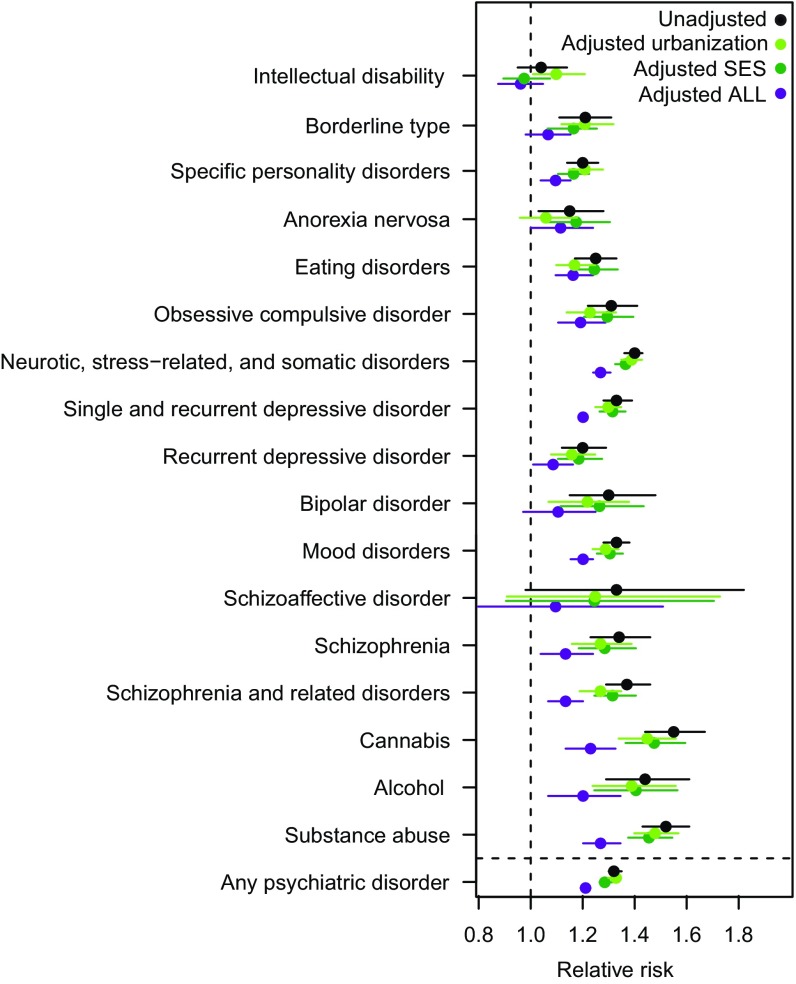
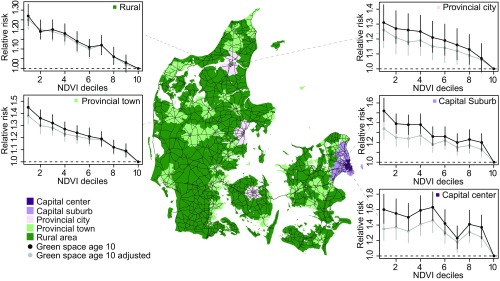
Urban residence is associated with a higher risk of some psychiatric disorders, but the underlying drivers remain unknown. There is increasing evidence that the level of exposure to natural environments impacts mental health, but few large-scale epidemiological studies have assessed the general existence and importance of such associations. Here, we investigate the prospective association between green space and mental health in the Danish population. Green space presence was assessed at the individual level using high-resolution satellite data to calculate the normalized difference vegetation index within a 210 × 210 m square around each person’s place of residence (∼1 million people) from birth to the age of 10. We show that high levels of green space presence during childhood are associated with lower risk of a wide spectrum of psychiatric disorders later in life. Risk for subsequent mental illness for those who lived with the lowest level of green space during childhood was up to 55% higher across various disorders compared with those who lived with the highest level of green space. The association remained even after adjusting for urbanization, socioeconomic factors, parental history of mental illness, and parental age. Stronger association of cumulative green space presence during childhood compared with single-year green space presence suggests that presence throughout childhood is important. Our results show that green space during childhood is associated with better mental health, supporting efforts to better integrate natural environments into urban planning and childhood life.
Overview
The claims and statistics of this paper haven’t been checked yet.
Free: it reads the open-access text and checks the first 5 claims that cite a source we can check. Create a free account to check every claim.
Integrity signals
Registry
Cites
Statistics
Figures
Verification
Claims the paper makes
The claims and statistics of this paper haven’t been checked yet.
Free: it reads the open-access text and checks the first 5 claims that cite a source we can check. Create a free account to check every claim.
Claims other papers make about this one
Each is checked against this paper’s own text: does it say what the citing paper says it does?
The source backs part of the claim, not all of it — or backs it for a different population, condition or comparison.
In the citing paper
“More greenery in urban areas creates higher social cohesion and increases people’s physical activity level, therefore improving children’s cognitive development (137).”
From The Impact of Climate Change on Mental Health: A Systematic Descriptive Review (2020) · cites this paper as [137]
Experimental — accuracy not yet measured
Self-check
Percentages, sums and reported differences re-computed from the paper’s own numbers.
The self-check needs the paper’s full text.
Citations
Cites
Cox’s regression model for counting processes: A large sample study
Andersen, P. K., & Gill, R. D. (1982) · The Annals of Statistics · doi:10.1214/aos/1176345976 · Cited by 4,419 · cited 1×
“IRR of psychiatric disorders were estimated in time-to-event analyses using Cox regressions, using age as the underlying timescale with separate baselines for each gender (51).”
MethodWolch, J. R., Byrne, J., & Newell, J. P. (2014) · Landscape and Urban Planning · doi:10.1016/j.landurbplan.2014.01.017 · Cited by 4,309 · cited 1×
“Lower access to green space could be an added risk factor for mental health among vulnerable groups of society (40, 41).”
BackgroundHartig, T., Mitchell, R., de Vries, S., & Frumkin, H. (2014) · Annual Review of Public Health · doi:10.1146/annurev-publhealth-032013-182443 · Cited by 3,638 · cited 3×
“Green space can enhance psychological restoration, can affect brain structure through positive associations with amygdala integrity, and could mitigate negative effects from the socially dense and noisy city environment that heighten stress (17, 19, 23, 24).”
BackgroundResultExploring pathways linking greenspace to health: theoretical and methodological guidance
Markevych, I., Schoierer, J., Hartig, T., Chudnovsky, A., Hystad, P., Dzhambov, A. M., de Vries, S., Triguero-Mas, M., Brauer, M., Nieuwenhuijsen, M. J., et al. (2017) · Environmental Research · doi:10.1016/j.envres.2017.06.028 · Cited by 2,543 · cited 1×
“Effects of different qualitative aspects and use of green space is important to identify a possible mechanistic link (37).”
BackgroundSchizophrenia risk from complex variation of complement component 4
Sekar, A., Bialas, A. R., de Rivera, H., Davis, A., Hammond, T. R., Kamitaki, N., Tooley, K., Presumey, J., Baum, M., Van Doren, V., et al. (2016) · Nature · doi:10.1038/nature16549 · Cited by 2,394
Extinction of experience: the loss of human–nature interactions
Soga, M., & Gaston, K. J. (2016) · Frontiers in Ecology and the Environment · doi:10.1002/fee.1225 · Cited by 1,802 · cited 1×
“Loss of human− nature interactions presents a health risk, and it can also reduce peoples’ appreciation of natural environments, creating negative feedback loops (42).”
BackgroundTwohig-Bennett, C., & Jones, A. (2018) · Environmental Research · doi:10.1016/j.envres.2018.06.030 · Cited by 1,766
The Danish Psychiatric Central Research Register
Mors, O., Perto, G. P., & Mortensen, P. B. (2011) · Scandinavian Journal of Public Health · doi:10.1177/1403494810395825 · Cited by 1,589 · cited 1×
“We linked all individuals from the study population and their parents and siblings with the Danish Psychiatric Central Research Register (44) to obtain information about psychiatric disorders.”
MethodSelf-citationCity living and urban upbringing affect neural social stress processing in humans
Lederbogen, F., Kirsch, P., Haddad, L., Streit, F., Tost, H., Schuch, P., Wüst, S., Pruessner, J. C., Rietschel, M., Deuschle, M., et al. (2011) · Nature · doi:10.1038/nature10190 · Cited by 1,584 · cited 3×
“Individuals with urban upbringing have high neural activity linked to stress processing, which could lead to higher risk of psychiatric disorders in adults (4).”
BackgroundMorbidity is related to a green living environment
Maas, J., Verheij, R. A., de Vries, S., Spreeuwenberg, P., Schellevis, F. G., & Groenewegen, P. P. (2009) · Journal of Epidemiology and Community Health · doi:10.1136/jech.2008.079038 · Cited by 1,133 · cited 1×
“Exposure to green space has been suggested to lower depression (13, 14) and schizophrenia risk (15), improve children’s cognitive development (16), and reduce neural activity linked to psychiatric disorders (11, 17).”
Background
Research works printed but not linked: 2
- World Health Organization 1992 The ICD-10 Classification of Mental and Behavioural Disorders: Clinical Descriptions and Diagnostics Guidelines World Health Org Geneva
- Danmarks Statistik 1991 IDA–En Integreret Database for Arbejdsmarkedsforskning: Hovedrapport Denmark Stat Copenhagen
Cited by
Items 101–200 of 868
Virtual Reality Representations of Nature to Improve Well-Being amongst Older Adults: a Rapid Review
van Houwelingen-Snippe, J., Allouch, S. B., & van Rompay, T. J. L. (2021) · Journal of Technology in Behavioral Science · doi:10.1007/s41347-021-00195-6 · Cited by 62
Luontoympäristön terveysvaikutukset ja niiden taloudellinen merkitys
Tyrväinen, L., Halonen, J. I., Pasanen, T., Ojala, A., Täubel, M., Kivelä, S., Leskelä, R.-L., Pennanen, P., Manninen, J., Sinkkonen, A., et al. (2024) · Jukuri (Natural Resources Institute Finland (Luke)) · Cited by 63
Barrable, A., & Lakin, L. (2019) · Journal of Adventure Education & Outdoor Learning · doi:10.1080/14729679.2019.1609999 · Cited by 61
“psychological well-being (Ruimtelijk, 2004), while access in childhood has been found to be associated with better psychological outcomes in adulthood (Engemann et al., 2019).”
BackgroundA Decision Support Tool for Green Infrastructure Planning in the Face of Rapid Urbanization
Brom, P. D., Engemann, K., Breed, C., Pasgaard, M., Onaolapo, T., & Svenning, J. (2023) · Land · doi:10.3390/land12020415 · Cited by 62
Self-citationJones, J. P. G., Bull, J. W., Roe, D., Baker, J., Griffiths, V. F., Starkey, M. P., Sonter, L. J., & Milner‐Gulland, E. J. (2019) · One Earth · doi:10.1016/j.oneear.2019.09.007 · Cited by 61
Browning, M. H. E. M., & Locke, D. H. (2019) · Landscape and Urban Planning · doi:10.1016/j.landurbplan.2019.103706 · Cited by 62
“These cumulative effects may have a greater effect on mental health and cognitive performance outcomes than effects of environments captured at a single point in time (Engemann et al., 2019).”
BackgroundGiusti, M., & Samuelsson, K. (2020) · PLoS ONE · doi:10.1371/journal.pone.0227311 · Cited by 62
“This ability might be crucial to safeguard from a public health perspective, as the mere presence of residential green space in childhood is strongly associated with lower occurrences of psychiatric disorders in new generations [31].”
BackgroundWortzel, J. D., Wiebe, D. J., DiDomenico, G. E., Visoki, E., South, E., Tam, V. W., Greenberg, D. M., Brown, L. A., Gur, R. C., Gur, R. E., et al. (2021) · Frontiers in Sustainable Cities · doi:10.3389/frsc.2021.686159 · Cited by 60
“These findings are in line with well-established, pre-pandemic protective associations between greenspace and clinical measures of depression (Nutsford et al., 2013; Ruijsbroek et al., 2017; Engemann et al., 2019; Hedblom et al., 2019) as well as with findings of recent studies on this topic conducted during COVID-19…”
BackgroundResultEffect of nature on the mental health and well-being of children and adolescents: meta-review
Lomax, T., Butler, J. A., Cipriani, A., & Singh, I. (2024) · The British Journal of Psychiatry · doi:10.1192/bjp.2024.109 · Cited by 58
Zhong, Q., & Li, Z. (2024) · Sustainable Cities and Society · doi:10.1016/j.scs.2024.105406 · Cited by 57
Ma, H., Zhang, Y., Liu, P., Zhang, F., & Zhu, P. (2024) · Landscape and Urban Planning · doi:10.1016/j.landurbplan.2024.105171 · Cited by 57
Sharma, G., Morgenroth, J. A., Richards, D. R., & Ye, N. (2025) · Urban forestry & urban greening · doi:10.1016/j.ufug.2024.128659 · Cited by 57
Planning urban community gardens strategically through multicriteria decision analysis
Smith, J. P., Meerow, S., & Turner, B. L. (2020) · Urban forestry & urban greening · doi:10.1016/j.ufug.2020.126897 · Cited by 57
Aerts, R., Vanlessen, N., Dujardin, S., Nemery, B., Nieuwenhuyse, A. V., Bauwelinck, M., Casas, L., Demoury, C., Plusquin, M., & Nawrot, T. S. (2022) · Environmental Research · doi:10.1016/j.envres.2022.113056 · Cited by 57
Green spaces exposure and the risk of common psychiatric disorders: A meta-analysis
Zhang, Y., Tong-yan, W., Yu, H., Fu, J., Xu, J., Liu, L., Tang, C., & Li, Z. (2024) · SSM - Population Health · doi:10.1016/j.ssmph.2024.101630 · Cited by 55
“It is said that exposure to greenness at youth could reduce odds of having a range of psychiatric disorders (Engemann et al., 2019).”
BackgroundPouya, S., & Aghlmand, M. (2022) · Environmental Monitoring and Assessment · doi:10.1007/s10661-022-10298-z · Cited by 55
“Urban life usually not only provides access to health care, good sanitation, nutrition, and education, but also is connected to undesirable health effects (Engemann et al., 2019).”
BackgroundIrvine, K. N., Fisher, J. C., Bentley, P. R., Nawrath, M., Dallimer, M., Austen, G. E., Fish, R. D., & Davies, Z. G. (2022) · Journal of Environmental Psychology · doi:10.1016/j.jenvp.2022.101921 · Cited by 55
Heat waves and adaptation strategies in a mediterranean urban context
Maggiotto, G., Miani, A., Rizzo, E., Castellone, M. D., & Piscitelli, P. (2021) · Environmental Research · doi:10.1016/j.envres.2021.111066 · Cited by 54
Zhang, X., Zhang, Y., & Zhai, J. (2021) · Frontiers in Public Health · doi:10.3389/fpubh.2021.740187 · Cited by 55
Gu, X., Zheng, H., & Tse, C. (2023) · Scientific Reports · doi:10.1038/s41598-023-48756-4 · Cited by 51
Exploring how urban nature is associated with human wellbeing in a neotropical city
Fisher, J. C., Bicknell, J. E., Irvine, K. N., Fernandes, D., Mistry, J., & Davies, Z. G. (2021) · Landscape and Urban Planning · doi:10.1016/j.landurbplan.2021.104119 · Cited by 53
Helbich, M., O’Connor, R. C., Nieuwenhuijsen, M. J., & Hagedoorn, P. (2020) · Environment International · doi:10.1016/j.envint.2020.105982 · Cited by 51
“…exposure to greenery in the residential environment and resilience against psychiatric disorders (van den Bosch and Meyer-Lindenberg, 2019; Engemann et al., 2019; Klompmaker et al., 2019), which is likely to be independent of people ’ s demographic, psychological, behavioral,…”
BackgroundInfluentialLiu, Y., Xiao, T., Liu, Y., Yao, Y., & Wang, R. (2021) · Urban forestry & urban greening · doi:10.1016/j.ufug.2021.127027 · Cited by 50
Vos, S., Bijnens, E. M., Renaers, E., Croons, H., Stukken, C. V. D., Martens, D. S., Plusquin, M., & Nawrot, T. S. (2022) · Environmental Research · doi:10.1016/j.envres.2021.112603 · Cited by 50
The Relationship Between Greenspace Exposure and Psychopathology Symptoms: A Systematic Review
Tran, I., Sabol, O., & Mote, J. (2022) · Biological Psychiatry Global Open Science · doi:10.1016/j.bpsgos.2022.01.004 · Cited by 50
“More greenspace exposure from birth to 10 years of age (assessed annually by NDVI) was associated with lower odds of being diagnosed with any psychiatric disorder, except intellectual disability and schizoaffective disorder, in a dose-response pattern (81).”
BackgroundInfluentialAdli, M., & Schöndorf, J. (2020) · Bundesgesundheitsblatt - Gesundheitsforschung - Gesundheitsschutz · doi:10.1007/s00103-020-03185-w · Cited by 50
A simple but actionable metric for assessing inequity in resident greenspace exposure
Yu, Z., Ma, W., Hu, S., Yao, X., Yang, G., Yu, Z., & Jiang, B. (2023) · Ecological Indicators · doi:10.1016/j.ecolind.2023.110423 · Cited by 50
Nature relatedness: A protective factor for snake and spider fears and phobias
Zsido, A. N., Coelho, C. M., & Polák, J. (2022) · People and Nature · doi:10.1002/pan3.10303 · Cited by 48
Acknowledging geodiversity in safeguarding biodiversity and human health
Alahuhta, J., Tukiainen, H., Toivanen, M., Ala‐Hulkko, T., Farrahi, V., Hjort, J., Ikäheimo, T. M., Lankila, T., Maliniemi, T., Puhakka, S., et al. (2022) · The Lancet Planetary Health · doi:10.1016/s2542-5196(22)00259-5 · Cited by 50
Associations of types of green space across the life-course with blood pressure and body mass index
Jimenez, M. P., Wellenius, G. A., James, P., Subramanian, S. V., Buka, S. L., Eaton, C. B., Gilman, S. E., & Loucks, E. B. (2020) · Environmental Research · doi:10.1016/j.envres.2020.109411 · Cited by 48
Edible urban commons for resilient neighbourhoods in light of the pandemic
Sardeshpande, M., Rupprecht, C. D. D., & Russo, A. (2020) · Cities · doi:10.1016/j.cities.2020.103031 · Cited by 48
Research agenda on biodiversity and ecosystem functions and services in European cities
Pinho, P., Casanelles‐Abella, J., Luz, A. C., Kubicka, A. M., Branquinho, C., Laanisto, L., Neuenkamp, L., Ortí, M. A., Obrist, M. К., Deguines, N., et al. (2021) · Basic and Applied Ecology · doi:10.1016/j.baae.2021.02.014 · Cited by 50
del Pulgar, C. P., Anguelovski, I., Cole, H. V. S., de Bont, J., Connolly, J. J., Baró, F., Díaz, Y., Fontán‐Vela, M., Duarte‐Salles, T., & Mas, M. T. (2021) · Environmental Research · doi:10.1016/j.envres.2021.111326 · Cited by 49
Children's Green Infrastructure: Children and Their Rights to Nature and the City
Vidal, D. G., & Seixas, E. C. (2022) · Frontiers in Sociology · doi:10.3389/fsoc.2022.804535 · Cited by 47
“Public and open green spaces may lead to the opportunity to develop outdoor education programs, which have been shown to have significant effects on learning (Hamilton, 2017), contributing also to the diminution of behavior and socialization problems (Chiumento et al., 2018; Engemann et al., 2019), improving cognitive…”
BackgroundHsieh, C.-H., & Li, D. (2022) · Frontiers in Psychiatry · doi:10.3389/fpsyt.2022.1007396 · Cited by 48
“In Week 1, the HR value were significantly different among the phases before and after video-watching [F(2,22) = 3.”
BackgroundGeary, R. S., Thompson, D. A., Garrett, J. K., Mizen, A., Rowney, F. M., Song, J., White, M. P., Lovell, R., Watkins, A. J., Lyons, R. A., et al. (2023) · Public Health Research · doi:10.3310/lqpt9410 · Cited by 48
Vegetation-based ecosystem service delivery in urban landscapes: A systematic review
Stroud, S., Peacock, J., & Hassall, C. (2022) · Basic and Applied Ecology · doi:10.1016/j.baae.2022.02.007 · Cited by 46
Higher depression risks in medium- than in high-density urban form across Denmark
Chen, T. K., Horsdal, H. T., Samuelsson, K., Closter, A. M., Davies, M., Barthel, S., Pedersen, C. B., Prishchepov, A. V., & Sabel, C. E. (2023) · Science Advances · doi:10.1126/sciadv.adf3760 · Cited by 47
“Denmark is a welfare state with universal health care, and therefore, mental health diagnosis and treatment are widely accessible to the public (36).”
BackgroundSelf-citationEnriched environment exposure accelerates rodent driving skills
Crawford, L. E., Knouse, L. E., Kent, M., Vavra, D. T., Harding, O., LeServe, D. S., Fox, N., Hu, X., Li, P., Glory, C., et al. (2019) · Behavioural Brain Research · doi:10.1016/j.bbr.2019.112309 · Cited by 48
How Children Invented Humanity: The Role of Development in Human Evolution
Bjorklund, D. F. (2020) · doi:10.1093/oso/9780190066864.001.0001 · Cited by 46
Lemberg, G. M., Riso, E., Fjørtoft, I., Kjønniksen, L., Kull, M., & Mäestu, E. (2023) · Children · doi:10.3390/children10040702 · Cited by 45
A regional spatial planning model for multifunctional green infrastructure
Goodspeed, R., Liu, R., Gounaridis, D., Lizundia, C., & Newell, J. P. (2021) · Environment and Planning B Urban Analytics and City Science · doi:10.1177/23998083211033610 · Cited by 45
“And recently, urban forests have been shown to have a positive impact on mental health (Engemann et al., 2019).”
BackgroundHow's Life? Measuring Well-being
van Zanden, J. L., Rijpma, A., Malinowski, M., Mira d'Ercole, M., Geschiedenis, L. E., geschiedenis, O. S.-E., & verg.hist.perspectief, L. G.-W. I. (2013) · How’s Life?/How’s life? · doi:10.1787/23089679 · Cited by 44
The effect of brief exposure to virtual nature on mental wellbeing in adolescents
Owens, M., & Bunce, H. L. I. (2023) · Scientific Reports · doi:10.1038/s41598-023-44717-z · Cited by 43
“It is known that access to green space in childhood is prospectively related to a lower risk of mental health disorder later in life 34 and it has been shown that spending more time outdoors is associated with good health and wellbeing 35 .”
BackgroundNowhere to Play: Available Open and Green Space in Greater London Schools
Shoari, N., Ezzati, M., Doyle, Y., Wolfe, I., Brauer, M. D., Bennett, J. E., & Fecht, D. (2021) · Journal of Urban Health · doi:10.1007/s11524-021-00527-0 · Cited by 44
Wang, R., Song, Y., Yang, L., & Browning, M. H. E. M. (2024) · Urban forestry & urban greening · doi:10.1016/j.ufug.2024.128324 · Cited by 42
Bao, W.-W., Yang, B., Zou, Z., Ma, J., Jin, J., Wang, H., Luo, J., Zhang, X., Luo, C., Wang, H., et al. (2020) · Environmental Research · doi:10.1016/j.envres.2020.110289 · Cited by 42
Rehling, J., Bunge, C., Waldhauer, J., & Conrad, A. (2021) · International Journal of Environmental Research and Public Health · doi:10.3390/ijerph18052326 · Cited by 42
“Empirical evidence on the effects of urban green spaces on children’s health shows that they are positively associated with physical activity [9,10], reduced obesity [11], intellectual and behavioural development [12] and a lower risk of a wide range of mental disorders later in life [13].”
BackgroundBasu, T., & Das, A. (2021) · Environmental Challenges · doi:10.1016/j.envc.2021.100099 · Cited by 42
Beute, F., Andreucci, M. B., Lammel, A., Davies, Z. G., Glanville, J., Keune, H., Marselle, M. R., O’Brien, L., Olszewska-Guizzo, A., Remmen, R., et al. (2020) · Kent Academic Repository (University of Kent) · Cited by 43
Eeden, S. K. V. D., Browning, M. H. E. M., Becker, D. A., Shan, J., Alexeeff, S., Ray, G. T., Quesenberry, C. P., & Kuo, M. (2022) · Environment International · doi:10.1016/j.envint.2022.107174 · Cited by 43
Saenen, N. D., Nawrot, T. S., Hautekiet, P., Wang, C., Roels, H. A., Dadvand, P., Plusquin, M., & Bijnens, E. M. (2023) · Environmental Health · doi:10.1186/s12940-023-00982-z · Cited by 43
“Introduction Human contact with green spaces may play a crucial role in brain development that can lay the foundation for an improved mental condition and a healthy life [1, 2].”
BackgroundGreen Space Morphology and School Myopia in China
Yang, Y., Liao, H., Zhao, L., Wang, X., Yang, X., Ding, X., Li, X., Jiang, Z., Zhang, X., Zhang, Q., et al. (2024) · JAMA Ophthalmology · doi:10.1001/jamaophthalmol.2023.6015 · Cited by 41
GLP‐1 agonists and the gut microbiome: A bidirectional relationship
Kamath, S., Chan, N. S. L., & Joyce, P. M. (2026) · British Journal of Clinical Pharmacology · doi:10.1002/bcp.70487 · Cited by 44
“58 As these approaches evolve, they may pave the way for microbiome-adaptive GLP-1 therapies, optimizing efficacy while minimizing interindividual variability.”
Re‐envisioning stormwater infrastructure for ultrahazardous flooding
Sanders, B. F., & Grant, S. B. (2020) · Wiley Interdisciplinary Reviews Water · doi:10.1002/wat2.1414 · Cited by 42
“…habitat; (c) sustainable urban drainage infrastructure with controls for water conservation, reuse and water quality and myriad of co-benefits, including evaporative cooling, opportunities for recreation, education about stormwater and flooding, and improved mental health (Engemann et al., 2019).”
BackgroundChen, H., Xiong, P., Chen, L., & Hao, G. (2020) · Journal of Affective Disorders · doi:10.1016/j.jad.2020.07.090 · Cited by 41
Residential greenness-related DNA methylation changes
Jeong, A., Eze, I. C., Vienneau, D., de Hoogh, K., Keidel, D., Rothe, T., Burdet, L., Holloway, J. W., Jarvis, D., Kronenberg, F., et al. (2021) · Environment International · doi:10.1016/j.envint.2021.106945 · Cited by 41
“Health benefits of green areas in residential surroundings have been shown for general and mental health (Dadvand et al. 2016; Engemann et al. 2019; McEachan et al. 2016), sleep duration and quality (Astell-Burt et al. 2013; Grigsby-Toussaint et al. 2015), cognitive function (de Keijzer et al.…”
Anthun, K. S., Maass, R. E. K., Hope, S., Espnes, G. A., Bell, R., Khan, M., & Lillefjell, M. (2019) · International Journal of Environmental Research and Public Health · doi:10.3390/ijerph16245015 · Cited by 42
Schweiger, A., & Svenning, J. (2019) · People and Nature · doi:10.1002/pan3.10066 · Cited by 40
“Tree-dominated, urban greenspace helps to regulate microclimatic conditions (Streiling & Matzarakis, 2003) and decreases the risk of mental disease in highly urbanized landscapes (Engemann et al., 2019; Nutsford, Pearson, & Kingham, 2013).”
BackgroundSelf-citationArtmann, M., Sartison, K., & Ives, C. D. (2021) · Sustainability Science · doi:10.1007/s11625-021-00911-4 · Cited by 40
“2015), which is crucial for mental and physical health of city residents suffering from stressful urban environments (Bratman et al. 2012; Engemann et al. 2019).”
BackgroundSardeshpande, M., Hurley, P. T., Mollee, E., Garekae, H., Dahlberg, A., Emery, M. R., & Shackleton, C. M. (2021) · Frontiers in Sustainable Cities · doi:10.3389/frsc.2021.686254 · Cited by 39
Nigg, C., Petersen, E., & Macintyre, T. E. (2023) · Journal of Environmental Psychology · doi:10.1016/j.jenvp.2023.102009 · Cited by 40
Bridgewater, P. B., Loyau, A., & Schmeller, D. S. (2019) · Biodiversity and Conservation · doi:10.1007/s10531-019-01804-w · Cited by 39
Today's protected areas: supporting a more sustainable future for humanity
McNeely, J. A. (2020) · Integrative Zoology · doi:10.1111/1749-4877.12451 · Cited by 38
People’s desire to be in nature and how they experience it are partially heritable
Chang, C., Cox, D. T. C., Fan, Q., Nghiem, T. P. L., Tan, C. L. Y., Oh, R. R. Y., Lin, B. B., Shanahan, D. F., Fuller, R. A., Gaston, K. J., et al. (2022) · PLoS Biology · doi:10.1371/journal.pbio.3001500 · Cited by 38
Browning, M. H. E. M., Li, D., White, M. P., Bratman, G. N., Becker, D. A., & Benfield, J. A. (2022) · Health & Place · doi:10.1016/j.healthplace.2022.102755 · Cited by 39
How do natural environments shape adaptive cognition across the lifespan?
Hartley, C. A. (2022) · Trends in Cognitive Sciences · doi:10.1016/j.tics.2022.10.002 · Cited by 37
“Features of social and geographic environments have been shown to influence mental health [14] suggesting that a mechanistic understanding of the emergence of psychopathology may depend on quantifying the adaptive – or maladaptive – influence of the experienced environment on cognition.”
BackgroundUrban Core Greening Balances Browning in Urban Expansion Areas in China during Recent Decades
Zhang, X., Brandt, M., Tong, X., Tong, X., Zhang, W., & Fensholt, R. (2024) · Journal of Remote Sensing · doi:10.34133/remotesensing.0112 · Cited by 38
Ding, Y., Shi, B., Su, G., Li, Q., Meng, J., Jiang, Y., Qin, Y., Dai, L., & Song, S. (2021) · Sustainability · doi:10.3390/su13031485 · Cited by 37
“Green spaces in childhood may reduce the risk of mental illness, and it is necessary to integrate the natural environment into future urban planning [52].”
BackgroundA novel hierarchical framework to evaluate residential exposure to green spaces
Zhang, J., Yu, Z., Cheng, Y., Sha, X., & Zhang, H. (2021) · Landscape Ecology · doi:10.1007/s10980-021-01378-5 · Cited by 37
The significance of green spaces for protecting health of urban population
Revich, B. A. (2023) · Health Risk Analysis · doi:10.21668/health.risk/2023.2.17 · Cited by 39
Delgado-Capel, M. J., & Cariñanos, P. (2020) · Forests · doi:10.3390/f11121246 · Cited by 36
Hobbs, M., Kingham, S., Wiki, J., Marek, L., & Campbell, M. H. (2021) · Preventive Medicine · doi:10.1016/j.ypmed.2020.106416 · Cited by 37
Schoolyard Affordances for Physical Activity: A Pilot Study in 6 Nordic–Baltic Countries
Rutkauskaitė, R., Gísladóttir, Þ., Pihu, M., Kjønniksen, L., Lounassalo, I., Huovinen, T., Gruodytė-Račienė, R., Visagurskienė, K., Olafson, O., Kull, M., et al. (2021) · Sustainability · doi:10.3390/su132111640 · Cited by 36
Pagalan, L., Oberlander, T. F., Hanley, G. E., Rosella, L. C., Bickford, C., Weikum, W., Lanphear, N. E., Lanphear, B. P., Brauer, M. D., & van den Bosch, M. A. (2022) · Environment International · doi:10.1016/j.envint.2022.107445 · Cited by 36
“(Engemann et al., 2020; Engemann et al., 2018; Engemann et al., 2019; Engemann et al., 2020) To our knowledge, only one previous ecological study has analyzed the association between childhood exposure to greenspace and ASD, (Wu and Jackson, 2017) observing a lower prevalence of ASD in greener neighborhoods.”
BackgroundZhang, J., Cheng, Y., Li, H., Wan, Y., & Zhao, B. (2020) · Building and Environment · doi:10.1016/j.buildenv.2020.107508 · Cited by 36
Coping with post-hurricane mental distress: The role of neighborhood green space
Li, D., Newman, G., Zhang, T., Zhu, R., & Horney, J. A. (2021) · Social Science & Medicine · doi:10.1016/j.socscimed.2021.114084 · Cited by 36
“The benefits of higher density of greenness and better-perceived quality have both been recognized (Engemann et al., 2019; Van Dillen et al., 2012), although recent studies have emphasized that human-environment transaction and affective dimensions are critical to mental benefits, rather than the physical characterist…”
BackgroundWiley, E. R., Stranges, S., Gilliland, J., Anderson, K. K., & Seabrook, J. A. (2022) · Environmental Research · doi:10.1016/j.envres.2022.113124 · Cited by 35
Hartig, T., Astell‐Burt, T., Bergsten, Z., Amcoff, J., Mitchell, R., & Feng, X. (2020) · Journal of Epidemiology & Community Health · doi:10.1136/jech-2019-213443 · Cited by 34
“13 14 Further, greenspace measures may have different implications for health at different levels of analysis.”
Residential green space and seasonal distress in a cohort of tree pollen allergy patients
Aerts, R., Stas, M., Vanlessen, N., Hendrickx, M., Bruffaerts, N., Hoebeke, L., Dendoncker, N., Dujardin, S., Saenen, N. D., Nieuwenhuyse, A. V., et al. (2019) · International Journal of Hygiene and Environmental Health · doi:10.1016/j.ijheh.2019.10.004 · Cited by 36
Building resilience and well-being for post-covid adolescents through outdoor adventure
Allan, J. F., Doran, A., Jones, R., & Farrell, S. (2024) · Journal of Adventure Education & Outdoor Learning · doi:10.1080/14729679.2024.2312920 · Cited by 33
Green Space and Internalizing or Externalizing Symptoms Among Children
Towe‐Goodman, N. R., McArthur, K., Willoughby, M. T., Swingler, M. M., Wychgram, C., Just, A. C., Kloog, I., Bennett, D. H., Berry, D. J., Hazlehurst, M. F., et al. (2024) · JAMA Network Open · doi:10.1001/jamanetworkopen.2024.5742 · Cited by 33
Colonization and habitat selection of a declining farmland species in urban areas
Mayer, M., & Sunde, P. (2020) · Urban Ecosystems · doi:10.1007/s11252-020-00943-1 · Cited by 35
Stas, M., Aerts, R., Hendrickx, M., Dendoncker, N., Dujardin, S., Linard, C., Nawrot, T. S., Nieuwenhuyse, A. V., Aerts, J.-M., Orshoven, J. V., et al. (2021) · Landscape and Urban Planning · doi:10.1016/j.landurbplan.2021.104070 · Cited by 33
Jimenez, M. P., Shoaff, J. R., Kioumourtzoglou, M., Korrick, S., Rifas‐Shiman, S. L., Hivert, M., Oken, E., & James, P. (2021) · American Journal of Epidemiology · doi:10.1093/aje/kwab209 · Cited by 34
Kühn, S., Düzel, S., Mascherek, A., Eibich, P., Krekel, C., Kolbe, J., Goebel, J., Gallinat, J., Wagner, G. G., & Lindenberger, U. (2021) · Landscape and Urban Planning · doi:10.1016/j.landurbplan.2021.104196 · Cited by 33
“A recent study has demonstrated a reduced risk for developing psychiatric disorders during adolescence and adulthood when children grew up in green areas (Engemann et al., 2019).”
BackgroundKalliolevo, H., Gordon, A., Sharma, R., Bull, J. W., & Bekessy, S. A. (2021) · Conservation Science and Practice · doi:10.1111/csp2.512 · Cited by 33
Nature Exposure is Associated With Reduced Smartphone Use
Minor, K., Glavind, K. L., Schwartz, A. J., Danforth, C. M., Lehmann, S., & Bjerre-Nielsen, A. (2023) · Environment and Behavior · doi:10.1177/00139165231167165 · Cited by 35
“A Danish registry-analysis of public health records for ~1 million people found that low levels of nearby greenspace in childhood—controlling for socioeconomic status—was strongly associated with developing mental illness and several psychiatric disorders in later life (Engemann et al., 2019).”
BackgroundContact with Nature as Essential to the Human Experience: Reflections on Pandemic Confinement
Kazdin, A. E., & González, P. V. (2021) · Nature and Culture · doi:10.3167/nc.2020.160204 · Cited by 32
Designing Multifunctional Urban Green Spaces: An Inclusive Public Health Framework
Lafrenz, A. J. (2022) · International Journal of Environmental Research and Public Health · doi:10.3390/ijerph191710867 · Cited by 32
“levels of continuous green space presence during childhood [13].”
BackgroundBreed, C., Plessis, T. D., Engemann, K., Pauleit, S., & Pasgaard, M. (2023) · Urban forestry & urban greening · doi:10.1016/j.ufug.2023.128085 · Cited by 32
Self-citationHuang, Z., Tang, L., Qiao, P., He, J., & Su, H. (2024) · Urban forestry & urban greening · doi:10.1016/j.ufug.2024.128313 · Cited by 32
Purposeful Outdoor Learning Empowers Children to Deal with School Transitions
Slee, V., & Allan, J. F. (2019) · Sports · doi:10.3390/sports7060134 · Cited by 32
“[28,29,35,37]) that may transmit into school life and beyond [40].”
BackgroundClimate adaptation actions for urban forests and human health
Janowiak, M. K., Brandt, L. A., Wolf, K. K., Brady, M., Darling, L., Lewis, A. D., Fahey, R. T., Giesting, K., Hall, E., Henry, M., et al. (2021) · doi:10.2737/nrs-gtr-203 · Cited by 33
Optimizing brain performance: Identifying mechanisms of adaptive neurobiological plasticity
Lambert, K. G., Eisch, A. J., Galea, L. A. M., Kempermann, G., & Merzenich, M. M. (2019) · Neuroscience & Biobehavioral Reviews · doi:10.1016/j.neubiorev.2019.06.033 · Cited by 31
Exploring Access to Nature Play in Urban Parks: Resilience, Sustainability, and Early Childhood
Beery, T. H. (2020) · Sustainability · doi:10.3390/su12124894 · Cited by 32
“concluded that growing up near green space is associated with up to a 55 percent lower risk of mental health disorders in adulthood, independent from effects of other known risk factors [50].”
BackgroundHow Does Household Residential Instability Influence Child Health Outcomes? A Quantile Analysis
Baker, E., Pham, N. T. A., Daniel, L., & Bentley, R. (2019) · International Journal of Environmental Research and Public Health · doi:10.3390/ijerph16214189 · Cited by 31
“Social determinants like housing [1], alongside other physical environmental features [2], are increasingly revealed as essential to the later-life health and development of children (as described in Reference [3]).”
BackgroundJimenez, M. P., Aris, I. M., Rifas‐Shiman, S. L., Young, J. G., Tiemeier, H. W., Hivert, M., Oken, E., & James, P. (2021) · Environmental Pollution · doi:10.1016/j.envpol.2021.118208 · Cited by 30
Moving from risk to resilience in psychosis research
Thakkar, K. N., McCleery, A., Minor, K. S., Lee, J., Humpston, C. S., Chopik, W. J., Burt, S. A., Pearson, A. L., Ungar, M. T., & Park, S. (2023) · Nature Reviews Psychology · doi:10.1038/s44159-023-00205-9 · Cited by 31
Outdoor learning in urban schools: Effects on 4–5 year old children's noise and physiological stress
Goldenberg, G., Atkinson, M., Dubiel, J., & Wass, S. V. (2024) · Journal of Environmental Psychology · doi:10.1016/j.jenvp.2024.102362 · Cited by 31
“Urban living has been associated with higher risk of mental health disorders (Engemann et al., 2019; Kovess-Masf ´ ety et al., 2005; Peen et al., 2010) and changes in stress processing in adults (Lederbogen et al., 2011) and increased physiological stress and stress reactivity in infants (Wass et…”
Background
Metadata
- Authors
- Engemann, K., Pedersen, C. B., Arge, L., Tsirogiannis, C., Mortensen, P. B., & Svenning, J.-C.
- Affiliations
- Aarhus University (DK)
- Corresponding author
- Engemann, Kristine
- ORCID
- Venue
- Proceedings of the National Academy of Sciences
- Publisher
- National Academy of Sciences
- Published
- 2019-02-25
- Volume
- 116
- Issue
- 11
- Pages
- 5188-5193
- ISSN
- 0027-8424 (ISSN-L)
- 1091-6490
- PMC
- PMC6421415
- OpenAlex
- W2917225355
- Cited by
- 668
- References
- 50
- Citations by year
- 2026: 63 · 2025: 74 · 2024: 89 · 2023: 96 · 2022: 99 · 2021: 114 · 2020: 92 · 2019: 37
- FWCI
- 36.93
- Type
- journal article
- Language
- en
- Open access
- hybrid
- doi.org
- Licence
- Locations
- Proceedings of the National Academy of Sciences (publishedVersion, cc-by-nc-nd)
- Europe PMC (PubMed Central) (publishedVersion, cc-by-nc-nd)
- PubMed Central (publishedVersion, cc-by-nc-nd)
- PubMed (publishedVersion)
- Funders
- Villum Fonden (16549)
- Topics
- Social Sciences › Urban Studies › Urban Green Space and Health
- Social Sciences › Health › Health disparities and outcomes
- Social Sciences › Sociology and Political Science › Environmental Justice and Health Disparities
- Keywords
- residential green space, children's exposure, mental illness, mental health, urbanization, NDVI, satellite remote sensing, cumulative exposure, urban planning, natural environment
- MeSH terms
- Adolescent, Adult, Mental Disorders, Child, Denmark, Environment, Humans, Risk Factors, Urbanization
About these checks
Registry, retraction, Cites and statistics results are computed, not judged, with one exception: a printed reference that no index lists is read once by a model before it counts as a citation error. Claims are extracted by a model and kept only when their quote appears verbatim in the text; each cited source is then checked, with a model’s help, for whether it says what the claim relies on. Those verdicts can be wrong — read the claim’s quote and the cited source before relying on one.
Statistics and arithmetic are recomputed, not judged.
Confidence bands are shown only for fields calibrated on our annotated test set. None is calibrated yet, so no band is shown.
What counts as a claim ›How we measure confidence ›How we check this ›
Are you an author, or do you see a problem with this page? Request a review
Data sources
Bibliographic data: Semantic Scholar, OpenAlex, Crossref.
Contains information from the Semantic Scholar Academic Graph Datasets, made available under the ODC Attribution License (ODC-BY 1.0).
Semantic Scholar’s data is described in: Kinney, R., et al. (2023). The Semantic Scholar Open Data Platform. arXiv:2301.10140.
