

Residential green space in childhood is associated with lower risk of psychiatric disorders from adolescence into adulthood
Open accessThe DOI matches its Crossref record; 50 of the 50 references it cites were found in a registry or an index.
Abstract
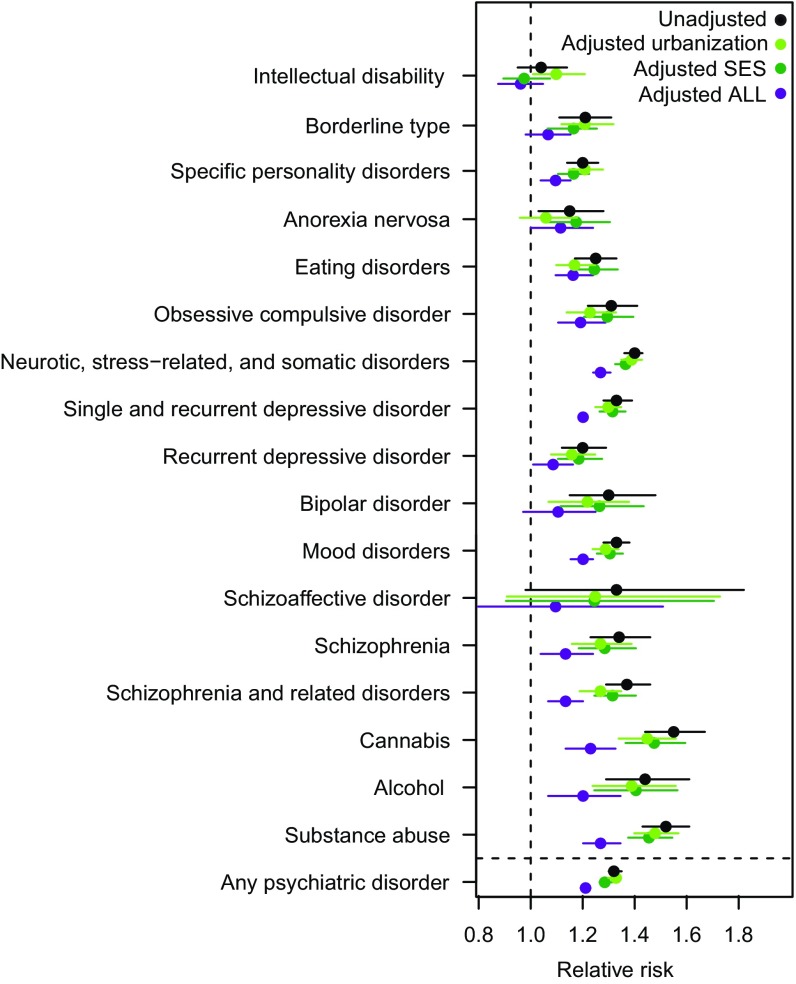
Urban residence is associated with a higher risk of some psychiatric disorders, but the underlying drivers remain unknown. There is increasing evidence that the level of exposure to natural environments impacts mental health, but few large-scale epidemiological studies have assessed the general existence and importance of such associations. Here, we investigate the prospective association between green space and mental health in the Danish population. Green space presence was assessed at the individual level using high-resolution satellite data to calculate the normalized difference vegetation index within a 210 × 210 m square around each person’s place of residence (∼1 million people) from birth to the age of 10. We show that high levels of green space presence during childhood are associated with lower risk of a wide spectrum of psychiatric disorders later in life. Risk for subsequent mental illness for those who lived with the lowest level of green space during childhood was up to 55% higher across various disorders compared with those who lived with the highest level of green space. The association remained even after adjusting for urbanization, socioeconomic factors, parental history of mental illness, and parental age. Stronger association of cumulative green space presence during childhood compared with single-year green space presence suggests that presence throughout childhood is important. Our results show that green space during childhood is associated with better mental health, supporting efforts to better integrate natural environments into urban planning and childhood life.
Overview
The claims and statistics of this paper haven’t been checked yet.
Free: it reads the open-access text and checks the first 5 claims that cite a source we can check. Create a free account to check every claim.
Integrity signals
Registry
Cites
Statistics
Figures
Verification
Claims the paper makes
The claims and statistics of this paper haven’t been checked yet.
Free: it reads the open-access text and checks the first 5 claims that cite a source we can check. Create a free account to check every claim.
Claims other papers make about this one
Each is checked against this paper’s own text: does it say what the citing paper says it does?
The source backs part of the claim, not all of it — or backs it for a different population, condition or comparison.
In the citing paper
“More greenery in urban areas creates higher social cohesion and increases people’s physical activity level, therefore improving children’s cognitive development (137).”
From The Impact of Climate Change on Mental Health: A Systematic Descriptive Review (2020) · cites this paper as [137]
Experimental — accuracy not yet measured
Self-check
Percentages, sums and reported differences re-computed from the paper’s own numbers.
The self-check needs the paper’s full text.
Citations
Cites
Cox’s regression model for counting processes: A large sample study
Andersen, P. K., & Gill, R. D. (1982) · The Annals of Statistics · doi:10.1214/aos/1176345976 · Cited by 4,419 · cited 1×
“IRR of psychiatric disorders were estimated in time-to-event analyses using Cox regressions, using age as the underlying timescale with separate baselines for each gender (51).”
MethodWolch, J. R., Byrne, J., & Newell, J. P. (2014) · Landscape and Urban Planning · doi:10.1016/j.landurbplan.2014.01.017 · Cited by 4,309 · cited 1×
“Lower access to green space could be an added risk factor for mental health among vulnerable groups of society (40, 41).”
BackgroundHartig, T., Mitchell, R., de Vries, S., & Frumkin, H. (2014) · Annual Review of Public Health · doi:10.1146/annurev-publhealth-032013-182443 · Cited by 3,638 · cited 3×
“Green space can enhance psychological restoration, can affect brain structure through positive associations with amygdala integrity, and could mitigate negative effects from the socially dense and noisy city environment that heighten stress (17, 19, 23, 24).”
BackgroundResultExploring pathways linking greenspace to health: theoretical and methodological guidance
Markevych, I., Schoierer, J., Hartig, T., Chudnovsky, A., Hystad, P., Dzhambov, A. M., de Vries, S., Triguero-Mas, M., Brauer, M., Nieuwenhuijsen, M. J., et al. (2017) · Environmental Research · doi:10.1016/j.envres.2017.06.028 · Cited by 2,543 · cited 1×
“Effects of different qualitative aspects and use of green space is important to identify a possible mechanistic link (37).”
BackgroundSchizophrenia risk from complex variation of complement component 4
Sekar, A., Bialas, A. R., de Rivera, H., Davis, A., Hammond, T. R., Kamitaki, N., Tooley, K., Presumey, J., Baum, M., Van Doren, V., et al. (2016) · Nature · doi:10.1038/nature16549 · Cited by 2,394
Extinction of experience: the loss of human–nature interactions
Soga, M., & Gaston, K. J. (2016) · Frontiers in Ecology and the Environment · doi:10.1002/fee.1225 · Cited by 1,802 · cited 1×
“Loss of human− nature interactions presents a health risk, and it can also reduce peoples’ appreciation of natural environments, creating negative feedback loops (42).”
BackgroundTwohig-Bennett, C., & Jones, A. (2018) · Environmental Research · doi:10.1016/j.envres.2018.06.030 · Cited by 1,766
The Danish Psychiatric Central Research Register
Mors, O., Perto, G. P., & Mortensen, P. B. (2011) · Scandinavian Journal of Public Health · doi:10.1177/1403494810395825 · Cited by 1,589 · cited 1×
“We linked all individuals from the study population and their parents and siblings with the Danish Psychiatric Central Research Register (44) to obtain information about psychiatric disorders.”
MethodSelf-citationCity living and urban upbringing affect neural social stress processing in humans
Lederbogen, F., Kirsch, P., Haddad, L., Streit, F., Tost, H., Schuch, P., Wüst, S., Pruessner, J. C., Rietschel, M., Deuschle, M., et al. (2011) · Nature · doi:10.1038/nature10190 · Cited by 1,584 · cited 3×
“Individuals with urban upbringing have high neural activity linked to stress processing, which could lead to higher risk of psychiatric disorders in adults (4).”
BackgroundMorbidity is related to a green living environment
Maas, J., Verheij, R. A., de Vries, S., Spreeuwenberg, P., Schellevis, F. G., & Groenewegen, P. P. (2009) · Journal of Epidemiology and Community Health · doi:10.1136/jech.2008.079038 · Cited by 1,133 · cited 1×
“Exposure to green space has been suggested to lower depression (13, 14) and schizophrenia risk (15), improve children’s cognitive development (16), and reduce neural activity linked to psychiatric disorders (11, 17).”
Background
Research works printed but not linked: 2
- World Health Organization 1992 The ICD-10 Classification of Mental and Behavioural Disorders: Clinical Descriptions and Diagnostics Guidelines World Health Org Geneva
- Danmarks Statistik 1991 IDA–En Integreret Database for Arbejdsmarkedsforskning: Hovedrapport Denmark Stat Copenhagen
Cited by
Items 201–300 of 868
The Built Environment and Pediatric Health
Bole, A., Bernstein, A., White, M. J., COUNCIL ON ENVIRONMENTAL HEALTH AND CLIMATE CHANGE, Bole, A., Balk, S. J., Byron, L. G., Huerta-Montañez, G. M., Landrigan, P. J., Marcus, S. M., et al. (2024) · Pediatrics · doi:10.1542/peds.2023-064773 · Cited by 29
Global urban green spaces in the functional urban areas: Spatial pattern, drivers and size hierarchy
Wei, L., Liu, Z., Zhou, Y. X., Tao, Z., & Yang, F. (2025) · Urban forestry & urban greening · doi:10.1016/j.ufug.2025.128770 · Cited by 29
Residential environments across Denmark have become both denser and greener over 20 years
Samuelsson, K., Chen, T. K., Antonsen, S., Brandt, S. A., Sabel, C. E., & Barthel, S. (2020) · Environmental Research Letters · doi:10.1088/1748-9326/abcf7a · Cited by 29
Xie, M., Mao, Y., & Yang, R. (2022) · Frontiers in Public Health · doi:10.3389/fpubh.2022.1011890 · Cited by 30
Wang, H., Tassinary, L. G., & Newman, G. (2024) · Landscape and Urban Planning · doi:10.1016/j.landurbplan.2023.104990 · Cited by 30
Effect of Nature Space on Enhancing Humans’ Health and Well-Being: An Integrative Narrative Review
Zhang, Z., Ye, B., Yang, W., & Gao, Y. (2024) · Forests · doi:10.3390/f15010100 · Cited by 29
“Mental illness risk for those exposed to the least amount of green space during childhood was 55% higher than that of those exposed to the highest amount of green space [64].”
BackgroundSocial determinants and mental health
Bell, R., & Marmot, M. G. (2022) · Oxford University Press eBooks · doi:10.1093/med/9780198861478.003.0020 · Cited by 29
Rum för skolans utemiljö – Fördjupad analys kring yta för förskolegård och skolgård
Jansson, M., Schneider, J., Mårtensson, F., Kylin, M., & Fridell, L. (2021) · Epsilon Open Archive (Sveriges lantbruksuniversitet biblioteket (Swedish University of Agricultural Sciences)) · Cited by 29
Amegbor, P. M. (2022) · Science of The Total Environment · doi:10.1016/j.scitotenv.2022.154957 · Cited by 28
Ten new insights in climate science 2020 – a horizon scan
Pihl, E., Alfredsson, E. C., Bengtsson, M., Bowen, K., Broto, V. C., Chou, K.-T., Cleugh, H., Ebi, K. L., Edwards, C. M., Fisher, E., et al. (2021) · Global Sustainability · doi:10.1017/sus.2021.2 · Cited by 28
“For example, the presence of green space during childhood has been associated with better mental health later in life (Engemann et al., 2019).”
Urban greenspace use among adolescents and young adults: An integrative review
Lyons, R., Colbert, A. M., Browning, M. H. E. M., & Jakub, K. (2021) · Public Health Nursing · doi:10.1111/phn.13010 · Cited by 29
Castillo, M. D., Anenberg, S. C., Chafe, Z. A., Huxley, R., Johnson, L. S., Kheirbek, I., Malik, M., Marshall, J. D., Naidoo, S., Nelson, M. L., et al. (2021) · Frontiers in Sustainable Cities · doi:10.3389/frsc.2021.768227 · Cited by 29
Wang, H., & Li, D. (2022) · Landscape and Urban Planning · doi:10.1016/j.landurbplan.2022.104568 · Cited by 28
Wu, J. (2019) · Sustainability · doi:10.3390/su11164347 · Cited by 28
“For instance, a recent broad epidemiological study reported that the risk of developing psychiatric disorders among people who only had access to sparse vegetation during childhood was up to 55% higher compared with those who were exposed to dense vegetation [27].”
BackgroundAguilar-Farías, N., Toledo-Vargas, M., Miranda-Marquez, S., Cortínez-O’Ryan, A., Martino-Fuentealba, P., Cristi‐Montero, C., Rodríguez‐Rodríguez, F., Guarda-Saavedra, P., Cruz, B. D. P., & Okely, A. D. (2021) · Frontiers in Pediatrics · doi:10.3389/fped.2021.667362 · Cited by 27
Liu, F., Tian, Y., Jim, C. Y., Wang, T., Luan, J., & Yan, M. (2021) · Forests · doi:10.3390/f13010009 · Cited by 27
Berger, C., & Andaur, A. (2022) · Psychology Society & Education · doi:10.21071/psye.v14i3.15113 · Cited by 27
“, 2020) and proenvironmentality (Dadvand et al., 2015; Engemann et al., 2019) are associated with indicators of wellbeing and mental health among children and adolescents.”
BackgroundEngemann, K., Svenning, J., Arge, L., Brandt, J. G., Bruun, M. T., Didriksen, M., Erikstrup, C., Geels, C., Hertel, O., Horsdal, H. T., et al. (2021) · Health & Place · doi:10.1016/j.healthplace.2021.102678 · Cited by 27
Self-citationKwok, S. W. H., Wu, C. S. T., Tong, H. T., Ho, C. N., Leung, K. L., Leung, Y. C. P., Lui, K. C., & Wong, C. K. C. (2021) · Frontiers in Public Health · doi:10.3389/fpubh.2021.740102 · Cited by 26
Réquia, W. J., & Adams, M. D. (2022) · Environmental Research · doi:10.1016/j.envres.2022.113027 · Cited by 26
Frontiers in Social–Ecological Urbanism
Colding, J., Samuelsson, K., Marcus, L., Gren, Å., Legeby, A., Pont, M. B., & Barthel, S. (2022) · Land · doi:10.3390/land11060929 · Cited by 26
Cruz, J., Li, G., Aragón, M. J., Coventry, P. A., Jacobs, R., Prady, S. L., & White, P. C. L. (2022) · PLoS Medicine · doi:10.1371/journal.pmed.1004043 · Cited by 26
Association Between Surrounding Greenness and Schizophrenia: A Taiwanese Cohort Study
Chang, H.-T., Wu, C., Pan, W., Lung, S. C., & Su, H.-J. J. (2019) · International Journal of Environmental Research and Public Health · doi:10.3390/ijerph16081415 · Cited by 26
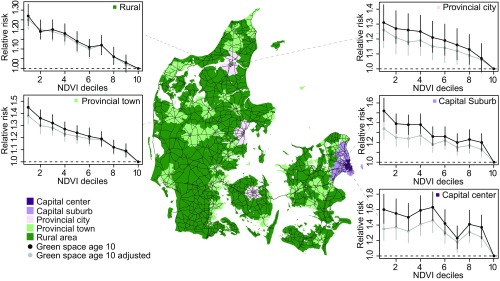
“Moreover, a similar effect in different administrative divisions, that is, rural areas, provincial towns, provincial cities, capital suburbs, and capital centers was reported in a recent study [31].”
ResultSaunders, A., Duncan, J., Hurley, J., Amati, M., Caccetta, P. A., Chia, J., & Boruff, B. J. (2020) · Landscape and Urban Planning · doi:10.1016/j.landurbplan.2020.103804 · Cited by 26
“Such losses in urban tree canopy cover often result in a reduction of ecosystem services, exacerbating stressors such as psychological illness (Engemann et al., 2019) and heat exposure (Deilami, Kamruzzaman, & Liu, 2018; Duncan et al.”
BackgroundExploring biophilic building designs to promote wellbeing and stimulate inspiration
Xing, Y., Stevenson, N., Thomas, C., Hardy, A., Knight, A., Heym, N., & Sumich, A. L. (2025) · PLoS ONE · doi:10.1371/journal.pone.0317372 · Cited by 26
“[10]Compared to living in and around green spaces, urban living is associated with poorer physical [11], and mental health and stress [12].”
Hardoy, J., Motta, J. M., Kozák, D., Almansi, F., Reverter, T., & Costello, M. (2022) · Frontiers in Sustainable Cities · doi:10.3389/frsc.2022.962168 · Cited by 26
Cobreros, C., Mendoza-Ruvalcaba, N. M., Flores-García, M., & Roggema, R. (2023) · Sustainability · doi:10.3390/su15075703 · Cited by 25
Sachs, N. A., Rakow, D. A., Shepley, M. M., & Peditto, K. (2020) · Frontiers in Psychology · doi:10.3389/fpsyg.2020.540872 · Cited by 25
“Researchers in Denmark found that higher levels of greenness in children’s residential neighborhoods are negatively correlated with the likelihood of developing mental health problems later in life (Engemann et al., 2019).”
BackgroundEvolution, the Immune System, and the Health Consequences of Socioeconomic Inequality
Rook, G. A. W. (2022) · mSystems · doi:10.1128/msystems.01438-21 · Cited by 25
“…of a wide variety of mental illnesses in later life was 55% higher in those most deprived of green space in childhood, compared to those who had lived close to green space during childhood (76), and similar results for depression and anxiety were reported in a large study in the Netherlands (77).”
BackgroundResultAlfano, R., Bijnens, E. M., Langie, S. A. S., Nawrot, T. S., Reimann, B., Vanbrabant, K., Wang, C., & Plusquin, M. (2022) · Environmental Research · doi:10.1016/j.envres.2022.114828 · Cited by 24
Green physical activity for leisure connects perceived residential greenspace and mental well-being
Li, H., Li, Y., Wang, Z., & Zhang, G. (2023) · Frontiers in Public Health · doi:10.3389/fpubh.2023.1254185 · Cited by 24
Aghabozorgi, K., van der Jagt, A., Bell, S., & Brown, C. (2023) · Health & Place · doi:10.1016/j.healthplace.2023.103141 · Cited by 25
Advancing Understanding on Greenspace and Mental Health in Young People
Ryan, S. C., Sugg, M. M., Runkle, J. D., & Thapa, B. (2024) · GeoHealth · doi:10.1029/2023gh000959 · Cited by 25
“…suggests that contact with greenspace may be beneficial for child neurological development (Luque‐García et al., 2022), and prolonged exposure to greenspace in childhood and adolescence is associated with a lower risk of developing psychiatric disorders in adulthood (Engemann et al., 2019).”
BackgroundShared landscapes increase condominium unit selling price in a high-density city
Belcher, R. N., Suen, E., Menz, S., & Schroepfer, T. (2019) · Landscape and Urban Planning · doi:10.1016/j.landurbplan.2019.103644 · Cited by 24
Green space structures and schizophrenia incidence in Taiwan: is there an association?
Chang, H.-T., Wu, C., Wang, J., Chen, P. S., Wang, Y., & Su, H.-J. J. (2020) · Environmental Research Letters · doi:10.1088/1748-9326/ab91e8 · Cited by 24
Stevenson, M. P., McEwan, J., Bentsen, P., Schilhab, T. S. S., Glue, P., Trani, P., Wheeler, B. J., & Healey, D. M. (2021) · Journal of Environmental Psychology · doi:10.1016/j.jenvp.2021.101679 · Cited by 24
Zhao, W., Wang, Y., Chen, D., Wang, L., & Tang, X. (2021) · International Journal of Environmental Research and Public Health · doi:10.3390/ijerph181910244 · Cited by 24
An Environmental Neuroscience Perspective on the Benefits of Nature
Berman, M. G., Cardenas‐Iniguez, C., & Meidenbauer, K. L. (2021) · Nebraska Symposium on Motivation/The Nebraska symposium on motivation · doi:10.1007/978-3-030-69020-5_4 · Cited by 23
Li, H., Browning, M. H. E. M., Cao, Y., & Zhang, G. (2022) · Behavioral Sciences · doi:10.3390/bs12030084 · Cited by 23
“issues in adulthood [13,14], implying a long-term impact of residential green space.”
BackgroundResultNature-based solutions and mental health
Kabisch, N., Basu, S., van den Bosch, M. A., Bratman, G. N., & Masztalerz, O. (2023) · Edward Elgar Publishing eBooks · doi:10.4337/9781800376762.00019 · Cited by 23
Bolanis, D., Vergunst, F., Mavoa, S., Schmelefske, E., Khoury, B., Turecki, G., Orri, M., & Geoffroy, M. (2023) · The Science of The Total Environment · doi:10.1016/j.scitotenv.2023.167451 · Cited by 23
Jiang, Y., Liu, D., Ren, L., Grekousis, G., & Lü, Y. (2024) · Urban forestry & urban greening · doi:10.1016/j.ufug.2024.128294 · Cited by 24
The Possibility of Sustainable Urban Horticulture Based on Nature Therapy
Lü, N., Song, C., Kuronuma, T., Ikei, H., Miyazaki, Y., & Takagaki, M. (2020) · Sustainability · doi:10.3390/su12125058 · Cited by 24
“It has been reported that urban areas characterized by a low percentage of green spaces have a high incidence of mental disorders [34], children raised in urban areas with very few green spaces are at an increased risk of developing mental disorders [35], and urban residence in developed countries increases the risk o…”
BackgroundExploring the impact of contact with nature in childhood on adult personality
Snell, T., Simmonds, J. G., & Klein, L. M. (2020) · Urban forestry & urban greening · doi:10.1016/j.ufug.2020.126864 · Cited by 23
Is Brief Exposure to Green Space in School the Best Option to Improve Attention in Children?
Anabitarte, A., García‐Baquero, G., Andiarena, A., Lertxundi, N., Urbieta, N., Babarro, I., Ibarluzea, J. M., & Lertxundi, A. (2021) · International Journal of Environmental Research and Public Health · doi:10.3390/ijerph18147484 · Cited by 23
“In addition, other studies have found that more urbanised areas or city centres benefit more from the health effects of Green Spaces compared to rural areas, which may be due to the increased pace of life and stress that can occur in large cities [51,52].”
BackgroundHobbs, M., Milfont, T. L., Marek, L., Yogeeswaran, K., & Sibley, C. G. (2022) · Social Science & Medicine · doi:10.1016/j.socscimed.2022.114801 · Cited by 23
Chang, H.-T., Wu, C., Wang, J., Chen, P. S., & Su, H.-J. J. (2020) · Environmental Pollution · doi:10.1016/j.envpol.2020.115864 · Cited by 22
Earth Observation Data Supporting Non-Communicable Disease Research: A Review
Sogno, P., Traidl‐Hoffmann, C., & Kuenzer, C. (2020) · Remote Sensing · doi:10.3390/rs12162541 · Cited by 22
“Exposure to green spaces is generally identified as an environmental parameter that increases mental health [26,45, 73,104,136,140,144,146,147,149,151,153,154,176].”
BackgroundFranzoi, D., Bockting, C. L., Bennett, K. F., Odom, A., Lucassen, P. J., Pathania, A., Lee, A., Brouwer, M. E., van de Schoot, R., Wiers, R. W., et al. (2024) · SSM - Population Health · doi:10.1016/j.ssmph.2023.101575 · Cited by 21
“In addition, by actively reducing noise and air pollution (as urban factor) and by facilitating social interactions and options for exercise (i.e. social and individual factors), psychological resilience may be further increased from adolescence into adulthood (Engemann et al., 2019).”
BackgroundEnjoying nature, exercise, social interaction, and affect: A daily diary study
Anderson, A. R. (2020) · Journal of Health Psychology · doi:10.1177/1359105320977642 · Cited by 21
“Research has shown that having nearby greenspace predicts reduced anxiety and depression longitudinally (Engemann et al., 2019).”
BackgroundThe Restorative Environment and Salutogenesis: Complementary Concepts Revisited
von Lindern, E., Lymeus, F., & Hartig, T. (2022) · Springer eBooks · doi:10.1007/978-3-030-79515-3_35 · Cited by 21
“This may show, for example, in prospectively reduced risk of psychiatric disorders (Engemann et al., 2019) and all-cause mortality (Rojas-Rueda et al.”
BackgroundZhang, Y., Wang, M., Li, J., Chang, J., & Lü, H. (2022) · International Journal of Environmental Research and Public Health · doi:10.3390/ijerph192416918 · Cited by 21
“In this study, the positive impact of overall GVI intervention on emotion is consistent with prior studies [4,6,16].”
ResultShareck, M., Aubé, E., & Sersli, S. (2023) · International Journal of Environmental Research and Public Health · doi:10.3390/ijerph20085474 · Cited by 21
““Mental health” g Gutman 2004 [33], Glendinning 2007 [36], Novak 2015 [55], Cole 2019 [70], Kleszczewska 2019 [74], Lorenzo-Blanco 2019 [76], Hirota 2021 [90], Carrillo-Alvarez 2022 [92], Hunduma 2022 [93] Astell-Burt 2014 [20], Glendinning 2007 [36], Larson 2022 [41], Dzhambov 2018 [64], Dzhambov 2018 [65], Roe 2017…”
BackgroundLearning income levels and inequality from spatial and sociodemographic data in Germany
Garbasevschi, O. M., Taubenböck, H., Schüle, P., Baarck, J., Hufe, P., Wurm, M., & Peichl, A. (2023) · Applied Geography · doi:10.1016/j.apgeog.2023.103058 · Cited by 22
Associations between the urban environment and psychotic experiences in adolescents
Bouter, D. C., Ravensbergen, S. J., Lakerveld, J., Hoogendijk, W. J. G., & Mil, N. H. G. (2023) · Schizophrenia Research · doi:10.1016/j.schres.2023.08.016 · Cited by 21
Devonald, M., Jones, N., & Youssef, S. (2022) · Sustainability · doi:10.3390/su14042001 · Cited by 21
Wang, Y., Crowe, M., Knibbs, L. D., Fuller‐Tyszkiewicz, M., Mygind, L., Kerr, J. A., Wake, M. A., Olsson, C. A., Enticott, P. G., Peters, R. L., et al. (2023) · Environmental Pollution · doi:10.1016/j.envpol.2023.121329 · Cited by 21
The Biophilic School: A Critical Synthesis of Evidence-Based Systematic Literature Reviews
Fisher, K. (2024) · Architecture · doi:10.3390/architecture4030025 · Cited by 21
“21], and this was physiological rather than psychological.”
BackgroundGlobal Trends in Green Space and Senior Mental Health Studies: Bibliometric Review
Wu, X., Shen, Y.-S., & Cui, S. (2023) · International Journal of Environmental Research and Public Health · doi:10.3390/ijerph20021316 · Cited by 21
A Nature-Based Intervention and Mental Health of Schoolchildren: A Cluster Randomized Clinical Trial
Loose, T., Fuoco, J., Malboeuf‐Hurtubise, C., Ayotte‐Beaudet, J., Gauvin, L. I., Chadi, N., Ouellet‐Morin, I., Mâsse, B. R., Côté, S. M., & Geoffroy, M. (2024) · JAMA Network Open · doi:10.1001/jamanetworkopen.2024.44824 · Cited by 20
Zhang, X., Zhou, S., Lin, R., & Su, L. (2020) · International Journal of Environmental Research and Public Health · doi:10.3390/ijerph17238955 · Cited by 21
“People exposed to more greenery in childhood have improved mental health in adulthood [58] and reduced risk of psychiatric disorders [25,59].”
BackgroundParker, E. A., Grant, S. B., Cao, Y., Rippy, M. A., McGuire, K. J., Holden, P. A., Feraud, M., Avasarala, S., Liu, H., Hung, W.-C., et al. (2021) · Water Resources Research · doi:10.1029/2020wr028579 · Cited by 20
Whiting, K., Carmona, L. G., & Carrasco, A. (2021) · Environmental Development · doi:10.1016/j.envdev.2021.100647 · Cited by 20
Impact of leisure environmental supply on new urban pathology: a case study of Guangzhou and Zhuhai
Liu, Y., Li, C., & Li, Y. (2021) · Humanities and Social Sciences Communications · doi:10.1057/s41599-021-00980-x · Cited by 20
“Green space, parks, and public open space are also believed to benefit mental health through alleviating stress and depression, stimulating physical activity, and facilitating social cohesion (Helbich et al., 2019; McCormick, 2017; Engemann et al., 2019).”
BackgroundHolzman, D., Meletaki, V., Bobrow, I., Weinberger, A., Jivraj, R. F., Green, A., & Chatterjee, A. K. (2025) · Journal of Environmental Psychology · doi:10.1016/j.jenvp.2025.102591 · Cited by 21
Mok, P. L. H., Antonsen, S., Agerbo, E., Brandt, J. G., Geels, C., Christensen, J. H., Frohn, L. M., Pedersen, C. B., & Webb, R. T. (2021) · Preventive Medicine · doi:10.1016/j.ypmed.2021.106502 · Cited by 21
Self-citationWells, N. M. (2021) · Nebraska Symposium on Motivation/The Nebraska symposium on motivation · doi:10.1007/978-3-030-69020-5_7 · Cited by 20
Irkhin, B. D. (2020) · Psychology in Russia State of Art · doi:10.11621/pir.2020.0305 · Cited by 19
How Nature Benefits Mental Health: Empirical Evidence, Prominent Theories, and Future Directions
Herchet, M., Varadarajan, S., Kolassa, I., & Hofmann, M. (2022) · Zeitschrift für Klinische Psychologie und Psychotherapie · doi:10.1026/1616-3443/a000674 · Cited by 19
Exposure to Residential Green Space and Bone Mineral Density in Young Children
Sleurs, H., Silva, A. I., Bijnens, E. M., Dockx, Y., Peusens, M., Rasking, L., Plusquin, M., & Nawrot, T. S. (2024) · JAMA Network Open · doi:10.1001/jamanetworkopen.2023.50214 · Cited by 20
Sahay, S. (2024) · Sustainable Cities and Society · doi:10.1016/j.scs.2024.106037 · Cited by 19
Alegria, M. M., Álvarez, K., NeMoyer, A., Zhen‐Duan, J., Marsico, C., O’Malley, I. S., Mukthineni, R., Porteny, T., Herrera, C., Najarro, J., et al. (2021) · American Journal of Community Psychology · doi:10.1002/ajcp.12548 · Cited by 18
Pool, U., Kenyon, A., Froggett, L., & Dooris, M. (2023) · International Journal of Environmental Research and Public Health · doi:10.3390/ijerph20146355 · Cited by 18
“For example, it has been shown that exposure to nature during childhood can have long-lasting benefits for physical and mental health [13,14].”
BackgroundExposure to green spaces and schizophrenia: a systematic review
Marcham, L., & Ellett, L. (2024) · Psychological Medicine · doi:10.1017/s0033291724001533 · Cited by 18
“…incidence, green space was quantified using five metrics: (1) normalized difference vegetation index (NDVI), a metric used to capture the presence and density of green vegetation over a patch of land (Chang, Wu, Pan, Lung, & Su, 2019; Chang et al., 2020; Engemann et al., 2018, 2019, 2020a, 2020b).”
BackgroundMethodInfluentialIncreased bird sound diversity in vineyards enhances visitors' tour experience
Zielonka, N. B., Tubman, V., Dicks, L. V., & Butler, S. J. (2024) · People and Nature · doi:10.1002/pan3.10721 · Cited by 19
Tarkiainen, L., Moustgaard, H., Korhonen, K., Noordzij, J. M., Beenackers, M. A., van Lenthe, F. J., Burström, B., & Martikainen, P. (2020) · Journal of Epidemiology & Community Health · doi:10.1136/jech-2020-214276 · Cited by 18
“14 31 It has been assumed that the elderly generally spend more time in their residential area, but the weak to non-existent associations of green areas with anti-depressant use we found is inconsistent with this view and warrants more detailed investigation on whether the quality of the green…”
Zou, Z., Ergan, S., Fisher-Gewirtzman, D., & Curtis, C. E. (2021) · Journal of Computing in Civil Engineering · doi:10.1061/(asce)cp.1943-5487.0000966 · Cited by 19
James, G., Kidd, K., Cooley, S. J., & Fenton, K. (2021) · Frontiers in Psychology · doi:10.3389/fpsyg.2021.769590 · Cited by 18
Bressane, A., Loureiro, A. I. S., & Medeiros, L. C. D. C. (2024) · Urban forestry & urban greening · doi:10.1016/j.ufug.2024.128443 · Cited by 18
Olsen, J., Caryl, F., McCrorie, P., & Mitchell, R. (2022) · Landscape and Urban Planning · doi:10.1016/j.landurbplan.2022.104425 · Cited by 18
Bird richness as a mediator between greenspace and mental health relationships
Chen, S., Wang, H., & Xu, W. (2025) · Landscape and Urban Planning · doi:10.1016/j.landurbplan.2025.105360 · Cited by 18
“Exposure to nature early in life has been inversely associated with various mental health conditions, such as schizophrenia, bipolar disorder, eating disorders, mood disorders, depression, and substance abuse (Engemann et al., 2019; Thygesen et al., 2020).”
Liu, J., Yang, Y., Kong, T., Liu, R., & Luo, L. (2025) · Journal of Environmental Psychology · doi:10.1016/j.jenvp.2025.102625 · Cited by 17
Paul, S., & Bardhan, S. (2022) · International Review for Spatial Planning and Sustainable Development · doi:10.14246/irspsd.10.3_280 · Cited by 17
Bakhtsiyarava, M., Ju, Y., Moran, M. R., Rodríguez, D. A., Dronova, I., Delclòs‐Alió, X., Moore, K., Castillo‐Riquelme, M., & Anza‐Ramirez, C. (2024) · Applied Geography · doi:10.1016/j.apgeog.2024.103219 · Cited by 17
Webb, E. K., Stevens, J. S., Ely, T. D., Lebois, L. A. M., van Rooij, S. J. H., Bruce, S. E., House, S. L., Beaudoin, F. L., An, X., Neylan, T. C., et al. (2024) · JAMA Psychiatry · doi:10.1001/jamapsychiatry.2024.2148 · Cited by 17
Dey, C., Wu, J., Uesi, J., Sara, G. E., Dudley, M. J., Knight, K., Scott, J. G., Jay, O., Bowden, M. R., & Perkes, I. E. (2024) · Australian & New Zealand Journal of Psychiatry · doi:10.1177/00048674241290449 · Cited by 17
“…in the local neighbourhood has been found to be protective against externalising behaviours linked to higher long-term ambient temperatures (Younan et al., 2018) and childhood residential green space is associated with lower risk of psychiatric disorders in adolescence (Engemann et al., 2019).”
Goldblatt, R., Holz, N. E., Tate, G. W., Sherman, K., Ghebremicael, S., Bhuyan, S. S., Al‐Ajlouni, Y. A., Santillanes, S., Araya, G., Abad, S., et al. (2024) · Nature Mental Health · doi:10.1038/s44220-024-00318-x · Cited by 17
“For instance, Engemann and colleagues 22 demonstrated that childhood residence in low-green areas elevated the risk of mental illness by up to 55% in Danes 22 , with both genetic predisposition and green-space exposure influencing schizophrenia risk 24 .”
The affective, cognitive, and social benefits of interacting with nature
Rim, N., Schertz, K. E., & Berman, M. G. (2025) · Journal of Consumer Psychology · doi:10.1002/jcpy.1456 · Cited by 18
Urban planning and public health: Analytical review
Revich, B. A. (2022) · Health Risk Analysis · doi:10.21668/health.risk/2022.1.17.eng · Cited by 17
Urban planning and public health: Analytical review
Revich, B. A. (2022) · Health Risk Analysis · doi:10.21668/health.risk/2022.1.17 · Cited by 19
Lahdenperä, M., Galante, L., Gonzales‐Inca, C., Vahtera, J., Pentti, J., Rautava, S., Käyhkö, N., Yonemitsu, C., Gupta, J., Bode, L., et al. (2023) · Scientific Reports · doi:10.1038/s41598-022-27317-1 · Cited by 17
“The 12 land cover types include: (1) Residential area, (2) Industrial/ commercial area, (3) Transport network, (4) Sport/leisure, (5) Agriculture, (6) Broad-leave forest, (7) Coniferous forest, (8) Mixed forest, (9) Shrub/grassland, (10) Bare surface, (11) Wetland, and (12) Water bodies.”
Interaction with the Plant World as a Source of Positive Human Functioning
Кимовна, Н.-Б. С., Mukhortova, E. A., & Irkhin, B. D. (2020) · Counseling Psychology and Psychotherapy · doi:10.17759/cpp.2020280209 · Cited by 17
Andal, A. G. (2021) · Children s Geographies · doi:10.1080/14733285.2021.1962515 · Cited by 17
“Most of these models include safety in streets and access to nature, which is almost always restricted to green spaces (See Louv 2005; Bowler et al. 2010; Markevych et al. 2016; Dadvand et al. 2017; Brown et al. 2019; Engemann et al. 2019).”
BackgroundUse of Population-Level Administrative Data in Developmental Science
Milne, B. J., D’Souza, S., Andersen, S. H., & Richmond‐Rakerd, L. S. (2022) · Annual Review of Developmental Psychology · doi:10.1146/annurev-devpsych-120920-023709 · Cited by 16
Increased urban greenspace in childhood associated with lower inattention deficit among adolescents
Bolanis, D., Orri, M., Vergunst, F., Bouchard, S., Robitaille, É., Philippe, F. L., Ouellet‐Morin, I., Girard, A., Paquin, V., Gauvin, L. I., et al. (2023) · Social Psychiatry and Psychiatric Epidemiology · doi:10.1007/s00127-023-02575-0 · Cited by 16
“…longitudinal population-based studies have found that increased greenspace exposure in childhood is associated with lower symptoms of depression [10, 11], anxiety [12], attention-deficit hyperactivity disorder (ADHD) [12–14], and conduct problems [12] in adolescence, other studies have not [15–17].”
More than a View: School Landscape Features Are Associated with Improved Student Adjustment
Sajady, M. A., Gower, A. L., McCullough, M. B., & Jordan, C. (2020) · Journal of Developmental & Behavioral Pediatrics · doi:10.1097/dbp.0000000000000809 · Cited by 16
Urbanization and psychosis: an update of recent evidence
Grover, S., Varadharajan, N., & Venu, S. (2024) · Current Opinion in Psychiatry · doi:10.1097/yco.0000000000000931 · Cited by 16
“…(lack of social cohesion), and migration © Recently, researchers have shown interest in exploring exploring the association of lack of green space as part of urbanicity and psychosis, as it is hypothesized that the presence of green space has a restorative capacity by alleviating stress [12,15].”
BackgroundHamby, S. L. (2025) · Review of General Psychology · doi:10.1177/10892680251363859 · Cited by 15
“Considerable research shows the bene fi ts of adding more contact to green and blue spaces to one ’ s resilience portfolios (Banyard, Kelmendi, et al., 2025; Engemann et al., 2019).”
Yu, C., Kwan, M., & Liu, Y. (2025) · Cities · doi:10.1016/j.cities.2025.106526 · Cited by 15
Meng, Y., Shi, J., Lyu, M., Sun, D., & Fukuda, H. (2024) · Land · doi:10.3390/land13101688 · Cited by 15
Metadata
- Authors
- Engemann, K., Pedersen, C. B., Arge, L., Tsirogiannis, C., Mortensen, P. B., & Svenning, J.-C.
- Affiliations
- Aarhus University (DK)
- Corresponding author
- Engemann, Kristine
- ORCID
- Venue
- Proceedings of the National Academy of Sciences
- Publisher
- National Academy of Sciences
- Published
- 2019-02-25
- Volume
- 116
- Issue
- 11
- Pages
- 5188-5193
- ISSN
- 0027-8424 (ISSN-L)
- 1091-6490
- PMC
- PMC6421415
- OpenAlex
- W2917225355
- Cited by
- 668
- References
- 50
- Citations by year
- 2026: 63 · 2025: 74 · 2024: 89 · 2023: 96 · 2022: 99 · 2021: 114 · 2020: 92 · 2019: 37
- FWCI
- 36.93
- Type
- journal article
- Language
- en
- Open access
- hybrid
- doi.org
- Licence
- Locations
- Proceedings of the National Academy of Sciences (publishedVersion, cc-by-nc-nd)
- Europe PMC (PubMed Central) (publishedVersion, cc-by-nc-nd)
- PubMed Central (publishedVersion, cc-by-nc-nd)
- PubMed (publishedVersion)
- Funders
- Villum Fonden (16549)
- Topics
- Social Sciences › Urban Studies › Urban Green Space and Health
- Social Sciences › Health › Health disparities and outcomes
- Social Sciences › Sociology and Political Science › Environmental Justice and Health Disparities
- Keywords
- residential green space, children's exposure, mental illness, mental health, urbanization, NDVI, satellite remote sensing, cumulative exposure, urban planning, natural environment
- MeSH terms
- Adolescent, Adult, Mental Disorders, Child, Denmark, Environment, Humans, Risk Factors, Urbanization
About these checks
Registry, retraction, Cites and statistics results are computed, not judged, with one exception: a printed reference that no index lists is read once by a model before it counts as a citation error. Claims are extracted by a model and kept only when their quote appears verbatim in the text; each cited source is then checked, with a model’s help, for whether it says what the claim relies on. Those verdicts can be wrong — read the claim’s quote and the cited source before relying on one.
Statistics and arithmetic are recomputed, not judged.
Confidence bands are shown only for fields calibrated on our annotated test set. None is calibrated yet, so no band is shown.
What counts as a claim ›How we measure confidence ›How we check this ›
Are you an author, or do you see a problem with this page? Request a review
Data sources
Bibliographic data: Semantic Scholar, OpenAlex, Crossref.
Contains information from the Semantic Scholar Academic Graph Datasets, made available under the ODC Attribution License (ODC-BY 1.0).
Semantic Scholar’s data is described in: Kinney, R., et al. (2023). The Semantic Scholar Open Data Platform. arXiv:2301.10140.
