

Residential green space in childhood is associated with lower risk of psychiatric disorders from adolescence into adulthood
Open accessThe DOI matches its Crossref record; 50 of the 50 references it cites were found in a registry or an index.
Abstract
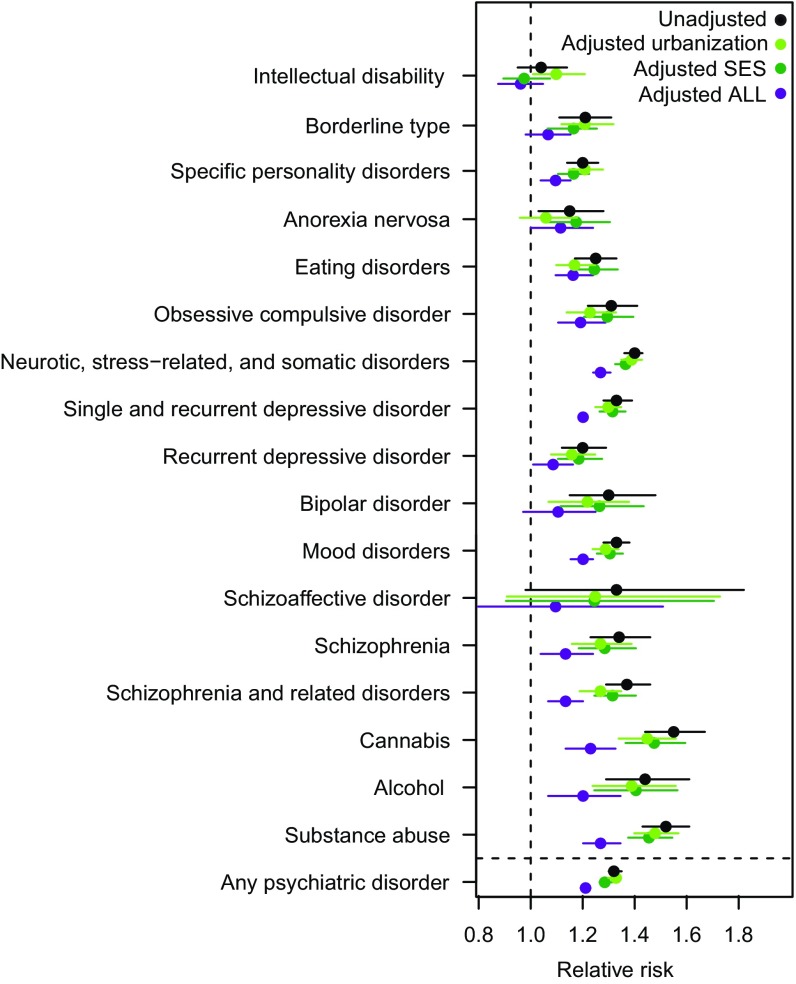
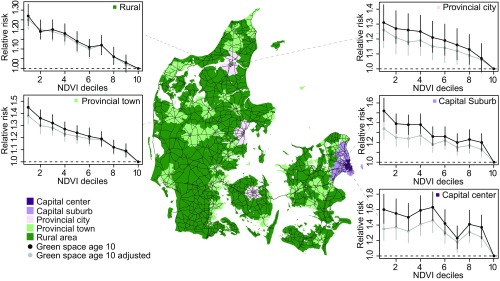
Urban residence is associated with a higher risk of some psychiatric disorders, but the underlying drivers remain unknown. There is increasing evidence that the level of exposure to natural environments impacts mental health, but few large-scale epidemiological studies have assessed the general existence and importance of such associations. Here, we investigate the prospective association between green space and mental health in the Danish population. Green space presence was assessed at the individual level using high-resolution satellite data to calculate the normalized difference vegetation index within a 210 × 210 m square around each person’s place of residence (∼1 million people) from birth to the age of 10. We show that high levels of green space presence during childhood are associated with lower risk of a wide spectrum of psychiatric disorders later in life. Risk for subsequent mental illness for those who lived with the lowest level of green space during childhood was up to 55% higher across various disorders compared with those who lived with the highest level of green space. The association remained even after adjusting for urbanization, socioeconomic factors, parental history of mental illness, and parental age. Stronger association of cumulative green space presence during childhood compared with single-year green space presence suggests that presence throughout childhood is important. Our results show that green space during childhood is associated with better mental health, supporting efforts to better integrate natural environments into urban planning and childhood life.
Overview
The claims and statistics of this paper haven’t been checked yet.
Free: it reads the open-access text and checks the first 5 claims that cite a source we can check. Create a free account to check every claim.
Integrity signals
Registry
Cites
Statistics
Figures
Verification
Claims the paper makes
The claims and statistics of this paper haven’t been checked yet.
Free: it reads the open-access text and checks the first 5 claims that cite a source we can check. Create a free account to check every claim.
Claims other papers make about this one
Each is checked against this paper’s own text: does it say what the citing paper says it does?
The source backs part of the claim, not all of it — or backs it for a different population, condition or comparison.
In the citing paper
“More greenery in urban areas creates higher social cohesion and increases people’s physical activity level, therefore improving children’s cognitive development (137).”
From The Impact of Climate Change on Mental Health: A Systematic Descriptive Review (2020) · cites this paper as [137]
Experimental — accuracy not yet measured
Self-check
Percentages, sums and reported differences re-computed from the paper’s own numbers.
The self-check needs the paper’s full text.
Citations
Cites
Cox’s regression model for counting processes: A large sample study
Andersen, P. K., & Gill, R. D. (1982) · The Annals of Statistics · doi:10.1214/aos/1176345976 · Cited by 4,419 · cited 1×
“IRR of psychiatric disorders were estimated in time-to-event analyses using Cox regressions, using age as the underlying timescale with separate baselines for each gender (51).”
MethodWolch, J. R., Byrne, J., & Newell, J. P. (2014) · Landscape and Urban Planning · doi:10.1016/j.landurbplan.2014.01.017 · Cited by 4,309 · cited 1×
“Lower access to green space could be an added risk factor for mental health among vulnerable groups of society (40, 41).”
BackgroundHartig, T., Mitchell, R., de Vries, S., & Frumkin, H. (2014) · Annual Review of Public Health · doi:10.1146/annurev-publhealth-032013-182443 · Cited by 3,638 · cited 3×
“Green space can enhance psychological restoration, can affect brain structure through positive associations with amygdala integrity, and could mitigate negative effects from the socially dense and noisy city environment that heighten stress (17, 19, 23, 24).”
BackgroundResultExploring pathways linking greenspace to health: theoretical and methodological guidance
Markevych, I., Schoierer, J., Hartig, T., Chudnovsky, A., Hystad, P., Dzhambov, A. M., de Vries, S., Triguero-Mas, M., Brauer, M., Nieuwenhuijsen, M. J., et al. (2017) · Environmental Research · doi:10.1016/j.envres.2017.06.028 · Cited by 2,543 · cited 1×
“Effects of different qualitative aspects and use of green space is important to identify a possible mechanistic link (37).”
BackgroundSchizophrenia risk from complex variation of complement component 4
Sekar, A., Bialas, A. R., de Rivera, H., Davis, A., Hammond, T. R., Kamitaki, N., Tooley, K., Presumey, J., Baum, M., Van Doren, V., et al. (2016) · Nature · doi:10.1038/nature16549 · Cited by 2,394
Extinction of experience: the loss of human–nature interactions
Soga, M., & Gaston, K. J. (2016) · Frontiers in Ecology and the Environment · doi:10.1002/fee.1225 · Cited by 1,802 · cited 1×
“Loss of human− nature interactions presents a health risk, and it can also reduce peoples’ appreciation of natural environments, creating negative feedback loops (42).”
BackgroundTwohig-Bennett, C., & Jones, A. (2018) · Environmental Research · doi:10.1016/j.envres.2018.06.030 · Cited by 1,766
The Danish Psychiatric Central Research Register
Mors, O., Perto, G. P., & Mortensen, P. B. (2011) · Scandinavian Journal of Public Health · doi:10.1177/1403494810395825 · Cited by 1,589 · cited 1×
“We linked all individuals from the study population and their parents and siblings with the Danish Psychiatric Central Research Register (44) to obtain information about psychiatric disorders.”
MethodSelf-citationCity living and urban upbringing affect neural social stress processing in humans
Lederbogen, F., Kirsch, P., Haddad, L., Streit, F., Tost, H., Schuch, P., Wüst, S., Pruessner, J. C., Rietschel, M., Deuschle, M., et al. (2011) · Nature · doi:10.1038/nature10190 · Cited by 1,584 · cited 3×
“Individuals with urban upbringing have high neural activity linked to stress processing, which could lead to higher risk of psychiatric disorders in adults (4).”
BackgroundMorbidity is related to a green living environment
Maas, J., Verheij, R. A., de Vries, S., Spreeuwenberg, P., Schellevis, F. G., & Groenewegen, P. P. (2009) · Journal of Epidemiology and Community Health · doi:10.1136/jech.2008.079038 · Cited by 1,133 · cited 1×
“Exposure to green space has been suggested to lower depression (13, 14) and schizophrenia risk (15), improve children’s cognitive development (16), and reduce neural activity linked to psychiatric disorders (11, 17).”
Background
Research works printed but not linked: 2
- World Health Organization 1992 The ICD-10 Classification of Mental and Behavioural Disorders: Clinical Descriptions and Diagnostics Guidelines World Health Org Geneva
- Danmarks Statistik 1991 IDA–En Integreret Database for Arbejdsmarkedsforskning: Hovedrapport Denmark Stat Copenhagen
Cited by
The Impact of Climate Change on Mental Health: A Systematic Descriptive Review
Cianconi, P., Betrò, S., & Janiri, L. (2020) · Frontiers in Psychiatry · doi:10.3389/fpsyt.2020.00074 · Cited by 1,320
“More greenery in urban areas creates higher social cohesion and increases people’s physical activity level, therefore improving children’s cognitive development (137).”
BackgroundMouratidis, K. (2021) · Cities · doi:10.1016/j.cities.2021.103229 · Cited by 873
Disproportionate exposure to urban heat island intensity across major US cities
Hsu, A., Sheriff, G., Chakraborty, T., & Manya, D. (2021) · Nature Communications · doi:10.1038/s41467-021-22799-5 · Cited by 846
Associations between nature exposure and health: a review of the evidence
Jimenez, M. P., DeVille, N. V., Elliott, E. G., Schiff, J. E., Wilt, G. E., Hart, J. E., & James, P. (2021) · International Journal of Environmental Research and Public Health · doi:10.3390/ijerph18094790 · Cited by 726
“Another study of approximately one million Danes over 28 years of follow-up found that high levels of continuous green space presence during childhood were associated with lower risk of a wide spectrum of psychiatric disorders later in life [51].”
BackgroundPerino, A., Pereira, H. M., Navarro, L. M., Fernández, N., Bullock, J. M., Ceaușu, S., Cortés-Avizanda, A., van Klink, R., Kuemmerle, T., Lomba, A., et al. (2019) · Science · doi:10.1126/science.aav5570 · Cited by 667
Self-citationDramatic uneven urbanization of large cities throughout the world in recent decades
Sun, L., Chen, J., Li, Q., & Huang, D. (2020) · Nature Communications · doi:10.1038/s41467-020-19158-1 · Cited by 648
How’s Life in Latin America?: Measuring Well-being for Policy Making
OECD (2021) · OECD eBooks · doi:10.1787/2965f4fe-en · Cited by 486
Mygind, L., Kjeldsted, E., Hartmeyer, R., Mygind, E., Bølling, M., & Bentsen, P. (2019) · Health & Place · doi:10.1016/j.healthplace.2019.05.014 · Cited by 268
Sikorska, D., Łaszkiewicz, E., Krauze, K., & Sikorski, P. (2020) · Environmental Science & Policy · doi:10.1016/j.envsci.2020.03.007 · Cited by 261
Understanding the use of urban green spaces from user-generated geographic information
Heikinheimo, V., Tenkanen, H., Bergroth, C., Järv, O., Hiippala, T., & Toivonen, T. (2020) · Landscape and Urban Planning · doi:10.1016/j.landurbplan.2020.103845 · Cited by 251
“…spaces are related to social and environmental justice (Ngom, Gosselin, & Blais, 2016; Wolch, Byrne, & Newell, 2014) and physical and mental health (Engemann et al., 2019; Tomita et al., 2017; Ward Thompson et al., 2012), even if the linkages are sometimes complex (Anguelovski, Cole, Connolly, &…”
BackgroundEntropy of city street networks linked to future spatial navigation ability
Coutrot, A., Manley, E., Goodroe, S., Gahnstrom, C., Filomena, G., Yesiltepe, D., Dalton, R. C., Wiener, J. M., Hölscher, C., Hornberger, M., et al. (2022) · Nature · doi:10.1038/s41586-022-04486-7 · Cited by 243
“If a city’s culture and history influence its topology [42], the latter in return structures the behaviour, cognition and mental health of its inhabitants [8–10].”
BackgroundThe association between green space and adolescents' mental well-being: a systematic review
Zhang, Y., Mavoa, S., Zhao, J., Raphael, D., & Smith, M. (2020) · International Journal of Environmental Research and Public Health · doi:10.3390/ijerph17186640 · Cited by 240
“There is also evidence of lasting mental health benefits of green space exposure in childhood [19,20].”
BackgroundChoi, K. W., Stein, M. B., Nishimi, K. M., Ge, T., Coleman, J. R. I., Chen, C.-Y., Ratanatharathorn, A., Zheutlin, A. B., Dunn, E. C., 23andMe Research Team, et al. (2020) · American Journal of Psychiatry · doi:10.1176/appi.ajp.2020.19111158 · Cited by 236
“It may be that such environmental exposures exert stronger influences earlier in development (40) or their effects depend on heterogeneous features (e.”
BackgroundThe importance of species diversity for human well-being in Europe
Methorst, J., Rehdanz, K., Mueller, T., Hansjürgens, B., Bonn, A., & Böhning-Gaese, K. (2021) · Ecological Economics · doi:10.1016/j.ecolecon.2020.106917 · Cited by 226
“…cognitive function and development (Bratman et al., 2012; Reuben et al., 2019), fewer symptoms of depression (Cohen-Cline et al., 2015; Miles et al., 2012), lower self-reported stress (van den Berg et al., 2010) and lower risk of psychiatric disorders (de Vries et al., 2016; Engemann et al., 2019).”
Restoration in Nature: Beyond the Conventional Narrative
Hartig, T. (2021) · Nebraska Symposium on Motivation/The Nebraska symposium on motivation · doi:10.1007/978-3-030-69020-5_5 · Cited by 227
Birch, J., Rishbeth, C., & Payne, S. R. (2020) · Health & Place · doi:10.1016/j.healthplace.2020.102296 · Cited by 215
D’Alessandro, D., Gola, M., Appolloni, L., Dettori, M., Fara, G. M., Rebecchi, A., Settimo, G., & Capolongo, S. (2020) · Acta bio-medica dell'Ateneo parmense/Acta biomedica · doi:10.23750/abm.v91i9-s.10115 · Cited by 198
Zhang, J., Yu, Z., Zhao, B., Sun, R., & Vejre, H. (2020) · Environmental Research Letters · doi:10.1088/1748-9326/ab7f64 · Cited by 196
“Other researchers have found that green spaces are crucial for young children’s mental health (Engemann et al 2019), attention (Faber Taylor and Kuo 2009), and motor development (Fjørtoft and Sageie 2000).”
BackgroundHa, J., Kim, H. J., & With, K. A. (2022) · Landscape and Urban Planning · doi:10.1016/j.landurbplan.2021.104309 · Cited by 194
Urban Horticulture for Food Secure Cities through and beyond COVID-19
Khan, M. M., Akram, M. T., Janke, R. R., Qadri, R. W. K., Al-Sadi, A. M., & Farooque, A. A. (2020) · Sustainability · doi:10.3390/su12229592 · Cited by 193
Mental health rescue effects of women's outdoor tourism: A role in COVID-19 recovery
Buckley, R., & Westaway, D. (2020) · Annals of Tourism Research · doi:10.1016/j.annals.2020.103041 · Cited by 185
“Women have historically been under-represented in outdoor tourism research and practice, though there is now a growing recognition of gender differences (Evenson et al., 2002; Pohl, Borrie, & Patterson, 2000), across the entire life course (Carmichael, Duberley, & Szmigin, 2015; Cosgriff, Little, & Wilson, 2009; Whart…”
BackgroundThe impact of the COVID-19 pandemic on the importance of urban green spaces to the public
Noszczyk, T., Gorzelany, J., Kukulska-Kozieł, A., & Hernik, J. (2022) · Land Use Policy · doi:10.1016/j.landusepol.2021.105925 · Cited by 184
Extinction of experience: The need to be more specific
Gaston, K. J., & Soga, M. (2020) · People and Nature · doi:10.1002/pan3.10118 · Cited by 180
Global Patterns in Urban Green Space are Strongly Linked to Human Development and Population Density
Bille, R. A., Jensen, K. E., & Buitenwerf, R. (2022) · Urban forestry & urban greening · doi:10.1016/j.ufug.2023.127980 · Cited by 179
Kabisch, N., Püffel, C., Masztalerz, O., Hemmerling, J., & Kraemer, R. (2020) · Landscape and Urban Planning · doi:10.1016/j.landurbplan.2020.103998 · Cited by 177
Urban-associated diseases: Candidate diseases, environmental risk factors, and a path forward
Flies, E. J., Mavoa, S., Zosky, G. R., Mantzioris, E., Williams, C., Eri, R., Brook, B. W., & Buettel, J. C. (2019) · Environment International · doi:10.1016/j.envint.2019.105187 · Cited by 151
Green Gentrification and Health: A Scoping Review
Jelks, N. O., Jennings, V., & Rigolon, A. (2021) · International Journal of Environmental Research and Public Health · doi:10.3390/ijerph18030907 · Cited by 142
“these and other physical health outcomes between longtime, low-income residents and more affluent newcomers would inform whether and how green gentrification moderates relationships between active green space use and physical health [31,51].”
BackgroundWhy garden? – Attitudes and the perceived health benefits of home gardening
Chalmin-Pui, L. S., Griffiths, A., Roe, J., Heaton, T., & Cameron, R. (2021) · Cities · doi:10.1016/j.cities.2021.103118 · Cited by 171
Climate Change and the Practice of Medicine: Essentials for Resident Education
Philipsborn, R. P., Sheffield, P. E., White, A. J., Osta, A. D., Anderson, M. S., & Bernstein, A. S. (2020) · Academic Medicine · doi:10.1097/acm.0000000000003719 · Cited by 166
Reese, G., Stahlberg, J., & Menzel, C. (2022) · Virtual Reality · doi:10.1007/s10055-022-00631-9 · Cited by 161
“Moreover, natural environments have physiological and psychological benefits both for individuals (e.g. Berman et al. 2008; Bratman et al. 2019; Engemann et al. 2019; Hartig et al. 2014; Kuo 2015) and societies as a whole (e.”
BackgroundWhite, M. P., Hartig, T., Martin, L., Pahl, S., van den Berg, A. E., Wells, N. M., Costongs, C., Dzhambov, A. M., Elliott, L. R., Godfrey, A., et al. (2023) · Environment International · doi:10.1016/j.envint.2023.108234 · Cited by 158
“…lives where nature is particularly important for building resilience (Li et al., 2021), including in utero (Akaraci et al., 2020), during childhood (Engemann et al., 2019; Ward Thompson et al., 2008; Vitale et al., 2022; Wells and Lekies, 2006), and transitions into adulthood or retirement…”
BackgroundFan, C. C., Marshall, A., Smolker, H., Gonzalez, M. R., Tapert, S. F., Barch, D. M., Sowell, E., Dowling, G. J., Cardenas-Iniguez, C., Ross, J., et al. (2021) · Developmental Cognitive Neuroscience · doi:10.1016/j.dcn.2021.101030 · Cited by 139
Benefit of woodland and other natural environments for adolescents’ cognition and mental health
Maes, M. J. A., Pirani, M., Booth, E. R., Shen, C., Milligan, B., Jones, K. E., & Toledano, M. B. (2021) · Nature Sustainability · doi:10.1038/s41893-021-00751-1 · Cited by 152
Ten questions concerning the built environment and mental health
Hoisington, A. J., Stearns‐Yoder, K. A., Schuldt, S., Beemer, C. J., Maestre, J. P., Kinney, K. A., Postolache, T. T., Lowry, C. A., & Brenner, L. A. (2019) · Building and Environment · doi:10.1016/j.buildenv.2019.03.036 · Cited by 148
Green, S. E., Rees, J. P., Stephens, P. A., Hill, R. A., & Giordano, A. J. (2020) · Animals · doi:10.3390/ani10010132 · Cited by 144
COVID-19: Protecting people and societies
(2020) · OECD Policy Responses to Coronavirus (COVID-19) · doi:10.1787/e5c9de1a-en · Cited by 85
Liddicoat, C., Sydnor, H., Cando-Dumancela, C., Dresken, R., Liu, J., Gellie, N. J. C., Mills, J. G., Young, J. M., Weyrich, L. S., Hutchinson, M. R., et al. (2020) · Science of The Total Environment · doi:10.1016/j.scitotenv.2019.134684 · Cited by 140
Rewilding should be central to global restoration efforts
Svenning, J. (2020) · One Earth · doi:10.1016/j.oneear.2020.11.014 · Cited by 136
Self-citationTowards building resilient cities to pandemics: A review of COVID-19 literature
Amirzadeh, M., Sobhaninia, S., Buckman, S. T., & Sharifi, A. (2022) · Sustainable Cities and Society · doi:10.1016/j.scs.2022.104326 · Cited by 136
Parmes, E., Pesce, G., Sabel, C. E., Baldacci, S., Bono, R., Brescianini, S., D'Ippolito, C., Hanke, W., Horvat, M., Liedes, H., et al. (2020) · Environmental Research · doi:10.1016/j.envres.2019.108953 · Cited by 128
Mygind, L., Kurtzhals, M., Nowell, C., Melby, P. S., Stevenson, M. P., Nieuwenhuijsen, M. J., Lum, J. A. G., Flensborg‐Madsen, T., Bentsen, P., & Enticott, P. G. (2020) · Environment International · doi:10.1016/j.envint.2020.106238 · Cited by 130
Special issue: child-friendly cities
Brown, C., Lannoy, A. D., McCracken, D., Gill, T., Grant, M., Wright, H., & Williams, S. (2019) · Cities & Health · doi:10.1080/23748834.2019.1682836 · Cited by 130
“On the other hand, children who have less contact with the natural environment are more likely to suffer from problems with behaviour, interactions with their peers and general health and wellbeing in their childhood and adult lives (Engemann et al. 2019).”
Buttazzoni, A. N., Doherty, S. T., & Minaker, L. M. (2021) · Public Health Reports · doi:10.1177/0033354920982088 · Cited by 131
Rice, W. L., & Pan, B. (2021) · Wellbeing Space and Society · doi:10.1016/j.wss.2021.100037 · Cited by 127
Sobko, T., Liang, S., Cheng, W. H. G., & Tun, H. M. (2020) · Scientific Reports · doi:10.1038/s41598-020-78642-2 · Cited by 125
Schizophrenia: The new etiological synthesis
Rantala, M. J., Luoto, S., Borráz-León, J. I., & Krams, I. A. (2022) · Neuroscience & Biobehavioral Reviews · doi:10.1016/j.neubiorev.2022.104894 · Cited by 126
Socio-economic and climatic changes lead to contrasting global urban vegetation trends
Zhang, W., Randall, M., Jensen, M. B., Brandt, M., Wang, Q., & Fensholt, R. (2021) · Global Environmental Change · doi:10.1016/j.gloenvcha.2021.102385 · Cited by 122
The Interplay of Environmental Exposures and Mental Health: Setting an Agenda
Reuben, A., Manczak, E. M., Cabrera, L. Y., Alegria, M. M., Bucher, M. L., Freeman, E. C., Miller, G. W., Solomon, G. M., & Perry, M. J. (2022) · Environmental Health Perspectives · doi:10.1289/ehp9889 · Cited by 124
Wildness and habitat quality drive spatial patterns of urban biodiversity
Aznarez, C., Svenning, J., Taveira, G., Baró, F., & Pascual, U. (2022) · Landscape and Urban Planning · doi:10.1016/j.landurbplan.2022.104570 · Cited by 117
Self-citationVisitors to urban greenspace have higher sentiment and lower negativity on Twitter
Schwartz, A. J., Dodds, P. S., O'Neil‐Dunne, J. P. M., Danforth, C. M., & Ricketts, T. H. (2019) · People and Nature · doi:10.1002/pan3.10045 · Cited by 92
Tate, C., Wang, R., Akaraci, S., Burns, C., García, L., Clarke, M. J., & Hunter, R. F. (2023) · Cities · doi:10.1016/j.cities.2023.104706 · Cited by 109
Nemitz, E., Vieno, M., Carnell, E., Fitch, A., Steadman, C. E., Cryle, P., Holland, M., Morton, R., Hall, J., Mills, G., et al. (2020) · Philosophical Transactions of the Royal Society A Mathematical Physical and Engineering Sciences · doi:10.1098/rsta.2019.0320 · Cited by 107
Praise for diversity: A functional approach to reduce risks in urban forests
Paquette, A., Sousa‐Silva, R., Fanny Maure, A., Cameron, E., Belluau, M., & Messier, C. (2021) · Urban forestry & urban greening · doi:10.1016/j.ufug.2021.127157 · Cited by 105
Chen, T.-H. K., Qiu, C., Schmitt, M., Zhu, X. X., Sabel, C. E., & Prishchepov, A. V. (2020) · Remote Sensing of Environment · doi:10.1016/j.rse.2020.112096 · Cited by 104
The old friends hypothesis: evolution, immunoregulation and essential microbial inputs
Rook, G. A. W. (2023) · Frontiers in Allergy · doi:10.3389/falgy.2023.1220481 · Cited by 104
“The evidence supporting the protective effect of exposure to the microbiota of the natural environment is less complete for other chronic inflammatory disorders, but there is suggestive evidence for IBD (156), autoimmune diseases (38) and psychiatric disorders (110) and metabolic and cardiovascular diseases (111).”
BackgroundYu, Z., Yang, G., Lin, T., Zhao, B., Xu, Y., Yao, X., Ma, W., Vejre, H., & Jiang, B. (2024) · Ecosystem Health and Sustainability · doi:10.34133/ehs.0165 · Cited by 104
Life Course Nature Exposure and Mental Health Outcomes: A Systematic Review and Future Directions
Li, D., Menotti, T., Ding, Y., & Wells, N. M. (2021) · International Journal of Environmental Research and Public Health · doi:10.3390/ijerph18105146 · Cited by 100
“Although only reported in one study, childhood nature exposure was found to be inversely related to a wide range of mental disorders, including bipolar disorder, eating disorders, mood disorders, depressive disorder, and substance abuse [44].”
BackgroundNature-Based Solutions for Cities
Science, P. S., McPhearson, T., Kabisch, N., & Frantzeskaki, N. (2023) · Edward Elgar Publishing eBooks · doi:10.4337/9781800376762 · Cited by 101
Saverino, K. C., Routman, E., Lookingbill, T. R., Eanes, A. M., Hoffman, J. S., & Bao, R. (2021) · Sustainability · doi:10.3390/su13031511 · Cited by 98
“Green urban planning has the potential to reduce mental illness within vulnerable populations [44], who tend to be those living in the hottest areas of the city.”
BackgroundCities and neuroscience research: A systematic literature review
Ancora, L. A., Blanco-Mora, D. A., Alves, I., Bonifácio, A., Morgado, P., & Miranda, B. (2022) · Frontiers in Psychiatry · doi:10.3389/fpsyt.2022.983352 · Cited by 99
Dockx, Y., Bijnens, E. M., Luyten, L. J., Peusens, M., Provost, E. B., Rasking, L., Sleurs, H., Hogervorst, J. G. F., Plusquin, M., Casas, L., et al. (2022) · Environment International · doi:10.1016/j.envint.2022.107094 · Cited by 93
Labib, S. M., Lindley, S., & Huck, J. J. (2020) · Computers, Environment and Urban Systems · doi:10.1016/j.compenvurbsys.2020.101501 · Cited by 80
Thygesen, M., Engemann, K., Holst, G. J., Hansen, B. G., Geels, C., Brandt, J. G., Pedersen, C. B., & Dalsgaard, S. (2020) · Environmental Health Perspectives · doi:10.1289/ehp6729 · Cited by 90
“Access to green space has also been associated with reduced stress and improved mental health among adults (Engemann et al. 2019; Gascon et al. 2015), and therefore including the prenatal period could in fl uence the association between green space exposure in the postnatal period and development of…”
Self-citationLabib, S. M., Lindley, S. J., & Huck, J. (2021) · The Science of The Total Environment · doi:10.1016/j.scitotenv.2021.147919 · Cited by 90
“These three categories represent the most commonly used spatial measures of greenspace exposure (Ekkel and de Vries, 2017; Labib, Lindley and Huck, 2020b).”
BackgroundSmartphone-based ecological momentary assessment reveals mental health benefits of birdlife
Hammoud, R., Tognin, S., Burgess, L. C., Bergou, N., Smythe, M., Gibbons, J., Davidson, N., Afifi, A., Bakolis, I., & Mechelli, A. (2022) · Scientific Reports · doi:10.1038/s41598-022-20207-6 · Cited by 90
König, H. J., Ceaușu, S., Reed, M. S., Kendall, H., Hemminger, K., Reinke, H., Ostermann‐Miyashita, E., Wenz, E., Eufemia, L., Hermanns, T., et al. (2021) · Conservation Science and Practice · doi:10.1111/csp2.399 · Cited by 88
“The increase in wildlife services can have economic benefits (Naidoo, Fisher, Manica, & Balmford, 2016) as well as health (Engemann et al., 2019) and cultural benefits (Booth, Gaston, Evans, & Armsworth, 2011).”
BackgroundGlobal variation in contributions to human well-being from urban vegetation ecosystem services
Richards, D. R., Belcher, R. N., Carrasco, L. R., Edwards, P. J., Fatichi, S., Hamel, P., Masoudi, M., McDonnell, M. J., Peleg, N., & Stanley, M. C. (2022) · One Earth · doi:10.1016/j.oneear.2022.04.006 · Cited by 87
Low Childhood Nature Exposure is Associated with Worse Mental Health in Adulthood
Preuß, M., Nieuwenhuijsen, M. J., Márquez, S., Cirach, M., Dadvand, P., Mas, M. T., Gidlow, C. J., Gražulevičienė, R., Kruize, H., & Zijlema, W. L. (2019) · International Journal of Environmental Research and Public Health · doi:10.3390/ijerph16101809 · Cited by 87
“also observed the strongest associations for lack of greenness and neurotic, stress-related, depressive and somatic disorders, leading them to believe that the restorative ability of greenness might explain their findings [42].”
InfluentialGender and sex differences in urban greenness’ mental health benefits: A systematic review
Núñez, M.-B. F., Suzman, L. C., Maneja, R., Bach, A., Marquet, O., Anguelovski, I., & Knobel, P. (2022) · Health & Place · doi:10.1016/j.healthplace.2022.102864 · Cited by 86
Association of neighborhood parks with child health in the United States
Reuben, A., Rutherford, G. W., James, J. H., & Razani, N. (2020) · Preventive Medicine · doi:10.1016/j.ypmed.2020.106265 · Cited by 85
“(2019) found that children with low-levels of greenspace exposure demonstrated 55% higher risk of psychopathology than peers later in life (54).”
BackgroundMethodSlawsky, E. D., Hajat, A., Rhew, I. C., Russette, H., Semmens, E. O., Kaufman, J. D., Leary, C. S., & Fitzpatrick, A. L. (2022) · Environmental Health · doi:10.1186/s12940-022-00830-6 · Cited by 85
Identifying biological markers for improved precision medicine in psychiatry
Quinlan, E. B., Banaschewski, T., Barker, G. J., Bokde, A. L. W., Bromberg, U., Büchel, C., Desrivières, S., Flor, H., Frouin, V., Garavan, H., et al. (2019) · Molecular Psychiatry · doi:10.1038/s41380-019-0555-5 · Cited by 84
“In addition to risk factors, such as urbanicity, for the development of mental disorders, satellite data is also showing promise in identifying factors that might convey resilience, such as green space [52, 53] against them.”
BackgroundKivimäki, M., Batty, G. D., Pentti, J., Nyberg, S. T., Lindbohm, J. V., Ervasti, J. M., Gonzales‐Inca, C., Suominen, S., Stenholm, S., Sipilä, P. N., et al. (2021) · The Lancet Public Health · doi:10.1016/s2468-2667(21)00066-9 · Cited by 83
Biodiversity maintains soil multifunctionality and soil organic carbon in novel urban ecosystems
Schittko, C., Onandía, G., Bernard‐Verdier, M., Heger, T., Jeschke, J. M., Kowarik, I., Maaß, S., & Joshi, J. (2022) · Journal of Ecology · doi:10.1111/1365-2745.13852 · Cited by 83
“Furthermore, positive relationships between biodiversity and ecosystem functions have been demonstrated (Engemann et al., 2019; Haase et al., 2014; Onandia, Schittko, et al., 2019; Schwarz et al., 2017), which makes biodiverse urban systems also a requirement of urban sustainability due to the…”
BackgroundNatural surroundings in childhood are associated with lower schizophrenia rates
Engemann, K., Svenning, J., Arge, L., Brandt, J. G., Geels, C., Mortensen, P. B., Plana‐Ripoll, O., Tsirogiannis, C., & Pedersen, C. B. (2019) · Schizophrenia Research · doi:10.1016/j.schres.2019.10.012 · Cited by 81
Self-citationReese, G., Kohler, E., & Menzel, C. (2021) · Sustainability · doi:10.3390/su13041995 · Cited by 81
Global urbanicity is associated with brain and behaviour in young people
Xu, J., Liu, X., Li, Q., Goldblatt, R., Qin, W., Liu, F., Chu, C., Luo, Q., Ing, A., Guo, L., et al. (2021) · Nature Human Behaviour · doi:10.1038/s41562-021-01204-7 · Cited by 79
Testing the Biophilia theory: Automatic approach tendencies towards nature
Schiebel, T., Gallinat, J., & Kühn, S. (2021) · Journal of Environmental Psychology · doi:10.1016/j.jenvp.2021.101725 · Cited by 78
Li, X., Ma, X., Hu, Z., & Li, S. (2020) · Land Use Policy · doi:10.1016/j.landusepol.2020.105144 · Cited by 78
Education for Sustainability, Peace, and Global Citizenship: An Integrative Approach
Yanniris, C. (2021) · Education Sciences · doi:10.3390/educsci11080430 · Cited by 78
“Conversely, children surrounded by low amounts of green space have up to a 55% higher risk of developing a mental disorder in their later lives – even after adjusting for other known risk factors such as socio-economic status, urbanization, and the family history of mental disorders [32].”
BackgroundKantor, B. N., & Kantor, J. (2020) · Frontiers in Psychiatry · doi:10.3389/fpsyt.2020.569083 · Cited by 75
Zhu, H., Yang, F., Bao, Z., & Nan, X. (2021) · Urban forestry & urban greening · doi:10.1016/j.ufug.2021.127299 · Cited by 75
Simulated nature walks improve psychological well-being along a natural to urban continuum
Brancato, G., Hedger, K. V., Berman, M. G., & Hedger, S. C. V. (2022) · Journal of Environmental Psychology · doi:10.1016/j.jenvp.2022.101779 · Cited by 74
Sprague, N. L., Bancalari, P., Karim, W., & Siddiq, S. (2022) · Journal of Exposure Science & Environmental Epidemiology · doi:10.1038/s41370-022-00445-6 · Cited by 74
“Seven studies showed moderate risk of selection bias [49, 50, 52, 55, 57, 60, 61] and one showed high risk due to small sample sizes [59].”
BackgroundMethodInfluentialCoventry, P. A., Neale, C., Dyke, A., Pateman, R. M., & Cinderby, S. (2019) · International Journal of Environmental Research and Public Health · doi:10.3390/ijerph16152712 · Cited by 75
“Exposure to residential green space during childhood is also linked with a lower risk of developing psychiatric illness in adolescence and adulthood [17].”
BackgroundSyrbe, R., Neumann, I., Grunewald, K., Brzoska, P., Louda, J., Kochan, B., Macháč, J., Dubová, L., Meyer, P., Brabec, J., et al. (2021) · Land · doi:10.3390/land10040341 · Cited by 69
“Nature in the city has a positive effect on mental and physical health, in particular promoting the early development of children [11].”
BackgroundOutdoor cycling activity affected by COVID-19 related epidemic-control-decisions
Schweizer, A.-M., Leiderer, A., Mitterwallner, V., Walentowitz, A., Mathes, G., & Steinbauer, M. J. (2021) · PLoS ONE · doi:10.1371/journal.pone.0249268 · Cited by 68
“Increased greenness is associated with stress reduction [18], lower likelihood of psychological distress and other positive mental health outcomes, especially with physical activity as a mediator for stress reduction [19, 20].”
BackgroundBaxter, L., Burton, A., & Fancourt, D. E. (2022) · BMC Psychology · doi:10.1186/s40359-022-00775-y · Cited by 69
“Access to, and use of green space such as parks and gardens has been found to support mental health and improve symptoms [12, 13], whilst volunteering can reduce depression and improve life satisfaction [14].”
BackgroundContribution of Home Gardens to Sustainable Development: Perspectives from A Supported Opinion Essay
Santos, M., Moreira, H., Cabral, J. A., Gabriel, R., Teixeira, A. S., Bastos, R., & Aires, A. (2022) · International Journal of Environmental Research and Public Health · doi:10.3390/ijerph192013715 · Cited by 70
“The authors reported that consumers perceived gardens and gardening as spaces and an activity to relax, to find restoration from daily stress, engaging in physical activities with spiritual meaning [210,211].”
BackgroundWang, H., & Tassinary, L. G. (2023) · Landscape and Urban Planning · doi:10.1016/j.landurbplan.2023.104934 · Cited by 68
Gonzales‐Inca, C., Pentti, J., Stenholm, S., Suominen, S., Vahtera, J., & Käyhkö, N. (2022) · Health & Place · doi:10.1016/j.healthplace.2022.102760 · Cited by 68
Song, S., Tu, R., Lu, Y., Yin, S., Lin, H., & Xiao, Y. (2022) · International Journal of Environmental Research and Public Health · doi:10.3390/ijerph192114506 · Cited by 67
“Moreover, public health crises, high-density urban growth dynamics, lifestyles reliant on motor vehicles, and a lack of outdoor activities diminish urban inhabitants’ access to the natural environment, increasing public mental health issues and even causing chronic illnesses [2,3].”
BackgroundEngemann, K., Svenning, J., Arge, L., Brandt, J. G., Erikstrup, C., Geels, C., Hertel, O., Mortensen, P. B., Plana‐Ripoll, O., Tsirogiannis, C., et al. (2020) · Environmental Research · doi:10.1016/j.envres.2020.109788 · Cited by 67
Self-citationRusso, A., & Andreucci, M. B. (2023) · Sustainability · doi:10.3390/su15031982 · Cited by 66
Nature-based interventions for vulnerable youth: a scoping review
Overbey, T. A., Diekmann, F., & Lekies, K. S. (2021) · International Journal of Environmental Health Research · doi:10.1080/09603123.2021.1998390 · Cited by 65
“…environments have been recognized to contribute to improving and promoting human health and well-being across the life span (Finlay et al. 2015; Cox et al. 2017; Frumkin et al. 2017; Aerts et al. 2018; Vanaken and Danckaerts 2018; Engemann et al. 2019; Mygind et al. 2019; Richardson et al. 2021).”
BackgroundMacintyre, T. E., Walkin, A., Beckmann, J., Calogiuri, G., Gritzka, S., Oliver, G., Donnelly, A. A., & Warrington, G. D. (2019) · Frontiers in Psychology · doi:10.3389/fpsyg.2019.01233 · Cited by 66
Greenspace exposure and COVID-19 mortality in the United States: January–July 2020
Russette, H. C., Graham, J., Holden, Z. A., Semmens, E. O., Williams, E., & Landguth, E. L. (2021) · Environmental Research · doi:10.1016/j.envres.2021.111195 · Cited by 65
“Studies have evidenced low levels of greenspace among low-income neighborhoods which may be due to individuals with higher socio-economic status choosing to move to greener neighborhoods (Brown et al., 2018; Engemann et al., 2019).”
BackgroundStrengthening a One Health approach to emerging zoonoses
Mubareka, S., Amuasi, J., Banerjee, A., Carabin, H., Jack, J. C., Jardine, C. M., Jaroszewicz, B., Keefe, G. P., Kotwa, J. D., Kutz, S. J., et al. (2023) · FACETS · doi:10.1139/facets-2021-0190 · Cited by 65
“Being in a forest environment reduces both physiological stress (heart rate, blood pressure, cortisol, and adrenaline levels) and psychological stress (Engemann et al. 2019).”
BackgroundCrank, P. J., Hondula, D. M., & Sailor, D. J. (2022) · The Science of The Total Environment · doi:10.1016/j.scitotenv.2022.160599 · Cited by 64
Vitale, V., Martin, L., White, M. P., Elliott, L. R., Wyles, K. J., Browning, M. H. E. M., Pahl, S., Stehl, P., Bell, S., Bratman, G. N., et al. (2022) · Journal of Environmental Psychology · doi:10.1016/j.jenvp.2022.101876 · Cited by 63
Metadata
- Authors
- Engemann, K., Pedersen, C. B., Arge, L., Tsirogiannis, C., Mortensen, P. B., & Svenning, J.-C.
- Affiliations
- Aarhus University (DK)
- Corresponding author
- Engemann, Kristine
- ORCID
- Venue
- Proceedings of the National Academy of Sciences
- Publisher
- National Academy of Sciences
- Published
- 2019-02-25
- Volume
- 116
- Issue
- 11
- Pages
- 5188-5193
- ISSN
- 0027-8424 (ISSN-L)
- 1091-6490
- PMC
- PMC6421415
- OpenAlex
- W2917225355
- Cited by
- 668
- References
- 50
- Citations by year
- 2026: 63 · 2025: 74 · 2024: 89 · 2023: 96 · 2022: 99 · 2021: 114 · 2020: 92 · 2019: 37
- FWCI
- 36.93
- Type
- journal article
- Language
- en
- Open access
- hybrid
- doi.org
- Licence
- Locations
- Proceedings of the National Academy of Sciences (publishedVersion, cc-by-nc-nd)
- Europe PMC (PubMed Central) (publishedVersion, cc-by-nc-nd)
- PubMed Central (publishedVersion, cc-by-nc-nd)
- PubMed (publishedVersion)
- Funders
- Villum Fonden (16549)
- Topics
- Social Sciences › Urban Studies › Urban Green Space and Health
- Social Sciences › Health › Health disparities and outcomes
- Social Sciences › Sociology and Political Science › Environmental Justice and Health Disparities
- Keywords
- residential green space, children's exposure, mental illness, mental health, urbanization, NDVI, satellite remote sensing, cumulative exposure, urban planning, natural environment
- MeSH terms
- Adolescent, Adult, Mental Disorders, Child, Denmark, Environment, Humans, Risk Factors, Urbanization
About these checks
Registry, retraction, Cites and statistics results are computed, not judged, with one exception: a printed reference that no index lists is read once by a model before it counts as a citation error. Claims are extracted by a model and kept only when their quote appears verbatim in the text; each cited source is then checked, with a model’s help, for whether it says what the claim relies on. Those verdicts can be wrong — read the claim’s quote and the cited source before relying on one.
Statistics and arithmetic are recomputed, not judged.
Confidence bands are shown only for fields calibrated on our annotated test set. None is calibrated yet, so no band is shown.
What counts as a claim ›How we measure confidence ›How we check this ›
Are you an author, or do you see a problem with this page? Request a review
Data sources
Bibliographic data: Semantic Scholar, OpenAlex, Crossref.
Contains information from the Semantic Scholar Academic Graph Datasets, made available under the ODC Attribution License (ODC-BY 1.0).
Semantic Scholar’s data is described in: Kinney, R., et al. (2023). The Semantic Scholar Open Data Platform. arXiv:2301.10140.
