

Cascading trend of Early Paleozoic marine radiations paused by Late Ordovician extinctions
Open accessThe DOI matches its Crossref record; 83 of the 84 references it cites were found in a registry or an index, and 1 are not checked yet.
Abstract
The greatest relative changes in marine biodiversity accumulation occurred during the Early Paleozoic. The precision of temporal constraints on these changes is crude, hampering our understanding of their timing, duration, and links to causal mechanisms. We match fossil occurrence data to their lithostratigraphical ranges in the Paleobiology Database and correlate this inferred taxon range to a constructed set of biostratigraphically defined high-resolution time slices. In addition, we apply capture–recapture modeling approaches to calculate a biodiversity curve that also considers taphonomy and sampling biases with four times better resolution of previous estimates. Our method reveals a stepwise biodiversity increase with distinct Cambrian and Ordovician radiation events that are clearly separated by a 50-million-year-long period of slow biodiversity accumulation. The Ordovician Radiation is confined to a 15-million-year phase after which the Late Ordovician extinctions lowered generic richness and further delayed a biodiversity rebound by at least 35 million years. Based on a first-differences approach on potential abiotic drivers controlling richness, we find an overall correlation with oxygen levels, with temperature also exhibiting a coordinated trend once equatorial sea surface temperatures fell to present-day levels during the Middle Ordovician Darriwilian Age. Contrary to the traditional view of the Late Ordovician extinctions, our study suggests a protracted crisis interval linked to intense volcanism during the middle Late Ordovician Katian Age. As richness levels did not return to prior levels during the Silurian—a time of continental amalgamation—we further argue that plate tectonics exerted an overarching control on biodiversity accumulation.
Overview
The claims and statistics of this paper haven’t been checked yet.
Free: it reads the open-access text and checks the first 5 claims that cite a source we can check. Create a free account to check every claim.
Integrity signals
Registry
Cites
Statistics
Figures
Verification
Claims the paper makes
The claims and statistics of this paper haven’t been checked yet.
Free: it reads the open-access text and checks the first 5 claims that cite a source we can check. Create a free account to check every claim.
Claims other papers make about this one
Each is checked against this paper’s own text: does it say what the citing paper says it does?
The source backs part of the claim, not all of it — or backs it for a different population, condition or comparison.
In the citing paper
“Both the curves (Fig. 2B) of Rasmussen et al. (2019) and Kr ¨ oger et al. (2019) indicated a strong increase of diversity in Cambrian Series 2 (Cambrian Stage 3), already observed by Na and Kiessling (2015), and thus illustrating the presence of taxa in the PBDB, resulting mainly from the numerous descriptions of fossils in the major Lagerst ¨ atten.”
From No (Cambrian) explosion and no (Ordovician) event: A single long-term radiation in the early Palaeozoic (2023) · cites this paper as Rasmussen et al., 2019
Experimental — accuracy not yet measuredThe cited source says what the claim attributes to it.
In the citing paper
“It is interesting to note that the timing of the Cambrian 'Explo sion ' differs slightly in both datasets, but that the definition of the GOBE is totally different: while the GBDB (Fan et al., 2020) indicates a GOBE in the late Cambrian and Early Ordovician, the PBDB related publications by Rasmussen et al. (2019) and Kr ¨ oger et al. (2019) define a rather short GOBE in the Middle Ordovician (”
From No (Cambrian) explosion and no (Ordovician) event: A single long-term radiation in the early Palaeozoic (2023) · cites this paper as Rasmussen et al., 2019
The cited source says what the claim attributes to it.
In the citing paper
“Rasmussen et al. (2019) narrowed the concept of the 'GOBE ' even more, considering a particular diversity increase in the PBDB dataset, taking place during an earlier part of the Darriwilian, as the 'event. '”
From No (Cambrian) explosion and no (Ordovician) event: A single long-term radiation in the early Palaeozoic (2023) · cites this paper as Rasmussen et al. (2019)
In the citing paper
“Meanwhile, persistent and widespread reducing conditions leading into the Silurian are consistent with a protracted and turbulent recovery of marine groups (8, 68).”
From Rapid marine oxygen variability: Driver of the Late Ordovician mass extinction (2022) · cites this paper as [8]
Self-check
Percentages, sums and reported differences re-computed from the paper’s own numbers.
The self-check needs the paper’s full text.
Citations
Cites
Chao, A., Gotelli, N. J., Hsieh, T. C., Sander, E. L., Ma, K. H., Colwell, R. K., & Ellison, A. M. (2014) · Ecological Monographs · doi:10.1890/13-0133.1 · Cited by 4,256 · cited 5×
“We compared the results of the CR-modeling (DCR) approach with results from shareholders quorum subsampling, DSQS (2, 3), and from estimates of the Shannon entropy Hill number, DHill (17, 21).”
MethodResultInfluentialPARTITIONING DIVERSITY INTO INDEPENDENT ALPHA AND BETA COMPONENTS
Jost, L. (2007) · Ecology · doi:10.1890/06-1736.1 · Cited by 2,265
Approaching a state shift in Earth’s biosphere
Barnosky, A. D., Hadly, E. A., Bascompte, J., Berlow, E. L., Brown, J. H., Fortelius, M., Getz, W. M., Harte, J., Hastings, A., Marquet, P. A., et al. (2012) · Nature · doi:10.1038/nature11018 · Cited by 1,966 · cited 1×
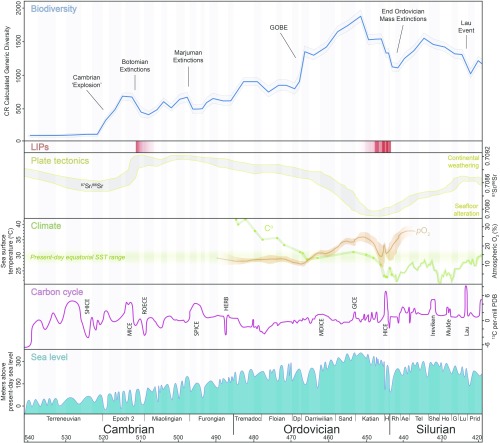
“C transitions in the state of the Earth that forced global ecosystems to adjust to changes in the physical environment fundamentally impacted Phanerozoic biodiversity levels (1).”
BackgroundA Chronology of Paleozoic Sea-Level Changes
Haq, B. U., & Schutter, S. R. (2008) · Science · doi:10.1126/science.1161648 · Cited by 1,623 · cited 2×
“Likely the increase in oxygen concentrations benefitted metazoan life and continued to sustain increased biodiversity accumulation as sea levels rose (32), expanding the habitable ecospace on the drowned epicontinental platforms.”
BackgroundMethod(2016) · Elsevier eBooks · doi:10.1016/c2009-0-64442-1 · Cited by 1,476
Phanerozoic polar wander, palaeogeography and dynamics
Torsvik, T. H., Van der Voo, R., Preeden, U., Mac Niocaill, C., Steinberger, B., Doubrovine, P. V., van Hinsbergen, D. J. J., Domeier, M., Gaina, C., Tohver, E., et al. (2012) · Earth-Science Reviews · doi:10.1016/j.earscirev.2012.06.007 · Cited by 1,445 · cited 1×
“Decreasing provincialism and habitat destruction caused by amalgamating continents (70) further hindered a fast rebound of biodiversity accumulation during the earliest Silurian (56).”
BackgroundPhanerozoic Trends in the Global Diversity of Marine Invertebrates
Alroy, J., Aberhan, M., Bottjer, D. J., Foote, M., Fürsich, F. T., Harries, P. J., Hendy, A. J. W., Holland, S. M., Ivany, L. C., Kiessling, W., et al. (2008) · Science · doi:10.1126/science.1156963 · Cited by 778 · cited 17×
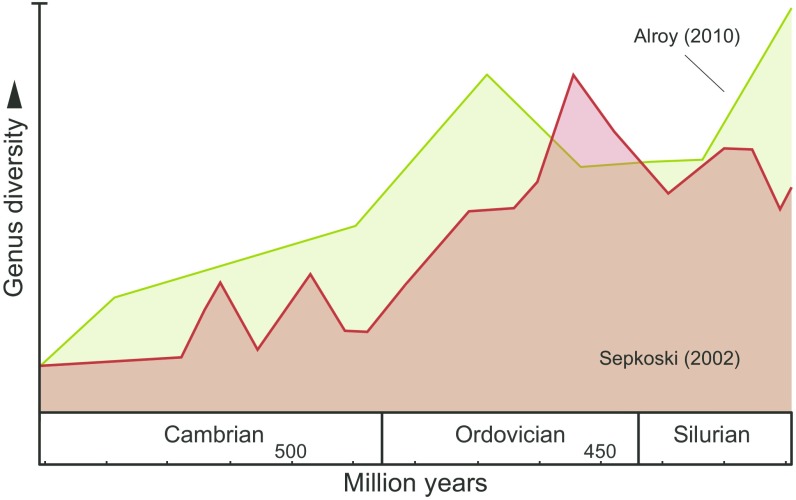
“(2, 3) used genus-level occurrences to address sampling and preservation bias in a temporal binning framework of equal duration (Fig.”
BackgroundResultInfluentialA General Methodology for the Analysis of Capture-Recapture Experiments in Open Populations
Schwarz, C. J., & Arnason, A. N. (1996) · Biometrics · doi:10.2307/2533048 · Cited by 747
Falcon, N. L., & Harland, W. B. (1983) · The Geographical Journal · doi:10.2307/634028 · Cited by 689
Did Cooling Oceans Trigger Ordovician Biodiversification? Evidence from Conodont Thermometry
Trotter, J. A., Williams, I. S., Barnes, C. R., Lécuyer, C., & Nicoll, R. S. (2008) · Science · doi:10.1126/science.1155814 · Cited by 669 · cited 5×
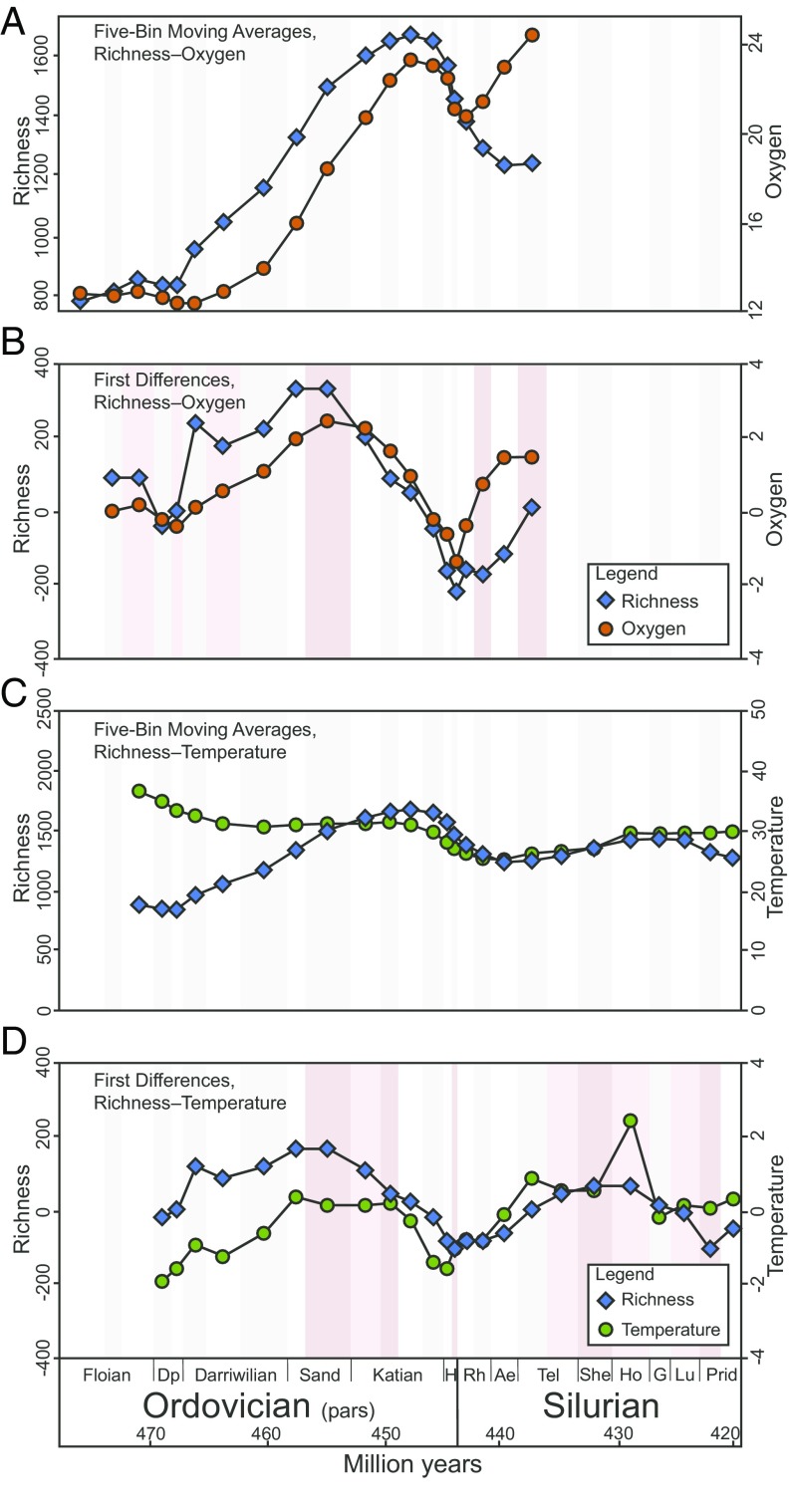
“(C and D) Coordinated change between richness and tropical sea surface temperature estimates (33, 63).”
BackgroundInfluential
Research works printed but not linked: 3
- Liow LH Nichols JD 2010 Estimating rates and probabilities of origination and extinction using taxonomic occurrence data: Capture–mark–recapture (CMR) approaches The Paleontological Society Short Course, October 30th, 2010 The Paleontological Society Bethesda 81 94
- Peters SE Foote M 2001 Biodiversity in the Phanerozoic: A reinterpretation Paleobiology 27 583 601 · doi:10.1666/0094-8373(2001)027
- Holland SM 1997 Using time/environment analysis to recognize faunal events in the Upper Ordovician of the Cincinnati Arch Paleontological Event Horizons: Ecological and Evolutionary Implications Brett CE Baird GC Columbia Univ Press New York 309 334
Cited by
An Atlas of Phanerozoic Paleogeographic Maps: The Seas Come In and the Seas Go Out
Scotese, C. R. (2021) · Annual Review of Earth and Planetary Sciences · doi:10.1146/annurev-earth-081320-064052 · Cited by 688
A high resolution summary of Cambrian to early Triassic marine invertebrate biodiversity
Fan, J.-X., Shen, S.-Z., Erwin, D. H., Sadler, P. M., MacLeod, N., Cheng, Q.-M., Hou, X.-D., Yang, J., Wang, X.-D., Wang, Y., et al. (2020) · Science · doi:10.1126/science.aax4953 · Cited by 583
Ordovician palaeogeography and climate change
Cocks, L. R. M., & Torsvik, T. H. (2021) · Gondwana Research · doi:10.1016/j.gr.2020.09.008 · Cited by 220
“Although Rasmussen et al. (2016) concluded that the GOBE of Webby et al. (2004) was triggered by an emerging mid-Ordovician icehouse, there are no known mid-Ordovician glacial deposits from anywhere to firmly support any icecaps anywhere: for example, those glacial pavements previously reported from Morocco by Hamoumi…”
BackgroundStigall, A. L., Edwards, C. T., Freeman, R. L., & Rasmussen, C. M. Ø. (2019) · Palaeogeography, Palaeoclimatology, Palaeoecology · doi:10.1016/j.palaeo.2019.05.034 · Cited by 160
Self-citationDeng, Y., Fan, J., Zhang, S., Fang, X., Chen, Z., Shi, Y., Wang, H., Wang, X., Yang, J., Hou, X., et al. (2021) · Earth-Science Reviews · doi:10.1016/j.earscirev.2021.103743 · Cited by 134
A high-resolution record of early Paleozoic climate
Goldberg, S. L., Present, T. M., Finnegan, S., & Bergmann, K. D. (2021) · Proceedings of the National Academy of Sciences · doi:10.1073/pnas.2013083118 · Cited by 129
The latest Ordovician Hirnantian brachiopod faunas: New global insights
Rong, J., Harper, D. A. T., Huang, B., Li, R., Zhang, X., & Chen, D. (2020) · Earth-Science Reviews · doi:10.1016/j.earscirev.2020.103280 · Cited by 116
Late Ordovician climate change and extinctions driven by elevated volcanic nutrient supply
Longman, J., Mills, B. J. W., Manners, H., Gernon, T., & Palmer, M. R. (2021) · Nature Geoscience · doi:10.1038/s41561-021-00855-5 · Cited by 127
Persistent global marine euxinia in the early Silurian
Stockey, R. G., Cole, D. B., Planavsky, N. J., Loydell, D. K., Frýda, J., & Sperling, E. A. (2020) · Nature Communications · doi:10.1038/s41467-020-15400-y · Cited by 92
The Great Ordovician Biodiversification Event (GOBE) is not a single event
Servais, T., Cascales-Miñana, B., & Harper, D. A. T. (2021) · Paleontological Research · doi:10.2517/2021pr001 · Cited by 88
“While the first authors (Kröger et al., 2019; Rasmussen et al., 2019) based their interpretation of a short GOBE in the Middle Ordovician on analyses of the Paleobiology Database (PBDB), the last authors (Fan et al.”
InfluentialA long-term record of early to mid-Paleozoic marine redox change
Sperling, E. A., Melchin, M. J., Fraser, T., Stockey, R. G., Farrell, U. C., Bhajan, L., Brunoir, T. N., Cole, D. B., Gill, B. C., Lenz, A., et al. (2021) · Science Advances · doi:10.1126/sciadv.abf4382 · Cited by 85
“Eustatic sea level changes un-doubtedly influenced the redox conditions of this basin to some extent, but a striking feature of the data is the relative homogeneity of redox state (at least within the resolution of the proxies) across multiple early Paleozoic sea level changes ( 25 , 49 ).”
Early Palaeozoic diversifications and extinctions in the marine biosphere: a continuum of change
Harper, D. A. T., Cascales-Miñana, B., & Servais, T. (2020) · Geological Magazine · doi:10.1017/s0016756819001298 · Cited by 83
“Moreover, this long-term sea-level change appears to clearly track increasing marine biodiversity (e.g. Rasmussen et al. 2019, fig.”
BackgroundMethodInfluentialYang, S., Hu, W., Fan, J., & Deng, Y. (2022) · Earth-Science Reviews · doi:10.1016/j.earscirev.2022.104016 · Cited by 82
Servais, T., Cascales-Miñana, B., Harper, D. A. T., Lefebvre, B., Munnecke, A., Wang, W., & Zhang, Y. (2023) · Palaeogeography, Palaeoclimatology, Palaeoecology · doi:10.1016/j.palaeo.2023.111592 · Cited by 74
Dahl, T. W., Hammarlund, E. U., Rasmussen, C. M. Ø., Bond, D. P. G., & Canfield, D. E. (2021) · Earth-Science Reviews · doi:10.1016/j.earscirev.2021.103748 · Cited by 72
“This trend is mirrored by large global richness datasets, showing that extinctions commenced much earlier than the Hirnantian (Fan et al., 2020; Rasmussen et al., 2019; Sepkoski, 1997) and that conditions got worse as glaciations expanded and the sea level dropped in the late Katian (Brenchley et…”
BackgroundResultSelf-citationThe evolutionary dynamics of the early Palaeozoic marine biodiversity accumulation
Kröger, B., Franeck, F., & Rasmussen, C. M. Ø. (2019) · Proceedings of the Royal Society B: Biological Sciences · doi:10.1098/rspb.2019.1634 · Cited by 65
“During the succeedingOrdovician Period, origination rates peaked at the Dapingian–Darriwilian boundary, and extinction rates reached maximum values at the Katian–Hirnantian boundary, reflecting the LOME [42].”
BackgroundMethodInfluentialSelf-citationOceanic anoxia and extinction in the latest Ordovician
Liu, M., Chen, D., Jiang, L., Stockey, R., Aseal, D., Zhang, B., Liu, K., Yang, X., Yan, D., & Planavsky, N. J. (2022) · Earth and Planetary Science Letters · doi:10.1016/j.epsl.2022.117553 · Cited by 73
Investigating Biotic Interactions in Deep Time
Fraser, D., Soul, L. C., Tóth, A. B., Balk, M. A., Eronen, J. T., Pineda‐Munoz, S., Shupinski, A. B., Villaseñor, A., Barr, W. A., Behrensmeyer, A. K., et al. (2020) · Trends in Ecology & Evolution · doi:10.1016/j.tree.2020.09.001 · Cited by 76
“We note, however, that comparatively short-term covariation between climate and diversity could be obscured, except in the unusual scenario of a diversity record with the fi ner temporal resolution common of climate records (e.g., [47]).”
BackgroundInsights into soft-part preservation from the Early Ordovician Fezouata Biota
Saleh, F., Vaucher, R., Antcliffe, J. B., Daley, A. C., El Hariri, K., Kouraiss, K., Lefebvre, B., Martin, E. L. O., Perrillat, J.-P., Sansjofre, P., et al. (2021) · Earth-Science Reviews · doi:10.1016/j.earscirev.2020.103464 · Cited by 54
Rapid marine oxygen variability: Driver of the Late Ordovician mass extinction
Kozik, N. P., Young, S. A., Newby, S. M., Liu, M., Chen, D., Hammarlund, E. U., Bond, D. P. G., Them, T. R., & Owens, J. D. (2022) · Science Advances · doi:10.1126/sciadv.abn8345 · Cited by 54
LeRoy, M. A., Gill, B. C., Sperling, E. A., McKenzie, N. R., & Park, T. S. (2021) · Palaeogeography Palaeoclimatology Palaeoecology · doi:10.1016/j.palaeo.2020.110209 · Cited by 54
Young, S. A., Benayoun, E., Kozik, N. P., Hints, O., Martma, T. A., Bergström, S. M., & Owens, J. D. (2020) · Palaeogeography Palaeoclimatology Palaeoecology · doi:10.1016/j.palaeo.2020.109792 · Cited by 55
Dean, C. D., Chiarenza, A. A., & Maidment, S. C. R. (2020) · Palaeontology · doi:10.1111/pala.12492 · Cited by 38
“The nature of stage-level bins also means that they are unequal in length, which inherently biases longer bins in favour of higher diversity; large changes in bin length between studies can therefore result in discrepancies between diversity results (Rasmussen et al. 2019).”
ResultSynchronizing rock clocks in the late Cambrian
Zhao, Z., Thibault, N. R., Dahl, T. W., Schovsbo, N. H., Sørensen, A. L., Rasmussen, C. M. Ø., & Nielsen, A. T. (2022) · Nature Communications · doi:10.1038/s41467-022-29651-4 · Cited by 54
Self-citationSproson, A. D., von Strandmann, P. A. E. P., Selby, D. S., Jarochowska, E., Frýda, J., Hladil, J., Loydell, D. K., Slavík, L., Calner, M., Maier, G., et al. (2021) · Earth and Planetary Science Letters · doi:10.1016/j.epsl.2021.117260 · Cited by 50
Late Ordovician Mass Extinction: Earth, fire and ice
Harper, D. A. T. (2023) · National Science Review · doi:10.1093/nsr/nwad319 · Cited by 70
“During the later Ordovician, global [38 ]; isotope and sea level curves from [33 ]). cooling had already initiated the establishment of ice sheets on polar Gondwana during the Katian or even earlier [1 ,78 ].”
BackgroundMethodResultInfluentialWright, A. M., Wagner, P. J., & Wright, D. F. (2021) · Cambridge University Press eBooks · doi:10.1017/9781009049016 · Cited by 47
“(B & C) Distribution of logged turnover rates for individual clades (including but not restricted to the 12 groups in Figure 3(A) and individual stage slices (see Bergström et al. (2009), Cramer et al. (2011), and Rasmussen et al. (2019) for stage slice definitions.)”
BackgroundA Cretaceous peak in family-level insect diversity estimated with mark–recapture methodology
Schachat, S. R., Labandeira, C. C., Clapham, M. E., & Payne, J. L. (2019) · Proceedings of the Royal Society B Biological Sciences · doi:10.1098/rspb.2019.2054 · Cited by 41
“Somewhat less frequently, CMR is also used to generate diversity curves [9,30].”
BackgroundRecognizing pulses of extinction from clusters of last occurrences
Zimmt, J. B., Holland, S. M., Finnegan, S., & Marshall, C. R. (2020) · Palaeontology · doi:10.1111/pala.12505 · Cited by 44
“However, recent studies have questioned the two-pulse interpretation of the Late Ordovician mass extinction, instead proposing prolonged (Holland & Patzkowsky 2015; Sheets et al. 2016), single-pulse (Wang et al. 2019), or multipulse (Rasmussen et al. 2019) interpretations of the extinction event.”
BackgroundRasmussen, J. A., Thibault, N. R., & Rasmussen, C. M. Ø. (2021) · Nature Communications · doi:10.1038/s41467-021-26396-4 · Cited by 42
“Po w er Power 20% median-smoothed Robust AR(1) median Robust AR(1) 90% Robust AR(1) 95% Robust AR(1) 99%”
BackgroundMethodSelf-citationKozik, N. P., Gill, B. C., Owens, J. D., Lyons, T. W., & Young, S. A. (2022) · AGU Advances · doi:10.1029/2021av000563 · Cited by 43
Zhao, Z., Pang, X., Zou, C., Dickson, A. J., Basu, A., Guo, Z., Pan, S., Nielsen, A. T., Schovsbo, N. H., Jing, Z., et al. (2023) · Earth and Planetary Science Letters · doi:10.1016/j.epsl.2023.118013 · Cited by 42
Ordovician–Silurian true polar wander as a mechanism for severe glaciation and mass extinction
Jing, X., Yang, Z., Mitchell, R. N., Tong, Y., Zhu, M., & Wan, B. (2022) · Nature Communications · doi:10.1038/s41467-022-35609-3 · Cited by 43
“(purple line) and Rasmussen et al.(7) (blue line).”
BackgroundThe palaeogeographical impact on the biodiversity of marine faunas during the Ordovician radiations
Harper, D. A. T., Cascales-Miñana, B., Kroeck, D. M., & Servais, T. (2021) · Global and Planetary Change · doi:10.1016/j.gloplacha.2021.103665 · Cited by 36
Derakhshi, M., Ernst, R. E., & Kamo, S. L. (2022) · Gondwana Research · doi:10.1016/j.gr.2022.03.009 · Cited by 39
Was the Late Ordovician mass extinction truly exceptional?
Rasmussen, C. M. Ø., Vandenbroucke, T. R. A., Nogués‐Bravo, D., & Finnegan, S. (2023) · Trends in Ecology & Evolution · doi:10.1016/j.tree.2023.04.009 · Cited by 36
Self-citationStrauss, J. V., Fraser, T. A., Melchin, M. J., Allen, T. J., Malinowski, J., Feng, X., Taylor, J. F., Day, J. E., Gill, B. C., & Sperling, E. A. (2020) · Canadian Journal of Earth Sciences · doi:10.1139/cjes-2020-0017 · Cited by 33
TubeDB: An on-demand processing database system for climate station data
Wöllauer, S., Zeuss, D., Hänsel, F., & Nauß, T. (2020) · Computers & Geosciences · doi:10.1016/j.cageo.2020.104641 · Cited by 33
Impact of global climate cooling on Ordovician marine biodiversity
Ontiveros, D. E., Beaugrand, G., Lefèbvre, B., Marcilly, C. M., Servais, T., & Pohl, A. (2023) · Nature Communications · doi:10.1038/s41467-023-41685-w · Cited by 31
“41) based their compilation on the Paleobiology Database (PBDB), which mostly includes data from Laurentia and Baltica (>50% in 2019), while the Geobiodiversity Database 3 (GBDB) mainly includes Chinese data.”
BackgroundQiu, Z., Wei, H., Tian, L., Corso, J. D., Zhang, J., & Zou, C. (2022) · Scientific Reports · doi:10.1038/s41598-022-08941-3 · Cited by 34
Zhang, L., Fan, J., Wang, B., Zhang, Y., Liu, J., Huang, H., & Chen, Q. (2023) · Earth-Science Reviews · doi:10.1016/j.earscirev.2023.104400 · Cited by 29
Diversity-Dependent Diversification in the History of Marine Animals
Foote, M. (2022) · The American Naturalist · doi:10.1086/723626 · Cited by 27
Oxygenation of the Baltoscandian shelf linked to Ordovician biodiversification
Lindskog, A., Young, S. A., Bowman, C. N., Kozik, N. P., Newby, S. M., Eriksson, M. E., Pettersson, J., Molin, E., & Owens, J. D. (2023) · Nature Geoscience · doi:10.1038/s41561-023-01287-z · Cited by 28
Stigall, A. L., Freeman, R. L., Edwards, C. T., & Rasmussen, C. M. Ø. (2019) · Palaeogeography Palaeoclimatology Palaeoecology · doi:10.1016/j.palaeo.2019.109521 · Cited by 28
Self-citationStable ocean redox during the main phase of the Great Ordovician Biodiversification Event
del Rey, Á., Rasmussen, C. M. Ø., Calner, M., Wu, R., Asael, D., & Dahl, T. W. (2022) · Communications Earth & Environment · doi:10.1038/s43247-022-00548-w · Cited by 25
Self-citationThe Causes and Consequences of Ordovician Cooling
Bergmann, K., Macdonald, F. A., & Swanson‐Hysell, N. L. (2025) · Annual Review of Earth and Planetary Sciences · doi:10.1146/annurev-earth-040523-114630 · Cited by 30
Saleh, F., Guenser, P., Gibert, C., Balseiro, D., Serra, F., Waisfeld, B. G., Antcliffe, J. B., Daley, A. C., Mángano, M. G., Buatois, L. A., et al. (2022) · Scientific Reports · doi:10.1038/s41598-022-07822-z · Cited by 23
Wang, Y., Tan, J., Wang, W., Zhou, L., Tang, P., Kang, X., Xie, W., Wang, Z., & Dick, J. M. (2022) · Geological Society of America Bulletin · doi:10.1130/b36257.1 · Cited by 23
Early Paleozoic radiolarian plankton diversity and the Great Ordovician Biodiversification Event
Danelian, T., & Monnet, C. (2021) · Earth-Science Reviews · doi:10.1016/j.earscirev.2021.103672 · Cited by 24
Liu, M., Fang, C., & Chen, D. (2024) · Sedimentary Geology · doi:10.1016/j.sedgeo.2024.106722 · Cited by 20
Crampton, J. S., Cooper, R. A., Foote, M., & Sadler, P. M. (2020) · Paleobiology · doi:10.1017/pab.2020.3 · Cited by 20
“…new quantitative approaches and data compilations are permitting ever more highly resolved study of macroevolutionary patterns in the fossil record (e.g., Jaramillo et al. 2006; Rasmussen et al. 2019; Paleobiology, 46(1), 2020, pp. 123–135 DOI: 10.1017/pab.2020.3 © 2020 The Paleontological Society.”
BackgroundInfluentialNo Furongian Biodiversity Gap: Evidence from South China
Deng, Y., Fan, J., Yang, S., Shi, Y., Lu, Z., Xu, H., Sun, Z., Zhao, F., & Hou, Z.-S. (2022) · Palaeogeography Palaeoclimatology Palaeoecology · doi:10.1016/j.palaeo.2023.111492 · Cited by 19
Liu, M., Yuan, W., Fang, C., Wang, X., Tan, N., Zhao, M., Wang, X., Algeo, T. J., Sun, P., Feng, X., et al. (2024) · Gondwana Research · doi:10.1016/j.gr.2024.09.008 · Cited by 18
Luan, X., Zhang, X., Wu, R., Zhan, R., Liu, J., Wang, G., & Zhang, Y. (2020) · Palaeogeography Palaeoclimatology Palaeoecology · doi:10.1016/j.palaeo.2020.110116 · Cited by 21
Edward, O., Korte, C., Ullmann, C. V., Colmenar, J., Thibault, N. R., Bagnoli, G., Stouge, S., & Rasmussen, C. M. Ø. (2022) · Paleoceanography and Paleoclimatology · doi:10.1029/2021pa004309 · Cited by 23
“The Ordovician Period was characterized by drastic changes in biodiversity levels and ecosystem engineering (Kröger et al., 2019; C. M. Ø. Rasmussen et al., 2019).”
BackgroundSelf-citationDattilo, B. F., Freeman, R. L., Zubovic, Y. M., Brett, C. E., Straw, A., Frauhiger, M. J., Hartstein, A. R., & Shoemaker, L. (2019) · Palaeogeography Palaeoclimatology Palaeoecology · doi:10.1016/j.palaeo.2019.109362 · Cited by 18
Shan, L., Yan, K., Zhang, Y., Li, J., & Servais, T. (2022) · Philosophical Transactions of the Royal Society B: Biological Sciences · doi:10.1098/rstb.2021.0035 · Cited by 18
Kozik, N. P., Young, S. A., Ahlberg, P., Lindskog, A., & Owens, J. D. (2023) · Global and Planetary Change · doi:10.1016/j.gloplacha.2023.104183 · Cited by 20
The Liexi fauna: a new Lagerstätte from the Lower Ordovician of South China
Fang, X. M., Mao, Y., Liu, Q., Yuan, W., Chen, Z., Wu, R., Li, L., Zhang, Y., Ma, J., Wang, W., et al. (2022) · Proceedings of the Royal Society B Biological Sciences · doi:10.1098/rspb.2022.1027 · Cited by 21
Adiatma, Y., Saltzman, M. R., Young, S. A., Griffith, E. M., Kozik, N. P., Edwards, C. T., Leslie, S. A., & Bancroft, A. M. (2019) · Palaeogeography Palaeoclimatology Palaeoecology · doi:10.1016/j.palaeo.2019.109341 · Cited by 19
Mass extinctions and their rebounds: a macroevolutionary framework
Jablonski, D., & Edie, S. M. (2025) · Paleobiology · doi:10.1017/pab.2024.13 · Cited by 25
“…which reportedly imposed minimal ecological reorganization (Droser et al. 2000), selectively diminished or eliminated certain clades and allowed others to flourish for the first time (Chen et al. 2005; Finnegan et al. 2017; Sclafani et al. 2018; Rasmussen et al. 2019; B. Huang et al. 2023).”
Reduced strength and increased variability of extinction selectivity during mass extinctions
Monarrez, P. M., Heim, N. A., & Payne, J. L. (2023) · Royal Society Open Science · doi:10.1098/rsos.230795 · Cited by 18
Fang, C., Liu, M., Zhang, C., Tang, H., Li, J., Xing, G., Li, F., Xu, N., Wu, T., & Liu, B. (2024) · Palaeogeography Palaeoclimatology Palaeoecology · doi:10.1016/j.palaeo.2024.112265 · Cited by 17
Tempo of the Late Ordovician mass extinction controlled by the rate of climate change
Zhang, Z., Yang, C., Sahy, D., Zhan, R., Wu, R., Li, Y., Deng, Y., Huang, B., Condon, D. J., Jiayu, R., et al. (2025) · Science Advances · doi:10.1126/sciadv.adv6788 · Cited by 32
“However, these two phases have not been distinguished in the long-term trends in Ordovician biodiversity ( 6 , 33 ), possibly due to similar extinction rates in the two phases or that the LOME was a single-phase event ( 34 ).”
Seawater sources of Hg enrichment in Ordovician-Silurian boundary strata, South China
Lu, Y., Shen, J., Wang, Y., Lu, Y., Algeo, T. J., Jiang, S. Y., Yan, D., & Gou, Q. (2022) · Palaeogeography Palaeoclimatology Palaeoecology · doi:10.1016/j.palaeo.2022.111156 · Cited by 18
The bias types and drivers of the Furongian Biodiversity Gap
Du, M., Li, H., Tan, J., Wang, Z., & Wang, W. (2023) · Palaeogeography Palaeoclimatology Palaeoecology · doi:10.1016/j.palaeo.2023.111394 · Cited by 16
Kozik, N. P., Young, S. A., Lindskog, A., Ahlberg, P., & Owens, J. D. (2023) · Geobiology · doi:10.1111/gbi.12545 · Cited by 16
“However, the timing and nomenclature surrounding different aspects of the trends in diversity are still widely debated, as is also the case with primary causal mechanisms (Rasmussen et al., 2019; Servais et al., 2021; Stigall et al., 2019).”
BackgroundInfluentialQuantifying the middle–late Cambrian trilobite diversity pattern in South China
Zhang, S., Fan, J., Morgan, C. A., Henderson, C. M., & Shen, S. (2021) · Palaeogeography Palaeoclimatology Palaeoecology · doi:10.1016/j.palaeo.2021.110361 · Cited by 16
Marine oxygenation, deoxygenation, and life during the Early Paleozoic: An overview
Zhang, J., Edwards, C. T., Diamond, C., Lyons, T. W., & Zhang, Y. (2021) · Palaeogeography Palaeoclimatology Palaeoecology · doi:10.1016/j.palaeo.2021.110715 · Cited by 20
Congreve, C. R., Patzkowsky, M. E., & Wagner, P. J. (2021) · Proceedings of the Royal Society B Biological Sciences · doi:10.1098/rspb.2021.1450 · Cited by 27
Bian, L., Chappaz, A., Schovsbo, N. H., Wang, X., Zhao, W., & Sanei, H. (2023) · Earth and Planetary Science Letters · doi:10.1016/j.epsl.2023.118170 · Cited by 16
Thompson, J. R., Cotton, L., Candela, Y., Kutscher, M., Reich, M., & Bottjer, D. J. (2021) · Journal of Systematic Palaeontology · doi:10.1080/14772019.2022.2042408 · Cited by 14
“The Ordovician marks a crucial interval of Earth’s history, with widespread diversification events across multiple taxonomic groups and regions leading to a substantial rise in taxonomic richness (Sepkoski 1988, 1993; Miller & Mao 1995; Miller & Foote 1996; Miller 1997) and an ecological expansion of metazoans (Miller…”
BackgroundInfluentialLindskog, A., Eriksson, M. E., Rasmussen, J. A., Dronov, A. V., & Rasmussen, C. M. Ø. (2020) · Proceedings of the Estonian Academy of Sciences Geology · doi:10.3176/earth.2020.03 · Cited by 16
Self-citationPurcell, C. K. Q., & Stigall, A. L. (2021) · Palaeogeography Palaeoclimatology Palaeoecology · doi:10.1016/j.palaeo.2021.110555 · Cited by 14
Li, J., Azmy, K., & Kendall, B. (2022) · Chemical Geology · doi:10.1016/j.chemgeo.2022.120882 · Cited by 16
Changing palaeobiogeography during the Ordovician Period
Servais, T., Harper, D. A. T., Kröger, B., Scotese, C. R., Stigall, A. L., & Zhen, Y. Y. (2023) · Geological Society London Special Publications · doi:10.1144/sp532-2022-168 · Cited by 18
Self-citationWright, A. M., Wagner, P. J., & Wright, D. F. (2020) · EcoEvoRxiv · doi:10.32942/osf.io/ykzg5 · Cited by 15
Yang, X., Yan, D., Liu, M., Liu, X., Gong, Y., Zhang, L., Zhang, B., & Chen, D. (2024) · Chemical Geology · doi:10.1016/j.chemgeo.2024.122209 · Cited by 13
Jing, X., Zhao, Z., Fu, L., Zhang, C., Fan, R., Shen, Y., & Yang, B. (2022) · Palaeogeography Palaeoclimatology Palaeoecology · doi:10.1016/j.palaeo.2022.111149 · Cited by 15
Impacts of spatial and environmental differentiation on early Palaeozoic marine biodiversity
Penny, A., & Kröger, B. (2019) · Nature Ecology & Evolution · doi:10.1038/s41559-019-1035-7 · Cited by 13
Self-citationSaleh, F., Antcliffe, J. B., Lustri, L., Daley, A. C., & Gibert, C. (2023) · Lethaia · doi:10.18261/let.56.3.7 · Cited by 12
Bian, L., Chappaz, A., Wang, X., Amouroux, D., Schovsbo, N. H., Zheng, X., & Sanei, H. (2024) · Geophysical Research Letters · doi:10.1029/2023gl107188 · Cited by 13
Extreme faunal endemism, super-island faunas, and the Late Ordovician mass extinction
Jin, J., & Harper, D. A. T. (2025) · Palaeogeography Palaeoclimatology Palaeoecology · doi:10.1016/j.palaeo.2025.113222 · Cited by 14
Calner, M., Bockelie, J. F., Rasmussen, C. M. Ø., Calner, H., Lehnert, O., & Joachimski, M. M. (2021) · Geological Magazine · doi:10.1017/s0016756821000546 · Cited by 14
“…Palaeozoic Icehouse (EPI; Page et al. 2007), the Late Ordovician Mass Extinction (LOME; Finnegan et al. 2012; Harper et al. 2014; Ling et al. 2019; Rasmussen et al. 2019; Wang et al. 2019) and an associated major anomaly to the global carbon cycle, the Hirnantian Isotope Carbon Excursion (HICE;…”
BackgroundSelf-citationWang, H., Wang, D., Wei, G., Ling, H., Struck, U., Wei, W., Yao, S., Cheng, C., Li, J., Sun, Y., et al. (2021) · Precambrian Research · doi:10.1016/j.precamres.2021.106501 · Cited by 11
Did hard substrate taxa diversify prior to the Great Ordovician Biodiversification Event?
Franeck, F., & Liow, L. H. (2020) · Palaeontology · doi:10.1111/pala.12489 · Cited by 10
Coupling of geographic range and provincialism in Cambrian marine invertebrates
Na, L., Kocsis, Á. T., Li, Q., & Kiessling, W. (2022) · Paleobiology · doi:10.1017/pab.2022.36 · Cited by 10
“The other two events paved the way for a more biologically uniform world in the subsequent stages (Paibian, Jiangshanian, and Stage 10), when expansions of oxygen minimum zones, with their corresponding habitat disruption, were probably recurrent across the shallow shelf (Kröger et al. 2019).”
Wang, Y., Botting, J. P., Tan, J., Li, M. H., & Wang, W. (2023) · Journal of Palaeogeography · doi:10.1016/j.jop.2023.03.005 · Cited by 10
Servais, T., Cascales‐Miñana, B., Harper, D. A. T., Lefèbvre, B., Bocxlaer, B. V., & Wang, W. (2023) · Evolving Earth · doi:10.1016/j.eve.2023.100018 · Cited by 15
Diversification to extinction: oceanic and climatic context of the Ordovician
Liu, M., Bao, X., Harper, D. A. T., Algeo, T. J., Zhao, M., Saltzman, M. R., Wang, Z., Chen, D., Yuan, S., Chen, Y., et al. (2025) · Earth-Science Reviews · doi:10.1016/j.earscirev.2025.105194 · Cited by 16
Yang, X., Yan, D., Zhang, B., & Zhang, L. (2023) · Palaeogeography Palaeoclimatology Palaeoecology · doi:10.1016/j.palaeo.2023.111859 · Cited by 12
Song, L., Chen, Q., Li, H., & Deng, C. (2023) · Geoscience Frontiers · doi:10.1016/j.gsf.2023.101537 · Cited by 11
Li, Y., Tian, H., Zhang, T., Shen, B., & Shao, D. (2024) · Chemical Geology · doi:10.1016/j.chemgeo.2024.122566 · Cited by 10
Ren, C., Fang, Q., Wu, H., Fang, J., Zhang, S., Yang, T., & Li, H. (2023) · Journal of Asian Earth Sciences · doi:10.1016/j.jseaes.2023.105577 · Cited by 13
Mángano, M. G., Waisfeld, B. G., Buatois, L. A., Vaccari, N. E., & Muñoz, D. F. (2023) · Palaeogeography Palaeoclimatology Palaeoecology · doi:10.1016/j.palaeo.2023.111692 · Cited by 12
Ordovician paleobiogeography of the Suborder Cheirurina (Trilobita)
Pérez‐Peris, F., Adrain, J. M., & Daley, A. C. (2024) · Palaeogeography Palaeoclimatology Palaeoecology · doi:10.1016/j.palaeo.2024.112222 · Cited by 8
Volcanic activity driving rapid organic carbon burial during the Ordovician–Silurian transition
Liang, C., Xie, H., Wu, J., Cao, Y., Han, Y., Liu, K., & Fang, H. (2024) · Geological Society of America Bulletin · doi:10.1130/b37946.1 · Cited by 11
A Cambrian soft-bodied biota after the first Phanerozoic mass extinction
Zeng, H., Liu, Q., Zhao, F., Luo, C., Wang, D., Zhu, Y., Liu, Y., Chen, K., Sun, Z., Hong, Y. T., et al. (2026) · Nature · doi:10.1038/s41586-025-10030-0 · Cited by 14
Liu, K., Jiang, M., Tang, P., & Chen, D. (2024) · Palaeogeography Palaeoclimatology Palaeoecology · doi:10.1016/j.palaeo.2024.112371 · Cited by 8
Aubrechtová, M., & Meidla, T. (2020) · GFF · doi:10.1080/11035897.2020.1762723 · Cited by 8
Metadata
- Authors
- Rasmussen, C. M. Ø., Kröger, B., Nielsen, M. L., & Colmenar, J.
- Affiliations
- University of Copenhagen (DK)
- University of Helsinki (FI)
- Corresponding author
- Rasmussen, Christian M. Ø.
- Venue
- Proceedings of the National Academy of Sciences
- Publisher
- National Academy of Sciences
- Published
- 2019-03-25
- Volume
- 116
- Issue
- 15
- Pages
- 7207-7213
- ISSN
- 0027-8424 (ISSN-L)
- 1091-6490
- PMC
- PMC6462056
- OpenAlex
- W2924932526
- Cited by
- 226
- References
- 84
- Citations by year
- 2026: 27 · 2025: 41 · 2024: 25 · 2023: 39 · 2022: 31 · 2021: 25 · 2020: 26 · 2019: 12
- FWCI
- 17.85
- Type
- journal article
- Language
- en
- Open access
- hybrid
- doi.org
- Licence
- Locations
- Proceedings of the National Academy of Sciences (publishedVersion, cc-by-nc-nd)
- Europe PMC (PubMed Central) (publishedVersion, cc-by-nc-nd)
- PubMed Central (publishedVersion, cc-by-nc-nd)
- PubMed (publishedVersion)
- Research at the University of Copenhagen (University of Copenhagen) (publishedVersion, cc-by-nc-nd)
- Bristol Research (University of Bristol) (publishedVersion, cc-by-nc-nd)
- Työväentutkimus Vuosikirja (submittedVersion)
- Funders
- Villum Fonden (VKR023452)
- Geocenter Danmark (2015-5, 3-2017)
- Topics
- Physical Sciences › Earth and Planetary Sciences › Paleontology › Paleontology and Stratigraphy of Fossils
- Physical Sciences › Earth and Planetary Sciences › Paleontology › Evolution and Paleontology Studies
- Physical Sciences › Earth and Planetary Sciences › Paleontology › Paleontology and Evolutionary Biology
- Keywords
- Cambrian explosion, Ordovician radiation, Paleobiology Database, sea surface temperature, volcanic activity, plate tectonics, Silurian
- MeSH terms
- Paleontology, Databases, Factual, Biodiversity, Extinction, Biological
About these checks
Registry, retraction, Cites and statistics results are computed, not judged, with one exception: a printed reference that no index lists is read once by a model before it counts as a citation error. Claims are extracted by a model and kept only when their quote appears verbatim in the text; each cited source is then checked, with a model’s help, for whether it says what the claim relies on. Those verdicts can be wrong — read the claim’s quote and the cited source before relying on one.
Statistics and arithmetic are recomputed, not judged.
Confidence bands are shown only for fields calibrated on our annotated test set. None is calibrated yet, so no band is shown.
What counts as a claim ›How we measure confidence ›How we check this ›
Are you an author, or do you see a problem with this page? Request a review
Data sources
Bibliographic data: Semantic Scholar, OpenAlex, Crossref.
Contains information from the Semantic Scholar Academic Graph Datasets, made available under the ODC Attribution License (ODC-BY 1.0).
Semantic Scholar’s data is described in: Kinney, R., et al. (2023). The Semantic Scholar Open Data Platform. arXiv:2301.10140.
