

Frequent loss of heterozygosity in CRISPR-Cas9–edited early human embryos
Open accessPublished version of a preprint
The DOI matches its Crossref record; 66 of the 66 references it cites were found in a registry or an index; 35 of the 46 sources its claims cite were checked for support.
Abstract
CRISPR-Cas9 genome editing is a promising technique for clinical applications, such as the correction of disease-associated alleles in somatic cells. The use of this approach has also been discussed in the context of heritable editing of the human germ line. However, studies assessing gene correction in early human embryos report low efficiency of mutation repair, high rates of mosaicism, and the possibility of unintended editing outcomes that may have pathologic consequences. We developed computational pipelines to assess single-cell genomics and transcriptomics datasets from OCT4 ( POU5F1 ) CRISPR-Cas9–targeted and control human preimplantation embryos. This allowed us to evaluate on-target mutations that would be missed by more conventional genotyping techniques. We observed loss of heterozygosity in edited cells that spanned regions beyond the POU5F1 on-target locus, as well as segmental loss and gain of chromosome 6, on which the POU5F1 gene is located. Unintended genome editing outcomes were present in ∼16% of the human embryo cells analyzed and spanned 4–20 kb. Our observations are consistent with recent findings indicating complexity at on-target sites following CRISPR-Cas9 genome editing. Our work underscores the importance of further basic research to assess the safety of genome editing techniques in human embryos, which will inform debates about the potential clinical use of this technology.
Overview
CoChat Summary
TL;DR
Reanalysis of single-cell genomics and transcriptomics from CRISPR-Cas9–edited early human embryos found frequent loss-of-heterozygosity and segmental chromosome 6 abnormalities near the POU5F1 on-target site. The authors conclude that unintended on-target damage can be missed by conventional short-fragment genotyping and caution against clinical germline editing.
Key findings
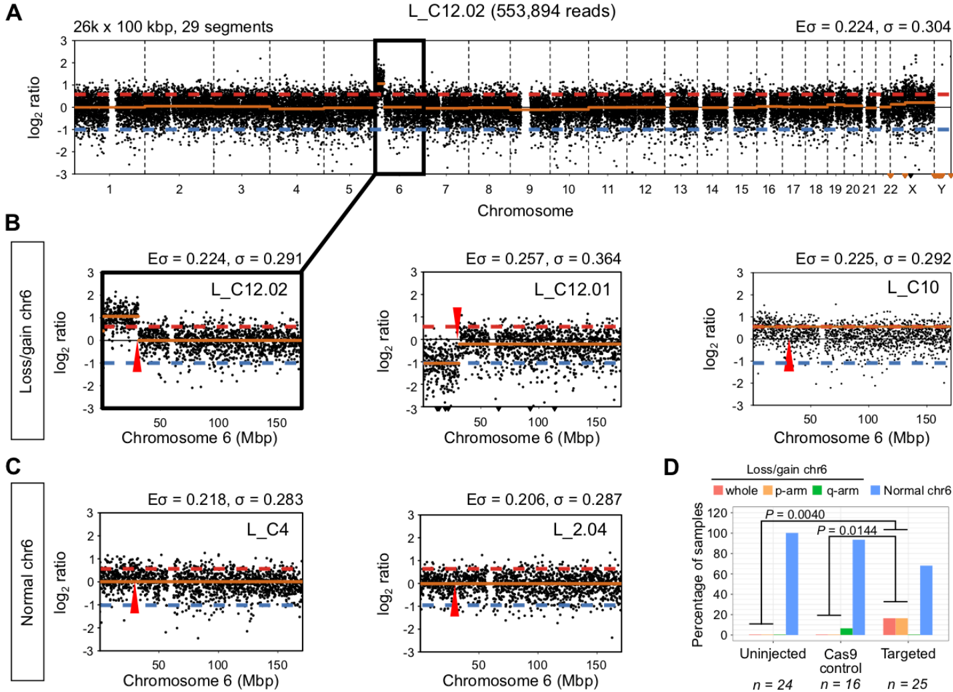
- In low-pass WGS of 65 samples (25 CRISPR-Cas9 targeted, 16 Cas9 controls, 24 uninjected controls), 8/25 targeted samples had chromosome 6 abnormalities: 4 had segmental loss/gain adjacent to or within POU5F1 (16%) and 4 had whole chromosome 6 gain (16%). One Cas9 control (6.25%) had a segmental gain on 6q distinct from POU5F1, and no uninjected controls showed abnormalities; targeted vs Cas9 P = 0.0144 and targeted vs uninjected P = 0.0040 by two-tailed Fisher’s test.
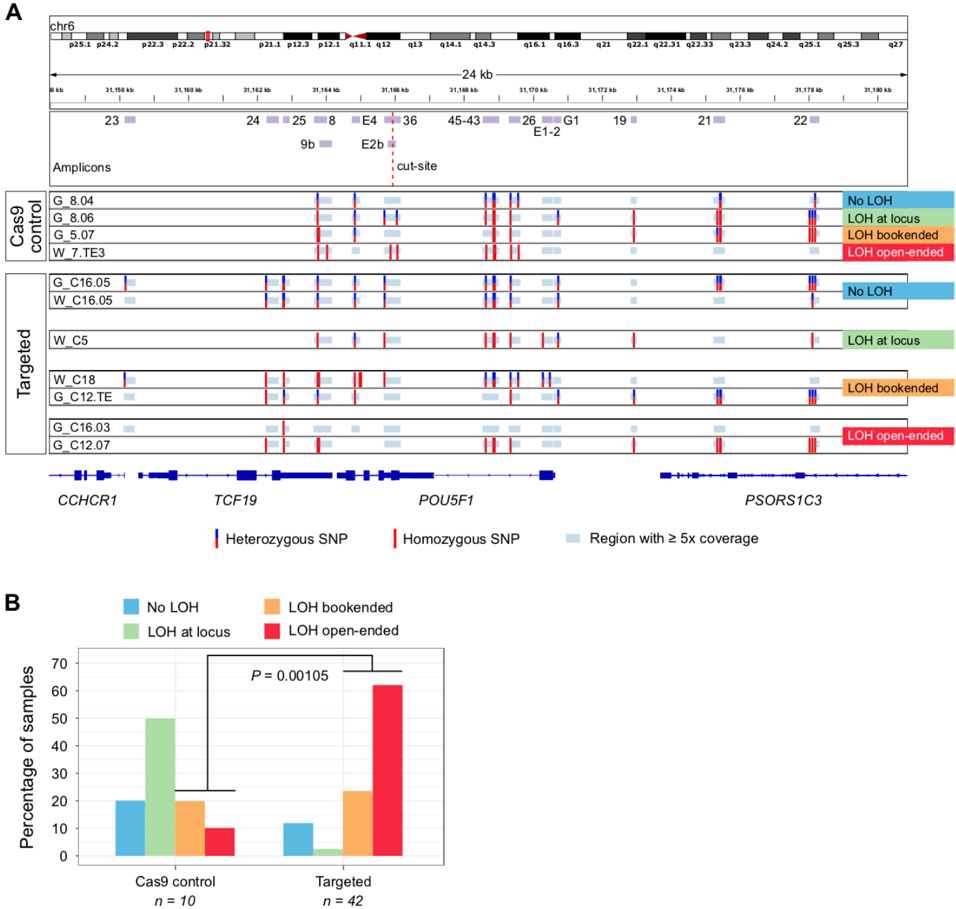
- Targeted deep sequencing of 137 single cells/clusters (111 targeted, 26 Cas9 controls; 42 targeted and 10 controls retained after filtering) found open-ended LOH in 61.9% of targeted vs 10% of control samples, bookended LOH in 23.8% targeted vs 20% control, LOH at the locus in 2.4% targeted vs 50% control, and no LOH in 11.9% targeted vs 20% control. LOH events spanned 4 kb to at least 20 kb.
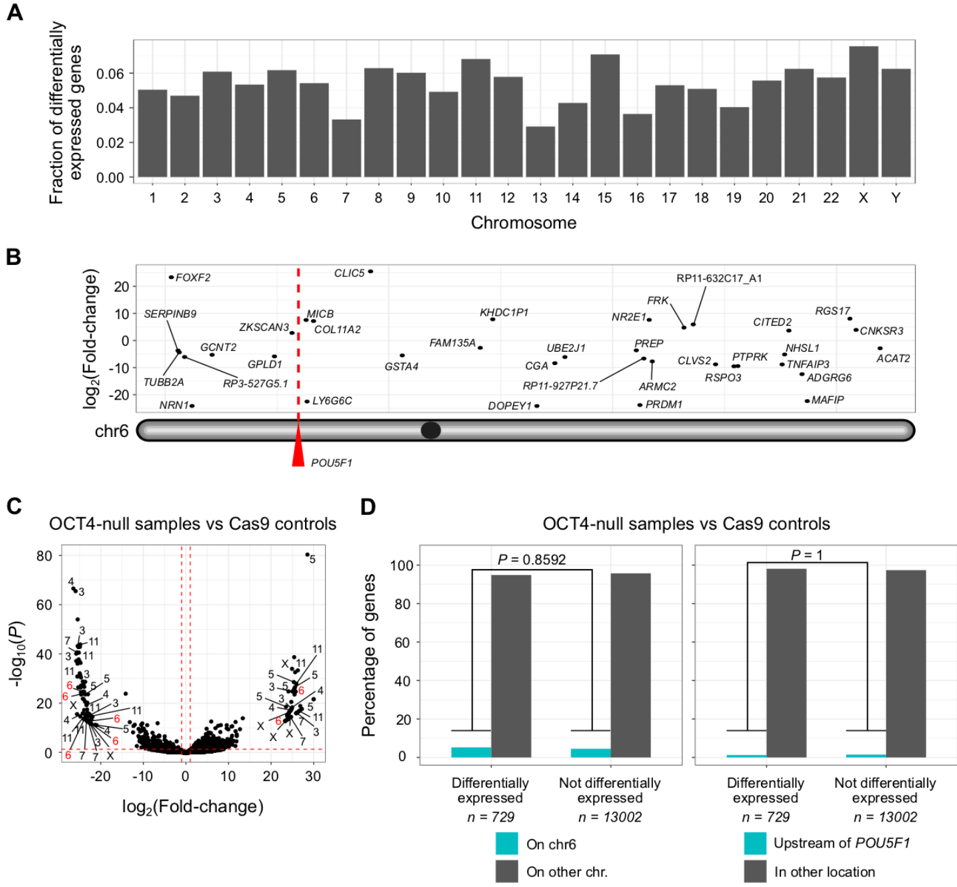
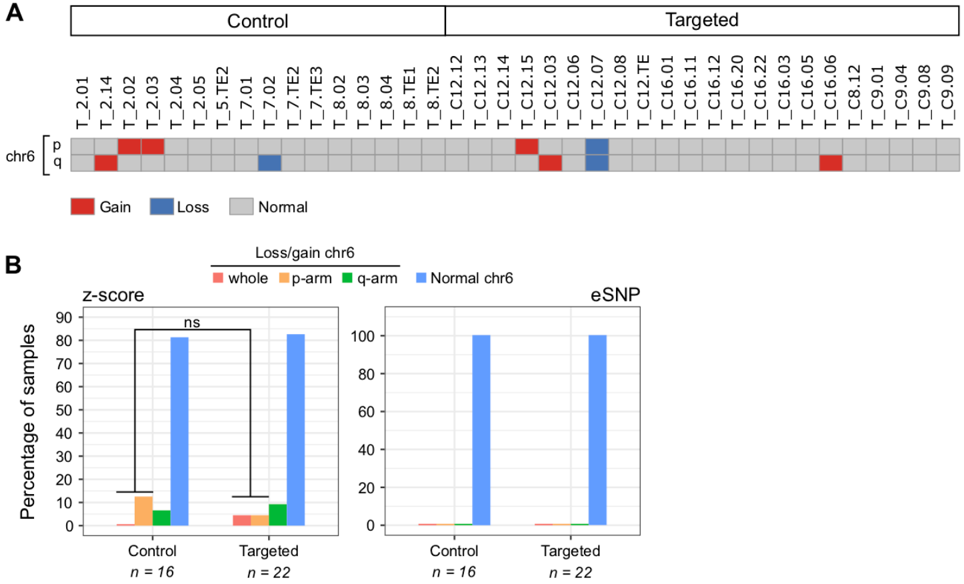
- Transcriptome analyses did not show preferential misexpression of chromosome 6 genes or genes telomeric to POU5F1, and transcriptome-based digital karyotyping/eSNP-Karyotyping did not confirm the gDNA-derived chromosome 6 trends.
Methods
- The study reprocessed DNA and reanalyzed data from a previous study plus 56 additional samples. Human in vitro fertilized zygotes donated as surplus to infertility treatment were microinjected with sgRNA-Cas9 ribonucleoprotein targeting POU5F1 exon 2 or Cas9 protein alone, cultured 5–6 days, and single cells or 2–5-cell clusters were collected.
- Low-pass whole-genome sequencing (<0.1×) was used for copy-number profiles; targeted deep sequencing used 15 PCR amplicons spanning a ~20 kb POU5F1 region plus an ARGFX control on chromosome 3, with SNP calling and allele-overamplification correction. Single-cell RNA-seq data were analyzed with DESeq2, z-score-karyotyping, and eSNP-Karyotyping.
- Comparisons of abnormality frequencies used two-tailed Fisher’s tests.
Limitations
- The paper states that shallow sequencing, MDA-amplified gDNA, and lack of parental genotypes may cause overestimation of LOH events; it also notes that inherited homozygous genotypes cannot be excluded without parental genotypes.
- The authors state that mosaicism is common in human preimplantation embryos, so abnormalities in one analyzed cell may not represent the whole embryo.
- The paper notes that transcriptome and cytogenetics data were not from the same samples, and that single-cell WGA is prone to allele over-amplification and allelic dropout, which can confound interpretation of on-target complexity.
Model-written summary. Check it against the paper before relying on it.
Integrity signals
Registry
Cites
Statistics
Figures
Verification
Claims the paper makes
30 Valid · 1 Not valid · 6 Not checked · 71 Own results and interpretations
The cited sources support only part of this claim — read each source’s verdict below.
In the paper
“Moreover, we identified that 57 of the 137 successfully genotyped samples (42%) exhibited a homozygous wild-type genotype based on PCR amplification of a short genomic fragment (17).”
§ Frequent loss-of-heterozygosity in CRISPR-Cas9-edited early human embryos > Introduction
What the sources say
- Partly supportedcites [17] matched to “Genome editing reveals a role for OCT4 in human embryogenesis” (2017) sourceExperimental — accuracy not yet measured
The Methods section (Genomic DNA extraction and genotyping; page unavailable) describes PCR amplification of a 244-bp fragment and classifying samples with only the reference sequence as wild-type. Our copy does not report that 57 of 137 successfully genotyped samples (42%) had a homozygous wild-type genotype; searches for those numbers and percentage did not find the result. (LLM, conf=0.84)
plainn = 137- Asserted: passes — The authors put it forward as true.
- Checkable: passes — It can be checked against evidence.
- Load-bearing: passes — The paper’s conclusions depend on it.
- Based: passes — The paper gives a reason why it holds.
- Partly supported
The sources with a verdict support this claim; the rest weren’t checked yet, have no full text we could read, or their verdicts aren’t rated yet.
In the paper
“CRISPR-Cas9-induced deletions larger than these fragments in either direction would eliminate one or both PCR primer annealing sites.This in turn can lead to amplification of only one allele, giving the false impression that targeting was unsuccessful or that there is a single homozygous event at the on-target site (9,10,15).”
§ Frequent loss-of-heterozygosity in CRISPR-Cas9-edited early human embryos > Introduction
What the sources say
- Supportedcites [9] matched to “Inter-homologue repair in fertilized human eggs?” (2018) source
The paper explains that a deletion removing a PCR primer-binding site can cause amplification of only the maternal allele, creating a misleading appearance of correction of the paternal allele (opening discussion; page unavailable). In “Large deletions induced by Cas9 cleavage” (page unavailable), larger PCR products revealed deletions missed by the initial assay, including in false-negative samples. The paper also cautions that such deletions must be excluded before interpreting embryos as homozygous wild type. (LLM, conf=0.92)
- Supportedcites [10] matched to “Large deletions induced by Cas9 cleavage” (2018) source
In “Large deletions induced by Cas9 cleavage” (page not provided), the authors report that deletions encompassed PCR primer-binding sequences and contributed to false-negative mutation screens. The same section warns that an undetected large deletion could make an embryo appear homozygous wild-type, supporting the claimed misleading single-allele result. (LLM, conf=0.91)
- Not checked — no full text of the sourcecites [15] matched to “Unexpected CRISPR on-target effects” (2018) source
plainstates a cause- Asserted: passes — The authors put it forward as true.
- Checkable: passes — It can be checked against evidence.
- Load-bearing: passes — The paper’s conclusions depend on it.
- Based: passes — The paper gives a reason why it holds.
- Supported
The cited sources support only part of this claim — read each source’s verdict below.
In the paper
“More recently, Przewrocka and colleagues observed a 6% incidence of chromosome arm truncations when targeting ZNF516 in p53-competent HCT116 cancer cell lines with CRISPR-Cas9”
§ Frequent loss-of-heterozygosity in CRISPR-Cas9-edited early human embryos > Introduction
What the sources say
- Partly supportedcites [16] matched to “Unintended on-target chromosomal instability following CRISPR/Cas9 single gene targeting” (2020) sourceExperimental — accuracy not yet measured
In the paper’s results (page unavailable), 10 of 155 ZNF516-targeted HCT116 clones (6%) had loss of heterozygosity downstream of ZNF516, which the authors used to assess chromosome 18q arm truncation. Our copy does not state that the HCT116 cells were p53-competent, so that qualifier is unsupported. (LLM, conf=0.86)
plain- Asserted: passes — The authors put it forward as true.
- Checkable: passes — It can be checked against evidence.
- Load-bearing: passes — The paper’s conclusions depend on it.
- Based: passes — The paper gives a reason why it holds.
- Partly supported
The cited sources support only part of this claim — read each source’s verdict below.
In the paper
“The segmental aneuploidies identified by cytogenetics analysis (Figs. 1B and S3-S5) most probably point to the occurrence of complex genomic rearrangements in OCT4-targeted samples, such as chromosomal translocations or end-to-end fusions, as it seems unlikely that the rest of the chromosome would continue to be retained without a telomere (31)(32)(33).”
§ Frequent loss-of-heterozygosity in CRISPR-Cas9-edited early human embryos > Discussion
What the sources say
- Not checked — no full text of the sourcecites [31] matched to “TRF2 Protects Human Telomeres from End-to-End Fusions” (1998) source
- Partly supportedcites [32] matched to “Chromosome Instability as a Result of Double-Strand Breaks near Telomeres in Mouse Embryonic Stem Cells” (2002) sourceExperimental — accuracy not yet measured
The Results and Discussion (page numbers not provided) show that telomere loss in mouse embryonic stem cells can lead to chromosome fusions, translocations, and complex rearrangements. The paper does not examine OCT4-targeted samples or establish that their segmental aneuploidies indicate those rearrangements; that application is the citing authors’ inference. (LLM, conf=0.86)
- Supportedcites [33] matched to “The nature of telomere fusion and a definition of the critical telomere length in human cells” (2007) source
The Abstract (page not provided) states that loss of telomere function can cause end-to-end fusions and genomic rearrangements, including nonreciprocal translocations. The Discussion (page not provided) likewise links telomere deletion to fusion and translocations. The OCT4-targeted cytogenetic findings are the citing authors’ own observation, not a finding attributed to this source. (LLM, conf=0.86)
hedgedstates a possible cause- Asserted: passes — The authors put it forward as true.
- Checkable: passes — It can be checked against evidence.
- Load-bearing: passes — The paper’s conclusions depend on it.
- Based: passes — The paper gives a reason why it holds.
The sources with a verdict support this claim; the rest weren’t checked yet, have no full text we could read, or their verdicts aren’t rated yet.
In the paper
“Of the studies that have been conducted, the reported efficiencies of repair with templates in human embryos are very low (5,7,8).”
§ Frequent loss-of-heterozygosity in CRISPR-Cas9-edited early human embryos > Discussion
What the sources say
- Supportedcites [5] matched to “CRISPR/Cas9-mediated gene editing in human tripronuclear zygotes” (2015) source
The Abstract describes homologous recombination–directed repair of HBB as low in human tripronuclear zygotes. The Results section reports that only 4 of 28 Cas9-cleaved embryos (14.3%) were edited using the supplied ssDNA repair template. The paper supports the claim for the embryos it studied, without establishing a rate for all human embryos. (LLM, conf=0.92)
- Not checked — no full text of the sourcecites [7] matched to “CRISPR/Cas9-mediated gene editing in human zygotes using Cas9 protein” (2017) source
- Not checked — no full text of the sourcecites [8] matched to “Correction of a pathogenic gene mutation in human embryos” (2017) source
plain- Asserted: passes — The authors put it forward as true.
- Checkable: passes — It can be checked against evidence.
- Load-bearing: passes — The paper’s conclusions depend on it.
- Based: passes — The paper gives a reason why it holds.
- Supported
52 more claims · 4 with their cited sources checked
Create a free account to see all 108 claims and every source verdict.
- Probably not a substantial claim. 31
- It may state two separate claims as one. 23
- The quote only partly states this claim. 1
Citations
Cites
Moderated estimation of fold change and dispersion for RNA-seq data with DESeq2
Love, M. I., Huber, W., & Anders, S. (2014) · Genome Biology · doi:10.1186/s13059-014-0550-8 · Cited by 95,106
The Sequence Alignment/Map format and SAMtools
Li, H., Handsaker, B., Wysoker, A., Fennell, T., Ruan, J., Homer, N., Marth, G., Abecasis, G., Durbin, R., & 1000 Genome Project Data Processing Subgroup (2009) · Bioinformatics · doi:10.1093/bioinformatics/btp352 · Cited by 62,041
Fast and accurate short read alignment with Burrows-Wheeler transform
Li, H., & Durbin, R. (2009) · Bioinformatics · doi:10.1093/bioinformatics/btp324 · Cited by 58,607
DADA2: High–resolution sample inference from Illumina amplicon data
Callahan, B. J., McMurdie, P. J., Rosen, M. J., Han, A. W., Johnson, A. J. A., & Holmes, S. P. (2016) · Nature Methods · doi:10.1038/nmeth.3869 · Cited by 35,698
HTSeq—a Python framework to work with high-throughput sequencing data
Anders, S., Pyl, P. T., & Huber, W. (2015) · Bioinformatics · doi:10.1093/bioinformatics/btu638 · Cited by 21,464
Robinson, J. T., Thorvaldsdóttir, H., Winckler, W., Guttman, M., Lander, E. S., Getz, G., & Mesirov, J. P. (2011) · Nature Biotechnology · doi:10.1038/nbt.1754 · Cited by 15,390
Kim, D., Pertea, G., Trapnell, C., Pimentel, H., Kelley, R., & Salzberg, S. L. (2013) · Genome Biology · doi:10.1186/gb-2013-14-4-r36 · Cited by 12,668
Fast and accurate long-read alignment with Burrows-Wheeler transform.
Li, H., & Durbin, R. (2010) · Bioinformatics · doi:10.1093/bioinformatics/btp698 · Cited by 12,063
Li, H. (2011) · Bioinformatics · doi:10.1093/bioinformatics/btr509 · Cited by 6,486
Measurement of mRNA abundance using RNA-seq data: RPKM measure is inconsistent among samples
Wagner, G. P., Kin, K., & Lynch, V. J. (2012) · Theory in Biosciences · doi:10.1007/s12064-012-0162-3 · Cited by 2,136
Research works printed but not linked: 2
- N. M. Fogarty . Uncovering mechanisms of early human lineage specification by CRISPR/Cas9-mediated genome editing [RNA-seq]. Gene Expression Omnibus . https://www.ncbi.nlm.nih.gov/geo/query/acc.cgi?acc=GSE100118. Accessed 10 September 2020.
- G. Alanis-Lobato . Frequent loss-of-heterozygosity in CRISPR-Cas9-edited early human embryos. GitHub. https://github.com/galanisl/loh_scripts. Deposited 31 May 2020. · DOI
Cited by
Items 101–200 of 233
Tissue-Specific CRISPR-Cas9 Screening in Drosophila
Port, F., & Boutros, M. (2022) · Methods in molecular biology · doi:10.1007/978-1-0716-2541-5_7 · Cited by 16
Flórez, J. M., Martins, K. V., Solin, S. L., Bostrom, J. R., Rodríguez-Villamil, P., Ongaratto, F. L., Larson, S. A., Ganbaatar, U., Coutts, A. W., Kern, D., et al. (2023) · Frontiers in Genetics · doi:10.3389/fgene.2022.1078991 · Cited by 21
Correcting inborn errors of immunity: From viral mediated gene addition to gene editing
Castiello, M. C., Ferrari, S., & VILLA, A. M. (2023) · Seminars in Immunology · doi:10.1016/j.smim.2023.101731 · Cited by 17
Porreca, I., Blassberg, R. A., Harbottle, J. A., Joubert, B. C., Mielczarek, O., Stombaugh, J., Hemphill, K., Sumner, J., Pazeraitis, D., Touza, J. L., et al. (2024) · Molecular Therapy · doi:10.1016/j.ymthe.2024.06.033 · Cited by 19
Anzalone, A. V., Gao, X. D., Podracky, C. J., Nelson, A. T., Koblan, L. W., Raguram, A., Levy, J. M., Mercer, J. A. M., & Liu, D. R. (2021) · bioRxiv (Cold Spring Harbor Laboratory) · doi:10.1101/2021.11.01.466790 · Cited by 16
Delivery challenges for CRISPR—Cas9 genome editing for Duchenne muscular dystrophy
Padmaswari, M. H., Agrawal, S., Jia, M. S., Ivy, A., Maxenberger, D. A., Burcham, L. A., & Nelson, C. E. (2023) · Biophysics Reviews · doi:10.1063/5.0131452 · Cited by 19
Tomita, A., Sasanuma, H., Owa, T., Nakazawa, Y., Shimada, M., Fukuoka, T., Ogi, T., & Nakada, S. (2023) · Nature Communications · doi:10.1038/s41467-023-41048-5 · Cited by 19
Toward precise CRISPR DNA fragment editing and predictable 3D genome engineering
Wu, Q., & Shou, J. (2020) · Journal of Molecular Cell Biology · doi:10.1093/jmcb/mjaa060 · Cited by 18
Genome maintenance during embryogenesis
Munisha, M., & Schimenti, J. C. (2021) · DNA repair · doi:10.1016/j.dnarep.2021.103195 · Cited by 15
Lackner, M., Helmbrecht, N., Pääbo, S., & Riesenberg, S. (2023) · Nucleic Acids Research · doi:10.1093/nar/gkac1254 · Cited by 20
Stem Cell-Based Trophoblast Models to Unravel the Genetic Causes of Human Miscarriages
Tv, N., & Лебедев, И. Н. (2022) · Cells · doi:10.3390/cells11121923 · Cited by 15
Banerjee, R., de Sotero-Caio, C. G., Fu, B., & Yang, F. (2022) · Molecular Cytogenetics · doi:10.1186/s13039-022-00625-x · Cited by 12
Insights into Prime Editing Technology: A Deep Dive into Fundamentals, Potentials, and Challenges
Hosseini, S. Y., Mallick, R., Mäkinen, P., & Ylä‐Herttuala, S. (2024) · Human Gene Therapy · doi:10.1089/hum.2024.043 · Cited by 13
Navigating the CRISPR/Cas Landscape for Enhanced Diagnosis and Treatment of Wilson’s Disease
Choi, W., Cha, S., & Kim, K. (2024) · Cells · doi:10.3390/cells13141214 · Cited by 16
The history, use, and challenges of therapeutic somatic cell and germline gene editing
Ryu, J., Adashi, E. Y., & Hennebold, J. D. (2023) · Fertility and Sterility · doi:10.1016/j.fertnstert.2023.02.040 · Cited by 13
Should we use CRISPR gene editing in human embryos?
Kubikova, N., Keefe, D. L., Wells, D., Oktay, K., & Feinberg, E. C. (2023) · Fertility and Sterility · doi:10.1016/j.fertnstert.2023.08.009 · Cited by 15
Self-citationCRISPR-Cas attack of HIV-1 proviral DNA can cause unintended deletion of surrounding cellular DNA
Liu, Y., Binda, C. S., Berkhout, B., & Das, A. T. (2023) · Journal of Virology · doi:10.1128/jvi.01334-23 · Cited by 15
Bi, C., Yuan, B., Zhang, Y., Wang, M., Tian, Y., & Li, M. (2025) · Communications Biology · doi:10.1038/s42003-025-07539-5 · Cited by 13
Future of Lung Transplantation
Chan, J. C. Y., Chaban, R., Chang, S. H., Angel, L. F., Montgomery, R. A., & Pierson, R. N. (2023) · Clinics in Chest Medicine · doi:10.1016/j.ccm.2022.11.003 · Cited by 13
Losing, preserving, and restoring vision from neurodegeneration in the eye
Kerschensteiner, D. (2023) · Current Biology · doi:10.1016/j.cub.2023.08.044 · Cited by 12
Miskel, D., Poirier, M., Beunink, L., Rings, F., Held-Hoelker, E., Tholen, E., Tesfaye, D., Schellander, K., Salilew‐Wondim, D., Blaschka, C., et al. (2022) · Scientific Reports · doi:10.1038/s41598-022-14699-5 · Cited by 14
Efficient base editing and development in human embryos without chromosomal alterationsPreprint
Jerabek, S., Kim, J., Sung, J., Jung, C., Kulmann, M. I. R., Isado, M., Jang, H.-S., Li, M., Bhatele, S., Kappy, M. D., et al. (2026) · bioRxiv (Cold Spring Harbor Laboratory) · doi:10.64898/2026.05.30.728989 · Cited by 15
CRISPR–Cas9 can cause chromothripsis
Urnov, F. D. (2021) · Nature Genetics · doi:10.1038/s41588-021-00881-4 · Cited by 9
Genome Editing among Bioethics and Regulatory Practices
Mandrioli, M. (2021) · Biomolecules · doi:10.3390/biom12010013 · Cited by 16
Schmidt, J. K., Reynolds, M. R., Golos, T. G., & Slukvin, I. I. (2022) · Retrovirology · doi:10.1186/s12977-022-00604-5 · Cited by 11
Efficient multitool/multiplex gene engineering with TALE-BE
Boyne, A. R., Yang, M., Pulicani, S., Feola, M., Tkach, D., Hong, R., Duclert, A., Duchateau, P. N., & Juillerat, A. (2022) · Frontiers in Bioengineering and Biotechnology · doi:10.3389/fbioe.2022.1033669 · Cited by 11
CRISPR-Cas9 Editing Induces Loss of Heterozygosity in the Pathogenic Yeast Candida parapsilosis
Lombardi, L., Bergin, S. A., Ryan, A. P., Zuniga‐Soto, E., & Butler, G. (2022) · mSphere · doi:10.1128/msphere.00393-22 · Cited by 8
Beyond the theory: From holobiont concept to microbiome engineering
Biggs, E., Taylor, M. W., & Middleton, D. (2022) · Environmental Microbiology · doi:10.1111/1462-2920.16308 · Cited by 10
Current trends in gene therapy to treat inherited disorders of the brain
Matuszek, Ż., Brown, B. L., Yrigollen, C. M., Keiser, M. S., & Davidson, B. L. (2025) · Molecular Therapy · doi:10.1016/j.ymthe.2025.03.057 · Cited by 14
Application of CRISPR-Cas9 in microbial cell factories
Yang, J., Song, J., Feng, Z., & Ma, Y. (2025) · Biotechnology Letters · doi:10.1007/s10529-025-03592-6 · Cited by 9
CRISPR-Cas9-induced double-strand breaks disrupt maintenance of epigenetic information
Wang, M., Zhang, Y., Bi, C., & Li, M. (2025) · Genome biology · doi:10.1186/s13059-025-03851-9 · Cited by 12
Base editing reveals an essential role for NANOG in human embryogenesis
Bower, O. J., Orsi, A. E. R., McMahon, R., Staneva, D. P., Blagrove, J. R., Singh, K., Simon, C. S., McCarthy, A., Garcia, P., Shaikly, V., et al. (2026) · Nature · doi:10.1038/s41586-026-10792-1 · Cited by 10
Self-citationSamarkhanova, D., Zhabagin, M. K., & Nadirov, N. N. (2025) · Journal of Clinical Medicine · doi:10.3390/jcm14041113 · Cited by 9
BMPR-IB gene disruption causes severe limb deformities in pigs
Yang, Q., 江西农业大学猪遗传改良与养殖技术国家重点实验室, 江. 南. 3., Qiao, C., Liu, W., Jiang, H., Jing, Q., Liao, Y.-Y., Ren, J., & Xing, Y.-Y. (2022) · 动物学研究 · doi:10.24272/j.issn.2095-8137.2021.291 · Cited by 7
Hosseini, S. Y., Mallick, R., Mäkinen, P., & Ylä‐Herttuala, S. (2024) · Expert Review of Cardiovascular Therapy · doi:10.1080/14779072.2024.2328642 · Cited by 7
Bhattacharya, S., Agarwal, A., & Muniyappa, K. (2024) · Journal of Molecular Biology · doi:10.1016/j.jmb.2024.168550 · Cited by 10
Cas9 in Human Embryos: On Target but No Repair
Hoffmann, E. R., & Roig, I. (2020) · Cell · doi:10.1016/j.cell.2020.11.022 · Cited by 6
Retained chromosomal integrity following CRISPR-Cas9-based mutational correction in human embryos
Bekaert, B., Boel, A., Witte, L. D., Vandenberghe, W., Popovic, M., Stamatiadis, P., Cosemans, G., Tordeurs, L., Loore, A. M. D., Lopes, S. M. C. D. S., et al. (2023) · Molecular Therapy · doi:10.1016/j.ymthe.2023.06.013 · Cited by 7
DNA Double Strand Breaks cause chromosome loss through sister chromatid tethering in human embryosPreprint
Turocy, J. M., Marín, D., Xu, S., Xu, J. L., Robles, A., Treff, N. R., & Egli, D. M. (2022) · bioRxiv (Cold Spring Harbor Laboratory) · doi:10.1101/2022.03.10.483502 · Cited by 6
The evolution of preimplantation genetic testing: where is the limit?
Capalbo, A., & Wells, D. (2025) · Reproductive BioMedicine Online · doi:10.1016/j.rbmo.2025.104845 · Cited by 6
Self-citationKinney, K. J., Jia, K., Zhang, H., Schmaljohn, E., Osborne, T., Thommandru, B., Murugan, K., Peña, A. S., West, S. C., Chen, S., et al. (2026) · Nature Communications · doi:10.1038/s41467-026-74623-7 · Cited by 6
Zhang, H., Li, Y., Li, J., Li, X., & Li, T. (2025) · Pharmaceutics · doi:10.3390/pharmaceutics17111405 · Cited by 9
Boutin, J., Fayet, S., Marin, V. T. W., Bergès, C., Riandière, M., Toutain, J., Lamrissi‐Garcia, I., Thibault, C., Cappellen, D., Dabernat, S., et al. (2026) · Nature Communications · doi:10.1038/s41467-025-68177-3 · Cited by 12
Zhang, D., Zheng, R., Chen, Z., Wang, L., Chen, X., Yang, L., Huo, Y., Yin, S., Zhang, D., Huang, J., et al. (2024) · Science China Life Sciences · doi:10.1007/s11427-024-2697-3 · Cited by 6
Assignment of responsibility for creating persons using germline genome-editing
Ishii, T. (2021) · Gene and Genome Editing · doi:10.1016/j.ggedit.2021.100006 · Cited by 8
Implications of CRISPR-Cas9 Genome Editing Methods in Atherosclerotic Cardiovascular Diseases
Goharrizi, M. A. S. B., Ghodsi, S., & Memarjafari, M. (2023) · Current Problems in Cardiology · doi:10.1016/j.cpcardiol.2023.101603 · Cited by 5
Sosnovtseva, A. O., Demidova, N. A., Рафаиловна, К. Р., Kovalev, M. A., Aa, K., Starodubova, E. S., Latanova, A. A., & Karpov, D. S. (2024) · International Journal of Molecular Sciences · doi:10.3390/ijms252212346 · Cited by 6
Variability in genome-engineering source materials: consider your starting point
Patange, S., Miller, S. D., & Maragh, S. (2023) · Synthetic Biology · doi:10.1093/synbio/ysad003 · Cited by 5
Precision T cell correction platform for inborn errors of immunity
Mamia, K., Kolbeinsdóttir, S., Labun, K., Li, Z., Komisarczuk, A. Z., Keskitalo, S., Reint, G., Haugen, F. L., Lindestad, B. O., Jensen, S. S., et al. (2025) · Molecular Therapy · doi:10.1016/j.ymthe.2025.08.018 · Cited by 5
Improved in vivo gene knockout with high specificity using multiplexed Cas12a sgRNAs
Port, F., Buhmann, M. A., Zhou, J., Stricker, M., Vaughan-Brown, A., Michalsen, A.-C., Rossmanith, E., Pöltl, A., Grosskurth, L., Huber, J., et al. (2026) · Nature Communications · doi:10.1038/s41467-026-68434-z · Cited by 4
Delivery of genome editors with engineered virus-like particles
Lu, C., Li, Y., Cummings, J. R., & Banskota, S. (2025) · Methods in enzymology on CD-ROM/Methods in enzymology · doi:10.1016/bs.mie.2025.01.007 · Cited by 10
The case for germline gene correction: state of the science
Amato, P., Mikhalchenko, A. E., & Mitalipov, S. M. (2025) · Fertility and Sterility · doi:10.1016/j.fertnstert.2025.04.039 · Cited by 5
Racing CARs to veterinary immuno-oncology
Cockey, J. R., & Leifer, C. A. (2023) · Frontiers in Veterinary Science · doi:10.3389/fvets.2023.1130182 · Cited by 6
Qureshi, A., & Connolly, J. B. (2023) · Malaria Journal · doi:10.1186/s12936-023-04665-5 · Cited by 5
Bekaert, B., Boel, A., Rybouchkin, A., Cosemans, G., Declercq, S., Lopes, S. M. C. D. S., Parrington, J., Stoop, D., Coucke, P. J., Menten, B., et al. (2024) · Journal of Assisted Reproduction and Genetics · doi:10.1007/s10815-024-03095-9 · Cited by 4
Li, W., Wang, C., & Lu, Y. (2024) · Nano Research · doi:10.1007/s12274-024-6729-8 · Cited by 7
Ortega-Jaén, D., Mora‐Martínez, C., Capalbo, A., Mifsud, A., Boluda-Navarro, M., Mercader, A., Martín, Á., Pardiñas, M. L., Gil, J., & Santos, M. J. D. L. (2024) · Human Reproduction · doi:10.1093/humrep/deae265 · Cited by 5
CRISPR/Cas9-induced gene conversion between ATAD3 paralogs
Yanovsky‐Dagan, S., Frumkin, A., Lupski, J. R., & Harel, T. (2022) · Human Genetics and Genomics Advances · doi:10.1016/j.xhgg.2022.100092 · Cited by 4
The European Court of Human Rights and the Emergence of Human Germline Genome Editing
Spaander, M. M. (2022) · European Journal of Health Law · doi:10.1163/15718093-bja10082 · Cited by 3
Evaluation of guide-free Cas9-induced genomic damage and transcriptome changes in pig embryos
Ge, W., Zhao, X., Gou, S., Jin, Q., Chen, F., Ouyang, Z., Lai, C., Cui, T., Mai, B., Lü, S., et al. (2023) · Molecular Therapy — Nucleic Acids · doi:10.1016/j.omtn.2023.102035 · Cited by 3
CRISPR/Cas9 Technology: Challenges and drawbacks
Ghorui, S. B. A. (2023) · Journal Of Advanced Zoology · doi:10.17762/jaz.v44is6.2680 · Cited by 3
Progress Toward Genetic Rescue of the Northern White Rhinoceros (Ceratotherium simum cottoni)
Korody, M. L., & Hildebrandt, T. B. (2024) · Annual Review of Animal Biosciences · doi:10.1146/annurev-animal-111523-102158 · Cited by 9
Jiang, H., Jing, Q., Yang, Q., Qiao, C., Liao, Y., Liu, W., & Xing, Y. (2022) · Genes · doi:10.3390/genes13050835 · Cited by 3
Insulated piggyBac and FRT vectors for engineering transgenic homozygous and heterozygous eHAP cellsPreprint
Minard, A. Y., Winistorfer, S. C., & Piper, R. C. (2024) · bioRxiv (Cold Spring Harbor Laboratory) · doi:10.1101/2024.04.19.590353 · Cited by 3
Single-guide RNA Cas9 and enhanced-deletion Cas9 rescue a recurrent USH2A-related splicing defect
Angeli, P. D., Spaag, S., Shliaga, S., Flores-Tufiño, A., Ritter, M. U., Nasri, M., Štingl, K., Kuehlewein, L., Wissinger, B., & Kohl, S. (2025) · Molecular Therapy — Nucleic Acids · doi:10.1016/j.omtn.2025.102523 · Cited by 3
Gene-sized DNA insertion at genomic safe harbors in human cells using a site-directed transposase
(2025) · doi:10.1093/nar/gkaf1316 · Cited by 2
S-SELeCT: a human-evolved serine integrase system for efficient large-cargo genome integration
Farruggio, A. P., Jiang, L., Duong, K., Nguyen, C., Kaddoura, R., & Tsai, R. (2026) · Nucleic Acids Research · doi:10.1093/nar/gkag286 · Cited by 2
Spaander, M. M. (2023) · Brill | Nijhoff eBooks · doi:10.1163/9789004526136_008 · Cited by 2
A Primer on Gene Editing: What Does It Mean for Pathologists?
Cushman‐Vokoun, A. M., Schmidt, R. J., Hiemenz, M., Fung, M. K. Y., Zhang, B. M., Bradshaw, G., Gandhi, M. J., Yao, J., Yohe, S. L., Beckman, A. K., et al. (2023) · Archives of Pathology & Laboratory Medicine · doi:10.5858/arpa.2022-0410-cp · Cited by 2
Preclinical development of genome editing to treat Duchenne muscular dystrophy by exon skipping
Padmaswari, M. H., Agrawal, S., & Nelson, C. E. (2025) · Journal of Neuromuscular Diseases · doi:10.1177/22143602251326993 · Cited by 3
Schmidt, J. K., Kim, Y. H., Strelchenko, N., Gierczic, S. R., Pavelec, D. M., Golos, T. G., & Slukvin, I. I. (2023) · Frontiers in Genome Editing · doi:10.3389/fgeed.2022.1031275 · Cited by 4
Why CRISPR babies are still too risky — embryo studies highlight challenges
Ledford, H. K. (2023) · Nature · doi:10.1038/d41586-023-00756-0 · Cited by 2
Tsang, H., Lillico, S. G., Proudfoot, C., McCulloch, M. E. B., Markby, G. R., Trejo-Reveles, V., CORCORAN, B. M., Whitelaw, B., MacRae, V. E., & SUMMERS, K. M. (2020) · bioRxiv (Cold Spring Harbor Laboratory) · doi:10.1101/2020.07.20.213108 · Cited by 2
KLF17 promotes human naïve pluripotency but is not required for its establishmentPreprint
Lea, R. A., McCarthy, A., Boeing, S., et al. (2020) · bioRxiv (Cold Spring Harbor Laboratory) · doi:10.1101/2020.12.18.423466 · Cited by 2
Self-citationNonviral base editing of KCNJ13 mutation preserves vision in an inherited retinal channelopathyPreprint
Kabra, M., Shahi, P. K., Wang, Y., Sinha, D., Spillane, A., Newby, G. A., Saxena, S., Tong, Y., Chang, Y., Abdeen, A. A., et al. (2022) · bioRxiv (Cold Spring Harbor Laboratory) · doi:10.1101/2022.07.12.499808 · Cited by 2
Samach, A., Mafessoni, F., Gross, O., Melamed‐Bessudo, C., Hayut, S. F., Dahan‐Meir, T., Amsellem, Z., Pawlowski, W. P., & Levy, A. A. (2023) · bioRxiv (Cold Spring Harbor Laboratory) · doi:10.1101/2023.05.22.541757 · Cited by 2
Hanifi, M., Ateş, P. S., Wen, S., Fischer, M., Kroesen, A. E., Yu, Z., Wood, M., Thongjuea, S., Mead, A. J., Fulga, T. A., et al. (2024) · bioRxiv (Cold Spring Harbor Laboratory) · doi:10.1101/2024.09.16.612263 · Cited by 2
Glaser, V., Becker, L. J., Fuster‐García, C., Huth, L., Nitulescu, A.-M., Pu, Y., Kassing, I., Hartmann, L. M., Flugel, C. L., Kārkliņš, R., et al. (2025) · bioRxiv (Cold Spring Harbor Laboratory) · doi:10.1101/2025.09.15.676172 · Cited by 2
Genome Editing: An Approach to Engineer Crops to Withstand Climate Change and Sustain Food Security
Al‐Dossary, O. (2025) · Springer eBooks · doi:10.1007/978-981-99-0862-2_28-1 · Cited by 2
Stimulus-Responsive Delivery Systems for Gene Therapy Products
Sakhno, N. G., & Gunar, O. V. (2025) · Applied Biochemistry and Microbiology · doi:10.1134/s0003683825700334 · Cited by 1
Yin, J., Wen, H., Zeng, J., Sun, Y., Chen, X., Jin, L. G., Song, Y., & Xia, S. (2026) · Biology of Reproduction · doi:10.1093/biolre/ioag056 · Cited by 3
Human embryo editing: 10 years of breakthroughs and challenges
Zhou, Y., Xie, D., Ding, C., Wu, W., Cao, T., Liu, Q., Keefe, D. L., 周灿权, & Huang, J. (2026) · Protein & Cell · doi:10.1093/procel/pwag030 · Cited by 1
Genome Editing of Pluripotent Stem Cells for Adoptive and Regenerative Cell Therapies
Blassberg, R. A. (2022) · GEN Biotechnology · doi:10.1089/genbio.2021.0010 · Cited by 3
From amputations to antibiotics: A future beyond “hacksaw” gene editing
Scott, T. A., & Morris, K. V. (2022) · Molecular Therapy · doi:10.1016/j.ymthe.2022.11.008 · Cited by 1
Genome instability in mammalian embryos implications for genome editing, development, and evolution
Liu, X., Xu, S., & Egli, D. M. (2025) · Current Opinion in Genetics & Development · doi:10.1016/j.gde.2025.102395 · Cited by 1
Sistema CRISPR/Cas9 e perspectivas de aplicações na cadeia produtiva animal
da Costa, C. P., Assumpção, M. E. O. D., & Goissis, M. D. (2021) · Revista Brasileira de Reprodução Animal · doi:10.21451/1809-3000.rbra2021.003 · Cited by 3
CRISPR and Chromothripsis: Proceed with Caution
Mack, S., & Russell, I. A. (2021) · The CRISPR Journal · doi:10.1089/crispr.2021.29128.sma · Cited by 1
Widjaja, J. S., Adji, A. S., Wardani, V. A. K., Santoso, E. L., Sunarto, F. R., Handajani, F., & Rahman, F. S. (2022) · International Journal of Health Sciences · doi:10.53730/ijhs.v6ns6.10886 · Cited by 1
van de Kooij, B., Kruswick, A., van Attikum, H., & Yaffe, M. B. (2021) · bioRxiv (Cold Spring Harbor Laboratory) · doi:10.1101/2021.12.22.473809 · Cited by 1
Highly enhanced transgene integration in human pluripotent stem cells by serine integrase BxbIPreprint
Autio, M. I., & Perrin, A. (2024) · bioRxiv (Cold Spring Harbor Laboratory) · doi:10.1101/2024.10.18.619063 · Cited by 1
Highway to HHGE: An Interview with Dame Kay E. Davies
Davies, K., & Davies, K. E. (2020) · The CRISPR Journal · doi:10.1089/crispr.2020.29104.kda
Issues in the Clinical Use of Genome Editing in Human Embryos From a Medical Perspective
Akutsu, H. (2020) · TRENDS IN THE SCIENCES · doi:10.5363/tits.25.10_19
Life 2.0—A CRISPR path to a sustainable planet
Carroll, D., & Meyer, B. J. (2021) · Proceedings of the National Academy of Sciences · doi:10.1073/pnas.2107418118
da Costa, C. P. (2020) · Digital Library of Theses and Dissertations (Universidade de São Paulo) · doi:10.11606/d.10.2020.tde-23022021-144131
Genome editing tools to modify immune cells
Stoczyńska-Fidelus, E., & Rieske, P. (2021) · Alergologia Polska - Polish Journal of Allergology · doi:10.5114/pja.2021.111800 · Cited by 2
Genome editing in therapy: immunological context
Rieske, P. (2021) · Alergologia Polska - Polish Journal of Allergology · doi:10.5114/pja.2021.111801
Ryu, J., Burch, F. C., Mishler, E., Neuringer, M. D., Hennebold, J. D., & Hanna, C. B. (2022) · Journal of Animal Reproduciton and Biotechnology · doi:10.12750/jarb.37.4.292
Kiembaanmodificatie: goed geregeld in de Embryowet?
Spaander, M. M., Ploem, M. C., & de Wert, G. M. W. R. (2023) · Tijdschrift voor Gezondheidsrecht · doi:10.5553/tvgr/016508742023047002002
Application of new technologies in embryos: From gene editing to synthetic embryos
Martin‐Inaraja, M., Romayor, I., Herrera, L., Montserrat, N., & Eguizábal, C. (2023) · Elsevier eBooks · doi:10.1016/b978-0-323-91380-5.00032-0
CRISPR technology and its potential role in treating rare imprinting diseases
Nickl, P., Syding, L. A., & Sedláček, R. (2023) · Principles of Gender-Specific Medicine · doi:10.1016/b978-0-323-88534-8.00044-4
Metadata
- Authors
- Alanis-Lobato, G., Zohren, J., McCarthy, A., Fogarty, N. M. E., Kubikova, N., Hardman, E., Greco, M., Wells, D., Turner, J. M. A., & Niakan, K. K.
- Affiliations
- Human Embryo and Stem Cell Laboratory, The Francis Crick Institute, NW1 1AT London, United Kingdom;
- The Francis Crick Institute (GB)
- King's College London (GB)
- John Radcliffe Hospital (GB)
- University of Cambridge (GB)
- ORCID
- Venue
- Proceedings of the National Academy of Sciences
- Publisher
- National Academy of Sciences
- Published
- 2021-04-09
- Volume
- 118
- Issue
- 22
- ISSN
- 0027-8424 (ISSN-L)
- 1091-6490
- PMC
- PMC8179174
- OpenAlex
- W3154289394
- Cited by
- 234
- References
- 57
- Citations by year
- 2026: 24 · 2025: 29 · 2024: 40 · 2023: 56 · 2022: 45 · 2021: 29
- FWCI
- 11.91
- Type
- journal article
- Language
- en
- Open access
- green
- doi.org
- Licence
- Locations
- Proceedings of the National Academy of Sciences (publishedVersion)
- bioRxiv (Cold Spring Harbor Laboratory) (submittedVersion, cc-by-nc-nd)
- PubMed Central (publishedVersion)
- PubMed (publishedVersion)
- Research Portal (King's College London) (publishedVersion, other-oa)
- Apollo (University of Cambridge) (submittedVersion)
- Apollo
- Funders
- Cancer Research UK (FC001120, FC001193)
- RCUK | Medical Research Council (FC001120, FC001193)
- Wellcome (FC001120, FC001193)
- Topics
- Life Sciences › Biochemistry, Genetics and Molecular Biology › Molecular Biology › CRISPR and Genetic Engineering
- Life Sciences › Biochemistry, Genetics and Molecular Biology › Molecular Biology › RNA regulation and disease
- Life Sciences › Biochemistry, Genetics and Molecular Biology › Genetics › Virus-based gene therapy research
- Keywords
- CRISPR/Cas9 genome editing, human embryo, loss of heterozygosity, Oct4, preimplantation embryo, mosaicism, off-target editing, chromosome 6, germline editing, single-cell genomics, single-cell transcriptomics, computational pipeline, genome editing safety
- MeSH terms
- Human Embryonic Stem Cells, Gene Editing, Blastocyst, Cell Line, Chromosomes, Human, Pair 6, Humans, Loss of Heterozygosity, Octamer Transcription Factor-3, CRISPR-Cas Systems
About these checks
Registry, retraction, Cites and statistics results are computed, not judged, with one exception: a printed reference that no index lists is read once by a model before it counts as a citation error. Claims are extracted by a model and kept only when their quote appears verbatim in the text; each cited source is then checked, with a model’s help, for whether it says what the claim relies on. Those verdicts can be wrong — read the claim’s quote and the cited source before relying on one.
The claim verdicts this report counts are experimental: their accuracy is not yet measured.
A language model drew the claims from the paper on 2026-10-12, under version 3 of the claim definition (model deepseek-v4.1-flash, prompt extract-v3).
A second model labelled each claim on 2026-10-12 (model jev-1.13-20260917, definition revision gold-guideline-v0.2).
Cited sources are checked with a language model’s help (gpt-6-sol).
Statistics and arithmetic are recomputed, not judged.
Confidence bands are shown only for fields calibrated on our annotated test set. None is calibrated yet, so no band is shown.
What counts as a claim ›How we measure confidence ›How we check this ›
Are you an author, or do you see a problem with this page? Request a review
Data sources
Bibliographic data: Semantic Scholar, OpenAlex, Crossref.
Contains information from the Semantic Scholar Academic Graph Datasets, made available under the ODC Attribution License (ODC-BY 1.0).
Semantic Scholar’s data is described in: Kinney, R., et al. (2023). The Semantic Scholar Open Data Platform. arXiv:2301.10140.
