

Frequent loss of heterozygosity in CRISPR-Cas9–edited early human embryos
Open accessPublished version of a preprint
The DOI matches its Crossref record; 66 of the 66 references it cites were found in a registry or an index; 35 of the 46 sources its claims cite were checked for support.
Abstract
CRISPR-Cas9 genome editing is a promising technique for clinical applications, such as the correction of disease-associated alleles in somatic cells. The use of this approach has also been discussed in the context of heritable editing of the human germ line. However, studies assessing gene correction in early human embryos report low efficiency of mutation repair, high rates of mosaicism, and the possibility of unintended editing outcomes that may have pathologic consequences. We developed computational pipelines to assess single-cell genomics and transcriptomics datasets from OCT4 ( POU5F1 ) CRISPR-Cas9–targeted and control human preimplantation embryos. This allowed us to evaluate on-target mutations that would be missed by more conventional genotyping techniques. We observed loss of heterozygosity in edited cells that spanned regions beyond the POU5F1 on-target locus, as well as segmental loss and gain of chromosome 6, on which the POU5F1 gene is located. Unintended genome editing outcomes were present in ∼16% of the human embryo cells analyzed and spanned 4–20 kb. Our observations are consistent with recent findings indicating complexity at on-target sites following CRISPR-Cas9 genome editing. Our work underscores the importance of further basic research to assess the safety of genome editing techniques in human embryos, which will inform debates about the potential clinical use of this technology.
Overview
CoChat Summary
TL;DR
Reanalysis of single-cell genomics and transcriptomics from CRISPR-Cas9–edited early human embryos found frequent loss-of-heterozygosity and segmental chromosome 6 abnormalities near the POU5F1 on-target site. The authors conclude that unintended on-target damage can be missed by conventional short-fragment genotyping and caution against clinical germline editing.
Key findings
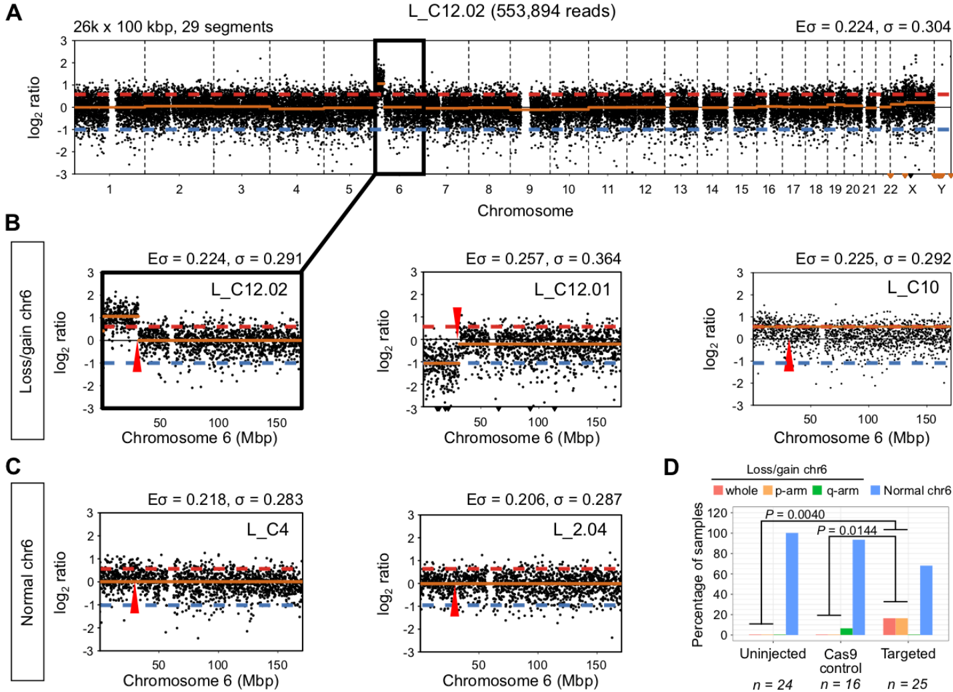
- In low-pass WGS of 65 samples (25 CRISPR-Cas9 targeted, 16 Cas9 controls, 24 uninjected controls), 8/25 targeted samples had chromosome 6 abnormalities: 4 had segmental loss/gain adjacent to or within POU5F1 (16%) and 4 had whole chromosome 6 gain (16%). One Cas9 control (6.25%) had a segmental gain on 6q distinct from POU5F1, and no uninjected controls showed abnormalities; targeted vs Cas9 P = 0.0144 and targeted vs uninjected P = 0.0040 by two-tailed Fisher’s test.
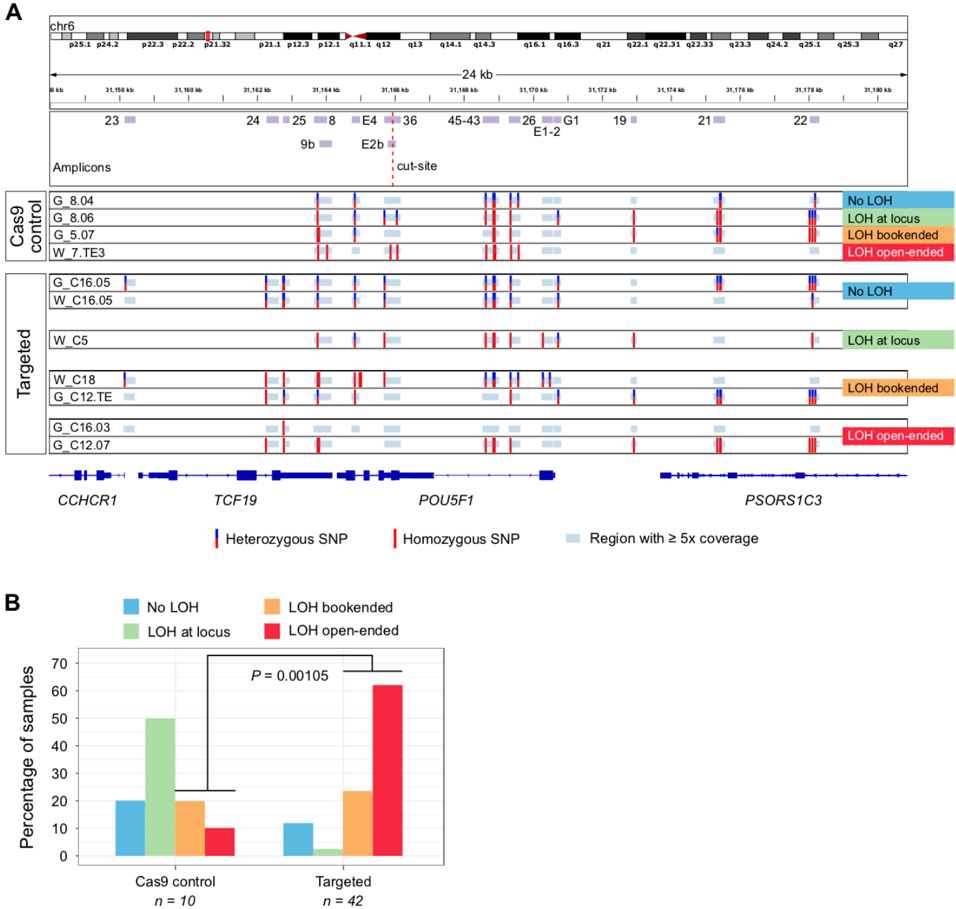
- Targeted deep sequencing of 137 single cells/clusters (111 targeted, 26 Cas9 controls; 42 targeted and 10 controls retained after filtering) found open-ended LOH in 61.9% of targeted vs 10% of control samples, bookended LOH in 23.8% targeted vs 20% control, LOH at the locus in 2.4% targeted vs 50% control, and no LOH in 11.9% targeted vs 20% control. LOH events spanned 4 kb to at least 20 kb.
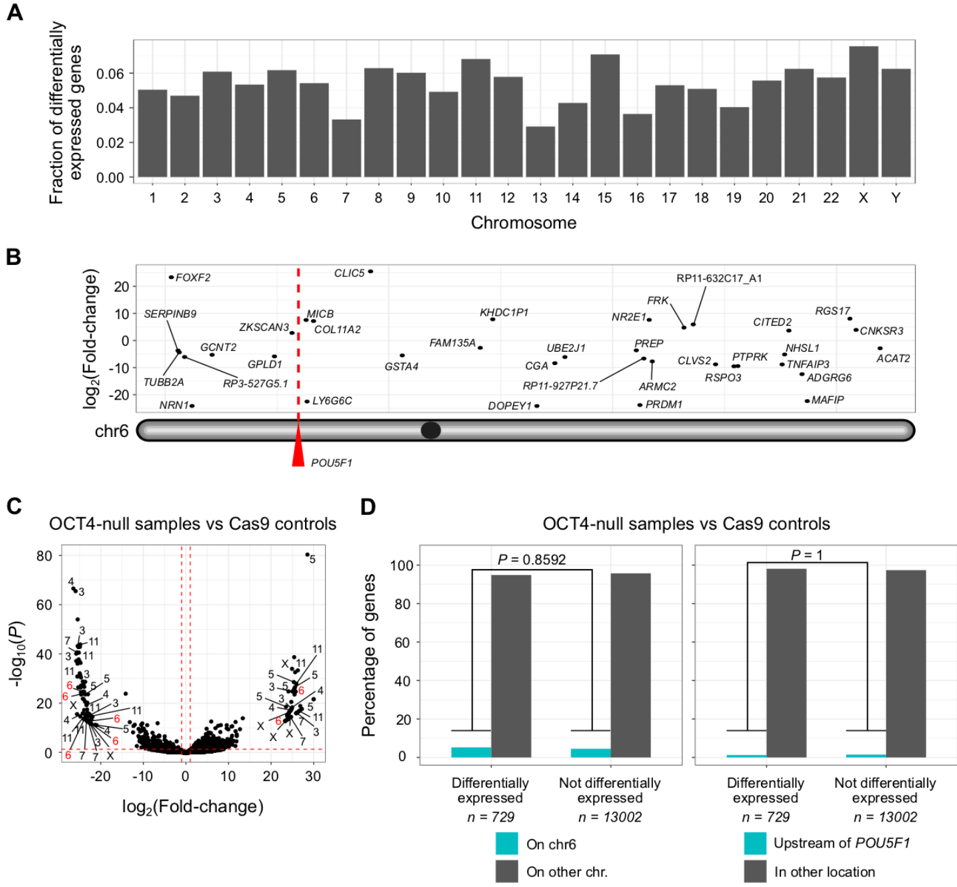
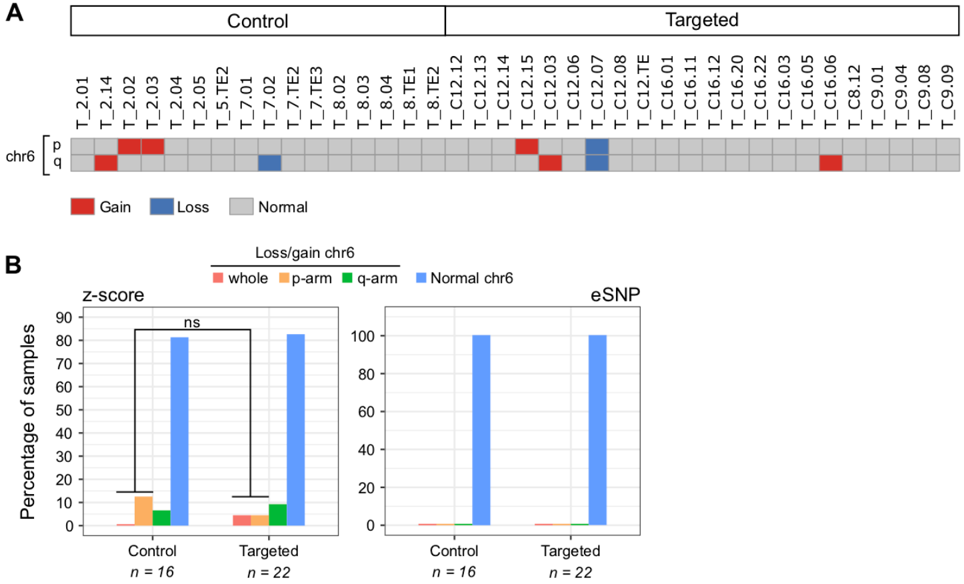
- Transcriptome analyses did not show preferential misexpression of chromosome 6 genes or genes telomeric to POU5F1, and transcriptome-based digital karyotyping/eSNP-Karyotyping did not confirm the gDNA-derived chromosome 6 trends.
Methods
- The study reprocessed DNA and reanalyzed data from a previous study plus 56 additional samples. Human in vitro fertilized zygotes donated as surplus to infertility treatment were microinjected with sgRNA-Cas9 ribonucleoprotein targeting POU5F1 exon 2 or Cas9 protein alone, cultured 5–6 days, and single cells or 2–5-cell clusters were collected.
- Low-pass whole-genome sequencing (<0.1×) was used for copy-number profiles; targeted deep sequencing used 15 PCR amplicons spanning a ~20 kb POU5F1 region plus an ARGFX control on chromosome 3, with SNP calling and allele-overamplification correction. Single-cell RNA-seq data were analyzed with DESeq2, z-score-karyotyping, and eSNP-Karyotyping.
- Comparisons of abnormality frequencies used two-tailed Fisher’s tests.
Limitations
- The paper states that shallow sequencing, MDA-amplified gDNA, and lack of parental genotypes may cause overestimation of LOH events; it also notes that inherited homozygous genotypes cannot be excluded without parental genotypes.
- The authors state that mosaicism is common in human preimplantation embryos, so abnormalities in one analyzed cell may not represent the whole embryo.
- The paper notes that transcriptome and cytogenetics data were not from the same samples, and that single-cell WGA is prone to allele over-amplification and allelic dropout, which can confound interpretation of on-target complexity.
Model-written summary. Check it against the paper before relying on it.
Integrity signals
Registry
Cites
Statistics
Figures
Verification
Claims the paper makes
30 Valid · 1 Not valid · 6 Not checked · 71 Own results and interpretations
The cited sources support only part of this claim — read each source’s verdict below.
In the paper
“Moreover, we identified that 57 of the 137 successfully genotyped samples (42%) exhibited a homozygous wild-type genotype based on PCR amplification of a short genomic fragment (17).”
§ Frequent loss-of-heterozygosity in CRISPR-Cas9-edited early human embryos > Introduction
What the sources say
- Partly supportedcites [17] matched to “Genome editing reveals a role for OCT4 in human embryogenesis” (2017) sourceExperimental — accuracy not yet measured
The Methods section (Genomic DNA extraction and genotyping; page unavailable) describes PCR amplification of a 244-bp fragment and classifying samples with only the reference sequence as wild-type. Our copy does not report that 57 of 137 successfully genotyped samples (42%) had a homozygous wild-type genotype; searches for those numbers and percentage did not find the result. (LLM, conf=0.84)
plainn = 137- Asserted: passes — The authors put it forward as true.
- Checkable: passes — It can be checked against evidence.
- Load-bearing: passes — The paper’s conclusions depend on it.
- Based: passes — The paper gives a reason why it holds.
- Partly supported
The sources with a verdict support this claim; the rest weren’t checked yet, have no full text we could read, or their verdicts aren’t rated yet.
In the paper
“CRISPR-Cas9-induced deletions larger than these fragments in either direction would eliminate one or both PCR primer annealing sites.This in turn can lead to amplification of only one allele, giving the false impression that targeting was unsuccessful or that there is a single homozygous event at the on-target site (9,10,15).”
§ Frequent loss-of-heterozygosity in CRISPR-Cas9-edited early human embryos > Introduction
What the sources say
- Supportedcites [9] matched to “Inter-homologue repair in fertilized human eggs?” (2018) source
The paper explains that a deletion removing a PCR primer-binding site can cause amplification of only the maternal allele, creating a misleading appearance of correction of the paternal allele (opening discussion; page unavailable). In “Large deletions induced by Cas9 cleavage” (page unavailable), larger PCR products revealed deletions missed by the initial assay, including in false-negative samples. The paper also cautions that such deletions must be excluded before interpreting embryos as homozygous wild type. (LLM, conf=0.92)
- Supportedcites [10] matched to “Large deletions induced by Cas9 cleavage” (2018) source
In “Large deletions induced by Cas9 cleavage” (page not provided), the authors report that deletions encompassed PCR primer-binding sequences and contributed to false-negative mutation screens. The same section warns that an undetected large deletion could make an embryo appear homozygous wild-type, supporting the claimed misleading single-allele result. (LLM, conf=0.91)
- Not checked — no full text of the sourcecites [15] matched to “Unexpected CRISPR on-target effects” (2018) source
plainstates a cause- Asserted: passes — The authors put it forward as true.
- Checkable: passes — It can be checked against evidence.
- Load-bearing: passes — The paper’s conclusions depend on it.
- Based: passes — The paper gives a reason why it holds.
- Supported
The cited sources support only part of this claim — read each source’s verdict below.
In the paper
“More recently, Przewrocka and colleagues observed a 6% incidence of chromosome arm truncations when targeting ZNF516 in p53-competent HCT116 cancer cell lines with CRISPR-Cas9”
§ Frequent loss-of-heterozygosity in CRISPR-Cas9-edited early human embryos > Introduction
What the sources say
- Partly supportedcites [16] matched to “Unintended on-target chromosomal instability following CRISPR/Cas9 single gene targeting” (2020) sourceExperimental — accuracy not yet measured
In the paper’s results (page unavailable), 10 of 155 ZNF516-targeted HCT116 clones (6%) had loss of heterozygosity downstream of ZNF516, which the authors used to assess chromosome 18q arm truncation. Our copy does not state that the HCT116 cells were p53-competent, so that qualifier is unsupported. (LLM, conf=0.86)
plain- Asserted: passes — The authors put it forward as true.
- Checkable: passes — It can be checked against evidence.
- Load-bearing: passes — The paper’s conclusions depend on it.
- Based: passes — The paper gives a reason why it holds.
- Partly supported
The cited sources support only part of this claim — read each source’s verdict below.
In the paper
“The segmental aneuploidies identified by cytogenetics analysis (Figs. 1B and S3-S5) most probably point to the occurrence of complex genomic rearrangements in OCT4-targeted samples, such as chromosomal translocations or end-to-end fusions, as it seems unlikely that the rest of the chromosome would continue to be retained without a telomere (31)(32)(33).”
§ Frequent loss-of-heterozygosity in CRISPR-Cas9-edited early human embryos > Discussion
What the sources say
- Not checked — no full text of the sourcecites [31] matched to “TRF2 Protects Human Telomeres from End-to-End Fusions” (1998) source
- Partly supportedcites [32] matched to “Chromosome Instability as a Result of Double-Strand Breaks near Telomeres in Mouse Embryonic Stem Cells” (2002) sourceExperimental — accuracy not yet measured
The Results and Discussion (page numbers not provided) show that telomere loss in mouse embryonic stem cells can lead to chromosome fusions, translocations, and complex rearrangements. The paper does not examine OCT4-targeted samples or establish that their segmental aneuploidies indicate those rearrangements; that application is the citing authors’ inference. (LLM, conf=0.86)
- Supportedcites [33] matched to “The nature of telomere fusion and a definition of the critical telomere length in human cells” (2007) source
The Abstract (page not provided) states that loss of telomere function can cause end-to-end fusions and genomic rearrangements, including nonreciprocal translocations. The Discussion (page not provided) likewise links telomere deletion to fusion and translocations. The OCT4-targeted cytogenetic findings are the citing authors’ own observation, not a finding attributed to this source. (LLM, conf=0.86)
hedgedstates a possible cause- Asserted: passes — The authors put it forward as true.
- Checkable: passes — It can be checked against evidence.
- Load-bearing: passes — The paper’s conclusions depend on it.
- Based: passes — The paper gives a reason why it holds.
The sources with a verdict support this claim; the rest weren’t checked yet, have no full text we could read, or their verdicts aren’t rated yet.
In the paper
“Of the studies that have been conducted, the reported efficiencies of repair with templates in human embryos are very low (5,7,8).”
§ Frequent loss-of-heterozygosity in CRISPR-Cas9-edited early human embryos > Discussion
What the sources say
- Supportedcites [5] matched to “CRISPR/Cas9-mediated gene editing in human tripronuclear zygotes” (2015) source
The Abstract describes homologous recombination–directed repair of HBB as low in human tripronuclear zygotes. The Results section reports that only 4 of 28 Cas9-cleaved embryos (14.3%) were edited using the supplied ssDNA repair template. The paper supports the claim for the embryos it studied, without establishing a rate for all human embryos. (LLM, conf=0.92)
- Not checked — no full text of the sourcecites [7] matched to “CRISPR/Cas9-mediated gene editing in human zygotes using Cas9 protein” (2017) source
- Not checked — no full text of the sourcecites [8] matched to “Correction of a pathogenic gene mutation in human embryos” (2017) source
plain- Asserted: passes — The authors put it forward as true.
- Checkable: passes — It can be checked against evidence.
- Load-bearing: passes — The paper’s conclusions depend on it.
- Based: passes — The paper gives a reason why it holds.
- Supported
52 more claims · 4 with their cited sources checked
Create a free account to see all 108 claims and every source verdict.
- Probably not a substantial claim. 31
- It may state two separate claims as one. 23
- The quote only partly states this claim. 1
Citations
Cites
Moderated estimation of fold change and dispersion for RNA-seq data with DESeq2
Love, M. I., Huber, W., & Anders, S. (2014) · Genome Biology · doi:10.1186/s13059-014-0550-8 · Cited by 95,106
The Sequence Alignment/Map format and SAMtools
Li, H., Handsaker, B., Wysoker, A., Fennell, T., Ruan, J., Homer, N., Marth, G., Abecasis, G., Durbin, R., & 1000 Genome Project Data Processing Subgroup (2009) · Bioinformatics · doi:10.1093/bioinformatics/btp352 · Cited by 62,041
Fast and accurate short read alignment with Burrows-Wheeler transform
Li, H., & Durbin, R. (2009) · Bioinformatics · doi:10.1093/bioinformatics/btp324 · Cited by 58,607
DADA2: High–resolution sample inference from Illumina amplicon data
Callahan, B. J., McMurdie, P. J., Rosen, M. J., Han, A. W., Johnson, A. J. A., & Holmes, S. P. (2016) · Nature Methods · doi:10.1038/nmeth.3869 · Cited by 35,698
HTSeq—a Python framework to work with high-throughput sequencing data
Anders, S., Pyl, P. T., & Huber, W. (2015) · Bioinformatics · doi:10.1093/bioinformatics/btu638 · Cited by 21,464
Robinson, J. T., Thorvaldsdóttir, H., Winckler, W., Guttman, M., Lander, E. S., Getz, G., & Mesirov, J. P. (2011) · Nature Biotechnology · doi:10.1038/nbt.1754 · Cited by 15,390
Kim, D., Pertea, G., Trapnell, C., Pimentel, H., Kelley, R., & Salzberg, S. L. (2013) · Genome Biology · doi:10.1186/gb-2013-14-4-r36 · Cited by 12,668
Fast and accurate long-read alignment with Burrows-Wheeler transform.
Li, H., & Durbin, R. (2010) · Bioinformatics · doi:10.1093/bioinformatics/btp698 · Cited by 12,063
Li, H. (2011) · Bioinformatics · doi:10.1093/bioinformatics/btr509 · Cited by 6,486
Measurement of mRNA abundance using RNA-seq data: RPKM measure is inconsistent among samples
Wagner, G. P., Kin, K., & Lynch, V. J. (2012) · Theory in Biosciences · doi:10.1007/s12064-012-0162-3 · Cited by 2,136
Research works printed but not linked: 2
- N. M. Fogarty . Uncovering mechanisms of early human lineage specification by CRISPR/Cas9-mediated genome editing [RNA-seq]. Gene Expression Omnibus . https://www.ncbi.nlm.nih.gov/geo/query/acc.cgi?acc=GSE100118. Accessed 10 September 2020.
- G. Alanis-Lobato . Frequent loss-of-heterozygosity in CRISPR-Cas9-edited early human embryos. GitHub. https://github.com/galanisl/loh_scripts. Deposited 31 May 2020. · DOI
Cited by
Methods and applications for single-cell and spatial multi-omics
Vandereyken, K., Sifrim, A., Thienpont, B., & Voet, T. (2023) · Nature Reviews Genetics · doi:10.1038/s41576-023-00580-2 · Cited by 1,244
Engineered Virus-like Particles for Efficient in Vivo Delivery of Therapeutic Proteins
Banskota, S., Raguram, A., Suh, S., Du, S. W., Davis, J. R., Choi, E. H., Wang, X., Nielsen, S. C., Newby, G. A., Randolph, P. B., et al. (2022) · Cell · doi:10.1016/j.cell.2021.12.021 · Cited by 668
Anzalone, A. V., Gao, X. D., Podracky, C. J., Nelson, A. T., Koblan, L. W., Raguram, A., Levy, J. M., Mercer, J. A. M., & Liu, D. R. (2022) · Nature Biotechnology · doi:10.1038/s41587-021-01133-w · Cited by 613
Prime editing for precise and highly versatile genome manipulation
Chen, P. J., & Liu, D. R. (2023) · Nature Reviews Genetics · doi:10.1038/s41576-022-00541-1 · Cited by 605
Chromothripsis as an on-target consequence of CRISPR–Cas9 genome editing
Leibowitz, M. L., Papathanasiou, S., Doerfler, P. A., Blaine, L. J., Sun, L., Yao, Y., Zhang, C.-Z., Weiss, M. J., & Pellman, D. (2021) · Nature Genetics · doi:10.1038/s41588-021-00838-7 · Cited by 583
Therapeutic in vivo delivery of gene editing agents
Raguram, A., Banskota, S., & Liu, D. R. (2022) · Cell · doi:10.1016/j.cell.2022.03.045 · Cited by 522
Base editing of haematopoietic stem cells rescues sickle cell disease in mice
Newby, G. A., Yen, J. S., Woodard, K. J., Mayuranathan, T., Lazzarotto, C. R., Li, Y., Sheppard-Tillman, H., Porter, S. N., Yao, Y., Mayberry, K., et al. (2021) · Nature · doi:10.1038/s41586-021-03609-w · Cited by 386
Allele-Specific Chromosome Removal after Cas9 Cleavage in Human Embryos
Zuccaro, M. V., Xu, J., Mitchell, C., Marin, D., Zimmerman, R., Rana, B., Weinstein, E., King, R. T., Palmerola, K. L., Smith, M. E., et al. (2020) · Cell · doi:10.1016/j.cell.2020.10.025 · Cited by 303
Neugebauer, M. E., Hsu, A., Arbab, M., Krasnow, N. A., McElroy, A. N., Pandey, S., Doman, J. L., Huang, T. P., Raguram, A., Banskota, S., et al. (2023) · Nature Biotechnology · doi:10.1038/s41587-022-01533-6 · Cited by 272
Targeted genome-modification tools and their advanced applications in crop breeding
Li, B., Sun, C., Li, J., & Gao, C. (2024) · Nature Reviews Genetics · doi:10.1038/s41576-024-00720-2 · Cited by 233
Efficient prime editing in mouse brain, liver and heart with dual AAVs
Davis, J. R., Banskota, S., Levy, J. M., Newby, G. A., Wang, X., Anzalone, A. V., Nelson, A. T., Chen, P. J., Hennes, A. D., An, M., et al. (2024) · Nature Biotechnology · doi:10.1038/s41587-023-01758-z · Cited by 227
Frequent aneuploidy in primary human T cells after CRISPR–Cas9 cleavage
Nahmad, A. D., Reuveni, E., Goldschmidt, E., Tenne, T., Liberman, M., Horovitz-Fried, M., Khosravi, R., Kobo, H., Reinstein, E., Madi, A., et al. (2022) · Nature Biotechnology · doi:10.1038/s41587-022-01377-0 · Cited by 212
CRISPR-based genome editing through the lens of DNA repair
Nambiar, T. S., Baudrier, L., Billon, P., & Ciccia, A. (2022) · Molecular Cell · doi:10.1016/j.molcel.2021.12.026 · Cited by 208
Assessing and advancing the safety of CRISPR-Cas tools: from DNA to RNA editing
Tao, J., Bauer, D. E., & Chiarle, R. (2023) · Nature Communications · doi:10.1038/s41467-023-35886-6 · Cited by 207
Mitigation of chromosome loss in clinical CRISPR-Cas9-engineered T cells
Tsuchida, C. A., Brandes, N., Bueno, R., Trinidad, M., Mazumder, T., Yu, B., Hwang, B., Chang, C., Liu, J., Sun, Y., et al. (2023) · Cell · doi:10.1016/j.cell.2023.08.041 · Cited by 209
Pandey, S., Gao, X. D., Krasnow, N. A., McElroy, A., Tao, Y. A., Duby, J. E., Steinbeck, B. J., McCreary, J., Pierce, S. E., Tolar, J., et al. (2024) · Nature Biomedical Engineering · doi:10.1038/s41551-024-01227-1 · Cited by 203
In vivo somatic cell base editing and prime editing
Newby, G. A., & Liu, D. R. (2021) · Molecular Therapy · doi:10.1016/j.ymthe.2021.09.002 · Cited by 199
Precise integration of large DNA sequences in plant genomes using PrimeRoot editors
Sun, C., Lei, Y., Li, B., Gao, Q., Li, Y., Cao, W., Yang, C., Li, H., Wang, Z., Li, Y., et al. (2024) · Nature Biotechnology · doi:10.1038/s41587-023-01769-w · Cited by 199
Höijer, I., Emmanouilidou, A., Östlund, R., van Schendel, R., Bozorgpana, S., Tijsterman, M., Feuk, L., Gyllensten, U., den Hoed, M., & Ameur, A. (2022) · Nature Communications · doi:10.1038/s41467-022-28244-5 · Cited by 187
Designing and executing prime editing experiments in mammalian cells
Doman, J. L., Sousa, A. A., Randolph, P. B., Chen, P. J., & Liu, D. R. (2022) · Nature Protocols · doi:10.1038/s41596-022-00724-4 · Cited by 172
Rasul, M. F., Hussen, B. M., Salihi, A., Ismael, B. S., Jalal, P. J., Zanichelli, A., Jamali, E., Baniahmad, A., Ghafouri-Fard, S., Basiri, A., et al. (2022) · Molecular Cancer · doi:10.1186/s12943-021-01487-4 · Cited by 171
Human Germline and Heritable Genome Editing: The Global Policy Landscape
Baylis, F., Darnovsky, M., Hasson, K., & Krahn, T. M. (2020) · The CRISPR Journal · doi:10.1089/crispr.2020.0082 · Cited by 155
Whole chromosome loss and genomic instability in mouse embryos after CRISPR-Cas9 genome editing
Papathanasiou, S., Markoulaki, S., Blaine, L. J., Leibowitz, M. L., Zhang, C., Jaenisch, R., & Pellman, D. S. (2021) · Nature Communications · doi:10.1038/s41467-021-26097-y · Cited by 140
Hunt, J., Samson, C., du Rand, A., & Sheppard, H. M. (2023) · Human Genetics · doi:10.1007/s00439-023-02561-1 · Cited by 151
Kluesner, M. G., Lahr, W. S., Lonetree, C.-L., Smeester, B. A., Qiu, X., Slipek, N. J., Claudio Vázquez, P. N., Pitzen, S. P., Pomeroy, E. J., Vignes, M. J., et al. (2021) · Nature Communications · doi:10.1038/s41467-021-22009-2 · Cited by 121
Tao, R., Han, X., Bai, X., Yu, J., Ma, Y.-W., Chen, W., Zhang, D., & Li, Z. (2024) · Frontiers in Immunology · doi:10.3389/fimmu.2024.1354825 · Cited by 117
Integration of CRISPR/Cas9 with artificial intelligence for improved cancer therapeutics
Bhat, A. A., Nisar, S., Mukherjee, S., Saha, N., Yarravarapu, N., Lone, S. N., Masoodi, T., Chauhan, R., Maacha, S., Bagga, P., et al. (2022) · Journal of Translational Medicine · doi:10.1186/s12967-022-03765-1 · Cited by 130
Xie, C., Wang, W., Tu, C., Meng, L., Lu, G., Lin, G., Lu, L., & Tan, Y. (2022) · Human Reproduction Update · doi:10.1093/humupd/dmac024 · Cited by 105
Off-target effects in CRISPR-Cas genome editing for human therapeutics: Progress and challenges
Kalter, N., Fuster‐García, C., Silva, A., Ronco-Díaz, V., Roncelli, S., Turchiano, G., Gorodkin, J., Cathomen, T., Benabdellah, K., Lee, C. M., et al. (2025) · Molecular Therapy — Nucleic Acids · doi:10.1016/j.omtn.2025.102636 · Cited by 134
Frequency and mechanisms of LINE-1 retrotransposon insertions at CRISPR/Cas9 sites
Tao, J., Wang, Q., Mendez‐Dorantes, C., Burns, K. H., & Chiarle, R. (2022) · Nature Communications · doi:10.1038/s41467-022-31322-3 · Cited by 96
Piergentili, R., Rio, A. D., Signore, F., Ronchi, F. U., Marinelli, E., & Zaami, S. (2021) · Cells · doi:10.3390/cells10050969 · Cited by 109
Boutin, J., Rosier, J., Cappellen, D., Prat, F., Toutain, J., Pennamen, P., Bouron, J., Rooryck, C., Merlio, J., Lamrissi‐Garcia, I., et al. (2021) · Nature Communications · doi:10.1038/s41467-021-25190-6 · Cited by 90
Cullot, G., Aird, E. J., Schlapansky, M. F., Yeh, C. D., van de Venn, L., Vykhlyantseva, I., Kreutzer, S., Mailänder, D., Lewków, B., Klermund, J., et al. (2024) · Nature Biotechnology · doi:10.1038/s41587-024-02488-6 · Cited by 94
Sahel, D. K., Vora, L. K., Saraswat, A. L., Sharma, S., Monpara, J. D., D’souza, A. A., Mishra, D., Tryphena, K. P., Kawakita, S., Khan, S. U., et al. (2023) · Advanced Science · doi:10.1002/advs.202207512 · Cited by 89
Schimmel, J., Muñoz-Subirana, N., Kool, H., van Schendel, R., van der Vlies, S., Kamp, J. A., de Vrij, F. M. S., Kushner, S. A., Smith, G. C. M., Boulton, S. J., et al. (2023) · Cell Reports · doi:10.1016/j.celrep.2023.112019 · Cited by 74
Precise genome-editing in human diseases: mechanisms, strategies and applications
Zheng, Y., Li, Y., Zhou, K., Li, T., VanDusen, N. J., & Hua, Y. (2024) · Signal Transduction and Targeted Therapy · doi:10.1038/s41392-024-01750-2 · Cited by 107
van de Kooij, B., Kruswick, A., van Attikum, H., & Yaffe, M. B. (2022) · Nature Communications · doi:10.1038/s41467-022-32743-w · Cited by 73
Click editing enables programmable genome writing using DNA polymerases and HUH endonucleases
Ferreira da Silva, J., Tou, C. J., King, E. M., Eller, M. L., Rufino-Ramos, D., Ma, L., Cromwell, C. R., Metovic, J., Benning, F. M. C., Chao, L. H., et al. (2025) · Nature Biotechnology · doi:10.1038/s41587-024-02324-x · Cited by 82
Simkin, D., Papakis, V., Bustos, B. I., Ambrosi, C. M., Ryan, S. J., Baru, V., Williams, L. A., Dempsey, G. T., McManus, O. B., Landers, J. E., et al. (2022) · Stem Cell Reports · doi:10.1016/j.stemcr.2022.02.008 · Cited by 66
Li, Z., Wang, J., Xu, J.-P., Wang, J., & Yang, X. F. (2023) · Military Medical Research · doi:10.1186/s40779-023-00447-x · Cited by 93
Sousa, A. A., Hemez, C. F., Lei, L., Traore, S., Kulhánková, K., Newby, G. A., Doman, J. L., Oye, K., Pandey, S., Karp, P. H., et al. (2024) · Nature Biomedical Engineering · doi:10.1038/s41551-024-01233-3 · Cited by 83
Xu, W., Zhang, S., Qin, H., & Yao, K. (2024) · Journal of Translational Medicine · doi:10.1186/s12967-024-05957-3 · Cited by 85
ON-Target Adverse Events of CRISPR-Cas9 Nuclease: More Chaotic than Expected
Boutin, J., Cappellen, D., Rosier, J., Amintas, S., Dabernat, S., Bedel, A., & Moreau‐Gaudry, F. (2022) · The CRISPR Journal · doi:10.1089/crispr.2021.0120 · Cited by 69
Therapeutic Editing of the TP53 Gene: Is CRISPR/Cas9 an Option?
Mirgayazova, R., Khadiullina, R., Chasov, V., Mingaleeva, R., Miftakhova, R., Rizvanov, A., & Bulatov, E. (2020) · Genes · doi:10.3390/genes11060704 · Cited by 62
Evolution of CRISPR/Cas Systems for Precise Genome Editing
Hryhorowicz, M., Lipiński, D., & Zeyland, J. (2023) · International Journal of Molecular Sciences · doi:10.3390/ijms241814233 · Cited by 80
The hidden risks of CRISPR/Cas: structural variations and genome integrity
Aussel, C., Cathomen, T., & Fuster‐García, C. (2025) · Nature Communications · doi:10.1038/s41467-025-62606-z · Cited by 91
Engineering strategies to safely drive CAR T-cells into the future
Rossi, M., & Breman, E. (2024) · Frontiers in Immunology · doi:10.3389/fimmu.2024.1411393 · Cited by 73
Harnessing DSB repair to promote efficient homology-dependent and -independent prime editing
Peterka, M., Akrap, N., Li, S., Wimberger, S., Hsieh, P.-P., Degtev, D., Bestas, B., Barr, J., van de Plassche, S., Mendoza-García, P., et al. (2022) · Nature Communications · doi:10.1038/s41467-022-28771-1 · Cited by 56
The contribution of DNA repair pathways to genome editing and evolution in filamentous pathogens
Huang, J. T., & Cook, D. E. (2022) · FEMS Microbiology Reviews · doi:10.1093/femsre/fuac035 · Cited by 61
Turocy, J. M., Adashi, E. Y., & Egli, D. M. (2021) · Cell · doi:10.1016/j.cell.2021.02.036 · Cited by 61
Alves, C. R. R., Ha, L. L., Yaworski, R., Sutton, E. R., Lazzarotto, C. R., Christie, K. A., Reilly, A., Beauvais, A., Doll, R. M., de la Cruz, D., et al. (2023) · Nature Biomedical Engineering · doi:10.1038/s41551-023-01132-z · Cited by 76
Lazar, N. H., Çelik, S., Chen, L., Fay, M. M., Irish, J. C., Jensen, J., Tillinghast, C. A., Urbanik, J., Bone, W. P., Roberts, G. H. L., et al. (2024) · Nature Genetics · doi:10.1038/s41588-024-01758-y · Cited by 58
O’Geen, H., Beitnere, U., Garcia, M. S., Adhikari, A., Cameron, D. L., Fenton, T. A., Copping, N. A., Deng, P., Lock, S., Halmai, J. A. N. M., et al. (2023) · Molecular Therapy · doi:10.1016/j.ymthe.2023.01.013 · Cited by 53
In vivo prime editing rescues alternating hemiplegia of childhood in mice
Sousa, A. A., Terrey, M., Sakai, H. A., Simmons, C. Q., Arystarkhova, E., Morsci, N. S., Anderson, L. C., Xie, J., Suri‐Payer, F., Laux, L. C., et al. (2025) · Cell · doi:10.1016/j.cell.2025.06.038 · Cited by 59
Homology-based repair induced by CRISPR-Cas nucleases in mammalian embryo genome editing
Zhang, X., Li, T., Ou, J., Huang, J., & Liang, P. (2021) · Protein & Cell · doi:10.1007/s13238-021-00838-7 · Cited by 52
CRISPRthripsis: The Risk of CRISPR/Cas9-induced Chromothripsis in Gene Therapy
Amendola, M., Brusson, M., & Miccio, A. (2022) · Stem Cells Translational Medicine · doi:10.1093/stcltm/szac064 · Cited by 51
Technical challenges of studying early human development
Rugg‐Gunn, P. J., Moris, N., & Tam, P. (2023) · Development · doi:10.1242/dev.201797 · Cited by 50
Base editing in bovine embryos reveals a species-specific role of SOX2 in regulation of pluripotency
Luo, L., Shi, Y., Wang, H., Wang, Z., Dang, Y., Li, S., Wang, S., & Zhang, K. (2022) · PLoS Genetics · doi:10.1371/journal.pgen.1010307 · Cited by 47
Huang, J. T., Rowe, D., Subedi, P., Zhang, W., Suelter, T., Valent, B. S., & Cook, D. E. (2022) · Nature Communications · doi:10.1038/s41467-022-34736-1 · Cited by 48
CRISPR–Cas9 gene editing induced complex on-target outcomes in human cells
Wen, W., & Zhang, X. (2022) · Experimental Hematology · doi:10.1016/j.exphem.2022.03.002 · Cited by 42
Cell cycle arrest and p53 prevent ON-target megabase-scale rearrangements induced by CRISPR-Cas9
Cullot, G., Boutin, J., Fayet, S., Prat, F., Rosier, J., Cappellen, D., Lamrissi‐Garcia, I., Pennamen, P., Bouron, J., Amintas, S., et al. (2023) · Nature Communications · doi:10.1038/s41467-023-39632-w · Cited by 41
Progress and pitfalls of gene editing technology in CAR-T cell therapy: a state-of-the-art review
Moradi, V., Khodabandehloo, E., Alidadi, M., Omidkhoda, A., & Ahmadbeigi, N. (2024) · Frontiers in Oncology · doi:10.3389/fonc.2024.1388475 · Cited by 49
Chen, Z., Kelly, K., Cheng, H., Dong, X., Hedger, A. K., Li, L., Sontheimer, E. J., & Watts, J. K. (2023) · GEN Biotechnology · doi:10.1089/genbio.2023.0045 · Cited by 41
Tsai, H., Kao, H., Kuo, M.-W., Lin, C., Chang, C.-M., Chen, Y., Chen, H., Kwok, P., Yu, A. L.-T., & Yu, J. (2023) · Nature Communications · doi:10.1038/s41467-023-40901-x · Cited by 38
The metabolic-epigenetic nexus in type 2 diabetes mellitus
Davison, G. W., Irwin, R. E., & Walsh, C. P. (2021) · Free Radical Biology and Medicine · doi:10.1016/j.freeradbiomed.2020.12.025 · Cited by 41
A simple method using CRISPR-Cas9 to knock-out genes in murine cancerous cell lines
Ishibashi, A., Saga, K., Hisatomi, Y., Li, Y., Kaneda, Y., & Nimura, K. (2020) · Scientific Reports · doi:10.1038/s41598-020-79303-0 · Cited by 48
Kabra, M., Shahi, P. K., Wang, Y., Sinha, D., Spillane, A., Newby, G. A., Saxena, S., Tong, Y., Chang, Y., Abdeen, A. A., et al. (2023) · Journal of Clinical Investigation · doi:10.1172/jci171356 · Cited by 48
CRISPR applications in cancer diagnosis and treatment
Wang, M., Chen, M., Wu, X., Huang, X., & Yu, B. (2023) · Cellular & Molecular Biology Letters · doi:10.1186/s11658-023-00483-4 · Cited by 40
KLF17 promotes human naïve pluripotency but is not required for its establishment
Lea, R. A., McCarthy, A., Boeing, S., Fallesen, T. L., Elder, K. T., Snell, P., Christie, L., Adkins, S., Shaikly, V., Taranissi, M., et al. (2021) · Development · doi:10.1242/dev.199378 · Cited by 33
Self-citationSamach, A., Mafessoni, F., Gross, O., Melamed‐Bessudo, C., Hayut, S. F., Dahan‐Meir, T., Amsellem, Z., Pawlowski, W. P., & Levy, A. A. (2023) · The Plant Cell · doi:10.1093/plcell/koad209 · Cited by 42
Click editing enables programmable genome writing using DNA polymerases and HUH endonucleasesPreprint
da Silva, J. F., Tou, C. J., King, E. M., et al. (2023) · bioRxiv (Cold Spring Harbor Laboratory) · doi:10.1101/2023.09.12.557440 · Cited by 28
Bzhilyanskaya, V., Ma, L., Liu, S., Fox, L. R., Whittaker, M. N., Meis, R. J., Choi, U., Lawson, A., Ma, M., Theobald, N., et al. (2024) · Science Translational Medicine · doi:10.1126/scitranslmed.adj6779 · Cited by 28
PEAC-seq adopts Prime Editor to detect CRISPR off-target and DNA translocation
Yu, Z., Lu, Z., Li, J., Wang, Y., Wu, P., Li, Y., Zhou, Y., Li, B., Zhang, H., Liu, Y., et al. (2022) · Nature Communications · doi:10.1038/s41467-022-35086-8 · Cited by 30
Epigenetic editing: from concept to clinic
Heller, E. A., Bintu, L., & Rots, M. G. (2025) · Nature Reviews Drug Discovery · doi:10.1038/s41573-025-01323-0 · Cited by 42
Future Perspectives of Prime Editing for the Treatment of Inherited Retinal Diseases
Hansen, S., McClements, M. E., Corydon, T. J., & MacLaren, R. E. (2023) · Cells · doi:10.3390/cells12030440 · Cited by 25
Limitations of gene editing assessments in human preimplantation embryos
Liang, D., Mikhalchenko, A. E., Ma, H., Gutiérrez, N. M., Chen, T., Lee, Y., Park, S.-W., Tippner-Hedges, R., Koski, A., Darby, H., et al. (2023) · Nature Communications · doi:10.1038/s41467-023-36820-6 · Cited by 32
CRISPRroots: on- and off-target assessment of RNA-seq data in CRISPR–Cas9 edited cells
Corsi, G. I., Gadekar, V. P., Gorodkin, J., & Seemann, S. E. (2021) · Nucleic Acids Research · doi:10.1093/nar/gkab1131 · Cited by 28
Rossi, M., Steklov, M. Y., Huberty, F., Nguyen, T., Marijsse, J., Jacques-Hespel, C., Najm, P., Lonez, C., & Breman, E. (2023) · Molecular Therapy — Nucleic Acids · doi:10.1016/j.omtn.2023.102038 · Cited by 27
Embryo and fetal gene editing: Technical challenges and progress toward clinical applications
Mattar, C. N. Z., Chew, W. L., & Lai, P. S. (2024) · Molecular Therapy — Methods & Clinical Development · doi:10.1016/j.omtm.2024.101229 · Cited by 26
Wu, L., Jiang, S., Shi, M., Yuan, T., Li, Y., Huang, P., Li, Y., Zuo, E., Zhou, C., & Sun, Y. (2024) · Genome biology · doi:10.1186/s13059-024-03434-0 · Cited by 31
Megabase-scale loss of heterozygosity provoked by CRISPR-Cas9 DNA double-strand breaks
Regan, S. B., Medhi, D., Xu, Y., White, T., Jiang, Y.-Z., Kim, J. E., Wang, S.-C., Deng, Q., Su, J., Baasan, D., et al. (2025) · Molecular Cell · doi:10.1016/j.molcel.2025.10.015 · Cited by 29
Genome diversity and instability in human germ cells and preimplantation embryos
Shukla, V., Høffding, M. K., & Hoffmann, E. R. (2021) · Seminars in Cell and Developmental Biology · doi:10.1016/j.semcdb.2020.12.007 · Cited by 23
Correction of RNA splicing defect in β654-thalassemia mice using CRISPR/Cas9 gene-editing technology
Lü, D., Gong, X., Fang, Y., Guo, X., Chen, Y., Yang, F., Zhao, G., Ma, Q., Zeng, Y., & Zeng, F. (2021) · Haematologica · doi:10.3324/haematol.2020.278238 · Cited by 25
Carvalho, C., Lemos, L., Antas, P., & Seabra, M. C. (2023) · Frontiers in Ophthalmology · doi:10.3389/fopht.2023.1270561 · Cited by 21
CRISPR/Cas gene editing in the human germline
Bekaert, B., Boel, A., Cosemans, G., Witte, L. D., Menten, B., & Heindryckx, B. (2022) · Seminars in Cell and Developmental Biology · doi:10.1016/j.semcdb.2022.03.012 · Cited by 21
Genome Editing in Human Gametes and Embryos: The Legal Dimension in Europe
Vidalis, T. (2022) · BioTech · doi:10.3390/biotech12010001 · Cited by 28
Emerging therapeutics in Huntington’s disease
Wiggins, R., & Feigin, A. (2021) · Expert Opinion on Emerging Drugs · doi:10.1080/14728214.2021.1962285 · Cited by 21
Successful Correction by Prime Editing of a Mutation in the RYR1 Gene Responsible for a Myopathy
Godbout, K., Rousseau, J., & Tremblay, J. P. (2023) · Cells · doi:10.3390/cells13010031 · Cited by 24
Moiani, A., Letort, G., Lizot, S., Chalumeau, A., Foray, C., Félix, T., Clerre, D. L., Temburni, S., Hong, P. W.-P., Leduc, S., et al. (2024) · Nature Communications · doi:10.1038/s41467-024-49353-3 · Cited by 21
Chen, Y., Luo, X. L., Kang, R., Cui, K., Ou, J., Zhang, X., & Liang, P. (2023) · Journal of genetics and genomics/Journal of Genetics and Genomics · doi:10.1016/j.jgg.2023.07.007 · Cited by 25
A Type II-B Cas9 nuclease with minimized off-targets and reduced chromosomal translocations in vivo
Bestas, B., Wimberger, S., Degtev, D., Madsen, A., Rottner, A. K., Karlsson, F. H., Naumenko, S., Callahan, M., Touza, J. L., Francescatto, M., et al. (2023) · Nature Communications · doi:10.1038/s41467-023-41240-7 · Cited by 21
Yuan, B., Bi, C., Tian, Y., Wang, J., Jin, Y., Alsayegh, K. N., Tehseen, M., Yi, G., Zhou, X., Shao, Y., et al. (2024) · BMC Biology · doi:10.1186/s12915-024-01896-z · Cited by 30
Tissue specificity of DNA repair: the CRISPR compass
da Silva, J. F., Meyenberg, M., & Loizou, J. I. (2021) · Trends in Genetics · doi:10.1016/j.tig.2021.07.010 · Cited by 18
Base editing as a genetic treatment for spinal muscular atrophyPreprint
Alves, C. R. R., Ha, L. L., Yaworski, R., Lazzarotto, C. R., Christie, K. A., Reilly, A., Beauvais, A., Doll, R. M., de la Cruz, D., Maguire, C. A., et al. (2023) · bioRxiv (Cold Spring Harbor Laboratory) · doi:10.1101/2023.01.20.524978 · Cited by 20
Park, S. H., Cao, M., & Bao, G. (2023) · Current Opinion in Biomedical Engineering · doi:10.1016/j.cobme.2023.100478 · Cited by 25
When is it Safe to Edit the Human Germline?
Baxter, J. K. (2021) · Science and Engineering Ethics · doi:10.1007/s11948-021-00320-x · Cited by 19
Recent Advances in Double-Strand Break-Free Kilobase-Scale Genome Editing Technologies
Tou, C. J., & Kleinstiver, B. P. (2022) · Biochemistry · doi:10.1021/acs.biochem.2c00311 · Cited by 18
In vivo evaluation of guide-free Cas9-induced safety risks in a pig model
Ge, W., Gou, S., Zhao, X., Jin, Q., Zhuang, Z., Zhao, Y., Liang, Y., Ouyang, Z., Liu, X., Chen, F., et al. (2024) · Signal Transduction and Targeted Therapy · doi:10.1038/s41392-024-01905-1 · Cited by 19
Engineered PsCas9 enables therapeutic genome editing in mouse liver with lipid nanoparticles
Degtev, D., Bravo, J. P. K., Emmanouilidi, A., Zdravković, A., Choong, O. K., Touza, J. L., Selfjord, N., Weisheit, I., Francescatto, M., Akçakaya, P., et al. (2024) · Nature Communications · doi:10.1038/s41467-024-53418-8 · Cited by 24
CRISPR, animals, and FDA oversight: Building a path to success
Epstein, L. R., Lee, S. S., Miller, M. F., & Lombardi, H. A. (2021) · Proceedings of the National Academy of Sciences · doi:10.1073/pnas.2004831117 · Cited by 18
Metadata
- Authors
- Alanis-Lobato, G., Zohren, J., McCarthy, A., Fogarty, N. M. E., Kubikova, N., Hardman, E., Greco, M., Wells, D., Turner, J. M. A., & Niakan, K. K.
- Affiliations
- Human Embryo and Stem Cell Laboratory, The Francis Crick Institute, NW1 1AT London, United Kingdom;
- The Francis Crick Institute (GB)
- King's College London (GB)
- John Radcliffe Hospital (GB)
- University of Cambridge (GB)
- ORCID
- Venue
- Proceedings of the National Academy of Sciences
- Publisher
- National Academy of Sciences
- Published
- 2021-04-09
- Volume
- 118
- Issue
- 22
- ISSN
- 0027-8424 (ISSN-L)
- 1091-6490
- PMC
- PMC8179174
- OpenAlex
- W3154289394
- Cited by
- 234
- References
- 57
- Citations by year
- 2026: 24 · 2025: 29 · 2024: 40 · 2023: 56 · 2022: 45 · 2021: 29
- FWCI
- 11.91
- Type
- journal article
- Language
- en
- Open access
- green
- doi.org
- Licence
- Locations
- Proceedings of the National Academy of Sciences (publishedVersion)
- bioRxiv (Cold Spring Harbor Laboratory) (submittedVersion, cc-by-nc-nd)
- PubMed Central (publishedVersion)
- PubMed (publishedVersion)
- Research Portal (King's College London) (publishedVersion, other-oa)
- Apollo (University of Cambridge) (submittedVersion)
- Apollo
- Funders
- Cancer Research UK (FC001120, FC001193)
- RCUK | Medical Research Council (FC001120, FC001193)
- Wellcome (FC001120, FC001193)
- Topics
- Life Sciences › Biochemistry, Genetics and Molecular Biology › Molecular Biology › CRISPR and Genetic Engineering
- Life Sciences › Biochemistry, Genetics and Molecular Biology › Molecular Biology › RNA regulation and disease
- Life Sciences › Biochemistry, Genetics and Molecular Biology › Genetics › Virus-based gene therapy research
- Keywords
- CRISPR/Cas9 genome editing, human embryo, loss of heterozygosity, Oct4, preimplantation embryo, mosaicism, off-target editing, chromosome 6, germline editing, single-cell genomics, single-cell transcriptomics, computational pipeline, genome editing safety
- MeSH terms
- Human Embryonic Stem Cells, Gene Editing, Blastocyst, Cell Line, Chromosomes, Human, Pair 6, Humans, Loss of Heterozygosity, Octamer Transcription Factor-3, CRISPR-Cas Systems
About these checks
Registry, retraction, Cites and statistics results are computed, not judged, with one exception: a printed reference that no index lists is read once by a model before it counts as a citation error. Claims are extracted by a model and kept only when their quote appears verbatim in the text; each cited source is then checked, with a model’s help, for whether it says what the claim relies on. Those verdicts can be wrong — read the claim’s quote and the cited source before relying on one.
The claim verdicts this report counts are experimental: their accuracy is not yet measured.
A language model drew the claims from the paper on 2026-10-12, under version 3 of the claim definition (model deepseek-v4.1-flash, prompt extract-v3).
A second model labelled each claim on 2026-10-12 (model jev-1.13-20260917, definition revision gold-guideline-v0.2).
Cited sources are checked with a language model’s help (gpt-6-sol).
Statistics and arithmetic are recomputed, not judged.
Confidence bands are shown only for fields calibrated on our annotated test set. None is calibrated yet, so no band is shown.
What counts as a claim ›How we measure confidence ›How we check this ›
Are you an author, or do you see a problem with this page? Request a review
Data sources
Bibliographic data: Semantic Scholar, OpenAlex, Crossref.
Contains information from the Semantic Scholar Academic Graph Datasets, made available under the ODC Attribution License (ODC-BY 1.0).
Semantic Scholar’s data is described in: Kinney, R., et al. (2023). The Semantic Scholar Open Data Platform. arXiv:2301.10140.
