

Nightly sleep duration predicts grade point average in the first year of college
Open accessThe DOI matches its Crossref record; 48 of the 52 references it cites were found in a registry or an index; 10 of the 41 sources its claims cite were checked for support.
Abstract
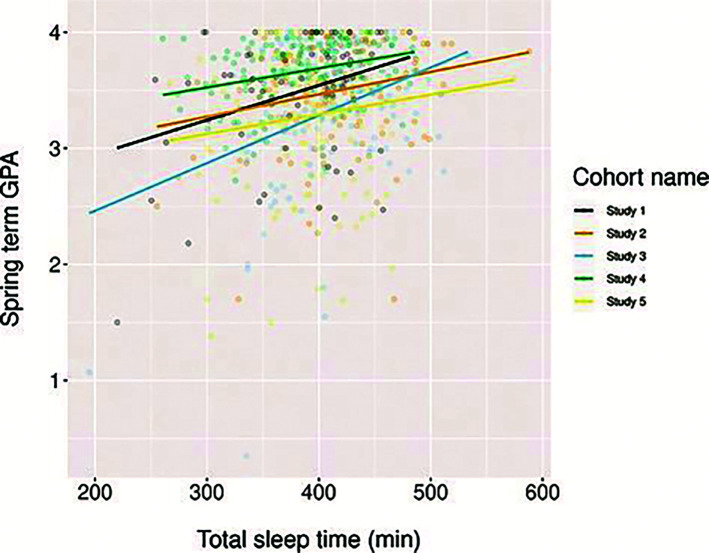
Academic achievement in the first year of college is critical for setting students on a pathway toward long-term academic and life success, yet little is known about the factors that shape early college academic achievement. Given the important role sleep plays in learning and memory, here we extend this work to evaluate whether nightly sleep duration predicts change in end-of-semester grade point average (GPA). First-year college students from three independent universities provided sleep actigraphy for a month early in their winter/spring academic term across five studies. Findings showed that greater early-term total nightly sleep duration predicted higher end-of-term GPA, an effect that persisted even after controlling for previous-term GPA and daytime sleep. Specifically, every additional hour of average nightly sleep duration early in the semester was associated with an 0.07 increase in end-of-term GPA. Sensitivity analyses using sleep thresholds also indicated that sleeping less than 6 h each night was a period where sleep shifted from helpful to harmful for end-of-term GPA, relative to previous-term GPA. Notably, predictive relationships with GPA were specific to total nightly sleep duration, and not other markers of sleep, such as the midpoint of a student's nightly sleep window or bedtime timing variability. These findings across five studies establish nightly sleep duration as an important factor in academic success and highlight the potential value of testing early academic term total sleep time interventions during the formative first year of college.
Overview
CoChat Summary
TL;DR
Across five samples of first-year college students at three US universities, objectively measured early-term nightly sleep duration predicted end-of-term GPA, with each hour of lost average nightly sleep associated with a 0.07 lower GPA. The association held after controlling for previous-term GPA, daytime sleep, academic load, and demographic factors in pooled confirmatory samples.
Key findings
- Students slept an average of 6 h 37 min per night (SD = 51 min); 21% averaged less than 6 h, and only 5% met the minimum guideline of at least 8 h.
- In pooled confirmatory studies (N = 557), greater early-term total sleep time predicted higher Spring GPA controlling for previous-term GPA (β = 0.001, p < .01), corresponding to a 0.07 GPA improvement per additional hour of nightly sleep. Study 5 alone was not statistically significant (N = 131, β = 0.001, p = .34).
- Binned by sleep duration, students averaging <6 h had Spring GPA 3.25 and GPA change −0.13; 6–7 h had Spring GPA 3.48 and change 0.02; 7+ h had Spring GPA 3.51 and change 0.01.
- Covariate-adjusted pooled analyses controlling for previous-term GPA, daytime sleep, race, gender, and first-generation status did not appreciably alter the nightly sleep–GPA association (N = 557, β = 0.001, p < .01); adding academic term load in Studies 2, 3, and 5 also did not alter it (N = 405, β = 0.001, p < .01).
Methods
- Longitudinal, multi-university design with five separate samples across three US universities: a private STEM-focused university, a private Catholic university, and a large public state university. Study 1 was a preregistered discovery sample; Studies 2–5 were preregistered confirmatory samples.
- First-year students provided wrist actigraphy (Fitbit Flex 2 or Fitbit Charge HR) early in the Winter/Spring academic term; GPA data came from university registrars, except Study 4, where baseline and cumulative GPAs were calculated as unweighted averages of individual course grades.
- Main analyses used linear regressions predicting end-of-term Spring GPA from early-term total sleep time, with and without previous-term GPA as a covariate, plus pooled confirmatory analyses and sensitivity analyses adding daytime sleep, demographics, and academic term load.
Limitations
- The paper states that wrist actigraphy and commercial sleep trackers may be less accurate than polysomnography and may underestimate total nightly sleep by 7 to 67 min; even assuming a 67-min underestimate, 62% of students still slept less than 8 h.
- The paper states that sleep was tracked only during an early Winter/Spring term month, not during Spring Break or in the Fall or later college years; Study 5 was not statistically significant when controlling for previous-term GPA, and other variables such as depression or substance use were not controlled.
- Evident from the text: the design is observational and cannot establish causality; the authors call for randomized controlled trials targeting total sleep time to test causal effects on GPA.
Model-written summary. Check it against the paper before relying on it.
Integrity signals
Registry
Cites
Statistics
Figures
Verification
Claims the paper makes
9 Valid · 1 Not valid · 14 Not checked · 47 Own results and interpretations
At least one cited source doesn’t support this claim or points to a different paper, and none confirmed it — see the verdicts below.
In the paper
“Nonetheless, even if one conservatively assumes that the average increase in actual nightly sleep was 67 min relative to what we observed in our student samples using wrist actigraphy, it still means that 62% of students in these samples were still getting less than 8 h of total nightly sleep, the minimum recommendation for young adult nightly sleep (26).”
§ Nightly sleep duration predicts grade point average in the first year of college > Discussion
What the sources say
- Disputedcites [26] M. Hirshkowitz, National Sleep Foundation’s sleep time duration recommendations: Methodology and results summary. Sleep Health 1, 40– 43 (2015), 10.1016/j.sleh.2014.12.010. 29073412 sourceExperimental — accuracy not yet measured
The citation is attached to the claim that 8 hours is the minimum recommendation for young adults. The Additional information table recommends 7–9 hours for young adults aged 18–25; 8 hours is the lower bound for teenagers aged 14–17. The 67-minute adjustment and 62% figure describe the citing authors’ own samples, not findings attributed to this source. (LLM, conf=0.90)
Checked by a reasoning model — may be wrong.
plain- Asserted: passes — The authors put it forward as true.
- Checkable: passes — It can be checked against evidence.
- Load-bearing: unclear — It is unclear whether the paper’s conclusions depend on it.
- Based: passes — The paper gives a reason why it holds.
- Disputed
The sources with a verdict support this claim; the rest weren’t checked yet, have no full text we could read, or their verdicts aren’t rated yet.
In the paper
“A cross-sectional, retrospective study design using self-report sleep measures is limited in that subjective sleep duration is not a reliable measure of objective sleep duration (22, 23).”
§ Nightly sleep duration predicts grade point average in the first year of college > Discussion
What the sources say
- Not checked — no full text of the sourcecites [22] M. Jackowska, S. Dockray, H. Hendrickx, A. Steptoe, Psychosocial factors and sleep efficiency: Discrepancies between subjective and objective evaluations of sleep. Psychosom. Med. 73, 810– 816 (2011), 10.1097/PSY.0b013e3182359e77. 22021463 source
- Supportedcites [23] T. Arora, E. Broglia, D. Pushpakumar, T. Lodhi, S. Taheri, An investigation into the strength of the association and agreement levels between subjective and objective sleep duration in adolescents. PloS One 8, e72406 (2013), 10.1371/journal.pone.0072406. 23951321 PMC3739794 sourceExperimental — accuracy not yet measured
The Results report that self-reported sleep-duration estimates did not agree with actigraphy estimates, and the Conclusions advise avoiding self-reported measures in adolescent sleep research where possible. This supports the citing sentence’s caution about retrospective self-report measures; the paper distinguishes those measures from daily sleep diaries. (LLM, conf=0.90)
plain- Asserted: passes — The authors put it forward as true.
- Checkable: passes — It can be checked against evidence.
- Load-bearing: passes — The paper’s conclusions depend on it.
- Based: passes — The paper gives a reason why it holds.
The cited sources support only part of this claim — read each source’s verdict below.
In the paper
“While researchers have long suspected that sleep may play a key role in academic success, prior work has relied on cross-sectional, retrospective self-report assessments of TST to assess the relationship between TST and GPA in college student samples (11, 12, 21).”
§ Nightly sleep duration predicts grade point average in the first year of college > Discussion
What the sources say
- Not checked — no full text of the sourcecites [11] J. F. Dewald, A. M. Meijer, F. J. Oort, G. A. Kerkhof, S. M. Bögels, The influence of sleep quality, sleep duration and sleepiness on school performance in children and adolescents: A meta-analytic review. Sleep Med. Rev. 14, 179– 189 (2010), 10.1016/j.smrv.2009.10.004. 20093054 source
- Not checked — no full text of the sourcecites [12] J. R. Prichard, Sleep predicts collegiate academic performance: Implications for equity in student retention and success. Sleep Med. Clin. 15, 59– 69 (2020), 10.1016/j.jsmc.2019.10.003. 32005350 source
- Partly supportedcites [21] H. A. Seoane, Sleep disruption in medicine students and its relationship with impaired academic performance: A systematic review and meta-analysis. Sleep Med. Rev. 53, 101333 (2020), 10.1016/j.smrv.2020.101333. 32485517 sourceExperimental — accuracy not yet measured
The Results report that all included studies were cross-sectional, that sleep duration was assessed with the PSQI or custom questionnaires, and that nine studies examined its relationship with academic performance. Table 1 lists GPA as an academic-performance measure in several studies. The review focuses predominantly on medical students and does not establish that every assessment was retrospective, so it does not fully support the broader description of prior work in college-student samples. (LLM, conf=0.84)
plain- Asserted: passes — The authors put it forward as true.
- Checkable: passes — It can be checked against evidence.
- Load-bearing: passes — The paper’s conclusions depend on it.
- Based: passes — The paper gives a reason why it holds.
A result the paper states — it cites no source for it, so there is none to check. The quote shows it is in the paper.
In the paper
“But the current findings diverge and indicate no such reduction (yet a slight increase) in academic performance even at the very top end of the total nightly sleep range in these first-year college students (Fig. 1), likely due to there being so few >8-h nightly sleepers in these samples.”
§ Nightly sleep duration predicts grade point average in the first year of college > Discussion
hedgedn = 5- Asserted: passes — The authors put it forward as true.
- Checkable: passes — It can be checked against evidence.
- Load-bearing: passes — The paper’s conclusions depend on it.
- Based: passes — The paper gives a reason why it holds.
A result the paper reports from its own data — it cites no other source for it, so there is none to check. The quote shows it is in the paper.
In the paper
“Specifically, students who slept <6, 6 to 7, and 7+ h had average Spring term GPA values of 3.25, 3.48, and 3.51, respectively.”
§ Nightly sleep duration predicts grade point average in the first year of college > Results
plainstates an association- Asserted: passes — The authors put it forward as true.
- Checkable: passes — It can be checked against evidence.
- Load-bearing: passes — The paper’s conclusions depend on it.
- Based: passes — The paper gives a reason why it holds.
27 more claims
Create a free account to see all 71 claims and every source verdict.
- Probably not a substantial claim. 25
- It may state two separate claims as one. 18
Self-check
Percentages, sums and reported differences re-computed from the paper’s own numbers.
Each contradiction between two passages listed here was confirmed by an independent check.
Rated major: it would touch a result — a value a result rests on, reported and recomputed p-values on opposite sides of the significance level, two passages that conflict with no sign which is right, or a cited work retracted before this paper was published.
In the paper
§ Nightly sleep duration predicts grade point average in the first year of college > Results
“Results of multiple regression analyses indicated that statistically controlling for each of these variables did not appreciably affect the strength of association between total nightly sleep and end-of-term GPA (N = 405, β = 0.001, p < .01).”
§ Nightly sleep duration predicts grade point average in the first year of college > Results
“| | Total daytime sleep, Gender, Race, First-Gen status | Confirmatory (Studies 2, 3, 5) | 405 | .40 | 0.002 | <.001** | | | Academic term load | | | | | |”
Citations
Cites
National Sleep Foundation's sleep time duration recommendations: methodology and results summary.
Hirshkowitz, M., Whiton, K., Albert, S. M., Alessi, C., Bruni, O., DonCarlos, L., Hazen, N., Herman, J., Katz, E. S., Kheirandish-Gozal, L., et al. (2015) · Sleep Health · doi:10.1016/j.sleh.2014.12.010 · Cited by 4,404 · cited 2×
“…increase in actual nightly sleep was 67 min relative to what we observed in our student samples using wrist actigraphy, it still means that 62% of students in these samples were still getting less than 8 h of total nightly sleep, the minimum recommendation for young adult nightly sleep (26).”
Diekelmann, S., & Born, J. (2010) · Nature Reviews Neuroscience · doi:10.1038/nrn2762 · Cited by 3,760 · cited 1×
“Many college students experience irregular and insufficient sleep patterns (8), and it is well established that adopting healthy sleep habits is critical for fostering learning and memory consolidation in both animal and human models (9, 10).”
Van Dongen, H. P. A., Maislin, G., Mullington, J. M., & Dinges, D. F. (2003) · Sleep · doi:10.1093/sleep/26.2.117 · Cited by 3,173 · cited 1×
“It has been shown that chronic sleep restriction may drive a reduction in stage 2 and REM sleep, while stage 1 and slow wave sleep duration are conserved (37).”
Academic self-efficacy and first year college student performance and adjustment.
Chemers, M. M., Hu, L.-T., & Garcia, B. F. (2001) · Journal of Educational Psychology · doi:10.1037/0022-0663.93.1.55 · Cited by 2,031 · cited 1×
“The first year of college is a major life transition period for many college students (15), marked by greater independence and autonomy, academic workload, efforts to establish new sleep habits outside the childhood home (8), and formation of new friendships (16).”
Sleep Patterns and Predictors of Disturbed Sleep in a Large Population of College Students
Lund, H. G., Reider, B. D., Whiting, A. B., & Prichard, J. R. (2010) · Journal of Adolescent Health · doi:10.1016/j.jadohealth.2009.06.016 · Cited by 1,907 · cited 3×
“Many college students experience irregular and insufficient sleep patterns (8), and it is well established that adopting healthy sleep habits is critical for fostering learning and memory consolidation in both animal and human models (9, 10).”
Self-Reported and Measured Sleep Duration: How Similar Are They?
Lauderdale, D. S., Knutson, K. L., Yan, L. L., Liu, K., & Rathouz, P. J. (2008) · Epidemiology · doi:10.1097/ede.0b013e318187a7b0 · Cited by 1,565 · cited 1×
“13 and 14).”
Dewald, J. F., Meijer, A. M., Oort, F. J., Kerkhof, G. A., & Bögels, S. M. (2010) · Sleep Medicine Reviews · doi:10.1016/j.smrv.2009.10.004 · Cited by 1,526 · cited 2×
“While researchers have long suspected that sleep may play a key role in academic success, prior work has relied on cross-sectional, retrospective self-report assessments of TST to assess the relationship between TST and GPA in college student samples (11, 12, 21).”
Insufficient Sleep in Adolescents and Young Adults: An Update on Causes and Consequences
Owens, J., ADOLESCENT SLEEP WORKING GROUP, COMMITTEE ON ADOLESCENCE, Au, R., Carskadon, M., Millman, R., Wolfson, A., Braverman, P. K., Adelman, W. P., Breuner, C. C., et al. (2014) · Pediatrics · doi:10.1542/peds.2014-1696 · Cited by 1,413 · cited 1×
“18 and 19), and there is much discussion about how this growing sleep debt is contributing to increases in young adult depression, obesity risk, and driving-related accidents (20).”
Short sleep duration and health outcomes: a systematic review, meta-analysis, and meta-regression
Itani, O., Jike, M., Watanabe, N., & Kaneita, Y. (2017) · Sleep Medicine · doi:10.1016/j.sleep.2016.08.006 · Cited by 1,252 · cited 1×
“The emergence of total nightly sleep as the most robust predictor is consistent with a growing literature showing that TST may be an important predictor for a broad range of health and cognition outcomes (30, 31).”
Personality predictors of academic outcomes: Big five correlates of GPA and SAT scores.
Noftle, E. E., & Robins, R. W. (2007) · Journal of Personality and Social Psychology · doi:10.1037/0022-3514.93.1.116 · Cited by 1,068
Marino, M., Li, Y., Rueschman, M. N., Winkelman, J. W., Ellenbogen, J. M., Solet, J. M., Dulin, H., Berkman, L. F., & Buxton, O. M. (2013) · Sleep · doi:10.5665/sleep.3142 · Cited by 1,056 · cited 1×
“First, there have been debates about the accuracy of measuring sleep using wrist actigraphy and commercially available sleep trackers, relative to polysomnography (40, 41).”
Study Habits, Skills, and Attitudes: The Third Pillar Supporting Collegiate Academic Performance
Credé, M., & Kuncel, N. R. (2008) · Perspectives on Psychological Science · doi:10.1111/j.1745-6924.2008.00089.x · Cited by 780 · cited 2×
“Future research could evaluate whether reduced total nightly sleep impairs academic motivation or productive study habits over the course of the academic term (17).”
Causes and consequences of sleepiness among college students
Hershner, S., & Chervin, R. (2014) · Nature and Science of Sleep · doi:10.2147/nss.s62907 · Cited by 733
Accuracy of Fitbit Devices: Systematic Review and Narrative Syntheses of Quantitative Data
Feehan, L. M., Geldman, J., Sayre, E. C., Park, C., Ezzat, A. M., Yoo, J. Y., Hamilton, C. B., & Li, L. C. (2018) · JMIR mHealth and uHealth · doi:10.2196/10527 · Cited by 616 · cited 2×
“The Fitbit Charge HR was chosen as a lower-cost alternative to actigraphy with comparable performance on sleep/wake classification measures (43).”
Credé, M., & Niehorster, S. (2012) · Educational Psychology Review · doi:10.1007/s10648-011-9184-5 · Cited by 607 · cited 1×
“The first year of college is a particularly challenging transition period that has profound implications for future academic and life success (1–3).”
Becker, S. P., Jarrett, M. A., Luebbe, A. M., Garner, A. A., Burns, G. L., & Kofler, M. J. (2018) · Sleep Health · doi:10.1016/j.sleh.2018.01.001 · Cited by 602 · cited 1×
“While these patterns of insufficient sleep may be troubling, they have also been found across other collegiate student samples (8, 27).”
Jahng, S., Wood, P. K., & Trull, T. J. (2008) · Psychological Methods · doi:10.1037/a0014173 · Cited by 593 · cited 1×
“The MSSD measure has been used for other sleep studies and has the advantage over other traditional measures of variability (i.e., SD) since MSSD is temporally dependent (46–48).”
Black, D. S., O’Reilly, G. A., Olmstead, R., Breen, E. C., & Irwin, M. R. (2015) · JAMA Internal Medicine · doi:10.1001/jamainternmed.2014.8081 · Cited by 491 · cited 1×
“Cognitive Behavioral Therapy for Insomnia (CBT-I) and mindfulness intervention approaches hold some promise (33–35).”
Correlates of Long Sleep Duration
Patel, S. R., Malhotra, A., Gottlieb, D. J., White, D. P., & Hu, F. B. (2006) · Sleep · doi:10.1093/sleep/29.7.881 · Cited by 490 · cited 1×
“Previous studies in community-dwelling adults show a curvilinear relationship, such that too little sleep, as well as too much sleep, have been associated with poor cognition, mental health problems, and increased mortality risk (28, 29).”
Accuracy of Wristband Fitbit Models in Assessing Sleep: Systematic Review and Meta-Analysis
Haghayegh, S., Khoshnevis, S., Smolensky, M. H., Diller, K. R., & Castriotta, R. J. (2019) · Journal of Medical Internet Research · doi:10.2196/16273 · Cited by 446
Lo, J. C., Groeger, J. A., Cheng, G. H., Dijk, D.-J., & Chee, M. W. L. (2016) · Sleep Medicine · doi:10.1016/j.sleep.2015.08.021 · Cited by 438 · cited 1×
“…scores show notable increases in GPA between 6 h and 6+ h suggesting that less than 6 h of nightly sleep may be detrimental to academic performance, and that dipping below 6 h of average nightly sleep may be a threshold where sleep goes from being helpful to harmful on student GPA (Table 4).”
Allen, J., Robbins, S. B., Casillas, A., & Oh, I.-S. (2008) · Research in Higher Education · doi:10.1007/s11162-008-9098-3 · Cited by 430 · cited 1×
“First-year grade point average (GPA) has been shown to predict whether students stay in school long-term over and above other critical factors such as gender, socioeconomic status, race, college commitment, social connectedness, and academic self-discipline (4).”
AWARE: Mobile Context Instrumentation Framework
Ferreira, D., Kostakos, V., & Dey, A. K. (2015) · Frontiers in ICT · doi:10.3389/fict.2015.00006 · Cited by 409 · cited 1×
“Students then downloaded the AWARE data collection app (42) to capture data from iOS or Android smartphones, were provided a Fitbit Flex 2 to track sleep and physical activity, and were instructed to wear the Fitbit on their nondominant hand throughout the term.”
Self-citationMeta-analyzing the relationship between grades and job performance.
Roth, P. L., BeVier, C. A., Switzer, F. S., & Schippmann, J. S. (1996) · Journal of Applied Psychology · doi:10.1037/0021-9010.81.5.548 · Cited by 259 · cited 1×
“Moreover, meta-analyses suggest that college GPA reliably predicts future job performance success (2).”
Jackowska, M., Dockray, S., Hendrickx, H., & Steptoe, A. (2011) · Psychosomatic Medicine · doi:10.1097/psy.0b013e3182359e77 · Cited by 188 · cited 1×
“A cross-sectional, retrospective study design using self-report sleep measures is limited in that subjective sleep duration is not a reliable measure of objective sleep duration (22, 23).”
Wright, S. L., Jenkins-Guarnieri, M. A., & Murdock, J. L. (2013) · Journal of Career Development · doi:10.1177/0894845312455509 · Cited by 182
Pinto, L. H., & Ramalheira, D. C. (2017) · Journal of Vocational Behavior · doi:10.1016/j.jvb.2017.01.005 · Cited by 176 · cited 1×
“The first year of college is a particularly challenging transition period that has profound implications for future academic and life success (1–3).”
Arora, T., Broglia, E., Pushpakumar, D., Lodhi, T., & Taheri, S. (2013) · PLoS ONE · doi:10.1371/journal.pone.0072406 · Cited by 160 · cited 1×
“A cross-sectional, retrospective study design using self-report sleep measures is limited in that subjective sleep duration is not a reliable measure of objective sleep duration (22, 23).”
Total Sleep Time Severely Drops during Adolescence
Leger, D., Beck, F., Richard, J.-B., & Godeau, E. (2012) · PLoS ONE · doi:10.1371/journal.pone.0045204 · Cited by 159 · cited 1×
“18 and 19), and there is much discussion about how this growing sleep debt is contributing to increases in young adult depression, obesity risk, and driving-related accidents (20).”
Seoane, H. A., Moschetto, L., Orliacq, F., Orliacq, J., Serrano, E., Cazenave, M. I., Vigo, D. E., & Perez-Lloret, S. (2020) · Sleep Medicine Reviews · doi:10.1016/j.smrv.2020.101333 · Cited by 150 · cited 1×
“While researchers have long suspected that sleep may play a key role in academic success, prior work has relied on cross-sectional, retrospective self-report assessments of TST to assess the relationship between TST and GPA in college student samples (11, 12, 21).”
Deep sleep maintains learning efficiency of the human brain
Fattinger, S., de Beukelaar, T. T., Ruddy, K. L., Volk, C., Heyse, N. C., Herbst, J. A., Hahnloser, R. H. R., Wenderoth, N., & Huber, R. (2017) · Nature Communications · doi:10.1038/ncomms15405 · Cited by 148 · cited 1×
“Many college students experience irregular and insufficient sleep patterns (8), and it is well established that adopting healthy sleep habits is critical for fostering learning and memory consolidation in both animal and human models (9, 10).”
Lafortune, M., Gagnon, J., Martin, N., Latreille, V., Dubé, J., Bouchard, M., Bastien, C., & Carrier, J. (2014) · Journal of Sleep Research · doi:10.1111/jsr.12108 · Cited by 124 · cited 1×
“It is also possible that reduction in rapid eye movement (REM) sleep due to sleep restriction may be an important mechanism, as REM sleep duration is linked with verbal learning potential (36).”
Dissociable effects of self-reported daily sleep duration on high-level cognitive abilities
Wild, C. J., Nichols, E. S., Battista, M. E., Stojanoski, B., & Owen, A. M. (2018) · Sleep · doi:10.1093/sleep/zsy182 · Cited by 123 · cited 1×
“Previous studies in community-dwelling adults show a curvilinear relationship, such that too little sleep, as well as too much sleep, have been associated with poor cognition, mental health problems, and increased mortality risk (28, 29).”
Taylor, D. J., Zimmerman, M. R., Gardner, C. E., Williams, J. M., Grieser, E. A., Tatum, J. I., Bramoweth, A. D., Francetich, J. M., & Ruggero, C. (2014) · Behavior Therapy · doi:10.1016/j.beth.2013.12.010 · Cited by 119 · cited 1×
“Cognitive Behavioral Therapy for Insomnia (CBT-I) and mindfulness intervention approaches hold some promise (33–35).”
Clinical significance of night-to-night sleep variability in insomnia
Suh, S., Nowakowski, S., Bernert, R. A., Ong, J. C., Siebern, A. T., Dowdle, C. L., & Manber, R. (2012) · Sleep Medicine · doi:10.1016/j.sleep.2011.10.034 · Cited by 92 · cited 1×
“The MSSD measure has been used for other sleep studies and has the advantage over other traditional measures of variability (i.e., SD) since MSSD is temporally dependent (46–48).”
How Many Sleep Diary Entries Are Needed to Reliably Estimate Adolescent Sleep?
Short, M. A., Arora, T., Gradisar, M., Taheri, S., & Carskadon, M. A. (2017) · Sleep · doi:10.1093/sleep/zsx006 · Cited by 73 · cited 1×
“Also, single-time point assessment is vulnerable to reporting bias and numerous validity concerns relative to longitudinal sleep diary measures (24, 25).”
Sleep spindling and fluid intelligence across adolescent development: sex matters
Bódizs, R., Gombos, F., Ujma, P. P., & Kovács, I. (2014) · Frontiers in Human Neuroscience · doi:10.3389/fnhum.2014.00952 · Cited by 67 · cited 1×
“Fast spindle amplitude is associated with fluid intelligence in adolescence (39), and thus sleep spindles provide a possible candidate for a mechanism by which reduced TST may impact academic performance.”
Purta, R., Mattingly, S., Song, L., Lizardo, O., Hachen, D., Poellabauer, C., & Striegel, A. (2016) · Proceedings of the 2016 ACM International Symposium on Wearable Computers · doi:10.1145/2971763.2971767 · Cited by 65 · cited 1×
“Details on participant recruitment and study design for Study 4 can be found in the methods of Purta et al. (45), with additional information available on the NetHealth portal (http://sites.nd.edu/nethealth/).”
Self-citationThe Changing Sleep Habits of College Students
Hicks, R. A., & Pellegrini, R. J. (1991) · Perceptual and Motor Skills · doi:10.2466/pms.1991.72.3c.1106 · Cited by 48
Relations among general intelligence (g), aptitude tests, and GPA: Linear effects dominate
Coyle, T. R. (2015) · Intelligence · doi:10.1016/j.intell.2015.08.005 · Cited by 47 · cited 2×
“Currently, little is known about which modifiable behavioral factors improve GPA in first-year college students (5–7).”
Sleep Predicts Collegiate Academic Performance
Prichard, J. R. (2020) · Sleep Medicine Clinics · doi:10.1016/j.jsmc.2019.10.003 · Cited by 46 · cited 2×
“While researchers have long suspected that sleep may play a key role in academic success, prior work has relied on cross-sectional, retrospective self-report assessments of TST to assess the relationship between TST and GPA in college student samples (11, 12, 21).”
Agreement between simple questions about sleep duration and sleep diaries in a large online survey
Miller, C. B., Gordon, C. J., Toubia, L., Bartlett, D. J., Grunstein, R. R., D'Rozario, A. L., & Marshall, N. S. (2015) · Sleep Health · doi:10.1016/j.sleh.2015.02.007 · Cited by 44 · cited 1×
“Also, single-time point assessment is vulnerable to reporting bias and numerous validity concerns relative to longitudinal sleep diary measures (24, 25).”
Sánchez-Ortuño, M. M., Carney, C. E., Edinger, J. D., Wyatt, J. K., & Harris, A. (2011) · Sleep · doi:10.1093/sleep/34.4.531 · Cited by 38
Passively-sensed Behavioral Correlates of Discrimination Events in College Students
Sefidgar, Y. S., Seo, W., Kuehn, K. S., Althoff, T., Browning, A., Riskin, E. A., Nurius, P. S., Dey, A. K., & Mankoff, J. C. (2019) · Proceedings of the ACM on Human-Computer Interaction · doi:10.1145/3359216 · Cited by 38 · cited 1×
“Details on participant recruitment and study design for Study 2 can be found in the methods of Sefidgar et al. (44).”
Self-citationWallace, M. L., Kissel, N., Hall, M. H., Germain, A., Matthews, K. A., Troxel, W. M., Franzen, P. L., Buysse, D. J., Reynolds, C., Roecklein, K. A., et al. (2022) · Psychosomatic Medicine · doi:10.1097/psy.0000000000001060 · Cited by 37
Kodsi, A., Bullock, B., Kennedy, G. A., & Tirlea, L. (2022) · Behavioral Sleep Medicine · doi:10.1080/15402002.2021.1876062 · Cited by 23
The impact of social networks on sleep among a cohort of college students
Wang, C., Mattingly, S., Payne, J., Lizardo, O., & Hachen, D. S. (2021) · SSM - Population Health · doi:10.1016/j.ssmph.2021.100937 · Cited by 18 · cited 1×
“The first year of college is a major life transition period for many college students (15), marked by greater independence and autonomy, academic workload, efforts to establish new sleep habits outside the childhood home (8), and formation of new friendships (16).”
Self-citationSleep spindles in adolescence: a comparison across sleep restriction and sleep extension
Reynolds, C. M., Gradisar, M., Coussens, S. W., & Short, M. A. (2018) · Sleep Medicine · doi:10.1016/j.sleep.2018.05.019 · Cited by 18 · cited 1×
“Stage 2 sleep is characterized by the presence of sleep spindles, and sleep restriction among adolescents leads to a reduction of fast spin-dl7e amplitude (38).”
Cited by
Predicting stress in first-year college students using sleep data from wearable devices
Bloomfield, L. S. P., Fudolig, M. I., Kim, J. N., Llorin, J., Lovato, J. L., McGinnis, E. W., McGinnis, R. S., Price, M., Ricketts, T. H., Dodds, P. S., et al. (2024) · PLOS Digital Health · doi:10.1371/journal.pdig.0000473 · Cited by 50
Alam, M., Abbas, K., Sharf, Y., & Khan, S. (2024) · Chronobiology in Medicine · doi:10.33069/cim.2024.0004 · Cited by 63
Multimodal population study reveals the neurobiological underpinnings of chronotype
Zhou, L., Saltoun, K., Carrier, J., Storch, K.-F., Dunbar, R., & Bzdok, D. (2025) · Nature Human Behaviour · doi:10.1038/s41562-025-02182-w · Cited by 17
“…since chronotype has a close relationship with sleep duration and inadequate sleep has been shown to impact emotional and cognitive functions 45–48 , we regressed out sleep duration, napping during the day, sleeplessness, snoring, and daytime dozing, before inferring the neural distinctions…”
Fudolig, M. I., Bloomfield, L. S. P., Price, M., Bird, Y. M., Hidalgo, J. E., Kim, J. N., Llorin, J., Lovato, J. L., McGinnis, E. W., McGinnis, R. S., et al. (2024) · Digital Biomarkers · doi:10.1159/000539487 · Cited by 17
Implications of Sleep Health Policy: Daylight Saving and School Start Times
Johnson, K. G., & Malow, B. A. (2023) · CONTINUUM Lifelong Learning in Neurology · doi:10.1212/con.0000000000001331 · Cited by 11
Metadata
- Authors
- Creswell, J. D., Tumminia, M. J., Price, S., Sefidgar, Y., Cohen, S., Ren, Y., Brown, J., Dey, A. K., Dutcher, J. M., Villalba, D., Mankoff, J., Xu, X., Creswell, K., Doryab, A., Mattingly, S., Striegel, A., Hachen, D., Martinez, G., & Lovett, M. C.
- Affiliations
- Carnegie Mellon University (US)
- University of Pittsburgh (US)
- University of Washington (US)
- University of Virginia (US)
- University of Notre Dame (US)
- Corresponding author
- Creswell, J. David
- ORCID
- Venue
- Proceedings of the National Academy of Sciences
- Publisher
- National Academy of Sciences
- Published
- 2023-02-13
- Volume
- 120
- Issue
- 8
- Pages
- e2209123120-e2209123120
- ISSN
- 0027-8424 (ISSN-L)
- 1091-6490
- PMC
- PMC9974458
- OpenAlex
- W4320483749
- Cited by
- 53
- References
- 52
- Citations by year
- 2026: 18 · 2025: 15 · 2024: 12 · 2023: 7
- FWCI
- 13.40
- Type
- journal article
- Language
- en
- Open access
- hybrid
- doi.org
- Licence
- Locations
- Proceedings of the National Academy of Sciences (publishedVersion, cc-by-nc-nd)
- PubMed Central (publishedVersion, cc-by-nc-nd)
- PubMed (publishedVersion)
- Funders
- HHS | National Institutes of Health (R01CA236860; R01DK128114)
- Carnegie Mellon University (Internal Funding)
- National Science Foundation (IIS7974751; EDA-2009977)
- HHS | ACL | National Institute on Disability, Independent Living, and Rehabilitation Research (90DPGE0003)
- University of Washington (Internal Funding)
- Topics
- Social Sciences › Psychology › Experimental and Cognitive Psychology › Sleep and related disorders
- Life Sciences › Neuroscience › Cognitive Neuroscience › Sleep and Wakefulness Research
- Social Sciences › Education › Educational Outcomes and Influences
- Keywords
- sleep duration, grade point average, academic performance, first-year college students, total sleep time, bedtime timing, sleep interventions
- MeSH terms
- Sleep Duration, Educational Status, Humans, Sleep, Students, Universities
About these checks
Registry, retraction, Cites and statistics results are computed, not judged, with one exception: a printed reference that no index lists is read once by a model before it counts as a citation error. Claims are extracted by a model and kept only when their quote appears verbatim in the text; each cited source is then checked, with a model’s help, for whether it says what the claim relies on. Those verdicts can be wrong — read the claim’s quote and the cited source before relying on one.
The claim verdicts this report counts are experimental: their accuracy is not yet measured.
A language model drew the claims from the paper on 2026-10-10, under version 3 of the claim definition (model deepseek-v4.1-flash, prompt extract-v3).
A second model labelled each claim on 2026-10-10 (model jev-1.13-20260917, definition revision gold-guideline-v0.2).
Cited sources are checked with a language model’s help (gpt-6-sol).
Statistics and arithmetic are recomputed, not judged.
Confidence bands are shown only for fields calibrated on our annotated test set. None is calibrated yet, so no band is shown.
What counts as a claim ›How we measure confidence ›How we check this ›
Are you an author, or do you see a problem with this page? Request a review
Data sources
Bibliographic data: Semantic Scholar, OpenAlex, Crossref.
Contains information from the Semantic Scholar Academic Graph Datasets, made available under the ODC Attribution License (ODC-BY 1.0).
Semantic Scholar’s data is described in: Kinney, R., et al. (2023). The Semantic Scholar Open Data Platform. arXiv:2301.10140.
