

Dietary flavanols restore hippocampal-dependent memory in older adults with lower diet quality and lower habitual flavanol consumption
Open accessThe DOI matches its Crossref record; 28 of the 29 references it cites were found in a registry or an index, and 1 are not checked yet.
Abstract
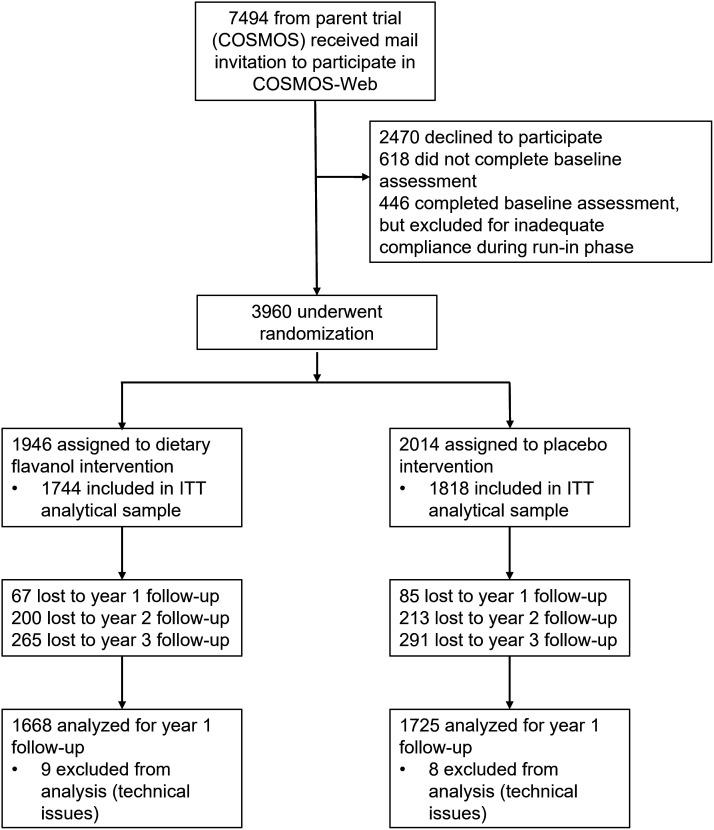
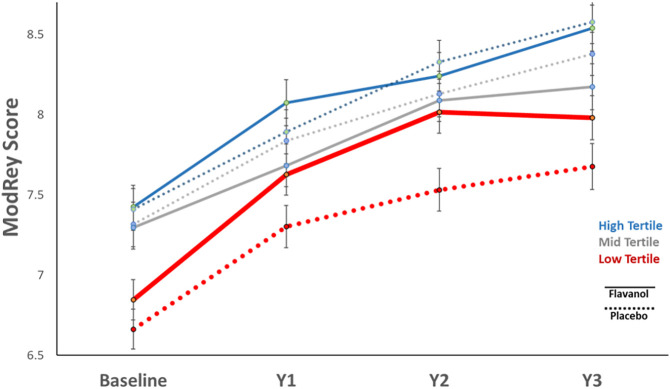
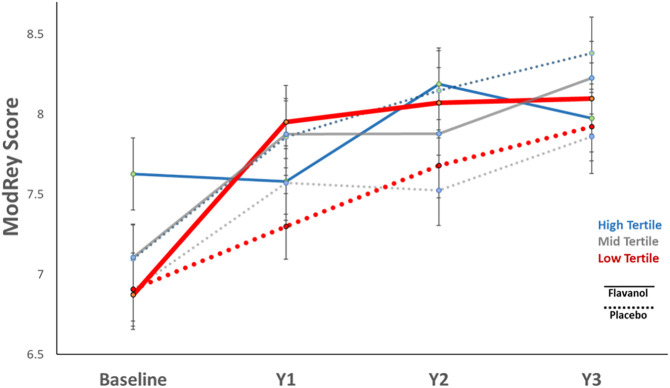
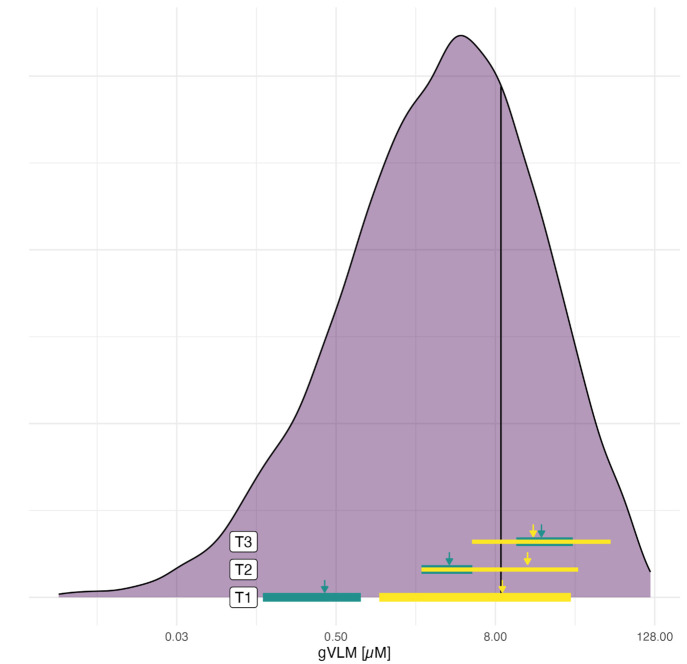
Dietary flavanols are food constituents found in certain fruits and vegetables that have been linked to cognitive aging. Previous studies suggested that consumption of dietary flavanols might specifically be associated with the hippocampal-dependent memory component of cognitive aging and that memory benefits of a flavanol intervention might depend on habitual diet quality. Here, we tested these hypotheses in the context of a large-scale study of 3,562 older adults, who were randomly assigned to a 3-y intervention of cocoa extract (500 mg of cocoa flavanols per day) or a placebo [(COcoa Supplement and Multivitamin Outcomes Study) COSMOS-Web, NCT04582617]. Using the alternative Healthy Eating Index in all participants and a urine-based biomarker of flavanol intake in a subset of participants [n = 1,361], we show that habitual flavanol consumption and diet quality at baseline are positively and selectively correlated with hippocampal-dependent memory. While the prespecified primary end point testing for an intervention-related improvement in memory in all participants after 1 y was not statistically significant, the flavanol intervention restored memory among participants in lower tertiles of habitual diet quality or habitual flavanol consumption. Increases in the flavanol biomarker over the course of the trial were associated with improving memory. Collectively, our results allow dietary flavanols to be considered in the context of a depletion–repletion paradigm and suggest that low flavanol consumption can act as a driver of the hippocampal-dependent component of cognitive aging.
Overview
The claims and statistics of this paper haven’t been checked yet.
Free: it reads the open-access text and checks the first 5 claims that cite a source we can check. Create a free account to check every claim.
Integrity signals
Registry
Cites
Statistics
Figures
Verification
Claims the paper makes
The claims and statistics of this paper haven’t been checked yet.
Free: it reads the open-access text and checks the first 5 claims that cite a source we can check. Create a free account to check every claim.
Self-check
Percentages, sums and reported differences re-computed from the paper’s own numbers.
The self-check needs the paper’s full text.
Citations
Cites
Alternative Dietary Indices Both Strongly Predict Risk of Chronic Disease
Chiuve, S. E., Fung, T. T., Rimm, E. B., Hu, F. B., McCullough, M. L., Wang, M., Stampfer, M. J., & Willett, W. C. (2012) · The Journal of Nutrition · doi:10.3945/jn.111.157222 · Cited by 1,951 · cited 1×
“…differentially linked to hippocampal-dependent cognition, the more important observation was that the most consistent flavanol-induced memory improvement was observed in participants in the lowest tertile of habitual diet quality as assessed by the alternative Healthy Eating Index (aHEI) (10, 11).”
Vascular niche for adult hippocampal neurogenesis
Palmer, T. D., Willhoite, A. R., & Gage, F. H. (2000) · The Journal of Comparative Neurology · doi:10.1002/1096-9861(20001002)425:4<479::aid-cne2>3.0.co;2-3 · Cited by 1,838
An in vivo correlate of exercise-induced neurogenesis in the adult dentate gyrus
Pereira, A. C., Huddleston, D. E., Brickman, A. M., Sosunov, A. A., Hen, R., McKhann, G. M., Sloan, R., Gage, F. H., Brown, T. R., & Small, S. A. (2007) · Proceedings of the National Academy of Sciences · doi:10.1073/pnas.0611721104 · Cited by 1,353 · cited 1×
“While no neuropsychological test evaluates a neuroanatomical region with perfect specificity and sensitivity, the ModRey task was designed to assess hippocampal function (21), which has been validated with neuroimaging (22) and shows age-related decline (6).”
Self-citationLife and Death of Neurons in the Aging Brain
Morrison, J. H., & Hof, P. R. (1997) · Science · doi:10.1126/science.278.5337.412 · Cited by 1,344 · cited 1×
“Compared to common late-life cognitive diseases such as neurodegenerative disorders, the pathophysiology of cognitive aging is distinct and less pernicious, characterized by synaptic dysfunction, not by neuronal cell death (26).”
McCullough, M. L., Feskanich, D., Stampfer, M. J., Giovannucci, E. L., Rimm, E. B., Hu, F. B., Spiegelman, D., Hunter, D. J., Colditz, G. A., & Willett, W. C. (2002) · The American Journal of Clinical Nutrition · doi:10.1093/ajcn/76.6.1261 · Cited by 1,191 · cited 1×
“…differentially linked to hippocampal-dependent cognition, the more important observation was that the most consistent flavanol-induced memory improvement was observed in participants in the lowest tertile of habitual diet quality as assessed by the alternative Healthy Eating Index (aHEI) (10, 11).”
Selective review of cognitive aging
SALTHOUSE, T. A. (2010) · Journal of the International Neuropsychological Society · doi:10.1017/s1355617710000706 · Cited by 1,166
A pathophysiological framework of hippocampal dysfunction in ageing and disease
Small, S. A., Schobel, S. A., Buxton, R. B., Witter, M. P., & Barnes, C. A. (2011) · Nature Reviews Neuroscience · doi:10.1038/nrn3085 · Cited by 926
Self-citationTowards responsible use of cognitive-enhancing drugs by the healthy
Greely, H., Sahakian, B., Harris, J., Kessler, R. C., Gazzaniga, M., Campbell, P., & Farah, M. J. (2008) · Nature · doi:10.1038/456702a · Cited by 862
Neurogenesis in the Adult Brain
Gage, F. H. (2002) · The Journal of Neuroscience · doi:10.1523/jneurosci.22-03-00612.2002 · Cited by 803 · cited 1×
“The dentate gyrus is distinguished by the fact that it supports neurogenesis after birth (17, 18), a feature that has been hypothesized to “imprint” upon the cells of the dentate gyrus a distinct molecular expression profile (2).”
Siervo, M., Lara, J., Chowdhury, S., Ashor, A., Oggioni, C., & Mathers, J. C. (2015) · British Journal of Nutrition · doi:10.1017/s0007114514003341 · Cited by 656 · cited 1×
“…considered small, sustained and small effect sizes are often characteristic of randomized clinical trials that are based on diet and lifestyle modifications in generally healthy people and at a population level are often meaningful to health maintenance, dietary guidance, and public health (23–25).”
Research works printed but not linked: 1
- P. A. Rist, Design and baseline characteristics of participants in the COcoa Supplement and Multivitamin Outcomes Study (COSMOS). Contemp. Clin. Trials. 83, 57– 63 (2022). PMC9133193 35288332
Cited by
Dementia prevention, intervention, and care: 2024 report of the Lancet standing Commission
Livingston, G., Huntley, J., Liu, K. Y., Costafreda, S. G., Selbæk, G., Alladi, S., Ames, D., Banerjee, S., Burns, A., Brayne, C., et al. (2024) · The Lancet · doi:10.1016/s0140-6736(24)01296-0 · Cited by 3,860
The gut microbiome connects nutrition and human health
Sanz, Y., Cryan, J. F., Deschasaux, M., Elinav, E., Lambrecht, R., & Veiga, P. (2025) · Nature Reviews Gastroenterology & Hepatology · doi:10.1038/s41575-025-01077-5 · Cited by 192
“Polyphenol intake has been linked to enhanced cognitive functioning, especially in individuals with a low baseline intake of flavonoid-rich foods 135 .”
Sensory Nutrition and Bitterness and Astringency of Polyphenols
Osakabe, N., Shimizu, T., Fujii, Y., Fushimi, T., & Calabrese, V. (2024) · Biomolecules · doi:10.3390/biom14020234 · Cited by 114
Multivitamin Supplementation Improves Memory in Older Adults: A Randomized Clinical Trial
Yeung, L., Alschuler, D. M., Wall, M. M., Luttmann‐Gibson, H., Copeland, T., Hale, C., Sloan, R. P., Sesso, H. D., Manson, J. E., & Brickman, A. M. (2023) · American Journal of Clinical Nutrition · doi:10.1016/j.ajcnut.2023.05.011 · Cited by 61
Self-citationLi, X., Xie, E., Sun, S., Shen, J., Ding, Y., Wang, J., Peng, X., Zheng, R., Farag, M. A. F., & Xiao, J. (2025) · Journal of Advanced Research · doi:10.1016/j.jare.2025.01.014 · Cited by 53
Ross, F. C., Mayer, D. E., Gupta, A., Gill, C. I. R., Rio, D. D., Cryan, J. F., Lavelle, A., Ross, R. P., Stanton, C., & Mayer, E. A. (2023) · Biological Psychiatry · doi:10.1016/j.biopsych.2023.10.018 · Cited by 41
Therapeutic Strategies Aimed at Improving Neuroplasticity in Alzheimer Disease
Colavitta, M. F., & Barrantes, F. J. (2023) · Pharmaceutics · doi:10.3390/pharmaceutics15082052 · Cited by 25
“For example, it has been found that in older adults, compounds such as the flavonols found in fruits and vegetables can help protect cognitive function and delay memory impairments in AD [103].”
Background(Poly)phenols and brain health – beyond their antioxidant capacity
Hunt, T., Pontifex, M. G., & Vauzour, D. (2024) · FEBS Letters · doi:10.1002/1873-3468.14988 · Cited by 27
Nutrition: A non‐negligible factor in the pathogenesis and treatment of Alzheimer's disease
Wen, B., Han, X., Gong, J., Wang, P., Sun, W., Xu, C., Shan, A., Wang, X., Luan, H., Li, S., et al. (2025) · Alzheimer s & Dementia · doi:10.1002/alz.14547 · Cited by 31
“182,183 Similarly, other common polyphenols found in grapes and berries may slow progressive cognitive decline in AD by reducing neuroinflammation and exerting antioxidant effects.”
LI, S., Hamaya, R., Zhu, H., Chen, B. H., Pereira, A. C., Ivey, K. L., Rist, P. M., Manson, J. E., Dong, Y., & Sesso, H. D. (2026) · Nature Medicine · doi:10.1038/s41591-026-04239-3 · Cited by 30
Self-citationVyas, C. M., Manson, J. E., Sesso, H. D., Rist, P. M., Weinberg, A., Kim, E., Moorthy, M. V., Cook, N. R., & Okereke, O. I. (2023) · American Journal of Clinical Nutrition · doi:10.1016/j.ajcnut.2023.10.031 · Cited by 24
Self-citationPlants as a source of dietary bioactives: Flavonoids and basis for their health benefits
Galatro, A., Más, A. L., Luquet, M., Fraga, C. G., & Galleano, M. (2024) · Aspects of Molecular Medicine · doi:10.1016/j.amolm.2024.100048 · Cited by 24
Gonçalves, A. C., Rodrigues, S., Fonseca, R., & Silva, L. R. (2024) · Pharmaceuticals · doi:10.3390/ph17050590 · Cited by 21
Performance of Urinary Phenyl-γ-Valerolactones as Biomarkers of Dietary Flavan-3-ol Exposure
Parmenter, B. H., Shinde, S., Croft, K. D., Murray, K., Bondonno, C. P., Genoni, A., Christophersen, C. T., Bindon, K. A., Kay, C. D., Mena, P. R., et al. (2023) · Journal of Nutrition · doi:10.1016/j.tjnut.2023.06.035 · Cited by 12
Abdelhafiz, Y. A., Gora, A. H., Rehman, S., Chowdhury, S., Park, Y., Bisa, S., Verlhac-Trichet, V., Fernandes, J. M. O., Sørensen, M., & Kiron, V. (2023) · Journal of Functional Foods · doi:10.1016/j.jff.2023.105654 · Cited by 12
“Recent publications have presented evidence of polyphenol-induced improvement in hippocampus-dependent memory (Brickman et al., 2023).”
Osakabe, N., Fushimi, T., Fujii, Y., & Calabrese, V. (2023) · Bioscience Biotechnology and Biochemistry · doi:10.1093/bbb/zbad154 · Cited by 13
Ageing-related changes in the regulation of microglia and their interaction with neurons
Rommy von Bernhardi, M., & Eugenín, J. L. (2024) · Neuropharmacology · doi:10.1016/j.neuropharm.2024.110241 · Cited by 10
Wang, Z., Ba, S., Li, M., Wei, Y., Wang, Y., Mao, J., Xiang, Y., Qin, D., & Zeng, C. (2026) · International Journal of Molecular Sciences · doi:10.3390/ijms27020604 · Cited by 9
Richardson, S., Marshall, J. M., & Rendeiro, C. (2025) · Nutrition Journal · doi:10.1186/s12937-025-01121-9 · Cited by 10
“For this reason, chronic studies should take the background diet into account since the influence of supplementary CFs may be greater in those with otherwise low dietary flavonoid intake, as shown for their effects on memory improvement [99].”
Fan, Y., Xiao, B., Zhou, H., Liu, Z., Wang, L., Jin, W., Yin, Y., & Mao, X. (2025) · Pharmacological Research · doi:10.1016/j.phrs.2025.108031 · Cited by 7
How nutrients and natural products act on the brain: Beyond pharmacology
Jacquet, A. D. R., Layé, S., & Calon, F. (2023) · Cell Reports Medicine · doi:10.1016/j.xcrm.2023.101243 · Cited by 7
Fujii, Y., Taira, S., Shinoda, K., Yamato, Y., Sakata, K., Muta, O., Osada, Y., Ono, A., Matsushita, T., Azumi, M., et al. (2025) · Current Research in Food Science · doi:10.1016/j.crfs.2025.101195 · Cited by 5
“By the Mass imaging and in situ hybridization analyses, high-intensity noradrenaline (NA) originating from the locus coeruleus (LC) was revealed in the hypothalamus and brain-stem immediately after FLs administration.”
Daniele, A., Lucas, S. J. E., & Rendeiro, C. (2025) · The Journal of Physiology · doi:10.1113/jp289038 · Cited by 9
“For example, recent data indicate that individuals with a low-quality diet, including low intake of flavonoids, may benefit more from flavonoid consumption (Brickman et al., 2023).”
Cao, S., Jiménez‐Loygorri, J. I., Qiu, Y., Kang, Y. J., Do, K. V., Smith, A. N., Huang, J., Pan, J., Mao, L., Li, A., et al. (2026) · Advanced Science · doi:10.1002/advs.202512374 · Cited by 12
Long-Term Effect of Cocoa Extract Supplementation on Incident Hypertension
Hamaya, R., Li, S., Lau, J., Allison, M., Haring, B., Shadyab, A. H., Nudy, M. S., Martin, L. W., Rist, P. M., Manson, J. E., et al. (2025) · Hypertension · doi:10.1161/hypertensionaha.125.25209 · Cited by 7
Self-citationCrandall, C. J., Chou, S. H.-H., Kim, E., Ratnarajah, D. M., Cook, N. R., Clar, A., Sesso, H. D., Manson, J. E., & LeBoff, M. S. (2025) · Journal of Bone and Mineral Research · doi:10.1093/jbmr/zjaf030 · Cited by 4
“43,44 For this analysis, we divided the Alternate Healthy Eating Index score into tertiles, with the highest tertile indicating the healthiest eating pattern.”
Self-citationThe overlooked impact of background diet and adherence in nutrition trials
Ottaviani, J. I., Schroeter, H., Bier, D. M., Erdman, J. W., Sesso, H. D., Manson, J. E., & Kuhnle, G. (2025) · Food & Function · doi:10.1039/d5fo01134e · Cited by 6
Self-citationAcute effects of cocoa flavanols on cognitive control and response inhibition
Altınok, A., Moruzzi, M., & Akyürek, E. G. (2025) · Nutrition · doi:10.1016/j.nut.2025.112860 · Cited by 4
Hu, X., Sun, Y., Wang, H., Rahman, K. U., Chen, Y., Li, C., Chi, X., & Cui, Z. (2026) · Microchemical Journal · doi:10.1016/j.microc.2026.118602 · Cited by 5
Flavanols for Age-related Memory Loss: A Promising Nutritional Intervention
Shahabi, M., & Idrees, R. (2023) · Annals of Neurosciences · doi:10.1177/09727531231195683 · Cited by 3
“9 Participants were randomized to a daily dose of 500 mg cocoa flavanols or placebo for 3 years.”
MethodWatson, A. W., Scheepens, A., Kennedy, D. O., & Haskell‐Ramsay, C. F. (2025) · Nutritional Neuroscience · doi:10.1080/1028415x.2025.2538062 · Cited by 3
Musich, M. L., Shenker, J. I., & Beversdorf, D. Q. (2026) · Journal of dementia and Alzheimer's disease · doi:10.3390/jdad3010004 · Cited by 2
Daniele, A., Lucas, S. J. E., & Rendeiro, C. (2025) · Nutrients · doi:10.3390/nu17132099 · Cited by 5
“Interestingly, a recent randomized controlled trial in 3562 older adults showed that a 3-year intervention with cocoa flavanols improved memory in individuals with poorer diets after 1 year, with improvements sustained over the 3-year follow-up period [48].”
Dietary Cocoa Flavanols Do Not Alter Brain Excitability in Young Healthy Adults
Hamel, R., Oyler, R., Harms, E., Bailey, R., Rendeiro, C., & Jenkinson, N. (2024) · Nutrients · doi:10.3390/nu16070969 · Cited by 1
Ługowski, W., Samek, J., Bartoszewska, K., Matwiejuk, W., Kwiecień, I., Komorowski-Roszkiewicz, J., & Marcyś, K. (2025) · International Journal of Innovative Technologies in Social Science · doi:10.31435/ijitss.2(46).2025.3279 · Cited by 1
“Notably, large-scale randomized trials from the COSMOS project — COSMOS-Mind, COSMOS-Clinic, and COSMOS-Web — demonstrated no significant effects of daily cocoa flavanol supplementation on global cognition, episodic memory, or executive function over long-term follow-up.”
Nakamura, H., Ogata, M., Shimizu, T., Fujii, Y., Aso, K., Tagata, C., Calabrese, V., & Osakabe, N. (2026) · Foods · doi:10.3390/foods15081409 · Cited by 1
“Specifically, a large-scale, long-term intervention study of procyanidin in elderly subjects reported improvements in hippocampus-dependent cognitive function [23] and a reduced risk of cardiovascular disease [24].”
Ottaviani, J. I., Erdman, J. W., Steinberg, F. M., Manson, J. E., Sesso, H. D., Schroeter, H., & Kuhnle, G. (2026) · Food & Function · doi:10.1039/d6fo00867d · Cited by 1
Self-citationJad, M., Al‐Amgad, Z., Mohammed, E. S. I., Ahmed, A. M., El-Aziz, A. A. A., & Madkour, F. A. (2026) · Tissue and Cell · doi:10.1016/j.tice.2026.103725 · Cited by 1
de la Lastra, J. M. P., Andrés, C. M. C., Munguira, E. B., Andrés, C., & Lebeña, E. P. (2026) · Current Issues in Molecular Biology · doi:10.3390/cimb48070732 · Cited by 2
“None of this obviates the need for sleep, cognitive engagement, or cardiovascular risk control, it simply lowers the biologic threshold at which those investments pay off [163].”
Altınok, A., Moruzzi, M., & Akyürek, E. G. (2024) · bioRxiv (Cold Spring Harbor Laboratory) · doi:10.1101/2024.03.10.584219 · Cited by 1
Impact of lifestyle on cognitive decline, part one: the role of diet
Mendes, A. (2023) · British Journal of Community Nursing · doi:10.12968/bjcn.2023.28.7.320
Kan høyt inntak av frukt og grønnsaker forsinke kognitiv aldring?
Benestad, H. B. (2023) · Tidsskrift for Den norske legeforening · doi:10.4045/tidsskr.23.0470
Does daily multivitamin supplementation improve memory in older adults?
Levy, B. S. (2023) · OBG Management · doi:10.12788/obgm.0299
Dietary Influences on Cognitive Functions: Insights from Experimental Crossover Studies
Altınok, A. (2024) · University of Groningen research database (University of Groningen / Centre for Information Technology) · doi:10.33612/diss.1034919570
Quantitative descriptive analysis for evaluating the sensory properties of polyphenolsPreprint
Nakamura, H., Ogata, M., Onishi, K., Shimizu, T., Fujii, Y., Kenta, A., Tagata, C., Calabrese, V., & Osakabe, N. (2025) · SSRN Electronic Journal · doi:10.2139/ssrn.5420658
Fujii, Y., Yamato, Y., Shibata, M., Takano, K., Tsuchibuchi, S., Taira, S., Calabrese, V., & Osakabe, N. (2025) · Open Medicine · doi:10.1515/med-2025-1270
Polyphenols and Sensory Nutrition
Osakabe, N. (2026) · Nippon Eiyo Shokuryo Gakkaishi · doi:10.4327/jsnfs.79.5
Brain-Gut Interactions: Sensory Nutrition and Polyphenols
Osakabe, N., & Fujii, Y. (2026) · Springer eBooks · doi:10.1007/978-981-95-7068-3_54
Qadi, W. S. M., Benabdelmoumene, D., Dawoud, E. A. D., Tong, X., Han, R., Jam, F. A., Mediani, A., Sarian, M. N., Jantan, I., & Hamezah, H. S. (2026) · Journal of Functional Foods · doi:10.1016/j.jff.2026.107439 · Cited by 1
Morikawa, I., Ono, A., Osada, Y., Fujii, Y., Natsume, M., Osakabe, N., & Akagi, R. (2026) · Physiological Reports · doi:10.14814/phy2.71095
“Chronic CP intake has been shown to enhance hippocampal-dependent memory, particularly in individuals with lower diet quality (Brickman et al., 2023).”
Rist, P. M., LI, S., Hamaya, R., Anderson, A. K., Yang, T., Xu, Y. R., Ostaszewski, B. L., Selkoe, D. J., Sesso, H. D., & Manson, J. E. (2026) · Journal of Alzheimer s Disease · doi:10.1177/13872877261489739
Self-citation
Metadata
- Authors
- Brickman, A. M., Yeung, L.-K., Alschuler, D. M., Ottaviani, J. I., Kuhnle, G. G. C., Sloan, R. P., Luttmann-Gibson, H., Copeland, T., Schroeter, H., Sesso, H. D., Manson, J. E., Wall, M., & Small, S. A.
- Affiliations
- Columbia University (US)
- New York State Psychiatric Institute (US)
- Mars (United States) (US)
- University of Reading (GB)
- Columbia University Irving Medical Center (US)
- Division of Preventive Medicine, Department of Medicine, Brigham and Women’s Hospital, Harvard Medical School, Boston, MA 02115
- Brigham and Women's Hospital (US)
- Corresponding author
- Brickman, Adam M.
- Small, Scott A.
- ORCID
- Venue
- Proceedings of the National Academy of Sciences
- Publisher
- National Academy of Sciences
- Published
- 2023-05-30
- Volume
- 120
- Issue
- 23
- Pages
- e2216932120-e2216932120
- ISSN
- 0027-8424 (ISSN-L)
- 1091-6490
- PMC
- PMC10265949
- OpenAlex
- W4378783722
- Cited by
- 51
- References
- 29
- Citations by year
- 2026: 14 · 2025: 16 · 2024: 9 · 2023: 12
- FWCI
- 7.35
- Type
- journal article
- Language
- en
- Open access
- hybrid
- doi.org
- Licence
- Locations
- Proceedings of the National Academy of Sciences (publishedVersion, cc-by)
- PubMed Central (publishedVersion, cc-by)
- PubMed (publishedVersion)
- CentAUR (University of Reading) (submittedVersion)
- Funders
- Mars Edge (unrestricted/investigator-initiated)
- NIH (AG050657 AG071611 EY025623 HL157665 R61 MH112800 R01 AG058417)
- S Department of Health and Human Services (75N92021D00001 75N92021D00002 75N92021D00003 75N92021D00004 75N92021D00005.)
- Nathaniel Wharton Fund (unrestricted)
- Topics
- Health Sciences › Medicine › Biochemistry (medical) › Phytochemicals and Antioxidant Activities
- Health Sciences › Medicine › Psychiatry and Mental health › Dementia and Cognitive Impairment Research
- Health Sciences › Medicine › Public Health, Environmental and Occupational Health › Nutritional Studies and Diet
- Keywords
- cocoa flavanols, hippocampal-dependent memory, cognitive aging, older adults, diet quality, Healthy Eating Index, COSMOS-Web
- MeSH terms
- Aged, Cacao, Diet, Double-Blind Method, Humans, Biomarkers, Dietary Supplements, Polyphenols
About these checks
Registry, retraction, Cites and statistics results are computed, not judged, with one exception: a printed reference that no index lists is read once by a model before it counts as a citation error. Claims are extracted by a model and kept only when their quote appears verbatim in the text; each cited source is then checked, with a model’s help, for whether it says what the claim relies on. Those verdicts can be wrong — read the claim’s quote and the cited source before relying on one.
Statistics and arithmetic are recomputed, not judged.
Confidence bands are shown only for fields calibrated on our annotated test set. None is calibrated yet, so no band is shown.
What counts as a claim ›How we measure confidence ›How we check this ›
Are you an author, or do you see a problem with this page? Request a review
Data sources
Bibliographic data: Semantic Scholar, OpenAlex, Crossref.
Contains information from the Semantic Scholar Academic Graph Datasets, made available under the ODC Attribution License (ODC-BY 1.0).
Semantic Scholar’s data is described in: Kinney, R., et al. (2023). The Semantic Scholar Open Data Platform. arXiv:2301.10140.
