

Dietary flavanols restore hippocampal-dependent memory in older adults with lower diet quality and lower habitual flavanol consumption
Open accessThe DOI matches its Crossref record; 28 of the 29 references it cites were found in a registry or an index, and 1 are not checked yet.
Abstract
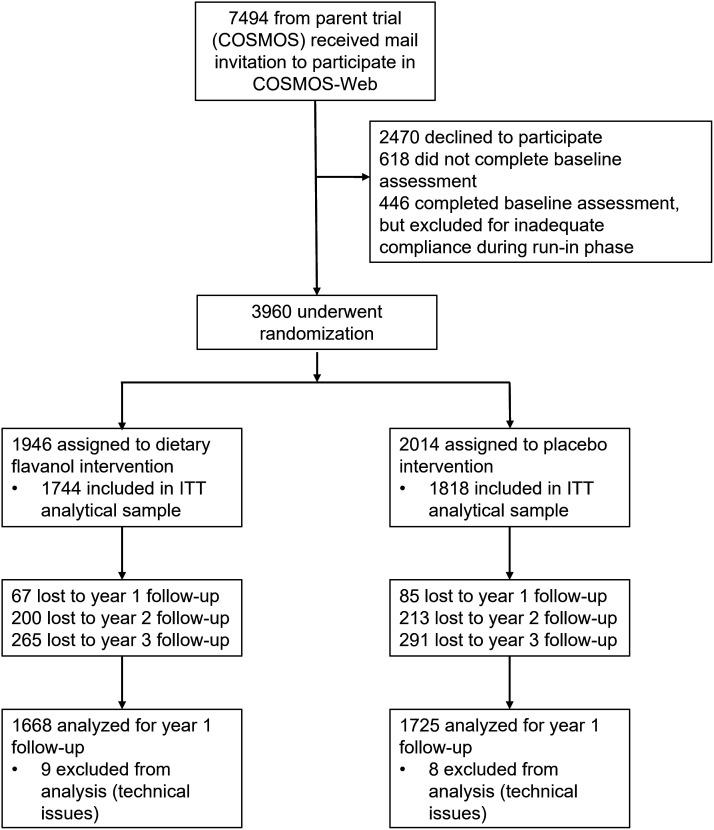
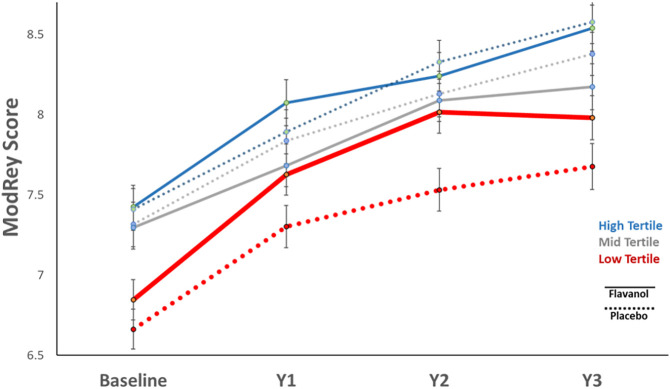
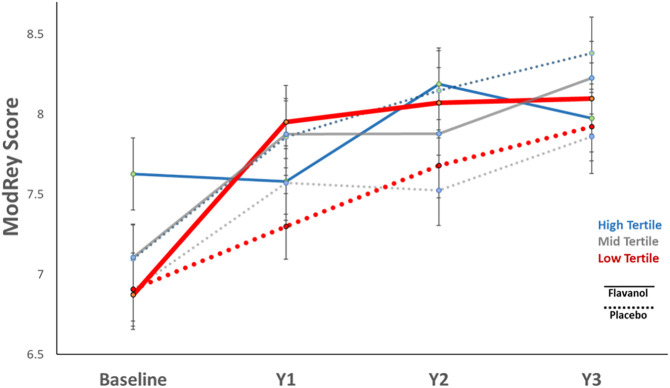
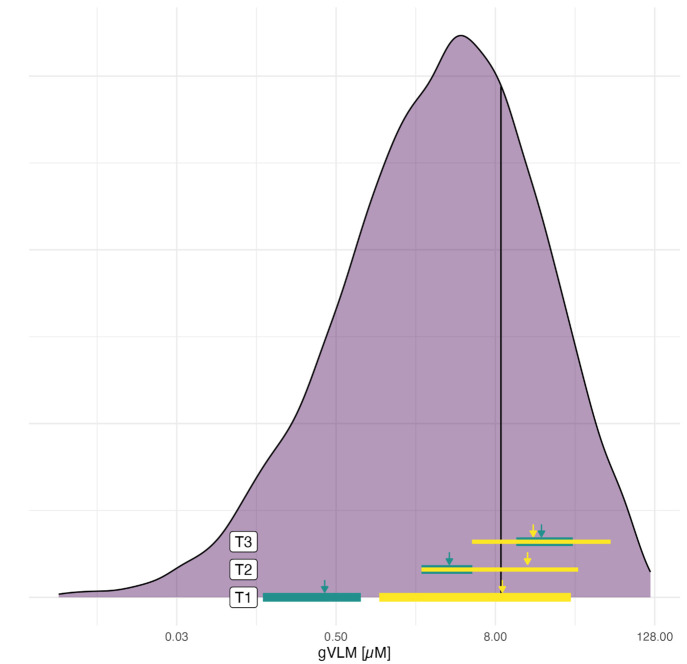
Dietary flavanols are food constituents found in certain fruits and vegetables that have been linked to cognitive aging. Previous studies suggested that consumption of dietary flavanols might specifically be associated with the hippocampal-dependent memory component of cognitive aging and that memory benefits of a flavanol intervention might depend on habitual diet quality. Here, we tested these hypotheses in the context of a large-scale study of 3,562 older adults, who were randomly assigned to a 3-y intervention of cocoa extract (500 mg of cocoa flavanols per day) or a placebo [(COcoa Supplement and Multivitamin Outcomes Study) COSMOS-Web, NCT04582617]. Using the alternative Healthy Eating Index in all participants and a urine-based biomarker of flavanol intake in a subset of participants [n = 1,361], we show that habitual flavanol consumption and diet quality at baseline are positively and selectively correlated with hippocampal-dependent memory. While the prespecified primary end point testing for an intervention-related improvement in memory in all participants after 1 y was not statistically significant, the flavanol intervention restored memory among participants in lower tertiles of habitual diet quality or habitual flavanol consumption. Increases in the flavanol biomarker over the course of the trial were associated with improving memory. Collectively, our results allow dietary flavanols to be considered in the context of a depletion–repletion paradigm and suggest that low flavanol consumption can act as a driver of the hippocampal-dependent component of cognitive aging.
Overview
The claims and statistics of this paper haven’t been checked yet.
Free: it reads the open-access text and checks the first 5 claims that cite a source we can check. Create a free account to check every claim.
Integrity signals
Registry
Cites
Statistics
Figures
Verification
Claims the paper makes
The claims and statistics of this paper haven’t been checked yet.
Free: it reads the open-access text and checks the first 5 claims that cite a source we can check. Create a free account to check every claim.
Self-check
Percentages, sums and reported differences re-computed from the paper’s own numbers.
The self-check needs the paper’s full text.
Citations
Cites
Alternative Dietary Indices Both Strongly Predict Risk of Chronic Disease
Chiuve, S. E., Fung, T. T., Rimm, E. B., Hu, F. B., McCullough, M. L., Wang, M., Stampfer, M. J., & Willett, W. C. (2012) · The Journal of Nutrition · doi:10.3945/jn.111.157222 · Cited by 1,951 · cited 1×
“…differentially linked to hippocampal-dependent cognition, the more important observation was that the most consistent flavanol-induced memory improvement was observed in participants in the lowest tertile of habitual diet quality as assessed by the alternative Healthy Eating Index (aHEI) (10, 11).”
Vascular niche for adult hippocampal neurogenesis
Palmer, T. D., Willhoite, A. R., & Gage, F. H. (2000) · The Journal of Comparative Neurology · doi:10.1002/1096-9861(20001002)425:4<479::aid-cne2>3.0.co;2-3 · Cited by 1,838
An in vivo correlate of exercise-induced neurogenesis in the adult dentate gyrus
Pereira, A. C., Huddleston, D. E., Brickman, A. M., Sosunov, A. A., Hen, R., McKhann, G. M., Sloan, R., Gage, F. H., Brown, T. R., & Small, S. A. (2007) · Proceedings of the National Academy of Sciences · doi:10.1073/pnas.0611721104 · Cited by 1,353 · cited 1×
“While no neuropsychological test evaluates a neuroanatomical region with perfect specificity and sensitivity, the ModRey task was designed to assess hippocampal function (21), which has been validated with neuroimaging (22) and shows age-related decline (6).”
Self-citationLife and Death of Neurons in the Aging Brain
Morrison, J. H., & Hof, P. R. (1997) · Science · doi:10.1126/science.278.5337.412 · Cited by 1,344 · cited 1×
“Compared to common late-life cognitive diseases such as neurodegenerative disorders, the pathophysiology of cognitive aging is distinct and less pernicious, characterized by synaptic dysfunction, not by neuronal cell death (26).”
McCullough, M. L., Feskanich, D., Stampfer, M. J., Giovannucci, E. L., Rimm, E. B., Hu, F. B., Spiegelman, D., Hunter, D. J., Colditz, G. A., & Willett, W. C. (2002) · The American Journal of Clinical Nutrition · doi:10.1093/ajcn/76.6.1261 · Cited by 1,191 · cited 1×
“…differentially linked to hippocampal-dependent cognition, the more important observation was that the most consistent flavanol-induced memory improvement was observed in participants in the lowest tertile of habitual diet quality as assessed by the alternative Healthy Eating Index (aHEI) (10, 11).”
Selective review of cognitive aging
SALTHOUSE, T. A. (2010) · Journal of the International Neuropsychological Society · doi:10.1017/s1355617710000706 · Cited by 1,166
A pathophysiological framework of hippocampal dysfunction in ageing and disease
Small, S. A., Schobel, S. A., Buxton, R. B., Witter, M. P., & Barnes, C. A. (2011) · Nature Reviews Neuroscience · doi:10.1038/nrn3085 · Cited by 926
Self-citationTowards responsible use of cognitive-enhancing drugs by the healthy
Greely, H., Sahakian, B., Harris, J., Kessler, R. C., Gazzaniga, M., Campbell, P., & Farah, M. J. (2008) · Nature · doi:10.1038/456702a · Cited by 862
Neurogenesis in the Adult Brain
Gage, F. H. (2002) · The Journal of Neuroscience · doi:10.1523/jneurosci.22-03-00612.2002 · Cited by 803 · cited 1×
“The dentate gyrus is distinguished by the fact that it supports neurogenesis after birth (17, 18), a feature that has been hypothesized to “imprint” upon the cells of the dentate gyrus a distinct molecular expression profile (2).”
Siervo, M., Lara, J., Chowdhury, S., Ashor, A., Oggioni, C., & Mathers, J. C. (2015) · British Journal of Nutrition · doi:10.1017/s0007114514003341 · Cited by 656 · cited 1×
“…considered small, sustained and small effect sizes are often characteristic of randomized clinical trials that are based on diet and lifestyle modifications in generally healthy people and at a population level are often meaningful to health maintenance, dietary guidance, and public health (23–25).”
Trends in Dietary Quality Among Adults in the United States, 1999 Through 2010
Wang, D. D., Leung, C. W., Li, Y., Ding, E. L., Chiuve, S. E., Hu, F. B., & Willett, W. C. (2014) · JAMA Internal Medicine · doi:10.1001/jamainternmed.2014.3422 · Cited by 498 · cited 7×
“No significant effects on a range of nonmonitored cardiovascular, cancer, and other outcomes were observed (all P > 0.05) (14).”
InfluentialEnhancing dentate gyrus function with dietary flavanols improves cognition in older adults
Brickman, A. M., Khan, U. A., Provenzano, F. A., Yeung, L.-K., Suzuki, W., Schroeter, H., Wall, M., Sloan, R. P., & Small, S. A. (2014) · Nature Neuroscience · doi:10.1038/nn.3850 · Cited by 347
Self-citationPlant-Derived Flavanol (−)Epicatechin Enhances Angiogenesis and Retention of Spatial Memory in Mice
van Praag, H., Lucero, M. J., Yeo, G. W., Stecker, K., Heivand, N., Zhao, C., Yip, E., Afanador, M., Schroeter, H., Hammerstone, J., et al. (2007) · The Journal of Neuroscience · doi:10.1523/jneurosci.0914-07.2007 · Cited by 303
Self-citationSesso, H. D., Manson, J. E., Aragaki, A. K., Rist, P. M., Johnson, L. G., Friedenberg, G., Copeland, T., Clar, A., Mora, S., Moorthy, M. V., et al. (2022) · The American Journal of Clinical Nutrition · doi:10.1093/ajcn/nqac055 · Cited by 187
Self-citationPowering population health research: Considerations for plausible and actionable effect sizes
Matthay, E. C., Hagan, E., Gottlieb, L. M., Tan, M. L., Vlahov, D., Adler, N., & Glymour, M. M. (2021) · SSM - Population Health · doi:10.1016/j.ssmph.2021.100789 · Cited by 177 · cited 1×
“…considered small, sustained and small effect sizes are often characteristic of randomized clinical trials that are based on diet and lifestyle modifications in generally healthy people and at a population level are often meaningful to health maintenance, dietary guidance, and public health (23–25).”
Healthy eating and reduced risk of cognitive decline: A cohort from 40 countries
Smyth, A., Dehghan, M., O'Donnell, M., Anderson, C., Teo, K., Gao, P., Sleight, P., Dagenais, G., Probstfield, J. L., Mente, A., et al. (2015) · Neurology · doi:10.1212/wnl.0000000000001638 · Cited by 85
Ottaviani, J. I., Fong, R., Kimball, J., Ensunsa, J. L., Britten, A., Lucarelli, D., Luben, R., Grace, P. B., Mawson, D. H., Tym, A., et al. (2018) · Scientific Reports · doi:10.1038/s41598-018-28333-w · Cited by 83 · cited 4×
“After the commencement of COSMOS, a urine-based biomarker of flavanol intake was developed and validated (12, 13), which allowed us to more directly test whether hippocampal-dependent memory is correlated with habitual flavanol consumption in analyses that were not prespecified but relevant in the…”
InfluentialSelf-citationSloan, R. P., Wall, M., Yeung, L.-K., Feng, T., Feng, X., Provenzano, F., Schroeter, H., Lauriola, V., Brickman, A. M., & Small, S. A. (2021) · Scientific Reports · doi:10.1038/s41598-021-83370-2 · Cited by 53
Self-citationSmall, S. A. (2014) · Neuron · doi:10.1016/j.neuron.2014.08.030 · Cited by 51
Self-citationOttaviani, J. I., Britten, A., Lucarelli, D., Luben, R., Mulligan, A. A., Lentjes, M. A. H., Fong, R. Y., Gray, N., Grace, P. B., Mawson, D. H., et al. (2020) · Scientific Reports · doi:10.1038/s41598-020-74863-7 · Cited by 46 · cited 4×
“After the commencement of COSMOS, a urine-based biomarker of flavanol intake was developed and validated (12, 13), which allowed us to more directly test whether hippocampal-dependent memory is correlated with habitual flavanol consumption in analyses that were not prespecified but relevant in the…”
InfluentialSelf-citationHüttemann, M., Lee, I., Perkins, G. A., Britton, S. L., Koch, L. G., & Malek, M. H. (2013) · Clinical Science · doi:10.1042/cs20120469 · Cited by 42 · cited 1×
“Interestingly, across the cortex, the dentate gyrus appears to differentially express BDNF (brain-derived neurotrophic factor) and VEGF (vascular endothelium growth factor), and previous studies showed that flavanols can up-regulate BDNF and VEGF (19, 20).”
Rist, P. M., Sesso, H. D., Johnson, L. G., Aragaki, A. K., Wang, L., Rautiainen, S., Hazra, A., Tobias, D. K., LeBoff, M. S., Schroeter, H., et al. (2022) · Contemporary Clinical Trials · doi:10.1016/j.cct.2022.106728 · Cited by 36
Self-citationRamírez‐Sánchez, I., Nogueira, L., Moreno‐Ulloa, A., Murphy, A. N., Taub, P. R., Perkins, G. A., Ceballos, G. M., Hogan, M. C., Malek, M. H., & Villarreal, F. J. (2012) · Journal of Cardiovascular Pharmacology · doi:10.1097/fjc.0b013e318269ae0d · Cited by 32 · cited 1×
“Flavanols affect angiogenesis (7), and neurovascular indicators suggest that flavanols might improve hippocampal-dependent memory via increased angiogenesis and regional perfusion (6, 8).”
Ageing differentially affects neural processing of different conflict types—an fMRI study
Korsch, M., Frühholz, S., & Herrmann, M. (2014) · Frontiers in Aging Neuroscience · doi:10.3389/fnagi.2014.00057 · Cited by 30 · cited 4×
“Similarly, the Flanker test taps prefrontal cortex function and evidences age-associated decline (16).”
InfluentialRandomised controlled trials: understanding effect sizes
Sedgwick, P. M. (2015) · BMJ · doi:10.1136/bmj.h1690 · Cited by 20
Corral‐Jara, K. F., Nuthikattu, S., Rutledge, J. C., Villablanca, A. C., Fong, R. Y., Heiß, C., Ottaviani, J. I., & Milenković, D. (2022) · Journal of Proteomics · doi:10.1016/j.jprot.2022.104603 · Cited by 20 · cited 1×
“Interestingly, across the cortex, the dentate gyrus appears to differentially express BDNF (brain-derived neurotrophic factor) and VEGF (vascular endothelium growth factor), and previous studies showed that flavanols can up-regulate BDNF and VEGF (19, 20).”
Self-citationThe ModRey: An Episodic Memory Test for Nonclinical and Preclinical Populations
Hale, C., Last, B. S., Meier, I. B., Yeung, L., Budge, M., Sloan, R. P., Small, S. A., & Brickman, A. M. (2017) · Assessment · doi:10.1177/1073191117723113 · Cited by 15 · cited 4×
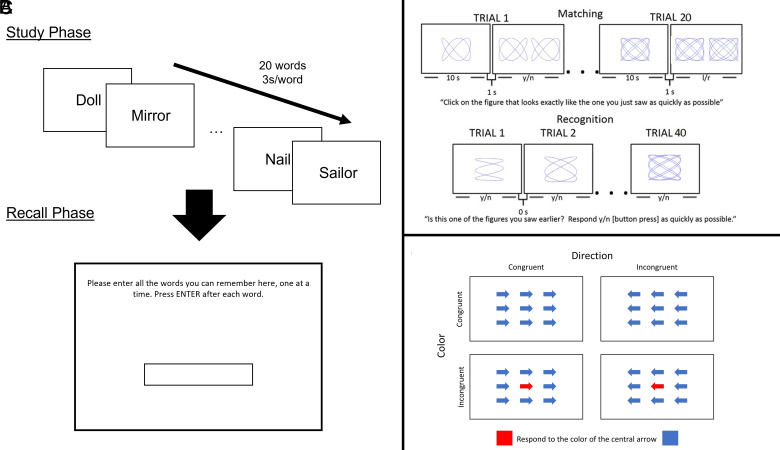
“Four counterbalanced versions of this task were used, with independent word lists drawn from the ModRey verbal memory task; we previously demonstrated psychometric similarity among alternate lists (21).”
InfluentialSelf-citationAssessing Data Quality and Transforming Data
Chin, R., & Lee, B. Y. (2008) · Elsevier eBooks · doi:10.1016/b978-0-12-373695-6.00014-4 · Cited by 6 · cited 1×
“We performed all analyses on the intent-to-treat (29) sample, which included all randomized participants who had at least one follow-up measurement completed (year 1, 2, or 3) regardless of pill compliance.”
Brickman, A., Yeung, L.-K., Alschuler, D., et al. (2023) · Zenodo (CERN European Organization for Nuclear Research) · doi:10.5061/dryad.m905qfv69
Self-citation
Research works printed but not linked: 1
- P. A. Rist, Design and baseline characteristics of participants in the COcoa Supplement and Multivitamin Outcomes Study (COSMOS). Contemp. Clin. Trials. 83, 57– 63 (2022). PMC9133193 35288332
Cited by
Dementia prevention, intervention, and care: 2024 report of the Lancet standing Commission
Livingston, G., Huntley, J., Liu, K. Y., Costafreda, S. G., Selbæk, G., Alladi, S., Ames, D., Banerjee, S., Burns, A., Brayne, C., et al. (2024) · The Lancet · doi:10.1016/s0140-6736(24)01296-0 · Cited by 3,860
The gut microbiome connects nutrition and human health
Sanz, Y., Cryan, J. F., Deschasaux, M., Elinav, E., Lambrecht, R., & Veiga, P. (2025) · Nature Reviews Gastroenterology & Hepatology · doi:10.1038/s41575-025-01077-5 · Cited by 192
“Polyphenol intake has been linked to enhanced cognitive functioning, especially in individuals with a low baseline intake of flavonoid-rich foods 135 .”
Sensory Nutrition and Bitterness and Astringency of Polyphenols
Osakabe, N., Shimizu, T., Fujii, Y., Fushimi, T., & Calabrese, V. (2024) · Biomolecules · doi:10.3390/biom14020234 · Cited by 114
Multivitamin Supplementation Improves Memory in Older Adults: A Randomized Clinical Trial
Yeung, L., Alschuler, D. M., Wall, M. M., Luttmann‐Gibson, H., Copeland, T., Hale, C., Sloan, R. P., Sesso, H. D., Manson, J. E., & Brickman, A. M. (2023) · American Journal of Clinical Nutrition · doi:10.1016/j.ajcnut.2023.05.011 · Cited by 61
Self-citationLi, X., Xie, E., Sun, S., Shen, J., Ding, Y., Wang, J., Peng, X., Zheng, R., Farag, M. A. F., & Xiao, J. (2025) · Journal of Advanced Research · doi:10.1016/j.jare.2025.01.014 · Cited by 53
Metadata
- Authors
- Brickman, A. M., Yeung, L.-K., Alschuler, D. M., Ottaviani, J. I., Kuhnle, G. G. C., Sloan, R. P., Luttmann-Gibson, H., Copeland, T., Schroeter, H., Sesso, H. D., Manson, J. E., Wall, M., & Small, S. A.
- Affiliations
- Columbia University (US)
- New York State Psychiatric Institute (US)
- Mars (United States) (US)
- University of Reading (GB)
- Columbia University Irving Medical Center (US)
- Division of Preventive Medicine, Department of Medicine, Brigham and Women’s Hospital, Harvard Medical School, Boston, MA 02115
- Brigham and Women's Hospital (US)
- Corresponding author
- Brickman, Adam M.
- Small, Scott A.
- ORCID
- Venue
- Proceedings of the National Academy of Sciences
- Publisher
- National Academy of Sciences
- Published
- 2023-05-30
- Volume
- 120
- Issue
- 23
- Pages
- e2216932120-e2216932120
- ISSN
- 0027-8424 (ISSN-L)
- 1091-6490
- PMC
- PMC10265949
- OpenAlex
- W4378783722
- Cited by
- 51
- References
- 29
- Citations by year
- 2026: 14 · 2025: 16 · 2024: 9 · 2023: 12
- FWCI
- 7.35
- Type
- journal article
- Language
- en
- Open access
- hybrid
- doi.org
- Licence
- Locations
- Proceedings of the National Academy of Sciences (publishedVersion, cc-by)
- PubMed Central (publishedVersion, cc-by)
- PubMed (publishedVersion)
- CentAUR (University of Reading) (submittedVersion)
- Funders
- Mars Edge (unrestricted/investigator-initiated)
- NIH (AG050657 AG071611 EY025623 HL157665 R61 MH112800 R01 AG058417)
- S Department of Health and Human Services (75N92021D00001 75N92021D00002 75N92021D00003 75N92021D00004 75N92021D00005.)
- Nathaniel Wharton Fund (unrestricted)
- Topics
- Health Sciences › Medicine › Biochemistry (medical) › Phytochemicals and Antioxidant Activities
- Health Sciences › Medicine › Psychiatry and Mental health › Dementia and Cognitive Impairment Research
- Health Sciences › Medicine › Public Health, Environmental and Occupational Health › Nutritional Studies and Diet
- Keywords
- cocoa flavanols, hippocampal-dependent memory, cognitive aging, older adults, diet quality, Healthy Eating Index, COSMOS-Web
- MeSH terms
- Aged, Cacao, Diet, Double-Blind Method, Humans, Biomarkers, Dietary Supplements, Polyphenols
About these checks
Registry, retraction, Cites and statistics results are computed, not judged, with one exception: a printed reference that no index lists is read once by a model before it counts as a citation error. Claims are extracted by a model and kept only when their quote appears verbatim in the text; each cited source is then checked, with a model’s help, for whether it says what the claim relies on. Those verdicts can be wrong — read the claim’s quote and the cited source before relying on one.
Statistics and arithmetic are recomputed, not judged.
Confidence bands are shown only for fields calibrated on our annotated test set. None is calibrated yet, so no band is shown.
What counts as a claim ›How we measure confidence ›How we check this ›
Are you an author, or do you see a problem with this page? Request a review
Data sources
Bibliographic data: Semantic Scholar, OpenAlex, Crossref.
Contains information from the Semantic Scholar Academic Graph Datasets, made available under the ODC Attribution License (ODC-BY 1.0).
Semantic Scholar’s data is described in: Kinney, R., et al. (2023). The Semantic Scholar Open Data Platform. arXiv:2301.10140.
