

Post-translational Processing of β-Secretase (β-Amyloid-converting Enzyme) and Its Ectodomain Shedding
Open accessThe DOI matches its Crossref record; 49 of the 49 references it cites were found in a registry or an index.
Abstract
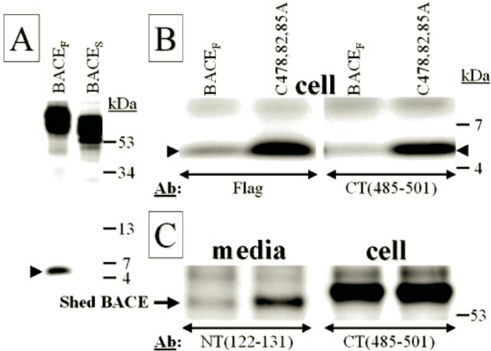
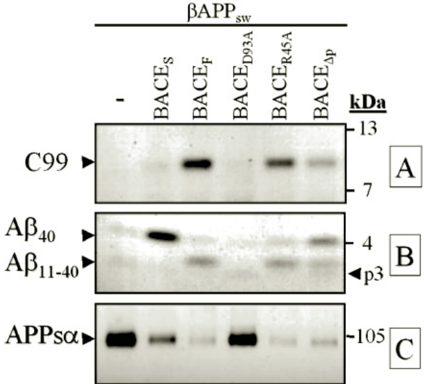
Processing of the beta-amyloid precursor protein (betaAPP) by beta- and gamma-secretases generates the amyloidogenic peptide Abeta, a major factor in the etiology of Alzheimer's disease. Following the recent identification of the beta-secretase beta-amyloid-converting enzyme (BACE), we herein investigate its zymogen processing, molecular properties, and cellular trafficking. Our data show that among the proprotein convertase family members, furin is the major converting enzyme of pro-BACE into BACE within the trans-Golgi network of HK293 cells. While we demonstrate that the 24-amino acid prosegment is required for the efficient exit of pro-BACE from the endoplasmic reticulum, it may not play a strong inhibitory role since we observe that pro-BACE can produce significant quantities of the Swedish mutant betaAPP(sw) beta-secretase product C99. BACE is palmitoylated at three Cys residues within its transmembrane/cytosolic tail and is sulfated at mature N-glycosylated moieties. Data with three different antibodies show that a small fraction of membrane-bound BACE is shed into the medium and that the extent of ectodomain shedding is palmitoylation-dependent. Overexpression of full-length BACE causes a significant increase in the production of C99 and a decrease in the alpha-secretase product APPsalpha. Although there is little increase in the generation of Abeta by full-length BACE, overexpression of either a soluble form of BACE (equivalent to the shed form) or one lacking the prosegment leads to enhanced Abeta levels. These findings suggest that the shedding of BACE may play a role in the amyloidogenic processing of betaAPP.
Overview
The claims and statistics of this paper haven’t been checked yet.
Free: it reads the open-access text and checks the first 5 claims that cite a source we can check. Create a free account to check every claim.
Integrity signals
Registry
Cites
Statistics
Figures
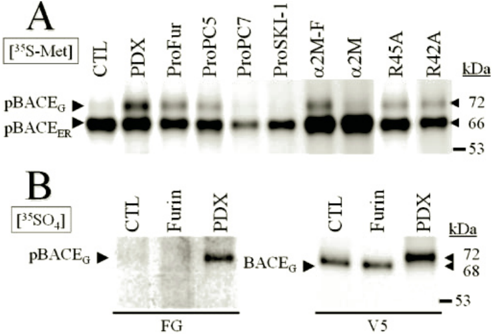
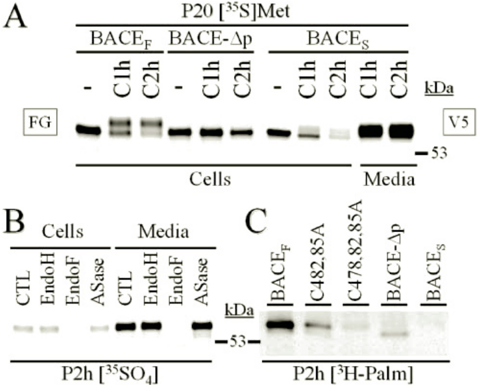
) ( A and C ) or ([BACEF]FG/ V5 1a 1-PDX) ( B and D) cDNAs. Two days post-transfections the cells were pulse-labeled in the absence or presence of 5 mM BFA for 15 min with [ 35 S]Met and then chased for 1 or 2 h. Cell lysates were immunoprecipitated with either the FG or V5 mAbs and analyzed by SDSPAGE on 8% Tricine gels. The migration position of the 53-kDa molecular mass standard and those of pro-BACE (pBACE) and BACE as well as their molecular masses are emphasized.](https://figures.cochat.ai/paper-figures/1364ddaa81664a3dbed628160cd856ec/post-translational-processing-of-secretase-amyloid-converting-enzyme-and-its-figure-1.png)
Verification
Claims the paper makes
The claims and statistics of this paper haven’t been checked yet.
Free: it reads the open-access text and checks the first 5 claims that cite a source we can check. Create a free account to check every claim.
Claims other papers make about this one
Each is checked against this paper’s own text: does it say what the citing paper says it does?
In the citing paper
“In addition, the size of the BACE1 active site is relatively large, including catalytic aspartic acid residues, flap, and 10 S loop.311”
From Amyloid β-based therapy for Alzheimer’s disease: Challenges, successes and future (2023) · cites this paper as [311]
Self-check
Percentages, sums and reported differences re-computed from the paper’s own numbers.
The self-check needs the paper’s full text.
Citations
Cites
Vassar, R., Bennett, B. D., Babu-Khan, S., Kahn, S., Mendiaz, E. A., Denis, P., Teplow, D. B., Ross, S., Amarante, P., Loeloff, R., et al. (1999) · Science · doi:10.1126/science.286.5440.735 · Cited by 3,876
Bowman, E. J., Siebers, A., & Altendorf, K. (1988) · Proceedings of the National Academy of Sciences · doi:10.1073/pnas.85.21.7972 · Cited by 1,784
Purification and cloning of amyloid precursor protein β-secretase from human brain
Sinha, S., Anderson, J. P., Barbour, R., Basi, G. S., Caccavello, R., Davis, D., Doan, M., Dovey, H. F., Frigon, N., Hong, J., et al. (1999) · Nature · doi:10.1038/990114 · Cited by 1,612
Membrane-anchored aspartyl protease with Alzheimer's disease β-secretase activity
Yan, R., Bienkowski, M. J., Shuck, M. E., Miao, H., Tory, M. C., Pauley, A. M., Brashler, J. R., Stratman, N. C., Mathews, W. R., Buhl, A. E., et al. (1999) · Nature · doi:10.1038/990107 · Cited by 1,438
Correlation Between Elevated Levels of Amyloid β-Peptide in the Brain and Cognitive Decline
Näslund, J. (2000) · JAMA · doi:10.1001/jama.283.12.1571 · Cited by 1,268
Resh, M. D. (1999) · Biochimica et Biophysica Acta (BBA) - Molecular Cell Research · doi:10.1016/s0167-4889(99)00075-0 · Cited by 1,250
Identification of a Novel Aspartic Protease (Asp 2) as β-Secretase
Hussain, I., Powell, D., Howlett, D. R., Tew, D. G., Meek, T. D., Chapman, C., Gloger, I. S., Murphy, K. E., Southan, C. D., Ryan, D. M., et al. (1999) · Molecular and Cellular Neuroscience · doi:10.1006/mcne.1999.0811 · Cited by 1,080
Lammich, S., Kojro, E., Postina, R., Gilbert, S., Pfeiffer, R., Jasionowski, M., Haass, C., & Fahrenholz, F. (1999) · Proceedings of the National Academy of Sciences · doi:10.1073/pnas.96.7.3922 · Cited by 975
Buxbaum, J. D., Liu, K.-N., Luo, Y., Slack, J. L., Stocking, K. L., Peschon, J. J., Johnson, R. S., Castner, B. J., Cerretti, D. P., & Black, R. A. (1998) · Journal of Biological Chemistry · doi:10.1074/jbc.273.43.27765 · Cited by 934
Evidence that β-Amyloid Protein in Alzheimer's Disease Is Not Derived by Normal Processing
Sisodia, S. S., Koo, E. H., Beyreuther, K., Unterbeck, A., & Price, D. L. (1990) · Science · doi:10.1126/science.1691865 · Cited by 893
Self-citation
Research works printed but not linked: 1
- Koike, H., Tomioka, S., Sorimachi, H., Saido, T. C., Maruyama, K., Okuyama, A., Fujisawa-Sehara, A., Ohno, S., Suzuki, K., and Ishiura, S. (1999) Bio- chem. J. 343, 371-375 · DOI · Paper page
Cited by
Items 201–300 of 354
Petropavlovskiy, A. A., Kogut, J. A., Leekha, A., Townsend, C. A., & Sanders, S. S. (2021) · Neuronal Signaling · doi:10.1042/ns20210005 · Cited by 27
Zhang, Z., Cao, X.-C., Peng, J., Huang, S. L., Chen, C., Jia, S.-Z., Ni, J., & Song, G.-L. (2022) · Antioxidants · doi:10.3390/antiox11050829 · Cited by 26
Can BACE1 Inhibition Mitigate Early Axonal Pathology in Neurological Diseases?
Yan, X.-X., Ma, C., Gai, W.-P., Cai, H., & Luo, X.-G. (2013) · Journal of Alzheimer s Disease · doi:10.3233/jad-131400 · Cited by 26
Extracellular release of BACE1 holoproteins from human neuronal cells
Murayama, K. S., Kametani, F., & Araki, W. (2005) · Biochemical and Biophysical Research Communications · doi:10.1016/j.bbrc.2005.10.015 · Cited by 26
Parsons, R. B., & Austen, B. (2007) · Biochemical Society Transactions · doi:10.1042/bst0350974 · Cited by 27
Regulation of amyloid-β production by the prion protein
Jarosz-Griffiths, H., Whitehouse, I. J., & Hooper, N. M. (2012) · Prion · doi:10.4161/pri.18988 · Cited by 25
Study on Aβ34 biology and detection in transgenic mice brains
Caillava, C., Ranaldi, S., Lauritzen, I., Bauer, C., Fareh, J., Abraham, J.-D., & Checler, F. (2014) · Neurobiology of Aging · doi:10.1016/j.neurobiolaging.2014.01.011 · Cited by 24
Self-citationGlycosaminoglycan‐induced activation of the β‐secretase (BACE1) of Alzheimer’s disease
Klaver, D. W., Wilce, M. C. J., Gasperini, R., Freeman, C. G., Juliano, J. P., Parish, C. R., Foa, L. C., Aguilar, M., & Small, D. H. (2010) · Journal of Neurochemistry · doi:10.1111/j.1471-4159.2010.06571.x · Cited by 26
“Importantly, removal of the prodomain by a furin-like pro-protein convertase occurs in the transGolgi network (Benjannet et al. 2001), suggesting that HS may be localised to the same intracellular compartments as proBACE1.”
BackgroundPro-domain removal in ASP-2 and the cleavage of the amyloid precursor are influenced by pH
Sidera, C., Liu, C., & Austen, B. (2002) · BMC Biochemistry · doi:10.1186/1471-2091-3-25 · Cited by 24
Tekirian, T. (2002) · Experimental Cell Research · doi:10.1006/excr.2002.5656 · Cited by 24
Delta- and beta- secretases crosstalk amplifies the amyloidogenic pathway in Alzheimer’s disease
Xia, Y., Wang, Z.-H., Zhang, Z., Liu, X., Yu, S. P., Wang, J., Wang, X., & Ye, K. (2021) · Progress in Neurobiology · doi:10.1016/j.pneurobio.2021.102113 · Cited by 22
Iram, F., Shahid, M., Ansari, J., Ashraf, G. M., Hassan, M. I., & Islam, A. (2024) · Ageing Research Reviews · doi:10.1016/j.arr.2024.102342 · Cited by 22
The β-Secretase Enzyme BACE1: A Biochemical Enigma for Alzheimer’s Disease
Shah, H., Patel, A. D., Parikh, V., Nagani, A., Bhimani, B., Shah, U., & Bambharoliya, T. (2020) · CNS & Neurological Disorders - Drug Targets · doi:10.2174/1871527319666200526144141 · Cited by 22
Armbrust, F., Bickenbach, K., Marengo, L., Pietrzik, C. U., & Becker‐Pauly, C. (2021) · Biochimica et Biophysica Acta (BBA) - Molecular Cell Research · doi:10.1016/j.bbamcr.2021.119164 · Cited by 22
Molecular Pathology of Alzheimer's Disease
Castellani, R. J., & Perry, G. L. (2013) · Colloquium Series on Neurobiology of Alzheimer s Disease · doi:10.4199/c00095ed1v01y201310alz001 · Cited by 22
Munter, L. M., Sieg, H., Bethge, T., Liebsch, F., Bierkandt, F. S., Schleeger, M., Bittner, H. J., Heberle, J., Jakubowski, N., Hildebrand, P. W., et al. (2013) · Journal of the American Chemical Society · doi:10.1021/ja410812r · Cited by 22
Pathogenic Factors in Vascular Dementia and Alzheimer’s Disease
Engelberg, H. (2004) · Dementia and Geriatric Cognitive Disorders · doi:10.1159/000080034 · Cited by 22
Dhanjal, J. K., Goyal, S., Sharma, S., Hamid, R., & Grover, A. (2013) · Biochemical and Biophysical Research Communications · doi:10.1016/j.bbrc.2013.12.088 · Cited by 22
Gene discovery and validation for neurodegenerative diseases
Mathisen, P. M. (2003) · Drug Discovery Today · doi:10.1016/s1359644602025400 · Cited by 20
Transmembrane Amyloid-Related Proteins in CSF as Potential Biomarkers for Alzheimer’s Disease
López‐Font, I., Cuchillo‐Ibáñez, I., Sogorb‐Esteve, A., García‐Ayllón, M., & Sáez‐Valero, J. (2015) · Frontiers in Neurology · doi:10.3389/fneur.2015.00125 · Cited by 20
Consecutive Analysis of BACE1 Function on Developing and Developed Neuronal Cells
Kamikubo, Y., Takasugi, N., Niisato, K., Hashimoto, Y., & Sakurai, T. (2016) · Journal of Alzheimer s Disease · doi:10.3233/jad-160806 · Cited by 20
Kangas, H., Seidah, N. G., & Paunio, T. (2002) · Amyloid · doi:10.3109/13506120208995240 · Cited by 17
Self-citationSplice variants of the Alzheimer’s disease beta-secretase, BACE1
Holsinger, R. M. D., Goense, N., Bohorquez, J., & Strappe, P. (2012) · Neurogenetics · doi:10.1007/s10048-012-0348-3 · Cited by 16
Targeting APP metabolism for the treatment of Alzheimer's disease
Sambamurti, K., Hardy, J., Refolo, L. M., & Lahiri, D. K. (2002) · Drug Development Research · doi:10.1002/ddr.10077 · Cited by 16
Inhibition by KMI‐574 leads to dislocalization of BACE1 from lipid rafts
Ebina, M., Futai, E., Tanabe, C., Sasagawa, N., Kiso, Y., & Ishiura, S. (2008) · Journal of Neuroscience Research · doi:10.1002/jnr.21858 · Cited by 15
“Upon transport of the protein through the secretory pathway, BACE1 is subjected to glycosylation and processed by furin convertase (Capell et al., 2000; Benjannet et al., 2001).”
BackgroundYen, Y., Kammeyer, A. M., Jensen, K. C., Tirlangi, J., Ghosh, A. K., & Mesecar, A. D. (2019) · Biochemistry · doi:10.1021/acs.biochem.9b00714 · Cited by 15
Parsons, R. B., & Austen, B. M. (2005) · Biochemical Society Transactions · doi:10.1042/bst0331091 · Cited by 15
Identifying the Potential Substrates of the Depalmitoylation Enzyme Acyl-protein Thioesterase 1
Liu, H., Yan, P., Ren, J., Wu, C., Yuan, W., Rao, M., Zhang, Z., & Kong, E. (2019) · Current Molecular Medicine · doi:10.2174/1566524019666190325143412 · Cited by 14
Retromer in Polarized Protein Transport
Vergés, M. (2016) · International review of cytology · doi:10.1016/bs.ircmb.2015.12.005 · Cited by 14
Regulation of the lipidation of β-secretase by statins
Parsons, R. B., Farrant, J. K., Price, G., Subramaniam, D., & Austen, B. (2007) · Biochemical Society Transactions · doi:10.1042/bst0350577 · Cited by 15
BACE1 Gene Expression and Protein Degradation
Zhou, W., Qing, H., Tong, Y., & Song, W. (2004) · Annals of the New York Academy of Sciences · doi:10.1196/annals.1332.004 · Cited by 15
Zhao, L., Zhao, Y., Tang, F., Xiong, L., Su, C., Mei, L., Zhu, X., & Xiong, W. (2019) · Cells · doi:10.3390/cells8050474 · Cited by 13
Parsons, R. B., Subramaniam, D., & Austen, B. (2007) · Journal of Neurochemistry · doi:10.1111/j.1471-4159.2007.04619.x · Cited by 13
“Palmitoylation of BACE on cysteine residues 478, 482 and 485 promotes its recruitment into cholesterol rafts (Benjannet et al. 2001).”
BackgroundMolecular Modeling Studies on NADP-Dependence of Candida Tropicalis Strain Xylose Reductase
Wang, J., Wei, D., Du, H., Li, Y., & Chou, K. (2008) · The Open Bioinformatics Journal · doi:10.2174/1875036200802010072 · Cited by 13
Kelty, B. P., & Curry, T. E. (2010) · Biology of Reproduction · doi:10.1095/biolreprod.109.079947 · Cited by 13
Ex vivo analysis platforms for monitoring amyloid precursor protein cleavage
Kamikubo, Y., Jin, H., Zhou, Y., Niisato, K., Hashimoto, Y., Takasugi, N., & Sakurai, T. (2023) · Frontiers in Molecular Neuroscience · doi:10.3389/fnmol.2022.1068990 · Cited by 13
Amylin and pramlintide modulate γ-secretase level and APP processing in lipid rafts
Mousa, Y. M., Abdallah, I. M., Hwang, M., Martin, D. R., & Kaddoumi, A. (2020) · Scientific Reports · doi:10.1038/s41598-020-60664-5 · Cited by 12
Ugbaja, S. C., Lawal, M. M., & Kumalo, H. M. (2021) · Current Medicinal Chemistry · doi:10.2174/0929867328666210608145357 · Cited by 12
Volbracht, C., Penzkofer, S., Mansson, D., Christensen, K. V., Fog, K., Schildknecht, S., Leist, M., & Nielsen, J. (2009) · Analytical Biochemistry · doi:10.1016/j.ab.2009.01.008 · Cited by 12
Evin, G. M., & Barakat, A. (2014) · Degenerative Neurological and Neuromuscular Disease · doi:10.2147/dnnd.s41056 · Cited by 12
Sinha, S., Harioudh, M. K., Dewangan, R. P., Ng, W. J., Ghosh, J. K., & Bhattacharjya, S. (2018) · ACS Omega · doi:10.1021/acsomega.8b01876 · Cited by 12
The metabolism of β-amyloid converting enzyme and β-amyloid precursor protein processing
Benjannet, S., Cromlish, J. A., Diallo, K., Chrétien, M., & Seidah, N. G. (2004) · Biochemical and Biophysical Research Communications · doi:10.1016/j.bbrc.2004.10.019 · Cited by 12
Self-citationReduced Aβ secretion by human neurons under conditions of strongly increased BACE activity
Scholz, D., Chernyshova, Y., Ückert, A., & Leist, M. (2018) · Journal of Neurochemistry · doi:10.1111/jnc.14467 · Cited by 11
Secretases as targets for beta‐amyloid lowering drugs
Walter, J., & Haass, C. (2002) · Drug Development Research · doi:10.1002/ddr.10076 · Cited by 11
“Also within the Golgi, the Nterminal prodomain of BACE is endoproteolytically removed by furin and/or a furin-like protease to generate the mature enzyme [Bennett et al., 2000; Capell et al., 2000b; Creemers et al., 2000; Benjannet et al., 2001].”
Benussi, L., Alberici, A., Mayhaus, M., Langer, U., Ghidoni, R., Mazzoli, F., Nicosia, F. M., Barbiero, L., Frisoni, G. B., Zanetti, O. O., et al. (2001) · Experimental Cell Research · doi:10.1006/excr.2001.5329 · Cited by 13
Structural basis for the interaction of the beta-secretase with copper
Bittner, H. J., Guixà-González, R., & Hildebrand, P. W. (2018) · Biochimica et Biophysica Acta (BBA) - Biomembranes · doi:10.1016/j.bbamem.2018.01.019 · Cited by 10
Dropping the BACE: Beta Secretase (BACE1) as an Alzheimer’s Disease Intervention Target
Read, J. L., & Suphioglu, C. (2013) · InTech eBooks · doi:10.5772/53603 · Cited by 10
Berthet, V., Rigot, V., Nejjari, M., Marvaldi, J. L., & Luis, J. (2003) · FEBS Letters · doi:10.1016/s0014-5793(03)01467-4 · Cited by 11
Characterizing the transmembrane domains of ADAM10 and BACE1 and the impact of membrane composition
Abraham, C. B., Xu, L., Pantelopulos, G. A., & Straub, J. E. (2023) · Biophysical Journal · doi:10.1016/j.bpj.2023.08.025 · Cited by 8
Zuo, Z., Gang, C., Zou, H., Mok, P. C., Zhu, W., Chen, K., & Jiang, H. (2007) · Computational Biology and Chemistry · doi:10.1016/j.compbiolchem.2007.03.007 · Cited by 8
The aminosterol Claramine inhibits β-secretase 1–mediated insulin receptor cleavage
Gaborit, B., Govers, R., Altié, A., Brunel, J. M., Morange, P., & Peiretti, F. (2021) · Journal of Biological Chemistry · doi:10.1016/j.jbc.2021.100818 · Cited by 8
“2A), which likely corresponds to proBACE1 that crossed theGolgi stack and acquired its complex N-glycosylation, as previously demonstrated (14).”
BackgroundKeable, R., Hu, S., Pfundstein, G., Kozlova, I., Su, F., Du, X., Yang, H., Gunnersen, J. M., Schachner, M., Leshchyns’ka, I., et al. (2022) · Cellular and Molecular Life Sciences · doi:10.1007/s00018-022-04575-w · Cited by 8
Ovsepian, S. V., Horáček, J., O’Leary, V. B., & Höschl, C. (2020) · The Neuroscientist · doi:10.1177/1073858420940943 · Cited by 8
Lin, H., He, X., Huang, X., Chang, W., & Tang, J. (2004) · Acta Biochimica et Biophysica Sinica · doi:10.1093/abbs/36.12.787 · Cited by 8
Cellular Limited Proteolysis of Precursor Proteins and Peptides
(2002) · The Enzymes · doi:10.1016/s1874-6047(02)80010-5 · Cited by 8
Structure-based identification of potent modulators from Centella asiatica targeting BACE-1
Sultana, A., & Woo, J. (2025) · Heliyon · doi:10.1016/j.heliyon.2025.e42652 · Cited by 7
Padmanabhan, D., Siddiqui, M. H., Natarajan, P., & PALANISAMY, S. (2023) · Metabolites · doi:10.3390/metabo13060758 · Cited by 7
Tyagi, S. C. (2024) · Antioxidants · doi:10.3390/antiox13101225 · Cited by 7
“The increased levels of proprotein convertase/secretase (BACE1) [14–16] are associated with AD.”
BackgroundKaji, Y., Oshika, T., Takazawa, Y., Fukayama, M., & Fujii, N. (2012) · British Journal of Ophthalmology · doi:10.1136/bjophthalmol-2012-301728 · Cited by 7
Prodomain of Furin Promotes Phospholipid Transfer Protein Proteasomal Degradation in Hepatocytes
Yu, Y., Lei, X., Jiang, H., Li, Z., Creemers, J. W. M., Zhang, M., Qin, S., Jin, W., & Jiang, X. (2018) · Journal of the American Heart Association · doi:10.1161/jaha.118.008526 · Cited by 7
Crystallization of glycosylated human BACE protease domain expressed in Trichoplusia ni
Wang, W., Reichert, P., Beyer, B. M., Liu, J., Lee, J., Zhang, L., Liu, Y., Taremi, S. S., Le, H. V., & Strickland, C. (2004) · Biochimica et Biophysica Acta (BBA) - Proteins and Proteomics · doi:10.1016/j.bbapap.2003.11.035 · Cited by 7
Ledo, A., Rocha, B. S., & Laranjinha, J. A. N. (2019) · Advances in experimental medicine and biology · doi:10.1007/978-3-030-11488-6_10 · Cited by 5
Regulation of proBACE1 by Glycosaminoglycans
Small, D. H., Klaver, D. W., & Beckman, M. (2008) · Neurodegenerative Diseases · doi:10.1159/000113703 · Cited by 5
“ProBACE1 is also synthesized in the endoplasmic reticulum and processed through the Golgi apparatus. Removal of the prodomain of BACE1 by furin is likely to occur in the TGN or in later membrane compartments [”
BackgroundMechanism of Alzheimer Amyloid β-Protein Precursor Localization to Membrane Lipid Rafts
Saito, Y., Matsushima, T., & Suzuki, T. (2013) · InTech eBooks · doi:10.5772/54096 · Cited by 4
Wu, P., Bhore, N., Lee, Y.-L., Chou, J., Chen, Y., Wu, P., Hsu, W., Lee, H., Huang, Y., Lu, P., et al. (2020) · The FASEB Journal · doi:10.1096/fj.202000113r · Cited by 3
Seidah, N. G. (2012) · Elsevier eBooks · doi:10.1016/b978-0-12-382219-2.00721-3 · Cited by 3
Self-citationNon-peptide furin inhibitors based on amidinohydrazones of diarylaldehydes
Vk, K., Osadchuk, T. V., Kozachenko, O. P., Vadziuk, O. B., & Броварец, В. С. (2013) · The Ukrainian Biochemical Journal · doi:10.15407/ubj85.01.022 · Cited by 3
Jasmin, S. B. (2011) · eScholarship@McGill (McGill) · doi:10.82308/52384 · Cited by 4
Bartolić, M., & Bosak, A. (2025) · Periodicum Biologorum · doi:10.18054/pb.v126i3-4.33903 · Cited by 2
Increase of brain Aβ peptides and secretase activity during normal aging in rodent and human
Godoy-Lugo, J. A., Thorwald, M. A., Head, E., Gomm, A., Zhang, C., Tanzi, R. E., & Finch, C. E. (2025) · GeroScience · doi:10.1007/s11357-025-01926-w · Cited by 2
Li, X., Lin, H., Coughlan, K. A., Wang, L. Y., Cao, L., & Tang, J. (2013) · Acta Biochimica et Biophysica Sinica · doi:10.1093/abbs/gmt050 · Cited by 2
Tomasselli, A. G., & Bienkowski, M. J. (2010) · Wiley eBooks · doi:10.1002/9780470594087.ch3 · Cited by 2
BACE: A (Almost) Perfect Target for Staving off Alzheimer's Disease
Sinha, S. (2010) · Methods and principles in medicinal chemistry · doi:10.1002/9783527630943.ch14 · Cited by 2
Hata, S., Saito, Y., & Suzuki, T. (2011) · Wiley eBooks · doi:10.1002/9783527634323.ch8 · Cited by 2
Nalivaeva, N. N., & Turner, A. J. (2009) · Springer eBooks · doi:10.1007/978-0-387-30378-9_14 · Cited by 2
Matera, R. (2009) · AMS Dottorato Institutional Doctoral Theses Repository (University of Bologna) · doi:10.6092/unibo/amsdottorato/1711 · Cited by 2
Posarac, V. (2009) · cIRcle (University of British Columbia) · doi:10.14288/1.0066881 · Cited by 2
Regulation of human BACE1 gene expression by NF-kappa B signaling
Chen, C.-H. A. (2011) · cIRcle (University of British Columbia) · doi:10.14288/1.0100990 · Cited by 2
Hébert, S. S. (2003) · Corpus Université Laval (Université Laval) · Cited by 2
Alzheimer's Disease BACE Proteases
Roßner, S., & Lichtenthaler, S. F. (2008) · Springer eBooks · doi:10.1007/978-0-387-32671-9_11 · Cited by 1
Fluorescence fluctuation analysis of BACE1-GFP fusion protein in cultured HEK293 cells
Gardeen, S., Johnson, J. L., & Heikal, A. A. (2016) · Proceedings of SPIE, the International Society for Optical Engineering/Proceedings of SPIE · doi:10.1117/12.2237183 · Cited by 1
Tang, J., & Koelsch, G. (2012) · Elsevier eBooks · doi:10.1016/b978-0-12-382219-2.00014-4 · Cited by 1
Frontiers in Clinical Drug Research - Alzheimer Disorders
Atta-ur-Rahman (2015) · BENTHAM SCIENCE PUBLISHERS eBooks · doi:10.2174/97816810806801150301 · Cited by 1
Sambamurti, K. (2007) · Elsevier eBooks · doi:10.1016/b978-008055232-3.60570-7 · Cited by 1
Modulation of BACE1 Activity as a Potential Therapeutic Strategy for Treating Alzheimer’s Disease
Klaver, D. W., & Tesco, G. (2014) · Elsevier eBooks · doi:10.1016/b978-0-12-803959-5.50009-x · Cited by 1
Chakraborty, S., & Basu, S. (2017) · Springer eBooks · doi:10.1007/978-981-10-3162-5_9 · Cited by 1
BACE1 is a novel regulator of Th17 function in EAE
Hernández-Mir, G. (2017) · D-Scholarship@Pitt (University of Pittsburgh) · Cited by 1
Identification of a BACE dimer and characterization of its biochemical and enzymatic properties
Westmeyer, G. G. (2006) · doi:10.5282/edoc.5969 · Cited by 1
Editorial [Hot Topic:Novel Targets in Cancer Therapy(Guest Editor: Debabrata Banerjee)]
Banerjee, D. (2009) · Current Pharmaceutical Biotechnology · doi:10.2174/138920109787315042 · Cited by 1
Musardo, S. (2016) · Archivio Istituzionale della Ricerca (Universita Degli Studi Di Milano) · doi:10.13130/s-musardo_phd2016-01-11 · Cited by 1
Takalo, M. (2015) · UEF eRepo (University of Eastern Finland) · Cited by 1
Screen for kinases affecting amyloidogenic cleavage by BACE1
Penzkofer, S. (2011) · KOPS (University of Konstanz) · Cited by 1
Interaktion von Kv7.1-Kaliumkanälen mit der Untereinheit KCNE1 und der β-Sekretase BACE1.
Freimuth, M. (2025) · doi:10.25593/open-fau-1632 · Cited by 1
Hadžibegović, S. (2015) · theses.fr (ABES) · doi:10.70675/75759fbbz3be8z47edz977ezb52425d6ec69 · Cited by 1
Chiriano, G. (2011) · SDL · Cited by 1
[Expression and purification of human beta-secretase (BACE1) in Pichia pastoris].
Peng, W., 赵颖, Ping, Z. X., & 方唯硕 (2011) · PubMed
Schieb, H. (2011) · DuEPublico (University of Duisburg-Essen)
Regulation of the metabolism of the Alzheimer's amyloid precursor protein by contactin 5 and BIN1
Glennon, E. B. C. (2012) · White Rose eTheses Online (University of Leeds, The University of Sheffield, University of York)
Flavonoids as Modulators of Amyloid Precursor Protein Metabolism and Alzheimer Disease Pathology
Rezai-Zadeh, K. P. (2008) · Digital Commons - University of South Florida (University of South Florida)
Regulation of expression and cellular release of acetylcholinesterase
Hicks, D. A. (2013) · White Rose eTheses Online (University of Leeds, The University of Sheffield, University of York)
Metadata
- Authors
- Benjannet, S., Elagoz, A., Wickham, L., Mamarbachi, M., Munzer, J. S., Basak, A., Lazure, C., Cromlish, J. A., Sisodia, S., Checler, F., Chrétien, M., & Seidah, N. G.
- Affiliations
- Montreal Clinical Research Institute (CA)
- Ottawa Hospital (CA)
- University of Chicago (US)
- Centre National de la Recherche Scientifique (FR)
- Corresponding author
- Seidah, Nabil G.
- Venue
- Journal of Biological Chemistry
- Publisher
- Elsevier BV
- Published
- 2001-04
- Volume
- 276
- Issue
- 14
- Pages
- 10879-10887
- ISSN
- 0021-9258 (ISSN-L)
- OpenAlex
- W2040252771
- Cited by
- 301
- References
- 49
- Citations by year
- 2025: 6 · 2024: 4 · 2023: 5 · 2022: 4 · 2021: 9 · 2020: 6 · 2019: 5 · 2018: 6 · 2017: 8 · 2016: 8 · 2015: 4 · 2014: 11 · 2013: 13 · 2012: 13
- FWCI
- 14.55
- Type
- journal article
- Language
- en
- Open access
- hybrid
- doi.org
- Licence
- cc-by
- www.elsevier.com/tdm/userlicense/1.0/ (tdm)
- creativecommons.org/licenses/by/4.0/ (vor, 7124 d)
- Locations
- Journal of Biological Chemistry (publishedVersion, cc-by)
- PubMed (publishedVersion)
- Funders
- Government of Canada
- Canadian Institutes of Health Research
- Topics
- Life Sciences › Neuroscience › Cellular and Molecular Neuroscience › Alzheimer's disease research and treatments
- Life Sciences › Biochemistry, Genetics and Molecular Biology › Cancer Research › Protease and Inhibitor Mechanisms
- Health Sciences › Medicine › Psychiatry and Mental health › Dementia and Cognitive Impairment Research
- Keywords
- beta-secretase, BACE, amyloid precursor protein, post-translational processing, furin, prosegment, trans-Golgi network, palmitoylation, ectodomain shedding, amyloid-beta, Alzheimer's disease, gamma-secretase, alpha-secretase, C99, endoplasmic reticulum exit
- MeSH terms
- Alzheimer Disease, Animals, Cell Line, Cell Membrane, Cytosol, Humans, Endopeptidases, Protein Processing, Post-Translational, Aspartic Acid Endopeptidases, Mice, Amyloid Precursor Protein Secretases
About these checks
Registry, retraction, Cites and statistics results are computed, not judged, with one exception: a printed reference that no index lists is read once by a model before it counts as a citation error. Claims are extracted by a model and kept only when their quote appears verbatim in the text; each cited source is then checked, with a model’s help, for whether it says what the claim relies on. Those verdicts can be wrong — read the claim’s quote and the cited source before relying on one.
Statistics and arithmetic are recomputed, not judged.
Confidence bands are shown only for fields calibrated on our annotated test set. None is calibrated yet, so no band is shown.
What counts as a claim ›How we measure confidence ›How we check this ›
Are you an author, or do you see a problem with this page? Request a review
Data sources
Bibliographic data: Semantic Scholar, OpenAlex, Crossref.
Contains information from the Semantic Scholar Academic Graph Datasets, made available under the ODC Attribution License (ODC-BY 1.0).
Semantic Scholar’s data is described in: Kinney, R., et al. (2023). The Semantic Scholar Open Data Platform. arXiv:2301.10140.
