

Post-translational Processing of β-Secretase (β-Amyloid-converting Enzyme) and Its Ectodomain Shedding
Open accessThe DOI matches its Crossref record; 49 of the 49 references it cites were found in a registry or an index.
Abstract
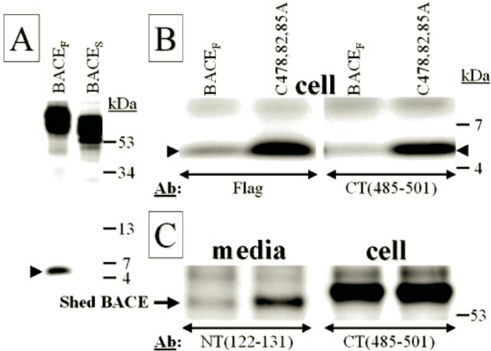
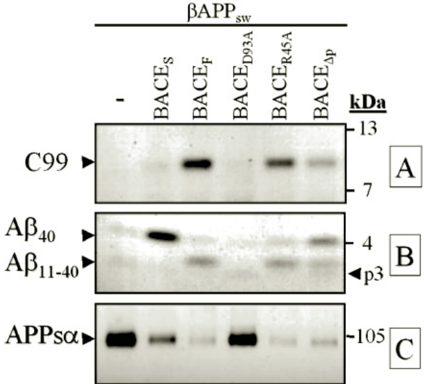
Processing of the beta-amyloid precursor protein (betaAPP) by beta- and gamma-secretases generates the amyloidogenic peptide Abeta, a major factor in the etiology of Alzheimer's disease. Following the recent identification of the beta-secretase beta-amyloid-converting enzyme (BACE), we herein investigate its zymogen processing, molecular properties, and cellular trafficking. Our data show that among the proprotein convertase family members, furin is the major converting enzyme of pro-BACE into BACE within the trans-Golgi network of HK293 cells. While we demonstrate that the 24-amino acid prosegment is required for the efficient exit of pro-BACE from the endoplasmic reticulum, it may not play a strong inhibitory role since we observe that pro-BACE can produce significant quantities of the Swedish mutant betaAPP(sw) beta-secretase product C99. BACE is palmitoylated at three Cys residues within its transmembrane/cytosolic tail and is sulfated at mature N-glycosylated moieties. Data with three different antibodies show that a small fraction of membrane-bound BACE is shed into the medium and that the extent of ectodomain shedding is palmitoylation-dependent. Overexpression of full-length BACE causes a significant increase in the production of C99 and a decrease in the alpha-secretase product APPsalpha. Although there is little increase in the generation of Abeta by full-length BACE, overexpression of either a soluble form of BACE (equivalent to the shed form) or one lacking the prosegment leads to enhanced Abeta levels. These findings suggest that the shedding of BACE may play a role in the amyloidogenic processing of betaAPP.
Overview
The claims and statistics of this paper haven’t been checked yet.
Free: it reads the open-access text and checks the first 5 claims that cite a source we can check. Create a free account to check every claim.
Integrity signals
Registry
Cites
Statistics
Figures
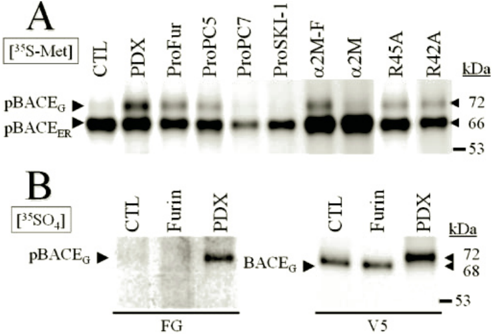
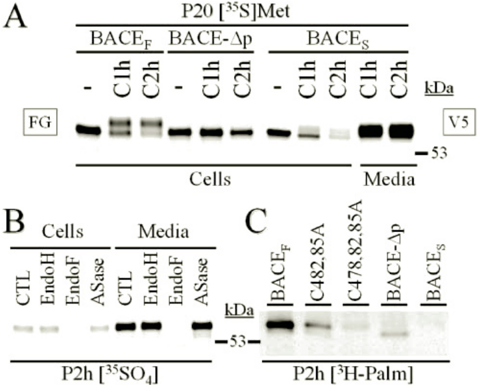
) ( A and C ) or ([BACEF]FG/ V5 1a 1-PDX) ( B and D) cDNAs. Two days post-transfections the cells were pulse-labeled in the absence or presence of 5 mM BFA for 15 min with [ 35 S]Met and then chased for 1 or 2 h. Cell lysates were immunoprecipitated with either the FG or V5 mAbs and analyzed by SDSPAGE on 8% Tricine gels. The migration position of the 53-kDa molecular mass standard and those of pro-BACE (pBACE) and BACE as well as their molecular masses are emphasized.](https://figures.cochat.ai/paper-figures/1364ddaa81664a3dbed628160cd856ec/post-translational-processing-of-secretase-amyloid-converting-enzyme-and-its-figure-1.png)
Verification
Claims the paper makes
The claims and statistics of this paper haven’t been checked yet.
Free: it reads the open-access text and checks the first 5 claims that cite a source we can check. Create a free account to check every claim.
Claims other papers make about this one
Each is checked against this paper’s own text: does it say what the citing paper says it does?
In the citing paper
“In addition, the size of the BACE1 active site is relatively large, including catalytic aspartic acid residues, flap, and 10 S loop.311”
From Amyloid β-based therapy for Alzheimer’s disease: Challenges, successes and future (2023) · cites this paper as [311]
Self-check
Percentages, sums and reported differences re-computed from the paper’s own numbers.
The self-check needs the paper’s full text.
Citations
Cites
Vassar, R., Bennett, B. D., Babu-Khan, S., Kahn, S., Mendiaz, E. A., Denis, P., Teplow, D. B., Ross, S., Amarante, P., Loeloff, R., et al. (1999) · Science · doi:10.1126/science.286.5440.735 · Cited by 3,876
Bowman, E. J., Siebers, A., & Altendorf, K. (1988) · Proceedings of the National Academy of Sciences · doi:10.1073/pnas.85.21.7972 · Cited by 1,784
Purification and cloning of amyloid precursor protein β-secretase from human brain
Sinha, S., Anderson, J. P., Barbour, R., Basi, G. S., Caccavello, R., Davis, D., Doan, M., Dovey, H. F., Frigon, N., Hong, J., et al. (1999) · Nature · doi:10.1038/990114 · Cited by 1,612
Membrane-anchored aspartyl protease with Alzheimer's disease β-secretase activity
Yan, R., Bienkowski, M. J., Shuck, M. E., Miao, H., Tory, M. C., Pauley, A. M., Brashler, J. R., Stratman, N. C., Mathews, W. R., Buhl, A. E., et al. (1999) · Nature · doi:10.1038/990107 · Cited by 1,438
Correlation Between Elevated Levels of Amyloid β-Peptide in the Brain and Cognitive Decline
Näslund, J. (2000) · JAMA · doi:10.1001/jama.283.12.1571 · Cited by 1,268
Resh, M. D. (1999) · Biochimica et Biophysica Acta (BBA) - Molecular Cell Research · doi:10.1016/s0167-4889(99)00075-0 · Cited by 1,250
Identification of a Novel Aspartic Protease (Asp 2) as β-Secretase
Hussain, I., Powell, D., Howlett, D. R., Tew, D. G., Meek, T. D., Chapman, C., Gloger, I. S., Murphy, K. E., Southan, C. D., Ryan, D. M., et al. (1999) · Molecular and Cellular Neuroscience · doi:10.1006/mcne.1999.0811 · Cited by 1,080
Lammich, S., Kojro, E., Postina, R., Gilbert, S., Pfeiffer, R., Jasionowski, M., Haass, C., & Fahrenholz, F. (1999) · Proceedings of the National Academy of Sciences · doi:10.1073/pnas.96.7.3922 · Cited by 975
Buxbaum, J. D., Liu, K.-N., Luo, Y., Slack, J. L., Stocking, K. L., Peschon, J. J., Johnson, R. S., Castner, B. J., Cerretti, D. P., & Black, R. A. (1998) · Journal of Biological Chemistry · doi:10.1074/jbc.273.43.27765 · Cited by 934
Evidence that β-Amyloid Protein in Alzheimer's Disease Is Not Derived by Normal Processing
Sisodia, S. S., Koo, E. H., Beyreuther, K., Unterbeck, A., & Price, D. L. (1990) · Science · doi:10.1126/science.1691865 · Cited by 893
Self-citation
Research works printed but not linked: 1
- Koike, H., Tomioka, S., Sorimachi, H., Saido, T. C., Maruyama, K., Okuyama, A., Fujisawa-Sehara, A., Ohno, S., Suzuki, K., and Ishiura, S. (1999) Bio- chem. J. 343, 371-375 · DOI · Paper page
Cited by
Items 101–200 of 354
Inhibitors of proprotein convertases
Basak, A. (2005) · Journal of Molecular Medicine · doi:10.1007/s00109-005-0710-0 · Cited by 87
Self-citationEhrnhoefer, D. E., Wong, B. K. Y., & Hayden, M. R. (2011) · Nature Reviews Drug Discovery · doi:10.1038/nrd3556 · Cited by 77
The Basic Biology of BACE1: A Key Therapeutic Target for Alzheimers Disease
Vassar, R., & Cole, S. (2007) · Current Genomics · doi:10.2174/138920207783769512 · Cited by 84
Sialylation enhances the secretion of neurotoxic amyloid‐β peptides
Nakagawa, K., Kitazume, S., Oka, R., Maruyama, K., Saido, T. C., Sato, Y., Endo, T., & Hashimoto, Y. (2006) · Journal of Neurochemistry · doi:10.1111/j.1471-4159.2005.03595.x · Cited by 83
“…using [35S]methionine and [35S]cysteine revealed that ST6Gal-I overexpression in N2a cells enhanced the generation of extracellular Ab peptides (Figs 2a and b), and the two Ab bands observed were tentatively assigned as Ab1–40 and Ab11–40 according to a previous report (Benjannet et al. 2001).”
BackgroundMethodWei, D., Du, Q.-S., Sun, H., & Chou, K. (2006) · Biochemical and Biophysical Research Communications · doi:10.1016/j.bbrc.2006.03.210 · Cited by 82
Isoprenoids and Alzheimer's disease: A complex relationship
Cole, S. L., & Vassar, R. (2006) · Neurobiology of Disease · doi:10.1016/j.nbd.2005.11.007 · Cited by 71
“Intriguingly, in the context of AD, it is interesting to note that BACE1 undergoes palmitoylation, and it has been speculated that this modification serves primarily to direct the protein to discrete membrane microdomains (Benjannet et al., 2001).”
BackgroundThe Tumor Microenvironment: Key to Early Detection
Ariztia, E. V., Lee, C. J., Gogoi, R. P., & Fishman, D. A. (2006) · Critical Reviews in Clinical Laboratory Sciences · doi:10.1080/10408360600778836 · Cited by 84
β‐secretase as a target for the treatment of Alzheimer's disease
Citron, M. (2002) · Journal of Neuroscience Research · doi:10.1002/jnr.10393 · Cited by 82
“Ectodomain shedding of BACE1 upon overexpression has been reported (Benjanne et al., 2001).”
BackgroundBergeron, E., Vincent, M. J., Wickham, L., Hamelin, J., Basak, A., Nichol, S. T., Chrétien, M., & Seidah, N. G. (2005) · Biochemical and Biophysical Research Communications · doi:10.1016/j.bbrc.2004.11.063 · Cited by 72
Self-citationApical Sorting of β-Secretase Limits Amyloid β-Peptide Production
Capell, A., Meyn, L., Fluhrer, R., Teplow, D. B., Walter, J., & Haass, C. (2002) · Journal of Biological Chemistry · doi:10.1074/jbc.m109119200 · Cited by 67
Down-regulation of Endogenous Amyloid Precursor Protein Processing due to Cellular Aging
Kern, A., Roempp, B., Prager, K., Walter, J., & Behl, C. (2005) · Journal of Biological Chemistry · doi:10.1074/jbc.m505625200 · Cited by 80
(2010) · Europe PMC (PubMed Central)
Inhibiting BACE1 to reverse synaptic dysfunctions in Alzheimer’s disease
Yan, R., Fan, Q., Zhou, J., & Vassar, R. (2016) · Neuroscience & Biobehavioral Reviews · doi:10.1016/j.neubiorev.2016.03.025 · Cited by 71
“In the Golgi, BACE1 deacetylation (Costantini et al., 2007) and palmitoylation in four C-terminal Cys residues (Cys474/478/482/485) for lipid raft localization (Benjannet et al., 2001; Bhattacharyya et al., 2013; Vetrivel et al., 2009) occur.”
Insights from Modeling the Tertiary Structure of Human BACE2
Chou, K. (2004) · Journal of Proteome Research · doi:10.1021/pr049905s · Cited by 79
Griffiths, H. H., Whitehouse, I. J., Baybutt, H., Brown, D., Kellett, K. A. B., Jackson, C. D., Turner, A. J., Piccardo, P., Manson, J. C., & Hooper, N. M. (2011) · Journal of Biological Chemistry · doi:10.1074/jbc.m111.278556 · Cited by 70
Quantitative modelling of amyloidogenic processing and its influence by SORLA in Alzheimer's disease
Schmidt, V., Baum, K., Lao, A., Rateitschak, K., Schmitz, Y., Teichmann, A., Wiesner, B., Petersen, C. M., Nykjaer, A., Wolf, J., et al. (2012) · The EMBO Journal · doi:10.1038/emboj.2011.352 · Cited by 75
“Because homodimer formation has been documented for BACE1 (Benjannet et al , 2001; Schmechel et al , 2004; Westmeyer et al , 2004) and for APP (Scheuermann et al , 2001; Munter et al , 2007), we favour a model whereby pre-formed APP homodimers represent the favoured substrate for BACE1 (and…”
InfluentialHusson, M., Enderlin, V., Delacourte, A., Ghenimi, N., Alfos, S., Pallet, V., & Higueret, P. (2006) · Neurobiology of Disease · doi:10.1016/j.nbd.2006.01.008 · Cited by 67
S-Palmitoylation of γ-Secretase Subunits Nicastrin and APH-1
Cheng, H., Vetrivel, K. S., Drisdel, R. C., Meckler, X., Gong, P., Leem, J. Y., Li, T., Carter, M., Chen, Y., Nguyen, P., et al. (2009) · Journal of Biological Chemistry · doi:10.1074/jbc.m806380200 · Cited by 70
The molecular link between β- and γ-secretase activity on the amyloid β precursor protein
Tabaton, M., & Tamagno, E. (2007) · Cellular and Molecular Life Sciences · doi:10.1007/s00018-007-7219-3 · Cited by 74
Detection of a Soluble Form of BACE-1 in Human Cerebrospinal Fluid by a Sensitive Activity Assay
Verheijen, J. H., Huisman, L. G., van Lent, N., Neumann, U., Paganetti, P., Hack, C. E., Bouwman, F., Lindeman, J., Bollen, E. L., & Hanemaaijer, R. (2006) · Clinical Chemistry · doi:10.1373/clinchem.2006.066720 · Cited by 67
Increased BACE1 maturation contributes to the pathogenesis of Alzheimer's disease in Down syndrome
Sun, X., Tong, Y., Qing, H., Chen, C.-H., & Song, W. (2006) · The FASEB Journal · doi:10.1096/fj.05-5628com · Cited by 63
PAR-4 Is Involved in Regulation of β-Secretase Cleavage of the Alzheimer Amyloid Precursor Protein
Xie, J., & Guo, Q. (2005) · Journal of Biological Chemistry · doi:10.1074/jbc.m411933200 · Cited by 60
Rousselet, E., Benjannet, S., Hamelin, J., Canuel, M., & Seidah, N. G. (2010) · Journal of Biological Chemistry · doi:10.1074/jbc.m110.192344 · Cited by 72
Self-citationThe Proprotein Convertase SKI-1/S1P
Pasquato, A., Pullikotil, P., Asselin, M.-C., Vacatello, M., Paolillo, L., Ghezzo, F., Basso, F., Di Bello, C., Dettin, M., & Seidah, N. G. (2006) · Journal of Biological Chemistry · doi:10.1074/jbc.m513675200 · Cited by 64
Self-citationKang, T., Zhao, Y.-G., Pei, D., Sucic, J. F., & Sang, Q. A. (2002) · Journal of Biological Chemistry · doi:10.1074/jbc.m203532200 · Cited by 71
Shi, X.-P., Tugusheva, K., Bruce, J. E., Lucka, A., Wu, G.-X., Chen-Dodson, E., Price, E., Li, Y., Xu, M., Huang, Q., et al. (2003) · Journal of Biological Chemistry · doi:10.1074/jbc.m209859200 · Cited by 70
β-Secretase: its biology as a therapeutic target in diseases
Wang, H., Li, R., & Shen, Y. (2013) · Trends in Pharmacological Sciences · doi:10.1016/j.tips.2013.01.008 · Cited by 69
Effects of the Prosegment and pH on the Activity of PCSK9
Benjannet, S., Luna Saavedra, Y. G., Hamelin, J., Asselin, M.-C., Essalmani, R., Pasquato, A., Lemaire, P., Duke, G., Miao, B., Duclos, F., et al. (2010) · Journal of Biological Chemistry · doi:10.1074/jbc.m110.154815 · Cited by 62
Self-citationProgress toward Understanding Protein S-acylation: Prospective in Plants
Li, Y., & Qi, B. (2017) · Frontiers in Plant Science · doi:10.3389/fpls.2017.00346 · Cited by 69
“…specific proteins CD20/23 Ivaldi et al., 2012 Synaptic proteins PSD-95, δ-catenin, gephyrin, AKAP79/150, Cdc42, HTT, β- and γ- secretases, BACE1 Benjannet et al., 2001; Butland et al., 2014; Brigidi et al., 2015; Hornemann, 2015 Cancer related proteins CDCP1, Ras, NTSR-1, FasL, FasR,…”
BackgroundHussain, I., Hawkins, J., Shikotra, A., Riddell, D. R., Faller, A., & Dingwall, C. (2003) · Journal of Biological Chemistry · doi:10.1074/jbc.m304186200 · Cited by 60
Protease inhibitors as potential disease-modifying therapeutics for Alzheimer’s disease
Beher, D., & Graham, S. L. (2005) · Expert Opinion on Investigational Drugs · doi:10.1517/13543784.14.11.1385 · Cited by 67
“BACE1 can be cleaved from the cell surface by a metalloproteinase, possibly ADAM-10, to generate a soluble, catalytically active form of BACE1 [214].”
BackgroundPalmitoylation and depalmitoylation defects
Hornemann, T. (2014) · Journal of Inherited Metabolic Disease · doi:10.1007/s10545-014-9753-0 · Cited by 67
“Interestingly the major APP cleaving enzyme BACE1 is palmitoylated at four sites: three within the C-terminal cytosolic tail (Benjannet et al 2001) and one on its TMD which seems to be critical for targeting BACE1 to lipid rafts.”
BackgroundH. Hook, V. Y., Toneff, T., Aaron, W., Yasothornsrikul, S., Bundey, R., & Reisine, T. (2002) · Journal of Neurochemistry · doi:10.1046/j.1471-4159.2002.00794.x · Cited by 58
“While the primary sequence designates transmembrane domains for these BACE enzymes, BACE 1 has been shown to exist in a soluble form as well as a membrane-associated form (Benjannet et al. 2001; Mallender et al. 2001).”
BackgroundBACE1 as a Therapeutic Target in Alzheimer’s Disease: Rationale and Current Status
Evin, G. M., & Hince, C. (2013) · Drugs & Aging · doi:10.1007/s40266-013-0099-3 · Cited by 65
Structure-Function Analysis of the Prosegment of the Proprotein Convertase PC5A
Nour, N., Basak, A., Chrétien, M., & Seidah, N. G. (2003) · Journal of Biological Chemistry · doi:10.1074/jbc.m208009200 · Cited by 52
Self-citationFluhrer, R., Multhaup, G., Schlicksupp, A., Okochi, M., Takeda, M., Lammich, S., Willem, M., Westmeyer, G., Bode, W., Walter, J., et al. (2003) · Journal of Biological Chemistry · doi:10.1074/jbc.m211485200 · Cited by 64
Rostagno, A. A., Tomidokoro, Y., Lashley, T., Ng, D., Plant, G. T., Holton, J. L., Frangione, B., Révész, T., & Ghiso, J. A. (2005) · Cellular and Molecular Life Sciences · doi:10.1007/s00018-005-5092-5 · Cited by 64
The BACE1-PSEN-AβPP Regulatory Axis has an Ancient Role in Response to Low Oxygen/Oxidative Stress
Nik, S. H. M., Wilson, L., Newman, M., Croft, K. D., Mori, T. A., Musgrave, I., & Lardelli, M. T. (2012) · Journal of Alzheimer s Disease · doi:10.3233/jad-2011-110533 · Cited by 64
“ProBACE1 is cleaved by FURIN or other members of the convertase family to remove the 24 amino acid N-terminal region of the propeptide within the trans-Golgi network (TGN) [31].”
Development of Protein-based Inhibitors of the Proprotein of Convertase SKI-1/S1P
Pullikotil, P., Vincent, M., Nichol, S. T., & Seidah, N. G. (2004) · Journal of Biological Chemistry · doi:10.1074/jbc.m313764200 · Cited by 58
Self-citationRentmeister, A., Bill, A., Wahle, T., Walter, J., & Famulok, M. (2006) · RNA · doi:10.1261/rna.126306 · Cited by 62
“The precise function of copper binding to B1-CT remains to be elucidated, but defective copper metabolism has long been thought to be implicated in Alzheimer’s disease (Hesse et al. 1994; Multhaup et al. 2002; Bayer et al. 2003; Bayer and Multhaup 2005 ).”
BackgroundThe Normal and Pathologic Roles of the Alzheimer's β-secretase, BACE1
Kandalepas, P., & Vassar, R. (2014) · Current Alzheimer Research · doi:10.2174/1567205011666140604122059 · Cited by 54
Employing a superior BACE1 cleavage sequence to probe cellular APP processing
Tomasselli, A. G., Qahwash, I., Emmons, T. L., Lu, Y., Leone, J. W., Lull, J. M., Fok, K. F., Bannow, C. A., Smith, C. W., Bienkowski, M. J., et al. (2003) · Journal of Neurochemistry · doi:10.1046/j.1471-4159.2003.01597.x · Cited by 53
“BACE1 is expressed initially as a proenzyme, pro-BACE1, which is processed to a mature form in the Golgi compart- ments by furin or furin-like convertases (Bennett et al. 2000; Benjannet et al. 2001; Creemers et al. 2001; Pinnix et al. 2001).”
BackgroundParsons, R. B., Price, G. C., Farrant, J. K., Subramaniam, D., Adeagbo-Sheikh, J., & Austen, B. M. (2006) · Biochemical Journal · doi:10.1042/bj20060655 · Cited by 50
Wang, J., Wei, D., Lin, Y., Wang, Y., Du, H., Li, Y.-X., & Chou, K. (2007) · Biochemical and Biophysical Research Communications · doi:10.1016/j.bbrc.2007.05.101 · Cited by 58
Insights from Modeling the 3D Structure of DNA−CBF3b Complex
Chou, K. (2005) · Journal of Proteome Research · doi:10.1021/pr050135+ · Cited by 57
Targeting protein palmitoylation: selective inhibitors and implications in disease
Chavda, B., Arnott, J. A., & Planey, S. L. (2014) · Expert Opinion on Drug Discovery · doi:10.1517/17460441.2014.933802 · Cited by 57
BACE-2 is overexpressed in Down’s syndrome
Barbiero, L., Benussi, L., Ghidoni, R., Alberici, A., Russo, C., Schettini, G., Pagano, S., Parati, E. A., Mazzoli, F., Nicosia, F. M., et al. (2003) · Experimental Neurology · doi:10.1016/s0014-4886(03)00049-9 · Cited by 57
(2011) · doi:10.1074/jbc.m110.194860 · Cited by 47
Nyarko, J. N. K., Quartey, M. O., Pennington, P. R., Heistad, R. M., Dea, D., Poirier, J., Baker, G. B., & Mousseau, D. D. (2018) · Neuroscience · doi:10.1016/j.neuroscience.2018.01.005 · Cited by 41
Excess APP O -glycosylation by GalNAc-T6 decreases Aβ production
Akasaka‐Manya, K., Kawamura, M., Tsumoto, H., Saito, Y., Tachida, Y., Kitazume, S., Hatsuta, H., Miura, Y., Hisanaga, S., Murayama, S., et al. (2016) · The Journal of Biochemistry · doi:10.1093/jb/mvw056 · Cited by 55
Beckman, M., Holsinger, R. M. D., & Small, D. H. (2006) · Biochemistry · doi:10.1021/bi052498t · Cited by 55
Butkinaree, C., Canuel, M., Essalmani, R., Poirier, S., Benjannet, S., Asselin, M.-C., Roubtsova, A., Hamelin, J., Marcinkiewicz, J., Chamberland, A., et al. (2015) · Journal of Biological Chemistry · doi:10.1074/jbc.m115.647180 · Cited by 53
Self-citationDecrease in age-adjusted cerebrospinal fluid β-secretase activity in Alzheimer's subjects
Wu, G., Sankaranarayanan, S., Tugusheva, K., Kahana, J. A., Seabrook, G. R., Shi, X., King, E., Devanarayan, V., Cook, J. J., & Simon, A. J. (2008) · Clinical Biochemistry · doi:10.1016/j.clinbiochem.2008.04.022 · Cited by 55
Huse, J. T., Byant, D., Yang, Y., Pijak, D. S., D'Souza, I., Lah, J. J., Lee, V. M.-Y., Doms, R. W., & Cook, D. G. (2003) · Journal of Biological Chemistry · doi:10.1074/jbc.m213303200 · Cited by 42
Preferred Endocytosis of Amyloid Precursor Protein from Cholesterol-Enriched Lipid Raft Microdomains
Cho, Y. Y., Kwon, O.-H., & Chung, S. (2020) · Molecules · doi:10.3390/molecules25235490 · Cited by 50
“In addition, it is widely believed that β- and γ-secretases as well as their substrate APP are localized in lipid raft microdomains (Benjannet et al., 2001, Bhattacharyya et al., 2013, Hur et al., 2008, Osenkowski et al., 2008).”
BackgroundSpotlight on BACE: The secretases as targets for treatment in Alzheimer disease
Dingwall, C. (2001) · Journal of Clinical Investigation · doi:10.1172/jci14402 · Cited by 38
Protein palmitoylation: biological functions, disease, and therapeutic targets
Qian, Y., Zhao, Y., & Zhang, F. (2025) · MedComm · doi:10.1002/mco2.70096 · Cited by 52
Motoki, K., Kume, H., Oda, A., Tamaoka, A., Hosaka, A., Kametani, F., & Araki, W. (2012) · Brain and Behavior · doi:10.1002/brb3.52 · Cited by 45
“Mature BACE1 is partly cleaved in the extracellular domain to generate soluble BACE1 that is released extracellularly (Benjannet et al. 2001; Hussain et al. 2003; Murayama et al. 2005).”
BackgroundCho, Y. Y., Kwon, O.-H., Park, M. K., Kim, T.-W., & Chung, S. (2019) · PLOS ONE · doi:10.1371/journal.pone.0210535 · Cited by 48
Lost in traffic: consequences of altered palmitoylation in neurodegeneration
Ramzan, F., Abrar, F., Mishra, G. G., Liao, L. M. Q., & Martin, D. D. O. (2023) · Frontiers in Physiology · doi:10.3389/fphys.2023.1166125 · Cited by 49
“However, no loss in BACE1 protein stability or subcellular localization was observed (Vetrivel et al., 2009).”
BackgroundInfluentialKametaka, S., Shibata, M., Moroe, K., Kanamori, S., Ohsawa, Y., Waguri, S., Sims, P. J., Emoto, K., Umeda, M., & Uchiyama, Y. (2003) · Journal of Biological Chemistry · doi:10.1074/jbc.m208611200 · Cited by 47
Klaver, D. W., Wilce, M. C. J., Cui, H., Hung, A. C., Gasperini, R., Foa, L., & Small, D. H. (2010) · Biological Chemistry · doi:10.1515/bc.2010.089 · Cited by 41
Fischer, F., Molinari, M., Bodendorf, U., & Paganetti, P. (2002) · Journal of Neurochemistry · doi:10.1046/j.0022-3042.2002.00806.x · Cited by 45
“When BACE reaches the Golgi apparatus, the pro-peptide is removed by the action of furin or other pro-protein convertases (Bennett et al. 2000; Benjannet et al. 2001; Creemers et al. 2001; Shi et al. 2001).”
BackgroundResultInfluentialCholesterol and Lipid Rafts in the Biogenesis of Amyloid-β Protein and Alzheimer's Disease
Pantelopulos, G. A., Abraham, C. B., & Straub, J. E. (2024) · Annual Review of Biophysics · doi:10.1146/annurev-biophys-062823-023436 · Cited by 44
Spinelli, M., Fusco, S., & Grassi, C. (2018) · International Journal of Molecular Sciences · doi:10.3390/ijms19123820 · Cited by 43
Meza‐Aguilar, D. G., & Boucard, A. A. (2014) · BioMolecular Concepts · doi:10.1515/bmc-2014-0032 · Cited by 43
The Proprotein Convertase SKI-1/S1P
Pullikotil, P., Benjannet, S., Mayne, J., & Seidah, N. G. (2007) · Journal of Biological Chemistry · doi:10.1074/jbc.m703200200 · Cited by 31
Self-citationWang, J., Wei, D., & Chou, K. (2009) · Biochemical and Biophysical Research Communications · doi:10.1016/j.bbrc.2009.08.026 · Cited by 43
Mirza, F. J., Zahid, S., Amber, S., Sumera, S., Jabeen, H., Asim, N., & Shah, S. A. A. (2022) · Molecules · doi:10.3390/molecules27217241 · Cited by 43
Wickham, L., Benjannet, S., Marcinkiewicz, E., Chretien, M., & Seidah, N. G. (2005) · Journal of Neurochemistry · doi:10.1111/j.1471-4159.2004.02840.x · Cited by 37
“…and encoded either mouse BACE1, human BRI3, or the convertases human furin, human paired basic amino acid converting enzyme 4 (PACE4), mouse PC5A, mouse PC5B, rat PC7 (Benjannet et al. 2001), human subtilisin-kexin isozyme-1 (SKI-1) (Seidah et al. 1999) or human NARC-1 (Seidah et al. 2003).”
BackgroundMethodSelf-citationProdomain processing of Asp1 (BACE2) is autocatalytic
Hussain, I., Christie, G., Schneider, K., Moore, S., & Dingwall, C. (2001) · Journal of Biological Chemistry · doi:10.1074/jbc.m101069200 · Cited by 41
Atsmon‐Raz, Y., & Tieleman, D. P. (2017) · The Journal of Physical Chemistry B · doi:10.1021/acs.jpcb.7b10175 · Cited by 42
Transcriptional and post‐transcriptional regulation of β‐secretase
Tamagno, E., Guglielmotto, M., Monteleone, D., Vercelli, A., & Tabaton, M. (2012) · IUBMB Life · doi:10.1002/iub.1099 · Cited by 40
The proprotein convertase PC5/6 is protective against intestinal tumorigenesis: in vivo mouse model
Sun, X., Essalmani, R., Seidah, N. G., & Prat, A. (2009) · Molecular Cancer · doi:10.1186/1476-4598-8-73 · Cited by 39
Self-citationβAPP and Furin mRNA Concentrates in Immature Senile Plaques in the Brain of Alzheimer Patients
Marcinkiewicz, M. M. (2002) · Journal of Neuropathology & Experimental Neurology · doi:10.1093/jnen/61.9.915 · Cited by 39
Convertases other than furin cleave β‐secretase to its mature form
Pinnix, I., Council, J. E., Roseberry, B., Onstead, L., Mallender, W., Sucic, J., & Sambamurti, K. (2001) · The FASEB Journal · doi:10.1096/fj.00-0891fje · Cited by 31
Palmitoylation: an emerging therapeutic target bridging physiology and disease
Li, W., Shen, J. M., Zhuang, A., Wang, R., Li, Q., Rabata, A., Zhang, Y., & Cao, D. (2025) · Cellular & Molecular Biology Letters · doi:10.1186/s11658-025-00776-w · Cited by 37
Post-Translational Modifications of BACE1 in Alzheimer's Disease
Wen, W., Li, P., Liu, P., Xu, S., Wang, F., & Huang, J. H. (2021) · Current Neuropharmacology · doi:10.2174/1570159x19666210121163224 · Cited by 36
Ghenimi, N., Alfos, S., Redonnet, A., Higueret, P., Pallet, V., & Enderlin, V. (2010) · Journal of Neuroendocrinology · doi:10.1111/j.1365-2826.2010.02002.x · Cited by 36
Lan, X., Kiyota, T., Hanamsagar, R., Huang, Y., Andrews, S., Peng, H., Zheng, J. C., Swindells, S., Carlson, G. A., & Ikezu, T. (2012) · Journal of Neuroimmune Pharmacology · doi:10.1007/s11481-011-9304-5 · Cited by 34
Dingwall, C. (2007) · Biochemical Society Transactions · doi:10.1042/bst0350571 · Cited by 35
Cai, Z., Li, B., Li, K., & Zhao, B. (2012) · Journal of Alzheimer s Disease · doi:10.3233/jad-2012-111649 · Cited by 33
“BACE may help A PP binding and cleavage [47].”
BackgroundDillen, K., & Annaert, W. G. (2006) · International review of cytology · doi:10.1016/s0074-7696(06)54005-7 · Cited by 34
Trafficking in neurons: Searching for new targets for Alzheimer's disease future therapies
Musardo, S., Saraceno, C., Pelucchi, S., & Marcello, E. E. (2013) · European Journal of Pharmacology · doi:10.1016/j.ejphar.2013.07.019 · Cited by 32
Syeda, T., & Cannon, J. R. (2021) · Journal of Biochemical and Molecular Toxicology · doi:10.1002/jbt.22694 · Cited by 32
Cln5 represents a new type of cysteine-based S -depalmitoylase linked to neurodegeneration
Luebben, A. V., Bender, D., Becker, S., Crowther, L. M., Erven, I., Hofmann, K., Söding, J., Klemp, H. G., Bellotti, C., Stäuble, A., et al. (2022) · Science Advances · doi:10.1126/sciadv.abj8633 · Cited by 31
Nejjari, M., Berthet, V., Rigot, V., Laforest, S., Jacquier, M., Seidah, N. G., Rémy, L., Bruyneel, E. A., Scoazec, J., Marvaldi, J. L., et al. (2004) · American Journal Of Pathology · doi:10.1016/s0002-9440(10)63753-4 · Cited by 32
Self-citationLashley, T., Revesz, T., Plant, G., Bandopadhyay, R., Lees, A. J., Frangione, B., Wood, N. W., De Silva, R., Ghiso, J., Rostagno, A., et al. (2008) · Neuropathology and Applied Neurobiology · doi:10.1111/j.1365-2990.2008.00935.x · Cited by 31
Bruinzeel, W., Yon, J. R., Giovannelli, S., & Masure, S. (2002) · Protein Expression and Purification · doi:10.1016/s1046-5928(02)00516-8 · Cited by 31
Rousselet, E., Benjannet, S., Marcinkiewicz, E., Asselin, M.-C., Lazure, C., & Seidah, N. G. (2011) · Journal of Biological Chemistry · doi:10.1074/jbc.m110.189936 · Cited by 32
Self-citationScamuffa, N., Sfaxi, F., Ma, J., Lalou, C., Seidah, N. G., Calvo, F. M., & Khatib, A. (2013) · Carcinogenesis · doi:10.1093/carcin/bgt345 · Cited by 30
Self-citationRole of Ostm1 Cytosolic Complex with Kinesin 5B in Intracellular Dispersion and Trafficking
Pandruvada, S. N. M., Beauregard, J., Benjannet, S., Pata, M., Lazure, C., Seidah, N. G., & Vacher, J. (2016) · Molecular and Cellular Biology · doi:10.1128/mcb.00656-15 · Cited by 30
“was excised and sequenced as described previously (21).”
MethodSelf-citationPosner, S. F., Vaslet, C. A., Jurofcik, M., Lee, A., Seidah, N. G., & Nillni, E. A. (2004) · Endocrine · doi:10.1385/endo:23:2-3:199 · Cited by 30
Self-citationViral envelope glycoprotein processing by proprotein convertases
Pasquato, A., da Palma, J. R., Galan-Navarro, C., Seidah, N. G., & Kunz, S. (2013) · Antiviral Research · doi:10.1016/j.antiviral.2013.04.013 · Cited by 29
“With the exception of SKI-1/S1P and PC2, all PC pro-segments are inhibitors of their cognate enzymes (Benjannet et al., 2001; Nour et al., 2003; Zhong et al., 1999).”
BackgroundSelf-citationQahwash, I., He, W., Tomasselli, A., Kletzien, R. F., & Yan, R. (2004) · Journal of Biological Chemistry · doi:10.1074/jbc.m407101200 · Cited by 25
PI3-K- and PKC-dependent up-regulation of APP processing enzymes by retinoic acid
Holback, S., Adlerz, L., Gatsinzi, T., Jacobsen, K. T., & Iverfeldt, K. (2007) · Biochemical and Biophysical Research Communications · doi:10.1016/j.bbrc.2007.10.167 · Cited by 29
Post‐translational processing of beta‐secretase in Alzheimer's disease
Sidera, C., Parsons, R. B., & Austen, B. (2005) · PROTEOMICS · doi:10.1002/pmic.200401185 · Cited by 31
Intracellular trafficking of the β-secretase and processing of amyloid precursor protein
Zhi, P., Chia, C., & Gleeson, P. A. (2011) · IUBMB Life · doi:10.1002/iub.512 · Cited by 26
Evidence for dimeric BACE-mediated APP processing
Jin, S., Agerman, K., Kolmodin, K., Gustafsson, E., Dahlqvist, C., Juréus, A., Liu, G., Fälting, J. M., von Berg, S., Lundkvist, J., et al. (2010) · Biochemical and Biophysical Research Communications · doi:10.1016/j.bbrc.2010.01.064 · Cited by 27
Post-translational regulation of the β-secretase BACE1
Araki, W. (2016) · Brain Research Bulletin · doi:10.1016/j.brainresbull.2016.04.009 · Cited by 26
Metadata
- Authors
- Benjannet, S., Elagoz, A., Wickham, L., Mamarbachi, M., Munzer, J. S., Basak, A., Lazure, C., Cromlish, J. A., Sisodia, S., Checler, F., Chrétien, M., & Seidah, N. G.
- Affiliations
- Montreal Clinical Research Institute (CA)
- Ottawa Hospital (CA)
- University of Chicago (US)
- Centre National de la Recherche Scientifique (FR)
- Corresponding author
- Seidah, Nabil G.
- Venue
- Journal of Biological Chemistry
- Publisher
- Elsevier BV
- Published
- 2001-04
- Volume
- 276
- Issue
- 14
- Pages
- 10879-10887
- ISSN
- 0021-9258 (ISSN-L)
- OpenAlex
- W2040252771
- Cited by
- 301
- References
- 49
- Citations by year
- 2025: 6 · 2024: 4 · 2023: 5 · 2022: 4 · 2021: 9 · 2020: 6 · 2019: 5 · 2018: 6 · 2017: 8 · 2016: 8 · 2015: 4 · 2014: 11 · 2013: 13 · 2012: 13
- FWCI
- 14.55
- Type
- journal article
- Language
- en
- Open access
- hybrid
- doi.org
- Licence
- cc-by
- www.elsevier.com/tdm/userlicense/1.0/ (tdm)
- creativecommons.org/licenses/by/4.0/ (vor, 7124 d)
- Locations
- Journal of Biological Chemistry (publishedVersion, cc-by)
- PubMed (publishedVersion)
- Funders
- Government of Canada
- Canadian Institutes of Health Research
- Topics
- Life Sciences › Neuroscience › Cellular and Molecular Neuroscience › Alzheimer's disease research and treatments
- Life Sciences › Biochemistry, Genetics and Molecular Biology › Cancer Research › Protease and Inhibitor Mechanisms
- Health Sciences › Medicine › Psychiatry and Mental health › Dementia and Cognitive Impairment Research
- Keywords
- beta-secretase, BACE, amyloid precursor protein, post-translational processing, furin, prosegment, trans-Golgi network, palmitoylation, ectodomain shedding, amyloid-beta, Alzheimer's disease, gamma-secretase, alpha-secretase, C99, endoplasmic reticulum exit
- MeSH terms
- Alzheimer Disease, Animals, Cell Line, Cell Membrane, Cytosol, Humans, Endopeptidases, Protein Processing, Post-Translational, Aspartic Acid Endopeptidases, Mice, Amyloid Precursor Protein Secretases
About these checks
Registry, retraction, Cites and statistics results are computed, not judged, with one exception: a printed reference that no index lists is read once by a model before it counts as a citation error. Claims are extracted by a model and kept only when their quote appears verbatim in the text; each cited source is then checked, with a model’s help, for whether it says what the claim relies on. Those verdicts can be wrong — read the claim’s quote and the cited source before relying on one.
Statistics and arithmetic are recomputed, not judged.
Confidence bands are shown only for fields calibrated on our annotated test set. None is calibrated yet, so no band is shown.
What counts as a claim ›How we measure confidence ›How we check this ›
Are you an author, or do you see a problem with this page? Request a review
Data sources
Bibliographic data: Semantic Scholar, OpenAlex, Crossref.
Contains information from the Semantic Scholar Academic Graph Datasets, made available under the ODC Attribution License (ODC-BY 1.0).
Semantic Scholar’s data is described in: Kinney, R., et al. (2023). The Semantic Scholar Open Data Platform. arXiv:2301.10140.
