

Post-translational Processing of β-Secretase (β-Amyloid-converting Enzyme) and Its Ectodomain Shedding
Open accessThe DOI matches its Crossref record; 49 of the 49 references it cites were found in a registry or an index.
Abstract
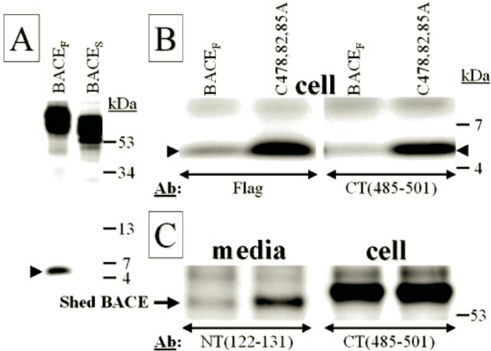
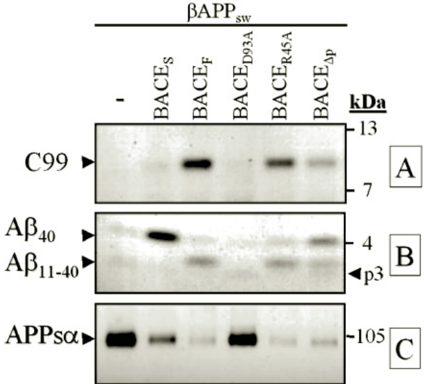
Processing of the beta-amyloid precursor protein (betaAPP) by beta- and gamma-secretases generates the amyloidogenic peptide Abeta, a major factor in the etiology of Alzheimer's disease. Following the recent identification of the beta-secretase beta-amyloid-converting enzyme (BACE), we herein investigate its zymogen processing, molecular properties, and cellular trafficking. Our data show that among the proprotein convertase family members, furin is the major converting enzyme of pro-BACE into BACE within the trans-Golgi network of HK293 cells. While we demonstrate that the 24-amino acid prosegment is required for the efficient exit of pro-BACE from the endoplasmic reticulum, it may not play a strong inhibitory role since we observe that pro-BACE can produce significant quantities of the Swedish mutant betaAPP(sw) beta-secretase product C99. BACE is palmitoylated at three Cys residues within its transmembrane/cytosolic tail and is sulfated at mature N-glycosylated moieties. Data with three different antibodies show that a small fraction of membrane-bound BACE is shed into the medium and that the extent of ectodomain shedding is palmitoylation-dependent. Overexpression of full-length BACE causes a significant increase in the production of C99 and a decrease in the alpha-secretase product APPsalpha. Although there is little increase in the generation of Abeta by full-length BACE, overexpression of either a soluble form of BACE (equivalent to the shed form) or one lacking the prosegment leads to enhanced Abeta levels. These findings suggest that the shedding of BACE may play a role in the amyloidogenic processing of betaAPP.
Overview
The claims and statistics of this paper haven’t been checked yet.
Free: it reads the open-access text and checks the first 5 claims that cite a source we can check. Create a free account to check every claim.
Integrity signals
Registry
Cites
Statistics
Figures
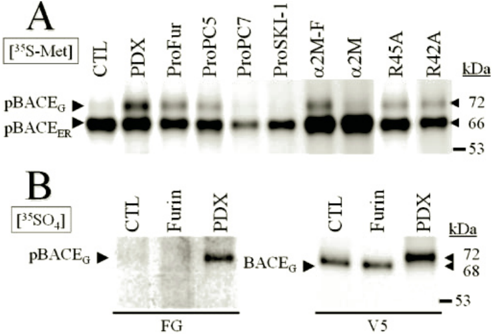
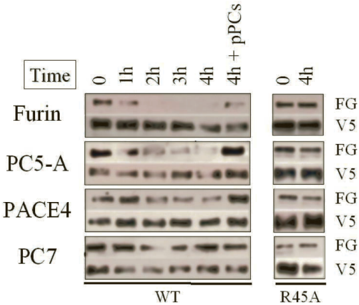
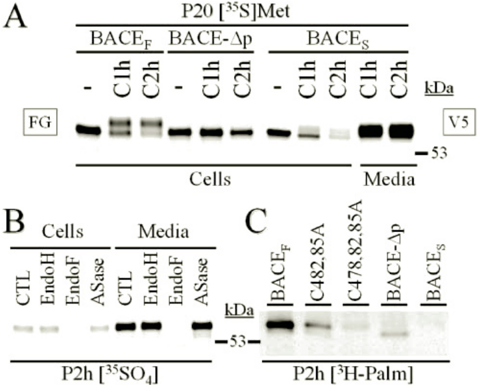
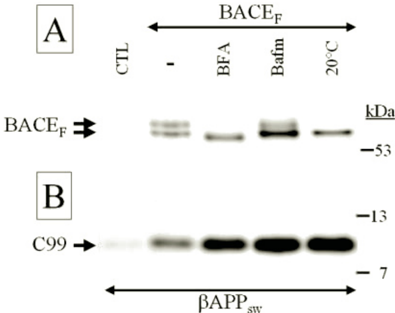
) ( A and C ) or ([BACEF]FG/ V5 1a 1-PDX) ( B and D) cDNAs. Two days post-transfections the cells were pulse-labeled in the absence or presence of 5 mM BFA for 15 min with [ 35 S]Met and then chased for 1 or 2 h. Cell lysates were immunoprecipitated with either the FG or V5 mAbs and analyzed by SDSPAGE on 8% Tricine gels. The migration position of the 53-kDa molecular mass standard and those of pro-BACE (pBACE) and BACE as well as their molecular masses are emphasized.](https://figures.cochat.ai/paper-figures/1364ddaa81664a3dbed628160cd856ec/post-translational-processing-of-secretase-amyloid-converting-enzyme-and-its-figure-1.png)
Verification
Claims the paper makes
The claims and statistics of this paper haven’t been checked yet.
Free: it reads the open-access text and checks the first 5 claims that cite a source we can check. Create a free account to check every claim.
Claims other papers make about this one
Each is checked against this paper’s own text: does it say what the citing paper says it does?
In the citing paper
“In addition, the size of the BACE1 active site is relatively large, including catalytic aspartic acid residues, flap, and 10 S loop.311”
From Amyloid β-based therapy for Alzheimer’s disease: Challenges, successes and future (2023) · cites this paper as [311]
Self-check
Percentages, sums and reported differences re-computed from the paper’s own numbers.
The self-check needs the paper’s full text.
Citations
Cites
Vassar, R., Bennett, B. D., Babu-Khan, S., Kahn, S., Mendiaz, E. A., Denis, P., Teplow, D. B., Ross, S., Amarante, P., Loeloff, R., et al. (1999) · Science · doi:10.1126/science.286.5440.735 · Cited by 3,876
Bowman, E. J., Siebers, A., & Altendorf, K. (1988) · Proceedings of the National Academy of Sciences · doi:10.1073/pnas.85.21.7972 · Cited by 1,784
Purification and cloning of amyloid precursor protein β-secretase from human brain
Sinha, S., Anderson, J. P., Barbour, R., Basi, G. S., Caccavello, R., Davis, D., Doan, M., Dovey, H. F., Frigon, N., Hong, J., et al. (1999) · Nature · doi:10.1038/990114 · Cited by 1,612
Membrane-anchored aspartyl protease with Alzheimer's disease β-secretase activity
Yan, R., Bienkowski, M. J., Shuck, M. E., Miao, H., Tory, M. C., Pauley, A. M., Brashler, J. R., Stratman, N. C., Mathews, W. R., Buhl, A. E., et al. (1999) · Nature · doi:10.1038/990107 · Cited by 1,438
Correlation Between Elevated Levels of Amyloid β-Peptide in the Brain and Cognitive Decline
Näslund, J. (2000) · JAMA · doi:10.1001/jama.283.12.1571 · Cited by 1,268
Resh, M. D. (1999) · Biochimica et Biophysica Acta (BBA) - Molecular Cell Research · doi:10.1016/s0167-4889(99)00075-0 · Cited by 1,250
Identification of a Novel Aspartic Protease (Asp 2) as β-Secretase
Hussain, I., Powell, D., Howlett, D. R., Tew, D. G., Meek, T. D., Chapman, C., Gloger, I. S., Murphy, K. E., Southan, C. D., Ryan, D. M., et al. (1999) · Molecular and Cellular Neuroscience · doi:10.1006/mcne.1999.0811 · Cited by 1,080
Lammich, S., Kojro, E., Postina, R., Gilbert, S., Pfeiffer, R., Jasionowski, M., Haass, C., & Fahrenholz, F. (1999) · Proceedings of the National Academy of Sciences · doi:10.1073/pnas.96.7.3922 · Cited by 975
Buxbaum, J. D., Liu, K.-N., Luo, Y., Slack, J. L., Stocking, K. L., Peschon, J. J., Johnson, R. S., Castner, B. J., Cerretti, D. P., & Black, R. A. (1998) · Journal of Biological Chemistry · doi:10.1074/jbc.273.43.27765 · Cited by 934
Evidence that β-Amyloid Protein in Alzheimer's Disease Is Not Derived by Normal Processing
Sisodia, S. S., Koo, E. H., Beyreuther, K., Unterbeck, A., & Price, D. L. (1990) · Science · doi:10.1126/science.1691865 · Cited by 893
Self-citation
Research works printed but not linked: 1
- Koike, H., Tomioka, S., Sorimachi, H., Saido, T. C., Maruyama, K., Okuyama, A., Fujisawa-Sehara, A., Ohno, S., Suzuki, K., and Ishiura, S. (1999) Bio- chem. J. 343, 371-375 · DOI · Paper page
Cited by
Furin at the cutting edge: From protein traffic to embryogenesis and disease
Thomas, G. (2002) · Nature Reviews Molecular Cell Biology · doi:10.1038/nrm934 · Cited by 1,216
Seidah, N. G., Benjannet, S., Wickham, L., Marcinkiewicz, J., Jasmin, S. B., Stifani, S., Basak, A., Prat, A., & Chrétien, M. (2003) · Proceedings of the National Academy of Sciences · doi:10.1073/pnas.0335507100 · Cited by 1,191
Self-citationThe neuronal sortilin-related receptor SORL1 is genetically associated with Alzheimer disease
Rogaeva, E., Meng, Y., Lee, J. H., Gu, Y., Kawarai, T., Zou, F., Katayama, T., Baldwin, C. T., Cheng, R., Hasegawa, H., et al. (2007) · Nature Genetics · doi:10.1038/ng1943 · Cited by 1,167
Trafficking and Proteolytic Processing of APP
Haass, C., Kaether, C., Thinakaran, G., & Sisodia, S. (2012) · Cold Spring Harbor Perspectives in Medicine · doi:10.1101/cshperspect.a006270 · Cited by 1,075
“During maturation, BACE1 undergoes a number of post/co-translational modifications, including N-glycosylation, disulfide bridge formation, and palmitoylation (Bennett et al. 2000b; Capell et al. 2000; Huse et al. 2000; Benjannet et al. 2001).”
BackgroundSelf-citationAmyloid β-based therapy for Alzheimer’s disease: Challenges, successes and future
Zhang, Y., Chen, H., Li, R., Sterling, K., & Song, W. (2023) · Signal Transduction and Targeted Therapy · doi:10.1038/s41392-023-01484-7 · Cited by 988
Linking lipids to Alzheimer's disease: cholesterol and beyond
Di Paolo, G., & Kim, T.-W. (2011) · Nature Reviews Neuroscience · doi:10.1038/nrn3012 · Cited by 972
Amyloidogenic processing of the Alzheimer β-amyloid precursor protein depends on lipid rafts
Ehehalt, R., Keller, P., Haass, C., Thiele, C., & Simons, K. (2003) · The Journal of Cell Biology · doi:10.1083/jcb.200207113 · Cited by 932
“Th e Jo ur na l o f C el l B io lo gy many other raft-associated proteins, BACE1 is also palmitoylated at three cysteine residues within its transmembrane/ cytosolic tail (Benjannet et al., 2001) and is mainly apically sorted in epithelial cells (Capell et al., 2002).”
BackgroundNARC-1/PCSK9 and Its Natural Mutants
Benjannet, S., Rhainds, D., Essalmani, R., Mayne, J., Wickham, L., Jin, W., Asselin, M.-C., Hamelin, J., Varret, M., Allard, D., et al. (2004) · Journal of Biological Chemistry · doi:10.1074/jbc.m409699200 · Cited by 587
Self-citationVassar, R., Kovacs, D. M., Yan, R., & Wong, P. C. (2009) · The Journal of Neuroscience · doi:10.1523/jneurosci.3657-09.2009 · Cited by 577
“Further addition of complex carbohydrates and removal of the BACE1 prodomain by furin convertases occur in the Golgi com- partment (Bennett et al., 2000; Capell et al., 2000; Benjannet et al., 2001; Creemers et al., 2001).”
BackgroundThe Alzheimer's disease Beta-secretase enzyme, BACE1
Cole, S. L., & Vassar, R. (2007) · Molecular Neurodegeneration · doi:10.1186/1750-1326-2-22 · Cited by 550
Poirier, S., Mayer, G., Benjannet, S., Bergeron, E., Marcinkiewicz, J., Nassoury, N., Mayer, H., Nimpf, J., Prat, A., & Seidah, N. G. (2008) · Journal of Biological Chemistry · doi:10.1074/jbc.m708098200 · Cited by 477
Self-citationProteases and Proteolysis in Alzheimer Disease: A Multifactorial View on the Disease Process
De Strooper, B. (2010) · Physiological Reviews · doi:10.1152/physrev.00023.2009 · Cited by 455
Association of γ-Secretase with Lipid Rafts in Post-Golgi and Endosome Membranes
Vetrivel, K. S., Cheng, H., Lin, W., Sakurai, T., Li, T., Nukina, N., Wong, P. C., Xu, H., & Thinakaran, G. (2004) · Journal of Biological Chemistry · doi:10.1074/jbc.m407986200 · Cited by 413
Protein palmitoylation and subcellular trafficking
Aicart-Ramos, C., Valero, R. A., & Rodriguez-Crespo, I. (2011) · Biochimica et Biophysica Acta (BBA) - Biomembranes · doi:10.1016/j.bbamem.2011.07.009 · Cited by 372
BACE1 (β-secretase) inhibitors for the treatment of Alzheimer's disease
Ghosh, A. K., & Osswald, H. L. (2014) · Chem. Soc. Rev. · doi:10.1039/c3cs60460h · Cited by 358
Cordy, J. M., Hussain, I., Dingwall, C., Hooper, N. M., & Turner, A. J. (2003) · Proceedings of the National Academy of Sciences · doi:10.1073/pnas.1635130100 · Cited by 356
Vassar, R., Kuhn, P., Haass, C., Kennedy, M. E., Rajendran, L., Wong, P. C., & Lichtenthaler, S. F. (2014) · Journal of Neurochemistry · doi:10.1111/jnc.12715 · Cited by 311
“BACE1 is synthesized as a zymogen in which its pre- and pro-peptide domains are removed in the endoplasmic reticulum (ER) and TGN by signal peptidase and pro-protein convertase, respectively (Benjannet et al. 2001; Bennett et al. 2000b).”
β-Secretase Activity Increases with Aging in Human, Monkey, and Mouse Brain
Fukumoto, H., Rosene, D. L., Moss, M. B., Raju, S., Hyman, B. T., & Irizarry, M. C. (2004) · The American Journal of Pathology · doi:10.1016/s0002-9440(10)63159-8 · Cited by 294
The Proprotein Convertase (PC) PCSK9 Is Inactivated by Furin and/or PC5/6A
Benjannet, S., Rhainds, D., Hamelin, J., Nassoury, N., & Seidah, N. G. (2006) · Journal of Biological Chemistry · doi:10.1074/jbc.m606495200 · Cited by 263
Self-citationReticulon family members modulate BACE1 activity and amyloid-β peptide generation
He, W., Lu, Y., Qahwash, I., Hu, X.-Y., Chang, A., & Yan, R. (2004) · Nature Medicine · doi:10.1038/nm1088 · Cited by 257
Membrane rafts in Alzheimer's disease beta-amyloid production
Vetrivel, K. S., & Thinakaran, G. (2010) · Biochimica et Biophysica Acta (BBA) - Molecular and Cell Biology of Lipids · doi:10.1016/j.bbalip.2010.03.007 · Cited by 247
Guglielmotto, M., Aragno, M., Autelli, R., Giliberto, L., Novo, E., Colombatto, S., Danni, O., Parola, M., Smith, M. A., Perry, G., et al. (2009) · Journal of Neurochemistry · doi:10.1111/j.1471-4159.2008.05858.x · Cited by 243
“…type I integral membrane APP. b-site APP cleaving enzyme (BACE1), identified as the b-secretase that cleaves APP within the ectodomain (Vassar et al. 1999), is an integral type I transmembrane protein detected in the trans-Golgi network and endosomes (Benjannet et al. 2001; Pasternak et al. 2004).”
BackgroundRegulation of the α‐secretase ADAM10 by its prodomain and proprotein convertases
Anders, A., Gilbert, S., Garten, W., Postina, R., & Fahrenholz, F. (2001) · The FASEB Journal · doi:10.1096/fj.01-0007fje · Cited by 242
The secretory proprotein convertases furin, PC5, and PC7 activate VEGF-C to induce tumorigenesis
Siegfried, G., Basak, A., Cromlish, J. A., Benjannet, S., Marcinkiewicz, J., Chrétien, M., Seidah, N. G., & Khatib, A.-M. (2003) · Journal of Clinical Investigation · doi:10.1172/jci17220 · Cited by 226
Self-citationLing, Y., Morgan, K., & Kalsheker, N. (2003) · The International Journal of Biochemistry & Cell Biology · doi:10.1016/s1357-2725(03)00133-x · Cited by 224
Proprotein convertases: lessons from knockouts
Scamuffa, N., Calvo, F., Chrétien, M., Seidah, N. G., & Khatib, A. (2006) · The FASEB Journal · doi:10.1096/fj.05-5491rev · Cited by 223
Self-citationTranscriptional Regulation of BACE1, the β-Amyloid Precursor Protein β-Secretase, by Sp1
Christensen, M. A., Zhou, W., Qing, H., Lehman, A., Philipsen, S., & Song, W. (2004) · Molecular and Cellular Biology · doi:10.1128/mcb.24.2.865-874.2004 · Cited by 221
Grüninger-Leitch, F., Schlatter, D., Küng, E., Nelböck, P., & Döbeli, H. (2002) · Journal of Biological Chemistry · doi:10.1074/jbc.m109266200 · Cited by 211
β-Secretase (BACE) as a drug target for alzheimer’s disease
Vassar, R. (2002) · Advanced Drug Delivery Reviews · doi:10.1016/s0169-409x(02)00157-6 · Cited by 210
Obregon, D. F., Rezai-Zadeh, K., Bai, Y., Sun, N., Hou, H., Ehrhart, J., Zeng, J., Mori, T., Arendash, G. W., Shytle, D., et al. (2006) · Journal of Biological Chemistry · doi:10.1074/jbc.m600617200 · Cited by 209
Curbing activation: proprotein convertases in homeostasis and pathology
Taylor, N. A., Van De Ven, W. J. M., & Creemers, J. W. M. (2003) · The FASEB Journal · doi:10.1096/fj.02-0831rev · Cited by 205
Proprotein Convertases in Tumor Progression and Malignancy
Khatib, A.-M., Siegfried, G., Chrétien, M., Metrakos, P., & Seidah, N. G. (2002) · The American Journal of Pathology · doi:10.1016/s0002-9440(10)61140-6 · Cited by 201
Self-citationPrecursor Processing by Kex2/Furin Proteases
Rockwell, N. C., Krysan, D. J., Komiyama, T., & Fuller, R. S. (2002) · Chemical Reviews · doi:10.1021/cr010168i · Cited by 201
Cleavage of L1 in Exosomes and Apoptotic Membrane Vesicles Released from Ovarian Carcinoma Cells
Gutwein, P., Stoeck, A., Riedle, S., Gast, D., Runz, S., Condon, T. P., Marmé, A., Phong, M.-C., Linderkamp, O., Skorokhod, A., et al. (2005) · Clinical Cancer Research · doi:10.1158/1078-0432.ccr-04-1688 · Cited by 198
Soluble amyloid precursor protein-α modulates β-secretase activity and amyloid-β generation
Obregon, D., Hou, H., Deng, J., Giunta, B., Tian, J., Darlington, D., Shahaduzzaman, M., Zhu, Y., Mori, T., Mattson, M. P., et al. (2012) · Nature Communications · doi:10.1038/ncomms1781 · Cited by 192
Tousseyn, T., Thathiah, A., Jorissen, E., Raemaekers, T., Konietzko, U., Reiss, K., Maes, E., Snellinx, A., Serneels, L., Nyabi, O., et al. (2009) · Journal of Biological Chemistry · doi:10.1074/jbc.m805894200 · Cited by 188
The β-Secretase, BACE: A Prime Drug Target for Alzheimer's Disease
Vassar, R. (2001) · Journal of Molecular Neuroscience · doi:10.1385/jmn:17:2:157 · Cited by 186
“EST databases with the BACE1 sequence identified a homologous novel aspartic protease, BACE2 (also termed Asp1, mempapsin1, and DRAP) ( Acquati et al., 2000; Bennett et al., 2000; Lin et al., 2000; Saunders et al., 1999; Solans et al., 2000; Yan et al., 1999).”
Advances in the Cellular and Molecular Biology of the Beta-Amyloid Protein in Alzheimer 's Disease
Sambamurti, K., Greig, N. H., & Lahiri, D. K. (2002) · NeuroMolecular Medicine · doi:10.1385/nmm:1:1:1 · Cited by 185
A Cell Biological Perspective on Alzheimer's Disease
Annaert, W., & De Strooper, B. (2002) · Annual Review of Cell and Developmental Biology · doi:10.1146/annurev.cellbio.18.020402.142302 · Cited by 182
Cleavage of Amyloid-β Precursor Protein and Amyloid-β Precursor-like Protein by BACE 1
Li, Q., & Südhof, T. C. (2004) · Journal of Biological Chemistry · doi:10.1074/jbc.m310001200 · Cited by 180
Yan, R., Han, P., Miao, H., Greengard, P., & Xu, H. (2001) · Journal of Biological Chemistry · doi:10.1074/jbc.m104350200 · Cited by 179
Role of ADAMs in the Ectodomain Shedding and Conformational Conversion of the Prion Protein
Taylor, D. R., Parkin, E. T., Cocklin, S. L., Ault, J. R., Ashcroft, A. E., Turner, A. J., & Hooper, N. M. (2009) · Journal of Biological Chemistry · doi:10.1074/jbc.m109.032599 · Cited by 144
Biogenesis and metabolism of Alzheimer’s disease Aβ amyloid peptides
Evin, G., & Weidemann, A. (2002) · Peptides · doi:10.1016/s0196-9781(02)00063-3 · Cited by 170
Khatib, A.-M., Siegfried, G., Prat, A., Luis, J., Chrétien, M., Metrakos, P., & Seidah, N. G. (2001) · Journal of Biological Chemistry · doi:10.1074/jbc.m101725200 · Cited by 170
Self-citationThe chemical toolbox for monitoring protein fatty acylation and prenylation
Hannoush, R. N., & Sun, J. (2010) · Nature Chemical Biology · doi:10.1038/nchembio.388 · Cited by 167
BACE Is Degraded via the Lysosomal Pathway
Koh, Y. H., von Arnim, C. A. F., Hyman, B. T., Tanzi, R. E., & Tesco, G. (2005) · Journal of Biological Chemistry · doi:10.1074/jbc.m506199200 · Cited by 166
Targeting Amyloidogenic Processing of APP in Alzheimer’s Disease
Zhao, J., Liu, X., Xia, W., Zhang, Y., & Wang, C. (2020) · Frontiers in Molecular Neuroscience · doi:10.3389/fnmol.2020.00137 · Cited by 162
“BACE1 has an N-terminal signal sequence (residues 1–21), a pro-peptide domain (residues 22–45), a large luminal catalytic domain (residues 46-451), a single transmembrane domain (residues 452-483), and a short cytoplasmic domain (residues 484-501) (Hussain et al., 1999; Benjannet et al., 2001).”
BackgroundThe cell biology of Alzheimer's disease: uncovering the secrets of secretases
Walter, J., Kaether, C., Steiner, H., & Haass, C. (2001) · Current Opinion in Neurobiology · doi:10.1016/s0959-4388(00)00253-1 · Cited by 160
Young, F. B. J., Butland, S. L., Sanders, S. S., Sutton, L. M., & Hayden, M. R. (2011) · Progress in Neurobiology · doi:10.1016/j.pneurobio.2011.11.002 · Cited by 164
“In Benjannet et al., the soluble BACE1 construct was overexpressed in HEK293 cells to non-physiological levels, which increased APP processing possibly due to increase BACE1 expression rather than hypopalmitoyation (Benjannet et al., 2001).”
BackgroundInfluentialSun, X., He, G., & Song, W. (2006) · The FASEB Journal · doi:10.1096/fj.05-5632com · Cited by 158
Trafficking regulation of proteins in Alzheimer’s disease
Jiang, S., Li, Y., Zhang, X., Bu, G., Xu, H., & Zhang, Y.-W. (2014) · Molecular Neurodegeneration · doi:10.1186/1750-1326-9-6 · Cited by 158
Palmitoylation in Alzheimer⿿s disease and other neurodegenerative diseases
Cho, E., & Park, M. (2016) · Pharmacological Research · doi:10.1016/j.phrs.2016.06.008 · Cited by 138
Vetrivel, K. S., Meckler, X., Chen, Y., Nguyen, P. D., Seidah, N. G., Vassar, R., Wong, P. C., Fukata, M., Kounnas, M. Z., & Thinakaran, G. (2009) · Journal of Biological Chemistry · doi:10.1074/jbc.m808920200 · Cited by 153
Self-citationThe β-secretase enzyme BACE1 as a therapeutic target for Alzheimer's disease
Vassar, R., & Kandalepas, P. C. (2011) · Alzheimer's Research & Therapy · doi:10.1186/alzrt82 · Cited by 128
“Further addition of complex carbohydrates and removal of the BACE1 prodomain by furin convertases occur in the Golgi compartment [ 13-16 ].”
Caspase-6 and neurodegeneration
Graham, R. K., Ehrnhoefer, D. E., & Hayden, M. R. (2011) · Trends in Neurosciences · doi:10.1016/j.tins.2011.09.001 · Cited by 151
NFκB-dependent Control of BACE1 Promoter Transactivation by Aβ42
Buggia-Prevot, V., Sevalle, J., Rossner, S., & Checler, F. (2008) · Journal of Biological Chemistry · doi:10.1074/jbc.m706579200 · Cited by 125
Self-citationN -glycan and Alzheimer's disease
Kizuka, Y., Kitazume, S., & Taniguchi, N. (2017) · Biochimica et Biophysica Acta (BBA) - General Subjects · doi:10.1016/j.bbagen.2017.04.012 · Cited by 143
Control of APP processing and Aβ generation level by BACE1 enzymatic activity and transcription
Li, Y., Zhou, W., Tong, Y., He, G., & Song, W. (2006) · The FASEB Journal · doi:10.1096/fj.05-4986com · Cited by 125
Lambert, D. W., Clarke, N. E., Hooper, N. M., & Turner, A. J. (2008) · FEBS Letters · doi:10.1016/j.febslet.2007.11.085 · Cited by 131
Beta-Secretase: Structure, Function, and Evolution
Venugopal, C., Demos, C., Jagannatha Rao, K., Pappolla, M., & Sambamurti, K. (2008) · CNS & Neurological Disorders - Drug Targets · doi:10.2174/187152708784936626 · Cited by 120
Koelsch, G. (2017) · Molecules · doi:10.3390/molecules22101723 · Cited by 125
Jansen, S., Stefan, C., Creemers, J. W. M., Waelkens, E., Eynde, A. V., Stalmans, W., & Bollen, M. (2005) · Journal of Cell Science · doi:10.1242/jcs.02438 · Cited by 139
“6B), similar to the activation of BACE, the β-secretase involved in the processing of the amyloid precursor protein (Benjannet et al., 2001; Creemers et al., 2001).”
BackgroundPastorino, L., Ikin, A. F., Nairn, A. C., Pursnani, A. K., & Buxbaum, J. D. (2002) · Molecular and Cellular Neuroscience · doi:10.1006/mcne.2001.1065 · Cited by 135
Chen, L., Na, R., Gu, M., Richardson, A., & Ran, Q. (2008) · Journal of Neurochemistry · doi:10.1111/j.1471-4159.2008.05603.x · Cited by 118
“3a, because of post-translational processing (Bennett et al. 2000; Benjannet et al. 2001), BACE1 protein in brain appeared in several sizes from 55 to 72 kDa on the western blot.”
BackgroundDimerization of β-Site β-Amyloid Precursor Protein-cleaving Enzyme
Westmeyer, G. G., Willem, M., Lichtenthaler, S. F., Lurman, G., Multhaup, G., Assfalg-Machleidt, I., Reiss, K., Saftig, P., & Haass, C. (2004) · Journal of Biological Chemistry · doi:10.1074/jbc.m410378200 · Cited by 109
Angeletti, B., Waldron, K. J., Freeman, K. B., Bawagan, H., Hussain, I., Miller, C. C. J., Lau, K.-F., Tennant, M. E., Dennison, C., Robinson, N. J., et al. (2005) · Journal of Biological Chemistry · doi:10.1074/jbc.m412034200 · Cited by 124
Chou, K. (2004) · Biochemical and Biophysical Research Communications · doi:10.1016/j.bbrc.2004.05.016 · Cited by 127
Physiological Functions of the β-Site Amyloid Precursor Protein Cleaving Enzyme 1 and 2
Yan, R. (2017) · Frontiers in Molecular Neuroscience · doi:10.3389/fnmol.2017.00097 · Cited by 106
“…degradation of BACE1 (Wang R. et al., 2012), palmitoylated in four C-terminal Cys residues (Cys474/478/482/485) for lipid raft localization (Benjannet et al., 2001; Vetrivel et al., 2009; Bhattacharyya et al., 2013), and phosphorylated at Ser-498 (Walter et al., 2001), which is linked to…”
BackgroundImplication of the proprotein convertase NARC-1/PCSK9 in the development of the nervous system
Poirier, S., Prat, A., Marcinkiewicz, E., Paquin, J., Chitramuthu, B. P., Baranowski, D., Cadieux, B., Bennett, H. P. J., & Seidah, N. G. (2006) · Journal of Neurochemistry · doi:10.1111/j.1471-4159.2006.03928.x · Cited by 121
“…pathologies, including neurological disorders, infectious diseases, cancer and dyslipidemias (Decroly et al. 1997; Mbikay et al. 1997; Roebroek et al. 1998; Denis et al. 2000; Benjannet et al. 2001; Lenz et al. 2001; Khatib et al. 2002; Seidah and Prat 2002; Thomas 2002; Abifadel et al. 2003).”
BackgroundSelf-citationWang, S., Du, Q.-S., Ri-bo, H., Zhang, D., & Chou, K. (2009) · Biochemical and Biophysical Research Communications · doi:10.1016/j.bbrc.2009.06.016 · Cited by 121
“The segment match approach has also been successfully used to predict the 3D structures for CARDs (caspase recruitment domains) of Apaf-1, Ced-4 and Ced-3 [38], as well as the beta-secretase zymogen [39]; the structural information derived from the latter has provided a compelling elucidation of why the prodomain of b…”
Hepatic Proprotein Convertases Modulate HDL Metabolism
Jin, W., Wang, X., Millar, J. S., Quertermous, T., Rothblat, G. H., Glick, J. M., & Rader, D. J. (2007) · Cell Metabolism · doi:10.1016/j.cmet.2007.07.009 · Cited by 120
“…and to a lesser extent PCSK7 and PACE4, in a cell-free system (Zhong et al., 1999), and profurin is effective in inhibiting the processing of various cellular precursors including proNGF, proBDNF (Zhong et al., 1999), proVEGF-C (Nour et al., 2003), and proBACE1 (Benjannet et al., 2001) in vitro.”
BackgroundChou, K. (2005) · Journal of Proteome Research · doi:10.1021/pr050145a · Cited by 120
Cheng, H., Vetrivel, K. S., Gong, P., Meckler, X., Parent, A., & Thinakaran, G. (2007) · Nature Clinical Practice Neurology · doi:10.1038/ncpneuro0549 · Cited by 122
The X11 proteins, Aβ production and Alzheimer's disease
Miller, C. C. J., McLoughlin, D. M., Lau, K.-F., Tennant, M. E., & Rogelj, B. (2006) · Trends in Neurosciences · doi:10.1016/j.tins.2006.03.001 · Cited by 97
Altered palmitoylation and neuropathological deficits in mice lacking HIP14
Singaraja, R. R., Huang, K., Sanders, S. S., Milnerwood, A. J., Hines, R. M., Lerch, J. P., Franciosi, S., Drisdel, R. C., Vaid, K., Young, F. B. J., et al. (2011) · Human Molecular Genetics · doi:10.1093/hmg/ddr308 · Cited by 117
Nour, N., Mayer, G., Mort, J. S., Salvas, A., Mbikay, M., Morrison, C. J., Overall, C. M., & Seidah, N. G. (2005) · Molecular Biology of the Cell · doi:10.1091/mbc.e05-06-0504 · Cited by 94
“A similar type of N-terminal aminopeptidase trimming was recently reported for the -secretase (BACE1) processing of a membrane-bound sialyltransferase (ST6Gal I), resulting in a three-amino acid loss from the N terminus of the cleaved product (Kitazume et al., 2004).”
BackgroundMethodSelf-citationKalus, I., Schnegelsberg, B., Seidah, N. G., Kleene, R., & Schachner, M. (2003) · Journal of Biological Chemistry · doi:10.1074/jbc.m208351200 · Cited by 101
Self-citationBiosynthesis and Cellular Trafficking of the Convertase SKI-1/S1P
Elagoz, A., Benjannet, S., Mammarbassi, A., Wickham, L., & Seidah, N. G. (2002) · Journal of Biological Chemistry · doi:10.1074/jbc.m109011200 · Cited by 113
Self-citation3D structure modeling of cytochrome P450 2C19 and its implication for personalized drug design
Wang, J., Wei, D., Li, L., Zheng, S.-Y., Li, Y.-X., & Chou, K. (2007) · Biochemical and Biophysical Research Communications · doi:10.1016/j.bbrc.2007.01.185 · Cited by 113
Dislich, B., & Lichtenthaler, S. F. (2012) · Frontiers in Physiology · doi:10.3389/fphys.2012.00008 · Cited by 76
“Full maturation occurs in the Golgi compartment, where complex glycosylation and removal of the prodomain by furin prohormone protein convertases lead to the 70 kDa form (Bennett et al., 2000b; Capell et al., 2000; Benjannet et al., 2001).”
InfluentialKo, M. H., & Puglielli, L. (2009) · Journal of Biological Chemistry · doi:10.1074/jbc.m804901200 · Cited by 111
BACE1 Structure and Function in Health and Alzheimers Disease
Cole, S., & Vassar, R. (2008) · Current Alzheimer Research · doi:10.2174/156720508783954758 · Cited by 98
Zhiyou, C., Yong, Y., Shanquan, S., Jun, Z., Liangguo, H., Ling, Y., & Li, J. (2009) · Neurochemical Research · doi:10.1007/s11064-008-9899-y · Cited by 107
Akasaka-Manya, K., Manya, H., Sakurai, Y., Wojczyk, B. S., Kozutsumi, Y., Saito, Y., Taniguchi, N., Murayama, S., Spitalnik, S. L., & Endo, T. (2010) · Glycobiology · doi:10.1093/glycob/cwp152 · Cited by 102
Siegfried, G., Khatib, A., Benjannet, S., Chrétien, M., & Seidah, N. G. (2003) · PubMed · Cited by 106
Self-citationβ-Secretase Processing of the Alzheimer's Amyloid Protein Precursor (APP)
Marlow, L. A., Cain, M., Pappolla, M. A., & Sambamurti, K. (2003) · Journal of Molecular Neuroscience · doi:10.1385/jmn:20:3:233 · Cited by 107
“BACE has three cysteine residues in its cytoplasmic domain, which is consistent with its modification by palmitic acid (Benjannet et al., 2001).”
BackgroundRegulation of β‐site APP‐cleaving enzyme 1 gene expression and its role in Alzheimer’s Disease
Sun, X., Bromley‐Brits, K., & Song, W. (2012) · Journal of Neurochemistry · doi:10.1111/j.1471-4159.2011.07515.x · Cited by 97
Mancini, F., Simone, A. D., & Andrisano, V. (2011) · Analytical and Bioanalytical Chemistry · doi:10.1007/s00216-011-4963-x · Cited by 107
Function, regulation and therapeutic properties of β-secretase (BACE1)
Willem, M., Lammich, S., & Haass, C. (2009) · Seminars in Cell and Developmental Biology · doi:10.1016/j.semcdb.2009.01.003 · Cited by 108
β‐Site APP‐cleaving enzyme 1 trafficking and Alzheimer’s disease pathogenesis
Tan, J., & Evin, G. (2012) · Journal of Neurochemistry · doi:10.1111/j.1471-4159.2011.07623.x · Cited by 89
Proprotein Covertases Are Responsible for Proteolysis and Inactivation of Endothelial Lipase
Jin, W., Fuki, I. V., Seidah, N. G., Benjannet, S., Glick, J. M., & Rader, D. J. (2005) · Journal of Biological Chemistry · doi:10.1074/jbc.m502264200 · Cited by 98
Self-citationHuman BACE Forms Dimers and Colocalizes with APP
Schmechel, A., Strauss, M., Schlicksupp, A., Pipkorn, R., Haass, C., Bayer, T. A., & Multhaup, G. (2004) · Journal of Biological Chemistry · doi:10.1074/jbc.m402785200 · Cited by 79
Identification and biology of β‐secretase
Kandalepas, P. C., & Vassar, R. (2012) · Journal of Neurochemistry · doi:10.1111/j.1471-4159.2011.07512.x · Cited by 74
A non‐amyloidogenic function of BACE‐2 in the secretory pathway
Fluhrer, R., Capell, A., Westmeyer, G., Willem, M., Hartung, B., Condron, M. M., Teplow, D. B., Haass, C., & Walter, J. (2002) · Journal of Neurochemistry · doi:10.1046/j.1471-4159.2002.00908.x · Cited by 95
“While PNGase F removes all types of N-linked sugars, endo H selectively cleaves mannose-rich N-linked sugars (Capell et al. 2000; Benjannet et al. 2001; Walter et al. 2001b).”
BackgroundMethodInfluentialLoss- and Gain-of-function PCSK9 Variants
Benjannet, S., Hamelin, J., Chrétien, M., & Seidah, N. G. (2012) · Journal of Biological Chemistry · doi:10.1074/jbc.m112.399725 · Cited by 83
Self-citationPrediction of the Tertiary Structure of the β-Secretase Zymogen
Chou, K., & Howe, W. J. (2002) · Biochemical and Biophysical Research Communications · doi:10.1006/bbrc.2002.6686 · Cited by 94
Expression and activity of β-site amyloid precursor protein cleaving enzyme in Alzheimer's disease
Liu, W. W., Johnston, J. A., Todd, S. A., Coulson, D. T. R., Murphy, S., Irvine, G. B., & Passmore, A. P. (2005) · Biochemical Society Transactions · doi:10.1042/bst20051096 · Cited by 71
Siegfried, G., Basak, A., Prichett-Pejic, W., Scamuffa, N., Ma, L., Benjannet, S., Veinot, J. P., Calvo, F. M., Seidah, N. G., & Khatib, A. (2005) · Oncogene · doi:10.1038/sj.onc.1208838 · Cited by 90
“Cell lysates and conditioned media were subject to immunoprecipitation as previously described (Benjannet et al., 2001).”
BackgroundMethodInfluentialSelf-citationCell biology, regulation and inhibition of β‐secretase (BACE‐1)
Hunt, C. E., & Turner, A. J. (2009) · The FEBS Journal · doi:10.1111/j.1742-4658.2009.06929.x · Cited by 73
γ-Secretase-dependent amyloid-β is increased in Niemann-Pick type C: A cross-sectional study
Mattsson, N., Zetterberg, H., Bianconi, S., Yanjanin, N. M., Fu, R., Månsson, J.-E., Porter, F. D., & Blennow, K. (2011) · Neurology · doi:10.1212/wnl.0b013e318208f4ab · Cited by 78
Metadata
- Authors
- Benjannet, S., Elagoz, A., Wickham, L., Mamarbachi, M., Munzer, J. S., Basak, A., Lazure, C., Cromlish, J. A., Sisodia, S., Checler, F., Chrétien, M., & Seidah, N. G.
- Affiliations
- Montreal Clinical Research Institute (CA)
- Ottawa Hospital (CA)
- University of Chicago (US)
- Centre National de la Recherche Scientifique (FR)
- Corresponding author
- Seidah, Nabil G.
- Venue
- Journal of Biological Chemistry
- Publisher
- Elsevier BV
- Published
- 2001-04
- Volume
- 276
- Issue
- 14
- Pages
- 10879-10887
- ISSN
- 0021-9258 (ISSN-L)
- OpenAlex
- W2040252771
- Cited by
- 301
- References
- 49
- Citations by year
- 2025: 6 · 2024: 4 · 2023: 5 · 2022: 4 · 2021: 9 · 2020: 6 · 2019: 5 · 2018: 6 · 2017: 8 · 2016: 8 · 2015: 4 · 2014: 11 · 2013: 13 · 2012: 13
- FWCI
- 14.55
- Type
- journal article
- Language
- en
- Open access
- hybrid
- doi.org
- Licence
- cc-by
- www.elsevier.com/tdm/userlicense/1.0/ (tdm)
- creativecommons.org/licenses/by/4.0/ (vor, 7124 d)
- Locations
- Journal of Biological Chemistry (publishedVersion, cc-by)
- PubMed (publishedVersion)
- Funders
- Government of Canada
- Canadian Institutes of Health Research
- Topics
- Life Sciences › Neuroscience › Cellular and Molecular Neuroscience › Alzheimer's disease research and treatments
- Life Sciences › Biochemistry, Genetics and Molecular Biology › Cancer Research › Protease and Inhibitor Mechanisms
- Health Sciences › Medicine › Psychiatry and Mental health › Dementia and Cognitive Impairment Research
- Keywords
- beta-secretase, BACE, amyloid precursor protein, post-translational processing, furin, prosegment, trans-Golgi network, palmitoylation, ectodomain shedding, amyloid-beta, Alzheimer's disease, gamma-secretase, alpha-secretase, C99, endoplasmic reticulum exit
- MeSH terms
- Alzheimer Disease, Animals, Cell Line, Cell Membrane, Cytosol, Humans, Endopeptidases, Protein Processing, Post-Translational, Aspartic Acid Endopeptidases, Mice, Amyloid Precursor Protein Secretases
About these checks
Registry, retraction, Cites and statistics results are computed, not judged, with one exception: a printed reference that no index lists is read once by a model before it counts as a citation error. Claims are extracted by a model and kept only when their quote appears verbatim in the text; each cited source is then checked, with a model’s help, for whether it says what the claim relies on. Those verdicts can be wrong — read the claim’s quote and the cited source before relying on one.
Statistics and arithmetic are recomputed, not judged.
Confidence bands are shown only for fields calibrated on our annotated test set. None is calibrated yet, so no band is shown.
What counts as a claim ›How we measure confidence ›How we check this ›
Are you an author, or do you see a problem with this page? Request a review
Data sources
Bibliographic data: Semantic Scholar, OpenAlex, Crossref.
Contains information from the Semantic Scholar Academic Graph Datasets, made available under the ODC Attribution License (ODC-BY 1.0).
Semantic Scholar’s data is described in: Kinney, R., et al. (2023). The Semantic Scholar Open Data Platform. arXiv:2301.10140.
