

The DOI matches its Crossref record; 67 of the 67 references it cites were found in a registry or an index.
Cortisol Synthesis in Epidermis Is Induced by IL-1 and Tissue Injury
Open accessAbstract
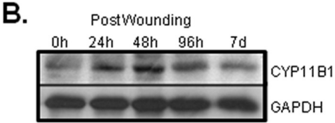
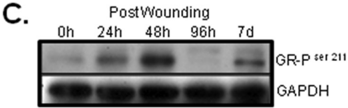
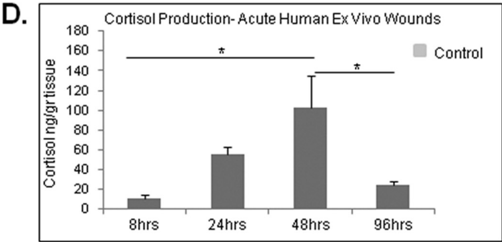
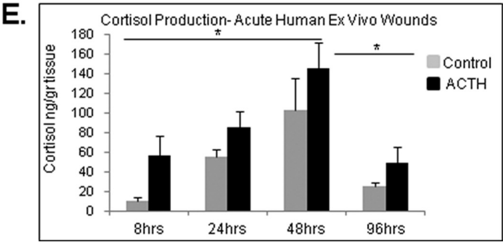
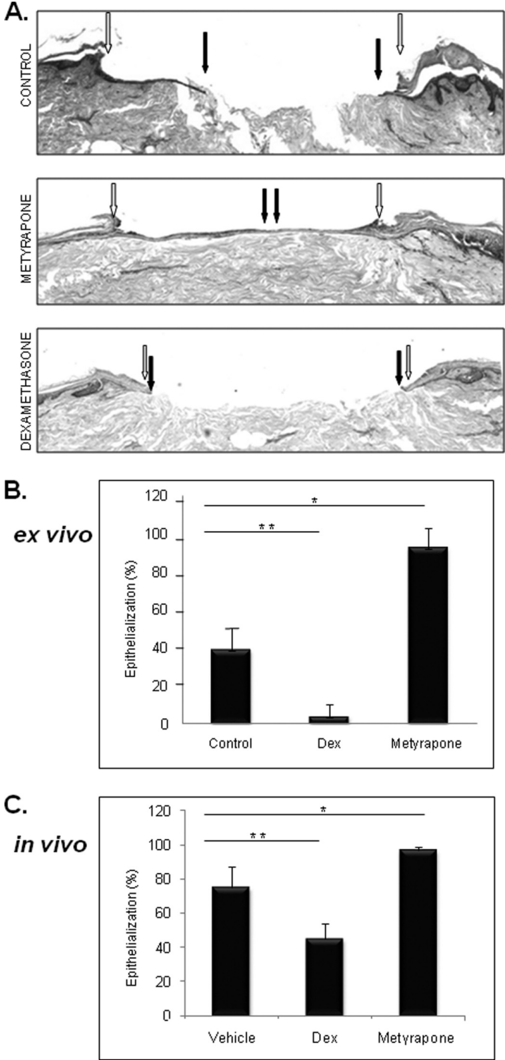
Glucocorticoids (GCs) are known inhibitors of wound healing. In this study we report the novel finding that both keratinocytes in vitro and epidermis in vivo synthesize cortisol and how this synthesis regulates wound healing. We show that epidermis expresses enzymes essential for cortisol synthesis, including steroid 11 β-hydroxylase (CYP11B1), and an enzyme that controls negative feedback mechanism, 11β-hydroxysteroid dehydrogenase 2 (11βHSD2). We also found that cortisol synthesis in keratinocytes and skin can be stimulated by ACTH and inhibited by metyrapone (CYP11B1 enzyme inhibitor). Interestingly, IL-1β, the first epidermal signal of tissue injury, induces the expression of CYP11B1 and increases cortisol production by keratinocytes. Additionally, we found induction of CYP11B1 increased production of cortisol and activation of GR pathway during wound healing ex vivo and in vivo using human and porcine wound models, respectively. Conversely, inhibition of cortisol synthesis during wound healing increases IL-1β production, suggesting that cortisol synthesis in epidermis may serve as a local negative feedback to proinflammatory cytokines. Local GCs synthesis, therefore, may provide control of the initial proinflammatory response, preventing excessive inflammation upon tissue injury. Inhibition of GC synthesis accelerated wound closure in vivo, providing the evidence that modulation of cortisol synthesis in epidermis may be an important regulatory mechanism during wound healing.
Overview
The claims and statistics of this paper haven’t been checked yet.
Run the check — free, no account needed. It reads the open-access text and checks the sources it cites.
Integrity signals
Registry
Cites
Statistics
Figures
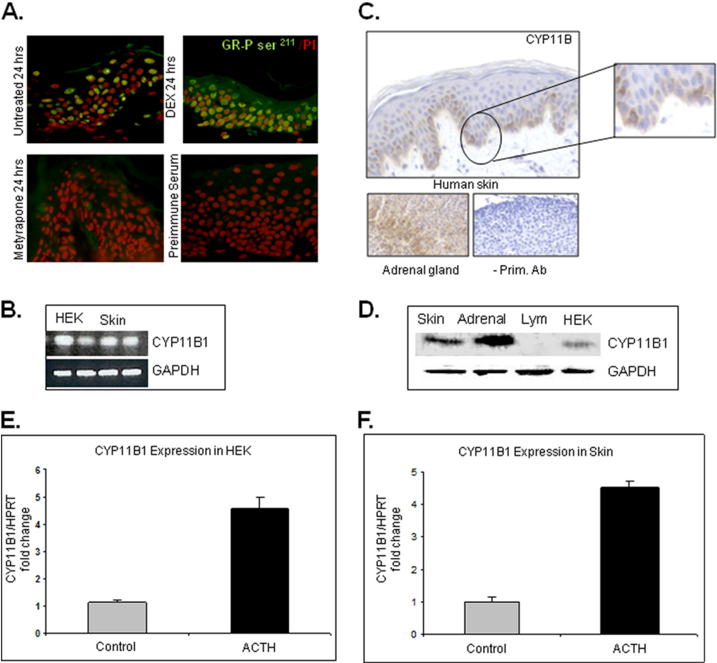
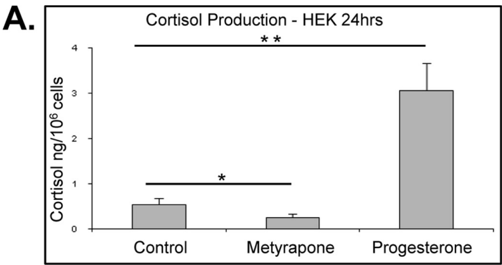
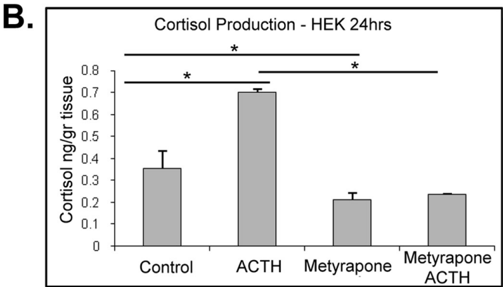
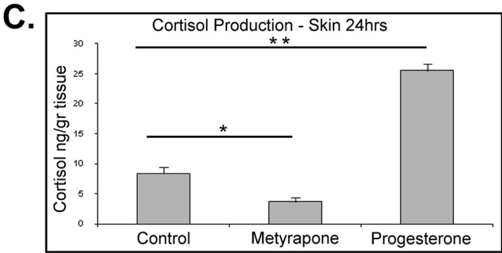
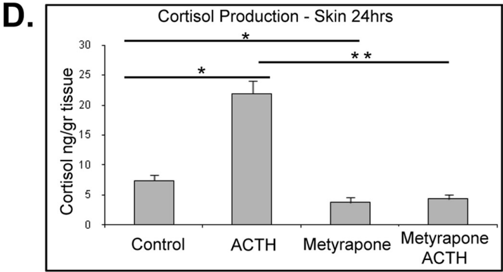
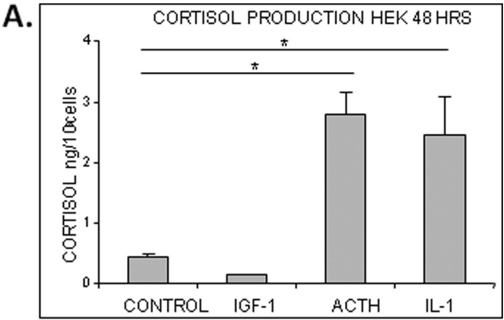
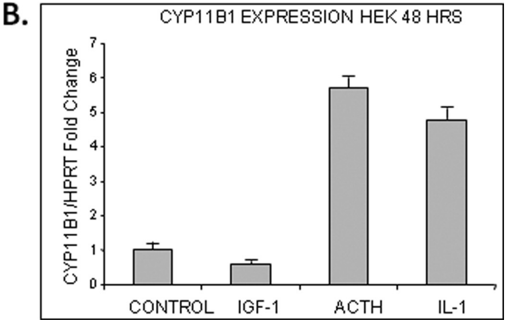
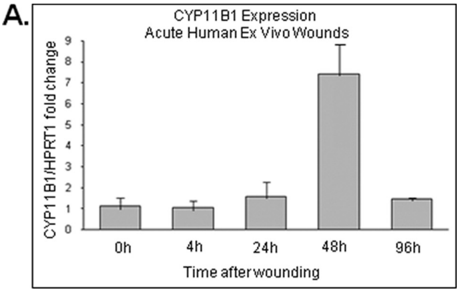
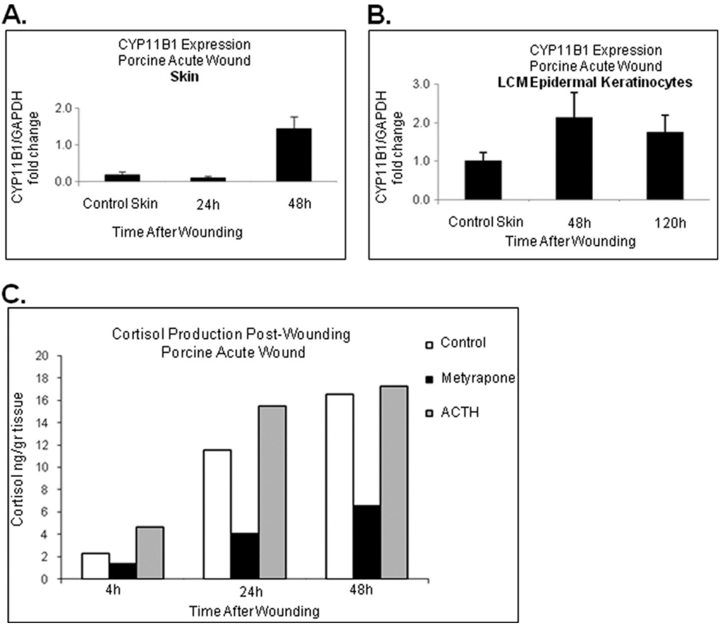
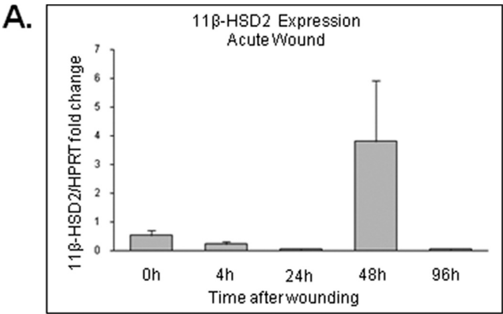
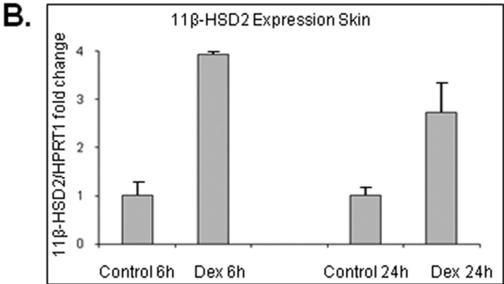
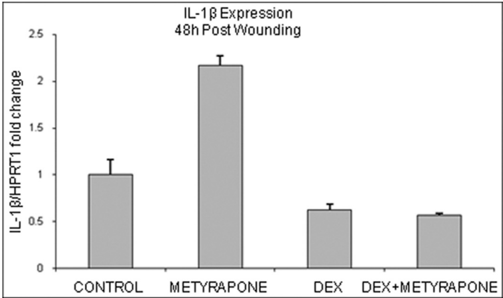
Verification
Claims the paper makes
The claims and statistics of this paper haven’t been checked yet.
Run the check — free, no account needed. It reads the open-access text and checks the sources it cites.
Claims other papers make about this one
Each is checked against this paper’s own text: does it say what the citing paper says it does?
The cited source says what the claim attributes to it.
In the citing paper
“Skin also expresses 11βHSD2 which works in the oxidative direction, converting cortisol to the inactive cortisone [23, 64–66, 81].”
From Steroidogenesis in the skin: Implications for local immune functions (2013) · cites this paper as [65]
In the citing paper
“In contrast, dexamethasone treatment of human skin was reported to increase 11βHSD2 expression at the mRNA level [65].”
From Steroidogenesis in the skin: Implications for local immune functions (2013) · cites this paper as [65]
Self-check
Percentages, sums and reported differences re-computed from the paper’s own numbers.
The self-check needs the paper’s full text.
Citations
Cites
Sapolsky, R. M., Romero, L. M., & Munck, A. U. (2000) · Endocrine Reviews · doi:10.1210/edrv.21.1.0389 · Cited by 7,541
PERSPECTIVE ARTICLE: Growth factors and cytokines in wound healing
Barrientos, S., Stojadinovic, O., Golinko, M. S., Brem, H., & Tomic‐Canic, M. (2008) · Wound Repair and Regeneration · doi:10.1111/j.1524-475x.2008.00410.x · Cited by 3,583
Antiinflammatory Action of Glucocorticoids — New Mechanisms for Old Drugs
Rhen, T., & Cidlowski, J. A. (2005) · New England Journal of Medicine · doi:10.1056/nejmra050541 · Cited by 3,149
Hypothalamic-pituitary-adrenal axis, neuroendocrine factors and stress
Tsigos, C., & Chrousos, G. P. (2002) · Journal of Psychosomatic Research · doi:10.1016/s0022-3999(02)00429-4 · Cited by 2,822
Cellular and molecular basis of wound healing in diabetes
Brem, H., & Tomic‐Canic, M. (2007) · Journal of Clinical Investigation · doi:10.1172/jci32169 · Cited by 1,863
Wound Macrophages Express TGF-α and Other Growth Factors in Vivo: Analysis by mRNA Phenotyping
Rappolee, D. A., Mark, D., Banda, M. J., & Werb, Z. (1988) · Science · doi:10.1126/science.3041594 · Cited by 1,105
Cloning and tissue distribution of the human 1 lβ-hydroxysteroid dehydrogenase type 2 enzyme
Albiston, A. L., Obeyesekere, V. R., Smith, R. E., & Krozowski, Z. S. (1994) · Molecular and Cellular Endocrinology · doi:10.1016/0303-7207(94)90176-7 · Cited by 712
Loots, M. A. M., Lamme, E. N., Zeegelaar, J., Mekkes, J. R., Bos, J. D., & Middelkoop, E. (1998) · Journal of Investigative Dermatology · doi:10.1046/j.1523-1747.1998.00381.x · Cited by 620
Interactions of cytokines, growth factors, and proteases in acute and chronic wounds
Mast, B. A., & Schultz, G. S. (1996) · Wound Repair and Regeneration · doi:10.1046/j.1524-475x.1996.40404.x · Cited by 598
Keratins and the Keratinocyte Activation Cycle
Freedberg, I. M., Tomic‐Canic, M., Komine, M., & Blumenberg, M. (2001) · Journal of Investigative Dermatology · doi:10.1046/j.1523-1747.2001.01327.x · Cited by 564
Ito, N., Ito, T., Kromminga, A., Bettermann, A., Takigawa, M., Kees, F., Straub, R. H., & Paus, R. (2005) · The FASEB Journal · doi:10.1096/fj.04-1968fje · Cited by 498
Neuroimmunology of Stress: Skin Takes Center Stage
Arck, P., Slominski, A. T., Theoharides, T. C., Peters, E. M. J., & Paus, R. (2006) · Journal of Investigative Dermatology · doi:10.1038/sj.jid.5700104 · Cited by 496
Nickoloff, B. J., & Naidu, Y. M. (1994) · Journal of the American Academy of Dermatology · doi:10.1016/s0190-9622(94)70059-1 · Cited by 463
Braun, S., Hanselmann, C., Gassmann, M. G., auf dem Keller, U., Born-Berclaz, C., Chan, K., Kan, Y. W., & Werner, S. (2002) · Molecular and Cellular Biology · doi:10.1128/mcb.22.15.5492-5505.2002 · Cited by 410
Zouboulis, C., Chen, W.-C., Thornton, M., Qin, K., & Rosenfield, R. (2007) · Hormone and Metabolic Research · doi:10.1055/s-2007-961807 · Cited by 379
Molecular Pathogenesis of Chronic Wounds
Stojadinovic, O., Brem, H., Vouthounis, C., Lee, B., Fallon, J., Stallcup, M., Merchant, A., Galiano, R. D., & Tomic-Canic, M. (2005) · The American Journal of Pathology · doi:10.1016/s0002-9440(10)62953-7 · Cited by 365
Self-citationWood, E. J. (2004) · Biochemistry and Molecular Biology Education · doi:10.1002/bmb.2004.494032069994 · Cited by 363
Steroid production in the thymus: implications for thymocyte selection.
Vacchio, M. S., Papadopoulos, V. D., & Ashwell, J. D. (1994) · The Journal of Experimental Medicine · doi:10.1084/jem.179.6.1835 · Cited by 355
Deciphering the Phosphorylation “Code” of the Glucocorticoid Receptor in Vivo
Wang, Z., Frederick, J., & Garabedian, M. J. (2002) · Journal of Biological Chemistry · doi:10.1074/jbc.m110530200 · Cited by 321
Modulation of Glucocorticoid Receptor Function via Phosphorylation
ISMAILI, N., & GARABEDIAN, M. J. (2004) · Annals of the New York Academy of Sciences · doi:10.1196/annals.1321.007 · Cited by 318
Cutaneous expression of corticotropin-releasing hormone (CRH), urocortin, and CRH receptors
SLOMINSKI, A., WORTSMAN, J., PISARCHIK, A., ZBYTEK, B., LINTON, E. A., MAZURKIEWICZ, J. E., & WEI, E. T. (2001) · The FASEB Journal · doi:10.1096/fj.00-0850rev · Cited by 305
Thiboutot, D., Gilliland, K., Cong, Z., Jabara, S., McAllister, J. M., Sivarajah, A., & Clawson, G. (2003) · Journal of Investigative Dermatology · doi:10.1046/j.1523-1747.2003.12244.x · Cited by 301
Hypertension and the cortisol-cortisone shuttle
Quinkler, M., & Stewart, P. M. (2003) · The Journal of Clinical Endocrinology & Metabolism · doi:10.1210/jc.2003-030138 · Cited by 286
Differential expression of HPA axis homolog in the skin
Slominski, A., Wortsman, J., Tuckey, R. C., & Paus, R. (2007) · Molecular and Cellular Endocrinology · doi:10.1016/j.mce.2006.12.012 · Cited by 279
Sharp, L. L., Jameson, J. M., Cauvi, G., & Havran, W. L. (2005) · Nature Immunology · doi:10.1038/ni1152 · Cited by 273
Chemotaxis of skeletal muscle satellite cells
Bischoff, R. (1997) · Developmental Dynamics · doi:10.1002/(sici)1097-0177(199704)208:4 · Cited by 232
Tomlinson, J. W., Moore, J., Cooper, M. S., Bujalska, I., Shahmanesh, M., Burt, C., Strain, A., Hewison, M., & Stewart, P. M. (2001) · Endocrinology · doi:10.1210/endo.142.5.8168 · Cited by 222
Kupper, T. S. (1990) · Journal of Investigative Dermatology · doi:10.1111/1523-1747.ep12876130 · Cited by 220
CRH stimulation of corticosteroids production in melanocytes is mediated by ACTH
Slominski, A., Zbytek, B., Szczesniewski, A., Semak, I., Kaminski, J., Sweatman, T., & Wortsman, J. (2005) · American Journal of Physiology-Endocrinology and Metabolism · doi:10.1152/ajpendo.00519.2004 · Cited by 211
Novel Genomic Effects of Glucocorticoids in Epidermal Keratinocytes
Stojadinović, O., Lee, B., Vouthounis, C., Vukelic, S., Pastar, I., Blumenberg, M., Brem, H., & Tomic‐Canic, M. (2006) · Journal of Biological Chemistry · doi:10.1074/jbc.m606262200 · Cited by 187
Human skin: an independent peripheral endocrine organ
Zouboulis, C. C. (2000) · Hormone Research in Paediatrics · doi:10.1159/000053265 · Cited by 183
Extensive tissue-regenerative capacity of neonatal human keratinocyte stem cells and their progeny
Li, A., Pouliot, N., Redvers, R. P., & Kaur, P. (2004) · Journal of Clinical Investigation · doi:10.1172/jci200419140 · Cited by 182
Differential Expression of a Cutaneous Corticotropin-Releasing Hormone System
Slominski, A. T., Pisarchik, A. V., Tobin, D. J., Mazurkiewicz, J. E., & Wortsman, J. (2003) · Endocrinology · doi:10.1210/en.2003-0851 · Cited by 180
Rousseau, K., Kauser, S., Pritchard, L. E., Warhurst, A., Oliver, R. L., Slominski, A. T., Wei, E. T., Thody, A. J., Tobin, D. J., & White, A. E. (2007) · The FASEB Journal · doi:10.1096/fj.06-7398com · Cited by 178
The role of growth factors in the healing of chronic wounds
Robson, M. C. (1997) · Wound Repair and Regeneration · doi:10.1046/j.1524-475x.1997.50106.x · Cited by 174
Steroidogenic Enzyme Gene Expression in the Human Heart
Kayes, K. M., & White, P. C. (2000) · The Journal of Clinical Endocrinology & Metabolism · doi:10.1210/jcem.85.7.6663 · Cited by 174
Reichrath, J., Lehmann, B., Carlberg, C., Varani, J., & Zouboulis, C. C. (2007) · Hormone and Metabolic Research · doi:10.1055/s-2007-958715 · Cited by 168
LRH-1-mediated glucocorticoid synthesis in enterocytes protects against inflammatory bowel disease
Coste, A., Dubuquoy, L., Barnouin, R., Annicotte, J., Magnier, B. C., Noti, M., Corazza, N., Antal, M. C., METZGER, D., Desreumaux, P., et al. (2007) · Proceedings of the National Academy of Sciences · doi:10.1073/pnas.0702440104 · Cited by 161
Slominski, A. T., Ermak, G., Hwang, J., Chakraborty, A. K., Mazurkiewicz, J. E., & Mihm, M. C. (1995) · FEBS Letters · doi:10.1016/0014-5793(95)01090-2 · Cited by 160
Attenuation of the Transforming Growth Factor β-Signaling Pathway in Chronic Venous Ulcers
Pastar, I., Stojadinović, O., Krzyzanowska, A. K., Barrientos, S., Stuelten, C. H., Zimmerman, K. K., Blumenberg, M., Brem, H., & Tomic‐Canic, M. (2010) · Molecular Medicine · doi:10.2119/molmed.2009.00149 · Cited by 157
Corticotropin releasing hormone and the skin
Slominski, A. (2006) · Frontiers in bioscience · doi:10.2741/1966 · Cited by 157
Injury Is a Major Inducer of Epidermal Innate Immune Responses during Wound Healing
Roupé, K. M., Nybo, M., Sjöbring, U., Alberius, P., Schmidtchen, A., & Sørensen, O. E. (2009) · Journal of Investigative Dermatology · doi:10.1038/jid.2009.284 · Cited by 144
Epidermal signal transduction and transcription factor activation in activated keratinocytes
Tomic‐Canic, M., Komine, M., Freedberg, I. M., & Blumenberg, M. (1998) · Journal of Dermatological Science · doi:10.1016/s0923-1811(98)00016-4 · Cited by 140
Cardiac Steroidogenesis in the Normal and Failing Heart
Young, M. J., Clyne, C. D., Cole, T. J., & Funder, J. W. (2001) · The Journal of Clinical Endocrinology & Metabolism · doi:10.1210/jcem.86.11.7925 · Cited by 132
Mueller, M., Cima, I., Noti, M., Fuhrer, A. C., Jakob, S., Dubuquoy, L., Schoonjans, K., & Brunner, T. (2006) · The Journal of Experimental Medicine · doi:10.1084/jem.20060357 · Cited by 126
β2‐Adrenergic receptor activation delays wound healing
Pullar, C. E., Grahn, J. C., Liu, W., & Isseroff, R. R. (2006) · The FASEB Journal · doi:10.1096/fj.05-4188com · Cited by 105
Hardy, R., Filer, A. D., Cooper, M. S., Parsonage, G. N., Raza, K., Hardie, D. L., Rabbitt, E. H., Stewart, P. M., Buckley, C. D., & Hewison, M. (2006) · Arthritis Research & Therapy · doi:10.1186/ar1993 · Cited by 102
Kondo, S. (1999) · Journal of Investigative Dermatology Symposium Proceedings · doi:10.1038/sj.jidsp.5640205 · Cited by 101
Novel Mechanism of Steroid Action in Skin through Glucocorticoid Receptor Monomers
Radoja, N., Komine, M., Jho, S. H., Blumenberg, M., & Tomic‐Canic, M. (2000) · Molecular and Cellular Biology · doi:10.1128/mcb.20.12.4328-4339.2000 · Cited by 99
Tomlinson, J., Sherlock, M., Hughes, B., Hughes, S. V., Kilvington, F., Bartlett, W. A., Courtney, R., Rejto, P. A., Carley, W. W., & Stewart, P. M. (2007) · The Journal of Clinical Endocrinology & Metabolism · doi:10.1210/jc.2006-2325 · Cited by 98
Role of keratinocytes in healing of chronic wounds.
Pastar, I., Stojadinović, O., & Tomic‐Canic, M. (2008) · PubMed · Cited by 89
Keratinocytes in epidermal immune responses
Steinhoff, M. S., Brzoska, T., & Luger, T. A. (2001) · Current Opinion in Allergy and Clinical Immunology · doi:10.1097/01.all.0000011062.60720.e3 · Cited by 79
Lee, B., Vouthounis, C., Stojadinović, O., Brem, H., Im, M. J., & Tomic‐Canic, M. (2004) · Journal of Molecular Biology · doi:10.1016/j.jmb.2004.11.027 · Cited by 71
Quantitative assessment of CYP11B1 and CYP11B2 expression in aldosterone-producing adenomas
Fallo, F., Pezzi, V., Barzon, L., Mulatero, P., Veglio, F., Sonino, N., & Mathis, J. M. (2002) · European Journal of Endocrinology · doi:10.1530/eje.0.1470795 · Cited by 69
Ermak, G., & Slominski, A. T. (1997) · Journal of Investigative Dermatology · doi:10.1111/1523-1747.ep12332925 · Cited by 66
Cultured human dermal fibroblasts do produce cortisol
Slominski, A., Zbytek, B., Szczesniewski, A., & Wortsman, J. (2006) · Journal of Investigative Dermatology · doi:10.1038/sj.jid.5700204 · Cited by 66
Tiala, I., Suomela, S., Huuhtanen, J., Wakkinen, J., Hölttä-Vuori, M., Kainu, K., Ranta, S., Turpeinen, U., Hämäläinen, E., Jiao, H., et al. (2007) · Journal of Molecular Medicine · doi:10.1007/s00109-006-0155-0 · Cited by 64
Active steroidogenesis in the normal rat skin
Slominski, A. T. (2000) · Biochimica et Biophysica Acta (BBA) - General Subjects · doi:10.1016/s0304-4165(99)00215-9 · Cited by 63
Prominent sex steroid metabolism in human lymphocytes
Zhou, Z., Shackleton, C. H. L., Pahwa, S. G., White, P. C., & Speiser, P. (1998) · Molecular and Cellular Endocrinology · doi:10.1016/s0303-7207(98)00052-5 · Cited by 59
Chabre, O., Portrat-Doyen, S., Chaffanjon, P. C., Vivier, J., Liakos, P., Labat-Moleur, F., CHAMBAZ, E. M., Morel, Y., & Defaye, G. (2000) · The Journal of Clinical Endocrinology & Metabolism · doi:10.1210/jcem.85.11.6897 · Cited by 54
Tomic‐Canic, M., Mamber, S. W., Stojadinović, O., Lee, B., Radoja, N., & McMichael, J. C. (2007) · Wound Repair and Regeneration · doi:10.1111/j.1524-475x.2006.00187.x · Cited by 53
The Epidermis in Wound Healing
Rovee, D. T., & Maibach, H. I. (2003) · CRC Press eBooks · doi:10.1201/b14246 · Cited by 52
Steroidogenesis in the human skin: 21-hydroxylation in cultured keratinocytes
Rogoff, D., Gómez-Sánchez, C. E., Foecking, M. F., Wortsman, J., & Slominski, A. T. (2001) · The Journal of Steroid Biochemistry and Molecular Biology · doi:10.1016/s0960-0760(01)00076-0 · Cited by 32
Jho, S. H., Vouthounis, C., Lee, B., Stojadinović, O., Im, M. J., Brem, H., Merchant, A., Chau, K., & Tomic‐Canic, M. (2005) · Journal of Investigative Dermatology · doi:10.1111/j.0022-202x.2005.23691.x · Cited by 31
Defaye, G., Monnier, N., Guidicelli, C., & CHAMBAZ, E. M. (1982) · Molecular and Cellular Endocrinology · doi:10.1016/0303-7207(82)90105-8 · Cited by 25
A microscopical study of wound repair in the human placenta
Watson, A. L., & Burton, G. J. (1998) · Microscopy Research and Technique · doi:10.1002/(sici)1097-0029(19980901)42:5 · Cited by 20
Davis, S. C., & Mertz, P. M. (2008) · PubMed · Cited by 18
Research works printed but not linked: 6
- Pastar, 2008, Surg. Technol. Int., 17, 105
- Steinhoff, 2001, Curr. Opin. Allergy Clin. Immunol., 1, 469
- Zouboulis, 2000, Horm. Res., 54, 230
- Davis, 2008, Ostomy Wound Manage., 54, 16
- Kayes-Wandover, 2000, J. Clin. Endocrinol. Metab., 85, 2519
- Sapolsky, 2000, Endocr. Rev., 21, 55
Cited by
Sorted by citations
Epithelialization in Wound Healing: A Comprehensive Review
Pastar, I., Stojadinović, O., Yin, N. C., Ramirez, H. A., Nusbaum, A. G., Sawaya, A. P., Patel, S. B., Khalid, L., Isseroff, R. R., & Tomic‐Canic, M. (2014) · Advances in Wound Care · doi:10.1089/wound.2013.0473 · Cited by 1,604
“Inhibition of GC synthesis in keratinocytes resulted in increased expression of proinflammatory IL1-b implying that skin-specific cortisol synthesis serves as a local negative feedback to prevent excessive inflammation upon initial injury and serves to regulate epithelialization.(107) Another type of hormone, the cate…”
BackgroundMethodInfluential11β-hydroxysteroid dehydrogenases: Intracellular gate-keepers of tissue glucocorticoid action
Chapman, K., Holmes, M., & Seckl, J. (2013) · Physiological Reviews · doi:10.1152/physrev.00020.2012 · Cited by 887
“11 -HSD2 mRNA is also detectable by PCR in human skin (732), although whether this extends beyond known expression in the mineralocorticoid target cells of sweat glands (82) or if there is sufficient to influence glucocorticoid function elsewhere in the dermis/epidermis is unknown.”
BackgroundSlominski, A. T., Zmijewski, M. A., Skobowiat, C., Zbytek, B., Slominski, R. M., & Steketee, J. D. (2012) · Advances in anatomy, embryology and cell biology · doi:10.1007/978-3-642-19683-6 · Cited by 505
“, 2005e), IL-1 as well as by wound response (Vukelic et al., 2011) and high energy ultraviolet radiation (Skobowiat et al.”
BackgroundSlominski (2012) · doi:10.1007/978-3-642-19683-6_1 · Cited by 461
How UV Light Touches the Brain and Endocrine System Through Skin, and Why
Slominski, A. T., Zmijewski, M. A., Plonka, P. M., Szaflarski, J. P., & Paus, R. (2018) · Endocrinology · doi:10.1210/en.2017-03230 · Cited by 452
Metadata
- Authors
- Vukelic, S., Stojadinovic, O., Pastar, I., Rabach, M., Krzyzanowska, A., Lebrun, E., Davis, S. C., Resnik, S., Brem, H., & Tomic-Canic, M.
- Affiliations
- Lenox Hill Hospital (US)
- University of Miami (US)
- SUNY Downstate Health Sciences University (US)
- Hospital for Special Surgery (US)
- NYU Langone Health (US)
- Venue
- Journal of Biological Chemistry
- Publisher
- Elsevier BV
- Published
- 2011-03
- Volume
- 286
- Issue
- 12
- Pages
- 10265-10275
- ISSN
- 0021-9258 (ISSN-L)
- PMC
- PMC3060481
- OpenAlex
- W2080660266
- Cited by
- 193
- References
- 67
- Citations by year
- 2026: 6 · 2025: 12 · 2024: 7 · 2023: 6 · 2022: 12 · 2021: 11 · 2020: 18 · 2019: 9 · 2018: 11 · 2017: 18 · 2016: 17 · 2015: 8 · 2014: 15 · 2013: 19 · 2012: 13
- FWCI
- 18.81
- Type
- journal article
- Language
- en
- Open access
- hybrid
- doi.org
- Licence
- Locations
- Journal of Biological Chemistry (publishedVersion, cc-by)
- Europe PMC (PubMed Central) (publishedVersion)
- PubMed Central (publishedVersion)
- PubMed (publishedVersion)
- Funders
- National Institutes of Health
- National Institute of Nursing Research (R01NR008029, NR008029)
- National Institute of Diabetes and Digestive and Kidney Diseases (K24DK090135)
- Topics
- Health Sciences › Medicine › Surgery › Wound Healing and Treatments
- Health Sciences › Medicine › Endocrinology, Diabetes and Metabolism › Adrenal Hormones and Disorders
- Health Sciences › Medicine › Pharmacology (medical) › Inflammatory mediators and NSAID effects
- Keywords
- cortisol production, epidermis, keratinocytes, wound healing, IL-1β, tissue damage, CYP11B1, 11β-hydroxysteroid dehydrogenase type 2, glucocorticoid receptor, ACTH, metyrapone, negative feedback regulation, inflammatory cytokines
- MeSH terms
- Adrenocorticotropic Hormone, Animals, Enzyme Inhibitors, Epidermis, Hormones, Humans, Hydrocortisone, Inflammation, Metyrapone, Steroid 11-beta-Hydroxylase, Swine, Wound Healing, Keratinocytes, Interleukin-1beta
About these checks
Registry, retraction, Cites and statistics results are computed, not judged, with one exception: a printed reference that no index lists is read once by a model before it counts as a citation error. Claims are extracted by a model and kept only when their quote appears verbatim in the text; each cited source is then checked, with a model’s help, for whether it says what the claim relies on. Those verdicts can be wrong — read the claim’s quote and the cited source before relying on one.
Statistics and arithmetic are recomputed, not judged.
Confidence bands are shown only for fields calibrated on our annotated test set. None is calibrated yet, so no band is shown.
What counts as a claim ›How we measure confidence ›How we check this ›
Are you an author, or do you see a problem with this page? Request a review
