

The DOI matches its Crossref record; 83 of the 83 references it cites were found in a registry or an index.
Lewy Body-like α-Synuclein Aggregates Resist Degradation and Impair Macroautophagy
Open accessAbstract
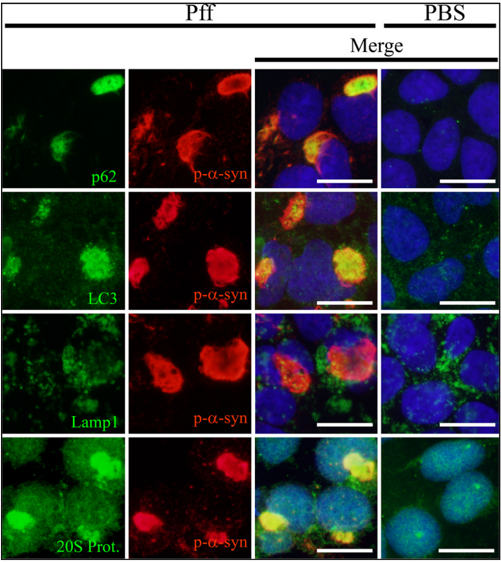
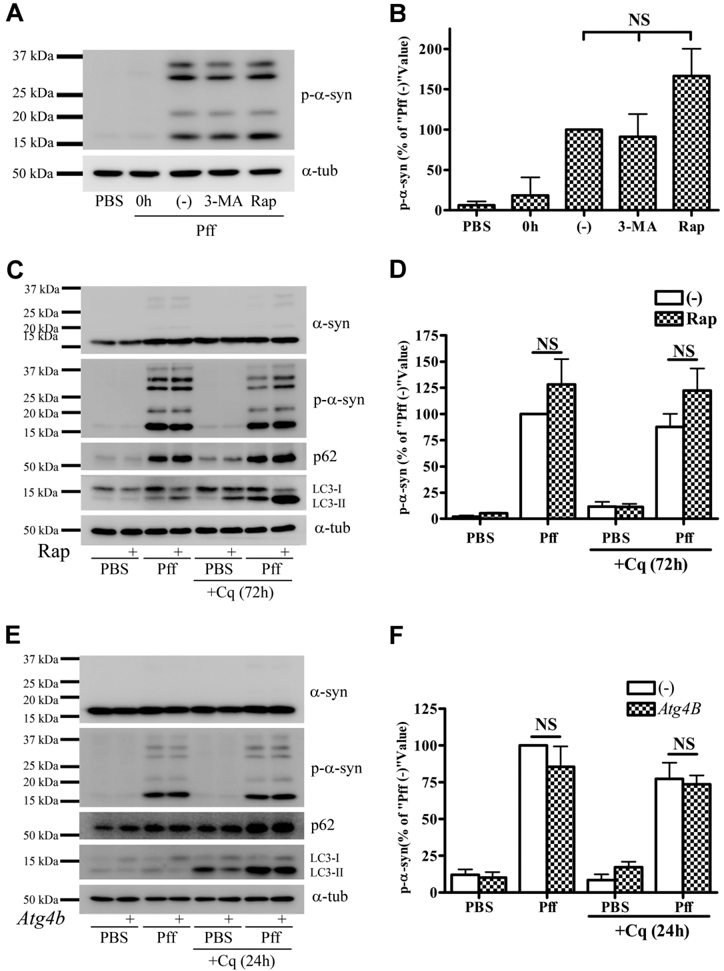
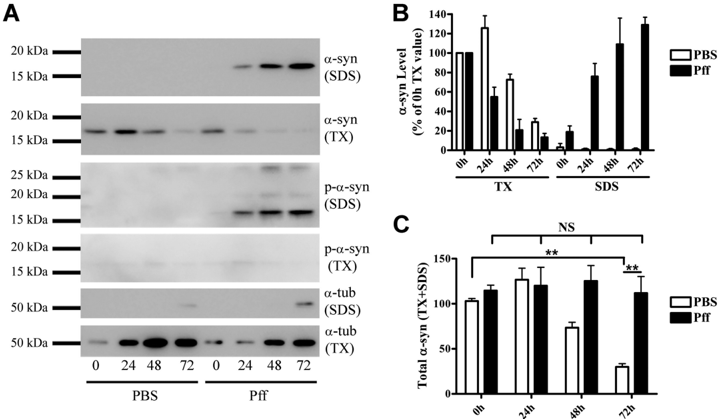
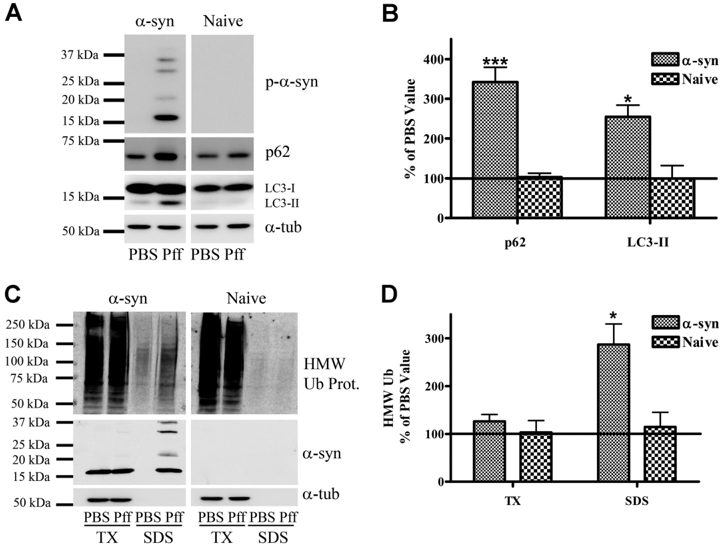
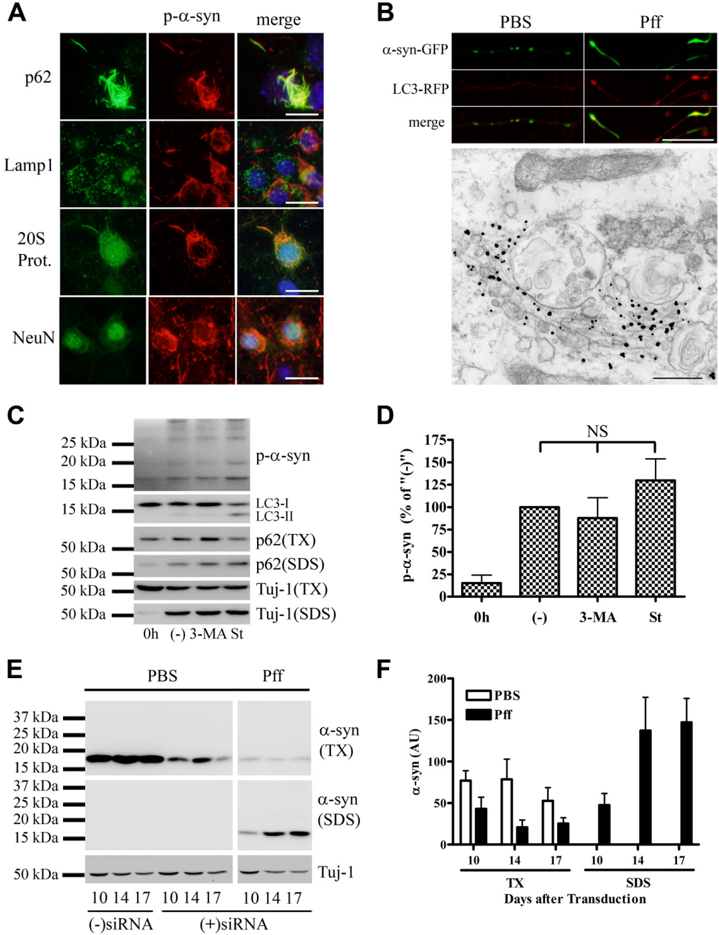
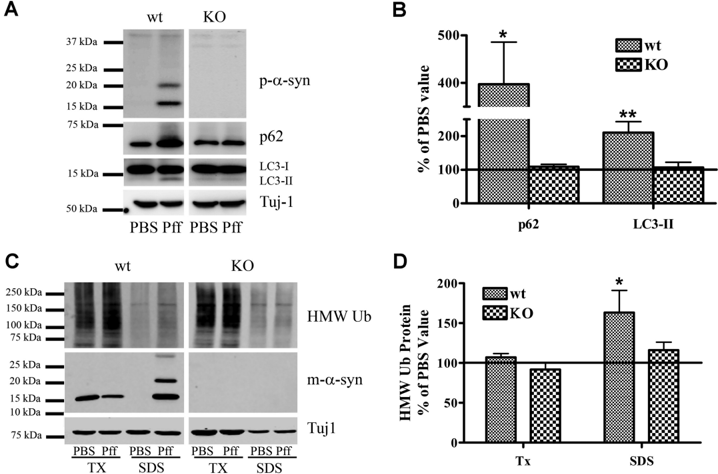
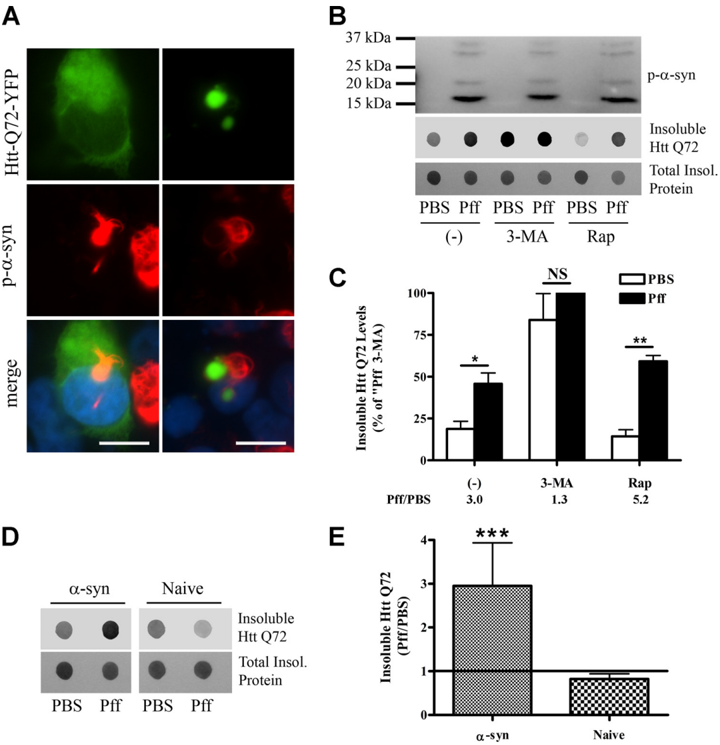
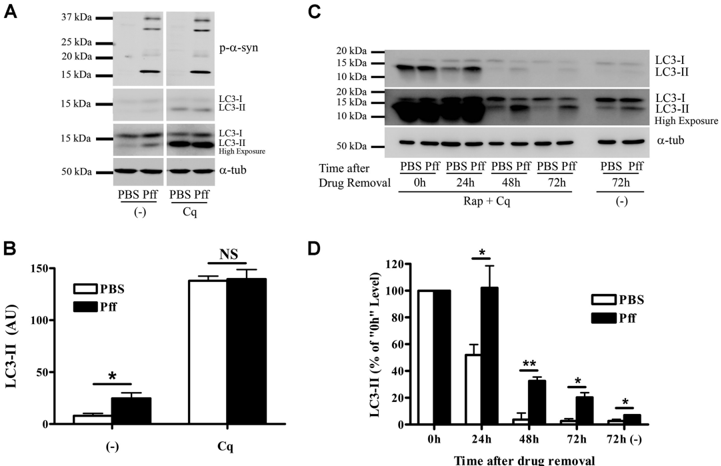
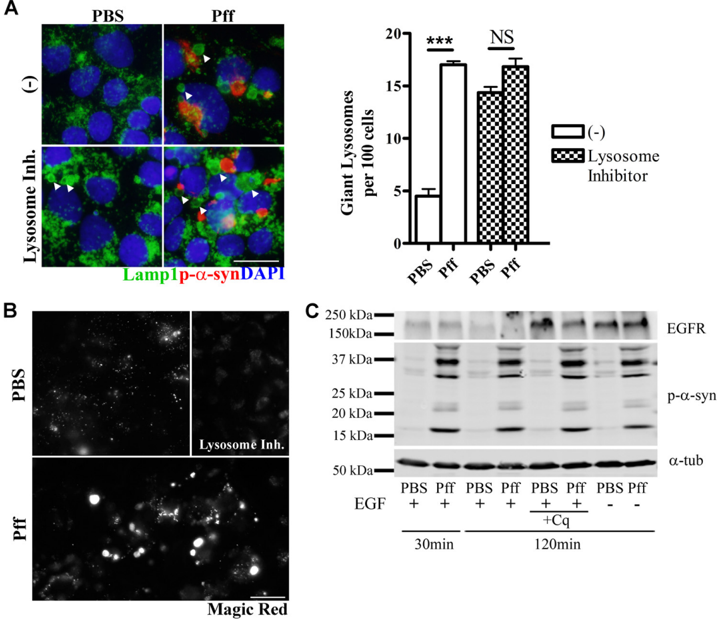
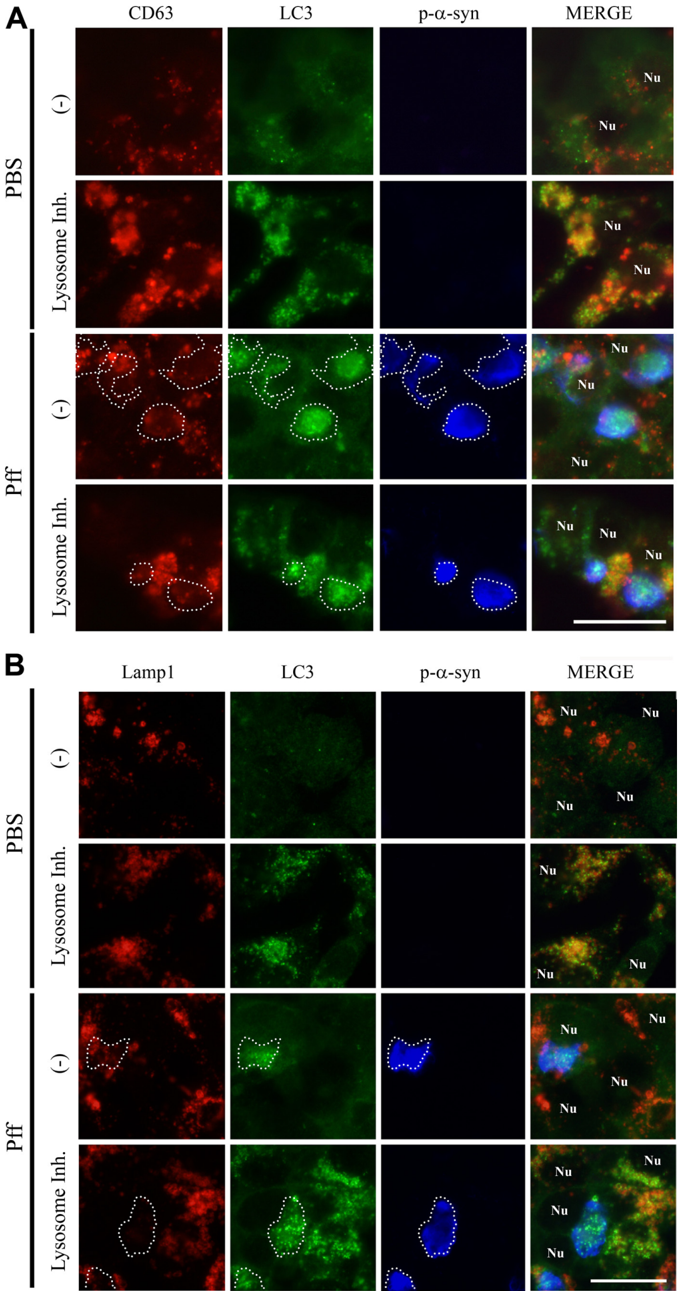
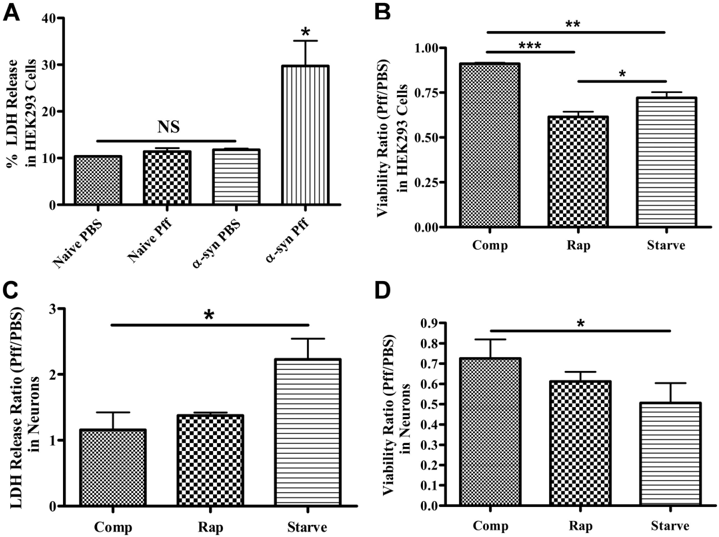
Cytoplasmic α-synuclein (α-syn) aggregates, referred to as Lewy bodies, are pathological hallmarks of a number of neurodegenerative diseases, most notably Parkinson disease. Activation of macroautophagy is suggested to facilitate degradation of certain proteinaceous inclusions, but it is unclear if this pathway is capable of degrading α-syn aggregates. Here, we examined this issue by utilizing cellular models in which intracellular Lewy body-like α-syn inclusions accumulate after internalization of pre-formed α-syn fibrils into α-syn-expressing HEK293 cells or cultured primary neurons. We demonstrate that α-syn inclusions cannot be effectively degraded, even though they co-localize with essential components of both the autophagic and proteasomal protein degradation pathways. The α-syn aggregates persist even after soluble α-syn levels have been substantially reduced, suggesting that once formed, the α-syn inclusions are refractory to clearance. Importantly, we also find that α-syn aggregates impair overall macroautophagy by reducing autophagosome clearance, which may contribute to the increased cell death that is observed in aggregate-bearing cells. Background: α-Synuclein aggregates and macroautophagy are associated with neurodegeneration. Results: Modulation of macroautophagic activity does not affect α-synuclein aggregate levels, although these aggregates cause accumulation of immature autophagosomes. Conclusion: α-Synuclein aggregates are resistant to degradation and impair autophagy by delaying autophagosome maturation. Significance: Understanding the impact of α-synuclein aggregates on autophagy may help elucidate therapies for α-synuclein-mediated neurodegeneration.
Overview
The claims and statistics of this paper haven’t been checked yet.
Run the check — free, no account needed. It reads the open-access text and checks the sources it cites.
Integrity signals
Registry
Cites
Statistics
Figures
Verification
Claims the paper makes
The claims and statistics of this paper haven’t been checked yet.
Run the check — free, no account needed. It reads the open-access text and checks the sources it cites.
Claims other papers make about this one
Each is checked against this paper’s own text: does it say what the citing paper says it does?
In the citing paper
“Furthermore, LB-like synuclein aggregates resist degradation and impair autophagy20.”
From Loss of autophagy in dopaminergic neurons causes Lewy pathology and motor dysfunction in aged mice (2018) · cites this paper as [20]
Self-check
Percentages, sums and reported differences re-computed from the paper’s own numbers.
The self-check needs the paper’s full text.
Citations
Cites
Mutation in the α-Synuclein Gene Identified in Families with Parkinson's Disease
Polymeropoulos, M. H., Lavedan, C., Leroy, E., Ide, S. E., Dehejia, A., Dutra, A., Pike, B., Root, H., Rubenstein, J., Boyer, R., et al. (1997) · Science · doi:10.1126/science.276.5321.2045 · Cited by 8,240
LC3, a mammalian homologue of yeast Apg8p, is localized in autophagosome membranes after processing.
Kabeya, Y., Mizushima, N., Ueno, T., Yamamoto, A., Kirisako, T., Noda, T., Kominami, E., Ohsumi, Y., & Yoshimori, T. (2000) · The EMBO Journal · doi:10.1093/emboj/19.21.5720 · Cited by 6,605
Pankiv, S., Clausen, T. H., Lamark, T., Brech, A., Bruun, J.-A., Outzen, H., Øvervatn, A., Bjørkøy, G., & Johansen, T. (2007) · Journal of Biological Chemistry · doi:10.1074/jbc.m702824200 · Cited by 4,578
Methods in Mammalian Autophagy Research
Mizushima, N., Yoshimori, T., & Levine, B. (2010) · Cell · doi:10.1016/j.cell.2010.01.028 · Cited by 4,497
α-Synuclein Locus Triplication Causes Parkinson's Disease
Singleton, A. B., Farrer, M., Johnson, J., Singleton, A., Hague, S., Kachergus, J., Hulihan, M., Peuralinna, T., Dutra, A., Nussbaum, R., et al. (2003) · Science · doi:10.1126/science.1090278 · Cited by 4,383
Suppression of basal autophagy in neural cells causes neurodegenerative disease in mice
Hara, T., Nakamura, K., Matsui, M., Yamamoto, A., Nakahara, Y., Suzuki-Migishima, R., Yokoyama, M., Mishima, K., Saito, I., Okano, H., et al. (2006) · Nature · doi:10.1038/nature04724 · Cited by 3,882
AlaSOPro mutation in the gene encoding α-synuclein in Parkinson's disease
Krüger, R., Kuhn, W., Müller, T., Woitalla, D., Graeber, M., Kösel, S., Przuntek, H., Epplen, J. T., Schols, L., & Riess, O. (1998) · Nature Genetics · doi:10.1038/ng0298-106 · Cited by 3,836
Loss of autophagy in the central nervous system causes neurodegeneration in mice
Komatsu, M., Waguri, S., Chiba, T., Murata, S., Iwata, J.-I., Tanida, I., Ueno, T., Koike, M., Uchiyama, Y., Kominami, E., et al. (2006) · Nature · doi:10.1038/nature04723 · Cited by 3,500
The new mutation, E46K, of α‐synuclein causes parkinson and Lewy body dementia
Zarranz, J. J., Alegre, J., Gómez‐Esteban, J. C., Lezcano, E., Ros, R., Ampuero, I., Vidal, L., Hoenicka, J., Rodriguez, O., Atarés, B., et al. (2004) · Annals of Neurology · doi:10.1002/ana.10795 · Cited by 2,737
Luk, K. C., Kehm, V., Carroll, J., Zhang, B., O’Brien, P., Trojanowski, J. Q., & Lee, V. M.-Y. (2012) · Science · doi:10.1126/science.1227157 · Cited by 2,563
Self-citation
Cited by
Sorted by citations
Poewe, W., Seppi, K., Tanner, C. M., Halliday, G. M., Brundin, P., Volkmann, J., Schrag, A.-E., & Lang, A. E. (2017) · Nature Reviews Disease Primers · doi:10.1038/nrdp.2017.13 · Cited by 5,415
mTOR at the nexus of nutrition, growth, ageing and disease
Liu, G. Y., & Sabatini, D. M. (2020) · Nature Reviews Molecular Cell Biology · doi:10.1038/s41580-019-0199-y · Cited by 2,737
Proteasomal and Autophagic Degradation Systems
Đikić, I. (2017) · Annual Review of Biochemistry · doi:10.1146/annurev-biochem-061516-044908 · Cited by 1,217
Autophagy and Neurodegeneration: Pathogenic Mechanisms and Therapeutic Opportunities
Menzies, F. M., Fleming, A., Caricasole, A., Bento, C. F., Andrews, S. P., Ashkenazi, A., Füllgrabe, J., Jackson, A., Jimenez Sanchez, M., Karabiyik, C., et al. (2017) · Neuron · doi:10.1016/j.neuron.2017.01.022 · Cited by 1,134
α-synuclein toxicity in neurodegeneration: mechanism and therapeutic strategies
Wong, Y. C., & Krainc, D. (2017) · Nature Medicine · doi:10.1038/nm.4269 · Cited by 897
Metadata
- Authors
- Tanik, S. A., Schultheiss, C. E., Volpicelli-Daley, L. A., Brunden, K. R., & Lee, V. M. Y.
- Affiliations
- University of Pennsylvania (US)
- Corresponding author
- Lee, Virginia M.Y.
- Venue
- Journal of Biological Chemistry
- Publisher
- Elsevier BV
- Published
- 2013-05
- Volume
- 288
- Issue
- 21
- Pages
- 15194-15210
- ISSN
- 0021-9258 (ISSN-L)
- PMC
- PMC3663539
- OpenAlex
- W2017642230
- Cited by
- 326
- References
- 83
- Citations by year
- 2026: 17 · 2025: 23 · 2024: 25 · 2023: 11 · 2022: 27 · 2021: 28 · 2020: 40 · 2019: 40 · 2018: 28 · 2017: 26 · 2016: 23 · 2015: 18 · 2014: 15 · 2013: 5
- FWCI
- 12.91
- Type
- journal article
- Language
- en
- Open access
- hybrid
- doi.org
- Licence
- Locations
- Journal of Biological Chemistry (publishedVersion, cc-by)
- Europe PMC (PubMed Central) (publishedVersion)
- PubMed Central (publishedVersion)
- PubMed (publishedVersion)
- Funders
- Cedars-Sinai Medical Center
- National Institutes of Health (NS053488)
- National Institute of Neurological Disorders and Stroke (NS053488, P50NS053488)
- Topics
- Health Sciences › Medicine › Clinical Neurology › Parkinson's Disease Mechanisms and Treatments
- Life Sciences › Biochemistry, Genetics and Molecular Biology › Cell Biology › Autophagy in Disease and Therapy
- Life Sciences › Neuroscience › Cellular and Molecular Neuroscience › Alzheimer's disease research and treatments
- Keywords
- alpha-synuclein, Lewy bodies, macroautophagy, autophagosome maturation, Parkinson's disease, neurodegeneration, proteasomal degradation, autophagy dysfunction, neuronal cell death
- MeSH terms
- Animals, Autophagy, HeLa Cells, Humans, Models, Biological, Neurons, Parkinson Disease, Lewy Bodies, Proteasome Endopeptidase Complex, Mice, alpha-Synuclein, HEK293 Cells, Proteolysis
About these checks
Registry, retraction, Cites and statistics results are computed, not judged, with one exception: a printed reference that no index lists is read once by a model before it counts as a citation error. Claims are extracted by a model and kept only when their quote appears verbatim in the text; each cited source is then checked, with a model’s help, for whether it says what the claim relies on. Those verdicts can be wrong — read the claim’s quote and the cited source before relying on one.
Statistics and arithmetic are recomputed, not judged.
Confidence bands are shown only for fields calibrated on our annotated test set. None is calibrated yet, so no band is shown.
What counts as a claim ›How we measure confidence ›How we check this ›
Are you an author, or do you see a problem with this page? Request a review
