

The DOI matches its Crossref record; 83 of the 83 references it cites were found in a registry or an index.
Lewy Body-like α-Synuclein Aggregates Resist Degradation and Impair Macroautophagy
Open accessAbstract
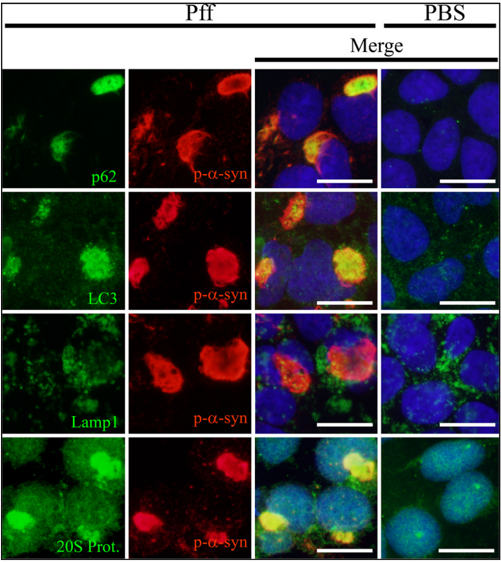
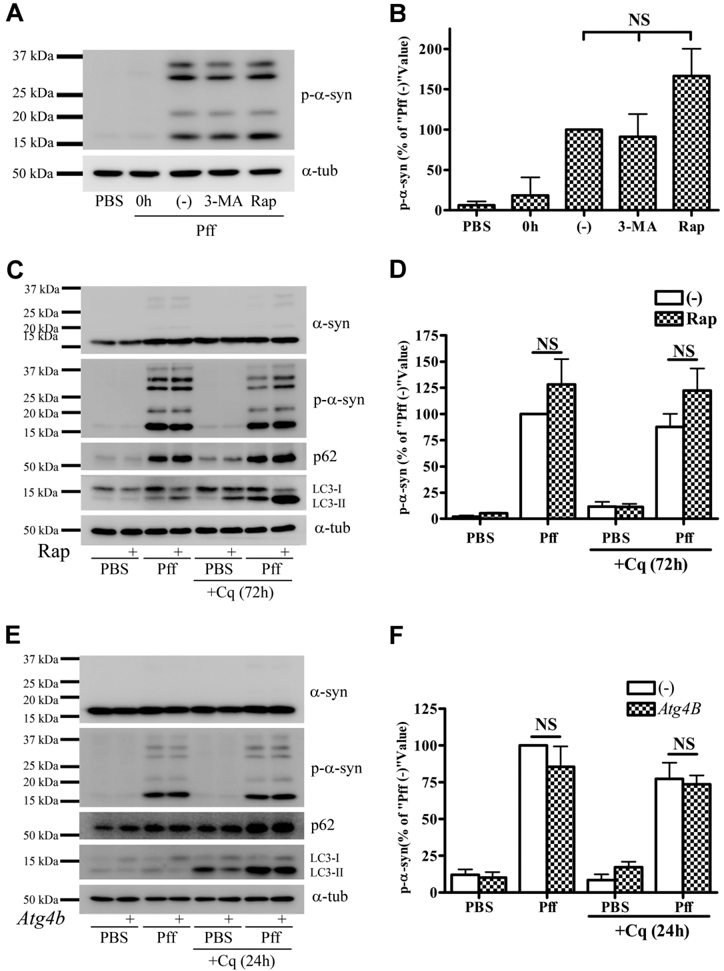
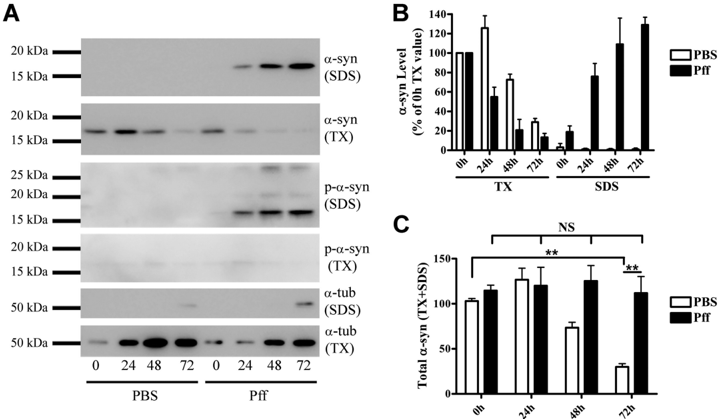
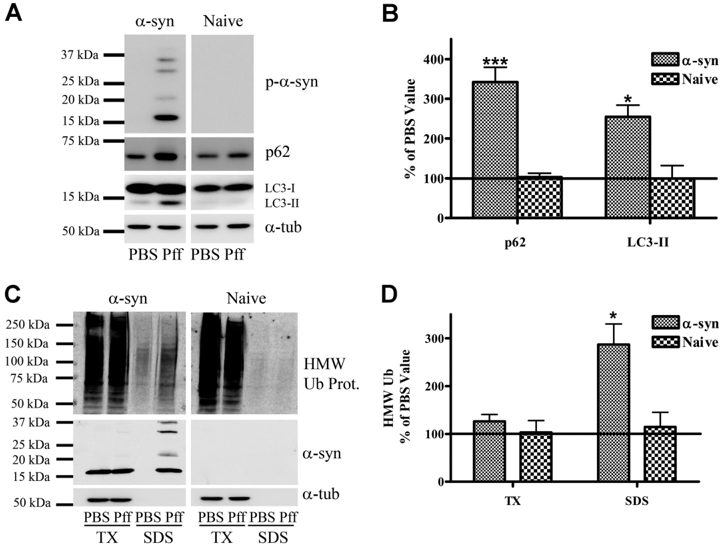
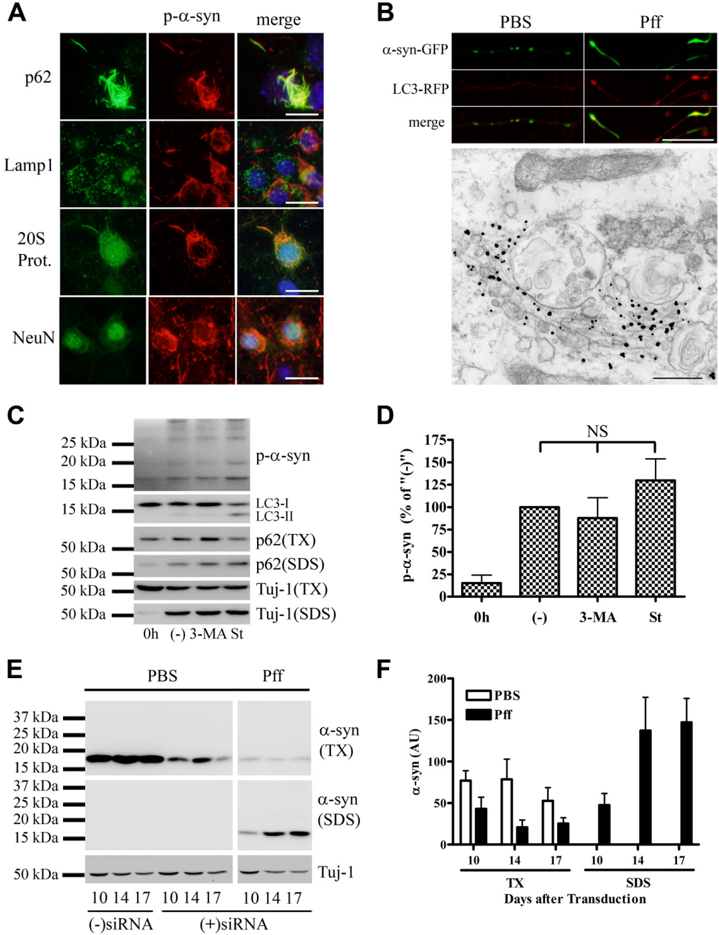
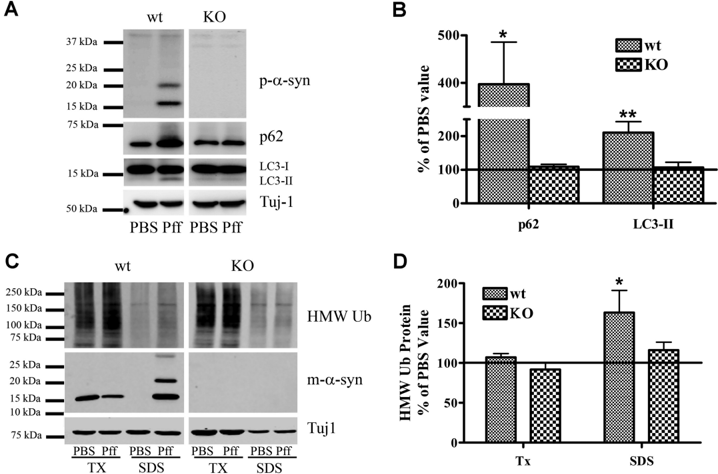
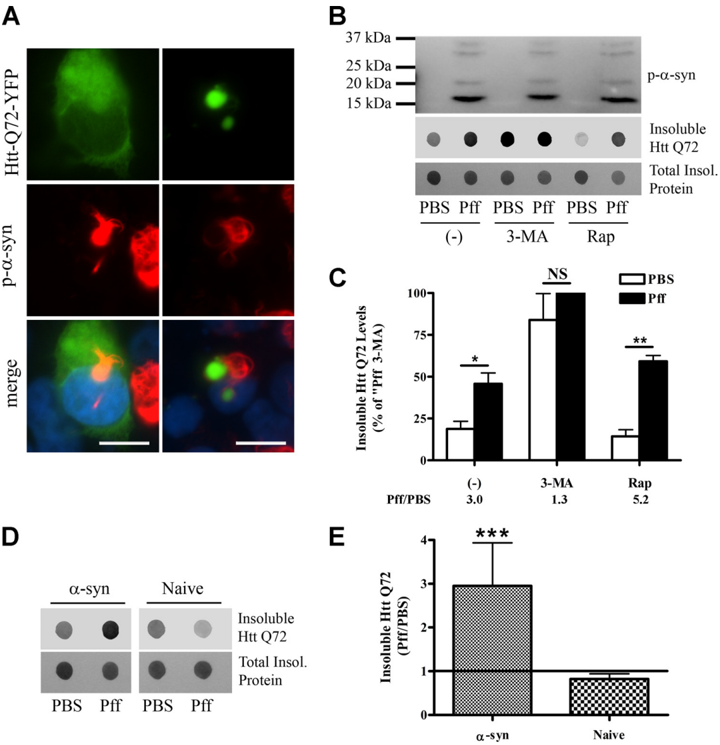
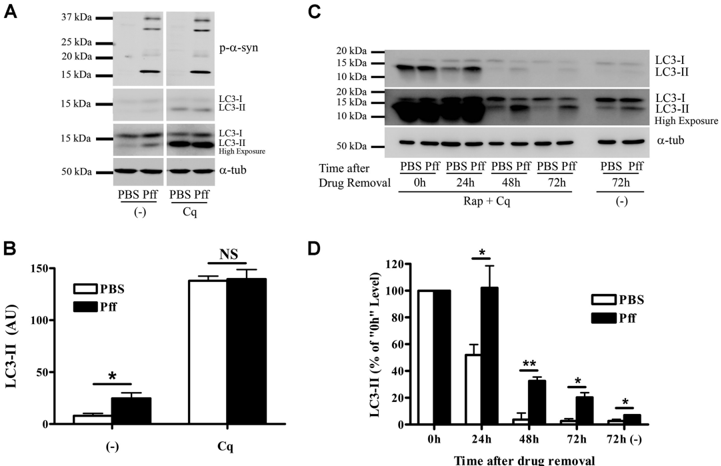
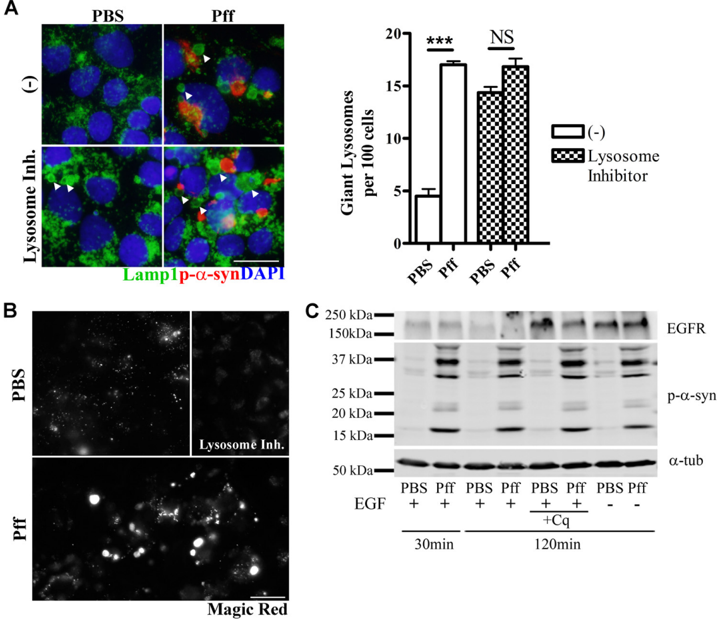
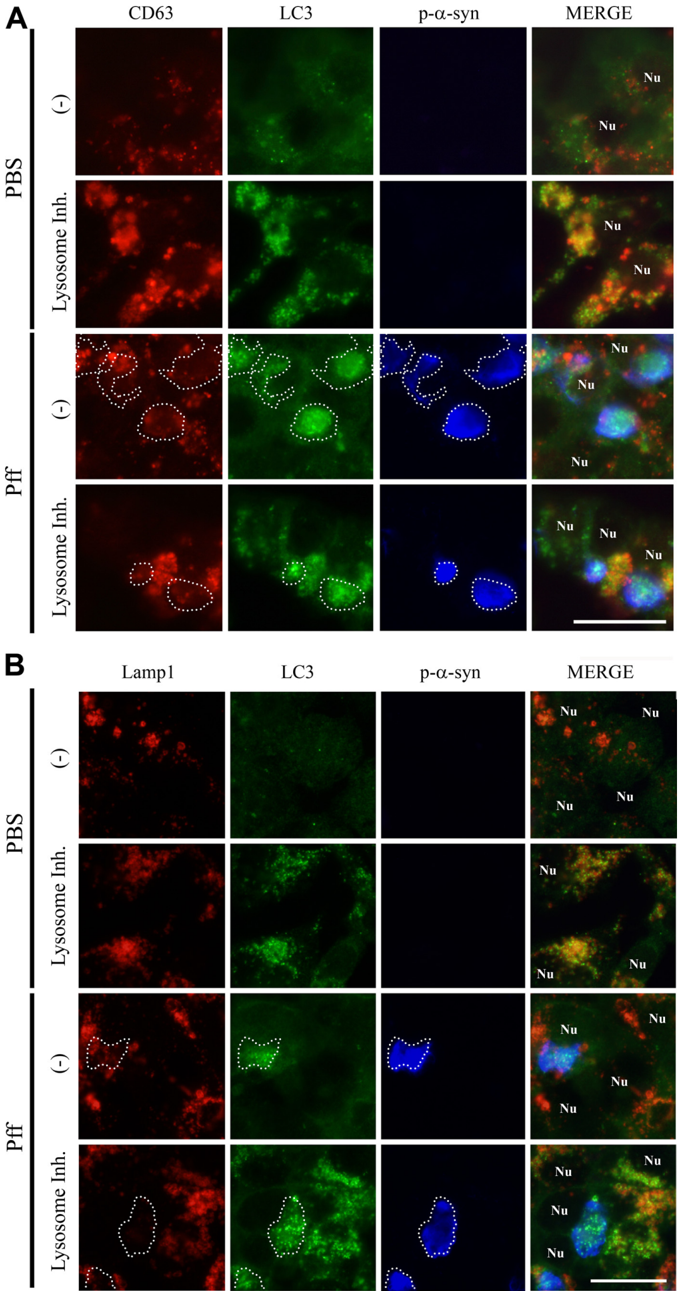
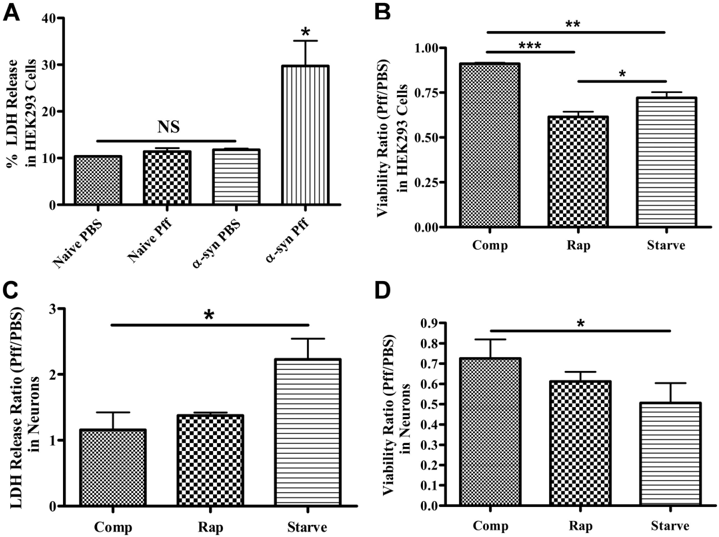
Cytoplasmic α-synuclein (α-syn) aggregates, referred to as Lewy bodies, are pathological hallmarks of a number of neurodegenerative diseases, most notably Parkinson disease. Activation of macroautophagy is suggested to facilitate degradation of certain proteinaceous inclusions, but it is unclear if this pathway is capable of degrading α-syn aggregates. Here, we examined this issue by utilizing cellular models in which intracellular Lewy body-like α-syn inclusions accumulate after internalization of pre-formed α-syn fibrils into α-syn-expressing HEK293 cells or cultured primary neurons. We demonstrate that α-syn inclusions cannot be effectively degraded, even though they co-localize with essential components of both the autophagic and proteasomal protein degradation pathways. The α-syn aggregates persist even after soluble α-syn levels have been substantially reduced, suggesting that once formed, the α-syn inclusions are refractory to clearance. Importantly, we also find that α-syn aggregates impair overall macroautophagy by reducing autophagosome clearance, which may contribute to the increased cell death that is observed in aggregate-bearing cells. Background: α-Synuclein aggregates and macroautophagy are associated with neurodegeneration. Results: Modulation of macroautophagic activity does not affect α-synuclein aggregate levels, although these aggregates cause accumulation of immature autophagosomes. Conclusion: α-Synuclein aggregates are resistant to degradation and impair autophagy by delaying autophagosome maturation. Significance: Understanding the impact of α-synuclein aggregates on autophagy may help elucidate therapies for α-synuclein-mediated neurodegeneration.
Overview
The claims and statistics of this paper haven’t been checked yet.
Run the check — free, no account needed. It reads the open-access text and checks the sources it cites.
Integrity signals
Registry
Cites
Statistics
Figures
Verification
Claims the paper makes
The claims and statistics of this paper haven’t been checked yet.
Run the check — free, no account needed. It reads the open-access text and checks the sources it cites.
Claims other papers make about this one
Each is checked against this paper’s own text: does it say what the citing paper says it does?
In the citing paper
“Furthermore, LB-like synuclein aggregates resist degradation and impair autophagy20.”
From Loss of autophagy in dopaminergic neurons causes Lewy pathology and motor dysfunction in aged mice (2018) · cites this paper as [20]
Self-check
Percentages, sums and reported differences re-computed from the paper’s own numbers.
The self-check needs the paper’s full text.
Citations
Cites
Mutation in the α-Synuclein Gene Identified in Families with Parkinson's Disease
Polymeropoulos, M. H., Lavedan, C., Leroy, E., Ide, S. E., Dehejia, A., Dutra, A., Pike, B., Root, H., Rubenstein, J., Boyer, R., et al. (1997) · Science · doi:10.1126/science.276.5321.2045 · Cited by 8,240
LC3, a mammalian homologue of yeast Apg8p, is localized in autophagosome membranes after processing.
Kabeya, Y., Mizushima, N., Ueno, T., Yamamoto, A., Kirisako, T., Noda, T., Kominami, E., Ohsumi, Y., & Yoshimori, T. (2000) · The EMBO Journal · doi:10.1093/emboj/19.21.5720 · Cited by 6,605
Pankiv, S., Clausen, T. H., Lamark, T., Brech, A., Bruun, J.-A., Outzen, H., Øvervatn, A., Bjørkøy, G., & Johansen, T. (2007) · Journal of Biological Chemistry · doi:10.1074/jbc.m702824200 · Cited by 4,578
Methods in Mammalian Autophagy Research
Mizushima, N., Yoshimori, T., & Levine, B. (2010) · Cell · doi:10.1016/j.cell.2010.01.028 · Cited by 4,497
α-Synuclein Locus Triplication Causes Parkinson's Disease
Singleton, A. B., Farrer, M., Johnson, J., Singleton, A., Hague, S., Kachergus, J., Hulihan, M., Peuralinna, T., Dutra, A., Nussbaum, R., et al. (2003) · Science · doi:10.1126/science.1090278 · Cited by 4,383
Suppression of basal autophagy in neural cells causes neurodegenerative disease in mice
Hara, T., Nakamura, K., Matsui, M., Yamamoto, A., Nakahara, Y., Suzuki-Migishima, R., Yokoyama, M., Mishima, K., Saito, I., Okano, H., et al. (2006) · Nature · doi:10.1038/nature04724 · Cited by 3,882
AlaSOPro mutation in the gene encoding α-synuclein in Parkinson's disease
Krüger, R., Kuhn, W., Müller, T., Woitalla, D., Graeber, M., Kösel, S., Przuntek, H., Epplen, J. T., Schols, L., & Riess, O. (1998) · Nature Genetics · doi:10.1038/ng0298-106 · Cited by 3,836
Loss of autophagy in the central nervous system causes neurodegeneration in mice
Komatsu, M., Waguri, S., Chiba, T., Murata, S., Iwata, J.-I., Tanida, I., Ueno, T., Koike, M., Uchiyama, Y., Kominami, E., et al. (2006) · Nature · doi:10.1038/nature04723 · Cited by 3,500
The new mutation, E46K, of α‐synuclein causes parkinson and Lewy body dementia
Zarranz, J. J., Alegre, J., Gómez‐Esteban, J. C., Lezcano, E., Ros, R., Ampuero, I., Vidal, L., Hoenicka, J., Rodriguez, O., Atarés, B., et al. (2004) · Annals of Neurology · doi:10.1002/ana.10795 · Cited by 2,737
Luk, K. C., Kehm, V., Carroll, J., Zhang, B., O’Brien, P., Trojanowski, J. Q., & Lee, V. M.-Y. (2012) · Science · doi:10.1126/science.1227157 · Cited by 2,563
Self-citationKimura, S., Noda, T., & Yoshimori, T. (2007) · Autophagy · doi:10.4161/auto.4451 · Cited by 2,278
Autophagosome formation: core machinery and adaptations
Xie, Z., & Klionsky, D. J. (2007) · Nature Cell Biology · doi:10.1038/ncb1007-1102 · Cited by 2,237
α-Synuclein is phosphorylated in synucleinopathy lesions
Fujiwara, H., Hasegawa, M., Dohmae, N., Kawashima, A., Masliah, E., Goldberg, M. S., Shen, J., Takio, K., & Iwatsubo, T. (2002) · Nature Cell Biology · doi:10.1038/ncb748 · Cited by 2,174
Impaired Degradation of Mutant α-Synuclein by Chaperone-Mediated Autophagy
Cuervo, A. M., Stefanis, L., Fredenburg, R., Lansbury, P. T., & Sulzer, D. (2004) · Science · doi:10.1126/science.1101738 · Cited by 2,024 · cited 1×
“The demonstration that cells harboring aggregated -syn have partial impairment of autophagy complements prior studies that showed that soluble -syn species may reduce autophagic activity (19, 67, 68).”
BackgroundAggresomes, inclusion bodies and protein aggregation
Kopito, R. R. (2000) · Trends in Cell Biology · doi:10.1016/s0962-8924(00)01852-3 · Cited by 1,942
Autophagy Is Activated for Cell Survival after Endoplasmic ReticulumStress
Ogata, M., Hino, S.-I., Saito, A., Morikawa, K., Kondo, S., Kanemoto, S., Murakami, T., Taniguchi, M., Tanii, I., Yoshinaga, K., et al. (2006) · Molecular and Cellular Biology · doi:10.1128/mcb.01453-06 · Cited by 1,832
Mice Lacking α-Synuclein Display Functional Deficits in the Nigrostriatal Dopamine System
Abeliovich, A., Schmitz, Y., Fariñas, I., Choi-Lundberg, D., Ho, W.-H., Castillo, P. E., Shinsky, N., Verdugo, J. M. G., Armanini, M., Ryan, A., et al. (2000) · Neuron · doi:10.1016/s0896-6273(00)80886-7 · Cited by 1,722
The roles of intracellular protein-degradation pathways in neurodegeneration
Rubinsztein, D. C. (2006) · Nature · doi:10.1038/nature05291 · Cited by 1,625
Volpicelli-Daley, L. A., Luk, K. C., Patel, T. P., Tanik, S. A., Riddle, D. M., Stieber, A., Meaney, D. F., Trojanowski, J. Q., & Lee, V. M.-Y. (2011) · Neuron · doi:10.1016/j.neuron.2011.08.033 · Cited by 1,569
Self-citationKawaguchi, Y., Kovacs, J. J., McLaurin, A. C., Vance, J. M., Ito, A., & Yao, T. (2003) · Cell · doi:10.1016/s0092-8674(03)00939-5 · Cited by 1,529
Autophagy, mitochondria and oxidative stress: cross-talk and redox signalling.
Lee, J., Giordano, S., & Zhang, J. (2012) · Biochemical Journal · doi:10.1042/bj20111451 · Cited by 1,438
α-Synuclein Is Degraded by Both Autophagy and the Proteasome
Webb, J. L., Ravikumar, B., Atkins, J., Skepper, J. N., & Rubinsztein, D. C. (2003) · Journal of Biological Chemistry · doi:10.1074/jbc.m300227200 · Cited by 1,429
Nix is a selective autophagy receptor for mitochondrial clearance
Novak, I., Kirkin, V., McEwan, D. G., Zhang, J., Wild, P., Rozenknop, A., Rogov, V., Löhr, F., Popovic, D., Occhipinti, A., et al. (2010) · The EMBO Reports · doi:10.1038/embor.2009.256 · Cited by 1,309 · cited 1×
“An impairment of autophagosome clearance is likely to be detrimental, as removal of both unwanted and damaged proteins and defective organelles such as mitochondria (69, 70) is vital for cells.”
BackgroundEscola, J.-M., Kleijmeer, M. J., Stoorvogel, W., Griffith, J. M., Yoshie, O., & Geuze, H. J. (1998) · Journal of Biological Chemistry · doi:10.1074/jbc.273.32.20121 · Cited by 1,228
Luk, K. C., Kehm, V. M., Zhang, B., O’Brien, P., Trojanowski, J. Q., & Lee, V. M. ‐. (2012) · The Journal of Experimental Medicine · doi:10.1084/jem.20112457 · Cited by 1,136
Self-citationBoland, B., Kumar, A., Lee, S., Platt, F. M., Wegiel, J., Yu, W. H., & Nixon, R. A. (2008) · Journal of Neuroscience · doi:10.1523/jneurosci.0800-08.2008 · Cited by 1,119
Emmanouilidou, E., Melachroinou, K., Roumeliotis, T., Garbis, S. D., Ntzouni, M., Margaritis, L. H., Stefanis, L., & Vekrellis, K. (2010) · The Journal of Neuroscience · doi:10.1523/jneurosci.5699-09.2010 · Cited by 1,115
Aggregate-prone proteins with polyglutamine and polyalanine expansions are degraded by autophagy
Ravikumar, B. (2002) · Human Molecular Genetics · doi:10.1093/hmg/11.9.1107 · Cited by 1,099
Giasson, B. I., Murray, I. V. J., Trojanowski, J. Q., & Lee, V. M.-Y. (2001) · Journal of Biological Chemistry · doi:10.1074/jbc.m008919200 · Cited by 1,080
Self-citationOxidative stress and the pathogenesis of Parkinson's disease
Jenner, P., & Olanow, C. W. (1996) · Neurology · doi:10.1212/wnl.47.6_suppl_3.161s · Cited by 971
Luk, K. C., Song, C., O'Brien, P., Stieber, A., Branch, J. R., Brunden, K. R., Trojanowski, J. Q., & Lee, V. M.-Y. (2009) · Proceedings of the National Academy of Sciences · doi:10.1073/pnas.0908005106 · Cited by 938
Self-citationMisfolded proteins partition between two distinct quality control compartments
Kaganovich, D., Kopito, R., & Frydman, J. (2008) · Nature · doi:10.1038/nature07195 · Cited by 932
α-Synuclein impairs macroautophagy: implications for Parkinson’s disease
Winslow, A. R., Chen, C.-W., Corrochano, S., Acevedo-Arozena, A., Gordon, D. E., Peden, A. A., Lichtenberg, M., Menzies, F. M., Ravikumar, B., Imarisio, S., et al. (2010) · Journal of Cell Biology · doi:10.1083/jcb.201003122 · Cited by 825
Autophagy gone awry in neurodegenerative diseases
Wong, E., & Cuervo, A. M. (2010) · Nature Neuroscience · doi:10.1038/nn.2575 · Cited by 815
The cell biology of lysosomal storage disorders
Futerman, A. H., & Gerrit van, M. E. E. R. (2004) · Nature Reviews Molecular Cell Biology · doi:10.1038/nrm1423 · Cited by 805
Prion-like transmission of protein aggregates in neurodegenerative diseases
Brundin, P., Melki, R., & Kopito, R. (2010) · Nature Reviews Molecular Cell Biology · doi:10.1038/nrm2873 · Cited by 778
Dopamine-modified α-synuclein blocks chaperone-mediated autophagy
Martínez‐Vicente, M., Tallóczy, Z., Kaushik, S., Massey, A. C., Mazzulli, J. R., Mosharov, E. V., Hodara, R., Fredenburg, R. A., Wu, D.-C., Follenzi, A., et al. (2008) · Journal of Clinical Investigation · doi:10.1172/jci32806 · Cited by 660
Methods for Monitoring Autophagy from Yeast to Human
Klionsky, D. J., Cuervo, A. M., & Seglen, P. O. (2007) · Autophagy · doi:10.4161/auto.3678 · Cited by 656
Maturation of Autophagic Vacuoles in Mammalian Cells
Eskelinen, E.-L. (2005) · Autophagy · doi:10.4161/auto.1.1.1270 · Cited by 626
p62 Is a Common Component of Cytoplasmic Inclusions in Protein Aggregation Diseases
Zatloukal, K., Stumptner, C., Fuchsbichler, A., Heid, H., Schnoelzer, M., Kenner, L., Kleinert, R., Prinz, M., Aguzzi, A., & Denk, H. (2002) · The American Journal of Pathology · doi:10.1016/s0002-9440(10)64369-6 · Cited by 624
The mitochondrial permeability transition initiates autophagy in rat hepatocytes
Elmore, S. P., Qian, T., Grissom, S. F., & Lemasters, J. J. (2001) · The FASEB Journal · doi:10.1096/fj.01-0206fje · Cited by 607
Sarkar, S., Ravikumar, B., Floto, R. A., & Rubinsztein, D. C. (2009) · Cell Death & Differentiation · doi:10.1038/cdd.2008.110 · Cited by 578
Lysosomal membrane glycoproteins. Structure, biosynthesis, and intracellular trafficking.
Fukuda, M. (1991) · Journal of Biological Chemistry · doi:10.1016/s0021-9258(18)54636-6 · Cited by 561
Wakabayashi, K., Tanji, K., Mori, F., & Takahashi, H. (2007) · Neuropathology · doi:10.1111/j.1440-1789.2007.00803.x · Cited by 544
The Parkinson's disease protein α-synuclein disrupts cellular Rab homeostasis
Gitler, A. D., Bevis, B. J., Shorter, J., Strathearn, K. E., Hamamichi, S., Su, L. J., Caldwell, K. A., Caldwell, G. A., Rochet, J., McCaffery, J. M., et al. (2007) · Proceedings of the National Academy of Sciences · doi:10.1073/pnas.0710685105 · Cited by 535
Fighting neurodegeneration with rapamycin: mechanistic insights
Bové, J., Martínez‐Vicente, M., & Vila, M. (2011) · Nature reviews. Neuroscience · doi:10.1038/nrn3068 · Cited by 533
An Atg4B Mutant Hampers the Lipidation of LC3 Paralogues and Causes Defects in Autophagosome Closure
Fujita, N., Hayashi, M., Fukumoto, H., Omori, H., Yamamoto, A., Noda, T., & Yoshimori, T. (2008) · Molecular Biology of the Cell · doi:10.1091/mbc.e08-03-0312 · Cited by 527
Synphilin-1 associates with α-synuclein and promotes the formation of cytosolic inclusions
Engelender, S., Kaminsky, Z. A., Guo, X., Sharp, A. H., Amaravi, R. K., Kleiderlein, J. J., Margolis, R. L., Troncoso, J. C., Lanahan, A. A., Worley, P. F., et al. (1999) · Nature Genetics · doi:10.1038/8820 · Cited by 496
In search of an “autophagomometer”
Rubinsztein, D. C., Cuervo, A. M., Ravikumar, B., Sarkar, S., Korolchuk, V. I., Kaushik, S., & Klionsky, D. J. (2009) · Autophagy · doi:10.4161/auto.5.5.8823 · Cited by 496
Galvin, J. E., Lee, V. M. ‐., & Trojanowski, J. Q. (2001) · Archives of Neurology · doi:10.1001/archneur.58.2.186 · Cited by 473
Self-citationIntracellular Protein Catabolism and its Control During Nutrient Deprivation and Supply
Mortimore, G. E., & Pösö, A. R. (1987) · Annual Review of Nutrition · doi:10.1146/annurev.nu.07.070187.002543 · Cited by 457
Induction of α-Synuclein Aggregation by Intracellular Nitrative Insult
Paxinou, E., Chen, Q., Weisse, M., Giasson, B. I., Norris, E. H., Rueter, S. M., Trojanowski, J. Q., Lee, V. M. ‐., & Ischiropoulos, H. (2001) · Journal of Neuroscience · doi:10.1523/jneurosci.21-20-08053.2001 · Cited by 440
Self-citationKuzuhara, S., Mori, H., Izumiyama, N., Yoshimura, M., & Ihara, Y. (1988) · Acta Neuropathologica · doi:10.1007/bf00687787 · Cited by 409
Oxidative Stress and Genetics in the Pathogenesis of Parkinson's Disease
Zhang, Y., Dawson, V. L., & Dawson, T. M. (2000) · Neurobiology of Disease · doi:10.1006/nbdi.2000.0319 · Cited by 408
Autophagy and other vacuolar protein degradation mechanisms
Seglen, P. O., & Bohley, P. (1992) · Cellular and Molecular Life Sciences · doi:10.1007/bf01923509 · Cited by 405
Ebrahimi‐Fakhari, D., Cantuti‐Castelvetri, I., Fan, Z., Rockenstein, E. M., Masliah, E., Hyman, B. T., McLean, P. J., & Unni, V. K. (2011) · Journal of Neuroscience · doi:10.1523/jneurosci.1560-11.2011 · Cited by 387
Zhang, X., Li, L., Chen, S., Yang, D., Wang, Y., Zhang, X., Wang, Z., & Le, W. (2011) · Autophagy · doi:10.4161/auto.7.4.14541 · Cited by 364
Neurodegenerative lysosomal disorders: A continuum from development to late age
Nixon, R. A., Yang, D.-S., & Lee, J.-H. (2008) · Autophagy · doi:10.4161/auto.6259 · Cited by 362
p62/SQSTM1: A Missing Link between Protein Aggregates and the Autophagy Machinery
Bjørkøy, G., Lamark, T., & Johansen, T. (2006) · Autophagy · doi:10.4161/auto.2.2.2405 · Cited by 322
Leucine-rich repeat kinase 2 regulates autophagy through a calcium-dependent pathway involving NAADP
Gómez‐Suaga, P., Luzón-Toro, B., Churamani, D., Zhang, L., Bloor-Young, D., Patel, S., Woodman, P. G., Churchill, G. C., & Hilfiker, S. (2011) · Human Molecular Genetics · doi:10.1093/hmg/ddr481 · Cited by 317
Deficiency of ATP13A2 Leads to Lysosomal Dysfunction, α-Synuclein Accumulation, and Neurotoxicity
Usenovic, M., Tresse, E., Mazzulli, J. R., Taylor, J. P., & Krainc, D. (2012) · Journal of Neuroscience · doi:10.1523/jneurosci.5575-11.2012 · Cited by 303
Formation and Removal of α-Synuclein Aggregates in Cells Exposed to Mitochondrial Inhibitors
Lee, H.-J., Shin, S. Y., Choi, C., Lee, Y. H., & Lee, S. (2002) · Journal of Biological Chemistry · doi:10.1074/jbc.m105326200 · Cited by 295
The Parkinson-associated protein PINK1 interacts with Beclin1 and promotes autophagy
Michiorri, S., Gelmetti, V, Giarda, E., Lombardi, F., Romano, F., Marongiu, R., Nerini-Molteni, S., Sale, P., Vago, R., Arena, G., et al. (2010) · Cell Death & Differentiation · doi:10.1038/cdd.2009.200 · Cited by 260
Are synucleinopathies prion-like disorders?
Angot, E., Steiner, J. A., Hansen, C., Li, J.-Y., & Brundin, P. (2010) · The Lancet Neurology · doi:10.1016/s1474-4422(10)70213-1 · Cited by 251
McLean, P. J., Kawamata, H., & Hyman, B. T. (2001) · Neuroscience · doi:10.1016/s0306-4522(01)00113-0 · Cited by 235
Processing and activation of latent heparanase occurs in lysosomes
Zetser, A., Levy‐Adam, F., Cohen‐Kaplan, V., Gingis‐Velitski, S., Bashenko, Y., Schubert, S. Y., Flugelman, M. Y., Vlodavsky, I., & Ilan, N. (2004) · Journal of Cell Science · doi:10.1242/jcs.01068 · Cited by 218
Ii, K., Ito, H., Tanaka, K., & Hirano, A. (1997) · Journal of Neuropathology & Experimental Neurology · doi:10.1097/00005072-199702000-00002 · Cited by 218
Bartlett, B. J., Isakson, P., Lewerenz, J., Sanchez, H., Kotzebue, R. W., Cumming, R. C., Harris, G. L., Nezis, I. P., Schubert, D. R., Simonsen, A., et al. (2011) · Autophagy · doi:10.4161/auto.7.6.14943 · Cited by 215 · cited 1×
“Additionally, the levels of Triton X-100-insoluble HMW-Ub proteins, which are typically degraded by autophagy (43, 44), were significantly increased in Pff-td HEK293 -syn cells in the absence or presence of proteasome inhibition (data not shown) but not in Pff-td naive HEK293 cells (Fig.”
BackgroundAutophagosome-Lysosome Fusion Depends on the pH in Acidic Compartments in CHO Cells
Kawai, A., Uchiyama, H., Takano, S., Nakamura, N., & Ohkuma, S. (2007) · Autophagy · doi:10.4161/auto.3634 · Cited by 205
Autophagy-mediated clearance of aggresomes is not a universal phenomenon
Wong, E. S. P., Tan, J. M. M., Soong, W.-E., Hussein, K., Nukina, N., Dawson, V. L., Dawson, T. M., Cuervo, A. M., & Lim, K. (2008) · Human Molecular Genetics · doi:10.1093/hmg/ddn157 · Cited by 162
A rapid cellular FRET assay of polyglutamine aggregation identifies a novel inhibitor
Pollitt, S. K., Pallos, J., Shao, J., Desai, U. A., Ma, A. A. K., Thompson, L. M., Marsh, J. L., & Diamond, M. I. (2003) · Neuron · doi:10.1016/s0896-6273(03)00697-4 · Cited by 151
Young, J. E., Martinez, R. A., & Spada, A. R. L. (2008) · Journal of Biological Chemistry · doi:10.1074/jbc.m806088200 · Cited by 132
Lee, J., & Gao, F. (2009) · Journal of Neuroscience · doi:10.1523/jneurosci.0924-09.2009 · Cited by 130
Protein Folding, Misfolding, and Aggregation. Formation of Inclusion Bodies and Aggresomes
Markossian, K. A., & Kurganov, B. I. (2004) · Biochemistry (Moscow) · doi:10.1023/b:biry.0000043539.07961.4c · Cited by 123
p62/SQSTM1-Dependent Autophagy of Lewy Body-Like α-Synuclein Inclusions
Watanabe, Y., Tatebe, H., Taguchi, K., Endo, Y., Tokuda, T., Mizuno, T., Nakagawa, M., & Tanaka, M. (2012) · PLoS ONE · doi:10.1371/journal.pone.0052868 · Cited by 104
Structural Aspects of Autophagy
Seglen, P. O., Berg, T. O., Blankson, H., Fengsrud, M., Holen, I., & STRØMHAUG, P. E. (1996) · Advances in experimental medicine and biology · doi:10.1007/978-1-4613-0335-0_12 · Cited by 91
Parkinson's disease, dementia with Lewy bodies and multiple system atrophy are α-synucleinopathies
Spillantini, M. G. (1999) · Parkinsonism & Related Disorders · doi:10.1016/s1353-8020(99)00031-0 · Cited by 80
Soper, J. H., Kehm, V. M., Burd, C. G., Bankaitis, V. A., & Lee, V. M. ‐. (2010) · Journal of Molecular Neuroscience · doi:10.1007/s12031-010-9455-5 · Cited by 77
Self-citationMortimore, G. E., Miotto, G., Venerando, R., & Kadowaki, M. (1996) · Sub-cellular biochemistry/Subcellular biochemistry · doi:10.1007/978-1-4615-5833-0_4 · Cited by 74
Parkinson's disease involves autophagy and abnormal distribution of cathepsin L
Li, L., Wang, X., Fei, X., Xia, L., Qin, Z., & Liang, Z. (2010) · Neuroscience Letters · doi:10.1016/j.neulet.2010.11.068 · Cited by 68
Higashi, S., Moore, D. J., Minegishi, M., Kasanuki, K., Fujishiro, H., Kabuta, T., Togo, T., Katsuse, O., Uchikado, H., Furukawa, Y., et al. (2011) · Journal of Neuropathology & Experimental Neurology · doi:10.1097/nen.0b013e318211c86a · Cited by 62
Zagranichnaya, T. K., Wu, X., Danos, A. M., & Villereal, M. L. (2004) · Physiological Genomics · doi:10.1152/physiolgenomics.00099.2004 · Cited by 32
In Vivo Spreading of Tau Pathology
Soto, C. A. (2012) · Neuron · doi:10.1016/j.neuron.2012.02.006 · Cited by 30
Cited by
Sorted by citations
Poewe, W., Seppi, K., Tanner, C. M., Halliday, G. M., Brundin, P., Volkmann, J., Schrag, A.-E., & Lang, A. E. (2017) · Nature Reviews Disease Primers · doi:10.1038/nrdp.2017.13 · Cited by 5,415
mTOR at the nexus of nutrition, growth, ageing and disease
Liu, G. Y., & Sabatini, D. M. (2020) · Nature Reviews Molecular Cell Biology · doi:10.1038/s41580-019-0199-y · Cited by 2,737
Proteasomal and Autophagic Degradation Systems
Đikić, I. (2017) · Annual Review of Biochemistry · doi:10.1146/annurev-biochem-061516-044908 · Cited by 1,217
Autophagy and Neurodegeneration: Pathogenic Mechanisms and Therapeutic Opportunities
Menzies, F. M., Fleming, A., Caricasole, A., Bento, C. F., Andrews, S. P., Ashkenazi, A., Füllgrabe, J., Jackson, A., Jimenez Sanchez, M., Karabiyik, C., et al. (2017) · Neuron · doi:10.1016/j.neuron.2017.01.022 · Cited by 1,134
α-synuclein toxicity in neurodegeneration: mechanism and therapeutic strategies
Wong, Y. C., & Krainc, D. (2017) · Nature Medicine · doi:10.1038/nm.4269 · Cited by 897
Metadata
- Authors
- Tanik, S. A., Schultheiss, C. E., Volpicelli-Daley, L. A., Brunden, K. R., & Lee, V. M. Y.
- Affiliations
- University of Pennsylvania (US)
- Corresponding author
- Lee, Virginia M.Y.
- Venue
- Journal of Biological Chemistry
- Publisher
- Elsevier BV
- Published
- 2013-05
- Volume
- 288
- Issue
- 21
- Pages
- 15194-15210
- ISSN
- 0021-9258 (ISSN-L)
- PMC
- PMC3663539
- OpenAlex
- W2017642230
- Cited by
- 326
- References
- 83
- Citations by year
- 2026: 17 · 2025: 23 · 2024: 25 · 2023: 11 · 2022: 27 · 2021: 28 · 2020: 40 · 2019: 40 · 2018: 28 · 2017: 26 · 2016: 23 · 2015: 18 · 2014: 15 · 2013: 5
- FWCI
- 12.91
- Type
- journal article
- Language
- en
- Open access
- hybrid
- doi.org
- Licence
- Locations
- Journal of Biological Chemistry (publishedVersion, cc-by)
- Europe PMC (PubMed Central) (publishedVersion)
- PubMed Central (publishedVersion)
- PubMed (publishedVersion)
- Funders
- Cedars-Sinai Medical Center
- National Institutes of Health (NS053488)
- National Institute of Neurological Disorders and Stroke (NS053488, P50NS053488)
- Topics
- Health Sciences › Medicine › Clinical Neurology › Parkinson's Disease Mechanisms and Treatments
- Life Sciences › Biochemistry, Genetics and Molecular Biology › Cell Biology › Autophagy in Disease and Therapy
- Life Sciences › Neuroscience › Cellular and Molecular Neuroscience › Alzheimer's disease research and treatments
- Keywords
- alpha-synuclein, Lewy bodies, macroautophagy, autophagosome maturation, Parkinson's disease, neurodegeneration, proteasomal degradation, autophagy dysfunction, neuronal cell death
- MeSH terms
- Animals, Autophagy, HeLa Cells, Humans, Models, Biological, Neurons, Parkinson Disease, Lewy Bodies, Proteasome Endopeptidase Complex, Mice, alpha-Synuclein, HEK293 Cells, Proteolysis
About these checks
Registry, retraction, Cites and statistics results are computed, not judged, with one exception: a printed reference that no index lists is read once by a model before it counts as a citation error. Claims are extracted by a model and kept only when their quote appears verbatim in the text; each cited source is then checked, with a model’s help, for whether it says what the claim relies on. Those verdicts can be wrong — read the claim’s quote and the cited source before relying on one.
Statistics and arithmetic are recomputed, not judged.
Confidence bands are shown only for fields calibrated on our annotated test set. None is calibrated yet, so no band is shown.
What counts as a claim ›How we measure confidence ›How we check this ›
Are you an author, or do you see a problem with this page? Request a review
