

Energy Metabolism in Uncoupling Protein 3 Gene Knockout Mice
Open accessThe DOI matches its Crossref record; 63 of the 63 references it cites were found in a registry or an index.
Abstract
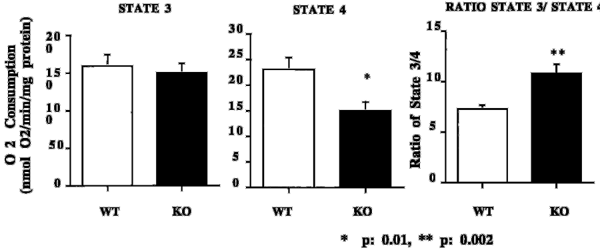
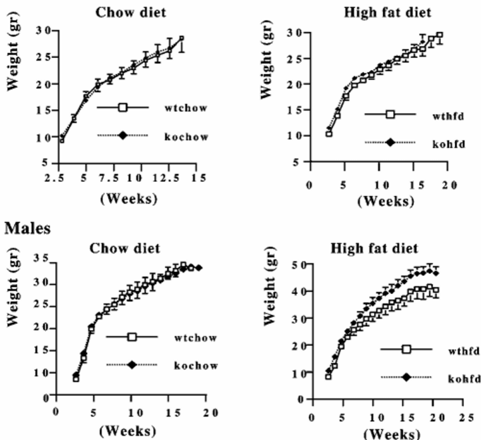
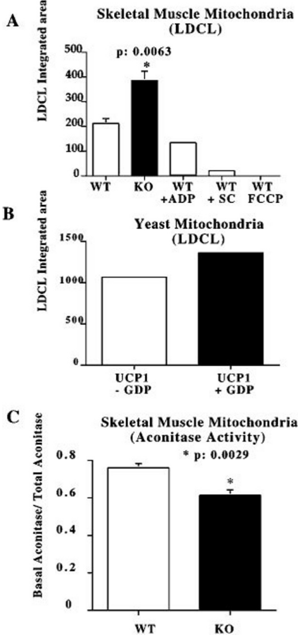
Uncoupling protein 3 (UCP3) is a member of the mitochondrial anion carrier superfamily. Based upon its high homology with UCP1 and its restricted tissue distribution to skeletal muscle and brown adipose tissue, UCP3 has been suggested to play important roles in regulating energy expenditure, body weight, and thermoregulation. Other postulated roles for UCP3 include regulation of fatty acid metabolism, adaptive responses to acute exercise and starvation, and prevention of reactive oxygen species (ROS) formation. To address these questions, we have generated mice lacking UCP3 (UCP3 knockout (KO) mice). Here, we provide evidence that skeletal muscle mitochondria lacking UCP3 are more coupled (i.e. increased state 3/state 4 ratio), indicating that UCP3 has uncoupling activity. In addition, production of ROS is increased in mitochondria lacking UCP3. This study demonstrates that UCP3 has uncoupling activity and that its absence may lead to increased production of ROS. Despite these effects on mitochondrial function, UCP3 does not seem to be required for body weight regulation, exercise tolerance, fatty acid oxidation, or cold-induced thermogenesis. The absence of such phenotypes in UCP3 KO mice could not be attributed to up-regulation of other UCP mRNAs. However, alternative compensatory mechanisms cannot be excluded. The consequence of increased mitochondrial coupling in UCP3 KO mice on metabolism and the possible role of yet unidentified compensatory mechanisms, remains to be determined.
Overview
The claims and statistics of this paper haven’t been checked yet.
Free: it reads the open-access text and checks the first 5 claims that cite a source we can check. Create a free account to check every claim.
Integrity signals
Registry
Cites
Statistics
Figures
Verification
Claims the paper makes
The claims and statistics of this paper haven’t been checked yet.
Free: it reads the open-access text and checks the first 5 claims that cite a source we can check. Create a free account to check every claim.
Claims other papers make about this one
Each is checked against this paper’s own text: does it say what the citing paper says it does?
The cited source says what the claim attributes to it.
In the citing paper
“Evidence has been presented that the new UCPs are involved in cell defense against oxidative stress (22-27).”
From Respiration, oxidative phosphorylation, and uncoupling protein in Candida albicans (2004) · cites this paper as [25]
The cited source says what the claim attributes to it.
In the citing paper
“They are able to induce mild uncoupling, thus increasing the rate of respiration and decreasing the production of reactive oxygen species (ROS) (24-27).”
From Respiration, oxidative phosphorylation, and uncoupling protein in Candida albicans (2004) · cites this paper as [25]
Self-check
Percentages, sums and reported differences re-computed from the paper’s own numbers.
The self-check needs the paper’s full text.
Citations
Cites
(1975) · Journal of AOAC INTERNATIONAL · doi:10.1093/jaoac/58.5.1085 · Cited by 19,795
(1974) · Elsevier eBooks · doi:10.1016/b978-0-12-091304-6.x5001-0 · Cited by 6,755
Boveris, A., & Chance, B. (1973) · Biochemical Journal · doi:10.1042/bj1340707 · Cited by 2,626
Changes in Energy Expenditure Resulting from Altered Body Weight
Leibel, R. L., Rosenbaum, M., & Hirsch, J. (1995) · New England Journal of Medicine · doi:10.1056/nejm199503093321001 · Cited by 2,012
Uncoupling protein-2: a novel gene linked to obesity and hyperinsulinemia
Fleury, C., Neverova, M., Collins, S., Raimbault, S., Champigny, O., Levi-Meyrueis, C., Bouillaud, F., Seldin, M. F., Surwit, R. S., Ricquier, D., et al. (1997) · Nature Genetics · doi:10.1038/ng0397-269 · Cited by 1,631
Thermogenic mechanisms in brown fat.
Nicholls, D. G., & Locke, R. M. (1984) · Physiological Reviews · doi:10.1152/physrev.1984.64.1.1 · Cited by 1,602
Mice lacking mitochondrial uncoupling protein are cold-sensitive but not obese
Enerbäck, S., Jacobsson, A., Simpson, E. M., Guerra, C., Yamashita, H., Harper, M.-E., & Kozak, L. P. (1997) · Nature · doi:10.1038/387090a0 · Cited by 1,379
Superoxide Anion Radical (O·̄2), Superoxide Dismutases, and Related Matters
Fridovich, I. (1997) · Journal of Biological Chemistry · doi:10.1074/jbc.272.30.18515 · Cited by 1,337
Reduced Rate of Energy Expenditure as a Risk Factor for Body-Weight Gain
Ravussin, E., Lillioja, S., Knowler, W. C., Christin, L., Freymond, D., Abbott, W. G. H., Boyce, V., Howard, B. V., & Bogardus, C. (1988) · New England Journal of Medicine · doi:10.1056/nejm198802253180802 · Cited by 1,215
Boss, O., Samec, S., Paoloni-Giacobino, A., Rossier, C., Dulloo, A., Seydoux, J., Muzzin, P., & Giacobino, J.-P. (1997) · FEBS Letters · doi:10.1016/s0014-5793(97)00384-0 · Cited by 1,041
Self-citationUncoupling: new approaches to an old problem of bioenergetics
Skulachev, V. P. (1998) · Biochimica et Biophysica Acta (BBA) - Bioenergetics · doi:10.1016/s0005-2728(97)00091-1 · Cited by 893
A role for uncoupling protein‐2 as a regulator of mitochondrial hydrogen peroxide generation
Nègre‐Salvayre, A., Hirtz, C., Carrera, G., Cazenave, R., Troly, M., Salvayre, R., Pénicaud, L., & Casteilla, L. (1997) · The FASEB Journal · doi:10.1096/fasebj.11.10.9271366 · Cited by 760
Gong, D.-W., He, Y., Karas, M., & Reitman, M. (1997) · Journal of Biological Chemistry · doi:10.1074/jbc.272.39.24129 · Cited by 740
Vidal-Puig, A., Solanes, G., Grujic, D., Flier, J. S., & Lowell, B. B. (1997) · Biochemical and Biophysical Research Communications · doi:10.1006/bbrc.1997.6740 · Cited by 711
Self-citationRegulation of PPAR gamma gene expression by nutrition and obesity in rodents.
Vidal-Puig, A., Jimenez-Liñan, M., Lowell, B. B., Hamann, A., Hu, E., Spiegelman, B., Flier, J. S., & Moller, D. E. (1996) · Journal of Clinical Investigation · doi:10.1172/jci118703 · Cited by 655
Self-citationLi, Y., Zhu, H., Kuppusamy, P., Roubaud, V., Zweier, J. L., & Trush, M. A. (1998) · Journal of Biological Chemistry · doi:10.1074/jbc.273.4.2015 · Cited by 526
Gimeno, R. E., Dembski, M., Weng, X., Deng, N., Shyjan, A. W., Gimeno, C. J., Iris, F., Ellis, S. J., Woolf, E. A., & Tartaglia, L. A. (1997) · Diabetes · doi:10.2337/diab.46.5.900 · Cited by 496
Superoxide Radical and Iron Modulate Aconitase Activity in Mammalian Cells
Gardner, P. R., Raineri, I., Epstein, L. B., & White, C. W. (1995) · Journal of Biological Chemistry · doi:10.1074/jbc.270.22.13399 · Cited by 471
Reactive oxygen species, mitochondria, apoptosis and aging
Papa, S., & Skulachev, V. P. (1997) · Detection of Mitochondrial Diseases · doi:10.1007/978-1-4615-6111-8_47 · Cited by 462
Leptin Directly Alters Lipid Partitioning in Skeletal Muscle
Muoio, D. M., Dohn, G. L., Fiedorek, F. T., Tapscott, E. B., & Coleman, R. A. (1997) · Diabetes · doi:10.2337/diab.46.8.1360 · Cited by 458
Self-citationAging and acute exercise enhance free radical generation in rat skeletal muscle
Bejma, J., & Ji, L. L. (1999) · Journal of Applied Physiology · doi:10.1152/jappl.1999.87.1.465 · Cited by 445
Targeted Disruption of the β3-Adrenergic Receptor Gene
Susulic, V. S., Frederich, R. C., Lawitts, J., Tozzo, E., Kahn, B. B., Harper, M.-E., Himms-Hagen, J., Flier, J. S., & Lowell, B. B. (1995) · Journal of Biological Chemistry · doi:10.1074/jbc.270.49.29483 · Cited by 393
Self-citationReactive oxygen species, mitochondria, apoptosis and aging
Papa, S., & Skulachev, V. P. (1997) · Molecular and Cellular Biochemistry · doi:10.1023/a:1006873518427 · Cited by 390
Gong, D.-W., Monemdjou, S., Gavrilova, O., Leon, L. R., Marcus-Samuels, B., Chou, C. J., Everett, C., Kozak, L. P., Li, C., Deng, C., et al. (2000) · Journal of Biological Chemistry · doi:10.1074/jbc.m910177199 · Cited by 385
Mao, W., Yu, X. X., Zhong, A., Li, W., Brush, J., Sherwood, S. W., Adams, S. H., & Pan, G. (1999) · FEBS Letters · doi:10.1016/s0014-5793(98)01713-x · Cited by 377
Structure and function of the uncoupling protein from brown adipose tissue
Klingenberg, M., & Huang, S.-G. (1999) · Biochimica et Biophysica Acta (BBA) - Biomembranes · doi:10.1016/s0005-2736(98)00232-6 · Cited by 359
Increased uncoupling protein-2 and -3 mRNA expression during fasting in obese and lean humans.
Millet, L., Vidal, H., Andreelli, F., Larrouy, D., Riou, J. P., Ricquier, D., Laville, M., & Langin, D. (1997) · Journal of Clinical Investigation · doi:10.1172/jci119811 · Cited by 351
Cloning and expression of the mouse pgk-1 gene and the nucleotide sequence of its promoter
Adra, C. N., Boer, P. H., & McBurney, M. W. (1987) · Gene · doi:10.1016/0378-1119(87)90214-9 · Cited by 338
On the Mechanism of Fatty Acid-induced Proton Transport by Mitochondrial Uncoupling Protein
Garlid, K. D., Orosz, D. E., Modrianský, M., Vassanelli, S., & Jezek, P. (1996) · Journal of Biological Chemistry · doi:10.1074/jbc.271.5.2615 · Cited by 327
Weigle, D. S., Selfridge, L. E., Schwartz, M. W., Seeley, R. J., Cummings, D. E., Havel, P. J., Kuijper, J. L., & BeltrandelRio, H. (1998) · Diabetes · doi:10.2337/diab.47.2.298 · Cited by 325
Rolfe, D. F., & Brand, M. D. (1996) · American Journal of Physiology-Cell Physiology · doi:10.1152/ajpcell.1996.271.4.c1380 · Cited by 325
Brown adipose tissue thermogenesis and obesity
Himms-Hagen, J. (1989) · Progress in Lipid Research · doi:10.1016/0163-7827(89)90009-x · Cited by 324
Transport function and regulation of mitochondrial uncoupling proteins 2 and 3
Jabůrek, M., Vařecha, M., Gimeno, R. E., Dembski, M., Ježek, P., Zhang, M., Burn, P., Tartaglia, L. A., & Garlid, K. D. (1999) · Journal of Biological Chemistry · doi:10.1074/jbc.274.37.26003 · Cited by 321
Adenosine-5′-diphosphate and Adenosine-5′-monophosphate
Jaworek, D., Gruber, W., & Bergmeyer, H. U. (1974) · Methods of Enzymatic Analysis · doi:10.1016/b978-0-12-091304-6.50066-5 · Cited by 320
Sanchis, D., Fleury, C., Chomiki, N., Goubern, M., Huang, Q., Neverova, M., Grégoire, F., Easlick, J., Raimbault, S., Lévi-Meyrueis, C., et al. (1998) · Journal of Biological Chemistry · doi:10.1074/jbc.273.51.34611 · Cited by 310
Isolation of the uncoupling protein from brown adipose tissue mitochondria
Lin, C. S., & Klingenberg, M. (1980) · FEBS Letters · doi:10.1016/0014-5793(80)80613-2 · Cited by 267
Bouchard, C., Perusse, L., Chagnon, Y. C., Warden, C., & Ricquier, D. (1997) · Human Molecular Genetics · doi:10.1093/hmg/6.11.1887 · Cited by 225
Effect of dietary fat content on the incidence of obesity among ad libitum fed mice.
SALMON, D. M., & Flatt, J. P. (1985) · PubMed · Cited by 204
Argyropoulos, G., Brown, A. M., Willi, S. M., Zhu, J., He, Y., Reitman, M., Gevao, S. M., Spruill, I., & Garvey, W. T. (1998) · Journal of Clinical Investigation · doi:10.1172/jci4115 · Cited by 202
Regulation of the uncoupling protein gene expression
Silva, J. E., & Rabelo, R. (1997) · European Journal of Endocrinology · doi:10.1530/eje.0.1360251 · Cited by 202
Li, E., Sucov, H. M., Lee, K. F., Evans, R. M., & Jaenisch, R. (1993) · Proceedings of the National Academy of Sciences · doi:10.1073/pnas.90.4.1590 · Cited by 188
Du, G., Mouithys-Mickalad, A. A., & Sluse, F. E. (1998) · Free Radical Biology and Medicine · doi:10.1016/s0891-5849(98)00148-8 · Cited by 165
The mechanism of proton transport mediated by mitochondrial uncoupling proteins
Garlid, K. D., Jabůrek, M., & Ježek, P. (1998) · FEBS Letters · doi:10.1016/s0014-5793(98)01246-0 · Cited by 163
Membrane-linked systems preventing superoxide formation
Skulachev, V. P. (1997) · Bioscience Reports · doi:10.1023/a:1027344914565 · Cited by 162
[4] Measuring nitric oxide and superoxide: Rate constants for aconitase reactivity
Hausladen, A., & Fridovich, I. (1996) · Methods in enzymology on CD-ROM/Methods in enzymology · doi:10.1016/s0076-6879(96)69007-7 · Cited by 151
The significance and mechanism of mitochondrial proton conductance
Brand, M. D., Brindle, K. M., Buckingham, J., Harper, J., Rolfe, D. F. S., & Stuart, J. (1999) · International Journal of Obesity · doi:10.1038/sj.ijo.0800936 · Cited by 149
Tsuboyama-Kasaoka, N., Tsunoda, N., Maruyama, K., Takahashi, M. M., Kim, H., Ikemoto, S., & Ezaki, O. (1998) · Biochemical and Biophysical Research Communications · doi:10.1006/bbrc.1998.8818 · Cited by 143
Effect of endurance training on mRNA expression of uncoupling proteins 1, 2, and 3 in the rat
Boss, O., Samec, S., Desplanches, D., Mayet, M., Seydoux, J., Muzzin, P., & Giacobino, J. (1998) · The FASEB Journal · doi:10.1096/fasebj.12.3.335 · Cited by 133
Self-citationBoss, O., Bachman, E. S., Vidal‐Puig, A., Zhang, C., Peroni, O. D., & Lowell, B. B. (1999) · Biochemical and Biophysical Research Communications · doi:10.1006/bbrc.1999.1145 · Cited by 112
Self-citationThe uncoupling protein from brown adipose tissue mitochondria is a dimer. A hydrodynamic study
Lin, C. S., HACKENBERG, H., & Klingenberg, E. M. (1980) · FEBS Letters · doi:10.1016/0014-5793(80)80614-4 · Cited by 110
Zhang, C.-Y., Hagen, T., Mootha, V. K., Slieker, L. J., & Lowell, B. B. (1999) · FEBS Letters · doi:10.1016/s0014-5793(99)00441-x · Cited by 109
Self-citationStructure–Function Relationship in UCP1
Klingenberg, M., Echtay, K., Bienengraeber, M., Winkler, E., & Huang, S. (1999) · International Journal of Obesity · doi:10.1038/sj.ijo.0800939 · Cited by 79
Genomic Organization and Regulation by Dietary Fat of the Uncoupling Protein 3 and 2 Genes
Gong, D.-W., He, Y., & Reitman, M. L. (1999) · Biochemical and Biophysical Research Communications · doi:10.1006/bbrc.1999.0239 · Cited by 75
Uncoupling protein-3 expression in skeletal muscle and free fatty acids in obesity
Boss, O., Bobbioni-Harsch, E., Assimacopoulos‐Jeannet, F., Muzzin, P., Munger, R., Giacobino, J., & Golay, A. (1998) · The Lancet · doi:10.1016/s0140-6736(05)78617-7 · Cited by 74
Self-citationUp-Regulation of Uncoupling Protein-3 by Fatty Acid in C2C12 Myotubes
Hwang, C.-S., & Lane, M. D. (1999) · Biochemical and Biophysical Research Communications · doi:10.1006/bbrc.1999.0662 · Cited by 72
Brun, S., Carmona, M. C., Mampel, T., Viñas, O., Giralt, M., Iglesias, R., & Villarroya, F. (1999) · FEBS Letters · doi:10.1016/s0014-5793(99)00722-x · Cited by 62
Jezek, P., Hanus, J., Semrad, C., & Garlid, K. D. (1996) · Journal of Biological Chemistry · doi:10.1074/jbc.271.11.6199 · Cited by 54
Genetic and physiologic analysis of the role of uncoupling protein 3 in human energy homeostasis.
Chung, W. K., Luke, A., Cooper, R. S., Rotini, C., Vidal-Puig, A., Rosenbaum, M., Chua, M., Solanes, G., Zheng, M., Zhao, L., et al. (1999) · Diabetes · doi:10.2337/diabetes.48.9.1890 · Cited by 48
Self-citationUrhammer, S. A., Dalgaard, L. T., Sørensen, T. I. A., Tybjærg‐Hansen, A., Echwald, S. M., Andersen, T., Clausen, J. O., & Pedersen, O. B. (1998) · Diabetologia · doi:10.1007/s001250050897 · Cited by 47
Membrane potential generation coupled to oxidation of external NADH in liver mitochondria
Bodrova, M. E., Dedukhova, V. I., Mokhova, E. N., & Skulachev, V. P. (1998) · FEBS Letters · doi:10.1016/s0014-5793(98)01072-2 · Cited by 44
Potentiation of Nitric Oxide-Mediated Vascular Relaxation by SC52608, a Superoxide Dismutase Mimic
Kasten, T. P., Settle, S. L., Misko, T. P., Riley, D. P., Weiss, R. H., Currie, M. G., & Nickols, G. A. (1995) · Experimental Biology and Medicine · doi:10.3181/00379727-208-43848 · Cited by 26
Actin participation in actomyosin contraction
Hayashi, T., Rosenbluth, R. E., Satir, P., & Vozick, M. (1958) · Biochimica et Biophysica Acta · doi:10.1016/0006-3002(58)90420-7 · Cited by 25
Nicholls, D. G., & Rial, E. (1984) · Trends in Biochemical Sciences · doi:10.1016/0968-0004(84)90319-0 · Cited by 12
Research works printed but not linked: 3
- Jaworek, D., Gruber, W., and Bergmeyer, H. U. (1974) in Methods of Enzy- matic Analysis (Bergmeyer, H. U., ed) Vol. 4, pp. 2127-2131, Verlag- Chemie, Winheim/Academic Press, New York 43. Deleted in proof
- Salmon, D. M., and Flat, J. P. (1985) Int. J. Obes. 9, 443-449
- Li, Y., Zhu, H., and Trush, M. A. (1999) Biochim. Biophys. Acta 28, 1-12
Cited by
Oxidants, oxidative stress and the biology of ageing
Finkel, T., & Holbrook, N. J. (2000) · Nature · doi:10.1038/35041687 · Cited by 9,413
“, whereas levels of mitochondrial oxidants rise in mice with a targeted deletion of UCP-3 (ref”
BackgroundBrown Adipose Tissue: Function and Physiological Significance
CANNON, B., & NEDERGAARD, J. (2004) · Physiological Reviews · doi:10.1152/physrev.00015.2003 · Cited by 6,433
Obesity and the regulation of energy balance
Spiegelman, B. M., & Flier, J. S. (2001) · Cell · doi:10.1016/s0092-8674(01)00240-9 · Cited by 2,398
Myocardial Fatty Acid Metabolism in Health and Disease
Lopaschuk, G. D., Ussher, J. R., Folmes, C. D. L., Jaswal, J. S., & Stanley, W. C. (2010) · Physiological Reviews · doi:10.1152/physrev.00015.2009 · Cited by 2,179
Myocardial Substrate Metabolism in the Normal and Failing Heart
Stanley, W. C., Recchia, F. A., & Lopaschuk, G. D. (2005) · Physiological Reviews · doi:10.1152/physrev.00006.2004 · Cited by 2,048
Metadata
- Authors
- Vidal-Puig, A. J., Grujic, D., Zhang, C.-Y., Hagen, T., Boss, O., Ido, Y., Szczepanik, A., Wade, J., Mootha, V., Cortright, R., Muoio, D. M., & Lowell, B. B.
- Affiliations
- Beth Israel Deaconess Medical Center (US)
- Boston Medical Center (US)
- East Carolina University (US)
- Corresponding author
- Lowell, Bradford B.
- Venue
- Journal of Biological Chemistry
- Publisher
- Elsevier BV
- Published
- 2000-05
- Volume
- 275
- Issue
- 21
- Pages
- 16258-16266
- ISSN
- 0021-9258 (ISSN-L)
- OpenAlex
- W2156172044
- Cited by
- 677
- References
- 63
- Citations by year
- 2026: 2 · 2025: 6 · 2024: 7 · 2023: 5 · 2022: 12 · 2021: 11 · 2020: 7 · 2019: 16 · 2018: 16 · 2017: 8 · 2016: 14 · 2015: 18 · 2014: 14 · 2013: 23 · 2012: 18
- FWCI
- 23.73
- Type
- journal article
- Language
- en
- Open access
- hybrid
- doi.org
- Licence
- cc-by
- www.elsevier.com/tdm/userlicense/1.0/ (tdm)
- creativecommons.org/licenses/by/4.0/ (vor, 7462 d)
- Locations
- Journal of Biological Chemistry (publishedVersion, cc-by)
- PubMed (publishedVersion)
- USF Scholarship Repository (University of San Francisco) (submittedVersion)
- Funders
- Eli Lilly and Company
- National Institutes of Health (DK46200)
- National Institute of Diabetes and Digestive and Kidney Diseases (P30DK046200, DK 49569, R01DK049569, P30 DK-46200, R37DK053477)
- Topics
- Life Sciences › Biochemistry, Genetics and Molecular Biology › Molecular Biology › Mitochondrial Function and Pathology
- Health Sciences › Medicine › Physiology (medical) › Adipose Tissue and Metabolism
- Life Sciences › Biochemistry, Genetics and Molecular Biology › Molecular Biology › Metabolism, Diabetes, and Cancer
- Keywords
- UCP3, mitochondrial uncoupling, reactive oxygen species, skeletal muscle mitochondria, mitochondrial coupling, thermogenesis, fatty acid oxidation, exercise tolerance, energy metabolism
- MeSH terms
- Uncoupling Protein 2, Uncoupling Protein 3, Uncoupling Protein 1, Animals, Body Temperature, Body Weight, Carrier Proteins, Eating, Energy Metabolism, Female, Ion Channels, Male, Membrane Proteins, Mitochondria, Muscle, Oxygen Consumption, Phenotype, Physical Conditioning, Animal, Proteins, RNA, Messenger, Reactive Oxygen Species, Mice, Knockout, Gene Targeting, Muscle, Skeletal, Mitochondrial Proteins, Membrane Transport Proteins, Mice
About these checks
Registry, retraction, Cites and statistics results are computed, not judged, with one exception: a printed reference that no index lists is read once by a model before it counts as a citation error. Claims are extracted by a model and kept only when their quote appears verbatim in the text; each cited source is then checked, with a model’s help, for whether it says what the claim relies on. Those verdicts can be wrong — read the claim’s quote and the cited source before relying on one.
Statistics and arithmetic are recomputed, not judged.
Confidence bands are shown only for fields calibrated on our annotated test set. None is calibrated yet, so no band is shown.
What counts as a claim ›How we measure confidence ›How we check this ›
Are you an author, or do you see a problem with this page? Request a review
Data sources
Bibliographic data: Semantic Scholar, OpenAlex, Crossref.
Contains information from the Semantic Scholar Academic Graph Datasets, made available under the ODC Attribution License (ODC-BY 1.0).
Semantic Scholar’s data is described in: Kinney, R., et al. (2023). The Semantic Scholar Open Data Platform. arXiv:2301.10140.
